Home Blog Page 7549

Ben Simmons tells 76ers he wants out

ALL-STAR point guard Ben Simmons informed the Philadelphia 76ers that he wants out of town and will not report to the team’s training camp, the Philadelphia Inquirer reported on Tuesday.

The Sixers and Mr. Simmons appeared headed for a sour parting after Philadelphia bowed out in the Eastern Conference semifinals in June and Simmons received blame from coach Doc Rivers and teammate Joel Embiid.

Though the 2016 No. 1 overall pick is considered a talented playmaker and defender, his inability — or unwillingness — to take shots reared its head during the series loss to the Atlanta Hawks. Rivers said he didn’t “know the answer to that right now” when asked if Simmons could be the starting point guard of a championship team.

NBA journalist Marc Stein reported that the Sixers have known of Simmons’ desire to be traded “for some time.” The 76ers have not commented on the reports.

A three-time All-Star, Mr. Simmons has started all 275 games he has played in four NBA seasons, all with the 76ers. He owns career averages of 15.9 points, 8.1 rebounds and 7.7 assists per game.

The 76ers are scheduled to open camp on Sept. 28. — Reuters

Improving the condition of man with what you have

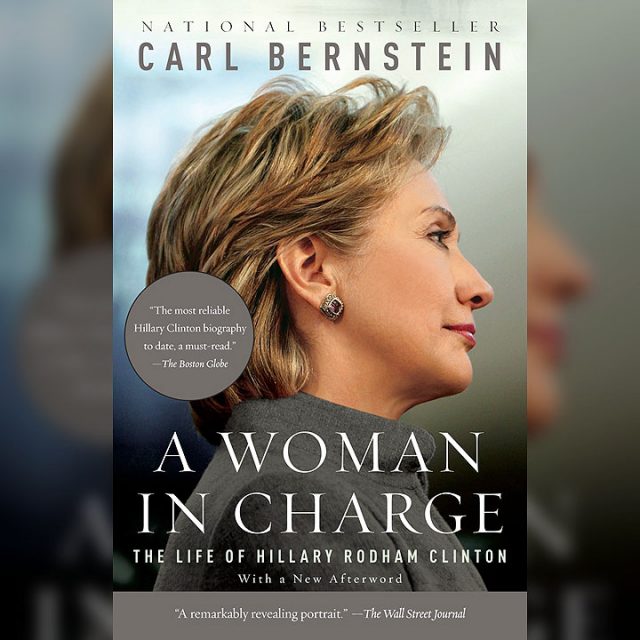
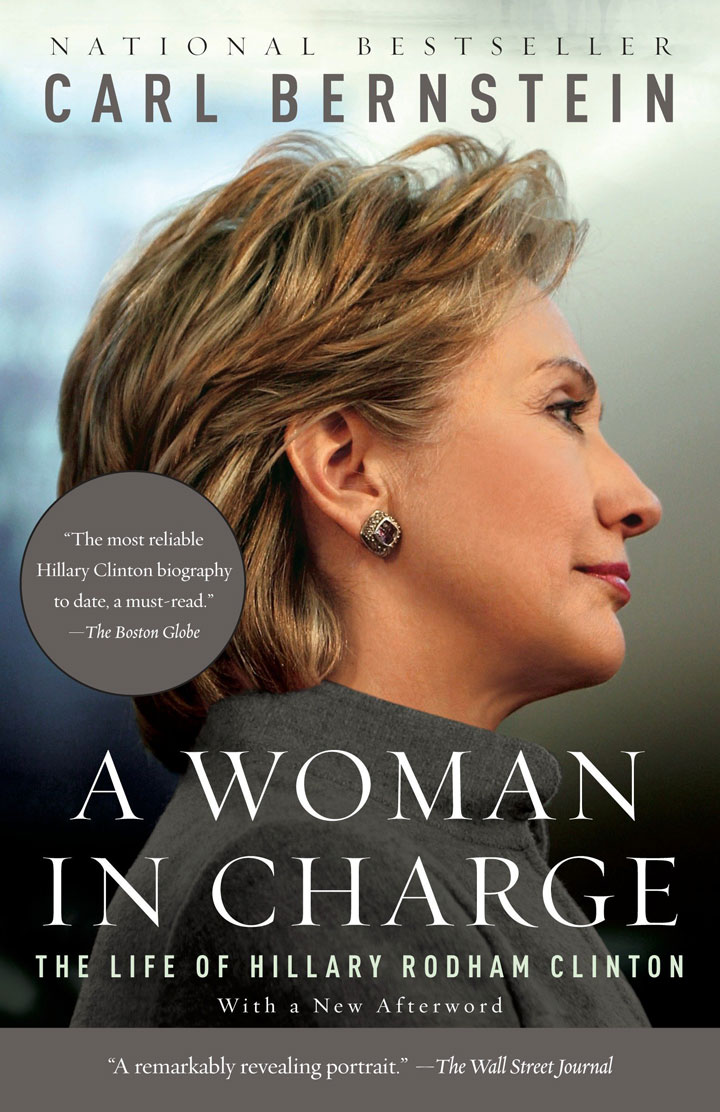
Several years ago, I read a biography of Hillary Rodham Clinton who was the former US first lady, Secretary of State and senator, and, at that time, presidential candidate in the 2016 US presidential elections. The book was entitled A Woman in Charge — The Life of Hillary Rodham Clinton: with a new afterword. The book was written by Carl Bernstein, partner of Bob Woodward, then also of the Washington Post. Bernstein and Woodward wrote most of the damning reports on the Watergate scandal. The reports, fueled by inside information from “Deep Throat,” led to a congressional investigation which forced Richard Nixon to resign rather than be impeached in 1973. Mark Felt, a former FBI agent was “Deep Throat” and the source of the reports Bernstein and Woodward used in their investigative reporting on Watergate. But this is digressing.

As a whole, I found the book a fascinating account of one of the most powerful women in the United States for almost 20 years, from the time her husband, former Arkansas Governor Bill Clinton, assumed the US presidency in 1992, up to the presidency of Barack Obama from 2008 to 2016.

The book sympathetically portrays Hillary as a woman drawn to service to country, society, others, to the community, as opposed to her being viciously characterized by enemies and Republicans as a corrupt and power greedy politician.

Bernstein attributes Hillary’s social involvement to her Methodist background: “she read the bible of her Methodist childhood and considered anew the explicit message of service in John Wesley’s message, ‘do all the good you can, by all the means you can, in all the ways you can, in all the places you can, at all times you can, as long as ever you can.’”

Wesley’s message had found its way into the hearts of millions, especially among compassionate civic activists who take to volunteering for social responsibility projects like fish take to water. Their mantra is “our purpose is to improve the condition of mankind regardless of and notwithstanding scarcity of resources.”

Service to society, especially to those in the margins, the excluded, the “least, the last and the lost,” is precisely what we and thousands of others in the Zoom webinar and Facebook saw and heard when Vice-President Maria Leonor Robredo spoke at the Archer Talks-Eagles Meet Our Leaders joint forum last week. It was the first time that alumni of both rival schools got together to host a Philippine leader in their forum.

Archer Talks is a forum organized by alumni of De La Salle Manila to serve as a venue for the objective and respectful discussion of national issues and new ideas. Among its guests since late May, when it started, were retired Senior Associate Justice Antonio Carpio on the West Philippine Sea; Secretary Felipe Medalla, an alumnus of De La Salle, and Ateneo’s Dr. Luis Dumlao on the pre- and post-pandemic economy; Philippine ambassador to the US Jose Manuel Romualdez, on US-Philippine relations; DLSU professors Dindo Manhit and Renato de Castro on political surveys; Namfrel National Chairman Gus Lagman and Dr. Nelson Celis of the Automated Election System (AES) Watch on the automated election system; and several Olympians headed by first Filipino Olympics gold medalist, Hidilyn Diaz.

The Ateneo forum has had Senator Antonio Trillanes, Senator Richard Gordon, Senate President Tito Sotto, ombudsman Conchita Morales, Manila Mayor “Yorme” Moreno and several other leaders.

Vice-President Robredo was the first guest of the joint forum which, even at this point, is already gearing up for succeeding forums with other guests.

A bit of background on the long history of service, of “doing all the good you can with whatever you have,” of plain citizen, cause-oriented, mayor’s wife, widow, congresswoman, and Vice-President Leni Robredo is needed.

The plain citizen Leni Robredo was considered by cause-oriented groups as an alternative lawyer. After years of working with the poor and the marginalized, teaching the less fortunate about their rights under the law, VP Leni, as many call her, emerged into national consciousness following the death of her husband, then interior and local government secretary and former Naga mayor, Jesse Robredo in a plane crash off Masbate on Aug. 18, 2012.

In 2013, committed to her goal of helping promote and develop an inclusive society and economy, widow Leni ran and won as representative to Congress of the third district of Camarines Sur.

After a meaningful and consequential term in Congress, she was drafted to run for the vice-presidency and overcame what seemed to be insurmountable odds to assume the second highest position in the land. Then Camarines Sur representative and VP candidate, she literally outtraveled her rivals. She had to maintain the exhausting pace to neutralize some of the handicaps she faced. At the start of the campaign, around February 2016, her awareness rating was a pathetic 2% in a race that would last for only 90 days and against a main rival whose family name had been in the public consciousness at least since 1965.

Having won the vice-presidency, the customary expectation was she would have the official personality and the Office of the Vice-President (OVP) would have resources to bring it closer to the people. These expectations however barely materialized and were even dampened by organized attempts to keep her out of the official loop and unrelenting well-funded vicious posts in mainstream and social media.

In response to the so-called “givens” in the environment and to, so to speak, play with the cards dealt her, VP Leni lived out the exhortation of John Wesley which we requote in part: “do all the good you can, at all the times you can, in all the ways you can… as long as ever you can.”

And so Angat Buhay was born: an endeavor inspired by six key advocacy areas, including food security and nutrition, women empowerment, education, healthcare, rural development and housing. It was an endeavor responding to long-festering problems which worsened due to various reasons which are fairly obvious.

During the webinar, VP Leni cited hard data and the rationale for each program and showed that, despite limited resources from government, the program reached out to poor communities with the generosity of the private sector.

In addition, the OVP launched the Istorya ng Pag Asa, a program that aims to spread hope and positivity by featuring extraordinary stories of ordinary Filipinos through words and portraits shown at events, exhibits and social media. To be sure, the OVP has other programs to highlight but we will also highlight in the future what other leaders have done to help improve the plight of the marginalized and compare their respective approaches.

After going through what the OVP and other known civic organizations and development social enterprises have done to create an inclusive economy, the qualities one would need to relentlessly pursue this goal are: courage (both physical and moral); empathy and solidarity with the program cooperators; acuity to realize that resolving problems of inequality will require the action and participation of various groups, i.e., the problem is multi-dimensional.


Philip Ella Juico’s areas of interest include the protection and promotion of democracy, free markets, sustainable development, social responsibility and sports as a tool for social development. He obtained his doctorate in business at De La Salle University. Dr. Juico served as Secretary of Agrarian Reform during the Corazon C. Aquino administration.


Changing environment

WIRESTOCK-FREEPIK

COVID-19 has been bringing suffering and death to the entire world for over a year now. Many of us, as a result, have gone through some form of lockdown or quarantine; have lost an acquaintance, a friend or a family member to the virus; or have gotten sick ourselves from COVID itself or the hardships it has brought on. All of us have been affected by it, one way or the other.

But our COVID situation has had some positive attributes as well. COVID has forced us to rethink our priorities and put more focus and emphasis now on healthcare and workplace safety. We have also seen the greater acceptance of remote work or work-from-home arrangements, and the growth of the community of cyclists and people seeking the comfort of wide, open spaces.

Just recently, as I went around Salcedo Village in Makati City, I was pleasantly surprised to see bicycle racks at street corners, with signs indicating that bicycle parking is for free, although it is “park at your own risk.” Bicycle owners are also reminded to “lock it or lose it.” And, more important, the parking slots cannot be used by “electric bikes or motorized vehicles.”

Kudos to the city government of Makati, the Makati Commercial Estates Association (MACEA), as well as to whoever else may have been involved in the putting up the bicycle parking slots. This is a good way of encouraging more people to pedal their way around, pursuant to the new law that requires the establishment of safe bicycle paths all over the country.

All over the village, signs were also put up to remind all motorists that it is illegal to wait or park at clearly marked red zones. Violators risk a fine of P3,000. Signs were also put up to remind all motorists not to “counterflow,” with violators subject to a fine of P2,000. While the signs are gentle reminders, the expensive fines are not. I just hope the restrictions are strictly implemented.

What is more encouraging is the fact that both “no illegal parking/waiting” and “no traffic counterflow” signs indicate that the restrictions — as set by the Makati City traffic code way back in 2003 — apply to cars, motorcycles, bicycles, and scooters, among others. In short, it applies to all forms of transportation, including personal mobility devices. Again, I hope the restrictions are strictly implemented and that violators are fined.

But, beyond traffic ordinances, another step in the right direction by Makati, MACEA, and perhaps the Makati Parking Authority is putting up “no smoking” and “no vaping” signs on sidewalks in the city. This, I believe, is an initiative that deserves recognition and support. Other than its benefits to public health, it is also an anti-littering initiative.

With smoking banned indoors and other enclosed public places, many smokers have taken to the streets to indulge in their vice and have literally made sidewalks their ashtrays. Many workers take their breaks outside their buildings just so they can smoke, and this has made the central business district dirtier. Many smokers congregate particularly outside convenience stores.

Prohibiting smoking and vaping on sidewalks can help create a cleaner and healthier city. More than that, it helps ensure public safety given the continuing threat posed by COVID-19. Second-hand smoke from smokers and vapers are scientifically known to transmit the coronavirus to non-smokers. It is bad enough that cigarette smoke is annoying, but now it has also become even deadlier.

I used to be smoker, as many journalists of my generation were. But I quit when I was 38, and have been smoke-free since. I now consider smoking — even vaping — as a public health hazard. While I respect personal freedom and people’s right to choose, I also believe that we should strictly follow new restrictions on smoking particularly in public places.

And given the heightened threat of COVID-19, smoking and vaping should be banned in all public places, including outdoors. For one, smokers and vapers remove their masks when they smoke or vape. Present restrictions indicate that people should always wear masks — and face shields — when outside their homes.

Second, second-hand smoke from cigarettes as well as e-cigarettes are known to possibly transmit the novel coronavirus farther than usual. It is bad enough that smokers are already killing themselves and those around them with their smoke. But COVID-19 has made cigarette smoke even worse. Virus transmission is also possible with e-cigarette vapor.

As noted by Loren Wold, PhD, an expert in airborne particulate matter, in a report by Healthline, “When a vaping cloud is exhaled, it contains an enormous amount of particles… What we don’t know is how far the particles can go. We know that the virus can attach to particles and can travel three, four, or five times farther than they would by simply being in the air.”

Just normal breathing itself can already spread the disease, Healthline noted, which is why face masks are recommended to keep virus particles from spreading freely through the air. Smokers often exhale more forcefully, meaning that the particles they push out of their lungs can travel even farther, noted Wold, who is director of Biomedical Research in the College of Nursing, and an associate professor in the Colleges of Nursing and Medicine at The Ohio State University.

Added Dr. Len Horovitz, a pulmonary specialist at Lenox Hill Hospital in New York, “The cloud [from the exhaled smoke or vapor] gives you a very good idea of how far you need to stay away from it.” As for cigarette smoke, Healthline reported, according to Dr. Horovitz, if you can smell it, you are probably too close.

Healthline also noted that studies by the National Institutes of Health indicate that second-hand smoke can stay in the air for several hours and travel up to 20 feet. And here we are thinking that no more than 15 minutes in an enclosed space, and distance of at least six feet from one another, would be enough. Banning smoking and vaping in any public space, including sidewalks, is a step in the right direction.


Marvin Tort is a former managing editor of BusinessWorld, and a former chairman of the Philippine Press Council

matort@yahoo.com

COVID vaccines may become a viable business. That’s a problem

RAWPIXEL.COM-FREEPIK

FOR MOST OF US, the growing evidence that the efficacy of COVID vaccines is declining over time should be a cause of worry. For the drug companies that have spent billions of dollars developing them, it’s a once-in-a-lifetime opportunity.

Recent studies on vaccine effectiveness have led to a run of orders for boosters in recent weeks. The US will start distributing extra shots beginning Sept. 20, and expects to roll out about 100 million doses in the coming months. Shortening the window before a third dose from eight to as little as five months was being discussed, President Joe Biden said last week. The UK last week ordered 35 million more doses of the Pfizer, Inc. vaccine to supplement earlier shots. In Israel, anyone over 30 is already eligible for a booster.

That’s quite a shift for the traditional vaccine business model. Despite being distributed to, in many cases, almost every person on the planet, inoculations have traditionally been an unprofitable backwater for the pharmaceutical industry.

Treatments that take years and billions of dollars to develop are bought in vast volumes by governments with a keen eye on price, and are often effective for life after a single dose. That model of extraordinarily high startup costs, thin margins, and minimal repeat business doesn’t represent an attractive way for companies to allocate capital. For decades, there have been concerns that the R&D pipeline for new vaccines is drying up. If it weren’t for the regular recruitment of new customers when children are born and start their usual round of shots, this part of the industry would be even more moribund than it already is.

The rush of orders for booster shots represents a break with that model.

Traumatized by the biggest pandemic in a century, rich countries are preparing to pay handsomely year after year to stay protected. With chances that most of the world’s 7.7 billion population will eventually receive annual shots of a drug that retails for between $2 and $20, the COVID industry is already likely to be vastly larger than the $6.5 billion-a-year influenza business. Just look at the array of companies that lined up to push their drugs through clinical trials — a stunning contrast in an industry that had settled into a cozy oligopoly between GlaxoSmithKline Plc, Sanofi, Merck & Co. and Pfizer, after rivals pulled back to more profitable lines of work.

That sounds like good news, but it isn’t. After all, the available capacity of vaccine manufacturers is still limited, and any production lines used to run off booster shots for rich countries won’t be making first doses for less affluent populations.

Companies with experience getting vaccine licenses are expected to have enough capacity next year to produce about 18.5 billion shots, according to a UNICEF database. That may just be sufficient to inoculate the countries and age groups that missed out this year and provide some additional boosters. If every rich country is going to repeat their round of vaccinations every five months, though, supply will get tight again.

As we’ve learned with Delta, COVID-19 has a remarkable ability to cook up fresh variants in the places where it’s allowed to spread unchecked. Allowing less affluent regions of the world to continue without first-dose coverage should be a moral affront in itself, but the risk of new strains emerging means it fails the most basic test of self-interest for rich countries, too. That’s particularly the case when existing vaccines’ efficacy against serious disease appears to hold up pretty well, even as their ability to prevent milder symptomatic infections goes down over time. We risk heading into a world where the rich hog the planet’s limited vaccine supply without even getting much of a health benefit from it.

A better way to think about the problem would be to admit that vaccines aren’t consumer products: They’re infrastructure. As a business, they don’t make a great deal of sense, and even COVID shots will eventually fade into the background next to more profitable cancer and heart disease medications. As a public good, however, they’re superlative. By stepping back from a deeper involvement in the development and distribution of new shots, governments have left the world with a higher burden of disease than it would otherwise have — not just in the case of COVID, but with other under-vaccinated conditions such as dengue and Lyme disease.

Some 18 months into this crisis, we are still fundamentally failing to treat coronavirus as the global problem it is, despite trillions of public and private money spent. Regarding vaccines as just another branch of a pharmaceutical industry that’s been shying away from developing them for decades leaves their miraculous scientific potential hobbled by a broken business model. If this pandemic transforms anything, it ought at least to change that.

BLOOMBERG OPINION

Audit findings

AUDITORS, by their very job description, are not expected to be warm and cuddly types. In private companies, especially those listed in the stock exchange, there are even three layers of these corporate sleuths looking for dead bodies in the closet. (It’s okay, Sir. It’s just a mouse.) There are the internal audit department, the audit committee of the board (sometimes supplemented by corporate governance and related party transactions), and the external auditor. The last one certifies that all regulatory requirements are followed, and the numbers are soundly reported.

Auditing as a function is not a career booster. Few heads of this under-appreciated unit make it to CEO. A positive way of characterizing the work of the auditor is that it involves quality control. The auditor makes sure that the organization is following the rules in order to meet its objectives and be able to give value to the stakeholders. Flaws in the processes and controls are pointed out in order to get remedial measures in place.

So, why is auditing such a thankless job?

Audit findings are intended to look for unusual transactions sometimes involving very senior officers. Those in the decision loop are asked to give “some context” on an unusual transaction, like unliquidated cash advances for foreign travel that have been outstanding for six months or an item in operating expenses for “home repair.” Documents like receipts and names of payees on checks need to be produced for evaluation.

The larger the organization, the bigger its audit department. The more numerous too are the transactions as well as the value and quantities involved that need to be analyzed and reported. Can there be a bigger organization than the National Government?

And when audit findings, especially when those involved feel they are protected like an endangered species, go into billions and trillions (that’s 12 zeros) then public attention becomes a factor. In a political year, such audit findings can affect popularity ratings of both protector and protected… in an unbiased survey.

The defense of being a shamed victim is a bit of a stretch. The plea to keep the findings under wraps only shows that the only possible explanations for the unexplained numbers lead to unexplained wealth and expensive watches.

Before we get carried away with large organizations, let’s go back to the corporation.

In the acquisition of a company, audit findings play a big role. They highlight such anomalies in decision-making like self-dealing, conflict of interest, and flawed bidding procedures. (How much do face masks really cost if you buy 40 million? Is there a volume discount?) Auditors are also responsible for the fine print in financial statements, especially the entries with asterisks. These “notes” at the bottom explain such entries as advances to affiliates and stocks “marked to market.”

The valuation of a company to be acquired has to undergo “due diligence” to check soft numbers, estimates, and overvalued properties. Of course, an unquantifiable item like “goodwill” (the preeminence of the brand and its leadership position in the market) is supposed to iron out the kinks and close a deal.

As for our large organization which is not supposed to be for sale, not even to an eager encroacher, the role of audit findings can be different. They reflect the governance values of the leadership. An order to put back the findings in the filing cabinet and not release them to the public reflects a lack of transparency.

No accusations are being made, only a request to explain unusually high numbers. Are the unexplained numbers also driving other decisions like lockdowns and the attacks on a messenger bearing bad news?

Organizations, big and small, have their own stakeholders. Auditors eventually look out for the interests of these interest groups. If there are valid explanations and supporting documents for even the big numbers, that the amounts were spent for the public welfare and not private gains, then it’s on to the next question.

The plea to be left alone to get better sleep and not be bothered by the findings or the need to justify actions (and cash) taken is just unacceptable. Of course, having a defender at the top (let him get his sleep) can provide comfort to the insomniac. But not to the stakeholders who may not want to sleep through this. Their angry voices will be heard… soon enough.


Tony Samson is Chairman and CEO of TOUCH xda

ar.samson@yahoo.com

Afghanistan exit marks the end of US nation-building, says Biden

US PRESIDENT Joseph R. Biden is seen in this file photo. — REUTERS

FACING sharp criticism over the tumultuous US withdrawal from Afghanistan, President Joseph R.  Biden said on Tuesday it was the best available option to end both the United States’ longest war and decades of fruitless efforts to remake other countries through military force.

Mr. Biden portrayed the chaotic exit as a logistical success that would have been just as messy even if it had been launched weeks earlier, while staying in the country would have required committing more American troops.

“I was not going to extend this forever war,” he said in a speech from the White House.

Earlier in the day, the Taliban, which seized control of Afghanistan in a lightning advance this month, fired guns into the air and paraded coffins draped in US and NATO flags as they celebrated their victory.

In his first remarks since the final pullout of US forces on Monday, Mr. Biden said 5,500 Americans had been evacuated and that the United States had leverage over the Islamist militant group to ensure 100 to 200 others could also depart if they wanted to.

He said Washington would continue to target militants who posed a threat to the United States, but would no longer use its military to try to build democratic societies in places that had never had them.

“This decision about Afghanistan is not just about Afghanistan. It’s about ending an era of major military operations to remake other countries,” he said.

The Taliban now control more territory than when they last ruled before being ousted in 2001 at the start of America’s longest war, which took the lives of nearly 2,500 US troops and an estimated 240,000 Afghans, and cost some $2 trillion.

More than 123,000 people were evacuated from Kabul in a massive but chaotic airlift by the United States and its allies over the past two weeks, but many of those who helped Western nations during the war were left behind.

Mr. Biden said the only other option would have been to step up the fight and continue a war that “should have ended long ago.” Starting the withdrawal in June or July, as some have suggested, would only have hastened the Taliban’s victory, he said. But Mr. Biden’s decision was far from popular and he has faced criticism from Republicans and fellow Democrats, as well as from foreign allies.

US Senate Republican leader Mitch McConnell said the departure had abandoned Americans behind enemy lines.

“We are less safe as a result of this self-inflicted wound,” he said in his home state of Kentucky. 

ELATION AND FEAR
The US invasion in 2001, which followed the Sept. 11 attacks on New York and Washington, stopped Afghanistan from being used by al Qaeda as a base to attack the United States and ended a period of Taliban rule from 1996 in which women were oppressed and opponents crushed.

There was a mixture of triumph, elation and fear on the streets of Afghanistan as the Taliban celebrated their victory.

“We are proud of these moments, that we liberated our country from a great power,” Taliban spokesman Zabihullah Mujahid said.

While crowds lined the streets of the eastern city of Khost for a mock funeral with coffins draped with Western flags, long lines formed in Kabul outside banks closed since the fall of the capital.

“I had to go to the bank with my mother but when I went, the Taliban (were) beating women with sticks,” said a 22-year-old woman who spoke on condition of anonymity because she feared for her safety.

“It’s the first time I’ve seen something like that and it really frightened me.”

The Taliban’s previous government brutally enforced a radical interpretation of Islamic law but Mr. Biden has said the world would hold them to their recent commitments to uphold human rights and allow safe passage for those wanting to leave Afghanistan.

Western donors have said future aid to the war and drought-ravaged country will be contingent on those promises being met.

European Union countries proposed to step up assistance to Afghanistan and its neighbors, amid fears that up to half a million Afghans could flee their homeland by the end of the year.

The United States last week issued a license authorizing it and its partners to continue to facilitate humanitarian aid in Afghanistan even though the Taliban is blacklisted by Washington, a Treasury Department official told Reuters.

The license authorizes the US government and its contractors to support humanitarian assistance to people in Afghanistan, including the delivery of food and medicine, despite US sanctions on the Taliban.

Pentagon spokesman John Kirby said the United States was concerned about the potential for Taliban retribution and mindful of the threat posed by ISIS-K, the Islamic State affiliate that claimed responsibility for a suicide bombing outside Kabul airport on Thursday that killed 13 US service members and scores of Afghan civilians.

At least seven Taliban fighters were killed in clashes with anti-Taliban rebels in the Panjshir valley north of the capital on Monday night, two members of the opposition group said. — Reuters

Sinovac investor reports Chinese coronavirus vaccine windfall

PHILIPPINE STAR/ MICHAEL VARCAS

AN INVESTOR in Sinovac Biotech Ltd. reported a nearly six-fold increase in first-half profit, giving a glimpse into the windfall made during the coronavirus pandemic by the Chinese vaccine developer.

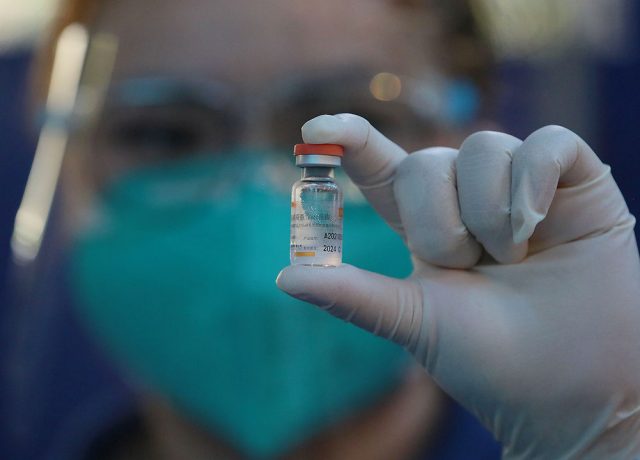
Sales of more than one billion doses of the COVID-19 shot, known as CoronaVac, helped Sino Biopharmaceutical Ltd., which holds a 15% stake in a subsidiary of Beijing-based Sinovac, register profit of 8.48 billion yuan ($1.3 billion) in the first six months of 2021, the Hong Kong-listed company said on Tuesday. The firm added that its associates and joint ventures, including the Sinovac unit, contributed 6.91 billion yuan of that amount.

The drugmaker’s earnings offer the first hint of the fortune Sinovac has amassed from its widely distributed vaccine. Sinovac, whose shares have been suspended on the Nasdaq exchange since early 2019, has yet to report any results for 2021. Sino Biopharmaceutical didn’t provide further breakdowns from individual units it has invested in.

Shares of Sino Biopharmaceutical rose as much as 1.7% on Wednesday.

The unprecedented global inoculation campaign has created hefty profits for some of the world’s leading vaccine developers. Pfizer, Inc. reaped $7.8 billion in sales from its highly effective mRNA shot it co-developed with Germany’s BioNTech SE and expects it bring in $33.5 billion in revenue this year.

Sino Biopharm, which in recent years has embarked on a transition from generic drugmaker to one that churns out more innovative medicines against cancer, made a $500-million investment last year in the Sinovac unit, a stake that is now worth about three times that much.

Dogged by doubts surrounding its wide array of efficacy readouts from late-stage trials and less effective in preventing symptomatic COVID compared to many of the western developed shots, Sinovac’s vaccine has nonetheless been approved for use in more than 50 countries and has received a stamp of approval by the World Health Organization (WHO).

The WHO-backed Covax facility, which is attempting to provide vaccines for poor countries, has also ordered hundreds of millions of doses from Sinovac and another Chinese company, Sinopharm. — Bloomberg

Lubrication solutions can increase productivity and reduce downtime

Downtime can be reduced and productivity can be maximized. This was the takeaway of attendees from the marine transport sector and Philippine domestic private shipping companies during a webinar held last August 18, 2021 by Castrol Global Marine and North Trend Marketing Corp.

The webinar, Build Your Bounce: “Extend the Life of your Fleet’s Engines for Different Operating Conditions” is part of the Castrol Solutions Talk Webinar. It aims to educate the marine sector on how they can maximize productivity and improve their operations with less downtime, even during this time of pandemic. Lending their support during the webinar were Lucio Lim Jr., Chairman of Philippine Coastwise Shipping Association Inc., and Capt. Jeffrey Solon, Deputy Executive Director of the Maritime Industry Authority. Attendees included business owners, chief engineers and technical engineers of several domestic private shipping companies engaged in cargo and transportation.

RIGHT PRODUCTS, RIGHT PLACE, RIGHT SUPPORT

During the webinar, David Bollard, Castrol UK- Global Indirect Sales Director, presented Castrol’s product lines and capabilities. “Maximizing performance directly translates to maximizing profits,” he said. “Choosing the right engine oil is critical when it comes to marine engines as well as power generation engines. The goal is to reduce the wear on the engine, prolonging its life and keeping maintenance costs to a minimum.”

Castrol’s MHP range of diesel engine lubricants is where compliance and solutions are the same thing. It allows companies to simplify and reduce overall lubricant usage because its high load-carrying capability and high gear performance means it can be used as a common oil for both engine and transmission systems.

1st Line Photo L to R:
• NTM National Sales Manager Lubes Division- Ms. Grace Torrejas
• NTM Distributor Chief Engineer- Ms. Rex Gurrea
• Webinar Host- Micah Nepomuceno
2nd line Photo
• Castrol UK Indirect Sales Director- Mr. David Bollard
• Castrol Dubai Regional Technical Services Manager-
Mr. Gurdeep S. Taluja

It can withstand the pressure inside high-performance engines and keep them from wearing down. Compared to API CD oil, Castrol MHP 154 and MHP 153 thrive in high temperatures. It keeps engines clean because it is formulated for increased detergency so it can easily remove the deposits. Combined with its endurance even under extreme heat and resistance to harmful deposits, your engine can expect to have a cleaner piston ring zone.

This means longer intervals between overhauls and reduced wear and tear, ultimately leading to reduced costs.

OPTIMIZED FLUID PERFORMANCE AND IMPROVED PRODUCTIVITY

In addition, Castrol’s Advanced Used Oil Analysis helps optimize fluid performance and improve productivity. A new generation of technology service provided by Castrol Labcheck Next Generation, Used Oil Analysis has helped enhance the performance and extend the lifespan of critical machinery for many years. Monitoring lubricant conditions within the internal environment of machinery is the most cost-effective way to extend lubricant drain intervals, prevent catastrophic failure and increase the lifespan of equipment. The advances offered by Castrol’s Labcheck Next Generation can help enhance these benefits even further, offering a full array of tests designed to measure the physical properties of lubricants and fluids in heavy duty equipment.

“By offering clear, analytical data and professional recommendations, our Lab Check Next Generation oil analysis helps the users to identify and measure lubricant conditions and contamination, assess equipment conditions, prevent breakdowns and maximize component lifespan,” said Gurdeep S Taluja, Castrol Dubai Regional Technical Services Manager.

Mr. Lucio Lim Jr. – Chairman, Philippine Coastwise Shipping Association Inc. Capt. Jeffrey Solon- Deputy Executive Director, Maritime Industry Authority

“NTM Technical and Engineering services have proven to help our customers in the marine sector to maximize their investment when it comes to lubrication solutions for their engine vessels. We help them by bringing the Castrol way of Used Oil Analysis with the right use of advanced technical equipment,” said Rex Gurrea, Distributor Chief Engineer of North Trend Marketing Corp.

FROM GLOBAL TO LOCAL

Castrol announced earlier this year its partnership with North Trend Marketing Corp., a Cebu-based company which has been in the business of distribution of world-class, premium lubricants and tires for 14 years. With its supply chain capabilities and broad technical experience for lubrication solutions, North Trend Marketing Corp. is poised to deliver Castrol products with the right approach of technical services in the domestic and international marine sector.

“North Trend has always been committed to providing the country’s marine sector with high-quality lubricants,” said Grace Torrejas, North Trend Marketing’s National Sales Director- Lubes Division “With the high-caliber product lines and technical services powered by Castrol, we are confident that we would be able to foster a better distribution in the country. We believe that Castrol marine product lines were specially formulated to adapt to the needs of heavy-duty equipment to enable them to accomplish unprecedented productivity goals,” she said.

With Castrol’s presence in over 820 ports and 82 countries, customers can rely on a global network of technical service, customer service, and distributor partner teams. It is further strengthened in the Philippines with North Trend Marketing Corp’s four major warehouses and depots strategically located in Manila, Cebu, Davao and Cagayan De Oro.


Spotlight is BusinessWorld’s sponsored section that allows advertisers to amplify their brand and connect with BusinessWorld’s audience by enabling them to publish their stories directly on the BusinessWorld Web site. For more information, send an email to online@bworldonline.com.

Before buying, Filipino online shoppers visit around 8 websites — Facebook

Filipino consumers are embracing digital shopping, as the pandemic pushes them to be more tech-savvy and deliberate with their purchasing decisions. They are also more willing to buy products from a wider range of online stores, according to a report by Facebook Inc. and Bain & Co.  

More than 16,000 people in Indonesia, Malaysia, Philippines, Singapore, Thailand, and Vietnam took part in the survey conducted in June, with all respondents above 15 years of age.  

Filipinos were found to hop across an average of 7.8 websites before making a purchase decision in 2021, compared to just 4.3 websites in 2020.   

“These findings point to the fact that people increasingly want to feel that they’re making the right purchase decisions. Now is the time for brands to be brave and reimagine the channels and platforms on which they can stand out and be discovered,” said John Rubio, country director of Facebook in the Philippines, in a statement.  

Additionally, 45% of Filipino respondents said they’re willing to try stores they’ve never heard of before, up from 36% the year prior, tied to findings that they purchase from an average of 8.2 product categories in 2021, compared to just 4.7 in 2020.  

With this increase in exploration, 51% of consumers in the Philippines also said they switched their most purchased brand in the last three months — on par with Southeast Asia, based on the report.  

Purchasing decisions are influenced by Environmental, Social, and Governance (ESG) factors, with more than 80% of Filipino respondents saying that they would pay up to 10% more for sustainable and socially conscious products. ESG was also found to be in the top three reasons in Southeast Asia for switching brands, the study showed.  

Findings revealed significant improvement in e-commerce marketplace satisfaction, with the Net Promoter Score in the Philippines jumping to 64% in 2021 from 26% in 2020 — meaning better customer satisfaction.  

“People in Southeast Asia are forming new habits related to online discovery, consideration and purchase,” said Benjamin Joe, vice-president of Facebook in Southeast Asia. “For both new and established brands, these shifts signal the need to rethink traditional e-commerce experiences and find creative ways to inspire and connect with customers online.” — Brontë H. Lacsamana

Crypto wallet MetaMask user base surges, PHL makes up 20%

MetaMask, a non-custodial crypto wallet, grew 1,800% in terms of monthly active users this past year, with 20% of its 10 million user base coming from the Philippines.  

The surge in Filipino users is buoyed by the popularity of NFT (non-fungible token)-based online video game Axie Infinity, which allows players to earn cryptocurrency.   

A cryptocurrency (or “crypto”) is a digital currency that can be used to buy goods and services. Cryptos, which include Bitcoin, Ethereum, and Binance Coin, use an online ledger to secure online transactions.   

Crypto users can either keep their cryptos on a crypto exchange (similar to keeping one’s stocks with a stock broker), or in crypto wallets (see sidebar). 

“Users who hold funds in MetaMask can do much more than hold those funds as an investment. They can use those funds to interact with countless numbers of decentralized protocols and smart contracts,” said Jacob Cantele, MetaMask’s lead of operations, in an e-mail to BusinessWorld 

“They also have custody over their funds. Self-custody is an important step towards freedom, security, and censorship-resistance,” he added.  

MetaMask is both a mobile app and a browser extension that functions as a crypto wallet for the Ethereum blockchain as well as any Ethereum-compatible network like Polygon, Arbitrum, and Optimism.  

The company’s growth — from 545,080 monthly active users in July 2020 to 10,354,279 in August 2021 — has tracked closely with that of Ethereum, which supports a decentralized finance (DeFi) ecosystem with over $80 billion in assets under management.    

MetaMask is run by ConsenSys, a global Ethereum software company, and was founded in 2015 with the aim of making Ethereum usable through web applications.  

The “meta” part of the company name, Mr. Cantele shared, refers to how the wallet allows people to access the decentralized web and control their data and funds. The “mask” part, meanwhile, refers to how the wallet allows users to control which sites can control which accounts, making access to the decentralized web safer.  

USER GEOGRAPHY
In the Philippines, the popularity of the crypto wallet is due to the rise of play-to-earn games like Axie Infinity 

Per a B-Side episode in July, the play-to-earn movement helps meet the demands of an unemployed or underemployed player base. Players collect rewards in the form of NFTs within a game, and convert these to real cash.  

MetaMask, however, isn’t confined to a single game or a single use case.  

“It lets players access thousands of games, to collect art, to engage in commerce, and so much more,” said Mr. Cantele. “MetaMask allows gamers to carry their accounts and NFTs across thousands of applications and sites. A gamer can earn an NFT in one game, and then carry that NFT over to another video game or sell it on an online marketplace.”  

Apart from the Philippines, the top 15 countries using MetaMask are the United States, Vietnam, United Kingdom, China, India, Russia, Brazil, Indonesia, Thailand, Turkey, Germany, France, Canada, and Spain. Asia is the top region in terms of users’ growth.  — Patricia B. Mirasol


SIDEBAR | Custodial wallets versus non-custodial wallets  

Custodial wallets are crypto wallets in which the private keys are held by a third-party custodian. Operating like digital banks, these custodians have full control over user funds, with users only able to give permission to send or receive payments. Examples include Coinbase, Voyager, and KuCoin.  

Non-custodial wallets, on the other hand, allow users to hold their private keys, giving them full control of their funds. Examples include ZenGoNuri, and Edge

Pakistan frets over security threats from neighboring Afghanistan

REUTERS

ISLAMABAD — There is growing concern among Pakistani officials about security in neighboring Afghanistan, as the Taliban tries to form a government and stabilize the country following the departure of US and other foreign forces.  

Islamabad is particularly worried about militant fighters from a separate, Pakistani Taliban group crossing from Afghanistan and launching lethal attacks on its territory. Thousands of Pakistanis have been killed in jihadist violence in the last two decades.  

Underlining the security threat within Afghanistan, in the last few days a suicide bombing claimed by an Afghan offshoot of Islamic State outside Kabul airport killed more than 100 people, including 13 US troops.  

A rocket attack on the airport followed, and on Sunday militant gunfire from across the border in Afghanistan killed two Pakistani soldiers.  

“The next two to three months are critical,” a senior Pakistani official said, adding that Islamabad feared a rise in militant attacks along the Afghan-Pakistan border, as the Taliban tried to fill a vacuum left by the collapse of Afghan forces and the Western-backed administration.  

“We [the international community] have to assist the Taliban in reorganizing their army in order for them to control their territory,” the source added, referring to the threat posed by resurgent rival militant groups including Islamic State.  

US officials have repeatedly accused Pakistan of supporting the Afghan Taliban, which fought in a civil war in the mid-1990s before seizing power in 1996.  

Islamabad, one of the few capitals to recognize the Taliban government that was toppled in 2001, denies the charge.  

Pakistan’s government has said that its influence over the movement has waned, particularly since the Taliban grew in confidence once Washington announced the date for the complete withdrawal of US and other foreign troops.  

The official, who has direct knowledge of the country’s security decisions, said Pakistan planned to send security and intelligence officials, possibly even the head of the powerful Inter-Services Intelligence (ISI) agency, to Kabul to help the Taliban reorganize the Afghan military.  

An Afghan Taliban spokesperson did not immediately respond to Reuters’ requests for comment on security relations with Pakistan.  

PAKISTAN EXPECTS TALIBAN COOPERATION 
Though recognition of a new Taliban government was not immediately on the table, the official said, the world should not abandon Afghanistan.  

“Whether we recognize the Taliban government or not, stability in Afghanistan is very important.”  

The official warned that Islamic State Khorasan (ISIS-K), a loosely affiliated offshoot of Islamic State in Syria and Iraq, was actively looking to launch attacks and recruit new fighters.  

Left unhindered, it would almost certainly grow from relatively small numbers currently.  

The United States recently launched two drone strikes targeting ISIS-K militants, including one in Kabul and one near the eastern border with Pakistan.  

The strikes followed a pledge by President Joe Biden that the United States would hunt down the militants behind the recent suicide bombing.  

The Taliban criticized the strikes as a “clear attack on Afghan territory.”  

Pakistan, whose armed forces also possess unmanned drones as well as conventional aircraft, will avoid intervening directly in Afghanistan if at all possible, said the official.  

The Afghan Taliban have reassured their neighbor that they will not allow their territory to be used by anyone planning attacks on Pakistan or any other country.  

But Islamabad expected the Afghan Taliban to hand over militants planning attacks against Pakistan, the official added, or at least force them from their mutual border, where Pakistani troops have been on high alert in recent weeks. — Gibran Naiyyar Peshimam/Reuters

Health workers protest neglect as COVID-19 strains hospitals

PHILIPPINE STAR/ MICHAEL VARCAS
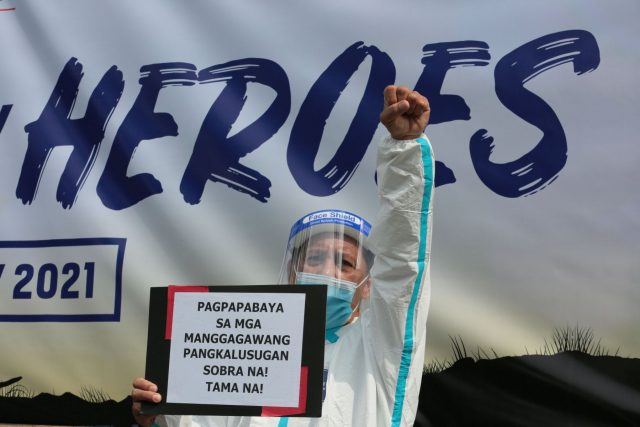
A health worker from St. Luke’s Medical Center demands the release of frontliners’ benefits during a protest held Aug. 30. — PHILIPPINE STAR/ MICHAEL VARCAS

Scores of healthcare workers protested in the Philippine capital on Wednesday to demand an end to what they called government neglect and unpaid benefits, as pressure builds at hospitals fighting one of Asia’s longest-running coronavirus epidemics.  

Protesters wearing protective medical gear gathered around the Department of Health (DoH) and held placards demanding their risk allowances and hazard pay, and the resignation of Health Secretary Francisco T. Duque III.  

Medical staff have been overwhelmed during the pandemic and 103 have died from coronavirus disease 2019 (COVID-19), among some 33,400 coronavirus fatalities in the Philippines.  

“It is sad that many of us have died, many of us became sick, and many have resigned or opted to retire early, yet we are still kneeling before the DoH to give us our benefits,” Robert Mendoza, president of the Alliance of Health Workers, said from the back of a pickup truck.  

President Rodrigo R. Duterte gave health and budget ministries 10 days from Aug. 21 to pay health workers, following nurses’ threats to resign and unions warning of strikes.  

“The government promised it will give the benefits today but up to now, it has not. I pity us because we are the ones begging,” said nurse Nico Oba.  

The Philippine Nurses Association held its own protest virtually to demand better working conditions and more hospital staff.  

Many facilities are overstretched as the highly transmissible Delta variant sees deaths climb and cases soar, like elsewhere in Southeast Asia, where vaccination rates are low compared to Europe and North America.  

The Philippines was the first country outside China to report a coronavirus death and has since logged nearly 2 million cases, including a daily record 22,366 on Monday.  

Mr. Duterte has stood by Mr. Duque during repeated calls for his resignation as far back as last year, the latest after state auditors flagged “deficiencies” in more than $1 billion in COVID-19 spending. — Adrian Portugal/Reuters