Home Blog Page 7538

ERC gives NGCP six months to complete $1-billion IPO
BW FILE PHOTO

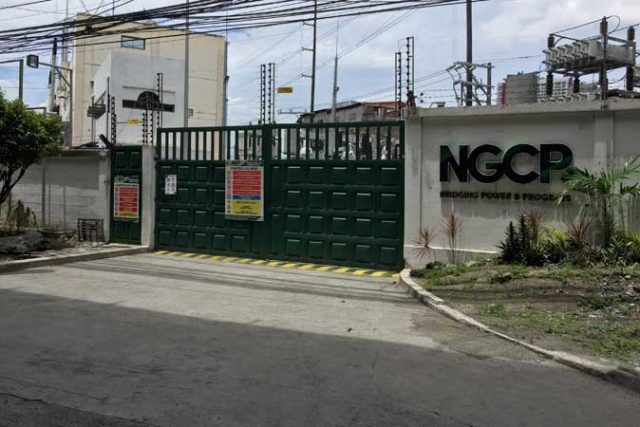
THE Energy Regulatory Commission (ERC) has ordered the National Grid Corp. of the Philippines (NGCP) to complete the listing process for a $1-billion initial public offering (IPO) within six months.

The order, issued in March, was posted this week on the commission’s website.

The NGCP had asked ERC to waive the deadline to list, citing the “unsuitability of current market conditions for IPOs” due to the public health emergency.

In an order dated March 10, the ERC said NGCP had 10 years to prepare its IPO, and that the transmission service provider cannot “invoke the current emergency health situation” to delay compliance.

“The Commission… hereby requires NGCP to complete within the period of six months from date of receipt of this order its IPO requirement and ultimately make a public offering of its shares in compliance with… R.A. No. 9511 (or the act granting a franchise to the NGCP),” the ERC said.

The commission said the company failed to establish that the current coronavirus disease (COVID-19) pandemic is unsuitable for IPOs. It said various companies like grocery retailer MerryMart Consumer Corp. and internet service provider Converge Information and Communications Technology Solutions, Inc. undertook public offerings at the height of the pandemic and community quarantine, which were well received by the public.

The ERC added that the NGCP has begun complying with its IPO requirements, and “only needs to complete the process.”

According to the regulator, the NGCP has engaged financial advisers, shortlisted joint global coordinators, reviewed proposals of underwriters and is in the process of finalizing its engagement of legal counsel.

The NGCP has tapped Standard Chartered Bank (Philippine Branch), and BDO Capital and Investment Corp. as its international and domestic financial advisors for the listing, the ERC said.

Citing BDO Capital President Eduardo V. Francisco, the ERC estimated the value of the shares to be listed will be about $1 billion. Mr. Francisco was the expert witness tapped by the NGCP to support its claims for an IPO extension.

In its order, the commission said the NGCP must submit a monthly progress report on its public listing activities on or before the fifth day of every month of the six-month compliance period.

The ERC’s order was signed by Chairperson Agnes VST Devanadera and three commissioners.

Under its franchise, the NGCP is required to list at least 20% of its outstanding shares on the bourse.

In January, the NGCP said it is pressing forward with preparations for the IPO even though “market conditions may not be ideal at the moment.”

NGCP Spokesperson Cynthia P. Alabanza has said that the company has been gearing up for a public listing since 2014 in compliance with the conditions of its franchise. — Angelica Y. Yang

Senate panel OK’s estate tax amnesty extension

SENATOR PIA CAYETANO — PHILSTAR

THE SENATE Ways and Means Committee has approved a measure extending the deadline to avail of estate tax amnesty by two years.

Senator Pilar Juliana S. Cayetano, chair of the Ways and Means committee, raised the Senate Bill No. 2208 to plenary, which set to amend a Republic Act (RA) No 11213 or the Tax Amnesty Act by extending the availment period to June 14, 2023.

Ms. Cayetano said the travel restrictions imposed during the pandemic affected the filing process for seeking the tax amnesty.

“The Committee deems it appropriate that we extend the period of availment of the estate tax amnesty for another two years, in order to allow Filipinos who have not been able to affordably settle their outstanding tax liabilities during the period, to do so,” she said in her sponsorship speech.

“At the same time, extending the program will also provide the government with additional revenue that will fund priority programs for the benefit of the people,” she added.

Ms. Cayetano also noted that revenue from the estate tax amnesty program is only P2.5 billion so far, lower than the projected P6.28 billion, citing data from the Bureau of Internal Revenue presented at a hearing early this month.

“Our current condition necessitates and justifies the need to pass this measure at this appropriate time. Surely, its enactment can provide economic relief for many Filipinos during this time of global health and economic crisis,” she said.

RA 11213, which took effect on June 15, 2019, provides a one-time opportunity for taxpayers to settle their unpaid estate taxes as of Dec. 31, 2017. The law will expire on June 15.

Ms. Cayetano said the committee removed the requirement for “proof of settlement” to be submitted by the heirs, after expert witnesses at the hearing cited it as a major reason for not availing of the amnesty.

“The Committee has decided, after hearing all the experts, to delete this requirement given that under the laws of succession, ownership is transmitted upon the death of the decedent, whether or not it has been supported by any judicial or extrajudicial form,” she said.

The House of Representatives approved the counterpart measure on third and final reading in September. — Vann Marlo M. Villegas

Gov’t sees digitization of property valuation boosting LGU revenue

THE Department of Finance (DoF) said the revenue-generating capacity of local government units (LGUs) is expected to receive a boost when the property valuation system is digitized.

“The Local Governance Reform Project (LGRP) will certainly help boost the revenue collection capacity of our local government units by adopting new digital tools and bolstering institutional development and policy support for property valuation,” Finance Secretary Carlos G. Dominguez III said in a statement Tuesday.

President Rodrigo R. Duterte issued Administrative Order No. 40 late last month creating the interagency governing board (IGB) to provide policy direction and serve as an oversight body for the project. It held its first meeting Tuesday to designate official representatives to the board, identify the project’s target outcomes and monitor progress.

The IGB is chaired by Mr. Dominguez, with the board consisting of officials from the National Economic and Development Authority, the Departments of Budget and Management, Information and Communications Technology, and the Interior and Local Government; as well as Asian Development Bank (ADB) Director Jose Antonio Tan III and other officials from the DoF.

Mr. Dominguez said the board should aim to help LGUs improve their services and make them more accountable, efficient and transparent.

“The undertaking we embark on today moves forward the process of devolution envisioned in the Local Government Code of 1991,” he told the board during the meeting.

“The measures that we will be undertaking through the Local Governance Reform Project will be fully functional and irreversible,” he added.

The Bureau of Local Government Finance will be the program’s main implementing body; other agencies with a role include the Bureau of Internal Revenue and the other IGB agencies.

The program was supported by a $26.53-million loan from the ADB signed in July.

The loan’s stated objective is to improve real property tax collection via valuation reform and the adoption of digital tools for reporting and updating tax maps and property valuation tables.

Reforming the real property valuation system to strengthen LGU revenue is part of the government’s Comprehensive Tax Reform Program.

The House of Representatives approved its version of the proposed Real Property Valuation and Assessment Reform Act on third reading in November 2019, while the Senate version is still in committee. The bill is among the priority measures that the executive and legislative branches hope to pass before Congress adjourns in June. — Beatrice M. Laforga

Remittances still in decline in real terms, Nomura says

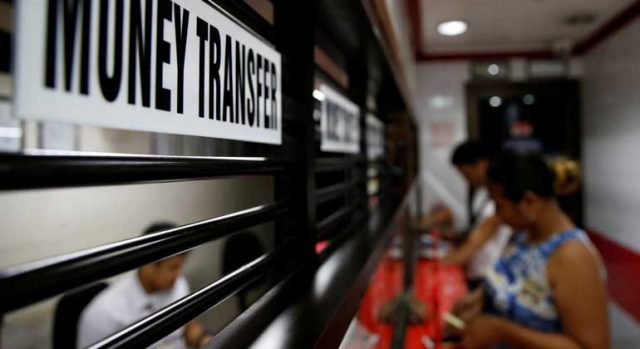
CASH REMITTANCES in March were still declining in real terms and considering foreign exchange movements, according to Nomura Global Research.

“In local currency and inflation-adjusted terms, we estimate ‘real’ remittances growth was a much weaker minus 4.2% in March, picking up only slightly from the minus 4.7% in February,” Nomura chief ASEAN economist Euben Paracuelles and analyst Rangga Cipta said in a note Tuesday.

The peso closed at P47.55 to the dollar on Monday against its P48.023 close on Dec. 29, the last trading day of 2020. The peso’s appreciation means remittances in dollars yield lower peso values.

Inflation has exceeded the central bank’s 2-4% target band since January.

The Bangko Sentral ng Pilipinas estimated on Monday that remittance inflows rose for a second straight month in March, growing 4.9% year on year to $2.514 billion.

“This underlying (remittance) weakness is consistent with disappointing private consumption growth in the first quarter gross domestic product data. It also indicates that the support from remittances for household spending remains weak,” Nomura Global said.

Household spending declined 4.8% in the three months to March, reversing the 0.2% rise posted a year earlier. The contraction, however, was smaller than the minus 7.3% posted in the fourth quarter of 2020. Household spending accounts for up to three-fourths of the economy.

“The outlook for remittances is still uncertain, in our view. While some host countries like the US are recovering, worker deployments from the Philippines may be slow to recover due to the local COVID-19 (coronavirus disease 2019) situation and the latest border restrictions in Taiwan and Singapore may pose additional headwinds in the near term,” the analysts said.

Taiwan and Singapore were considered relatively successful in containing the virus, though both economies have reimposed restrictions in light of the increase in cases in recent weeks.

Nomura expects cash remittances to grow 5.1% this year, reflecting the low base from a year earlier. This is higher than the central bank’s 4% outlook.

Last year, remittance inflows dipped 0.8% to $29.903 billion, the first contraction since 2001. — Luz Wendy T. Noble  

Boom in home renovation triggers concern over uncertified products

Grey chair at desk against white wall with poster in home office with plants on wooden shelves

THE Department of Trade and Industry (DTI) said the boom in home renovation during the pandemic has highlighted the need to use only certified products for bathroom fixtures and other sanitary wares.

The department’s Bureau of Philippine Standards regulates domestically-manufactured and imported toilets, urinals, and bidets.

“With the unceasing lockdowns and quarantines brought by the COVID-19 pandemic, Filipinos are becoming more cautious about keeping their homes hygienic. Moreover, Filipinos have been doing home makeovers and renovations to improve sanitation,” the DTI said in a statement last week.

The bureau has found from surveys that consumers’ main considerations were design and budget, and asked them to buy goods with Philippine Quality or Import Commodity Clearance marks.

Construction material categories also subject to quality certification include ceramic tiles and plywood to the list.

Goods in the list are inspected and tested by the bureau or its assigned bodies.

The DTI is also considering adding air purifiers to the list of goods that require certification. — Jenina P. Ibañez

Lowering of rice tariffs comes under further attack

PHILIPPINE STAR/ MICHAEL VARCAS

THE lowering of rice import tariffs contemplated in Executive Order (EO) No. 135 is expected to have an adverse impact on rice farmers, a legislator said.

Senator Francis N. Pangilinan said in a television interview Tuesday that the tariff reduction should only be resorted to during periods of shortage and high prices, which he said was not the case.

He said the Department of Agriculture has declared that there is no shortage of rice on the market.

“We are not experiencing shortages. Who will benefit from this move? It will be importers,” Mr. Pangilinan said.

On May 15, President Rodrigo R. Duterte signed EO 135, which cut tariffs on rice imports, both within the minimum access volume quota and beyond it, to 35% for one year, bringing rice from all sources at parity with the rate paid by ASEAN grain.  

Before the EO was issued, rice imports from non-ASEAN sources within the quota paid 40%, while those beyond the quota were charged 50%.

Mr. Pangilinan also noted that inflation in rice prices in April was minus 0.3%, reflecting ample supply.

He added that lower rice tariffs will also put a dent in government revenue.

“What we are preparing to do is file a joint resolution to withdraw the reduction of the tariff (of rice). Whether we will get support or not is another question altogether,” he added. — Revin Mikhael D. Ochave

Farm aid needs to be better targeted to achieve competitiveness, Habito says 

CIELITO F. HABITO

SELF-SUFFICIENCY in food production will depend on well-targeted support to farmers in improving their productivity and competitiveness, a former head of the government’s socioeconomic agency said.

Cielito F. Habito, currently an Ateneo de Manila University professor, said on the first day of the National Food Security Summit that farmers should be aided in the context of achieving competitiveness.

Mr. Habito, the former head of the National Economic and Development Authority, said assistance should take the form of helping farmers expand their access to technology and inputs; improve their capacity as farm entrepreneurs; facilitate their access to markets, and achieve scale economies through farm clustering.

“Food self-sufficiency is best pursued via meaningful and effective support for farmers to improve productivity and competitiveness,” Mr. Habito said.

Mr. Habito added that the Department of Agriculture (DA) is heading in the right direction but added that it also needs the help of local government units and other stakeholders.

“Agriculture is too important to be left to the DA alone. Farmers, bureaucrats, scientists, large and small entrepreneurs, bankers and financiers, traders, logistics providers, workers, and general consumers all have valuable roles to play,” Mr. Habito said.

Mr. Habito said being food self-sufficient and food-secure are not the same, arguing that food self-sufficiency is a key goal but chasing it through undue trade protection undermines food security.

“A nation can be food self-sufficient yet food insecure, and can be food secure even if not food self-sufficient,” Mr. Habito said.

Rolando T. Dy, executive director at the Center for Food and Agri-Business of the University of Asia and the Pacific, said the country needs to exert extra effort in controlling African Swine Fever (ASF).

“We need extra effort in the control of ASF, the development of its vaccine, and the clustering of backyard hog raisers because they are normally the source of ASF,” Mr. Dy said.

Mr. Dy added that for 2020, the Philippines was 73rd out of 113 countries in the Global Food Security Index and is lagging other countries in ASEAN such as Indonesia at 65th, Thailand at 51st, and Malaysia at 43rd.

“The index is an annual assessment measuring food security using the anchors of affordability, availability, quality, and safety metrics,” Mr. Dy said.

Agriculture Secretary William D. Dar said he expects the farm sector to rebound this year and added that the DA is still aspiring to achieve its 2.5% growth target for 2021.

“We in government cannot do this alone. We need the support of all stakeholders and sectors, especially our local governments, in making our food production and distribution systems more inclusive, resilient and sustainable,” Mr. Dar said.

“Investment in agriculture — both from government and the private sector — can help revive food production, modernize and industrialize the agriculture and fishery sector, and create jobs following a crisis and enable rural communities to recover and grow,” he added. — Revin Mikhael D. Ochave

Stevia maker GIDC hoping health-conscious consumers will drive results

REUTERS

GLORIOUS Industrial and Development Corp. (GIDC) said stevia sales are expected to be driven by a more health-conscious consuming public, with a positive performance seen despite the pandemic.

Maura David de Leon, GIDC president and chief executive officer, said in a statement Tuesday that consumers are currently shunning artificial sweeteners in favor of stevia, which is perceived as natural and healthy.

Stevia is a plant grown in tropical climates and is in wide use in South Korea, Brazil, China, and Paraguay as an alternative sweetener.

“Stevia has been touted as a safe and healthy sugar substitute with proven health benefits. It can sweeten food, and it has several health benefits, including decreased calorie intake, lower blood sugar levels, and less risk of cavities,” Ms. De Leon said.

Ms. De Leon said stevia-sweetened products manufactured by the company include tea, juice, coffee, and chocolate beverages. Natural sweeteners are deemed safe and approved by the Food and Drug Administration (FDA) even for consumers with diabetes.

 “Stevia is much sweeter than sugar, so you don’t have to add much. It’s good to note that the Philippines is also catching up on the use of this natural sweetener in various food preparations,” Ms. De Leon said.

Citing estimates from Dutch agribusiness finance institution Rabobank, the company said stevia sales are projected to hit $700 million worldwide in the coming years.

According to GIDC, its beverages using stevia have no calories or carbohydrates, and are rated at zero on the glycemic index.

“People who have diabetes can benefit from stevia. Choosing pure stevia extract can help maintain normal blood sugar levels and should be used in moderation. Stevia can also help cut down on added sugar consumption, which can be beneficial for children,” the company said.

“Substituting stevia for sugar can minimize these risks. At the same time, moderate consumption of foods with stevia and other sweeteners can prevent adverse side effects and promote overall health,” it added.

According to its website, GIDC is the first stevia grower and manufacturer in the Philippines. — Revin Mikhael D. Ochave   

Natural gas regulation bill hurdles Senate committees

REUTERS

The Senate committees on energy and finance on Monday approved a bill requiring a national energy policy and framework for the development and regulation of the midstream natural gas industry.

Senator Sherwin T. Gatchalian raised to plenary level Senate Bill No. 2203 or the proposed Midstream Natural Industry Gas Development Act.

Mr. Gatchalian said the measure will promote the development of the industry to help achieve energy security via diversification of energy sources. This will also promote the use of natural gas, specifically liquefied naturals gas (LNG), “as a complementary fuel to variable renewable energy.”

“The legal and regulatory framework to be established by the Midstream Natural Gas Industry Development Act is necessary to unlock the untapped potential of natural gas, especially LNG, in line with the overarching 3S vision of the Committee on Energy to achieve greater Philippine energy stability, sustainability, and savings,” he said in his sponsorship speech.

“Increasing our supply of natural gas from LNG sources will help prevent an energy security crisis when Malampaya operations close for good in the near future,” he added.

Mr. Gatchalian said that 19% of the country’s power is generated from natural gas, the third-most utilized source after coal and renewable energy.

He noted that the Malampaya field is the only indigenous source of natural gas, but its service contract is set to expire in 2024.

The measure aims to develop LNG terminal infrastructure to import, receive, store and regasify natural gas.

The Energy department will be in charge of the LNG terminals but the terminals are not public utilities “consistent with the treatment of comparable facilities in other energy industries,” he said. — Vann Marlo M. Villegas

ILO ties up with JPMorgan to support female PHL entrepreneurs

REUTERS

The International Labor Organization (ILO) has teamed up with JPMorgan and Co. to establish a program that will support female entrepreneurs in the Philippines and elsewhere in the region to help them better deal with the pandemic, which has highlighted the problem of inequality in business recovery.

The program. “Rebuilding Better: Fostering Business Resilience Post-COVID-19,” will help female entrepreneurs in the Philippines, Thailand, and Malaysia.

“The project will leverage digital tools to enhance women entrepreneurs’ access to critical support services, such as financial resources, training, market information and networks,” the ILO said.

The program will run for 18 months, focusing on small business owners in the manufacturing, service and retail trade sectors in urban areas. These were the sectors viewed to be most affected by the lockdown.

The ILO director of the Decent Work Technical Support Team for East and Southeast Asia and the Pacific, Graeme Buckley, said the program will seek to bring about an equitable recovery in the region.

“We have seen the COVID-19 pandemic exacerbate existing inequalities in Asia as well as globally. With the new Rebuilding Better project, the ILO, in partnership with JPMorgan, will contribute to a more equitable, gender-responsive and inclusive recovery in Southeast Asia,” he said in a statement Tuesday.

JPMorgan CEO for South and Southeast Asia Murli Maiya added: “The pandemic has dramatically changed business models and we want to help women entrepreneurs pivot towards sustainable business operations with a focus on innovation and digitalization. An economy that is fair is good for the communities we serve, our employees and our business; this conviction is reflected in how JPMorgan does business every day.” — Gillian M. Cortez

Filipino naturalization of Ivorian big man Kouame made official

THE FILIPINO naturalization of Ivorian big man Angelo Kouame has been made official after President Rodrigo R. Duterte signed the bill into law. — UAAP

By Michael Angelo S. Murillo, Senior Reporter

THE country’s national basketball team program got an added boost on Tuesday as it was announced that the Filipino naturalization of Ivorian big man Angelo Kouame had been approved and made official.

Samahang Basketbol ng Pilipinas (SBP) head Al S. Panlilio made the announcement, saying that Philippine President Rodrigo R. Duterte signed the bill into law after it cleared the House of Representatives and the Senate previously.

“The SBP thanks all of our allies in both houses whose support has been crucial in pushing this legislation to further strengthen our Gilas Pilipinas Men,” said Mr. Panlilio in a statement.

The naturalization bill of 6’10” Kouame, 23, was authored in the House of Representatives by Congressman Robbie Puno, with Senator Sonny Angara, along with Senators Joel Villanueva and Richard Gordon, filing the bill in the Senate.

Mr. Kouame, who plays for the University Athletic Association of the Philippines (UAAP) champions Ateneo Blue Eagles, “will now undergo the final steps required by FIBA before a naturalized player can suit up for a country.”

Mr. Panlilio is the SBP is confident that the newly naturalized player can suit up for the two immediate tournaments in line for Gilas, namely the FIBA Asia Qualifiers here and the FIBA Olympic Qualifying Tournament in Serbia set for next month.

The SBP president went on to say that Mr. Koaume will be a great addition to the Gilas program not only for the upcoming tournaments but for future competitions as well, notably the 2023 FIBA World Cup which the country is co-hosting.

“It’s a great day for Philippine basketball and we’re thankful for the full support of our basketball community,” said Mr. Panlilio.

For his part, Mr. Kouame showed his appreciation for the development by boldly proclaiming his being Filipino.

“Pre, Filipino ako!” he wrote on Twitter, with the post accompanied by the Philippine flag.

Mr. Koaume has been a big part of the Blue Eagles, helping the team in winning its last two UAAP titles — 2018 and 2019. He was also the league’s rookie of the year in 2018.

He is now part of the Gilas pool of players training in a “bubble” at the INSPIRE Sports Academy in Calamba, Laguna, in preparation for the FIBA Asia Cup Qualifiers and the Olympic Qualifying Tournament.

The nationals are to compete in the third and final window of the qualifiers set for June 16 to 20 in Clark, Pampanga, where they will seek to formalize their entry into the FIBA Asia Cup in their games versus Korea (June 16 and 20) and Indonesia (June 18).

Gilas currently leads Group A with an unblemished 3-0 record, followed by Korea (2-0), Indonesia (1-2) and Thailand (0-4).

After the Asia Cup Qualifiers, the national team then competes in the FIBA Olympic Qualifying Tournament in Serbia from June 29 to July 4.

Meanwhile, the naturalization of Spanish football player Bienvenido Maranon that was filed around the same time as that of Mr. Kouame’s was discussed in the plenary of Congress on Tuesday with the House concurring with Senate amendments on the bill that will grant his Filipino citizenship .

Like Mr. Kouame, footballer Maranon is being considered for the national team if allowed to play as a naturalized player.

LeBron James touts Warriors star Steph Curry for 2020-2021 MVP

WARRIORS STAR STEPH CURRY — REUTERS

WHEN the Los Angeles Lakers drew the Golden State Warriors in the NBA Western Conference play-in tournament, LeBron James had one player on his mind.

James told reporters that Warriors star Steph Curry was his pick for league MVP in 2020-21, a less-than-conventional choice this year despite Curry’s stardom but high praise ahead of Wednesday’s high-stakes matchup.

Curry won his second NBA scoring title by finishing the season with 32.0 points per game over 63 games. He shot 42.1% from 3-point range and added 5.8 assists, 5.5 rebounds and 1.2 steals per contest.

“I mean, just look at what he’s done this year,” James said of Curry. “I don’t know anything else if you’re looking for an MVP. If Steph is not on Golden State’s team, what are we looking at?

“We get caught up in the records sometimes,” he continued. “We get caught up in the, ‘OK, who has the best record,’ instead of just saying who had the best season that year. And Steph has had, in my opinion, the best season all year.”

Curry’s performance in 2020-21 was an important return to elite form after he missed most of 2019-20 with a broken hand. Still, Denver Nuggets center Nikola Jokić is the prohibitive betting favorite for the award, and Philadelphia 76ers Joel Embiid believes he has a case, too, despite missing a chunk of the season with a knee injury.

Jokić started all 72 games for Denver and averaged career highs in points (26.4), rebounds (10.8) and assists (8.3) while shooting 56.6 percent from the floor and 38.8 percent from 3-point range. The Nuggets didn’t miss a step when Jamal Murray tore his ACL as Jokić carried them to the West’s No. 3 seed.

James admitted he thought Curry, the 2015 and 2016 MVP, was a longshot at best to win the award.

“Obviously I don’t think Steph is going to get it… That’s another conversation,” James said. “But in my eyes, he’s played the best basketball all year round.”

The Lakers and Warriors will play Wednesday in Los Angeles in the West’s 7-versus-8 game. The winner clinches their playoff berth, while the loser will have one more chance on Friday by beating the winner of the 9-versus-10 game pitting the Memphis Grizzlies against the San Antonio Spurs.

Two-time reigning MVP Giannis Antetokounmpo of the Milwaukee Bucks, Damian Lillard of the Portland Trail Blazers and Chris Paul of the Phoenix Suns are longshot candidates. — Reuters