
How PSEi member stocks performed — September 15, 2021
Here’s a quick glance at how PSEi stocks fared on Wednesday, September 15, 2021.
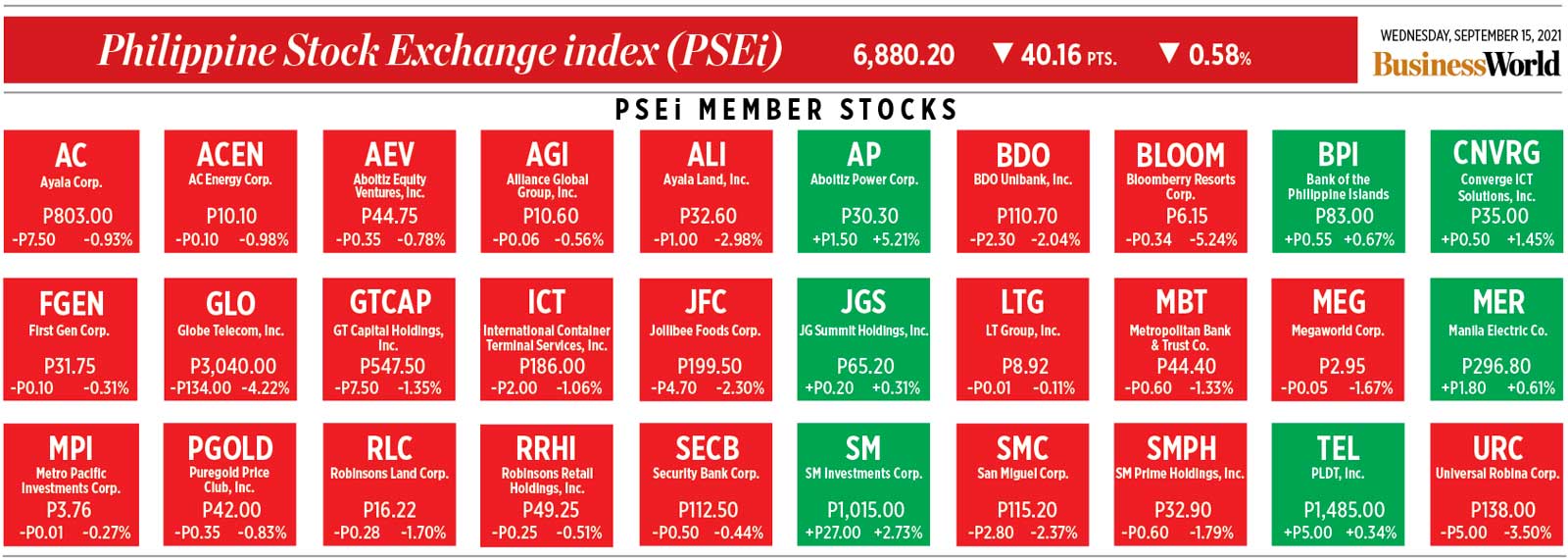

Here’s a quick glance at how PSEi stocks fared on Wednesday, September 15, 2021.
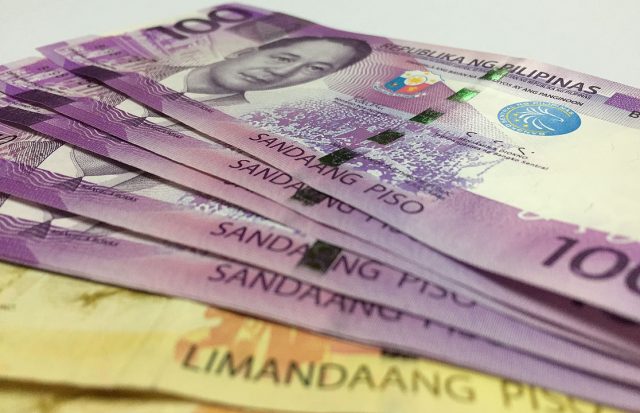
THE PESO strengthened versus the greenback on Wednesday after the government’s maiden sale of retail dollar bonds and softer US inflation in August.
The local unit closed at P49.79 per dollar on Wednesday, appreciating by 12 centavos from its P49.91 finish on Tuesday, data from the Bankers Association of the Philippines showed.
The peso opened Wednesday’s session at P49.92 per dollar. Its weakest showing was at P49.935, while its intraday best was at P49.75 versus the greenback.
Dollars exchanged dropped to $654.8 million on Wednesday from $678.45 million on Tuesday.
The peso rose after the Bureau of the Treasury’s maiden offer of onshore retail dollar bonds (RDBs).
The government raised an initial $866.2 million from the papers on Wednesday. Broken down, the Treasury borrowed $551.8 million from the five-year notes and $314.4 million via the 10-year RDBs during the price-setting auction on Wednesday.
The offer was upsized from the initial plan to raise just $200 million from each tenor after demand for the papers hit $938.2 million.
Meanwhile, the trader said data showing slower US inflation in August also boosted the peso.
The US Labor Department on Tuesday said the overall consumer price index (CPI) rose 0.3% in August, slowing from the 0.5% in July, Reuters reported. This is also softer than the 0.4% estimate by economists in a Reuters poll.
Core inflation, which excludes volatile food and energy components, rose by 0.1%, marking the slowest increase since February and also easing from the 0.3% in July. It was likewise softer than the 0.3% estimated by economists in a Reuters poll.
For Thursday, Mr. Ricafort gave a forecast range of P49.70 to P49.90 per dollar, while the trader expects the local unit to move within P49.65 to P49.90. — LWTN with Reuters

PHILIPPINE SHARES declined on Wednesday on concerns over the implementation of new coronavirus disease 2019 (COVID-19) restrictions in Metro Manila.
The Philippine Stock Exchange index (PSEi) declined by 40.16 points or 0.58% to close at 6,880.20 on Wednesday, while the broader all shares index went down by 17.37 points or 0.40% to finish at 4,277.63.
“The local bourse extended its decline this Wednesday… as investors chose to remain cautious. The concern now is the uncertainties on the sustainability of the NCR’s (National Capital Region) upcoming social restriction setup and its further easing in the future as our COVID-19 cases remain elevated,” Philstocks Financial, Inc. Senior Research Analyst Japhet Louis O. Tantiangco said in a Viber message.
Metro Manila will begin implementing targeted lockdowns via the new Alert Level System on Thursday, Sept. 16. The capital will be under Alert Level 4 amid a high infection reproduction number and as hospitals remain full.
“Trading remained strong with net value turnover posting… above the year-to-date average of P7.11 billion. This was lower compared to the preceding day,” he added.
Value turnover dropped to P7.55 billion with 1.51 billion shares switching hands on Wednesday, down from the P31.17 billion with 4.71 billion issues traded on Tuesday.
“Asian markets including the Philippines fell after Wall Street slipped on growth concerns. US stocks closed as the softer-than-expected inflation reading failed to assuage economic uncertainties and the increasing likelihood of a corporate tax hike,” Regina Capital Development Corp. Head of Sales Luis A. Limlingan said in a separate Viber message.
Wall Street lost ground on Tuesday as economic uncertainties and the increasing likelihood of a corporate tax rate hike dampened investor sentiment and prompted a broad sell-off despite signs of easing inflation, Reuters reported.
The Dow Jones Industrial Average fell 292.06 points or 0.84% to 34,577.57; the S&P 500 lost 25.68 points or 0.57% at 4,443.05; and the Nasdaq Composite dropped 67.82 points or 0.45% to 15,037.76.
US inflation dropped from a 13-year high on Tuesday but was still above the Federal Reserve’s two-percent target. Consumer prices rose by 5.3% in August compared with the 5.4% in June and July.
Back home, majority of sectoral indices declined on Wednesday except for holding firms, which gained 54.12 points or 0.78% to end at 6,973.58.
Meanwhile, property lost 66.89 points or 2.17% to 3,009.65; services shaved off 25.83 points or 1.39% to close at 1,827.30; industrials went down by 89.66 points or 0.88% to 10,096.79; financials shed 11.05 points or 0.77% to 1,423.70; and mining and oil declined by 17.54 points or 0.18% to 9,603.49.
Decliners outnumbered advancers, 128 versus 64, as 51 names closed unchanged.
Foreigners logged P73.03 million in net outflows on Wednesday from the P3.60 billion in net purchases seen the previous day. — K.C.G. Valmonte with Reuters
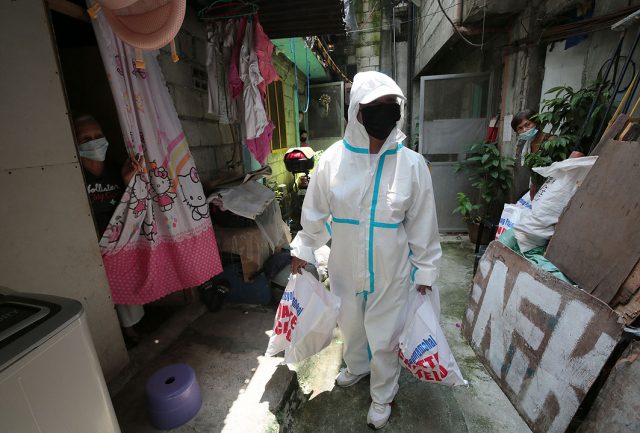

PHILIPPINE health authorities reported 16,989 coronavirus infections on Wednesday, bringing the total to 2.3 million.
The death toll rose to 35,742 after 214 patients died, while recoveries increased by 24,123 to more than two million, the Department of Health (DoH) said in a bulletin.
There were 170,446 active cases, 85.4% of which were mild, 9.8% did not show symptoms, 1.4% were severe, 2.77% were moderate and 0.7% were critical.
Forty-four duplicates had been removed from the tally, 32 of which were reclassified as recoveries and one as a death, while 135 recoveries were reclassified as deaths. Four laboratories failed to submit data on Sept. 13.
In a statement, Health Undersecretary Maria Rosario S. Vergeire said active cases in the country could reach 152,000 to 330,000 by the end of the month.
“This is not cast in stone since lower case projections are achieved when we improve adherence to minimum public health standards, reduce case detection to isolation time and increase vaccination coverage even at lower or less restrictive community quarantines,” she said.
The Philippines is set to start granular lockdowns with five alert levels in the National Capital Region on Sept. 16, as the government tries to revive the economy and curb a fresh spike in infections triggered by a more contagious Delta variant.
Metro Manila will be under Alert Level 4 — the second strictest level — until Sept. 30.
Areas under Alert Level 4, which is almost equivalent to a modified enhanced community quarantine, are those with high or increasing coronavirus transmissions and high healthcare system use rates.
Areas will be placed under Alert Level 5, equivalent to an enhanced community quarantine, only if case counts are alarming and hospital use rates reach critical” levels.
“Wide scale lockdowns might no longer be effective,” Ms. Vergeire said, noting that majority of Filipinos in the capital region were out during the strict lockdown that started on Aug. 10 since more essential activities and workers were allowed.
The presidential palace on Tuesday said the new quarantine classification is good news for workers of restaurants and other food establishments, noting that several businesses would be allowed to operate at limited capacity.
Trade Secretary Ramon M. Lopez has said some businesses, including manufacturing companies, would be allowed to operate in Metro Manila, restoring as many as 200,000 jobs.
Business groups have been pushing for a further reopening of the economy. The government earlier said economic losses averaged P73 billion for every week of a modified enhanced community quarantine in Metro Manila. Economic managers cut the full-year growth target to 4-5% to reflect the impact of strict lockdowns.
Under Alert Level 4, restaurants will be allowed to offer al fresco dine-in services at 30% capacity. Restaurants can also offer indoor dine-in services but at 10% capacity and only for fully vaccinated people.
Local government units may lower the allowed capacity for these food establishments.
Personal care services such as barbershops, hair spas, nail spas, and beauty salons will be allowed to operate at 30% capacity, but only if the services are rendered outdoors. They can operate indoors but only at 10% capacity and only for fully vaccinated people.
Workers at these establishments must be fully inoculated against the coronavirus.
Religious gatherings are also allowed but at 30% venue capacity if conducted outdoors, regardless of vaccination status, and 10% capacity if done indoors but only for those fully vaccinated. Religious leaders should also be fully vaccinated.
All other establishments or activities, except those in areas covered by granular lockdowns, may operate at full capacity provided they enforce minimum public health standards, according to the rules. — Kyle Aristophere T. Atienza
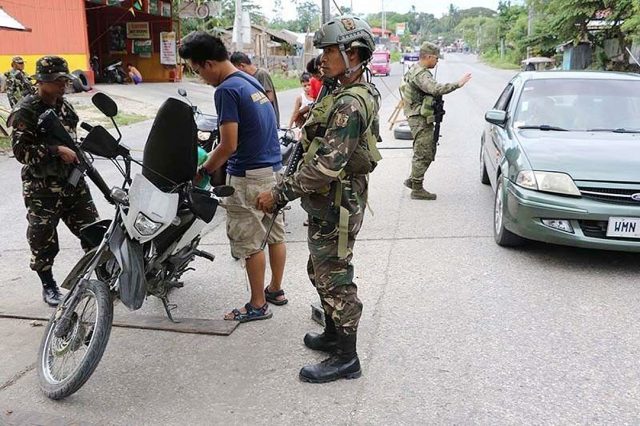
THE PHILIPPINE Coast Guard on Wednesday said the country’s waters were secure, after an intelligence report about a possible terror attack in the country and other Southeast Asian nations.
In a statement, the Philippine Coast Guard (PCG) said it saw no reason to be alarmed by the Japanese government’s warning to its citizens of potential suicide bombings in the Philippines.
Coast Guard Commandant Vice Admiral Leopoldo Laroya said district commanders across the country have always been on intensified border protection and 24/7 seaborne patrol operations.
“Rest assured that our men and women will not put their guards down and will continue to be vigilant in conducting precautionary measures for public safety,” he said.
Mr. Laroya said Coast Guard intelligence officers and personnel were coordinating with the National Intelligence Committee, Anti-Terrorism Council, Armed Forces and police to implement a whole-of-nation approach on national security.
He called on the public to be vigilant and to report suspicious persons or activities in seaports, harbors and coastal communities for immediate action.
Japan has urged its citizens to avoid crowds, religious sites and western-owned establishments in the Philippines, Indonesia, Singapore, Malaysia, Thailand and Myanmar given risks of suicide bombings, according to the Associated Press.
The Coast Guard said it was coordinating with the military and police to deter potential terror attacks. In a tweet, military spokesman Ramon P. Zagala said security reports were being validated.
“The Armed Forces of the Philippines takes seriously all received reports that pertain to security matters, especially on terrorism,” he added.
The Department of Foreign Affairs (DFA), military and police said they had not received any reports about the threat.
On Tuesday, the Japanese Embassy in Manila said it could not give further details of the warning issued by its government.
“We issued a warning to alert Japanese people residing in some Southeast Asian countries, but we cannot disclose the source,” it said.
Japan issued the warning days after the 20th anniversary of the Sept. 11, 2001 terror attacks on the United States and after the Taliban regained control of Afghanistan following the pullout of US and foreign troops.
The US withdrawal from Afghanistan and the Taliban’s immediate takeover of the country is the biggest boost to the global jihadist movement and al Qaeda, whose terrorist attacks killed almost 3,000 Americans, since 9/11.
Indonesia, which has been hit by terror attacks in previous years, has been conducting mass arrests of alleged members of Islamic extremist groups, according to the South China Morning Post.
It has arrested more than 120 suspected members of the al Qaeda-linked Southeast Asian terrorist network Jemaah Islamiyah and detained members of Islamic State-inspired group Jamaah Ansharut Daulah.
Four years ago, the Islamic State-linked Maute group attacked Marawi City in southern Philippines in a months-long siege where more than a thousand people died. — Kyle Aristophere T. Atienza
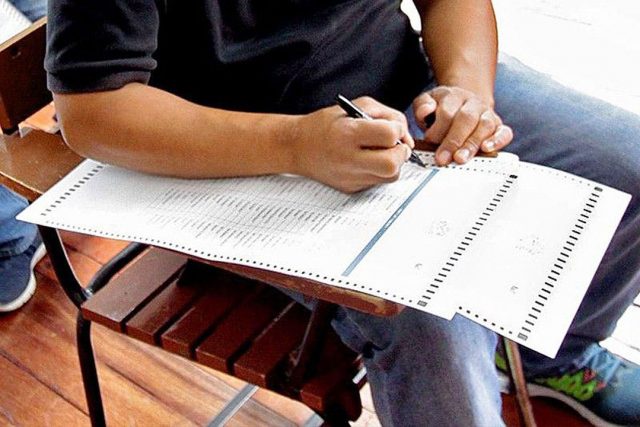
THE COMMISSION on Elections (Comelec) on Wednesday said it would stick with one-day elections next year but may extend voting hours amid a coronavirus pandemic.
The extended voting hours would require additional pay for teachers, which the agency’s budget could not cover, Election Commissioner Marlon S. Casquejo told a congressional oversight committee at a hearing.
The Budget department earlier cut the Comelec’s proposed 2022 budget by P15.5 billion to P26.5 billion.
Comelec spokesman James B. Jimenez last month said the higher allowance for teachers is mandated by law.
Senator Ana Theresia N. Hontiveros-Baraquel said she would propose to increase the election body’s 2022 budget by P8 billion, which it needs to buy more than 10,000 vote-counting machines.
Comelec owns 97,345 machines but needs at least 10,000 more units so it can limit the number of voters per precinct to 600 given social distancing rules.
It also said it would not extend voter registration beyond Sept. 30 due to time constraints, despite a call from the Senate and House of Representatives to extend the deadline to Oct. 31
“There are so many preparations that will be affected,” Mr. Casquejo told lawmakers. “We cannot compromise those other preparations.”
Mr. Casquejo said he would talk to his fellow commissioners next week after Cavite Rep Elpidio F. Barzaga, Jr. sought a reconsideration.
Senator María Imelda Josefa “Imee” R. Marcos, who presided over the joint hearing, said voter registration would be halted again for two weeks after the capital region was placed under Alert Level 4.
Mr. Casquejo said areas under a modified enhanced community quarantine should still proceed with the registration.
Registered first-time voters have reached 61.1 million, exceeding the Comelec’s target. — Bianca Angelica D. Añago and Alyssa Nicole O. Tan
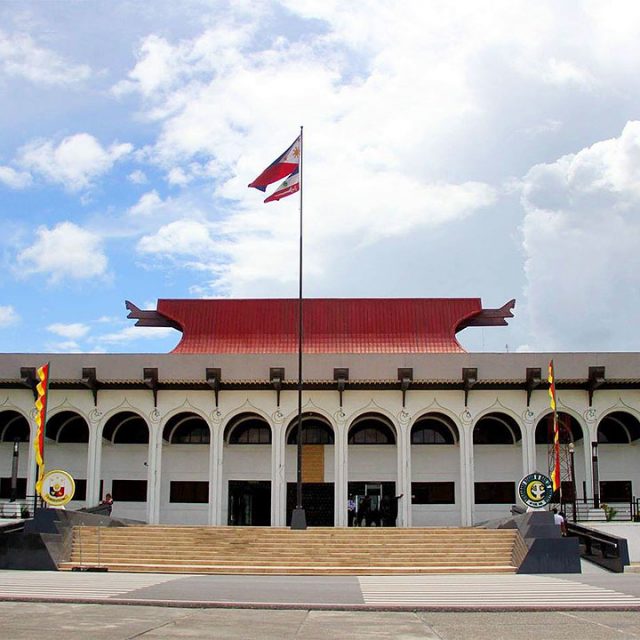
HOUSE LAWMAKERS approved late Wednesday the postponement of the first regular elections in the Bangsamoro Autonomous Region in Muslim Mindanao (BARMM).
A counterpart measure was already passed at the Senate on Sept. 6.
In a 187-0 vote with 0 abstentions, the House approved House Bill 10121 that would move the BARMM parliamentary polls from May 2022 to 2025.
This will allow the Bangsamoro officials to “attend to more urgent needs” and “lay better and sturdier foundations” for a stronger regional government and economy, the bill said.
Both the House and Senate versions have a provision granting the new president who will be elected next year the power to appoint 80 members of the Bangsamoro Transition Authority (BTA).
The current BTA members, who comprise the BARMM parliament, will remain at their posts until the new appointments. The new BTA’s term will expire June 30, 2025 or until their successors have been elected.
The bill was approved by the House Committees on Suffrage and Electoral Reforms, Muslim Affairs, and Peace, Reconciliation and Unity on Aug. 26 and was passed on second reading Sept. 13. President Rodrigo R. Duterte certified the bill as urgent in a letter addressed to House Speaker Lord Allan Jay Q. Velasco on Sept. 14, which led to its immediate passage. — Russell Louis C. Ku
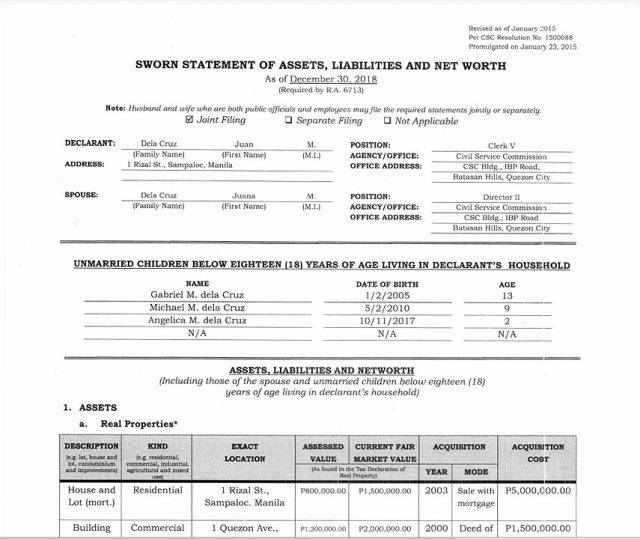
FOUR BUSINESS groups denounced a proposal of the Ombudsman to criminalize commentaries on the net worth of government officials, highlighting the importance of promoting integrity in government and the value of good governance in attracting investments.
“We… oppose the proposal because the SALN (statement of assets, liabilities and net worth) is part of a system of laws and institutions designed to promote integrity. The Ombudsman is part of that system and should be the first to insist on transparency,” the groups said in a statement on Wednesday.
“Integrity is critical to our society and leaders in government, business, and other sectors, should set the tone,” reads part of the statement signed by the Financial Executives Institute of the Philippines, Integrity Initiative, Judicial Reform Initiative, and the Makati Business Club.
“From a business perspective, a culture and environment of integrity and good governance is more and more needed to attract investment to create jobs.”
The groups pointed out that encouraging investors to undertake ventures in the Philippines requires confidence that “they have a fair chance to succeed… A fair chance that comes from not having to bribe officials themselves just to stay in business.”
“The SALN — and the ability to access and comment on it — is important because bribes often end up in assets,” they said.
They also said the proposed policy would violate freedom of speech.
Ombudsman Samuel R. Martires asked congressmen in a House budget hearing on Sept. 9 to amend the Code of Conduct and Ethical Standards for Public Officials and Employees with the inclusion of a jail term of at least five years on anyone who comments on a public official’s net worth. — Russell Louis C. Ku

THE DEPARTMENT of Transportation (DoTr) said a P10-billion fund supposedly allotted for the service contracting program that would help public transport drivers and operators was slashed from its proposed 2022 budget, officials said in a House budget hearing on Wednesday.
“We included service contracting in our submitted (budget) proposal to the Department of Budget and Management which was around P10 billion. Unfortunately, this was not included in the National Expenditure Program,” said DoTr Undersecretary Giovanni Z. Lopez.
The government’s service contracting program would pay public utility vehicle (PUV) drivers a fixed income based on kilometers traveled instead of the number of passengers along with a one-time incentive payout of P4,000.
The program started as part of the Bayanihan II, a law on the pandemic response, with P5.58 billion allotted to DoTr. It was suspended on July 1, with the DoTr failing to disburse the total amount, as the validity of the law expired. It resumed on Sept. 10 after P3 million was allotted for service contracting under the 2021 General Appropriations Act.
The DoTr is proposed to receive P150.76 billion next year, an increase of 72% from this year’s P87.45 billion.
Samar Rep. Edgar Mary S. Sarmiento said the contracting program should be continued with an allocation of at least P3 billion. “The most we could use the (P3 billion for 2021) is (for) six months (of payments) and this pandemic will be another flu in the making (and will last) 5 years… If the jeepneys won’t generate profit, the industry will die,” he said in a mix of English and Filipino.
Mr. Sarmiento also said that public utility drivers are not earning a profit as operations are limited to 50% of passenger capacity to observe distancing.
Land Transportation Franchising and Regulatory Board Chairman Martin B. Delgra III, meanwhile, said during the hearing that President Rodrigo R. Duterte has also approved the release of P3.38 billion worth of unpaid Bayanihan II funds for drivers hired under the service contracting program.
He said they are aiming to complete the payments within the next two to three days. — Russell Louis C. Ku
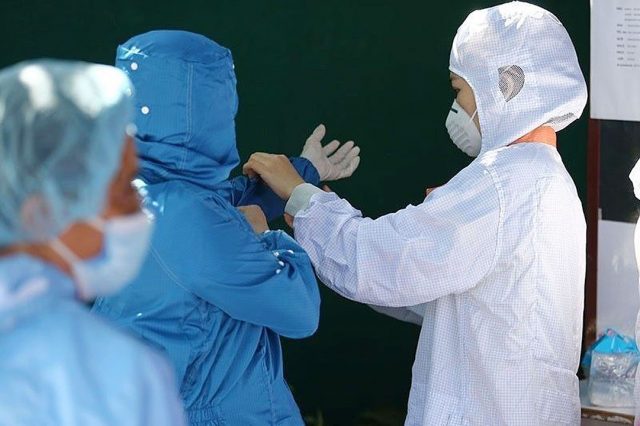
A FORMER head of the Budget department’s Procurement Service, who is now with the Office of the Ombudsman, said the purchase of pandemic supplies such as face shields and face masks last year that are currently under scrutiny by Congress were above board.
Overall Deputy Ombudsman Warren H. Liong, a former director of the Procurement Service of the Department of Budget and Management (PS-DBM), said the Bayanihan I law exempted the acquisition of medical-related supplies from the procurement law.
The Bayanihan I, or Republic Act No. 11469, was the first law passed in March 2020 in response to the coronavirus pandemic. It gave President Rodrigo R. Duterte emergency powers as well as allocated funds for cash assistance and other programs.
In the House of Representatives’ probe on the PS-DBM on Wednesday, Mr. Liong said “Section 4 of Bayanihan I states that the President is authorized to procure in the most expeditious manner as exemptions from Republic Act (RA) 9184 or the government procurement law and other relevant laws.”
He explained that the PS-DBM’s procurement of the questioned supplies was an emergency procurement and as such, they were only required to ensure immediate delivery.
Mr. Liong also said that under the Government Procurement Policy Board’s Circular 01-2020, the PS-DBM was exempt from the “alternative mode of procurements” under the procurement law which requires contractors to submit bank guarantees.
Under the said circular, emergency procurements allow the government to award contracts to contractors with “legal, technical, and financial capability to undertake the procurement at hand.”
“The only documents asked are the mayor’s permit, income tax return, omnibus sworn statement, and then compliance to technical specifications,” Mr. Liong said, adding that Pharmally Pharmaceutical Corp. submitted these requirements.
The House and the Senate are conducting inquiries on PS-DBM’s awarding of about P10 billion worth of contracts to Pharmally, a company formed only in 2019 and only had a P625,000 capital.
HEARINGS
Meanwhile, chief presidential legal counsel Salvador S. Panelo on Wednesday defended Mr. Duterte’s directive requiring Cabinet members to get his permission first before participating in legislative hearings investigating the government’s controversial pandemic deals.
He said the presidential order is justified since the Senate Blue Ribbon Committee’s ongoing probe is not in aid of legislation.
In 2005, ex-President Gloria Macapagal-Arroyo issued an executive order that required Cabinet and other government officials to seek presidential permission first before attending legislative hearings.
The Supreme Court struck down the order a year later, but it upheld the right of a Philippine president to prevent officials from participating in legislative inquiries known as a question hour, where department heads appear before lawmakers to answer questions on matters relating to their office.
“What the Senate is performing now is, at most, its authority under Section 22 (Article VI of the 1987 Constitution) on question hour as we note that no new legislation is being contemplated by its members,” Mr. Panelo said in a statement. “Hence, it may not compel department heads to attend its hearings nor cite them in contempt if they refuse to participate,” he added.
Mr. Panelo noted that the High Court “takes judicial cognizance of the fact that the right of Congress to conduct inquiries in aid of legislation is susceptible to abuse.”
In 2014, the late Senator Miriam Defensor-Santiago said former President Benigno S.C. Aquino III had no reason to forbid his Budget secretary, Florencio B. Abad, from participating in a Senate question hour about a special budget meant to fast-track certain projects.
The program in question was later declared illegal by the Supreme Court. — Bianca Angelica D. Añago and Kyle Aristophere T. Atienza

PALACE SPOKESMAN Herminio “Harry” L. Roque, Jr. on Wednesday slammed officials of the country’s premier state-run university for opposing his nomination to a United Nations body responsible for codifying international laws.
In a statement, Mr. Roque criticized the assessment of the University of the Philippines Diliman Executive Committee that he is unfit to have a seat in the International Law Commission (ILC), noting that the state university’s objection to his nomination is “politicized.”
The mouthpiece of President Rodrigo R. Duterte said it is “unfortunate” that some members of the UP community “would conveniently ignore and erase” his accomplishments and “years of hardwork” in the state university just because their “politics do not align.”
“It is very disheartening to have my nomination to the International Law Commission politicized, especially considering that the ILC itself is not a political body,” he added.
Mr. Roque, who has made statements supporting Mr. Duterte’s deadly war on drugs, reiterated that he has been an advocate of human rights and had spent most of his professional life “as a member of the civil society and as a public interest lawyer.”
“I wish to assure my former colleagues in UP that my commitment to human rights and the rule of law has not wavered,” the Palace spokesman said.
Aside from UP, two lawyers’ groups — the Free Legal Assistance Group and the National Union of Peoples’ Lawyers — have also expressed opposition to Mr. Roque’s bid.
Former International Criminal Court (ICC) Chief Prosecutor Fatou Bensouda on June 14 asked the court’s pre-trial chamber to open a probe into Mr. Duterte’s drug war that has killed thousands.
Mr. Roque had said that the Philippines will not cooperate with any potential probe by the ICC, saying it has no jurisdiction over the country after Manila’s withdrawal from the Rome Statute became effective in 2019.
The ICC, however, has said that the withdrawal would not affect its investigation.
Mr. Roque, who was nominated by the Philippine government in June, is among the 11 nominees from the Asia-Pacific region. Only eight of the nominees from the region will be elected.
The Palace official’s platforms include an accord on equal coronavirus vaccine access and a treaty that will recognize the permanent presence of states despite the effects of global warming. — Kyle Aristophere T. Atienza

HUMAN RIGHTS lawyer Jose Manuel “Chel” I. Diokno said late Tuesday that he will be running once again for a Senate seat in the 2022 elections as an independent candidate.
“I’ve had two years to think about it and to plan how to wage a better campaign and during this time… the political landscape has changed,” he said in a One News interview.
He said there is no guarantee that politicians allied to President Rodrigo R. Duterte will win next year as his term ends and people have become more vocal about their opinions on the government, which opens an opportunity for opposition candidates.
However, he also said that the opposition would have a greater chance to win in 2022 under a united slate.
Mr. Diokno first ran for a Senate seat in the 2019 midyear election under the Otso Diretso group where he placed 21st out of 62 senatorial candidates with 6.34 million votes or 13.41% of total votes.
Otso Diretso included former senators Manuel “Mar” A. Roxas II and Paolo Benigno “Bam” A. Aquino IV, election lawyer Romulo B. Macalintal, former Solicitor General Florin T. Hilbay, and former Magdalo Party-list Rep. Gary C. Alejano, among others.
“It was quite an experience for me and a challenging journey. We did not have much resources… We were at a tremendous disadvantage when it came to the air wars especially when you talk about television ads,” he said.
Mr. Diokno confirmed his intent to run in the 2022 elections on June 16 after opposition coalition 1Sambayan listed Mr. Diokno as one of their official nominees for president and vice president.
“Yes, to be clear, I will run in 2022. It’s difficult now to make a final decision about what position, and I never aspired for President or VP, which 1Sambayan has nominated me for,” he said in a tweet.
Mr. Diokno currently serves as chair of the Free Legal Assistance Group, a group of human rights lawyers that represent activists, urban poor, and journalists, among others. — Russell Louis C. Ku
