Home Blog Page 7482

China’s factory inflation hits 13-year high as materials costs soar

BEIJING, Sept 9 (Reuters) – China’s factory gate inflation hit a 13year high in August driven by roaring raw materials prices despite Beijing’s attempts to cool them, putting more pressure on manufacturers in the world’s second-largest economy.

The producer price index (PPI) rose 9.5% from a year earlier in August, the National Bureau of Statistics (NBS) said on Thursday, faster than the 9.0% increase tipped in a Reuters poll and the 9.0% reported in July. That was the fastest pace since August 2008.

China’s economy has recovered strongly from last year‘s coronavirus slump but has been losing steam recently due to domestic COVID-19 outbreaks, high raw material prices, tighter property curbs and a campaign to reduce carbon emissions.

Commodity prices have been on a tear in recent months, hurting the bottom lines of many mid- and downstream factories. China’s coal prices soared to a record high on Tuesday over supply concerns as major coal regions started fresh rounds of safety checks.

Earnings at China’s industrial firms have slowed for five straight months.

But coal and metals prices will likely drop back as construction activity falls amid restrictions on the property sector and slowing credit growth, Julian Evans-Pritchard, senior China economist at Capital Economics, wrote in a note.

And the higher comparison base towards the end of last year will also pull down overall inflation. “We doubt producer price inflation will rise much further,” he said.

The coal, chemicals and metals industries drove much of the price increases in August, according to a statement released alongside the data by Dong Lijuan, an NBS official.

Prices in the coal mining and washing sector grew 57.1% in August from a year earlier.

A separate NBS statement showed that the consumer price index (CPI) in August rose 0.8% from a year earlier, compared with a 1.0% gain in a Reuters poll and below the government target of around 3% this year.

China tightened social restrictions to curb the COVID-19 Delta variant including travel limits, which have hampered service-sector demand, although Beijing has largely contained the latest coronavirus outbreaks.

Declines in airfares, travel and hotel room prices due to the pandemic slowed consumer inflation on a monthly basis, according to NBS’s Dong.

Service-sector activity plunged in August to the lowest level since the pandemic’s first wave in April 2020, a recent survey showed, as COVID-19 restrictions threatened to derail the recovery.

Many analysts expect the People’s Bank of China to deliver a further cut to the amount of cash banks must hold as reserves later this year to lift growth, on top of July’s cut, which released around 1 trillion yuan ($6.47 trillion) in long-term liquidity into the economy.

“We expect monetary policy to remain prudent with a slightly loosening bias for the rest of the year,” said Jing Liu, senior economist for Greater China at HSBC, in a note.

China’s consumer price inflation, which is likely to stay muted, will not constrain a slight loosening stance, she added.

The core consumer price index, which strips out volatile food and energy prices, stood at 1.2% on year, versus a 1.3% rise in July. – Reuters

From long lines to online

Quezon City automates permits application and tax payment

In a bid to put ease in doing business and to allow more entrepreneurs thrive in the city, the Quezon City government launched automated systems that will enable the processing of new business and building permits applications as well as of payment of real property tax via online.

QC Biz Easy, Build Easy, and Pay Easy are housed under the city government’s E-Services Portal (https://qceservices.quezoncity.gov.ph), and are byproducts of Executive Order (EO) No. 36 s. 2019, which ordered the creation of a Task Force for Ease of Doing Business and Automation in the city.

Mayor Joy Belmonte said that through the EO and the resulting online system, the city government was able to answer the call of the Anti-Red Tape Authority (ARTA) and comply with R.A. 11032 or the Ease of Doing Business which seeks to digitize government transactions.

“I am personally in awe of how technology can assist governments like us in solving public problems in novel, effective, and impressive ways. The goal is not to replace anyone with machines and apps. We just have to consider how we can reinforce our policies with the help of new tools. Technology is not the goal but a vessel through more efficient service delivery,” said Belmonte.

Biz Easy

Launched in October 2020 by the Business Permit and Licensing Department (BPLD), the QC Biz Easy has automated the business permit application process in Quezon City.

Applicants who wish to apply for, renew, or amend their business permits may do so via the E-Services portal—scraping off the former paper-based application process.

The submitted applications are simultaneously evaluated by ancillary departments significantly reducing processing time while effectively implementing compliance to city regulations and policies.

Once clearance is given by said departments, clients may pay their new business assessment via the online portal or at various business centers all over Quezon City.

“As long as there’s good WiFi signal, one can apply for a new business permit or renew their existing permit wherever and whenever, even while on vacation,” said BPLD chief Margarita Santos.

The BPLD also recently launched its Automated Document Delivery System (ADDS) where all evaluated and completed permits—new businesses, amended, and renewed permits—are now delivered directly to the registered business address at no extra cost to clients.

This was made possible with the Department’s partnership with freight forwarder and courier service Airspeed.

Build Easy

The city government has strengthened its building safety inspections and permits application through the QC Build Easy to ensure all buildings and structures in Quezon City are not only livable but are properly built and maintained.

Clients are advised to create an online account  and to fill out the electronic application and appointment forms that are accessible in the E-Services portal.

According to Atty. Mark Dale Perral, head of the Department of the Building Official (DBO), the guidelines are converted into simple questions that can easily be understood even by non-technical individuals.

“Through the simplified Question and Answer form, we are able to generate the specific documentary requirement applicable to the client or project. This eradicated the submission of unnecessary documents and eliminated red tape,” said Perral.

For As-Built Permit Applications, the system has reduced the processing time to an average of nine working days from 20 working days in the past.

It has also significantly reduced the days of processing of the following transactions:

Excavation for Utilities, Electrical Permit with Certificate of Final Electrical Inspection (CFEI), and Mechanical Permits.

Document tracking and follow-ups are easily done through SMS, electronic mail, and announcements on official social media pages.

Pay Easy

Tax payers and business owners in Quezon City can now easily pay their real property dues and new business permit application online.

Through Pay Easy, which is housed in the E-Services portal, clients can now pay via Credit Card and Paymaya E-wallet, or instantly transfer funds from the following banks: BPI, RCBC, Robinsons Bank and UnionBank.

Belmonte said other online payment methods will be added over time and that the system will eventually be integrated to all online services that require payment at the City Treasury.

In the digital era, the efficient use of technology presents stakeholders with a win-win situation.

“Doing transactions online would mean better convenience for our citizens and limited face-to-face interactions which help ensure everyone’s safety during this time,” said Belmonte.


Spotlight is BusinessWorld’s sponsored section that allows advertisers to amplify their brand and connect with BusinessWorld’s audience by enabling them to publish their stories directly on the BusinessWorld Web site. For more information, send an email to online@bworldonline.com.


Factory output expands for fourth month in a row

The country’s factory output expanded for the fourth straight month in July, the Philippine Statistics Authority (PSA) reported this morning.

Preliminary results of the PSA’s latest Monthly Integrated Survey of Selected Industries (MISSI) showed the volume of production index growing by 537.9% year on year in July, faster than the revised 459% growth in June and a reversal of the 72.8% contraction a year earlier.

July marked manufacturing’s fourth consecutive month of growth following 13 straight months of decline.

Year to date, expansion in factory output averaged 43.6%.

The PSA noted expansion in 14 out of 22 industry divisions in July led by coke and refined petroleum products (3,525.6%); fabricated metal products, except machinery and equipment (119.8%); and wood, bamboo, cane, rattan articles and related products (57.4%),

The capacity utilization — the extent to which industry resources are used in producing goods — averaged 66.7% in July, down from the 67.7% the previous month. Of the 22 sectors, 19 averaged a capacity utilization rate of at least 50%.

Among these groups with the highest utilization rates were manufacturers of other non-metallic mineral products (81.1%), tobacco products (78.3%), and furniture (74.1%). – Ana Olivia A. Tirona

Imports growth outpaces exports rise in July

THE COUNTRY’S trade-in-goods deficit widened in July as merchandise import growth outpaced the increase in exports, the Philippine Statistics Authority (PSA) reported this morning.

Preliminary PSA data showed the value of merchandise exports increased by 12.7% year on year to $6.42 billion.

The July reading was a turnaround from the 8.9% drop in same month last year, albeit slower than the 18.8% growth seen in June 2021.

Meanwhile, the country’s import bill went up by 24% to $9.71 billion in July. This marked a reversal from the 20.8% contraction in July 2020 but was slower than the 43.4% import growth in June 2021.

This brought the country’s trade-in-goods deficit to $3.29 billion, wider than the $2.13-billion shortfall recorded in the same month last year.

Year to date, the trade balance widened to a $21.31-billion deficit, from a $13.51-billion trade gap in 2020’s comparable seven months.

For the same seven-month period, exports and imports grew by an annual 19.7% (to $42.39 billion) and 30.2% (to $63.70 billion), respectively. These surpassed the Development Budget Coordination Committee’s revised growth targets for exports and imports at 10% and 12% for the year, respectively. – B.T.M. Gadon

Alviera Country Club, Inc. sets schedule of annual stockholders’ meeting on September 30

_______________________________________________________________________

Spotlight is BusinessWorld’s sponsored section that allows advertisers to amplify their brand and connect with BusinessWorld’s audience by enabling them to publish their stories directly on the BusinessWorld Web site. For more information, send an email to online@bworldonline.com.

Join us on Viber to get more updates from BusinessWorld: https://bit.ly/3hv6bLA

DoF, NEDA back looser lockdown

PHILIPPINE STAR/ MICHAEL VARCAS

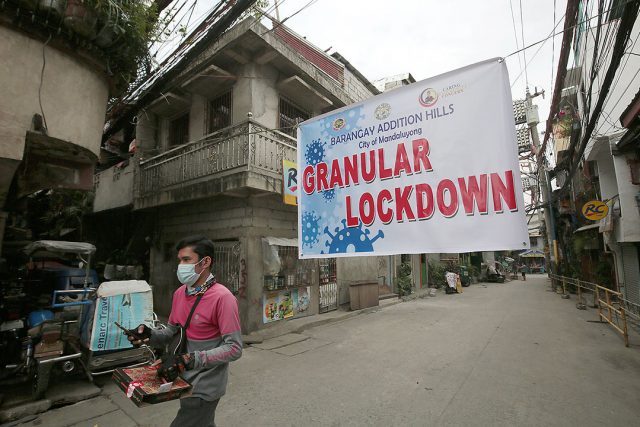
ECONOMIC MANAGERS said the government should loosen lockdown restrictions and let vaccinated Filipinos move more freely, a day after the Inter-Agency Task Force (IATF) for pandemic response deferred a plan to ease lockdowns and instead tightened quarantines in the capital region.

“Sometimes in the IATF, we are a lonely voice trying to put rationality, trying to convince people that the idea of lockdowns, don’t really work for the entire community,” Finance Secretary Carlos G. Dominguez III told senators during a budget hearing on Wednesday.

Instead of enforcing stringent lockdowns that limits parts of the economy, he said the government should provide greater mobility to vaccinated people to promote inoculation in the country as well as allow more sectors to function (Related story S1/2: Business group backs mobility ‘bubble’ for vaccinated).

“In fact, I have asked my like-minded colleagues in the IATF in the next meeting to suggest that we open more the economy, but require the businesses, particularly the larger businesses, to provide weekly testing and tracing and move towards a rational approach to managing the containment of the virus. I’ve asked my colleagues to please support that idea,” Mr. Dominguez said.

“Vaccinate, vaccinate, and continue vaccinating because that is the only solution that we can see at the moment.”

About 14% of the country’s population has been vaccinated as of Sept. 6, according to Our World in Data.

National Economic and Development Authority (NEDA) Secretary Karl Kendrick T. Chua said the economy could only achieve growth and employment targets for the year if parts of the country no longer revert to an enhanced community quarantine (ECQ) — the strictest lockdown level — and the quarantine status is relaxed after Sept. 15.

“[Based on] estimates, so long as we do not revert to the ECQ, I think kaya po ’yung (we can achieve the) estimated growth rate and employment. Under our programming, this MECQ should be finished by next week, and we will gradually move towards the granular lockdown system, so everyone else can work and recover,” he said.

Presidential Spokesperson Herminio L. Roque, Jr. said on Tuesday evening Metro Manila would be placed under an MECQ again until Sept. 15, backtracking on an earlier announcement that the capital would shift to a general community quarantine (GCQ) with granular lockdowns.

The government placed Metro Manila and other high-risk areas under a strict lockdown twice so far this year, one in April and another in August.

Limitations on economic activities prompted the government to slash the growth target to 4-5% for the year from 6-7%.

The economy grew by 3.7% in the first half and would need to expand by at least 4.3% in the second half to meet the low end of the target.

The country is facing its worst coronavirus outbreak yet as the more contagious Delta variant circulates.

The Health department reported 12,751 infections on Wednesday, bringing the active cases to 151,135.

Aside from looser lockdowns, Mr. Dominguez said passing key legislation also plays an important role in the country’s economic recovery, including the proposed amendments to the Foreign Investments Act, the Public Service Act, and the Retail Trade Liberalization Act, to ease restrictions on foreign investments.

“To ensure the long-term recovery of our economy and attract more foreign investments, we will work with Congress to pass the [bills],” he said.

In a statement on Wednesday, several business groups urged Congress to approve the three key economic reform bills to support economic recovery, create jobs and boost the country’s competitiveness.

“For decades FDI (foreign direct investment) rules in the Philippines have been more restrictive than neighboring economies which receive more FDI and enjoy higher standards of living and have less poverty and OFWs (overseas Filipino workers),” they said in a statement.

“While FDI rules are not the sole reason the Philippines has fallen behind Indonesia, Malaysia, Thailand and Vietnam, our economy is less likely to catch up unless we open up,” they added.

Mr. Dominguez also sought the approval of the remaining tax bills under the Comprehensive Tax Reform Program — the proposed Real Property Valuation Reform Act and Passive Income and Financial Intermediary Taxation Act. — Beatrice M. Laforga

Businesses criticize gov’t for lockdown policy flip-flop

Restaurants are not allowed to offer dine-in services while Metro Manila is under a modified enhanced community quarantine (MECQ) until Sept. 15. — PHILIPPINE STAR/ MICHAEL VARCAS

By Kyle Aristophere T. Atienza, Reporter

UNSTABLE government policies such as the last-minute decision to postpone the relaxation of quarantine curbs in Metro Manila is likely to further dampen business and consumer confidence, business leaders and economists said on Wednesday.

The government on Tuesday evening abruptly reversed an earlier plan to shift to a general community quarantine with alert levels in Metro Manila starting Sept. 8. Instead, a modified enhanced community quarantine was extended to Sept. 15.

“There is a huge financial cost on business enterprises when plans and preparations are dislocated by the last-minute cancellation or postponement of the anticipated relaxation of the quarantine protocols,” Philippine Chamber of Commerce and Industry Acting President Edgardo G. Lacson said in a Viber message.

He said the last-minute changes in quarantine rules diminished the credibility of the government’s pandemic response and “could be extremely disastrous” in the future.

“Authorities must be prudent in prematurely announcing half-studied policies or policy shifts because it has a tremendous impact on business operations and people’s daily lives,” he said.

The sudden retraction of the granular lockdown policy has only heightened the “mistrust of the private sector in the government’s handling of the pandemic situation,” George T. Barcelona, chairman of the Philippine Exporters Confederation, Inc, said in a Viber message.

Mr. Barcelon said businesses, including small enterprises, were disappointed with the decision because they were already in the process of “preparing workers and supplies.”

“This incident has yet again watered down the trust and competency image of the government,” he said.

The Makati Business Club (MBC) in a statement said it backed the reopening of the economy with “science-backed policies,” noting that many Filipinos are getting frustrated and desperate.

“We welcome strategies like ‘Bakuna Benefits’ and granular lockdowns provided they are adequately supported by contact tracing, quarantine, isolation, hospitalization and testing system that will help avoid recurring surges and broad lockdowns,” it said.

Small, micro and medium enterprises (MSMEs), which account for 99% of registered businesses in the country, are more vulnerable to disruptions because of their limited resources, UnionBank of the Philippines, Inc. Chief Economist Ruben Carlo O. Asuncion said in a Viber message.

“Any COVID-19 policy deemed to be unsure or unstable will be detrimental to economic stakeholders, especially small businesses,” he said.

In a Facebook post, Inchang Mendoza, owner of a Korean barbecue restaurant in the Philippine capital, expressed frustration over the government’s new decision especially since she already made preparations for the restaurant’s reopening. 

Ms. Mendoza said the meat and poultry products they bought would just go to waste since restaurants are still not be allowed to operate under the modified enhanced lockdown.

The lack of government planning just worsened the situation of small enterprises, which generate 5.38 million jobs in the country, said John Paolo R. Rivera, an economist at the Asian Institute of Management.

“They continue to tread the pandemic to survive and provide employment for their team,” he said in a Viber message. “If the government cannot really provide a significant amount of assistance, the least it can do is be decisive so enterprises do not waste resources.” The National Economic and Development Authority (NEDA) estimated that economic losses averaged P73 billion for every week of a modified enhanced lockdown in Metro Manila. Economic losses are estimated to reach P144 billion for each week of a strict lockdown.

Michael L. Ricafort, chief economist at Rizal Commercial Banking Corp., said the government should hold consultations with small businesses and various sectors before coming up with new pandemic strategies to “avoid unintended inconvenience and losses” and “so necessary preparations and costs are made.”

“More effective decisions are hinged on consultations and feedback from the medical experts and frontliners in terms of assessing the capacity of the healthcare system, as well as the most affected economic industries that need some lead times that entail expenses in view of and on top of the existing economic challenges, among others,” he said in a Viber message.

The Philippine Statistics Authority on Tuesday said jobless Filipinos declined to 3.073 million in July, bringing the unemployment rate to 6.9%. This is lower than the previous month’s 7.7%, which translated to 3.764 million jobless Filipinos.

Economic managers slashed their growth target for the year to 4-5% from 6-7% citing the impact of the lockdowns on recovery.

After growing by 3.7% in the first half, the economy now has to expand by at least 4.3% in the second semester to hit the low-end of the target.

Exporters seek refund after DENR relaxes wastewater standards

ELECTRONICS EXPORTERS fined for noncompliance with wastewater standards are now asking the government for reimbursements after the rules were relaxed.

Semiconductor and Electronics Industries in the Philippines, Inc. (SEIPI) President Danilo C. Lachica in a Viber message on Wednesday said the copper standard on industry wastewater was reverted to one PPM or parts per million of total copper starting in the third quarter.

The Department of Environment and Natural Resources’ (DENR) general effluent standards, or standards related to liquid waste discharged into rivers or seas, sets parameters for the concentrations of copper released into water.   

The standards were issued to preserve the country’s fresh, brackish, and marine waters by preventing water pollution.

The electronics exporters industry group had been appealing to the government for a review of these revised wastewater guidelines that tightened the copper standard to 0.04 PPM of dissolved copper. SEIPI earlier said the standard was comparable with Thailand’s drinking water, not treated industrial wastewater.

Mr. Lachica told the ABS-CBN News Channel on Wednesday the Trade department, the Philippine Economic Zone Authority (PEZA), and Anti-Red Tape Authority (ARTA) had helped the industry group with its appeal.

“The only concern that we have right now would be for those who were given fines and penalties for not complying with the revised standard, we’re appealing to the DENR to reverse that,” he said.

“Initially, the response was they can’t because it’s already been collected but we encourage them (to reimburse).”

SEIPI is retaining its 7% growth target for the year, which is backed by a rebound in demand in the industrial, mobility, consumer, and medical electronics sectors.

Mr. Lachica in a general membership meeting last month cited a mismatch between industry skill demand and employee training to keep up with global technology shifts, noting that electrical and computer engineering graduates have been declining. — Jenina P. Ibañez

Senators ask agencies to ramp up spending

PHILIPPINE STAR/ MICHAEL VARCAS

SEVERAL SENATORS on Wednesday urged government agencies, especially those implementing infrastructure projects, to boost spending to help the economy bounce back from the pandemic, upon learning that less than half of the allocated budgets have not been disbursed.

Senator Ralph G. Recto said 30% of the total obligated funds in the seven months to July have not been spent despite public spending’s crucial role in reviving the economy.

“Here, we are talking about a bigger budget [of P5 trillion for 2022, which is] okay. And yet, we cannot spend [this year’s] budget. That is the point, and we are not spending enough on health during a pandemic. There seems to be a misplaced priority in that sense,” he said during the 2022 national budget briefing by the Development Budget Coordination Committee (DBCC) at the Senate.

Disbursements refer to the actual withdrawal of cash from the national Treasury by government agencies to cover their operations and projects, while obligations are liabilities that will be paid by the state immediately or in the future.

Even the obligation rate of 75% in the first half was still below target since this should be hovering at 85-90% under the ideal scenario, Budget Undersecretary and officer-in-charge Tina Rose Marie L. Canda said during the hearing.

Mr. Recto also noted that departments with higher capital outlays, particularly the infrastructure-implementing agencies like the Public Works and Transportation departments, tend to log slower disbursement rates despite their critical role in job creation.

Ms. Canda attributed the slower spending to the nature of infrastructure projects and the requirement to get prior approvals from the Office of the President for new projects before the funds are released.

She said allocations for projects that are tagged as “for later release” in this year’s budget stood at P140 billion, and only 23.6% or P33 billion has been released upon getting the President’s go signal.

Mr. Recto, who was a former director-general of the National Economic and Development Authority, said the slow project implementation pushed government spending 4.9% lower year on year in the second quarter.

“That also explains why it is difficult to have this economic recovery and create jobs in the process,” he added.

Senator Franklin M. Drilon said actual public spending remained a challenge, which has affected its contribution to gross domestic product (GDP). He also cited the funds sitting idly in the offices of Procurement Service-Department of Budget and Management (PS-DBM) and the Philippine International Trading Corp.

“Based on the statement of the DBM, for every P1,000 that we budget, only P750 is obligated, and of the P750, only 30% is disbursed. For every P1,000 that we allocate, only P225 more or less is disbursed,” the lawmaker said.

At this pace, Senator Maria Lourdes Nancy S. Binay said, “there’s no recovery happening on the ground” since budgeted funds for projects and programs are not being disbursed on time.

“It’s slower than intended. We have to ask the Executive to somehow help the country to speed up the expenditures,” Senator Juan Edgardo M. Angara said.

“Because the idea is, in a pandemic you do stimulus spending. The government provides the economic stimulus, the vacuum provided by the private sector demand, the slack is taken up by the public sector. But apparently, that may not be happening,” he added.

ALLOTMENT RELEASES
Meanwhile, latest DBM data showed allotment releases reached P4.148 trillion from January to August, or 92.1% of the P4.5-trillion 2021 budget. That leaves the agency with P357.88 billion to release in the remaining four months of the year.

Of the total, budget releases to line agencies had reached P2.44 trillion as of August, or 92.7% of the P2.64 trillion allotted to them. The DBM has P193 billion left to release for the rest of the year.

About 55% of special purpose funds worth P242.42 billion have been released out of the P440.1-billion budget. This leaves P131 billion in funds to be disbursed.

Special purpose funds are allocations for specific socioeconomic purposes, which include budgetary support for local government units, the contingent fund, the miscellaneous personnel benefits fund, and the national disaster risk reduction and management fund.

Meanwhile, automatic appropriations such as retirement and life insurance premiums, internal revenue allotments, block grants and interest payments, among others, logged an 86.5% release rate equivalent to P1.14 trillion during the eight-month period.

The DBM has also released all the P251.15 billion from continuing appropriations last year, P94.4 billion allotted to unprogrammed appropriations, and P27.23 billion in other automatic appropriations.

This year’s P4.5-trillion budget has been touted as a stimulus measure to help the economy bounce back from the pandemic. — B. M. Laforga

Automatic Centre to close shop, cites pandemic

Appliance company to seek out parties interested in using the brand name

APPLIANCE company Automatic Centre on Wednesday announced that it will be closing shop next month after the pandemic affected its business.

After operating for more than 70 years, the company will stop all retail operations on October 10.

“The COVID-19 pandemic has caused tremendous challenges on our business and it is with much regret and trepidation that we share this news with you today,” Automatic Appliances, Inc. Chief Executive Officer Geoffrey Lim said in a letter.

Known as the oldest appliance and electronics retail store in the country, Automatic Centre has been selling its goods since it was set up by Benito Lim in 1948.

The company said it will seek out parties interested in using the “Automatic Centre” brand name.

Appliance Centre operates several retail stores in shopping malls across Metro Manila and Cebu City, including Alabang Town Center, Greenbelt, Eastwood Mall, and Trinoma.

The retail industry has been losing revenues as lockdown restrictions and health-related precautions led to a decline in foot traffic in commercial centers during the ongoing coronavirus disease 2019 (COVID-19) pandemic.

The Philippine Retailers Association last month asked for quicker vaccine deliveries, noting that the industry is now running out of cash reserves after three major lockdowns since March 2020.

“On behalf of the Lim family, let me take this opportunity to express our sincerest gratitude for the unwavering support you have provided us over the past seven decades,” Mr. Lim said. — Jenina P. Ibañez

SEC revokes registration of two firms for unlicensed solicitation

By Keren Concepcion G. Valmonte, Reporter

IN TWO separate orders, the Securities and Exchange Commission (SEC) revoked the certification of incorporation of EMMRJ Loan Consultancy Corp. and Yellowdot Transport Terminal, Inc. over unlicensed investment activities. 

EMMRJ Loan Consultancy is a stock corporation that was registered with the commission in late April 2017, while Yellowdot Transport Terminal was registered in late March 2016 to engage in the business of developing and providing transportation services as well as operating land transport terminals.

YELLOWDOT TRANSPORT TERMINAL
The commission said it received numerous e-mails regarding the solicitation activities of Yellowdot Transport Terminal, which is engaged in a “You avail, We manage, You earn” fleet management business. It offers a program where an initial payment of P250,000 and a monthly amortization of P30,000 can get an investor a “millennial jeepney.”

The entity lacks the needed licenses to solicit investments from the public. The SEC also said that it has not secured registration and/or secondary licenses from the commission’s Company Registration and Monitoring Department, Markets and Securities Regulation Department, and Corporate Governance and Finance Department.

The regulator issued an advisory against Yellowdot Transport Terminal in August 2019 to warn the public about its investment schemes and in the same month, the commission issued a show-cause order sent to its principal office and its stockholders-directors-incorporators Jerry C. Castillo, Clarible C. Lincod, Guadylynne C. Bauto, and Rodel Bauto.

Yellowdot Transport Terminal responded on Sept. 1, 2020 and maintained that its memorandum of agreement with the public is not considered an investment contract.

“Yellowdot merely sells modernized jeepneys, under the government’s PUV Modernization Program, albeit with unique management features, which does not necessarily mean, however, that the same is an investment contract/agreement, warranting registration with the SEC,” it said.

Yellowdot Transport Terminal offered a supplemental response with an offer worth P630,000 covering 21 subsisting contracts to “reinforce Yellowdot’s well-founded assertion that it is not engaged in offering investment contracts to the public.” 

It also prayed that the commission lifts its advisory against the entity, ceases the solicitation of new contracts, to allow its premises and records to be inspected.

“The Memorandum of Agreement readily shows that it is a sale and purchase agreement with an integrated management service agreement,” the entity said.

However, the SEC said it found the entity promising investors monthly returns of P55,000 to P85,000 with its “You avail, We manage, You earn” business. The Land Transportation Franchising and Regulatory Board also confirmed this in a notice, the SEC said.

After receiving the settlement offer, the SEC’s Enforcement and Investor Protection Department (EIPD) requested the entity’s investor-related documents, its audited financial statements, and copies of contracts and agreements with investors, and an action plan for returning the money to investors plus interest.

In a conference meeting in January 2021, the SEC also requested its counsel to submit an amended list of investors, their income report, and cases pending against the company, should there be any.

The EIPD denied the settlement offer following Yellowdot Transport Terminal’s noncompliance with its conditions, despite a deadline extension. It also said that the elements of investment contracts were manifested in the offers of Yellowdot.

EMMrJ LOAN CONSULTANCY
Meanwhile, EMMRJ Loan Consultancy’s primary purpose of incorporation details its role to conduct market research and sell products of a bank or financial organization and to look for possible clients seeking personal or home loans, among other responsibilities related to loan consultancy.

Its certificate of incorporation explicitly states that the firm is not authorized to conduct business activities that require a secondary license from the commission.

In August 2018, the SEC issued an advisory against EMMRJ Loan Consultancy, which also goes by EMMRJ Lending Investors Corp., after the regulator received reports that the entity was engaged in lending activities and was soliciting investments from the public via social media.

The SEC then issued a show-cause order to EMMRJ in October 2018 to explain in writing why it should not be cited for violation by engaging in the business of lending without authority, for soliciting investments sans a permit to sell from the commission, and why its registration should not be revoked.

EMMRJ President Elaine Joy Santos responded to the SEC’s show-cause order after 13 days and the regulator said EMMRJ “failed to deny the allegations.” Ms. Santos said the company is “totally incognizant of its purported need to secure a secondary license or permit relative to some of its business endeavors.”

She also said that EMMRJ is “more than willing” to secure the required license “if truly warranted by the nature of the business activities.”

A complaint affidavit was filed with the EIPD in August 2020 by Ryan Panopio, who invested a total of P1.17 million in EMMRJ.

“Respondent Santos explained to me that EMMRJ is an in-house loan provider to different call centers in Makati. In fact, respondent Santos showed me several applications of borrowers that were pending that time,” Mr. Panopio said.

“Moreover, respondent Santos assured me that I will get a monthly ten percent income If I invest my money in EMMRJ and it will increase through time,” he added.

EMMRJ failed to submit a detailed list of investors and transactions made as promised in an April 2019 conference with the EIPD, where Ms. Santos also confirmed that the EMMRJ has no secondary license to offer investments to the public nor a certificate of authority from the commission to engage in lending activities.

In an order dated Aug. 12, the SEC revoked EMMRJ’s certificate of incorporation and its registration. The regulator noted that the scheme it offers “bears telltale signs of a Ponzi scheme,” where investments of new investors are used to pay for the profits of old investors.

Leisure & Resorts World offers electronic gaming system under Gamezone

LEISURE & Resorts World Corp. (LRWC) on Wednesday said that it launched its own electronic gaming system (EGS) provider after its wholly owned and controlled subsidiary received accreditation. 

The Philippine Amusement and Gaming Corp. approved and issued Total Gamezone Xtreme, Inc. (TGXI) a notice to commence its EGS offering via its Gamezone brand.

“As most businesses switch to a work from home scheme, and social distancing protocols being imposed due to the Covid-19 pandemic, LRWC also strives its way in this new normal by continuing to provide services to its customers through TGXI’s remote electronic gaming,” Leisure & Resorts World said in a disclosure to the exchange.

Gamezone’s EGS allows players to play “anytime, anywhere” and is also available on some of the physical sites of TGXI. It has a range of game options, which include Habanero, CQ9, Pocket Game Soft, and Playground Technology.

“Some additional new games are also coming along the way,” Leisure & Resorts World said.

The EGS and remote gaming platform was launched in July 15, which can be accessed by all registered players of TGXI.

On Wednesday, Leisure & Resorts World shares at the stock market went up by 1.09% or two centavos to close at P1.85 apiece. — Keren Concepcion G. Valmonte