Home Blog Page 746

PHL financial system’s resources up as of May

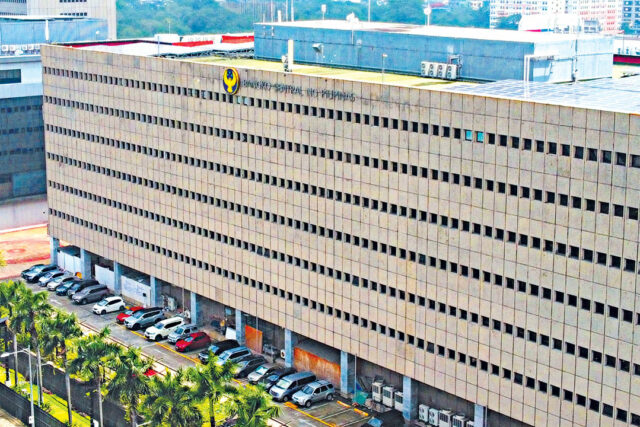
BW FILE PHOTO

THE total resources of the Philippine financial system rose by 6.2% as of May, preliminary data from the Bangko Sentral ng Pilipinas (BSP) showed.

The combined resources of banks and nonbank financial institutions grew to P34.1 trillion as of May from P32.12 trillion in the same period a year ago.

Month on month, total resources likewise edged up by 1.4% from P33.6 trillion as of April.

These resources include funds and assets such as deposits, capital, as well as bonds or debt securities.

Data from the BSP showed that banks’ resources increased by 6.7% year on year to P28.23 trillion at end-May from P26.46 trillion a year prior.

Total resources held by universal and commercial banks went up by 5.7% to P26.2 trillion from P24.8 trillion in the same period in 2024. Big banks accounted for the bulk or 83% of total resources.

Thrift banks’ resources jumped by 21.9% to P1.34 trillion from P1.1 trillion in the comparable year-ago period.

Rural and cooperative banks’ resources amounted to P543.2 billion as of May, higher by 18.6% from P457.9 billion last year.

Lastly, resources held by digital banks climbed by 33.2% to P140.1 billion from P105.2 billion in the previous year. Only data starting March 2023 are available for digital banks.

Meanwhile, nonbanks’ resources rose by 3.8% to P5.87 trillion as of end-December 2024 from P5.66 trillion at end-May 2024, latest available data showed. This was also up from the P5.56 trillion recorded at end-2023.

Nonbanks include investment houses, finance companies, security dealers, pawnshops and lending companies.

Institutions such as nonstock savings and loan associations, credit card companies, private insurance firms, the Social Security System and the Government Service Insurance System are also considered nonbank financial institutions.

Rizal Commercial Banking Corp. Chief Economist Michael L. Ricafort said the increase in the Philippine financial system’s total resources came amid faster growth in bank lending and the continued increase in banks’ deposits, earnings, and capital. 

Bank lending jumped by 11.3% year on year to P13.37 trillion as of May, latest data from the BSP showed.

Meanwhile, the banking industry’s combined earnings jumped 10.6% year on year to P101.9 billion in the first quarter.

The BSP’s ongoing easing cycle, which lowered borrowing costs, also boosted demand for credit, Mr. Ricafort said.

The central bank delivered a second straight cut in June, reducing benchmark borrowing costs by 25 basis points (bps) to bring the policy rate to 5.25%.

The Monetary Board has now lowered interest rates by a total of 125 bps since it began its easing cycle in August last year.

The central bank’s latest reserve requirement ratio (RRR) cuts also allowed banks to “increase their loanable funds and also reduced intermediation costs at the same time, as the other factors that further increased banks’ assets such as loans and other investments such as securities,” Mr. Ricafort added.

In March, the RRR of universal and commercial banks and nonbank financial institutions with quasi-banking functions was reduced by 200 bps to 5%. The ratio for digital banks was also lowered by 150 bps to 2.5%, while the RRR for thrift lenders was cut by 100 bps to 0%. Rural and cooperative banks’ RRR has been at zero since October. — Luisa Maria Jacinta C. Jocson

Maximizing BusinessWorld’s role in the business community

Lucien C. Dy Tioco, executive vice-president of the PhilSTAR Media Group

Despite economic uncertainties, changing reader expectations, and a media landscape that seemingly transforms with every technological advancement, BusinessWorld has remained a beacon of credibility and integrity for in-depth business journalism in the Philippines. Much of this resilience and tenacity can be credited to the steady leadership and strategic foresight of the multimedia company’s executive vice-president, Lucien C. Dy Tioco.

“When The STAR bought BusinessWorld in 2015, we immediately implemented our multimedia strategies into the paper, which had been bleeding for more than a decade. In just one year, BusinessWorld was taken out of the red by strengthening its hold on the business community and emphasizing the strength of its content,” Mr. Dy Tioco wrote in an article published in a previous anniversary issue of The Philippine STAR.

One key measure of this leadership is how BusinessWorld has not only maintained its readership but also strengthened its position as the preferred platform for advertisers and brands seeking to connect with the country’s business decision-makers.

According to Mr. Dy Tioco, it boils down to three factors: BusinessWorld’s credibility that has been established over the years, the company’s clout and influence over the business community, and the quality of content produced by the paper, which is very attuned to the business community and what it needs.

As a constant advocate for innovation, Mr. Dy Tioco has spearheaded the brand’s timely evolution from a traditional print-based outlet to a full-blown modern multimedia brand capable of resonating with the Philippine business community on various accessible platforms, namely print, online, social media, podcast, and events.

This adaptability was especially evident during the pandemic, when BusinessWorld quickly pivoted to digital-first content.

“In a constantly evolving world and media landscape, BusinessWorld has continued to stand the test of time, embrace disruptions, and serve its audience — government and private sector leaders, industry decision-makers, and top entrepreneurs in the Philippines and even abroad, even better through consistent hard work and innovations,” Mr. Dy Tioco said.

“The multimedia company has been able to expand its offerings because it fully understands that BusinessWorld’s audience needs a constant stream of timely, truthful, and substantial information that will further grow and nurture their learning. And they need to get these easily wherever they choose to,” he added.
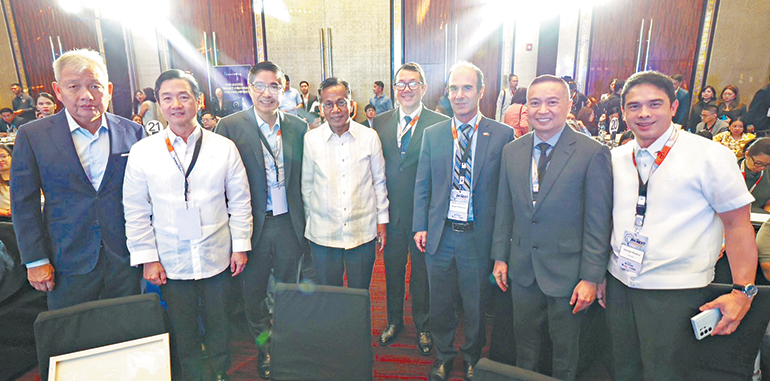
Among the most notable projects initiated under Mr. Dy Tioco’s lead are the series of fora that have expanded BusinessWorld’s influence beyond the printed page and into boardrooms, policy discussions, and strategy sessions across the country. The paper’s flagship events, the annual BusinessWorld Economic Forum and Forecast forum, have been anticipated occasions for both the public and private sectors as a platform for high-level dialogue on the most pressing issues shaping the Philippine economy.

“Even when we were doing a physical event, you could really see the people who are who’s who in one place,” Mr. Dy Tioco recalled in a previous anniversary report of BusinessWorld. “That is remarkable, that you don’t see in other business conferences. Even online, we continue to impress. Even how the Economic Forum has always been quoted and been referenced to by the business community.”

Aside from the fora, BusinessWorld has also developed other key programs to bring together the business community on a regular basis. The BusinessWorld Insights series brings together thought leaders, experts, and executives to share perspectives on the most relevant issues in their respective fields.

The series began in 2020 as a response to the pressing issues within the business community as it grappled with the crisis of the coronavirus disease 2019 (COVID-19) pandemic and gradually stepped into the new normal.

“That (limitations caused by the pandemic) inspired us to create a series of online fora, to foster that bayanihan spirit of helping the business community cope and adapt with the new normal,” Mr. Dy Tioco previously said.

That year, the business paper held three virtual Insights conferences with themes ranging from macro scenarios for businesses amid COVID-19, lessons that could be used to thrive from the pandemic, and how the startup community can innovate towards a ‘better normal.’

Now, BusinessWorld Insights serves as the brand for BusinessWorld’s on-ground events for deep dives into certain matters concerning the Philippine business community, with recent editions having tackled improving the local healthcare industry, this year’s prospects for the Philippine stock market, and accelerating energy security in the country.

BusinessWorld One-on-One, on the other hand, is an exclusive interview series that offers deeper dives into the minds of industry movers and shakers, whether heads of government agencies or high-level executives from the country’s top companies.
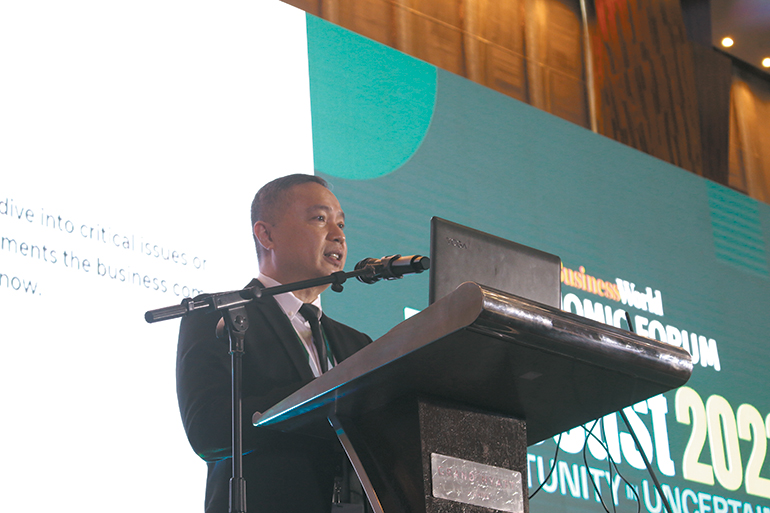
“For all the events that BusinessWorld has mounted, it has been a continuing conversation for all industry sectors that are vital to our economic growth: from infrastructure, the ever-evolving digital transformation, sustainability, energy, MSMEs, leadership, and the generational impact on the evolving workplace. These events help keep BWorld track how much progress has been made and thus benefit us with a deeper analysis of issues we need to address,” Mr. Dy Tioco noted.

In partnership with The Freeman, BusinessWorld has also held the annual Cebu Business Fora, which has two editions so far. The forum aims to bring together policymakers, corporate leaders, sustainability experts, and development advocates to discuss how Cebu and the rest of the Philippines can progress.

The gathering’s first installment discussed “A Blueprint for Philippine Smart Cities” on November 2023 at the Belmont Hotel Mactan. Last year, the second Cebu Business Forum called for transformative action with its theme “Investing for Sustainable Development from Cebu and Beyond”, held last October at the NUSTAR Ballroom in NUSTAR Resort & Casino.

BusinessWorld’s evolution with Mr. Dy Tioco at the helm continued with the launch of BWorldX, a one-stop shop for BusinessWorld’s multimedia products, such as BusinessWorld print and e-paper issues, the Top 1000 Corporations in the Philippines magazine, Quarterly Banking Reports, BusinessWorld In-Depth digital magazine, BusinessWorld B-Side podcast, and the annual BusinessWorld Economic Forum, among others.

“BWorldX intends to be a comprehensive and accessible space that allows you to consume BusinessWorld’s outstanding content based on your preferences or interest,” Mr. Dy Tioco said in the platform’s launch during the BusinessWorld Economic Forum last November 2022, when it returned to an on-ground event.

Mr. Dy Tioco also emphasized that BusinessWorld is looking to collaborate with top consulting firms, research institutions, and leading brands and companies to develop impactful content and initiatives through BWorldX. These efforts aim to empower its readers and audiences while advancing key advocacies.

“In a vast digital space where various information abounds, our audience deserves a comprehensive place where they can conveniently see and avail of BusinessWorld’s reputable and informative content,” Mr. Dy Tioco said.

Moreover, under Mr. Dy Tioco’s leadership, the trusted Top 1000 Corporations in the Philippines magazine has started branching out into an online digital platform called BusinessWorld Top 1000 Premium, where users can view data with less hassle, in an interactive and visually appealing manner.

“The first of its kind delivered by a multimedia content provider, Top 1000 Premium carries up to ten years of Top 1000 data and brings all the details you need to know about the country’s leading corporations, conglomerates, and sectors in a seamless and immersive platform,” he explained at the platform’s launch during the Forecast 2024 forum.

Through steadfast leadership, a deep understanding of its audience, and an unwavering commitment to innovation, BusinessWorld has expanded its reach and preserved its reputation as the country’s most trusted business publication. As Mr. Dy Tioco continues to steer the paper forward, he reinforces the publication’s vital role in informing, empowering, and shaping the country’s business community for years to come. — Jomarc Angelo M. Corpuz


D&L retains credit rating for P2-B bonds

DNL.COM.PH

LISTED food ingredients and oleochemicals producer D&L Industries, Inc. has kept the highest credit rating for its P2-billion outstanding fixed-rate bonds from the Philippine Rating Services Corp. (PhilRatings).

PhilRatings affirmed the PRS Aaa credit rating with a stable outlook for D&L’s P2-billion outstanding fixed-rate bonds, the company said in a disclosure to the local bourse on Thursday.

PRS Aaa is the highest rating given by PhilRatings and is assigned to obligations with minimal credit risk and to companies with an “extremely strong” capacity to meet financial commitments.

A stable outlook is assigned when the rating is expected to remain unchanged over the next 12 months.

PhilRatings said the credit rating reflects D&L’s strong market position and the diversification of its products and markets. The company aims to increase the share of export sales to 50%.

“The company is able to service not only specialized but also more basic products, which broadens its presence in different consumer markets. The company’s revenue sources are likewise geographically diverse, with a substantial portion of revenues coming from its export business,” it said.

PhilRatings also cited D&L’s specialty products, strong revenue generation, and manageable debt levels as reasons for maintaining the rating.

“The unique characteristics of D&L’s products require strong research and development capabilities. Most of these products are customized according to the specific needs of customers. This ensures continued demand for the company’s services and has helped in building long-standing client relationships that span many years,” it said.

“Additionally, significant capital expenditures are required for new market entrants to compete in the same industry and to build facilities capable of producing such specialized products. These factors provide D&L with a level of protection against new and emerging market players,” it added.

D&L shares declined by 0.39% or two centavos to P5.05 apiece on Thursday. — Revin Mikhael D. Ochave

The NextGen Advantage: UnionBank Institutional Banking empowering enterprises in the Philippines

As the business landscape continues to evolve at a rapid pace, organizations are no longer expected to simply keep up — they are called to lead. The future belongs to those who take control of change rather than simply respond to it. UnionBank recently reinforced its role as a trusted partner to industry leaders with a landmark event highlighting its Institutional Banking proposition at Shangri-La The Fort in Taguig City. Over 400 attendees, including executives from top corporations and future-focused enterprises, gathered for an evening of thought leadership, collaboration, and forward-looking aspirations.

Anchored on the theme “The NextGen Advantage,” the gathering spotlighted how institutions can navigate shifting economic landscapes, rising stakeholder demands, and the accelerating impact of AI and digitalization. The event underscored UnionBank’s strengthened focus on institutional clients, forging a new kind of partnership grounded in shared vision, agility, and the co-creation of transformative solutions.

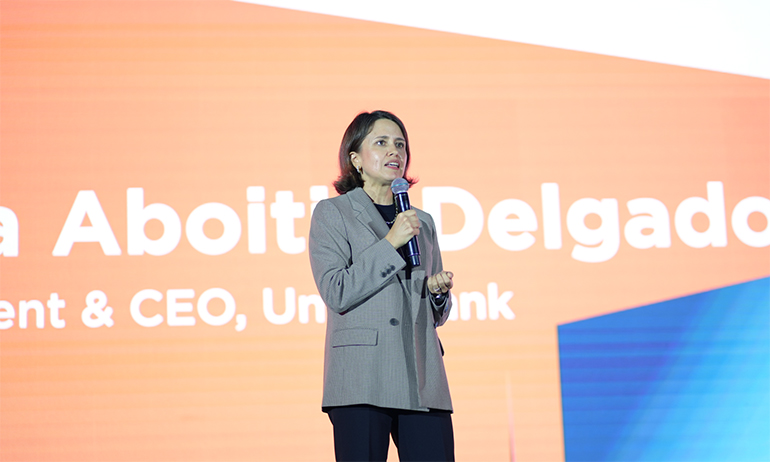
“What organizations need now is a partner who understands their ambitions and is equipped to help them grow with purpose and confidence. UnionBank is ready to meet that need. With the combined strength of our scale, expertise, and digital-first approach, we aim to empower your institutions not just to keep up — but to lead. From harnessing data-driven insights to enhancing client experiences across every touchpoint, we are committed to helping you thrive in a rapidly changing world,” said UnionBank President and CEO Ana Aboitiz Delgado.

UnionBank President and CEO Ana Aboitiz Delgado

The event’s panel discussion brought together industry experts, technology partners, and  UnionBank client leaders, who shared their success stories on how digital innovation transformed their operations and unlocked new opportunities for growth and profitability. Insights from FoodPanda Philippines CFO “Lhecks” de Castro, Jr., Supreme Court Spokesperson Atty. Camille Ting, Supreme Court MIS Attorney Atty. CJ Romano, and Microsoft CTO Lope Doromal, Jr. (c/o ATRAM) showcased real-world examples of innovation in action. Joined by UnionBank Treasury Consultant Jun Trinidad and Deputy Transaction Banking Head Erika Dizon-Go, the discussion highlighted how organizations can make themselves future-ready and create value across all levels through strategic use of technology.

“Our clients need a strategic partner who not only understands their industry but anticipates change and actively helps shape the future,” said Mimi Concha, Head of UnionBank Institutional Banking. “That’s exactly what we’re here to do.”

Ms. Concha emphasized that while technology plays a crucial role, the foundation remains deeply human. “At UnionBank, putting the customer at the heart of everything we do has always been our guiding principle — and Institutional Banking is no exception,” she added. “We’re here to listen, collaborate, and deliver future-ready, context-aware solutions that empower our partners to thrive in an increasingly dynamic environment.”

Mimi Concha, Head of UnionBank Institutional Banking

With deep expertise across key industries, UnionBank brings together its best-in-class relationship management, digital platforms, and an innovation-driven mindset to serve the unique needs of large and complex organizations. Through the years, UnionBank’s laser-sharp focus on exceptional service has been recognized with several awards, including Outstanding Digital CX — Payments and Collection Services (UPay), Best Customer Experience via Mobile and Internet Banking (The Portal), Digital Transformation of the Year — Philippines (ePaycard Digital Account Opening), and a Branch Innovation of the Year for The Portal’s enhanced branch experience.

Amid accelerating change and rising expectations, UnionBank stands at the forefront — not just as a financial institution, but as a force for progress and a driving partner in sustainable growth. “The future belongs to those who are ready to adapt, innovate, and lead with intention,” Ms. Delgado concluded. “We don’t just reimagine banking — we co-create what’s next with you.”

To learn more about UnionBank Institutional Banking and its co-creative approach to enterprise success, visit www.unionbankph.com or speak with your UnionBank Relationship Manager. You can also follow for updates on Facebook, X (formerly Twitter), Instagram, or YouTube. For any concerns, you can contact us through our Customer Service Hotline at (+632) 8841-8600. Union Bank of the Philippines is regulated by the Bangko Sentral ng Pilipinas  https://www.bsp.gov.ph.


Spotlight is BusinessWorld’s sponsored section that allows advertisers to amplify their brand and connect with BusinessWorld’s audience by publishing their stories on the BusinessWorld Web site. For more information, send an email to online@bworldonline.com.

Join us on Viber at https://bit.ly/3hv6bLA to get more updates and subscribe to BusinessWorld’s titles and get exclusive content through www.bworld-x.com.

DBP nets P8.25B from latest bond offer

COURTESY OF DBP FACEBOOK PAGE

THE DEVELOPMENT Bank of the Philippines (DBP) has raised P8.25 billion in fresh funds from its second dual-tenor bond offering for this year.

DBP President and Chief Executive Officer Michael O. de Jesus said in a statement on Thursday that this was above the minimum issue size of P5 billion and marked the seventh drawdown under its expanded P150-billion bond program.

“DBP’s latest successful mobilization of the capital markets allows it to expand its funding base and subsequently, finance more projects and initiatives that complement President Ferdinand Marcos, Jr.’s vision of sustaining long-term economic expansion and promoting greater financial inclusion,” Mr. De Jesus said.

Broken down, the bank raised P3.457 billion from Series 7A Bonds that have a three-year tenor and a 5.8751% annual interest rate.

It also borrowed P4.793 billion from Series 7B Bonds, which have a tenor of five years and an interest rate of 6.1454% per annum.

DBP has enrolled the notes for trading at the Philippine Dealing and Exchange Corp.

China Bank Capital Corp. was the issue manager, sole arranger, and sole bookrunner for the transaction.

Proceeds from the issuance will be used for DBP’s general operating requirements, including funding source diversification, balance sheet expansion, and lending activities, Mr. De Jesus said.

“This latest bond issuance is also reflective of the unwavering trust and confidence of the market in DBP as a strong and relevant government financial institution, one that plays a crucial role in advancing sustainable and inclusive economic growth especially in unserved and underserved areas of the country.”

DBP last tapped the domestic bond market in January, raising P11 billion from a dual-tenor offering of 1.5- and three-year notes.

The state-run lender’s net income surged by 82% year on year to P1.608 billion in the first quarter as it continued to boost lending to its priority sectors. — A.M.C. Sy

Digital transformation or AI?

Everyone is talking about artificial intelligence (AI) these days. AI headlines fill our news feeds, companies rush to launch AI tools, and conversations often start and end with how AI is going to change the world. In all this noise, the term “digital transformation” has somehow become less glamorous, even though it’s the foundation that makes AI possible. Many people think digital transformation is old news, or that it’s already finished. But the reality is, it’s still happening — and it matters now more than ever, especially in this age of AI.

When people hear digital transformation, they still picture businesses moving their files to the cloud or putting up fancy apps. But it’s a lot more than that. At its core, digital transformation is how companies rethink everything — how they work, how they serve customers, how they make decisions — using digital technology. It’s about changing habits, mindsets, and systems so organizations can survive and thrive in a digital world. It’s like replacing the old bones of a building to make it stand taller and stronger than before.

Yet somehow, AI has stolen the spotlight. It’s easy to see why. AI sounds futuristic and fascinating. It can forecast what customers want to buy, write e-mails, create graphics, and respond to complicated queries. AI seems magical to people. But here’s the thing: AI is a tool. Digital transformation is the strategy. One can’t succeed without the other. A company can adopt the best AI models in the world, but if it still uses manual processes, operates in silos, or keeps its data trapped in disconnected systems, that AI won’t help much. It’s like putting a sports car engine into a tricycle. It won’t travel far because the vehicle around it isn’t built for speed.

What makes digital transformation so different in this era of AI is that AI has raised the bar. It has created new expectations for speed, personalization, and efficiency. Customers want and get answers immediately. They want products tailored to their tastes. Businesses want to predict problems before they happen. AI can help deliver these, but only if a company is digitally mature enough to support it. Digital transformation now isn’t just about digitizing records or creating a website. It’s about creating an ecosystem where data flow freely and systems can adapt quickly. It’s about making sure people are ready to work with machines rather than fearing they’ll be replaced by them.

One big shift I’ve seen is how companies are starting to look at their data differently. In the past, data was something they stored because they were required to. Now, it’s a treasure. But collecting data is one thing. Turning it into value is another. Digital transformation helps businesses clean, connect, and use their data so that AI can work its magic. Without good data, AI just produces noise. People sometimes forget that AI learns from the information we feed it. Bad data leads to bad results. It’s like teaching a child the wrong words and then wondering why they speak nonsense.

Digital transformation also changes how people work. We’re moving away from rigid hierarchies toward more flexible ways of working. Teams are expected to experiment, learn fast, and adjust when things don’t go as planned. This mindset is crucial in the age of AI because technology is evolving so quickly. What worked last year might be outdated tomorrow. If a business sticks to old ways of working, it risks getting left behind.

But let’s not pretend digital transformation is easy. It’s not just about buying new software. It requires leaders who are willing to challenge how things have always been done. It requires employees who are open to learning new skills and letting go of old habits. And it requires patience because transformation doesn’t happen overnight. There will be mistakes. There will be resistance. People will say, “Why change when the old way worked?” But staying still is dangerous, especially when competitors are racing ahead.

One of the biggest fears people have today is that AI will replace jobs. It’s a real concern. But digital transformation, done right, is also about making sure people stay relevant. It’s about reskilling workers so they can work alongside AI, using it as a partner rather than fearing it as a rival. It’s about moving people to tasks that require judgment, creativity, and empathy — things machines can’t replicate fully.

I believe AI has made digital transformation more urgent. It has also made it more hopeful. AI can help us solve problems we once thought impossible. It can analyze data at speeds no human can match. But without digital transformation, AI stays locked behind closed doors. It can’t reach its potential. Digital transformation opens those doors by breaking down silos, improving data quality, and changing how organizations think and work.

When I talk to business leaders, I always tell them this: digital transformation isn’t finished just because you’ve launched an app or moved to the cloud. It’s a journey. And now, AI is the road ahead. The question is whether your business is ready for that journey or whether it’s still stuck with old maps that no longer lead anywhere.

In the end, digital transformation in the age of AI means building organizations that are flexible, fast, and human-centered. It’s about keeping the best parts of who we are while using technology to amplify our abilities. It’s not one or the other. It’s both. And while AI might be getting all the headlines, it’s digital transformation that lays the tracks for where we’re going next.

The views expressed herein are his own and do not necessarily reflect the opinion of his office as well as FINEX.


Reynaldo C. Lugtu, Jr. is the founder and CEO of Hungry Workhorse, a digital, culture, and customer experience transformation consulting firm. He is a fellow at the US-based Institute for Digital Transformation. He teaches strategic management and digital transformation in the MBA Program of De La Salle University. The author may be e-mailed at rey.lugtu@hungryworkhorse.com

7-Eleven PHL eyes 5,000 stores by 2026

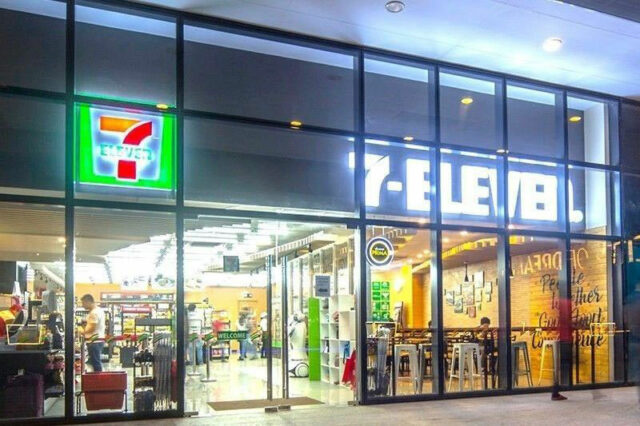
PHILSTAR FILE PHOTO

LISTED Philippine Seven Corp. (PSC) said it plans to expand its network to 5,000 stores nationwide by next year.

“I think it’s pretty safe to say it should be at least 5,000 (stores) sometime next year,” PSC Chairman Jose Victor P. Paterno said during a media briefing on Thursday.

PSC is the exclusive licensee of the 7-Eleven convenience store brand in the country. The company had 4,130 stores as of end-2024.

“We’ll see how these things go. But yes, we plan to accelerate,” Mr. Paterno said.

PSC Finance Head Lawrence M. De Leon said the company plans to open 450 to 500 stores this year, supported by a P5.5-billion capital expenditure budget, down from the previously allocated P6 billion.

“Our operations and business development teams wanted to prioritize the opening of new stores. They do not want to lose focus on expanding our footprint. That’s why the number of stores programmed for remodeling was reduced for 2025,” he said at the same briefing.

Meanwhile, Mr. Paterno was named chairman of PSC, replacing Jose T. Pardo, who is now chairman emeritus and a member of the advisory board.

Richard Lee was appointed president of PSC, succeeding Mr. Paterno.

Mr. Lee was PSC’s longtime chief of operations. He played a key role in strengthening operational alignment with PSC’s regional partners, particularly 7-Eleven Taiwan, whose technical and strategic cooperation has been instrumental to PSC’s success in the Philippine market.

PSC shares were unchanged at P50 apiece on Thursday. — Revin Mikhael D. Ochave

Cignal Play sells shorts

THE MICRODRAMA TREND has finally reached the Philippines through Cignal Play. The app will host five new locally made microdramas, and a lot more foreign-made shows in the same short format from its partner, Dashflix.

Cignal Play announced this in a press conference at the TV5 offices in Mandaluyong on July 16. The press conference showed off the stars of its locally produced shows (which included seasoned actresses Dimples Romana and Pinky Amador).

These shows, cut up into two- to three-minute episodes, are: I See You (a thriller starring Ms. Romana), My Father’s Last Wish (a family drama with Dylan Menor, Johnny Revilla, Gerald Madrid, Alex Medina, and Dawn Chang), 3 Queens and a Baby (with Christian Bables, TJ Valderrama, Iyah Mina, Daniela Stranner, Donna Cariaga, Christian Vasquez, and Iven Lim), Baker’s Heart (whose trailer featured Ramon Christopher Gutierrez), and A Cure Called Love (a romance with Mr. Menor, Micah Santos, Gelli De Belen, Pinky Amador, and Jeff Tam).

“I’m very proud of these first five. We will be launching more actually in the next few months,” said Jane Basas, MediaQuest Holdings, Inc. and Cignal president and chief executive officer, in a speech.

SNIPPETS
Microdramas were adapted from Chinese duanju, a Chinese subscription-based short written fiction format popular in China in the early 2000s. Video-based adaptations of these became popular later in the decade (within China, then out in the rest of the world). Like their written predecessor, these serials are also short, with narratives divided in chunks of minutes-long episodes. The episodes usually end in a cliffhanger in order to entice a watcher into a subscription.

Ms. Basas said that she was introduced to the concept of microdramas last year at a conference in Bali.

“I saw the numbers, how it was growing in China; how the vertical format was growing in the US and Asia. Southeast Asia in particular,” she said. “When we studied it, I felt that it was such the perfect format for this product that we have,” she said in a mix of English and Filipino.

Cignal Play used to just mirror the content on the Cignal TV box, as well as showing live content and video on demand; now it has its own content.

“We thought maybe we should carry shorts,” she said. “Even ako, nanonood ako. Nakaka-hook (Even I watch them. They can get you hooked).”

Meanwhile, MediaQuest Chair Manuel V. Pangilinan graced the event and blew the candles on what he joked were his 99th and 100th birthday cakes. “We’ve just finished our board meetings,” he said. “Now, they’re making money,” he joked.

Ms. Basas said, “This is more than short videos. We’re giving you meaningful narratives that we’ve crafted for the Filipino audiences.”

The first five episodes of every title are free to stream, with full access to the rest of the episodes available for P20 per day. The Cignal Play app is available on the App Store and Play Store.

Hastings Holdings, Inc., a unit of PLDT Beneficial Trust Fund subsidiary MediaQuest Holdings, Inc., has an interest in BusinessWorld through the Philippine Star Group, which it controls. — Joseph L. Garcia

The 2026 budget: No theatrics, please

BW FILE PHOTO

Yesterday, the broadsheets reported the approval by President Ferdinand Marcos, Jr. of the proposed P6.793-trillion national budget for 2026. Unfortunately, only the headline figures are available as of press time. It’s good the key message appears to be on the right track. The budget is said to be aimed at improving the quality of education in the Philippines and easing the lives of Filipinos.

But no matter how one looks at it, the proposed budget is still substantial as it is higher than this year’s budget of P6.326 trillion by 7.4%. Next year’s budget is some 22% of the country’s gross domestic product (GDP). After all, the Development Budget Coordination Committee had actually scaled down its growth target from 6-8% to only 6-7%. There should be less fiscal support essential to ensure the target is met. All international financial institutions (IFIs) could only go as far as saying that the global scenario this year and the next would be intractable. Trump’s puzzling tariff policy and the Middle East’s fragile proxy war are wild cards. They are known yet they can go whichever way.

Of course, based on the representation by Malacañang, the current budget proposal had descended from the P10.101 trillion original consolidated budget requests of various agencies and instrumentalities of government. Obviously, and this must be a good rationale, the fiscal space is just limited and therefore over 30% had to be trimmed.

At this point, perhaps Malacañang and Congress should consider the cautionary analysis of the U4 Anti-Corruption Resource Center, an independent, non-profit, multi-disciplinary research institute based on Bergen, Norway that the ideal of the public budget process is rarely met. Such an ideal is the allocation of public resources “in a strategic, transparent, accountable, fair and democratic way.”

Recall that the 2025 budget was previously challenged before the Supreme Court. The petitioners considered it to be the most corrupt budget ever, following the various questionable insertions and politicization of social welfare programs. Nothing was strategic about prioritizing minor and unprogrammed infrastructure projects over public education and public health. Nothing was transparent when the budget outcome was determined by an elite bicameral committee to the exclusion of key players in the budget process. Nothing, or even no one, is accountable when Congress allowed the Finance department to sweep government-owned and -controlled corporations’ (GOCCs) idle funds to cover the unprogrammed appropriations. Nothing is fair and democratic when the so-called idle funds of PhilHealth (Philippine Health Insurance Corp.) were sequestered while the objectives of universal healthcare are barely met; only a small segment of the population and a limited list of health challenges are covered.

It will serve the community’s interest if we hear from the Supreme Court soonest on whether the 2025 budget was a product of a constitutional process. Such a ruling will also be an implicit arbiter of an ideal budget process. Nobody in civil society wants a repeat of the same breach of an ideal budget process in the coming deliberation in Congress after the State of the Nation Address by the President this last week of July.

It will also be interesting to catch the drift of U4’s description of the budget process as “theater” in the worst-case scenario, “with no impact on the real allocation of public money.” U4 was describing the experience in another country where the “theater” actually masked the real distribution of revenues and disbursements.

If the budget process is a theater, let’s see how the Department of Budget and Management (DBM) did the shortlisting of the various requests from P10.101 trillion to P6.793 trillion on the basis of the announced criteria, namely, alignment with the Philippine Development Plan 2023-2028, “shovel-readiness,” absorptive capacity of agencies, and prioritization of programs that deliver the highest value and impact.”

Consider this. Malacañang announced yesterday that “the President himself sat down with the different agencies to ensure that all our priorities are aligned towards our common goal of achieving our vision of a Bagong Pilipinas.” Yet, Budget Secretary Amenah Pangandaman had to reiterate to state agencies “to stick to the agreed budget, and not ask for more once Congress deliberates on the 2026 National Expenditure Program (NEP).”

Is she afraid of the flexibility for theatrical maneuvering in Congress, Senate, and in the bicameral committee?

Ms. Pangandaman’s appeal should no longer be necessary, unless the process of elimination started and ended with her budget staff. By her own admission, though, she also disclosed that she had “been sitting down with department secretaries to check that they agree with their budget levels and priorities.” But Ms. Pangandaman’s appeal reveals a wish “that they won’t ask for more.” If the prioritization involved the agencies themselves at staff, secretary, and no less than the level of the President, what is implicit here is that the DBM itself is afraid the agencies may not keep to what has been agreed upon as to their respective agencies’ budgets. Knowing the officers and members of the Appropriations Committee is as good as having one’s foot in the door of budget additionality.

So, with whom did the President confer in pruning down the budget from P10.101 trillion to P6.793 trillion?

How well will the initial allocations hold?

An agency level breakdown is not yet available, but some other initial figures were disclosed to the public. For instance, maintenance and other operating expenses (MOOE) will get P2.639 trillion or 38.8% of the budget. Other objects of expenditure include personnel services (PS) at P1.908 trillion, or 28.1%; capital outlay, P1.296 trillion or 19.1%; financial expenses, P950 billion. By levels of government, the National Government agencies get P4.305 trillion or 63.4% and local government units will be allocated P1.350 trillion or 20%. GOCCs will be getting P188.3 billion in subsidy or equity support as well as net lending support.

One thing we all know at this point is that the fiscal space is indeed very tight.

In the last four years, the country’s fiscal deficit averaged over P1.5 trillion, with a deficit to GDP ratio ranging from a low of 5.7% in 2024 to a high of 8.6% in 2021. For the first quarter of 2025, the fiscal shortfall remained substantial at 6.8%. In fact, in the first five months of the year, the fiscal deficit already stood at over half a trillion pesos.

How this will be trimmed from a programmed deficit to GDP ratio of 5.5% this year to 4.3% by 2028 may be at best an aspirational target. Revenues have been quite steady at around 15-16% of GDP while expenditures have been way above, at more than 22%. With a presidential elections coming up in three years, it is to the interest of the ruling class to keep expenditure high — for infrastructure to keep the economic momentum strong, social services to develop our human capital and keep the living standards of the Filipinos more decent, for innovation to keep productivity rising and all productivity drags under control, not to mention the cost of winning votes.

But fund sourcing is equally stretched. Public finance is in a bind.

Increasing the tax effort ratio of around 14% of GDP could win or lose elections, especially when the nature of the tax imposed, or the rate to be collected, is not exactly popular. Borrowing could be the measure of last resort, but the National Government’s total outstanding loans are inching towards worrisome levels relative to GDP. Loans rose precipitously from P7.7 trillion before the pandemic to P16.1 trillion in 2024. At end-May 2025, the level further pushed to P16.9 trillion. When all the figures become available for the second quarter, we expect the ratio to exceed 62% of GDP.

Are we prepared then to tax wealth; collect levies on texting; collect on some families’ tax liabilities to the  Bureau of Internal Revenue  (BIR); clean up the BIR, Bureau of Customs, and other public agencies notorious for corruption, once and for all; prohibit automobile purchases unless people pay for the right to buy, which is anchored on the availability of a parking garage; implement the Supreme Court’s decision on pork barrel; and revise our legal framework on land aggregation and use?

If we are ready to bite the bullet, then we should be prepared to do away with the theatrics in the budget process.

The World Bank’s recent projection about the Philippines’ likelihood of hitting as much as 6.8% annually is not something we simply receive and not do anything to make it happen. If we listen to the World Bank’s presentation, and read carefully the press report, it is quite clear there are at least four reforms we need to do, and this has been the recurrent messages in the government’s report, the IMF Article IV consultation, ADB diagnostics, and in everything else that matters: strengthen infrastructure, improve human capital, enhance competition, and attract more private investment.

Unfortunately, in many of these official reports, one very important ingredient of accelerated, sustainable and innovative development is missing: good governance.

Good governance could very well secure all those reforms at the least cost, and without the theater of the budget process. Let’s get real this time.


Diwa C. Guinigundo is the former deputy governor for the Monetary and Economics Sector, the Bangko Sentral ng Pilipinas (BSP). He served the BSP for 41 years. In 2001-2003, he was alternate executive director at the International Monetary Fund in Washington, DC. He is the senior pastor of the Fullness of Christ International Ministries in Mandaluyong.

PHINMA boosts property arm with P300-M capital for Saludad project

PHINMAPROPERTIES.COM

DEL ROSARIO-LED conglomerate PHINMA Corp. has infused P300 million into its property subsidiary, PHINMA Property Holdings Corp. (PHINMA Properties), for the development of the 21-hectare Saludad township in Bacolod City.

“The additional investment will be fully allocated to the development of the Saludad township project in Bacolod and will enable PHINMA Properties to take advantage of the favorable market momentum for the project,” PHINMA said in a regulatory filing on Thursday.

PHINMA Properties is a 71.68%-owned subsidiary of PHINMA. The move was approved by the conglomerate’s executive committee on July 14.

The P12-billion Saludad township was launched by PHINMA Properties in October. It is a master-planned ecosystem that will integrate residential enclaves, commercial hubs, educational institutions, hospitality components, and retail areas.

The township will be developed by PHINMA Properties in partnership with JEPP Real Estate Co., with the design led by Royal Pineda+ Architecture • Design.

In April, PHINMA Properties broke ground on the Maayo Terraces mid-rise residential condominium project within the Saludad township.

Maayo Terraces will consist of 11 towers totaling 2,922 units. It will feature studio, one-bedroom, and one-bedroom loft units.

The first tower is set to be completed by 2027, while the second tower is expected to be finished by 2029.

PHINMA shares fell by 0.11% or two centavos to P17.88 each on Thursday. — Revin Mikhael D. Ochave

BSP to step up financial inclusion efforts

THE BANGKO SENTRAL ng Pilipinas (BSP) said it is working to broaden and enhance financial participation following a report showing a slight decline in financial account ownership among Filipino adults between 2021 and 2024.

“The BSP is committed to deepening financial inclusion. While the 2024 World Bank Global Findex report shows a slight decline in account ownership, this may reflect the easing of pandemic-related incentives to use transaction accounts,” the central bank said in a statement.

“These results highlight the need to go beyond account ownership and focus on improving financial health, especially for vulnerable sectors.”

The World Bank’s The Global Findex Database 2025 report released on Wednesday showed that only 50.2% of approximately 82 million Filipinos aged 15 years old and above had financial accounts in 2024, lower than the 51.4% recorded in 2021.

This was also well below the 83.3% average account ownership rate for East Asia and Pacific and the 70.4% for lower middle-income countries.

“The BSP remains committed to working with partners to onboard more Filipinos to the formal financial system and support their financial well-being through inclusive, secure, and accessible financial services, the central bank said.

Latest BSP data showed digital payments accounted for nearly 60% of both the volume and value of total monthly retail transactions last year. The BSP is targeting to achieve a 60-70% share of digital payments over total retail payments volume by 2028, in line with the Philippine Development Plan.

The central bank is also targeting to onboard at least 70% of adult Filipinos into the formal financial system. The share of Filipinos with bank accounts reached 65% of the adult population in 2022, BSP data showed.

“Persistent challenges remain, such as connectivity gaps, low financial literacy, and trust issues. Still, there are gains observed from 2021 to 2024,” the BSP said.

It noted that the World Bank report showed “increased use of mobile money accounts, formal savings, and improved financial resilience, as measured by the ability to access extra funds within 30 days.”

There was also higher account ownership seen among women, the poorest 40%, and Filipinos out of the labor force, it added.

Data from the World Bank showed that financial account ownership among adult Filipino women rose to 57.1% in 2024 from 47.4% in 2021. Increases were also seen in account ownership rates for those out of the labor force (to 44.3% from 41.4%) and those in the poorest 40% of households (to 34.4% from 34%).

However, these were still lower than the East Asia and Pacific averages of 83.5% for women, 75.7% for adults in the poorest 40% of households, and 50.3% for adults out of the labor force recorded in 2024.

Among lower middle-income economies, an average of 67.6% of adult women had financial accounts, as well as 63.4% of those in the poorest 40% and 59.9% of those without work. — Luisa Maria Jacinta C. Jocson

The man with the golden Gunn

Movie Review
Superman
Directed by James Gunn

A LOT is riding on this movie: not just the reboot of DC Films (now called DC Studios) — with James Gunn and producing partner Peter Safran as co-CEOs — but also a reboot of not just a DC comic book superhero but arguably the foundational superhero (not the first ever but damned close and hugely influential) and, in effect, the salvation of an entire movie genre, which lately has been in a box-office slump generating more bad publicity than Elon Musk on a ketamine binge.

So does Gunn do it? I’d say you’re asking the wrong question.

Gunn’s roots come from low-budget independent horror, learning how to write, produce, direct, distribute, and even make poster art for Troma Entertainment. His first major screenplay was for two Scooby Doo movies and a Dawn of the Dead reboot (none of which, I must note, I much liked); his directorial debut was Slither, a sly horror comedy about sluglike alien parasites infiltrating a small town (that I liked a lot); his Super — arguably his best work to date — is a grotesque yet surprisingly poignant satire of costumed heroes in general.

Gunn at this point was an interesting indie filmmaker who dabbled in mainstream genre filmmaking; his next project however was Guardians of the Galaxy, where he took a relatively unknown comic book team and fashioned for himself a breakthrough hit, mainly by smuggling his subversive indie humor into a mainstream Marvel Studios project, complete with a soundtrack full of 1960s and ’70s nostalgic titles. A few more Guardian sequels made respectable if not outstanding cash and he had influence enough to direct a big production (The Suicide Squad) and spinoff mini series (The Peacemaker) that still includes his irreverent shitstirring sensibility even if they did less than impressive numbers.

So, the real question is: Can Gunn still do it? Can he mix his often R-rated indie comedy and gonzo sensibility with a mainstream property and still have enough popular appeal to make money? The movie has earned its production cost back on opening weekend which suggests a splash, not necessarily big enough to save either DC Studios or the comic book movie industry, at least not quite yet.

But the real question is: Did he do it? Did he make a recognizably James Gunn movie out of one of the oldest and most revered comic book characters in pop culture history?

First thing you’ll notice while watching will recall the term “in media res” — after a few introductory titles we get Clark (David Corenswet) on ice, broken and bleeding (clever that the first teasers for the picture show this exact moment, and literally nothing of what follows). In swift succession we meet Krypto, the robots, Ultraman, the Engineer, Lex Luthor, and so forth. We’ve been introduced to the Kryptonian at least twice before on the big screen; now meet the rest of his world and try to keep up.

This was pretty much what Gunn did with Guardians and Peacemaker — introduce in a cold open, follow to learn more, find out the full story in bits and dribbles along the way. Oh, and that tendency to just toss new characters at you pell-mell? Totally out of the comic books, as pointed out by someone calling himself “Sir Superhero” on YouTube

(not kidding, you can find him on the app, and he at least sounds authoritative and what he had to say about this movie’s story structure does make sense). Unlike Marvel Studios which introduced major characters in single features leading up to the big Avengers movies, a strictly linear progression, Gunn opts for how some of the more freewheeling issues work, with crossovers and team-ups and whatnot (Sir Superhero’s recommendation on how to dive into the comic books’ teeming brew: pick a character, read a story, hang on — and follow whoever happens to interest you along the way into whatever narrative they’re involved in; rinse and repeat). Instead of a linear progression you get chaotic bloom spreading out in all directions, a more democratic buffet of interconnected storylines instead of a fascistic single narrative.

Or you can call Gunn a messy writer.

Either way it’s a bit hard to predict when he’ll zig or zag, and there will be times you might actually be pleasantly surprised.

Gunn doesn’t mess with the original character though — much. As first conceived by Jerry Siegel and Joe Shuster, the Man of Tomorrow (he was apparently called that after the 1939 New York World’s Fair) was a violent, sadistic vigilante who, yes, championed the oppressed and helped those in need — but at one point hurling a man against a wall (to be fair he was a wife beater), at another snatches a man by his ankle and jumps up the side of a building to terrify him (to be fair he’s a corrupt politician). Gunn’s protagonist comes from the Silver Age (around 1956 to 1970), a more family friendly hero who fights for “truth, justice, and the American Way!” (a motto that started with the radio shows, was continued in the 1950s TV show, was burned into recent popular memory by Richard Donner’s 1978 feature). Gunn keeps the Big Blue Boy Scout’s squeaky-clean sensibility, adding a few details: he’s not adverse to premarital sex (though that was introduced as early as Donner and Richard Lester’s 1982 feature) and he tends to get heated when challenged.

Speaking of challenged – Clark’s scene with Lois (Rachel Brosnahan) is a nice little moment to introduce both characters’ chemistry together. Not only the question of ethics — of doing the right vs. the legal thing (though Lois could’ve worked harder at catching Clark in moral dilemmas — quoting Robert Bolt might have helped) but of how the couple struggle over the issue of professional vs. personal boundaries (neatly represented by the constant stopping and starting of the “record” button [“You can’t use that!”]) which they have pretty much trashed by sleeping together. This Clark is a hothead with a big heart who tends to act before he thinks, and a bit of a horndog to boot — in other words a regular guy like you and me, made a little too explicit in a late speech.

Nicholas Hoult’s Luthor — well he’s more in line with recent comic book incarnations, a media-canny ultrarich tech bro with serious self-esteem issues (but don’t they all?) who doesn’t really do business but takes things very, very personal. Hoult taps into his sense of entitlement and comes up with a character we would all dearly love to strangle; good job, only I remember Gene Hackman’s Luthor and his crack sense of comic timing, the way he would turn on a dime (at least in the first movie) and suddenly be quietly menacing. In Lester’s sequel he was less villain and more buffoon but 1.) we need more Hackman humor, and, 2.) even as court jester he kept slyly throwing shade at Terence Stamp’s pompous General Zod.

The rest of the cast is memorable and alas too numerous to enumerate, though I’ll single out Nathan Filion’s Guy Gardner as the best candidate for a spinoff feature; not only is Gunn free to push him as hard as possible (those giant green middle fingers!) but he inspires others to sharpen their own quips (“That haircut is a violation of your oath!”).

Visually, Gunn was never an especially distinctive stylist, though I might note that he likes to use lengthy takes, the better to catch the chaos and chaotic interplay between multiple voices — but this is no Tim Burton, the last real fabulist to work on the genre. Gunn does keep it at human rather than monumental level, insisting on keeping our eyes directed at the characters instead of the mile high monsters and gigantic explosions. The color palate is standard issue bright comic book — but his visual source being the Silver Age, meant to hold the attention of 10-year-olds, that’s to be expected.

Not much else to say except I love the explicit stance the movie takes on the Palestinian invasion (it’s wrong) and like — kind of — Gunn’s assertion through Clark that “Kindness is the new punk rock.” Maybe, but that’s not Gunn’s forte; his best work involves absolute losers with abysmal self-esteem who struggle and once in a while succeed. Gunn does his best with Clark — bringing the big guy down to our level, at least confidence-wise — but it helps to surround the man with a cast of characters reflecting and contrasting and giving context to his essential goodness, showing how he stands out in a still imperfect world. To paraphrase what a wise man once said: Oh Lord, go ahead give me kindness — but don’t give it to me yet.