Home Blog Page 7452

Inflation steadies at 4.5% in May

The overall year-on-year increase in prices of widely used goods steadied for the third consecutive month in May, the Philippine Statistics Authority (PSA) reported earlier this morning.

Preliminary PSA data showed headline inflation at 4.5%, steady from April and surging from 2.1% a year ago.

The annual rate recorded in May marked its third straight month of inflation remaining unchanged.

The latest headline figure matched the median estimate in a BusinessWorld poll conducted late last week. This also fell within the 4%-4.8% estimate given by the Bangko Sentral ng Pilipinas (BSP) for May.

Year to date, inflation settled at 4.4%, still slightly above the BSP’s 2-4% target, as well as its revised inflation forecast of 3.9% for the year. May was the fifth month in a row that inflation went beyond target.

Food inflation eased to 4.9% in May from 5% in April. Still, this was faster than last year’s 2.9%.

Core inflation, which is used in determining underlying price trends by removing the volatile food and fuel prices, stood at 3.3% in May. This was also unchanged from the annual rate recorded in April, but was still higher than the 2.9% core inflation in May 2020.

So far, core inflation averaged 3.4% this year compared with the 3.1% in 2019’s comparable five months.

Meanwhile, the inflation rate experienced by the bottom 30% of income households likewise stood at 4.5% in May, slower than the 4.9% rate recorded the previous month. Still, this was faster than the 2.9% logged in May 2020. — Abigail Marie P. Yraola

Taskforce T3 welcomes vaccination of A4 sector in June

A private sector coalition that was organized to consolidate the business community’s COVID19 response efforts fully supports the government’s decision to expand the vaccination rollout to the A4 priority sector starting June 7.

Guillermo “Bill” Luz, Taskforce T3 proponent and Chief Resilience Officer of the Philippine Disaster Resilience Foundation, says the inclusion of A4, majority of whom represent the economic frontliners, will help the private sector greatly in the reopening of their businesses.

“The private sector believes in vaccinating as many people in the soonest possible time so that we may safely reopen the economy. Thus, we support the expansion of the administration of vaccines to the A4 priority sector this June and thank the IATF and the national government for this decision,” explains Luz.

Luz adds that they acknowledge that in the 40-59 year-old age group among A4 may be given preference in the implementation, as well as continued priority to be given to A1 to A3.

National Task Force for Covid-19 (NTF) Deputy Implementer Secretary Vivencio Dizon clarified during yesterday’s Task Force T3 monthly update meeting that even with the opening of vaccination to the A4 sector, A1 to A3 will still be prioritized through dedicated special lanes in all vaccination facilities.

Under Inter-Agency Task Force for the Management of Emerging Infectious Diseases (IATFEID) Resolution No. 117, those eligible for vaccination include private sector workers required to be physically present at their workplace outside their residences; employees in government agencies and instrumentalities; and informal sector workers and self-employed who may be required to work outside their residences, and those working in private households.

Taskforce T3 also lauds NTF Chief implementer Secretary Carlito Galvez for continuously working to ensure a steady supply of vaccines for the country, which made the opening for the A4 sector possible.

“We are pleased with the increased and assured supply of around 10 million doses in June and we hope that this continues in the coming months,” says Luz.

The rollout to include A4 will make use of vaccines procured by the government and the private sector, through tripartite agreements. Supply coming from the COVAX facility will continue to be earmarked exclusively for the A1 to A3 and the A5 priority sectors, as explained by Secretary Dizon.

Taskforce T3 vowed to strengthen its ongoing collaboration with the national government to accelerate the pace of the national vaccination program. It is partnering with LGUs to augment jab rates in NCR Plus 6 through the cooperation of the 5 biggest private hospital groups in the country, namely: Ayala Healthcare Holdings, Inc. (AC Health), Metro Pacific Hospitals Holdings, Inc (MPPHI), Mount Grace Hospitals Inc., St. Luke’s Medical Center and The Medical City.

Moreover, T3 has also helped promote vaccine confidence through the Ingat Angat Bakuna Lahat campaign as well as providing incentives via Smart Bakuna Benefits.

Luz assures that Taskforce T3 will continue to work and collaborate with the government until the country is able to overcome the COVID-19 pandemic.

“We support the plan to achieve population protection by focusing on the vaccination of NCR Plus 8,” adds Luz.

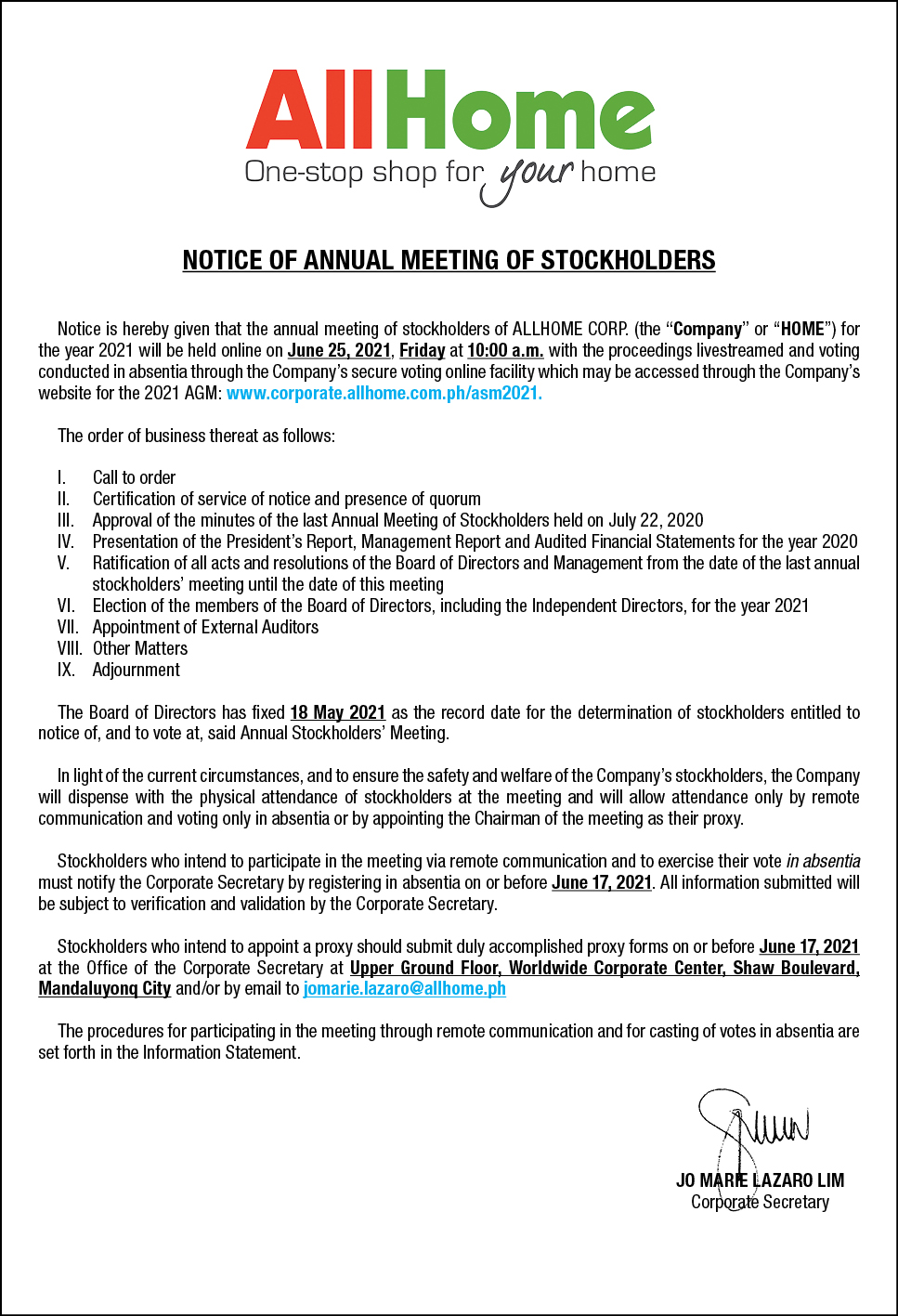
ALLHOME Corp. sets annual stockholder’s meeting

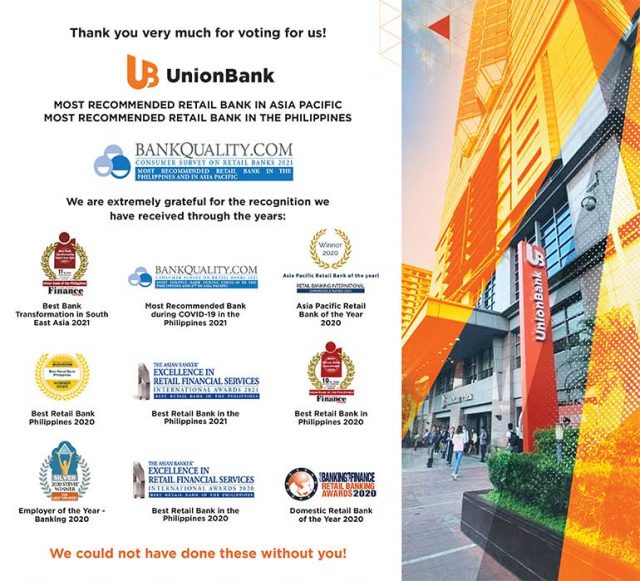
UnionBank voted as the Most Recommended Retail Bank in Asia Pacific and in the Philippines

Union Bank of the Philippines (UnionBank) was recognized as the Most Recommended Retail Bank in Asia Pacific and in the Philippines by BankQuality.com. According to BankQuality.com, the Most Recommended Retail Banks in 11 Asia-Pacific markets are ranked from a survey of 11,000 bank customers based on a BankQuality Score (BQS) derived from a net promoter assessment of each bank.

UnionBank has consistently been recognized as of one of Asia’s leading companies, ranking among the country’s top universal banks in terms of profitability and efficiency.

Notice of Annual Stockholders’ Meeting of Arthaland Corporation

NOTICE OF ANNUAL STOCKHOLDERS’ MEETING

NOTICE is hereby given that the 2021 annual stockholders’ meeting of ARTHALAND CORPORATION will be held on 25 June 2021, Friday, 8:30 A.M. and will be convened by the Presiding Officer in Taguig City through remote communication.

The Agenda for the meeting is as follows:

  • Call to Order
  • Secretary’s Proof of Due Notice of the Meeting and Determination of Quorum
  • Approval of Minutes of the Annual Stockholders’ Meeting held on 26 June 2020
  • Notation of Management Report
  • Ratification of Acts of the Board of Directors and Management During the Previous Year
  • Election of Directors (including Independent Directors)
  • Appointment of External Auditor for 2021
  • Other Matters
  • Adjournment

Only stockholders of record on 01 June 2021 will be entitled to further notice of and to vote at this meeting. Electronic copies of the Information Statement which will include the manner of conducting the meeting and the process on how one can join the same, as well as vote in absentia, among other relevant documents, will be made available in www.arthaland.com and the Electronic Disclosure Generation Technology of the Philippine Stock Exchange (PSE EDGE).

WE ARE NOT SOLICITING YOUR PROXY. However, if you cannot personally attend the meeting or participate through remote communication but would still like to be represented thereat and be considered for quorum purposes, you may inform the Office of the Corporate Secretary at the address indicated below or through investor.relations@arthaland.com not later than 18 June 2021 (Friday). You will thereafter be advised the following business day of any further action on your part, which may include accomplishing a proxy.

ARTHALAND CORPORATION
Head Office, 7F Arthaland Century Pacific Tower
5TH Avenue corner 30TH Street, Bonifacio Global City
1634 Taguig City, Philippines


RIVA KHRISTINE V. MAALA
Corporate Secretary

The new BPI Amore Cashback cards reward Filipinos with more cashback options

The Bank of the Philippine Islands (BPI) revamped its current Amore Visa credit cards to BPI Amore Cashback and BPI Amore Platinum Cashback cards, as the bank aims to enable more Filipinos to make both online and in-store shopping more convenient and rewarding with enhanced payback features.

This move comes on the heels of the COVID-19 pandemic, which has changed the spending habits of Filipinos across all market segments.

According to Credit Card Association of the Philippines, credit card billings growth declined in 2020 across the industry due to the effects of the pandemic. As for the top three segments where credit cards were used, these included supermarkets, micropayments such as transportation and fast food restaurants, and electronics.

BPI also noted that its customers are shopping more online and spending more on essentials. The bank sees this trend to most likely continue until 2021 and the years to come.

“The pandemic has resulted to certain challenges for Filipinos and BPI customers. We revamped the BPI Amore credit cards to let customers enjoy safe and secure cashless transactions, while giving them the added value of cash rebates whenever and wherever they spend. These are the card features that are truly relevant and helpful at a time like this,” said Jenny Lacerna, group head of BPI Unsecured Lending and Cards – Product and Sales.

Rewarding and safe

The BPI Amore Cashback card allows its cardholders to enjoy cashback for their day-to day purchases, whether in-store or online. For every P1,000 worth of local spend anywhere, cardholders may get 4% cashback from supermarkets, 1% from drugstores and utilities, and 0.3% from other local spend.

True to its beginnings as a co-branded credit card with Ayala Malls, BPI Amore Cashback cardholders will continue to enjoy exclusive Ayala Malls privileges, such as free unlimited access to Ayala Malls’ Customer and Family Lounges.

BPI Amore Platinum Cashback cardholders can get 4% cashback from restaurants and food deliveries; 1% from supermarkets, department stores, and other retail stores; and 0.3% from other purchases, for every P1,000 worth of spend anywhere, be it here or abroad. They also get exclusive Ayala Malls privileges, including 5% discount on their movie ticket, free unlimited access to Ayala Malls’ Customer and Family Lounges, and six complimentary parking tickets.

Cashless transactions and digital payments are seen as a safer way to help stop the spread of COVID-19. The revamped BPI AMORE Cashback cards are accepted by most online merchants, enabling safe and contact-free shopping at the comfort of one’s home. Customers can also tap or swipe the cards themselves at in-store credit card terminals to minimize physical contact when they need to go out to purchase essentials.

Customers can apply for a BPI Amore Cashback Card conveniently online through www.bpi.com.ph/creditcards/apply.

Q1 foreign investment pledges fall

PHILIPPINE STAR/ MIGUEL DE GUZMAN

By Ana Olivia A. Tirona, Researcher

THE Philippines saw approved foreign investments decline by nearly a third in the first quarter due to uncertainty over the coronavirus pandemic.

Preliminary data from the Philippine Statistics Authority (PSA) showed foreign investment pledges slumped by 32.9% year on year to P19.55 billion during the first three months of 2021 from P29.14 billion recorded in the same period last year.

This marked the fifth consecutive quarter of an annual decline in foreign investment pledges in the country.

Total Approved Foreign Investment Pledges

PSA data also showed the amount committed during the January to March period was the lowest level since the P15.46 billion logged in the second quarter last year, at the height of the lockdown.

Combined with approved investment pledges by Filipinos, total investment pledges in the first quarter jumped by 42.5% to P165.16 billion.

Should foreign and local commitments materialize, these projects are expected to generate 23,472 jobs, 35% less than the 36,130 projected additional employment a year ago.

PSA’s foreign investment commitments differ from the actual foreign direct investments (FDI) tracked the by the Bangko Sentral ng Pilipinas for balance of payments purposes. The central bank’s monitoring also goes beyond the projects and includes other items such as reinvested earnings and lending to Philippine units via their debt instruments.

Asian Institute of Management economist John Paolo R. Rivera attributed the decline of first quarter’s investment pledges to the lingering effects of the pandemic.

“In the midst of this pandemic, foreign investor sentiment and confidence are not only driven by macroeconomic fundamentals and institutional frameworks but also by a country’s systematic approach to managing the economic effects of the pandemic in the short, medium, and long-run to mitigate the investment risks and ensure favorable returns for investors” he said in an e-mail interview.

To recall, a fresh spike in coronavirus disease 2019 (COVID-19) was seen in March, prompting the government to tighten lockdown restrictions again.

ING Bank N.V. Manila Senior Economist Nicholas Antonio T. Mapa said economic uncertainty remains while firms are still recovering from the effects of the pandemic. Which, in turn, made investors “conserve cash before diving in headlong into a new venture.”

“Most investors generally take a medium-term view of the economy and would likely look past the recent lockdowns per se as they will likely end soon,” he said in a separate e-mail interview.

“But what the lockdowns could suggest is that the Philippine growth momentum will remain hampered in the medium term as we repeatedly need to return to tighter lockdowns when infections spike,” Mr. Mapa said.

The government counts investment pledges from seven investment promotion agencies (IPAs), which are authorized by law to grant tax and nontax incentives to investors putting up businesses or expanding existing ones in priority sectors.

The seven IPAs tracked by the PSA are the Philippine Economic Zone Authority (PEZA), the Board of Investments (BoI), the Clark Development Corp. (CDC), the Subic Bay Metropolitan Authority (SBMA), the Authority of the Freeport Area of Bataan (AFAB), the BoI-Bangsamoro Autonomous Region in Muslim Mindanao (BoI-BARMM), and the Cagayan Economic Zone Authority (CEZA).

The three months to March saw the PEZA contributing the most foreign investment pledges at 62.3% of the total with P12.19 billion, albeit a 1% year-on-year decline. This was followed by BoI with a 35% share valued at P6.84 billion, 48.4% less than a year ago.

Rounding the rest of the IPAs were CDC’s 1.8% share at P357.3 million, SBMA’s 0.4% share at P76.4 million, CEZA’s 0.3% share at P49.1 million, and AFAB’s 0.2% share at P39.4 million.

Data from BoI-BARMM were not available.

By sector, a huge chunk of foreign investment pledges went to manufacturing with a 57% share of the total at P11.13 billion, followed by information and communication with a 23.4% share (P4.58 billion), and real estate activities’ 11.5% share (P2.24 billion).

Year on year, foreign pledges in manufacturing grew by 11.9% from last year’s P9.95 billion. Likewise, real estate activities marginally increased by 3.7% from the first quarter of last year’s P2.16 billion. The growth rate for investments in the information and communication sector was not indicated as it exceeded over a thousand.

The Region IV-A or Calabarzon, consisting of Cavite, Laguna, Batangas, Rizal, and Quezon provinces, got the bulk of the foreign pledges at 38.6% of the total or P7.54 billion. This was more than four-fifths the commitments to the region from a year ago when it logged P5.13 billion in foreign pledges.

Central Visayas was the second-largest contributor in the total with a 14% share (P2.73 billion) in foreign pledges, followed by the National Capital Region with an 8.9% share (P1.74 billion).

In terms of country investors, Japan was the biggest source of FDI commitments in the first quarter with P10.72 billion, 8.4 times greater than a year ago and accounting for 54.8% of the total. It was followed by the Cayman Islands and South Korea, pledging P1.14 billion (5.8% share) and P592.63 million (3% share), respectively.

As for the second quarter outlook, Mr. Rivera said investors remain “risk averse” due to the apprehensions over the handling of the pandemic.

“The Philippines needs to project and prove that it is efficiently managing the pandemic by swiftly inoculating the population so the economy can be reopened safely,” Mr. Rivera added.

For Mr. Mapa, foreign investment pledges would likely “remain subdued” as investors are left with conserving cash or in the search for other destinations.

“Given that we have lost our previous most compelling factor to attract investment: our strong growth trajectory,” Mr. Mapa said.

The Philippine economy shrank by 4.2% in the first quarter. Economic managers expect gross domestic product to grow by 6-7% this year.


Government debt nears P11 trillion as of April

By Beatrice M. Laforga, Reporter

THE National Government’s outstanding debt inched closer to P11 trillion as of end-April after tapping the international debt market twice that month, the Bureau of the Treasury (BTr) reported.

Preliminary data showed the debt pile rose 2% to P10.991 trillion in April, from P10.77 trillion in the period ending March after the BTr issued more government securities here and abroad. The month’s debt tally was 27.8% higher year on year from P8.6 trillion as of April 2020.

Around P1.196 trillion was added to the debt stock so far this year, up 12% from the P9.795 trillion at the start of 2021.

Of the total, 71% of the debt portfolio were from domestic lenders while 29% were from external sources.

The local debt stock reached P7.812 trillion as of April, a tad higher than the P7.74-trillion level in March, and 33% bigger than the P5.863-trillion debt pile as of April 2020.

This was after more government securities were issued in April, bringing the total 0.9% higher to P7.271 trillion in April from P7.204 trillion in March.

Outstanding loans remained unchanged that month with P540 billion in advances from the Bangko Sentral ng Pilipinas and P156 million from other domestic borrowings. Assumed loans stood at P792 million.

Meanwhile, the outstanding external debt of the government grew by 4.9% to P3.179 trillion as of April from P3.029 trillion in March, mainly because of the two global bond issuances. Year on year, the tally climbed by 16.2% from P2.737 trillion in the same period last year.

Overall debt securities went up by 8.3% from the month before to P1.798 trillion. Euro-denominated bonds more than doubled to P234.64 billion as of April from P111.3 billion in March, after the Treasury raised P122 billion from a triple-tranche sale of euro bonds.

Total Japanese yen-denominated bonds also increased by 23% to P132.7 billion that month following the P24 billion it raised in three-year Samurai bonds.

The rest of the debt stock consisted of dollar-denominated global bonds (P113.136 billion), peso global bonds (P85.57 billion) and Chinese yuan-denominated notes (P18.6 billion).

Outstanding loans also inched up by 1% to P1.38 trillion after new loans worth P163 billion were obtained in April.

Guaranteed debt stock, meanwhile, went down by 0.2% to P434.74 billion as of April from P435.8 billion in March due to the net redemption of P750 million in local guaranteed obligations and P80 million in foreign guarantees. Year on year, this fell by 9% from P477.68 million.

Domestic guaranteed debt dipped by 0.3% month on month to P238.53 billion, while those owed to foreign lenders likewise slipped by 0.2% to P196.2 billion.

“Local-currency exchange rate fluctuations further lowered the peso value of external guaranteed debt by P1.57 billion while third-currency appreciation added P1.33 billion to the peso value of guarantees,” the BTr added.

A net redemption occurs when the Treasury pays back more debt than the new loans it obtains during the period.

The ballooning debt showed the need for the government to increase its borrowings to plug the widening budget gap, said Rizal Commercial Banking Corp. (RCBC) Chief Economist Michael L. Ricafort in a note on Thursday,

“The need to finance the purchase of more COVID-19 (coronavirus disease 2019) vaccines would also lead to some pick up in government borrowings/debt; as the commercial purchases for COVID-19 vaccines would be recurring in nature in the foreseeable future,” Mr. Ricafort said.

He said the country’s debt-to-GDP ratio could remain within the global threshold of 60% if the economy recovers in the coming months. He said this could give the state more room to hike spending, budget deficit and the debt pile to boost the economy.

The budget deficit shrank to P44.4 billion in April compared with the P274-billion fiscal gap a year ago, largely due to base effects. This brought the four-month deficit to P365.9 billion.

Official estimates showed the government’s debt stock could rise to P11.98 trillion by end-2021.

BSP says PHL prepared to handle changes in Fed policy

REUTERS

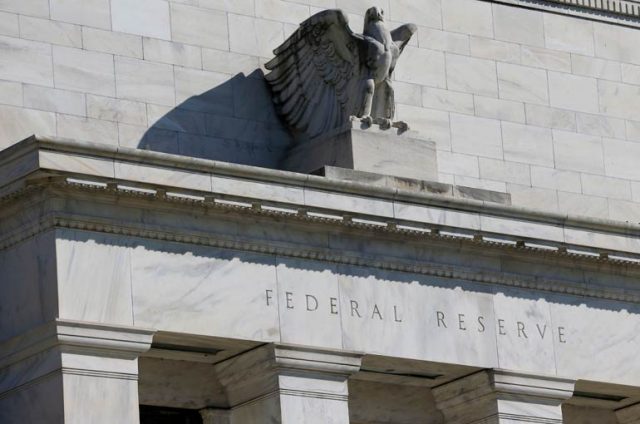
THE Philippine central bank is prepared to handle any changes in the US Federal Reserve’s monetary policy as local banks remain well-capitalized, its governor said.

“In any event, we’re prepared for any adjustments in Fed rates because our banks are well-capitalized and they are prepared, and we still have a lot of policy tools in our hands,” Bangko Sentral ng Pilipinas (BSP) Governor Benjamin E. Diokno said at a press briefing on Thursday.

The capital adequacy ratio of local banks stood at 16.72% on a solo basis at the end of last year, way above the 10% minimum required by the BSP.

Mr. Diokno believes the Fed will try avoiding raising its policy rates ahead of the upcoming midterm elections in the United States in 2022. The US central bank will have its next policy-setting meeting on June 15 and 16.

Reuters reported that Federal Reserve policy makers have begun to acknowledge they are closer to debating when to pull back some of their crisis support for the US economy, even as they say it is still needed to bolster the recovery and employment.

Investors are waiting to see when the Fed will start tapering off its bond purchases as the world’s biggest economy continues to recover.

In a note on Thursday, UK-based Oxford Economics said the BSP may start raising key policy rates in the fourth quarter of 2022, much earlier than the Fed, given the projected strong economic growth and expectations that inflation will remain high.

“In most Asian emerging markets, especially in India, Indonesia, and the Philippines, we expect relatively strong potential GDP (gross domestic product) growth and relatively high inflation to keep policy interest rates substantially above those in the US and other developed economies,” the note read.

The Philippines’ gross domestic product (GDP) slumped by 4.2% in the first quarter, recording its fifth straight quarterly contraction since last year. The government’s economic team, however, is expecting GDP will grow by 6-7% this year, 7-9% in 2022 and by 6.7% each year in 2023-2024.

Meanwhile, the BSP estimated headline inflation may have settled at 4-4.8% in May, against the 4.5% print in April. The local central bank projected inflation will average at 3.9% this year, towards the higher-end of its 2-4% annual target.

The BSP kept its key policy rate at a record low of 2% last month to help the economy recover further.

Oxford Economics said it sees the Fed hiking its policy rates gradually starting 2023, amid the projected strong economic growth in the next two years and benign inflation.

The think tank also believes that any negative market reaction similar to the “taper tantrum” episode in 2013 will be mild in the Philippines, along with other emerging Asian economies such as India and Indonesia.

In 2013, markets responded negatively when the Fed signaled plans to roll back quantitative easing. Expectations of rising rates in markets deemed safe led to sharp outflows from emerging markets and forced central banks to hike their own interest rates.

“While taper tantrum-type pressure remains on the radar of emerging market policy makers and investors, in our view the external vulnerability of Asian emerging market including India, Indonesia, and the Philippines remains moderate,” Oxford Economics said.

It added that neutral policy rates for the US will likely be substantially lower than its real potential GDP growth, while the real neutral policy rates for the Philippines, along with Indonesia, could reach 2.5%. — Beatrice M. Laforga with report from Reuters

PHL gets $300-M loan for quake-proof buildings

PHILIPPINE STAR/ MICHAEL VARCAS
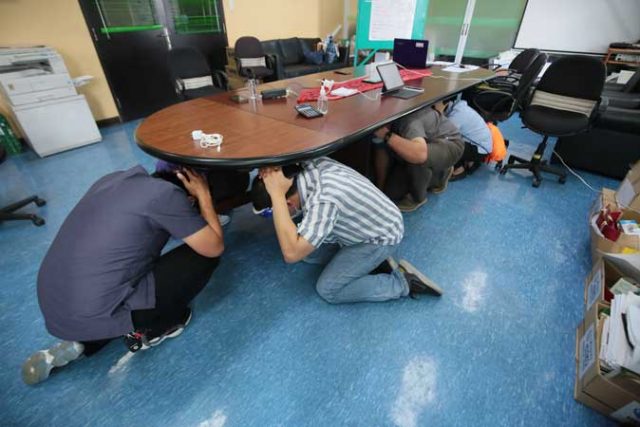
Employees duck under the table during an earthquake drill in a hospital in Quezon City in this September 2020 photo. — PHILIPPINE STAR/ MICHAEL VARCAS

THE World Bank approved on Tuesday a new $300-million (P14.34-billion) loan for a Philippine government project that aims to protect key public buildings in Metro Manila against earthquakes, and to boost emergency preparedness.

In a statement, the Washington-based multilateral lender said the Philippines Seismic Risk Reduction and Resilience project will involve upgrading 425 structures, including school buildings and health centers, to make them more resilient against natural calamities such as earthquakes.

The World Bank estimated the project will benefit 300,000 teachers, students, doctors, patients and personnel that use these facilities.

The loan will also support the Department of Public Works and Highways’ (DPWH) efforts to “systematically prepare for and respond to potential overlapping hazards including typhoons, floods, volcanic eruptions, and pandemics.” It will fund the acquisition of equipment that will allow the DPWH to boost its capability to communicate and restore transport in Metro Manila after an earthquake, as well as improve capacity to respond to other emergencies.

“Metro Manila or the National Capital Region is the seat of government and the country’s population, economic, and cultural center. Enhancing the safety of its buildings and structures while boosting institutional response to disasters will help protect the lives and safety of more than 12 million residents, including the poor and most vulnerable,” said Ndiamé Diop, World Bank’s country director Brunei, Malaysia, Philippines and Thailand.

Mr. Diop said this will also help boost to the Philippines’ economic resilience.

The World Bank estimated that retrofitting public buildings in the Philippine capital would involve four million working days. This will aid the construction sector’s recovery from the pandemic.

According to the bank, at least 60% of the Philippines total land area is exposed to various natural hazards, such as earthquakes, floods, tsunami, landslides, volcanic eruptions and typhoons, since it is situation along the Pacific Ring of Fire and the Pacific Cyclone Belt.

The country suffered from more than 15 destructive earthquakes in the last 50 years. Four major ones with magnitude of more than 6.5 occurred in the last two months of 2019 alone.

Taal Volcano erupted in January 2020, displacing 500,000 people and inflicting P3.4 billion in damage to infrastructure and agriculture in the surrounding areas.

“The Greater Metro Manila Area (GMMA) risk assessment study estimated that a magnitude 7.2 earthquake on the West Valley Fault (a probable maximum scenario, so-called ‘The Big One’) would result in an estimated 48,000 fatalities and US$48 billion in economic losses, with catastrophic impact on government continuity and service provision,” the World Bank said.

President Rodrigo R. Duterte issued Executive Order (EO) No. 52 (EO 52) on May 8, 2018 that created a Program Management Office for the Earthquake Resilience of the Greater Metro Manila Area to mitigate the potential devastating impact of a major earthquake.

The EO mandated state offices to improve their resilience to earthquakes and ensure that government buildings, hospitals and other infrastructure can withstand the earthquakes.

The new $300-million loan is among the World Bank’s 13 pipeline projects worth $3 billion for the Philippines targeted for approval starting June.

This is in addition to the three new loans the bank granted the government so far this year, following the $500-million loan it extended to buy coronavirus vaccines and the $700,000 technical assistance for the feasibility study for the Agus-Pulangi Hydropower Complex rehabilitation project. — Beatrice M. Laforga

ABS-CBN, lenders reach ‘standstill’ deal

BW FILE PHOTO

ABS-CBN Corp. on Thursday said that it had reached a standstill agreement with its existing lenders.

“The existing lenders of the company today agreed to make its standstill agreement with the company effective, i.e. not to declare any event of default or to exercise any rights or remedies under existing loan agreements, after compliance by the company with the lenders’ condition of the creation of a mortgage and security interest over certain assets of the company,” ABS-CBN said in a disclosure to the stock exchange.

On Friday, ABS-CBN said the mortgage and security interest cover the company’s “real properties and equipment located in Mega Manila to secure an amount of P14.56 billion.”

“The standstill agreement addresses the issue of the non-renewal of [ABS-CBN’s] broadcasting franchise, which the company was required to maintain under its loan covenants,” it noted.

The effective date of the standstill agreement is May 31.

To recall, the media company said in July last year that it was in talks with its creditor banks on its long-term debts.

ABS-CBN said it was confident that it would be able to satisfy its financial obligations despite the impact of the non-renewal of its broadcast franchise on the company’s overall operations.

Voting 70 to 11, the House of Representatives Committee on Legislative Franchises had rejected the application for a franchise renewal of ABS-CBN — a media company critical of President Rodrigo R. Duterte — saying the broadcaster was “undeserving” of the privilege.

The company has carried out cost-cutting measures, which include rationalizing capital expenditures and streamlining manpower requirements.

It said it would pursue all “available remedies” while complying with relevant legal requirements “to be able to sustain its current and future business operations, which do not necessarily involve broadcast only.”

The Bankers Association of the Philippines also said last year it was confident that banks would be able to manage their credit portfolio in relation to the non-renewal of the ABS-CBN broadcast franchise.

ABS-CBN Corp. shares closed 0.17% lower at P11.64 apiece on Thursday. — Arjay L. Balinbin

Converge invests $4.84M in Digitel Crossing, $2.66M in Asia Netcom

LISTED fiber broadband provider Converge ICT Solutions, Inc. announced on Thursday that it had acquired shares in cable landing stations operator Digitel Crossing, Inc. and Asia Netcom Philippines Corp. that owns the land assets where the East Asia Crossing (EAC) cable landing is located for $4.84 million and $2.66 million, respectively.

In a disclosure to the stock exchange, Converge said it entered into a deed of absolute sale of shares with Digital Telecommunications Phils., Inc. for the acquisition of 10,000,000 common shares in Digital Crossing, which maintains and operates the cable landing stations in the Philippines for EAC and C2C (City-to-City) cable systems.

Bringing Digital Crossing into Converge is seen to promote the “strategic imperative” of the company “to expand its capabilities in telecommunications since it acquires interest in entities involved in providing, operating and maintaining the cable landing stations of EAC and C2C international cables,” the listed company said.

In a separate disclosure, Converge said it likewise entered into a deed of absolute sale of shares with Digital Telecommunications Phils. for the acquisition of 300,000 common shares in Asia Netcom Philippines.

Asia Netcom Philippines is also a shareholder of Digitel Crossing.

“Acquiring Asia Netcom Philippines will promote synergies in the telecommunications business of Converge,” the company said.

It is also meant to implement the joint venture between Converge, Pacnet Network (Philippines, Inc), and Asia Netcom Philippines.

Converge ICT Solutions shares closed 0.90% lower at P19.76 apiece on Thursday. — Arjay L. Balinbin