TOTAL hog deliveries to Metro Manila surpassed half a million heads as part of an ongoing initiative to augment pork supply after the African Swine Fever (ASF) reduced local inventory.
In a report, the Department of Agriculture (DA) said another 6,492 hogs arrived in Metro Manila on June 9, putting the total to 503,403 since the issuance of Executive Order No. 124 on Feb. 8 that capped the prices of pork products.
From the new shipments, 3,382 hogs were sourced from South Cotabato and General Santos City; 1,072 from Oriental Mindoro; and 988 from Batangas, Laguna, and Quezon.
Other areas that sent hogs were Bohol with 660; Camarines Sur, Camarines Norte, and Sorsogon with 310; and Davao with 80.
Since Feb. 8, the DA said CALABARZON (Cavite, Laguna, Batangas, Rizal, and Quezon) accounted for 40.18% of total hog deliveries, followed by Western Visayas at 21.73%, and MIMAROPA (Mindoro, Marinduque, Romblon, and Palawan) at 13.71%.
Meanwhile, the DA said 35,563 kilograms of pork in carcass form also arrived in Metro Manila on June 9.
The new shipments brought the total delivered pork carcass in Metro Manila to 3.88 million kilograms since Feb. 8, most of which were sourced from Central Luzon.
EO No. 124 capped the prices of pork shoulder (kasim) to P270 per kilogram (/kg) and pork belly (liempo) to P300/kg after pork prices skyrocketed due to the ASF outbreak.
It was lifted on April 8 and was replaced by a suggested retail price for imported pork kasim at P270/kg and imported pork liempo at P350/kg. — Revin Mikhael D. Ochave
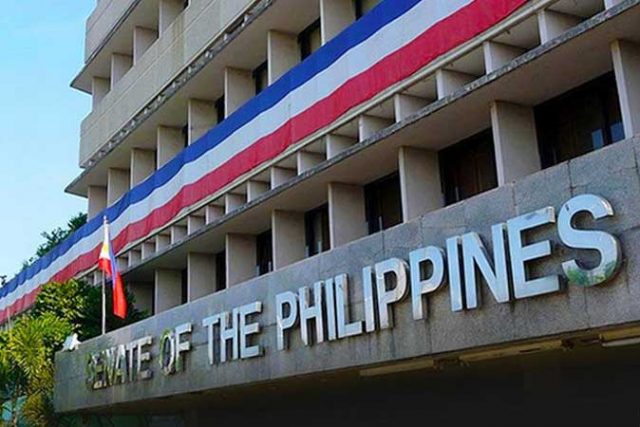
A SENATE panel on Thursday approved the measures seeking to create the Metropolitan Davao Development Authority (MDDA), which will support economic growth in the expanding urban areas in the region.
Senator Francis N. Tolentino, chair of the committee on local government, said in a hearing that the panel will consolidate the bills and endorse the proposal to the plenary.
“I think the committee is now inclined to approve the measures and we will present these to the plenary in due time. The creation of Metropolitan Davao Development Authority in so far as this committee is concerned is hereby approved,” he said.
Its counterpart measure at the House of Representatives was approved in March.
Under House Bill No. 8930, Metro Davao has been expanded to 10 towns and cities, namely: Tagum, Panabo, Carmen, and Samal in Davao del Norte; Davao City; Digos City and Sta. Cruz in Davao del Sur; Mati City in Davao Oriental; Maco in Davao de Oro; and Malita in Davao Occidental.
Senator Ronald M. dela Rosa in the hearing on the bills last week pushed for the inclusion of the municipalities of Padada, Hagonoy, Sta. Maria and Malalag in Davao del Sur. — Vann Marlo M. Villegas
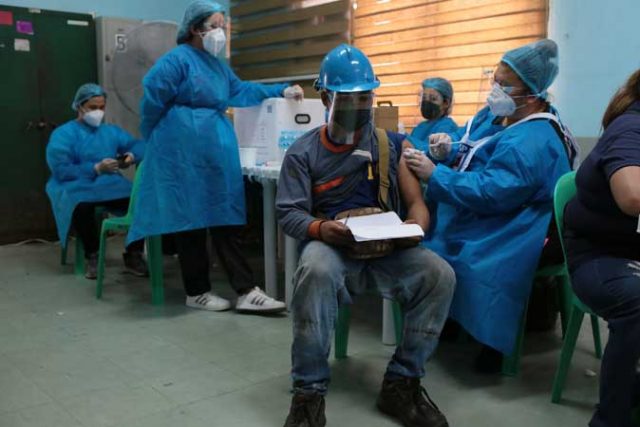
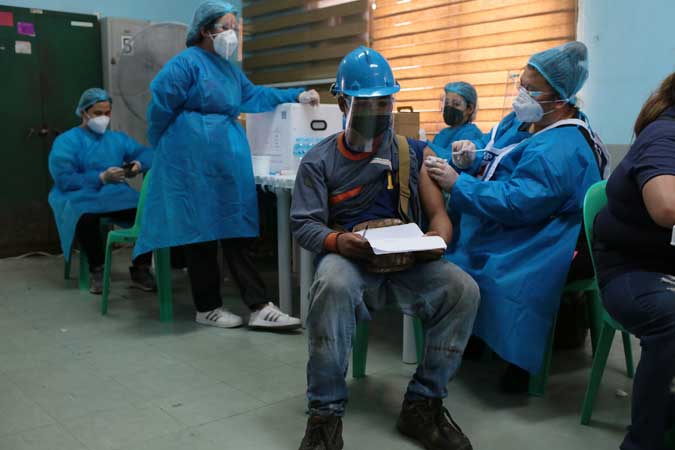
A CONSTRUCTION WORKER in the A4 category gets inoculated with Sinovac vaccine at the Navotas Fishport on June 7. — PHILIPPINE STAR/ MICHAEL VARCAS
In his blog on LSE British Politics and Policy, Chile’s former finance minister Andres Velasco, now professor of public policy and dean of LSE’s School of Public Policy, listed five macroeconomic lessons that COVID-19 has taught us. Focusing these lessons on the Philippines should be very interesting and, yes, instructive.
Velasco shared the IMF’s description of the health crisis by saying “economists have never experienced a crisis like this one.”
It’s funny but it is sadly true that it was only during this pandemic that governments locked down workers to prevent them from working, and instructed firms to cease producing. Governments were forced to resort to mandating a freeze on business activities, even mobility of persons. Locking down office and work places, the best breeding grounds for COVID-19, breaks the transmission of the virus in the absence of the vaccines.
LESSON 1: “ECONOMIC CRISES CAN ALWAYS BE BIGGER.” As Chile’s finance minister 12 years ago, Velasco was in the limelight, assuring the people that Chile would never have a crisis as big as the Global Financial Crisis (GFC) again. The pandemic proved him wrong. Chile experienced a definitely unprecedented 6% economic contraction in 2020. The COVID-19 virus clearly outclassed Lehman and the subprime mortgages.
This grey rhino of a crisis also proved more devastating to the Philippines’ macroeconomic performance. The GFC failed to interrupt our sustained economic growth since the first quarter of 1999 through its two-year duration, but the coronavirus snapped it in 2020 and 2021 with five quarters of economic decline.
What made it bigger was the uncontrolled spread of the virus that brought infection and mortality rates to alarming highs and, in the process, literally stopped consumption and activities in the workplace. Lehman and sub-prime mortgages brought havoc to the financials of both corporates and banks, something that could be compensated for in due time by subsequent production and consumption. In a pandemic, however, even public infrastructure projects stood still.
LESSON 2: “SUPPLY SHOCKS CAN BECOME DEMAND SHOCKS.” Economic lockdowns dealt supply shocks to economies. With mobility and transport restrictions in place, the whole economy could not even deliver on what was produced during the non-lockdown days. Velasco argued that those who could not work from home and were physically barred from working also experienced loss or diminution of income. The world was therefore hit twice — both on the supply and the demand sides. Inflation could only be steady.
Velasco also observed the collapse of external trade. Export prices dropped while foreign capital inflows dried up because there was little incentive for people to invest outside their home countries. The debilitating impact of the pandemic was everywhere.
The Philippines actually saw it quite differently.
Some took pride in the balance of payments surplus, strong peso, and rising levels of the FX reserves. They were showing a good picture because we had a recession for five quarters. Imports were down and foreign loans multiplied; thus, the surplus in the external sector. The peso was strong because demand was weak. Most of the increments in the FX reserves were borrowed funds. These dynamics will reverse once the pandemic is over and an economic rebound begins.
LESSON 3: “RICH COUNTRIES CAN SIMPLY CARRY ON BORROWING.” The pandemic challenge was many times more destabilizing than the GFC. “Whatever it takes” became the mantra of many central banks of rich countries in the crucible of the GFC and the pandemic. It could be a show of force, or putting up a brave face. But during the pandemic, it is difficult to tell because everyone is gripped by fear and nervousness.
With uncertainty as to the duration of COVID-19, governments have been forced to spend big, extend big support to vulnerable sectors, and borrow big. Many economists would argue that spending big is good for economic recovery even as governments have to borrow to fund the budget deficit. Since governments have the sole power to tax, the sky is the limit for public borrowing.
Velasco’s admonition was wise. The low-interest-rate-for-long regime might have to come to a close when global vaccinations bring herd resiliency in many jurisdictions. For some big economies like the UK’s, public debt is almost the same size as its total output. If interest rates normalize to their pre-pandemic levels, it is doubtful whether such exposure is viable.
The Philippines has also borrowed heavily because of Build, Build, Build and, lately, the need to fund the pandemic. This is understandable and we could be more forgiving. But the government should first consider the usual first lines of defense in budget management. Trim the fat, minimize discretionary funds, and reduce congressional insertions in the light of May 2022. The government should also have the brave heart to do the right thing in prioritizing allocations to health and the economy.
If the Duterte government detests leaving a legacy it cannot be proud of, excessive borrowing and poor budget stewardship should not be among them.
LESSON 4: “THE WORLD IS VERY UNFAIR.” While rich jurisdictions have been pursuing public policy to achieve a quick win over the pandemic and economic recovery, the rest of the world can only do what they can afford, and it is not much. Velasco cited that “on average middle income countries spent half as much as rich countries as a share of GDP, and poor countries spent half as much as middle income countries.”
This is the major reason why some global initiatives have been launched by the IMF, the World Bank, the WHO, and the World Trade Organization — to push for a more equitable distribution of the vaccines. This is crucial to achieve the goal of vaccinating the world and ushering in a speedier return to pre-pandemic normalcy.
We have yet to apply this global approach in the Philippine setting because our health authorities are still trying to find their true north. There must be a plan, but the execution of the plan is far from military clockwork.
What is happening in the US is very instructive. Vaccines are rolled out strategically in civic centers, government and private hospitals. Drive-ins are common in Florida, for instance. One can simply walk in and Walgreens or CVS would offer him the jab, free of charge.
No wonder that, as of June 9, of the 2.2 billion doses already used in the world, the US accounted for nearly 304 million doses with 42% of their population having been fully vaccinated.
We are way below with 6.1 million doses or only 1.5% of our population getting the shot.
The worst case is that many countries in Africa have barely scratched the surface; many of them have jabbed just about less than 1% of their populations.
Yes, the world is very unfair.
LESSON 5: “INTERNATIONAL INSTITUTIONS HAVE COME UP SHORT.” For Velasco, some multilateral institutions did not deliver much during this health crisis.
Against the backdrop of what he called “gigantic asymmetry” in countries’ ability to fund their budgets through borrowings, the IMF’s lending capacity of $1 trillion did not mean a lot because it lent out technically only $85 billion; “peanuts” said Velasco. Politicians would always be quoted as saying no one is safe until everyone is safe. Yet, these lofty declarations were scarcely matched by concrete actions to avoid deep and persistent crisis for most of the world’s countries.
This is not unique to politicians outside the Philippines. Filipino politicians themselves have been known to parrot each other’s passion for life and livelihood, health and jobs before politics. Yet in actual congressional deliberations, with executive blessing, they would rather fund non-priority public spending like counter-insurgency activities than those programs intended to benefit our frontline medical workers, increase the capacity of our public hospitals and make the government-funded vaccine program free.
The five lessons learned during this pandemic are truly precious. It must also be equally precious if we could also think of those lessons during the 18 months of the crisis that we must unlearn. An initial but strategic step is for us to be our own heretic. Some introspection could reveal genuine knowledge of ourselves. Being critical of ourselves will definitely keep our feet on the ground. How many times have we dropped the ball during this pandemic are as important as knowing how many times we picked up the ball and continued playing the game.
Diwa C. Guinigundo is the former Deputy Governor for the Monetary and Economics Sector, the Bangko Sentral ng Pilipinas (BSP). He served the BSP for 41 years. In 2001-2003, he was Alternate Executive Director at the International Monetary Fund in Washington, DC. He is the senior pastor of the Fullness of Christ International Ministries in Mandaluyong.
President Rodrigo Duterte is supposedly considering five possible PDP-Laban candidates for President in 2022: Manila Mayor “Isko” Moreno, his confidant “Bong” Go, the boxer Manuel Pacquiao, Ferdinand Marcos, Jr., and his daughter Sara.
The last is, from all indications, Mr. Duterte’s choice, his “considering” others being a mere sop to Pacquiao and company’s bruised egos. But Marcos Jr.’s inclusion in the list of the party’s possible 2022 candidates is one of the most bizarre ironies ever spawned by this country’s political culture of exclusion and patronage. PDP merged with Laban in 1983 to strengthen the resistance to the Marcos autocracy and to hasten the restoration of democratic institutions. But things have come to such a pass that should Mr. Duterte’s plans miscarry, the late dictator’s own son could be the PDP-Laban’s standard beater in next year’s elections.
Even without that calamity’s transpiring, however, PDP-Laban is nevertheless still the regressive anomaly it has become since 2016. Chaired by Mr. Duterte, PDP-Laban has been the ruling party since that year. The party became the enabler of the current despotism when the late Aquilino “Nene” Pimentel, Jr. supported the Duterte candidacy five years ago, apparently because of the latter’s declared support for federalism. Pimentel had always favored federalism as the solution to the dominance of “imperial Manila” over the rest of the country. But his and other federalism advocates’ hopes that Mr. Duterte would be true to his promise to effect the country’s shift to that system of government have died with him.
PDP-Laban is a merger of the Partido Demokratiko Pilipino (Filipino Democratic Party) and Lakas ng Bayan (Power of the People). Pimentel was among the founders of PDP in 1982 as part of the opposition to the Marcos dictatorship and the regime’s Kilusang Bagong Lipunan (KBL or New Society Movement). He was a delegate to the 1971 Constitutional Convention, a four-time political prisoner during the Marcos martial law period, and a prominent member of the political opposition and the “parliament of the streets.” He was the head of local governments during the Corazon Aquino Presidency, and then a senator of the restored Republic, and later Senate President.
In early 1972, Pimentel opposed the inclusion of a provision in the proposed Constitution that would have enabled Marcos to run for a third term in 1973. He was arrested and detained together with like-minded Convention delegates when Marcos placed the Philippines under martial rule on Sept. 23, 1972. Despite his arrest, he refused to be intimidated into signing the 1973 Marcos Constitution.
While imprisoned in Camp Crame, Pimentel lent his considerable skills as a lawyer to his fellow detainees. In one of a number of instances, he helped release a poor non-political detainee falsely accused of illegal possession of firearms. The detainee’s family left him for the provinces when a neighbor, who was a Philippine Constabulary (PC) trooper he had had a spat with, caused his arrest by planting a rust-eaten pistol in his home.
Pimentel’s virtual law office in the Camp Crame stockade helped many others by acquainting them with their rights. He often represented them pro bono during their interrogation sessions with the military’s Judge Advocate General’s Office (JAGO). His own rights were being suppressed, but it did not stop him from defending those of others.
His PDP merged with Lakas ng Bayan in 1983. Laban was founded in 1978 by the late Senator Benigno “Ninoy” Aquino, Jr. to contest the Batasang Pambansa elections that year. The merger was meant to unite opposition to the dictatorship and to prepare for possible Presidential elections, which did take place in 1986, and in which PDP-Laban fielded Aquino Jr.’s widow Corazon for President. Pimentel was part of the Corazon Aquino administration from 1986 to 1992.
It should be evident from its name alone that PDP-Laban was committed to the recovery and defense of the democratic institutions martial law had destroyed, and to the people’s sovereign right to decide for themselves what government can best represent them.
During martial law and the years after, PDP-Laban was exceptional in that it espoused an ideology of democratization and resistance to tyranny. But in the hands of Mr. Duterte and his ilk, it has not only lost the progressive politics that used to distinguish it from the traditional political parties that have afflicted this country since Commonwealth days, it has also morphed into the exact opposite of what it used to be. It was responsible for the demise of the system of checks and balances that ideally should assure the independence of the three branches of government from each other so as to prevent the abuse of power particularly by the Presidency. It thereby enabled the return of strongman rule.
Corruption has reached unprecedented levels during its five years as the party in power. The economy is in shambles and unemployment at an all-time high. Nothing is left of its once progressive and liberal-democratic membership. It is instead populated by crypto- and unashamed fascists, and individuals in positions of power who know next to nothing about governance. Almost daily do some of its members propose further restrictions on democratic rights. Its legislative majority was in fact responsible for the passage of the atrocity mislabeled the Anti-Terrorism Act.
Equally revealing of the depths into which it has fallen is the current jockeying among its members over whom it will field for President in 2022 — and in the brazenly anti-Constitution proposal for a Sara Duterte for President-Rodrigo Duterte for Vice-President team-up.
Nene Pimentel was Corazon Aquino’s choice for running mate in the 1986 “snap” elections Marcos had called. But Pimentel gave way to Salvador Laurel to preserve and strengthen the pro-democracy, anti-Marcos forces. Neither self-interest nor expediency guided that decision; principle and love of country and people did.
No such scruple is evident in the current contention among the pretenders to Mr. Duterte’s throne. There is no difference in what they stand for; no issues over governance nor platforms distinguish them from each other. Indeed, only the questions of who can win next year and whom Mr. Duterte will support are at issue, as well as whether a father-daughter tandem will prosper despite the Constitutional ban on a president’s seeking re-election through any means.
It is, of course, possible for whoever PDP-Laban fields to win in 2022 given the usual advantages of the incumbent in government resources, facilities and organization, and the Duterte camp’s army of trolls and media hirelings and its reportedly unlimited war chest.
PDP-Laban’s members and partisans would no doubt look at that development as an indication of their power and relevance. But that national catastrophe would only accelerate the decline and fall of the party as a force for democracy, freedom, and human rights that began in 2016. In the process it will unfortunately take the rest of the country and the Filipino millions with it.
No trace of either Nene Pimentel’s or Ninoy Aquino’s progressive, anti-authoritarian legacy, which once distinguished it from other political formations, remains in PDP-Laban today. Its only claim to notoriety is that it has become no better than the so-called “political parties” whose names rather than what they stand for distinguish them from each other, and which over the decades have consigned this country to where it is now: at the tail-end of progress in Southeast Asia, and in the dustbin of world history.
Luis V. Teodoro is on Facebook and Twitter (@luisteodoro).
I HAVE NEWS from the world of cryptocurrency: After many years of doubt and uncertainty, a killer app has finally been found. That’s why crypto prices, in spite of numerous plunges, have remained much higher than many skeptics expected.
The core use case for crypto is called DeFi, a recently coined abbreviation for “decentralized finance.” DeFi doesn’t have a formal definition, but it typically includes the use of the blockchain to borrow and lend using auction markets; to trade in unconventional derivatives; to trade one set of crypto assets against another; and for unusual forms of insurance. The profit opportunities arise in part because the blockchain eliminates the need for traditional financial intermediaries, with their fees and associated regulations.
An example: Say you have some money to invest, but government bond rates are too low and you already have plenty invested in publicly traded stocks. You might allocate some of your portfolio to the loan auction markets built on Ethereum, in essence tossing some crypto into the market and seeing at what price it will be lent out. You could end up with yields of 6% or more, though some of these opportunities are very risky.
There could be $100 billion invested in DeFi right now. More important, these systems are growing rapidly. Reliable numbers are difficult to come by, but by one account DeFi grew sevenfold in just a few months in 2020, to a total value of $7 billion. It’s not surprising that investors would find DeFi attractive, especially in a world of low yields and pricey assets. Think of them as decentralized markets in a very junky form of junk bonds.
To be clear: I am not arguing that these uses of DeFi are socially beneficial. It is simply too early to say. One criticism of DeFi is that it is effectively regulatory arbitrage, bypassing useful laws and restrictions in the quest for higher private gain. The longer-run result could be a financial economy more fragile and more vulnerable to conditions of recession, especially as DeFi attains larger scale. DeFi loans often go to non-mainstream borrowers of uncertain quality.
But it’s also important not to confuse different criticisms of crypto — that it’s useful only for speculation, for example, or that it’s bad for the environment. The crucial thing is not to let your attitude toward crypto (positive or negative) affect your analysis. Instead, focus on answering one question at a time.
And if the question is whether crypto is good for anything, there is now at least one clear answer: Crypto enables DeFi. You don’t have to like every consequence of that reality, but a reality it is.
You could say that crypto is a Trojan horse of a new and quite different financial system. If you have ever dealt with US banks, and suffered through their bureaucracy and mediocre software, you might conclude that they are ripe for disruption. Banks in other countries may be even more vulnerable.
Obviously, as DeFi grows, questions of government oversight and control will come to the fore. Still, it seems unlikely that DeFi institutions will be regulated out of existence. DeFi can be run on platforms outside of the US, and American and European regulators cannot shut it down any more than they can prevent me from placing an online bet on a Mexican soccer game.
Keep in mind that significant swaths of the developing world currently use micro-credit, where borrowing rates of interest are often 50% or 100% on an annualized basis. It is likely that some of those countries will experiment with DeFi as an alternative method of credit allocation, regardless of whether those new institutions satisfy US regulators in every regard.
If you are baffled by a lot of DeFi, well … welcome to the club. The confusing and ever-changing nature of DeFi helps explains why the prices of crypto assets are so volatile. If DeFi lies in part behind the demand for crypto, and you don’t know exactly where DeFi is headed, the future for crypto is also highly uncertain. It is very unusual to have such a highly visible window on what is essentially the value of a bunch of startups.
Finance is about to get even stranger — and crypto is just the beginning of that.
The stunning dance concert Of Balanghai and Galleons was a tour de force by Filipino Heritage Festival, Inc. (FHFI). It was a fitting finale to the successful National Heritage Month.
The exquisite Journeys on a Galleon (that was staged and filmed at the Cultural Center of the Philippines in May 2018) was shown. Playwright-director Floy Quintos wrote a new historical script for it.
“This production chooses to see the Circumnavigation of the world by Magellan as a period that was not of discovery by a western power. Rather, it was the start of the Philippines’ entry into a much larger community and into a historic timeline that Filipinos have enriched with any contributions. What we celebrate is our journey towards nationhood,” Mr. Quintos emphasized.
While the global pandemic is raging, the world commemorates the Quincentennial of the Circumnavigation of the world.
Here are some quotes from Mr. Quintos.
“Many Filipinos wonder why we must [commemorate it], when the eventual colonization of the Philippines brought so much suffering to the indigenous people. Other Filipinos celebrate the arrival of Christianity, and the faith imposed on our ancestors.
“In a world now full of barriers and restrictions, we choose to celebrate the journeys of our ancestors and adventurers. Through art and movements, we look back at the great voyages of both settlers and conquistadors. And we wonder, how these journeys meld into that one most important journey. The journey toward Nationhood.
“The first Austronesian settlers who populated our islands, had no idea that their voyages across the land masses and oceans would birth a country. Our forefathers were expert boat builders who knew how to craft vessels that could adapt to the waters of the Pacific.”
In Butuan, the excavations have unearthed pieces of the balanghai boats. Our ancestors had the ability and skill to build vessels for migrations, trade and culture — the swift balanghai and karakoa.
Long before the arrival of the Spanish colonizers, our islands were renowned as a place of wonder and wealth. We had names given by the traders: May-I, Lay-I, Tawalisi.
Colonization was a major challenge. Manila was a thriving business entrepot where Filipinos and the Chinese traders had established a maritime exchange since the 9th century.
“The newcomers envisioned a new trade of fabulous silks, ceramics and other exotic goods that they hoped to bring to American and Spanish markets.”
The pre-colonial island kingdoms (now the Philippines) were wealthy. They established trade relations with China and other South East Asian kingdoms.
San Pedro, the pioneering galleon reached new Spain on Oct. 8, 1565, after crossing the Pacific. The Manila- Acapulco galleon trade network lasted 250 years. It was the only link between the Philippines and Spain.
The galleon brought to Mexico the Asian products and people of different ethnicities and culture who brought their own social and culinary traditions. They represented “a small microcosm of the world wherein they lived.”
In the 1580s, Cavite had thousands of shipyard laborers (working for low wages) and a massive supply of the renowned Philippine hardwood.
From Manila, the galleon (with a Spanish captain, and Mexican and Filipino sailors), wove through the treacherous inland seas to the Pacific Ocean to start the month-long arduous, dangerous journey to Acapulco.
We have a glimpse of “…A mysterious and still misunderstood tapestry of histories, influences, memories.
“How do these great journeys live on in our memory?
“Through an evolving culture, shaped by historic interconnections. Through a trade that preceded globalization and made us a part of an empire’s economy.
“Through a continuing quest for knowledge that reconnects us to this vital part of our history. Through the gift of faith.”
The colorful costumes, the graceful dances, the dramatic, solemn and lively music with video capsules depicted our history through the centuries. The outstanding pieces were “Island Kingdoms,” “Trade and Conquistadors” (“Gloria” composed by National Artist Ryan Cayabyab), “Mantones de Manila” and “Viva La Virgen.”
The finale of the concert was the spectacular shimmering golden “Nuestra Virgen de La Naval.”
Behind the scenes, here are notes on inspiration.
Gener Caringal, the choreographer on “Island Kingdoms”: “I was inspired with voyagers in tackling the difficulties they experienced in handling the galleon in the roughness of the sea. The golden Tara was an idol of the early Filipinos. For the ‘Mantones de Manila’ (dance), I used Chinese traders with their silk that was made into alampay of the Filipinas. These were brought to Spain as mantones de Manila.”
Krina Cayabyab, composer “Of Balanghai” and “Te Deum”: “With the massive idea of the circumnavigation, I felt that the music score had to have that sense of galleons in motion, carrying peoples who would inevitably change the world. The music involves indigenous, symphonic, and vocal music elements. With the vision of Direk Floy and with shifting scenes and movements in mind, I worked around percussive rhythms, and sweeping harmonic notions.”
The performing artists were the Ateneo Chamber Singers, the Philippine Ballet Theater, the University of the East Silangan Dance Troupe, Ang Batang ROFG, and the Ramon Obusan Folkloric Dance Group, while narration was by Jeremy Domingo. The Introduction Host was Maritoni Rufino-Tordesillas, FHFI ambassador.
The members of the Artistic Team were: Floy Quintos, concept, script, and direction; Krina Cayabyab, composition and musical arrangement “Of Balanghai” and “Te Deum”; Gener Caringal, choreography; Jess Lucas, music “Journeys on a Galleon”; Ricardo Eric Cruz, production design; and, Leandro Calingacion, technical and lighting direction.
Of Balanghai and Galleons was produced by Filipino Heritage Festival President Armita B. Rufino. It was co-presented by National Commission for Culture and the Arts, the National Heritage Month, the 500 Quincentennial Commemoration in the Philippines, PAGCOR, Security Bank, DDB Philippines, and BusinessWorld.
Maria Victoria Rufino is an artist, writer and businesswoman. She is president and executive producer of Maverick Productions.
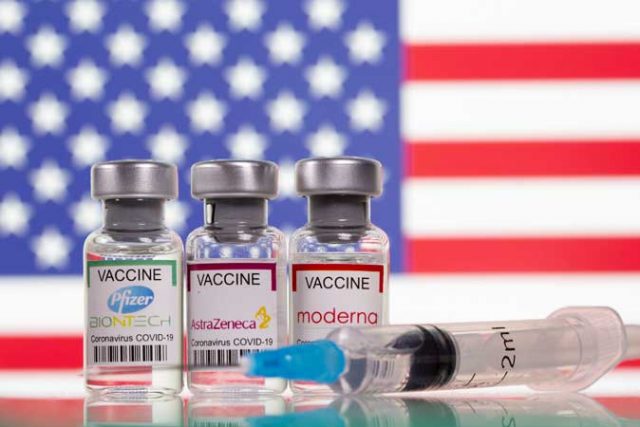
ST IVES, England — US President Joe Biden will announce plans on Thursday to buy and donate 500 million doses of the Pfizer coronavirus vaccine to more than 90 countries, while calling on the world’s democracies to do their part to help end the deadly pandemic, the White House said.
Mr. Biden will announce the vaccine donation — the largest ever by a single country — ahead of his meeting with leaders of the other Group of Seven (G7) advanced economies — Britain, Canada, France, Germany, Italy and Japan — in Cornwall, England.
The Democratic president arrived in England late Wednesday for his first overseas trip since taking office. The eight-day mission aims to rebuild trans-Atlantic ties and reframe relations with Russia after four rocky years of tariffs and withdrawal from treaties under Republican former President Donald Trump.
“The goal of today’s donation is to save lives and end the pandemic and will provide the foundation for additional actions to be announced in the coming days,” the White House said. No further details about the pending announcements were provided.
The donation, first reported on Wednesday, was negotiated over the past four weeks by White House COVID-19 response coordinator Jeff Zients and the coronavirus task force team, a source familiar with the matter said.
It is meant to “supercharge the global fight against the pandemic,” the White House said.
The pandemic has killed about 3.9 million people around the world, with the infection reported in more than 210 countries and territories since the first cases were identified in China in Dec. 2019.
The new donations come on top of some 80 million doses Washington has already pledged to donate by the end of June, and $2 billion in funding earmarked for the COVAX program led by the World Health Organization and the Global Alliance for Vaccines and Immunization, the White House said.
They will be part of the total US commitment of $4 billion to COVAX announced earlier this year, a White House official said.
Washington is also taking steps to support local production of COVID-19 vaccines in other countries, including through its Quad initiative with Japan, India and Australia.
“President Biden has been clear that borders cannot keep this pandemic at bay and has vowed that our nation will be the arsenal of vaccines,” the White House said.
The US donations will go through the COVAX program to 92 low- and lower middle-income countries and the African Union, with 200 million doses to be delivered by the end of the year, and the rest in the first half of 2022. Shipments will begin in August, the White House said.
Pfizer plans to produce the half a billion doses at its facilities in Kalamazoo, Michigan; McPherson, Kansas; Chesterfield, Missouri; and Andover, Massachusetts, the White House said.
CNBC reported on Wednesday that the United States is also talking with Moderna, Inc. about buying some of its shots to donate to other countries.
A Moderna spokesperson said the company is interested in providing the US government with COVID-19 shots for low- and middle-income countries, but declined to comment on any talks.
Mr. Biden’s announcement comes amid mounting pressure for the United States, which has now given at least one shot to around 64% of its adult population, to boost donations of COVID-19 shots to other countries that are desperately seeking doses.
Top officials at the International Monetary Fund and World Bank warned that huge disparities in vaccination rates could prolong the pandemic, slowing a global economic recovery, and raising the risk that deadlier — and potentially vaccine-resistant — variants will emerge. Vaccination rates are in the single digits in many poorer countries.
The administration is also using the US vaccine supply as a tool to counter Chinese and Russian vaccine diplomacy, although US officials have been adamant that the US donations will not require any favors or concessions.
Pfizer has said it expects to produce as many as 3 billion COVID-19 shots in 2021 and upwards of 4 billion next year.— Reuters
MYANMAR’s former leader Aung San Suu Kyi — REUTERS
NEW corruption cases have been opened against Myanmar’s deposed leader Aung San Suu Kyi and other former officials from her government, the state-run Global New Light of Myanmar said on Thursday.
The cases are the latest of a series brought against elected leader Ms. Suu Kyi, who was overthrown by the army on Feb. 1 in a coup that has plunged the Southeast Asian country into chaos.
The state newspaper quoted the Anti-Corruption Commission as saying the accusations related to the misuse of land for the charitable Daw Khin Kyi Foundation, which she chaired, as well as earlier accusations of accepting money and gold.
It said case files had been opened against Ms. Suu Kyi and several other officials from the capital Naypyidaw at police stations on Wednesday.
“She was found guilty of committing corruption using her rank. So she was charged under Anti-Corruption Law section 55,” the paper said. That law provides for up to 15 years in prison for those found guilty. Reuters was not immediately able to reach Ms. Suu Kyi’s lawyers for comment.
Cases Ms. Suu Kyi already faced ranged from the illegal possession of walkie-talkie radios to breaking the Official Secrets Act. Her supporters say the cases are politically motivated.
The army overthrew Ms. Suu Kyi saying her party had cheated in November elections, an accusation rejected by the previous election commission and international monitors.
Since then, the army has failed to establish control. It faces daily protests, strikes that have paralyzed the economy by opponents of the junta, a rash of assassinations and bomb attacks and a resurgence of conflicts in Myanmar’s borderlands. — Reuters
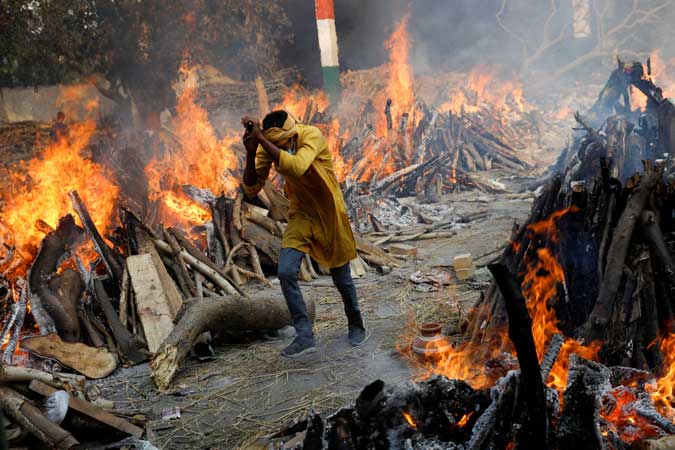
A MAN runs past the burning funeral pyres of those who died from the coronavirus disease, during a mass cremation in New Delhi, India April 26. — REUTERS
REUTERS
BENGALURU — India reported on Thursday the highest single-day death toll from coronavirus disease 2019 (COVID-19) in the world, at 6,148, after a big eastern state revised its figures to account for people who succumbed to the disease at home or in private hospitals.
The health department of Bihar, one of India’s poorest states, revised its total COVID-19 related death toll on Wednesday to more than 9,400 from about 5,400.
The United States had recorded 5,444 COVID-19 deaths on Feb. 12.
India’s total COVID-19 case load now stands at 29.2 million after rising by 94,052 in the past 24 hours, while total fatalities are at 359,676, according to data from the health ministry. — Reuters
BANGKOK — Drug traffickers in East and Southeast Asia found ways to evade COVID-19 curbs to boost trade and diversify production, with Cambodia emerging as a large-scale source for methamphetamine, the United Nations said on Thursday.
The trafficking of methamphetamine or meth, by far the region’s most popular drug, suffered a short-lived disruption during the height of the pandemic but rebounded to a higher level than a year before, the U.N. Office of Drugs and Crime (UNODC) said in a report.
Authorities in Asia seized a record of almost 170 tons of meth last year, up 19% from 2019, the report said.
“While the pandemic has caused the global economy to slow down, criminal syndicates that dominate the region have quickly adapted and capitalized,” said Jeremy Douglas, UNODC Regional Representative for Southeast Asia and the Pacific.
In an effort to dodge COVID-19 restrictions, crime groups increasingly transported drugs through Laos — a small, developing nation with poor law enforcement — to traditional trafficking hubs in Thailand and Vietnam.
The report noted an emergence of large-scale meth production in Cambodia, although Mr. Douglas said the country’s output was dwarfed by the still-thriving illegal drug production center in Myanmar’s Shan State, part of the Golden Triangle that also includes parts of Thailand and Laos.
“It looks like organized crime are hedging a bit and shifting some production so not everything is as concentrated,” Mr. Douglas told Reuters.
Wholesale prices of meth declined in Cambodia, Malaysia and Thailand due to the surge in supply. The UNODC partially attributed the rise in supply to the ease in obtaining precursors to manufacture meth and other drugs. The supply of synthetic drugs such as ecstasy, cannabinoids and ketamine has also expanded across the region, the report said.— Reuters
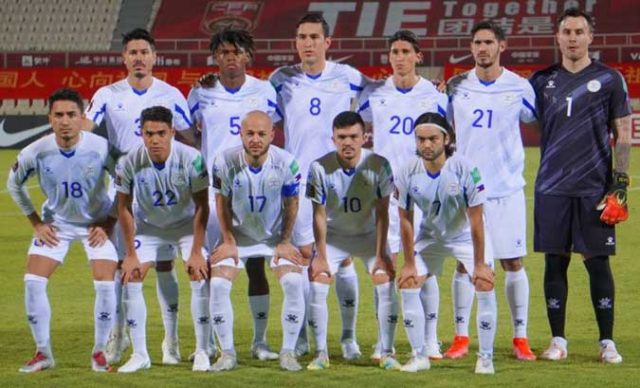
THE Philippine Azkals take on Guam in the joint FIFA-AFC qualifiers on Friday looking to strengthen its push for the 2023 Asian Cup. — THE AZKALS/PFF
By Michael Angelo S. Murillo, Senior Reporter
THE Philippine national men’s football team takes on Guam in the joint International Federation of Association Football (FIFA) and Asian Football Confederation (AFC) qualifiers on Friday looking to strengthen its push for the 2023 Asian Cup.
Coming off a 0-2 loss to China in their Group A match on June 8 that effectively shut their chances of advancing to the next round of the 2022 FIFA World Cup, the Azkals now focus on moving a step closer to making it to the AFC continental tournament.
Against the Chinese, the Philippines stood toe to toe in the opening half, forcing its opponent to a nil-nil count. It, however, could not sustain it the rest of the way en route to falling in the match held in a “bubble” at the Sharjam Stadium in the United Arab Emirates.
China used a strong push in the first 20 minutes of the second half to create separation from the Philippine team from which the latter could not recover from.
Forward Wu Lei put his team on the board in the 56th minute off a penalty kick after being brought down by Azkals goalkeeper Bernd Schipmann.
The Chinese team continued to put pressure on the Azkals and was rewarded in the 65th minute when midfielder Wu Xinghan slipped a shot to the far post for a 2-0 lead.
The Azkals tried to claw their way back after but with little success.
The win saw China (4-1-2, 13 points) remain in contention for the next round of the World Cup as one of the best runners-up in the qualifiers. Syria is still solidly on top of the grouping with 21 points from an unblemished card of 7-0-0.
The loss, meanwhile, left the World Cup push of the third-running Azkals (2-1-3, seven points) practically shut, but they remain in the race for the next round of the Asian Cup qualifying.
“We played well against China, holding them to a goalless draw in the first half and we felt we had a good chance of winning. I’m satisfied with our performance but not the result,” said Azkals coach Scott Cooper.
“But we look to build on it in our remaining games and in moving forward.”
The rest of Group A has Maldives (2-0-4, six points) in fourth place, followed by Guam (0-0-7).
The Azkals-Guam contest is set for 10 p.m. (Manila time) on June 11 and can be seen over One Sports and One Sports+.
NEW OUTFITTER Meanwhile, the Philippine Football Federation (PFF) and the Azkals announced their partnership with Spanish sportswear brand Kelme to be the national team’s new outfitter.
In a virtual press conference on Wednesday, the groups formally unveiled their linkup that will run for two years and will see Kelme provide the Azkals with their kits.
The team debuted its new kits in their match against China on Tuesday.
“We welcome the partnership with Kelme which has a long history of making high-quality kits for teams in different parts of the world,” said PFF General Secretary Atty. Ed Gastanes, who also shared that negotiations between them and Kelme started in 2019 during the Southeast Asian Games.
For his part, Mr. Cooper said the partnership is a win-win situation for all the groups.
“For a respected brand like Kelme to come in as a partner speaks volumes of the PFF and the Azkals. I also think it benefits Kelme to support a team like the Azkals which is on the rise,” he said.
As part of the deal, replica kits are to be made available for fans in the near future.
Skateboarding is one sport that will welcome more private sponsors — Margielyn Didal made history after competing and placing seventh in the finals in the sport’s Olympic debut in Tokyo. — ALVIN S. GO
IT is official. Filipino skateboarder Margielyn Didal is heading to the Olympic Games in Tokyo.
The development was confirmed by World Skate, the international body governing roller sports, late on Wednesday (Manila time), making the 22-year-old Didal the 10th Filipino athlete to date to have qualified for the rescheduled Olympics.
Ms. Didal joins pole-vaulter EJ Obiena, gymnast Caloy Yulo, boxers Eumir Felix Marcial, Irish Magno, Nesthy Petecio and Carlo Paalam, weightlifter Hidilyn Diaz, rower Cris Nievarez and taekwondo jin Kurt Barbosa in the Philippine Olympic contingent.
The Cebu native qualified because of her World Skateboarding Rankings in the street event which has her at 17th place.
Despite being outside of the top 16 which are allotted automatic spots for the Games, the Philippine bet managed to squeeze in since two of the three podium finishers in the recent Skateboarding Worlds in Rome, where three Olympic spots were up for grabs, were already in the top 16.
One spot is also allotted for Olympic host Japan to complete the 20-man Olympic street skateboarding field. Only three athletes per country, however, are allowed.
Ms. Didal’s Olympic qualification was already known immediately after the Rome event last weekend but was made official only this week. She is the lone Filipino skateboarder making the trip to Tokyo.
“Going to Tokyo…” Ms. Didal wrote on Instagram.
Street skateboarding will make its Olympic debut this year, with competition slated to take place from July 25 to 26.
Apart from Ms. Didal, also part of the Olympic street skateboarding field are Pamela Rosa, Rayssa Leal and Leticia Bufoni of Brazil, Aori Nishimura, Momiji Nishiya and Funa Nakayama of Japan, Mariah Duran, Alexis Sablone and Alana Smith of the United States, Roos Zwetsloot, Candy Jacobs and Keet Oldenbeuving of the Netherlands, Hayley Wilson of Australia, Wenhui Zeng of China, Lore Bruggeman of Belgium, Julia Brueckler of Austria, Charlotte Hym of France, Asia Lanzi of Italy, and Boipelo Awuah of Saudi Arabia.
In the Olympics, which takes place from July 23 to Aug. 8, Ms. Didal looks to add on the gold medals she won in the 2018 Asian Games and 2019 Southeast Asian Games. — Michael Angelo S. Murillo