Home Blog Page 7379

Philippines among least attractive FDI destinations in APAC
PHILIPPINE STAR/ MICHAEL VARCAS
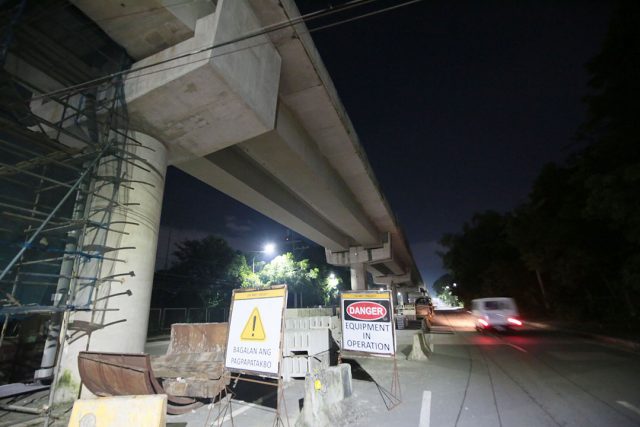
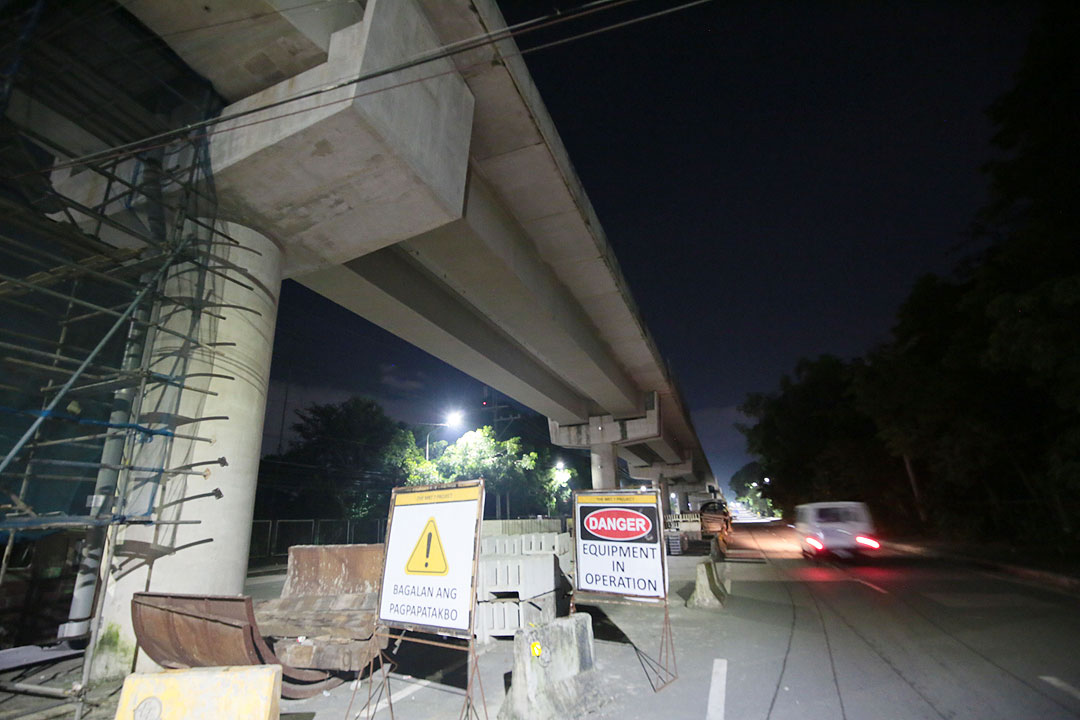
The Philippines remains one of the least attractive destinations for foreign direct investment in the Asia Pacific region due to its poor infrastructure. — PHILIPPINE STAR/ MICHAEL VARCAS

By Jenina P. Ibañez, Reporter

THE PHILIPPINES is one of the least attractive destinations for foreign direct investment (FDI) in the Asia-Pacific as the country continues to have poor infrastructure and business environments, Oxford Economics said.

The think tank in a brief released on Monday said the country ranked 13th out of 14 Asia-Pacific (APAC) economies in its FDI attractiveness scorecard, ahead only of Taiwan.

Oxford Economics said the poor ranking adds weight to its forecast that the Philippines will experience deep economic scarring from the coronavirus pandemic.

Under the scorecard, the Philippines had negative scores under the categories of infrastructure and logistics; political and business climate; and market size and potential.

Oxford Economics said the country ranked low in terms of quality of infrastructure and performed worse than its neighboring economies in the 2020 World Bank Ease of Doing Business report.

The Philippines ranked 95th place among 190 economies in the World Bank report that has since been discontinued.

In contrast, the country had positive scores in export structure and labor dynamics.

“Indonesia and the Philippines both score high in terms of their labor dynamics,” Oxford Economics said.

“Ongoing urbanization and a relatively young workforce mean that over the next decade we expect the labor supply in these two economies to rise by 25 million. We also forecast their average annual earnings to be around a third lower than in China in 2029,” it added.

Oxford Economics also noted the country’s efforts to lower the corporate tax rate and its plans to ease mandatory local employment for foreign investors.

John Forbes, senior advisor at the American Chamber of Commerce of the Philippines, said this is one of many similar reports in recent years that show the Philippines lagging in terms of attracting FDI in the region.

However, Mr. Forbes noted that Oxford Economics’ projection that infrastructure spending as a percentage of GDP for Vietnam by 2025 will be at five times the Philippine rate is “hard to believe.”

“And the report does not account for the biggest FDI success of the Philippines in (business process outsourcing) service exports, second in Asia only to India,” he said.

The American Chamber is one of several foreign groups that support amendments to the Public Service Act (PSA), which could change the definition of public utilities to allow more foreign investment in telecommunications and transport. 

Economies topping the Oxford Economics FDI attractiveness scorecard are China, Vietnam, and Malaysia.

“We believe prospects for FDI inflows into APAC over the medium term remain strong, even though pandemic-driven supply disruptions and uncertainties over the pace of recovery may see some firms rethink their supply chains,” Oxford Economics said.

“We expect China to remain the top destination for FDI given its rapidly growing domestic market. And as supply chains continue to adjust to higher labor costs in China and trade protectionism, we anticipate Southeast Asia, notably Vietnam, to be the key beneficiary. The region is well established in global supply chains, and its labor dynamics and openness to trade and FDI remain very favorable.” 

Oxford Economics in July warned that the Philippine economy faces deep scarring from the pandemic, estimating that the country’s projected gross domestic product (GDP) in 2025 will still be 8.4% lower than its pre-pandemic forecasts.

Economic managers expect GDP to grow by 4-5% this year and by 7-9% in 2022, after a record 9.6% contraction in 2020.


Vehicle sales slip in Sept. 

PHILIPPINE STAR/ MICHAEL VARCAS
CAR AND TRUCK manufacturers reported a 12% year-on-year decline in sales in September. — PHILIPPINE STAR/ MICHAEL VARCAS

VEHICLE SALES dropped 12% year on year in September, although month-on-month sales showed an improvement as lockdown restrictions eased in the Philippine capital, industry data showed.

A joint report from the Chamber of Automotive Manufacturers of the Philippines, Inc. (CAMPI) and Truck Manufacturers Association (TMA) showed 21,493 vehicles were sold in September, 12.4% down from the 24,523 sold in the same month a year ago.

September sales, however, increased by 35.6% from the 15,847 vehicles sold in August, thanks to double-digit sales growth in passenger cars and commercial vehicles.

The government last month eased quarantine restrictions in Metro Manila and shifted to a new alert system with granular lockdowns to allow more sectors of the economy to reopen.

CAMPI President Rommel R. Gutierrez said in a statement the double-digit month-on-month growth will help the industry reach its 20.9% sales growth target this year. The industry is aiming to sell 295,400 units, a fifth higher than the 244,274 units sold in 2020.

For the first nine months, vehicle sales jumped by 29.5% to 191,605 from 148,012 during the same period in 2020, as the government implemented looser quarantine restrictions this year.

“Amidst the challenges, the industry’s optimism still lingers for a better sales performance in the fourth quarter this year. This is driven by the overall improved consumer confidence resulting from a more buoyant economic condition and household spending, according to the recent government data,” Mr. Gutierrez said.

In September, passenger car sales declined by an 23% year on year to 6,580. Year to date, passenger car sales surged by 38.3% to 60,982.

Commercial vehicle sales slipped by 6.6% to 14,913 in September, but its nine-month sales tally rose by 25.7% to 130,623.

Toyota Motors Philippines Corp. remained the sales leader this year with 92,318 vehicles sold in the first nine months of the year, accounting for 48% of the market. 

Mitsubishi Motors Corp. currently has a 14% market share, followed by Ford Motor Co. Phils. Inc. (7.67%), Suzuki Philippines, Inc. (7.54%) and Nissan Philippines, Inc. (6.9%).

Earlier in the year, Mr. Gutierrez estimated that the car industry may see a return to pre-pandemic sales level as late as 2023. — R.M.D.Ochave

Gov’t seeks to secure COVID-19 vaccine booster supply before end of the year

PHILIPPINE STAR/ MICHAEL VARCAS

CORONAVIRUS DISEASE 2019 (COVID-19) vaccine booster shots could be available next year as the Finance department aims to secure the supply under a loan financing program before the end of the year.

Finance Undersecretary Mark Dennis Y.C. Joven at a briefing on Friday said that the government will purchase this year the COVID-19 booster doses that will be distributed in 2022.

The government allotted P45 billion for booster shots under the proposed 2022 national budget, even though Health officials have yet to decide if there is a need for a third COVID-19 shot.

The Department of Finance (DoF) recently said the government is in talks with World Bank, Asian Development Bank (ADB), and Asian Infrastructure Investment Bank (AIIB) for $900 million (P45.6 billion) worth of loans for additional COVID-19 vaccines.

Mr. Joven said the ADB and AIIB deals could be signed before the year ends, while the World Bank deal could be inked by December or early January. In the meantime, the government could still use the balance from the original agreement with the World Bank, he added.

“The objective here is to have a seamless delivery of vaccines, so starting from January 1, 2022, we will draw from the new supply agreements already,” he said.

The government earlier this year renegotiated its loans with the World Bank and ADB so it could fund advance payments for its COVID-19 vaccine deals. Multilateral lender-funded projects are exempt from the advance payment limits set by the country’s procurement law.

This time, Mr. Joven said the department will request that the original National Economic and Development Authority (NEDA) approval for the Philippine COVID-19 Emergency Response Project be amended so that the new loans are treated as additional financing for the same project.

Finance Secretary Carlos G. Dominguez III at the same briefing said that booster shots should be subsidized for the entire population in the long term.

“(Booster shots are) an investment, really, in people’s health. And without that, I don’t think the economy can safely open,” he said.

“I cannot say beyond 2022, but I’m sure that the succeeding administration will keep that in mind that these vaccines are really insurance. It’s really a necessary input now into the economy.”

He noted that other COVID-19 medical responses such as drugs that lessen hospitalization risks are being developed.

“I’m not predicting that it’s only going to be vaccines, because I think the technology will develop and as shown the prices will go down. The prices of vaccines, as the manufacturing gets more and more efficient, is certainly going to drop.” — Jenina P. Ibañez

MacroAsia president steps down, Luy takes over

MACROASIA Corp.’s board of directors approved the retirement of Joseph T. Chua as president and chief operating officer in a special meeting held on Oct. 8 and appointed Eduardo Luis T. Luy, former treasurer, to take his place.

“The board has thanked [Mr. Chua] for growing the corporation over the years, from a small business making only two million pesos to a company that makes more than a billion pesos of profit before the pandemic hit,” MacroAsia told the exchange on Monday.

Johnip G. Cua, the company’s audit committee chairman, lauded him “for managing the corporation with integrity, with clean audit findings from our external auditors year after year.” Mr. Chua has been a member of MacroAsia’s board of directors for 24 years since August 1997.

Mr. Chua’s retirement comes after a notice was published on the Philippine Daily Inquirer’s Oct. 6 issue distancing the Tan family and their businesses from Mr. Chua, saying he “has no authority to represent Dr. Lucio C. Tan, the Tan Family, and Lucio Tan Group of Companies.”

“Any prior authority or representation given to Mr. Joseph Chua are deemed void and/or revoked,” the notice read.

Mr. Tan sits as the chairman of the board and is the chief executive officer of MacroAsia.

Replacing Mr. Chua is Mr. Luy, who has been a company director and its treasurer since Dec. 12, 2019. Mr. Luy will also be joining MacroAsia’s risk management committee and its investment committee.

Mr. Luy holds a Master of Business Administration degree from the Asian Institute of Management and has a Bachelor of Science degree in Business Administration from the University of the Philippines Diliman.

Meanwhile, Kyle Ellis C. Tan was elected director, and takes Mr. Luy’s post as treasurer. He will also be joining the board’s mining committee to replace Mr. Chua.

Changes were deemed effective on Oct. 8.

MacroAsia offers services in aviation-support businesses, such as aircraft maintenance, repairs and overhaul services, in-flight catering services, among others.

On Monday, shares of MacroAsia at the stock exchange went up by 1.83% or nine centavos to close at P5.02 apiece. — Keren Concepcion G. Valmonte

AREIT says new assets to boost income by fourth quarter

THE new assets of the company’s first real estate investment trust (REIT), AREIT, Inc., got from the property-for-share swap with sponsor company Ayala Land, Inc. (ALI) are expected to contribute to AREIT’s income beginning fourth quarter this year.

AREIT said both companies amended the deed of exchange on Oct. 7 so that the income from the new assets may be recognized beginning Oct. 1, instead of Nov. 1.

“The new assets are expected to contribute significantly to earnings in the succeeding periods, thereby increasing the potential dividend per share for AREIT shareholders,” AREIT said in a statement on Monday.

AREIT received the go signal from the Securities and Exchange Commission (SEC) on Oct. 8 for the subscription of ALI and its subsidiaries, namely Westview Commercial Ventures Corp. and Glensworth Development, Inc., to 483,254,375 AREIT shares.

This is in exchange for identified commercial properties valued at P15.46 billion.

The Ayala-led REIT unit declared its third-quarter dividends earlier than usual last Sept. 22 at 44 centavos per share for stockholders as of Oct. 6 “to provide shareholders with an equitable share in the company’s performance for the whole third quarter, prior to the increase in its common shares in exchange for the new assets.”

AREIT also received approval from the SEC to increase the number of its directors to eight from seven, marking effective the election of Mariana Zobel de Ayala as a member as a member of AREIT’s board of directors.

“The SEC likewise approved the amendment of various sections of the By-Laws to align with the Revised Corporation Code and recognized good corporate governance practices, and to digitalize certain governance processes,” AREIT said.

The regulator also approved the increase of the company’s authorized capital stock to P29.5 billion from P11.74 billion.

The company’s outstanding common shares went up to 1,508,910,810 from 1,025,656,435. ALI owns 66% of the total shares, while the company remains compliant with the prescribed minimum public ownership requirements.

“The company will apply for the issuance of the Certificate Authorizing Registration for the new assets from the Bureau of Internal Revenue and the listing of the shares in favor of ALI and the subsidiaries within the year,” AREIT said.

The transaction bumps AREIT’s gross leasable area to 549,000 square meters (sq.m.) from 344,000 sq.m.

“At the closing price of P39.80 on Oct. 8, the company’s total market capitalization is P60 billion from P27 billion during its IPO (initial public offering) last year,” AREIT said.

AREIT shares at the stock exchange closed higher by 0.50% or 20 centavos on Monday to finish at P40 apiece, while ALI stocks rose 6.35% or P2.15 to close at P36 each. — Keren Concepcion G. Valmonte

CLI on track to exceed sales target

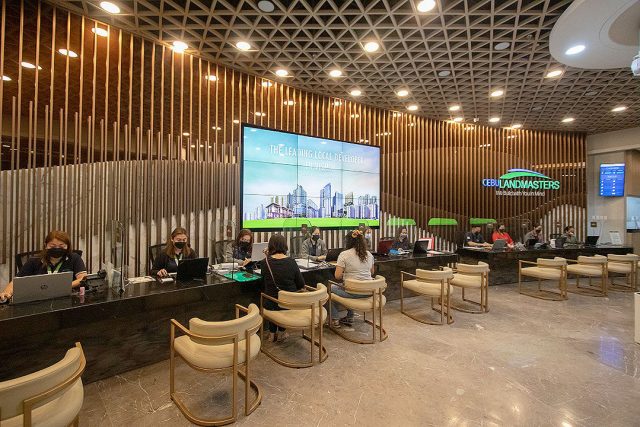
CEBU Landmasters, Inc. has eight satellite sales offices located across the Visayas and Mindanao region. — COMPANY HANDOUT

CEBU Landmasters, Inc. (CLI) anticipates a “strong recovery” for the property market in the Visayas-Mindanao (VisMin) region after logging a record P11.8 billion in reservation sales in the first nine months of the year.

“Demand for mid and economic homes in VisMin continues to be strong despite the extended economic effects of the pandemic and we are optimistic take-up will further improve as recovery takes place,” CLI President and Chief Executive Officer Jose R. Soberano III said in a statement on Monday.

The company said it is expecting to exceed its sales target set for the year after reservation sales hit P11.8 billion in the first nine months of 2021, 13% up from P10.5 billion year on year. 

CLI’s economic housing brand, Casa Mira, accounted for 50% of the sales, while its Garden Series for the mid-market segment took up 33%. The high-end brand, Premier Masters, accounted for 17% of the sales.

The developer said most of the seven projects launched during the nine-month period are nearly sold out.

CLI now has eight satellite sales offices located across the Visayas and Mindanao region to complement its online sales platform, where clients can check out virtual tours of its projects.

“We see our sales momentum further picking up speed in the fourth quarter as we launch more residential projects in VisMin for our buyers who are predominantly end-users,” Mr. Soberano said.

CLI is planning to expand its township developments, one of which is the P20-billion Ming-Mori Techno Business Park in Minglanilla, Cebu. The 100-hectare project just received a notice to proceed from the Philippine Reclamation Authority.

The bidding and the awarding of contracts for the Ming-Mori project is slated for the last quarter of the year, while actual reclamation may begin by the first quarter of 2022.

CLI is also working on a 14.4-hectare university township Manresa Town in Cagayan de Oro, located near Xavier University’s Masterson Campus. The company’s 22-hectare Davao Global Township is also nearly completed.

“We continue to pursue projects in anticipation of VisMin’s strong recovery and opportunities to move this region forward,” said Mr. Soberano.

CLI said it is looking to acquire more land as well as work on estate development projects. Majority or 38% of the company’s projects are located in Cebu, 21% are in Iloilo, 17% in Cagayan de Oro, and the balance comes from its projects in Bacolod, Bohol, Davao, Dumaguete, and Ormoc. — Keren Concepcion G. Valmonte

Petron completes P18-B fixed-rate bond sale

PETRON.COM

PETRON Corp. has concluded the sale of its fixed-rate bonds worth P18 billion, the country’s largest oil company said in a regulatory filing on Monday.

“The company hereby notifies the commission of the completion of the offer on Oct. 5, 2021,” the Ramon S. Ang-led firm said, referring to its first tranche of securities under its P50-billion shelf registration with the Securities and Exchange Commission (SEC).

Petron was able to successfully sell its Series E bonds due 2025 and Series F bonds maturing in 2027.

Its Series E bonds sold to retail investors reached P8.76 billion, while those sold to institutional investors stood at P241 million, company data show.

Meanwhile, Series F bonds purchased by retail financers hit P8.44 billion, while institutional investors bought P560.6 million.

The commission previously said Petron expected to raise P17.78 billion from the first tranche of the company’s shelf offering.

“Proceeds will be used for the redemption of its Series A bonds, for the partial financing of its power plant project, and for the payment of existing debt,” the SEC said in a statement on Sept. 24.

On Monday, Petron also said it began sending out notices of redemption to stockholders who wish to redeem its Series 2B preferred shares issued in 2014. The redemption price is set at P1,000 apiece.

The redemption period will begin on Nov. 3, 2021.

Petron shares at the local bourse improved 4.72% or 16 centavos to finish at P3.55 apiece on Monday. — Angelica Y. Yang

Asian mall operator taps bitcoin mining, NFTs to boost income

DMITRY DEMIDKO/UNSPLASH

FOR A SENSE of the seemingly unstoppable spread of cryptocurrencies, consider the latest strategy of Malaysian mall and property developer Hatten Land Ltd.

The company, which trades on Singapore’s Catalist exchange, has a market cap of about S$112 million ($83 million). That figure was helped by a 140% gain on Sept. 16 after a multi-day trading halt, when it announced a deal with Singapore Myanmar Investco Ltd. (SMI) to jointly explore business opportunities in crypto mining activities. Still, the stock is down almost 10% year to date.

A couple of weeks after the SMI announcement, Hatten Land said Frontier Digital Asset Management Pte. will install and operate at least 1,000 crypto mining machines at properties owned or managed by Hatten Land in the Malaysian state of Malacca. The rigs will mine Bitcoin initially, with alternative coins to be considered in the future, it said.

“The Hatten Group has sufficient capacity to host the new green cryptomining operations in our malls without eliminating the retail aspect,” Executive Chairman and Managing Director Colin Tan said in an e-mail Thursday. The “operations will improve the utilization and in turn enhance the profitability of our malls.”

Hatten Land said it has combined built-up areas of more than six million square feet within its malls in Malacca. The mining operations with “transform Hatten’s assets into a hub for blockchain and other digital activities that will contribute to the growth and transformation” of the state, Tan said.

While some governments like China’s have been cracking down on crypto mining, and Malaysia itself has occasionally rapped some crypto operations — such as allegations in July of illegal operations by crypto exchange Binance — Hatten isn’t concerned about regulatory issues. The group has obtained legal opinion that cryptocurrency mining isn’t prohibited under Malaysian laws, and there are no reported cases of any other regulatory breach involving cryptocurrency mining other than electricity theft, Tan said.

On Thursday, Hatten issued another release saying that subsidiary Hatten Technology and Prakal Pte. — known as EnjinStarter — will create digital assets for Hatten Land, including a token system and non-fungible tokens, or NFTs. The collaboration will promote physical and digital tourism in Malacca as well as e-commerce activities, according to the statement.

Hatten isn’t the first company to pivot into crypto or blockchain. MicroStrategy, Inc. is one of the most high-profile, moving from business intelligence software and consulting into a holder of a lot of Bitcoin. For a while in 2017 and 2018, companies were seeing their stocks pop if they added “Blockchain” to their name.

“Hatten Land is undertaking a strategic shift towards a sustainable and green digital economy,” Tan said in a separate e-mail on Friday. It includes green crypto mining that will be enabled by solar energy as well as physical-digital activities that will involve tokens and non-fungible tokens and other digital initiatives, he said. — Bloomberg

Gov’t makes full award of T-bill offer as yields move sideways

BW FILE PHOTO

THE GOVERNMENT made a full award of the Treasury bills (T-bills) it offered on Monday as rates moved sideways, with investors preferring to park their excess funds in safe-haven assets.

The Bureau of the Treasury (BTr) raised P15 billion as planned via the T-bills it auctioned off on Monday as total tenders reached P46.594 billion, more than three times the initial offer but lower than the P56.36 billion logged in the previous auction.

Broken down, the BTr raised P5 billion as planned from the 91-day debt papers from P11.37 billion in bids. The three-month T-bills fetched an average rate of 1.095%, up by 1 basis point (bp) from the 1.085% seen at last week’s offering.

It also made a full P5-billion award of the 182-day T-bills as the tenor attracted tenders worth P18.36 billion. The six-month paper fetched an average rate of 1.391%, unchanged from last week.

Lastly, the government borrowed the programmed P5 billion through the 364-day debt papers from P16.86 billion in tenders. The one-year securities’ average rate inched up by 0.3 bp to 1.587% from the 1.584% quoted at last week’s offering.

T-bill rates moved sideways and will continue to do so as weekly maturities are now greater than the supply, with the Treasury’s weekly offers of the short-term papers at just P15 billion.

“We suspect that the funds are really intended for this particular investment outlet,” the trader said in a Viber message on Monday.

National Treasurer Rosalia V. de Leon said in a Viber message to reporters after the auction that T-bill rates have been steady while Treasury bond (T-bond) yields have been rising due to expectations that the US Federal Reserve will soon unwind its accommodative monetary policy stance.

The Fed has said it could start reducing its monthly bond purchases as soon as November and signaled interest rate increases may follow more quickly than expected.

Ms. De Leon added that the market expects the high inflation seen in the past months to be temporary following the slight easing seen in September.

Headline inflation stood at 4.8% in September, slowing from the 4.9% logged in August but faster than the 2.3% print recorded in the same month last year, the Philippine Statistics Authority reported last week.

September’s headline inflation print hit the lower end of the Bangko Sentral ng Pilipinas’ 4.8%-5.6% forecast range for the month.

Average inflation for the first nine months reached 4.5%, above the central bank’s 2-4% target and 4.4% forecast this year.

On Tuesday, the BTr will offer P35 billion in reissued five-year Treasury bonds with a remaining life of four years and five months.

The BTr is looking to raise P200 billion from the local market this month: P60 billion from weekly offers of T-bills and P140 billion from weekly auctions of T-bonds.

The government wants to borrow P3 trillion from domestic and external sources this year to help fund a budget deficit seen to hit 9.3% of gross domestic product. — Jenina P. Ibañez

NCCA launches values-oriented online cartoon

HENERAL TUNA

The writer behind ZsaZsa Zaturnnah collaborates on a kiddie show of an alien cat who studies a barangay in preparation to invade Earth

WHILE in the middle of lockdown last year, director Avid Liongoren and his production team were deciding on a main character for an online cartoon series on Filipino values. The options were: a young boy who time travels, a robot, and mythical creatures who had to learn what it was like to be Filipino. In the end, they decided on a cat from outer space who lands in the fictional Barangay Hiraya in the Philippines.

The cat is the star of Heneral Tuna, a new short animated series from the National Commission for Culture and the Arts (NCCA) and produced by Rocketsheep Studio. The show was developed to showcase Filipino values in a modern and engaging way for a new generation of Filipinos. The animated series of seven episodes will be shown on the Film Development Council of the Philippines (FDCP) Channel and Kumu.

THE FOCUS ON VALUES
The NCCA, together with the National Economic and Development Authority (NEDA), conducted a two-year study looking into the different values upheld across the country. The research aimed to answer the questions “What is important for Filipinos?” or “What do Filipinos value at present?”

“For us at the NCCA, the values study we conducted and the National Values Program that we are currently developing are grounded on the intent of fostering common good,” explained Marichu Telano, NCCA Deputy Executive Director, during an online press conference on Oct. 8.

“The values study was a platform to listen to people’s input on what they value most. The program, on the other hand, is a process of revisiting, rediscovering, and recapturing those values, which we hope will push for effective and responsive leaders or simply just be productive and concerned members of the society,” she said.

The research identified 20 common shared values. These are the themes presented in the animated series, including family, faith, resilience, care for environment, honesty, love for country, valuing culture and arts, and good governance.

THE ALIEN SOLDIER CAT
Mr. Liongoren said that the cat character was drawn from a YouTube video of a cat who thinks about how miserable he was with humans.

“Dog characters tend to be perpetually happy… Mas masalita ang pusa sa aso (Cats communicate more than dogs). Not that they talk but, in our minds, that’s how they are,” Mr. Liongoren said of cats’ tendency to seem like they are conducting internal monologues.

The cartoon series follows the story of Heneral Tuna, hero of planet Mingming, who was tasked to take over planet Earth. The devious alien cat accidentally crash lands in the Philippines and decides to use the opportunity as a reconnaissance mission to observe the locals in preparation for his planned invasion. In the end, he learns about Filipino values and culture in his adventures in Barangay Hiraya.

Heneral Tuna a just ticked all the boxes of someone who is entertaining and silly to watch. [It] is fun and ridiculous. At the same time, can teach you something important,” Mr. Liongoren said.

The mini-series is created by Rocketsheep Studio, the company behind the animated films Hayop Ka! (2020) and Saving Sally (2016). Working alongside Mr. Liongoren are comic book artist and illustrator Rob Cham, and scriptwriters Charlene Sawit-Esguerra, Kevin Raymundo, and Carlo Vergara (ZsaZsa Zaturnnah). Manny Angeles, co-producer and writer of Hayop Ka!, is the voice to the titular character.

For scriptwriter Carlo Vergara, the length of the stories was a challenge.

“I guess the main challenge for me was the time for these animations because they’re supposed to be super short. When I started to write the events in the dialogue, I’m a very visual thinker. I imagine what will happen and write it,” Mr. Vergara said.

He added that the character is written with a point of view of a child trying to explore the world, but at the same time, the show is enjoyable for adults too.

Mr. Vergara said that the series includes hints of hugot and comedy. “I cannot avoid incorporating comedy in my stories even if the stories are serious.”

Heneral Tuna premieres on Oct. 15, 7 p.m., at the FDCP Channel and Kumu.   Michelle Anne P. Soliman

Greenergy secures SEC nod on capital hike to P5 billion

THE Securities and Exchange Commission (SEC) has cleared Greenergy Holdings, Inc.’s authorized capital stock increase to P5 billion, from P2 billion previously, according to the firm.

In a regulatory filing on Monday, Greenergy said it received from the corporate regulator a certificate of approval dated Sept. 17.

The company said its capital stock now stands at P5 billion, divided into 4.9 billion common shares at P1 apiece, and one billion preferred shares with a par value of 10 centavos per share.

Majority of the firm’s board of directors previously gave the go signal for the capital stock hike two years ago.

In the same disclosure, Greenergy said SEC also gave the green light for the firm to reduce the number of directors to nine with two independent ones, from 11 with two independent directors previously.

The Antonio L. Tiu-led firm previously forged a share purchase deal with ABS-CBN Corp. to acquire the media company’s 51 million shares of stock in financial technology firm U-Pay Digital Technologies, Inc.

The move will allow Greenergy to own 51% of U-Pay’s outstanding capital stock.

In July, the company signed a marketing services deal with telecommunications provider DITO Telecommunity Corp.

Under the arrangement, Greenergy will be providing online and offline lead generation services by commission for the telco’s programs and services.

Greenergy shares at the local bourse were unchanged at P2.24 apiece on Monday. — Angelica Y. Yang

Energy-saving tips for building owners

BW FILE PHOTO

OWNERS of small commercial properties and buildings should adopt practical energy-saving measures to comply with the Energy Efficiency and Conservation Act, according to Lylah Ledonio, executive director of Leechiu Property Consultants.

The Energy Efficiency and Conservation Act, which took effect in March, covers establishments that consume least 100,000 kilowatt-hours.

At a recent forum organized by the European Chamber of Commerce of the Philippines Real Estate Committee, experts shared tips for building owners to be able to comply with the law. These are:

  • Work with the tenants and occupiers to turn off lights and air-conditioning during slow hours;
  • Appoint an energy efficiency and conservation champion within the organization;
  • Focus on components that use up the most energy: lighting and cooling;
  • Consider retrofitting an older building to achieve energy savings for the least cost;
  • Consider a “green-rated” design when constructing a new building;
  • Source renewable energy requirements and more from producers of geothermal, solar and other green sources; and
  • Future proof rental revenues by providing highly energy-efficient surroundings.

Cathy Rose A. Garcia