Home Blog Page 7368

Philippine casino operator will pursue Japan expansion, CEO says

Okada Manila / Company handout

Jason Ader, chairman and chief executive officer of 26 Capital Acquisition Corp., plans to pursue casino opportunities in Japan and elsewhere after completing the purchase of a large casino resort in the Philippines.

“The company will own assets beyond the Philippines over the next several years,” Ader said in an interview Monday.

“This company is not expecting to be just a single asset company in perpetuity.”

Ader, who took 26 Capital public earlier this year as a shell company, agreed to merge it last week with Okada Manila, a luxury resort in the Philippines owned by Japan’s Universal Entertainment Corp. Universal will receive an 88% stake in the new business.

Ader, a former casino analyst, didn’t name any specific cities the company will pursue. Okada Manila identifies itself in a merger-related presentation as the only Japanese owned and operated casino in the world. Japan has recently begun awarding casino licenses as part of a broader push to develop its tourism industry.

“We like the market and think we’re well positioned should something come up,” Ader said.

The Manila resort, which was valued at $2.6 billion in the transaction, gets a significant share of its customers from South Korea, Japan, Singapore and Hong King, he said. — Bloomberg

The Lexus Car Maintenance weekend is happening from Oct. 21-23

Come in for periodic maintenance service and get a 40% discount on Lexus Genuine (Fully-Synthetic) engine oil

Hard-working vehicles need to endure varying road conditions; extremes in ambient temperatures; and stop-and-go traffic. For an engine to operate at its best, it must be kept in tip-top shape. Following a periodic maintenance schedule (PMS) is vital for this, as is the use of genuine parts and lubricants during every service.

Lexus is offering a 40% discount on Lexus Genuine  (Fully-Synthetic) Engine Oil to all customers who will avail of PMS at Lexus Manila and other Lexus Accredited Dealerships (Toyota Mandaue-South, Cebu; Toyota Davao City; Toyota San Fernando, Pampanga; Toyota Santa Rosa; and Toyota La Union) during the promo period from October 21-23 2021.

Having your car serviced at Lexus gives you access to Lexus Genuine Engine Oil which is formulated to work with your vehicle perfectly. When you buy a Lexus, you’ll not only enjoy the vehicle’s unparalleled luxury and advanced technology, but also the complete customer care experience. From regular servicing requirements to emergency roadside assistance, Lexus has got it covered.

As an added bonus, customers will also receive a discount if they avail of any or a combination of the following products:

-20% less on Lexus BactaKlenz Service

-20% less on UV Lamp & Air Purifier Bundle

-10% less on UV Lamp and Air Purifier if purchased separately

The Japanese philosophy of hospitality affects everything Lexus does, including the five-star treatment you get with the brand’s personalized aftersales services. This is the Lexus experience, the embodiment of ‘omotenashi’–or Japanese hospitality. This customer-first philosophy continues to serve as a mission statement and solemn oath. Lexus is a benchmark of customer satisfaction. “We will treat each customer as we would a guest in our home,” is its mantra.

Contact Lexus at (02) 8856-5252 or https://fal.cn/3fESo to book a service.

To learn more, visit the Lexus website at lexus.com.ph or visit their social media pages on Facebook and Instagram.

To arrange a consultation with your personal sales consultant, visit the Lexus Remote page at https://fal.cn/3eSWW.


Spotlight is BusinessWorld’s sponsored section that allows advertisers to amplify their brand and connect with BusinessWorld’s audience by enabling them to publish their stories directly on the BusinessWorld Web site. For more information, send an email to online@bworldonline.com.

Join us on Viber to get more updates from BusinessWorld: https://bit.ly/3hv6bLA.

Duterte signs bill regulating LPG industry

COMPANY HANDOUT

President Rodrigo R. Duterte has signed into law a measure regulating the domestic liquefied petroleum gas (LPG) industry, setting standards for one of the country’s key energy sources.

Republic Act 11592 or the LPG Industry Regulation Act, enacted on Oct. 14, sets best practices for local industry players such as importers, bulk suppliers, distributors, haulers, refillers, trademark owners, marketers, dealers and retail outlets.

Under the law, the industry must come up with a cylinder exchange and swapping program within six months of its enforcement to allow consumers to buy any LPG brand of their choice.

Unsafe LPG cylinders or cartridges will be retired to prevent LPG-related explosions and other accidents.

The law penalizes underfilling of LPG cylinders, tapering with markings and selling adulterated LPG.

The city where a player is registered will get a 40% share from the penalties,.The Energy department will use the rest to enforce the law. — Kyle Aristophere T. Atienza

BSP sees no rate adjustments this year

PHILIPPINE STAR/ MICHAEL VARCAS
Bangko Sentral ng Pilipinas (BSP) Governor Benjamin E. Diokno said that moving too early on rate hikes may hurt the economy’s recovery, which is just starting to take hold. — PHILIPPINE STAR/ MICHAEL VARCAS

By Luz Wendy T. Noble, Reporter

THERE appears to be no need to adjust policy settings until the end of this year, Bangko Sentral ng Pilipinas (BSP) Governor Benjamin E. Diokno said on Monday.

“We have two more policy meetings — one in November and in December. It would appear that there will be no policy adjustments between now and end of the year,” Mr. Diokno said in an interview with ANC news channel on Monday.

The Monetary Board has kept its key interest rate at a record low of 2% in its last seven meetings. It will hold two more policy review meetings this year, scheduled on Nov. 18 and Dec. 16.

The BSP chief stressed that raising rates may be premature, considering the Philippine economy’s recovery is just starting to take hold.

“Some central banks raised their rates because they fear inflation and they see their exchange rate deteriorating so fast as a result, so some of them have adjusted rates,” he said.

In the Asia-Pacific, the Bank of Korea and New Zealand have already hiked interest rates, while the Monetary Authority of Singapore tightened monetary policy by raising the slope of its currency band.

“We have hefty international reserves and we continue to get fresh support from overseas Filipino remittances, business process outsourcing receipts and our exports, and foreign direct investments. So we are fairly comfortable that we do not need to raise interest rates at this time,” Mr. Diokno said.

He reiterated his belief that the elevated inflation is “transitory.” In September, inflation eased to 4.8% from 4.9% in August.

While inflation is expected to reach beyond their 2-4% target at 4.4% this year, Mr. Diokno said it is expected to return to within target at 3.3% next year and 3.2% in 2023.

The central bank chief is hopeful the economy’s recovery will firm up, citing the rebound in exports, the drop in daily new COVID-19 cases and the rise in vaccination rate.

“The economy will pick up in the fourth quarter this year, and in fact some good numbers might come up in the third quarter,” Mr. Diokno said.

The reimposition of strict mobility curbs in the capital region for two weeks in August prompted economic managers to downgrade its full-year growth target to 4-5% from 6-7%.

Coronavirus restrictions in Metro Manila were further relaxed last Friday, in hopes of reviving the pandemic-battered economy.

ANZ Research Chief Economist Sanjay Mathur said he agrees with Mr. Diokno’s guidance that inflation is transitory as it was fueled mainly by food and fuel prices. He noted that core inflation, which stood at 3.3% for the second straight month in September, is within target.

“Core inflation has been steady but the point is that domestic demand is as yet weak. How much it can recover we will know only when the economy re-opens,” Mr. Mathur said in an e-mail.

Given that the labor market remains weak while business and consumer confidence appear lackluster, Mr. Mathur believes a rate hike can wait until 2022.

“I think the BSP can comfortably wait until late next year if not 2023 before tightening. In fact, targeting transitory inflation with higher interest rates would be adverse,” Mr. Mathur said.

Mr. Diokno on Sunday said there is more harm in tightening monetary policy too soon than in doing it too late.

However, Bank of the Philippine Islands Lead Economist Emilio S. Neri, Jr. said a preemptive 25- to 50-basis-point (bp) rate hike will not be harmful to the economy.

“If inflation does persist and even worsens, sizeable Federal Open Market Committee and BSP policy adjustments later on may trigger disorderly behavior in markets and significantly disrupt our fragile recovery,” Mr. Neri said in a Viber message.

Last year, the BSP slashed rates by a total of 200 bps to support the economy before pausing in December 2020.

PHL companies projected to raise worker salaries by 5.6% in 2022

PHILIPPINE STAR/ MICHAEL VARCAS

COMPANIES in the Philippines are expected to raise the salary of employees by an average of 5.6% next year, as the economy is seen to rebound from the coronavirus pandemic, according to a Willis Towers Watson report.

In its latest Salary Budget Planning Report, Willis Towers Watson said companies in the Philippines are looking to hike salaries of employees amid challenges hiring new workers and retaining the current workforce.

Next year’s projected pay rise of 5.6% will be higher than the 5% average salary increase actually implemented this year.

This is also above the 5.3% average salary rise projected by companies in the Asia-Pacific for 2022, while countries in Western Europe and North America expect salaries to remain flat.

Willis Towers Watson data showed Philippine firms involved in medical technology (MedTech) are seen to give the biggest average raise at 7.3% in 2022, after raising wages by an average of 5.7% this year.

Construction, property and engineering companies are projected to increase salaries by 6.2% versus 4.8% this year. Firms involved in pharmaceutical and health services, and business support services, including business process outsourcing, are looking to hike salaries by an average of 6.1%.

On the other hand, firms in energy and natural resources are only expected to raise salaries by 4.7% in 2022, while insurance firms will increase pay by 4.8%.

“Although there is a positive outlook among businesses, companies are also monitoring the Philippine economic landscape, hence, organizations may further adjust their 2022 salary budget forecast in the later part of this year,” Rewards, Data and Software Practice Leader of Willis Towers Watson Philippines Chantal Querubin said in a news release on Monday.

Nearly half of companies in the Philippines expect their business performance to be in line with targets this year, the report showed.

Organizations are also looking to create more jobs in sales, information technology and engineering in the next 12 months, Willis Towers Watson said.

The survey also showed 65.3% of companies will keep their headcount in the next 12 months, while 25.8% are planning to add more employees and 8.9% are seeking to cut jobs.

“Companies are between a rock and a hard place when it comes to compensation planning. On the one hand, employers need to continue effectively managing fixed costs as they rebound from the pandemic. On the other hand, companies recognize they need to boost compensation, especially in sectors where there may be a manpower crunch,” Ms. Querubin said.

Foundation for Economic Freedom President Calixto V. Chikiamco in a Viber message on Monday said the projected pay increase is possible for some companies “which did well during the pandemic” such as those in the telecommunications, information technology companies, and food and beverage industries.

With inflation hovering near 5% with fuel and food prices expected to escalate, Mr. Chikiamco said some companies may feel compelled to give workers an increase to just keep up with inflation.

However, enterprises that were badly hurt by the pandemic “would likely be unable to increase pay, or even 13th month pay,” he added.

Willis Towers Watson conducted the survey between April and June this year, covering 1,405 companies representing a cross section of industries from 13 markets in the Asia-Pacific region. In the Philippines, 266 companies participated. — Bianca Angelica D. Añago

Invalidated textile tax credits reach P3 billion

PHILIPPINE STAR/ MICHAEL VARCAS

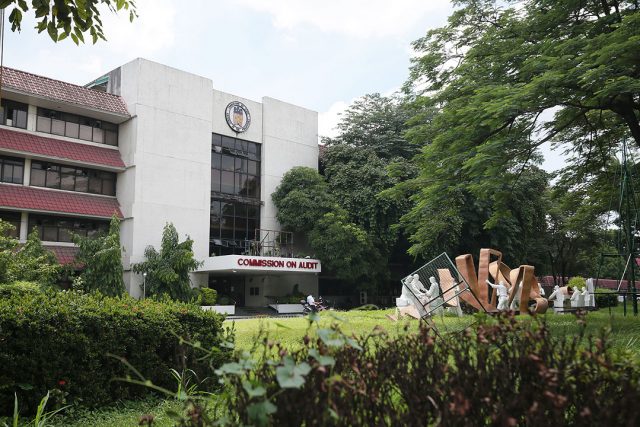
THE COMMISSION on Audit (CoA) rejected a total of P3 billion in tax credits granted to textile companies in the six years to 2014, the Department of Finance (DoF) said.

Another P417.22 million in tax credit certificates was considered invalid, on top of the previous P2.6 billion, according to a report sent by CoA to the Finance department on Sept. 21.

Employees and officials from various government agencies had approved illegal tax credit certificates from 2008 to 2014, DoF said in a press release on Monday.

These tax credit certificates are usually given to exporters registered with the Board of Investments (BoI). Through these certificates, exporters can get refunds on raw materials taxes they paid by offsetting the tax credits against other taxes due.

However, some companies that illegally obtained tax credit certificates sold them to other companies at a discount, allowing the latter firms to reduce their own tax liabilities.

CoA found that the One-Stop-Shop Inter-Agency Tax Credit and Duty Drawback Center issued illegal certificates to either ghost exporters or real companies that were not in the export trade, such as the textile companies, DoF said.

The textile firms include Silvertex Weaving Corp., Knitech Manufacturing, Inc. (KMI), Capital-Roll Knit Corp., Uni-Glory’s Knitting Corp., and Primeknit Manufacturing Corp.

Tai-Cheng Integrated Resource, Inc., Miskhu Industrial Corp., and Universal Pacific Knitting Mills, Inc. also used invalidated tax credit certificates.

Silvertex Weaving topped the list with the largest amount in illegal tax credit certificates at P906.8 million, followed by Capital-Roll at P664.92 million, Miskhu at P451.98 million, and Primeknit at P312.08 million.

CoA had also issued notices of disallowance to Capital-Roll for P664.92-million worth of illegally issued tax credit certificates, Knitech for P114.2 million, Universal Pacific for P127.81 million, Uni-Glory for P241.68 million, and Tai-Cheng for P198.81 million.

Representatives from the DoF, BoI, Bureau of Customs, and the One-Stop-Shop Inter-Agency Tax Credit and Duty Drawback Center responsible for the approval of the illegal certificates, along with the recipients and claimants, were held liable by CoA. — Jenina P. Ibañez

Government set to launch sustainable finance roadmap

THE GOVERNMENT will launch a sustainable finance roadmap on Wednesday to address the country’s policy and regulatory gaps in promoting sustainable investments, the Department of Finance (DoF) said.

The blueprint will address “policy and regulatory gaps in promoting sustainable investments through finance, implementing sustainable government initiatives, facilitating investments in public infrastructure, and developing projects that promote sustainable financing in the Philippines,” the DoF said in a statement on Monday.

Sustainable investors strongly consider both financial returns and environmental and social impact in their decision making.

The interagency technical working group on sustainable finance is composed of the DoF and the Bangko Sentral ng Pilipinas (BSP), in partnership with the British Embassy in Manila.

The roadmap will tackle sustainable financing based on three pillars: policy, financing, and investments. It will be paired with a set of guide principles “that will serve as taxonomy for the sustainable finance ecosystem in the Philippines.”

These principles are aligned with Southeast Asian standards for green bonds, the European Union taxonomy, and other international standards for green finance principles, the DoF said.

“The Roadmap and its Guiding Principles are expected to spur investments from various financing sources to support the country’s Nationally Determined Contribution and long-term priorities,” DoF added.

The blueprint was developed under the United Kingdom (UK) government’s Association of Southeast Asian Nations (ASEAN) Low Carbon Energy Programme (ALCEP).

The low carbon energy program was designed to help ASEAN member countries access UK technical knowledge on green finance and energy efficiency. Through the UK Prosperity Fund, the £15 million in aid backs technical assistance, capacity building, and policy advice in Indonesia, Malaysia, the Philippines, Thailand and Vietnam.

The BSP in July said that there is a need for more sustainable financing in response to concerns about climate change impacts on bank operations.

BSP Governor Benjamin E. Diokno had said that the bank will continue to aim for increasing green bond holdings and will assess climate change vulnerabilities. — Jenina P. Ibañez

AC Energy readies Vietnam battery storage system

50-MW solar farm in Vietnam’s Khanh Hoa province — PHOTO FROM SERAPHIM-ENERGY.COM/

AYALA-LED AC Energy Corp. said its joint venture in Vietnam will be developing a battery energy storage system (BESS) facility that will receive funding from the US Consulate.

In a disclosure on Monday, the listed energy firm said the US Consulate in Ho Chi Minh provided a $2.96-million grant to help the former’s joint venture AMI AC Renewables to develop the pilot utility-scale project.

The energy storage facility, which will have a capacity of 15 megawatt-hours (MWh)/7.5 MW, will be integrated in Ami AC Renewables’ existing 50-MW solar farm in Vietnam’s Khanh Hoa province.

“The project is expected to demonstrate the technical and economic capabilities of the energy storage technology, and showcase how it can help maximize the efficiency and reliability of renewable energy (RE),” the firm said.

Patrice R. Clausse, chief operating officer of AC Energy International who also chairs the AMI AC Renewables board of directors, said energy storage is set to play an important role in the energy transition, and help unlock the potential of renewables.

“We are very excited about the opportunities that lie ahead in harnessing this enabling technology, and together with AMI, we will aim to secure Vietnam’s renewable energy sources while helping the country achieve its sustainability goals,” he said.

Chargé d’Affaires ad interim Marie C. Damour said the US Consulate is pleased to support Vietnam’s efforts to strengthen its RE power generation and lessen its dependence on coal.

“This project aims to show how cutting-edge US energy storage technology can advance these goals, and catalyze Vietnam’s transition to a clean energy economy for a climate-resilient future,” AC Energy quoted the official as saying.

AMI AC Renewables is a joint venture of AC Energy and Vietnamese RE platform AMI Renewables. AMI AC Renewables operates solar facilities with a total capacity of 80 MW-peak in Khanh Hoa and Dak Lak provinces.

AMI AC Renewables is targeting to develop a renewables pipeline of 2,000 MW.

Back home, AC Energy aspires to reach a renewables capacity of 5,000 MW by 2025 as it hopes to become Southeast Asia’s largest listed RE platform.

The Ayala group’s energy platform currently has six power projects in Vietnam, with some under construction.

AC Energy shares at the local bourse shed around 4.59% or 52 centavos to finish at P10.80 apiece on Monday. — Angelica Y. Yang

FEU, CEU report quarterly losses

LISTED educational institutions reported losses for their first quarter ending in August this year with Far Eastern University, Inc. (FEU) trimming its attributable net loss to P40.35 million, while Centro Escolar University (CEU) swung to a loss of P80.89 million.

Both institutions have a fiscal year ending in May.

“The group’s first-quarter results translated to a significant improvement compared to the previous year, still reporting, however a net loss,” FEU said.

FEU narrowed its net loss attributable to owners of the parent company by 73% during the first three months of its fiscal year, finishing with P40.35 million from P148.8 million year on year. It said the first quarter of each school year is “generally expected to report a net loss due to timing of revenue recognition” once classes begin.

FEU’s topline went up by 43% to P407.64 million from P284.64 million. Its operating expenses inched up by 14% to P502.09 million from P439.21 million in the same period last year.

The university said it expects to have a “sound financial position and a more stabilized operating results” after opening the school year with around 44,000 students group-wide, which is more than its usual enrollees pre-pandemic.

“The group looks forward to [the] resumption of face-to-face classes because of the government’s more intensified vaccination program and its efforts to slowly open the economy,” said FEU, adding that it “remains conservative” with its outlook on the financial market and the economy.

CEU, on the other hand, recorded a net loss of P80.89 million for its first quarter this year. Its bottom line is a turnaround from the P52.77-million profit logged in the same period last year.

Revenues of CEU decreased to P237.27 million, which is 9% less than last year’s P261.65 million. Its expenses surged by 52% to P318.16 million from P208.88 million.

“For school year 2021 to 2022, CEU approved the improvements of internet connection. It also approved the improvements of rooms, classroom and various laboratories to [conform] with the safety requirements of government agencies in preparation for face-to-face classes,” CEU said.

On Monday, shares of FEU at the stock exchange went down by 4.31% or P25 to close at P555 apiece. CEU shares were last traded on Oct. 4 for P6.69 each. — Keren Concepcion G. Valmonte

Robinsons expands with new 4-star hotel in GenSan

GRAND SUMMIT HOTEL, a new four-star hotel in General Santos City, opened on Oct. 15. — COMPANY HANDOUT

ROBINSONS HOTELS and Resorts last week opened its first four-star hotel in General Santos City.

In a statement, the hospitality arm of Robinsons Land Corp. said the Grand Summit Hotel, which is a homegrown brand, will have 102 deluxe rooms and suites, restaurants and amenities.

“We, at Robinsons Hotels and Resorts, remain steadfast in our vision of extending our brand of hospitality and service all throughout the country and beyond. Ours is a vision built on a tradition of solidarity and perseverance, and this is what the Grand Summit stands for — a brand that can withstand the weathers of the highs and lows of economies — always at the forefront of what hotel service ought to be,” Arthur D. Gindap, senior vice-president and business unit general manager of Robinsons Hotels and Resorts said.

The pool and suite facilities will be opened by December, while the hotel’s spa and fitness center along with its ballroom are slated to open by the second quarter of 2022.

The Grand Summit Ballroom can fit 500 banquet guests and up to 700 guests with a “theater set-up.”

The hotel also has function rooms that can accommodate up to 30 guests, which may be used for business meetings, exhibits, training and seminars, and other social gatherings. It also has its own all-day dining restaurant, Café Summit.

“This is not a mere hotel opening for us and the residents of General Santos, but a testament of the wonderful things to expect in the coming days here in our beloved city,” Annalyn Yap, group general manager of Summit and Go Hotels, said.

Grand Summit Hotel General Santos also complies with the Circle of Clean protocol, which is modeled after the World Health Organization’s hygiene and cleanliness standards and Health department protocol.

The hotel is offering an introductory promo of P3,988 a night per room until year-end. — Keren Concepcion G. Valmonte

Basic Energy plans to acquire 60% ownership in Filoil

BASIC Energy Corp. said on Monday that its board of directors had given the go signal to acquire up to a 60% ownership in local oil company Filoil Energy Co., Inc. through an equity investment.

“After further presentation… the members of the Board of Directors resolved to approve the proposed equity investment in Filoil Energy and acquire interest therein of up to 60%,” the listed holdings firm said in a regulatory filing.

The company said eight of its directors voted in favor of the planned investment, with two officials abstaining since they have direct and indirect interests in Filoil Energy.

The move to invest in the oil firm earlier received the green light from the firm’s risk and related party transactions committees.

BusinessWorld has reached out to Basic Energy for more details on the planned investment, but the firm has yet to reply as of deadline time.

Last month, the corporate regulator approved the doubling of Basic Energy’s authorized capital stock to P5 billion from P2.5 billion previously. The firm asked for a higher capital stock “to raise funds for energy projects and expand its existing business operations.”

In May, the de Venecia-led company secured from the Energy department a service contract for a planned 50-megawatt wind project in Mabini, Batangas.

The wind energy service contract calls for a non-extendible, five-year, pre-development phase and a 25-year development stage, counted from contract signing.

Basic Energy also holds service contracts for the exploration and development of geothermal energy in Batangas, Bataan, Benguet, Camarines Sur, and Sorsogon.

Basic Energy shares at the local bourse improved 5.26% or three centavos to finish at P0.60 apiece on Monday. — Angelica Y. Yang

After a hard year, a house bill targets helping the creative industry

FREEPIK

IT HAS been over a year since audiences have been able to laugh and cry in a movie theater, or sing along with their favorite band in a concert. While the creative sector in the country has managed to transfer activities and events online, it still cannot operate as vigorously as before.

When most of the creative sector stopped operations last year, the indefinite lockdowns led to job losses amongst creative freelancers and workers, artists, and performers.

The National Live Events Coalition PH, a movement of professionals and organizations from the live and social events industry reported a revenue loss of more than P133 billion, affecting more than 400,000 jobs.

According to ilostmygig.ph, a website that collects data on the impact of the COVID-19 pandemic on the country’s arts, culture, independent businesses, and creative industries, its survey recorded a total loss of income of more than P268 million, impacting 4,458 professionals during the strict lockdowns in 2020.

HB10107
This is the situation that backgrounds House Bill (HB) 10107 or the Philippine Creative Industries Development Act, a measure aimed at supporting the creative sector. It was submitted by the House Committees on the Creative Industry and Performing Arts, Appropriations, and Ways and Means on Aug. 30 this year, substituting for House Bill Nos. 4692, 6476, and 8101.

It was passed on the second reading on Sept. 13 and approved for third and final reading on Sept. 20.

The measure seeks to promote and develop creative industries, and allocated funding for them. It also aims to protect and strengthen the rights of, and cultivate economic activity of, creative firms and individuals, works and creative industry stakeholders as well as indigenous cultural communities.

“Creative successes of Filipinos, to date, have almost always been hinged on the artists’ own individual efforts, i.e., with very little to no government support which is why we believe that Filipino creatives, while already competitive, have yet to harness the full potential of their creativity,” Pangasinan 4th District Rep. Christopher “Toff” de Venecia said in an e-mail to BusinessWorld. He is the House Committee on Creative Industry and Performing Arts Chairperson.

Mr. De Venecia added that among creative stakeholders’ concerns that were considered in drafting the measure include the absence of a “singular government agency that caters to their needs,” the “lack of a legal definition of the creative sector” which led to difficulties for creative professionals in identifying which sector they belong to when applying for bank loans, registering with the Bureau of Internal Revenue, or obtaining health insurance.

One of the major points of the bill is the creation of the Philippine Creative Industry Development Council which will be attached to the Department of Trade and Industry (DTI). The Council will be composed of 17 members — nine regular members from the private sector who will represent each creative industry domain, and eight ex officio members from government agencies.

“Although we are seeing great developments in this area, there are still gaps between how private sector leaders approach issues relating to the creative industries versus how government officials treat the same. There needs to be a mindset shift about how the government views the creative economy, and we believe that this can start to happen if we put representatives from the government on the same decision-making table as the private sector,” said Mr. De Venecia.

The Philippine Creative Industry Development Council will be a Creative Workers’ Welfare Committee. The bill also makes provisions for a Creative Educational Plan, and The Creative Industry Development Fund for research.

CONCERNS
While the House Bill promotes the development of the creative industry, the organization Concerned Artists of the Philippines (CAP) has expressed concerns on how the bill defines provisions on creatives labor welfare, support for MSMEs, educational support, and grassroots participation.

“Any industry in society cannot be healthy or sustainable if its workers are underpaid, overworked, working in unsafe conditions, have little access to health care and insurance, or fear to exercise their political and civil rights for self-organization. This definitely applies to the creative industry too,” said Lisa Ito, University of the Philippines-Diliman College of Fine Arts faculty member and CAP Secretary-General, in an e-mail to BusinessWorld.

“Any industry is ultimately built on the backs and labor of workers. Any effort therefore to develop the industry will have to address these questions of how it will change and improve the lives of people on the ground who comprise the labor of the creative industries,” Ms. Ito added.

After conducting study groups and consultations with their network, CAP wrote a position paper and addressed its concerns directly to Rep. Sarah Elago of the youth sectoral partylist Kabataan Partylist and the rest of the Makabayan bloc in Congress, and to the office of Mr. De Venecia.

“Both the proponent and the Makabayan bloc representatives made an effort to listen to our position and address what could be revised at that point in the bill’s progress in the House. Of course, these are still not enough to fully address the concerns raised in the paper, but it is a start,” Ms. Ito said.

Ms. Ito commented that the creation of a Creative Workers’ Welfare Committee is “a positive development” and suggested that the Committee “provide support and foster a climate conducive for the growth of creative organizations.

“The committee should be open to consultations, proactively initiate programs to study and improve welfare and uphold socio-economic and political rights, and not allow violations such as the red-tagging of individual artists and cultural organizations, especially community-based formations, to happen,” she said.

CURRENT STATUS AND OUTLOOK
If the Bill is passed into law, one of its long-term goals is to establish the Philippines as the leading creative economy in ASEAN by 2030.

“I think that we can properly plan and lay the foundation for this creative future, and this shall be one of the primary tasks of the Council,” Mr. De Venecia said, admitting that it is a “lofty goal.”

“A Creative Industries Development Plan shall be created, which shall contain targets as to value creation, contribution to GDP (gross domestic product), jobs created, intellectual property targets, market creation and expansion (whether domestic or international), and investment targets,” said Mr. De Venecia. “It follows that these predetermined targets will influence how government programs for the creative industries will be streamlined.

“While targets can be adjusted along the way, the point is that we cannot really get to a goal without planning for it ahead of time. We cannot grow what we don’t know.”

Ms. Ito stressed the importance asking, “For whom is development for?”

“The experience of growth in other countries and investment in the Philippine landscape, throughout history, has taught us that profit does not necessarily equate to progress, or development for the people,” Ms. Ito said.

“We must not forget that our creative industries can shape our country’s history and change the lives of communities for better or for worse, so let us always be vigilant towards the ends and means of development,” she added.

The committee is hopeful that the Senate will approve the House Bill before the year ends.

If the measure is approved, Mr. De Venecia explained, “There will have to be bicameral committee meetings where the versions of the lower house and the senate will be reconciled if there will be conflicting or differing provisions.” After which, it will be submitted to the President for his signature and approval.

“We are confident that the [HB10107] will become law before the next set of officials are elected,” he said. — Michelle Anne P. Soliman


ADVERTISEMENT
ADVERTISEMENT