Home Blog Page 7367

2050 take me there

AERIAL VIEW of Tumingad Solar Power Project of Sunwest Water and Electric Co. in Romblon. — SUWECO/PIA ROMBLON

(Part 4)

We have the potential to become an advanced economy by the year 2050. Our strong fundamentals create the opportunity for us to belong to the First World some 30 years from now. Such an achievement, however, will not be handed to us on a silver platter. We have to work for it by removing some formidable obstacles, some of which we have discussed in the three previous articles. In this final part of the series, we shall discuss the other major obstacles that we have to surmount.

Among the remaining ones is the very high electricity prices. This has to do with the Industrial Revolution 2.0 which was the Electrical Revolution, which the Philippine still has to complete before we can fully benefit from the much-vaunted Industrial Revolution 4.0. Electricity prices in the Philippines are among the highest in Southeast Asia and are considered relatively high compared to global standards, at roughly $0.20 per KWh, owing mostly to our heavy reliance on imported fossil fuels and uncompetitive market structures. Among the renewable energy sources available in the country, geothermal is shown to be the cheapest and most economically attractive, followed by wind, hydropower, and lastly solar PV.

In a Market Intelligence Report of the International Trade Administration of the US, it was pointed out that the Philippines is already facing a mounting energy crisis as the Malampaya gas fields, supplying 30% of Luzon’s energy consumption, are expected to be depleted by 2024. The Government has stated that it envisions the Philippines as being energy self-sufficient, utilizing a combination of fossil fuels and renewable energy resources. About 43 GW of additional capacity will be required by 2040. The country is already clearly behind schedule in developing these solutions. The current (2020) energy mix is composed of coal (47%), natural gas (22%), renewable energy (hydro, geothermal, wind, solar; 24%) and oil-based (6.2%) with current energy capacity of 230 GW. While there are aspirational statements about having more clean energy, the Government continues to face the dilemma of clean energy vs. lowering the price of electricity. There are no penalties or incentives in place for utilizing different types of energy sources. Another problem is that the current grid cannot accommodate any additional input.

A favorable development is that practically all the leading business conglomerates in the country (San Miguel Corp., the DMCI group, First Pacific, the Aboitiz group, the Ayala group, Ricky Razon’s ICTSI, the Metro Bank group, the Gotianuns, and others) are heavily invested in power plants to increase the supply of electricity. The not so positive development is that the vast majority of them are still constructing or operating coal-powered plants, with the notable exception of the Ayala Energy Corp. that is taking a long-term view that eventually the price of solar energy will decline significantly.

In a report issued by Mordor Intelligence in 2021, it was estimated that the solar energy market in the Philippines is expected to grow at a compound annual growth rate of 13.40% during the forecast period of 2020-2025. As the economy recovers from the pandemic and resumes growth at the pace of 6-7%, starting in the second semester 2022, the solar market is expected to garner more support from the government. The solar PV market is expected to register significant growth due to increasing small-scale solar PV deployment. It is estimated that replacing/integrating diesel generation with renewable energy, like solar, can save the Philippines over $200 million per year.

Small islands in the Philippines are powered by generator-based mini-grids, which are fueled by imported diesel and bunker (freighter) oil. Furthermore, because of factors such as grid instability, inadequate generation capacity, and lack of subsidized fuel, these islands (many of which are very attractive tourist destinations) suffer from blackouts and unplanned power outages. Therefore, off-grid electrification through renewable energy sources such as solar is expected to create significant opportunity in the near future. Falling photovoltaic system prices are expected to drive the market in the next five to 10 years.

Another major obstacle to sustainable and inclusive growth is the long-standing culture of corruption and poor governance in the Philippines. This was accented during the last year of the presidential term of President Duterte, some of whose close aides and allies were accused of having unethically benefited from large health supplies contracts. In an article for Rappler (Sept. 16), Geronimo Sy, former Assistant Secretary of the Department of Justice, explained the ramifications of the case of a business enterprise called Pharmally that bagged a total of P8.7 billion in contracts under very suspicious circumstances. In his words, “More than price, it is evident that Pharmally is a favored bidder. The red flags are: One, it was very recently incorporated in 2019. Two, it is severely capitalized. Three, there is no verifiable address. Four, it has no regular operations as an ongoing concern with big contracts. Five, it has no record of performance. Six, its connection with Mr. Yang (former economic adviser of President Duterte) and the latter’s connection in the executive department which controls procurements. In ordinary days, it is egregious to waste taxpayers’ money. In pandemic life, it is beyond criminal. Investigating overpriced face masks and face shields in a systematic manner can lead to answers that will correct anomalies, punish the guilty, and make justice prevail. And may the heavens forbid uncovering overpricing in the procurement of scarce, saving vaccines by those destined for hell.”

Cases like this in a government that started with the hypocritical promise to eradicate corruption explain why the Philippines ranks very low in the Global Index on Corruption Perception of Transparency International (TI). In TI’s 2020 Corruption Perception Index, the Philippines retained its low score of 34 out of 100 possible points, but slipped two notches down in the ranking from the previous year, with its “mostly stagnant” response and policies against corruption. The Philippines, in the 2019 Corruption Perception Index, landed in the 113th spot from the previous rank of 99 in 2018 after sliding 14 notches very much already at the height of the Duterte Administration. According to TI, “With a score of 34, efforts to control corruption in the Philippines appear stagnant since 2012. The government’s response to COVID-19 has been characterized by abusive enforcement and major violations of human rights and media freedom.” In the ASEAN, the Philippines outranked Laos, Myanmar, and Cambodia but remained below Thailand, Vietnam, Indonesia, Timor-Este, Malaysia, Brunei Darussalam, and Singapore.

Our continuing inability to address corruption, which diverts huge amounts of money from economic development efforts, will surely make it more difficult for the country to attain advanced economy status in the next 25 to 30 years. It will especially be incumbent on the millennials and centennials of today to continue the campaign to improve good governance in both the public and private sectors.

The consoling fact is that a country like South Korea has attained advanced economy status even if it has not entirely eradicated corruption. What matters most are the appropriate economic policies and programs that the country will pursue in the coming decades. More concretely, with significant improvements in good governance, the Philippines may be able to attain advanced economy status much earlier than 2050.

Lastly, a serious challenge to our achieving advanced economy status in the coming quarter of a century or so is our lack of preparedness for natural calamities which are becoming more frequent and deadly with climate change. In a report of the World Meteorological Organization (WMO), the Philippines accounts for 75% of all deaths caused by weather, climate, and water hazards in the Southwest Pacific region during the past 50 years. Because of the location of the Philippines relative to the Pacific Ocean, it faces the brunt of extreme weather and climate change. It is devastated by an average of 20 typhoons annually. The WMO identified Yolanda, the typhoon that battered Eastern Visayas in November 2013 as the deadliest during the five-decade period. It killed more than 7,300 people, a number that is considered conservative by survivors. I personally witnessed the aftermath of Yolanda because I was in Tacloban to be among those who welcomed Pope Francis in January 2015.

It is important that the Philippine Government increase its efforts both at the national and local government levels to strengthen disaster risk management. In a report of the Asian Development Bank on May 4, 2021, six lessons were identified from The Integrated Disaster Risk Management Fund (IDRM Fund):

1. Enhanced risk identification and analysis;

2. Increased investment in disaster risk reduction;

3. Improved access to disaster risk finance;

4. Scaling up of community-based and gender-focused approaches;

5. Increased regional cooperation on IDRM; and,

6. Enhanced knowledge and tools for IDRM.

The Administration that will be in place after the elections in May 2022 should address especially the last point, enhanced knowledge. The ADB organized a forum for local and central government officials from the Philippines-supported recovery efforts from Typhoon Yolanda in 2013, including the exchange of regional and international best practices. The exercise underlined the importance of disaster recovery planning, especially relating to land use, disaster risks assessment, and ease of access to disaster risk information. Post-disaster recovery, based on a strategic framework with a clear institutional setup and coordination mechanism, should be commenced while relief is ongoing to reduce the overall fiscal burden of a disaster. In fact, it is highly recommended that a large portion of the additional funding that will be available to LGU officials under the Mandanas-Garcia ruling should be invested in disaster risk reduction, especially in the most vulnerable regions.

Let me end on a personal note this overly ambitious attempt to prognosticate what it will take for the Philippines to realize its potentials of becoming an advanced economy by the year 2050. I would like to address my 26 (and counting) grandnieces and grandnephews — millennials and centennials — who, from the actuarial point of view, will, God willing, be still around in the year 2050. They are part of our most valuable asset, a young, growing and English-speaking population. Whether or not they are residing in the Philippines (a good number of them are in Canada), they can participate in the efforts enumerated in this series of articles about what will be required for the Philippines to live up to the forecast of the Hongkong and Shanghai Banking Corp. that by 2050, the Philippines will be the 16th largest economy in the world. Let me directly address them by name, in the order of their birth: Kyle, Maxine, Javier, Alexandra, Nicola, Joaquin, Seve, Isabel, Jaime, Miguel Villegas, Jose, Monica, Christian, Leandro, Leia, Natalia, Carmen, Francesca, Alvaro, Lily, Camila, Lucia, Sophia, Miguel Claro, Xander, and Nico. Please keep a record of this article (and if possible, the previous ones) so that in 2050, when I will no longer be in this world, you will remember your grand-uncle who dreamed big about our beloved Philippines. And thank you parents for the gift of life that they generously gave you so that you came to this world at a time when our country finally achieved the status of an advanced economy, an aspiration that we — the Baby Boomers and Generation X — failed to accomplish.


Bernardo M. Villegas has a Ph.D. in Economics from Harvard, is professor emeritus at the University of Asia and the Pacific, and a visiting professor at the IESE Business School in Barcelona, Spain. He was a member of the 1986 Constitutional Commission.


bernardo.villegas@uap.asia

IMF’s Asia & Pacific Regional Economic Outlook: Pandemic resurgence slows recovery in Asia

FREEPIK

IN ITS RECENT Regional Economic Outlook (REO), the IMF notes that the COVID-19 pandemic has taken a turn for the worse in Asia since the spring, along with the region’s growth outlook. The growth projection for the Asia and Pacific region is downgraded by more than 1% to 6.5% compared to the April 2021 forecasts — more than for any other region. The downgrade is mostly due to the fast spread of the Delta variant amid initially low vaccination rates, which has tragically led to further devastating loss of lives, especially in the densely populated south and southeast Asia. Although demand for Asian manufacturing and exports from Europe and the US has supported recoveries, real GDP outcomes in the first half of 2021 have disappointed. Manufacturing held up because of surging demand for pandemic-related supplies, but contact-intensive sectors such as services and retail sales are taking longer to recover.

Despite the downward revision, Asia Pacific remains the fastest growing region in the world. But the divergence between Asian advanced economies and emerging and developing economies is deepening. High-tech (e.g., China, South Korea) or commodity exporters (e.g., Australia, New Zealand) can take full advantage of favorable external demand and accommodative financial conditions. By contrast, tourism-dependent economies such as the Pacific Island countries and Thailand, as well as economies with limited room for fiscal stimulus (mostly low-income countries), have been lagging.

As vaccination rates accelerate, the region is expected to grow by 4.9% in 2022, 0.4 percentage point faster than projected in April. However, output levels in emerging and developing economies are expected to remain below pre-pandemic trends in the coming years.

Accelerating inflation remains a concern for the global economy, though price increases in Asia are more subdued than in other regions. Higher commodity prices, supply chain bottlenecks, and rising shipping costs have impacted exports more than domestic production. And thus, domestic consumer price increases have been contained.

As a result, monetary policies in the region have not tightened as much as in the rest of the world. While New Zealand was the first advanced economy to taper asset purchases and Korea the first to raise policy interest rates (mainly due to financial stability considerations), emerging Asia has maintained an accommodative monetary policy to foster the recovery, unlike other emerging markets.

There are downside risks to the region’s economic outlook. On the health front, the uncertain path of the pandemic and weakening vaccine efficacy against virus variants is a risk. On the economic side, global supply disruptions and potential financial spillovers from the Federal Reserve scaling back its support for the US economy is a concern for the region. Higher financing costs can interact with domestic financial vulnerabilities (rising leverage in the corporate and housing sectors in some countries) and slow the recovery further. Natural disasters also pose a growing threat to low-income countries, especially the Pacific Island countries.

Given these challenges, our latest assessment calls for policymakers to carefully navigate the uncertainties and adjust their policy responses accordingly. Their first priority should be to address the health crisis. Swift and broad vaccinations and equitable sharing of vaccines globally are critical. In addition, macroeconomic policy support should remain in place where possible with improved targeting of support for the most vulnerable people and sectors, until the recovery is more firmly established, and the pandemic is under control. We also advise that fiscal policies should be undertaken within medium-term frameworks to maintain credibility and keep borrowing costs low, while central banks should be prepared to act quickly if the recovery strengthens faster than expected or where there is a tangible risk of rising inflation expectations.

Structural reforms and investments to develop new growth engines, including in the digital, education, and green sectors, would help raise productivity and ensure more equitable outcomes for students and workers dealt setbacks by the pandemic’s upending of their learning and lives.

To explore the policies to foster a strong and durable recovery, this REO presents two studies. The first study provides new empirical evidence on the health and economic benefits of swift vaccinations. The analysis quantifies how these inoculations can spill over across borders, demonstrating that no single nation can fully recover until all countries enjoy broad access. The second study highlights how trade — a historically powerful driver of growth in Asia — has stalled, in part due to waning liberalization amid still high trade restrictions. The analysis underscores how reducing non-tariff barriers — which are significantly higher in Asia than in other regions — can help to accelerate inclusive prosperity. This would also build on the past progress achieved through regional agreements, such as the Comprehensive and Progressive Agreement for Trans-Pacific Partnership and the Regional Comprehensive Economic Partnership.

Developments in the Philippines mirror those elsewhere in Asia. The economic recovery started to slow in the first half of 2021, largely because of a resurgence of COVID-19 infections in March and April. Another wave of infections due to the spillover of the Delta variant into the Philippines has held back the recovery further. As a result, our 2021 GDP growth projection is lowered to 3.2%. But with the Delta variant wave subsiding and further economic reopening, growth is expected to pick up to 6.3% in 2022.

The Philippine authorities’ policy response has so far appropriately focused on providing vital healthcare services and income support to the vulnerable. Ramping up vaccination efforts will be critical for sustained economic recovery, together with strong policy support until it is entrenched. The Philippines has some fiscal space that should be used proactively if downside risks materialize, and monetary policy should remain accommodative unless recent inflationary pressures become more entrenched. Steadfast implementation of structural reforms, combined with a continued public infrastructure push, would help rekindle investment and a return to higher rates of economic growth. 


Changyong Rhee is the director of the International Monetary Fund’s Asia and Pacific Department.

A step closer to a Personal Property and Security Registry

Back in 2018, the Congress enacted Republic Act No. 11057, or the Personal Property Security Act (PPSA). The enactment of the PPSA is in line with the State’s policy “to promote economic activity by increasing least cost credit, particularly for micro, small, and medium enterprises (MSMEs), by establishing a unified and modern legal framework for securing obligations with personal property.”

As regards the scope of the PPSA, the said law is applicable to “all transactions of any form that secure an obligation with movable collateral,” with an exception only on interests in aircrafts and ships, which continue to be the subject of the Civil Aviation Authority Act of 2008 and the Ship Mortgage Decree of 1978, respectively. Simply put, the PPSA applies to all obligations which are secured with personal property.

A recent innovation under the PPSA is the establishment of an Electronic Registry (Registry). Under the law, this Registry shall “provide electronic means for the registration and searching of notices.” Notices are statements that relate to a security interest or lien, and may refer to an initial notice, an amendment notice or a termination notice. The agency tasked with the responsibility of establishing and administering the said Registry, including the responsibility of issuing guidelines on the use and management of the Registry, is the Land Registration Authority (LRA).

The Implementing Rules and Regulations (IRR) of the PPSA, which came into force in 2019, provides that the Registry shall be a repository of the following information, among others:

1. Initial notice of security interest and lien in personal property;

2. Amendment notice providing new information or continuing the period of effectiveness of an initial notice; and,

3. Termination notice.

Although the PPSA was signed into law three years ago, its implementation is subject to the condition that the Registry is already established and operational. Thus, unless and until the LRA declares that the Registry is already operational, the PPSA’s implementation is held in abeyance. This, however, does not mean that the general public should not look with anticipation on the eventual establishment of the Registry and the provisions of the PPSA coming into force.

The significance of the establishment of the Registry cannot be underestimated considering that under the PPSA, the registration of a notice with the Registry is one mode of perfecting a security interest. The other modes of perfecting a security interest are through possession of the collateral by the secured creditor and control of investment property and deposit account. More importantly, the PPSA provides that the priority of security interests and liens in the same collateral is determined according to the time of registration of a notice or perfection by other means, without regard to the order of creation of the security interests and liens.

Just this year, the LRA issued LRA Circular No. 11-2021, which provides for the “Implementing Guidelines on the Use of the Philippines Personal Property Security Registry (PPSR) for the Creation of User Accounts to Access the PPSR.”

Under LRA Circular No. 11-2021, the Registry, or the PPSR as it is referred therein, shall be accessible to LRA Clients online, or over the public internet. This becomes extremely convenient in light of the pandemic, which continues to affect the country and the rest of the world. LRA Circular No. 11-2021 specifically outlines the procedure in which LRA Clients can create their user accounts, which may be in the form of an Individual User Account or a Juridical Entity User Account.

Individual Users may create and register their Individual User Accounts online through the PPSR without requiring any further approval from the LRA. On the other hand, Juridical Entities, through their representative, may create and register their Juridical User Accounts either by Self-Service Online Mode, which is done through the PPSR, or by LRA-Assisted Offline Mode, which is facilitated by a designated LRA Officer. Juridical Entities that require multiple user accounts need to coordinate with the LRA on the creation of their Juridical Entity Account.

On July 26, 2021, the LRA issued LRA Circular No. 19-2021, which provides “Guidance on the Registration of Security Interests During the Transitional Period, as provided in the Personal Property Security Act.” LRA Circular No. 19-2021 acknowledges two fundamental things: first, that prior to the PPSA, the LRA has established the “Electronic Chattel Mortgage Registry” or “eCMR” as part of its Land Titling Computerization Program; and second, that during the PPSA’s “Transitional Period,” the registration of security agreements with the LRA shall continue to be in accordance to Section 4 of Act No. 1509 or the Chattel Mortgage Law.

Against this backdrop, LRA Circular No. 19-2021 provides for the following guidelines, to wit:

“1. The eCMR is still open for the registration of deeds and instruments affecting personal properties, until further notice of LRA, upon full operationalization of the PPSR; and,

2. The fees to be charged for the use of eCMR shall be based on existing eCMR Fees, which covers LRA Fees pursuant to LRA Circular No. 11-2002 dated Sept. 10, 2002, as well as IT Service Fees in accordance with the Build-Own-Operate Agreement between LRA and third-party provider Land Registration Systems, Inc. dated May 26, 2000.”

Thus, taking into consideration LRA Circular Nos. 11 and 19, it would seem that until the LRA declares that the PPSR is fully operational, individuals are still required to register security instruments involving personal properties using the eCMR, as was required even before the effectivity of the PPSA, and while the same is in its Transitional Period. And, until the LRA declares that the PPSR has become fully operational, it would seem that LRA clients are only limited to setting up their User Accounts on the PPSR. This, notwithstanding, LRA Circular No. 11 is still a welcome development as it signals that the LRA is much closer to completing the PPSR.

This article is for informational and educational purposes only. It is not offered as and does not constitute legal advice or legal opinion.


Therese Marie P. Amor is an associate of the Cebu branch of the Angara Abello Concepcion Regala & Cruz Law Offices (ACCRALAW).

tpamor@accralaw.com

TikTok users discover brands and make purchasing decisions on the video-sharing platform 

By Patricia Mirasol 

TikTok is a powerful commerce tool, according to e-commerce company Shopify. Twenty-five percent of users say they purchase or research a product after watching about it on the video-sharing app.  

“Users use the platform to discover new brands and make purchasing decisions,” said Atlee Clark, director of operations at Shopify’s shopping assistant app Shop, in an Oct. 13 event organized by the Ontario-based company. 

Brands are now able to create a store front on TikTok by adding a shopping tab to their profile and integrating their Shopify products into it, Ms. Clark told the event audience. Reaching individuals isn’t dependent on a creator’s or brand’s follower list, as content on the social media app is shared with the audience most interested in it. 

Authenticity and relatability underpin the success of brand and marketing campaigns on social media. Since February 2020, 76% of Shopify’s 1.7 million merchants (including 9,640 of its Philippine-based stores) have already been incorporating social commerce practices as part of their business strategy.  

“The creator community is where content, community, and commerce come together,” added Ms. Clark.  

TikTok, with its over 1 billion monthly active users worldwide, is among the tools being tapped by brands in their effort to build connections with both new and existing customers. In the Philippines, its potential for commerce has already been tapped by the likes of the Belo Medical Group, a medical aesthetic center, and Shopee Philippines, an online shopping platform.  

A third brand, electronics company Samsung Philippines, reported improved brand awareness and engagement when it employed a gamified hashtag challenge on TikTok for the launch of its Galaxy A12 and A02 smartphone models. The 2021 campaign resulted in a 7.35% increase in ad recall, a 11.25% increase in purchasing intent, and a 9.5% increase in brand preference.  

The video-sharing platform is a good match for brands that target — or are looking to expand awareness among — a younger audience, said Forbes in a July 2020 article. It is also suitable for those that can showcase their services or products in a video, and are comfortable sharing light-hearted content.  

Facebook’s Instagram Reels and Google’s YouTube Shorts are similar short-form video platforms that were introduced to the market in the third quarter of 2020.

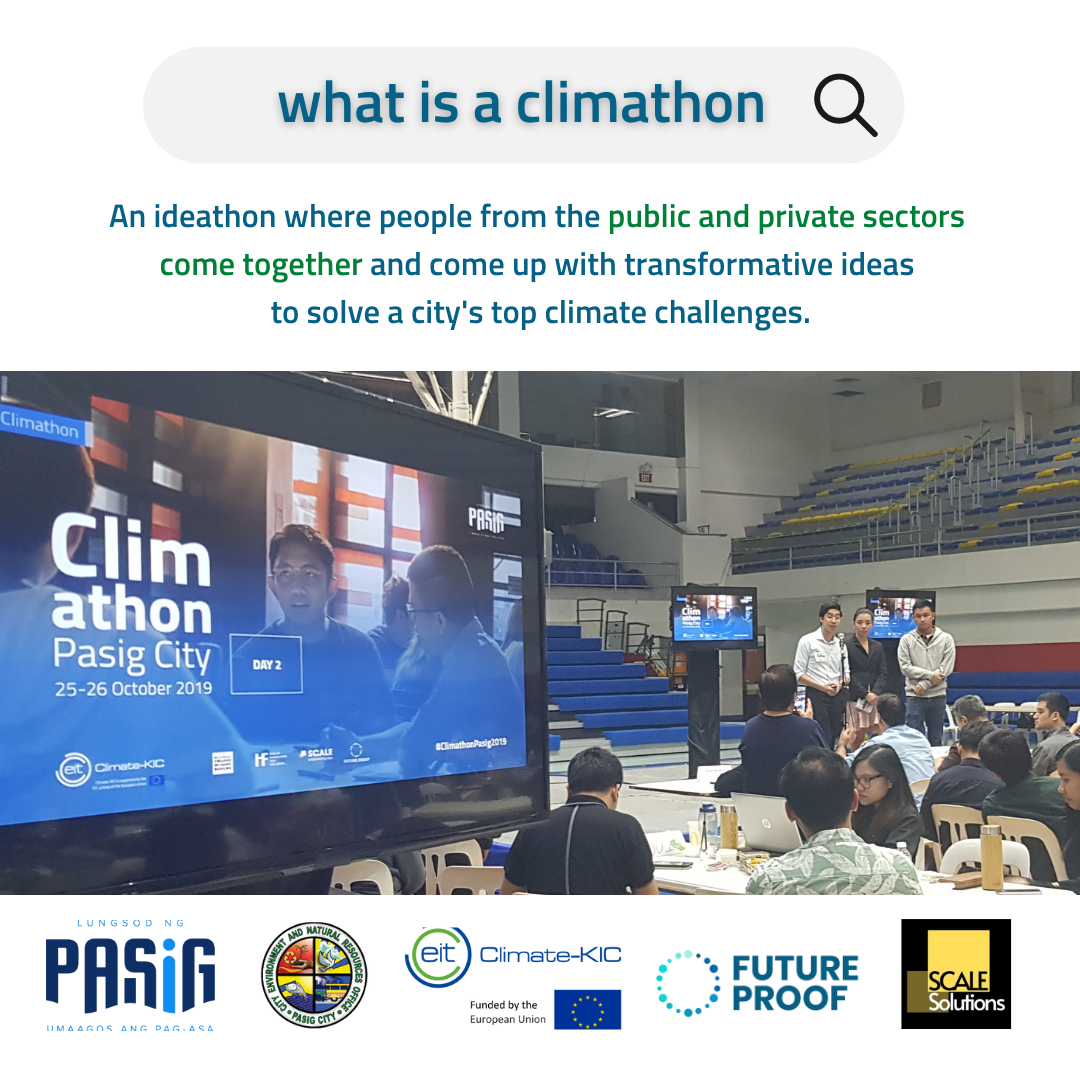
Pasig City runs Climathon Camp and Ideathon 2021

In its third year, the Climathon Pasig Camp and Ideathon 2021 has gathered over 200 citizens from the Philippines and other countries to take climate action. Climathon Pasig Camp and Ideathon 2021 is a climate solutions ideathon where the private and public sectors come together to take action on the pressing climate issues of Pasig City.

The Climathon Pasig Camp 2021

Due to the health crisis, Climathon Pasig moved the ideathon 100% online. Despite the pandemic and the challenges that come with it, people still answered the call to take turn their ideas into concrete actions to answer the top climate challenges in Pasig City.

Climathon Pasig Year 3 kicked off with a Climathon Pasig Camp, the first of its kind in the Global Climathon community. Organizers conducted a series of webinars from September to October 2021, which are still available to watch on Climathon Pasig’s Facebook Page and YouTube channel.

This 5-day camp aims to equip Climathonians as they build their ideas during the Ideathon. Some of the topics from experts are on climate change, sustainability, climate emergency, and the three design challenges that Climathonians need to answer.

The Design Challenges

Climathon Pasig’s goal to help build a sustainable future of its local community and encourage people’s participation, the Design Challenges co-created with the Pasig City Environment & Natural Resources Office (CENRO) this year are based on data generated from the Local Government of Pasig.

The Design Challenges:

  • Design Challenge #1: How to enable Pasiguenos to actively reduce GHG emissions in the city through the adoption of sustainable practices? (SDG 7: Affordable and Clean Energy)
  • Design Challenger #2: How to improve on current sustainable transport projects of the city through active co-creation and participation of Pasiguenos? (SDG 11: Sustainable Cities and Communities)
  • Design Challenge #3: How to develop a behavior and systemic change solution for the city’s solid waste management challenges using a public-private-people partnerships approach? (SDG 12: Responsible Consumption and Production)

All registered teams must decide which design challenges they will solve. They will have to submit a presentation to pitch their ideas which the Climathon Pasig jury will review during the Global Climathon Week.

Ideas can be a product, process, campaign, or a combination of these.

Climathon Pasig 2021 Ideathon

The participants are given two weeks, from Oct. 09-23, 2021, to co-create solutions, rethink ideas, and collaborate with their team and coaches in preparation for the much-anticipated Global Climathon Week.

If you want to tackle real-life, local problems affecting your city and fellow citizens, Climathon Pasig 2021 Registration is still open. We are excited to collaborate with you as you create solutions that will spark conversations, transform minds, and inspire citizens to take climate action.

Global Climathon Week

For the third time, Climathon Pasig will join the global movement with more than 100 cities in over 60 countries in answering the call to address the climate crisis. The Global Climathon Week will happen on Oct. 25-31, 2021. Participants will have a weeklong of fun and exciting webinars to learn from, and in this week various teams will have their ideas showcased as all wait for the winners.

The members of the jury for this year’s Climathon Pasig include Vico N. Sotto, Mayor of Pasig City; Allen Angeles, Department Head II of Pasig City Environment & Natural Resources Office (CENRO); Anton Siy, Head of Pasig City Transport Development & Management Office; Dave Devilles, Vice-President of UnionBank of the Philippines Sustainability, CSR, and Employee Relations; and Ludwig Federigan from the Climate Change Committee (CCC).

The announcement of winners will be on Oct. 29, 2021, and the winning teams will have the chance to implement a pilot program in one of the communities of the barangays of Pasig City.

A Bayanihan Innovation mindset towards climate resilience

In line with bringing the Bayanihan Innovation mindset towards climate resilience, SCALE Solutions brought the first-ever Climathon to the Philippines in 2019; and the first city that hosted the Climathon was Pasig City. Together with co-organizer Future Proof PH, partners EIT Climate-KIC and the Local Government of Pasig City, and co-presenter, UnionBank and the UBP Xcellerator Program, Climathon Pasig continues to deliver the crucial transformation required in disrupting approaches in taking climate action in the local scene and the country as a whole.

Time to Change; Be the Change. Come trailblaze with us in this Climathon journey. Stay tuned for more updates on our website, and let us connect on our Facebook, Instagram, and YouTube channels!


Spotlight is BusinessWorld’s sponsored section that allows advertisers to amplify their brand and connect with BusinessWorld’s audience by enabling them to publish their stories directly on the BusinessWorld Web site. For more information, send an email to online@bworldonline.com.

Join us on Viber to get more updates from BusinessWorld: https://bit.ly/3hv6bLA.

Apple drops Intel in biggest MacBook Pro overhaul in years 

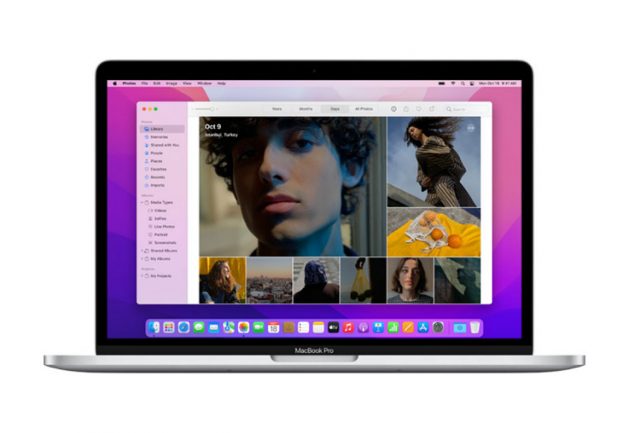
APPLE.COM

Apple Inc. took the most aggressive step yet to strip Intel Corp. chips from its computers, announcing more powerful homegrown Mac processors alongside a total revamp of its MacBook Pro laptop computers.   

The company showcased the chips at an event Monday called “Unleashed” that also included its latest audio products. The new components, called the M1 Pro and M1 Max chips, are 70% faster than its M1 predecessors, Apple said. It also unveiled a redesigned MacBook Pro, adding larger screens, MagSafe charging and better resolution.  

With the new processors and devices, Apple is aiming squarely at the high-end chips that Intel has provided for the MacBook Pro and other top-end Macs for about 15 years. Last year, Apple started transitioning its low-end Macs to its own M1 Apple Silicon chip. The new chips, however, are a bolder stroke, aiming at far outclassing Intel’s highest-performing products.  

Apple shares rose as much as 1.4% to $146.80 after the event. They had gained 9.2% this year through the end of last week. 

The chips include 10 total CPU cores — the components that handle processing — up from the eight in the M1 chip. The 10 cores are split into eight high-performance cores and two cores for tasks that require less energy. That compares with four high-performance and four low-performance cores in the M1.    

Apple is also upping the graphics performance for the M1 Pro and M1 Max, which come with 16 and 32 graphics cores, respectively. That’s up from the seven or eight-core options offered with the M1 Macs. Graphics performance with the M1 Max is as much as four times faster than on the earlier M1 chip, while the M1 Pro is twice as fast, Apple said. It’s also 13 times faster than earlier Intel models.    

The M1 Pro supports 32 gigabytes of memory, while the M1 Max has up to 64 gigabytes. That’s up from 8GB or 16GB offered with the M1.    

The new chips are at the center of the most significant update to the MacBook Pro since 2016. The new model comes in 14.2-inch and 16.2-inch screen sizes, and — like the latest iPad Pro — the displays use miniLED panels. That technology allows for improved color reproduction. The screens also have 24% thinner borders on the side and a 60% thinner border at the top thanks to a new display cutout. That feature, also called a notch, makes the display look more like the one on an iPhone.    

The new models have an updated, boxier look and lack the controversial Touch Bar, the touch-screen strip introduced with the 2016 redesign. Apple replaced the Touch Bar with a new circular fingerprint scanner and larger physical function keys. Besides reversing that change from the prior version, Apple is restoring three ports that users missed after they were removed five years ago: the HDMI port, an SD card slot and MagSafe charging.    

The displays also include ProMotion, a feature that allows the screen refresh rate to reach higher levels for a smoother overall experience. Apple added a similar feature to the iPhone 13 Pro and iPhone 13 Pro Max in September. And the company is adding a 1080 progressive-scan video-chat camera, improving a component that users of earlier MacBook Pros have found subpar. The microphones and speakers were upgraded as well.  

The HDMI connection makes it easier to tie the laptop to a TV or external monitor, while the SD card slot is a convenient offering for on-the-go photographers. MagSafe, meanwhile, makes its return to the MacBook Pro after the feature was added to the iPhone 12 last year. It uses a magnetic charging adapter for the laptop. That means if the charging cord is tripped on, it will be yanked out — rather than sending the computer tumbling to the floor. 

The new 16-inch model can reach up to 21 hours of battery life when watching video, while the smaller 14-inch model has 17 hours, Apple said. The products also support a new fast-charge feature, which can quickly juice the laptop’s battery to 50% from zero. 

Bloomberg previously reported on Apple’s plans for the MacBook Pro chips, design and other features.     

Despite the growth of wearables and other mobile devices over the past several years, the Mac has remained a steady seller for Apple. The computer line pulled in almost $30 billion, or about 10% sales, in the last fiscal year. The Mac has also seen its market share grow. It held about 9% of the global personal-computer market in the third quarter, with shipments rising 10% from the period a year earlier, according to data from IDC. That made Apple the second-biggest gainer in the PC market, after Dell Technologies Inc. 

One challenge Apple may face with its new MacBook Pro is the ongoing chip shortage and supply-chain slowdown sparked by the Covid-19 pandemic. The new computer goes on sale Monday and is due to hit stores next week, starting at $1,999 for the 14-inch model and $2,499 for the 16-inch model, but shipment delays have hampered other recent launches. Customers trying to order Apple’s latest iPhones, watches and iPads are being told that products won’t be delivered until November or December. 

Apple updated the low-end 13-inch MacBook Pro with an M1 chip last year, alongside similar updates to the MacBook Air and Mac mini. It revamped the iMac desktop with a new screen, different design and M1 chip earlier this year. Apple previously said it will complete its transition away from Intel in 2022. — Bloomberg

Oil at $100 a barrel is ‘possible’ this winter, Mercuria says

Reuters

It’s “possible” that oil will hit $100 a barrel this winter, but $80 to $90 is the expected range, said Marco Dunand, the chief executive officer of commodities trader Mercuria Energy Group Ltd.

With surging energy costs contributing to inflation, as the global economy recovers from the pandemic, prices could still go higher, Dunand said at the BloombergNEF summit in London on Monday afternoon.

“It’s difficult to think the psychology of the market can be anything but bullish ahead of the winter,” he said. “We have a bullish view on commodities and on energy.”

Global climate talks that will kick off in Glasgow later this month come at a difficult time, as world leaders balance their climate ambitions with their current reliance on fossil fuels to power their economies. That conundrum is particularly acute for China, the world’s biggest developer of renewable power and the biggest polluter, Dunand said.

“China’s in a complicated place,” he said. “They made an effort to reduce coal production and now there’s panic because there’s not sufficient inventory either of gas or coal.”

Still, Dunand believes China’s leaders want to move aggressively to cut emissions. — Bloomberg

Private sector consortium emphasizes need to accelerate vaccination for safe reopening of PHL economy

In a recent Task Force T3 meeting last October 15, recommendations were shared to accelerate vaccination rollout.

Acceleration of the jab rate is especially important outside NCR, the private sector groups of Task Force T3 (T3) highlighted. They believe that is now made possible by the growing number of vaccine deliveries, resulting from the relentless efforts of Vaccine Czar Secretary Carlito Galvez with the strong support of the private sector in procuring vaccine doses via the tripartite agreements.

Other measures that the private sector groups within T3 are proposing include ensuring that the policies to open up vaccination to the general population and vaccinating 12-17 year olds are implemented across all regions and that booster shots be implemented immediately starting with healthcare workers. For all of these, the mindset from scarcity of supply to sufficiency is key and embracing a simultaneous approach for all sectors over a sequential mode by sector. There should continue to be priority lanes for A1 to A4 individuals.

Members of T3 appealed for flexibility to administer the doses for 12-17 years old and for boosters among their employees at the soonest possible time as they expressed concern over expiration of the supply they procured.

Another recommendation is for the government to spread to provincial LGUs the processes and practices employed by NCR LGUs who have successfully achieved vaccination coverage of close to 80% fully vaccinated of the adult population. This includes a planning tool developed by T3 and employed by several NCR LGUs.

To reinforce the importance of vaccination and increase demand, the groups also proposed vaccine incentives for the fully vaccinated, allowing more mobility and unrestricted access to restaurants, gyms, tourism and other establishments and all forms of public transportation, as well as at airports and seaports. More mobility among the fully vaccinated can happen and restrictions can be removed or eased because this supports the move to re-open the economy safely. They underscored the importance of vaccination for health care workers, school employees and students and transportation and government workers.

T3 is optimistic that with increased vaccination rates, the focus can shift from lockdowns to a faster reopening of the economy. For NCR and other highly vaccinated areas, re-opening public transportation and schools was also proposed. They also called for the exertion of all efforts to reach Alert Level 2 in NCR by early November.


Spotlight is BusinessWorld’s sponsored section that allows advertisers to amplify their brand and connect with BusinessWorld’s audience by enabling them to publish their stories directly on the BusinessWorld Web site. For more information, send an email to online@bworldonline.com.

Join us on Viber to get more updates from BusinessWorld: https://bit.ly/3hv6bLA.

What is an ETF? And why is it driving Bitcoin back to record high prices?

The Bitcoin bulls are racing again. A year ago the cryptocurrency was valued at less than US$12,000. Now it has passed the symbolic milestone of US$60,000, nudging the US$63,255 record it reached in mid-April, before its price fell to as low as US$30,000 in July.

Bitcoin’s rally over the past month is largely attributed to speculation the US Securities and Exchange Commission is poised to approve an exchange-traded fund, or ETF, based on Bitcoin futures.

So what is an ETF, and why does this matter to the value of Bitcoin?

An exchange-traded fund is an investment fund, comprising a pool of assets, traded on a stock exchange. The general attraction is that an ETF offers individual investors the benefits of diversification, protection and liquidity.

Suppose, for example, you want to invest $100,000 in commercial property. You can’t afford to buy an office building or a shopping centre by yourself – and, even if you could, buying just one building would be putting all your eggs in one basket.

Here’s where a funds manager with an ETF can help. The manager buys a number of office buildings and shopping centres across a range of locations. Suppose these assets cost $100 million. These are “bundled” into a fund with 1,000 units sold for $100,000 each.

It’s like buying a share in a company. It allows you, the investor, to avoid the exposure that comes from buying a single asset. Instead, you get a share of a diversified portfolio.

If the value of the portfolio rises, so does the value of your unit. If you want your money – to liquidate your asset by selling it – this is easy to do because the fund’s units are traded on an exchange.

An ETF is also regulated. This protects you from some of the risks (such as fraud) that come from buying assets directly.

Rather than physical assets (as in our example), many ETFs hold securities such as stocks and bonds or derivatives. These funds can be either passively or actively managed.

Passively managed funds, which are the most prevalent, hold a basket of assets that track the market, or a market segment. An “index fund”, for example, holds shares in proportion to their weight in a stockmarket index such as the Standard & Poor’s 500 Index. If a company makes up 5% of the index’s value, the manager will ensure its share makes up 5% of the fund.

Actively managed funds, by contrast, hold more shares whose price the fund manager expects to rise strongly, and fewer or no shares they expect to perform poorly. Whether the return on these funds exceeds those delivered by passive funds depends on whether the fund managers’ judgement (or luck) is better than that of the market as a whole.

A Bitcoin-based ETF is seen as something that will entice more investors to gamble on cryptocurrency.

Buying Bitcoin or other cryptocurrencies directly can be fraught. Forget your private key (the equivalent of a password or PIN) and you lose it all. There is no friendly local bank manager who can retrieve or reset a password or make good your loss.

Scams are also on the rise. In the US alone, more than 81,000 cases of fraud were reported in 2020.

So bundling up cryptocurrencies into products overseen by traditional funds managers and regulators can be seen to have advantages, bringing greater respectability to cryptocurrency trading. (So long as you aren’t bothered by that being the antithesis of the decentralised and distributed ideals that drove techno-libertarians to create cryptocurrencies in the first place.)

But while investing in cryptocurrencies through an ETF brings a number of safeguards, it does not reduce the market risk. An indirect gamble is still a gamble.

Indeed an ETF of Bitcoin futures isn’t even indirect ownership of a pool of bitcoins. It’s a pool of contracts about bets on the future price of the cryptocurrency.

If this sounds a bit like the complicated derivatives known as collateralised debt obligations that led to the Global Financial Crisis in 2008, you’d be right. The more complex the financial instruments become, the more dangerous they may be.

One of the few who who predicted the collapse of that market was hedge fund manager Michael Burry (portrayed by Christian Bale in the 2015 movie The Big Short). Last week he effectively warned that cryptocurrencies are a speculative bubble. This is a view shared by most economists and business leaders.

As with all bubbles, some will make fortunes, but many will lose. Take care. – Reuters

New York directs two cryptocurrency lending platforms to cease activity

Two cryptocurrency lending platforms were asked to cease activities in New York by the state’s attorney general on Monday and three other platforms were directed to provide information about their business.

The move comes weeks after New York Attorney General Letitia James won a court order forcing the closure of cryptocurrency exchange Coinseed.

In a redacted version of a letter dated Monday, James said the Office of the Attorney General “was in possession of evidence of unlawfully selling or offering for sale securities and/or commodities”.

Regulators in the U.S. have been ratcheting up scrutiny of a world that has so far existed in a regulatory gray area, against the backdrop of rising tension between the crypto industry and regulators worldwide.

James filed a lawsuit in February to shut down Coinseed for allegedly defrauding thousands of investors, including by charging hidden trading fees and selling “worthless” digital tokens.

The state’s attorney general warned investors about “extreme risk” when investing in cryptocurrency and issued warnings to those facilitating in the trading of virtual currencies.

Cryptocurrency platforms must follow the law, just like everyone else, which is why we are now directing two crypto companies to shut down and forcing three more to answer questions immediately,” James said on Monday. – Reuters

U.S. Democrats battle over climate change plans in $3.5 trillion bill

By Richard Cowan and David Morgan

WASHINGTON, Oct 18 (Reuters) – Negotiators of a U.S. bill to invest up to $3.5 trillion to expand social programs and attack climate change gave hints of progress on Monday, but some Democrats were resigned to the increasing likelihood that a proposal to reduce carbon emissions will be weakened or scrapped.

Over the last weekend I held many productive conversations” with lawmakers and the White House, Senate Majority Leader Chuck Schumer, a Democrat, said. “We still have work to do,” he added, without providing details in a Senate floor speech.

The legislation is a pillar of President Joe Biden’s domestic agenda. He was set to speak on Monday with Democratic Senator Joe Manchin, whose support for the wide-ranging proposal is key to its passage.

Manchin, a moderate from West Virginia, has been an outspoken critic of the bill, saying it spends too much taxpayer money and contains climate change provisions that would hurt his state’s coal mining industry.

Democratic Senator Sheldon Whitehouse, a leading voice for reducing emissions blamed for the wildfires, floods and other natural disasters now confronting the warming planet, was asked by reporters whether the Clean Energy Payment Program (CEPP) included in Biden’s $3.5 trillion initiative was in jeopardy.

“It remains to be seen but I think it’s worth planning for that,” Whitehouse said.

Several Democratic senators were already touting other steps contained in the bill aimed at lowering greenhouse gas emissions in a sign that the CEPP, which would reward utilities that add more clean energy capacity like solar and wind power and fine those that do not, was in trouble.

“I think it makes the methane pollution fee and the carbon pollution fee all the more essential,” Whitehouse added.

Moderate Democratic Senator Mark Warner urged prompt House of Representatives passage of a separate, $1 trillion infrastructure investment bill already approved by the Senate, while awaiting a deal on the larger bill.

“People want us to put points on the board,” Warner told reporters. He gave as examples the need to pass the infrastructure measure or a bill making major high-tech investments so that the United States can compete more effectively with China.

The Virginia Democrat added that doing so would boost the candidacy of Democrat Terry McAuliffe’s gubernatorial bid in that state in next month’s election.

With virtually no chance of winning over any of the Senate’s 50 Republicans for the larger bill, Democrats are employing a special “budget reconciliation” strategy that would allow them to waive a 60-vote threshold required to advance most bills in the 100-member U.S. Senate.

All 50 Democrats would have to vote “yes” on the bill, with Democratic Vice President Kamala Harris on hand to break any 50-50 ties. Another Democratic moderate, Senator Kyrsten Sinema, also has voiced opposition to the bill as currently written.

House of Representatives Speaker Nancy Pelosi is aiming for passage of the social investment bill and the $1 trillion infrastructure bill by the end of this month. – Reuters

U.S. bill would stop Big Tech favoring its own products

By Diane Bartz

WASHINGTON, Oct 18 (Reuters) – About a dozen U.S. senators from both parties on Monday formally introduced a bill that would bar Big Tech platforms, like Amazon and Alphabet’s Google, from favoring their products and services.

The bill follows others introduced with the goal of reining in the outsized market power of tech firms, including industry leaders Facebook and Apple. Thus far none became law, although one, which would increase resources for antitrust enforcers, passed the Senate.

Senators Amy Klobuchar and Chuck Grassley’s bill would prohibit platforms from requiring companies operating on their sites to purchase the platform’s goods or services and ban them from biasing search results to favor the platform.

A companion has passed the House Judiciary Committee. It must pass both houses of Congress to become law.

Reuters reported on Wednesday, after reviewing thousands of internal Amazon documents, that Amazon’s India operations ran a systematic campaign of creating knock-offs and manipulating search results to boost its own private brands in the country, one of the company’s largest growth markets.

When news of the bill broke last week, both Amazon and Google warned of potential unintended consequences.

Amazon said in a statement that the bill, if it became law, “would harm consumers and the more than 500,000 US small and medium-sized businesses that sell in the Amazon store, and it would put at risk the more than 1 million jobs created by those businesses.”

Google said that the measure would make it more difficult for companies to offer free services — Google’s search and maps are both free — and would make “those services less safe, less private and less secure.”

Facebook, which said that it competes with a range of social media, including TikTok and Twitter, said antitrust laws should “not attempt to dismantle the products and services people depend on.”

Klobuchar chairs the Senate Judiciary Committee’s antitrust subcommittee while Grassley is the top Republican on the full committee. Co-sponsors include five Democrats and five Republicans.

Companies expressing support for the bill included Spotify, Roku, Match Group and DuckDuckGo, Klobuchar’s office said in a statement.

The bill would not break up the companies or force them to drop services but bars some bad behaviors that affect businesses that rely on their platforms, said Stacy Mitchell with the Institute for Local Self-Reliance who said that she would prefer a more aggressive bill. – Reuters

ADVERTISEMENT
ADVERTISEMENT