Home Blog Page 7329

Ronaldo header seals United comeback win over Atalanta

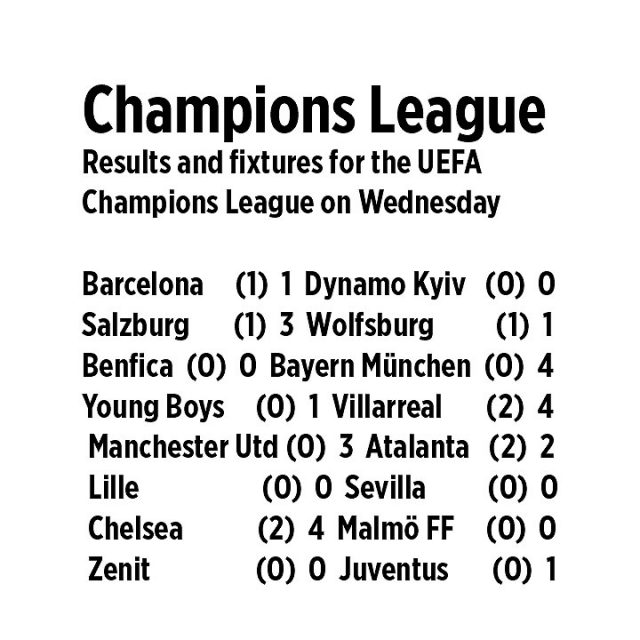
MANCHESTER, England — Cristiano Ronaldo headed in an 81st-minute winner as Manchester United came from two goals down to beat Atalanta 3-2 in a pulsating Champions League Group F match at Old Trafford on Wednesday.

After a poor first-half display, with Atalanta taking a 2-0 lead in at the break, Ole Gunnar Solskjær’s team turned the game — and possibly their season — around with a thunderous performance.

The pressure was on Solskjær after Saturday’s 4-2 Premier League defeat at Leicester City and he opted to drop Paul Pogba to the bench, but there was little sign of improvement from that switch.

United were disjointed and dispirited in the opening 45 minutes, but raised their tempo and the volume from the Stretford End with a relentless push to victory that culminated in the Champions League’s record scorer demonstrating his brilliance in front of goal yet again.

Mario Pašalić put Atalanta ahead in the 15th minute, turning in Davide Zappacosta’s low ball from close range and United, with just one win in their last five games in all competitions, looked drained of belief.

It was no great surprise when the Italian side doubled their lead in the 29th minute with Merih Demiral rising at the near post to glance in an angled header from a Teun Koopmeiners corner.

Fred and Marcus Rashford missed good chances for United before the break, but the home side got themselves back into the game in the 53rd minute.

A clever ball from Bruno Fernandes allowed Rashford to cut in from the left and he picked his spot with a shot into the far corner.

Scott McTominay struck the post after connecting with Ronaldo’s cross, but although United were pushing for a leveler, the Italians were still a threat and the hosts were thankful to keeper David De Gea for a superb double save to keep out a drive from Duván Zapata and follow-up from Ruslan Malinovskyi.

The pressure paid off for United, though, when they drew level with Harry Maguire drilling the ball home at the back post after the static Atalanta defense failed to intercept a Fernandes ball across the box.

Then came the winner as Luke Shaw whipped in a superb cross from the left and Ronaldo rose superbly, timing his jump and his header perfectly to power the ball past Musso.

“I was right behind him. His leap, his timing, it was perfect right in the corner,” Maguire said.

“We see it day in, day out in training and in the goals he has scored throughout his career. He has come up with a massive goal for us again in the Champions League,” he added.

“We got the goals we needed and deserved and I think we deserved the win in the end. Yes, we made it difficult, but it is a tremendous victory in the end.”

United tops the group after three games on six points with Atalanta and Villarreal two points behind. — Reuters

PSC continues MSU partnership with sports facilities rehab

Continuing its partnership with Mindanao State University (MSU), the Philippine Sports Commission (PSC) is set to rehabilitate the university’s swimming pool this year, as part of the national government rehabilitation program for Marawi City.

PSC engineer Eduardo Clariza and architect Noel Elnar had already conducted initial inspection at the MSU Marawi campus early this week, and assessed the status of the swimming pool, which played host to several national competitions in the 1980s as well as other regional meets.

“The plan is to rehabilitate the facility to meet international standards for competition. A covered pool is being designed in consideration of the environment and cultural sensitivity of Islamic practices,” said Mr. Clariza.

The agency’s technical staff also inspected the newly rubberized MSU Track Oval, which was also refurbished with PSC support.

During the courtesy visit of the PSC experts to his office, MSU President Habib Macaayong expressed thanks and appreciation for the all-out support of the PSC and the national government to MSU and the people of Lanao,

The PSC is looking forward to the completion of the rehabilitation of both sports facilities this year, and its designation as a “Center for Sports for Peace and Development” in Mindanao.

Last September, the MSU Marawi Campus conferred Doctor of Humanities Honoris Causa to PSC Chairman William Ramirez for his contribution to the Mindanao Sports for Peace movement, during the university’s celebration of its 60th founding anniversary.

Athletes promote mental health in Better Today program

Filipino athletes take part in meaningful conversations on TikTok by way of the Better Today program.

Powered by PLDT Inc., (PLDT) and Smart Communications, Inc. (Smart) and done in collaboration with the MVP Sports Foundation (MVPSF), the program is designed to promote wellness, safe spaces, and change-making in the digital world.

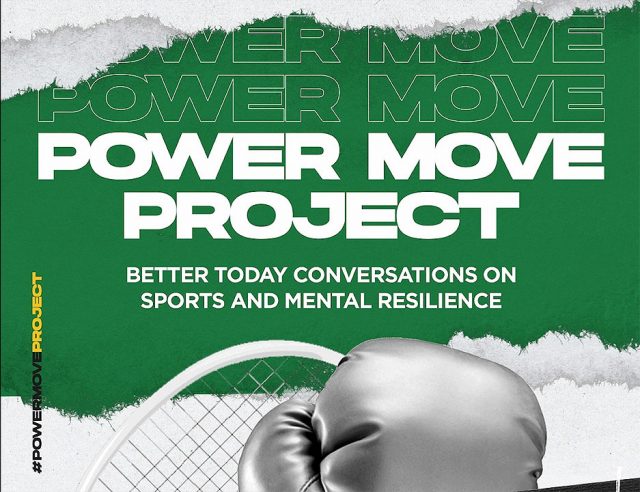
For its third series, Better Today will have Olympic gold medalist and weightlifter Hidilyn Diaz, Olympic silver medalist and boxer Nesthy Petecio, basketball stars Dwight Ramos and Kai Sotto, esports player Jhayzee Rivera, and PLDT Home Fibr Hitters setter Rhea Dimaculangan headlining Power Move: Better Today.

The conversations this time around will revolve around sports and mental resilience.

The Power Move Project follows those of Better Today Conversations in 2020, and Better Today Time Capsule Project 2021 earlier this year. Combined, the two have recorded 186,000 views.

“We are proud to be driving inter-generational conversations on mental health awareness anchored on our advocacy on sports through the Power Move Project,” said Alfredo S. Panlilio, PLDT and Smart President and CEO, in a release.

“We Filipinos love sports so much that it has the power to bring us together as a nation. It gives us a deep sense of community, camaraderie, and pride. We want to share a message anchored on a deep sense of connection, and more importantly, a message of hope that you are not alone,” added Mr. Panlilio, who also serves as the president of MVPSF and first vice-president of the Philippine Olympic Committee.

Catch the Power Move Project on Better Today’s Facebook and Instagram. For more information, visit www.smart.com.ph.

Fighting Maroons get commitment from one-and-done prospect Galinato

One-and-done prospect Henry Galinato has officially committed to the University of the Philippines. — Fil-Am Nation Select

The University of the Philippines Fighting Maroons officially got the commitment of one-and-done prospect Henry Galinato to play for them.

Mr. Galinato, a 6’6” forward who played at Benedictine University Mesa in the United States, is already eligible to suit up for UP in University Athletic Association of the Philippines (UAAP) Season 84 and excited to help the Maroons in their next campaign.

While with the Mesa Redhawks, Mr. Galinato averaged 13 points and 9.6 rebounds in his senior year.

He joins a bevy of UP recruits, which include Carl Tamayo, Gerry Abadiano, and Terrence Fortea.

UP men’s basketball team head of basketball operations Bo Perasol sought the help of Fil-Am Nation Select to help facilitate for a private workout with Mr. Galinato and two other prospects and was impressed at what he saw.

The UAAP is targeting a February 2022 start for Season 84 basketball, nearly two years since calling a halt to activities because of the COVID-19 pandemic.

The league is currently awaiting approval from the Commission on Higher Education (CHEd), the Department of Health (DoH), and the Inter-Agency Task Force (IATF) for its student-athletes to resume training in a bubble setup later this year.

As per UAAP coaches, they would need at least three months of training for the basketball players to be in game shape.

The league said all of its basketball athletes are already fully vaccinated and facilities of member-schools have been retrofitted in preparation for training resumption. – Michael Angelo S. Murillo

Hyde side

Russell Westbrook was most definitely not a happy camper in the aftermath of his debut in purple and gold the other day. It wasn’t simply that the Lakers lost, although he did touch on that briefly — make that very briefly — when he met members of the media. His requisite post-mortem lasted all of five questions, and his responses were clipped and delivered with a long face; if nothing else, these were telling indications of his state of mind. He had wanted to start the rest of his National Basketball Association career with flourish; instead, he wound up with an embarrassing stat line, his game-worst minus 23 in 35 minutes on the floor underscoring his ineffectiveness.

To be sure, Westbrook has been legendarily hard on himself. The very traits that make him a singular force in a league full of marquee names likewise accentuate his Hyde side. It’s why his acquisition by the Lakers will be under constant scrutiny, and why resident stars LeBron James and Anthony Davis took pains to talk to him and reassure him of his importance to the cause. Considering his predilections, however, it predictably proved to be an exercise in futility. It’s not in him — and just not him — to lighten up. His constant quest for perfection through the use of a skill set that essentially makes it a pipe dream keeps him in a constant state of flux.

It’s too early to say the Lakers are doomed to fail in its grand experiment. One setback does not an entire season make. That said, the roller-coaster ride they took in succumbing to the Warriors at home highlights the need for them to adjust, and fast. It wasn’t that James and Davis played atrociously. It was that they played extremely well and still had to take the L. That’s alarming, especially given the potential of the supporting cast. Bottom line, Westbrook has to pull his weight.

Outcomes change dispositions, of course. Steph Curry, for example, could not help, but describe his effort as “trash,” the triple-double notwithstanding. Yet, he was all smiles when the battlesmoke cleared. It’s precisely what James and Davis want Westbrook to do; sometimes, in the midst of all the garbage, he would do well to stop and smell the roses.


Anthony L. Cuaycong has been writing Courtside since BusinessWorld introduced a Sports section in 1994. He is a consultant on strategic planning, operations and Human Resources management, corporate communications, and business development.

Digital transformation is more about people than tools, say marketing experts 

GLENN CARSTENS PETERS-UNSPLASH

For companies to digitally transform, people will need to be upskilled and reskilled to embrace new tools with the goal of improving the customer experience, according to panelists at a marketing summit on Wednesday.  

Edwin R. Bautista, President and Chief Executive Officer of UnionBank, said that “digitize or perish” became the guiding words that pushed banks and other companies towards a more digital future, heightened by the coronavirus (COVID-19) pandemic.  

“We realized that you need people transformation. People need to be there to make use of the tools that you have already invested in,” he explained. “The end product of transformation was to provide a superior customer experience, a lower cost to serve, and a faster rate of innovation. But without people working on it, nothing will happen.”  

UnionBank was named a digital banking trailblazer in 2020 for its long-term projects ranging from digital assets like blockchain to artificial intelligence. 

However, Mr. Bautista warned: “The fundamental rule of marketing is that you’re doing it for the customer and not just for the sake of innovation or winning an award.”  

On the other end of the spectrum is the phrase “we’ve always done it that way,” which had prevented executives and companies from digitizing earlier and kept them lagging behind, said Francis Kong, author, business consultant, and motivational speaker.   

Digital skills that those people are now scrambling to accumulate include digital fluency, digital literacy, collaboration, software use, and even literacy in data science. The pandemic demanded everyone catch up in all aspects, the panelists said.  

One “tech-up” advocacy that aims to influence change through innovation is the multisectoral Digital Pilipinas, convened by Amor L. Maclang, the co-founder of GeiserMaclang Marketing Communications, Inc.  

“Technology has forced all of us to think and act differently, not just from a business model perspective but more importantly how we approach engagements of our various communities — also known as marketing,” she said.  

In November, Digital Pilipinas will launch an accreditation and education program on blockchain, making the Philippines the first country aside from Singapore to do so. The movement, partly funded by the Department of Trade and Industry, has also been helping micro, small, and medium enterprises (MSMEs) migrate to e-commerce.  

Another example of the future of digital transformation is the intersection of cryptocurrency, e-sports, and gaming, namely the play-to-earn economy that’s predicated on technology, Ms. Maclang added.  

Agnes Padilla, Coins.ph marketing head, posited that ease of use for first time users should be front of mind, to ensure financial inclusion for a wider segment of society.   

“[Marketing] is not just talking about consumers,” she explained. “It’s building an ecosystem, so that’s talking to consumers and potential collaborators and building a community. In the end, the real goal is to answer consumer needs.” 

Coins.ph does this by testing out or pioneering new products in a market that’s already “young, tech-savvy, and tech-hungry,” she added.  

In addition to meeting consumer needs, another goal should be to prepare people, communities, customers, and organizations for the future, according to Abid Zaidi, Microsoft Philippines’ chief operating officer.  

He cited their partnership with Grab, which brings digital literacy to their drivers and riders: “This is what’s needed — understanding what gaps still exist, understanding those sections of society, and taking the right level of content and coaching to them.”

Melbourne readies to exit world’s longest COVID-19 lockdown

REUTERS
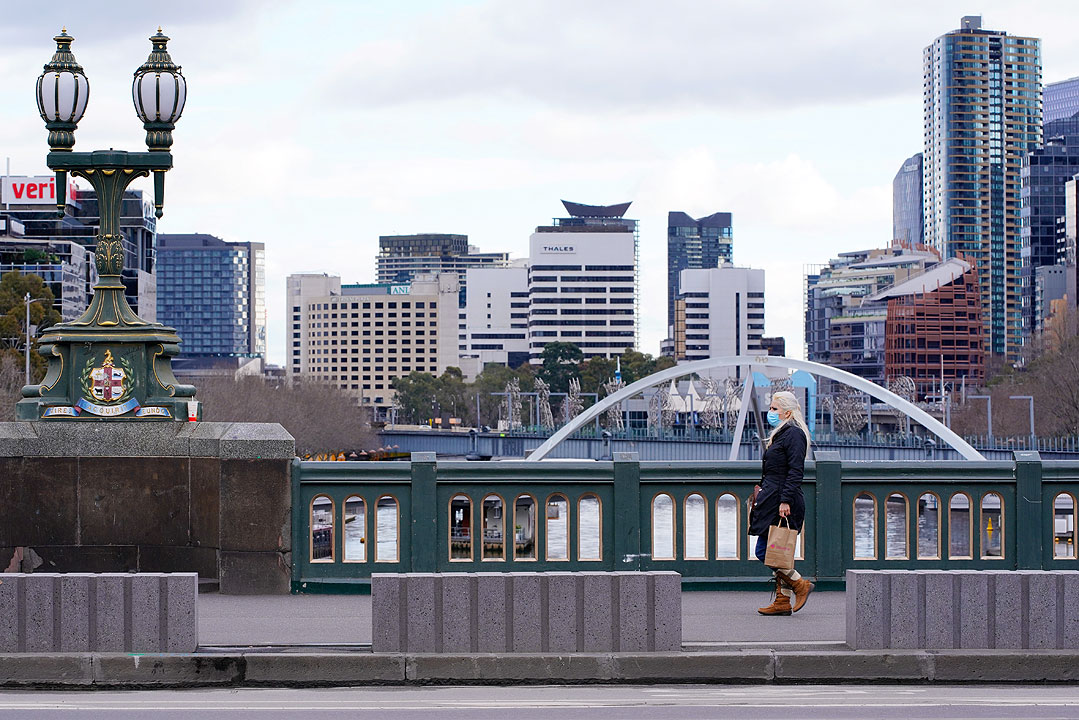
A woman walks across the city centre bridge in Melbourne, Australia, July 16, 2021. — REUTERS/SANDRA SANDERS

SYDNEY — Millions in Melbourne are readying to come out of the world’s longest coronavirus disease 2019 (COVID-19) lockdown on Thursday even as cases hover near record levels, with pubs, restaurants, and cafes rushing to restock supplies before opening their doors.  

Since early August, residents in Australia’s second-largest city have been in lockdown — their sixth during the pandemic — to quell an outbreak fueled by the highly infectious Delta strain.  

Officials had promised to lift lockdowns once double-dose vaccinations for people aged above 16 exceeded 70% in Victoria state, of which Melbourne is the capital.  

Prime Minister Scott Morrison on Thursday confirmed the state had reached that target, with more restrictions set to ease as inoculations hit 80% and 90%.  

“The longest road has been journeyed in Victoria and that long road really starts to open up tonight,” Mr. Morrison told Seven News on Thursday.  

From 11:59 p.m. (1359 GMT) Thursday, pubs and cafes can have 20 fully vaccinated patrons indoors and 50 outdoors, while hairdressers can allow entry for five customers. Masks will still be mandatory both indoors and outdoors.  

By then, the city of five million would have spent a cumulative 262 days, or nearly nine months, under stay-home orders since March 2020 — the world’s longest, exceeding a 234-day lockdown in Buenos Aires, according to Australian media.  

Pubs have begun to take more beer ahead of the reopening with Carlton & United Breweries, owned by Japan’s Asahi Group Holdings, saying it had moved an extra 50,000 kegs to venues across the city on Thursday.  

As businesses prepare to welcome customers, daily infections rose to 2,232 in Victoria on Thursday, the second highest daily count in any Australian jurisdiction during the pandemic.  

VACCINATION SURGE 
After largely stamping out infections in 2020, Australia has ditched its COVID-zero approach and is aiming to live with virus amid higher vaccinations after being rocked by a third wave of infections in the country’s southeast since mid-June.  

Despite the Delta wave, Australia has recorded only about 152,000 cases and 1,590 deaths, far lower than many comparable countries.  

Cases in New South Wales, home to Sydney, rose for the third straight day on Thursday to 372 from 283 a day earlier.  

Virus-free Queensland state is on alert after reporting its first new local case in two weeks — an unvaccinated rideshare driver who spent 10 days in the community while potentially infectious. Authorities said they would check with Uber if the driver had worked while he was infectious.  

A spokesperson for Uber said “the driver-partner has not driven with the Uber platform since Sept. 19.”  

Sydney and Canberra, the national capital, exited lockdowns last week after speeding through their vaccination targets. Other states are COVID-free or have very few cases.  

With restrictions beginning to ease, Qantas Airways said it would ramp up daily flights between Sydney and Melbourne, one of the world’s busiest domestic routes before the pandemic, to about 15 from the first week of November from just one now. — Renju Jose/Reuters 

How many can be slumdog millionaires?

METROCOM relaxing while waiting to be deployed near Malacañang on Sept. 21, 1983. — AITOR ALEGRIA

Many of us still remember the box office hit Slumdog Millionaire, released in 2008. This British film was described as peddling poverty porn for its setting was in Asia’s largest slum area with close to a million people in one square mile in Dharavi, Mumbai.

Slumdog is a slum dweller living in extreme poverty with very little hope of breaking out of generational misfortune, for the cycle of poverty and ignorance perpetuates itself through time. Quick money offers the only way out so it is not surprising that drug pushing thrives in poor communities, petty theft and robbery are occupations handed down like treasured provenance of a university diploma, or some revolutionary nerve being awakened because the reality is harsh and oppressive.

In the 1970s, at the height of martial law, we recall we found the old Filipino films Insiang and Maynila sa mga Kuko ng Liwanag truly revolting because the plight of many of our people could be as demeaning as having to live with the moral and physical filth and mud of urban decay. The disconnect with “Ang Bagong Lipunan” could not have been sharper.

Still, some would try showbiz and expose some talent or flesh. In the case of the Slumdog Millionaire, slumdogs would try their luck in quiz shows.

With limited exposure to civilization and knowledge, it was impossible for the 18-year-old Jamal Malik, who worked as a chai wallah or tea server, to answer difficult questions in the quiz show and bring home what would be a life-changing prize of 20 million rupees or about half a million US dollars.

The questions may be easy for some who studied through college, or knew the answers because of a moneyed life, but the questions seemed to have been hatched so that no one who needed it most could win the prize. For instance, knowing the name of the star in a 1973 hit film Zanjeer required one to have actually watched it. A slumdog had better use of his hard-earned cash. Or the inscription underneath the three lions in the national emblem of India. He had more fruitful time rummaging the mountain of trash for a bit of cash. Or what God Rama was holding in his right hand. Would he even care when he had nothing to be grateful for? Or the Indian poet who wrote the song “Darshan Do Ghanshyam.”

Would a slumdog have any experience holding a hundred-dollar bill and realizing that Benjamin Franklin was on it? Who invented the revolver? Where is Cambridge Circus in UK? Which cricketer has scored the most first-class centuries in history? And finally, who was the third musketeer in Alexander Dumas’ book The Three Musketeers?

Jamal answered all the questions correctly until the police detained him for questioning before the finals. The police inspector and the host of the show, Prem, were not convinced he had the capacity to answer the questions in the Indian version of Who Wants to be a Millionaire? without cheating. This was class bias at its worst because with incessant questioning, Jamal was also tortured to force him to confess.

Jamal managed to answer the questions because of his recollection of facts due to what some experts call semantic memory, a form of long-term memory. His ability in doing this empowered him beyond his laylayan (bottom) social status, or his lack of formal education. The police inspector and the host had orthodox minds: “There’s no way he can know that!”

Following this flawed reasoning, material deprivation leads to dumbness. Ergo for us, about 25 million very poor Filipinos would be considered very dumb.

But regardless of one’s social status or education — of course they help — if people could connect their new experience with another experience that they are familiar with in the past, they would succeed in figuring out the new in the light of the old experience. Experts describe this as elaborative rehearsal, a process of mentally coding long-term memories and extracting them as appropriate triggering by the short-term memories.

In the case of Jamal, those long-term memories could never abandon him. They were his life no matter how impossibly challenging.

No wonder Jamal knew the name of the Indian poet who wrote the song “Darshan Do Ghanshyam.” He could very well remember that song which was sung by a little boy in the same orphanage he stayed. The headmaster blinded the boy despite his beautiful voice because he could earn more as a blind beggar. The question was a breeze for Jamal’s traumatic imprint in his long-term memory.

If that held true for Jamal, it must also hold true for many of us.

I will never forget Singian Clinic near Malacañang. In the thick of the First Quarter Storm, that was my vantage point to the Metrocom’s preparation on the grounds of San Miguel Church for assaulting the students’ series of mass actions against the emerging Marcos dictatorship, which culminated in the declaration of martial law in September 1972. My father was confined there for several months because of diabetes and a heart problem. I will never forget one Metrocom commander barking his order to the troop: “Hampasin ninyo ng truncheon kahit saan tamaan… (Hit them with a truncheon wherever it may land…).”

That was always at the back of my mind whenever I’d see men in uniform during the martial law years from 1972-81. I had no more questions as to future atrocities of the military. I was no longer surprised by the beastly violence they inflicted on my fraternity brods, Tony Tagamolila and Bill Begg, and on many thousand freedom-loving young leaders who chose to fight an oppressive regime that up to now has managed to retain apologists and historical revisionists.

Due to his true-to-life experiences, therefore, Jamal succeeded in connecting the questions in the quiz show to his long-term memories, or to code his short-term memories, the episodes in the quiz show, to his treasury of actual experiences in the past.

The final question in the quiz show about the third musketeer was just easy for Jamal because he and his brother Salim considered themselves as Athos and Porthos many years back. As they were fleeing from an anti-Muslim attack, they met Latika, who was to be Jamal’s treasured girl. He convinced Salim to take her along as the third musketeer. The three of them struggled against the curse of class stratification. No one fancied such an existence of prostitution for Latika; crime for Salim; and loss of family for Jamal himself. They were literally orphans in the journey of life. Meeting at the train station was a prelude to new memories.

Some people’s attempts not just to deny, but to revise Philippine history are not now, not something being done only today prior to the May 2022 elections. They started even after the EDSA Revolt of 1986 and very few people noticed it, or did something to correct it. Today’s millennials were taught the wrong history. It is good that many of their seniors are still able to connect today’s events with what happened before, ala Jamal.

It is not good to forget Winston Smith of George Orwell’s novel 1984. Working at the Ministry of Truth, Smith updates old newspaper articles and documents so that they would be consistent with recent developments. Historical revisionism will deny us and future generation of our long-term memory to help us discern and resist. Otherwise, only a very few among us would manage to figure out many questions today, win the prize and ride on the train to a new life.


Diwa C. Guinigundo is the former deputy governor for the Monetary and Economics Sector, the Bangko Sentral ng Pilipinas (BSP). He served the BSP for 41 years. In 2001-2003, he was alternate executive director at the International Monetary Fund in Washington, DC. He is the senior pastor of the Fullness of Christ International Ministries in Mandaluyong.

Worse than nuclear war

STARLINE

Because it is the rainy season, the weather is among the many concerns that worry many Filipinos, and the damage and casualties from “Maring,” the most recent weather disturbance to affect the country, are still in the news.

The Philippine Atmospheric, Geophysical and Astronomical Services Administration’s (PAGASA) forecast is that from three to four more extreme weather events — tropical depressions, storms, severe tropical storms, or typhoons — are likely to enter the Philippine Area of Responsibility (PAR) between now until the end of the year.

About 20 such disturbances enter the PAR annually. Not all of them make landfall. But even those that do not can influence the weather enough to bring rains and flooding as well as landslides. Depending on the power of their winds, the amount of rain they bring, and the number of places they batter, those that do make landfall can be even more devastating. Severe tropical storm “Maring” cost the provinces of Northern Luzon billions in agricultural and fisheries resources, lost farmer and fisherfolk incomes, impassable roads and bridges, and, as of this writing, over 39 lives.

But in addition to those calamities, the COVID-19 pandemic is multiplying the cost to the populace of every typhoon that smashes into the Philippines. Crammed cheek-by-jowl in the country’s makeshift and jam-packed evacuation centers, some of the families that have had to leave their homes because of the threat of flooding or storm surges are likely to be, and do end up, among the rising numbers of the sick and the dead from the contagion.

Already condemned by Philippine class society to such consequences of poverty as limited access to education, medical care, and other social services, the underclasses are also the most vulnerable to the infection, burdened as they are by limited incomes that is better spent on food rather than on antiseptics and face masks, by unstable water supplies, and by the overcrowded homes and communities in which most have been forced to live.

The pandemic is adding to the many other perils in the lives of the poor. But the threats to life, limb, and fortune from stronger typhoons, storm surges, and floods are bad enough in themselves. And despite their currently more intense impact on the less fortunate, these phenomena are likely to intensify and “democratize” the harm they inflict by affecting entire countries and the lives of everyone in them.

Similarly, symptoms of global warming as super typhoons, sea levels are also rising enough to force the residents of some Pacific Island countries — the first of the millions of possible climate change refugees — to emigrate to countries not similarly troubled. Here at home, some experts are warning that with climate change, sea levels will rise enough to submerge parts or even the whole of Manila and surrounding provinces.

Because of its global extent, the climate crisis, which has been described as an even worse threat to the future of organized human life than nuclear war, could sooner or later still catch up with the refugees from low-lying countries as the polar ice melts enough to so raise sea levels as to threaten even countries that are currently above them.

Among the countries most susceptible to this unprecedented threat against all of humanity is disaster-prone Philippines.

But hardly anything is being done by either local governments or their national counterpart to protect the most vulnerable communities from flooding and rising sea levels. Rather than risk-reduction, the government response to disasters has been limited to transporting those affected to improvised evacuation centers, and distributing food packs.

They are constantly urged to relocate, but the residents of coastal communities in perennial danger from storm surges and who live in places below average flood levels have not been provided the incentive, the means, and the opportunity to do so.

The Duterte administration has added to their woes by shutting down the free radio services of the ABS-CBN broadcast network. For most of those living along coastal areas and in other poor communities, free radio and television were the most accessible sources of information on such adverse events as earthquakes, volcanic eruptions, typhoons, and the floods and storm surges that are among the latter’s consequences.

Typhoons have struck those so deprived of those services without their being forewarned and at the cost of their household goods and even the lives of family members. Some do manage to evacuate, but return to the same sites to repair or rebuild damaged or destroyed homes, and hence to remain at risk.

Relocating is the most obvious way of preventing the repetition of the same misfortunes. But without any assurance of access to sources of livelihood and such utilities as water and electric power in places they are unfamiliar with, few families decide to do so.

Rather than assist those communities’ access to the alternative sites to which they can relocate, millions of pesos in public funds are instead spent on such absurdities as the Department of Environment and Natural Resources’ (DENR) Dolomite Folly, which was supposed to beautify Manila Bay. Repeatedly replenished, the crushed dolomite is under constant threat of being washed away by storm and tide. That project includes such added costs as the damage to the environment where the dolomite is sourced and processed. And yet, as marine scientists have proposed, the millions wasted could have been better spent on the planting of mangroves to protect the hundreds of families that live by the seawalls and shorelines of the Bay, where they are in constant danger from storm surges and flooding.

Global warming has been attributed to the carbon dioxide, methane, and other “greenhouse gasses” released into the atmosphere by, among other sources, the burning of fossil fuels and the industrial emissions of countries such as the United States, the European countries, Japan, and, increasingly, China. The solution to it — reducing such emissions to stop the rise in global temperatures enough to mitigate or put a stop to it — is mostly in those countries’ hands in terms of forging and implementing a working agreement to regulate their environmentally destructive industries and reduce the amount of pollutants from other sources. There are existing international conventions such as the Paris Climate Agreement and the Kyoto Protocol to do so. But their full implementation is plagued by such obstacles as some countries’ hesitancy in regulating the industries responsible for greenhouse emissions.

The Philippines is not among those countries. But it can do its share for the long term by using alternative sources of power generation rather than coal, and through the rigorous implementation of the clean air act. In the short term, it can contribute to the global imperative of halting a threat that is likely to put an end to all human life by adopting a national plan to reduce the impact of disasters on the most vulnerable sectors of the population.

Such a plan could include the construction of a nationwide network of permanent, livable evacuation centers instead of improvising them from school rooms and basketball courts. As one of the countries under imminent threat, the Philippines can also bring to the world forum its commitment to mitigating or ending climate change by demanding concrete action on the part of the countries most responsible for it.

The latter are the very same countries whose possession of chemical, biological, and nuclear weapons of mass destruction and unremitting exploitation of the world’s resources have made the planet a dangerous place, and the future of humanity uncertain.


Luis V. Teodoro is on Facebook and Twitter (@luisteodoro).

www.luisteodoro.com

Evergrande and China: A Lehman moment — or less ‘Grande’ than that?

CHINA has seen rapid urbanization; as of 2020, 61% of its population lived in urban areas. In 1960, that number was a mere 16%. Evergrande benefited from — and helped fuel — this change by borrowing funds to sell property to the Chinese public long before these projects were complete. The firm eventually expanded into owning theme parks, bottled water, and a soccer team. However, the Chinese government, under its “common prosperity” campaign, has sought to deleverage the sector in order to avoid a potential bubble, enforcing its “three red lines” policy on property developers while steering investor capital toward the manufacturing sector. As a result, Evergrande has not been able to recently service its debts, missing bond payments in late September, sparking fears of contagion among investors.

First, is Evergrande truly contained, or could this be a Lehman moment?

We believe the Evergrande situation will be contained. Insiders have commented that the Chinese government will step in if necessary to provide the needed guarantees, but only after making various stakeholders sweat it out and letting equity holders bear the brunt of the pain for excessive risk-taking. We’ve already observed some initial steps from the government that support our view in the form of buying Evergrande’s stake in a bank. Time and time again, the Chinese government has successfully navigated similar situations given its powerful centralized structure. Of course, if there is fraud or accounting irregularities with Evergrande, which is a distinct possibility, this might change the facts — and our outlook — but we think even then, the government would have the tools to handle the situation.

There is a laundry list of reasons why (and how) the Chinese government may respond differently to a financial crisis than the United States. Unlike the United States, the Chinese government controls its banks, which are encouraged to prioritize the Chinese economy over their own profitability, and the government has access to their deposits. The Chinese government also controls the movement of funds across its borders, as well as the courts. Given the reach of the government, it can instruct state-owned real estate and construction companies to help complete Evergrande’s 800 unfinished property complexes. China’s “common prosperity” campaign has been recently touted by President Xi Jinping, and it would seemingly be a priority to protect homebuyers and certain investors from losses and preserve the integrity of the property sector considering its systemic importance to the economy. Lastly, the government can manage public perception and response, both in its control of the media and by curbing public demonstrations.

Additionally, our view is that there are plenty of assets to cover Evergrande’s debt if asset sales are managed in a controlled fashion, based on conversations with various professionals with deep knowledge of China within Franklin Templeton and external restructuring experts. More importantly, it is a re-election next year for President Xi, which provides extra motivation to exert as much power as needed to make sure any Evergrande asset sales go smoothly.

Lastly, when looking back to the global financial crisis, we saw credit default swap spreads widen drastically and currency volatility spike, indicating that banks and investors were put on their heels in response to a potentially dramatic crisis. Here, we have not seen credit default swap spreads move too much for US or Chinese banks nor has there been a lot of currency volatility in the renminbi, most likely indicating a very different set of circumstances and a commensurately different outcome.

Should this become more systemic, the government would also have traditional levers to inject liquidity, such as the additional reserve requirement ratio (RRR) cut that was initiated in July.

Second, what would a slowdown in the Chinese property market mean for global growth?

In part due to the reasons stated above, the ramifications related to Evergrande will likely have limited global impact. We believe China is likely to experience below-trend growth in 2022 when compared to other regions.

As we think about the outlook for China and its impact on the global economy, the recent meaningful regulatory shift we’ve seen this year across a number of industries (for “common- prosperity”) deserves keen focus. There are specific risks to watch out for as the government exerts more regulatory influence. One strong example is the recent elevation of de-carbonization initiatives, and the resulting intervention in industries that conflict with that stated goal by consuming too much power.

Regarding the property sector, could the government’s orchestrated slowdown get amplified in a way that escapes its control? Certainly, that is not out of the realm of possibility, in which case China would underperform growth expectations and may warrant further scrutiny. Then again, it’s possible that the markets more recently have been underestimating China’s ability to once again intervene and engineer a favorable outcome. Taking a broader perspective, foreign capital and investor confidence is also a wildcard. Will foreign investors withdraw as we continue to see more regulatory and sectoral shifts by the government? So far, the answer has been “no,” but we are in the early stages of a continued transformation of China which will extend for many years to come.

We have thought for a while that the dramatic widening in Asian high yield corporate spreads this year foreshadowed a number of forthcoming defaults. However, there are likely to still be a few surprises that catch investors off guard — such as the recent Fantasia default — that suggests some property developers may become increasingly grim about future growth prospects and throw in the towel. This sentiment amongst developers bears watching in terms of how widespread and infectious it becomes. We also need to ensure there aren’t widespread hidden liabilities among other property developers.  Should these additional risks materialize across the entire sector, it would clearly destroy confidence and become a formidable challenge for the government to overcome.

Ultimately, we believe China will provide a form of bailout to Evergrande (creating moral hazard), in order to preserve broader financial stability and “common prosperity,” continuing to walk the tightrope between that prosperity and pressuring developers to de-leverage and avoid excessive risks. While Evergrande itself may not be too big to fail, despite its gargantuan size, we believe the Chinese property sector is certainly too big to fail given that it represents almost 30% of China’s GDP, and by some estimates 60% — 70% of the average household’s net worth. We are keenly monitoring this situation for its global, and multi-asset, implications.


Gene Podkaminer is head of research at Franklin Templeton Investment Solutions.

Voting for the ‘lesser evil’ is a bad idea

FREEPIK

The concept of “choosing the lesser evil” seems to say that when a person is faced with two undesirable (i.e., two unfortunate or disappointing) options, then that individual should choose the less “evil” thing. But that framework, which at first glance looks like a mere comparative exercise, is actually complicated.

THERE IS AN EVIL
First of all, to say there is a lesser evil is to acknowledge there is an “evil.” Which indicates there is an identifiable and preferred good. And equally importantly, a lesser evil indicates the presence of a hierarchy. All of which points to the presence of values and principles that, if one truly places importance to them, must then be adhered to consistently.

Or, put another way, how does one identify what is evil? And then determining what makes  something a lesser evil than another? What value or weight does one put on particular acts to enable people to compare evils? That requires an objective moral code, which cannot be selectively or randomly applied. To condone corruption is evil. But what about supporting measures that break up marriages or the family? State sponsored killings are clearly evil. But so is supporting abortion legislation.

Another and more obvious aspect of choosing the lesser evil is that one actually admits to choosing an evil, albeit justified ostensibly for it being considered as “lesser.” But how does that jive with the idea of having a declared set of values and principles supposedly adhered to? The point is, if one considers “x” to be evil, then to choose “x” simply because it seems to be a lesser evil than “y” does not change the fact that they’re both still evil.

Oxford moral philosopher Bernard Williams certainly thought so. “Take one of Williams’s most famous examples: Jim, an explorer, stumbles into a scene where 20 people are condemned to be executed. Because Jim is a venerable guest, the executioner offers to free all but one of the condemned, if Jim wants the honor of killing that one; if Jim refuses, all 20 will be killed. The condemned beg Jim to kill one of them. For utilitarians (the specific targets of Williams’s critique), it doesn’t matter that Jim has to kill someone — what matters is that either 20 people will die, or one will die, and it is far better that only one dies. Williams’s point was that it clearly does matter, especially to Jim, that to secure this optimal state of affairs Jim has to kill somebody.

“What we do matters to us, and this is often very significant. In doing the lesser of two evils, perhaps we lose something, perhaps we harm someone, perhaps there is something “distressing or appalling” — such as in Jim’s case — or even just a little off about what we do, or perhaps it simply is not the sort of thing done by “honorable and scrupulous people.” The point is that even if it is the best option, the lesser of two evils can still be genuinely evil and we can be averse to doing it.” (“The Witcher and the lesser of two evils,” Jake Wojtowicz, Jan. 17, 2020).

STICKING TO PRINCIPLES
Translated to the coming elections, if one really is intent in bringing about real positive change democratically (and democratically is the only legitimate and pragmatic avenue for positive change), then, as Witherspoon Institute’s Robert Simpson puts it, “it isn’t enough to simply promote the good within the limited range of choices you’re being offered. You need to try to become someone who actively builds those choices, shaping which outcomes result from which actions. And that means taking on projects and principles that you mean to live by — even if this might produce undesirable outcomes in the short term.” (“When is it ethical to vote for ‘the lesser of two evils’?,” Oct. 28. 2020)

It is also be true that to indulge in lesser evil decision making is to fall into the fallacy of false dichotomy. Of self-limiting to two, binary, choices when there are other choices actually available. That some refuse to look at other options just so they can justify the lesser evil framework doesn’t really speak well of people’s decision-making capability and maturity. Rationalizing one’s refusal to vote for a better candidate by saying such candidate is unwinnable is likely engaged (consciously or not) in mere wish fulfillment.

WITHOUT INTEGRITY, NOTHING MATTERS
In the end, if voters want political leaders with integrity then the voters must act with integrity themselves. One can’t demand of others what one is unwilling to practice. To pronounce upon virtues, values, and principles, religious beliefs or doctrines, and then to abandon such for short-term political gratification is frankly jejune.

And really, any political candidate or his/her supporters that seek to brush off a candidate’s flaws by blithely saying that such candidate is at least the “lesser of two evils” is simply being lazy, hypocritical, and ultimately unworthy.

“Fully conscientious voting will surely require the virtue of practical wisdom, the exercise of which cannot be encapsulated in a simple proposition. We can say, at least, that voters should not let their votes be taken hostage by someone situated to spurn— without substantial consequences — their support. My conclusion, then, somewhat converges on Alasdair MacIntyre’s, formulated 12 years ago: a voter should be prepared to opt out of a system that presents him with intolerable alternatives.” (“Now Is the Time: Why We Must Refuse to Vote for the Lesser of Two Evils,” Gregory Brown, Aug. 9, 2016)

Admittedly, politicians have been known to say one thing during the campaign and then do another once in office. Yes, perfect candidates do not exist. Because no perfect human being exists. Yet, the voter can look at that person’s character. And if a candidate with decidedly confused morals, absent values, and vulgar character is elected, then what does that say of the voter?

Elections are not there simply to put a person in public office. It is also the voters’ opportunity to stand for the issues, causes, and beliefs that he holds most dear. From there, elect the person with the necessary experience, education, competence, and character that more or less ensures the winner adheres to and advances those issues, causes, and beliefs.

So, it’s also about accountability. While voters make a big deal of holding politicians to account, nevertheless, if the voters themselves abandon their beliefs or causes (e.g., protect national sovereignty and territory, uphold the traditional family, to be against divorce or same sex “marriage” or abortion) simply to go along with the bandwagon, then the voters will truly only have themselves to blame for whatever happens to the country.


Jemy Gatdula is a senior fellow of the Philippine Council for Foreign Relations and a Philippine Judicial Academy law lecturer for constitutional philosophy and jurisprudence

https://www.facebook.com/jigatdula/

Twitter @jemygatdula

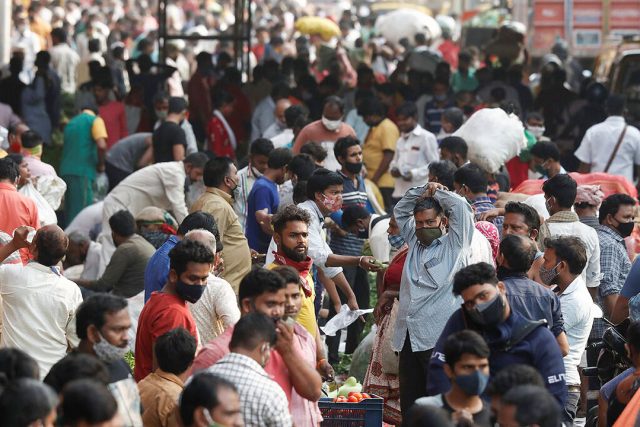
India races to vaccinate all adults after 1B doses

REUTERS

INDIA has given out 1 billion doses of COVID-19 (coronavirus disease 2019) vaccines, a key milestone in an inoculation campaign that still faces significant challenges.

The nation hit the landmark number of doses as of Thursday, according to data from India’s CoWin app. But while 51% of the entire population has received at least one shot, only 21% are fully vaccinated with both the doses underscoring a wide disparity, according to Bloomberg’s vaccine tracker.

The gap means there are large swathes of India’s population that could be still vulnerable to COVID infections, potentially triggering outbreaks in a country that earlier this year experienced one of the world’s most devastating virus waves. Restrictions on movement across India have been lifted the past few months as the number of new daily infections has abated, dipping below 15,000 from record highs of over 400,000 in early May.

The Indian government is aiming to vaccinate all adults by the end of the year.

Health experts attribute the skewed vaccination statistics to a number of factors, including the relatively long three-month gap India mandates between doses of AstraZeneca Plc’s vaccine — the main shot being deployed. The government is also yet to launch a childhood immunization drive that would cover about 40% of the population.

Hesitancy to get a second shot is a potential issue in India’s vast countryside especially as new infections dip, chipping away at the sense of urgency. In many rural areas, handouts in government-sponsored welfare programs were tied to having just one shot, while no such benefits are attached to getting the second dose on time. Moreover, some rural residents need to travel long distances to gain access to vaccinations.

Despite this, corporate leaders in India have praised the turnaround of an immunization drive that was slow to get going, first due to hesitancy among those initially eligible for vaccination and later due to supply shortages.

“Our vaccination program has indeed picked up pace,” Sanjiv Mehta, the head of Hindustan Unilever Ltd. — India’s largest consumer goods company — said on Tuesday. “We are hopeful that as a nation we can avoid further disruption from the spread of the virus.”

While experts had predicted India would see a third wave of infections in September and October, official daily case tallies have fallen to lows last seen during a lull at the beginning of 2021.

India’s states have cautiously eased movement restrictions and curfews, with malls, cinemas, gyms and swimming pools newly reopened in recent weeks.

“We expect economic activity to recover further, driven by festive season, pick up in vaccination and the likely increase in government spending,” Srinivasan Vaidyanathan, chief financial officer of India’s most valuable lender, HDFC Bank Ltd., said over the weekend.

Still, scientists and government officials continue to urge caution, with India in a months-long festival season that started in September. Complacency around virus containment measures during this period last year is seen as contributing to the deadly wave in 2021.

India’s inoculation drive needs to stay on course to prevent further virus waves, according to Bhramar Mukherjee, a professor at the University of Michigan’s School of Public Health. There’s a “lot of heterogeneity in vaccination across states, so we need to keep those jabs going,” she said. — Bloomberg