Home Blog Page 7288

ANZ Research trims PHL GDP growth forecast to 4.2%

THE PHILIPPINE ECONOMY is expected to grow at 4.2% this year as stricter restriction measures due to rising coronavirus disease 2019 (COVID-19) cases are seen to dent recovery, ANZ Research said.  

The firm’s new gross domestic product (GDP) growth forecast is slower than the 4.8% estimate it gave previously and is also below the government’s 6-7% target. 

ANZ Research’s forecast for the Philippines is better than its outlook for Indonesia (3.8%), Malaysia (4%), and Thailand (1%). Only its projection for Singapore was retained in this report at 6.6%, with the firm saying that growth indicators in the country are still within expectations despite restriction measures there. 

The six Southeast Asian economies are now expected to grow by 3.9% in 2021, slower than the previous estimate of 4.6%. 

Meanwhile, ANZ Research expects the Philippine economy to expand by 6.2% in 2022, also slower than the 6.5% forecast it gave earlier. 

The economy contracted by 9.6% in 2020, the steepest drop seen in Southeast Asia. The economy remains in recession as GDP shrank by 4.2% in the first quarter. 

The Philippine Statistics Authority will report the second quarter GDP data on Aug. 10. 

Intensified restrictions in Southeast Asia have caused “substantive damage to the recovery,” ANZ Research Chief Economist for Southeast Asia and India Sanjay Mathur said in a note on Friday. 

He particularly noted that restrictions in the Philippines, Indonesia, and Malaysia are “routinely reimposed or extended”. 

“The channels through which the recovery is being impacted are well-known — diminished consumer confidence, excessive slack in the service industries such as recreation and tourism, and the waning efficacy of expansionary fiscal and monetary policies,” Mr. Mathur said. 

Metro Manila and other provinces where cases are spiking are under the strictest form of lockdown from Aug. 6 to 20 to curb the further spread of the more infectious Delta variant of COVID-19. 

Socioeconomic Planning Secretary Karl Kendrick T. Chua said last week that the two-week Metro Manila lockdown alone could cause the country to lose more than P200 billion. 

As many as 177,000 Filipinos are also expected to sink into poverty and 444,000 could lose their jobs, he said, citing estimates from the National Economic and Development Authority. — L.W.T. Noble 

NPC says suspending data privacy rules won’t boost contact tracing efforts

THE National Privacy Commission (NPC) has a written a letter to the Employers Confederation of the Philippines (ECOP), criticizing the business group’s request to suspend data privacy rules for contact tracing. 

ECOP President Sergio R. Ortiz-Luis Jr. has been recommending that the government identify people who have tested positive for the coronavirus disease 2019 (COVID-19), encouraging close contacts to disclose exposure and minimizing government spending on contact tracing. 

Several business groups last year asked the government to suspend the Data Privacy Act of 2012 protecting patient confidentiality during the pandemic and transfer the funds for contact tracing to repurposing schools as quarantine facilities. 

NPC Commissioner Raymund E. Liboro said there is no scientific basis supporting the premise that suspending provisions of the law would be an effective anti-pandemic measure. 

“On the contrary, in a study of the World Health Organization, social stigma associated with COVID-19 negatively impacts the pandemic response since it drives patients to hide their illnesses to avoid discrimination, prevents people from seeking immediate healthcare, and discourages them from adopting healthy behaviors,” he said in a letter to ECOP dated July 30. 

“Our experience last year is telling. We have seen incidents of discrimination, online bullying, stoning, physical assaults, and even chemical dousing incidents against suspected COVID positive individuals — all of which are more harmful than the virus itself.” 

The commission said the Data Privacy Act allows for and does not hinder the processing of personal and sensitive personal information for contact tracing. 

Mr. Liboro said no jurisdiction in the world has so far suspended data privacy rules for contact tracing. 

“Contact tracing requires an in-depth investigation and a systematic process of identifying contact points, performed only by trained experts. The ECOP’s suggestion for a do-it-yourself (DIY) contact tracing is not a methodology backed by science, nor experience,” he said. 

Waiving privacy rights, he said, is “dangerous and may have far reaching implications beyond contact tracing and the pandemic response.” 

In response, ECOP’s Mr. Ortiz-Luis said in a phone interview on Friday that “you might not find any scientific basis, but simple common sense will tell us that we are having difficulty with contact tracing…” 

“We are spending billions for contact tracing when by simply suspending only that part of the Data Privacy Act that will be used for contact tracing will make sense to save lives, to save money for the country,” he said. — Jenina P. Ibañez 

Filipino media users more likely to spend on personalized services – survey

PERSONALIZED EXPERIENCES remain low among telecom and media products even as Filipino consumers are more likely to spend on these services, a survey found. 

A survey released by Coleman Parks Research commissioned by media software services provider Amdocs found that 87% of Filipino consumers are more likely to increase spending on highly personalized online shopping and payment experiences. 

As many as 74% would switch providers for a customer experience “that adapts to their changing needs,” according to a press release on Friday. 

The research firm collected responses from 600 customers and 100 chief marketing officers (CMOs) in the Philippines from February to May. 

The company found that 91% of Philippine CMOs recognize that products and services tailored to individual needs would positively impact consumer retention, but only 20% of them deliver “holistic” personalized experiences.  

Almost 80% said communications service providers are not providing such personalized experiences in sales, marketing, and customer care. 

Technology is the main barrier to this shift, with 77% of executives surveyed citing this as a concern, while 75% said senior stakeholder resistance to change and a belief that there is no need to further invest in personalization hinder these efforts. Meanwhile, 40% said their budget is the main barrier. 

“Today’s digital consumers keep evolving their benchmark experiences against the best apps and service experiences. All apps are a click away, so consumers do not distinguish between industries — the last best app you used sets your expectation benchmark for the next one,” Amdocs Chief Marketing Officer Gil Rosen said. 

“Communications service providers do not compete within their category; they compete against all apps and amazing experiences being provided every day by new and existing players. Even dating and gaming apps serve as a benchmark as well as the obvious suspects from the online shopping, banks or any other incumbent service providers — it creates the need for service providers to constantly strive to match those experiences.” 

Although Filipino consumers want data-driven personalized experiences, 74% want their communications service providers to be clear about personal data collection and use. Almost half believe that personalized interactions were created to mine data from them. 

“Communication service providers must take advantage of the fact that consumers are willing to share their data to get an advanced personalized experience tailored to their expectations. However, before this happens, they must improve their quality of service and instill trust in their customers about how their data will be used, and break down internal silos between marketing, sales, and customer care,” Coleman Parkes Director Stephen Saw said. — Jenina P. Ibañez 

DA-BFAR to streamline issuance of food passes to fish suppliers, producers

THE DEPARTMENT of Agriculture’s Bureau of Fisheries and Aquatic Resources (DA-BFAR) said on Friday that it will expedite the issuance of food passes to fish suppliers and producers as it assured the public of “unhampered” delivery of food products amid the lockdown. 

“The DA-BFAR has directed its workforce to streamline the issuance of food pass(es) and make the process more efficient and accessible to fish producers and suppliers,” it said in a statement. 

“(We are) mobilizing its fishery law enforcers on the ground with a directive to coordinate with other concerned government agencies in ensuring the smooth implementation of food pass,” the bureau added. 

Food passes are vehicular passes issued by the Agriculture department for the entry and exit of food and agri-fishery products within quarantine areas in Luzon. These are granted to qualified food suppliers, delivery truckers and logistics providers with valid business permits, and are passing through Metro Manila and other areas under lockdown. 

DA-BFAR said its technical unit Fisheries Inspection and Quarantine Division is in charge of issuing new food passes. Suppliers interested in securing a pass can contact the mobile no. 09363213401 or send an email to fiqd.ltpfoodpass@gmail.com. 

Meanwhile, holders of valid food passes can use them to transport products to markets in the capital and other areas. 

On Friday, the agency also assured the public of “unhampered and sufficient supply of fishery products” after the government placed the National Capital Region and other areas under varying levels of lockdown to prevent the spread of the more transmissible Delta variant of the coronavirus. — A.Y. Yang 

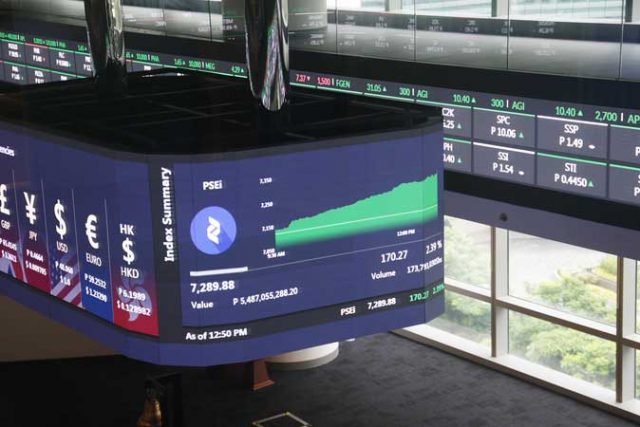
Shares inch down on PSEi rebalancing

COURTESY OF PHILIPPINE STOCK EXCHANGE, INC.

SHARES inched down on Friday after the Philippine Stock Exchange announced the rebalancing of its benchmark index and as concerns over coronavirus disease 2019 (COVID-19) continued to dampen sentiment.   

The Philippine Stock Exchange index (PSEi) declined by 7.36 points or 0.11% to close at 6,539.91 on Friday, while the all shares index gained 12.85 points or 0.31% to end at 4,055.42.   

“The PSEi inched down…after we saw mixed action from blue chips,” COL Financial Group, Inc. Chief Technical Analyst Juanis G. Barredo said in a Viber message on Friday.  

“The weakness we saw in select index stocks like EMP (Emperador, Inc.) and DMC (DMCI Holdings, Inc.), pressured by news that would eventually remove them as index members, was rescued by [rallies] from ICT (International Container Terminal Services, Inc.), JGS (JG Summit Holdings, Inc.), MBT (Metropolitan Bank & Trust Co.) and GLO (Globe Telecom, Inc.),” he added. 

“After showing a recovery into the last few days, the index needed to park and see if it could muster more bargain hunting action. The index also felt some pressure as it neared next resistance between 6,600 to 6,700,” Mr. Barredo added. 

“Philippine shares juggled for most of the trading session as fund managers began positioning ahead of the rebalancing which would take effect by the end of next week,” Regina Capital Development Corp. Head of Sales Luis A. Limlingan said in a separate Viber message.  

After conducting a review, the PSE announced on Thursday that DMCI Holdings, Inc. and Emperador Inc. will be removed from the 30-member benchmark index, with AC Energy Corp. and Converge Information and Communications Technology Solutions, Inc. to join the PSEi beginning Aug. 16.   

“The market inched lower during the last minute of trading, in step with how the rest of the Asian region performed today, amid the economic uncertainty brought by the spread of the Delta variant across the region,” Timson Securities, Inc. Trader Darren Blaine T. Pangan said in a Viber message. 

The country’s Health department announced on Friday that the Delta variant of the COVID-19 has been detected in all 17 local government units within the country’s capital region, which will be under the strictest form of lockdown until Aug. 20.  

“Moreover, foreigners turned net sellers today after four consecutive days of being net buyers,” Mr. Pangan added.  

Foreigners recorded P167.24 million in net outflows on Friday, a reversal of the P237.61 million in net purchases logged on Thursday. 

Most sectoral indices closed in the red on Friday except for services, which gained 34.26 points or 2.13% to 1,639.98, and financials, which inched up by 0.15 point or 0.01% to finish at 1,431.78. 

Meanwhile, mining and oil dipped by 67.72 points or 0.69% to 9,719.25; property went down by 19.15 points or 0.63% to 2,977.82; industrials lost 9.36 points or 0.1% to end at 9,295.94; and holding firms 3.6 points or 0.05% to 6,537.37. 

Value turnover increased to P6.95 billion with 1.35 billion shares switching hands on Friday, from the P4.77 billion with 962 million issues traded the previous day.   

Advancers beat decliners, 117 to 76, while 37 names remained unchanged. — Keren Concepcion G. Valmonte 

U.S. Senate to try to finish $1 trillion infrastructure bill on Saturday

WASHINGTON – The U.S. Senate, unable to finalize a $1 trillion infrastructure bill on Thursday, will try again on Saturday when it is scheduled to hold a vote on limiting debate and moving toward passage of the hard-fought legislation.

Senate Majority Leader Chuck Schumer struggled throughout the day to reach closure on a bipartisan bill that would trigger new construction projects throughout the United States to expand or refurbish roads, highways, bridges, airports and other public works, many of them in substandard condition.

Following hours of closed-door negotiations, senators failed to reach an agreement on remaining amendments to the bill, beyond the nearly two dozen already debated this week.

“We have been trying to vote on amendments all day but have encountered numerous objections from the other side,” Schumer said, referring to Republicans.

Action on the legislation, which Democratic President Joe Biden supports, was held up by a flurry of demands from various senators, including a controversial move by some Republicans demanding billions of dollars in new Defense Department improvements, according to lawmakers.

A separate disagreement over a cryptocurrency provision in the infrastructure bill also was simmering.

Once the infrastructure bill is voted upon, the Senate was expected to begin work on a budget framework that Democrats hope would pave the way for a $3.5 trillion “human infrastructure” bill later this year.

The measures must also pass the House of Representatives, where Democrats have a thin majority.

Some senior House Democrats, including Representative Peter DeFazio, chairman of the Transportation and Infrastructure Committee, have expressed concern that the $1 trillion bill lacks sufficient climate measures.

Earlier on Thursday, the non-partisan Congressional Budget Office said the legislation would increase federal budget deficits by $256 billion over 10 years.

Lead negotiators on the bill disagreed, arguing the measure would be financed in a way so as not to incur deficit-spending.

The sweeping package https://www.reuters.com/world/us/whats-us-senates-bipartisan-1-trillion-infrastructure-bill-2021-08-03 of funding is one of Biden’s top legislative priorities.

The CBO’s analysis said the bill will increase Washington’s revenue by $50 billion over the decade and increase discretionary spending by $415 billion.

It did not include $57 billion in added revenue that senators estimated Washington would collect over the long term from the economic growth benefits of the infrastructure projects.

It also did not count $53 billion in unused federal supplemental unemployment funds to be returned from states.

The Senate is trying to wrap up work ahead of a scheduled five-week summer recess which is supposed to start next week. The House has already begun its summer recess.

Bohol health center levels up with BDO Foundation

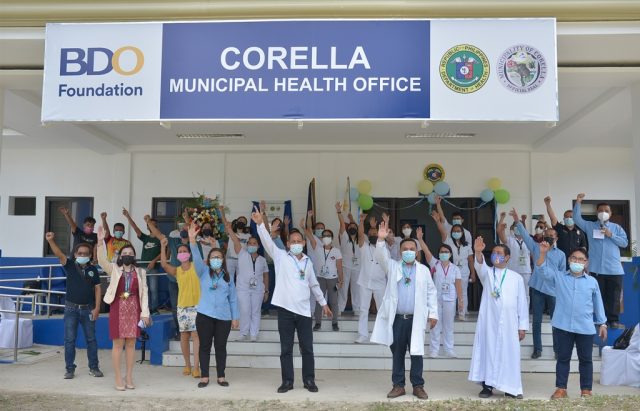
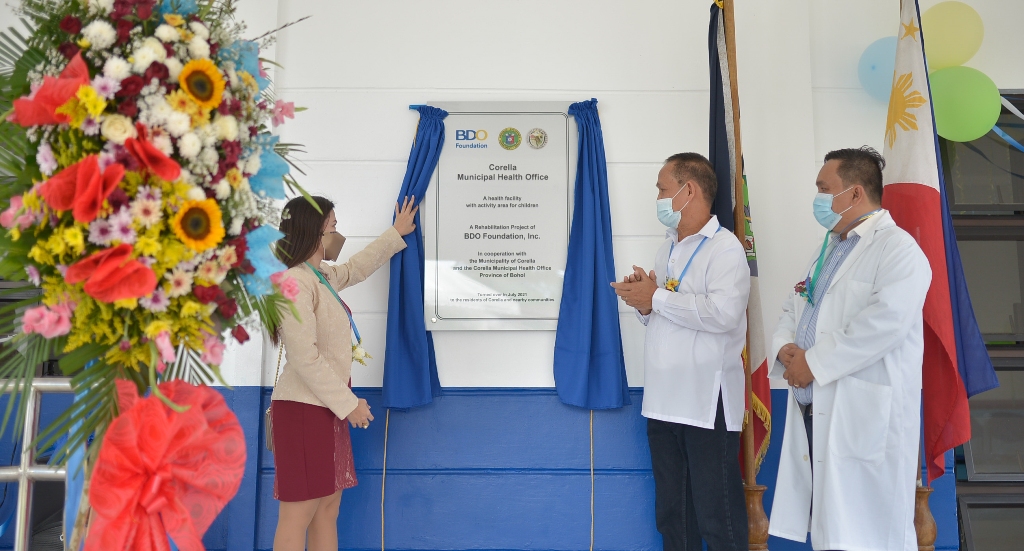
Corella Municipal Health Office is the fourth rural health unit rehabilitated by BDO Foundation in Bohol.

As the coronavirus continues to linger and the Delta variant spreads, BDO Foundation finds ways to upgrade health facilities across the country for the benefit of underserved Filipinos including those vulnerable to the effects of the pandemic. In line with its advocacy to help improve the healthcare delivery system in the Philippines, the corporate social responsibility arm of BDO Unibank recently completed the rehabilitation of Corella Municipal Health Office in Bohol.

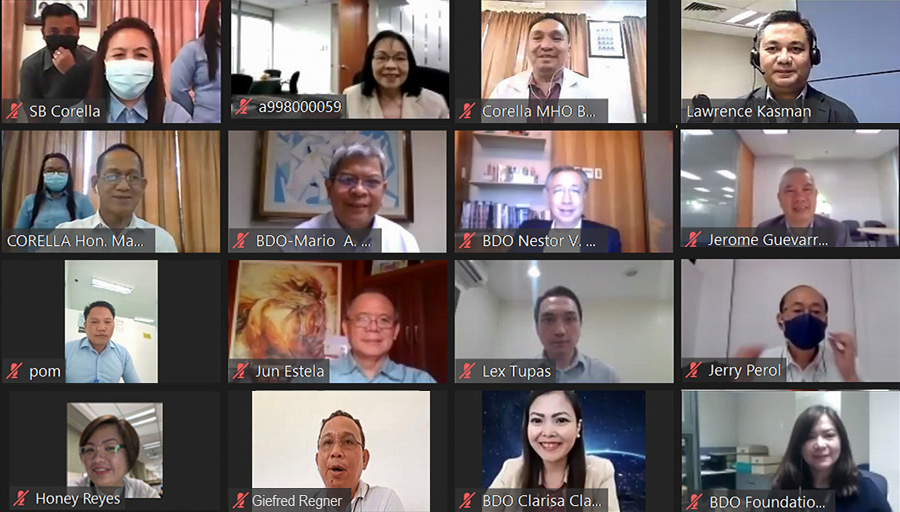
The rural health unit was officially turned over in a virtual event attended by BDO Unibank president and CEO and BDO Foundation trustee Nestor V. Tan and BDO Foundation president Mario A. Deriquito. Also present were BDO Foundation trustees Lazaro Jerome Guevarra, Lucy Co Dy and Ismael Estella Jr. as well as BDO Bohol Tagbilaran-Visarra branch head Clarisa Pandan, who also witnessed the physical inauguration of Corella Municipal Health Office.
The newly rehabilitated health center was graciously accepted by Department of Health development management officer 4 Giefred Regner and local government officials led by Corella municipal mayor D. Hilario D. Tocmo, municipal vice mayor Maria Asuncion Daquio and municipal health officer Dr. Apollo John Bernaldez.

“Health is a human right,” Mayor Tocmo underscored. “All people, regardless of socio-economic status, must have equal opportunity to have access to health resources. The local government unit of Corella extends its gratitude to BDO Foundation for fulfilling our dream to have this newly rehabilitated rural health unit. Thank you for being our partner in progress.”

The foundation improved Corella Municipal Health Office’s layout and interior design, lobby and waiting areas, offices, clinics, consultation rooms, treatment rooms, facilities, furniture and fixtures. It renovated the birthing clinic to give mothers the best patient care possible. Using available space, it constructed a new children’s play area complete with books and toys.

With these improvements in place, Corella’s health workers are now better equipped to provide primary healthcare services to mothers and babies, children, senior citizens, persons with disabilities and other patients. The project is expected to help improve the health and well-being of more than 8,800 people in eight barangays.

The rural health unit in Corella is the 111th rehabilitated by BDO Foundation since 2012. The corporate citizenship initiative is the foundation’s contribution to the achievement of the United Nations Sustainable Development Goal no. 3 to ensure healthy lives and promote the well-being of all people at all ages.

Join us on Viber to get more updates from BusinessWorld: https://bit.ly/3hv6bLA

Biden offers ‘safe haven’ to Hong Kong residents in U.S. after China crackdown

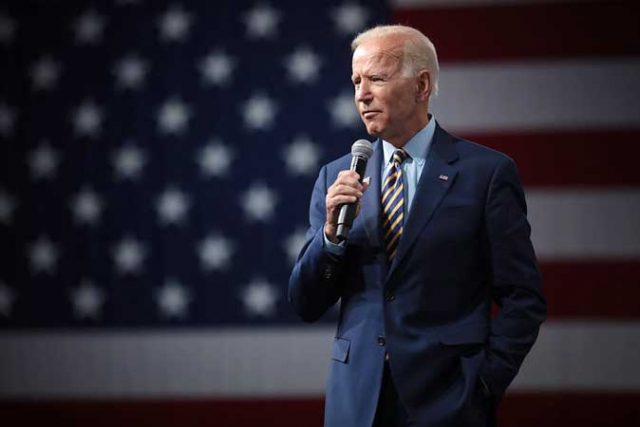
US President Joseph R. Biden, Jr. — Image via Gage Skidmore/CC BY-SA 2.0/Flickr

WASHINGTON, Aug 5 (Reuters) – President Joe Biden on Thursday offered temporary “safe haven” to Hong Kong residents in the United States, allowing what could be thousands of people to extend their stay in response to Beijing’s crackdown on democracy in the Chinese territory.

Mr. Biden directed the Department of Homeland Security to implement a “deferral of removal” for up to 18 months for Hong Kong residents in the United States, citing “compelling foreign policy reasons.”

“Over the last year, the PRC has continued its assault on Hong Kong’s autonomy, undermining its remaining democratic processes and institutions, imposing limits on academic freedom, and cracking down on freedom of the press,” Mr. Biden said in the memo, referring to the People’s Republic of China.

He said offering safe haven for Hong Kong residents “furthers United States interests in the region. The United States will not waver in our support of people in Hong Kong.”

It is not clear how many people the offer would affect, but the vast majority of Hong Kong residents in the United States are expected to be eligible, according to a senior administration official.

The White House said the measure made clear the United States “will not stand idly by as the PRC breaks its promises to Hong Kong and to the international community.”

Those eligible may also seek employment authorization, Secretary of Homeland Security Alejandro Mayorkas said.

It is the latest in a series of actions Mr. Biden has taken to address what his administration says is the erosion of rule of law in the former British colony, which returned to Beijing’s control in 1997.

The U.S. government in July applied more sanctions on Chinese officials in Hong Kong, and warned companies of risks of operating under a national security law China implemented last year to criminalize what it considers subversion, secessionism, terrorism or collusion with foreign forces.

Critics say the law facilitates a crackdown on pro-democracy activists and a free press despite Beijing’s having agreed to allow Hong Kong considerable political autonomy for 50 years.

China retaliated against U.S. actions last month with its own sanctions on Americans, including former U.S. commerce secretary Wilbur Ross.

Liu Pengyu, spokesman for the Chinese Embassy in Washington, said the U.S. characterization of the situation in Hong Kong “confounds black and white” and the national security law had created a safer environment and protected freedoms.

“Such moves disregard and distort facts, and grossly interfere in China’s internal affairs,” he said, referring to the U.S. announcement.

China’s foreign ministry office in Hong Kong said on Friday the offer was an attempt “to bad-mouth Hong Kong, smear China, and engage in actions to destroy the city’s prosperity and stability”.


‘BIG-HEARTED DECISION’

U.S. lawmakers have sought legislation that would make it easier for people from Hong Kong to obtain U.S. refugee status if they feared persecution after joining protests against China.

“The PRC has fundamentally altered the bedrock of Hong Kong’s institutions,” Secretary of State Antony Blinken said in a statement, noting that Chinese and Hong Kong authorities had arbitrarily delayed scheduled elections, disqualified lawmakers, undermined press freedom and arrested more than 10,000 people.

Mr. Blinken said Washington was joining allies to offer the protection, in keeping with the Biden administration’s push to counter China in concert with likeminded partners.

Britain’s foreign minister, Dominic Raab, on Twitter welcomed the “big-hearted decision.” The UK early this year allowed Hong Kong residents to apply for a new visa offering the opportunity to become British citizens.

Other countries, including Canada and Australia, have also taken steps to facilitate Hong Kong immigration or permanent residency following Beijing’s crackdown.

The Biden administration’s move falls under the Deferred Enforced Departure (DED) program, which does not offer a pathway to citizenship but can be renewed indefinitely by a president.

Republican Senator Ben Sasse called the safe haven move a “solid step,” but said the government should go further and offer full asylum to Hong Kongers.

Asked about prospects for permanent residency, State Department spokesman Ned Price said Hong Kong people could still be referred for consideration to the U.S. Refugee Admissions Program.

Samuel Chu, managing director of the Washington-based advocacy group Hong Kong Democracy Council, said data was limited, but possibly tens of thousands of people could be eligible for the DED program, including thousands on student visas. He said the will for many to return to Hong Kong was strong, but that it might take more than one 18-month cycle.

“The overwhelming desire of Hong Kongers is to continue to fight for restoring their autonomy and freedoms,” Mr. Chu said. – Reuters


Mondelez Philippines employee vaccination drive underway

  • 67% of colleagues and service providers vaccinated
  • Partnership with Parañaque City and Moderna Vaccine Buyer’s Group to protect its people

As one of the leading snack companies in the country, Mondelez Philippines has worked to ensure the safety and well-being of its people during the pandemic. From enhanced safety protocols, the Company is now focused on its vaccination drive. To ensure its people, their families, and the company’s partners are protected and remain safe. To date, 67% of the company’s people and on-site service providers have been vaccinated at least once, through various partnerships with government and private stakeholders.

In April of this year, Mondelez Philippines had already announced that it would provide free vaccines to its employees as well as two of their family members. To achieve this goal, the company worked with the Moderna Vaccine Buyer’s Group, a consortium of public and private agencies that procured the vaccine brand for the Philippines. Apart from its own people, Mondelez Philippines also facilitated the procurement of vaccines for its service providers who report to its manufacturing plant.

As a business operating in Parañaque City for the past 58 years, Mondelez Philippines also coordinated with the City Government through the office of Mayor Edwin L. Olivarez for its vaccination drive. The snacks company and its workers are considered essential during the pandemic and therefore its people were able to qualify for the A4 vaccination category in the City.

“We thank the local government of Parañaque City and the Moderna Vaccine Buyer’s Group for their partnership in providing vaccines for our people,” shares Ashish Pisharodi, Country Director of Mondelez Philippines. “The safety of our people lies not only in getting them vaccinated, but also ensuring that the people around them are safe and vaccinated too. When they are in the office or at home, they need to be assured of the safety of the people around them. That is why we are also supporting our service providers who work in our Plant, and our people’s families to ensure they get vaccinated. This way the community in which they are a part of also has protection.”

For the front liners who report to its Manufacturing Plant, Mondelez Philippines has enhanced safety protocols like mask-wearing, social distancing, and handwashing. Most recently they have also utilized technology by way of a tracking device that alerts people when they get less than two meters away from each other while working. Non-essential colleagues have also been working from home for a year and a half to ensure their safety. Face-to-face meetings are discouraged, and the use of digital meeting technology is highly encouraged for everyone. Globally, the Company has partnered with Dr. Barbara Pahud, an infectious disease specialist and former Stanford University Vaccine Fellow, as well as Mondelez Philippines’ own in-house infectious diseases expert Dr. Ricardo Tandingan, to help guide employees through questions related to COVID-19 and its vaccines.


Join us on Viber to get more updates from BusinessWorld: https://bit.ly/3hv6bLA

Delta spreads in Sydney as Australia widens COVID-19 restrictions

SYDNEY – Australian officials warned Sydney residents on Friday to brace for a surge in COVID-19 cases after the country’s largest city logged record infections for the second straight day despite a weeks-long lockdown to stamp out an outbreak of Delta variant.

“Just based on the trend in the last few days and where things are going, I am expecting higher case numbers in the next few days and I just want everyone to be prepared for that,” New South Wales Premier Gladys Berejiklian told reporters in Sydney, the state capital.

Sydney reported a record 279 locally acquired cases of COVID-19 over the past 24 hours, up from the previous high of 259 the day before. New South Wales reported a record 291 cases, up from 262. One more person has died, raising the state total to 22 during the latest outbreak, all in Sydney.

The dead person was an unvaccinated woman in her 60s who died in a Sydney hospital after contracting the coronavirus from a healthcare worker. There are 304 cases in hospitals in New South Wales, with 50 people in intensive care, 22 of whom require ventilation.

Of particular concern is the growing number of people positive with the highly infectious Delta strain moving around in the community, particularly in Sydney’s southwestern suburbs. Around one-fifth of Friday’s cases have spent time outside while infectious.

Officials in the neighbouring state of Victoria, which on Thursday night entered its sixth lockdown since the pandemic began, warned the state was “in a precarious position” as officials try to trace the source of several unlinked new cases.

“We have many lines of inquiry actively underway as to where these new cases have been and any further exposure sites,” state Health Minister Martin Foley said in a media conference.

Faced with another lockdown within weeks, an anti-lockdown protest erupted in state capital Melbourne on Thursday night.

Victoria reported six locally acquired COVID-19 cases on Friday, down from eight a day earlier, with all linked but not in quarantine during their infectious period.

In Brisbane, the state capital of Queensland, the authorities reported 10 new cases, down from 16 the day before, and added that they were hopeful a lockdown would be lifted as planned on Sunday since all but two cases were isolated before testing positive.


LOCKDOWN WOES

More than 60% of Australia’s 25 million citizens are in hard lockdowns on Friday to try to contain latest surge, including the country’s three largest cities – Sydney, Melbourne and Brisbane.

Snap lockdowns, strict border controls and swift contact tracing have helped Australia keep its coronavirus numbers relatively low, with just over 35,600 cases and 933 deaths. But recent stop-and-start lockdowns amid a sluggish vaccination rollout, with only about 21% of people above 16 fully vaccinated, have frustrated residents.

Australia has also enacted tough border controls requiring residents to apply for exemptions to leave and incoming overseas travellers, capped at around 3,000 a week, must go through a two-week mandatory quarantine.

The rules will further tighten from Aug. 11 by removing an automatic exemption for citizens and permanent residents living outside of Australia to leave, a government statement tabled in the parliament on Thursday showed.

The change would require all citizens and permanent residents living outside the country to apply for permission to exit. – Reuters

U.S. FTC says Facebook misused privacy decree to shut down ad research

REUTERS

WASHINGTON, Aug 5 (Reuters) – The U.S. Federal Trade Commission criticized Facebook Inc on Thursday for making “misleading claims” to explain why it had disabled the accounts of researchers studying political ads on the social media platform.

Facebook said on Tuesday it had cut off the personal accounts and access of the New York University researchers because of concerns about other users’ privacy.

Facebook had initially said that the decision was made out of a need for the social media giant to live up to a consent agreement with the Federal Trade Commission.

But Facebook spokesman Joe Osborne later told Wired that the consent decree was not a reason to disable the researchers’ accounts. Instead, the decree required the creation of rules for a privacy program, which is what he said the researchers had violated.

Laura Edelson, one of the researchers, denied any wrongdoing, Wired said.

The FTC posted a letter to Facebook CEO Mark Zuckerberg saying that it was “inaccurate” that the company’s actions were required under the 2019 consent decree.

“While I appreciate that Facebook has now corrected the record, I am disappointed by how your company has conducted itself in this matter,” wrote Sam Levine, the FTC’s acting director of the Bureau of Consumer Protection.

“The FTC received no notice that Facebook would be publicly invoking our consent decree to justify terminating academic research earlier this week.”

Facebook paid a record-setting $5 billion fine to resolve the FTC probe into its privacy practices and boosted safeguards on user data.

“While it is not our role to resolve individual disputes between Facebook and third parties, we hope that the company is not invoking privacy – much less the FTC consent order – as a pretext to advance other aims,” he wrote.

Separately, the FTC sued Facebook in December for allegedly violating antitrust law. That complaint was dismissed and the agency has an Aug. 19 deadline to refile it. – Reuters

PHL factory output continues rebound, grows for third straight month in June 

The country’s factory output sustained Its rebound for the third straight month in June, the Philippine Statistics Authority (PSA) reported this morning.

Preliminary results from the PSA’s latest Monthly Integrated Survey of Selected Industries showed the volume of production index surging by 453.1% year on year in June, faster than the revised 263.2% annual growth posted in May. This was also a reversal from the 80.6% decline in June last year.

The June reading marked its third consecutive month of growth in manufacturing production following 13 straight months of decline.

Year to date, factory output growth averaged 22.4%.  

The PSA noted annual increases in 19 out of 22 industry divisions in June led by the manufacture of coke and refined petroleum products (2,932.2%); fabricated metal product, except machinery and equipment (132.6%); and wood, bamboo, cane, rattan articles, and related products (85.7%).

Capacity utilization – the extent to which industry resources are used in the production of goods – averaged 67.7% in June, an increase from the 66.6% recorded the previous month.

Of the 22 industry divisions, 18 had more than a capacity use rate of at least 50%. – Lourdes O. Pilar