Home Blog Page 7279

Lazada sellers express optimism on Q3 prospect

LAZADA

MOST ONLINE businesses in Southeast Asia, including the Philippines, are projecting better prospects in the third quarter, with many seeing growth topping 10% after more than half of them experienced “high-level” growth in the first six months, according to e-commerce platform Lazada’s Digital Commerce Confidence Index.

Lazada said it surveyed 750 online sellers in six Southeast Asian markets — Indonesia, the Philippines, Thailand, Vietnam, Malaysia, and Singapore — in the first half of the year.

In a statement Tuesday, Lazada said it found that “52% of sellers experienced high-level growth during (the first half of) 2021, with 70% expecting additional growth of more than 10% in the third quarter of 2021.”

“Out of the 70%, a third (33%) of sellers surveyed were extremely confident that their sales volume would increase by more than 30% in the same time period,” it added.

Lazada noted the overall index returned an “optimistic” score of 64, with zero being “very pessimistic” and 100 being “very optimistic.”

It said sellers’ optimism is attributable to “significant shifts” in consumer habits, “with greater diversification between online and offline purchases.”

“With 47% of consumers reducing their offline purchases and 30% increasing their online spending in 2020, the… pandemic has accelerated the expansion of digital commerce and made it a pivotal battleground for sellers looking to scale up their businesses,” Lazada said. 

Sellers from the electronics and fast-moving consumer goods sectors benefitted the most from the stay-at-home setup. Lazada said 53% of the sellers from these sectors reported that their businesses saw strong growth in the first six months.

Less than half or 48% of the surveyed sellers from the fashion sector said their businesses also improved in the first six months, while 75% said they expect their performance to be better in the third quarter.

“Almost 40% of them anticipated that their growth would exceed 30% in the same quarter,” Lazada said.

Roshan Raj, a partner at management consulting firm Redseer, said that with the increase in coronavirus cases in the region, “the expectations from fashion sellers might see some moderation in the near future.”

According to the Lazada survey, the key enablers of online business growth are developing unique and differentiated offering, driving user traffic, and harnessing data insights. — Arjay L. Balinbin

House approves benefits bill for power line workers on third reading

PHILSTAR

HOUSE LEGISLATORS approved on third reading Monday a measure making employer-provided insurance mandatory for line workers in the power industry, among other benefits.

Voting 225-0 with no abstentions, the chamber passed House Bill 9524 or the Line Worker Insurance and Benefits Act, which requires employers to provide life and accident insurance to all line workers. The measure covers those employed by private distribution utilities, electric cooperatives, and grid operators.

“The coverage shall be effective upon the commencement of their employment until the separation from the company by resignation, termination, or retirement,” according to the bill.

It also provides line workers retirement benefits, mortuary assistance, disability benefits, and reimbursement of actual medical expenses in case of death, accident, sickness, or injury.

However, line workers will be disqualified from availing of their benefits in the case of unauthorized absence, willful self-harm or suicide; negligence; failure to observe safety protocols; and injury during the commission of a crime. 

The House also approved House Bill 9489 or the proposed National Linemen Appreciation Day Act, voting 225-0 with no abstentions. The bill seeks to declare the first Monday of August every year as National Linemen Appreciation Day.

The bill also tasks the National Electrification Administration, in coordination with other stakeholders in the power industry such as the National Grid Corp. of the Philippines, to celebrate the day with an annual national convention, along with training, seminars, and learning sessions for line workers. — Russell Louis C. Ku

ADB, New Hope sign $20-million deal to finance agriculture projects

BW FILE PHOTO

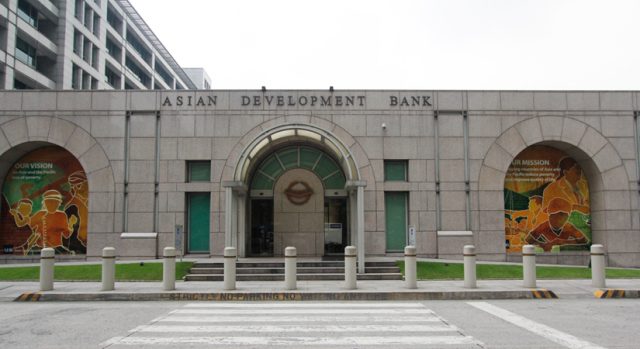
THE ASIAN Development Bank (ADB) and New Hope Singapore Private Ltd. (NHS) signed a $20-million loan agreement that will extend financing assistance to farmers in South and Southeast Asia, including the Philippines.

In a statement Tuesday, the bank said will provide additional working capital and fund the operating expenses of NHS projects in the Philippines, Bangladesh, Cambodia, Indonesia, Laos, Nepal, Sri Lanka and Vietnam.

The ADB said the loans will be put to use in buying raw materials for animal feed, expand the payment terms and give bigger advances to the company’s beneficiaries, feed distributors and livestock farmers, and buy workers personal protective equipment.

NHS aims to supply animal feed and provide technical services to 200,000 poultry, aquaculture, and other livestock farmers in the region.

The bank will also extend technical assistance to NHS to help it train 7,200 female farmers in the Philippines and Bangladesh on best practices in climate-smart farming and accessing credit.

“Shortages of agricultural inputs such as animal feed will have a severe impact on food availability, prices, and poverty if pandemic-related restrictions persist especially in countries vulnerable to the economic impacts of COVID-19,” said Martin Lemoine, the head of the Agribusiness Investment Unit at ADB’s Private Sector Operations Department.

Mr. Lemoine said livestock plays an important role in ensuring food security, especially for small farmers who rely on it for income and as their source of food.

NHS is a Singapore holding firm for China agribusiness company New Hope Liuhe Co., Ltd. — Beatrice M. Laforga

US vaccine gift prompts Duterte to keep pact

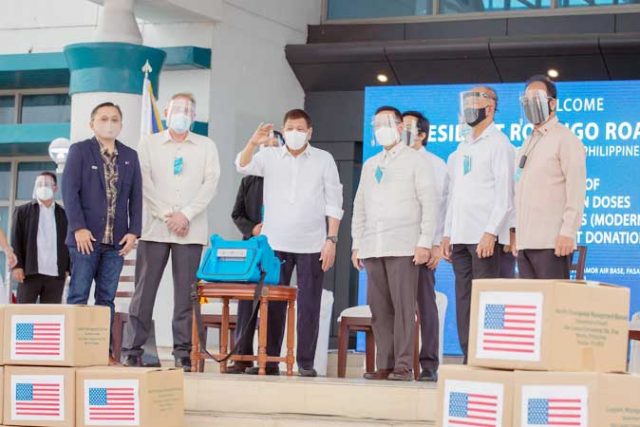
THE PHILIPPINES received on Tuesday about three million doses of the coronavirus vaccine made by America’s Moderna, Inc., part of the donation from the United States government that prompted President Rodrigo R. Duterte to keep a key military pact that he ordered to be terminated last year.

The President, in a Monday late-night public address, said his decision to continue the country’s Visiting Forces Agreement with the US was a “concession” for its donated vaccines.

“Give and take lang tayo,” he said of the relationship between Manila and Washington.

Mr. Duterte, who declared a foreign policy pivot toward China and away from the country’s western allies, last week recalled his decision to abrogate the military pact on the deployment of troops for war games after meeting with US Defense Secretary Lloyd Austin.

Palace Spokesperson Herminio L. Roque, Jr. told a televised news briefing Tuesday that the latest batch of Moderna vaccines was donated by the US government through a global initiative for equal access.

Last month, the US gave the Philippines more than three million doses of the vaccine made by Janssen Pharmaceuticals.

“I would like to thank President of the US, Biden, the US government, and the people of America for not forgetting us,” Mr. Duterte said.

The US has donated at least 13.2 million doses of coronavirus vaccines to the Philippines

The latest goodwill of the US was announced amid the rising tension in the South China Sea, parts of which are claimed by the Philippines.

Meanwhile, Mr. Roque said the country is set to take delivery of about 22.7 million vaccine doses this month, including the US-donated Moderna doses.

The Palace official said about one million doses of CoronaVaC made by China’s Sinovac Biotech Ltd. are set to arrive this week.

The Philippines has so far received about 33,86 vaccine doses from February to July.

About 21.21 million doses have been given out as of Aug. 2. Of these, 11.84 million were first doses and 9.36 million were second doses. 

The government aims to fully vaccinate 15 million Filipinos by the end of August and sustain the average daily vaccination of 600,000 to 700,000, Health Undersecretary Myrna C. Cabotaje told a virtual forum.

The country is currently inoculating health workers, outbound migrant Filipino workers, family members of health workers, seniors, people with comorbidities, essential workers, and indigents.

Ms. Cabotaje said the vaccination of the general public is expected by September or October.

She also said health authorities have yet to create guidelines for the vaccination of people below 18 years old.

LOCKDOWN
Philippine authorities earlier said Metro Manila residents who will be inoculated against the coronavirus during the two-week lockdown on Aug. 6 to 20 would be allowed to leave their homes.

Metro Manila’s risk classification for the coronavirus is back to “high risk” after a spike in infections believed to be triggered by the more contagious Delta coronavirus variant was seen in the region.

The capital region was classified as high risk due to its alarming average daily attack rate (ADAR) of 8.96, Health Undersecretary Maria Rosario S. Vergeire told a televised news briefing.

ADAR , which refers to the number of new infections in an area over a two-week period divided by the population there, is considered high risk if it is seven and above.

The capital region registered the most number of new cases at 2,074 as of Aug. 2, followed by other high-risk regions such as Southern Tagalog, Central Visayas, Central Luzon and Western Visayas, Ms. Vergeire said.

The capital region will be placed under a hard lockdown from August 6 to 20 to contain the spread of the Delta variant first detected in India.

While the Philippines’ risk classification remains at “moderate,” the capital region and nearby provinces “are showing a steep increase, while the rest of Luzon, Visayas and Mindanao are exhibiting slight increase in cases,” she said.

“The impact of the Delta variant is now observed nationally and in select regions and areas,” she said. “Half of the country’s provinces are already showing an increase in cases and/or health care utilization.”

The Department of Health reported 6,879 coronavirus infections on Tuesday, bringing the total to 1,612,541.

The death toll rose to 28,141 after 48 more patients died, while recoveries increased by 6,337 to 1,521,263, it said in a bulletin. — Kyle Aristophere T. Atienza

Economic bills to face delay in Senate due to 2-week lockdown

SENATE PRIB

PASSAGE of priority economic bills will be delayed in the Senate as plenary sessions will be suspended from Aug. 6 to 23 while the capital Metro Manila is placed on lockdown due to the heightened threat from the coronavirus Delta variant.

Senate President Vicente C. Sotto III told BusinessWorld in a Viber message that it would affect the “Foreign Investments Act, Public Services Act, Department of Migrant Workers and Overseas Filipinos, to name a few.”

Senate Majority Leader Juan Miguel F. Zubiri, however, clarified that they intend to start discussing the measures on foreign investments and public services on Aug. 3.

“We will take up the economic measures today (Aug. 3) and tomorrow and try to close the period interpellations for both this week. Amendments will be done when we get back,” said Mr. Zubiri in a Viber message.

“Hopefully by the first week of September would be the approval for 3rd and final reading,” he said.

Mr. Sotto also said that a plenary session may still be called if deemed necessary. Committee hearings will also push through online, upon the discretion of the chair.

RECOVERY
Meanwhile, Trade Secretary Ramon M. Lopez is pushing for a third quarter passage of the pending bills that would open up the country to more foreign investment.

“As long as we are able to pass those laws this third quarter, I think there’s still a good chance to benefit from the improvement in the investment climate and a more liberal structure that will allow higher foreign equity participation in these critical sectors like retail and public service,” he told ANC on Tuesday.

He noted recent increases in foreign direct investment (FDI), adding that he hopes recent tax reform measures would help back more foreign investment recovery.

“We hope that these three laws will be put into effect by this third quarter, hopefully before October,” he said, referring to the bills on public service, foreign investments, and retail trade liberalization.

The bill seeking to change the country’s 85-year-old public service law will allow full foreign ownership in the public service sector, while the measure amending the law on foreign investment will lower the number of direct local hires required for foreign companies. Both bills are pending in the Senate.

Amendments to the Retail Trade Liberalization Act to lower the required paid-up capital for foreign retailers is pending at the bicameral conference committee of the Senate and House of Representatives.

Fitch Solutions on Monday said the three laws will not be “massive gamechangers” in the near term, but they will back medium- and long-term recovery.

FDI net inflows more than doubled to $679 million in April after coming off a low base amid strict lockdown measures in the same month last year, data from the Bangko Sentral ng Pilipinas showed. Net inflows in the first four months of 2021 went up 56.3% to $3.056 billion compared to the same period last year.

At the House of Representatives, legislative work will continue despite the suspension of plenary sessions and physical office operations from Aug. 6 to 20.

“Vital measures can still be tackled as committee hearings will still be held via remote (meetings),” House Speaker Lord Allan Jay Q. Velasco said in a press release.

“By suspending regular office work and other preventive measures, we hope to contribute to the government’s effort in preventing a surge of infection that could possibly put our health care system in serious jeopardy,” he added. — Alyssa Nicole O. Tan, Jenina P. Ibañez and Russell Louis C. Ku

P13.1-B cash aid for Metro residents will come from gov’t savings — Palace

PHILIPPINE STAR/EDD GUMBAN

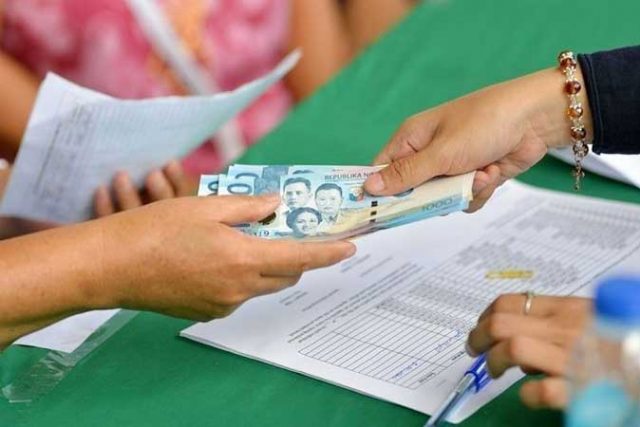
THE PRESIDENTIAL Palace on Tuesday said the P13.1 billion worth of cash assistance that will be given to low-income residents of Metro Manila amid the implementation of stricter quarantine protocols in the region would be sourced from the savings of government agencies.

Presidential Spokesperson Herminio L. Roque, Jr. made the clarification after President Rodrigo R. Duterte approved the distribution of cash aid to around 10.7 million residents of the capital region.

Tapping government savings to fund financial assistance for Filipinos affected by lockdowns is allowed under Administrative Order No. 41, which President Rodrigo R. Duterte signed in May, Mr. Roque said.

The utilization of “unobligated, continuing appropriations, and savings” for financial assistance is provided under the order, he said.

Earlier, the Palace official said the amount of cash aid to be distributed in the capital region before the start of the Aug. 6 to 20 lockdown would be P1,000 per person or a maximum of P4,000 for every family.

It is the same amount given to residents in other areas placed under an enhanced community quarantine, he added.

At the same briefing, Mr. Roque said the government would tap the “windfall” collected by the Bureau of Treasury if more financial aid is needed because of the hard lockdown.

The Philippine economy could lose more than P200 billion during the two-week enhanced community quarantine, the National Economic and Development Authority has said.

The lockdown would also increase the number of poor people by as many as 177,000, it said, adding that 444,000 Filipinos could become jobless. — Kyle Aristophere T. Atienza

Gov’t to retain current public transport supply, capacity during stricter lockdown 

PHILIPPINE STAR/ BOY SANTOS

THE DEPARTMENT of Transportation (DoTr) said Tuesday the government has approved its recommendation to retain the current public transport supply and capacity in the capital region during the implementation of stricter community quarantine rules from Aug. 6 to 20.  

Under the current policy, public vehicles are limited to carry passengers at 50% of capacity, and more than 80% of public utility vehicles have been allowed to operate.   

“The latest Omnibus Guidelines approved by the Inter-Agency Task Force for the Management of Emerging Infectious Diseases (IATF-EID) have allowed the continued operation of public transportation, at such capacity and supply as recommended by the DoTr,” the department said in a statement.  

The department said only authorized persons will be accommodated by public transport services.  

“There will be stricter enforcement to ensure that only (authorized persons) are permitted to use public transport,” Transportation Secretary Arthur P. Tugade said, noting that pertinent identification cards and other documents must be presented.  

The police has deployed more officers in Metro Manila for the implementation of quarantine rules such an 8 p.m. to 4 a.m. curfew, liquor ban in certain localities, and ban on mass gatherings.    

“Through the imposition of the curfew, mass gatherings will be prevented, such as drinking and other gatherings which have huge chances of becoming super spreader events,” police chief Guillermo Lorenzo T. Eleazar said in Pilipino in a news release on Tuesday.   

Lt. Gen. Israel Ephraim Dickson, head of the police task force on quarantine protocol enforcement, said 75 quarantine control points or checkpoints have already been established at the greater Manila area bubble as of August 3.  

At a televised news briefing on Tuesday, Mr. Dickson said 1,019 police personnel have been deployed in the area. — Arjay L. Balinbin and Bianca Angelica D. Añago 

Gov’t targets to award Mindanao Rail consultancy contract this week 

THE TRANSPORTATION department said Tuesday it is targeting to award the project management consultancy services contract for the first segment of the Mindanao Railway Project this week.  

The Department of Transportation (DoTr) is “about to” award the contract,” it said in a statement to BusinessWorld. “We are targeting (it) for this week,” the department added.  

The DoTr announced in December last year its invitation to shortlisted Chinese consultants to submit bids for the project management consultancy services contract that covers the Tagum-Davao-Digos segment of the railway.  

In January, the department said three short-listed Chinese groups had submitted bids for the consultancy contract: the China Railways Design Corp. and Guangzhou Wanan Construction Supervision Co., Ltd. Consortium; China Railway Liuyuan Group Co., Ltd.; and CCCC Railway Consultants Group Co., Ltd.  

The China-funded project has an approved budget of P3.09 billion for the consultancy services.  

The department requires the completion of the detailed design and works within 17 months, with 33 months set as the period for the contractor to be engaged in pre-construction activities and the defects notification period.  

The railway’s P82.9-billion first phase stretches from the Tagum Station and Depot in Davao del Norte to Digos City in Davao del Sur. It will have stations in  

Carmen, Panabo, Santa Cruz, and three in Davao City including a sub-depot.   

The department said the segment for partial operations by March 2022 is from Tagum to Carmen.  

The 100.2-kilometer Tagum-Davao-Digos segment is financed through an official development assistance package from the Chinese government.  

The Philippine government expects full operations by June 2023. — Arjay L. Balinbin 

DoE calls on quake-affected stakeholders to report power facility damage 

PHILSTAR FILE PHOTO

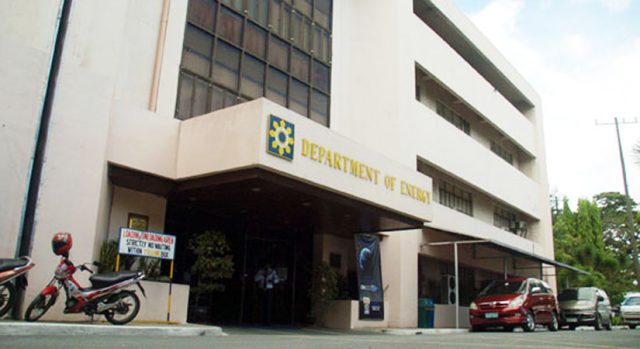
THE DEPARTMENT of Energy (DoE) asked affected stakeholders to promptly inspect and report damage from the magnitude 6.6 earthquake which hit Luzon, the northern mainland, last month.  

“The DoE (directs) all power sector stakeholders to immediately inspect, assess and report any damage/s incurred by the facilities caused by the said earthquake,” an advisory signed by Energy Undersecretary Emmanuel P. Juaneza read, citing a previous directive from Secretary Alfonso G. Cusi.  

“All reports on the assessment and inspection should be submitted to the Task Force on Energy Resiliency (TFER) and Electric Power Industry Management Bureau (EPIMB)… as they are handling the monitoring of calamity-related concerns (in) the electric power industry,” states the advisory.  

TFER and EPIMB are in charge of working with stakeholders to ensure normal operations after the earthquake.  

In the morning of July 24, portions of Luzon, including the capital Metro Manila, and neighboring island provinces experienced various intensities from the tremor.  

The DoE’s advisory, issued around a week after the quake, is in line with the Electric Power Industry Reform Act of 2001 which orders the department to ensure the reliability, quality and security of the country’s electric power supply. — Angelica Y. Yang 

Police ready to use cameras for operations, but units still lacking 

PNP.GOV.PH

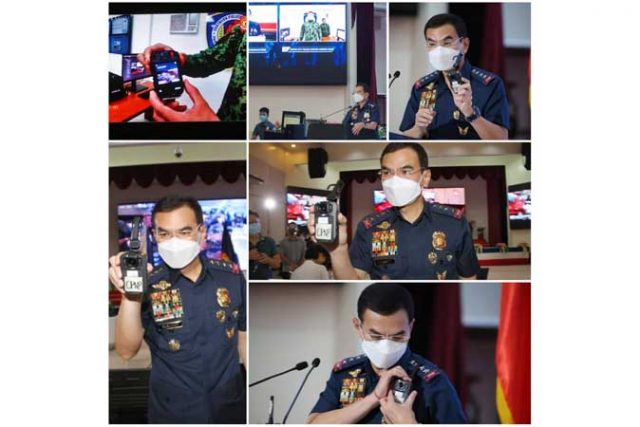
NATIONAL POLICE chief Guillermo Lorenzo T. Eleazar on Tuesday assured that they will find ways to comply with the Supreme Court’s rules on wearing cameras during operations despite lack of available equipment.   

“Our body-worn cameras are not enough, but in the spirit of transparency and accountability, I trust that our commanders will find ways to comply with the guidelines on the use of body-worn cameras,” Mr. Eleazar said in a news release on Tuesday.   

He said a memorandum on the general protocols for the use of the cameras in the execution of search and arrest warrants and of warrantless arrests was issued on Monday to all police regional directors and national operational support unit heads.   

The memorandum specifies that the cameras must never be turned off while search and arrest warrants are executed, and while warrantless arrests are ongoing “as far as it is practicable.”   

He said the national police had a total of 2,696 body-worn cameras as of June 4, and 171 police units will initially receive the units.   

He added that 600 cops have so far been trained to use the gadgets.   

The High Court promulgated the rules on July 10, and took effect on Saturday after it was published in several newspapers.   

“The use of body-worn cameras is not only for the protection of human rights but also to protect policemen from wrong assertions and allegations on the implementation of our operations,” Mr. Eleazar said in Filipino. — Bianca Angelica D. Añago  

Duterte daughter tops OCTA’s presidential poll 

Davao Mayor Sara Duterte-Carpio

DAVAO CITY Mayor Sara Duterte-Carpio and her father, President Rodrigo R. Duterte, topped the list of Filipinos’ choices for president and vice president at next year’s elections, according to a poll by Octa Research.  

In a statement, the group said 28% of adult Filipinos would vote for Ms. Carpio for president, while 18% would choose Mr. Duterte for vice president.  

The poll that was conducted from July 12-18 involved 1,200 respondents aged 18 and above.  

The late dictator’s namesake, former senator Ferdinand R. Marcos, Jr., was the second choice for president with 13%.  

Mr. Marcos was followed by Manila City Mayor Francisco M. Domagoso III (11%), and Senators Mary Grace S. Poe-Llamanzares (10%) and Emmanuel “Manny” D. Pacquiao (10%).   

Five percent of respondents would vote for Vice President Maria Leonor G. Robredo, who was statistically tied with Taguig-Pateros Representative Alan Peter S. Cayetano and Senator Christopher Lawrence T. Go.  

Mr. Go was followed by Senate President Vicente C. Sotto III with 3%, Senator Panfilo N. Lacson, 2%; Jejomar S. Binay, 2%; Senator Richard J. Gordon, 1%; and Senator Antonio Trillanes IV, 1%.  

OCTA said 6% of respondents “still do not know whom to vote/refused to name candidates/ not going to vote in the 2022 Presidential Elections.”  

For the most preferred vice presidential bets, Mr. Duterte was followed by Mr. Moreno (11%), Mr. Cayetano (10%), Ms. Poe (10%), and Mr. Marcos (9%).—Kyle Aristophere T. Atienza 

Another 374 workers repatriated from UAE 

ANOTHER 374 Filipino workers were repatriated on Sunday from the United Arab Emirates (UAE), bringing the total from the Middle Eastern country to 3,724, the Foreign Affairs department reported. 

In a press release on Monday, the Department of Foreign Affairs (DFA) said the latest chartered flight from UAE was the 9th organized and funded by the government to assist overseas workers affected by the coronavirus pandemic.   

“We expect to bring home most stranded Filipinos from the UAE by the end of August,” DFA Undersecretary Sarah Lou Y. Arriola said.   

All repatriates received about P10,000 as reintegration assistance from the DFA.  

Since the start of the pandemic last year, about half a million overseas Filipino workers have been repatriated, based on data from the DFA and the Department of Labor and Employment. — Alyssa Nicole O. Tan