Home Blog Page 7270

Australia pandemic panel backs reopening targets despite Sydney outbreak

SYDNEY Australia can proceed with its reopening plans when the country reaches 70%-80% vaccination levels, the government’s pandemic modelling adviser said, even as some states hinted they may not ease border curbs if Sydney fails to control its Delta outbreak.

The Melbourne-based Doherty Institute said the country’s focus must shift to limiting the number of COVID-19 deaths and hospitalisations, from its current zero-cases strategy, when at least 70% of the country’s population above age 16 is fully vaccinated.

“This level of vaccination will make it easier to live with the virus, as we do with other viruses such as the flu,” it said in a statement late on Monday. “Once we reach 70% vaccine coverage, opening up at tens or hundreds of cases nationally per day is possible.”

Currently, 30% of Australia‘s adult population has been fully vaccinated while 53% have had at least one dose.

Australia in July unveiled a four-stage plan back to greater freedoms with higher vaccination rates. But Queensland and Western Australia states flagged they may not stick with the agreement as it was framed when case numbers in Sydney were much lower.

Prime Minister Scott Morrison acknowledged the concerns of some states from the Sydney outbreak but said “forever lockdowns” will do more harm than good to the country.

“It doesn’t matter whether it’s 30 cases or 800 cases, the conclusions are the same, and that’s what the Doherty Institute said … we can do this safely and we do need to do it,” Morrison told Nine News on Tuesday.


VACCINE PIVOT

Australia has suffered less from the coronavirus pandemic than many other developed countries with about 44,600 cases and 984 deaths. But a third wave of infections from the Delta variant has plunged Sydney and Melbourne, its largest cities, and capital Canberra into a weeks-long lockdown.

Sydney, the worst-affected, has reported rapid growth in new case numbers as state officials pivot to a faster vaccine rollout strategy as more than two months of stay-at-home orders have failed to stop the spread of Delta.

“Let us focus on the vaccine rates because that is what will determine how we can live moving forward,” New South Wales (NSW) state Premier Gladys Berejiklian said.

Berejiklian, who had promised more freedoms for the fully-vaccinated once total doses topped 6 million, said the state has crossed that milestone and changes will be announced later this week. Some 59% of people in NSW have had at least one dose, while 31% are fully vaccinated, slightly above the national numbers.

A total of 753 cases were reported in NSW, down from 818 on Monday, although daily infections continue to linger near record levels. Seventy-four deaths have been reported from the latest outbreak, although the rate of deaths has slowed from last year.

Neighbouring Victoria, struggling to contain its outbreak, expanded access to the Pfizer shots from Wednesday to anyone over the age of 16 to help reach a goal of a million doses over five weeks. Fifty new locally acquired cases were detected in the state on Tuesday, down from 71 a day earlier. – Reuters

Nestlé expands R&D center, invites food startups in Southeast Asia

Nestlé

Food technology startups in Southeast Asia can access Nestlé’s upgraded research-and-development (R&D) center in Singapore through the food company’s new R&D Accelerator program.  

The center’s state-of-the-facilities can be used to tweak food products to fit local consumer preferences, taste, and nutritional requirements of markets in Southeast Asia, including the Philippines. 

“If you want to be successful in our business, you need a good understanding of the flavors people love, the dishes they want to serve to their families, the food trends they want to try,” said Chris Johnson, chief executive officer of Nestlé’s Asia, Oceania, and Sub-Saharan Africa (AOA) division, at the center’s virtual launch. “That’s why it’s so important to have an R&D team in Singapore, here in the heart of Southeast Asia, a center of excellence driving innovation and product development in Asia, for Asia.”  

The R&D Accelerator will give startups, students, and employees access to new labs, experimental kitchens, testing facilities, sensory evaluation rooms, open working spaces, and research hubs. There, they can develop their concepts for up to six months.  

There’s been a rise in demand for healthy, natural, and sustainable products in the region, according to Mr. Johnson, who shared that the facilities have been used by Nestlé scientists to develop innovations like non-dairy Nescafé mixes and Milo powdered beverages as well as plant-based meat alternatives.  

At the Milo facility, for example, researchers developed soy-based and almond-based products that retain the chocolate malt beverage’s signature taste, said Thomas Hauser, head of Nestlé’s global product and technology development.  

“We have 1.6 billion Swiss francs invested in R&D, wherever there is a need,” he said, on the importance of developing more product lines to cater to every market, whether in Asia or elsewhere. “The entire center has 300 researchers that work there.”  

Other sustainable products that come out of the center include Nescafé Gold non-dairy lattes and Starbucks’ Silky Soy and Toasted Oat Lattes. The R&D Center is also working on meat alternatives and plant-based burger patties, schnitzels, and meat mince, which are then produced in Malaysia.  

Nestlé’s Harvest Gourmet brand incorporates these plant-based innovations in Asian cuisine such as dumplings and katsudon. These are developed from the R&D Center’s test kitchens, which separate halal from non-halal products.  

“More and more consumers are interested firstly, in health; secondly, in sustainability for the planet; and thirdly, in animal welfare,” said Mr. Johnson, Nestlé’s AOA chief. 

In the Philippines, Nestlé promotes regenerative agriculture and sustainable coffee production through partnerships with Mindanao-based Robusta coffee farmers — an example of sustainable initiatives that Nestlé expects to come out of the R&D Accelerator.  

“We look for bright ideas and innovators from universities in Singapore or within the region, and we’re open to undergraduate or graduate students who want to pilot initiatives with us. Same is valid for early startups who want to bring an idea to market but may not have the know-how,” said Guglielmo Bonora, managing director of Nestlé’s R&D Center in Singapore. 

Added Mr. Hauser: “They can tap into our expertise in food science, food safety, and regulatory, managing, and packaging purposes, and test products in real market conditions.” — Brontë H. Lacsamana

Philippines’ Duterte accepts endorsement to run as vice president in 2022

PRESIDENT RODRIGO R. DUTERTE — PHILIPPINE STAR/ MICHAEL VARCAS

MANILA – Philippine President Rodrigo Duterte has agreed to be the ruling political party’s candidate for vice president in next year’s elections, a senior official of the PDP-Laban party said in a statement.

In accepting the endorsement, Duterte is making “the sacrifice” and heeding “the clamour of the people,” said Karlo Nograles, executive vice president of the ruling PDP-Laban party. – Reuters

Biden expected to decide within 24 hours on Afghan evacuation deadline

KABUL/WASHINGTON – With thousands of desperate Afghans and foreigners massed at Kabul’s airport in the hope of fleeing Afghanistan’s new Taliban rulers, U.S. President Joe Biden is expected to decide as soon as Tuesday on whether to extend an Aug. 31 deadline to airlift Americans and their allies to safety.

Biden warned on Sunday that the evacuation was going to be “hard and painful” and much could still go wrong. U.S. troops might stay beyond an Aug. 31 deadline to oversee the evacuation, he said.

On Monday, an administration official told Reuters that Biden would decide within 24 hours whether to extend the timeline to give the Pentagon time to prepare.

Beyond the need to remove thousands of Americans, citizens of allied countries and Afghans who worked with U.S. forces, Department of Defense officials said it would still take days to fly out the 6,000 troops deployed to secure and run the airlift.

Some Biden advisers were arguing against extending the self-imposed deadline for security reasons. Biden could signal his intentions at a virtual meeting of the Group of Seven wealthy nations on Tuesday.

Two U.S. officials had said the expectation was that the United States would continue evacuations past Aug. 31. A senior State Department official told reporters the country’s commitment to at-risk Afghans “doesn’t end on Aug. 31.”

Later on Monday, Democratic U.S. Representative Adam Schiff, chairman of the House of Representatives Intelligence Committee, told reporters after a briefing on Afghanistan by intelligence officials that he did not believe the evacuation could be completed in the eight remaining days.

“I think it’s possible but I think it’s very unlikely given the number of Americans who still need to be evacuated,” Schiff said.

A Taliban official said foreign forces had not sought an extension and it would not be granted if they had. Washington said negotiations were continuing.

White House national security adviser Jake Sullivan said the United States was in daily talks with the Taliban and making “enormous progress” in evacuating Americans and others.

Between 3 a.m. and 3 p.m. local time on Monday, some 10,900 people were evacuated from Kabul, meaning the United States had facilitated the removal of 48,000 people since Aug. 14.

U.S. defense officials had told Reuters that almost everything would have to go perfectly to extricate every American citizen by Aug. 31, given concerns about reaching the airport, terrorist attacks and complicated processing times.

State Department spokesman Ned Price told reporters the United States had discussed future control of the airport with the Taliban, as well as with U.S. partners and allies.


‘DOES IT STILL HURT? YES’

The Taliban’s swift takeover and ensuing chaos in Afghanistan have roiled U.S. politics, with opposition Republicans piling criticism on Biden for the withdrawal, which was initiated by his Republican predecessor, Donald Trump. Biden‘s opinion poll numbers have slipped.

Biden‘s fellow Democrats who control Congress have promised to investigate what went wrong in Afghanistan within the past weeks and throughout the 20-year conflict, America’s longest war.

For its part, the powerful U.S. military has been grappling with the collapse of U.S.-backed Afghan forces after 20 years of training. “Was it worth it? Yes. Does it still hurt? Yes,” General David Berger, the commandant of the Marine Corps, wrote in a memo to Marines.

The difficulties at the airport were underlined on Monday with a firefight between Afghan guards and unidentified gunmen. German and U.S. forces were also involved, the Germany military said.

A local Taliban militant, speaking to a large crowd in Kabul, urged Afghans to remain.

“Where has our honor gone to? Where has our dignity gone to?” the unidentified militant said. “We will not let the Americans continue to be here. They will have to leave this place. Whether it is a gun or a pen, we will fight to our last breath.”


WORKING WITH ALLIES

The Taliban seized power last week as the United States and its allies withdrew troops after the war launched after the Sept. 11, 2001, attacks. Panicked Afghans and foreigners have thronged the airport since, clamoring to catch any flight out. Many fear reprisals and a return to a harsh version of Islamic law the Taliban enforced while in power from 1996 to 2001.

Twenty people have been killed, most in shootings and stampedes, as international forces try to bring order. One member of the Afghan forces was killed and several wounded in Monday’s clash, the U.S. military said.

A British government spokesperson said British evacuations could not continue once U.S. troops leave. French Foreign Minister Jean-Yves Le Drian also said more time was needed.

German Foreign Minister Heiko Maas said the virtual G7 summit must agree on whether to extend the deadline and how to improve access to the airport.

The airport chaos also disrupted aid shipments. The World Health Organization said tons of medical supplies were stuck because Kabul airport was closed to commercial flights.

Leaders of the Taliban, who have sought to show a more moderate face since capturing Kabul, have begun talks on forming a government, while their forces focus on the last pockets of opposition.

Pfizer-BioNTech COVID-19 vaccine gains full U.S. regulatory approval

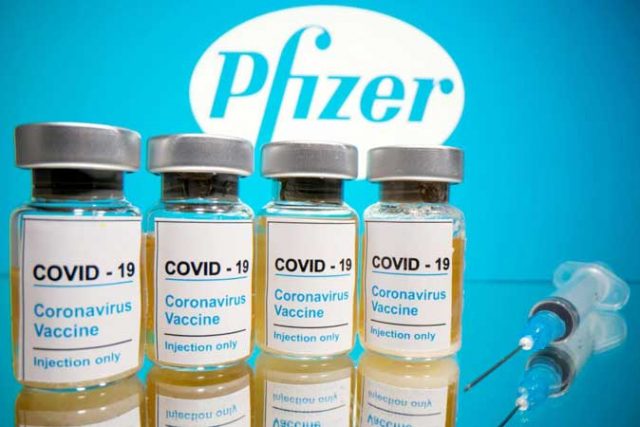
The U.S. drug regulator on Monday granted full approval to the Pfizer Inc/BioNTech SE COVID-19 vaccine – the first to secure such Food and Drug Administration validation – prompting President Joe Biden to make a fresh pitch to vaccine skeptics to get the shot to fight the relentless pandemic.

The FDA, which gave the two-dose vaccine emergency-use authorization in December, provided its full approval for use in people age 16 and older based on updated data from the companies’ clinical trial and manufacturing review. Public health officials hope the action will convince unvaccinated Americans that Pfizer‘s shot is safe and effective.

There is entrenched vaccine skepticism among some Americans, particularly conservatives. COVID-19 cases, driven by the highly infectious Delta variant, have surged in parts of the United States with lower vaccination levels.

Speaking at the White House, Biden called the FDA approval “an important moment in our fight against the pandemic” and urged more private businesses to require employees to be vaccinated.

“If you’re one of the millions of Americans who said that they will not get the shot until it has full and final approval of the FDA, it has now happened,” Biden said.

“It’s time for you to go get your vaccination. Get it today,” Biden added. “… There is no time to waste.”

The Pentagon said it is preparing to make the vaccine mandatory for military personnel.

U.S. health officials expect that the FDA’s action also will prompt more state and local governments, as well as private employers, to impose vaccine mandates. New York City said https://www.reuters.com/world/us/new-york-city-mandates-covid-19-vaccine-public-school-teachers-staff-mayor-2021-08-23 it will require vaccines for public-school teachers, while New Jersey announced that all state workers must get vaccinated by mid-October or agree to regular COVID-19 tests.

“While millions of people have already safely received COVID-19 vaccines, we recognize that for some, the FDA approval of a vaccine may now instill additional confidence to get vaccinated,” said Janet Woodcock, the FDA’s acting commissioner.

More than 204 million people in the United States have received the Pfizer vaccine. The FDA’s approval extends the shelf life of Pfizer shots from six months to nine months. It also confirms that the vaccine increases risk of heart inflammation, particularly among young men in the week following their second shot.

The approval makes it easier for doctors to prescribe a third dose of Pfizer‘s vaccine off-label for people who may benefit from additional protection against COVID-19.

Pfizer shares closed up around 2.5% and BioNTech shares gained more than 9.5%.

The two other COVID-19 vaccines given emergency-use authorization – made by Moderna Inc and Johnson & Johnson – have not yet received full FDA approval.

The FDA gave emergency-use authorization to Pfizer‘s vaccine for people age 16 and older in December – the first shot to gain such backing in the United States – and provided further emergency-use authorization for people age 12 and up in May.


SHOTS FOR CHILDREN

Pfizer and BioNTech said they plan to apply for full approval in children ages 12 to 15 as soon as required data is available.

Woodcock said the FDA is not recommending that children under age 12 get the vaccine now because it needs to ensure it is safe for them, telling reporters it “would be a great concern if people vaccinate children because we don’t have the proper data.”

Pfizer is expected to submit data this fall to support the shot’s emergency-use authorization for children under 12 based on smaller doses.

The American Academy of Pediatrics, representing children’s doctors, discouraged having children under 12 receive the vaccine.

Pfizer‘s shot has received conditional regulatory approval elsewhere including Britain and the European Union.

The United States leads the world in reported COVID-19 cases and deaths. More than 625,000 Americans have died, including an average of more than 600 daily in recent weeks.

According to the Centers for Disease Control and Prevention (CDC), 71% of Americans age 12 and older – the population eligible to receive COVID-19 vaccines – have gotten at least one dose and 60.2% are fully vaccinated. For the entire population, including children up to age 11 for whom no vaccines are yet approved, 60.7% of Americans have received at least one dose, with 51.5% fully vaccinated.

Pfizer CEO Albert Bourla said in a statement the FDA’s approval “affirms the efficacy and safety profile of our vaccine at a time when it is urgently needed.” In Pfizer‘s clinical trial, approximately 12,000 recipients of the vaccine have been followed for at least six months. The vaccine will now be marketed under the name Comirnaty.

The FDA on Aug. 13 authorized a third dose of the Pfizer and Moderna vaccines for people with compromised immune systems. Pfizer‘s shot has not yet been authorized for more widespread use as a booster. – Reuters

Busybee leads digital transformation in the post-pandemic Philippines

As the research around digital transformation grows at the onset of the COVID-19 pandemic, finding straightforward solutions to companies’ encounters and hardships can become a challenge. That’s why Busybee together with JCI – Perlas Pasay, Rotaract Club of San Antonio de Padua, Rotary Club of Alabang Madrigal Business Park, ASEAN Youth Organization – Philippines, Asian- African Chambers of Commerce and Industry, Inquirer.net, The Philippine Star, BusinessWorld, ABS-CBN News Channel, DZMM TeleRadyo, and When In Manila put together a three-part Webinar series, “Coping with the Accelerated Digitalization: Empowering Organizations with Digital Tools” — to provide the most valuable and up-to-date information about digital transformation all in one place. More than five thousand known professionals and individuals from concerned government agencies and the private sector joined and established a cohesive and integrated strategic action in order to help and educate organizations on how to rapidly innovate and take advantage of new digital tools and leverage digital services to emerge from the pandemic crisis.

Over the course of the three Webinars, presentations and discussions demonstrated the technology’s strategic importance as a critical component of our businesses and not just a source of cost efficiencies in order to stay competitive in this new business and economic environment. The first part of the series focused on the topics on SMS and Viber Marketing, and the e-commerce and web development with speakers and panelists from the National Economic Development Authority Dr. Dexter Galban, MyBusybee, Inc. head of AI Chatbot development team Bench Cosme, and Zagana CEO Joshua Aragon — who provided insights on how to get the message across the Philippine Archipelago and the future of physical offices and shops post-pandemic. Part two provided the theme: Information Systems and Artificial Intelligence (AI) Chatbot, as well as the virtual event platform which tackled the future of business operations and the new normal approach in hosting events with guest speakers from the Department of Trade and Industry (DTI) Wea Bohol, the Tourism Promotions Board (TPB) Atty. Maria Anthonette Velasco-Allones, and Lamudi Group Philippines CEO Kenneth Stern. The third part covered the topics on cybersecurity and data privacy with panelists and speakers from the Department of Information and Communications Technology (DICT) Dr. Thelma Villamorel, Busybee’s Cyber Security head Ireneus Laszlo Legeza, and the National Privacy Commission (NPC) Janssen Esguerra, who established awareness on cybersecurity in the Philippines and how organizations can secure its information online. Throughout the whole event, attendees, speakers, and panelists shared opinions, thoughts, and suggestions with a mission to help individuals and businesses adapt to digital transformation, ensure business continuity, and continue to deliver public services during this time of crisis and even beyond.

Since its inception in 2009, Busybee has helped build infinite opportunities for the country and the world by harnessing the infinite dynamics of technology and innovation. With technological capabilities constantly advancing and customer expectations are always on the rise, the need to streamline internal efficiencies has been ever-present. Becoming “digital-ready” demands several high-level preparations. Busybee provides an agile digital support strategy and a place for digital in the core business model.

Beginning with mobile, Busybee is one of the few top aggregators in the country, servicing Global OTT clients like Google, Yahoo, Facebook, Twitter, WhatsApp, Apple, Zoom, and a lot more. With its proprietary products in SMS, specifically BrandTxT and PowerBlast, Busybee has become the most trusted and most reliable provider of SMS applications in the country. Busybee BrandTxT is the newest SMS gateway platform that offers a unique form of brand recognition, while at the same time making communication more professional. This platform covers over 900 mobile networks across 180 countries. It boasts a wide range of fully-set and user-friendly web SMS features, along with an API for easy integration with any application and website. BrandTxT is widely used for welcome SMS, payment reminders, announcements, transaction alerts, birthday greetings, and a lot more. “BrandTxT application offers endless possibilities for automated and direct communication to ensure that important notifications are delivered efficiently, securely, and directly to your clients,” Busybee head of sales, Kim Klarisse Almeida said.

In the area of the web, Busybee’s products and services include domain, hosting, VPS, dedicated server, emails, web designs, web development, e-commerce, SSL, web vulnerability, and a lot more. As the top choice of many sensitive government agencies for their website redesign projects, Busybee prides itself as a platinum member of PhilGEPS, an iGov compliant company, and as an official partner of Acunetix and Rapid7.

Busybee assures the quality of its products because of its staff expertise which is composed of veteran developers such as web designers, web developers, graphic designers, QA Specialists, system analysts, software engineers, project managers, and digital marketing specialists. Busybee built its unique and original websites from scratch ranging from simple info sites to complex e-commerce sites.

Aside from its command of all things web, Busybee also delved into software reselling, being an authorized reseller of big global softwares such as Google, Microsoft, QuickBooks, Adobe, Zoom, and many more — making its way to being the top software reseller in the country. To further put its foot into the doors of the future, Busybee is also a player in the world of digital marketing, providing different types of digital marketing services like email marketing, mobile responsive websites, web security, chat messaging, SEO, social media management, and a lot more. As traditional media are slowly becoming obsolete, Busybee steps up to engage in this fast-growing digital media.

Busybee also offers graphic design, photography, and video presentation services. Its design group produces high-quality company logos, business cards, brochures, letterheads, flyers, billboards, and other customized designs that cater to any business’ marketing needs.
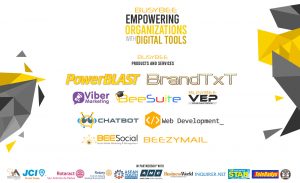
To top it all, Busybee offers a platform for virtual events called Busybee VEP, which is the very first virtual event platform in the Philippines with cutting edge event technology engineered by its top senior software architects and developers. The engineering team behind Busybee VEP uses patent holding infrastructure and framework, assured of industry leading security, scalability, world-class user interface, and unmatched customer experience. Its technology has powered events of all sizes, from large international conferences to focused B2B meets in industries ranging from Information Technology, Aerospace to Medicine, Nanotechnology, Artificial Intelligence, among many others.

“Our mission is to provide A to Z products and services that are relevant to the current situation of our nation, which is why we always collaborate with government agencies for us to know how our innovation can further facilitate their systems and processes and to offer innovative tools for businesses. The goal is to alleviate the barriers towards digital transformation to ease the evolution of their business model. We believe that companies and agencies alike can further scale up their operation as they go digital. It is also important to note that in order for us to successfully get through this transition, the right mindset and outlook is crucial. Yes, we can harness the benefits offered by technology and utilize it to our advantage instead of gearing away from it,” Busybee CEO Rico Hernandez stated.

By 2023, Busybee hopes more and more organizations will have adopted the new digital and will be considered “digitally determined” or committed to the goal of fully adopting and implementing digital tools via new business models and digital products/services.

“As a home-grown Filipino, I strongly believe that our country can realize its full potential because we have diverse local talents and unique ability to cope with pivotal changes as shown in our history. The digital transformation and online revolution is just one of the many paths our nation can succeed by equipping our workforce with digital skills, and supporting the new generation of startups in their innovation. This is a collective effort,” Mr. Hernandez said.

The end of this Webinar series signaled just the beginning of a new paradigm of impactful projects that will help support the Philippine digital economy and benefit society worldwide.


Infrastructure gets budget boost

PHILIPPINE STAR/EDD GUMBAN
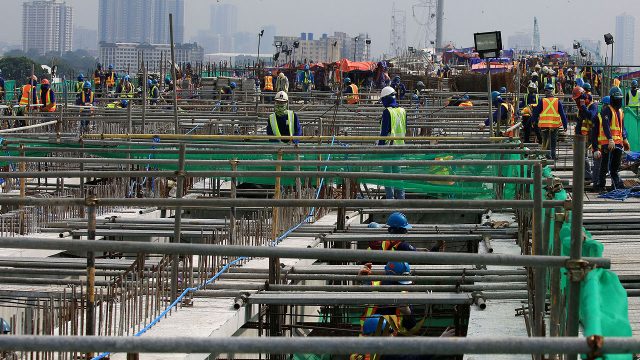
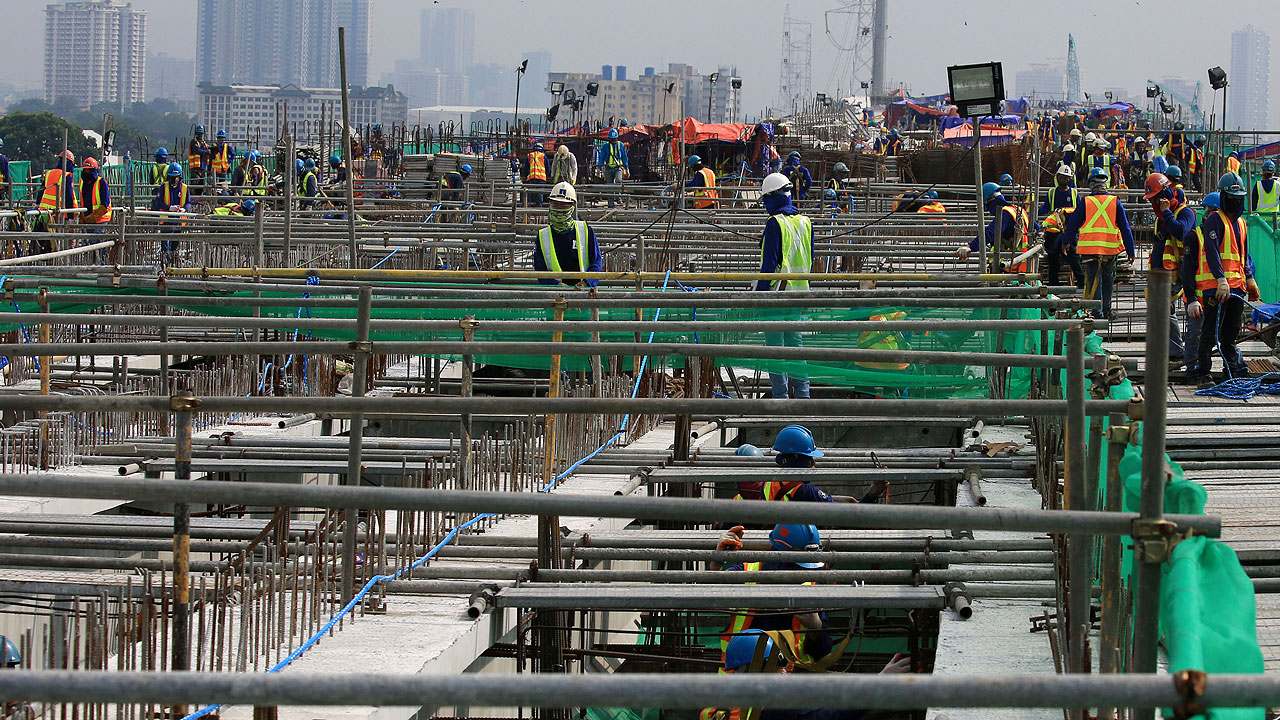
Under the proposed 2022 national budget, P1.18 trillion will go to infrastructure. — PHILIPPINE STAR/ EDD GUMBAN

THE NATIONAL GOVERNMENT is proposing to allocate P1.18 trillion for infrastructure projects in 2022, as it expects the sector to drive the economic recovery from the coronavirus pandemic.

The Executive branch on Monday submitted the record P5.024-trillion national budget to the House of Representatives and the Senate.

The House is expected to start hearings on Thursday, and is targeting to have the 2022 national expenditure program approved by Sept. 30.

2022 Spending priorities

“The 2022 national budget will sustain our COVID-19 (coronavirus disease 2019) response efforts while supporting the gradual transition to full recovery,” President Rodrigo R. Duterte said in his budget message.

Next year’s national budget is equivalent to 22.8% of the gross domestic product (GDP) and is higher by 11.5% year on year. The government is hoping the economy will recover faster from the pandemic, as it set a GDP growth target of 7-9% next year.

“Even with limited fiscal space… the government continuously strives to stimulate the economy and help restore its momentum through various measures and policies, such as the development of the country’s infrastructure,” Mr. Duterte said.

Under the proposed budget, P1.18 trillion will go to infrastructure, equivalent to 5.3% of GDP. This is 15% higher than the P1.019 trillion allotted in this year’s budget.

However, the amount is slightly lower than the P1.29-trillion infrastructure budget approved by the Development Budget Coordination Committee (DBCC) in July.

Asked why it was reduced, Budget Undersecretary Tina Rose Marie L. Canada said via Viber that it was due to the implementation of the Mandanas ruling next year, adding that local government units (LGUs) will now have to cover the cost of local infrastructure.

Of the infrastructure budget, P686.1 billion will go to the Department of Public Works and Highways (DPWH). The DPWH will spend P128.1 billion for major road projects, P113.5 billion for flood management projects, P59.6 billion for the preventive maintenance of national roads and P34.4 billion for bridges.

The Department of Transportation (DoTr) will receive a total of P151.3 billion. Rail transport projects, such as the North-South Commuter Railway System and Metro Manila Subway Phase 1 will get the lion’s share of this allocation at P110.9 billion.

Mr. Duterte said he has directed DPWH and DoTr to ensure these projects would be implemented with public health and safety measures in place.

Albay Rep. Jose Maria Clemente S. Salceda, chairman of the House Ways and Means Committee, said the infrastructure budget shows the Duterte administration’s commitment to the “Build, Build, Build” flagship program and countryside projects.

“We need growth-affirming projects that link centers of economic activity, open frontier areas to new development, enhance value-chains in the countryside, and improve labor productivity through shorter commutes,” he said in a statement. “For now, my cursory observation is that this is a growth-enabling infrastructure budget.”

HEALTH BUDGET
Meanwhile, the government allotted P252.4 billion for the health sector, which includes procurement of COVID-19 vaccines and booster shots, establishment of a Virology Institute, medical assistance to poor patients and the national health insurance program.

The health sector budget is 14% higher than this year’s P221.2 billion allocation.

“The emergence of more coronavirus variants…. continues to threaten the recovery of our healthcare system and national economy. Clearly, the most pressing need is to further strengthen our healthcare system and safeguard our people from widespread virus transmission,” Mr. Duterte said.

The Health department will get a 16.5% increase in its budget to P162 billion for 2022.

The government is also setting aside P115.7 billion for the Pantawid Pamilyang Pilipino program that will provide conditional cash aid to the poorest of Filipinos, while P23.5 billion will be used to provide social pension to indigent senior citizens.

For the education sector, P49.7 billion will be earmarked for the implementation of universal access to tertiary education and P30.1 billion for education assistance and subsidies, among others.

MANDANAS RULING
The National Government is targeting to generate revenues worth P3.29 trillion or 14.9% of GDP, while expenditures are also expected to reach P4.96 trillion, equivalent to 22.4% of GDP.  For 2022, the deficit as a share of GDP will fall to 7.5% from this year’s 9.3%.

In terms of expenses, P1.456 trillion or 29% of next year’s budget will go to personnel services, while capital outlays will be allotted P939.8 billion. Maintenance and other operating expenditures will hit P777.9 billion next year, while debt burden stands at P541.3 billion.

The government allocated P1.116 trillion for LGUs, including P959.04 trillion as national tax allotment share consistent with the implementation of the Mandanas ruling. The LGUs share for 2022 is 38% higher than this year. 

“Implicit in this ruling is the empowerment of LGUs to undertake full ownership of crucial basic services that have been devolved to them, based on the Local Government Code of 1991 and other pertinent laws,” Mr. Duterte said.

The government is set to devolve more functions under the National Government to LGUs next year to compensate for lost revenue from the increased share of national taxes for local governments. 

Meanwhile, Party-list Rep. Eric G. Yap, chairman of the House Appropriations Committee, told reporters on Monday he would ask House Speaker Lord Allan Jay Q. Velasco and Executive Secretary Salvador C. Medialdea to urge Mr. Duterte to certify the budget bill as urgent.

Mr. Velasco in a separate statement said the House would scrutinize the proposed budget but assured that it would be passed swiftly.

“As the coronavirus pandemic drags on and with no end in sight, it is incumbent upon Congress to swiftly pass a national budget that will not only serve as an instrument for development, but also as a powerful tool to decisively defeat COVID-19 and rebuild people’s lives and livelihoods,” he said. — Russell Louis C. Ku with a report from Beatrice M. Laforga

BIR, Customs tasked to collect P3.1 trillion in 2022 

THE COUNTRY’S main revenue agencies are tasked to collect P3.106 trillion in duties and taxes next year to finance the government’s record P5.024-trillion national budget.

As the government continues to run on a deficit next year, budget documents showed it is looking to cut its borrowings to P2.47 trillion in 2022 as part of its fiscal consolidation program.

The collection goal for the Bureau of Internal Revenue (BIR) and Bureau of Customs (BoC) is 15% higher than the combined P2.7-trillion goal this year. This will also make up 99.4% of the projected P3.125-trillion total tax revenues next year, based on President Rodrigo R. Duterte’s budget message that was published on Monday after the proposed 2022 spending plan was submitted to Congress.

The BIR is expected to generate P2.435 trillion next year, 17% bigger than its P2.081-trillion collection goal for this year and also 24.9% higher compared with the P1.95-trillion it generated in 2020.

The BoC, meanwhile, has been given a P671.7-billion collection target for 2022, up by 8.34% from the P620-billion target this year.

This was also 25% bigger than its actual collection of P537.69 billion in 2020.

Meanwhile, the government has set its gross borrowing program for 2022 to P2.47 trillion, 17.7% lower than the P3-trillion borrowing plan in 2021 as it aims to ease its reliance on domestic loans, according to the latest Budget of Expenditures and Sources of Financing document.

“The financing strategy for the proposed national expenditure program for next year will be consistent with our fiscal consolidation strategy to further strengthen macroeconomic fundamentals and rebuild fiscal space,” President Rodrigo R. Duterte said in his budget message.

The government has set a 77:23 borrowing mix for next year, in favor of local sources, to mitigate the impact of external risks.

Gross local borrowings are set to decline by 23.2% to P1.912 trillion next year from P2.49 trillion this year, and match the P1.91 trillion in 2020.

This consists of P1.86 trillion in Treasury bonds (T-bonds) and P52 billion in Treasury bills (T-bills).

State budget planners also excluded from next year’s program the P540 billion the government owes the central bank.

On the external front, the government is set to raise P560.577 billion from its foreign lenders next year, 3.58% lower than the P581.37-billion program for 2021 and much lower than the P742 billion borrowed in 2020.

Broken down, the state is set to raise P353.5 billion from the international debt markets and other external inflows, and incur P126.7 billion in program loans and P80.37 billion in project loans.

The government runs on a budget deficit as it spends more than the revenue it generates. It is expecting the fiscal deficit to reach 9.3% of the gross domestic product (GDP) this year before easing to 7.5% in 2022.

“Our fiscal stance, which we have sought to maintain even in the midst of crises, will enable us to respond to the continuing challenges of this pandemic, and help us revive our economy and gradually revert to pre-crisis levels,” Mr. Duterte said. — Beatrice M. Laforga

Manila slips in Safe Cities Index

PHILIPPINE STAR/EDD GUMBAN
Manila is one of the least safe cities in the world, according to the 2021 Safe Cities Index by The Economist Intelligence Unit. — PHILIPPINE STAR/ EDD GUMBAN

By Jenina P. Ibañez, Reporter 

MANILA is again one of the least safe cities in the world after it dropped eight spots in a biennial index released by The Economist Intelligence Unit.

The Philippine capital ranked 51st out of 60 cities in the 2021 Safe Cities Index after ranking 43rd in the 2019 report and 55th in 2017.

Manila scored 52.5 in a scale of 0 to 100, where 100 signifies the best city health.

Manila ranks low on list of ‘safe cities,’ lags behind regional neighbors

The index ranks cities according to five factors — digital, health, infrastructure, personal, and environmental security.

Manila’s biggest decline was seen in personal security, falling by 15 spots to share 55th place with Bangkok.

The city also dropped six places in both infrastructure and health security to 52nd and 54th, respectively. Manila also fell four places to 49th in digital security and secured the 41st spot in environmental security.

The report released on Monday said health security must be revisited due to the coronavirus pandemic. It said there has to be a holistic understanding of urban health, including addressing both transmissible diseases and those that cannot be passed from person to person.

“Focus on the interaction between societal issues and health points to the largest likely shift that the pandemic experience will bring to urban health security,” according to the report.

But 2021 data may not be directly comparable to previous years due to a change in methodology.

Pratima Singh, project director of the Safe Cities Index 2021, said the pandemic impacted their definition of urban safety, pushing them to include pandemic-related metrics and a pillar on environmental security.

However, he said in an email that “health and personal security should be a focus in Manila to improve overall rankings.”

But 2021 data may not be directly comparable to previous years due to a change in methodology.

Pratima Singh, project director of the Safe Cities Index 2021, said the pandemic impacted their definition of urban safety, pushing them to include pandemic-related metrics and a pillar on environmental security.

However, he said in an email that “health and personal security should be a focus in Manila to improve overall rankings.”

Colliers Philippines Senior Research Manager Joey Roi H. Bondoc said Manila’s low ranking might affect international tourist arrivals, which could hurt the hospitality industry’s recovery from the pandemic.

“It is a double whammy because of the pandemic’s impact on tourism and in attracting investments in general,” he said in a phone interview.

“It weighs down on our efforts to grow at a much faster pace post-pandemic so it might retard the efforts for Philippine tourism and investment at a stronger pace.”

The world’s top five safest cities were Copenhagen (Denmark), Toronto (Canada), Singapore, Sydney (Australia), and Tokyo (Japan), all of which scored at least 80 points.

After Singapore, Kuala Lumpur was the safest among Southeast Asian economies at 32nd, followed by Bangkok (43rd), Ho Chi Minh City (45th), and Jakarta (46th). Yangon in Myanmar ranked last.

The report said income and government transparency are strongly linked with higher index scores.

“Income can help fund safety-increasing investments, but economic growth in turn depends on an environment benefiting from every kind of security. The likely relationship here is a virtuous circle,” it said.

Clean government, it added, is needed to create safe cities.

BSP chief says no drastic change in monetary policy

MANILA — The Philippine central bank governor said on Monday there is no urgency to change policy rates, currently at record lows, as he vowed to support efforts to sustain the country’s economic recovery.

The Southeast Asian nation’s path to recovery is facing a renewed hurdle from a surge of coronavirus infections, partly driven by the Delta variant, prompting the government to impose tighter curbs that will restrict economic activity.

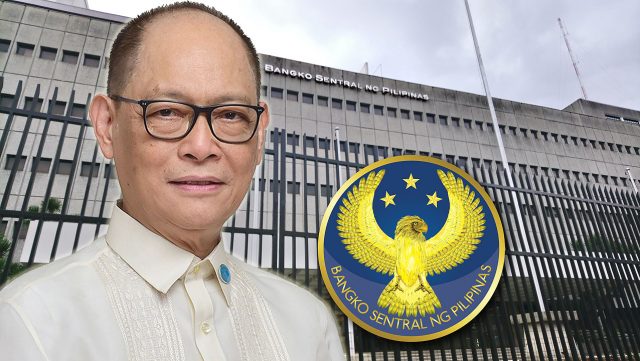
“We will continue to be patient and supportive of the efforts to sustain the recovery process,” Bangko Sentral ng Pilipinas (BSP) Governor Benjamin E. Diokno told the ABS-CBN News Channel. “There will be no drastic change in current monetary policy.”

The economic recovery remained fragile, Mr. Diokno said.

This year’s growth target has been cut to 4% to 5%, from 6% to 7% expected previously. But the downgrade was still a significant improvement from last year’s record contraction of 9.6%.

The central bank kept the rate on the overnight reverse repurchase facility at 2% for a sixth straight policy meeting on Aug. 12. 

Monetary authorities, which review key rates every six weeks, will hold their next meeting on Sept. 23. — Reuters

PAL returns 2 planes, postpones new deliveries

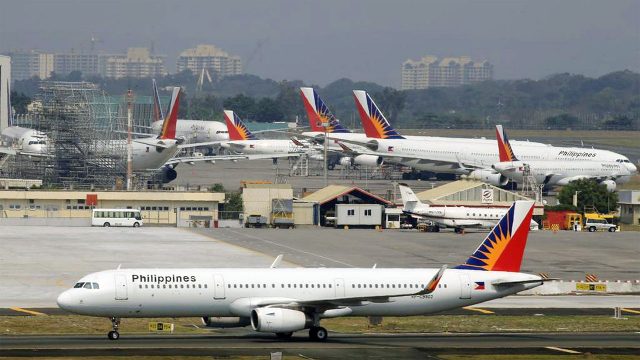
An airplane is seen on the runway at the Ninoy Aquino International Airport (NAIA) in Manila, March 14, 2016. — REUTERS/ROMEO RANOCO/FILE PHOTO

PAL Holdings, Inc., the listed operator of flag carrier Philippine Airlines (PAL), said it returned two aircraft to the lessor in July and delayed the deliveries of new aircraft, as the airline company continues to suffer from a decline in cash inflows amid the global health crisis.

“In July 2021, two aircraft were returned to its (PAL’s) lessor,” PAL Holdings said in its second-quarter report released on Monday.

“PAL’s aircraft delivery schedule was revised to align with the forecasted recovery of travel demand. 2020 and 2021 aircraft deliveries were postponed and rescheduled for delivery in 2026-2030,” it added.

The company also said that it is embarking on a financial restructuring plan to ensure business continuity.

On Aug. 10, global aviation data and analytics company Cirium said in an article posted on FlightGlobal, an aviation news and information website, that PAL’s “filing for US Chapter 11 bankruptcy protection has been further delayed after one of the banks providing financing for the process backed out.” Cirium cited two lessors “with exposure to the airline.”

The company said the health crisis and the measures taken by the Philippine and foreign governments disrupted its passenger operations, resulting in the temporary suspension and limited operations of both domestic and international flights.

“Consequently, the decline in revenue and cash inflows has put significant strain on the group’s liquidity position and on its compliance with certain loan covenants,” PAL Holdings added.

The listed company trimmed its second-quarter attributable net loss to almost P8 billion from a loss of P11.5 billion in the same period last year.

Revenues for the quarter from passenger, cargo, ancillary, and other business segments increased 106.4% to P9.7 billion from P4.7 billion in the same period in 2020.

However, expenses remained almost the same at P13.6 billion.

For the first half of the year, PAL Holdings cut its attributable net loss to P16.6 billion from a loss of P20.9 billion in the previous year.

Total revenues for the first six months dropped 51.1% to more than P18 billion from P36 billion in the same period a year earlier.

First-half expenses decreased 48.7% to P26.8 billion from P52.2 billion in the previous year.

PAL Holdings’ total capital deficiency was at P86.15 billion as of June 30, up by 26.5% “primarily due to the increase in deficit by 18.6% brought about by the consolidated total comprehensive loss for the first half of 2021.” — Arjay L. Balinbin

DMCI Power allots P3.5B for Masbate, Palawan plants

DMCI Power Corp., the off-grid unit of listed conglomerate DMCI Holdings, Inc., is investing around P3.5 billion to develop two off-grid projects with a total capacity of 27 megawatts (MW) in Masbate and Palawan.

In a regulatory filing on Monday, DMCI Holdings said majority of the amount or P2.7 billion will go to the construction of a 15-MW thermal power plant in Narra, Palawan, while P800 million will fund the development of a 12-MW hybrid solar-diesel power plant in Cataingan, Masbate.

“Target commercial operation of the 12-MW plant [in Palawan] is first quarter of 2022 while the 15 MW [in Masbate] is set to go online by second quarter of 2023,” the Consunji-led firm said.

Once online, the two power plants will increase DMCI Power’s installed capacity in the electricity missionary areas to 163.72 MW from 136.42 MW.

As soon as the Palawan plant is up, it will help lower the cost of power in the area, according to DMCI Holdings.

“These investments are in response to the government’s mandate to accelerate the exploration, development and utilization of renewable energy and indigenous fuel resources, thus decreasing our dependence on imported fuel,” DMCI Power Chief Operating Officer Antonino E. Gatdula, Jr. said in the filing.

DMCI Holdings fully owns DMCI Power, which was established to power up remote and off-grid islands in the Philippines.

DMCI Holdings earlier reported a second-quarter net income attributable to equity holders of P5.23 billion, up by more than threefold from P1.42 billion a year earlier, after registering higher earnings from its business segments.

Shares in DMCI Holdings shed 1.79% or 11 centavos to finish at P6.05 apiece on Monday. — Angelica Y. Yang