Home Blog Page 7254

DITO CME plans to build ‘hyperscaler’ data center

By Arjay L. Balinbin, Senior Reporter

DITO CME Holdings Corp. is looking to put up a data center in Clark to service global technology companies, its president said.

“We have been in talks with about three foreign interested partners,” DITO CME President and Director Ernesto R. Alberto told BusinessWorld in a recent virtual interview.

“We are in continuing discussions with foreign partners that will allow us to look at a business model to tap into the hyperscalers, because this [will determine] the viability of [our] investment [to] lure these big locators to the country. These hyperscaler companies serve their customers across… Asia-Pacific and ASEAN,” he added.

He noted it is just a matter of “timing” for the company to move to the next level of its plan, considering the pandemic.

“When the opportunity arises, I think what we can bring to the table in any partnership is we have the real estate, we [also] have internally accomplished it particularly with the telco…, and we have the local expertise that will deliver that,” Mr. Alberto said.

Data center hubs in the region, particularly in Singapore and Hong Kong, are facing challenges. Hong Kong faces geopolitical risks as a result of China’s National Security Law, while Singapore has issued a moratorium to freeze data center construction due to sustainability concerns and landmass shortage.

“There is… opportunity, not only by telcos but also standalone technology companies that are moving away from Hong Kong because they have over-invested there, such as Google and Amazon — particularly US companies — for reasons we already know, and they are looking at the Philippines, amongst many other countries, for data center space. That’s under discussions today,” Mr. Alberto said.

“It’s a good opportunity. It’s just a matter of timing and capital. We do have land assets particularly in Clark, with Udenna Land, Inc. owning the new central business district,” he added.

DITO Telecommunity Corp. and Udenna Land broke ground in April this year on the new telco player’s first data center in Clark Global City, which is poised to become the central business district of North and Central Luzon.

DITO CME, which owns 54% of DITO Telecommunity, handles the Udenna group’s investments in media, communications, entertainment, and information technology. It has three digital companies: Unalytics, which provides managed analytics services; Acuity Global, which curates media properties across platforms and provides media planning and buying; and Luna Academy, an online education platform aimed at equipping users with future-ready skills, credentials, and certificates.

On Friday, DITO CME shares closed 1.19% lower at P6.62 apiece.

As more Pinoys turn to online shopping, exclusive deals pepper 11.11 sale

‘Mr. Christmas’ Jose Mari Chan is Shopee’s Christmas sale ambassador.

SHOPEE can vouch for the fact that e-commerce has seen a substantial boost over the past year, and with the 11.11 sale set for Thursday, another boost can be expected.

“This year, the e-commerce industry saw a 7.6% increase in conversion versus 2020,” Martin Yu, Director at Shopee Philippines, said during a press conference on Nov. 3, citing a global special report from We Are Social and Hootsuite.

“Heavier shopper traffic has been translating into a spike of checkouts, an encouraging sign of how consumers have responded to the online shopping experience,” he said.

During the press conference, Shopee presented the bargains that shoppers can grab on 11.11 and again on 12.12. They also presented a new commercial by actor Jackie Chan, as well as introduced their Christmas sale ambassador, Mr. Filipino Christmas himself, singer Jose Mari Chan.

New Shopee users get a free welcome package, bills cashback, free shipping, 100% off vouchers, and ₱1 deals with their first purchase.  Mr. Yu pointed to these gifts as proof of the increase of the impact of e-commerce with Filipino shoppers. “Five million welcome gifts for new Shopee users have been redeemed since the start of the year,” he said.

He added that during the 9.9 sales, one out of every three shoppers was new to the platform. He also reported that eight million new local shops opened on Shopee.

The number of sellers and brands on Shopee increased by 60% in 2021, “proving the importance of scaling up digitization.” On the consumer side, Mr. Yu said that 64% of Filipinos surveyed said that had bought something online during the past week. “They turn to online shopping for their daily essentials,” he said.

DEALS ONLINE AND IN-STORE
Shoppers can look forward to exclusive deals from top brands such as Xiaomi, POCO, realme, Samsung, Nokia, Vivo, DJI, PerySmith, Deerma, Coocaa Home, and Bata Philippines during Shopee’s 11.11 sale.

Brands also stand to generate more in-store traffic through promotions from ShopeePay. Users can turn to Deals Near Me to check for special in-store deals from brands such as Puregold, National Bookstore, Fully Booked, Power Mac Center, The Generics Pharmacy, Family Mart, Lawson, Olympic Village, Shoe Salon, Potato Corner, Mary Grace, Bonchon, Papa John’s, Siomai House, and Fruitas Group of Companies.

Users can enjoy a quick and easy holiday shopping experience with Shopee’s Christmas in our Carts gift guides. They can get discounts up to 90% off on a wide range of branded gifts and bundles, from the latest gadgets to luxurious personal care items. They can also check out Shopee Mall for 10% off Mall vouchers, special deals on holiday gifts, and vouchers from their favorite brands. Highlights include 1-for-1 Deals, Early Platform Voucher Hunt, and Mega Midnight Sale, the Big Shopee Mall Sale on Nov. 8, the Big Electronics Sale on Nov. 9, and the Big Vouchers Sale on Nov. 10.

The 11.11 Christmas Sale TV Special, airing on GMA 7 and Shopee Live on Nov. 11, at 9:30 p.m., will showcase K-Pop stars NCT 127, as well as celebrities Jessy Mendiola, Aira Bermudez, Rocco Nacino, Klea Pineda, Andre Paras, and Gil Cuerva. Viewers stand a chance to win prizes and giveaways worth over ₱12 million, including two new house and lots and a car.

For more information on brands dropping their prices and other Shopee deals, visit https://shopee.ph/m/christmas-sale. JLG

Rates of Treasury bills, bonds may climb this week

BW FILE PHOTO

RATES of government securities could rise this week as yields at the secondary market climbed despite slower-than-expected inflation in October.

The Bureau of the Treasury (BTr) plans to raise P15 billion via the Treasury bills (T-bills) it will auction off on Monday, or P5 billion each in 91-, 182- and 364-day debt papers.

On Tuesday, the BTr will offer P35 billion in reissued 10-year Treasury bonds (T-bonds) with a remaining life of nine years and eight months.

Rates on the government debt to be auctioned off this week could track the slight climb in secondary market yields following the US Federal Reserve’s announcement of the start of the reduction of its $120-billion monthly asset purchases at $15 billion per month, despite inflation turning out lower than expected, Rizal Commercial Banking Corp. Chief Economist Michael L. Ricafort said in a Viber message over the weekend.

He said the three- to 10-year tenors posted the highest weekly rise, “reversing the previous week’s downward correction as the Fed finally announced details of the $15-billion tapering as widely expected, but an important signal for the market is the patient stance of the Fed before any rate hike, which supported market sentiment.”

Fed Chairman Jerome H. Powell last week said they could stay patient and keep rates low to support the economy as the job market remains weak.

Meanwhile, inflation eased to a three-month low in October amid a slower increase in food prices, the Philippine Statistics Authority reported on Friday.

Headline inflation settled at 4.6%, slower than the 4.9% median estimate of 21 analysts in a BusinessWorld poll.

The October figure was slower than the 4.8% in September, but faster than 2.5% a year earlier. Still, this was the third straight month inflation exceeded the 2-4% target of the Bangko Sentral ng Pilipinas (BSP) for the year. Inflation has topped the BSP target this year except in July.

This brought headline inflation for the first 10 months to 4.5%, faster than the 4.4% forecast by the central bank for the year.

On the other hand, a bond trader expects higher yields as the market awaits the results of this week’s auctions.

“The Fed taper and rates announcements were already priced in as it was well-communicated beforehand,” the trader said in a Viber message.

“What market is looking for now is how aggressive BTr will borrow in the coming auction after awarding the FXTN 5-77 at higher than forecast rates,” the trader said, referring to the last week’s auction where the government made a full P35-billion award of the reissued five-year papers even as its rate climbed. 

The bonds, which have a remaining life of four years and five months, fetched an average rate of 3.762% on Wednesday, up by 18.6 basis points (bps) from the 3.576% quoted for the tenor during the previous auction.

Tenders reached P46.65 billion, higher than the offer but lower than the P56.08 billion in bids fetched the last time these debt papers were auctioned off on Oct. 12, where the government made a full award.

At the secondary market on Friday, the 91- 182- and 364-day T-bills were quoted at 1.2164%, 1.4427% and 1.655%, respectively, while the 10-year bond ended at 4.9573%, based on the PHL Bloomberg Valuation Reference Rates published on the Philippine Dealing System’s website.

The government made a full award of the T-bills it auctioned off last week even as rates inched up ahead of the release of inflation data.

The BTr raised P15 billion as planned via the T-bills it auctioned off on Tuesday as the offer attracted P41.78 billion in bids, making it almost 2.8 times oversubscribed.

Broken down, the BTr borrowed P5 billion as planned via the 91-day T-bills from P13.08 billion in tenders. The three-month debt paper fetched an average rate of 1.13%, 1.1 bps higher than the 1.119% quoted in the previous auction.

It also raised the programmed P5 billion from the 182-day T-bills as the tenor attracted bids worth P14.94 billion. The average yield on the six-month debt stood at 1.395%, up 0.8 bp from 1.387%.

Lastly, the Treasury made a full P5-billion award of the 364-day securities as demand reached P13.76 billion. The one-year paper fetched an average rate of 1.613%, up by 0.7 bp from 1.606% previously.

Meanwhile, the last time the BTr auctioned off the reissued 10-year bonds on offer on Tuesday was Sept. 28, when it made a full P35-billion award from P73.59 billion in tenders.

The 10-year note fetched an average rate of 4.689% at that auction, higher than the 4.246% recorded in the previous offering and its 4% coupon rate.

The BTr plans to raise P200 billion from the domestic market in November, or P60 billion via weekly offers of T-bills and P140 billion from weekly T-bond auctions.

The government wants to borrow P3 trillion from local and external sources this year to help fund a budget deficit seen to hit 9.3% of the country’s gross domestic product. — Jenina P. Ibañez

BMW 520i Sport: Executive decision

PHOTO BY KAP MACEDA AGUILA

Keep calm and 5 on

IT’S HARD to argue against the BMW 5 as the quintessential executive sedan. In fact, perhaps the only thing missing from its cache of C-suite goodies is a clip-on tie. It’s an exaggeration, of course, but it’s accurate to say that the 5 is the de facto poster boy for corporate titans.

Sure, there are higher numbers in the BMW portfolio, but the 5 continues to be the more realistic, (and, really, more reasonably priced) aspiration for those who seek to convey that they’ve arrived. What also distinguishes this vehicle is that it does not call attention to itself, but rather commands it naturally without having to resort to bells and whistles.

The variant I got a chance to test was the 520i Sport, which now bears a discounted price of P3.49 million (from P4.29 million). Yes, that’s a whole lot of savings that you can even buy a reasonable mass market car with.

Underneath the hood of this 5 is a 2.0-liter BMW TwinTurbo four-banger serving up 184hp and 290Nm. It’s mated to a smooth-shifting eight-speed auto with Steptronic. Suffice it to say that there’s a lot of performance you can extract from this engine. Executives do need to overtake on demand, you see. There’s nary a sniff of turbo lag to be found. And for the times you get bogged down in traffic, the 5 can get downright miserly through an automatic start-stop system.

Whether you choose the driver’s seat (which methinks is the best seat in the house because, well, it’s a Bimmer) or any of the passenger spaces, there is ample room for your extremities and for collecting your thoughts and memories of the journey. If you’ve ever been cooped up in a claustrophobia-inducing, headroom-deficient ride, you know what I mean.

Aside from being spacious, the cabin of the 5 is tastefully appointed. While the piano black surfaces only too readily show dust and fingerprints, engineers and designers deserve style points for the legible, intuitive controls — which includes grippy dials for the AC. There’s also a laudable measure of restraint in how technology complements the driving experience and not overwhelms it. The so-called BMW Live Cockpit Plus allows access and control to key functions via the now familiar rotary controller, along with the touchscreen and/or voice control. And while there’s a learning curve to be surmounted, it’s a lot easier to hurdle compared to the previous system.

But I digress. Learning every single thing to customize and control to your liking is gratifying. For instance, you can choose from (count ‘em) 11 color schemes for the cabin lighting. Speaking of hues, the amber color the instrumentation takes at night is just signature BMW; it will bring tears to your eyes. And while the gauges and such are digital, they depict good-ol’-fashioned analog. Very tasteful, indeed.

The automatic (and very adequate) two-zone air-conditioning with extended contents should make short work of hottest of days. But just in case, there’s a nifty electric roller sunblind for the rear window, and mechanical roller sunblinds for the rear side windows. The driver and front passenger both benefit from electric seat adjustment — with a memory function for the driver. The system also gets Apple CarPlay, from where you can choose to blast music through the high-fidelity system.

A mix of highway and city driving (and remember that urban congestion is steadily going back to pre-pandemic levels) yielded at least eight kilometers per liter or better — not bad at all.

The Sport trim gets well-bolstered seats in Dakota leather, 19-inch V-spoke-type alloys with 245/40s in front and 275/35s in the back (all of which are also run-flats). Further good news (depending on your preference): the 5 still has the more normal interpretation of BMW’s kidney grille — unlike the polarizing “lungs” expected to creep into the lineup.

There’s a whole slew of safety features in the 5: air bags for the driver and front passenger (plus head and side bags), head air bags for the back, side impact protection, Isofix child seat mounting, anti-lock brakes, dynamic stability control, crash sensor, passive protection for pedestrians, automatic lock when driving away, and the aforementioned runflat tires with run-flat indicator.

On the outside, the BMW 520i Sport is fitted with LED headlamps, LED fog lights, park distance control in the front and rear, rear view camera, comfort access system, automated tailgate, and expanded exterior mirror package.

And because executives are also adept at sniffing out the best deals, BMW Philippines also features its now-standard five-year/200,000 warranty on the 5 Series.

So, if you’re ready for the effortless attention, and the trappings of success, then the 5 Series ought to be in your consideration set.

Medilines Distributors:  Growing, aging population drives healthcare growth

MEDICAL equipment distributor Medilines Distributors, Inc. is gearing up to grow as healthcare spending is expected to continue its upward trend, the company’s chairman said.

“We believe that there will always be demand for medical products, in as much as there will always be a patient needing care,” Medilines Distributors Chairman Virgilio B. Villar said in an e-mailed statement on Friday.

In a report by Ken Research, healthcare spending went up by a CAGR (compound annual growth rate) of 10.9% to P911.4 billion in 2020 from P489.1 billion in 2014. It is projected to grow by 11.2% to P1.5 trillion in 2025.

This takes into account the overall spending by the government as well as private healthcare units and household expenses.

“The growth of the healthcare sector is driven by a growing and aging population,” Medilines Distributors said, adding that the increase in incidences with non-communicable diseases and respiratory diseases in the country is also a factor.

Medillines Distributor is a distributor of medical equipment to private and public healthcare facilities across the country, offering products from brands such as Germany-based Siemens Healthineers for diagnostic imaging and B. Braun for dialysis equipment, as well as US-based Varian for cancer therapy equipment.

“Because of the alarming increase in Filipinos with serious diseases, there has been a huge demand for medical devices, particularly for the diagnosis and treatment of patients, thereby showcasing the promising growth prospects for the medical device industry in the Philippines,” the company said.

Medilines Distributors is preparing to go public with a P2-billion offer, selling as much as 825 million common shares for up to P2.45 apiece.

The company will offer up to 550 million common shares. The majority, or P743.1 million, of the proceeds will be used to repay debt, while the P541.5 million will be used for product procurement and to fund its plans to enter the medical consumables segment.

Medilines Distributors’ Mr. Villar will be offering as much as 275 million common shares, the proceeds of which will not be received by the company.

The company aims to conduct its offer period from Nov. 22 to Nov. 26, with a tentative listing date of Dec. 7 on the Philippine Stock Exchange. It will list under the ticker symbol “MEDIC.”

PSE President and Chief Executive Officer Ramon S. Monzon said previously the PSE is “pleased to see a company in this space tap the stock market for capital raising” after the healthcare industry was put at the forefront due to the pandemic.

As the year ends, market sentiment is boosted by the reopening of the economy amid lower coronavirus cases as well as improved economic data.  

First Metro Investment Corp. (FMIC) Head of Research Cristina S. Ulang said they expect the benchmark Philippine Stock Exchange index (PSEi) to finish the year within the 7,400 to 7,800 range.

“We think there is a chance of the market overshooting above 7,400. That’s due to looser quarantine restrictions we earlier anticipated based on the vaccination drive which is on the way to the targeted 70% of the population,” Ms. Ulang said in a Viber message on Saturday.

The index is near FMIC’s initial 7,400 year-end forecast, as market sentiment is boosted by optimism on economic reopening and a “tamed virus.” On Friday, the PSEi climbed 137.05 points or 1.90% to close at 7,340.77.

Rizal Commercial Banking Corp. (RCBC) Chief Economist Michael L. Ricafort said the PSEi’s gains in the past week were supported by lower inflation data and the improvement in the country’s exports and imports. — Keren Concepcion G. Valmonte

Luxury ditches the slash-and-burn for share-and-care

Gucci, through its Vault online concept store, is customizing some vintage pieces for resale. — VAULT.GUCCI.COM

“IF only we could find the dumpster before they light the match.”

That was the joke circulating a few years ago when it emerged that Burberry Group Plc had burned millions of dollars worth of pricey designer goods that it couldn’t sell.

But the practice of destroying unsold luxury products is no laughing matter. Tapestry, Inc.’s Coach apologized recently after a story broke on the social media platform TikTok about the US label slashing its handbags and dumping them.

High-end retailers have traditionally sought to destroy goods they couldn’t sell in order to preserve their exclusivity. It was deemed better for unwanted designer handbags, shoes and dresses to go up in smoke than to get marked down, end up in down-market stores, or be worn by the less affluent. Seeing a brand’s logo in any of these scenarios would jeopardize its value, so the thinking went.

To put it mildly, this view has gotten old. Brand cachet doesn’t just revolve around being exclusive anymore; consumers care more about inclusivity and ethics. Any monetary gain that might come from getting rid of excess supply is now outweighed by shoppers’ outrage at harmful practices. Millennials and Gen Z are most likely to be concerned about whether a brand pollutes or preserves the planet. France is banning the destruction of unsold non-food items next year.

Burberry was criticized by some investors in 2018 after it revealed in its annual report that it had destroyed £28.6 million ($38.9 million) worth of goods. Coach came under fire last month after a video suggested the company slashed bags that customers had returned to stores. Because they were deemed damaged, they could no longer be sold or donated, the company responded.

It’s hard to put a monetary value on what a brand gains by preventing goods from being sold through unofficial channels, and what it loses from a consumer backlash. But there are some clues.

Consumer sentiment toward Burberry, and the company’s overall reputation, dipped in July 2018 after the stock destruction issue emerged, according to YouGov’s BrandIndex. Coach’s brand buzz has also edged lower over the past few weeks.

In Sept. 2018, Burberry said it would end the practice of bag-burning and promised to increase efforts to reuse, repair, donate, or recycle unsold products. It also said it would no longer use real fur. These commitments helped Burberry’s brand value climb in 2019, according to consultancy Interbrand. Of course, Burberry also recruited a new designer in 2018, but its environmentally friendly policies likely also made a difference.

That’s because more shoppers, particularly younger ones, care about going green. According to Tensie Whelan, director of New York University’s Center for Sustainable Business, having a reputation for being environmentally friendly elevates clothing brands, as it does for Reformation and Patagonia. Shares in green sneaker-maker Allbirds, Inc. rose 93% on its first day of trading on Wednesday last week.

Luckily, there are a number of ways that fashion groups can make sure that, 1.) they don’t have too much leftover stock, and, 2.) they dispose of any excess supply ethically.

Preventing a glut starts with controlling inventory. According to McKinsey & Co., 40% of all apparel produced ends up being discounted or disposed of in some way. For example, companies including Gucci owner Kering SA, which prohibits the destruction of unsold products, are already investing in artificial intelligence to better predict how many dresses or handbags they will be able to sell.

Leftover goods can then go to a brand’s discount stores, private sales for employees, or donations to charities and fashion schools. Earlier this year, Coach started a program for goods it couldn’t sell or donate called Reloved, where damaged items could be rehabilitated and sold again. About 40% of stores give their damaged bags to the program, but the company says it’s committed to increasing that number and will no longer destroy returned merchandise that can’t be sold or donated.

Luxury groups are also reusing and recycling materials, such as the metal hardware on bags at Gucci and old sneakers at LVMH Moet Hennessy Louis Vuitton SE’s biggest brand, Louis Vuitton. A decade ago, Hermes International set up Petit H to create new items from ends of lines and leftover materials, including leather scraps and silk.

But fashion could go further.

Gucci, for example, through its Vault online concept store, is customizing some vintage pieces for resale. Why couldn’t the same approach be taken to unsold stock? Reconditioning items from past seasons in a creative way could turn them from discount to desirable. The rise of luxury resale platforms, such as the RealReal, Inc. in the US and Vestiaire Collective in Europe, creates an alternative channel to traditional outlet stores.

Perhaps the most striking stance was taken by Italian cashmere maker Brunello Cucinelli SpA, which donated unsold garments from the first half of 2020, estimated to be worth about $35 million, to those in need. Yes, such projects take effort and resources, but top-end groups on both sides of the Atlantic have enjoyed a rebound in sales in the wake of the pandemic. They can afford it.

Amidst a growing environmental and social consumer consciousness, donating unwanted luxury goods to the less fortunate is more likely to win over shoppers than alienate them. — Bloomberg

Agricultural output expected to come in flat in third quarter

PHILIPPINE STAR/MICHAEL VARCAS

By Revin Mikhael D. Ochave, Reporter

THIRD-QUARTER GROWTH in agriculture output is expected to be flat after typhoons disrupted production, analysts said.

Pampanga State Agricultural University Professor Roy S. Kempis said in a phone message that he projects growth to be negative to flat, weighted on the contraction side.

“I believe that growth figures will remain flat closer to a negative number between minus 1.5 to 0.5%; about minus 1.0%,” Mr. Kempis said.

The Philippine Statistics Authority is scheduled to release its third-quarter estimate for agriculture growth on Nov. 8, Monday.  

The agriculture sector posted growth of 0.7% in the third quarter of 2020 and contracted 1.5% in the second quarter of 2021.

For 2021, the Department of Agriculture (DA) is targeting growth of 2% for the industry.

“Production was still a challenge because of the weather disturbances. These challenges happen also because of the effects of 3rd Quarter syndrome, when productivity is reduced when the available production is more difficult to dry, as in the case of rice and corn,” Mr. Kempis said.  

“Livestock tend to get sick more in this quarter. Fishing is more difficult in stormy weather. On the other hand, the movement of goods and services improved with the easing up of lockdowns as vaccine supply substantially improved,” he added.

Mr. Kempis said the poultry subsector is likely to post growth as chickens are grown in climate-controlled areas.

According to the DA, Typhoon Jolina caused an estimated P1.36 billion worth of losses to the industry.  

Another weather disturbance that resulted in significant agricultural losses was the rains brought by the southwest monsoon and enhanced by Typhoon Fabian, which caused P698.53 million worth of damage.   

Rolando T. Dy, executive director of the Center for Food and Agri Business of the University of Asia and the Pacific, said growth in the farm sector is expected to be flat in the third quarter.

“For me, (the growth) is flat. The (third) quarter is affected by seasonality. The subsectors of livestock (hogs) and poultry will not recover,” Mr. Dy said in a mobile phone message.

Federation of Free Farmers National Manager Raul Q. Montemayor said in a mobile phone message that the growth rate of the agriculture sector could be negative due to the effect of the typhoons.  

“The gross value of production at constant 2018 prices for the first three quarters of 2020 was P1.30 trillion. In order to equal this in 2021, the value of production for the third quarter should be around P439 billion, or about 5.2% higher than the 3rd quarter output in 2020. This is a tall order, particularly given the spate of typhoons we encountered during the third quarter,” Mr. Montemayor said.  

Southeast Asian Regional Center for Graduate Study and Research in Agriculture Director Glenn B. Gregorio estimated that the farm sector will post improved output in the third quarter.

“I am hopeful that the overall value of production in the Philippine agriculture and fisheries sector would register a positive growth around 0.7 to 1.0%,” Mr. Gregorio said in a mobile phone message. 

“I have been observing positive growth in our crops sector which also has a high probability of achieving positive growth during this quarter as well. The typhoon months of the third quarter did not affect the production especially in rice and corn causing an expected increase in the value of production in the crop sector,” Mr. Gregorio said.  

Mr. Gregorio said the livestock subsector is expected to decline as it is still affected by the African Swine Fever outbreak.

He said the government should institutionalize biosecurity measures for the livestock sector.

“I would like to emphasize again the importance of instituting biosecurity measures for our livestock sector as we aim for a more system intervention that will overall strengthen its ability to respond to current and future diseases. In addition, a more action-oriented disease surveillance system would need to be actively promoted and instituted by regulatory bodies,” Mr. Gregorio said.

Physical remittance network remains important despite rise in online channels

THE PHYSICAL remittance network will continue to be relevant even as digital channels grow amid habits and some gaps that still make online transactions difficult, according to Western Union.

“In future-proofing your business, you need to have a digital strategy. But we’re not saying that retail will just be left behind,” Jeffrey D. Navarro Western Union’s head for the Philippines, Malaysia, Brunei & Indochina, said in an online interview.

“Our long-term view is that it (retail network) will continue to be substantial — it can also continue to grow. We don’t think that the growth may be as fast compared to digital, but retail will continue to be significant in terms of performance,” he added.

The central bank wants 50% of all transactions done online by 2023.

Mr. Navarro said 30-35% of their transactions are sent through digital channels, while 65% continue to be coursed through retail.

He said sender side economies like North America, Australia and Singapore are becoming more reliant on digital transactions. Meanwhile, he said retail remains huge in the Middle East and most of ASEAN.

“What we saw year on year is the percentage contribution of digital is growing and it really accelerated in the last few years because of the pandemic, but retail remains to be significant in the portfolio,” Mr. Navarro said.

He added that ensuring migrant workers have access to the “nakasanayan” or what they’re used to is also important, especially for Filipinos.

“When we go abroad, even though some of these [digital] facilities may be available, there’s nothing wrong if I’m using this certain service the same way. And sometimes, until something really inconvenient happens, we never shift,” he said.

The need to keep both retail and digital channels is also significant in a country where financial inclusion is still an issue. Mr. Navarro noted that while account accessibility in the Philippines has been increasing, it is still far from 100%.

“There is still the portion of the population that still needs it in cash, while there is also a growing percentage of the population who can also facilitate and get it via digital channels or bank accounts,” he added.

Western Union earlier this year teamed up with UnionBank of the Philippines, Inc. and Pera Hub to allow remittance recipients with the option to claim their cash in real time through UnionBank’s online app.

Mr. Navarro said they also have working partnerships with GCash, PayMaya Philippines and Coins.ph to let receivers transfer the money sent to them straight to their e-wallets.

He said they are keen to build more partnerships to expand Western Union’s offerings, taking advantage of its strength as a cross-border platform.

“We’re always monitoring the different players in the fintech space, including the top banks, because we want to also ensure that we partner with them in putting these services in their digital offering. So that’s going to be the strategy short to medium term,” he said. — Luz Wendy T. Noble

Powertrains and promises

Geely intends to have BEV, HEV, and long-range PHEV vehicle models as the core of its product offerings. — PHOTO FROM GEELY

Geely looks to get ahead of the future

THE GEELY Auto Group — which by now is no stranger to the Philippine motoring public — very recently revealed some amazing news about its big plans for the future.

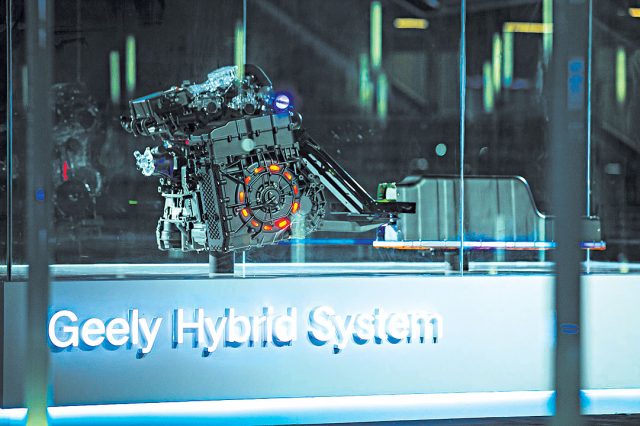
Firstly, it officially launched a new global powertrain brand, Leishen Power, and with it, a new, world-class modular intelligent hybrid powertrain platform, called Leishen Hi-X. The latter carries not only an engine with ultra-high thermal efficiency (at an impressive 43.32%), but also the world’s most advanced three-speed dedicated hybrid transmission (DHT). Moreover, the Leishen Hi-X will boast of full powertrain firmware over the air (FOTA) updating capabilities, alongside a 40% reduction in fuel consumption (per its NEDC rating). Having said all that, the Hi-X is now the industry’s most adaptable and expandable powertrain in terms of space, levels of electrification and power delivery.

Think about it. This new intelligent hybrid powertrain platform can soon be used for vehicles in the A- to C-segments for any of the models carried by brands within the Geely Auto Group. Though the first models which it says will be bestowed with the Leishen Hi-X platform powertrain system are those under its “Star series,” namely: the Xing Yue (Tugella) and Xing Rui (Preface) vehicles.

Secondly — and quite timely for the 2021 Glasgow International Climate Change Conference that is currently ongoing in Scotland — the Geely Auto Group also officially unveiled its Smart Geely 2025 Strategy. It is basically the group’s road map that outlines the future development of more electric vehicles and sustainably developed central components for vehicles. Among the highlights of this disclosure is how Geely intends to have BEV, HEV, and long-range PHEV vehicle models as the core of its product offerings.

Furthermore, the group also wishes to underline its unwavering commitment toward sustainable development, and having said so, wish to reduce total emissions by 25% by the year 2025 (that’s almost just three years from now!). Ultimately, the brand wishes to achieve carbon neutrality in its business by 2045.

China is the world’s biggest source of greenhouse gas emissions, and in its updated pledges during the ongoing Glasgow Climate Change Summit, it includes promising its country’s emissions to be cut to “net zero” by the year 2060. The Geely Auto Group definitely appears to be in line with achieving this goal, if not already ahead of schedule.

Both the announcements of the Smart Geely 2025 Strategy and the launch of its new Leishen Power brand represent the group’s acceleration towards its ideal of becoming a technology-led, global automotive group committed to technological innovations. Of course, it doesn’t hurt that this is also forecast to boost Geely Auto’s sales (across the Geely Auto, Lynk & Co., Geometry, and Zeekr brands) to 3.65 million units by 2025. In case you are not familiar, Zeekr is its premium electric vehicle brand, and it already aims to contribute about 650,000 units to the Group’s annual sales figure by 2025.

Furthermore, Geely sees itself focusing on developing its markets in the Eastern Europe, Middle East, Southeast Asian, and South American markets. It plans to introduce new energy products to the EU and to Asia-Pacific markets, as well as expand its presence in Russia, Australia, and New Zealand.

By 2023, the Geely Auto Group will also be launching a new battery-swapping mobility brand, and alongside it five new smart “battery-swapping” electric models. Also by 2023, Geely plans to begin its mass production of silicon carbide power modules for its 800V car technologies. So far, that’s already a lot of great things to watch for from the forward-thinking Chinese multinational automotive company headquartered in Hangzhou.

In a nutshell, Smart Geely 2025 capitalizes on three smart systems to seamlessly achieve its ambitious goals: smart power, smart manufacturing, and smart service. Technology has always been a main driving force behind Geely, and it sure looks like it’s all primed to bring the future of automotive tech to its consumers.

Aboitiz Group sees growth for business units

ABOITIZ Equity Ventures, Inc. (AEV) is optimistic about the growth of its business units, including its land, infrastructure, and food firms.

AEV expects its property business, AboitizLand, Inc., to exceed its year-end target by 10%, closing at P4.2 billion. The listed company sees this as AboitizLand’s “strongest performance in history,” owing to a shift in consumer preferences during the lockdown.

On the back of increased construction activity and stronger sales, AboitizLand’s residential business contributed 73% of total revenue.

“AboitizLand sales continue to perform strongly, with our 2021 target in reservations already achieved as of [the third quarter],” David L. Rafael, AboitizLand president and chief executive officer (CEO), said at a briefing on Thursday last week.

“We have generated P3.7 billion, an 89% increase versus the previous year, resulting from improved sales operations across the different projects and continued efforts in building up sales momentum,” he added.

The real estate firm will also be working with Aboitiz-led UnionBank of the Philippines, Inc. to develop an artificial intelligence (AI)-powered sales program to address its problems on forfeitures.

“We’re developing a program using AI that will allow us a reasonable expectation of a buyer given certain parameters, given certain information of their probability of forfeiting their accounts. That should help us in reducing cancelation of sales,” Mr. Rafael said.

Meanwhile, Aboitiz InfraCapital, Inc. said the first phase of its LIMA estate’s industrial expansion is “substantially complete” and that 80% of its inventory has been reserved.

Phase 2 construction, which will add 49 hectares to its inventory, will start in January next year.

Aboitiz InfraCapital President and CEO Cosette V. Canilao also said the unit is “assessing the opportunity” to bid for PLDT, Inc.’s telecommunications towers via Unity Digital Infrastructure, Inc.

For its part, food holding firm Pilmico & Gold Coin Group said it will open two new The Good Meat physical stores before the end of the year, bringing its total to three.

The food group also announced the completion of mills in Malaysia and Vietnam. It also aims to complete its warehouse expansion in Indonesia by the first quarter of 2022.

“Once completed, the facility will help improve efficiencies, stability of production, and reduce the need for external warehouse dependencies,” Pilmico President and CEO Tristan S. Aboitiz said.

The group has already begun building new mills in Vietnam and China.

AEV said on Thursday it expects to complete Pilmico’s third breeder farm in Nueva Ecija by June next year. It will have a 2,500-sow level capacity.

AEV earned P19.5 billion in core net income from January to September, up 133% year on year, while its consolidated EBITDA (earnings before interest, taxes, depreciation, and amortization) increased 28% to P49.5 billion.

Meanwhile, listed Aboitiz Power Corp. accounted for 58% of total income contributions in the first nine months of the year, followed by banking arm UnionBank with 26%, Pilmico Foods Corp. with seven percent, Aboitiz InfraCapital with six percent, and AboitizLand with three percent.

“If the trends hold up — our business units have been performing well [while] our EBITDA has been growing quarterly — I think that bodes well for us,” Manuel R. Lozano, chief finance officer of AEV, said.

On Friday, shares of AEV at the stock exchange climbed 0.88% or 45 centavos to close at P51.45 apiece.

Hastings Holdings, Inc., a unit of PLDT Beneficial Trust Fund subsidiary MediaQuest Holdings, Inc., has a majority stake in BusinessWorld through the Philippine Star Group, which it controls. — Keren Concepcion G. Valmonte

Company teaches how to do live selling online

TECH STUDIO

MANY people have fought over a bag or a book during a social media live selling gig, where shoppers can tune in to a livestream while a host displays their wares (sort of like an auction). But for those interested in being on the other side of the camera, a company which started in 2019 has studios and training programs for live sellers and brands to showcase their items for better exposure and sales.

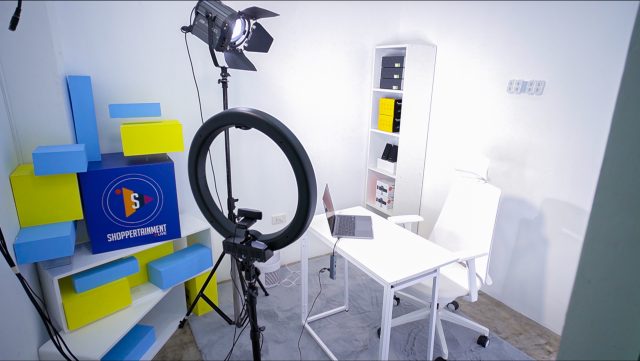
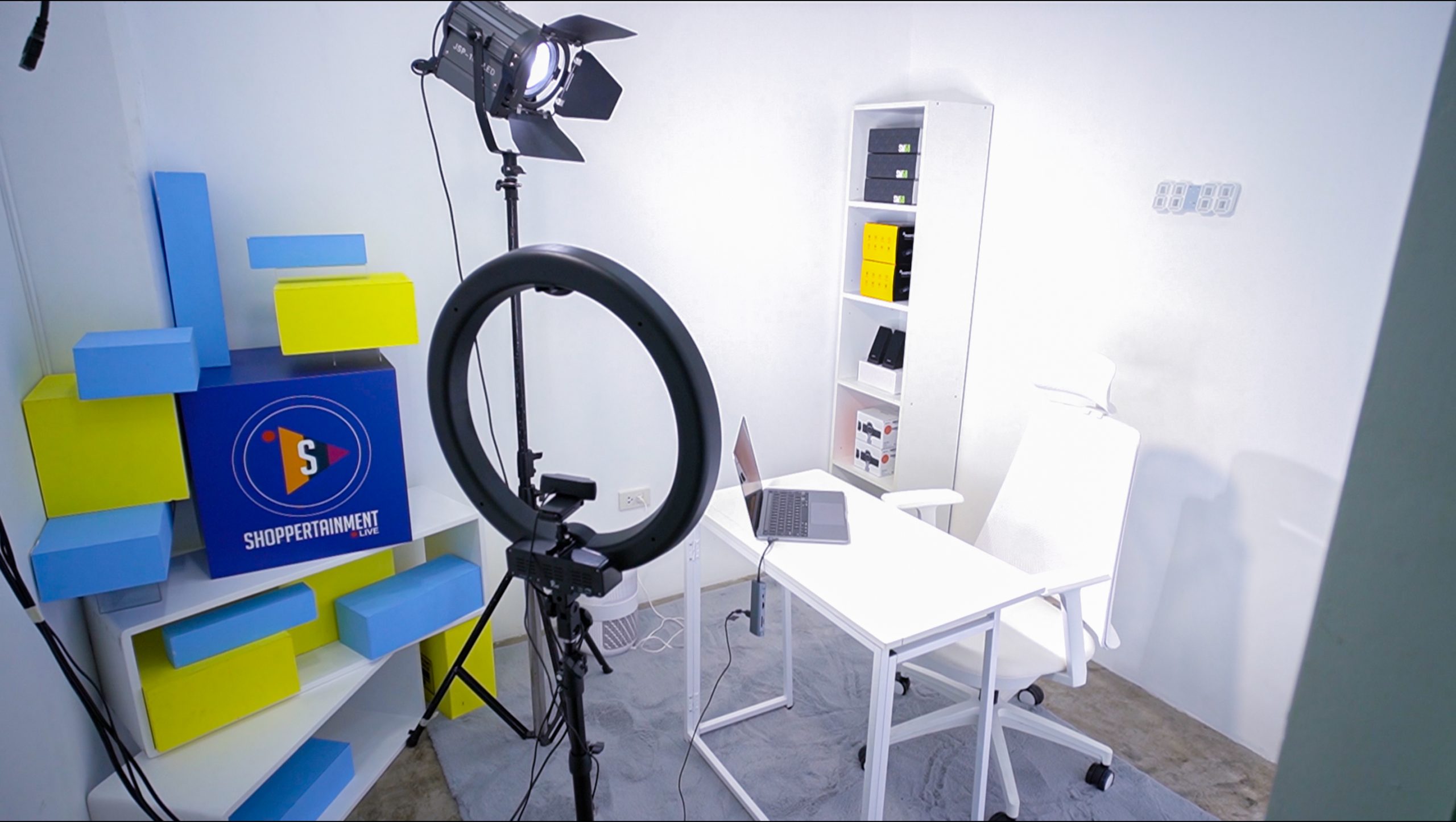
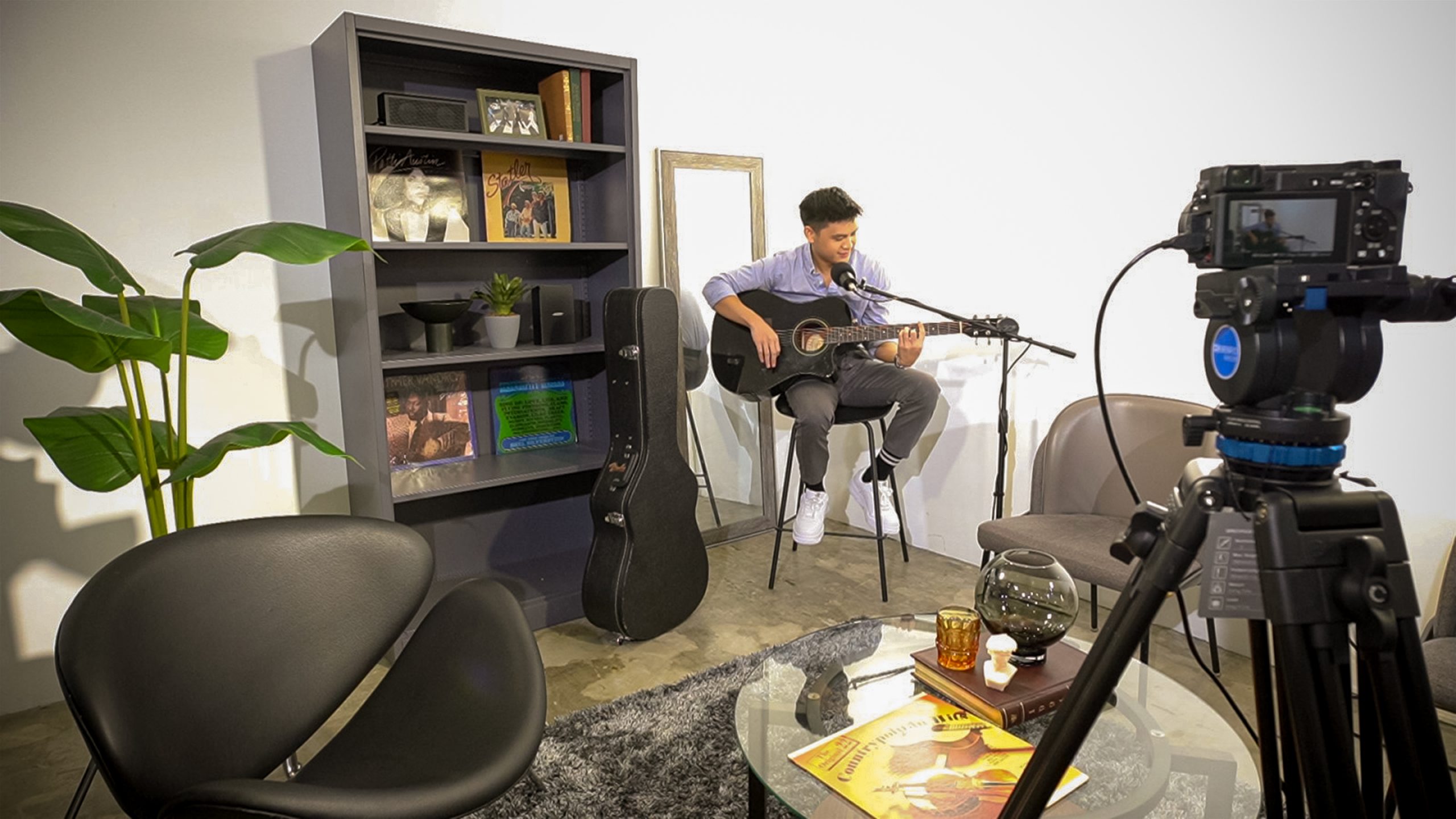
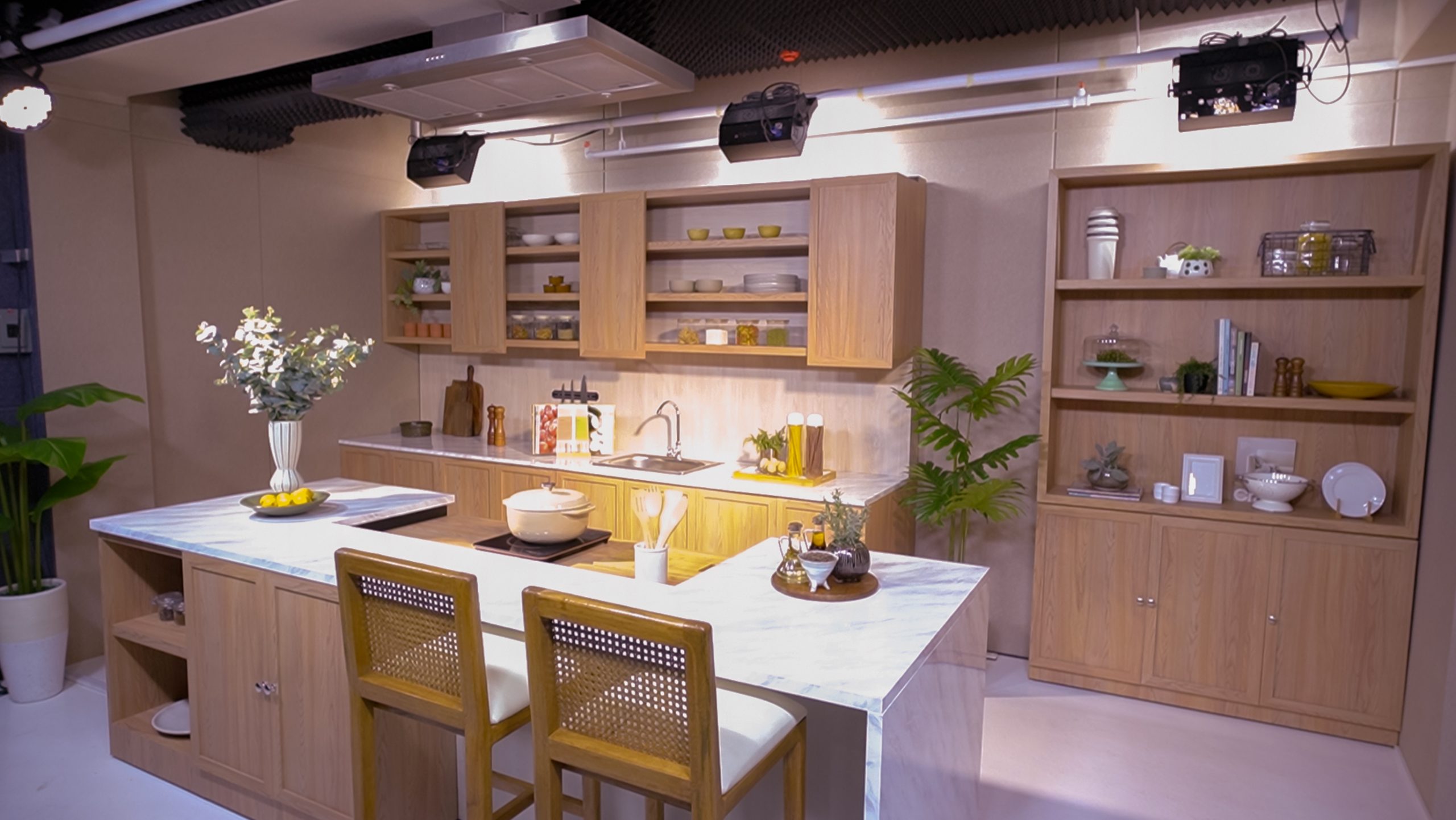
Hiyasmin Neri-Soyao, Shoppertainment Live CEO and former home shopping television host, opened her own selling studio in 2019 — a rudimentary one then with just a blanket and a ring light, she said during a press conference on Oct. 20. In the intervening two years, they’ve upgraded a lot, with seven studios — called “Livestyle” studio sets — in Quezon City which are equipped with different features for different categories: style studios for fashion and beauty, kitchen studios for cooking and home appliances, lifestyle studios for talk shows and homecare, technology studios for mobile and gadgets, and music studios and recreation studios for entertainment.

“With more studios, we expect more action for the market. The team’s confidence stems from handling the smallest local businesses to the biggest global brands as part of our roster of clients. Shoppertainment Live’s strength is making products sellable, handling diverse products such as cosmetics, clothing, electronics, and everything in between,” she said in a statement.

Shoppertainment Live enables big advertising agencies, multinational companies such as Unilever, Del Monte, etc., and e-commerce giants, namely Lazada and Shopee, to properly sell their products in an online broadcast setup, with in-house presenters from their talent pool.

During the press conference, she pointed out that in China during the pandemic’s early days in 2020, the live selling business earned $168 billion in revenue.

As for their team, they’ve done about 1,000 livestream e-commerce campaigns, partnered with 150 brands, and hit an average between 80-100 livestreams every month.

In a statement, she said, “Shoppertainment Live has seen 200% growth from its numbers last year in terms of the demand for livestreams from brands.” During the press conference, she said, “When you put it on social media, most of the people would really look for entertainment. When it comes to e-commerce platforms, they really have more intent to buy.”

Shoppertainment Live also launched an incubation program for influencer sellers (who are called “influensales”) through the Shoppertainment Academy, a company initiative that educates and equips Shoppertainment Live presenters to be sale-centric, entertaining, and engaging to the market.

Lawrence Lee, the company’s Chief Broadcast Officer, said that the Shoppertainment Live studios have the capability to produce 50 livestreams in a 12-hour day.

Mr. Lee, who once produced and directed home shopping TV broadcasts through ACJ O Shopping that once aired on ABS-CBN, said that during his stint on ACJ O Shopping, he had been sent to the South Korean headquarters of O Shopping (by home shopping company EJ ENM). There, he learned how to demonstrate a product properly. “There’s an art behind showcasing a product onscreen — how to sell and be creative the right way.” And that is just one thing that Shoppertainment Academy will teach. — JL Garcia

Indigenous community ventures into Cardava banana to expand income from traditional crops

BANGSAMORO.GOV.PH

UPLAND FARMERS in Maguindanao, mostly members of the Teduray indigenous people, have started developing an initial five-hectare area to plant the Cardava banana variety to diversify their income sources away from traditional crops such as rice and corn.

“I hope that this will encourage other people to go into Cardava planting (and not just Cavendish which is the traditional export variety) because there is also available market and good income for Cardava,” Ishak V. Mastura, chair of the regional Bangsamoro Board of Investments (BBoI), said following the Oct. 29 groundbreaking ceremony for the project.

The BBoI helped forge a partnership between Datucampong Banana Plantation, the new investor, and Usman Banana Plantation, the source of Cardava seedlings which provides technical as well as marketing assistance.

Datucampong is planning to develop a 50-hectare area for Cardava.

Cardava, called kamison in Maguindanao and more commonly known as saba in other parts of the country, is usually used for cooking and processing. It is also exported frozen in vacuum packaging.

“We are also eyeing future ventures to develop 150 hectares of Cavendish Banana Plantation here in the area that will generate at least 250 jobs, mostly for the local resident farmers,” Mr. Mastura added.

In August, the BBoI held a forum for farmers and residents of South Upi, North Upi and Datu Odin Sinsuat in Maguindanao to present agribusiness opportunities and available assistance to farmers. — Marifi S. Jara