Home Blog Page 7220

RCBC books higher profit in 2nd quarter

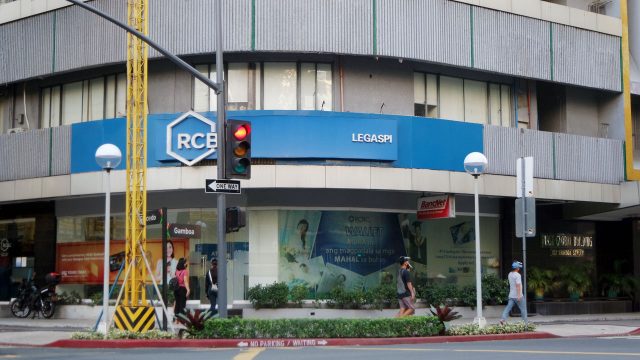
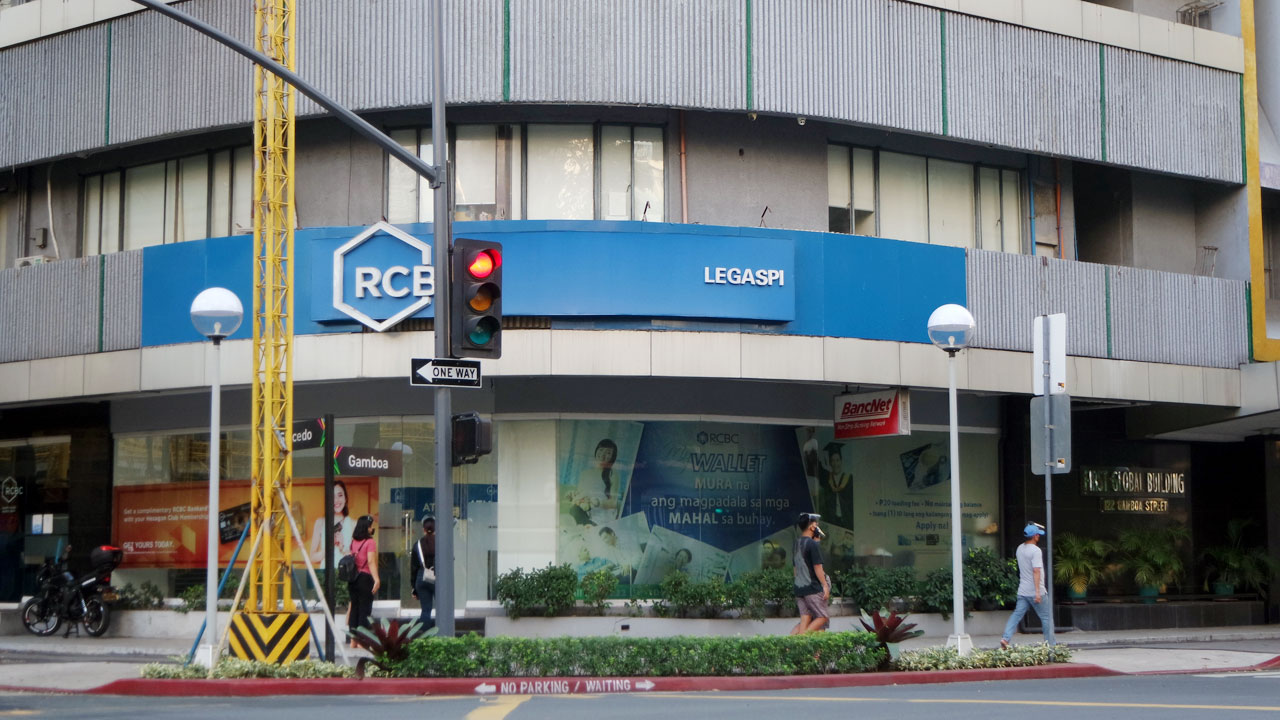
RIZAL Commercial Banking Corp. posted a higher net profit in the second quarter. — BW FILE PHOTO

RIZAL COMMERCIAL Banking Corp.’s (RCBC) net profit more than doubled in the second quarter, supported by an increase in its net interest income and lower provisions for loan losses.

The bank’s net income in the second quarter stood at P1.747 billion, surging by 117.83% from P802 million in net earnings recorded a year earlier, based on its financial report released on Monday.

This brought the bank’s net profit in the first half to P3.327 billion, up 7% from the P3.11 billion booked in the same period a year ago.

“Despite lower trading and foreign exchange gains, our core income is gaining momentum to support the bottom line,” RCBC Corporate Planning Head Ma. Christina P. Alvarez said at an online briefing.

The bank’s first-half performance translated to a return on equity of 6.55%, down from 7.43% a year ago, while return on assets also slipped to 0.84% from 0.86%.

RCBC’s net interest income in the second quarter increased by 9.6% to P7.118 billion from P6.494 billion, backed by the 30.7% decline in its interest expenses to P2.111 billion from P3.049 billion a year earlier.

Its lower expenses helped offset the 3.29% drop in its interest income to P9.229 billion from P9.543 billion, which was mainly due to a 7.8% decline in earnings from loans and receivables to P8.109 billion. Meanwhile, income from investment securities rose by 85.8% to P840 million.

RCBC’s net interest margin was at 4.08% as of June from 4.28% in the comparable year-ago period.

Meanwhile, non-interest income by fell 61.4% to P1.685 billion from P4.371 billion a year earlier, mainly dragged by trading gains which slumped by 95% to P163 million. On the other hand, services fees and commissions climbed 49.2% to P1.04 billion, while the bank recorded foreign exchange gains of P28 million, reversing the P43-million loss booked a year ago.

“Trading and foreign exchange gains were significantly higher in 2020, and we do not expect the same levels of trading gains in 2021,” Ms. Alvarez said.

On the other hand, other operating expenses inched up 0.3% to P5.473 billion in the second quarter from P5.454 billion a year ago.

Provisions for impairment losses declined by 61.24% to P1.396 billion in the second quarter from P3.602 billion.

RCBC’s loans and receivables grew 3.6% to P497.851 billion as of June from P480.282 billion in the same period of 2020.

Ms. Alvarez attributed this growth to a rise in corporate and small- and medium-sized enterprises (SME) loans. She said they will continue to target top corporations, select SMEs and select areas outside Metro Manila.

As its portfolio expanded, the bank’s nonperforming loan (NPL) ratio also inched up to 3.25% from 2.24% a year ago.

RCBC Head of Credit Management Group Benett Clarence D. Santiago said the bank’s NPL ratio has likely already peaked, as it has been declining as of July.

He added that although the fresh lockdown poses a risk to the bank’s performance, the rate of vaccination should help “to compensate in a big way.”

Meanwhile, on the funding side, RCBC’s deposit liabilities increased 19.8% to P598.145 billion as of June from P499.42 billion in the same period of 2020.

The bank’s assets rose by 18% to P845.8 billion as of June from 718.752 billion the year prior.

Its capital adequacy ratio stood at 15.07% as of end-June, up from 13.87% a year ago, while its common equity Tier 1 ratio was at 11.84%, down from 12.99% last year. Both remained above the minimum regulatory requirements.

As of June, RCBC had a total consolidated network of 434 branches, 1,272 automated teller machines, and 1,535 ATM Go terminals.

RCBC’s shares closed at P19.79 apiece on Monday, up by 18 centavos or 0.92% from its previous finish. — L.W.T. Noble

Free Guy debuts at No. 1

RYAN REYNOLDS in Free Guy (2021)

LOS ANGELES —  Despite concerns the Delta variant would keep moviegoers at home, Ryan Reynolds’ sci-fi action-comedy Free Guy had a better-than-expected start at the US box office.

The movie, from Disney and 20th Century Studios, collected $26 million from 4,165 North American theaters. Given its production budget above $100 million, those ticket sales wouldn’t be much to celebrate in pre-pandemic times, but isn’t a bad result as a plague sweeps the globe.

Overseas, Free Guy amassed $22.5 million for a global tally of $51 million.

Free Guy marks an interesting test for the film exhibition industry because it’s playing exclusively in theaters, which is a rarity these days. Many high-profile films that premiered during the pandemic, such as Marvel’s Black Widow and The Suicide Squad, were available on streaming platforms on the same day as their theatrical debuts. The few films offered only in theaters, like Universal’s F9, Emily Blunt and John Krasinski’s follow-up A Quiet Place Part II and Paramount’s G.I. Joe origin story Snake Eyes, were each sequels in popular film franchises, unlike Free Guy, which is based on an original concept and isn’t part of an existing movie universe.

This weekend’s other new nationwide releases, Sony’s thriller Don’t Breathe 2 and MGM’s Aretha Franklin biopic Respect, each arrived in line with expectations, though neither did much to galvanize ticket buyers. — Reuters

Home prices in world’s most expensive market break record

A STAR Ferry boat crosses Victoria Harbour in front of a skyline of buildings during sunset. Hong Kong, China June 29, 2020. — REUTERS/TYRONE SIU

HONG KONG’S home prices jumped to a record high, joining other global real estate markets that are soaring on low mortgage rates and rising demand as the pandemic slowly recedes.

Values for resale houses rose 0.65% for the week ended Aug. 8, according to Centaline Property Agency Ltd., which started tracking prices in 1993. The last record for the firm’s price index was set in mid-2019 at the beginning of anti-government protests. Residential property values have increased 8.6% since the beginning of the year.

Outsized demand, limited supply and low borrowing costs have fueled the world’s most expensive property market even amid concerns about the city’s future after the protests and the introduction of a national security law by China last year.

The abundance of liquidity has also resulted in soaring prices in other major financial centers around the world. US residential property prices jumped the most in 30 years in April, with even more dramatic rises in many suburban and rural areas where bidding wars are common. Home prices in New Zealand, one of the world’s hottest markets, have risen for 31 straight months.

The rising prices also signal that a potential exodus of residents to the UK via a new visa program hasn’t hurt the real estate market in Hong Kong.

In addition to the strong demand from local buyers, mainland Chinese investors are helping boost the market. They made up 11.2% of purchases by value in the first four months of 2021, up from 10.5% in the same period last year, according to Midland Realty.

Prices are expected to keep rising. Cushman & Wakefield expects home values to climb another 5% in the second half of the year. — Bloomberg

Oriental Petroleum profit dips on higher costs

LISTED oil exploration firm Oriental Petroleum and Minerals Corp. said its second-quarter net income fell by around 43% to $827,703 from a year-on-year level of $1.45 million, after registering higher costs in petroleum operations.

Costs incurred in petroleum operations reached $623,366, higher by 18% versus the $525,904 recorded in the same period last year, according to the company’s quarterly report filed with the local bourse on Monday.

Expenses in petroleum operations included petroleum production costs, and a line item on depletion, depreciation and amortization.

On the other hand, Oriental Petroleum’s revenues during the three-month period ending June reached $1.11 million, up by more than threefold compared with $333,946 in second quarter last year.

The firm is engaged in the exploration, development and production of petroleum and mineral resources. Its subsidiaries include Oriental Mahogany Woodworks, Inc., Oriental Land Corp. and Linapacan Oil Gas and Power Corp.

Shares of Oriental Petroleum decreased by 8.33% to finish at P0.011 on Monday. — Angelica Y. Yang

AgriNurture profit down despite higher sales

AGRINURTURE, Inc. (ANI) recorded a 74.8% decline in its net profit to P82 million for the second quarter despite higher revenues.

The listed firm said in a stock exchange disclosure on Monday that its net revenue during the quarter rose 14.9% to P1.11 billion. Cost of sales also increased 19.4% to P943.12 million.

For the first half, the company’s net profit dropped to P122.07 million from P356.99 million a year ago.

Net revenue for the six-month period rose 29% to P2.31 billion compared with the P1.79 billion in the previous year. Costs of sales also climbed 36% to P1.98 billion.

From the total net revenue, Philippine operations reached P1.07 billion, up 5.7%, while revenue from foreign operations improved 58.7% to P1.25 billion.

“For the first six months of 2021, Philippine operations contributed 46% while sales from foreign operations accounted for 54% of consolidated sales,” ANI said.

ANI said its export sales for the first half rose 9% to P883.1 million resulting from the stable selling prices of banana and coconut juice in the international market, continuous supply of raw materials, and higher demand especially in the Chinese market.

“Local distribution sales posted a decrease of 4.5% to P177.52 million for the six months from P185.87 million for the same period in 2020. Sales decreased significantly especially during the start of the enhanced community quarantine,” ANI said.

In effort to improve operations, the company launched its own e-commerce platform via its ANI Express website and mobile application, which allows customers to order the company’s products and delivered to them.

“The group is also launching new products such as plant-based meat, non-dairy ice cream, and big chill healthy drinks in cans for local and export distribution which are expected to start to record double digit growth for the rest of the coming quarters,” ANI said.

“Consolidated operating expenses for the first two quarters of 2021 amounted to P156.14 million down from P222.37 million for the same period last year, due to the pandemic issue where the retail and franchise and Hong Kong operations of the group were shut down since the start of implementation for a lockdown,” it added.

On Monday, shares of ANI at the stock exchange rose 0.33% or two centavos to end at P6.12 each. — Revin Mikhael D. Ochave

PhilRatings gives PRS A grade to Nat Re

THE National Reinsurance Corporation of the Philippines (Nat Re) obtained a PRS A financial strength rating with a “stable” outlook from local debt watcher Philippine Rating Services Corp. (PhilRatings).

The country’s sole local reinsurer said in a press release that its latest rating indicates the company’s “strong financial security” while a “stable” outlook meant this may be maintained in the next 12 months.

It said PhilRatings took into account the company’s “solid market franchise, shareholders of good standing, experienced management and sound investment portfolio” for its assessment.

Nat Re, however, remains more vulnerable to potential adverse business conditions compared to other insurance companies with a higher rating, PhilRatings said.

Aside from being the only reinsurer in the country, Net Re also has an advantage granted by the law where it can take up at least 10% of all outward reinsurance business of local insurance companies.

“This gives Nat Re significant access to domestic reinsurers’ business, and also a broader view of their reinsurance requirements. The company’s marketing strategy is supported by its technical know-how, industry track record and familiarity with the domestic mark,” it said.

State-owned Government Service Insurance System (GSIS) is its biggest shareholder with a 25.7% stake in the firm.

Other major shareholders of Nat Re includes the Bank of the Philippine Islands (BPI) and MICO Equities, Inc. (MEI) with 13.7% and 12.9%, respectively.

The national reinsurer saw its net profit drop by 24% to P120 million in 2020 from P157 million in 2019 due to lower investment income. — BML

Entertainment News (08/17/21)

FACEBOOK.COM/GMAPLAYLIST

GMA Playlist to launch new talents

GMA Music has created a sub-label, GMA Playlist, targeting millennials and GEN Z fans. The lineup of young GMA artists in the label are Mikee Quintos, Arra San Agustin, Anthony Rosaldo, Crystal Paras, Denise Barbacena, Faith Da Silva, Jeniffer Maravilla, Kaloy Tingcungco, Kim De Leon, Lexi Gonzales, Shayne Sava, Mark Herras, and Seb Pajarillo. “The GMA Playlist sub-label was born out of our passion to contribute to the OPM industry. It is also a venue for us to release original songs and have them performed by our untapped singers of the network. We also give our listeners an alternative to their usual playlists,” GMA Senior Manager for Music Production Section Racquel S. Gacho said in a statement.

Paolo Sandejas releases cover of disco song

FILIPINO singer-songwriter Paolo Sandejas has released a cover of the 1980s disco song “Never Knew Love Like This Before.” The originally version by Stephanie Mills made it to the US Billboard Pop Singles Chart and won Best R&B Song at the 1981 Grammy Awards. Mr. Sandejas incorporates his brand of funky and modern indie-pop music to the song in his single. He worked closely with his producer, Tim Marquez of Timothy Run and One Click Straight, on this record. “Being an artist I wondered how the song would’ve possibly sounded like if it came out today. This project is the result of that curiosity and I hope everyone enjoys it as much as I enjoyed working on it,” Mr. Sandejas said in a statement. “Never Knew Love Like This Before” is available on Spotify and Apple Music.

Clara Benin drops Bahasa version of ‘Tila

AWARD-winning singer-songwriter Clara Benin has dropped her first international single, “Suara Hati” under Southeast Asian label, OFFMUTE. The folk-pop tune sung in Bahasa Indonesia, which showcases Benin’s stripped-down sound and delicately intimate songwriting style, was originally written and released in 2015 as “Tila,” a Filipino track off her debut EP Riverchild. To date, “Tila” has amassed more than 6 million streams on Spotify and YouTube combined, becoming one of her most commercially successful releases. As part of OFFMUTE’s initiative to champion its roster of new and emerging music acts across and beyond the region, “Tila” was re-recorded by Ms. Benin in Bahasa Indonesia, becoming “Suara Hati,” with the help of prolific music producer, composer, and multi-instrumentalist The Ringmaster, who has worked with Filipino bands such as UDD and Ang Bandang Shirley. “It was really important for me to make this song sound authentic and true to its language,” Ms. Benin said in a statement. “My producer, The Ringmaster, made that easy for me because he actually grew up in Indonesia and speaks Bahasa fluently. He helped me a lot with the pronunciation and delivery of the vocals. Berto Pah, who is an Indonesian sasando player, also helped in making the song sound authentic.” The release of “Suara Hati” comes with a lyric video in Bahasa Indonesia which features Benin performing the song with her acoustic guitar, and a backdrop of flowers and nature elements projected against the wall. “Suara Hati” is available on all digital music platforms.

Dominic Chin releases new single

DOMINIC Chin puts a refreshing spin on the Mando-pop of yesteryears with his new single, “My Love,” featuring Jerry Galeries. The song was inspired by Chin’s fascination with the music of his childhood, listening to the likes of A-mei, JJ Lin, and Stefanie Sun in the backseat of his family’s car. Backed by rich, dramatic instrumentation and a retro-leaning production, the singer-songwriter/producer revisits classic Chinese pop balladry. “This is a classic love song that stems from the old-fashioned style of professing one’s love for another person, with lines speaking poetically and hopping between two romantic languages: English and Mandarin,” Mr. Chin said in a statement. Listen to “My Love” at https://www.umamirecords.sg/my-love/.

HBO Go’s Traffickers: Inside the Golden Triangle 

WARNERMEDIA presents Traffickers: Inside the Golden Triangle, an HBO Asia Original documentary series that exposes the secretive epicenter of illicit drug production inside the Golden Triangle. The documentary series follows the rise and demise of three drug kingpins in Thailand, Myanmar, and Laos. The three-part documentary series unravels how “the Opium King,” “The Mekong River Pirate,” and “The Playboy Drug Lord” exploited drugs, war and violence to claw their way to the top. It features exclusive interviews with members of the drug lords’ inner circles, drug enforcement agents, and victims’ families, as well as never-before-seen archive footage and immersive recreations. Directed by Robbie Bridgeman, Steve Chao and John Lam and executive produced by Dean Johnson, the documentary series is filmed on location in the Golden Triangle, Thailand, Burma, China, the USA, Malaysia, the Philippines and Australia. Stream Traffickers: Inside the Golden Triangle on HBO GO.

Christopher Lee in iQIYI drama

IN IQIYI’S prison-themed Chinese language series Danger Zone, Singaporean actor Christopher Lee plays a police officer once again in almost 20 years. In the series, Mr. Lee chases after criminals and investigates cases. The drama is formatted into chapters, with 24 episodes split into two chapters, “In the Dark Night” and “The Silver Lining.” Directed by Zhuang Xuan Wei, joining Mr. Lee in the cast are Vic Chou, Sandrine Pinna, Wu Hsing-kuo, Berant Zhu, Tseng Chin-hua, and Teresa Daley. Danger Zone begins streaming on Sept. 3, with new episodes released on Fridays. Download the iQiyi app or log in to www.iQ.com for more Asian shows.

World’s first Batman augmented reality app

DC has released a Batman mobile experience for children ages six to 12. The “DC: Batman Bat-Tech Edition” app is a one-of-a-kind free mobile app available in app stores in 13 different languages around the world. The app lets kids join Batman’s crime-fighting team, the Knightwatch, and experience the world of Batman, learning how to use his Bat-Tech to fight crime and help defend Gotham City from his evil adversaries. “DC: Batman Bat-Tech Edition” is COPPA compliant and free to download and play. The app features first-of-its-kind augmented reality (AR) technology to engage children and immerse them in the world of the iconic hero who uses crimefighting tech to help him foil the evil deeds of the Joker, Mr. Freeze, The Riddler, and other super-villains. The launch comes just in time to celebrate “Batman Month” in September and DC Fandome, the global fan experience on Oct. 16. In Southeast Asia, Hong Kong, and Taiwan, streaming service HBO GO and Cartoon Network are gearing up for a month of Batman-themed stunts, contests, and social media takeovers dedicated to the Caped Crusader. In addition to learning about Batman’s technology through the app’s AR storytelling features, children can play mini games, transform photos with AR face filters and stickers, read exclusive digital comics, watch Batman Bat-Tech themed video content, and gain access to the Batcomputer, the super-computer where Batman’s tech secrets are stored. Additionally, launching exclusively on the “DC: Batman Bat-Tech Edition” app is a digital comic series, Batman — Knightwatch, where children can explore how the Knightwatch program was created and follow along with Batman and his Super Hero team as they take on Gotham’s City’s villains following a massive breakout at Arkham Asylum. Additional digital comics will be added to the app on a regular basis. The app is available for free on the Apple Store and the Google Play store, and is playable on both tablets and smart phones. The app is available globally and is localized in 13 different languages, including Korean, Japanese and Simplified Chinese.


Overseas Filipinos’ Cash Remittances (June 2021)

MONEY SENT HOME by overseas Filipino workers (OFWs) reached a six-month high in June, as more host countries gradually reopened their economies amid the rollout of coronavirus vaccines. Read the full story.

Overseas Filipinos’ Cash Remittances (June 2021)

ARTA: Less than half of LGUs offer business licenses online

BW FILE PHOTO

ONLY 600 local government units (LGUs) have adopted the government online business permit application system so far, the Anti-Red Tape Authority (ARTA) said.

ARTA and other government agencies earlier this year asked the country’s 1,600 LGUs in a circular to make use of the electronic business one-stop shop or put up automated business licensing systems by mid-June.

Sa count namin, 600 na ‘yung gumagamit ng electronic business permitting and licensing system, although hindi lahat sila ay nakakabit na sa central business portal (By our count, 600 LGUs are offering electronic licensing, but not all of them are linked to the central business portal),” ARTA Director General Jeremiah B. Belgica said in a virtual event Monday.

The Department of Information and Communications Technology (DICT) provides electronic business one-stop shop software to LGUs for free. Other LGUs have set up their own automated systems.

Local governments that have fully put up an online business registration service must cut the number of steps to one. Those transitioning to a fully automated system must have a maximum of four steps under a hybrid manual and digital process.

Business registration must be processed within three working days, while the number of signatories on permits must be reduced to three.

ARTA in June said it was checking on LGU compliance in moving their business permit application processes online. The agency planned to prioritize highly urbanized cities due to their bigger populations.

Local governments were given three years from the implementation of the Ease of Doing Business law, signed in 2018, to set up an online business registration system. 

Mr. Belgica said that he hopes to link more LGUs to the national central business portal, which streamlines the process of establishing a business by consolidating the requirements of various government agencies.

So far, 17 LGUs are connected to the system, while at least three more are now being integrated, DICT Project Management Lead Cristina Cristobal said.

In addition, the online systems of 257 LGUs are hyperlinked in the central business portal, which means that users can be automatically redirected to their websites. — Jenina P. Ibañez

Novaliches-Balara aqueduct project nearing completion

BW FILE PHOTO

THE Novaliches-Balara Aqueduct 4 project is nearing completion after the tunnel-boring machine (TBM) employed in the works reached the La Mesa Reservoir, according to east zone water concessionaire Manila Water Co., Inc.

Manila Water said a ceremony was held on Aug. 14 after the TBM cutter head broke through to the La Mesa Reservoir, more than seven kilometers away from its entry point in Balara, Quezon City.  

The TBM laid 7.30 kilometers of 3.10-meter diameter pipe underneath Commonwealth Avenue after its launch in Jan. 28, 2020.

“With the pipelaying complete, the TBM named ‘Dalisay’ and its accessories will now be dismantled and the construction of intake tower, outlet tower, and downstream network system will now commence,” Manila Water said in a statement. 

The Novaliches-Balara Aqueduct 4 project involves the construction of a fourth aqueduct from the La Mesa Reservoir to the Balara Treatment Plants (BTP) 1 and 2 to further develop the reliability and security of the raw water transmission system.

According to Manila Water, the project is projected to be finished by June 2022. Once completed, it will also serve as an emergency backup in case of a failure in any of the current aqueducts.

The project “enables the sequential temporary service suspension of the existing aqueducts for inspection, assessment, and subsequent rehabilitation to help ensure continuous water supply for more than 7 million served in the east zone. The system is composed of a new intake facility at La Mesa, a 1,000 million liters per day (MLD) underground aqueduct, and an outlet facility at BTP,” the water provider said.

Reynaldo V. Velasco, Metropolitan Waterworks and Sewerage System, OIC Administrator, said the Manila Water project is a water security program of the current administration.

“Part of the agency’s landmark achievements is coming up with interim and long-term water source projects to approximate at least 4,000 MLD in the next 10 or 25 or, hopefully, 50 years,” Mr. Velasco said.

Mr. Velasco said assessment and rehabilitation is needed since the three current aqueducts are nearing or exceeding their 50-year service life for concrete structures, having been built in 1929, 1956, and 1968, respectively.

“The existing aqueduct system continuously transmits 1,600 MLD of raw water to BTP,” Mr. Velasco said.

Manila Water provides water and wastewater services in the eastern part of Metro Manila, which includes Marikina, Pasig, Taguig, Makati, San Juan, Mandaluyong, portions of Quezon City and Manila, and Rizal province. — Revin Mikhael D. Ochave

AboitizPower sees battery storage projects operational in 2022, 2024

ABOITIZ POWER Corp. (AboitizPower) said Monday that its battery energy storage system (BESS) projects in Davao de Oro and Isabela are due to begin commercial operations in 2022 and 2024, respectively.

In a quarterly report filed with the bourse, the company said that the two BESS projects have a total storage capacity of 69 megawatts (MW).

The hybrid BESS facility in Maco, Davao de Oro, has a capacity of 49 MW, and is intended to hold reserves and provide ancillary services. The project will be co-located with unit Therma Marine, Inc. (TMI).

“The project is 50% complete and commercial operations are currently targeted to commence in the first half of 2022… Development activities are ongoing to integrate the battery energy storage system with TMI’s Maco oil barge,” the company said.

The 49-MW installation is firm’s first venture into the battery market.

Meanwhile, the company’s other BESS project in Ramon, Isabela, has a capacity of 20 MW and will also be used to provide reserves. It will be operated by SN AboitizPower-Magat.

“Early work activities have been completed, including site surveys and basic engineering design. The project is expected to commence commercial operations in the second half of 2024,” AboitizPower said.

Other planned projects include the 1,336-MW supercritical coal-fired power plant undertaken by GNPower Dinginin Ltd. Co. in Mariveles, Bataan which is in the “final stages of construction;” a steam-drilling project led by geothermal unit AP Renewables, Inc.; and the 74-MW Photovoltaic Sinag Power project in Bugallon, Pangasinan.

AboitizPower operates power generation, distribution and retail electricity services. The company owns distribution utilities across the country’s three major island groups.

The company has a target net attributable capacity of 9,200 MW by 2030. It has said that it hopes to achieve a 50-50 power generation mix from its renewables and thermal properties over the next decade.

Last week, AboitizPower’s Chief Executive Officer and President Emmanuel V. Rubio said the company is considering building a 1,000-MW gas-fired power plant within the next 10 years, unless a cleaner technology proves to be more viable. — Angelica Y. Yang

Infrastructure seen key to preserving momentum amid weak consumption

Workers are seen mixing cement at a construction site in Quezon City, May 19, 2020. — PHILIPPINE STAR/ MICHAEL VARCAS

INFRASTRUCTURE SPENDING holds the potential to support an economic recovery via job creation, with the consumption component that the economy traditionally depends on remaining weak, Maybank Investment Bank Economist Zamros Dzulkifli said.

“If the government could push for infrastructure spending this year, we can expect the share of expenditure to keep rising and support the economy and creating more jobs,” he said in an online briefing.

Infrastructure and other capital outlays hit P426.6 billion in the first half as more construction activity resumed, exceeding the P420-billion goal for the period, according to the Department of Budget and Management. Infrastructure spending rose 43% year on year.

In a separate briefing, Rizal Commercial Banking Corp. Chief Economist Michael L. Ricafort said that an expected increase in infrastructure spending prior to the election spending ban next year could help boost the economy given the latest lockdown.

For this year, Mr. Dzulkifli said Maybank has retained its gross domestic product growth forecast at 5.5%, although the bank remains “cautious” about the economic outlook. This projection is below the 6-7% full-year target set by the central bank.

“We have already downgraded our 7.7% growth outlook for the second half and now we are looking at 7.1% with the on-going ECQ (enhanced community quarantine) in Metro Manila and surrounding areas,” he said.

The economy exited recession after 15 months, growing 11.8% in the second quarter from the record 17% contraction a year earlier. But recovery momentum slipped as the economy declined by 1.3% quarter on quarter in the three months to June period after posting a 0.7% quarter-on-quarter rise in the first three months.

Mr. Dzulkifli warned that economic scarring caused by the pandemic has led to a weak job market with unemployment and underemployment rates remaining relatively high.

In June, the unemployed increased to 3.764 million from 3.73 million in May, though the jobless rate was unchanged at 7.7%.

On the other hand, underemployment worsened to 14.2% from 12.3% — equivalent to 6.409 million workers, from 5.492 million in May.

Mr. Dzulkifli noted that some workers chose to work for their families in the farms or shops during the crisis, with some drawing only food and accommodation as pay.

“The government and the private sector need to create more jobs to fix wage concerns so we can keep robust growth in terms of consumer spending for the coming months,” he said.

Mr. Dzulkifli warned that household spending is likely to remain weak due to virus fears and economic uncertainty.

“The strength of the consumption for the next quarters will be quite weak unless the government speeds up the vaccination process and open up the economy,” he said. — Luz Wendy T. Noble