Home Blog Page 7129

SM Malls makes shopping more convenient with online app

With the community quarantine due to COVID-19, many of us stayed at home and downloaded various apps on our phone to have convenient access to essential products and services. However, having so many mobile apps – from food delivery, shopping, to restaurants can sometimes be very confusing, especially when you need keep track of all the pop-up notifications, payment transactions, and not to mention, the expensive delivery fees.

Here’s one app you need to download because it has just about everything you need: the SM Malls Online app. With this app, you can safely and conveniently buy from various trusted essential and retail stores and restaurants from select SM malls and have them delivered straight to your doorstep – all in one app.

By downloading the SM Malls Online app, you can enjoy all these – and more, without stepping out of your home:

One-stop-shop.  When you shop on the SM Malls Online app, you don’t need to worry about the hassle of multiple online checkouts or multiple costly delivery fees that add up. You can buy all the products you need from your favorite brands all in one online checkout and pay only one delivery fee – and just like that – it’s sent right to your home. That includes the leading international and local retail and dining establishments from SM Mall of Asia, SM Megamall, SM City North EDSA, and SM City Fairview – with more SM malls available soon.

In-store pickup. During check-out, you may also select ‘in-store pickup’ to get your order when you’re already at your chosen mall. Proceed to the specific mall at your own convenience within 72 hours to claim your order, show the seller representative the order ID and other details on SM Malls Online app then you’re good to go.

Safe virtual shopping experience. For your safety, leading brands and trained riders follow #SafeMallingAtSM protocols in fulfilling your orders on the app. Shopping bags are sanitized and the riders are required to wear face mask and face shield, have their temperature monitored, and maintain a 6-ft. distance when handing your order.

Great deals and promos. As a special treat for first-time app users, SM is offering up to P200 off of shoppers’ fave brands when they use the code, SMGOESONLINE, upon checkout with a minimum purchase of P500. Shoppers can also buy from two or more brands and enjoy free shipping when they use the code, 2orMORE, for at least two non-food brands with a minimum of spend P750 or 2orMOREFOOD for at least two restaurants with a minimum spend of P300. This promo is currently available from August 1 – September 30, 2021. Be sure that you have the latest version of the app from Google Play or the App Store so you can enjoy these great deals from SM.

Awesome retail and dining brands. Just like other SM malls nationwide, SM Malls Online Mobile app guarantees Filipinos easy access to a wide array of trusted brands for everything from essentials and restaurants to gadgets and more. Foodies can savor appetizing dishes from places like Manam, Panda Express, Wendy’s, Frankie’s Buffalo Wings, and Auntie Anne’s. Shoppers can also look forward to top brands on the app ranging from clothes to gadgets to beauty like Adidas, Office Warehouse, PC Express, Samsung, The Body Shop, and Watsons. Cyberzone also offers the lowest price guaranteed on gadgets and laptops from Villman, Silicon Valley, PC Express and more, just in time for online classes and perfect for work-from-home set-ups.

Download the SM Malls Online App for free on Google Play or the App Store. For the latest news and deals, follow @smmallsonline on Facebook and Instagram or visit www.smmallsonline.com.


Spotlight is BusinessWorld’s sponsored section that allows advertisers to amplify their brand and connect with BusinessWorld’s audience by enabling them to publish their stories directly on the BusinessWorld Web site. For more information, send an email to online@bworldonline.com.

Join us on Viber to get more updates from BusinessWorld: https://bit.ly/3hv6bLA

Afghanistan employers evacuate 12 OFWs

EMPLOYERS in Afghanistan evacuated seven overseas Filipino workers (OFWs) to Qatar and five to the UK, while evacuation attempts mounted by the Department of Foreign Affairs (DFA) via New Delhi and Islamabad did not take place due to the cancellation of all commercial flights. 

The DFA is currently verifying reports that more Filipinos may have left Kabul. It estimates that as of Thursday, 90 Filipinos remain in Afghanistan, with only 79 requesting repatriation. 

“As experienced by the groups last night, access to and even within the airport is very difficult, and if able to check-in, this is still no assurance that a flight would be able to leave,” the DFA said in a statement.  

The DFA advises all remaining Filipinos in Afghanistan to be prepared to leave at a moment’s notice and to travel with minimal luggage. — Alyssa Nicole O. Tan  

PHL economy to remain a laggard as herd immunity seen by May 2022

The government targeting to inoculate 70% of the population against the coronavirus disease 2019 (COVID-19) by end-2021. -- Photo by Michael Varcas

The Philippines’ economic recovery will likely continue to lag behind its peers in the region due to the slow pace of its vaccination rollout, with herd immunity now expected to be attained by May 2022, analysts from Maybank Kim Eng said.  

In a note on Friday, Maybank analysts Chua Hak Bin, Lee Ju Ye, and Linda Liu said the Philippines and Thailand will likely achieve herd immunity by May 2022, even as governments of both countries are targeting to inoculate 70% of their population against the coronavirus disease 2019 (COVID-19) by end-2021. 

They noted Singapore has already achieved herd immunity this month based on the current pace of vaccination, with Malaysia expected to follow by October. 

Indonesia and Vietnam are expected to attain herd immunity by July 2022 and August 2022, respectively. 

“The popular narrative is that the quickening vaccine rollout will soon unlock growth for the laggards. Reopening the economy more permanently can materialize when the vaccination rate reaches herd immunity thresholds at about 70%, Maybank analysts said. 

As of Thursday, the Philippines has fully vaccinated 11.8% of its population based on the global tracker Our World in Data, following Singapore (71.3%) and Malaysia (36.3%). This was also better than Indonesia’s 10.8%, Thailand’s 7.9% and Vietnam’s 1.5% inoculation rate.   

“Growth may jump, particularly for domestic services, when the vaccination rate reaches herd immunity thresholds,” Maybank analysts said.  

However, they warned that delays in the arrival of vaccines and the emergence of more contagious variants could push back these timelines.  

“The recent renewed COVID spread linked to the Delta variant serves as a reminder that the emergence of any new infectious variants could mean that achieving herd immunity may be elusive,” they said.  

On Friday, the Health department reported 17,231 new COVID-19 infections, a record-high daily rise in cases. The number of active cases reached 123,251.  

DIVERGENT RECOVERY  

Maybank analysts said a “divergent” recovery in the Southeast Asian region will likely persist through 2022, citing a survey conducted during its Invest ASEAN event. 

“Survey respondents believed that the divergent and uneven economic recovery could last well into 2022. Investors are not convinced that the laggards will catch-up with the leaders and expect Singapore and Vietnam to continue outperforming in 2022. This is despite the laggards catching up on vaccination and with that the prospects of economic reopening,” Maybank analysts said, adding that the Philippines and Thailand were seen as the laggards in the region.  

Asked which economy would lead the ASEAN’s post-pandemic recovery, 63% of the respondents answered Singapore while only 1% of the respondents said the Philippines.   

The divergent recovery path of ASEAN economies are driven by “uneven vaccination rollout; stronger global recovery in manufacturing and exports relative to services dampened by lockdowns; and uneven fiscal support between rich and poor,” Maybank analysts said.   

Maybank forecasts the Philippine economy to grow by 5.5% this year, slightly faster than the downgraded government target of 4-5%.   

It also noted the Philippines is facing limited fiscal space with its debt stock ratio hitting 60% of the country’s gross domestic product (GDP) from just below 39% in 2019.  

“The uneven fiscal support and diminishing fiscal space for poorer ASEAN countries may accentuate the divergent recoveries. Singapore and, to a lesser extent, Thailand have launched more generous direct fiscal support programs given their stronger fiscal positions going into the pandemic. But the Philippines, Indonesia and Malaysia are facing large increases in public debt and waning fiscal space,” it said. — BML 

Imported car sales slide in July

BW FILE PHOTO

IMPORTED car sales slipped by 5% in July, as the lockdown restrictions continued to dampen consumer confidence amid the coronavirus pandemic.  

In a report released on Friday, the Association of Vehicle Importers and Distributors, Inc. (AVID) said vehicle sales of its 21 members stood at 4,862 units in July. This was 5% lower than the 5,101 units sold in the same month last year, and also 2% lower than the 4,961 units sold in June.  

Despite the contraction in July, the industry association reported a 43% increase in sales in the first seven months of the year, which it says “reflects the industry’s overall improvement amidst the pandemic.” 

Total sales reached 35,092 units compared to 24,610 units sold during the same period in 2020, as sales of light commercial vehicles (LCV) improved. 

“LCV sales surged by 52% in the first seven months of 2021 from 16,561 units in the first seven month of 2020 to 25,127 units sold in the same period this year,” AVID said. 

Ford Group Philippines, Inc. registered the most LCV sales with 10,343 units, followed by Suzuki Philippines, Inc. with 7,076 units, and Hyundai Asia Resources, Inc. (HARI) with 3,177 units. HARI is the local distributor of Hyundai vehicles.  

The commercial vehicles segment registered a record 448% growth in the first seven months of the year, mostly due to sales of Hyundai trucks and buses. 

“(Hyundai) is a huge contributor to nationwide efforts at modernizing public utility vehicles. The Korean brand now totals YTD sales of 852 units, which is a significant improvement from the 156 units sold in the same period a year ago,” AVID said.  

Passenger car sales, on the other hand, went up 15% to 9,110 units in the January to July period. 

However, July sales of passenger cars fell 27% year-on-year to 1,293. This was also 5% lower than June’s 1,358.  

AVID president President Ma. Fe Perez-Agudo said that the local automotive industry has gradually adapted to “new normal” operations. 

“These lessons fuel our passion for developing new and innovative ways to addressing the needs of the market. And AVID is determined to pave the way towards recovery,” she said in a statement. 

AVID’s 21 members distribute 26 global auto brands in the Philippines. — AYY  

Average spot market price down by 23% in August

The average power spot market price fell by 23% to P5.03 per kilowatt-hour (/kWh) this month, from July’s level of P6.52/kWh, on the back of better supply and lower demand, the Independent Electricity Market Operator of the Philippines (IEMOP) said on Friday. 

“Average market price this month decreased to P5.03/kWh which is somehow attributable to increase in supply,” IEMOP Manager for Pricing Validation and Analysis John Paul Grayda said in a virtual media briefing on Friday. 

Citing recent data, he said that supply levels in the wholesale electricity spot market (WESM) in Luzon and Visayas reached 13,711 megawatts (MW), higher by 800 MW compared to last month’s 12,911 MW. Meanwhile, demand levels in the spot market in the two islands hit 10,174 MW, lower by 39 MW from July’s 10,213 MW. 

Data for the August billing covered August 1 to August 18. 

The market operator also gave updates on the central scheduling scheme currently taking place in Mindanao, which doesn’t have a power spot market yet.  

“To date, we are still assessing with the DoE (Department of Energy) on (whether) we need to extend the WESM central scheduling before we fully commercially operate (the) WESM in Mindanao,” IEMOP Manager of Operations Planning and Modeling Edward I. Olmedo said during the briefing. 

Central scheduling in Mindanao began on June 29 and is slated to end on August 25. 

Leonido J. Pulido III, who leads the WESM’s governance body Philippine Electricity Market Corp., earlier said that central scheduling refers to the “scheduling of contracted generating capacities to meet the energy demand of consumers, and is dispatched by the system operator who follows WESM-generated schedules.” 

“However, the resulting energy prices will not be binding as the settlement of transactions will still be based on the contract prices in the power supply agreements,” he said. 

Last month, the DoE ordered the Mindanao power industry to continue with the central scheduling scheme until it announces the date of commercial operations of the region’s spot market. 

In an advisory dated July 24, Energy Secretary Alfonso G. Cusi told Mindanao-based participants to complete their WESM registration within the central scheduling period, as those who do not fulfill this requirement will face sanctions.  

CLI to develop university township in Cagayan de Oro

An artist's rendering of the planned Xavier University Masterson Campus in Cagayan de Oro. Courtesy of Cebu Landmasters, Inc.

Cebu Landmasters, Inc. (CLI) on Friday said it has signed a deal with Xavier University (XU) and Ateneo de Cagayan for the acquisition of a 14.3-hectare property in Cagayan de Oro, which will be developed into a new university campus and township. 

In a statement, CLI said it purchased Xavier University’s Manresa property in uptown Cagayan de Oro for an undisclosed amount.  

CLI is planning to use the property for the development of a mixed-use university township to be called Manresa Town.  

Xavier University will then use the sale proceeds for its new 21-hectare XU Masterson Campus, dubbed “Campus of the Future,” which CLI was also tasked to develop.  

“This development will serve as a key catalyst for both the education and economy in the entire region,” CLI President and Chief Executive Officer Jose R. Soberano III said in a statement on Friday.  

CLI’s agreement with XU was endorsed by Jesuit leaders here and in Rome, and secured approval from the Vatican after a two-year review process.   

The university’s new campus is said to be named after the late Fr. William Masterson SJ. It will be three times larger than XU’s current main campus in downtown Cagayan de Oro.  

XU Masterston Campus “will blend seamlessly” with Manresa Town, which will provide students residential options, access to commercial establishments, as well as office spaces.  

Meanwhile, the campus will have a “new normal-ready” masterplan, featuring green areas, wide roads, bike lanes, campus-wide wireless connectivity, and learning facilities suitable for virtual and physical classes. It will also be surrounded by a forested area spanning more than 25 hectares.  

“We envision an academically stronger university in this new campus — one that will facilitate learning in the new normal and at the same time produce men and women for others that can make relevant contributions to Mindanao,” Fr. Mars P. Tan S.J., president of XU, was quoted as saying in the statement. 

Once permits are secured, development for the new campus will begin in the second quarter of next year and will open doors in 2024. The company is also targeting to complete the first phase of Manresa Town within the same timeline.  

“Both CLI and XU have always shared the same goal — this new campus and university town is truly for the betterment of the people of Cagayan de Oro City,” Mr. Soberano said.   

On Friday, CLI shares at the stock exchange declined by 1.67% or five centavos to close at P3.05 each. — Keren Concepcion G. Valmonte  

Jollibee, DD seal partnership for industrial REIT

An artist's rendering of a CentralHub facility. Courtesy of DoubleDragon Properties Corp.

Jollibee Foods Corp. (JFC) on Friday said it finalized its investment into DoubleDragon Properties Corp.’s industrial leasing unit.   

In a disclosure to the stock exchange, JFC said the company and its  wholly-owned subsidiary Zenith Foods Corp. executed the P3.97 billion deal to cement their investment in CentralHub Industrial Centers, Inc.  

CentralHub is a DoubleDragon subsidiary that develops industrial warehouse complexes.  

“The cash and property infusion investment of Jollibee to acquire common shares in CentralHub will grow both the recurring rental revenue portfolio of DoubleDragon’s CentralHub… as well as boost the development of additional warehouse assets being constructed,” DoubleDragon said in a disclosure on Friday.  

JFC previously said it was planning to buy 1,564,410,000 common shares of CentralHub for around P1.9 billion, and to infuse P2-billion worth of industrial properties spanning 16.4 hectares used as commissaries, in exchange for more CentralHub common shares.   

The deal is part of JFC and DoubleDragon’s plan to create an industrial real estate investment trust (REIT) through Central Hub.  

“CentralHub intends to eventually register and operate as a Real Estate Investment Trust, with a planned Initial Public Offering in 2022. The timing for the registration of the REIT initial public offering and the filing of the application for the REIT listing of CentralHub will be subject to the agreement of JFC and DD,” JFC said in a disclosure on Friday. 

CentralHub now has 39.8 hectares of industrial land in its portfolio, which includes multi-use industrial warehouse complexes used for commissaries, cold storage facilities, and logistics distribution centers.  

DoubleDragon Chairman Edgar “Injap” J. Sia II previously said he is expecting CentralHub to be a major income contributor to the listed company. 

This will be DoubleDragon’s second REIT offer, following the listing of DDMP REIT, Inc. last March.  

JFC shares at the local bourse declined by 2.27% or P4.50 to close at P193.50 each on Friday, while DoubleDragon stocks went down by 1.19% or 12 centavos to finish at P10.22 apiece.  — K.C.G.Valmonte   

Clark Water to transfer water, wastewater assets to make way for gov’t railway

https://clarkwater.com/

Clark Water Corp. has forged a deal with the Department of Transportation (DOTr) to realign and relocate its water and wastewater facilities to allow for the construction of the Malolos-Clark Railway, according to Manila Water Co.  

The Malolos-Clark project will form part of the government’s 163-kilometer (km) North-South Commuter Railway (NSCR), which aims to link Clark to Manila and Calamba City by 2025.  

In a statement Friday, Manila Water said that Clark Water will be realigning 1.2 km of water supply pipelines and one kilometer of sewer lines, as well as relocating one deepwell facility and other structures to accommodate the government’s transportation project.

DOTr will shoulder the cost of moving the water and wastewater assets, which amounts to more than P48 million. 

“To date, Clark Water has accomplished more than 50% of the required works and targets to attain full completion by October of this year,” Manila Water said. 

Clark Water serves Clark Freeport and the Clark Economic Zone as their water supplier and wastewater service provider. The firm is a wholly owned subsidiary of Manila Water Philippine Ventures, Inc., which is Manila Water’s vehicle for expansion within the Philippines. 

On its website, Clark Water said that its concession contract is due to end in 2040. — Angelica Y. Yang 

PHL receives last tranche of P23-B standby loan from Japan

THE PHILIPPINES has received the fourth and last tranche worth ¥10 billion (P4.6 billion) from Japan’s standby loan facility for the government’s pandemic response, the Japan International Cooperation Agency (JICA) said on Friday. 

JICA, the lending arm of the Japanese government, has now fully disbursed the ¥50-billion (P23 billion) post-disaster standby loan package it extended to the Philippines in September 2020. 

The last tranche was released amid the reimposition of enhanced community quarantine (ECQ) in Metro Manila and other parts of the country from Aug. 6-20 as coronavirus disease 2019 (COVID-19) infections spiked due to the more contagious Delta variant. 

Finance Secretary Carlos G. Dominguez III said in a separate statement on Friday that the government tapped the quick disbursement facility to fund its cash aid program for poor households in areas under ECQ. 

The government distributed P1,000 per person or up to P4,000 per family to low-income households for its cash aid program this month. It allotted P11.26 billion for Metro Manila residents, P2.715 billion for Laguna and P700 million for beneficiaries in Bataan. 

Under a standby loan facility, disbursements can be done once certain conditions are met, such as a declaration of a state of calamity or a state of public health emergency; public health emergencies such as the COVID-19 pandemic; and the imposition of an enhanced community quarantine. 

The facility releases funds in batches and can be tapped within three years. The loan has a fixed interest rate of 0.01% and has a maturity period of 40 years, inclusive of a 10-year grace period. 

The first tranche worth ¥10 billion was disbursed on Oct. 27 following the declaration of a state of calamity in the country. This was followed by another ¥10-billion tranche in January as the entire Luzon was placed under a state of calamity. 

Lastly, in June, JICA released ¥20 billion to the government to help it fund its P23-billion cash aid program when Metro Manila and neighboring provinces were placed under an ECQ again as coronavirus infections spiked. 

“JICA continues to support partner countries like the Philippines in curbing potential breakouts from COVID-19 variants and help Filipinos build back better from this public health crisis,” JICA Philippines Chief Representative Eigo Azukizawa said. 

“As development partners, we need to work together to manage the crisis, strengthen health systems, and save lives. JICA’s PDSL 2 assistance will hopefully support effective and sustainable measures against COVID-19 in the Philippines,” he added. 

Aside from the standby loan facility, the Philippines also obtained a separate ¥50-billion loan from JICA for its pandemic response. 

Japan also donated one million doses of coronavirus vaccines to help the country contain the COVID-19 outbreak. 

Japan was the country’s largest source of official development assistance in 2020, with outstanding grants and loans worth $11.18 billion or 36.44% of the  country’s total. — Beatrice M. Laforga 

Vaccine passes may help revive tourism: ADB

BW FILE PHOTO

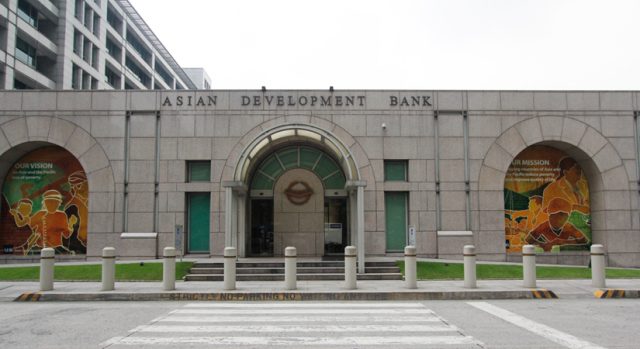
TOURISM in developing economies in Asia and the Pacific, including the Philippines, could rebound by 2023 with the help of vaccine passes, a study by the Asian Development Bank (ADB) showed. 

“The introduction of vaccine passes, a digital or hard copy pass that documents receipt of a particular vaccination, could substantially facilitate cross-border travel and help revive the tourism sector,” the multilateral bank said in a policy brief published Friday. 

“Added to the previously implemented strategies, vaccine passes seem to be an emerging solution to restart tourism,” the ADB said. 

Due to border closures, travel restrictions and dampened demand amid the coronavirus disease 2019 (COVID-19) pandemic, international tourist arrivals in Asia dropped by 80% last year. 

Governments and airline companies across the region implemented several measures to promote domestic tourism and revive the sector, such as granting subsidies, tax reliefs, coupons, vouchers and implementing “bubbles” to allow travel in select destinations. 

However, local tourism still can’t fully fill the gap left by international tourists, the ADB said. 

It said a pass showing the owner has been fully vaccinated has its own advantages, such as allowing economic activities to resume while protecting the vulnerable portion of the population and encouraging more people to get inoculated. 

“The use of vaccine passes is not new and does not have to be digital. The “International Certificate of Vaccination or Prophylaxis,” or simply the “Yellow Card” of the World Health Organization (WHO) has been used for many years when traveling to countries which require vaccination against diseases such as yellow fever,” it said. 

The bank estimated outbound travelers to Asian economies could return to its pre-pandemic level by 2023 under an optimistic scenario where the vaccination rate maintains its current pace and people have vaccine passes. 

However, even in the most positive scenario, the study showed international tourism will likely remain stagnant this year followed by a sharp increase in 2022 when vaccine rollout picks up pace. 

“Recent surveys indicate that people long to travel again after many months of restricted movements. Thus, demand for travel that is above historical trends can be seen for vaccinated people,” it said. 

The ADB said a six-month delay in the delivery of vaccines could result in a full recovery happening only by 2024. 

However, the ADB warned that adopting vaccine passes also poses risks and should be managed well due to the varying effectiveness of different vaccine brands and the possibility of the use of fake passes. 

“Finally, the biggest challenge is international coordination among different stakeholders—governments, international organizations, airlines, and even laboratories. For a vaccine pass to work, an internationally recognized standard for verification of vaccine authenticity and identity is needed,” it said. — BML 

Central bank to allow multiple PESONet settlements by Q4

BW FILE PHOTO

THE BANGKO SENTRAL ng Pilipinas (BSP) targets to allow multiple settlements in PESONet by the fourth quarter and introduce streamlined digital payment options next year, BSP Deputy Governor Mamerto E. Tangonan said on Friday. 

Mr. Tangonan said the BSP is currently working to allow multiple batches of crediting for PESONet transactions from just once a day currently. He said they are also looking to open batch settlements during weekends and holidays. 

“This initiative will allow for faster, clearing and settlement of personal transactions. With multiple net clearing and settlement cycles within a day, users need not wait for the end of the batch processing of the transactions to receive funds transfers. This development will make PESONet more appealing to consumers and businesses for frequent payments such as customs duties of importers, as well as supplies or bulk purchase of businesses,” he said in a forum arranged by Maybank on Friday. 

PESONet is an electronic fund transfer service under the central bank’s National Retail Payment System handling transactions worth more than P50,000, to be credited to the receiver by the end of a banking day, which is suited for business-to-business dealings. 

Meanwhile, InstaPay allows real-time fund transfers for transactions not exceeding P50,000. 

There are currently 82 financial institutions using PESONet and 52 using InstaPay for their fund transfer services. 

For faster bills payment, Mr. Tangonan said the BSP will also roll out by early next year a facility that will allow customers to settle their bills for utilities, rent subscription, loan amortization and other recurring payments, even if customers and billers use different payment service providers. 

He said the central bank will also launch its “request-to-pay” facility to follow the “bills-to-pay” scheme to make bills payment easier as customers will no longer have to fill out details repeatedly. 

“It shall empower payees to initiate collections by simply sending a request to pay with the payor. It is expected to bring convenience in the collection of non-recurring receivables by payees from other parties,” he said. 

Lastly, a “direct debit” facility will also be introduced, where customers can authorize billers to pull funds from their accounts so recurring payments such as monthly rentals, loan amortizations, insurance premiums and contributions are paid on time. 

As part of its inclusion push, the central bank aims to have 50% of all transactions in the country done digitally and bring 70% of adult Filipinos into the financial system by 2023. — BML 

BSP raises P100 billion via 28-day bills

THE CENTRAL BANK made a full award of the short-term securities it offered on Friday as rates declined as the government kept Metro Manila under strict quarantine measures. 

The Bangko Sentral ng Pilipinas raised P100 billion via the 28-day bills it auctioned off on Friday out of bids worth P153.98 billion, nearly twice as much as the offer volume but smaller compared to the P183.25 billion in bids seen in the previous week’s auction. 

Banks asked for rates ranging from 1.715% to 1.738% during the auction, a lower band compared to the 1.74%-1.7525% band seen last week. This caused the debt papers to fetch an average rate of 1.731%, 1.8 basis points lower than the 1.749% logged a week ago. 

“The results of the auction reflect the continued strong interest for the BSP bill amid sustained ample liquidity in the financial system,” BSP Deputy Governor Francisco G. Dakila, Jr. said in a statement. 

Rizal Commercial Banking Corp. Chief Economist Michael L. Ricafort said the yields on 28-day bills dipped as the market reacted to the extension of strict lockdown measures in the National Capital Region (NCR), even as the quarantine classification was eased slightly. He said the prolonged lockdown meant economic growth could slow further. 

Palace spokesman Herminio L. Roque, Jr. on Friday said NCR will be under modified enhanced community quarantine (MECQ) for the rest of the month starting Saturday, following the two-week hard lockdown in the past two weeks. 

Despite being a different quarantine status, restrictions for areas under MECQ are only slightly looser as certain activities such as dine-in at restaurants, both indoor and outdoor, and personal care services are still not allowed. 

Mr. Ricafort added that the sharp drop in global oil prices also helped pull down local bond yields as this could temper inflation pressures. 

Brent crude declined by 2.6%, or $1.78 to hit $66.45 per barrel on Thursday, amid the rising concerns over virus resurgence across economies, Reuters reported. — B.M. Laforga with Reuters