Home Blog Page 7124

Malaysia court upholds guilty verdict for former PM Najib

REUTERS

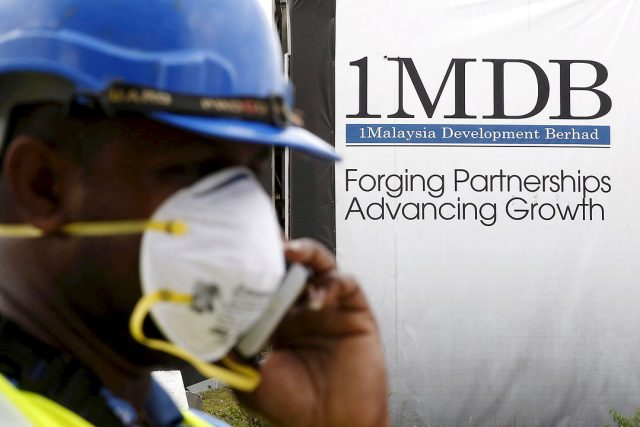
KUALA LUMPUR — A Malaysian court on Wednesday upheld former premier Najib Razak’s guilty verdict on corruption charges over a multi-billion dollar scandal at state fund 1Malaysia Development Bhd (1MDB), dealing a blow to his hopes of a political comeback.

Mr. Najib was appealing a 12-year prison sentence and $50 million fine imposed by Kuala Lumpur High Court last year for criminal breach of trust, abuse of power and money laundering, one of five trials he is facing over corruption allegations.

The court found he had illegally received about $10 million from SRC International, a former unit of now-defunct 1MDB, although Mr. Najib pleaded not guilty and has consistently denied wrongdoing.

The appeal was closely watched amid fears that ruling party leaders facing criminal charges could secure leniency after the return of Mr. Najib’s party, the United Malays National Organization (UMNO), to power in August.

“This is an important decision that has a direct political implication,” opposition lawmaker Wong Chen said on Twitter. “This ruling means that Najib will not be able to stand as a candidate if there is a snap election early next year.”

Court of Appeal Judge Abdul Karim Abdul Jalil said he agreed with the high court on the conviction and sentencing.

“We dismiss the appeal on all seven charges and affirm the conviction on all seven charges,” the judge said.

Mr. Najib has been free on bail pending the appeal, and Judge Abdul Karim agreed to his request to be released on bail again and stayed the sentence.

Mr. Najib’s lawyer, Shafee Abdullah, told the court the former premier would appeal the verdict at the Federal Court, Malaysia’s top tribunal.

Deputy prosecutor V. Sithambaram told reporters after the verdict that Mr. Najib’s appeal process at the top court could take up to 9 months.

Wearing a black suit, Mr. Najib showed no emotion as the judgment was read out and was seen taking notes occasionally during the hearing.

US and Malaysian authorities say $4.5 billion was believed to have been stolen from 1MDB, and that more than $1 billion made its way into Mr. Najib’s personal accounts.

Mr. Najib faces a total of 42 criminal charges and five trials, including the SRC case. He remains influential within his party, which was voted out three years earlier amid widespread corruption allegations.

He has also been eyeing a political comeback, telling Reuters in September that he has not ruled out seeking re-election to parliament, a move that would require his conviction to be overturned. — Reuters

LGBTQ groups cheer Tokyo’s same-sex partnership move as huge step forward

DRAHOMÍR POSTEBY-MACH -PIXABAY

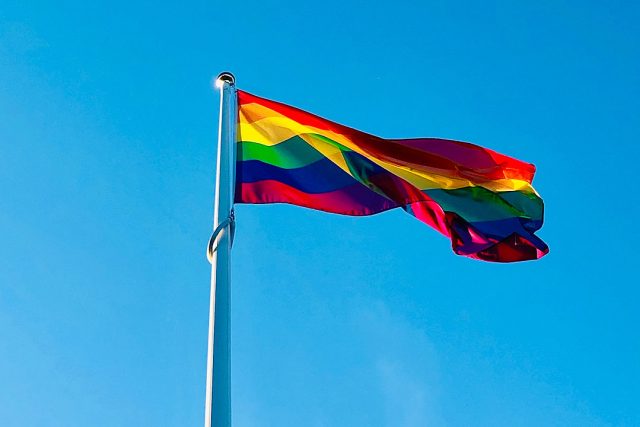
TOKYO — Japanese LGBTQ rights activists on Wednesday hailed Tokyo’s move to introduce a same-sex partnership system as a huge step in their fight for equality in the only G7 (Group of Seven) country that does not fully recognize same-sex marriage.

Tokyo governor Yuriko Koike on Tuesday said the Japanese capital will draw up a framework allowing the partnerships early next year with an eye on making them legal in the fiscal year beginning April 2022. The extension of the system to Tokyo could potentially end up benefitting over 50% of the country’s population.

Under the system, same-sex partners can register their relationship and gain some of the privileges enjoyed by married couples, such as being allowed to rent places to live together and gain hospital visitation rights.

Though it falls short of a legal marriage, Tokyo’s move to adopt the partnership system is seen as an important step towards legalizing same-sex unions in a nation where the Constitution still defines marriage as based on “the mutual consent of both sexes.”

“This is amazing news,” said Masa Yanagisawa, head of Prime Services Japan at Goldman Sachs and a board member of activist group “Marriage for All Japan.”

“Some conservatives have voiced concerns that even though these partnerships are just symbolic pieces of paper, they could undermine Japanese traditions or the traditional Japanese family system. Hopefully this will be a chance to prove otherwise.”

Tokyo’s Shibuya ward in 2015 was the first place in Japan to introduce the partnership system. The system already covers 41% of Japan’s population and the extension to Tokyo means over half of the nation could potentially benefit, according to campaign group Nishiiro Diversity.

Activists have long lobbied for the whole capital city to adopt the system, and stepped up such efforts ahead of the Tokyo 2020 Olympics, delayed by the coronavirus pandemic until this summer.

“There may have been some restraint towards the national government and the fact that a lot of ruling party lawmakers are reluctant about this,” said Takeharu Kato, a lawyer in charge of a landmark court case in March that said barring same-sex marriage was unconstitutional.

While Tokyo as a whole did not adopt the partnership system before the Games, the Olympics, with its focus on diversity, helped sway public opinion, Kato and others said.

A recent poll of Tokyo residents conducted by the metropolitan government found 70% of respondents were in favor of same-sex partnerships.

“I’m sure the Olympics had an impact since Tokyo has been thinking of what kind of legacy they should leave,” said LGBTQ rights activist Gon Matsunaka.

Another incentive has been Tokyo’s interest in branding itself a major international center and attracting foreign companies, many of which have greater emphasis on LGBTQ rights.

As part of Governor Koike’s preparation for her announcement, she spoke with foreign business leaders, who said Tokyo was behind on that front, said Goldman’s Yanagisawa.

“From my perspective as a Goldman Sachs employee, we want to attract international talent but Japan is always at a disadvantage,” he added.

“We offer our own employee benefits on top of the national provisions to try to equalize the system but there’s a limitation to what is possible, and obviously not every company can do this.”

The next goal is making marriage possible, though this probably requires more local areas to adopt same-sex partnership regulations, creating enough pressure that the national government can no longer ignore it.

“Of course I’m happy,” said Kato. “But this is just one waypoint on a long road. We need to use it to push towards actual marriage.”  Reuters

Billionaires’ wealth hits record during pandemic

FREEPIK

THE SHARE of global wealth held by billionaires surged to a record during the coronavirus disease 2019 (COVID-19) crisis, according to a group founded by French economist Thomas Piketty.

About 2,750 billionaires control 3.5% of the world’s wealth, the Paris-based Global Inequality Lab said in a report Tuesday. That’s up from 1% in 1995, with the fastest gains coming since the pandemic hit, the group said. The poorest half of the planet’s population owns about 2% of its riches.

The study’s findings add to a debate about worsening inequality during a public health crisis that’s hurt developing economies -— which are short of vaccines as well as financial resources to cushion the blow — even more than advanced ones. Within the rich world too, financial and real-estate markets have soared since the depths of the slump last year, widening domestic gaps.

Those pandemic trends come after decades of policy that was often geared toward people at the top, on the expectation that it would “trickle down” and everyone else would ultimately benefit too, according to Lucas Chancel, one of the report’s authors.

“There is really this polarization on top of a world that was already very unequal before the pandemic,” Mr. Chancel, co-director of the World Inequality Lab, said in an interview. He said billionaires accumulated 3.6 trillion euros ($4.1 trillion) of wealth during a crisis in which the World Bank estimates that some 100 million people have fallen into extreme poverty.

Across most parts of the world, the richest 10% of people control roughly 60% to 80% of wealth. But the report highlights some clear regional distinctions.

Overall, poorer countries have been catching up with richer ones — but within those developing nations, inequality has soared. Same-country disparities now account for more than two-thirds of global inequality, up from roughly half in 2000, according to the Lab.

Latin America and the Middle East are the world’s most unequal regions, with more than 75% of wealth in the hands of the top 10%, the report says. Russia and sub-Saharan Africa aren’t far behind.

Other emerging economies like India still suffer from a “missing middle class,” Mr. Chancel said. “Colonial inequalities have been replaced by market inequality.”

Wealth gaps are reflected in bigger carbon footprints, too. In North America, for example, the top 10% emits an average 73 metric tons per capita each year, compared with less than 10 tons for the poorest half.

Measured by both income and wealth, Europe is the most equitable region, according to the report. The 19% of total income earned by the poorest half of Europeans is higher than the equivalent share for that group anywhere else. Pandemic policies like income support for workers thrown out of their jobs likely helped prevent that gap from widening further.

“The COVID crisis has exacerbated inequalities between the very wealthy and the rest of the population,” said Mr. Chancel. “Yet in rich countries, government intervention prevented a massive rise in poverty.”

The World Inequality Report 2022 is based on work by more than 100 researchers around the globe, led by economists at the Paris School of Economics and the University of California at Berkeley. The first version of the study came out in 2018. —  Bloomberg

IOC says it respects US decision on Beijing Winter Olympic Games 

SHOUGANG Big Air Venue for the Beijing Winter Olympics — N509FZ

LAUSANNE, Switzerland — The International Olympic Committee (IOC) said on Tuesday it respected the US government’s decision for a diplomatic boycott of the Beijing 2022 Winter Olympics in February over China’s human rights record.

“We always ask for as much respect as possible and least possible interference from the political world,” said Juan Antonio Samaranch, the IOC’s coordination commission chief for the Beijing Olympics. “We have to be reciprocal. We respect the political decisions taken by political bodies,” he told a virtual news conference.

“We are extremely proud, happy and hopeful that all athletes of the world will live in peace in 59 days (in Beijing),” he said.

The White House said on Monday that US government officials would boycott the Winter Olympics because of China’s human rights “atrocities,” although US athletes were free to travel there to compete.

The US boycott, encouraged for months by some members of Congress and rights groups, comes despite an effort to stabilize ties between the world’s two largest economies, with a video meeting last month between US President Joseph R. Biden, Jr. and China’s Xi Jinping.

China opposes the boycott and will take “resolute countermeasures,” foreign ministry spokesman Zhao Lijian told a media briefing in Beijing, host city of the 2008 Summer Olympics, on Tuesday.

“This is a political domain and we respect their right to take that political decision and them to respect the athlete’s right to take part in the Games,” IOC spokesperson Mark Adams said.

He said the UN’s recent adoption of an Olympic Truce resolution for Beijing 2022 proved countries around the world were backing the Olympics.

“We think that countries and their governments are very much behind the Games and very much understanding,” Adams said.

“They clearly support the aims of the Olympic Games and they understand that we are, hopefully, beyond politics.” — Reuters

Novak Djokovic on Australian Open entry list

NOVAK DJOKOVIC FB PAGE

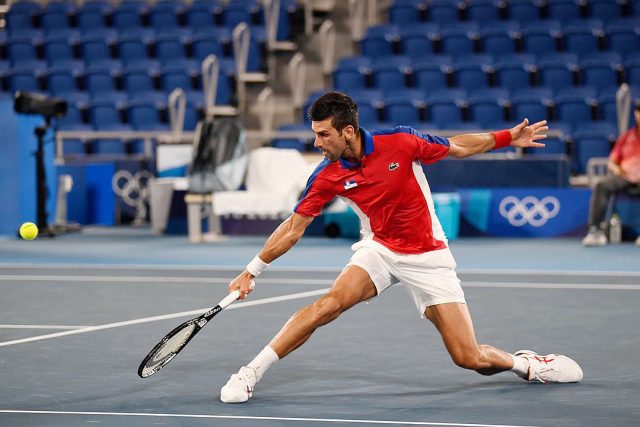
SYDNEY — World number one Novak Djokovic was named on the official entry list for next year’s Australian Open on Wednesday, but 23-times Grand Slam singles champion Serena Williams was not included.

Djokovic, who was also on the entry list for the Association of Tennis Professionals (ATP) Cup in Sydney when that was released on Tuesday, has declined to disclose his vaccination status despite everyone at Melbourne Park needing to be inoculated against coronavirus disease 2019 (COVID-19).

Williams, who won the last of her seven Australian Open titles in 2017, had an injury-disrupted season and has not played since she limped out of her first-round match at Wimbledon in tears due to the leg injury.

Tournament organizer Craig Tiley said last month that the 40-year-old American, who needs one more Grand Slam title to match Margaret Court’s record of 24, would be playing at Melbourne Park from Jan. 17 to 30. — Reuters

Shenzhen Open missing as WTA announces schedule for first half of 2022

PENG Shuai at the 2017 BNP Paribas Open

THE Women’s Tennis Association (WTA) has confirmed the traditional season-opening Shenzhen Open will not take place in the first half of 2022, with the women’s tour staging events in January in Australia before following a conventional pattern until Wimbledon in June.

The WTA 250 tournament, which is usually played in the first week of the year, was held last year before events in China were wiped out due to the coronavirus disease 2019 (COVID-19) pandemic.

The women’s tour has suspended its tournaments in China due to concerns over the treatment of former doubles world number one Peng Shuai. It is unlikely the tournament would have gone ahead early this year anyway due to China’s travel restrictions.

The WTA said in a statement late on Monday that in the first half of next year, the Tour will have five WTA 1000 events in Doha, Indian Wells, Miami, Madrid and Rome, along with eight WTA 500 events and at least 15 WTA 250 events.

“The 2022 WTA Tour calendar will once again provide a prestigious stage for the world’s best women’s tennis players to compete on,” WTA Chairman Steve Simon said.

It is the second half of the year when the WTA calendar is usually more crowded with events in China, with the world’s most populous country hosting nine tournaments in 2019 — the last full season before the spread of the novel coronavirus. — Reuters

Japan downgrades Q3 GDP on deeper hit to consumer spending

Image via Toyota

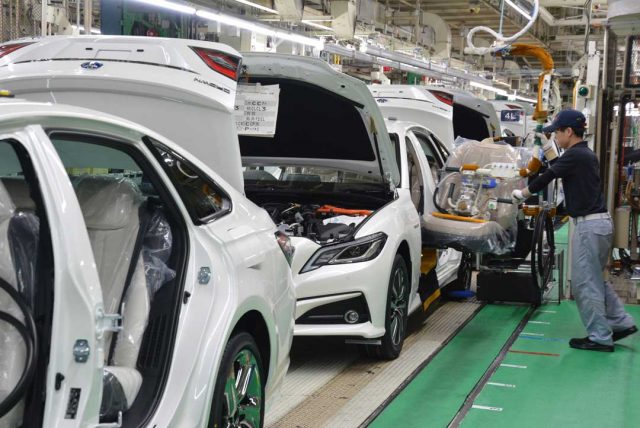
TOKYO — Japan’s economy shrank slightly faster than initially reported in the third quarter, as a sharp rise in local coronavirus disease 2019 (COVID-19) cases hit private consumption and a global chip supply shortage hurt corporate sentiment.  

The deeper contraction is a setback for policymakers hoping easing supply shortages and loosened pandemic curbs would support a recovery in the world’s third-largest economy this quarter.  

Japan’s economy declined an annualized 3.6% in July–September, revised Cabinet Office data showed Wednesday, worse than the preliminary reading of a 3.0% contraction.  

The data, which was worse than economists’ median forecast for a 3.1% drop, equals a real quarter-on-quarter contraction of 0.9% from the prior quarter, versus a preliminary 0.8% drop.  

“This confirms that economic conditions were stagnating in the July–September quarter,” said Atsushi Takeda, chief economist at Itochu Economic Research Institute.  

“Growth turned negative due to the resurgence of the coronavirus.”  

The faster decline was mainly due to a larger fall in private consumption, which makes up more than half of gross domestic product, and shrank 1.3% from the previous three months, worse than the initial estimate of a 1.1% drop.  

Consumption fell as bad weather kept shoppers at home and a global chip shortage hit sales of cars and electronics due to production snags, a government official said.  

“A large contraction in durable goods [spending] indicated that car production cuts had a huge impact,” said Wakaba Kobayashi, an economist at Daiwa Institute of Research.  

Durable goods spending posted its biggest drop since 1994 when comparable data first became available, the official said, slumping 16.3% quarter-on-quarter and pulling down household consumption by 0.7 percentage points.  

The data showed public investment dropped 2.0% versus the initial estimate of a 1.5% decline, while capital spending saw a smaller fall, shrinking 2.3% from the prior quarter, compared with a 3.8% preliminary drop.  

The net contribution of exports to the GDP change was zero, offset by imports. Meanwhile, domestic demand pulled GDP down by 0.9 percentage point, matching a preliminary contribution.  

The GDP downgrade, which took into account a change in the way seasonal adjustments were calculated, comes after data on Tuesday showed household spending fell for a third straight month in October.  

However, in a more recent sign that consumption has picked up, a sentiment index of “economy watchers,” or workers close to consumer and retail trends, rose in November to an eight-year high.  

Since the start of the pandemic, Japan’s government has sought to support the fragile economy by large-scale fiscal spending. It unveiled a record $490 billion package last month.  

Analysts are hopeful spending will pick up due in part due to that spending package, with Daiwa’s Kobayashi seeing positive impact from the first quarter of next year.  

“We expect the stimulus package to boost Japan’s GDP by around 2%, by pushing up private consumption, government spending and public investments,” she said. — Daniel Leussink and Kantaro Komiya/Reuters 

Study suggests Pfizer COVID-19 vaccine may only partially protect against Omicron

The Omicron variant of the coronavirus can partially evade the protection from two doses of Pfizer Inc. and partner BioNTech’s coronavirus disease 2019 (COVID-19) vaccine, the research head of a laboratory at the Africa Health Research Institute in South Africa said on Tuesday.  

Still, the study showed that blood from people who had received two doses of the vaccine and had a prior infection were mostly able to neutralize the variant, suggesting that booster doses of the vaccine could help to fend off infection.  

Alex Sigal, a professor at the Africa Health Research Institute, said on Twitter there was “a very large drop” in neutralization of the Omicron variant relative to an earlier strain of COVID-19.  

The lab tested blood from 12 people who had been vaccinated with two doses of the Pfizer/BioNTech vaccine, according to a manuscript posted on the website for his lab. The preliminary data in the manuscript has not yet been peer reviewed.  

Blood from five out of six people who had been vaccinated as well as previously infected with COVID-19 still neutralized the Omicron variant, the manuscript said.  

“These results are better than I expected. The more antibodies you got, the more chance you’ll be protected from Omicron,” Mr. Sigal said on Twitter.  

He said the lab had not tested the variant against blood from people who had received a booster dose, because they are not available in South Africa yet.  

According to the manuscript, the lab observed a 41-fold decline in levels of neutralizing antibodies against the Omicron variant.  

Mr. Sigal said on Twitter that figure is likely to be adjusted after his lab does more experiments.  

While neutralizing antibodies are an indicator of the body’s immune response, scientists believe other kinds of cells such as B-cells and T-cells also are stimulated by the vaccines and help protect against the effects of the coronavirus.  

The preliminary data does not indicate that the vaccine is less able to prevent severe illness or death. While lab tests are under way, BioNTech CEO Ugur Sahin said last week “we think it’s likely that people will have substantial protection against severe disease caused by Omicron.”  

The Omicron variant, first detected in southern Africa last month, has triggered alarms globally of another surge in infections, with more than two dozen countries from Japan to the United States reporting cases.  

The World Health Organization classified it on Nov. 26 as a “variant of concern,” but said there was no evidence to support the need for new vaccines specifically designed to tackle the Omicron variant with its many mutations.  

There is not significant data yet on how vaccines from Moderna, Johnson & Johnson and other drugmakers hold up against the new variant. All the manufacturers, including Pfizer and BioNTech, are expected to release their own data within weeks.  

BioNTech’s Mr. Sahin told NBC News on Tuesday that the drugmaker has data coming on Wednesday or Thursday related to the new variant.  

Top US infectious disease expert Dr. Anthony Fauci said on Tuesday that preliminary evidence indicates that the Omicron variant of the coronavirus likely has a higher degree of transmissibility but is less severe.  

He said the United States was doing its own tests to determine the protectiveness of the current vaccines against the variant and expects results sometime next week.  

Umer Raffat, an analyst for Evercore ISI, cautioned against reading too much into a single study, noting there has been significant variability in measuring declines in antibody levels in previous lab studies.  

“Let’s wait for additional studies to draw a mosaic,” he said. — Michael Erman/Reuters 

Metaverse, virtual storefronts to boost SME recovery in APAC — Meta

Screenshot via Meta/YouTube

The metaverse has “major potential” to help small and medium enterprises (SMEs) in the Asia Pacific better cope with disruptions such as the pandemic, according to global tech firm Meta.  

“[The metaverse] is the next evolution of digital platforms,” said Dan Neary, vice president of Meta in Asia Pacific, at a virtual press conference on Dec. 3. “It’s more pronounced in APAC than anywhere else if you think about the speed by which many industries, entire industries, have adapted to things like mobile or messaging.”  

He defined the metaverse as a “set of virtual spaces where you can create and explore with other people who aren’t in the same physical space as you.” This includes sites like Facebook and Instagram where livestreaming allows for interactive experiences.  

In September, Meta’s report on business recovery found that 21% of operational SMEs in the Philippines that use Facebook reported higher sales this year compared to 2020.   

However, only 60% of Filipino SMEs surveyed said they use digital tools for their operations. In Vietnam, 94% of their SMEs have adapted — the highest in the region.  

“The power of digital transformation is helping businesses weather the storm,” explained Karen Teo, Meta APAC’s vice president for Global Business Group. “They use our apps to create virtual storefronts and reach customers.”  

Bee Books, an independent publishing house in India, shut their physical stores and moved entirely to social media. By hosting Q&As, storytelling on Facebook live, and collaborating with authors on an Instagram video series, the business survived on a digital customer base, said Ms. Teo. 

In the future, these two-dimensional apps will make way for more immersive 3D experiences, but Mr. Neary cautioned: “The reality is this is going to unfold over many years. This is closer to the start of the journey than the end of the journey.”  

With the metaverse still in its early days, developers are being careful. “We’re not building the metaverse, we’re building for the metaverse  addressing things like safety and security and making sure we’re anticipating the risks and getting things right,” said Mr. Neary.  

Meta is investing in research about safety, ethics, and responsible design, in collaboration with institutions such as the University of Hong Kong. “2022 is about helping businesses get future-ready,” he said. — Brontë H. Lacsamana 

Omicron sets back airline industry’s recovery hopes

New travel restrictions prompted by the Omicron coronavirus variant have set back the nascent recovery in international flights, creating delays and headaches in some regions, according to airline and airport officials.  

The flurry of new testing rules and border closings has raised concerns ahead of the important Christmas travel season, but some airline bosses said they hope any backward moves will be short-lived.  

Global airlines have blamed a patchwork of shifting rules for depressed demand for international travel, which is critical for their return to profit following steep coronavirus disease 2019 (COVID-19) pandemic-related losses in 2020.  

American Airlines incoming Chief Executive Robert Isom told Reuters the Texas-based carrier’s return to profitability is contingent on a full-scale recovery in travel demand. American has the largest debt stock in the US airline industry.  

“If there’s anything [in the way], it just delays recovery,” he said.  

He said the airline’s domestic business remained strong but the new travel restrictions had dampened demand in some international markets.  

Airline stocks have recovered some ground following a sell-off last week. While investors are taking heart from anecdotal evidence that suggests the new variant might not be as lethal as originally feared, it could take weeks, even months to know its effect on the course of the pandemic.  

UN agencies specializing in aviation and tourism pleaded on Tuesday for travel restrictions in response to new coronavirus variants to be imposed only as a last resort.  

Japan has banned foreigners, the United States is requiring a COVID-19 test 24 hours before flying, and travelers to Singapore now must be tested daily for seven days after arrival.  

“We were seeing accelerating openings until Omicron,” Campbell Wilson, chief executive of Singapore Airlines budget offshoot Scoot, said at an event held in Sydney by market-intelligence company CAPA Centre for Aviation.  

“We have seen basically a pause since then,” Mr. Wilson added.  

Airlines and travel agencies are hopeful that rising vaccination rates and new medicines would make a difference.  

“This is not the spring of 2020,” said Booking Holdings Inc.’s Chief Executive Glenn Fogel. “Absolutely not.”  

But Sue Carter, head of Asia Pacific at booking technology firm Travelport, said she has seen some searches go down week on week, adding that traveler confidence tends to be closely linked to government announcements.  

EVER-CHANGING RULES CAUSE CONFUSION 
A spokesperson for trade group Airports Council International (ACI) World said the global patchwork of travel rules is challenging airport operations and called for better coordination between countries.  

At Calgary International Airport, the line upon arrival is longer than it had been before the introduction last week of a plan by Canada to eventually test all passengers arriving from countries other than the United States, an airport spokesperson said.  

The Public Health Agency of Canada did not immediately respond to requests for comment.  

A Reuters reporter departing from a US airport to Montreal last week had to repeatedly inform airline agents of an update that exempted Canadian passengers returning to the country after less than 72 hours abroad from needing a COVID-19 test.  

Rules brought in after the discovery of Omicron are just the latest in “a constant state of change,” said Leslie Dias of Unifor, the union that represents customer service workers at Air Canada among other carriers.  

In Australia, fully vaccinated travelers to Sydney and Melbourne must now isolate at their home or a hotel for 72 hours after arrival. An earlier policy of no isolation led Hawaiian Airlines to add five weekly Honolulu-Sydney flights starting this month, rather than an initial plan for three, its chief executive Peter Ingram said.  

Qantas Airways Chief Executive Alan Joyce said his hope is that once more is known about Omicron, the 72-hour isolation requirement would be removed.  

“We still haven’t figured out whether this is a spanner in the works or a fly in the ointment,” Association of Asia Pacific Airlines Director General Subhas Menon said of Omicron. “From what we see now, it looks more like a fly in the ointment that is still good for using.” — Jamie Freed, Allison Lampert and Rajesh Kumar Singh/Reuters 

China’s Evergrande edges closer to default after missing debt deadline

REUTERS

HONG KONG/SHANGHAI — China Evergrande did not make payments on some US dollar bonds at the end of a month-long grace period, sources familiar with the situation told Reuters on Tuesday, setting the stage for a massive default by the world’s most indebted property developer.  

Adding to a liquidity crisis in China’s once bubbling property market, smaller peer Kaisa Group Holdings was also unlikely to meet its $400 million offshore debt deadline on Tuesday, a source with direct knowledge of the matter said.  

Failure by Evergrande to make $82.5 million in interest payments due last month would trigger cross-default on its roughly $19 billion of international bonds and put the developer at risk of becoming China’s biggest defaulter — a possibility looming over the world’s second-largest economy for months.  

Non-payment by Kaisa would push the 6.5% bond of Kaisa, China’s largest holder of offshore debt among developers after Evergrande, into technical default, triggering cross defaults on its offshore bonds totaling nearly $12 billion.  

Evergrande did not respond to Reuters’ request for comment. Kaisa, which in 2015 became the first Chinese developer to default on an offshore bond, declined to comment.  

No holders of two bonds issued by China Evergrande Group’s unit Scenery Journey Ltd had received overdue coupon payments as of 1400 GMT on Tuesday, a source familiar with the situation told Reuters.  

Another four sources holding the bonds confirmed they had not received payment. All declined to be named as they were not authorized to talk to the media.  

“From our point of view it has been a question of when, not if  the scale of the interest payments and then early next year redemption payments has made this [default] seemingly inevitable,” said one bondholder, declining to be named.  

Evergrande was once China’s top property developer, with more than 1,300 real estate projects. With $300 billion of liabilities, it is now at the heart of a property crisis in China this year that has crushed almost a dozen smaller firms.  

The government has repeatedly said Evergrande’s problems can be contained and moves to boost liquidity in the banking sector along with the firm’s plans to forge ahead with a restructuring of its overseas debt have helped reassure global investors. The provincial government of Guandong, where Evergrande is based, stepped in last week to help manage the fallout, reinforcing the view that its failure would be managed.  

Evergrande has not issued any communication to bondholders about the missed payment, one of the five sources said.  

The developer had said on Monday it had established a risk-management committee that included officials from state entities to assist in “mitigating and eliminating the future risks.”  

That came after it said creditors had demanded $260 million and it could not guarantee funds to repay debt, prompting the authorities to summon its chairman and reassure markets that broader risk could be contained.  

Rating agency S&P said on Tuesday the $260 million repayment demand showed Evergrande’s liquidity remained “extremely weak”, with a default looking inevitable especially given maturities totaling $3.5 billion in March and April 2022.  

China’s property market has for years been an engine of growth for the world’s second-biggest economy. Investors, policymakers and central bankers are now trying to calculate the global knock-on effects if the major developer defaults.  

BUSINESS MODEL SCUTTLED 
So far, any Evergrande fallout has been broadly contained in China and with policymakers becoming more vocal and markets more familiar with the issue, consequences of its troubles are less likely to be widely felt, market watchers have said.  

State involvement and hope of managed debt restructuring helped lift Evergrande stock as much as 8.3% a day after diving 20% to a record closing low. Still, it ended Tuesday up only 1.1% while its bonds continued to trade at distressed levels.  

Notes due on Nov. 6, 2022, — one of two tranches with a coupon payment deadline that passed on Monday midnight in New York —  traded at 18.282 cents on the dollar, Duration Finance data showed, little changed from a day earlier.  

Founded in 1996, Evergrande epitomized a freewheeling era of borrowing and building. But that business model was scuttled by hundreds of new rules designed to curb developers’ debt frenzy and promote affordable housing.  

Evergrande became one of several developers subsequently starved of liquidity, prompting offshore debt default and credit-rating downgrades, and a plunge in the value of developers’ stocks and bonds.  

A string of developers has scrambled to raise funds by selling shares and assets. Only some have found takers.  

Shimao Group and Logan Group both announced on Tuesday a top-up share placement to raise around $150 million each, while Guangzhou R&F Properties said it had agreed to sell a 30% stake in a Guangzhou logistics park.  

For Kaisa, the risk of defaulting emerged after it failed to make a notes exchange deal with bondholders last week.  

To avoid default, bondholders owning over 50% of notes due on Dec. 7 and Kaisa notes worth a total of $5 billion, sent the company draft terms of forbearance late on Monday, a separate source with direct knowledge of the matter said.  

Even in the case of a technical default, Kaisa and offshore bondholders could discuss forbearance terms, two sources with knowledge of the matter said.  

Kaisa, whose shares rose 1.1% on Tuesday, said it was open to discussion on forbearance, without elaborating.  

Sources previously said bondholders had offered Kaisa $2 billion in funding last month but the offer had not progressed. — Clare Jim, Scott Murdoch and Andrew Galbraith/Reuters  

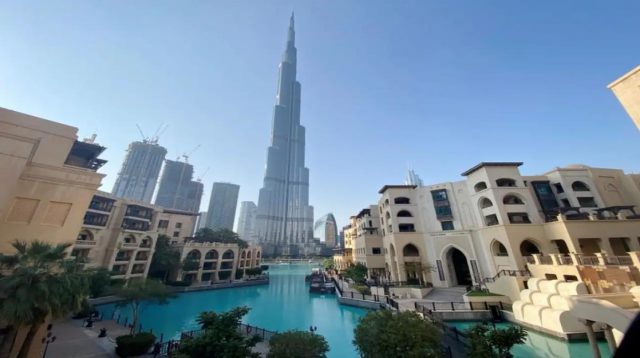
UAE to shift to Saturday-Sunday weekend in line with global markets

REUTERS

DUBAI — The United Arab Emirates (UAE) will shift to a working week of four and half days with a Saturday-Sunday weekend from the start of next year to better align its economy with global markets, but private companies will be free to choose their own working week.  

The oil-producing Gulf state, the region’s commercial, trade and tourism hub, currently has a Friday-Saturday weekend. From Jan. 1, however, the weekend will start on Friday afternoon, including for schools, a government circular said.  

“Each company, depending on the sector they operate in and what suits and serves their business best, can choose the weekend they decide for their employees,” Minister of Human Resources and Emiratisation Abdulrahman al-Awar told Reuters.  

Over the past year, the UAE has taken measures to make its economy more attractive to foreign investment and talent at a time of growing economic rivalry with Saudi Arabia.  

Addressing any religious sensitivities in the Sunni Muslim-ruled country, where expatriates make up most of the population, the government said work on Friday would end at noon before Muslim prayers, which would be unified on Friday across the UAE.  

It said the longer weekend would improve employees’ work-life balance and noted that several majority-Muslim nations, such as Indonesia and Morocco, have Saturday-Sunday weekends.  

The UAE said the move would “ensure smooth financial, trade and economic transactions with countries that follow a Saturday-Sunday weekend, facilitating stronger international business links and opportunities” for UAE-based and multinational firms.  

The change will impact state entities like the central bank, which would communicate details about the new working hours to commercial banks, said al-Awar, adding that UAE stock exchanges would also be more integrated with global markets.  

“This change will enhance the integration of the banking sector in the UAE with the banking community internationally… it will eliminate the gap that existed in the past,” he said.  

Mohammed Ali Yasin, chief strategy officer at Al Dhabi Capital, said the financial sector would benefit from being able to make simultaneous payment settlements with developed markets and the tourism industry would also be a beneficiary.  

“It could be a good experiment for other countries in the region,” he said.  

Friday is a weekly holiday in the other five Gulf Arab states and many predominantly Muslim countries.  

Monica Malik, an economist at Abu Dhabi Commercial Bank, said she expects many private sector companies in the UAE to follow the Saturday-Sunday weekend, describing the move as a “very meaningful development” alongside other recent reforms.  

The UAE has liberalized laws regarding cohabitation before marriage, alcohol and personal status laws in addition to the introduction of longer-term visas to lure businesses and talent. — Davide Barbuscia and Ghaida Ghantous/Reuters