Home Blog Page 706

Yohel Pozo’s pinch-hit single sends Cardinals past Dodgers

MASYN WINN and Ivan Herrera hit home runs, Yohel Pozo delivered a go-ahead, pinch-hit single in the ninth inning and the St. Louis Cardinals pulled off a 3-2 victory over the Los Angeles Dodgers on Monday in the opener of a three-game series.

Cardinals right-hander Sonny Gray shook off recent struggles to give up one run on one hit over seven innings as St. Louis improved to 2-2 on a six-game road trip to San Diego and Los Angeles. Gray, who struck out eight and walked one, permitted 17 earned runs and 30 hits over his previous three outings combined.

Freddie Freeman homered and Tyler Glasnow went seven strong innings, but the Dodgers still lost in the opener of a six-game homestand.

Glasnow yielded one run on three hits with two walks and seven strikeouts. It was his second seven-inning outing in five starts since returning from a 2 1/2-month stint on the injured list caused by shoulder inflammation.

The Cardinals’ go-ahead run in the ninth came against new Dodgers right-hander Brock Stewart, who was acquired at the trade deadline on Thursday from the Minnesota Twins.

Minnesota greeted Stewart (2-2) with consecutive singles by Willson Contreras and Lars Nootbaar. Two outs later, Pozo singled to right-center for a one-run lead.

Shohei Ohtani led off the Dodgers’ ninth with a single off left-hander JoJo Romero, but Mookie Betts was robbed of a hit on a diving catch from Nootbaar in right field. Romero closed it out for his second save. — Reuters

Josh Jung’s 10th inning walk-off home run lifts Rangers over Yankees

JOSH JUNG’S two-out, three-run home run in the bottom of the 10th inning provided the winning runs as the Texas Rangers rallied for an 8-5 walk-off victory over the slumping New York Yankees on Monday in the opener of a three-game series in Arlington, Texas.

After New York did not score in the top of the 10th, Yankees reliever Jake Bird (4-2) retired the first two batters he faced before Jung rocketed his homer into the left field stands. Danny Coulombe (2-0) worked through a two-out walk in the 10th to earn the win.

The Rangers’ Joc Pederson ripped a one-out pinch-hit solo homer in the ninth inning off Devin Williams that tied the game at 5-5 and sent it to extra innings.

Paul Goldschmidt had three hits and scored three runs to lead the Yankees’ attack. New York has dropped four straight games.

Goldschmidt opened the game with a solo homer to left field off Rangers starter Patrick Corbin.

New York added to its lead with a pair of runs in the second. Amed Rosario’s RBI single drove in Austin Wells, who had singled to lead off the frame and moved to third on a double by Goldschmidt. Goldschmidt then trotted home on a single by Cody Bellinger.

The Rangers responded in the bottom of the frame. Wyatt Langford started the rally with a one-out double and Jung followed with a walk. Josh Smith drove in Langford with a single before Jonah Heim’s infield single loaded the bases. Ezequiel Duran plated Jung and Smith with a single to left field that tied the game. Heim then scored on an errant pickoff throw to second base by Yankees starter Max Fried that gave Texas a 4-3 lead.

Giancarlo Stanton put the Yankees back on top in the fourth on a line drive home run over the center field fence that allowed Goldschmidt, who had reached on a single, to score ahead of him.

Jon Gray took over for Corbin in the fourth and pitched five innings while throwing 66 pitches — both were season highs.

New York ace Fried allowed four runs and scattered eight hits while walking three and striking out seven in five innings. He was followed to the mound by Luke Weaver, Camilo Doval and David Bednar, all of whom pitched a scoreless inning. — Reuters

The Standard

Katie Ledecky didn’t need the clock to know the competition was close. After she touched the wall at the end of the 800-meter freestyle final in Singapore, however, she had to check it, because, for once, there was no certainty in the result. Summer McIntosh had led most of the way. Lani Pallister was surging. And when she ascertained her victory, she knew that, even at 28, she still had impeccable timing. Her 8:05.62 was enough to hold them off, barely, and with it came her seventh world title in the event. That she didn’t dominate as she had been wont to served only to sharpen the moment. “I was just happy I was up there,” she said.

In the lead-up, the race was billed as one of the greatest showdowns in swimming history outside of the Olympics — a generational duel between the sport’s past and its future. McIntosh, a teenager already with an established reputation as a winner, had the momentum. Ledecky boasted of pedigree. And their contrasting styles — the former’s aggressive front-running against the latter’s inevitable close — effectively turned it from a title defense to a referendum on where the balance of power rests.

For McIntosh, the bronze was no failure. At 18, she had already taken four individual golds in the championships. Pallister, too, was just a tad behind, setting a personal best. There was a sense the podium had begun to tilt toward the next generation. For now, though, Ledecky remains at the center, the only swimmer ever to win the same event at eight straight global meets. It’s a legacy borne as much of dominance as of endurance. Which begs the question: How long can the veteran stay at the top?

For all intents, the 800 Ledecky won was a measuring stick. It was far from a foregone conclusion; it offered tension, nuance, and a rare kind of clarity. Only in the last 50 meters did she take the lead, and then keep it. In so doing, she reminded all and sundry the value of persistence versus potential. If nothing else, she proved that she remains THE standard by which everyone else is measured. The next wave may already be at hand, but, for one more night, in her signature event, she endured.


Anthony L. Cuaycong has been writing Courtside since BusinessWorld introduced a Sports section in 1994. He is a consultant on strategic planning, operations and human resources management, corporate communications, and business development.

Japan clinches landmark $6.5-billion warship deal with Australia

A person holds Japan’s national flag at the Imperial Palace in Tokyo, Japan, Jan. 2, 2020. — REUTERS

SYDNEY/TOKYO — Japan clinched a landmark A$10-billion ($6.5-billion) deal on Tuesday to build Australia’s next-generation warships, marking Tokyo’s most consequential defense sale since ending a military export ban in 2014 in a step away from its postwar pacifism.

Under the agreement, Mitsubishi Heavy Industries (MHI) will supply the Royal Australian Navy with upgraded Mogami-class multi-role frigates from 2029.

Designed to hunt submarines, strike surface ships and provide air defenses, the highly automated warships can be operated by just 90 sailors, less than half the crew needed for current vessels.

Australia plans to deploy the new ships to defend critical maritime trade routes and its northern approaches in the Indian and Pacific Oceans, where China has been increasing its presence and activity.

“It’s going to be really important in terms of giving our navy the capability to project, and impactful projection is at the heart of the strategic challenge,” Australian Deputy Prime Minister Richard Marles said at a briefing.

For Japan, the frigate sale is further step in its efforts to forge security ties beyond its alliance with the US as it seeks to counter China’s expanding military power in Asia.

“The benefits include enhanced joint operations and interoperability with both Australia and the United States. This is a major step forward in Japan’s defense cooperation efforts,” Japan’s Minister of Defense Gen Nakatani said at a briefing in Tokyo.

The successful bid helps ease the sting of 2016, when Australia rejected a Japanese submarine program in favor of a French design. Canberra scrapped that project in 2023, opting instead to build nuclear-powered submarines with the United States and Britain under the AUKUS pact.

The initial contract for three Japanese-built frigates will be Australia’s largest naval purchase since the nuclear submarine agreement, while the remaining eight ships are expected to be constructed by Austal in Western Australia state.

“The broad-based participation of industries from both Japan and Australia in general-purpose frigates is expected to strengthen human resource development in science and technology, as well as the foundations of the defense industry, in both countries,” MHI, which also designed the submarine rejected by Australia in 2016, said in a press release.

Shares in MHI rose more than 3% and Austal shares rose more than 5%.

Pricing, sustainment, and the transfer of production to Australia remain key issues for further negotiation, officials from both countries said. They said they aimed to conclude a contract early next year.

MHI’s Mogami frigate was selected over German company Thyssen-Krupp Marine Systems’ MEKO A-200 in a meeting of the Australian government’s national security committee.

The upgraded Mogami-class frigate can launch long-range missiles, and has a range of up to 10,000 nautical miles, compared to Australia’s current Anzac Class frigates, which can sail around 6,000 nautical miles, Mr. Marles said. — Reuters

South Korea, US prepare for summit with details of trade deal unresolved

A CAR CARRIER transporting Tesla vehicles travels past KIA Motors’ vehicles parked at a port in Pyeongtaek, South Korea, July 31. — REUTERS/KIM HONG-JI

SEOUL — As South Korea and the United States prepare for a summit of their leaders, topics left unresolved by a recent trade deal provide scope for more disputes between the key allies and trade partners, six former negotiators and experts said.

President Donald J. Trump may use the summit with counterpart Lee Jae Myung to seek more concessions on defense costs and corporate investments, left out of the deal, while non-tariff barriers and currency could prove thorny issues, experts said.

No official summit date has been disclosed, though Mr. Trump last week gave a timeframe of two weeks.

The absence of a written agreement underpinning last week’s talks could open the way for disputes, with some differences already emerging in the two sides’ accounts of the deal.

Key among these was Sunday’s denial by a South Korean presidential adviser of US claims that it would take 90% of the profit from project investments of $350 billion by South Korea, which also agreed to open up its domestic rice market.

“Even a binding deal like the FTA has been efficiently scrapped,” warned Choi Seok-young, a former chief negotiator for the Korea-US free trade deal, signed in 2007. “And this is just promise.”

Last week’s pact was scaled down from South Korea’s previous plans for a package deal on trade, security and investment envisioned in the run-up to the summit between Mr. Trump and the newly-elected Lee.

But Japan struck a deal with the United States sooner than expected, spurring South Korea into a scramble for a trade-focused pact, leaving issues of security and investment for the coming summit, presidential adviser Kim Yong-beom said.

Uncertainty clouds plans for $350 billion in funds Mr. Trump has said South Korea would invest in the United States in projects “owned and controlled by the United States” and selected by him, though he gave few details of the plan’s structure or timing.

The allies face challenges in ironing out details of the fund at upcoming working-level talks, South Korean Finance Minister Koo Yun-cheol told reporters on Friday.

“People say the devil is in the details,” he added.

In a social media post, Commerce Secretary Howard Lutnick gave an assurance of “90% of the profits going to the American people,” while White House spokesperson Karoline Leavitt said part would go to the US government to help repay debt.

But Mr. Kim, the presidential adviser, said the two sides did not discuss profit distribution during talks, and South Korea expected the profit to be “reinvested” in the United States.

‘POLITICAL RHETORIC’
The idea of the United States potentially taking most of the profit is “hard to understand in a civilized country,” he added, while dismissing as “political rhetoric” Washington’s claim that it would make all decisions about the fund.

South Korea had added a safety mechanism to reduce financing risk, including US commitments to buy products from the projects, under an “offtake” clause and invest in commercially feasible projects, he said.

Seoul officials have said $150 billion would go to the shipbuilding industry, with the rest earmarked for areas such as chips, batteries, critical minerals, biotechnology, nuclear power and other strategic industries.

The specifics of the structure have not been determined, said Mr. Kim, adding that loans and guarantees make up a majority of the funds, with equity investments accounting for a small part.

Ms. Leavitt said South Korea would provide “historic market access to American goods like autos and rice,” echoing earlier comments by Mr. Trump.

But South Korea said repeatedly there had been no agreement on the agriculture market, including beef and rice, despite strong pressure from Washington.

Mr. Trump expressed keen interest in Korea’s quarantine process for fruits and vegetables, Seoul said, improvements to which will figure in planned technical talks on non-tariff barriers that will also cover vehicle safety rules, but gave no details.

Other non-tariff barriers such as regulation of Big Tech could be hurdles.

“We cannot be relieved because we do not know when we will face pressure from tariffs or non-tariff measures again,” Trade Minister Yeo Han-koo said last week on returning from Washington.

Defense costs are expected to emerge as a key issue during the upcoming summit, with Mr. Trump having long said South Korea needed to pay more for the US troop presence there.

In addition to the $350 billion, Mr. Trump said South Korea agreed to invest a large sum of money in the United States, to be announced during the summit, which he said on July 30 would be held within two weeks.

The allies are holding working level-talks on currency policy, put on the agenda at April’s opening round of trade talks. — Reuters

US reverses pledge to link disaster funds to Israel boycott stance

WASHINGTON — The Trump administration on Monday reversed course on requiring US cities and states to rebuke boycotts of Israeli companies in order to receive disaster funds, according to a statement, and deleted the earlier policy from its website.

The Department of Homeland Security (DHS) removed its statement that said states must certify they will not sever “commercial relations specifically with Israeli companies” to qualify for the funding.

Reuters reported on Monday that the language applied to at least $1.9 billion that states rely on to cover search-and-rescue equipment, emergency manager salaries and backup power systems, among other expenses, according to 11 agency grant notices reviewed by Reuters.

This is a shift for the administration of President Donald J. Trump, which has previously tried to penalize institutions that don’t align with its views on Israel or antisemitism.

The disaster funding requirement took aim at the Boycott, Divestment, and Sanctions movement designed to put economic pressure on Israel to end its occupation of Palestinian territories. The campaign’s supporters grew more vocal in 2023, after Hamas attacked southern Israel and Israel invaded Gaza in response.

“FEMA grants remain governed by existing law and policy and not political litmus tests,” said DHS Spokeswoman Tricia McLaughlin in a statement on Monday afternoon.

DHS oversees the Federal Emergency Management Agency (FEMA). FEMA in grant notices posted on Friday said states must follow its “terms and conditions” to qualify for disaster preparation funding.

Those conditions required that they not support what the agency called a “discriminatory prohibited boycott,” a term defined as refusing to deal with “companies doing business in or with Israel.” The new terms, posted later on Monday, do not include that language. — Reuters

Japan sets highest-ever temperature on record of 41.6°C

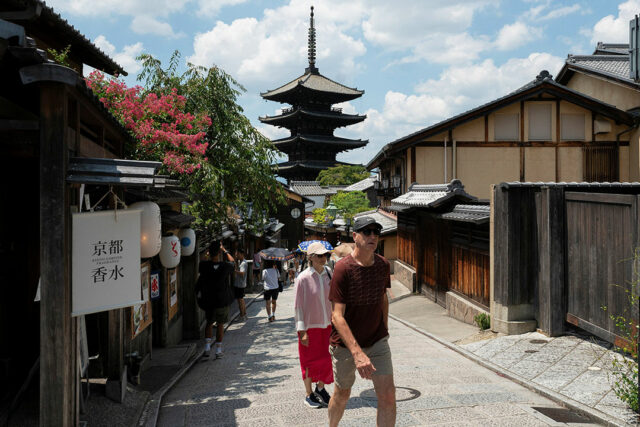
TOURISTS exposed to the sun walk through a traditional alleyway near Kiyomizu-dera temple in Kyoto, Japan, Aug. 3. — REUTERS/FRED MERY

TOKYO — Japan recorded its highest-ever temperature of 41.6 degrees Celsius (106.9 degrees Fahrenheit) in the eastern city of Isesaki on Tuesday, the country’s Meteorological Agency said.

The reading surpassed the previous record of 41.2˚C set last week in the city of Tamba in Hyogo prefecture. — Reuters

Gates Foundation commits $2.5B to ‘ignored’ women’s health

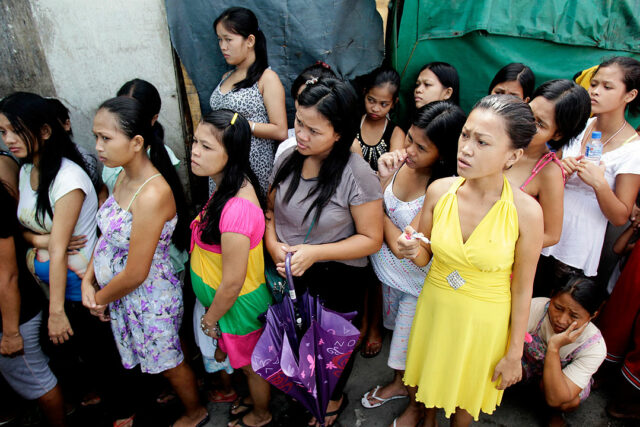
Pregnant teenagers wait in line for a free pre-natal checkup at a clinic in Tondo, Manila, Aug. 31, 2012. — REUTERS

LONDON — The Gates Foundation will spend $2.5 billion by 2030 on women’s health, it said on Monday, with founder Bill Gates saying the area, including conditions from preeclampsia to menopause, had been neglected for too long.

The investment is among its first big commitments since Mr. Gates announced earlier this year that he would give away his $200-billion fortune by 2045. It is around one-third more than the Foundation spent on women’s and maternal health research and development over the last five years.

“Women’s health continues to be ignored, underfunded and sidelined. Too many women still die from preventable causes or live in poor health,” Mr. Gates said in a statement. “That must change.”

The work will look at deeply under-researched areas that affect hundreds of millions of women in both high- and low-income countries, from preeclampsia and gestational diabetes to heavy menstrual bleeding, endometriosis and menopause.

Investment will focus on five key areas: obstetric care and maternal immunization; maternal health and nutrition; gynecological and menstrual health; contraceptive innovation; and sexually transmitted infection.

The aim is to kickstart research, develop products, and ensure equitable access to them worldwide.

The Foundation’s head of gender equality, Dr. Anita Zaidi, said that the field had been held back in part because of bias and a lack of data on key issues, such as how drugs cross into the uterus.

“If you look at the literature, there may be only 10 women who’ve been studied, ever,” she told Reuters. “We don’t even have the answers to these basic questions.”

Just 1% of the healthcare research and innovation spend went to female-specific conditions beyond cancer, a 2021 analysis by McKinsey & Co found.

Ms. Zaidi acknowledged that the $2.5 billion was a “drop in the bucket” compared with what was needed and called on others to step in, including the private sector, philanthropists and governments.

Mr. Gates’ ex-wife, philanthropist Melinda French Gates, has also invested in women’s health since leaving the Foundation last year. — Reuters

Oil producer pressure, Trump rollbacks threaten global treaty on plastics pollution

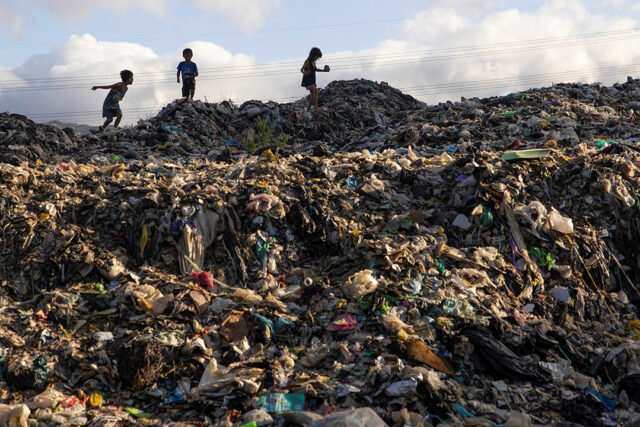
REUTERS

GENEVA — Hopes for a “last-chance” ambitious global treaty to curb plastic pollution have dimmed as delegates gather this week at the United Nations in Geneva for what was intended to be the final round of negotiations.

Diplomats and climate advocates warn that efforts by the European Union and small island states to cap virgin plastic production -— fueled by petroleum, coal and gas — are threatened by opposition from petrochemical-producing countries and the US administration of President Donald J. Trump.

Plastic production is set to triple by 2060 without intervention, choking oceans, harming human health and accelerating climate change, according to the OECD.

“This is really our last best chance. As pollution grows, it deepens the burden for those who are least responsible and least able to adapt,” said Ilana Seid, permanent representative of Palau and chair of the Alliance of Small Island States (AOSIS).

Delegates will meet officially from Tuesday for the sixth round of talks, after a meeting of the Intergovernmental Negotiating Committee (INC-5) in South Korea late last year ended without a path forward on capping plastic pollution.

The most divisive issues include capping production, managing plastic products and chemicals of concern, and financing to help developing countries implement the treaty.

Delegates told Reuters that oil states, including Saudi Arabia and Russia, plan to challenge key treaty provisions and push for voluntary or national measures, hindering progress toward a legally binding agreement to tackle the root cause of plastic pollution.

Government spokespeople for Saudi Arabia and Russia were not immediately available for comment.

Andres Del Castillo, senior attorney at the Center for International Environmental Law (CIEL), a non-profit providing legal counsel to some countries attending the talks, said oil states were questioning even basic facts about the harm to health caused by plastics.

“We are in a moment of revisionism, where even science is highly politicized,” he said.

The US State department told Reuters it will lead a delegation supporting a treaty on reducing plastic pollution that doesn’t impose burdensome restrictions on producers that could hinder US companies.

A source familiar with the talks said the US seeks to limit the treaty’s scope to downstream issues like waste disposal, recycling and product design.

It comes as the Trump administration rolls back environmental policies, including a long-standing finding on greenhouse gas emissions endangering health.

Over 1,000 delegates, including scientists and petrochemical lobbyists, will attend the talks, raising concerns among proponents of an ambitious agreement that industry influence may create a watered-down deal focused on waste management, instead of production limits.

The petrochemical industry said it continues to support a global treaty and has been urging the US administration and Congress to “lean in” in negotiations.

Stewart Harris, spokesperson for the International Council of Chemical Associations, said the US in particular has an opportunity “not just at the negotiating table, but really on the implementation of the agreement” to promote the use of new technologies in mechanical recycling and advanced recycling, which turns plastic waste into fuels, plastics and other products, globally.

Republican and Democratic US lawmakers sent separate letters to US Secretary of State Marco Rubio on Monday pushing for divergent approaches.

A group of House of Representatives Republicans led by Representative Dan Crenshaw of Texas urged the US delegation to push for a treaty that focuses on expanding recycling technology, while a group of Senate Democrats led by Senator Jeff Merkely of Oregon pushed for a deal that includes plastic production caps.

Two-thirds of the Senate is needed to ratify a treaty.

ISLAND STATES VULNERABLE
Small island states are particularly impacted by plastic waste washing ashore, threatening their fishing and tourism economies. They stress an urgent need for dedicated international funding to clean up existing pollution.

“Plastics are a concern for human health because (plastic) contains about 16,000 chemicals, and a quarter of these are known to be hazardous to human health,” said Dr. Melanie Bergmann of the Alfred Wegener Institute in Germany.

Jodie Roussell, global public affairs lead at food giant Nestle and a member of a 300-company coalition backing a treaty to reduce plastic pollution, told Reuters that harmonizing international regulations on packaging reduction and sustainable material use would be the most cost-effective approach.

French politician Philippe Bolo, a member of the global Interparliamentary Coalition to End Plastic Pollution, said that a weak, watered-down treaty that focuses on waste management must be avoided.

Mr. Bolo and a diplomatic source from a country attending the talks said the potential of a vote or even a breakaway agreement among more ambitious countries could be explored, as a last resort.

Inger Andersen, executive director of the United Nations Environment Programme, however, said countries should push for a meaningful pact agreed by consensus.

“We’re not here to get something meaningless… you would want something that is effective, that has everybody inside, and therefore everybody committed to it,” she said. — Reuters


Patient advocacy group calls for more gov’t support in preventive healthcare

A patient advocacy group called for more support in preventive healthcare, as President Ferdinand R. Marcos Jr. highlighted healthcare benefits in his fourth State of the Nation Address (SONA).

“If they don’t focus on this, the number of patients will only continue to grow, and there may come a time when the funding for benefits will no longer be enough,” Reynaldo S. Abacan Jr., president of Dialysis PH Support Group Inc., told BusinessWorld in an interview.

“If we can prevent them from developing serious illnesses right from the start, that would truly be better,” he added.

Interview by Almira Martinez
Video editing by Jayson Mariñas

#PreventiveHealthcare
#PhilippineHealthcare
#HealthEquity
#SONA2025
#BusinessWorldPH

A bold new chapter: SMDC unveils brand refresh and new residential segments

SM Development Corp. (SMDC) enters a transformative new era with the unveiling of its refreshed brand identity and the launch of three new residential segments — marking a deeper commitment to building homes that move in step with how Filipinos live, grow, and aspire today.

Following over 100,000 homes turned over across key cities and growth corridors, SMDC is evolving from being a vertical housing brand into something more encompassing — a platform for good living. This brand refresh signals a sharpened vision: one that places real life at the center of design, community, and access.

“This refresh isn’t just about how we look — it’s about how we listen,” said Jessica Sy, vice-president and head of Design, Innovation & Strategy at SMDC. “Our new segments are shaped by real insight into what today’s Filipino values — whether it’s ambition, breathing room, or the dream of a first home.”

A More Purposeful Portfolio

The three new residential segments offer more tailored, intentional choices for the Filipino homeowner:

SMDC Heights

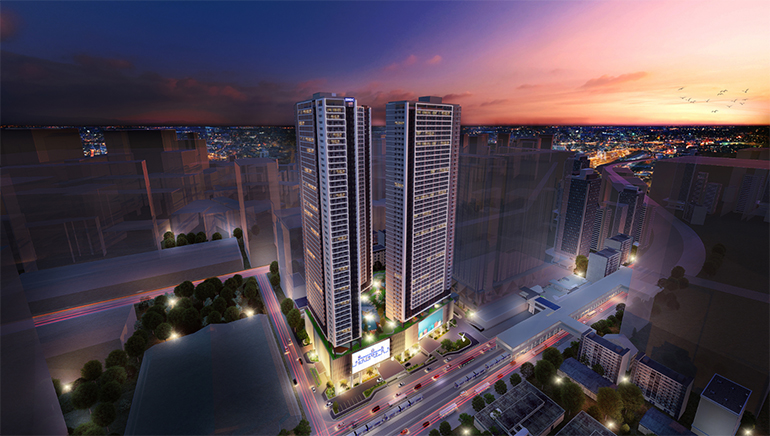
SMDC Heights: High-rise developments in the heart of urban centers — built for upward momentum, access, and breathtaking perspectives.

SMDC Nature

SMDC Nature: Mid-rise, low-density communities designed around air, space, and wellness. For early nesters, families, and anyone seeking balance within reach.

SMDC Symphony Homes

SMDC Symphony Homes: A new house-and-lot line that democratizes suburban living — affordable, accessible, and designed for real growth.

This segmentation allows SMDC to meet people where they are in life — whether they’re starting out, building up, or settling in.

Designing for What Matters

More than a real estate rebrand, this move is part of a long-term strategy to reshape how communities are designed: more livable, more sustainable, more human. From vertical cities by transit lines to walkable neighborhoods anchored by SM malls, SMDC continues to grow its nationwide footprint with purpose.

“We’re not just building units — we’re building everyday impact,” said Ms. Sy. “Because the good life shouldn’t be aspirational. It should be accessible, grounded, and right where you are.”

To learn more, visit www.smdc.com or call the SMDC Hotline at (02) 8858-0300.


Spotlight is BusinessWorld’s sponsored section that allows advertisers to amplify their brand and connect with BusinessWorld’s audience by publishing their stories on the BusinessWorld Web site. For more information, send an email to online@bworldonline.com.

Join us on Viber at https://bit.ly/3hv6bLA to get more updates and subscribe to BusinessWorld’s titles and get exclusive content through www.bworld-x.com.

Hong Kong issues highest weather warning, as rains shut schools, courts and hospital wards

STOCK PHOTO | Image by Bruno from Pixabay

 – Hong Kong’s weather bureau said its highest “black” rainstorm warning would remain in place until 11 a.m. on Tuesday, as heavy rains lashed the Asian financial hub, closing hospital wards, schools, and the jurisdiction’s courts and register offices.

The storms follow deadly flash floods in Southern China over the weekend, which left five dead in Guangdong province and prompted a large-scale search operation involving over 1,300 rescuers.

“Persistent rainstorm will cause serious road flooding and traffic congestion. Members of the public are advised to take shelter in a safe place,” the Hong Kong Observatory said in a bulletin on its website.

The authority reported 9,837 lightning strokes over the city between 6 a.m. (2200 GMT) and 6:59 a.m.

Up to 60-90mm (2.4-3.5 inches) of rain is hitting Hong Kong and the nearby Chinese city of Guangzhou per hour, according to China’s weather authority. Hong Kong typically receives an annual average of 2,220mm of rainfall, more than half of which usually falls from June through August.

The Hong Kong Stock Exchange remains open, having changed its policy to continue trading whatever the weather late last year.

Hong Kong’s hospital authority announced that accident and emergency wards will remain open, but general outpatient clinics and geriatric and psychiatric day hospitals will close due to the extreme weather.

While the judiciary said that courts, tribunals and register offices would open “as soon as practical within two hours after the ‘black’ rainstorm warning is cancelled,” in a statement.

The post office said that all its premises and delivery services would be suspended until the storm warning had passed.

The city’s airport has not reported any disruptions.

Hong Kong Disneyland remains open, with limited operations. – Reuters