Home Blog Page 7

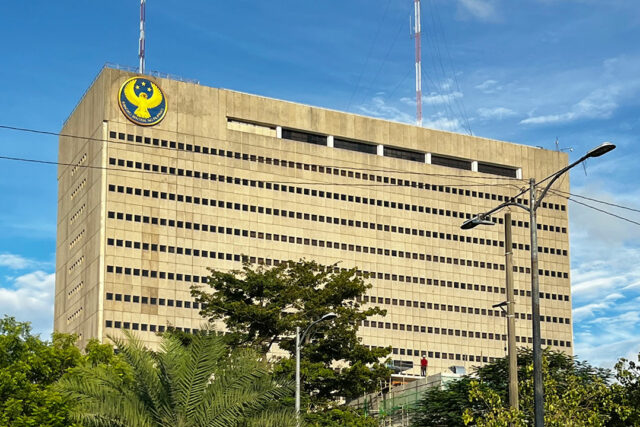
BoC to hasten valuation requests

PHILSTAR FILE PHOTO

THE Bureau of Customs (BoC) has committed to faster processing of import assessment service (IAS) valuation requests to enhance trade facilitation.

In a statement on Thursday, Customs Commissioner Ariel F. Nepomuceno said that he has directed all ports to strictly observe the prescribed turnaround time for valuation requests under IAS.

Mr. Nepomuceno signed a memorandum on Tuesday that mandates the IAS to reduce the processing time to three days upon receipt of complete documentary requirements from five days currently.

According to the BoC, the memorandum aims to ensure a more predictable and streamlined valuation process for stakeholders.

In the case that the IAS will not be able to follow the prescribed period, the BoC said that concerned ports may proceed with the processing and releasing of shipments as long as they are fully compliant and have complete documentary requirements.

Apart from faster processing, the IAS also reduced the required signatories for IAS clearance from four to three, in compliance with the Anti-Red Tape Authority guidelines.

“We must ensure that valuation concerns are acted upon within the prescribed period,” said Mr. Nepomuceno.

“Delays in processing must be minimized, and all units are expected to exercise diligence and urgency in the submission and evaluation of complete requirements to ensure that trade flows without unnecessary interruption,” he added. — Justine Irish D. Tabile

BSP shortens onsite work hours

BW FILE PHOTO

THE Bangko Sentral ng Pilipinas (BSP) has adjusted the onsite operating hours for select offices in support of the government’s push to reduce energy consumption.

“Critical BSP offices will continue onsite public services from Monday to Friday, while non-frontline offices will adopt work-from-home arrangements on Mondays and Fridays,” the central bank said in a statement on Thursday.

BSP Manila will process check-clearing transactions from 9 a.m. to 2 p.m., Monday to Friday.

Onsite transactions involving BSP-acquired real properties and receipt of physical mail and documents from the public will continue at the BSP Hub in Manila from 8 a.m. to 5 p.m., Monday to Friday.

Tellering services, or payments to the BSP, cash exchange, redemption of mutilated and doubtful currency, check payments and encashments, and disbursement of cash to the general public, will be available at BSP Manila, Security Plant Complex in Quezon City, and BSP regional offices and branches nationwide from 9 a.m. to 2 p.m., Monday to Thursday.

The BSP Online Buddy chatbot, accessible via the BSP website, BSP Facebook Messenger, and BSP mobile app, will continue to receive financial consumer complaints, 24/7. Complaints may also be sent to consumeraffairs@bsp.gov.ph.

BSP-supervised financial institutions and nonbank financial institutions (such as pawnshops, nonstock savings and loan associations, money changers, and remittance agents) will be able to continue submitting documents electronically via fssmail@bsp.gov.ph.

The BSP Store will service purchases of commemorative coins and other merchandise through https://bspstore.bsp.gov.ph/Aaron Michael C. Sy

BCDA signs lease deal for new café in Camp John Hay

STATE-RUN Bases Conversion and Development Authority (BCDA) has signed a 15-year lease deal with Sophia Real Estate Executives and Development Corp. to build a themed café within Camp John Hay (CJH) in Baguio City.

The café will rise on a 500-square-meter site within CJH, the agency said in a statement on Thursday.

The lease agreement was signed on March 30, but the BCDA has yet to provide further details on the development.

The upcoming café is expected to boost local economic activity while creating jobs in the construction and hospitality sectors, the agency said.

BCDA President and Chief Executive Officer Joshua M. Bingcang said the deal aligns with the CJH’s Master Development Plan (MDP), which seeks to transform the former US military base into an eco-tourism, leisure, and economic hub.

“By aligning with our MDP, this project brings a fresh dimension to the camp, further establishing it as a world-class tourism hub where nature and leisure meet,” he said.

The development is expected to diversify the John Hay Special Economic Zone’s portfolio of commercial and hospitality establishments, the agency added.

The BCDA formally took control of CJH in January last year.

It aims to hit P10 billion worth of investments from the takeover and is looking to offer 70 hectares of land for private sector development. — Beatriz Marie D. Cruz

Meralco sues individuals over illegal electric meter removal

PHILSTAR FILE PHOTO

POWER distributor Manila Electric Co. (Meralco) on Thursday said it has filed a criminal complaint against individuals involved in the unauthorized removal of an electric meter in a subdivision in Rodriguez, Rizal.

In a statement, Meralco said it formally filed a criminal complaint for malicious mischief before the Rizal Provincial Prosecution Office against two individuals, citing deliberate damage to the company’s property.

The incident involved a man forcibly removing a resident’s electric meter despite the homeowner’s objections and without presenting any proof of identity or authorization.

Meralco said it immediately responded to the incident and found out that the individual was acting on orders of the property owner.

Joe R. Zaldarriaga, Meralco vice-president and head of corporate communications, said the company immediately acted to restore the electricity service of the customer and conducted an investigation upon learning the incident.

“We would like to emphasize once again that electric meters are property of Meralco and any unauthorized removal or damage is illegal and subject to legal action,” Mr. Zaldarriaga said.

He enjoined the public to remain cautious of individuals falsely posing as Meralco personnel.

“We once again remind the public that all legitimate Meralco employees and contractors are in uniform with company ID, carry official field orders, and use clearly marked vehicles,” Mr. Zaldarriaga said.

“We also urge the public to immediately report these illegal activities to us and to the proper authorities. We will continue to work closely with authorities to address illegal acts and protect the welfare of our customers,” he added. — Sheldeen Joy Talavera

P45-M school infra projects lined up in Nueva Vizcaya

BAYOMBONG, Nueva Vizcaya — The Nueva Vizcaya provincial government has earmarked P45.05 million for the construction, rehabilitation, and improvement of school facilities under its 2025 and 2026 Special Education Fund (SEF).

Provincial Engineer Jerry A. Tan presented the planned projects during a recent Provincial Schools Board meeting, outlining efforts to enhance learning environments across multiple municipalities in Nueva Vizcaya.

Of the total allocation, P30 million under the 2026 SEF will fund new school buildings, including a four-classroom calamity-resilient structure in Solano, a two-story four-classroom building in Dupax del Norte, and a three-classroom facility in Kasibu, all equipped with comfort rooms.

Meanwhile, P12.5 million from the 2025 SEF is being used for ongoing projects such as classroom buildings in Kasibu, Solano, and Kayapa, as well as additional facilities for an alternative learning school in Villaverde, designed to withstand disasters.

An additional P1.8 million has been allocated for the repair of a Marcos-type school building in Villaverde, while P750,000 will fund the construction of more comfort rooms with water supply at a high school in Diadi.

Governor Jose V. Gambito said the investments highlight the province’s commitment to strengthening education by providing safer, more resilient facilities and preparing students to contribute to the province’s future. — Artemio A. Dumlao

Second suspect in murder of Lebanese, Filipino wife arrested in Basilan

COTABATO CITY — Policemen on Thursday morning arrested the second of the two men tagged in the brutal killing of a Lebanese businessman and his Filipino wife in a gun attack in Zamboanga City last week.

Brig. Gen. Jaysen C. De Guzman, director of the Police Regional Office-Bangsamoro Autonomous Region, told reporters on Thursday that the 23-year-old suspect was arrested by policemen in Sitio Libi, Barangay Bulanting after villagers and local executives reported his presence in the area.

This followed the arrest of his accomplice last Monday, who confessed to killing the couple with a pistol.

In a gun attack, the two suspects killed the Lebanese national Fahed L. Hamdan and his Filipino spouse, Annora, inside their printing press and internet shop.

“It was for the help of local executives and traditional community leaders in Basilan that our police units in the province managed to locate them one after another,” Mr. De Guzman said.

Officials of the Basilan Provincial Police Office will immediately turn over the 23-year-old suspect to the Zamboanga City Police Office, according to Mr. De Guzman.

The two of them separately told police officials in Basilan that they were hired by an owner of a roadside carwash establishment in Zamboanga City to kill the couple.

“They two individuals shall soon have their day in court,” Mr. De Guzman said. — John Felix M. Unson

Malampaya revenue proposed as buffer if gov’t forgoes fuel taxes

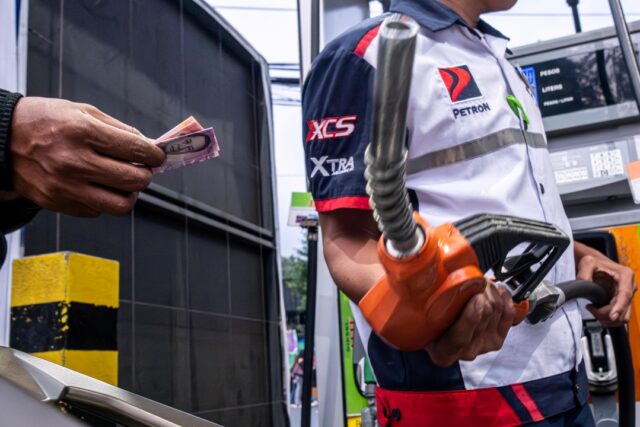
A motorist hands his payment to an attendant at a gasoline station in Paco, Manila. — PHILIPPINE STAR/RYAN BALDEMOR

THE Philippine Chamber of Commerce and Industry (PCCI) said the government needs to provide more incentives and legal protections for upstream oil and gas drilling programs to make the Philippines less reliant on imported energy.

“We should offer enhanced fiscal terms for drilling programs and legislate legal protection for energy projects against LGU (local government unit) and third-party interventions that threaten national energy security,” PCCI Director for Energy and Power David O. Chua said at a House of Representatives hearing late Wednesday.

The Philippines, which sources over 96% of its crude oil imports from the Middle East, is under pressure to develop domestic energy sources.

The PCCI also proposed the creation of an Energy Sovereignty Fund from the government’s gas royalties from the Malampaya Deep Water Gas-to-Power Project.

Mr. Chua noted that royalties from the Malampaya Phase 4 drilling campaign can serve as a “unique fiscal shock absorber” against revenue foregone due to the waiving of some taxes.

“The government’s 60% share from the MAE-1 and Camago-3 discoveries represents a significant, unprogrammed windfall. We propose that these royalties be earmarked to replenish the Treasury for the ‘foregone’ revenue from fuel excise and VAT suspensions,” he said.

The Malampaya project, located 50 kilometers northwest of Palawan, has generated over $14 billion in royalties since it began operations in 2002.

The group also proposed to increase the number of exploration wells across all pre-determined areas (PDAs) to maximize the country’s untapped energy potential.

It also asked senators to enhance fiscal incentives for companies that commit to multi-well drilling programs in areas like the West Philippine Sea, the Palawan blocks and Liguasan Marsh.

The group also pressed for the grant of “Project of National Significance” status to all approved petroleum and gas developments to discourage third-party interventions.

The PCCI also noted that all Department of Energy-approved service contracts should be automatically granted “green lane” status to ensure expedited permit processing.

“By utilizing the Malampaya Dividend to fund tax relief and aggressively pursuing new discoveries, we can transform this energy emergency into an era of unprecedented energy independence,” Mr. Chua said. — Beatriz Marie D. Cruz

Gross gaming revenue up 6.39% at P396.14B led by online segment

BW FILE PHOTO

GROSS GAMING REVENUE (GGR) generated by the gambling industry rose 6.39% in 2025 as the electronic and online gaming segment offset declining earnings from bricks-and-mortar casinos, the Philippine Amusement and Gaming Corp. (PAGCOR) said.

“The e-games and online gaming segment accounted for 50.77% of total industry GGR,” PAGCOR Chairman and Chief Executive Officer Alejandro H. Tengco said in a statement on Thursday. “It has overtaken licensed casinos as the largest GGR contributor.”

The gaming industry generated P396.14 billion in gross gaming revenue last year, up from P372.33 billion a year earlier.

The electronic and online gaming segment brought in P201.12 billion, up 30.04%.

The segment includes E-Bingo, E-Games, Bingo Grantees, and Onsite and Offsite Poker.

Revenue from licensed casinos declined 9.58% to P182.5 billion in 2025.

PAGCOR-operated casinos posted a 20.95% drop in revenue to P12.52 billion.

Mr. Tengco said 2025 results reflect the growing role of online gaming in determining the industry’s overall performance.

“Online gaming is no longer a supplementary segment but has now become the leading driver of overall gross gaming revenue growth,” he added.

The segment still grew even in the face of disruptions like player access restrictions and the de-linking of e-wallets.

However, Mr. Tengco said that the adjustments to the digital payment systems aim to strengthen confidence in regulated online gaming by improving transaction traceability and protecting players.

“The 2025 gross gaming revenues performance underscores the importance of regulatory balance as the industry evolves,” he said.

“Our objective is not simply to grow revenue, but to ensure that growth is sustainable, transparent, and compliant because of a stronger regulatory environment that supports the long-term stability of the gaming industry,” he added. — Justine Irish D. Tabile

P5.27-B Aklan transmission project nearly complete

FACEBOOK.COM/NGCPPH

THE P5.27-billion transmission project that will strengthen reliable power delivery for Aklan province is 93.16% complete, according to the Department of Energy (DoE).

The Nabas-Caticlan-Boracay Transmission Line Project (NCBTLP) being developed by the National Grid Corp. of the Philippines (NGCP) serves one of the county’s “most important tourism and economic centers,” the DoE said in a statement on Thursday.

“Once fully completed, the NCBTLP will help address rising electricity demand, improve system reliability, encourage energy investors to develop renewable energy plants, and reinforce the grid against technical and environmental vulnerabilities that have long affected power stability in the area,” it said.

Once completed by August, the grid project is expected to benefit around 155,474 residential, 13,388 commercial, and 27 industrial customers.

The DoE, the Energy Regulatory Commission, the National Transmission Corp., and NGCP, conducted a site inspection of the project, covering key components, including the Boracay GIS Substation, major transmission lines, and underground cable systems linking Nabas, Caticlan, and Boracay Island.

“We are fast-tracking the completion of this critical project because reliable power is fundamental to economic growth, public service, and the continued development of Boracay and the rest of Aklan,” Energy Undersecretary Rowena Cristina L. Guevara said.

“Our inspection confirms that substantial progress has been made, and the Department remains fully committed to ensuring that this infrastructure is completed on schedule and built to the highest standards of safety, quality, and long-term reliability,” she added. — Sheldeen Joy Talavera

Budget release rate hits 67.6% in March

BW FILE PHOTO

THE Department of Budget and Management (DBM) said it had released 67.6% of the 2026 national budget by the end of the first quarter.

According to the DBM Status of Allotment Release report, the releases amounted to P4.55 trillion out of the original program of P6.79 trillion, leaving P2.24 trillion undistributed.

The release rate at the end of last month was running behind the year-earlier pace of 87.2%.

Releases to government agencies and departments amounted to P2.77 trillion at the end of March, equivalent to 75.4% of their allocations.

Special purpose funds released by the end of the month stood at P198.78 billion, representing 27.6% of the funds allocated.

Meanwhile, automatic appropriation releases were at 66%, or P1.58 trillion.

These include the National Tax Allotment of P1.19 trillion, P176.75 billion in interest payments, P93.98 billion for Block Grant, P82.29 billion for the retirement and life insurance premiums, and P36.47 billion for a special account in the general fund (which includes the P6-billion allotment for the Rice Competitiveness Enhancement Program), among others.

The report also showed other releases amounting to P73.14 billion, which include continuing appropriations from last year worth P6.15 billion, P54.78 billion unprogrammed appropriations, and other automatic appropriations worth P12.2 billion.

Including the other releases, budget allotment reached 68.1% or P4.63 trillion, leaving P2.17 trillion left undistributed.

Michael L. Ricafort, chief economist at Rizal Commercial Banking Corp., said that the lower utilization rate could reflect “efforts to prevent corruption as a matter of prudence.”

He said that the corruption scandal linked to flood control projects led to some government underspending in the latter part of last year.

“For the coming months, catch up spending by the National Government to make up for the underspending … and the resulting higher prices due to the war in the Middle East since Feb. 28 could lead to some increase in government expenditure,” he said via Viber. — Justine Irish D. Tabile

Energy crisis highlights urgency of nuclear transition — legislator

PNRI.DOST.GOV.PH

ADVOCATES of nuclear power said the Philippine vulnerability to disruptions of Middle East energy adds to the urgency of pursuing nuclear energy.

“For decades, we have relied on energy sources that leave us vulnerable to global shocks and volatile prices,” Pangasinan Rep. Mark Cojuangco said at a briefing on Thursday.

“If we are serious about securing a stable and affordable energy future, we must take a clear and deliberate path forward. Nuclear energy must not be just an option; it is a necessity,” he added.

“We cannot afford to wait for another crisis before making the right decision. If we want to build a stronger, more independent Philippines, we must invest in solutions that will stand the test of time. Nuclear energy is one of those solutions,” he said.

Mr. Cojuangco has filed House Bill (HB)  No. 8567, which prescribes “incentives for the integration of nuclear energy into the country’s electricity sector.”

The bill outlines funding mechanisms and policy direction to hasten the development of nuclear power and to position the technology as “a cornerstone of a more secure, stable, and economically resilient energy system.”

“We are sitting on valuable infrastructure that can significantly lower electricity costs and reduce our dependence on imported fuels. The question is no longer whether nuclear energy is viable. It is whether we are willing to act,” Mr. Cojuangco said.

HB No. 8567 builds on  efforts to establish a strong nuclear regulatory framework following the signing of the Philippine Atomic Energy Regulatory Authority Act last year.

Mr. Cojuangco said the country has untapped nuclear assets such as the mothballed Bataan Nuclear Power Plant (BNPP).

Mr. Cojuangco said these assets represent not just “sunk costs, but strategic opportunities to deliver affordable and reliable electricity.”

The BNPP, located in Morong, Bataan, was completed in 1985, but was never put into operation following the disruptions accompanying the 1986 uprising which threw out the Marcos government, the plant’s chief advocate, as well as fears generated by the Chernobyl nuclear meltdown.

Mr. Cojuangco said that nuclear energy provides baseload power without greenhouse gas emissions.

Gayle Certeza, lead convenor of nuclear advocacy group Alpas Pinas, said the crisis highlighted the urgency of advancing nuclear to address energy vulnerabilities.

“What we are seeing today is a clear reminder that our current energy system is not built for resilience,” she said. “Nuclear energy provides a clean, cheap, and reliable solution that supports both economic growth and environmental sustainability.”

The Philippine Energy Plan calls for the integration of nuclear energy into the national power mix with at least 1,200 megawatts (MW) of capacity by 2032, doubling it to 2,400 MW by 2045 and to 4,800 MW by 2050. — Sheldeen Joy Talavera

Low farmgate prices in 2025 seen behind decline in Q1 palay output

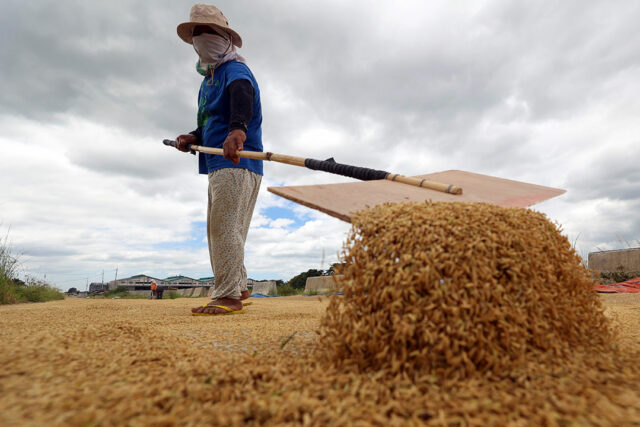
PHILIPPINE STAR/ KJ ROSALES

LOW FARMGATE PRICES in late 2025 gave farmers little incentive to plant, likely leading to a decline in first-quarter output of palay (unmilled rice), analysts said.

“The palay harvested in the first quarter of 2026 was planted in the last quarter of 2025, during which time palay prices were severely depressed, even with the import ban,” Raul Q. Montemayor, national manager of the Federation of Free Farmers, told BusinessWorld.

Mr. Montemayor said the low prices discouraged many farmers from maintaining or expanding their production in the last cropping season.

The Philippine Statistics Authority (PSA) said palay production is projected to have declined 6.9% year on year to 4.37 million metric tons (MMT) in the first quarter, based on standing crops as of March 1.

In a report, the PSA said the forecast, if borne out, indicates a retreat from the year-earlier output of 4.7 MMT.

The new forecast also represents a 1.7% downgrade from the PSA’s January estimate of 4.45 MMT.

The area to be harvested based on the standing crop may have decreased by 6.1% to 1.08 million hectares, the PSA said.

The palay yield is also projected to have dipped by 0.7% year on year to 4.06 MT per hectare.

“Some farmers could have decided not to plant or reduced their input usage, resulting in lower yield, in reaction to the decline in palay prices,” Mr. Montemayor said.

Danilo V. Fausto, president of the Philippine Chamber of Agriculture and Food, Inc., said the palay output may have also been affected by damage to an irrigation system in Nueva Ecija late last year.

Mr. Fausto said the damage affected around 30,000 to 40,000 hectares of farmland in the leading rice-producing province.

“While the National Irrigation Administration tried to catch up on the repair, recovery of the planted areas affected by a lack of irrigation will be delayed, pushing the harvesting of palay to the second quarter,” he told BusinessWorld via Viber.

Meanwhile, former Agriculture Secretary William D. Dar said the downward trend in palay production may persist due to rising input costs as a result of the Middle East war.

“With the increase of fuel prices and fertilizer prices, the farmers will scale down their planting and reduce the use of inorganic fertilizers, thereby lowering rice production this rainy season,” he told BusinessWorld via Viber.

The PSA noted in its report that of the 1.01 million hectares farmers had intended to plant this quarter, only 750,130 hectares, or 74.3%, was actually planted.

Mr. Fausto said reduced input use and high fuel costs for land preparation could further cut palay yield by as much as 20% to 30% in the coming quarters.

Despite the projected decline in rice harvest this year, the Department of Agriculture (DA) is confident that the Philippines can tap adequate supplies of rice from its source markets overseas.

Agriculture Secretary Francisco P. Tiu Laurel, Jr. earlier told BusinessWorld that rice supply remains sufficient in major suppliers such as Vietnam, India, and Myanmar.

The Bureau of Plant Industry reported that the Philippines imported 1.29 MMT of rice in the first quarter, with 85.47% of shipments coming from Vietnam.

The rice imports recorded in the first quarter are 40.17% higher than the year-earlier shipments of 917,855 MT and 71.54% higher than the DA’s forecast of 750,000 MT. — Vonn Andrei E. Villamiel