Home Blog Page 6996

General Santos coconut facility transferred to agrarian reform beneficiaries

CENTURYPACIFIC.COM.PH

A FACILITY used to store and consolidate the produce of multiple coconut farms in the General Santos City area has been transferred to agrarian reform beneficiaries, the Department of Agrarian Reform (DAR) said.

The recipients were the Tinagacan Agrarian Reform Beneficiaries Cooperative in Barangay Tinagacan, General Santos City.

The facility was procured under DAR’s Linking Smallholder Farmers to Markets and Microfinance (LinkSFarMM) project.

“The project aims to store the whole coconuts without compromising its quality prior to its delivery. It will also be a good area for post-harvest activity such as de-husking of the coconuts while avoiding the direct sunlight which can affect the quality of the product,” Provincial Agrarian Reform Officer Cenon S. Original said.

Member agrarian reform beneficiaries (ARBs) and smallholder farmers can store whole coconuts in the consolidation area and sell their products under an all-in scheme.

“The consolidation area for the cooperative’s coconut business is worth P180,686, which would benefit 40 member-ARBs within the cooperative, and a total of 668 ARBs within the Tinagacan covering the barangays of Tinagacan, Batomelong, and Upper Labay, in the city of General Santos,” Mr. Original said.

The DAR said access to the facility will increase productivity and create more market opportunities for coconut farmers.

“We will strive to improve the services of the cooperative so that we can still get other projects from the government so that members and non-members, and even the next generations could benefit from it,” the DAR said in a statement.

LinkSFarMM helps develop agri-enterprises by linking ARBs and farmers to the supply chain. — Luisa Maria Jacinta C. Jocson

Transport snags, feed shortage hindering food production, gov’t aid sought

FOOD PRODUCERS said they are unable to meet production requirements due to transport and feed supply problems.

At a virtual forum Monday, Finfish Hatcheries, Inc. Assistant Vice-President Renato B. Bocaya said hatcheries are currently only able to produce less than half of the requirement for milkfish (bangus) fry.

“Just to give you an idea, the national demand for milkfish fry is about 2.7 billion. However, hatcheries are can only fulfill about 1 billion… maybe around 200 million we’re getting from the wild. The remainder we import, mainly from Indonesia,” Mr. Bocaya said at a virtual media roundtable hosted by food security group Tugon Kabuhayan.

Christopher Tan of Oroseas Aquaventure, Inc. and MLDT Aquaculture said feed is also getting harder to come by, causing production problems. “Some growers stopped raising bangus due to insufficient supply of feed. We believe that’s the main problem now,” Mr. Tan said.

According to National Federation of Hog Farmers, Inc. President Chester Y. Tan, transport liking the production areas in the south to markets in Luzon are a major issue.

“We know Mindanao is the food basket of the Philippines. The hog industry has been hit by a double whammy — we had to deal with the African Swine Fever (ASF) outbreak and also COVID-19,” Mr. Tan said. “Right now, the biggest challenge we are facing is on the transportation side, particularly in delivering our products from the Visayas and Mindanao to Luzon. Half of our production has encountered problems in transportation.”

“We hope the new government will study the procurement of transport vehicles such as vessels and trucks because for the past years, for the past decades, the private sector has been handling it. We should replicate what other countries are doing such as providing subsidies; they have their own government-owned vehicles, even vessels,” he added.

Value of production in agriculture declined by 2.6% in the third quarter of 2021, due to a drop in crop, livestock and fisheries production. Livestock production contracted by 15.2%, while crop and fisheries production dropped by 0.2% and 0.4%, respectively.

Meanwhile, aquaculture producers in Taal Lake urged the government to reduce imports.

“All we ask is for the next administration to ensure ease of doing business and to stop excessive fish imports,” Taal Lake Aquaculture Alliance, Inc. spokesperson Adrienne B. Nera said.

 “We ask for very little help, but don’t give importers unfair advantage over Filipino producers,” Tugon Kabuhayan moderator Asis G. Perez added.

Mr. Perez also said assistance from the government is key to recovering from the pandemic.

“It is one of our strengths especially in times of difficulty. Although our local industries are robust and growing, they still need government support in creating food security policies to ensure sustainable development,” Mr. Perez said.

“We want to give credit to our farmers and local industries who still continue to produce and expand, despite the challenges of COVID-19 and rising imports,” he added. — Luisa Maria Jacinta C. Jocson

GOCC commission freezes industrial estate’s power to engage in contracts

FIRST CAVITE INDUSTRIAL ESTATE FB PAGE

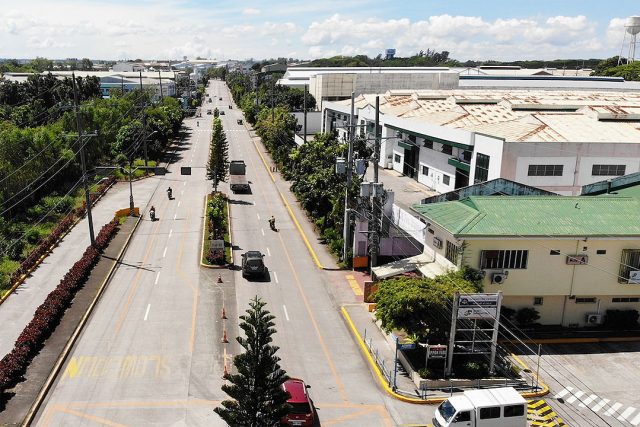
THE “deactivation” of First Cavite Industrial Estate, Inc. (FCIEI) moved forward with a freeze on its power to enter into contracts or conduct other transactions in preparation for its eventual abolition, the Governance Commission for Government-owned or -controlled corporations (GCG) said.

In Memorandum Order 2021-14 signed Dec. 21, the GCG said the government-run industrial estate has officially entered the “deactivation” stage of its winding-down process.

“In accordance with the declared policy of the state that government assets and resources are used efficiently, the GCG has determined it is in the best interest of the state to deactivate FCIEI in the interim, pending its formal abolition,” according to the order.

In 2015, President Benigno S. Aquino III approved in principle the abolition of the industrial estate provided that it settles liabilities with the Philippine Economic Zone Authority (PEZA).

The GCG in 2016 filed with the Office of the President the agreement between the industrial estate and PEZA to settle payables.

The deactivated organization’s governing board is tasked with preserving the organization’s assets before the estate is finally shut down.

It will no longer be allowed to hire and receive benefits as a government-owned or -controlled corporation. — Jenina P. Ibañez

Taxation of separation pay

The COVID-19 pandemic brought with it an unprecedented and drastic change in how business was conducted. Businesses in many places were deeply affected, and the Philippines were no exception. Some companies managed to survive; others struggled, resorting to cutting costs or laying off employees in order to stay afloat and compete in the new normal. As a result, many employees were involuntarily separated from their employers.

On the other hand, in order to adapt to the new normal, some businesses implemented a work-from-home setup to help ensure business continuity, on top of securing the safety of their employees from contracting the virus. However, not all staff have the capacity to adapt with ease. For some, working in isolation means putting their mental health at stake, all the while finding it difficult to cope with anxiety in the virtual workplace, with many employees admitting that working from home has made their jobs monotonous. As a result, burnout became a problem, leading to resignations by employees concerned for their mental well-being.

Separation involves the payment of separation pay or final pay, depending on whether the employee’s departure was involuntary or voluntary. The most common questions arise in such situations involve the taxability of the payments received and the tax treatment of these payments.

INVOLUNTARY SEPARATION DUE TO RETRENCHMENT
The Supreme Court defined retrenchment as the termination of employment initiated by the employer through no fault of and without prejudice to the employees — dismissing them because of losses in business operations during times of recession, industrial depression, or seasonal fluctuations.

What can a retrenched employee expect from an employer? The Labor Code states that separation pay should be provided if the termination of the employee is due to closure or cessation of the business, installation of labor-saving devices, redundancy, retrenchment, and if the employee has been found suffering from any disease and whose continued employment is prohibited by law or is prejudicial to the employee’s health as well as the health of co-workers.

Is a retrenched employee’s separation pay subject to tax? The Tax Code, as amended, provides that any amount received by employees or their heirs from the employer due to separation because of death, sickness or other physical disability, or for any cause beyond the control of the employee, shall be exempt from tax. However, only the monetized value of unutilized vacation leave credits of 10 days or less is not subject to income tax. Conversely, the cash equivalent of vacation leave credits exceeding 10 days is subject to income tax or fringe benefits tax.

However, since tax exemptions are construed strictly against the taxpayer and liberally in favor of the government, retrenched employees are not automatically entitled to income tax exemptions on the separation pay received. To prove the eligibility for tax exemption of the separation pay, the employer or the employee must secure a Certificate of Tax Exemption (CTE) from Income Tax and Withholding Tax. To facilitate the processing of requests for tax exemption due to retrenchment, the following documents, as prescribed in Revenue Memorandum Order (RMO) No. 66-2016 must be submitted to the Revenue District Office or appropriate Large Taxpayers Office where the employer is registered:

1. Letter request from the Official/Employee (or by the heirs) or the Employer for the exemption of separation benefits from income tax and withholding tax.

2. Written notice to the employee and the appropriate Regional Office of the Department of Labor and Employment at least 30 days before the effectivity of termination, specifying the grounds for termination.

3. Board Resolution, in case of a juridical entity, or affidavit to be executed by the owner, in case of a sole proprietor, stating the following:

a. That the retrenchment is reasonably necessary and likely to prevent business losses;

b. That the losses, if already incurred, are not merely de minimis, but substantial, serious, actual, and real, or if only expected, are reasonably imminent with appropriate supporting evidence of said losses;

c. That the retrenchment is made in good faith for the advancement of its interest and not to defeat or circumvent the employees’ right to security of tenure; and

d. That the selection of employees to be terminated has been made in accordance with fair and reasonable criteria.

VOLUNTARY RESIGNATIONS
We have heard many stories from family and friends about employee resignations due to mental health issues, which raise some concerns on the taxability of the final salary of the resigning employees.

Resigning employees are not entitled to separation pay unless provided for by their employment contracts or as stipulated in the Collective Bargaining Agreement for companies with existing labor unions.

To date, the Bureau of Internal Revenue (BIR) has not yet released issuances clarifying the tax implications of resignations due to mental health. However, since it is the employee who initiates the termination of employment, existing BIR rulings state that the payment of the final salary is still subject to tax since what will be paid to the employees is “earned” over the course of the employment.

We are all paddling in the same ocean, but we are not in the same boat; some are in yachts, some in canoes, some barely swimming, and some need help to stay afloat.  Layoffs and resignations were prevalent this year. Here’s hoping that as the calendar flips, employees get to retain their jobs and businesses will thrive again. Everyone’s health — physical, financial, and mental — matters above all.

Let’s Talk Tax is a weekly newspaper column of P&A Grant Thornton that aims to keep the public informed of various developments in taxation. This article is not intended to be a substitute for competent professional advice.


Runell Alvyn V. Sarmiento is a senior in charge from the Tax Advisory & Compliance division of P&A Grant Thornton, the Philippine member firm of Grant Thornton International Ltd.

pagrantthornton@ph.gt.com

Deaths, damage from typhoon continue to climb

NDRRMC.GOV.PH

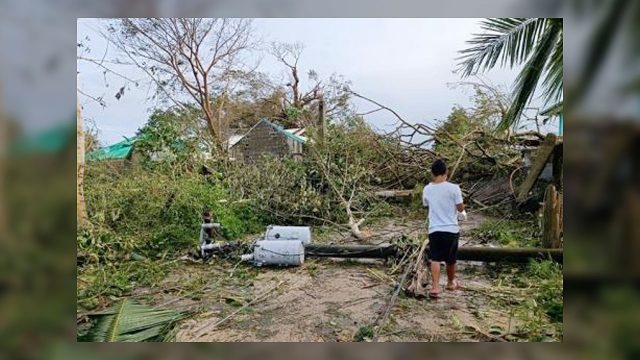
MORE than a week after typhoon Odette, with international name Rai, swept through central and southern parts of the Philippines, the estimated toll on lives, livelihood and infrastructure continues to climb with reported deaths at 389 and at least P22 billion worth of damage, based on government data as of Monday.

The number of those who died increased by 11 from 378 on Sunday, while 64 were reported missing and 1,146 injured, according to the Dec. 27 update from the National Disaster Risk Reduction and Management Council (NDRRMC).

Displaced persons reached almost 571,000, with more than 50% staying in 1,179 evacuation centers across the affected areas. There were 167,077 totally destroyed houses while almost 340,000 were partially damaged, with an estimated cost of about P28 million.

NDRRMC’s running tally of public infrastructure damage hit P16.7 billion, including roads and bridges, government buildings, schools, and utility service facilities.

President Rodrigo R. Duterte last week declared a state of calamity in six regions affected, namely: Mimaropa, composed of the provinces of Mindoro, Marinduque, Romblon, and Palawan; Western, Central, and Eastern Visayas; Northern Mindanao; and Caraga, which covers the hard-hit areas of Siargao, Dinagat Islands, and Surigao City.

More than 330 affected cities and municipalities have also made localized state of calamity declarations, paving the way for the release of emergency funds under the annual budget.

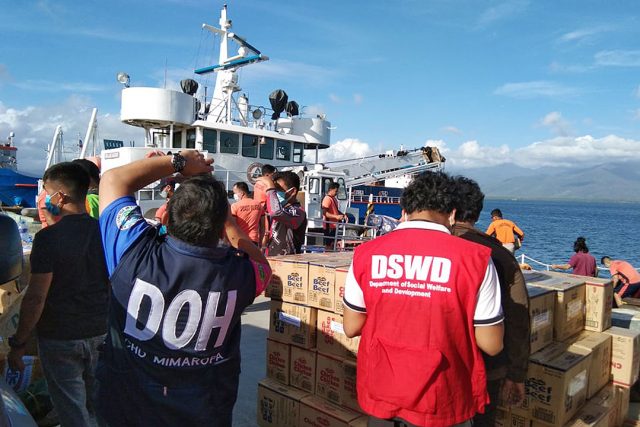
Government and humanitarian agencies have been working to deliver emergency needs, but officials say the transport and distribution of relief goods, repairs, and restoration of utility and communication services are hampered by logistical challenges, especially in the islands and remote areas.

AGRICULTURE
Agricultural damage stood at P5.32 billion, based on the NDRRMC tally, but the Agriculture department still had a lower count at P4.3 billion as of Monday.

The typhoon, the 15th and strongest to hit the country this year, affected over 70,177 hectares of farmland and 61,581 farmers and fishermen, according to data from the Department of Agriculture (DA).

Production volume loss was estimated at 104,561 metric tons (MT).

“Farmers and fisherfolk are the most vulnerable sector during calamities. It is worth mentioning however that they are the most resilient also. With the right interventions from the government, we will see them back on their feet again,” Bureau of Fisheries and Aquatic Resources National Director Eduardo B. Gongona said in a Viber message.

Of the total, 19,701 fisherfolk were affected, with losses estimated at P1.8 billion, including production, fishing boats and gears, and fishnets.

“Right after the onslaught of the typhoon, we have activated our Operation Bangon: DA-BFAR Relief and Rehab Efforts for the Typhoon-Odette Fishing Communities. We have deployed our floating assets to deliver relief goods and initial boat building materials. The recovery of the affected fishing communities is our utmost priority,” Mr. Gongona said.

Farm losses were reported in the regions of Calabarzon, Mimaropa, Bicol, Western Visayas, Central Visayas, Eastern Visayas, Zamboanga Peninsula, Northern Mindanao, Davao, SOCCSKSARGEN, and the Caraga region.

“We expect to have the comprehensive damage report once the assessment is fully completed. Right now our teams are on the ground trying to cover the affected fishing communities including those with transportation challenges. Good thing we have our floating assets that allow us to reach those areas,” Mr. Gongona said.

For future programs, BFAR is looking into distributing bigger boats that can better withstand inclement weather and allow municipal fisherfolk to go further offshore. 

“We are already heading towards the direction of capacitating our fisherfolk to become more resilient in facing the negative effects of calamities and extreme weather condition,” he said.

BFAR has also collaborated with partner agencies for a more effective alert system during typhoons.

POWER
On power supply, NDRRMC said service has been restored in 154 out of the 284 affected cities and municipalities.

The Department of Energy said they are looking into restoring 50% of power in Bohol by Dec. 31.

As of Dec. 27, the Bohol power barge 104 can provide 32 megawatts (MW) of supply and is expected to add 22 MW more this week, reaching a total 54% power capacity for the province’s 90MW daily demand.

“Please take note that it is a target, not a promise,” Energy Undersecretary Felix William B. Fuentebella said during a virtual press conference.

In Cebu, Aboitiz Power Corp.’s Visayan Electric Co. said on Monday that it is targeting to restore 80% of power to over 98,000 customers within its franchise, mainly in the Metro Cebu area in the central part of the province, by Jan. 10, 2022.

“As of noon on Dec. 27, 21% or 98,321 of the 474,182 affected customers in its franchise service area were already reenergized,” the company said in a statement on Monday.

Aboitiz Power is also targeting 100% completion of service for hospitals and 80% of water pumping stations by Dec. 31.

The Cebu provincial government said four electric utilities have restored service mostly in the northern and central parts of the island. “Much of the south, which was considered the worst hit, continues to have no electricity,” it said.

In a related development, Bayan Muna Rep. Carlos Isagani T. Zarate warned that the government might use a recently-signed executive order to take control of electric cooperatives in typhoon-affected areas.

Executive Order 156, signed by the President on Dec. 10, requires the Energy department to identify inadequately served areas within the franchise areas of distribution utilities.

The lawmaker noted that although the mandate seems harmless and is meant to help unserved or underserved remote areas, it could just be used to take advantage of electric co-ops.

“It may just be a disguised scheme to take over then sell to private power players the electric cooperatives especially with the devastation caused by Odette,” Mr. Zarate said in a statement.

The DoE brushed off such claim. “The statement of Cong. Zarate is speculative,” Energy Assistant Secretary Gerardo D. Erguiza, Jr. told BusinessWorld in a Viber message. “It is not aligned with the rationale and intent of EO 156.”— Marifi S. Jara, Luisa Maria Jacinta C. Jocson, Marielle C. Lucenio, and Jaspearl Emerald G. Tan


Philippines’ 4th case of Omicron variant is passenger from US

PHILIPPINE STAR/ MIGUEL DE GUZMAN

THE PHILIPPINES has detected its fourth case of the heavily mutated Omicron coronavirus variant in a passenger who arrived from the United States, the Health department announced Monday.

A 38-year-old female arrived from the US on Dec. 10 via Philippine Airlines and was quarantined upon arrival, Health Undersecretary Maria Rosario S. Vergeire said an online media briefing.

Three days later, she had throat itchiness and a cold. Specimen was collected on Dec. 14 and was reported positive a day after. She was then placed in an isolation facility and declared asymptomatic after 10 days. She is currently under home quarantine and is scheduled for retesting on Tuesday.

“Detected Omicron cases remain to be among international arrivals but its entry is inevitable,” said Mr. Vergeire. “We want to further delay its entry to ensure that local health systems are ready.”

The Department of Health (DoH) is coordinating with the Bureau of Quarantine and the Department of Transportation to monitor the passenger’s close contacts on the flight, she said.

She also assured the public that all passengers had undergone the required quarantine protocols and followed standard health procedures.

The negative impact of the new variant can be lowered by “vaccinating as fast as we can,” she added, since this will lessen the transmission of the disease.

She also noted that case increases can be prevented through immediate detection, isolation, and contact tracing.

Meanwhile, the second phase of the government’s national vaccination program had exceeded its seven million target by half a million, Cabinet Secretary and Acting Presidential Spokesperson Karlo Alexei B. Nograles said in a statement on Monday.

The government is aiming to have 54 million fully vaccinated individuals by the end of the year. Latest data show there were 47.1 million who have received two doses.

National Task Force Against COVID-19 Chief Implementer Secretary Carlito G. Galvez, Jr., meanwhile, assured that there are enough vaccine supplies to achieve the government’s target to fully vaccinate 77 million Filipinos by the first quarter of 2022.

The DoH reported 318 coronavirus infections on Monday, bringing the total to 2.84 million.

The death toll hit 51,211 after 11 more patients died, while recoveries increased by 255 to 2.78 million, it said in a bulletin.

There were 9,579 active cases, 445 of which did not show symptoms, 3,644 were mild, 3,339 were moderate, 1,777 were severe and 374 were critical.

The agency said 99% of the reported cases occurred from Dec. 14 to 27. The top regions with cases in the past two weeks were Metro Manila with 130, Calabarzon with 51, and Central Luzon with 28.

It added that 82% of the reported deaths occurred in December, and 18% in October. DoH said 166 cases had been removed from the tally, which were reclassified as recoveries.

It added that five cases previously tagged as recoveries were relisted as deaths. Two laboratories did not operate on Dec. 25, while 26 failed to submit data. — Alyssa Nicole O. Tan

19 fireworks-related injuries reported over Christmas holiday

PHILSTAR FILE PHOTO

THE HEALTH department on Monday reported 19 fireworks-related injuries over the Christmas holiday, with 84% involving illegal pyrotechnics or firecrackers. 

The total was 54% higher compared to the 12 cases in 2020, but 67% lower than the five-year average of 58 cases in the same period. 

Fireworks-related injuries are usually higher during the New Year’s Eve celebration.  

All cases were due to injuries inflicted by fireworks. There were no reports of fireworks ingestion, or stray bullet injury or death. 

Fifty out of 61 designated sentinel hospitals submitted a zero-injury report.  

Several local governments already have an existing prohibition on the individual use of fireworks and firecrackers. Some localities affected by the recent typhoon have issued orders for a ban this year to avoid fires and hospitalization while communities are grappling with limited water supply and damaged health facilities.  

Health Undersecretary Maria Rosario S. Vergeire reminded the public in a briefing that the holiday season can be celebrated safely. 

She stressed that accidents can be avoided by using safer alternatives to firecrackers and pyrotechnics such as noise and light-producing devices, and just participating in community fireworks displays usually organized by local governments.  

Ms. Vergeire also advised to avoid the use of horns and whistles to minimize the spread of airborne viruses.  

The health official also reiterated the importance of observing minimum health standards such as wearing of face mask and distancing amid the continued threat of the coronavirus. — Alyssa Nicole O. Tan 

Senators oppose DoH decision to halt social media posting of daily COVID case bulletin 

SENATORS on Monday opposed the Department of Health’s (DoH) decision to stop the posting of daily coronavirus case bulletin in social media cards and situation reports through PDF files starting Jan. 1, in an attempt to streamline public communication. 

DoH, in a statement on Monday, said it will only be posting daily case updates through the coronavirus tracker found on its website, which is updated at 4 p.m. every day. “This public tracker, which has been operational since the start of the pandemic, contains all information being provided in the case bulletin and the daily situation report.” 

The department also assured that it will continue to provide the public with the latest information regarding the coronavirus disease 2019 (COVID-19) situation along with other equally valuable health programs. 

“I think that it’s a mistake that the DoH will stop announcing bulletins as it’s a tool for us, the public, to know the positivity rate of infections in the country,” said Majority Leader Juan Miguel Zubiri in a Viber message to reporters. 

“I respectfully urge the DoH to continue these announcements, so that we may be guided accordingly. Now more than ever, with the Omicron variant, we should be more on guard for the public’s safety,” he added. 

Senator Emmanuel Joel J. Villanueva said the daily bulletins are important in keeping vigilance up. “These daily COVID bulletins are a reminder to the public that the problem is not yet over and that we must continue to be careful and practice safety protocols,” he told reporters in a Viber message. 

Senator Francis N. Pangilinan, who is running for vice president next year, noted the importance of daily bulletins in informing the general public. 

“Accurate information in the spread of the disease is crucial in knowing whether or not the spread of the virus is being effectively addressed or not,” he said in a Viber message. — Alyssa Nicole O. Tan

Teams deployed to help address rising illnesses due to water contamination in Caraga, Cebu

A MOTHER holds her newborn after giving birth at a temporary field hospital set up in the island province of Dinagat in the aftermath of Typhoon Odette (international name: Rai) in December 2021. — DINAGAT ISLAND PIO

THE HEALTH department has deployed teams to help address the rising number of illnesses due to water contamination in some areas hit by typhoon Odette (international name: Rai). 

Health Undersecretary Maria Rosario S. Vergeire on Monday told an online media briefing that 80 cases of acute gastroenteritis have been reported in Dinagat Islands, 54 diarrhea cases in Siargao, and 16 diarrhea cases in Cebu. 

She said epidemiology teams are already in these areas to identify the sources and causes of the disease. 

“We need to clearly identify the source to provide the appropriate medications,” Ms. Vergeire said.  

She said there is no verified number of deaths yet caused by these water-borne diseases.  

Other water and food-borne illnesses recorded include influenza, leptospirosis, and dengue. 

“We know that these areas have been affected by typhoon Odette… We also know that there have been water interruptions in their areas,” she said in a mix of English and Filipino.  

While some areas have flowing water, she added, the connecting pipes underground could have been damaged, causing a point of contamination. 

Acute gastroenteritis is caused by consuming food or water contaminated with pathogenic microorganisms or toxins. 

The health emergency arising from the typhoon’s aftermath has been aggravated by damaged health facilities.  

Ms. Vergeire said there are 141 damaged health facilities across the regions of Mimaropa; Western, Central, and Eastern Visayas; and Caraga, where Dinagat and Siargao are located. The estimated damage cost is over P190 million. 

“Thirty of these are still functional while the status of the rest is still to be determined,” she said. “If one facility is down, we can refer or redirect our patients to another facility which is functional within that specific area.” 

“We are utilizing our networks right now so that all patients needing access to services for health will be entertained, accommodated, and managed accordingly,” she added. — Alyssa Nicole O. Tan

Leader of militant Islamist group BIFF killed in Maguindanao 

WESTMINCOM

A LEADER and known bomb-maker of the local terrorist group Bangsamoro Islamic Freedom Fighters (BIFF) was killed in an encounter with government forces in Maguindanao on Dec. 26, the military reported late Sunday.  

“The neutralization of one of the pillars of the BIFF is a positive development in the anti-terror campaign of the government in Central Mindanao. It also disrupted the bombing activities in the area,” said Lt. Gen. Alfredo V. Rosario, Jr., commander of the military’s Western Mindanao Command. 

The fatality was identified as Zukarno Guilil, known as the head of one unit of the BIFF and had several standing warrants of arrest for murder, destructive arson, and violation of the Anti-Terrorism Act of 2020. 

Guilil’s body was recovered along with two fragmentation grenades. 

The BIFF is a breakaway group from the Moro Islamic Liberation Front, which signed a peace deal with the government in 2014 that paved the way for the creation of the now Bangsamoro Autonomous Region in Muslim Mindanao.  

Maj. Gen. Juvymax R. Uy, head of the joint military-police task force in the encounter area, said community members and the local government in Shariff Saydona Mustapha town in Maguindanao provided government troops with leads on the presence of the BIFF faction.  

Mr. Uy said operations are continuing to track down the rest of the group, but at the same time called on the remaining members of the BIFF “to return to the folds of the law and live a peaceful life with their families.” 

Apart from the BIFF, other extremist groups that continue to be active in parts of southern Philippines include the Daulah Islamiyah Philippines, whose leader was killed in October, and the Abu Sayyaf known for kidnap-for-ransom operations. — MSJ

Gov’t executive branch workers to get P10K incentive 

NDRRMC.GOV.PH

PRESIDENT RODRIGO R. Duterte on Monday signed an administrative order granting incentives to government employees under the executive branch in recognition of their “hardwork, commitment and dedication” to public service amid the coronavirus pandemic and the aftermath of typhoon Odette. 

Under Administrative Order 45, each personnel will get P10,000, including workers in national government agencies, military personnel, and uniformed police force, among others. 

Eligible civilian personnel are those occupying a regular, contractual, or casual position as of end-November, rendering at least four months of satisfactory service. Those who have provided services for less than four months will receive a prorated share. 

“The government continues to acknowledge all public servants for their collective and unceasing participation in and invaluable contribution to the establishment of streamlined government processes and responsive delivery of services to the public,” reads the order, “especially in the midst of the prevailing public health emergency due to the COVID-19 (coronavirus disease 2019) pandemic.” 

The incentive may also be granted in local government units and local water districts. 

The budget department will issue supplemental guidelines for implementation. — Alyssa Nicole O. Tan

Comelec to hold mock elections in 6 areas on Dec. 29 

A MOCK election in preparation for the May 2022 local and national polls will be held in six areas across the country on Dec. 29, the election commission announced Monday.  

Commission on Elections (Comelec) Spokesperson James B. Jimenez said in a press briefing that the sites will be in Pasay City in Metro Manila, Albay, Negros Oriental, Leyte, Isabela, and Lanao del Sur.  

Each of the clustered precincts will be able to accommodate an average of 500 to 600 people and will be open from 5 a.m. to 7 p.m., he said.  

Voters who will participate in the mock elections will be required to present a vaccination card or an RT-PCR test result showing they are COVID negative. 

The 30-inch test ballot that will be used in the simulations would contain false names and not the tentative list of candidates for the 2022 elections, Mr. Jimenez said.  

Presidential and local candidates will be placed on the front of the ballot while the party lists will be placed on the back. 

Meanwhile, the Comelec spokesperson also clarified that the tentative list of candidates released last week included those with pending motions for considerations. 

“We expect that those cases will be resolved around the first week of January,” Mr. Jimenez said in Filipino. 

The Comelec estimates that cases relating to the cancellation of candidacy and nuisance candidates will be decided upon by Jan. 7, in time for the printing of the ballots starting start on Jan. 15. — Jaspearl Emerald G. Tan