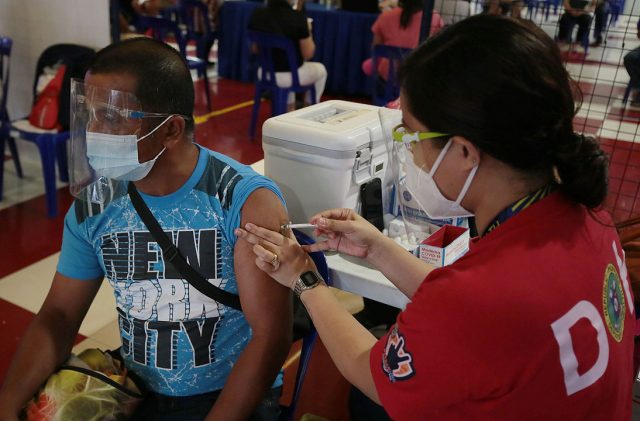
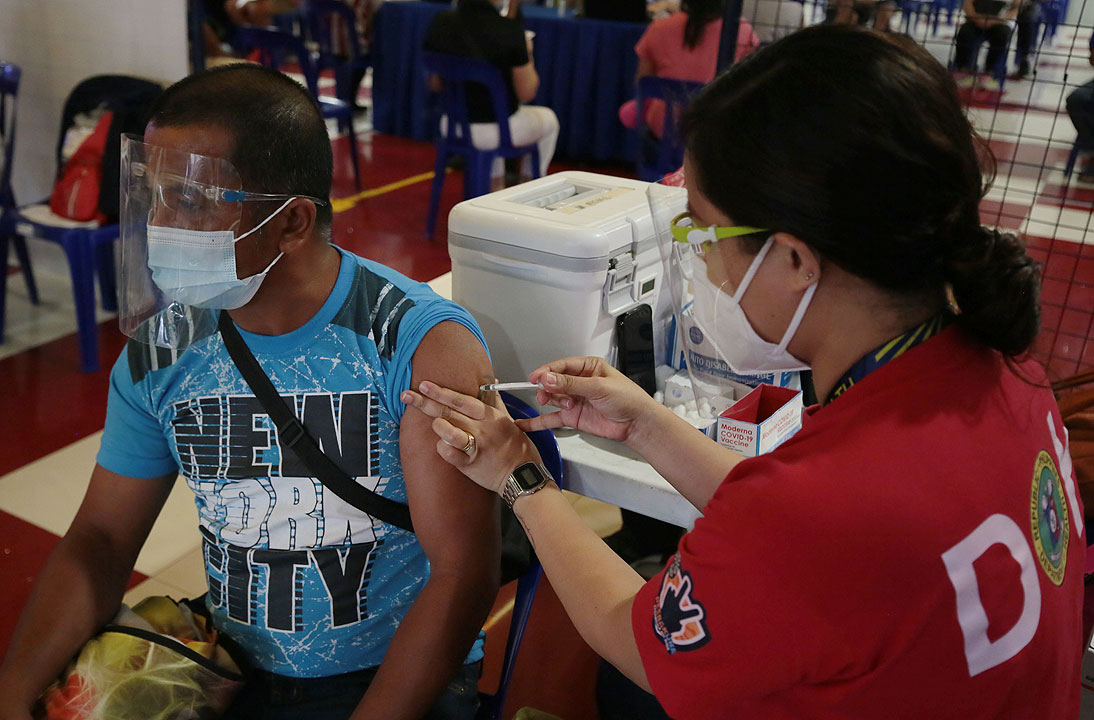
WASHINGTON — Pfizer Inc. and BioNTech SE have asked US regulators to authorize emergency use of their COVID-19 vaccine for children ages 5 to 11, a group for whom no shot is currently allowed, Pfizer said on Thursday.
The US Food and Drug Administration (FDA) has set a date of Oct. 26 for its panel of outside advisers to meet and discuss the application, making it possible for children in this age group — numbering around 28 million — to begin receiving the two-dose Pfizer/BioNTech vaccine shortly afterward.
“With new cases in children in the US continuing to be at a high level, this submission is an important step in our ongoing effort against #COVID19,” Pfizer wrote on Twitter.
The vaccine already has won US emergency use authorization in teens ages 12 to 15 and is fully approved by regulators for people ages 16 and up.
The Pfizer/BioNTech vaccine is one of three in use in the United States, along with the two-dose Moderna vaccine and the single-dose Johnson & Johnson version, neither of which has won full regulatory approval for any age group.
A rapid authorization of the Pfizer/BioNTech vaccine in young kids could help mitigate a potential surge of cases in the coming weeks and months, with schools open nationwide and colder weather driving activities indoors. If given regulatory authorization, the two-dose Pfizer/BioNTech vaccine would become the first COVID-19 shot made available to children 5 to 11 in the United States.
The Pfizer/BioNTech vaccine has been shown to induce a strong immune response in 5 to 11 year olds in a 2,268-participant clinical trial, the companies said on Sept. 20.
The two drugmakers are also testing the vaccine in children ages two to five years old and children ages six months to two years, with data expected in the fourth quarter.
The vaccine could be ready for roll out as early as November pending approval from federal regulatory health agencies, White House COVID-19 response coordinator Jeffrey Zients said on CNN.
Once the authorization is granted, Mr. Zients said: “We are ready. We have the supply. We’re working with states to set up convenient locations for parents and kids to get vaccinated including pediatricians’ offices and community sites.”
The United States leads the world in COVID-19 cases and deaths.
Children currently make up about 27% of all US coronavirus cases and an increasing percentage of hospitalizations, according to the American Academy of Pediatrics. That reflects the high contagiousness of the coronavirus Delta variant among unvaccinated people.
While children are less susceptible to severe COVID-19, they can spread the virus to others, including vulnerable populations more at risk of severe illness.
A Pfizer spokesperson said the application to the FDA has been completed. —Reuters
SINGAPORE — Singapore is working on allowing quarantine-free entry to travelers from the United States who are vaccinated against coronavirus disease 2019 (COVID-19) before the end of the year, its minister for trade and industry said on Thursday.
Singapore, a travel and tourism hub, began a similar program for travelers from Germany and Brunei last month as part of a gradual easing of its COVID-19 border controls.
“We have had successful pilots of Vaccinated Travel Lanes (VTL) with Germany and Brunei to facilitate the entry of fully vaccinated individuals into Singapore for business and leisure,” said Gan Kim Yong said in a speech during a visit to Washington DC.
“We are now working on a VTL with the US as soon as possible, and certainly before the end of the year.”
Vaccinated visitors in the VTL can bypass the isolation requirements if they test negative in polymerase chain reaction tests. —Reuters
GOTHENBURG, Sweden — All eight winners of the 2021 Nobel Prizes in medicine, chemistry, physics, and literature have been men, re-igniting a recurring debate about diversity in the highly coveted awards, particularly those in science.
Ardem Patapoutian and David Julius received the Nobel for medicine on Monday. Giorgio Parisi, Syukuro Manabe, and Klaus Hasselmann won the physics gong for their work deciphering chaotic climate, while Benjamin List and David MacMillan received the chemistry accolade for developing a tool for molecule building.
Tanzanian novelist Abdulrazak Gurnah, 72, on Wednesday became only the second writer of color in sub-Suharan Africa ever to win a Nobel Prize for Literature. The last Black recipient of the prize was Toni Morrison in 1993.
“Abdulrazak Gurnah meets at least one of the criterion of a writer from a non-traditional cultural circle — a non-European with a colonial background, but he’s no woman,” said Anne-Marie Morhed, head of the Swedish Association of Female Academics.
“Two prizes remain, the Peace Prize and the Economy Prize. The (Norwegian) Nobel committee… still have a chance to honor a woman.”
Exiled Belarus opposition leader Sviatlana Tsikhanouskaya and Greta Thunberg are at least two women seen to be in contention when the Nobel Peace Prize is awarded in Norway.
The Norwegian Nobel Committee is led by a woman and the majority of the members are women. Ditto the previous committee: led by a woman and with a majority of women on it.
There has also been a real push in recent years to not give the prize to only white men from North America and Western Europe, as was the case in the earlier decades.
In comparison to the dozen Black peace laureates in the Nobel’s history, there has never been a Black recipient of the prizes for medicine, chemistry and physics, points out Professor Winston Morgan, a toxicologist at the University of East London who has looked at representation in the prizes as part of his research on inequality in the sciences.
“In terms of the gap between the world’s population and the winners — the biggest gap is a gender one,” Mr. Morgan said. “The number of female prize winners is really, really tiny.”
Scientists of both genders have already taken to social media to decry the lack of women recognized so far this year.
Some, including Ellie Murray, an assistant professor of epidemiology at Boston University School of Public Health, expressed disappointment that this year’s awards excluded the contributions of Katalin Kariko and Kizzmekia Corbett, key scientists behind the development of mRNA vaccines that are changing the course of the pandemic.
Nobel watchers, however, said it was entirely likely that Ms. Kariko and Ms. Corbett would be recognized in years to come. The committee, they said, tended to reward recipients after a period of time.
“The issue for the Nobel prize is it has a criteria and a tradition and it is hard for them to break away from that,” Mr. Morgan said, adding that the committee would likely respond to scientific innovation during the pandemic in three or four years.
He added that if you looked at the general trajectory of Nobel prize winners, the number of women scientists was growing as were those given to men from Japan and China.
“We are not seeing that same trajectory for Black scientists. That concerns me more,” he said. “You need to ask are there enough black scientists in universities and are they being supported.”
Asked why there were so few Black Nobel Prize winners for literature, Mr. Gurnah told Reuters the world was changing.
Jesper Haeggstrom, chairman of the Nobel Assembly that awarded the prize in Physiology or Medicine, said there was no simple explanation for the lack of female prize winners, but that it reflected the representation of women in science.
“There has been an under-representation of women historically in science, so the further back in time you look, the fewer female candidates there are,” he said.
Mr. Haeggstrom declined to say whether gender played a role in the committee’s selection process.
“I’m not at liberty to give you any details on this, but in general terms, I can say that scientific competence is the deciding factor,” he said.
Critics, however, point to the makeup of the scientific selection committees. Only 25% of the 50 professors on the medicine selection committee are women.
The Committee for Physics at the Royal Swedish Academy of Sciences consists of six members, of which one is a woman, and two co-opted members, both men. The chemistry committee consists of six members, all male, and two co-opted members, both women. — Johan Ahlander, Gwladys Fouche and Julie Steenhuysen/Reuters
NEW YORK — The World Health Organization (WHO) this week issued a definition for “long COVID,” a term used to describe the persistent health problems that affect some survivors of coronavirus disease 2019 (COVID-19). Scientists are still working to understand the syndrome. Here is what they know so far.
HOW DOES THE WHO DEFINE LONG COVID?
The WHO defines long COVID as a condition with at least one symptom that usually begins within three months from the onset of confirmed or probable infection with the coronavirus, persists for at least two months, and cannot be explained by another diagnosis. Symptoms may start during the infection or appear for the first time after the patient has recovered from acute illness.
Among the most common persistent symptoms are fatigue, shortness of breath, and cognitive problems. Others include chest pain, problems with smell or taste, muscle weakness and heart palpitations. Long COVID generally has an impact on everyday functioning.
The WHO’s definition may change as new evidence emerges and as understanding of the consequences of COVID-19 continues to evolve. A separate definition may be applicable for children, the agency said.
HOW COMMON IS LONG COVID?
The exact number of affected people is not known. A study from Oxford University of more than 270,000 COVID-19 survivors found at least one long-term symptom in 37%, with symptoms more frequent among people who had required hospitalization.
A separate study from Harvard University involving more than 52,000 COVID-19 survivors whose infections had been only mild or asymptomatic suggests that long COVID conditions may more often affect patients under age 65.
More than 236 million infections caused by the coronavirus have been reported so far, according to a Reuters tally.
WHAT ELSE DO STUDIES SHOW ON LONG COVID SYMPTOMS?
In a study published in the Lancet, Chinese researchers reported that 12 months after leaving the hospital, 20% to 30% of patients who had been moderately ill and up to 54% of those who were critically ill were still having lung problems.
The Harvard study also found that new diagnoses of diabetes and neurological disorders are more common among those with a history of COVID-19 than in those without the infection.
DO PEOPLE RECOVER FROM LONG COVID?
Many symptoms of long COVID resolve over time, regardless of the severity of initial COVID-19 disease. The proportion of patients still experiencing at least one symptom fell from 68% at six months to 49% at 12 months, according to the study published in the Lancet.
The WHO said long COVID symptoms can change with time and return after showing initial improvement.
DO COVID-19 VACCINES HELP WITH LONG COVID?
Small studies have suggested that some people with long COVID experienced improvement in their symptoms after being vaccinated. The US Centers for Disease Control and Prevention said more research is needed to determine the effects of vaccination on post-COVID conditions. — Manojna Maddipatla/Reuters
Digital financial services leader recognized for its innovations that have accelerated PHL digital payments adoption
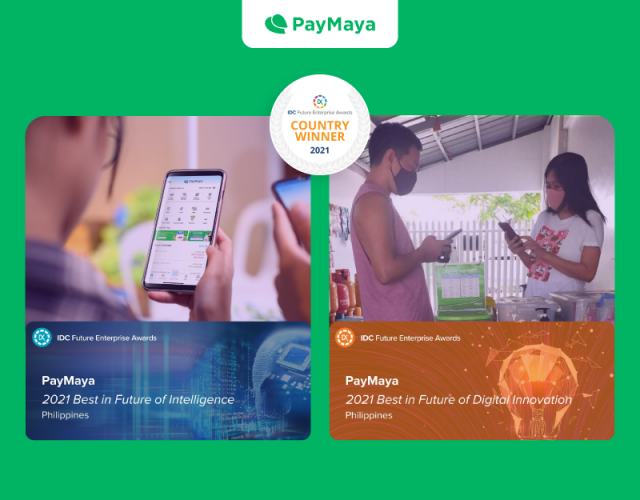
Digital financial services leader PayMaya won two major awards at the Philippines’ first-ever IDC Future Enterprises Awards. PayMaya was recognized for its game-changing innovations that have led to accelerated digital payments adoption across consumers and enterprises at the height of the COVID-19 pandemic.
PayMaya was adjudged as the Best in Future of Digital Innovations for its PayMaya Negosyo app and Best in Future of Intelligence for its enhanced, AI-powered electronic Know Your Customer (e-KYC) process. The IDC Future Enterprise Awards is organized by global market intelligence provider International Data Corporation (IDC).
“We thank our peers for recognizing the work that we do at PayMaya. At the pandemic’s start last year, we wanted both Filipino consumers and businesses to embrace digital payments quickly. This is the reason why we have made available a free business-in-a-box solution for every MSME and improved our eKYC for faster account registrations,” said Shailesh Baidwan, PayMaya President.
Accelerating MSMEs digital pivot with PayMaya Negosyo
Launched in May 2020, PayMaya Negosyo allowed MSMEs to accept payments from anyone even without using an e-commerce platform. All they need to do is download the app, register, and once approved, they can start accepting digital payments in less than 24 hours.
With the app, MSMEs can earn additional income by offering bills payments, selling prepaid loads and gaming pins, processing domestic remittance, and cash in and cash-out services for PayMaya users in their communities.
The app has also transformed PayMaya’s nation-widest network of over 55,000 Smart Padala remittance agents to become the One-Stop Shop for everything digital financial services in last-mile communities.
Because of this innovation, PayMaya saw over 10-fold year-on-year growth in the number of unique small merchants onboarded in June 2021.
The Best in Future Digital Innovation award is given to enterprises that transformed from mere software consumers into full-blown, large-scale software innovators.
Scaling financial inclusion with cutting edge technology
To scale the provision of financial accounts for Filipinos, PayMaya also rolled out in June 2020 an AI technology-powered ID Validation Service, which automated face matching, ID classification, and ID Optical Character Recognition (ID OCR) during the eKYC process.
Anyone with a mobile phone and a valid ID can have their upgraded financial account through PayMaya in just a few minutes. PayMaya can now process 90% of upgrade applications in two minutes. This milestone enabled Filipinos to be financially included by starting a PayMaya account.
Total registered PayMaya users under its consumer platforms doubled in 18 months as of June 2021 to 38 million, or more than half of the adult population, in the Philippines.
The Best in Future of Intelligence Award is given to organizations that can rethink the way they synthesize information from raw data, learn from these insights, and leverage them at scale across the entire enterprise.
As a country winner, PayMaya will compete against other country winners in the same category in the regional-level Asia Pacific IDC Future Enterprises Awards on October 27 and 28 this year.
Recently, PayMaya also won Best QR Code Payment Offering (Gold) for its dynamic and interoperable PayMaya QR at the 2021 Future Digital Awards for Fintech & Payments. It is the only Philippine company that earned an award this year, joining the ranks of MasterCard’s Finicity, PayTM Payments Bank, DBS, and Experian.
IDC is the premier global provider of market intelligence, advisory services, and events for the information technology, telecommunications, and consumer technology markets. Since 2016, the Future Enterprise Awards have recognized companies pushing the boundaries of innovations in their respective fields. This year, IDC received more than 1,000 nominations across countries, including the Philippines.
PayMaya is the only end-to-end digital payments ecosystem enabler in the Philippines, with platforms and services that cut across consumers, merchants, communities, and government.
It provides more than 38 million Filipinos with access to financial services through its consumer platforms. Customers can conveniently pay, add money, cash out or remit through its over 300,000 digital touchpoints nationwide. Its Smart Padala by PayMaya network of over 55,000 partner agent touchpoints serves as last-mile digital financial hubs in communities, providing the unbanked and underserved access to digital services. Through its enterprise business, it is the largest digital payments processor for key industries in the country, including “every day” merchants such as the largest retail, food, gas, and eCommerce merchants, as well as government agencies and units.
To know more about PayMaya’s products and services, visit www.PayMaya.com or follow @PayMayaOfficial on Facebook, Twitter, and Instagram.
Spotlight is BusinessWorld’s sponsored section that allows advertisers to amplify their brand and connect with BusinessWorld’s audience by enabling them to publish their stories directly on the BusinessWorld Web site. For more information, send an email to online@bworldonline.com.
Getting tired of the humidity, dust, smoke, and other air pollutants circulating around your space? Maintaining excellent air quality indoors is beneficial for the health and safety of humans and animals alike. Aside from harmful toxins you ought to get rid of, you should also keep in mind the aroma that lingers around your space. Here are effective air solutions for commercial and residential spaces.
Exhaust Fans
An excellent cooling partner for spaces that take in too much heat, these exhaust fans from Kaze help improve the ventilation in enclosed spaces like the kitchen and bathroom area. Exhaust fans also help remove any moisture that can cause extensive damages to your home.
As for kitchen spaces, opt for sleek and functional rangehoods from Hamden that are packed with modern features that allow a scent and stress-free kitchen cleaning. Aside from air quality maintenance, range hoods are also designed to remove steam, fumes, smoke, grease, and other pollutants that can cause foul odors around your kitchen area.
Air conditioners offer benefits that provide the ultimate comfort and satisfaction making it an ideal air cooling solution and a top favorite for every home and business.
If you’re looking for a worthy investment for your space, split-type inverter air conditioners are an excellent choice. Investing in an inverter type of air conditioner allows you to enjoy a cool space without worrying about your monthly bills. Inverter types are designed to save 30 to 50 percent of electricity making it a cost-efficient addition to your home.
Kaze inverter split-type AC has an ultra-high efficiency DC inverter compressor that can regulate the temperature and the unit’s cooling capacity efficiently. It is equipped with low-sound technology and a high-quality filter that helps keep and maintain clean air while allowing you to relax peacefully and comfortably. It is also designed to make your room cool faster and more efficient with its wide-bore air outlet.
Meanwhile, window-type air conditioners are ideal for small spaces with their easy installation and space-saving features. Kaze window type air conditioner comes with effective air-purifying filtration that reduces contaminants and bacteria for your family’s maximum protection and comfort! Its features include washable filter, convenient control panels, adjustable air swing indicator, high quality inner-grooved copper pipe, and titanium fin evaporator & condenser.
Kaze Window-type Air Conditioner
Electric Fans
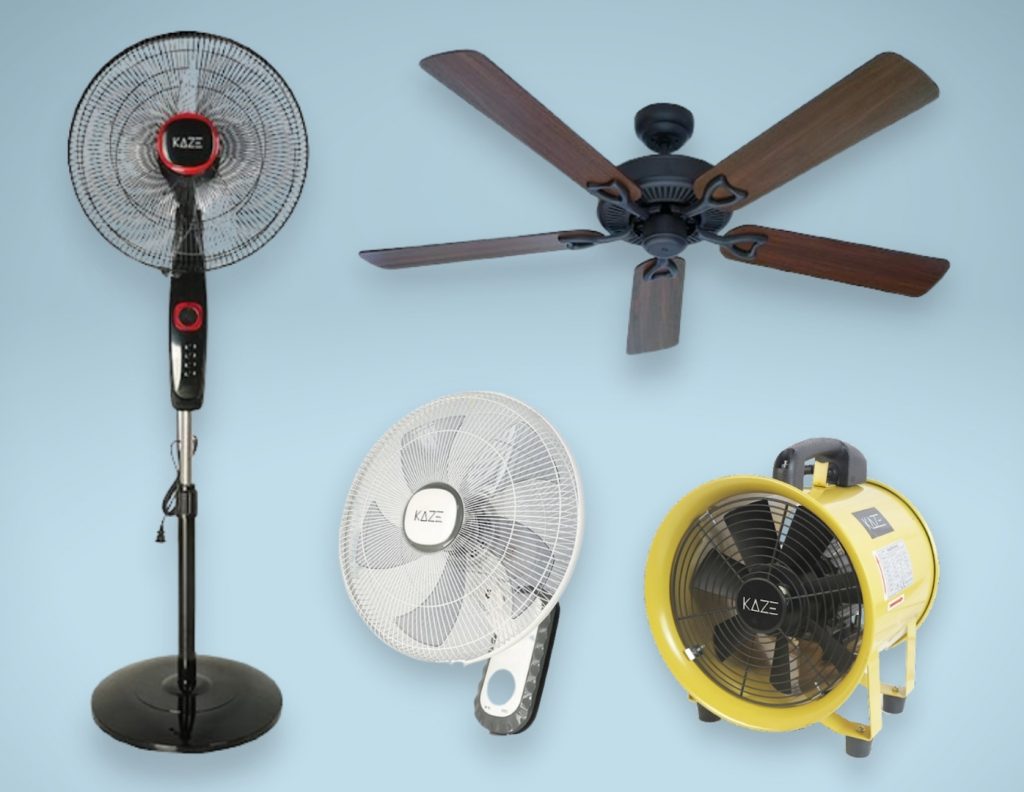
Designed to achieve a cool and breezy surrounding, these electric fans from Kaze are one of the most versatile types of air cooling choices available. It comes in a wide variety of options where you can choose from portability or permanent installation. Electric fans are also economical yet highly efficient appliances that offer better energy savings.
Stand Fan: Stand fans are light and portable devices perfect for small yet spacious areas. Among its various advantages, it can be moved from one area to another with ease. From bedroom spaces to your patio outdoors, stand fans are a satisfying and hassle-free solution to your air cooling dilemma.
Ceiling Fan: A space-saving choice of appliance, ceiling fans offer a wider reach of ventilation than other types of fans. Ceiling fans also add to the visual appeal since it comes with different styles and finishes that can complement your home interior.
Wall Fan: Since wall fans can be installed higher than many other fan types, it allows the air to flow throughout the whole area rather than being compressed towards a direct space. It is an economical option for cooling the whole space while offering a space-saving advantage as well.
Blower Fan: This type of fan is designed to provide powerful and more direct ventilation targeting a small space. Blower fans have higher pressure that is beneficial for workshops and drying needs.
Industrial Fan: Offering stronger ventilation, industrial fans are a bigger and sturdier version of floor and stand fans ideal for larger spaces. It also covers a wider scope making it the ideal type of fan for larger businesses and infrastructures.
Commercial Fan: Large commercial ceiling fans are ideal for ceiling heights as low as 12 feet—the perfect airflow solution for cooling your commercial spaces. MacroAir has sleek design and custom color options of these fans to add to its appeal making them the most attractive ceiling fans for commercial spaces like gyms or restaurants.
MacroAir AVD370 Commercial Ceiling Fan
Keep your space cool and clean with the right air quality partner from Wilcon Depot. Shop at any of their 69 Wilcon Depot and Wilcon Home Essentials stores nationwide or shop online at Wilcon Online Store by visiting shop.wilcon.com.ph.
To ensure a safe and convenient shopping environment in all Wilcon stores, the company continuously implements safety protocols for the health and well-being of both employees and valued customers.
You can also shop through your Personal Shopper with the Browse, Call, and Collect/Deliver service. For the list of participating stores with their pick-up and delivery contact details, click this link: www.wilcon.com.ph/content/328-bcc-branches.
Another shopping alternative is the Wilcon Virtual Tour. An online shopping option wherein customers can contact the nearest Wilcon store via Facebook Messenger App. Customers can contact the nearest stores, and the Wilcon team will take you on a virtual tour where you can explore the available products inside their physical stores.
Wilcon also provides contactless payment options to its customers like bank transfers, GCash, PayMaya, InstaPay, PesoNet, WeChat, and Alipay for customers’ convenience.
Spotlight is BusinessWorld’s sponsored section that allows advertisers to amplify their brand and connect with BusinessWorld’s audience by enabling them to publish their stories directly on the BusinessWorld Web site. For more information, send an email to online@bworldonline.com.
INDUSTRIAL PRODUCTION rose for a fifth straight month in August, as many firms that produce essential goods continued to operate despite the two-week strict lockdown, the Philippine Statistics Authority (PSA) said on Thursday.
Preliminary results of the PSA’s latest Monthly Integrated Survey of Selected Industries showed the volume of production index (VoPI) jumping 534.6% year on year in August. This was slightly lower than the revised annual rate of 539.7% in July, but still a significant turnaround from the 82.2% contraction in August last year.
Similarly, the value of production index (VaPI), a similar composite indicator in the survey, logged in an annual 523.3%. This was slower than the previous month’s 528.7% growth rate, but a reversal of the 83.1% decline last year.
The August reading for VoPI and VaPI marked the fifth straight month of growth in manufacturing output.
For the year, factory output expansion averaged 61.6% and 53.4% in terms of VoPI and VaPI, respectively.
The PSA noted growth in the VoPI in 15 out of 22 industry divisions in August led by coke and refined petroleum products (3,800.9%); fabricated metal products, except machinery and equipment (194.2%); wood, bamboo, cane, rattan articles, and related products (94%).
In contrast, IHS Markit’s Philippines Manufacturing Purchasing Managers’ Index (PMI) declined to a 15-month low in August at 46.4, ending two straight months of growth as factories were forced to close due to a two-week enhanced community quarantine in Metro Manila. However, the country’s PMI rebounded to a six-month high in September at 50.9 following the relaxation of these restrictions. A PMI reading above 50 indicates improvement in business conditions from the preceding month.
While the VoPI and the PMI both seek to measure performance of the manufacturing sector, they differ mostly in terms of methodology used. The VoPI looks at the percentage change in production volumes in a particular period relative to a base period while the PMI indicates whether the proportion of respondents that reported an increase outweighs those that reported a decrease as regards indicators like output, new orders, inventory, employment, input and selling prices, as well as sentiment over the following 12 months.
The capacity utilization of these factories averaged 66.1% in August, slightly down from 66.8% the previous month. Of the 22 sectors, 19 averaged a capacity utilization rate of at least 50%.
Leading the sectors with the highest utilization rates were furniture (83.1%), tobacco products (81.6%), and other non-metallic mineral products (79.3%).
Economists interviewed by BusinessWorld mainly attributed the sustained growth to the loosened quarantine restrictions, but cited other factors that influenced the August print.
“Those sectors which posted an increase in August mostly belonged to the production of essential goods… Despite the lockdown, these industries still continued operations to meet growing consumer demand,” De La Salle University (DLSU) economist Mitzie Irene P. Conchada said in an e-mail.
In particular, Ms. Conchada cited the increases seen in food products (volume growth of 10.8% in August from 9.2% in July), fabricated metal products (194.2% from 121.1%), and furniture (50.6% from 8.2%), among others.
In a separate e-mail, UnionBank of the Philippines, Inc. Chief Economist Ruben Carlo O. Asuncion said industries that have been consistently performing amid lockdowns were those producing essential goods.
“[M]anufacturing activities dealing with refining (processing) of petroleum products require lesser human interface compared to more high-touch (contact) sectors such as retailing, tourism, accommodation and other-related activities,” Mr. Asuncion said.
“This dichotomy between various industries have been consistently observed during lockdowns,” he added.
In a phone interview, Ateneo de Manila University economist Ser Percival K. Peña-Reyes said these growth figures may suggest the manufacturers are stocking up on inventory in anticipation of the holiday season as well as next year’s elections.
Still, he noted that overall demand “has been quite lethargic” and that production is “still subdued” as seen in accrued shipping fees.
Mr. Peña-Reyes expects manufacturing to continue its rebound with greater spending expected in the fourth quarter and in the months leading up to the May elections next year.
“It’s bound to pick up and exhibit some sort of resurgence, but not quite as much as that of pre-pandemic levels…,” he said.
DLSU’s Ms. Conchada said that demand is “seen to slowly increase” in the fourth quarter, especially for the food industry.
“With the COVID-19 (coronavirus disease 2019) cases slowly going down and the increasing number of people being vaccinated, businesses are starting to pick up while the economy is slowly opening up but still with caution,” Ms. Conchada said.
UnionBank’s Mr. Asuncion said manufacturing production is expected to have improved in September compared with August given the country’s expansionary PMI of 50.9 in September.
“Furthermore, the shift to granular lockdowns and the alert-level type restrictions… may work well as the economy tries to ‘dance’ with the virus,” he said.
“At this point, the ‘living with COVID-19’ approach may be more appropriate as the economy tries to recover. With vaccination continuing… and better testing, tracing and isolation efforts, manufacturing improvements are expected for the rest of the year,” he added.
Latest data from the Johns Hopkins University showed only 23.47% of the Philippine population has been fully vaccinated against COVID-19. — PHILIPPINE STAR/ MICHAEL VARCAS
THE PHILIPPINE ECONOMY is likely to grow slower than initially expected this year, with Fitch Ratings and the ASEAN+3 Macroeconomic Research Office (AMRO) trimming their forecasts amid the persistent Delta outbreak and sluggish vaccine rollout.
Fitch Ratings in a report on Thursday said it lowered the Philippine gross domestic product (GDP) growth projection to 4.4% in 2021, from 5% previously.
On the other hand, AMRO slashed its GDP forecast for the Philippines to 4.3%, from 6.4% penciled in last June.
Both forecasts are closer to the lower end of the government’s 4-5% full-year target, but a reversal of the record 9.6% slump in 2020.
“The resurgence in daily coronavirus disease 2019 (COVID-19) infections since late July and the Philippines’ low rate of vaccination pose a risk to our growth forecasts,” Fitch said in a note on Thursday.
The Health department reported 10,019 new COVID-19 infections on Thursday, bringing the number of active cases to 115,328.
Latest data from the Johns Hopkins University showed only 23.47% of the Philippine population has been fully vaccinated against COVID-19.
“Because of the recent wave of infections, we had to shave down our growth forecast for the Philippines,” AMRO Chief Economist Hoe Ee Khor said at a virtual briefing on Thursday.
“The Philippines, unlike many of the countries in the region, is very much a service-oriented economy, and that’s the reason they’ve been hit harder than some of the countries in the region.”
Economic activity has been affected by the lockdowns meant to curb the COVID-19 surge since March 2020. In August, a fresh wave of infections prompted the government to place Metro Manila under a strict lockdown for two weeks.
Restrictions have since been loosened to allow more businesses to operate, and the government has shifted to granular lockdowns only in areas with high numbers of COVID-19 infections.
“The economic impact of the COVID-19 shock for the Philippines in 2020 was far worse than we had previously expected due to the local infection rate and the impact of lockdown measures on domestic activity,” Fitch said.
Fitch expects Philippine GDP to grow by 6.8% next year, slightly higher than the 6.6% it previously gave.
It also slightly raised its projection on the general government’s debt-to-GDP ratio this year to 52.8% from the 52.7% it gave in July.
Fitch warned that failure to resume to its pre-pandemic high economic growth trend after the pandemic subsides could be a factor for a ratings downgrade. This scenario will reflect “a loss of macroeconomic policy credibility or structural damage from the crisis.”
In July, Fitch downgraded the rating outlook for the Philippines to “negative” from “stable,” citing the impact of the prolonged pandemic. This means there is a possibility that its investment grade “BBB” rating could be downgraded in the next 12 to 18 months.
OUTLOOK In its ASEAN+3 Regional Economic Outlook 2021 Update report, AMRO also trimmed the country’s 2022 GDP growth forecast to 6.7% from 6.8% in June and the 7.8% set in March.
This is lower than the 7-9% government growth target for 2022.
Economic managers have said they expect the economy to return to its pre-crisis level by the fourth quarter of 2022 or the first quarter of 2023.
“Once the economy’s opened up, I think the economy would bounce back quite sharply,” Mr. Khor said.
“We encourage the authorities to use the policy space that they have to avoid the scarring of the economy and to allow the businesses to bounce back faster.”
AMRO’s GDP projection for ASEAN this year is 2.7% amid an anticipated 18.7% contraction in Myanmar. The ASEAN+3 estimate, which includes China, Hong Kong, Japan, and Korea, is 6.1% after flat growth in 2020.
Under AMRO projections, the Philippines would have the fourth-fastest growth within ASEAN+3 this year. China would lead with 8.2%, followed by Hong Kong (6.5%) and Singapore (6.3%).
“The road to recovery is paved with vaccinations. With the majority of regional economies on track to achieve their vaccination targets by early 2022, we expect the ASEAN+3 region to grow by 5% next year, slightly better than our March projections,” Mr. Khor said.
However, AMRO noted that governments’ “policy responses will also need to be as nimble and quick to change as the virus… Any premature or miscommunicated withdrawal of the financial support measures could potentially trigger a cliff effect.”
“Tapering pandemic support will be the great balancing act for the ASEAN+3 in 2022. Exiting too quickly risks derailing the region’s recovery; exiting too slowly risks propping up unviable businesses and sectors at huge expense to the fiscal purse,” Li Lian Ong, AMRO group head of financial surveillance and regional surveillance, said.
ASEAN+3 economies that have been experiencing gradual recovery have started to scale back policy support, AMRO said, but countries like the Philippines and Thailand have continued to provide fiscal support as these economies struggle with high COVID-19 caseloads and “challenging” vaccination progress.
The Philippines is one of most economies in the region that still has relatively ample policy space, with Singapore being the strongest while Laos, Myanmar, and Japan lag behind.
AMRO recommends that the country expand its fiscal and credit policy while maintaining its current stance on monetary and macroprudential policy.
“There is no ‘one size fits all’ exit strategy, given that each economy should take into consideration existing macro and socioeconomic conditions, such as healthcare capacity, the speed and trajectory of economic recovery, and policy space,” AMRO said.
Headline inflation is expected to average at 4.3% this year, higher than the March projection of 3.8%, AMRO said. This is above the central bank’s 2-4% target range for 2021.
In 2022, projected average headline inflation is 3.2%, down from the previous 3.3% forecast. — Jenina P. Ibañez and Luz Wendy T. Noble
Benjamin E. Diokno, Bangko Sentral ng Pilipinas Governor — BLOOMBERG
By Luz Wendy T. Noble, Reporter
THE CENTRAL BANK is open to extending the higher single borrowers’ limit (SBL) of 30% for banks after it expires by yearend to support economic recovery.
“The BSP (Bangko Sentral ng Pilipinas) is open to extending the 30% SBL to support the country’s recovery for as long as this will not pose a threat to the stability of the financial system,” BSP Governor Benjamin E. Diokno said in a statement.
The SBL was temporarily increased to 30% from 25% previously to encourage lending amid the coronavirus pandemic.
This was supposed to be effective only until March 31. However, the BSP in April extended its effectivity to Dec. 31, 2021.
“The retention of the BSP’s regulatory relief measures including the 30% SBL will depend on our assessment of economic developments and financial conditions,” Mr. Diokno said.
The higher SBL of 30% also covers exposure to borrowings meant for project finance, Mr. Diokno said.
“The BSP adopted a separate SBL for project finance mainly to mobilize private sector funding towards projects that will support the country’s economic recovery efforts and nation building,” Mr. Diokno said.
He said conditions should be met in order to be eligible for the separate SBL for project finance.
It will be eligible if it will finance projects that are in line with the priority programs and projects of the National Government; and standard prudential controls in project finance loans are designed to safeguard creditors’ interests. The bank should also consider its total project finance exposures as complying with internal credit limits.
Mr. Diokno said lenders should gauge their total project finance exposures in managing their large exposures and credit risk concentrations.
In 2018, the Monetary Board approved a separate SBL for special purpose entities that take part in implementing major infrastructure projects under the Duterte administration.
Mr. Diokno is hopeful that relief measures like the higher SBL will boost lending that can in turn spur economic activity.
Bank lending rose by 1.3% year on year in August.
“The BSP relief measures which include increase in the SBL aim to address some issues related to the supply-side of lending. As economic conditions improve, the BSP’s regulatory relief measures will allow banks to lend more to productive enterprises and priority projects,” he said.
GLOBE Telecom, Inc. announced on Thursday that its unit GOMO, a mobile service provider, would start offering its number porting service on Oct. 12.
The announcement comes after Smart Communications, Inc. urged the National Telecommunications Commission (NTC) to investigate why GOMO had failed to take part in the mobile number portability launch on Sept. 30.
“Globe strongly denies any malice or intent to violate the MNP (mobile number portability) law,” the Ayala-led telco said in an e-mailed statement.
The delay was “due to complexity of multiple functions of its other brands,” it noted.
The company also said it sent out advisories to GOMO users regarding the delay.
The Telecommunications Connectivity, Inc. (TCI) is the company put up by the country’s dominant mobile network operators to facilitate mobile number portability.
TCI General Manager Melanie A. Manuel announced on Sept. 30 the readiness of the core services of mobile number portability.
“According to Republic Act # 11202 (MNP Act), all MSPs (mobile service providers) are obligated to provide nationwide mobile number portability to all qualified subscribers. The MNP Act gives all GOMO subscribers the right and guarantee that by Sept. 30, 2021, it can switch to its preferred network like Smart seamlessly and without the hustle of changing their mobile phone number,” Smart, the wireless arm of PLDT, Inc., said in a statement on Wednesday.
Globe said GOMO will be able to provide its MNP service by Oct. 12.
“We want to make sure that the service will be offered without posing additional problems or complications to our customer. So far, the company has not received a request from a GOMO customer wanting to avail of the MNP service,” it said.
“We are sincere in our intent to give our mobile customers the ability to choose their favorite provider and we are doing our best to comply. We are also grateful to our customers for choosing Globe over other providers,” Globe added.
Hastings Holdings, Inc., a unit of PLDT Beneficial Trust Fund subsidiary MediaQuest Holdings, Inc., has a majority stake in BusinessWorld through the Philippine Star Group. — Arjay L. Balinbin
ROCKWELL Land Corp. said its board of directors had given the go signal for the firm to enter into a P5-billion long-term loan facility with BDO Unibank, Inc. in a bid to partly finance its capital spending requirements.
In a disclosure to the local bourse on Thursday, the Lopez-led property developer said the loan will have a repayment schedule of up to 10 years.
“[This will] partially fund capex (capital expenditures) and other general corporate requirements,” it said.
Rockwell Land provided no further details in its regulatory filing.
Two years ago, the company’s board of directors approved to avail a P10-billion loan from BDO and P5 billion from Philippine National Bank. The funds were earmarked for its capital spending requirements and to repay its debts.
Rockwell is engaged in the development of high-rise condominiums as well as in retail and office leasing. The firm’s segments cover residential development, commercial development, and hotel operations.
Shares in Rockwell Land at the local bourse inched down by 3.12% or five centavos to finish at P1.55 apiece on Thursday. — Angelica Y. Yang
MUSIC and podcast streaming play an important role in the auditory experience of millennials and Gen Zs, according to Spotify’s Culture Next Report 2021. And for many of them, the first year of the coronavirus disease 2019 (COVID-19) pandemic saw them searching for a blast from the past.
The report gathered insights and perspectives from Gen Zs (people ages 15 to 25) and millennials (ages 26 to 40) through four Zoom focus groups and 40 in-depth interviews, among other research methods, with more than four dozen respondents in America, Europe, Southeast Asia, Japan, and the United Arab Emirates. A global quantitative survey via Lucid with 9,000 respondents was also conducted in April this year, with 500 respondents per previously mentioned market, as well as Thailand and Malaysia. Findings were additionally grounded in Spotify’s “Streaming Intelligence,” the platform’s first-party, contextual data collection that detects a user’s screen time and audio listening activity (https://ads.spotify.com/en-US/stream-context-guide-everyday-audio-moments/).
In the report, Spotify Chief Content & Advertising Business Officer Dawn Ostroff wrote that insights from Gen Zs and millennials were gathered “to understand the biggest shifts in how both generations are creating, curating, and experiencing culture.”
Among the differences between the two generations that the report found, according to Ms. Ostroff, is that Gen Zs are eager to resume attending real life events, while millennials are more likely to continue attending virtual concerts after the COVID-19 pandemic is over.
Audio emerged as the millennials’ go-to source to connect with family, stay informed, and indulge in “me time,” according to the report. Ms. Ostroff cited the usage of smart speakers in households as one device for entertainment which also gives children a break from screen time. Another finding is that podcast listeners form emotional connections with program hosts.
The report found that nostalgic playlists are a comfort and retreat for listeners, giving them a respite from their daily routine.
Eighty-seven percent of millennials and 85% of Gen Zs in the Philippines said that they use audio — music and podcasts — to reduce their stress levels.
A year into the pandemic, nostalgia reigned in the Philippines: 59% more 1970s love songs and 40% more 1980s hits were streamed in March 2021 compared to March 2020.
Eighty-two percent of Filipino Gen Zs feel “feel more centered and generally happier” when listening to their favorite music daily.
Globally, 68% percent of millennials and Gen Zs “attended” a virtual experience in the last year. Millennials in the Philippines are much more likely than Gen Zs to continue attending virtual concerts after the pandemic is over (51% vs. 42%), since they are cheaper and are more convenient than real-life experiences according to the report.
The report also found that Filipino Gen Zs discover new musical artists through social media (39%), and 15% through an artist they already listen to. Fifty percent of Filipino Gen Z Spotify users said they search for a song on the music streaming app after hearing it on social media.
PODCASTS Aside from music, Spotify looked into the users’ opinions on podcasts. Among the information gleaned was that 66% of millennials and 58% of Gen Zs believe that a podcaster’s voice can make or break a podcast.
Seventy-four percent of millennials and 69% of Gen Zs agree that podcasts have allowed them to be open to hearing more diverse perspectives from various cultures. Meanwhile, 62% of millennials and 58% of Gen Zs have “sought more content from more diverse creators and podcasts in the last year.”
Podcasts have also been uniquely effective for ads, with 41% of all global listeners saying they trust ads more if they hear them during a podcast, while 81% have taken an action after hearing a podcast ad.
The previous year also gave birth to a new wave of audio creators. Spotify added 76,000 artists to playlists for the first time and users of the streaming service listened to artists that they had never heard before 16 billion times a month. Meanwhile, Spotify’s podcast recording and distribution software Anchor launched over 1 million new podcasts in 2020. Anchor-licensed shows also grew by 210% between March 2020 and March 2021.
Music and podcasts have also allowed listeners to expand their horizons. Seventy-three percent of millennials and 72% of Gen Zs said they have used music as a way to learn about cultures and experiences different from their own; while 65% of millennials and 61% of Gen Zs said they have become part of a global community through their preferred music and podcasts.
In terms of audio device preference, the report found an 84% increase in in-car listening to Spotify globally over the last year.
In the Philippines, there has been an increase in the use of home-based devices to listen to Spotify, including desktop computers (77%), gaming consoles (13%), smart speakers (87%), and TVs (123%).