Home Blog Page 6964

Home Credit says loans in first 9 months exceed 2020 tally

Loans disbursed by Home Credit Philippines, a small-loans provider, exceeded the total for the preceding full year by the end of September 2021, with borrowing expected to return to pre-pandemic levels by 2022.

“In 2020, demand was down and also our credit assessment was more prudent so our loans were just P23 billion. In 2021, as of end-September, we’re already at P28 billion,” Home Credit Philippines Treasurer and Director Zdenek Jankovsky said in an online briefing Friday to mark the company’s 8th year operating in the Philippines.

The company extended loans worth P51 billion in 2019, Mr. Jankovsky said.

“I believe that in 2022, we will be catching up the pre-pandemic numbers,” he said.

Home Credit Chief Marketing and Communications Officer Sheila Paul said the company is currently operating in about 9,000 physical locations.

Ms. Paul said the company became aware of changing consumer needs during the crisis through the purchasing data.

“Smartphones are still are best-selling commodity but we are expanding beyond this. Because of work-from-home and study-from-home, laptops have been a big commodity for us especially in the August to September time period,” Ms. Paul said, noting 15% of laptops sold over the past few months were financed by the company.

Home Credit has also seen growing demand for customer transactions related to furniture, appliances, bikes, sporting goods, and beauty and optical goods, she added.

Mr. Jankovsky said Home Credit Philippines has served 7.9 million clients since it started operating in 2013, with the financing company hoping to expand its product offerings.

He said that 60% of cash-loan customers are women. Meanwhile, 30% of the customer base is between 18 and 27, making the company one of their first points of contact in the regulated financial system. – Luz Wendy T. Noble  

Peso strengthens on lower oil prices, US stock market gains

PHILIPPINE STAR/ MIGUEL DE GUZMAN

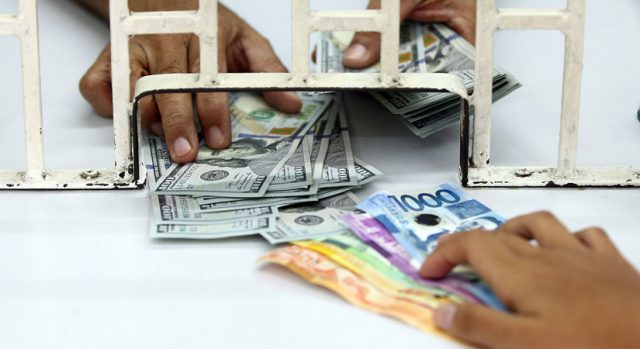
The peso closed stronger against the dollar Friday after oil prices declined while US stock markets rose.

The peso closed at P50.786 to the dollar, against its Thursday close of P50.81 Thursday, according to the Bankers Association of the Philippines.

The peso was still weaker than its close of P50.711 a week earlier.

The peso opened at P50.80 Friday. The low was P50.895, while the high was P50.735.

Dollar trading volume rose to $1.068 billion Friday from $704.19 million the previous day.

The peso’s performance follows a decline in oil prices, a trader said in an email.

Bloomberg reported Thursday that oil prices dropped the most in two weeks due to concerns over global economic growth.

Oil futures in New York dropped 1.1% Thursday after touching their highest levels since 2014 this week.

Oil prices have been increasing in recent weeks due to supply issues, with major exporters yet to agree on further increasing production to meet growing demand.

Another factor which supported the peso was a perception of risk-on sentiment gaining ground in US markets, Rizal Commercial Banking Corp. Chief Economist Michael L. Ricafort said in a Viber message.

US stocks in response to expectations of more strong corporate results. The S&P 500 has risen 5% since JPMorgan Chase & Co. kicked off reporting season, following a month of losses.  – Luz Wendy T. Noble

Shares dip as 6-day rise prompts profit taking

Philippine Stock Exchange index

PHILIPPINE shares dropped on Friday as investors booked their profits before the weekend, ending the market’s six-day rally.

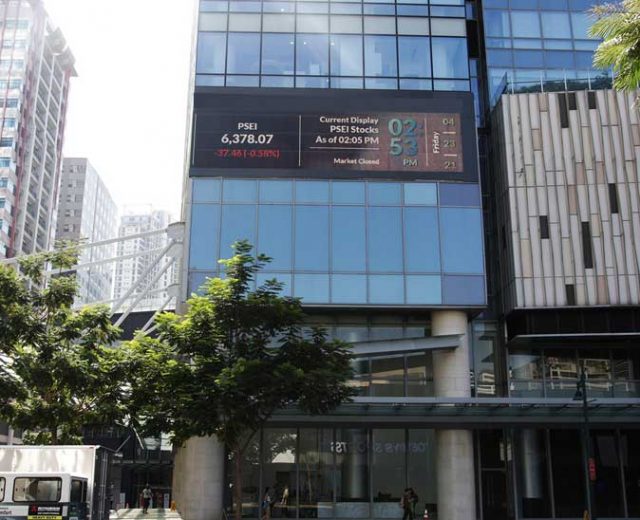
The benchmark Philippine Stock Exchange index (PSEi) retreated 22.11 points or 0.30% to close at 7,289.61 while the broader all shares index fell 12.22 points or 0.27% to finish at 4,462.7.

Claire T. Alviar, senior research and engagement officer at Philstocks Financial, Inc., said in a mobile phone message that investors took recent gains after the market’s strong performance for six consecutive days.

“Investors took profits on the last trading day of the week to avoid uncertainties over the weekend, failing to break the resistance around the 7,300 levels,” Ms. Alviar said.

“Security Bank Corp. led the gainers, up by 2.87% to P122.00 while AC Energy Corp. was at the tail end, dropping 3.83% to P11.04. Sector performance was mixed with the banks advancing the most by 0.63% while industrials had the biggest loss of 1.16%,” she added.

Aniceto K. Pangan, equity trader at Diversified Securities, Inc., said in a mobile phone message that the market’s decline was a “healthy correction.”

“[The] market went on profit taking today after several days up and [is] considered as a healthy correction,” Mr. Pangan said.

Cristina S. Ulang, First Metro Investment Corp. (FMIC) head of research, said the net earnings of the Bank of the Philippines Islands (BPI) played a factor in the market’s performance on Friday.

“[The] earnings season with BPI showing year-on-year growth in the third quarter kept PSEi’s weekly gains intact,” Ms. Ulang said in a mobile phone message.

In a stock exchange disclosure on Thursday, BPI reported a 1.8% year-on-year increase in its net income to P17.5 billion for the nine months to September.

On Friday, majority of sectoral indices declined at the end of trading. The two gainers were financials, up 9.75 points or 0.63% to 1,552.25, and services, up 4.33 points or 0.23% to 1,874.62.

Industrials went down 125.57 points or 1.16% to 10,673.4; mining and oil decreased 100.53 points or 0.94% to 10,508.12; property shrank 14.31 points or 0.42% to 3,354.58; and holding firms dropped 29.35 points or 0.39% to 7,327.42.

Value turnover on Friday amounted to P5.32 billion with 785.36 million shares switching hands, lower than the P10.15 billion and 1.06 billion shares traded the prior day.

Net foreign selling reached P17.86 million, a reversal of the P304.53 million worth of net foreign buying logged on Thursday.

Decliners bested advancers, 105 versus 82, while 57 names ended unchanged on Friday. — Revin Mikhael D. Ochave

No Squid Game: South Korea’s real-life debt trap

PXFUEL

SEOUL — Many small business owners in South Korea recognize themselves in the cash-strapped characters of the wildly popular Netflix drama Squid Game, who vie desperately for a chance to win $38 million, exposing a debt trap that is all too familiar.  

Nearing retirement at 58, Yu Hee-sook paid off her debts long ago, but still gets calls from collection agencies threatening to seize her bank accounts, as the loans got securitised and sold to investors without her knowledge.  

“In Korea, it’s like the end of the world once you become a credit delinquent,” said Ms. Yu, who got by on small jobs, such as writing for movie magazines, during the 13 years it took to pay off the debts she incurred over a movie that flopped in 2002.  

“All I wanted was chances to repay debt, but banks don’t let you make money,” added Ms. Yu, who feels trapped in an unforgiving life-long ordeal, just like the 456 game show contestants of the Squid Game 

While foreigners may associate South Korea with the boyband BTS and sleek Samsung smartphones, the drama points to a dark flipside of rising personal borrowing, the highest suicide rate among advanced nations, and the rarity of getting free of debt.  

Record household borrowing is fueling private investment and housing growth, but unforgiving social mores about debt often blur the line between personal and business loans, burdening those who run small businesses.  

Personal bankruptcies soared to a five-year high of 50,379 last year, court filings show.  

The proportion of those falling behind on more than one type of personal debt payment has risen steadily to reach 55.47% by June from 48% in 2017, figures from the Korea Credit Information Services show.  

“If Donald Trump was a Korean, he probably couldn’t have become the president, having been bankrupted many times,” said a lawyer in Seoul, who specialises in personal bankruptcy.  

“In the United States, corporate debt is more separated from personal debt.”  

An inadequate social safety net for small entrepreneurs and the lack of a rehabilitation program for failures spell risks that could drive some South Koreans desperate, and banks often ignore a five-year limit to destroy insolvency records.  

“Due to traditional practices in the banking industry, business owners in South Korea face high likelihood of taking the debt burden from the business they run,” said bankruptcy judge Ahn Byung-wook.  

Banks often demand that business owners stand as joint surety for the firm’s borrowing, a practice the government banned for public financial institutions in 2018, although three owners told Reuters some providers persist.  

Applicants for business loans who have poor credit ratings or a history of default need guarantees from state-run financial institutions in South Korea.  

“Culturally, failed entrepreneurs are socially stigmatized, so starting over is hard, as people don’t trust them,” added Ahn, who has spent four years at the Seoul Bankruptcy Court.  

“On top of that, those who file personal bankruptcy face a long list of restrictions on employment.”  

The numbers of South Korea’s self-employed rank among the world’s highest, forming a quarter of the job market, making it vulnerable to downturns. A central bank study in 2017 showed that just 38% of such businesses survive three years.  

Still, as economic prospects dwindle, with South Koreans chasing fewer good jobs amid surging home prices, many are betting that speculation is the only route to wealth, and have taken on more debt than ever to buy stocks and other assets.  

Household borrowing is roughly equivalent to GDP at a record 1,806 trillion won ($1.54 trillion) in the June quarter.  

“The government encourages startups but they don’t take care of the failed businesses,” said Ryu Kwang-han, a 40-year-old entrepreneur who exited the debtor rehabilitation program in 2019 but still struggles to get loans.  

“How is this different from Squid Game if there’s no second chances?”  

The global sensation has been watched by 142 million households since its Sept. 17 debut, the world’s largest streaming service has said, helping Netflix to add 4.38 million subscribers. — Cynthia Kim/Reuters  

Bank of Japan discussing phasing out pandemic support as economy reopens — sources

WIKIPEDIA.ORG

TOKYO — The Bank of Japan (BoJ) is discussing phasing out a coronavirus disease 2019 (COVID-19) loan program if infections in the country continue to dwindle, sources told Reuters, potentially setting the bank up to exit a key crisis-mode policy sooner than investors expect.  

Markets have been anticipating a third extension of the scheme, set to expire in March. Policymakers have not reached a consensus as discussions are preliminary, said three people familiar with the central bank’s thinking, and a decision is unlikely before December.  

But with corporate funding strains easing, infections falling sharply and the world’s third-biggest economy reopening, some policymakers are contemplating ending the emergency program in March, the sources said.  

There is also a concern that banks are using the scheme to reap a reward on tapping in, rather than passing on the cash to companies, the sources said.  

This reflects a growing concern over side-effects of paying financial institutions 0.1% interest to tap the program, without close scrutiny into whether the money is going, as targeted, to smaller firms in need of cash.  

“Excluding some sectors, corporate funding conditions have generally improved and the need for immediate liquidity support is fading,” one source said. “What was intended as an emergency measure cannot last forever.”  

Ending the program would defy market expectations, given a string of comments from policymakers stressing that the bank’s focus would remain on healing the wounds of the pandemic.  

The move would put the BoJ more in line with other big central banks in heading for an exit from crisis-mode policies, as economies emerge from the pandemic-induced doldrums.  

Even if the emergency program is terminated, the BoJ will continue to support the economy with massive money printing and a pledge to keep long-term borrowing costs capped at zero.  

NO RUSH  

The BoJ created the loan scheme at the peak of a pandemic-driven market rout in May 2020 to channel money through financial institutions to cash-strapped smaller firms. The deadline has been extended twice as slow vaccinations and rising infections forced Japan to maintain curbs on economic activity.  

With bank lending growth slowing and many firms sitting on huge piles of cash after weathering an initial cash crunch, some policymakers see scope to end the program, the sources said.  

Japanese companies held liquid assets worth 20% of sales in the three months to June, up from 15% before the pandemic hit, government data show. The scheme lent 78 trillion yen ($680 billion) through last month.  

Banks tapped 24.2 trillion yen in a market operation in September, more than double the amount in June, but their lending has continued to slow, raising concerns they were tapping the scheme mainly to get the interest reward rather than lend the money on to companies.  

There is no guarantee the BoJ can smoothly phase out the program. The nine-member board is split between those who favor ending the program and those who see merit in keeping it in place longer as a precaution.  

BoJ board member Asahi Noguchi, an advocate of aggressive easing, said this month the BoJ “may have no choice” but to extend the program unless it becomes clear economic activity will return to pre-COVID levels.  

Political considerations also complicate the outlook.  

Prime Minister Fumio Kishida has pledged to compile another spending package to cushion the pandemic’s blow and focus on distributing more wealth to low-income households. Ending a pandemic-relief loan program could raise eyebrows among politicians when the government continues to focus on dealing with the hit from the health crisis.  

“There’s no rush in deciding,” a second source said on the fate of the program, adding that “many factors” need to be considered in reaching a conclusion. — Leika Kihara and Takahiko Wada/Reuters  

Fed cracks down on top officials’ trading in bid to end ethics scandal

REUTERS

WASHINGTON — The Federal Reserve on Thursday banned individual stock purchases by its top officials and unveiled a broad set of other restrictions on their investing activities, taking action roughly six weeks after reports of active trading by some US central bank policymakers triggered an ethics uproar.  

The new rules will limit the types of financial securities the Fed’s top officials can own, including a ban on purchasing individual stocks or holding individual bonds and agency-backed securities. It also requires a 45-day advance notice and approval of any transaction and stipulates investments be held for at least a year.  

“These tough new rules raise the bar high in order to assure the public we serve that all of our senior officials maintain a single-minded focus on the public mission of the Federal Reserve,” Fed Chair Jerome Powell said in a statement.  

In the statement, the Fed said the new rules were meant to “help guard against even the appearance of any conflict of interest in the timing of investment decisions.”  

The new rules were announced after two of the 12 regional Fed bank presidents — the Boston Fed’s Eric Rosengren and the Dallas Fed’s Robert Kaplan — resigned after reports of their active trading in 2020, when the central bank launched a massive effort to fight the economic impact of the coronavirus disease 2019 (COVID-19) pandemic. The Fed’s efforts helped buoy financial markets on a broad basis.  

Active trading by top Fed officials will now be expressly prohibited, with purchases limited to investments like mutual funds, and all transactions vetted in advance by the central bank’s ethics officer.  

Officials can continue to hold individual stocks that they owned when they took office, but would be subject to the one-year holding period and the advance notice of any sales.  

But the new rules will force officials, including Mr. Powell, who owns several state and county government-issued securities, to divest individual bonds that they hold.  

In times of declared financial stress, such as occurred at the start of the coronavirus pandemic, all transactions will be prohibited.  

Atlanta Fed President Raphael Bostic, speaking on CNBC, said he hoped the steps announced on Thursday would let the Fed put the ethics controversy to rest and refocus on coming policy debates.  

“I am hopeful that swift action will put this behind us,” Mr. Bostic said.  

To the Fed’s sharpest critics on the issue, however, the new rules were a start, but with more still needed in particular to understand whether trading through the pandemic year by different officials violated any laws.  

The new regulations are “a very important step forward in restoring the Fed’s reputation,” said Andrew Levin, a professor at Dartmouth College. But along with an existing investigation by the Fed’s inspector general of prior trading activity, he said the central bank should call on the US Department of Justice and US Securities and Exchange Commission to examine what happened.  

Perhaps unique among US government officials, Fed policymakers not only influence the fate of individual companies or economic sectors, like other regulators, but have the power to lift asset values far more broadly — a fact that made their trading last year a lightning rod.  

Beyond the resignations of Messrs. Rosengren and Kaplan, Mr. Powell and Fed Vice Chair Richard Clarida had been criticized for what, in other times, would have been treated as innocuous transactions involving, for example, stock index funds.  

In the context of the economic crisis triggered by the pandemic, however, the disclosures drew demands from leaders in Congress for tougher oversight, and clouded Mr. Powell’s bid for a second term as Fed chief.  

The new rules could head off those demands and dampen the criticism.  

When asked about the Fed’s new rules on trading, a White House spokeswoman said President Joseph R. Biden, Jr.’s administration respected the independence of the central bank and would not comment on recent developments.  

“President Biden believes that all government agencies, and officials, including independent agencies, should be held to the highest ethical standards, including the avoidance … of any suggestions of conflicts of interest,” she said.  

Gregory Daco, chief US economist for Oxford Economics, said the quick toughening of ethics rules “work in his favor,” with the nomination still likely his to lose.  

FOCUS ON REGIONAL BANKS  

However, the issue is unlikely to fully fade, particularly with open questions about whether trading by Kaplan and Rosengren had been reviewed at all by ethics officers at their banks or at Fed’s Washington-based Board of Governors.  

The 12 regional Fed banks are quasi-private institutions, not subject for example to the federal Freedom of Information Act, and the selection and oversight of their presidents a subject of frequent calls for reform.  

The ethics controversy has renewed those demands, as well as a call for a broader release of any documents detailing whether Mr. Kaplan, for example, had advance approval for his multiple sales and purchases of individual stocks.  

“This should be the beginning of a comprehensive investigation in what’s going on at the board and the reserve banks, not the end,” said Aaron Klein, a senior fellow for the Brookings Institution.  

New York Times report earlier on Thursday said that ethics officials in March 2020 had cautioned Fed policymakers about personal securities trading as the central bank geared up for what became a massive and wide-ranging effort to battle the pandemic and keep the economy and asset markets from crashing.  

The Times said it had confirmed the substance of a March 23 email from the Fed’s main ethics office, ultimately distributed through the system and to all the regional bank presidents, advising against what the newspaper characterized as unnecessary trading given the central bank’s developing crisis response.  

Over the weeks to come the Fed would launch programs that touched virtually every asset market and even offered credit to individual businesses.  

Following the Times story, US Senator Elizabeth Warren, a Democrat, wrote to Powell asking that the correspondence from the ethics office be released. Warren has been among Powell’s harshest critics, and in a recent hearing dubbed him a “dangerous man” for what she regards as inadequate Fed oversight of the banking industry. She opposes his appointment to a second term as Fed chief. — Howard Schneider and Ann Saphir/Reuters  

Vendiz Pharmaceuticals, Inc. offers life-changing solutions

vitaCLEAR eye supplement

One remarkable day in the year 1990, Juvencio “Ven” D. Dizon decided to pursue his desire to offer cost-effective and high-quality healthcare products to help address the growing healthcare needs of Filipinos. Thus, the birth of Vendiz Pharmaceuticals, Inc. (VPI).

According to Ven, “my vision for Vendiz is to be one of the leading companies in the pharmaceutical industry by providing world-class customer service, competitive product alternatives, stronger doctor-patient relationships, and growth in career opportunities. Vendiz’ principal mission is to improve the lives of the Filipino people through continuous innovation, quality products, and cost-effective prices.”

Juvencio “Ven” D. Dizon

From its inception, VPI remains to be a 100% Filipino-owned company and has its present corporate office at the Dizon Corporate Center in Quezon City.

Vendiz is affiliated with Ashford Pharmaceutical Laboratories., Inc. which manufactures all of Vendiz’ products. Ashford continues to comply with *Current Good Manufacturing Practices and PIC/s standards. Ashford is equipped with the required manufacturing equipment and quality control analytical instruments. It is one of the few remaining pharmaceutical plants that is licensed to manufacture sterile products in the country.

“Our vertical integration with Ashford gives us the edge over the competition. This ensures meeting strict quality standards and stock availability in the supply chain.”

Vendiz products are FDA-approved and available nationwide in leading drug stores and hospital pharmacies. These are recommended and prescribed by healthcare professionals.

Osteoprotec calcium supplement with Vitamin D3 for bone health

Over-the-counter (OTC ) products include  vitaClear – eye supplement and Osteoprotec calcium supplement with Vitamin D3 for bone health, and soon Vit. C and Eye Drops for dry eyes.

For prescription products, Vendiz offers eye drops and ear drops for various eye and ear conditions; dermatological creams and ointments, and anti-infectives, anti-diabetic oral preparations.

Vendiz offers eye drops and ear drops for various eye and ear conditions; dermatological creams and ointments, and anti-infectives, anti-diabetic oral preparations.

Vendiz continues to build its portfolio of products and by 2022, Vendiz will be launching its latest product offerings.

Vendiz adapted to the  changes and opportunities brought about by the COVID-19 pandemic to ensure the availability of its products to the public.

Vendiz carries on Ven’s legacy through its CSR program. Vendiz has been doing and will still do several medical missions, a feeding program for children, scholarship programs, support for socio-civic organizations, e.g. UNICEF, Resources for the Blind, Hand and Foot Artists, MOWEL Fund, Boys’ Town, and Orphanages.

With the Christmas Season just around the corner, Vendiz continues to share its blessings with some 250 families through its traditional Christmas basket of goodies.


Spotlight is BusinessWorld’s sponsored section that allows advertisers to amplify their brand and connect with BusinessWorld’s audience by enabling them to publish their stories directly on the BusinessWorld Web site. For more information, send an email to online@bworldonline.com.

Join us on Viber to get more updates from BusinessWorld: https://bit.ly/3hv6bLA.

Renewable energy jobs grew globally in 2020 despite COVID-19 crisis

RAWFILM-UNSPLASH

BARCELONA — The number of jobs in renewable energy worldwide increased in 2020, despite the huge economic disruptions caused by the coronavirus disease 2019 (COVID-19) pandemic, with the growing industry holding up better than fossil fuels, international agencies said on Thursday.  

In an annual report on clean energy employment, the International Renewable Energy Agency (IRENA) and the International Labour Organization (ILO) said there were 12 million jobs in renewable energy and its supply chains last year, a third of them in solar power.  

That was a rise from 11.5 million jobs in 2019.  

“The year 2020 demonstrated that not even a global pandemic can slow the advance of renewable energy,” wrote IRENA Director-General Francesco La Camera in a foreword.  

The COVID-19 crisis, together with the challenges of global warming, “reinforce the need for a just and inclusive transition toward a clean, reliable energy supply and sustainable, healthy, climate-friendly jobs,” he added.  

Achieving a fair shift from coal, oil, and gas to solar, wind, bioenergy and hydropower will require efforts to train workers in new skills and build local supply chains, the report said.  

Social protection will also be needed for those who lose jobs in high-carbon activities like coal mining, it added.  

Lockdowns to contain the COVID-19 pandemic did disrupt some parts of the renewables industry in 2020, it noted, including a slight dip in employment in biofuels due to lower transport use.  

Off-grid solar lighting sales also suffered in developing countries but companies were able to limit job losses with financial help from governments, the report said.  

Martha Newton, the ILO’s deputy director-general for policy, said the continued growth of renewable energy jobs worldwide amid the pandemic was “a very encouraging signal.”  

But gaining the maximum social and economic benefits from the clean energy shift would require looking beyond just the number of jobs, she told the report launch by video.  

“We need an approach to energy transition conducive to decent work creation” — meaning jobs that boost equity, security and human dignity, she said.  

WOMEN AT WORK?  

The report stressed the need to bring more women into renewable energy jobs, though they already hold 32% of those, on average, compared to 22% in the oil and gas sector.  

Claver Gatete, Rwanda’s minister of infrastructure, said his East African nation was encouraging girls to study engineering, offering them internships in clean energy firms and setting gender targets for the industry.  

Globally in 2020, the solar photovoltaics sector accounted for about 4 million jobs, biofuels for 2.4 million, hydropower for 2.2 million and wind energy for 1.25 million, the report said.  

Nearly four in 10 renewable energy jobs were in China, with Brazil, India, the United States and European Union states holding the next highest numbers.  

Other places expanding clean energy employment include Vietnam and Malaysia, which export solar equipment; Indonesia and Colombia, with large agricultural supply chains for biofuels; and Mexico and Russia, where wind power is growing.  

In sub-Saharan Africa, solar jobs are expanding in countries from Nigeria to Togo and South Africa, the report noted.  

Its authors estimated that if governments limit global warming to 1.5 degrees Celsius above preindustrial levels, their most ambitious goal, the renewable energy sector could grow to 38 million jobs by 2030 and 43 million by 2050.  

That is about double the number that would be created under current climate action plans and pledges, which fall short of meeting the Paris Agreement goals, it noted.  

Sharan Burrow, general secretary of the International Trade Union Confederation which represents 200 million workers in more than 160 countries, said every part of the economy would need to transition to a greener model to cut emissions to net zero.  

That’s “a good news story”, she said, because for every 10 jobs in renewable energy, 5–10 are created in manufacturing supply chains and more in services, transport and logistics.  

If those jobs come with good conditions, a minimum wage and labour rights such as the ability to form unions and bargain collectively, “that’s about development, that’s about community renewal, that’s about aspirations,” she told the report launch. —  Megan Rowling/Thomson Reuters Foundation 

A continuing commitment to quality community living

(from left to right) Arch. Terrence Yu of Visionarch, Mr. Lemuel Dionisio, COO of Primehomes, Engr. Laurencito Tiu of MEC and Engr. Moises Ordona of MEC

ISO-certified Primehomes officially starts Laselva development

The current situation we are in has further stressed the importance of preparing for the future and building one. A very fitting way one can do this is by owning a property that one can either earn from or use for his or her own anytime.

Grounded on a mandate of creating communities that matter, Primehomes Real Estate Development, Inc. is continuously committed to offering homebuyers great, well-crafted, sustainably designed, and amenable spaces that are worth one’s investment.

Attesting to this commitment is its recent ISO 9001:2015 certification from the BQSR, a globally recognized International Standards Organization (ISO) Certification body accredited by the United States-based International Accreditation Service (IAS).

The ISO 9001:2015 specifies requirements for a quality management system (QMS) when an organization needs to demonstrate its ability to consistently provide products and services that meet customer and applicable statutory and regulatory requirements and aims to enhance customer satisfaction through the effective application of the QMS.

Having met such standards, Primehomes considers the ISO seal a very important feat for the company since it signifies that the company is meant to deliver quality service. At the same time, this assures and even boosts the credibility and integrity of the company.

Further showing the developer’s commitment to quality service is the progress in Laselva, the second phase of Primehomes’ exclusive community in Capitol Hills, Quezon City.

Last Wednesday, October 20, Primehomes officially started the construction and development of Laselva through a groundbreaking ceremony.

For Primehomes, the groundbreaking, aside from marking an important development milestone, is its very own way of assuring clients that the promise of continuously providing better communities is being delivered.

“Despite the hindrances brought about by the pandemic, we at Primehomes continuously plan for the future, adopt to the change of time, take the challenges heads on, and hopefully, as we become successful in this current development, more projects will be opened until we achieved the full 3.6 hectares property development,” Engr. Ferdinand Aquino, Head of Operations at Primehomes, said during the groundbreaking ceremony.

The two-tower Laselva intends to create an environment that allows for comfortable living, starting with a linear park that consists of pocket gardens. Units in Laselva will have direct access to the main clubhouse, named Palma De Anahaw, as well to the development’s main amenity, Parque Verde. There will also be an alfresco lounge area at Laselva’s main canopy.

These complement the spacious and well-designed units Laselva offers under Primehomes’ Living, Breathing Home series, which have bigger unit cuts, and low density per floor. Units come in Studio Premiere, One Bedroom, and Two Bedroom types. Making access to units in Laselva much easier and less hassle are its high-speed elevators.

Mr. Lemuel B Dionisio (Chief Operating Officer)

“With this new development in Primehomes Capitol Hills, you get the opportunity to be part of the exclusive enclave, in the heart of Quezon City,” Lemuel B. Dionisio, chief operating officer of Primehomes, noted during the groundbreaking.

Right from taking a look at the site, Primehome already delivers quality convenience to potential buyers and owners with its site tour.

The safe, hassle-free site tour begins at the main gate of Primehomes Capitol Hills as visitors are taken through the development through golf carts, giving them a country club feel as they view the development.

This is aptly coupled with Primehomes’ Sales Pavilion, where visitors can see a showcase of Primehomes projects as well as representations of deliverable units, while spending some cozy time for negotiations at the Pavilion Cafè, beside a breathtaking mini lush garden.

For those who want to tour Laselva at Primehomes Capitol Hills, they can visit www.primehomes.com.ph and book a visit. Reserving a unit is also much easier as Primehomes allows payments through the website.

Start building that better future with a meaningful community, which can be found at Primehomes Capitol Hills, located along Capitol Hills Drive cor. Zuzuarregui St., Old Balara, Quezon City.


Spotlight is BusinessWorld’s sponsored section that allows advertisers to amplify their brand and connect with BusinessWorld’s audience by enabling them to publish their stories directly on the BusinessWorld Web site. For more information, send an email to online@bworldonline.com.

Join us on Viber to get more updates from BusinessWorld: https://bit.ly/3hv6bLA.

Russia reports cases of more contagious COVID-19 Delta subvariant

MOSCOW — Russia has reported “isolated cases” of coronavirus disease 2019 (COVID-19) with a subvariant of the Delta variant that is believed to be even more contagious, the state consumer watchdog’s senior researcher said on Thursday.  

The researcher, Kamil Khafizov, said the AY.4.2 subvariant may be around 10% more infectious than the original Delta — which has driven new cases and deaths to a series of record daily highs in Russia — and could ultimately replace it.  

However, he said this was likely to be a slow process.  

“The vaccines are effective enough against this version of the virus, which is not so different as to dramatically change the ability to bind to antibodies,” he said.  

The AY.4.2 subvariant is also on an increasing trajectory in England and had already accounted for about 6% of all sequences generated on the week beginning Sept. 27, a UK Health Security Agency report released on Oct. 15 said.  

British Health Minister Sajid Javid on Wednesday said there was no reason to believe the subvariant posed a greater threat than Delta.  

Russian immunologist Nikolay Kryuchkov said Delta and its subvariants would remain dominant and might in the future adapt in some ways to vaccines, especially where vaccination rates are below or just above 50%.  

“But it seems to me that a revolutionary jump will not happen, because the coronavirus, like any organism, has an evolutionary limit, and the evolutionary jump has already happened,” he said.  

The Russian health ministry had no immediate comment.  

Moscow’s mayor on Thursday announced the strictest lockdown measures since June of last year, a day after President Vladimir Putin approved a government proposal for a week-long workplace shutdown at the start of November. — Reuters

Aswang is the big winner at the 2021 Gawad Urian

The documentary on the war on drugs, Aswang directed by Alyx Arumpac was the night’s big winner at the 44th Gawad Urian awards night, winning Best Picture, Best Director, Best Documentary, and Best Cinematography.

The ceremony was held on Oct. 21 and streamed via TVUP YouTube and Manunuri ng Pelikulang Pilipino (MPP)’s Facebook.

“It’s a recognition from the Philippines and the [Gawad] Urian and that’s probably the most precious thing a documentary filmmaker can have,” Ms. Arumpac said in her acceptance speech for Best Picture. “This is a great push towards working and moving forward to this next project and this next season.”

Aswang follows a group of people whose lives have been caught up by the Duterte administration’s ongoing war on drugs which targets drug dealers, users, and criminals. Among them, Brother Jun Santiago, a photojournalist and missionary brother who comforts bereaved families

The film was screened at the 74th Annual Locarno Film Festival in August. It also won the Coup de cœur du Jury award at the 20th edition of the Festival International du Film Insulaire de l’île de Groix (FIFIG) France in August. It also qualified in the Documentary Feature category at the 93rd Academy Awards in April.

Aswang is currently streaming on kTxt, Upstream, and Ticket2Me until Nov. 7. Tickets are priced at P15. Ms. Arumpac also partnered with Active Vista (activevistafest@dakila.org.ph) for free on ground community screening.

Other winners of the evening include: Micko Laurente who won the Best Supporting Actor award for Watch List; while Dexter Doria and Hazel Orencio shared the Best Supporting Actress for their work in Memories of Forgetting and Lahi, Hayop, respectively. Nanding Josef was awarded Best actor for Lahi, Hayop; while Alessandra de Rossi won Best Actress for Watch List.

The ceremony also paid tribute to National Artist for Literature Bienvenido Lumbera, who passed away at the age of 89 in September. Mr. Lumbera was a co-founder of the Manunuri ng Pelikulang Pilipino.

“Salamat, Bien, sa iyong buhay na nagpayaman sa kahulugan ng pagiging Pilipino nating lahat (Thank you, Bien, for your life that deepened our understanding of what it means to be a Filipino),” professor, critic, creative writer and MPP co-founder Nicanor Tiongson said.

Meanwhile, the Natatanging Gawad Urian was awarded to director Lav Diaz.

A portion of his citation reads: “para sa pagsustina ng kapangyarihan ng pelikula bilang sining din ng pagmulat at pagbabago, para sa pagbibigay-inspirasyon sa mga nakababatang direktor at filmmaker sa pagtindig laban sa awtoritarianismo at para sa tunay na pagbabago, para sa pagbibigay ng malikhaing tanglaw sa madidilim na yugto na ating pinagdaanan na at patuloy na pagdadaanan pa.”

(For sustaining the power of cinema for awakening and change, giving inspiration to young filmmakers in standing up to authoritarianism and for real change, and for providing creative enlightenment to the darkest chapter of our lives and will continue to encounter.) (https://www.facebook.com/GawadUrian/posts/4465831820162798)

Mr. Diaz’s film Lahi, Hayop also bagged Best Screenplay, alongside its recognition for acting awards.

The Manunuri also honored the Natatanging Pelikula ng Dekada, or best movies of the decade, 2010 to 2019. It also named John Lloyd Cruz as the best actor of the decade, while three actresses – Nora Aunor, Angeli Bayani, and Alessandra de Rossi – share the honor of best actress of the decade.

The Gawad Urian is an annual awards ceremony which has been held since 1977 and is given by the Manunuri ng Pelikulang Pilipino (Filipino Film Critics). It is often regarded as the equivalent of the US’ New York Film Critics Circle. — Michelle Anne P. Soliman


Below is the full list of winners: 

Best Picture

  • Aswang by AlyxArumpac

Best Documentary 

  • Aswang by AlyxArumpac

Best Short Film 

  • Ola by Mijan Jumalon

Best Animation

  • HayopKa: The Nimfa Dimaano Story by Avid Liongoren

Best Director

  • AlyxArumpac for Aswang

Best Actor

  • Nanding Josef for Lahi,Hayop

Best Actress

  • Alessandra de Rossi for Watch List

Best Supporting Actor

  • Micko Laurente for Watch List

Best Supporting Actress

  • DexterDoria for Memories of Forgetting
  • Hazel Orencio for Lahi,Hayop

Best Screenplay

  • Lahi,Hayop by Lav Diaz

Best Production Design

  • Darrel Manuel for Memories of Forgetting

Best Cinematography

  • AlyxArumpac and Tanya Haurylchyk for Aswang

Best Editing

  • JoselitoAltarejos for Memories of Forgetting

Best Sound

  • Corrine De San Jose forMidnight in a Perfect World

Best Music

  • JhayeCura and Paulo Protacio for The Boy Foretold by the Stars

Gawad Para sa mga Natatanging Pelikula ng Dekada (2010-2019): Ang Damgo ni Eleuteria (2010); Ang Sayaw ng Dalawang Kaliwang Paa (2012); Ang Paglalakbay ng mga Bituin sa Gabing Madilim (2013); Norte, Hangganan ng Kasaysayan (2014); Women of the Weeping River (2017); Tu Pug Imatoy (2017); Baboy Halas (2016); Respeto (2017); Balangiga (2017); Buy Bust (2019); and Ang Babae at Baril (2019).

Natatanging Aktor ng Dekada (2010-2019): John Lloyd Cruz

Natatanging Aktres ng Dekada (2010 – 2019): Nora Aunor, Angeli Bayani, and Alessandra de Rossi

Natatanging Gawad Urian: Lav Diaz (director)

The only way is up: corporate chiefs warn on prices

REUTERS

For central bankers wrestling with the question of whether inflationary pressures are transitory, industry chiefs around the world have a clear message: prices are only going higher.  

Shortages of workers, fuel, cargo ships, semiconductors and building materials as the global economy bounces back after pandemic lockdowns have companies from electric car makers to chocolatiers scrambling to keep a lid on costs.  

Some of the world’s biggest brands are now passing on higher prices to consumers and are warning any policymakers sitting on the inflationary fence that things are going to get worse.  

“We expect inflation to be higher next year than this year,” said Graeme Pitkethly, finance chief at Unilever, which says its products, from Dove soap to Ben & Jerry’s ice cream to Persil washing powder, are used by 2.5 billion people every day.  

Unilever raised prices 4.1% in the third quarter and said they would go up again by at least that in the final three months of 2021, and might accelerate even more next year.  

Earlier this week, the world’s biggest food maker, Nestle, said it would increase the prices of its products, which include Nescafe and Purina pet food, further in 2021 and then again in 2022 as raw material costs carry on climbing.  

A long-running survey showed British manufacturers raised prices by the most since 1980 in the three months to October to cope with surging costs and labor shortages — and their cost expectations for the coming quarter were the highest since 1977.  

The view from the boardroom contrasts with a more ambivalent tone among finance ministers and central bank governors faced with trying to work out when to start withdrawing monetary and fiscal stimulus without choking off the economic recovery.  

STRUCTURAL SCARCITY  

A draft communique ahead of a gathering of top policymakers in Washington last week called on central banks to be ready to take “decisive actions to maintain price stability.” But by the end of the meeting, the language had been toned down.  

Instead, the International Monetary Fund’s steering committee urged global policymakers to monitor pricing dynamics closely but “look through” inflationary pressures that will fade as economies normalize.  

“The key question is to know whether this is a transitory inflation or not. Nobody has a response to that key question,” French Finance Minister Bruno Le Maire said last week.  

Bank of England Governor Andrew Bailey has said he continues to believe the recent jump in inflation — currently at 3.1% and forecast to climb — is temporary but the British central bank is widely expected to be the first major monetary authority to raise rates in the post-pandemic cycle.  

For executives at companies with a finger on the pulse of dozens of commercial sectors, such as global recruitment firm Randstad, some of the problems leading to higher prices are structural.  

Randstad said on Thursday that it expected labor shortages to persist for years with older employees leaving and fewer entering the workforce. Randstad’s own personnel costs jumped 3% in the third quarter as it added 2,600 full-time positions.  

“We do think that scarcity is going to be structural,” Randstad’s outgoing Chief Executive Jacques van den Broek said. “Jobs in demand are in healthcare, education, technology and logistics.”  

Wage disputes have emerged in several countries with one union in Germany, Europe’s largest economy, calling for an inflation-busting wage increase of 5.3% for nearly 900,000 construction workers.  

SUPPLY CRUNCH  

Swiss engineering company ABB, which is grappling with a global semiconductor supply crunch, said labor shortages, especially in the United States, had hit its deliveries of industrial robots, among other products.  

The scarcity of chips has already hurt vehicle production around the world, bringing some assembly lines to a halt.  

Swedish truck maker AB Volvo said on Thursday that while it was facing strong demand, shortages of components such as chips and freight capacity were both driving up costs and disrupting its production.  

Swiss elevator and escalator manufacturer Schindler said it too was cautious about its outlook due to higher raw materials prices, soaring cost inflation and supply chain bottlenecks that were set to persist.  

Several US firms announced similar issues on Thursday. Southwest Airlines said it expected its overall costs to rise 8% to 12% in the final three months of 2021, partly because of efforts to plug staff shortages.  

The biggest US auto retailer, AutoNation, reported another quarter of record income as car prices surged thanks to production cuts on chip shortages and rising demand from consumers turning to personal transportation in the pandemic.  

Federal Reserve Governor Christopher Waller said this week that if inflation keeps rising at its current pace in the coming months, rather than subsiding as expected, US policymakers may need to adopt “a more aggressive policy response” next year.  

Should interest rates start rising, though, banks will benefit from charging more for loans.  

Jes Staley, chief executive of Britain’s Barclays, said he was relatively relaxed about rising prices and an annual inflation rate of up to 4% in Britain could be positive for the bank, as long as it was supported by economic growth.  

But banking staff will be looking for compensation for higher prices. In Germany, Europe’s biggest economy, workers at public sector banks have staged warning strikes to underscore their demands for a 4.5% pay rise. — Siddharth Cavale and Anthony Deutsch/Reuters