Home Blog Page 6916

NIMBYism is good if the N stands for Nuclear

VECTORJUICE-FREEPIK

THE LIBERAL college town of Amherst, Massachusetts, is considering a ban on new large-scale solar projects that’s supported by, among other groups, the local chapter of the supposedly radical youth climate movement Sunrise.

It’s the latest in a long list of unfortunate instances in which renewable-energy projects have faced opposition not from coal barons or reactionaries, but from progressive types concerned about the land-use impacts of big new energy projects. The National Audubon Society is trying to stop a wind project near Oakland, California, for example, and local Audubon chapters are frequently in opposition to this or that clean-energy project.

What’s more, the US environmental review process allows anyone to invoke environmental concerns to block something they don’t like, regardless of the actual reason. It’s difficult to believe that advocates of offshore oil drilling are sincerely upset about the impact of offshore wind projects on the marine ecology, for example, but they are free to raise that objection. What could have been America’s largest solar farm was canceled last year in Nevada due to a variety of NIMBY (not in my back yard) objections.

These stories are often cited as examples of environmental hypocrisy, to make the left look bad. And certainly there are cases where the NIMBYs are just wrong. Last fall’s defeat of a proposed power line that would have brought Quebec hydropower through Maine into Massachusetts was a genuine disaster, with a small number of forest-protectors serving as useful idiots for fossil-fuel interests. More North American grid integration is critical to the clean-energy transition because Canadian hydropower can balance solar intermittency: America can send electricity north when the sun is shining and the Canadians can let water pile up behind their dams to generate power for when the sun goes down.

That being said, each fight over the site of a renewable project underscores a powerful reality: Decarbonizing the electric grid purely through new wind and solar will require an enormous amount of land. According to the Net Zero America Project, to fully electrify America’s vehicles, buildings, and factories — and then produce all that electricity through renewables — would require land five times the area of South Dakota.

This isn’t necessarily impossible. But it’s not possible without infringing on a lot of woodlands, habitats, nice views and other things that reasonable people are going to want to fight to preserve.

Which is another reason that environmental groups should be more open to the idea of geothermal and advanced nuclear power. Senator Jim Risch and Representative Russ Fulcher, both of Idaho, have introduced a bill that would grant geothermal projects located on federal land the same categorical exemption from the environmental-review process that oil and gas projects currently enjoy.

Environmental groups have largely opposed this on the theory that the US should be making it harder to drill for fossil fuels, not easier to drill for geothermal heat. And they’re not necessarily wrong. Drilling holes in the ground is not generally an ecologically friendly activity, whether those holes are for the purpose of fossil-fuel extraction or something else.

But amid all these debates and controversies over utility-scale solar, offshore wind, and new high-voltage transmission lines, one point is clear: Every conceivable option incurs some tradeoffs. A geothermal project can generate the same amount of power on a much smaller plot compared to a wind or solar project.

The arguments over the role of nuclear power in creating zero-carbon electricity are familiar. But there has been relatively little debate over the impact on land use. On a per-megawatt basis, a utility-scale solar project takes up about 80 times as much space as a conventional light-water nuclear plant. A wind plant, when considering the spacing of the turbines, requires over twice as much space as a solar one.

Meanwhile, a new generation of entrepreneurs is hoping to bring to market a new generation of much smaller nuclear reactors that will be even more space efficient.

These micro-reactors generate less power than existing mega-reactors. But the promise of micro-reactors is that, because they are smaller, they are easier to cool. The Aurora reactor design from Oklo, for example, is cooled with a series of static metal rods rather than water pumps that require their own redundant power sources for safety. If the reactor overheats, the nuclear fuel will expand, reducing its density and ending the reaction.

The micro-reactor industry’s unproven claim is that the smaller scale of these designs will allow them to be mass-produced more cheaply. Environmentalists who oppose new nuclear developments have seized on this claim — and it is speculative, whereas the cheapness of wind and solar power is a present-day reality.

Cost issues aside, however, the smaller footprint of micro-reactors is a huge advantage. If they also prove to be affordable, they could provide an enormous supply of zero-carbon electricity that creates many fewer conflicts about open space. Instead of needing five South Dakotas, we’d be looking at half a New Hampshire. And because reactors can be located near where the power is needed, there’d be less need for new transmission lines.

At the moment, the world is so far from meeting its clean-energy goals that it’s an everything-including-the-kitchen-sink situation. In the short term, that means supporting as much solar and wind power as we can build; promoting renewable power is more important than saving trees and birds (who happen to be facing very serious climate impacts, by the way). In the medium term, that means making it easier to build advanced nuclear plants such as micro-reactors.

Transforming the American energy system is going to require a lot of new zero-carbon electricity. Trying to find more space-efficient ways to provide it should be a priority.

BLOOMBERG OPINION
India’s richest more than double their fortunes during pandemic — Oxfam

REUTERS

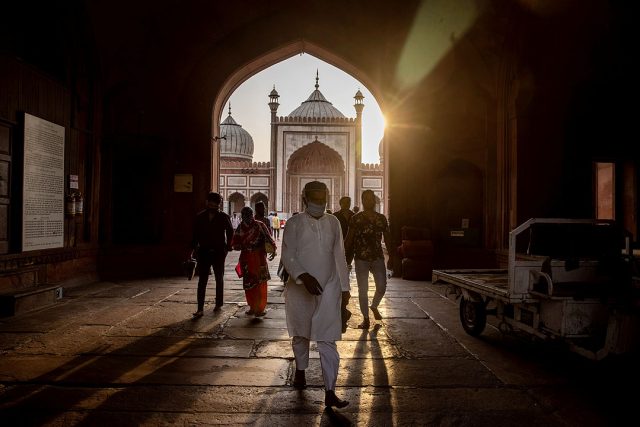
INDIA’s richest have more than doubled their fortunes during the coronavirus disease 2019 (COVID-19) crisis that’s ravaged the country and worsened poverty, and the government should revisit its policies to redistribute wealth, according to the global Oxfam Davos report of 2022.

The nation added 40 billionaires to 142 last year, when a second wave of infections overwhelmed its health infrastructure and pushed crematoriums and burial grounds to breaking point. They have almost $720 billion in combined fortune, more than the poorest 40% of the population, the group said in a report on rising inequality published Monday.

Wealth has surged globally during the pandemic as the value of everything from stock prices to crypto and commodities has jumped. The world’s 500 richest people added more than $1 trillion to their net worth last year, according to the Bloomberg Billionaires Index. India, where urban unemployment climbed as high as 15% last May and food insecurity worsened, now counts more billionaires than France, Sweden and Switzerland combined, Oxfam said.

State policies including the abolition of a wealth tax in 2016, steep cuts in corporate levies and an increase in indirect taxation are among the factors that helped make the rich richer, while the national minimum wage has remained at 178 rupees ($2.4) a day since 2020, the India supplement of the global report said. Reduced federal funding to local administrations amid growing privatizations in the health and education sectors have further boosted inequalities. The nation is home to a quarter of the world’s undernourished people, Oxfam said, citing the World Food Programme.    

“Unfortunately, not only has the taxation policy of the Indian government been pro-rich, it has also deprived India’s States of important fiscal resources — both particularly damaging in the context of the COVID-19 crisis,” the report said.

Oxfam is recommending the government imposes a 1% surcharge on the richest 10% of the population to invest in health and education. It notes that the fortune of India’s 10 wealthiest billionaires would be enough to fund the school and higher education of the nation’s children for more than 25 years.

With 84% of the households suffering a decline in income at the start of the pandemic, India is in line with sub-Saharan Africa accounting for the highest increase in poverty. In 2020, the number of poor in the south Asian nation doubled to 134 million, more than Pew research had estimated, Oxfam said. Daily wage workers, the self-employed and the unemployed committed the most suicides, it added, citing official crime data.        

The report also highlighted that the leaked Pandora Papers — a collection of 11.9 million documents detailing 29,000 offshore companies and private trusts globally created for tax evasion — found that more than 380 Indians had 200 billion rupees worth of undeclared foreign and domestic assets.

Gautam Adani had India’s largest wealth surge last year and the fifth biggest in the world, according to the Bloomberg Billionaires Index. He added $42.7 billion to his fortune, which now stands at almost $90 billion. Mukesh Ambani’s net worth climbed by $13.3 billion in 2021, and he’s now valued at $97 billion. — Bloomberg

Chinese cities on high COVID-19 alert as Lunar New Year travel season starts

REUTERS

BEIJING — Several Chinese cities went on high COVID-19 alert as the Lunar New Year holiday travel season started on Monday, requiring travellers to report their trips days before their arrival, as the Omicron variant reached more areas including Beijing.

Authorities have warned the highly contagious Omicron adds to the increased risk of coronavirus disease 2019 (COVID-19) transmission as hundreds of millions of people travel around China for the Lunar New Year on Feb. 1.

Cities such as Luoyang in central China and Jieyang in the south said on Sunday travelers need to report to communities, employers or hotels their trips three days ahead of arrival.

The southwestern city of Yulin said on Saturday those who want to enter should fill in an online form, including their health credentials and trip details, one day in advance.

Over the weekend, the capital Beijing and the southern technology hub Shenzhen each detected one domestically transmitted Omicron case.

The possibility that the Omicron case in Beijing was infected through imported goods can’t be ruled out, Pang Xinghuo, an official at the city’s disease control authority, said on Monday.

Li Ang, vice director at the Beijing Municipal Health Commission, said a local hospital had admitted nine Omicron infections, with six still being treated. He did not say when the infections arrived or why they hadn’t been disclosed earlier.

The city of Meizhou in Guangdong province found one Omicron infection linked to an outbreak in Zhuhai, state television said on Monday.

So far, at least five provinces and municipalities reported local Omicron infections, while 14 provincial areas found the variant among travellers arriving from overseas.

China is yet to show any solid sign of shifting its guideline of quickly containing any local infections, despite a high vaccination rate of 86.6%. The strategy has taken on extra urgency in the run-up to the Winter Olympics, to be staged in Beijing and neighboring Hebei province starting Feb. 4.

Many local governments have already advised residents not to leave town unnecessarily trips during the holiday, while dozens of international and domestic flights have been suspended.

China’s aviation regulator said on Monday it would suspend two flights from the United States over COVID-19 cases, bringing the total number of canceled flights this year from the country, where Omicron is spreading, to 76.

China reported 163 locally transmitted infections with confirmed symptom for Sunday, official data showed on Monday, up from 65 a day earlier.

Sunday’s increase in infections was mainly driven by more cases in the cities of Tianjin and Anyang, where Omicron has been found in local clusters.

Tianjin and Anyang reported slightly more than 600 local symptomatic infections from the current outbreaks, smaller than many clusters overseas, but authorities there still have limited movement within the cities and trips to outside. — Reuters

Credit Suisse chairman quits over COVID-19 breaches in latest setback

SINGAPORE — Credit Suisse Chairman Antonio Horta-Osorio has resigned after flouting COVID-19 quarantine rules, the bank said on Monday, raising questions over the embattled lender’s new strategy as it tries to recover from a string of scandals.

The abrupt move comes less than a year after Mr. Horta-Osorio was brought in to clean up Switzerland’s No.2 bank’s corporate culture marred by its involvement with collapsed investment firm Archegos and insolvent supply chain finance firm Greensill Capital.

However, the Portuguese banker’s personal conduct has since come under scrutiny, with reports he breached COVID-19 quarantine rules twice in 2021.

“I regret that a number of my personal actions have led to difficulties for the bank and compromised my ability to represent the bank internally and externally,” Mr. Horta-Osorio said in a statement issued by Switzerland’s No. 2 bank.

“I therefore believe that my resignation is in the interest of the bank and its stakeholders at this crucial time,” he said.

The bank said Mr. Horta-Osorio resigned following an investigation commissioned by the board.

In December, Reuters reported that a preliminary internal bank investigation had found that Mr. Horta-Osorio attended the Wimbledon tennis finals in London in July without following Britain’s quarantine rules.

Mr. Horta-Osorio also broke COVID-19 rules on a visit to Switzerland in November by leaving the country during a 10-day quarantine period, the bank said in December.

In late December, David Herro, deputy chairman at Harris, the third biggest investor in Credit Suisse, said Mr. Horta-Osorio retained his absolute support.

Credit Suisse, which announced a new strategy in November aimed at curbing a freewheeling culture that has cost it billions, said board member Axel Lehmann had taken over as chairman with immediate effect.

The bank said Lehmann, the board and the executive board would continue to implement Credit Suisse’s strategy.

Lehmann spent over a decade at rival UBS, where his roles included helming the Swiss personal and corporate banking unit of the bank after a nearly two-decade stint at Zurich Insurance Group. — Reuters

Drinking water, ash big concern as Tonga damage after tsunami

SYDNEY/WELLINGTON — Australia and New Zealand sent surveillance flights on Monday to assess damage in Tonga, isolated from the rest of the world after the eruption of a volcano that triggered a tsunami and blanketed the Pacific island with ash.

Australia’s Minister for the Pacific Zed Seselja said initial reports suggested no mass casualties from Saturday’s eruption and tsunami but Australian police had visited beaches and reported significant damage with “houses thrown around”.

“We know there is some significant damage, and know there is significant damage to resorts,” he said in an interview with an Australian radio station, adding that Tonga’s airport appeared to be in relatively good condition.

One British woman was reported missing, he said.

Tonga’s deputy head of mission in Australia, Curtis Tu’ihalangingie, said the surveillance flights were expected to return on Monday evening. He asked for patience as Tonga’s government decides its priorities for aid.

Tonga is concerned about the risk of aid deliveries spreading COVID-19 to the island, which is COVID-free.

“We don’t want to bring in another wave —  a tsunami of COVID-19,” he told Reuters by telephone.

“When people see such a huge explosion they want to help,” he said, but added Tonga diplomats were also concerned by some private fundraising efforts and urged the public to wait until a disaster relief fund was announced.

Any aid delivered to Tonga would need to be quarantined, and it was likely no foreign personnel would be allowed to disembark aircraft, he said.

The eruption of the Hunga-Tonga-Hunga-Ha’apai volcano triggered a tsunami on the shores of Tonga and cut off phone and internet lines for the entire island.

International communication has been severely hampered by damage to an undersea cable, which could take more than a week to restore, he said. Tonga’s cabinet was meeting to decide what help was most urgently needed.

Telephone networks in Tonga have been restored but ash was posing a major health concern, contaminating drinking water.

“Most people are not aware the ash is toxic and bad for them to breath and they have to wear a mask,” Mr. Tu’ihalangingie said.

‘COMPLETELY DESTROYED’
The Ha’atafu Beach Resort, on the Hihifo peninsula 21 kms (13 miles) west of the capital Nuku’alofa, was “completely wiped out”, the owners said on Facebook.

The family that manages the resort had run to safety through the bushes to escape the tsunami, it said. “The whole western coastline has been completely destroyed along with Kanukupolu village,” it said.

British woman Angela Glover was missing after she was washed away by a wave when she and her husband, James, who own the Happy Sailor Tattoo in Nuku’alofa, had gone to get their dogs.

The husband managed to hold onto a tree but his wife, who runs a dog rescue on the island, and their dogs were swept away, New Zealand state broadcaster TVNZ reported.

The Red Cross said it was mobilizing its regional network to respond to what it called the worst volcanic eruption the Pacific has experienced in decades.

Katie Greenwood, the Pacific Head of Delegation for the International Federation of Red Cross and Red Crescent Societies told Reuters up to 80,000 people could have been affected by the tsunami.

Hunga-Tonga-Hunga-Ha’apai has erupted regularly over the past few decades but the impact of Saturday’s eruption was felt as far away as Fiji, New Zealand, the United States and Japan. Two people drowned off a beach in Northern Peru due to high waves caused by the tsunami.

More than a day after the eruption, countries thousands of kilometers to the west have volcanic ash clouds over them, New Zealand forecaster WeatherWatch said.

Early data suggests the eruption was the biggest blast since Mount Pinatubo in the Philippines 30 years ago, New Zealand-based volcanologist Shane Cronin told Radio New Zealand.

“This is an eruption best witnessed from space,” Cronin said. — Reuters

Buccaneers take care of business, handle Eagles 31-15

TAMPA BAY Buccaneers quarterback Tom Brady (12) throws a pass in the first half against the Philadelphia Eagles in a NFC Wild Card playoff football game at Raymond James Stadium. — REUTERS

TOM Brady threw for two touchdowns as the second-seeded Tampa Bay Buccaneers opened defense of their Super Bowl crown on Sunday with a smooth 31-15 victory over the seventh-seeded Philadelphia Eagles in an National Football Conference (NFC) wild card playoff game in Tampa, Fla.

Brady completed 29 of 37 passes for 271 yards in an efficient performance, enabling Tampa Bay to stay home next weekend for a conference semifinal. Mike Evans caught nine passes for 117 yards and a score.

“A lot of guys stepped up,” Brady said. “We’re obviously down quite a few guys. A lot of guys toughed it out today, but in the end, no one really cares. We got a win and we move on.”

Philadelphia’s Jalen Hurts struggled for most of his first playoff start, connecting on 23 of 43 passes for 258 yards with a touchdown and two interceptions. The Eagles weren’t able to run the ball successfully until the game was out of reach, enabling the Buccaneers to tee off on Hurts.

While Tampa Bay sacked the mobile Hurts just twice, it mounted steady pressure and did a solid job of covering his wide receivers. Sixteen of Hurts’ completions were to tight ends and running backs.

The Buccaneers set an immediate tone by marching 75 yards on the game’s first possession. Giovani Bernard got the score on a 2-yard run with 10 minutes left in the first quarter.

Tampa Bay made it 14-0 with 25 seconds left in the quarter when Ke’Shawn Vaughn plunged in from the 1 to finish a 70-yard yard that lasted four minutes. On its next possession, Tampa Bay chewed up 53 yards and nearly five minutes to set up Ryan Succop’s 34-yard field goal that made it 17-0 with 9:16 remaining in the half.

By that point, the Eagles had managed just one first down on three possessions.

The Buccaneers used Philadelphia turnovers to put the game away in the third quarter. When Jalen Reagor muffed a punt, Ross Cockrell recovered for Tampa Bay, and five plays later, Brady hit Rob Gronkowski with a 2-yard touchdown pass.

Two minutes later, Hurts was intercepted by Shaquil Barrett, and Brady hit Evans with a 36-yard touchdown on the next play.

Philadelphia made the final score respectable with two fourth-quarter touchdowns. Boston Scott ran 34 yards with 12:08 left and Hurts hit Kenneth Gainwell for a 16-yard score with 4:45 remaining.

“It definitely hurts because the goal is never just to get to the playoffs,” Eagles coach Nick Sirianni said. “The goal is to get in and do some damage in there. So that was everybody’s mindset.” — Reuters

Osaka finding joy again as she kicks off Open defense

NAOMI OSAKA of Japan preacts during a post-match interview after winning her first Round Women’s singles match against Camila Osorio of Colombia on Day 1 of the Australian Open. — REUTERS

MELBOURNE — Naomi Osaka said she is enjoying her tennis again and is having fun on the Tour after the defending champion overcame an unexpectedly stiff challenge from Colombian Camila Osorio in her opening round of the Australian Open on Monday.

The Japanese 24-year-old, who also triumphed at Melbourne Park in 2019, won 6-3, 6-3 at the Rod Laver Arena, removing any doubts about her fitness after she withdrew from a recent tune-up event due to an abdominal injury.

The former world number one has slipped to 14th in the rankings after a tumultuous 2021 season, during which she struggled with mental health issues and pulled out of the French Open following a row over required media appearances.

After losing in the third round of the US Open in September, a tearful Osaka said she was unsure when she would play again.

“I think it kind of came throughout this off-season that I had where I felt like I wanted to come back to play tennis,” Osaka told reporters. “I came back when I wanted to come back.

“I just felt like there are situations where I previously would get upset. But at this point in my life, I’m here because I want to be here and because I find that it’s fun for me. Might as well enjoy it while I still can.”

After her French Open withdrawal, Osaka felt she was being judged by everybody. She said she was trying to change her mindset and the turning point came after the US Open.

“I was just sitting in my house wondering, ‘what do I want to do in the future?’” she said. “I felt like there’s still so many things that I want to do in tennis.

“It’s like a little bit of unfinished business, but also knowing that everything can’t be perfect all the time. I accept the fact that I’ll have dips, and I need to figure out a way to overcome it.”

Osaka quickly got down to business on Monday as she raced to a 5-0 lead in the opening set but a first hold of serve invigorated Osorio, who then started chasing down everything Osaka threw at her.

Osaka needed to save two break points to hold serve for the first set and faced two more in the second stanza before overpowering the inexperienced world number 50 with her aggressive shots from the baseline.

“It always feels special to come back here,” said the 13th seed, who will next face American Madison Brengle.

RAFA NADAL
Rafa Nadal launched his bid for a record 21st Grand Slam title with a 6-1, 6-4, 6-2 trouncing of American Marcos Giron on Monday to reach the second round of the Australian Open.

With Djokovic sent packing by Australian authorities and Roger Federer absent, Nadal can snatch the men’s all-time Slam record outright by claiming the title at Melbourne Park.

The only former champion left in the draw, the Spanish great started superbly at a sunbathed Rod Laver Arena, breaking world number 66 Giron five times for the match and thrashing 34 winners past the outclassed American.

Sixth seed Nadal will face the winner of wild card Thanasi Kokkinakis and qualifier Yannick Hanfmann for a place in the third round. — Reuters

Devin Booker helps Phoenix Suns demolish Detroit Pistons

PHOENIX SUNS FB PAGE

DEVIN Booker scored 30 points in 30 minutes, and the visiting Phoenix Suns rolled past the Detroit Pistons (135-108) on Sunday afternoon.

Booker made 11 of 18 field-goal attempts and sat out the fourth quarter. Cameron Payne had 20 points, five rebounds and five assists, and fellow reserve JaVale McGee supplied 20 points on nine-of-10 shooting from the field and grabbed six rebounds.

Phoenix’s Landry Shamet added 11 points, and Chris Paul had 10 points, six rebounds and six assists. Mikal Bridges also scored 10 points for the Suns, who own the league’s best record and have won six of their past seven games.

Detroit’s Cade Cunningham, the top pick in the 2021 draft, was ejected after being assessed two technicals during the third quarter. The second technical came after he pointed toward a Suns player after dunking, which the officials interpreted as taunting. Cunningham scored 21 points in 25 minutes.

Cory Joseph also had 21 points and added seven assists, and Trey Lyles contributed 18 points and six rebounds.

Suns center Deandre Ayton departed in the first quarter after sustaining a right ankle sprain.

Booker erupted for 21 points on 9-of-11 shooting as the Suns grabbed a 64-54 halftime lead. Payne also was a major factor, contributing 12 points while making all but one of his six field-goal attempts. Cunningham kept his team in striking distance with 13 points.

Booker scored 15 points during a wild opening quarter that ended with Phoenix up 39-35. The Suns had a 10-4 run in the last 3:13 of the second quarter, which included two Payne 3-pointers.

Paul and McGee scored the first two baskets of the third quarter, and Phoenix maintained a double-digit lead the rest of the way. A 6-0 spurt by the Suns, which included three points apiece from Paul and McGee, made it 79-60.

Booker hit two free throws with five minutes left in the quarter to nudge the Suns’ lead to 87-67. Booker reached the 30-point mark with 3:28 left in the quarter. The Suns carried a 103-82 lead into the fourth and also scored the first five points of the final quarter. — Reuters

Patrick Mahomes, Chiefs smash Steelers in Big Ben’s likely finale

PATRICK Mahomes passed for 404 yards and five touchdowns  (TD) Sunday as the Kansas City Chiefs began their bid for a third straight conference title by downing the visiting Pittsburgh Steelers 42-21 in the American Football Conference (AFC) wild card round.

The loss likely will be the last National Football League (NFL) game for the Steelers’ Ben Roethlisberger, who is expected to announce his retirement. The 39-year-old quarterback started slowly before finishing with 215 yards passing, going 29 of 44 with two touchdowns.

Kansas City, seeded No. 2 after winning nine of its last 10 regular-season games, will play at home again next Sunday in the divisional round, hosting the Buffalo Bills. Buffalo won at Kansas City 38-20 in Week 5.

The Chiefs scored touchdowns on six straight possessions bridging the two halves. A 1-yard lob to tackle-eligible Nick Allegretti and a 31-yard strike to Tyreek Hill boosted the lead to 35-7 before six minutes had elapsed in the second half.

Mahomes, who was intercepted once, went 30 of 39 on the night and reached 400 yards passing before the end of third period.

Jerick McKinnon, who has battled injuries and played sparingly, had 18 touches for 142 yards and a TD reception. Travis Kelce gained 108 yards on five catches and threw a short TD pass, one of two caught by Byron Pringle.

The seventh-seeded Steelers did not crack Kansas City territory until the second half when Roethlisberger connected for scores to Diontae Johnson and James Washington.

The Chiefs gained 302 first-half yards and Mahomes fired three touchdowns, all in the second quarter, including a 45-yarder to Kelce with 13 seconds remaining for a 21-7 half time margin.

McKinnon and Pringle caught first-half TDs of 4 and 12 yards, though the Chiefs had trouble getting untracked. On their first five possessions, they punted three times, Mahomes threw an interception and Darrel Williams lost a fumble.

T.J. Watt returned the fumble 24 yards to provide a 7-0 lead for the Steelers with 10:41 left in the half. However, Pittsburgh finished the half with just 45 yards, two first downs and punts on each of its seven series. — Reuters

Liverpool goes second with comfortable win over Brentford

LIVERPOOL, England — Liverpool climbed to second in the Premier League after goals from Fabinho, Alex Oxlade-Chamberlain and Takumi Minamino earned them a 3-0 win over Brentford at Anfield on Sunday.

The win moved Jürgen Klopp’s side above Chelsea in the table and 11 points behind leader Manchester City with a game in hand. City beats Chelsea 1-0 on Saturday.

Victory also ended a three-match winless run in the league for Liverpool which left them off the pace in the title race.

Liverpool was without Mohamed Salah and Sadio Mane who are playing at the African Cup of Nations and their lack of potency in attack was evident as they struggled to open up a determined Brentford defense.

The home side finally broke through a minute before the interval when a corner from Trent Alexander-Arnold bounced to the back post and was nodded home by Fabinho.

The London team continued to prove resilient opponents after the break although Diogo Jota struck the post after Alexander-Arnold had burst into the box and Brentford keeper Alvaro Fernandez did well to keep out another effort from the Portuguese forward.

But Brentford stayed in the contest until the 69th minute when Oxlade-Chamberlain stooped at the back post to head in a wonderful cross from left back Andy Robertson.

Substitute Minamino wrapped up the win, tapping home after Brentford’s attempt to play out from the back was intercepted by Roberto Firmino who set up the Japanese forward for a simple finish.

There was nearly a dream league debut for 17-year-old substitute Kaide Gordon, who was put through on goal but was denied by another good save from Fernandez.

Klopp was pleased with the way his side had negotiated tricky opponents.

“It’s extremely uncomfortable to play against Brentford to be honest,” he said.

“They usually play differently but the way they play against us is really difficult. There were so many moments where the ball was in the air and the moment it was on the ground we had to start playing football,” Klopp added.

“It was not always fluent but that’s how it is very often — the set-pieces can be the opener. That was the case today. We could have scored maybe before, but then the next two goals were outstanding.”

Promoted Brentford is in 14th place on 23 points and their Danish manager Thomas Frank was impressed with his players.

“We were unbelievable in the first half against one of the best teams in the world. We kept them quiet. If we had gone to half time 0-0 it would have been a different story, but if we want to get points here we can’t concede from set-pieces,” he said.

“This is a big occasion, playing in one of the most iconic places in the world, but you have to enjoy it for 30 seconds before the game is on and then you only really enjoy it if you win.” — Reuters

Real Madrid beats Athletic 2-0 to claim Super Cup title

RIYADH — Real Madrid was crowned Spanish Super Cup champion after goals from Luka Modric and Karim Benzema earned them a 2-0 win over Athletic Bilbao in Saudi Arabia on Sunday.

Real took the lead in the 38th minute after Rodrygo sprinted past two defenders before passing to Modric, who rifled a shot into the back of the net.

Benzema extended their lead in the second half with a penalty after the video assistant referee spotted a handball from Yeray Alvarez inside the area.

Real was reduced to 10 men three minutes from time after Eder Militao was sent off for a goalline handball.

Real goalkeeper Thibaut Courtois brilliantly stopped Raul Garcia’s penalty kick with his left foot in the dying seconds.

“You can never get tired of winning,” Modric told a news conference.

“I enjoy the same every title, when you play at Real Madrid you have to win. It’s part of the DNA of this club. Fans expect the most of you. So now we have to look forward to win more and again in the next months.”

After two exciting semifinals, the final was a one-sided encounter, with Real Madrid completely dominating and never facing any real danger.

Real enjoyed the great majority of support from the 30,000 fans in the King Fahd Stadium, which was at 50% capacity due to the coronavirus disease 2019 (COVID-19) pandemic.

France striker Karim Benzema had the backing of the Saudi supporters, but it was Modric’s night.

Carlo Ancelotti had said in the buildup to the game that his side were the very essence of a counter-attacking team and on Sunday Modric and forward Rodrygo would have made their coach proud, with a perfectly executed counter to open the scoring.

Benzema has made a habit of scoring against Athletic and doubled the advantage from the spot with his 18th goal in 26 games against the Basque side, the most he has scored against one team in his career.

It was the 12th time Real had won the Spanish Super Cup, having claimed both editions of the competition in Saudi Arabia. Last year’s edition, won by Athletic, was held in Spain due to the pandemic. — Reuters

Peso weakens vs dollar

BW FILE PHOTO

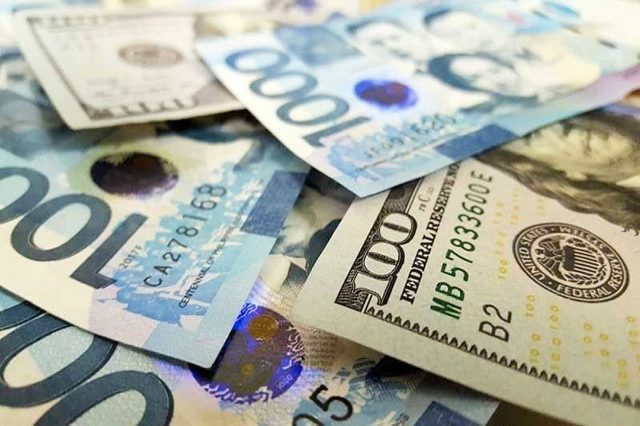
THE PESO weakened versus the greenback on Monday amid China’s slower economic growth and surprise monetary policy easing.

The local unit ended trading at P51.255 per dollar on Monday, weakening by 14.5 centavos from its P51.11 finish on Friday, based on data from the Bankers Association of the Philippines.

The peso opened Monday’s session weaker at P51.25 versus the dollar. Its worst showing was at P51.34, while its intraday best was at its close of P51.255 against the greenback.

Dollars exchanged increased to $820.9 million on Monday from $760.5 million on Friday.

A trader said in an e-mail that the peso weakened after the release of data showing a slowdown in the world’s second-largest economy and a surprise rate cut from the People’s Bank of China.

China recorded a gross domestic product growth of 4% in the fourth quarter of 2021, the weakest pace since the second quarter of 2020, Reuters reported.

This brought full-year growth to 8.1%, the fastest in a decade or since the 8% in 2011.

The Chinese central bank on Wednesday trimmed the rates of its medium-term loans for the first time since April 2020.

Meanwhile, Rizal Commercial Banking Corp. Chief Economist Michael L. Ricafort said the peso’s depreciation was due to higher oil prices.

Reuters reported that Brent crude futures increased by 40 cents or 0.5% to $86.46 a barrel by 0641 GMT on Monday. Earlier in the session, the contract reached $86.71, its highest since Oct. 3, 2018.

US West Texas Intermediate crude also inched up by 58 cents or 0.7%, at $84.40 a barrel, after hitting $84.78, the highest since Nov. 10, 2021.

For Tuesday, Mr. Ricafort gave a forecast range of P51.15 to P51.30 per dollar, while the trader expects the local unit to move within P51.15 to P51.40. — L.W.T. Noble with Reuters