Home Blog Page 6880

Lower barriers to entry in the retail industry

DCSTUDIO-FREEPIK

Based on the latest Foreign Direct Investment (FDI) regulatory restrictiveness index of the Organization for Economic Cooperation and Development (OECD), the Philippines obtained a score of 0.374 on a scale of 0 (open) to 1 (closed). In terms of ranking, the Philippines has the third most restrictive FDI rules out of 83 countries included in the OECD’s study.

This perhaps comes as no surprise given that the Philippines has a largely protectionist policy on national economy. In fact, this economic nationalism is built into the Philippine Constitution, which enshrines the Filipino First Policy and nationalizes key sectors in our society. However, it appears that the attitude has shifted in favor of FDIs.

On Dec. 10, 2021, President Rodrigo Duterte signed into law Republic Act No. 11595 otherwise known as “An Act amending Republic Act No. 8762 or the ‘Retail Trade Liberalization Act of 2000,’ by lowering the required paid-up capital for foreign retail enterprises, and for other purposes.” Under the Retail Trade Liberalization Act of 2000, retail trade refers to any act, occupation or calling of habitually selling direct to the general public merchandise, commodities or goods for consumption which does not cover the following:

1. Sales by a manufacturer, processor, laborer, or worker, to the general public the products manufactured, processed, or products by him if his capital does not exceed P100,000 (approximately $1,900);

2. Sales by a farmer or agriculturist selling the products of his farm;

3. Sales in restaurant operations by a hotel owner or innkeeper irrespective of the amount capital: Provided, that the restaurant is incidental to the hotel business; and,

4. Sales which are limited only to products manufactured, processed or assembled by a manufacturer through a single outlet, irrespective of capitalization.

Despite its nomenclature, the Retail Trade Liberalization Act of 2000, as amended, did not completely liberalize retail trade and retained a clear demarcation line between Filipino and foreign retailers in the Philippines, in terms of economic rights and investment privileges. However, it did ease the requirements for foreign retailers to invest in or engage in retail trade in the Philippines. Notably, its predecessor was Republic Act No. 1180 which effectively nationalized retail trade and prohibited aliens and corporations not wholly owned by citizens of the Philippines from engaging in retail trade. Republic Act No. 11595 further lowered the barriers to entry in the retail industry by, a.) removing the investment categories or classifications under the Retail Trade Liberalization Act of 2000; and, b.) lowering the minimum capitalization requirements for all foreign retailers to P25 million (approximately $488,000) from a minimum paid-up capital of (i) $2.5 million (approximately P128 million); or (ii) $250,000 (approximately P13 million) per store if the enterprise specializes in high-end or luxury products. The new minimum paid-up capital requirement will nevertheless be subject to review by the Department of Trade and Industry (DTI), Securities and Exchange Commission (SEC), and the National Economic and Development Authority (NEDA) every three years from the effectivity of Republic Act No. 11595.

In addition, Republic Act No. 11595 lowered the minimum investment requirement per store from $830,000 (approximately P43 million) per store to at least P10 million (approximately $200,000). Under Republic Act No. 11595, minimum investment per store is defined as the value of the gross assets, tangible or intangible, including but not limited to buildings, leaseholds, furniture, equipment, inventory, and common use investments and facilities such as administrative offices, warehouses, preparation or storage facilities. The investment for common use and facilities, as reflected in the financial statements following the accounting standards adopted by the SEC or the DTI, whichever is applicable, shall be prorated among the number of stores being served.

Other significant changes brought about by Republic Act No. 11595 are, a.) the removal of the requirement for foreign retailers to obtain a Certificate of Prequalification from the Board of Investments and to show proof of compliance with the prequalification requirements; and, b.) the deletion of the requirement for retail enterprises with foreign ownership of more than 80% to offer a minimum of 30% of their equity to the public through any stock exchange in the Philippines within eight years from their start of operations.

However, Republic Act No. 11595 retained the reciprocity requirement such that the foreign retailer’s country of origin should not prohibit the entry of Filipino retailers to be allowed to register in the Philippines.

Finally, Republic Act No. 11595 reduced the penalties provided in the Retail Trade Liberalization Act for violation of its provisions from imprisonment of six to eight years to four to six years, and a fine from P1 million (approximately $20,000) to P20 million (approximately $390,000) to P1 million (approximately $20,000) to P5 million (approximately $98,000).

With the passage of Republic Act No. 11595, market entry barriers in the retail industry, particularly for foreign retailers, have eased. We will likely see more players in the domestic market, whose investments will in turn hopefully boost the economy’s recovery from the effects of the pandemic.

This article is for general informational and educational purposes only and not offered as and does not constitute legal advice or legal opinion.


Monique B. Ang is an associate of the Corporate & Special Projects Department of the Angara Abello Concepcion Regala & Cruz Law Offices (ACCRALAW).

mbang@accralaw.com

(632) 8830 8000

Thailand set for rush of tourists with quarantine-free visas

REUTERS

THAILAND expects to welcome hundreds of thousands of holidaymakers a month with the kickoff of a quarantine-free visa program that’s set to serve as a model for tourism-reliant countries balancing safe border reopening with economic revival.

Starting Tuesday, visitors of any nationality can apply for quarantine-free entry into Thailand, provided they are fully vaccinated. The government expects between 200,000 and 300,000 travelers to take advantage of the so-called Test & Go program in February alone, with the numbers expected to swell in the following months.

The wider reopening — a previous quarantine-free program was restricted to visitors from only about 60 countries — is part of Prime Minister Prayuth Chan-Ocha’s push to adopt a “living with the COVID strategy” to rescue the pandemic-battered economy. About a fifth of gross domestic product before the virus came from tourism-related activities.

Thailand moved up 18 places in Bloomberg’s latest Covid resiliency ranking with its ramp-up in vaccinations and taming of the Omicron-fueled outbreak.

“It’s a fine balance between tourism recovery and public health,” said Marisa Sukosol Nunbhakdi, president of the Thai Hotels Association. “We have to create confidence among the Thai society as there’s still a large group of people hesitant about foreign travelers. If other nations are still hesitant, they can come and look at the Thai Test & Go model.”

Mr. Prayuth’s government expects 5 million foreign visitors this year, with the majority of arrivals expected from Europe and the US, and the numbers may reach 9 million if Chinese and Indian tourists return, according to spokesman Thanakorn Wangboonkongchana.

The outlook will remain hazy for the next few month, especially in terms of attracting travelers from China, the biggest group of visitors to Thailand before COVID, according to Tim Leelahaphan, a Bangkok-based economist at Standard Chartered Plc. Still, the reopening should help Thailand swing back to a current-account surplus of about 1.5% of GDP this year, although the level will be below the average before the pandemic, he said in a report.

Thailand has experimented with several plans over the past two years to revive the travel sector, which attracted 40 million foreign tourists and generated more than $60 billion in 2019. About 350,000 visitors took advantage of the first phase of the Test & Go program before it was suspended in late December to prevent the spread of Omicron variant.

“Thailand is among the world’s top tourist destinations because of all the beautiful attractions and the value for money,” said Burin Adulwattana, chief economist at Bangkok Bank Pcl. “But the government should try to instill confidence among travelers that the policies won’t change again.” — Bloomberg


All you need to get a quarantine-free visa:

• A COVID-19 vaccination/recovery certificate issued at least 14 days before travel if you are 18 years or older

• Those aged between 12-17 should have had at least one dose of vaccine

• A negative RT-PCR test result taken within 72 hours of travel

• A COVID insurance cover worth at least $50,000

Proof of payment for two separate nights of accommodation and RT-PCR tests

• Download and install government tracking application MorChana

Myanmar activists vow to defy junta with strike on coup anniversary

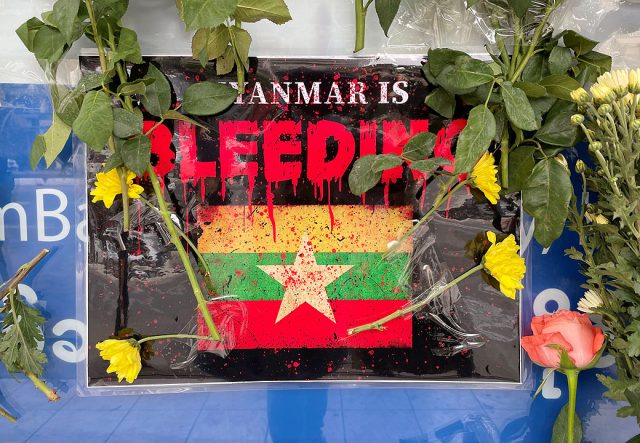
FLOWERS hang during a nationwide flower campaign against the military coup in Yangon, Myanmar, April 2, 2021. — REUTERS

MYANMAR’s military rulers have threatened to jail anti-coup protesters who take part in a “silent strike” on Tuesday, a year since the generals seized power, as the United States, Britain and Canada imposed new sanctions.

The Southeast Asian country has been in chaos since Nobel laureate Aung San Suu Kyi and other figures from her National League for Democracy (NLD) party were rounded up in raids, accused by the junta of rigging a 2020 election the NLD won.

The overthrow of Ms. Suu Kyi’s government triggered huge street protests last year and the security forces killed hundreds in crackdowns that ensued leading to the formation of “people’s defense forces” to take on the well-equipped army.

In recent days, activists have urged people to stay indoors and businesses to close on Tuesday.

“We might be arrested and spend our life in jail if we’re lucky. We might be tortured and killed if we’re unlucky,” said youth activist Nan Lin, who hoped the strike would send a message to the junta.

A spokesman for the ruling military did not respond to telephone calls seeking comment.

State media reported military ruler Min Aung Hlaing had on Monday extended a state of emergency for six months to facilitate promised elections.

“It was necessary to set the right track for the genuine, disciplined multi-party democracy,” Min Aung Hlaing said in a report in the Global New Light of Myanmar, where he talked about the threat from “internal and external saboteurs” and “terrorist attacks and destruction”.

The state-run newspaper said the military government would strive to hold new elections once the situation was “peaceful and stable”, without giving a date.

In the northern city of Myitkyina, a photograph of a sign put up by the military warned residents not to join the silent protest or face jail terms of up to 20 years, though images of the city posted on social media on Tuesday showed largely deserted streets.

In the main city of Yangon, photographs on a social media page put up by strike organizers showed a small protest where people threw red paint on the ground.

The impact of the calls for a nationwide strike was not immediately clear. At least four people were arrested in the central town of Pathein for inciting silent protests on social media, the Ayarwaddy Times reported.

INTERNATIONAL PRESSURE
U.N. Secretary-General Antonio Guterres, in comments ahead of the coup anniversary, urged the junta to allow greater humanitarian access.

The junta has accused the United Nations of bias and interference and is refusing to bow to international pressure, despite a corporate retreat from Myanmar and sanctions, the latest on Monday, when the United States, Britain and Canada blacklisted more individuals linked to the junta.

For ordinary Myanmar people, life since the coup has become a grind with the economy withering, regular power cuts and internet curbs and, for some, a constant fear of being detained.

Security forces cracking down on dissent have killed at least 1,500 people and arrested 11,838 since the coup, according to the Assistance Association of Political Prisoners, an activist group cited by the United Nations. The junta disputes the death toll.

Ms. Suu Kyi, 76, is on trial in more than a dozen cases that carry a combined maximum sentence of more than 150 years in prison, charges that critics say are designed to ensure she can never return to politics.

In a joint statement, the foreign ministers of countries including Australia, Britain, South Korea, the United States, Canada as well as the European Union urged the international community to cease the flow of “arms, materiel, dual-use equipment, and technical assistance” to the Myanmar military.

An internationally backed diplomatic effort led by the Association of Southeast Asian Nations (ASEAN) has faltered, with the junta’s failure to honor its commitment to end hostilities and support dialogue frustrating members, including Singapore.

“Conditions in Myanmar for the people continue to deteriorate,” its foreign ministry said in a statement marking the anniversary, which demanded Suu Kyi and all political prisoners be freed. — Reuters

Attenborough, WHO among nominees for Nobel Peace Prize

WIKIPEDIA

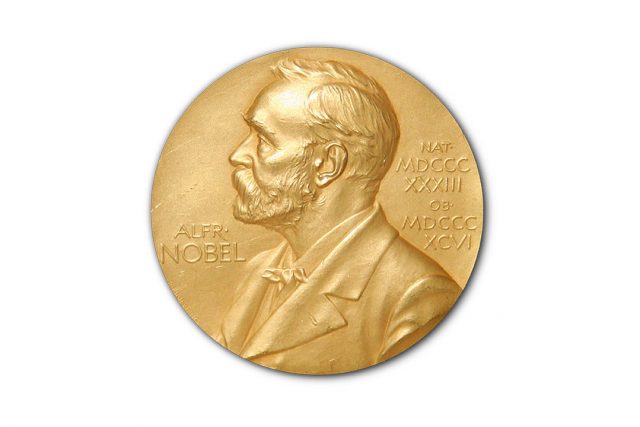
OSLO British nature broadcaster David Attenborough, the World Health Organization and Belarusian dissident Sviatlana Tsikhanouskaya are among the nominees for this year’s Nobel Peace Prize after being backed by Norwegian lawmakers who have a track record of picking the winner.

Thousands of people, from members of parliaments worldwide to former winners, are eligible to propose candidates.

Norwegian lawmakers have nominated an eventual Peace laureate every year since 2014, with the exception of 2019, including one of the two laureates last year, Maria Ressa.

The Norwegian Nobel Committee, which decides who wins the award, does not comment on nominations, keeping secret for 50 years the names of nominators and unsuccessful nominees.

However, some nominators like Norwegian lawmakers choose to reveal their picks.

Mr. Attenborough, 95, is best known for his landmark television series illustrating the natural world, including Life on Earth and The Blue Planet.

He was nominated jointly with the Intergovernmental Science-Policy Platform on Biodiversity and Ecosystem Services (IPBES), which assesses the state of biodiversity worldwide for policy-makers.

They were nominated for “their efforts to inform about, and protect, Earth’s natural diversity, a prerequisite for sustainable and peaceful societies,” said nominator Une Bastholm, the leader of the Norwegian Green Party.

Environmentalists have won the Nobel Peace Prize in the past, including Kenyan activist Wangari Maathai, the Intergovernmental Panel on Climate Change and former US Vice-President Al Gore.

Still, “there is no scientific consensus on climate change as an important driver of violent combat,” said Henrik Urdal, director of the Peace Research Institute Oslo, cautioning against a “too simplistic connection between the two”.

The coronavirus pandemic has been front and centre of people’s concerns over the past two years and this year the international body tasked with fighting it, the WHO, has again been nominated.

“I think the WHO is likely to be discussed in the Committee for this year’s prize,” said Mr. Urdal.

Exiled Belarusian opposition leader Sviatlana Tsikhanouskaya was nominated for the second year running for her “brave, tireless and peaceful work” for democracy and freedom in her home country, said parliamentarian Haarek Elvenes.

Other nominees revealed by Norwegian lawmakers are jailed Russian dissident Alexei Navalny, the International Criminal Court in the Hague, WikiLeaks and Chelsea Manning, NATO, aid organization CARE, Iranian human rights activist Masih Alinejad and the Arctic Council, an intergovernmental forum for cooperation for Arctic nations.

Nominations, which closed on Monday, do not imply an endorsement from the Nobel committee.

The 2021 laureate will be announced in October. — Reuters

Manila added to Rock ‘n’ Roll running series with June races

ROCK ‘n’ Roll Running Series Washington, DC starting line — ROCK ‘N’ ROLL RUNNING SERIES

THE City of Manila has been added to the Rock ‘n’ Roll Running Series calendar with an inaugural event set for June 19.

Manila becomes the first city in Southeast Asia to host the world’s largest running series with sports shoe and apparel maker ASICS as the title sponsor.

The ASICS Rock ‘n’ Roll Series Manila will stage marathon, half marathon, 10K and 5K events on the birthday of national hero Jose Rizal. The events will also kick off the celebration of the city’s 450th foundation day on June 24.

“This new event will feature the historic city and music, making the City of Manila the perfect venue for the newest Rock ‘n’ Roll Running Series event. We look forward to the race creating a participant experience focused on running, music and community,” said Jeff Edwards, Managing Director for Asia at The IRONMAN Group.

“We are very happy and excited to host the Rock ‘n’ Roll Running Series in the streets of Manila. We are proud to be the first City in the Philippines and in Southeast Asia to stage the event,” added Manila Mayor Francisco Moreno Domagoso.

The ASICS Rock ‘n’ Roll Series Manila route will take participants past Rizal Park, the National Museum, Manila City Hall and the Walled City of Intramuros.

Bands and DJs will be positioned along the route and the finish line to facilitate post-event celebrations. — John Bryan Ulanday

Beijing Games organizers hope to have 30% capacity

BEIJING — Organizers of the Beijing 2022 Winter Olympics are hoping for stadium capacities of at least 30% despite China’s enforcement of tight regulations to contain the spread of the coronavirus disease 2019 (COVID-19), the International Olympic Committee (IOC) said on Tuesday.

Tickets for the winter sports extravaganza starting on Feb. 4 have not been sold to the local population but instead organizers are distributing them to “targeted” groups of people. They said in September there would be no international spectators at the Games while those receiving tickets will be required to undertake strict COVID-19 prevention measures before, during and after attending Olympic events.

“In terms of capacity we are not there yet, because it has to be fine-tuned at a venue-by-venue basis, but I’d say if we have one person out of three (available spots) or out of two, that would already be a good result,” the IOC’s Olympic Games Executive Director Christophe Dubi said.

“It could also depend on whether it is outdoors or indoors. But the great thing is that we are going to have spectators.”

The Tokyo 2020 Summer Olympics, held last year following a 12-month postponement after the pandemic outbreak, had no fans in any venues, severely affecting the atmosphere during the competitions.

Dubi said while international fans could not travel to China, some foreign citizens living in Beijing would still get the chance to support their home athletes.

“This is not only for Chinese spectators but for Chinese residents, and we were very insistent on that,” Dubi told the Games website. “So they are also reaching out to the expat community and making sure, through the embassies and other ways and means, to identify those who live in Beijing and could attend the Games.”

China, which has largely managed to curb local COVID-19 infections, is scrambling to prevent the spread of scattered outbreaks of the highly infectious Omicron variant with the busy Lunar New Year travel period under way.

The Olympics, to be held in the Chinese capital and neighboring Hebei province, will take place in a “closed loop” that will keep athletes and other Games personnel separated from the general public.

Participants are arriving on special charter planes and are tested daily during their stay. Some 24 new COVID-19 cases were detected among Games-related personnel on Jan. 31, organizers said on Tuesday, bringing the total for the past five days to 143 cases. — Reuters

Taiwan says it will be at Games opening ceremony

TAIWAN said on Friday the team would not be at the opening or closing ceremonies, blaming delayed flights and tough anti-COVID-19 rules. — @TAIWANOLYMPICTEAM

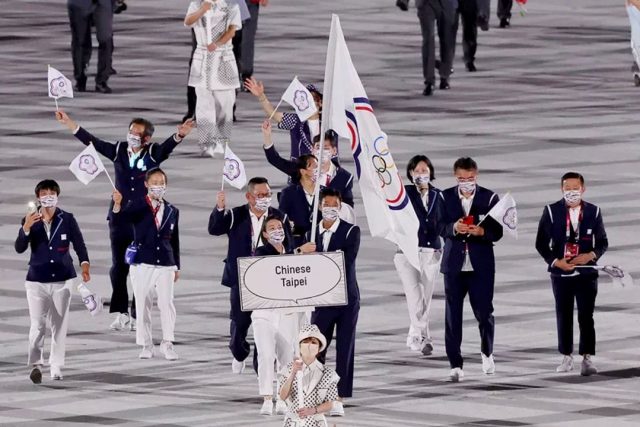
TAIPEI — Taiwan’s team for the Beijing Winter Olympics will be at the opening and closing ceremonies after being told by the International Olympic Committee it was required to participate.

Chinese-claimed Taiwan has feared Beijing could “downgrade” Taiwan’s status by putting its athletes alongside those from Chinese-run Hong Kong at the opening ceremony, a senior Taiwan official familiar with the matter told Reuters last week.

Sub-tropical Taiwan, which has no winter sporting tradition and has never won a medal at the winter Games, is sending four athletes to Beijing, the same number as the last winter Games in 2018.

Taiwan said on Friday the team would not be at the opening or closing ceremonies, blaming delayed flights and tough anti-coronavirus disease 2019 (COVID-19) rules. But Taiwan’s Olympic committee said late on Monday it had received “several notices” from the International Olympic Committee (IOC) “requiring all delegations to the 2022 Beijing Winter Olympics to cooperate in sending personnel to attend the opening and closing ceremonies.”

Based on its respect for the Olympic spirit and after discussions with Taiwan’s Sports Administration, they will “adjust” the plan and “cooperate with the policy to send staff to attend the opening and closing ceremonies.”

It did not say how many of the 15-member team, including trainers, would be there.

The Beijing Games are happening amid heightened tensions between China and Taiwan, including repeated Chinese military activity near the island.

Taiwan competes in most sporting events, including the Olympics, as “Chinese Taipei” at the insistence of Beijing, which sees democratically governed Taiwan as part of “one China.”

On Wednesday, China’s Taiwan Affairs Office referred to Taiwan’s team as being from “China, Taipei”, rather than the official terminology of “Chinese Taipei.”

That drew a rebuke from Taiwan’s China-policy making Mainland Affairs Council, which said China intentionally used the wrong name.

Tom Brady has 15M reasons to delay retirement

TOM BRADY — REUTERS

TOM Brady may have about 15 million reasons against confirming his reported retirement for a few more days.

According to Spotrac, the one-year extension that the quarterback signed last March with the Tampa Bay Buccaneers included a $20-million signing bonus, with $15 million to be paid on Friday.

“Seems like something a guy or gal would want to have process before making any life changing career decisions official,” Spotrac posted on Saturday on Twitter.

Brady, 44, would reportedly forfeit the bonus money if he officially retires before Friday. Don Yee, the seven-time Super Bowl champion’s agent, may have alluded to the situation in his comments about Brady’s reported retirement on Saturday.

“He knows the realities of the football business and planning calendar as well as anybody, so that should be soon,” Yee said. — Reuters

Nadal feels lucky to be part of dominant ‘Big Three’

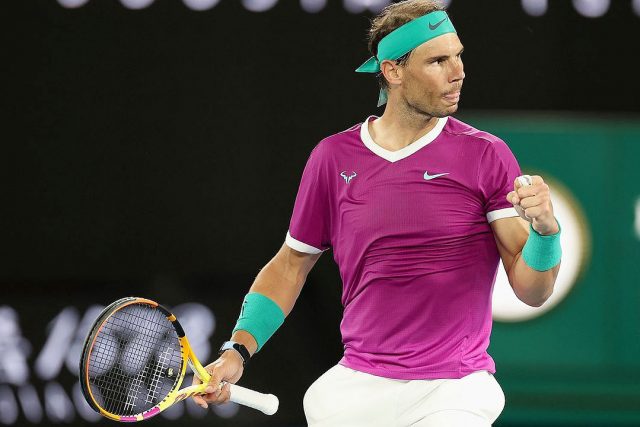
RAFA NADAL — RAFA NADAL FB PAGE

RAFA Nadal said he was lucky to be part of an era of tennis that included Roger Federer and Novak Djokovic after the Spaniard won a men’s record 21st Grand Slam title at the Australian Open to move one ahead of his two great rivals.

Nadal roared back from two sets down to edge Daniil Medvedev (2-6, 6-7(5), 6-4, 6-4, 7-5) in a classic final on Sunday, only months after fearing his glorious career might be over because of a niggling left foot injury.

He then paid tribute to Federer, who missed the year’s first Grand Slam to continue his rehabilitation from knee surgery and Djokovic, who was deported following a dispute over Australia’s coronavirus disease 2019 (COVID-19) entry requirements and his unvaccinated status.

“At the end of the day, it’s just a game and in some way, we achieved more than what we ever dreamed of when we were kids,” Nadal told reporters. “It doesn’t matter that much if one is 21, one is 20, or the other finished 23 and the other with 21. I think we did very important things for our sport and we achieved our dreams and we enjoy it. I feel lucky to be part of this era that has been very special for our sport.”

The 35-year-old, who pulled out of Wimbledon, the Tokyo Olympics and the US Open in 2021 and returned to competitive action last month, said the satisfaction of winning his second Australian Open crown was impossible to describe.

“It’s amazing to have this trophy with me,” Nadal said. “I tried hard during my career here in Australia, finally, it was probably the most unexpected year for me to achieve, one more time this beautiful trophy so I’m super happy.”

Nadal said he was not thinking about his next tournament.

“I have my schedule planned, but I’m enjoying the moment… I need to see how my body recovers from an amazing month and I’m going to make my decision,” Nadal said. — Reuters

Beijing Olympics says 24 new COVID cases detected among games-related personnel

BEIJING 2022

BEIJING — The Beijing 2022 Winter Olympics Organizing Committee said on Tuesday that a total of 24 new coronavirus disease 2019 (COVID-19) cases were detected among games-related personnel on Jan. 31.

Eighteen of the cases were found among new airport arrivals, according to a notice on the Beijing 2022 official website.

Six others were among those already in the “closed loop” bubble that separates all event personnel from the public, five of whom were classified as either an athlete or a team official, the notice said.

A lesser player would have folded, but not Rafa

Rafael Nadal didn’t exactly have the easiest of Australian Open. In fact, it was nothing short of remarkable that he could even be in Melbourne Park for the first Grand Slam event of the year. Considering how much and how often chronic foot issues had sidelined him last season, and how a bout with COVID-19 in the run-up hampered his convalescence, not a few quarters deemed his presence, let alone a victory, an iffy proposition. And yet, when the battlesmoke cleared, he wound up proving yet again that sheer love of the game and unbending will are surefire ingredients to success.

There were, to be sure, not a few scares en route to Nadal’s triumphant return to the top of the sport. His fortnight Down Under was marked with challenges. Matches from the third round on were literally workouts; an extra set with Karen Khachanov, a 16-point, 28-minute tiebreak with Adrian Mannarino, a dramatic set-to with Denis Shapovalov that he said “destroyed” him. And even with a two-day rest, his encounter with Matteo Berrettini in the penultimate contest was no cakewalk. From the outside looking in, it seemed as if the combination of advancing age, susceptibility to injury, relative lack of reps, and the vagaries of the playing surface handicapped his campaign.

If anything, however, Nadal’s ordeal showed that he could continue to lean on his trademark determination to see him through. He was most certainly not favored to claim the championship — not with his immediate past travails, and not with Daniil Medvedev awaiting him in the final. And, indeed, he began as the underdog in his last contest of the fortnight, with a seemingly Sisyphean task before him, a position underscored all the more by his failure to take any of the first two sets. A lesser player would have folded, and he would have had all the right reasons to do so under the circumstances. But not him, and if for no other reason than because he is who he is.

When the battlesmoke cleared, Nadal hoisted the Norman Brookes Challenge Cup high above his head with much-deserved pride. In a long career littered with extraordinary achievements, none was, perhaps, more unexpected than the one that gave him his 21st major title. It placed his weaknesses under a microscope, but, when all was said and done, also shone the spotlight on his singular skills. There’s a reason he’s now ahead of fellow all-time greats Roger Federer and Novak Djokovic in the tally of Grand Slam wins. And with the French Open — which perennially gives him as close to a homecourt advantage as there is in tennis — just around the corner, he’s slated to pad the lead a little but more.

In the aftermath, Nadal chose to delve on the significance of the moment as it pertains to his mortality rather than as validation of his place in the sport’s annals as the best of the best. True, the latter remains a question mark, but there can be no denying he now has a hand on the throne. And all because he simply cannot stop being, well, himself.


Anthony L. Cuaycong has been writing Courtside since BusinessWorld introduced a Sports section in 1994. He is a consultant on strategic planning, operations and Human Resources management, corporate communications, and business development.

To reduce plastic waste leakage, LGUs and port authorities should agree on plastic bans

PHILSTAR

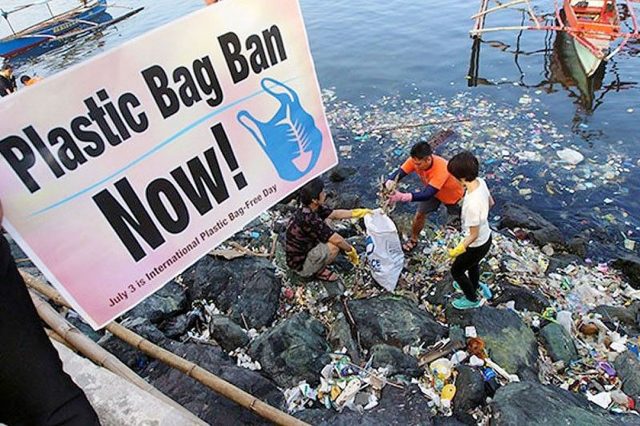
Local governments and port authorities should align on plastic bans to reduce the amount of plastic leaking into the ocean, according to a solid waste management study by World Wildlife Fund for Nature (WWF) Philippines. 

Clean Ports, Clean Oceans: Improving Port Waste Management in the Philippines is a three-year partnership project funded by the Norwegian-based Grieg Foundation that aims to identify and test out scalable waste management solutions for ports to adopt.

Implementing these solutions will be difficult in cities that do not have a single-use plastics ban, said Czarina Constantino-Panopio, project manager of the baseline study on port waste management.

Ms. Panopio noted that a number of local government units do not have regulations that complement Philippine Port Authority (PPA) MC no. 11-2021, which bans the use of unnecessary single-use plastic products in all PPA ports, facilities, and offices.

“What happens when passengers go out the port and the city [the port is in] doesn’t ban any kind of plastic?” she asked at a Jan. 28 event detailing the study. “There needs to be an alignment. It’s challenging to ban plastic in a port if the city the port is in doesn’t have [a ban].”

The study covers three types of waste: vessel-generated waste, port-generated waste, and community-generated waste. It aims to cut in half the plastic waste leakage in Manila North Port, the Port of Batangas, and the Port of Cagayan de Oro.

Not all ports have their own material recovery facility (MRF), the study found. Some that have an MRF use it more as a waste receptacle rather than a facility where the segregation and utilization of waste is done. Not all barangays have functioning MRFs either.

A majority of port- and vessel-generated waste (61% and 67%, respectively) are recyclable, the study also found. Only 4% of these are recovered.

“We don’t want to condemn any port authority with this data. We see this as an opportunity to improve the current collection and management system,” said Ms. Panopio.

RECOMMENDATIONS
Clean Ports, Clean Oceans offers the following recommendations: stricter implementation and review of existing laws and policies; improved coordination among stakeholders; and better data management. It also calls for the monitoring and utilizing of plastic wastes, the installation of functional MRFs, and the carrying out of education campaigns towards sustainable waste management. 

Ms. Panopio added that data management is already being covered by port management offices (PMOs), but at a voluntary level. 

The PPA has around 10 memoranda and/or orders pertaining to solid waste management. PPA AO no. 08-2018, ensures the continuity of SRFs, a system used for receiving waste, in ports under PPA’s jurisdiction. Another, PPA AO 05-2018, provides the legal basis and enforcement of PPA’s programs towards a green and resilient port strategy. 

The Philippines has a total of 552 ports — 271 of which are private — that are managed by 25 PMOs.

Partnership is crucial for sustainability, said Gry Larsen, leader of sustainability and public affairs of the Grieg Group of Companies, which established the Grieg Foundation.

“One challenge of plastic pollution is the lack of data about plastic waste,” she said. “Therefore, this study is a crucial step.” — Patricia B. Mirasol

ADVERTISEMENT
ADVERTISEMENT