Home Blog Page 6878

Lawyers, senators assert Duterte’s directives on Senate probe unconstitutional

PCOO.GOV.PH

MEMBERS of the Philippine’s oldest organization of lawyers have said that President Rodrigo R. Duterte’s directives to executive branch officials, police, and the military to ignore the Senate’s probe on the use of pandemic funds are unconstitutional.

The Philippine Bar Association, Inc. (PBA), in a statement posted on its social media page on Monday, asked Mr. Duterte, “a brother in the legal profession, to immediately recall his twin directives that in our view constitute clear violations of the Constitution.”

The PBA explained that Mr. Duterte’s orders go against the separation of powers of the three branches of government — executive, legislative, and judicial — under the Constitution, which in turn “upsets our system of checks and balances.”

It further said that the directives are “detrimental” to Filipinos who demand public accountability from officials and others involved in the alleged deficiencies in pandemic spending and is a “disservice to the principle of civilian supremacy over the military.”

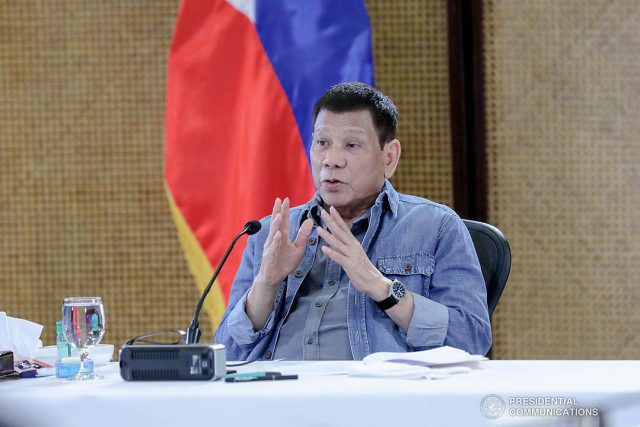
In a televised public address Monday night, Mr. Duterte announced that he has issued a memo to bar his Cabinet officials from participating in the ongoing investigation of the Senate Blue Ribbon Committee into the government’s controversial pandemic deals, specifically those linked to Pharmally Pharmaceutical Corp.

“We cannot allow blatant disrespect of resource persons at the ongoing hearing of the Senate Blue Ribbon Committee,” Mr. Duterte said in a taped Cabinet meeting aired Monday night.

On Sept. 29, Mr. Duterte also ordered the military and police to ignore the Senate’s warrants of arrest in relation to the probe. 

Several business groups and academic institutions have earlier urged all parties involved to cooperate with the Senate investigation as the Filipino people “deserve a full and fair accounting” of how the government spent taxpayers’ money.

Meanwhile, senators also asserted that the President’s directives are “unconstitutional.”

“This has all the red flags of unconstitutionality. It only covers this particular blue ribbon committee hearing. I cannot see any other memorandum as blatantly unconstitutional as what we have before us,” Senate Minority Leader Franklin M. Drilon said during Tuesday’s hearing.

Senator Panfilo M. Lacson said the mandate was “Gordon-specific,” since the ban did not include investigations under the House of Representatives, referring to Senator Richard J. Gordon, chair of the Blue Ribbon Committee.

At Tuesday’s hearing, Commission on Audit (CoA) Chairman Michael G. Aguinaldo said the Senate’s probe had provided significant contributions on their intention to undertake a special audit of transactions relating to Pharmally.

“You are in the right position to ask questions about that (dubious transactions),” Mr. Aguinaldo told Mr. Gordon during the hearing.

The Senate probe was prompted by the CoA’s 2020 report flagging the Budget department’s procurement service, which awarded the pandemic supply contracts to Pharmally. — Bianca Angelica D. Añago, Kyle Aristophere T. Atienza, and Alyssa Nicole O. Tan

House leaders to seek reelection

HOUSE Speaker Lord Allan Jay Q. Velasco filed his certificate of candidacy on Tuesday for a third and last consecutive term in the House of Representatives.

He will run as representative of the lone district of Marinduque.

“I’m really grateful to the people of Marinduque for giving me many chances and I’m asking them for another one so I can continue to champion their interests and welfare in Congress,” he said in a statement.

Mr. Velasco assumed the House leadership in Oct. 2020 after the ouster of then speaker Alan Peter S. Cayetano.

He first became Marinduque representative in 2010 but lost in 2013 to Regina Ongsiako Reyes-Mandanas, where he disputed the result due to citizenship issues which was upheld by the Supreme Court.

Mr. Velasco was later proclaimed as the legitimate Marinduque representative by the House Electoral Tribunal following the court’s ruling and was sworn in on Feb. 2016.

Meanwhile, House Deputy Speaker and Las Piñas City Rep. Camille A. Villar is also seeking her second term in the lower chamber as she filed her certificate of candidacy on Tuesday. — Russell Louis C. Ku

7 more file certificates to join race for Senate   

ANOTHER seven certificates of candidacy for senator were filed Tuesday, bringing the total candidates to 46 as of the 5th of an eight-day filing period.

The top 12 senators will be proclaimed winners in the May 2022 national and local elections.

Among those who filed Tuesday were lawyer Lorenzo G. Gadon, who is running for the third time after losing in 2016 and 2019. 

Nur-Ana Sahidulla, an advocate of peace and unification of Muslims and non-Muslims, also filed a certificated under the Katipunan Pamilya Pilipino.

Vying as independent senatorial candidates are: Samuel A. Jardin; Orlando Bernardo; Norberto Esmeralda, Jr.;Joseph Dy; and Paul M. Escolano. — Alyssa Nicole O. Tan

Senators question police purchase of expensive body-worn cameras

PNP.GOV.PH

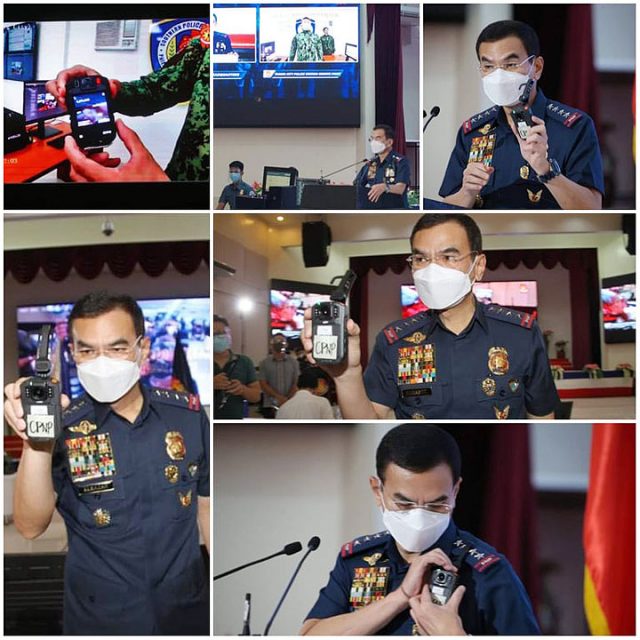
SENATORS on Tuesday questioned the expensive body-worn cameras purchased by the police when cheaper options are available that would allow more units to be distributed to cops nationwide.

Senator Ronald M. dela Rosa, a former national police chief, cited during Tuesday’s budget hearing that 2,696 units of body-cameras were bought, costing P125,000 each as a part of a system.

Senator Sherwin T. Gatchalian said that these were very costly considering that the highest-priced unit of the GoPro brand, which record accurately, was only about P30,000.

“How do we stretch the peso, especially in the age of the pandemic?” said Senator Juan Edgardo “Sonny” M. Angara, who chairs the Finance committee.

He noted that the cost-effectiveness of the purchase will have to be assessed and asked the Philippine National Police to submit documents justifying the procurement.   

“If you look at the Supreme Court circular, it was very clear that in the absence of a body-worn camera, a law enforcer, either utilizing a search warrant or serving a warrant of arrest, can utilize back-up devices that would serve and suffice the evidentiary purposes,” Senator Francis N. Tolentino told the hearing.

He added that the Supreme Court would probably allow mobile phone units to serve as back-up cameras.

Under the guidelines  issued by the High Court on the use of body-worn cameras for serving warrants, alternative recording devices may be used with permission from the court.   

Police chief Guillermo Lorenzo T. Eleazar said the initial procurement plan for body-worn cameras was intended only for police in cities. More than 1,500 municipal police stations were not issued body-worn cameras. — Alyssa Nicole O. Tan

Fishers’ group to wage boycott campaign vs imported fish 

PHILIPPINE STAR/ MICHAEL VARCAS

FISHERS’ group Pambansang Lakas ng Kilusang Mamamalakaya ng Pilipinas (PAMALAKAYA) is preparing a nationwide boycott campaign against the government’s plan to import fish.   

“It would be a campaign to boycott the imported fish while calling to support and patronize the local produce of our small fisherfolk,” the group said in a statement Tuesday.    

PAMALAKAYA Spokesman Ronnel Arambulo said the entry of cheaper imported fish affects the livelihood of local fisherfolk.

“Every time there is an alleged shortage, the default solution is to flood our market with imported fish. Yet this measure never addresses and resolves the crisis in our fisheries production that happens on a yearly basis. ” Mr. Arambulo said.   

In a recent virtual briefing, Agriculture Undersecretary Ariel T. Cayanan told reporters that the Department of Agriculture has started releasing the import clearances for 60,000 metric tons of fish imports.

Mr. Cayanan estimated that the fish imports will begin arriving in the country in “one to two weeks.”   

The planned fish importation involves small pelagic fishes such as round scad (galunggong), mackerel, and bonito. It was approved as part of government efforts to address prices and supply during the implementation of closed fishing season in major fishing grounds across the country.    

Mr. Arambulo, on the other hand, said local fisherfolk are forced to lower the prices of their catch to compete with the more affordable imported fish.

“We are monitoring how the entry of fish imports will affect the prices of fish caught by local fisherfolk. This will be the basis to support our call for the boycott of fish imports and to patronize the produce of Filipino fishermen,” he said. — Revin Mikhael D. Ochave

Voter registration applications reach almost 8 million 

PHILIPPINE STAR/ MICHAEL VARCAS

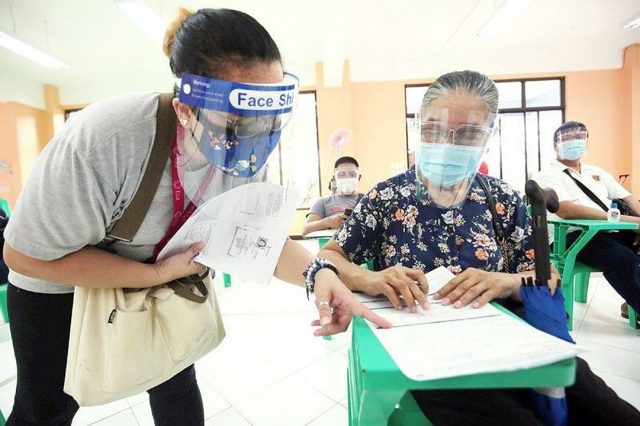
THE NUMBER of voter registration applications — including new, transfers, and reactivation — stood at 7.99 million as of Sept. 25, according to data from the Commission on Elections (Comelec) released Tuesday.  

Of the total, 4.15 million were new registrants, 2.64 million were applicants for transfer to other precincts, 643,524 were for reactivation and reinstatement, and 460,955 were for updates on voter information.   

The poll body has yet to release its latest count of total registered voters in the country, with its latest available data still at 61 million as of Aug. 13.  

Of the 61 million, the biggest voting populations are from the 41-59 age group with 18.94 million, and 22-33 at 18.62 million.   

Luzon has the most number of registered voters at 33.73 million, followed by Mindanao with 14.61 million, and 12.67 million are from Visayas.   

Data from the Philippine Statistics Authority show that there are 73.3 million qualified voters in the country for 2022. — Bianca Angelica D. Añago  

E-waste facility in Malabon to give community workers safe, sustainable livelihood

ECOWASTE

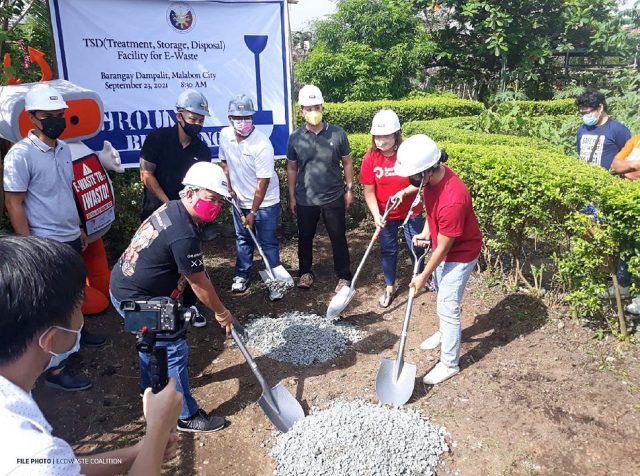
A NEW e-waste facility that can process parts from discarded television sets recently broke ground in Malabon City and is set to begin operations early next year, environment group EcoWaste Coalition said on Tuesday.

The treatment, storage and disposal (TSD) project is a partnership between the Environment department, United Nations Industrial Development Organization, Globe Telecom, Inc., EcoWaste, Integrated Recycling Industries, Inc., and the Barangay Dampalit village government.

The $43,000 facility is scheduled to be fully operational in Jan. 2022, once the technical training is completed.

In an emailed statement, EcoWaste said the e-waste project can process cathode-ray tubes or glass displays from TV sets which will be collected from Malabon and Tondo, Manila.

Residents of Barangay Capulong, Tondo and Barangay Longos, Malabon are involved in the informal e-waste sector as they dismantle and dispose of gadgets.

“These activities, when mishandled and executed in an unsafe manner, would expose the workers and the environment to the toxic substances present in e-wastes, such as lead, arsenic, mercury, and PBDE (polybrominated diphenyl ethers), among others,” EcoWaste said.

Nagkakaisang Lakas ng mga Mangangalakal ng Longos member Joanna Amican said the new e-waste project will help facilitate the communities’ entry into the formal waste sector.

“Through the establishment of the e-waste TSD Facility, we, as informal waste workers, will have an opportunity to be part of a formal sector where there is an access to a safe workplace and operation and where we can have a sustainable livelihood without endangering our personal health, our community’s health, as well as the environment,” she said. — Angelica Y. Yang

Cebu-Cordova bridge linked

Cebu-Cordova bridge

THE TWO sides of the 390-meter central span of the Cebu-Cordova Link Expressway have been connected, project proponent Cebu Link Joint Venture announced Tuesday. The 8.5-kilometer cable-stayed bridge will provide a toll road alternative between Mactan Island and Cebu City. It is expected to be substantially completed by the end of the year.

2050 take me there

TOA HEFTIBA-UNSPLASH

(Part 2)

Each country is unique. The Philippines obviously lacks some of the features of Korean society. During this present stage of our development, our strong fundamentals can be enumerated as follows. The greatest of them all is our demographic dividend. We are among the few countries in the East Asian region that have not committed “demographic suicide” through birth control programs. We still have a young, growing, and English-speaking population, an asset that has not been diminished by the ongoing pandemic. Our fertility rate will continue to above replacement (2.1 babies per fertile woman) for at least the next 20 years. In a world in which practically all of the developed countries are suffering from the rapid aging of their population, our having a median age of 24 will continue to support our two largest engines of growth, i.e., the huge remittances that are sent by the Overseas Filipino Workers and the earnings of 1.3 million well-educated workers in the BPO-IT sector. These two account for some 12 to 15 percent our GDP.

Together with the other countries in the Indo-Pacific region, we will be benefitting from the rise of the Asian Century. Today, economic power has shifted from the countries of the so-called American Century (the 20th century) to those of the Asian Century during which the three major territories of China, India, and the ASEAN Economic Community will dominate the world in economic growth and vitality. Thanks to international agreements like the Regional Comprehensive Economic Partnership (RCEP) Agreement of the ASEAN countries with Australia, China, Japan, the Republic of Korea, and New Zealand, the Asia Pacific region defies the trends in other parts of the developed world towards ultra-nationalism and inward-looking trade and investment policies (e.g., America First, Brexit). The Philippines can capitalize on the open trade and investment opportunities within the largest and most dynamic economic region in the world. We can call this our “geographic dividend.” This would, of course, require that the next Administration after May 2022 complete the efforts in this present government to remove the many restrictions against foreign direct investments found both in some existing laws and in the Constitution.

Another strong fundamental of the Philippine economy in the next decade or so is that it will be transitioning from a low-middle income economy to an upper-middle income one. We can call this a temporal dividend because the timing of this transition is perfect. As more and more of the 110 million people in the Philippines today (and growing still at close to 1% annually) join the upper-middle income category, their demand for more sophisticated consumer and industrial products will grow exponentially, following Engel’s Law. Since more than 70% of the Philippine GDP comes from consumption expenditures, the growing consumer markets will act as a magnet for both local and foreign companies, both large and small, to invest heavily in the country. It will be the Philippine domestic market that will be the primary engine of growth, with exports growing only to the extent that we need to import a number of capital goods and raw material inputs that we don’t produce in the Philippines. This large domestic market will be more evenly spread over the major economic regions outside the National Capital Region, which had been growing more slowly even before the pandemic in comparison with such booming areas like Calabarzon (with Batangas as the epicenter); Central Luzon (with the Pampanga triangle of Angeles, San Fernando, Clark-Subic as the center); the Visayas (with developments moving out of the congested Metro Cebu towards Iloilo that has been endowed with better infrastructure over the last decade or so); and the island of Mindanao (with Davao and Cagayan de Oro as the agro-industrial centers).

Finally, like Indonesia and Vietnam, the Philippine is well endowed with natural resources such as mineral ores, the very long coastlines that provide abundant aquaculture resources, and thousands of islands that can be the basis for a thriving tourism industry, both domestic and foreign (starting 2024 and beyond, after the world is able to put under reasonable control the ongoing pandemic). With the Build, Build, Build Program under the present Administration which has sustained spending on infrastructure at the level of 5-6% of GDP, more and more attractive tourist destinations in this archipelago of more than 7,000 islands are becoming more accessible to both domestic and foreign tourists. Here it may be noted that one of its islands, Palawan, has been dubbed as the “best island in the world,” according to a survey conducted by a renowned international travel magazine, Travel+Leisure. This island paradise (actually part of the 2,000 islands of the province of Palawan) has topped the list of the top 25 islands across the globe, a title it held in 2013, 2016 and 2017. Among the numerous islands in the Philippines, there are many others like Palawan that is praised for sun-glazed beaches, evergreen nature trails, endless fun, and the local culture. (Filipinos in general are known as exceptionally friendly, hospitable, and “amazingly laid back.”) The Philippines can be the “Spain of the Indo-Pacific region,” attracting some of the hundreds of millions of tourists who are expected to come from China, India, Japan, the ASEAN Economic Community, and South Korea, among others. Again, this is the advantage of being in the epicenter of the most dynamic economic region for decades to come. Once people from all over the world consider COVID-19 as just another ordinary flu, foreign travel will go back on track and the Philippines will be one of the major beneficiaries of the strong rebound in foreign tourism in 2024 and beyond.

Already the mining sector at the early stages of the post-pandemic recovery, is benefiting from the boom in the prices of copper and nickel. As reported by Karl Ocampo in The Philippine Daily Inquirer (Sept. 3), the value of the Philippine metallic mineral production increased by 25% in the first half of 2021 compared to the same period last year. The prices of base metals like nickel and copper surged by 40% and 65%, respectively; while precious metals like gold and silver went up by 10% and 59%, respectively. A game changer has been the lifting of the suspension on the issuance of new mining permits through the issuance of Executive Order 130. The long-term outlook is bright despite a possible demand cutback from China. Other major sources of demand will be the huge infrastructures projects of countries implementing their own Build, Build, Build programs such as Indonesia and Vietnam, still trying to catch up with the quality of infrastructures of their Northeast Asian neighbors. Also significant in boosting demand are the efforts of a large economy like the US whose Legislature recently approved a budget of $1 trillion to renew its ageing infrastructure. This very bright outlook for the infrastructure sector, both domestically and abroad, is a major reason why I think the NEDA 40-year projection underestimates the strong rebound of capital investment in the post-pandemic era. The years 2020 and 2021 will literally be just a blip in the long-term trajectory of Build, Build, Build.

Despite its relatively small area, the Philippines is one of the world’s richly endowed countries in terms of mineral resources. It still has untapped mineral wealth worth at least $840 billion in gold, copper, nickel, chromite, manganese, silver, and iron. This is 10 times the country’s annual GDP. In a special report that appeared in Financier Worldwide Magazine, it was pointed out that Philippine mining is increasingly taking into account environmental sustainability. In an effort to align with government’s continued focus on ensuring the environmental sustainability of all mining activities, the Chamber of Mines of the Philippines recently adopted the Towards Sustainable Mining (TSM) initiative, spearheaded by the Mining Association of Canada, one of the global benchmarks in the extractive mineral industry. The TSM will provide the mining industry “tools and indicators to drive performance and ensure that key mining risks are managed responsibly in order to meet society’s needs for minerals, metals and energy products in the most socially, environmentally responsible way.”

To be continued.


Bernardo M. Villegas has a Ph.D. in Economics from Harvard, is professor emeritus at the University of Asia and the Pacific, and a visiting professor at the IESE Business School in Barcelona, Spain. He was a member of the 1986 Constitutional Commission.

bernardo.villegas@uap.asia

Rethinking Regional Alliances: An opportunity for the next government

The evolving nature of security threats in the Indo-Pacific has underscored the importance of multilateral cooperation and inclusiveness. For instance, the global impact of the COVID-19 pandemic has exemplified how multilateralism can strengthen the capacity of regional organizations and national governments to assess, prevent and effectively respond to the health and social challenges. Since these threats are transnational in origin, leaders and policymakers across the region must work together in order to establish a multilateral system that will enable states to collectively craft policies and institutional arrangements that can minimize risks and deliver shared results.

As new and complex security threats continue to emerge, there is an opportunity for states in the Indo-Pacific to rethink their policies and renew their commitment to multilateral cooperation including security and economic partnerships. In the context of the Philippines, the upcoming 2022 national election is a chance to create a more responsive foreign and security policy that can build upon existing partnerships with like-minded countries such as its long-time ally, the United States. Doing so will allow the Philippines to reinforce its role and significantly contribute to the conduct of regional affairs.

The relevance of multilateralism was echoed during our last Stratbase Albert Del Rosario Institute virtual town hall discussion in partnership with the US Embassy and the National Defense College of the Philippines. Experts, government officials, and members of the diplomatic community exchanged their views on the importance of multilateral cooperation and the future of the US-Philippines alliance. Since 1946, the United States and the Philippines have fostered close cooperation particularly in the areas of defense, trade, culture, and education. The United States has also been a reliable partner for the Philippines in the promotion of democratic governance, inclusive development, and security and development cooperation in the Indo-Pacific.

Chargé d’Affaires ad interim of the US Embassy, Heather Variava, noted that one of the key areas of cooperation between the two countries is the response to the ongoing health crisis. The United States has facilitated more than 16 million doses of vaccines and provided more than $39 million in pandemic-related assistance to the Philippines. Multilateral cooperation in these key areas allows not only deepening relations between the two countries — but it also contributes to the realization of a free and open Indo-Pacific region.

Security threats such as the COVID-19 pandemic have also magnified the great power dynamics in the Indo-Pacific. In maintaining peace and stability, Philippine Ambassador to the United States Jose Manuel “Babe” Romualdez highlighted the continued relevance of the alliance and the imperative of keeping it functional and effective for the mutual security of both states. Despite the Duterte administration’s appeasement policy towards China, the alliance between the Philippines and the United States has continued to grow and endure challenges.

The US-Philippines alliance transcends security and military engagements. Senior Foreign Policy Advisor of the US Indo-Pacific Command, Ambassador Jennifer Galt, emphasized that people-to-people ties, economic exchanges, and the fight against climate change also form the foundation of the alliance. On the economic front, Ms. Galt reported that trade in Southeast Asia is about $3.4 billion, and in the Philippines alone, US foreign direct investments were recorded at $161.6 million in 2020. Recognizing the ongoing territorial disputes in the West Philippine Sea, the ambassador also mentioned that China’s aggressive behavior also constitutes a threat to sovereignty and economic security. Hence, the future of the alliance lies in its stability against the ongoing geopolitical conflicts, and also in continuously strengthening economic and trade relations.

The filing of candidacy for the 2022 Philippine national elections has already started. In the next few months, Filipino voters will have the chance to elect new leaders who will steer the country’s foreign and security policy. As the country treads towards a change in leadership, it is vital for voters to carefully examine the candidates, mindful not to elect government leaders with a defeatist and capitulatory attitude, particularly in terms of foreign policy initiatives. The past six years should serve as a lesson for our future leaders to build back better.

The Filipino people cannot afford another six years of this defeatist and myopic leadership that gradually weakened the position of the country in the region. Further, such policy has compromised the country’s territorial claims in the West Philippine Sea and allowed continued violations of our sovereign rights and unabated theft and destruction of marine resources in our Exclusive Economic Zone.

Security threats brought by states like China as well as the evolving security architecture of the Indo-Pacific serve as a strong basis to retain and bolster multilateral cooperation among states, big and small alike. The stability and peace in the region lie in the strong network of alliances that can effectively manage regional power shifts and emergent security threats in the traditional and non-traditional modes.


Victor Andres “Dindo” C. Manhit is the president of the Stratbase ADR Institute.

Can radicalization be defeated?

FREEPIK

Yes, if we understand that it happens when people’s bonds are broken

Radical extremism has increased by 320% in the last five years and cost the world an estimated $14.1 trillion as of 2018. It’s a worldwide problem. From the agitations of separatist movements and Boko Haram militia in Africa to an apocalypse of neo-Nazi and far-right groups in America, Europe, and Australia, the surge is harming societies in unprecedented ways.

People adopt radical behaviors for many reasons. Most popular among them are socio-cultural and political triggers such as territorial control, politics, and the display of weaponry.

Research often isolates the underlying psychological processes and developmental issues that make people susceptible to adopting radical behaviors. One of such issues is the disruption of the bond of attachment in people’s everyday relationships.

Research shows that adults seek and maintain relationships with corporeal objects such as places and people as well as non-corporeal objects such as religious entities. But it’s still not clear what happens when the relationships with any of these objects are disrupted by sudden life events. This process is referred to as attachment disruption.

For over half a decade, I have been studying the effects of different profiles of adult attachment on mental health and psychological wellbeing. And have also paid close attention to the broader implications of adult attachment on contemporary issues such as radicalization, human-environment interactions, migration, religion/spirituality, and more recently, the global COVID-19 pandemic.

I explored, in more depth, the relationship between attachment and radicalization in my recently published book, The Roots of Radicalization: Disrupted Attachment Systems and Displacement.

In it I argue that the risk of radicalization may in fact be rooted in the connections people have with places, people, and religious figures.

The insights are pertinent right now because of debates in Africa and around the world about deradicalization.

WHAT WE KNOW
Research in environmental psychology shows that people develop relationships with places, such as their country of origin, place of residence, or where they spent their childhood. But these relationships can be disrupted by war, conflicts, or political tensions.

Similarly, empirical evidence in the psychology of religion shows that people develop an attachment relationship with their religious figures or objects. Examples include the Quran, Bible, Allah, Jesus, and Buddha. This bond makes them devote themselves to their religious faith. But these relationships can be shattered or threatened by mere slurs or remarks that could potentially diminish the significance of the religious figures or objects in a person’s life.

In developmental psychology, this phenomenon is referred to as attachment disruption. The term is used to explain when people no longer have a bond or connection with their attachment object or are at the risk of losing it. It is a perceived threat to an ongoing relationship experience. For instance, infants exhibit extreme behavior when their attachment with caretakers is disturbed. This can include acting out, clinging, or poor eye contact.

The disruption of attachment and disturbances in relationships can have a whole different meaning for adults.

In my book I analyzed many radical behaviors to show how they are shaped by experiences of attachment disruption. I explored many contemporary cases. All had one thing in common: they showed how the risk of radicalization may be linked to fractured relationships.

I was interested in three things in the book. First was the form of language used by people to express their radical behaviors. Second was how language was used by the parties involved to communicate anxieties about their attachment disruption. Third was how the environment or context of those affected influenced their radical behaviors. Several cases were analyzed in the book.

A CASE IN POINT: BOKO HARAM
The Boko Haram group is responsible for abducting young girls as sex slaves, recruiting young boys as fighters, and orchestrating coordinated attacks in the Northern parts of Nigeria. The group came to notoriety after abducting 200 Chibok girls from their school in April 2014.

Boko Haram jihadists identify themselves as the “defenders” of the Islamic identity in their protest of the “system of government (that is apart) from the one stipulated by Islam.”

The fear of losing the religious values that bind them to Islam may have created a sense of religious attachment disruption. The late Boko Haram leader, Mohammed Yusuf, is quoted as having said:

“Our land was an Islamic state before the colonial masters turned it to a kafir (infidel) land. The current system is contrary to true Islamic beliefs.”

The mishandling of the relationship with the Yusuf by the administrations of Presidents Olusegun Obasanjo and Umaru Musa Yar’Adua, may have stoked the radical responses of the group.

At the earlier stages, Boko Haram was just a political group led by Yusuf, with a relatively small membership, who spoke against the legacies of democracy and colonialism. They mostly protested against Western education and democracy, and how they have endangered their Islamic sanctities.

Yusuf was arrested and later killed by the Nigerian security forces in 2009. Shortly after this, Boko Haram began to grow spontaneously with, an increased following of young Hausa-Fulani jihadists that looked up to Yusuf as a religious leader. His death led his followers into despair.

Yusuf is not a quintessential example of a religious figure. Nevertheless, his killing made him a martyr to his followers. This was mostly the case for impoverished and alienated members of the Boko Haram group, who were animated by the political grievances and deep-rooted religious ideologies that stoke them.

There was a perceived threat to their attachment, whether it was the connections they had with sacred objects (such as the Quran, Sharia Law), the need for safeguarding their ancestral lands over Western influence, or their religious and or political figure (in the person of Mohammed Yusuf), to whom they had forged their sense of identity and found a haven of safety.

The Boko Haram jihadists need to be motivated to detach from the attachments that no longer serve them.

DEFEATING THE WAR ON RADICALIZATION
In West Africa, radical Biafran separatists with a strong stance against the control of their homelands are seeking to protect their local communities. A disruption of the attachment to their homeland, due to a perceived invasion of the Fulani herdsmen, may have triggered a radicalized response from people like Nnamdi Kanu and the indigenous people of Biafra.

Similarly, the influx of migrants and normalization of Islam in Western Europe, Australia, and the US has elicited a radical response from conservative nationalists with a strong sense of attachment to their country.

Religious cults and militant groups (examples include QAnon and al-Qaeda) are also susceptible to experiences of attachment disruption. This may be triggered through media sensationalism that caricatures the religious figures they are attached to.

Recent efforts by colleagues at the Harvard University’s Human Flourishing Program to measure global well-being has shown that people’s close social relationship is a determinant of human flourishing. Attachment literature shows that such relationships can be found in people, places, and religious objects.

In scenarios where an attachment bond has been threatened, a detachment intervention may be needed to promote deradicalization as the opposite of radicalization. This would enable those at risk of radical behaviors to explore new forms of meanings and relationship experiences, so as to disentangle themselves from the ties that impair their sense of self and others.

But, such an effort would need to be supported by programs that help radicalized people to safely explore alternative relationships outside the bonds that have been disrupted.


Victor Counted is a fellow at Western Sydney University.

The government blinked first in China’s energy crisis

LISHENG CHANG/ ALEJANDRO LUENGO-UNSPLASH

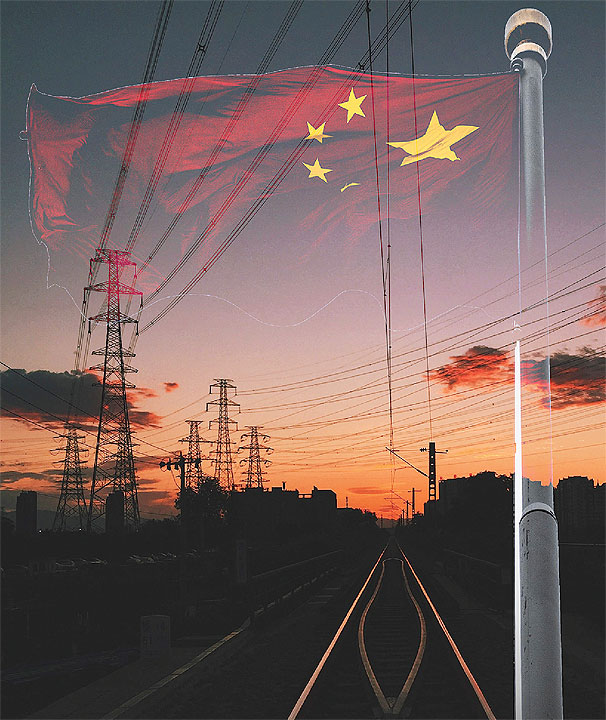
THE CASH CRUNCH faced by property developer China Evergrande Group in recent weeks has drawn comparison to the 2008 financial crisis, when seemingly minor turbulence in real-estate finance blew up into an economy-destroying hurricane. There’s an even better candidate for a 2008-style emergency in China right now, though: The energy crunch that’s sent coal prices soaring over $200 a metric ton and cut power to industry and homes across the country.

The vast state-owned power generators that keep China supplied with electricity — the parents of listed subsidiaries China Shenhua Energy Co., Huadian Power International Corp., Huaneng Power International, Inc., Datang International Power Generation Co., and China Power International Development Ltd. — are in a similar position as US mortgage giants Fannie Mae and Freddie Mac. Like Fannie and Freddie, they’re partially state-owned entities whose job is to use private finance to fund public-policy goals — in the US case, mass homeownership; in the Chinese case, cheap power.

Such entities depend on an implicit guarantee that they’ll always be bailed out by the government if things get too tight. The questioning of such a backstop after Lehman Brothers Holdings, Inc. was allowed to fail in September 2008 is one key reason why the world tipped into financial crisis. Right now, it’s the precise nature of China’s promise to its power companies that’s up for debate.

The long prelude to the current situation can be seen as a test of that support. With coal providing about two-thirds of China’s electricity, generators are caught between the regulated prices at which they sell power and the market-determined cost of their fuel. That became a problem earlier this year after domestic coal prices started to escape the 520 yuan ($81) a ton to 570 yuan a ton band that Beijing targets. Profits at some generators fell 70% from a year earlier in the first half.

One way to avoid the rising price of coal is to buy less, and depend on the reserves built up when it was cheaper. That appears to be what’s been happening this year, with end-users’ inventories of soot slumping in July to less than a quarter of their level a year earlier, even as they held steady at mines and ports — an indicator that it was power and industrial end-users who were eating through their stockyards.

That’s a risky strategy. If there’s one thing that will cause the price of a commodity to spike, it’s low inventories. By running down their stocks, generators have been counting on the government to release its own reserves, and perhaps loosen restrictions on mining and imports, to flood the market and avert the sort of spike in coal prices that has unfolded in recent weeks.

“The second half of this year is expected to be subject to certain market risks,” Huaneng warned in August. “Overcapacity production is officially criminalized, forcing mines producers to strictly comply with approved capacity amount, limiting potential increase of production.”

It’s telling that, barring a few minor reserve releases, the government has held firm for so long. Decarbonization and a crackdown on under-regulated industries are central planks of President Xi Jinping’s policy platform. Officials have shown great reluctance to abandon those objectives just because generators are failing to manage their supply and demand.

Still, something has to give. With coal prices spiking in recent weeks and the troubles of Evergrande highlighting Beijing’s unwillingness to endlessly backstop loss-making businesses, generators have been left no option but to switch off altogether rather than sell power at deep losses. That’s the immediate reason for the sorts of power cuts seen in China over the past month, spreading from factories to households as well.

It looks like the government has blinked first. Miners, after months of being ordered to stick closely to capacity limits, are now being ordered to produce as much as they can, people familiar with the matter told Bloomberg News. That should help to take the wind out of surging thermal coal prices and prevent the current crisis from extending into the winter, when sufficient energy supply can be a life-or-death matter.

There is, to be sure, an attempt to make this retreat look like a withdrawal. The latest advice from Beijing’s economic planners last week focuses on protecting individuals but continuing the crackdown on industry, especially when it’s most energy-intensive and polluting. Allowing generators to raise prices to end-users, as is happening in Guangdong province, will also help create a more commercial power market. Electricity consumption controls have even been loosened in a way that would permit potentially unlimited volumes of cheaper renewable power into the market.

The risk, as with the rapidly fading fears over Evergrande, is that Beijing has simply deferred a pressing problem again. If China doesn’t reform a system that refuses to face up to its internal contradictions, the problems of an economy fed by credit and carbon will only fester and grow.

BLOOMBERG OPINION