Home Blog Page 6831

New study declares lockdowns inutile and harmful. Time to hold government accountable

ERIK MCLEAN

After the UK, Denmark, and — of course — Sweden lifted COVID restrictions, including mask and vaccination requirements, comes a study conclusively putting the lie on the futility, inanity, and insanity that are lockdowns.

LOCKDOWNS: NOT WORTH THE SQUEEZE
The January 2022 paper from the Johns Hopkins Institute for Applied Economics, Global Health, and the Study of Business Enterprise (“A Literature Review and Meta-Analysis of the Effects of Lockdowns on COVID-19 Mortality” by Jonas Herby, et. al.) definitively declared:

“What does the evidence tell us about the effects of lockdowns on mortality? We provide a firm answer to this question: The evidence fails to confirm that lockdowns have a significant effect in reducing COVID-19 mortality. The effect is little to none.”

On the other hand, “while this meta-analysis concludes that lockdowns have had little to no public health effects, they have imposed enormous economic and social costs where they have been adopted. In consequence, lockdown policies are ill-founded and should be rejected as a pandemic policy instrument.”

In case government and lockdown supporters still can’t understand what was just said: “Overall, we conclude that lockdowns are not an effective way of reducing mortality rates during a pandemic, at least not during the first wave of the COVID-19 pandemic. Our results are in line with the World Health Organization Writing Group (2006), who state, ‘Reports from the 1918 influenza pandemic indicate that social-distancing measures did not stop or appear to dramatically reduce transmission.’”

In fact, the damage wrought by lockdowns is emphatically not merely economic but also health-wise: “Several studies find a small positive relationship between lockdowns and COVID-19 mortality. Although this appears to be counterintuitive, it could be the result of an (asymptomatic) infected person being isolated at home under a SIPO [“shelter in place order”] can infect family members with a higher viral load causing more severe illness.”

Also, “unintended consequences may play a larger role than recognized. We already pointed to the possible unintended consequence of SIPOs, which may isolate an infected person at home with his/her family where he/she risks infecting family members with a higher viral load, causing more severe illness. But often, lockdowns have limited people’s access to safe (outdoor) places such as beaches, parks, and zoos, or included outdoor mask mandates or strict outdoor gathering restrictions, pushing people to meet at less safe (indoor) places. Indeed, we do find some evidence that limiting gatherings was counterproductive and increased COVID-19 mortality.”

Indeed, this statement alone shows the utter derangement of relying on lockdown policies: “According to stringency index studies, lockdowns in Europe and the United States reduced only COVID-19 mortality by 0.2% on average.”

TIME TO START SUING
The paper employed a “systematic review and meta-analysis” specifically “designed to determine whether there is empirical evidence to support the belief that ‘lockdowns’ reduce COVID-19 mortality.” “Lockdowns” here include to mean “policies that limit internal movement, close schools and businesses, and ban international travel.” The scope of the paper was utterly comprehensive, involving “systematic search and screening procedure in which 18,590 studies are identified that could potentially address the belief posed. After three levels of screening, 34 studies ultimately qualified. Of those 34 eligible studies, 24 qualified for inclusion in the meta-analysis.”

It’s time therefore for citizens, individuals, and companies to start making plans to sue the government or its officials for the damage they wrought in unjustifiably and arbitrarily insisting on destructive lockdown policies.

And let no one claim that when the pandemic started they didn’t know lockdowns were ineffective but harmful — experts have been shouting that fact from the beginning.

There is a common-sense reason why “lockdowns have not been used to such a large extent during any of the pandemics of the past century. However, lockdowns during the initial phase of the COVID-19 pandemic have had devastating effects. They have contributed to reducing economic activity, raising unemployment, reducing schooling, causing political unrest, contributing to domestic violence, and undermining liberal democracy. These costs to society must be compared to the benefits of lockdowns, which our meta-analysis has shown are marginal at best. Such a standard benefit-cost calculation leads to a strong conclusion: lockdowns should be rejected out of hand as a pandemic policy instrument.”

SUITS BY FOREIGN CORPORATIONS
Foreign corporations should study the possibilities of bringing a suit for damages before the International Center for the Settlement of Investment Disputes (ICSID; see “Foreign investment damages under lockdowns,” BusinessWorld, Nov. 12, 2020). The ICSID overcomes State immunity from suit by allowing private entities to protect the investments they made in a foreign country. Complaints could include improper expropriation of the investment or unfair treatment, either through violation of most-favored-nation or national treatment principles. Thus, Article 25 of the ICSID Convention: “The jurisdiction of the Center shall extend to any legal dispute arising directly out of an investment, between a Contracting State (or any constituent subdivision or agency of a Contracting State designated to the Centre by that State) and a national of another Contracting State, which the parties to the dispute consent in writing to submit to the Center. When the parties have given their consent, no party may withdraw its consent unilaterally.”

ICSID proceedings are self-contained: no appeals to local courts, no diplomatic protection, and once ICSID is engaged all other remedies are deemed excluded. The ICSID Convention obliges each contracting State to recognize and enforce pecuniary obligations imposed by awards of ICSID tribunals as if they were final judgments of the State’s own courts. Note that State immunity may still hold but then that State will have to answer for possible treaty violation.

Bilateral investment treaties may also provide an opening for recovery of damages. BITs will normally contain an “Investor-State Dispute Settlement” clause, which essentially allows foreign investors to sue a government for discriminatory practices.

The Philippines, for example, has entered into several BITs with ISDS clauses, amongst them the 2000 investment agreement with India. Aside from the Article IX (i.e., the ISDS clause), there is also: Article III.1 — “Each Contracting Party shall encourage and create favorable conditions for investors of the other Contracting Party to make investments in its territory, and admit such investments in accordance with its laws and policy.”

Furthermore, Article VI provides: “Investors of one Contracting Party whose investments in the territory of the other Contracting Party suffer losses owing to war or other armed conflict, a state of national emergency or civil disturbances in the territory of the latter Contracting Party shall be accorded by the latter Contracting Party treatment, as regards restitution, indemnification, compensation or other settlement, no less favorable than that which the latter Contracting Party accords to its own investors or to investors of any third State.”

Admittedly, a government can argue that its policies equally apply to both foreign and local companies, and that the latter suffered equally as well. A counter to this argument would be to charge the government as having violated the international “minimum standard of treatment,” which allows for greater and more effective protection to foreign investors than would have been available under Philippine domestic law. The point is that, in terms of holding governments accountable, the law and tribunals are certainly there.

SUITS BY CITIZENS AND LOCAL BUSINESSES
In the local setting, citizens or private institutions can sue the national or local government, individual government officials, even private establishments, whether it be businesses, schools, or residential condominiums, for damages incurred due to illegal and unjustified COVID-19 measures, including lockdowns, mandatory vaccination, and even mask requirements.

The constitutional prescription that no person shall be deprived of life, liberty, or property without due process of law or be denied equal protection of laws is applicable to all and the responsibility of all.

That responsibility has been further legislated specifically in the Civil Code, particularly Article 19 (every person must, in the exercise of his rights and in the performance of his duties, act with justice, give everyone his due), Article 20 (every person who causes damage to another, shall indemnify the latter for the same), and Article 26 (every person shall respect the dignity, personality, privacy and peace of mind of his neighbors and other persons. The following and similar acts, though they may not constitute a criminal offense, shall produce a cause of action for damages, prevention and other relief: meddling with or disturbing the private life or family relations of another; intriguing to cause another to be alienated from his friends; vexing or humiliating another on account of his religious beliefs or other personal condition).

Then there is Article 32: Any public officer or employee, or any private individual, who directly or indirectly obstructs, defeats, violates or in any manner impedes or impairs any of the following rights and liberties of another person shall be liable to the latter for damages, which includes: freedom of religion; freedom of speech; freedom from arbitrary or illegal detention; the right against deprivation of property without due process of law; the right to the equal protection of the laws; the right to be secure in one’s person, house, papers, and effects against unreasonable searches and seizures; the liberty of abode and of changing the same; the right to take part in a peaceable assembly to petition the Government for redress of grievances.

The penal code also provides for criminal proceedings where private individuals, without authority of law, coerced people to do things or stay in a place against their will (see “illegal detention,” “unlawful arrest” or “grave coercion,” Articles 267, 268, 269, and 286, respectively of the Revised Penal Code) or where government officials, without authority of law, coerced people to do things or stay in a place against their will (see “arbitrary detention,” “violation of domicile,” “interruption of religious worship,” Articles 124, 128, 132, respectively, of the Revised Penal Code).

BOTTOMLINE, ACCOUNTABILITY
Somebody must be thoroughly held accountable for the incredible loss or damage to life, liberty, property, the national economy, individual livelihoods, people’s futures. All for what? For a measly “0.2%” benefit just so some people could satisfy their lazy dictatorial tendencies through never-ending lockdowns.

(For further information about “A Literature Review and Meta-Analysis of the Effects of Lockdowns on COVID-19 Mortality” by Jonas Herby, et.al.,” visit https://www.poynter.org/fact-checking/2022/what-to-know-about-a-study-on-lockdowns-and-covid-19-deaths-by-economists-affiliated-with-johns-hopkins/ — Editor)


Jemy Gatdula is a senior fellow of the Philippine Council for Foreign Relations and a Philippine Judicial Academy law lecturer for constitutional philosophy and jurisprudence

https://www.facebook.com/jigatdula/

Twitter@jemygatdula
Fact-checking COVID-19 posts isn’t working. There’s a better way.

THE RIGHT and left may not agree on what constitutes misinformation, but both would like to see less of it on social media. And as the world faces the third year of the COVID-19 pandemic, the threat medical misinformation poses to public health remains real. Companies like Twitter and Facebook have a stake in cleaning up their platforms — without relying on censoring or fact-checking.

Censoring can engender distrust when social media companies expunge posts or delete accounts without explanation. It can even raise the profile of those who’ve been “canceled.”

And fact-checking isn’t a good solution for complex scientific concepts. That’s because science is not a set of immutable facts, but a system of inquiry that constructs provisional theories based on imperfect data.

A recent post on Politifact illustrates the problem. The claim at issue: a meme circulating on Facebook that viruses evolve to be less virulent. Politifact deemed it false, but Purdue University virologist David Sanders disagrees. “I would say that it actually is true that viruses do tend to evolve to be less harmful to their host,” he told me, though it’s a process than can sometimes take decades — or even centuries — from the time a new virus jumps from animal to a human host. Sanders said Politifact had conflated virulence with other things, such as resistance to drugs. When a complex issue is still a matter of scientific uncertainty and debate, rating it “true” or “false” doesn’t work very well.

Another limitation of fact-checking: There’s so much dubious content floating around Facebook and Twitter that human fact checkers can only get to a miniscule fraction. Consumers may wrongly assume what’s left over has been reviewed and is reliable. 

“It’s not a truth-seeking medium — it’s meant for entertainment,” says Gordon Pennycook of the University of Regina in Canada.

But he is convinced that Facebook and Twitter can be made less deceptive by harnessing the analytical power of the human brain.

One way is to harness the phenomenon known as “the wisdom of the crowds.”  If you ask enough independent sources a tough question — like how deep the Pacific Ocean is at its deepest point — people converge on the right answer. But social media misguides our crowd-seeking compasses.

Crowdsourcing only works when each person is thinking independently. On social media, users get cues that lead to mobbing and piling on, and fake accounts or automated “bots” can give the illusion that vast crowds are impressed or outraged by a news item. 

“It’s not necessarily that [users] don’t care about accuracy. But instead, it’s that the social media context just distracts them and they forget to think about whether it’s accurate or not before they decide to share it,” said his research partner David Rand, a professor of management science and cognitive sciences at MIT.

Rand admits he fell into that trap himself, sharing a made-up tidbit attributed to Ted Cruz — a statement that he’d believe in climate change when Texas freezes over. “It was the time when there were all those snowstorms in Texas. And I was like, ‘Oh my God, that’s so good.’”

What Rand and Pennycook found in a recent study, published in the journal Nature, was that people improved the accuracy of their sharing when first asked to rate the accuracy of a headline. The idea was that this would shift people’s attention toward accuracy, which people say they believe is important even as they share things based on how popular they’re likely to be.

Rand and Pennycook found that combining enough social media users to evaluate news generated a wisdom-of-the-crowds effect, and the system yielded answers that matched multiple fact checkers as well as the fact checkers matched each other.

“About 10 or 15 lay people, that’s equivalent to about one fact-checker,” said Pennycook.

Facebook and Twitter could harness crowdsourcing to elevate the stories most likely to be true. “You could use that to inform your ranking to correspond to the actual accuracy,” Pennycook said. “In a certain sense that’s taking it out of the hands of the third parties and give it back to the people.”

Instead, algorithms on platforms like Twitter, YouTube, Instagram, and Facebook are structured to suppress learning and feed people an informational junk food diet that reinforces existing beliefs and biases, according to a series of models and experiments led by Filippo Menczer, a professor at the Center for Complex Networks and Systems Research at Indiana University.

“What we are exposed to on social media is strongly affected by our own pre-existing opinions,” he told me on my podcast about medical misinformation. And that’s one reason seemingly apolitical medical topics become politicized. “Political entities have an interest in using whatever people are paying attention to — for example, a health crisis — to manipulate people.”

The “people are getting dumber” myth has been embraced on both the political right and left. We’re not getting dumber. We are all struggling to understand what’s going on in a complex, fractured world. Censorship and even fact-checking social media won’t solve that problem. To do that, platforms can change the system, giving users more power over what they see.

BLOOMBERG OPINION

World Bank drafts new report to replace canceled ‘Doing Business’

REUTERS

THE WORLD Bank is working on a new approach to measuring the business and investment climate in economies after its previous flagship report known as “Doing Business” was canceled last year following an outside audit that concluded data were manipulated.

The development lender is seeking input for the new project, with the working title “Business Enabling Environment,” to take into account the views of experts and potential users in government, the private sector and civil society, the World Bank said on its website. The project will be led by the same development economics global indicators group that produced “Doing Business.”

Some changes proposed include evaluating the business environment from the standpoint of private-sector development overall rather than just individual firms; including the provision of public services in an economy and not just the regulatory burden; and the inclusion of data based on practical implementation of regulations rather than just laws on the books.

“The data collection and reporting process will be governed by the highest possible standards,” the World Bank said in a note on the project released yesterday.

The Washington-based institution is targeting a bank-wide review of the project for late March, with a goal of releasing the first full report in late fall 2023.

The World Bank abandoned the “Doing Business” report last September. The move came after a review by an outside law firm accused current International Monetary Fund (IMF) Managing Director Kristalina Georgieva of pressuring World Bank staff to boost China’s position in the 2018 edition of the report when she was the organization’s No. 2 official.

Ms. Georgieva consistently denied the allegations, and the IMF board decided to keep her as the fund’s head after its own review, saying that the evidence didn’t “conclusively demonstrate” that she played an improper role. The scandal rocked the IMF and World Bank last year, and the fund last week appointed an independent outside panel led by former Bundesbank President Jens Weidmann to strengthen institutional safeguards.

The “Doing Business” report played a notable role in emerging markets, with governments often showcasing moves up in ranking in appeals for foreign investment. But the integrity of the ratings had been the source of heated debate in recent years, with Paul Romer quitting as the World Bank’s chief economist in 2018 after questioning changes to Chile’s order in the report.

While the proposal says that the new project will avoid the hype around rankings that plagued its predecessor, it says that whether the indicators will be grouped to produce aggregate scores is yet to be determined. That could leave it open to the debate that plagued its predecessor, said Justin Sandefur, a senior fellow at the Center for Global Development and a participant in a panel that reviewed “Doing Business” last year.

“It’s not super categorical or committal about not going with an index or aggregate scores,” he said. “It sounds like the jury is still out there.” — Bloomberg

Sweden declares pandemic over, despite warnings from scientists

LINUS MIMIETZ-UNSPLASH

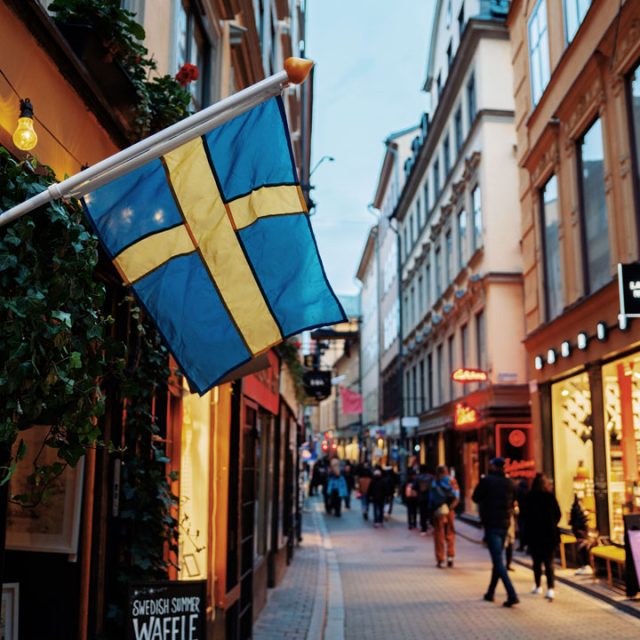
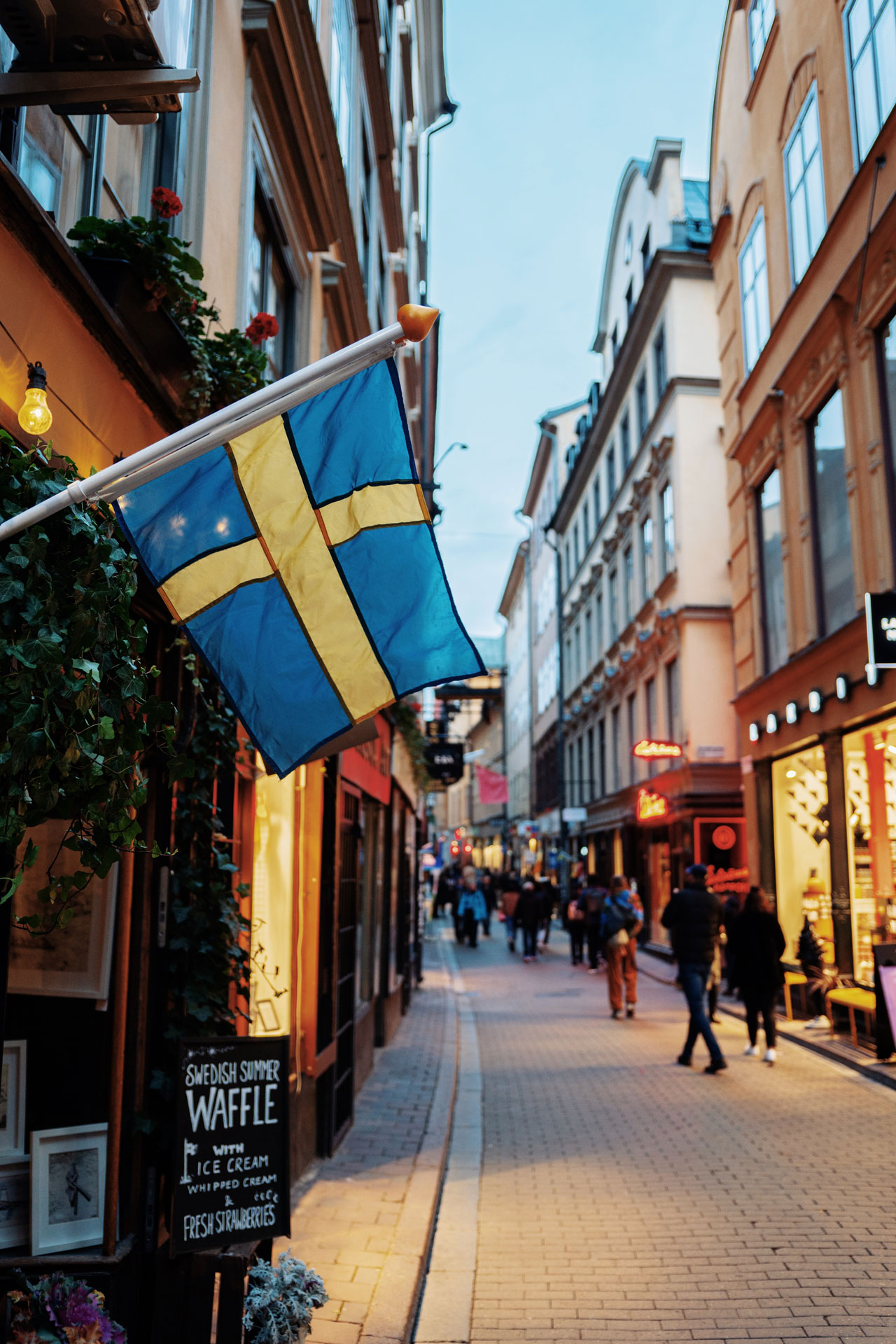
STOCKHOLM — Sweden scrapped almost all of its few pandemic restrictions on Wednesday and stopped most testing for COVID-19, even as the pressure on the healthcare systems remained high and some scientists begged for more patience in fighting the disease.

Sweden’s government, which throughout the pandemic has opted against lockdowns in favor of a voluntary approach, announced last week it would scrap the remaining restrictions — effectively declaring the pandemic over — as vaccines and the less severe Omicron variant have cushioned severe cases and deaths.

“As we know this pandemic, I would say it’s over,” Minister of Health Lena Hallengren told Dagens Nyheter. “It’s not over, but as we know it in terms of quick changes and restrictions it is,” she said, adding that COVID would no longer be classified as a danger to society.

  As of Wednesday, bars and restaurants will be allowed to stay open after 11 p.m. again, and with no limits on the number of guests. Attendance limits for larger indoor venues were also lifted, as was the use of vaccine passes.

Swedish hospitals were still feeling the strain, however, with around 2,200 people with COVID requiring hospital care, about the same as during the third wave in the spring of 2021. As free testing was reduced earlier this month and effectively stopped from Wednesday, no one knows the exact number of cases.

“We should have a little more patience, wait at least a couple of more weeks. And we are wealthy enough to keep testing,” Fredrik Elgh, professor of virology at Umea University and one of the staunchest critics of Sweden’s no-lockdown policy, told Reuters.

“The disease is still a huge strain on society,” he said.

Sweden’s Health Agency said this week that large-scale testing was too expensive in relation to the benefits. Sweden spent around 500 million Swedish crowns ($55 million) per week on testing for the first five weeks of this year and around 24 billion crowns since the start of the pandemic.

On Wednesday, Sweden registered 114 new deaths where the deceased was infected with the virus. In total, 16,182 people have died either of the virus or while infected by it. The number of deaths per capita is much higher than among Nordic neighbors but lower than in most European countries. — Reuters

New North Korea nuclear, ICBM testing would trigger instant crisis — Moon

SOUTH KOREAN PRESIDENT MOON JAE-IN — REUTERS

SEOUL — A resumption of North Korea’s nuclear weapon or long-range missile tests would “instantly” send the peninsula back into crisis, outgoing South Korean President Moon Jae-in said this week, calling for measures to prevent that from happening.

A record month of North Korean missile testing in January highlighted failures of Mr. Moon’s efforts to engineer a breakthrough as his term ends in May, and North Korean leader Kim Jong Un has suggested  he could order new nuclear tests or intercontinental ballistic missile (ICBM) launches for the first time since 2017.

“If North Korea’s series of missile launches goes as far as scrapping a moratorium on long-range missile tests, the Korean Peninsula may instantly fall back into the state of crisis we faced five years ago,” Mr. Moon said in a written interview with media in Seoul scheduled for publication on Thursday.

“Preventing such a crisis through persistent dialogue and diplomacy will be the task that political leaders in the countries concerned must fulfil together,” he added.

Mr. Moon had expressed concern that the series of missile tests was so close to the March 9 presidential election in South Korea, where the candidate from Mr. Moon’s Democratic Party is in a tight race with a conservative opponent.

Mr. Moon admitted he appears to have run out of time, saying it is unlikely a last-minute summit with Mr. Kim or the adoption of his proposal for a declaration ending the 1950-1953 Korean War would happen before he leaves office.

Still, he said the United States and South Korea have agreed on the text of the declaration, and that a summit between Mr. Kim and US President Joseph R.  Biden “is just a matter of time” if all sides wish to avoid a crisis.

“Since dialogue is the only way to resolve problems, a meeting between President Biden and Chairman Kim is expected to take place eventually,” he said.

Mr. Moon has pushed for a formal end to the Korean War to replace the armistice that stopped the fighting but left it and the US-led U.N. Command still technically at war.

“I would at least like to make conditions ripe for an end-of-war declaration and pass that on to the next administration,” he said.

Mr. Moon said his most rewarding achievement was helping “shift the direction toward dialogue and diplomacy rather than military confrontation.”

The biggest regret of his term, however, is the failure of the US-North Korea summit in Hanoi, he said, where Kim and then-US President Donald Trump walked away with no agreements on reducing North Korea’s nuclear weapons or missiles in return for easing international sanctions.

“It is very regrettable that the summit ended in ‘no deal’ when the continuation of dialogue should have been ensured at least,” he said, arguing that a smaller, phased deal should still have been pursued when it became clear that a “big deal” was out of reach.

“Still now, if they learn from that experience and put their heads together to discuss mutually acceptable, realistic measures… I believe there will be ample opportunities to find a solution,” he added.

In a phone call with his US and Japanese counterparts on Thursday, South Korean Defense Minister Suh Wook said the recent launches posed a “direct and serious threat”, and vowed to bolster response capabilities based on the US alliance.

Mr. Biden’s administration has said it is willing to meet the North Koreans any time without preconditions, but Pyongyang says it will not resume negotiations unless Washington and Seoul drop “hostile policies” such as military drills, sanctions, and arms buildups.

Despite the stalled talks and increase in tensions, Mr. Moon says “necessary communication” with Mr. Kim has continued, and he doesn’t think Mr. Biden has returned to the “strategic patience” policies of the Obama administration because he continues to make practical efforts to resume dialogue.

“We cannot afford to give up this task,” he said. — Reuters

Super Bowl tickets are costliest ever, $7,542 a seat

GENERAL overall aerial view of the Super Bowl LVI Experience at the Los Angeles Convention Center and downtown skyline. — REUTERS

TICKETS to Sunday’s Super Bowl between the Los Angeles Rams and the Cincinnati Bengals are the most expensive on record at $7,542 on average, according to ticket reseller TickPick.

Even so, prices are down from an average of $8,257 per ticket on Feb. 4, the company said. The cost dropped after the San Francisco 49ers, a franchise with a large and wealthy fan base, lost to the Rams in the NFC Championship game on Jan. 30.

Super Bowl tickets are pricey by nature, but the average cost has become increasingly steep over the past five years. The current average price is more than double 2017’s end-of-season matchup and remains strong even after the winter surge of the pandemic’s Omicron variant.

Hope for fans to secure tickets without breaking the bank isn’t entirely lost. TickPick says there is still a possibility that prices will continue to drop in the days leading up to the game.

“Fans looking for the most affordable tickets should keep their eyes on that get-in over the coming days,” said Brett Goldberg, co-founder of TickPick.

The cheapest seats were just under $4,500 on Wednesday, the lowest since the day the matchup was set. About a third of buyers have come from a California zip code and 27% came from Ohio or Kentucky residents, TickPick said. — Bloomberg

PSC features GiGa awardee Dr. Claravall on Rise Up!

PHILIPPINE Sports Commission’s (PSC) Rise Up! Shape Up! will have Gintong Gawad 2021 awardee Dr. Drolly Claravall in the latest webisode this Saturday, Feb. 12.

Dr. Claravall is the recipient of PSC’s Gintong Gawad award, “Makabago at Natatanging Produktong Pang-Isport” for her invention of an ergonomically designed handheld massage tool which is designed to mimic the hands and fingers of a massage therapist when doing a massage technique.

The idea came when Dr. Claravall attended a seminar on blading and taping sports injuries at the University of the Philippines in July 2017. The blading technique uses a handheld massage tool instead of human hands and fingers in treating muscle and body pains. However, Dr. Claravall had concerns with the bruising and pains experienced by clients after the therapy using the blading technique. She saw this as an opportunity to design her tool, keeping in mind that the tool must fit all areas of the muscle fibers. She also specifically designed the Amazing Touch tool for everyone of all ages, whether athlete or non-athlete.

“We, at the PSC, do not only look after the training and development of athletes and Philippine Sports. We also ensure the holistic well-being of our athletes, coaches, trainers, and sports enthusiasts, and that means also being on the lookout for products, tools, and services that will keep them at their optimum condition,” PSC Women in Sports oversight Commissioner Celia H. Kiram said, adding that she is glad “that the person behind this ingenuity is a woman.”

Dr. Claravall is a multi-talented and inspiring sportswoman. She serves as the President of the Faculty Federation and Associate Professor at the Isabela State University-City of Ilagan. A Regional Director of the Philippine Athletics Track and Field Association (PATAFA) since 2009 and a sports therapist of the Philippine National Team Elite and Master Athletes.

As an athlete, Dr. Claravall has participated in various local and international competitions, with the most recent being the 2020 Asia Masters champion for hammer throw in Kuching, Malaysia, and won the bronze medal at the 2019 Asian Masters Championships.

Snowboarding: American ‘golden girl’ Kim blows away rivals to retain halfpipe title

ZHANGJIAKOU, CHINA — American Chloe Kim cemented her position as one of the greats of women’s snowboarding with a commanding performance on Thursday to win halfpipe gold at the Winter Games and successfully defend her 2018 Olympic title.

The 21-year-old set herself apart from rivals in the very first run, earning a top score of 94 by breezily landing 1080s. Spain’s Queralt Castellet could never catch up with Kim and had to settle for silver, while Sena Tomita of Japan won the bronze medal.

Kim, who at 17 became the youngest woman ever to win Olympic gold in snowboarding at the Pyeongchang Games in 2018, roared back in style after taking nearly two years off the slopes.

After landing her first run, Kim put her hands on her black helmet and dropped to her knees in the snow, overjoyed to have nailed what she called her “safety run.”

“I just was so proud of myself,” Kim said about her first run, adding she had a terrible practice session where she fell twice going into Thursday’s final that had initially put her in a “weird headspace.”

“I was just like overflowed with emotions when I was able to land it on the first go.”

Given her sizeable lead, Kim then attempted a cab 1260 in her second and third runs but fell both times.

After the last Games, she took time off to focus on her studies and her mental health.

“I think the biggest lesson I’ve learnt from the last Olympics was being as open as possible. It’s unfair to be expected to be perfect,” Kim told reporters at a packed news conference.

Suffering from frustration and burnout, she briefly threw out her gold medal as junk after the 2018 Games but said on Thursday she had no intention of repeating that this time.

After Kim’s high run, Castellet received the next highest score of 90.25 and Tomita earned 88.25.

“I am extremely happy, to be honest. The second place in behind Chloe is incredible. She is an incredible athlete,” Castellet said after the final.

Tomita said she was happy to become the first Japanese woman to win a halfpipe medal.

“Everybody was very aggressive, and in that kind of competitive environment I got a medal. That has given me a lot of confidence,” she said.

Kim, or “golden girl” as TV commentators called her on Thursday, was joined at the snow park by her friend, Eileen Gu, the Chinese freestyle skier. Gu, wearing a Red Bull helmet and black puffer jacket, cheered Kim on from the finish line.

International Olympic Committee President Thomas Bach also appeared on the sidelines and watched the event.

The course, officially called the Secret Garden Olympic Halfpipe, is more than 200 meters long and 22 meters wide. The inner height of the halfpipe walls is 7 meters. — Reuters

Lukaku strike earns Chelsea spot in Club World Cup final

ABU DHABI — A first-half Romelu Lukaku strike earned Chelsea a 1-0 victory over Saudi Arabia’s Al Hilal on Wednesday to seal a spot in the Club World Cup final.

The European champion will face Brazilian side Palmeiras on Saturday in the Mohammed bin Zayed Stadium in Abu Dhabi after Belgian striker Lukaku fired home from close range in the 32nd minute.

Without coach Thomas Tuchel on the touchline, after he tested positive for coronavirus disease 2019 (COVID-19), the Blues looked in control in the first half, fully deserving their lead at the break.

However, Asian champions Al Hilal improved a great deal in the second half, with Chelsea goalkeeper Kepa Arrizabalaga pulling off several fine saves to keep them at bay.

Chelsea threatened to add a late second, but Lukaku’s strike proved to be enough, as they booked their place in the final of a competition they have never won.

Tuchel’s team started brightly in Abu Dhabi, with Hakim Ziyech, who has forced his way back into the Chelsea side in recent weeks, going close from the edge of the box early on.

Lukaku then saw a powerful strike well saved, before making no mistake from five meters out, after a Kai Havertz cross fell to him off Al Hilal’s Yasser Al-Shahrani.

The Blues owed goalkeeper Arrizabalaga, standing in for first-choice stopper Edouard Mendy who has just returned from the Africa Cup of Nations, a great debt as they seemed to tire as the match wore on.

The Spaniard made a fine block to keep out Moussa Marega’s effort, before the pick of his saves — a stunning one-handed stop — prevented Mohamed Kanno from getting Al Hilal back into the contest.

Mason Mount should have made it two late on, but Chelsea saw out the win in relative comfort. — Reuters

Coutinho sparkles for Villa, but Leeds grab draw in thriller

BIRMINGHAM, ENGLAND — Leeds United battled back to earn a 3-3 draw at Aston Villa after a virtuoso first-half display by Philippe Coutinho had left Marcelo Bielsa’s team crestfallen on Wednesday.

Brazilian Coutinho canceled out an early opener by Daniel James with a classy finish and then produced two majestic passes for Jacob Ramsey to score twice in five minutes.

James bravely nodded Leeds back into the contest in stoppage time at the end of a rollercoaster opening period.

Leeds, who has fallen too close to the relegation zone for comfort, got their reward for a tenacious display in the 63rd minute when a corner fell at the feet of Diego Llorente and he fired home from close range.

The draw left Leeds in 15th place with 23 points, six points above third-from-bottom Norwich City, while Villa are in 11th place with 27 points.

A scintillating first-half was described by Villa manager Steven Gerrard as “chaos” and he was not wrong, although no one was complaining about the rich entertainment on offer.

“It was frantic, end-to-end and 100 mph. We almost brought into the Leeds style and we needed more calm heads out there so it looked more like our style,” Gerrard said.

“A draw was the right result. A fun game for the fans tonight, but not one for the coaches!”

Former Manchester United winger James got the ball rolling with a low finish in the ninth minute and he came agonisingly close to making it 2-0 with a thumping effort against the crossbar.

Villa made the most of that slice of good fortune and equalized almost immediately when Matty Cash cut a ball back from the byline and Coutinho took a touch before firing a shot on the turn beyond Illan Meslier.

Barcelona loanee Coutinho, who marked his Villa debut with an equalizer at Manchester United last month, then took over.

An exquisite pass sent in Ramsey to beat Meslier in the 38th minute and he produced a carbon copy five minutes later to split the Leeds defense again, this time Ramsey lashing an unstoppable shot into the top corner.

Leeds looked shellshocked but James somehow got his head to a deflected Rodrigo cross to nod over the line and at least send the visitors back to the changing room with hope.

By comparison, the second half was uneventful although still highly entertaining.

Llorente fired in following a poor clearance by Tyrone Mings from a corner and in a frenetic finale tempers began to fray with Villa’s Ezri Konsa sent off after catching Meslier with his forearm as a corner was played in.

While there were several candidates for man-of-the-match, Coutinho’s display in the first half had Gerrard purring.

“It was vintage Philippe Coutinho tonight. He’s certainly getting back close to where he was when the whole world was speaking about him,” Gerrard said.

“He will get better and better. He is a joy to work with.” — Reuters

DeMar DeRozan scores 36 to lead Bulls past Hornets

DEMAR DeRozan pumped in 36 points as the Chicago Bulls topped the host Charlotte Hornets (121-109) on Wednesday night.

Zach LaVine racked up 27 points in his second game since returning from a back injury, hitting five 3-point shots.

Nikola Vučević supplied 18 points, 15 rebounds and eight assists and Coby White notched 15 points for the Bulls, who won for just the second time in their last five games.

The Bulls shot 56.1% from the field, bolstered by DeRozan’s 13-for-19 effort. He made three of four 3-pointers.

The Hornets endured their season-high sixth consecutive loss, with the last four of those coming in home games.

Charlotte’s LaMelo Ball notched 33 points, but it took a 12-for-25 outing from the field. Miles Bridges tallied 22 points, Kelly Oubre, Jr. had 19 points and Terry Rozier added 16 points for the Hornets.

Charlotte threatened to make it tight, closing within 98-87 with 8:37 to play. Then the Bulls rattled off the next seven points with DeRozan, LaVine and White scoring.

Ultimately, the Hornets’ shooting woes were too much to overcome. They finished at 42.6% from the field, including 13-for-43 on 3-pointers.

DeRozan had 18 points by half time, with the Bulls holding a 58-45 lead that was defined by a 21-6 run to close the second quarter. Chicago shot 56.1% from the field in the first half, while Charlotte’s shooting woes were magnified by a 6-for-21 rate on 3s.

The Hornets have had offensive dry spells in their recent slump. Another one appeared with scoring only 16 points in the second quarter, when the Bulls rolled up 30 points.

Charlotte responded with 31 points in the third quarter, but the Bulls also scored that many.

The Hornets had another lineup change with Gordon Hayward out with an ankle injury. Oubre moved into the starting lineup. — Reuters

Harden-for-Simmons

Depending on source (and, make no mistake, there are many sources), a James Harden-for-Ben Simmons swap is either dead in the water or extremely close to happening heading into today’s trade deadline. Publicly, neither the Nets nor the Sixers are inclined to admit they want to get it done. For a variety of reasons even casual observers can enumerate, there is incentive to push through with it. On the other hand, the fact that mere acknowledgment of it making sense undermines their respective negotiating positions prevents them from exercising the very type of candor that can push it forward.

Indeed, leverage is the name of the game for the Nets, who continue to believe that they’re primed for the hardware once their Big Three of Kevin Durant, and Harden are able to get more reps together. The operative word is, however, “able,” and, so far, its use has been accompanied by wishful thinking. Between injuries, safety protocols, passive-aggressive stances, and sheer bad luck, a consistent and, more importantly, lasting impact from the dream triumvirate has been just that -— a dream.

Bargaining chips are likewise what the Sixers aim to preserve with their coyness. Even as everybody and his mother know that the disgruntled Simmons has most likely played his last game for the red, white, and blue, they insist on treating him as a valuable asset that cannot be offered at a discount. Unfortunately, the tack they have taken has hurt them on the court; instead of flipping him for help as soon as possible in order not to waste Most Valuable Player candidate Joel Embiid’s exertions, they’re keeping him in their pocket like a Get Out of Jail Free card. As Monopoly players know only too well, however, said card is practically worthless: What if they never go to jail?

From the outside looking in, there is a lot of incentive for both sides to pull the trigger on the arrangement. Forget the sweeteners; at this point, both the Nets and the Sixers would benefit from addition by subtraction. And it’s not as if they’re getting scraps in return, however damaged the goods may be. If anything, the on-court fit under retooled rosters works for the would-be partners on the negotiating table. Then again, this is the National Basketball Association, where stranger things have happened, and where pride often gets in the way of propriety. Which is why, when today’s trade deadline passes, no scenario will come as a surprise.


Anthony L. Cuaycong has been writing Courtside since BusinessWorld introduced a Sports section in 1994. He is a consultant on strategic planning, operations and Human Resources management, corporate communications, and business development.