Home Blog Page 6823

How to win more global warming lawsuits
MAREK PIWNICKI-UNSPLASH

THE fight against global warming is rapidly moving into the courtrooms. In the past few years, in landmark cases in the Netherlands, Germany, and France, courts have agreed that state and corporate entities have a duty to reduce greenhouse gas emissions, and demanded they adopt more aggressive policies. A Dutch court, for example, ordered the government to reduce emissions to 25% below 1990s levels, forcing it to go beyond its proposed goal of 17%.

These rulings mark an encouraging shift. Over the decades, plaintiffs have brought — and lost — more than a thousand major cases accusing governments and private companies of causing specific damages through climate emissions.

One reason this dismal record may be changing is that plaintiffs are making more persuasive arguments. But they could be doing even better. According to a recent study of arguments put forth in 73 recent or ongoing cases, plaintiffs are generally failing to use the up-to-date science capable of linking climate emissions to direct harmful consequences.

“Attribution” — the term scientists use to describe the evidence linking human behavior to global warming — isn’t as easy as it might seem. Proving that some flood or storm damage is due to climate change, and not just a freak event of normal weather, means showing that such an event would have been much more unlikely in a world in which climate change wasn’t happening. To do that, scientists have to rely on good statistical understanding of the normal climate system and weather — if warming weren’t happening — and make a clear distinction from what is actually happening now.

Collecting that historical data and building those scientific models has been difficult. But researchers have persisted. In 2018, a summer heat wave in northern Europe brought average temperatures more than 5°C higher (9°F) than the recent historical norm. Detailed studies of this event based on available data and atmospheric modeling eventually concluded that such an event was roughly 100 times more likely than it would have been in the absence of climate change. In a realistic statistical sense, climate change caused it, as well as the damage following from it, which included many hundreds of excess deaths caused by extreme temperatures in Sweden, Finland, and Denmark.

The science for making such causal links has matured in the past decade due to concerted efforts of groups such as the World Weather Attribution organization, created by scientists who have developed exhaustive methods for determining which events are and aren’t good candidates for realistic attribution. It’s unfortunate that, so far, the activists bringing climate cases don’t seem to be keeping up with the science.

In their study of recent cases, for example, Rupert Stuart-Smith of the Oxford Sustainable Law Programme and colleagues found that plaintiffs in nearly 75% of the cases — typically relating to damages from extreme temperatures or sea-level rise — made no effort to demonstrate a clear causal link between the damage they experienced and defendants’ emissions. Instead, plaintiffs mostly hoped it would be enough if the court accepted the existence of a general link between climate emissions and increased risks for extreme events.

The better alternative, these researchers argue, would be to present specific evidence to link particular damages at one time and place to defendants’ actions. That may seem inherently difficult, as emissions come from so many sources, but attribution has developed statistical techniques to reliably estimate the portion of damage attributable to individual emitters. And such arguments are in spirit no different from arguments courts have long accepted in other areas — for example, in cases determining partial liability for health consequences from tobacco smoke or asbestos. Such estimates see Exxon Mobil and Chevron as each having contributed more than 2% to the cumulative acidification of the oceans, with coal and cement producers in China accounting for more than 10%.

More specific arguments could make a big difference. A decade ago, a court that rejected climate-related lawsuits suggested that legitimate links could never be made between defendants’ emissions and plaintiffs’ injuries. That view was premature. The science has decisively moved on. Now, in many cases, such links can be made with high confidence.

It’s not surprising, perhaps, that legal experts haven’t kept up with latest science, which is getting stronger all the time. If activists and their legal teams begin employing better science, the legal battles could soon start tipping the other way, in which case courts might drive real change on emissions policies.

BLOOMBERG OPINION
N.Korea caps month of tests with longest-range missile since 2017

REUTERS

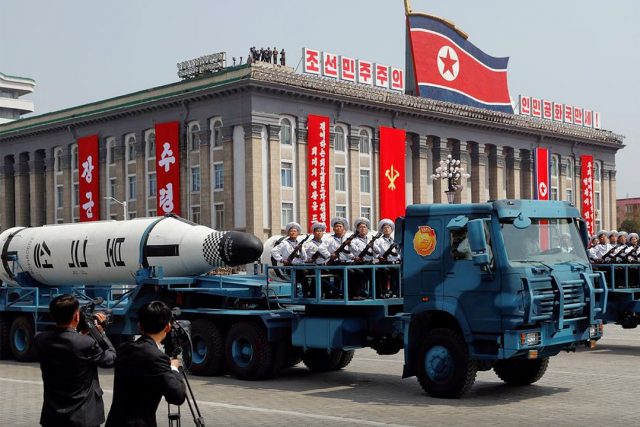
SEOUL — North Korea conducted its largest missile test since 2017 on Sunday, sending a suspected intermediate-range ballistic missile soaring into space, seen as taking the nuclear-armed country a step closer to resuming long-range testing.

South Korea’s Joint Chiefs of Staff (JCS) reported that a projectile believed to be a single ballistic missile was launched about 7:52 a.m. (2252 GMT) from North Korea’s Jagang Province toward the ocean off its east coast.

South Korea’s National Security Council (NSC), which convened a rare emergency meeting presided over by President Moon Jae-in, said the test appeared to involve an intermediate-range ballistic missile (IRBM), which North Korea has not tested since 2017.

The launch takes North Korea a step closer to fully scrapping a self-imposed moratorium on testing its longest-range intercontinental ballistic missiles (ICBMs), Mr. Moon said.

He noted that this month’s flurry of missile tests was reminiscent of the heightened tensions in 2017, when North Korea conducted multiple nuclear tests and launched its largest missiles, including some that flew over Japan.

North Korean leader Kim Jong Un has said he is no longer bound by that moratorium, which included a stop to nuclear weapons tests and was announced in 2018 amid a flurry of diplomacy and summits with then-US President Donald Trump.

North Korea’s rulers suggested this month they could restart those testing activities because the United States and its allies had shown no sign of dropping their “hostile policies.”

“The United States condemns these actions and calls on (North Korea) to refrain from further destabilizing acts,” the US military’s Indo-Pacific Command said in a statement after Sunday’s launch.

A US State Department spokesperson said the launch demonstrates the threat posed by North Korea’s unlawful weapons of mass destruction and ballistic missile programs, and called on Pyongyang to engage in “sustained and substantive” dialogue.

BIGGER MISSILES
It is unclear if IRBMs were included in Mr. Kim’s moratorium, but those, too, have not been tested since 2017. South Korea’s JCS and Japanese Chief Cabinet Secretary Hirokazu Matsuno separately said the missile is estimated to have reached an altitude of 2,000 km and flown for 30 minutes to a distance of 800km. IRBMs typically have ranges of 600 to 3,500 miles, while ICBMs have ranges exceeding 3,500 miles.

Missile experts said the data could indicate a test of an IRBM such as the Hwasong-12, which was last tested in 2017, or a new type.

“Regardless of whether it’s a IRBM or ICBM, this is a strategic missile of some sort and clearly not the same as the prior tests in the Jan. 2022 test series to date,” George William Herbert, an adjunct professor at the Center for Nonproliferation Studies and a missile consultant, said on Twitter.

The launch could make January the busiest ever for North Korea’s missile program, which analysts say is expanding and developing new capabilities despite strict sanctions and United Nations Security Council resolutions that ban the country’s ballistic missile tests.

Its latest launches included a test of two short-range ballistic missiles and their warheads on Thursday, and an updated long-range cruise missile system tested on Tuesday.

The test comes less than a week before the opening of the Winter Olympics in Beijing, which is North Korea’s main political and economic partner. Pyongyang has said it would be skipping the Games because of the COVID-19 pandemic and “hostile forces.”

“Kim seems to be ramping up tests in bid to pressure both Washington and Beijing over sanctions just ahead of the Olympics,” said Uk Yang, research fellow at Center for Foreign Policy and National Security.

The tests would also appear to be the final nail in the coffin for Moon’s last-ditch push for a peace deal with North Korea before he leaves office in May, Uk added.

“It’s clear that North Korea is saying inter-Korean relations will need to start from scratch,” he said.

In an address ahead of the New Year, Kim Jong Un called for bolstering the military with cutting-edge technology at a time when talks with South Korea and the United States have stalled.

Since then, North Korea has tested a dizzying array of weapon types, launch locations, and increasing sophistication as denuclearization talks remain stalled.

Jagang Province was the site of two launches this month of what North Korea said was a “hypersonic missile,” which could reach high speeds while flying and maneuvering at relatively low altitudes, but the ranges reported on Sunday were higher and farther than those earlier tests.  Reuters

Italy re-elects President Mattarella, gov’t unity bruised

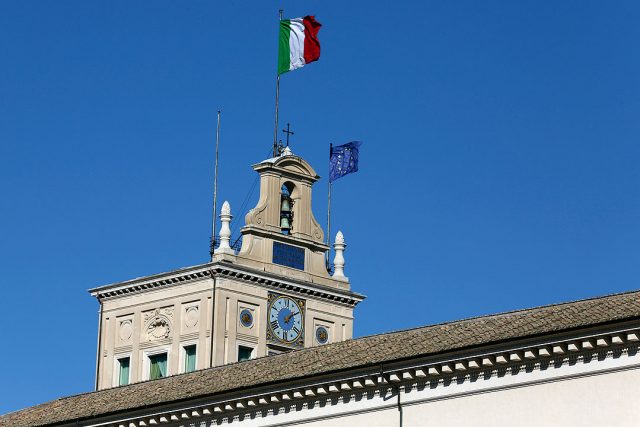
THE ITALIAN and European Union flags flutter in the wind at the Quirinale presidential palace in Rome Jan. 28, 2015. — REUTERS

ROME — Italian head of state Sergio Mattarella was re-elected for a second term on Saturday, with party chiefs asking him to carry on after a week of fruitless, often fraught voting in parliament to choose a successor.

Relieved party chiefs thanked 80-year-old Mr. Mattarella for agreeing to remain, but the failed attempts to replace him during seven rounds of balloting have left deep scars, with potentially dangerous repercussions for political stability.

Nonetheless, financial markets are likely to react positively to the status quo, which will see Prime Minister Mario Draghi, who had made clear he hoped to become president himself, continuing as prime minister instead.

Mr. Draghi said in a statement that Mr. Mattarella’s re-election was “splendid news for Italians,” thanking him for “his decision to go along with the extremely strong will of parliament.”

Pope Francis sent the re-elected president a telegram of congratulations.

At the eighth round among more than 1,000 lawmakers and regional delegates in the Chamber of Deputies, loud and prolonged applause broke out when Mr. Mattarella passed the 505 votes needed for election.

He had previously ruled out remaining in office, but with the country’s political stability at risk he changed his mind in the face of appeals from parliamentary leaders who met him at his palace earlier in the day.

In brief comments from the palace, Mr. Mattarella said the ongoing coronavirus crisis and Italy’s difficult economic and social conditions meant he was duty bound to accept the decision of parliament.

He said that even though he had other personal plans, he was “committed to matching the expectations and hopes of the people”.

In Italy’s political system, the president is a powerful figure who gets to appoint prime ministers and is often called on to resolve political crises. Governments in the euro zone’s third-largest economy survive around a year on average.

The leader of the center-left Democratic Party (PD) Enrico Letta, who had championed Mattarella’s re-election, spoke to reporters to express “enormous thanks … for his generous choice towards the country.”

Mr. Draghi earlier called Mr. Mattarella and urged him to stay on, a political source said.

Relations among the parties in the ruling coalition have deteriorated during the election process amid mutual recrimination over the failure to find a consensus figure. — Reuters

Putin orders apparent new system for banning ‘toxic’ internet content

Russian President Vladimir Putin

MOSCOW — Russian President Vladimir Putin has ordered his administration to consider an apparent new system to ban “toxic” internet content, although details were not released.

The new system, contained in a list of presidential orders on the Kremlin website, was described as a “self-regulated register of toxic content” which would be used “to protect minors”. The Kremlin would review it by June 1.

The order, with Thursday’s date, was first reported by Russian media on Saturday.

Mr. Putin has hinted at plans for a more sweeping crackdown on online content, blaming the internet for corrupting youth and for fueling street protests by political opponents branded extremists by the authorities.

Russia stepped up pressure last year on foreign tech companies, imposing punishments including a nearly $100 million fine against Google for failing to delete banned content.

In December, Mr. Putin signaled support for a proposal from a member of his human rights council for a new voluntary mechanism to ban toxic content, which Russian online platforms would agree to in return for being treated preferably to foreign platforms. — Reuters

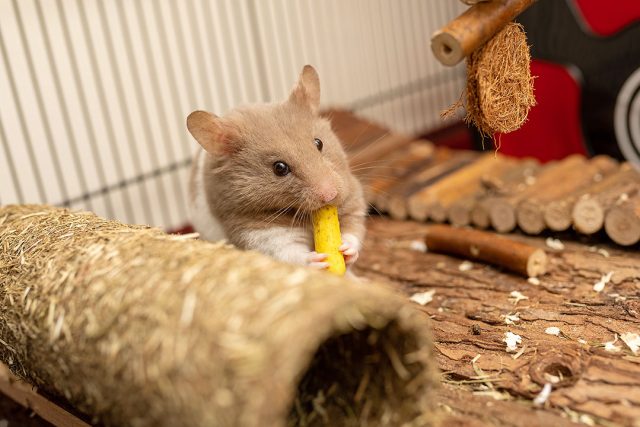
Hong Kong allows hamster pet stores to resume business after COVID cull

UNSPLASH

HONG KONG — Dozens of pet stores that sold hamsters in Hong Kong may resume business from Sunday, Hong Kong’s government said, after being shuttered last week and thousands culled over coronavirus fears.

Authorities enraged pet lovers with an order to cull more than 2,200 hamsters after tracing an outbreak to a worker in a shop where 11 hamsters tested positive. Imported hamsters from Holland into the Chinese territory had been cited as the source. All hamster imports remain banned.

The city’s Agriculture, Fisheries and Conservation Department said in a statement late on Saturday that it collected 1,134 samples from animals other than hamsters including rabbits and chinchillas, which were all negative.

Five stores, including the “Little Boss” pet shop, which started the outbreak, remained shuttered as they had not yet “passed the virus test,” the government said.

“All the other concerned pet shops on the other hand have been thoroughly disinfected and cleaned and the environmental swabs collected from these shops have all passed the COVID-19 virus test,” it said.

The government said on Friday it would compensate pet shops trading in hamsters, offering a one-off payment of up to HK$30,000 (US$3,850).

People who had in recent weeks bought hamsters — popular apartment pets in the congested city — were ordered to surrender them for testing and what the government described as “humane dispatch”.

Thousands of people offered to adopt unwanted hamsters amid a public outcry against the government and its pandemic advisers, which authorities called irrational.

A study published in The Lancet medical journal, which has not yet been peer reviewed, said Hong Kong researchers have found evidence that pet hamsters can spread COVID-19 and linked the animals to human infections in the city.

However, the economic and psychological tolls from Hong Kong’s hardline approach to curbing the virus are rapidly rising, residents say, with measures becoming more draconian than those first enforced in 2020. — Reuters

Warriors fend off Nets for 5th straight win

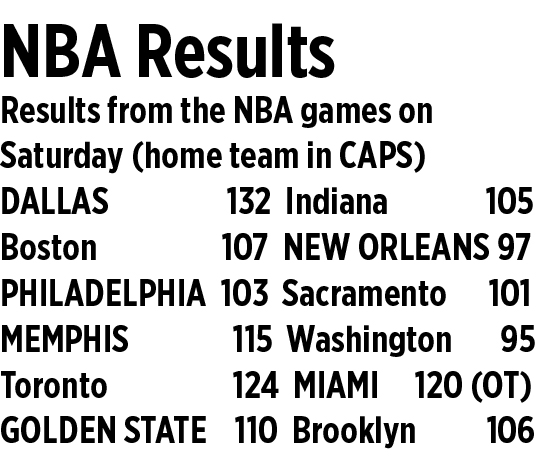
KLAY Thompson drilled a clutch 3-pointer with 12.5 seconds remaining and combined with Stephen Curry to score Golden State’s final 17 points on Saturday night, allowing the Warriors to outlast the visiting Brooklyn Nets 110-106 in San Francisco.

On a night when they combined to shoot just 10-for-32 overall and 5-for-18 on 3-pointers, Curry (19) and Thompson (16) got plenty of support from Andrew Wiggins, who went for a team-high 24 points.

Able to play because the game was on the road, Kyrie Irving paced the Nets with 32 points. James Harden (sore right hand) joined Kevin Durant (sprained left knee) on the sidelines.

After Irving and Patty Mills hit two free throws apiece to get Brooklyn within 104-103 with 30.8 seconds to go, Thompson took a Curry pass and drilled just his second 3-pointer of the night to make it a four-point game.

Irving countered immediately with a 3-pointer of his own, his third of the night, to close the gap to 107-106, before Curry hit one free throw and Thompson two in the final 9.0 seconds to ice the win. — Reuters

Tom Brady retirement report disputed

TOM BRADY — REUTERS

TOM BRADY, widely considered the greatest quarterback in National Football League (NFL) history, is set to retire after 22 seasons and a record seven Super Bowl victories, ESPN reported on Saturday, although other outlets said he had yet to make up his mind.

The 44-year-old spent 20 seasons with the New England Patriots, winning six Super Bowls, before relocating to Tampa Bay and leading the Buccaneers to a Super Bowl championship last season.

The ESPN report came as something of a surprise after Brady led the league in touchdown passes and passing yards this season and could still potentially win his fourth league Most Valuable Player (MVP) trophy next month.

Brady’s agent Don Yee told Reuters that people should wait to hear directly from Brady about his plans.

“I understand the advance speculation about Tom’s future,” Yee said in an e-mail.

“Without getting into the accuracy or inaccuracy of what’s being reported, Tom will be the only person to express his plans with complete accuracy.

“He knows the realities of the football business and planning calendar as well as anybody, so that should be soon.”

The Buccaneers said they could not confirm the news.

“Unfortunately, we are not in a position to know anything relating to the various reports,” the team’s communications manager Chris King told Reuters.

“I don’t have anything to offer at this point in time.”

The Buccaneers tried to convince Brady to come back for another season but he chose to prioritize his family and his health, ESPN reported.

But Brady’s father disputed the ESPN report, telling KRON4 News that his son was not retiring.

Brady called the Bucs to inform them that he was “not even close” to making a decision on retirement, the Athletic reported late Saturday, citing a source.

Earlier in the day, Brady’s company TB12 appeared to confirm the ESPN report when it celebrated Brady in a since-deleted tweet listing his accomplishments.

“Thank you for it all,” the tweet said.

ESPN said it stood by its reporting, adding that Brady had wanted to make the announcement on his own terms.

‘SATISFIED’ WITH CAREER
In a podcast recorded after Tampa Bay was eliminated from the playoffs by the Los Angeles Rams last weekend, Brady said he was “satisfied” with his career, ramping up speculation that he was ready to walk away from the game.

“I said this a few years ago, it’s what relationships are all about,” Brady said.

“It’s not always what I want. It’s what we want as a family. And I’m going to spend a lot of time with them and figure out in the future what’s next.”

Brady is the father of three and he and wife Gisele Bundchen have been building a house together near Miami.

“I’ll know when I know,” Brady said during the podcast.

“I think for all of us, you know, we can all decompress a bit. It’s been six straight months of football. Every day consumed by day in and day out football. And I think now it’s just some time to spend some time with my family and spend some time with my kids.”

The Northern California native, who was selected with the 199th pick of the 2000 NFL draft, is the league’s all-time leader in passing yards, passing touchdowns and quarterback wins.

He appeared in a record 10 Super Bowls, winning the game’s MVP award five times, and his 15 Pro Bowl selections is the most in league history. — Reuters

Lydia Ko holds third-round lead; Yuka Saso tied at fourth with 7 under par

LYDIA Ko shot an even-par 72 in chilly, windy conditions on Saturday to hold a two-shot lead after three rounds of the Gainbridge LPGA at Boca Raton, FL.

On a day in which just one of 74 golfers shot under 70 at Boca Rio Golf Club, Ko sidestepped trouble. Ko’s 11-under 205 leads American Danielle Kang, who shot 74 after being the co-leader with Ko entering the day.

France’s Celine Boutier is in third at 8 under after the stellar 69 on a blustery day in which wind gusts reached 40 mph and temperatures were in the 40s. England’s Charley Hull (71 on Saturday) and Japan’s Yuka Saso (72) are tied for fourth at 7 under.

Ko had one birdie and one bogey in the third round to put her in position to win her 17th career title.

“Going into today, I knew that it was going to be pretty difficult,” Ko said. “Playing in the wind, any sort of temperature, makes it a lot tougher, and I knew that today was going to be a little bit more of a grind. You have to be more focused and move on when you do make mistakes.

“Finishing with pars the last couple holes, I got away with it there. To finish even par after a tough day, I think it was a solid day in the office.”

Kang had two birdies and four bogeys. But she struggled on the back nine with bogeys at Nos. 10, 14 and 15.

Kang won the Tournament of Champions last week and has a chance to make it two straight triumphs despite her struggles.

“I just need to keep trusting my game,” Kang said. “I’m going to go putt a little bit and hope that tomorrow I could just play some good golf and be entertaining for a lot of people.”

Boutier seemed largely unaffected by the conditions during her second consecutive bogey-free round.

She scored birdies on Nos. 1, 12 and 16 and was one of just five golfers to shoot under par.

“I just feel like it was not playing easy for sure, but I just feel like I was able to hit the shots I wanted to do,” Boutier said. “And then my putting under 10 feet was really good, so it saved me a lot of pars and helped me make a few birdies. It was just a really solid day from start to finish.”

Hull overcame a rough start to also post a below-par score.

She had four bogeys on a six-hole stretch of the front nine to fall to 4 under. But she got her game in order and had birdies on 9, 11 and 18. She had five birdies on the day.

Saso delivered three birdies and three bogeys. One of the birdies came on 18 to move her four shots off the pace.

Japan’s Nasa Hataoka shot 1-over 73 and is in sixth place at 5 under. Tied for seventh at 4 under are Japan’s Ayaka Furue (71), American Stacy Lewis (72) and South Korea’s Hye-Jin Choi (73).

Seven golfers are tied for 10th at 3-under 213, including American Lexi Thompson (73) and Canada’s Brooke Henderson (74).

“Definitely not used to the cold and wind,” said Thompson, a Floridian. “It was different. I know it’s supposed to be extremely cold tomorrow; maybe a little bit less wind.

“Can’t do much about the weather, so just got to take it with a positive attitude and go into it as strong as you possibly can.”

World No. 1 Nelly Korda struggled to a 76 and is tied for 23rd at even-par 216. Korda had one birdie and five bogeys. Four of her bogeys were on the front nine.

Sweden’s Anna Nordqvist also is at even par but joined Boutier in having the day’s only other bogey-free round. Nordqvist made one birdie while shooting 71. — Reuters

Barty celebrates home triumph with Australian greats

MELBOURNE — Moments before the most important match of Ash Barty’s career in Australia, she bounced about on her feet, chatting to coach Craig Tyzzer in the corridors of Melbourne Park.

The world number one looked relaxed despite the enormity of the moment ahead of her at Rod Laver Arena.

Saturday’s warm-up for the Australian Open final involved playing cricket strokes. She clipped leg glances with her racquet and looked to be timing the ball sweetly.

She was preparing to end the title drought for locals at the Australian Open dating back to Chris O’Neil’s triumph in 1978, yet nothing about Barty’s demeanor seemed overly stressed.

It did not quite ring true on court as Danielle Collins launched a serious challenge in the second set of the contest, but ultimately Barty emerged as the champion with a 6-3, 7-6(2) victory.

Since O’Neil’s victory 44 years ago, the nation has won the America’s Cup, multiple World Cups in cricket and rugby, dozens of Olympic gold medals, as well as titles in other sports.

However, conquering the Australian Open proved to be a challenge beyond the likes of Pat Cash, Pat Rafter, Lleyton Hewitt and Sam Stosur, who all captured majors elsewhere but failed to deliver on home soil.

That is until Barty came along to end the drought on Saturday, proving she was a master of all surfaces considering she has also triumphed on clay at Roland Garros in 2019 and on grass at Wimbledon last year.

Her childhood coach in Queensland, Jim Joyce, challenged her to be an all-court player and his protege has delivered beyond their wildest dreams.

The US Open is now the only gap in her resume, though she has won a doubles title at Flushing Meadows. Yet the Australian is still coming to grips with her status as a world leader in tennis.

BELONG WITH CHAMPIONS
“To be honest, I don’t really feel like I belong with those champions of our sport,” said the world number one.

“It’s amazing to be able to have this experience and this opportunity on three different surfaces and be really consistent across the board.

“So to have a Grand Slam title on each surface is pretty amazing. I never thought it would ever happen to me.”

Barty was handed the Daphne Ackhurst Memorial Cup by her friend Evonne Goolagong Cawley, whose presence was a closely guarded secret that even she was not aware of.

The first person she hugged on court was her long-time doubles partner Casey Dellacqua, who acted as a mother to Barty when she was a homesick teenager traveling away from home.

She gave “Australian of the Year” Dylan Alcott, the quad wheelchair tennis champion, a lengthy hug in the corridors shortly after her triumph.

Outside the stadium Stosur, who was commentating on the match after retiring from singles last week, was dancing with glee. The 2011 US Open champion could not wait to join her friend for the “Barty Party.”

The Australian Open champion touched on those friends and others such as Rafter, who has hit with her through the years, when explaining why her triumph meant so much to so many.

“As Australians, we’re extremely lucky to have the tennis history and the rich history that we do, particularly here at the Australian Open,” she said.

“There are a few that are closer to home for me, and obviously more of their stories I’ve been more invested in just because I know them more as a person.

“Those people that come to mind, Pat Rafter and Evonne, in the way that they handled themselves on the court… there’s just no one better.

“Now to be able to have this part of my dream kind of achieved is amazing. I have to really understand that that came from the processes that we put in with my team and the people that are around me, because without them, I wouldn’t be half the person that I am.” — Reuters

Dominant Barty

Much has been made over Ashleigh Barty’s unabashed show of emotion in the wake of her straight sets triumph in the Australian Open ladies’ singles final the other day. The World Number One chucked her normally reserved demeanor and let out a definitive roar after a crosscourt forehand gave her the tie-break win in front of a capacity crowd at Rod Laver Arena. That she was the overwhelming favorite heading into the set-to against 27th-seed Danielle Collins cannot be denied. Then again, there is likewise no discounting the pressure she was on as she aimed to become the first Australian to claim a title in the first major tour meant of the year since Chris O’Neil in 1978. And so she celebrated, and celebrated again after she acknowledged her opponent and chair umpire Marianna Veljovic.

To be sure, Barty’s out-of-character reactions still pale in comparison to those typically seen in the aftermath of victories in the finals of Grand Slam events. In any case, she can be forgiven for her relative excesses in the face of the burden she carried as the flag bearer of the host country. The responsibility, as she found out in her last three go-rounds in Melbourne Park, was no joke. Her quarterfinal-semifinal-quarterfinal round exits did, however, wind up motivating her even more — no small feat considering that she nearly walked away from the sport and took up another — cricket, of course — just a little over half a decade ago.

Barty’s dominant turn on the acrylic hardcourt to get her hands on the Daphne Akhurst Memorial Cup certainly eclipsed any previous failures. She didn’t drop a single set en route; in fact, she lost only 21 games on aggregate prior to the final. And although she found herself down 1-5 in the second set the other day, she managed to overcome her nerves and close the deal, punctuating her comeback by taking seven of the nine points played in the tie-break. For all the conclusions that can be drawn from the final score, Collins really didn’t have a chance. The fans were too partisan and the moment too big for the latter to prevail.

The quest for all-time relevance doesn’t end for Barty, though. She’s three of three in major championship finals, with the United States Open the only mountain left to climb for a career Grand Slam. And because there’s a new objective for her, she’ll definitely be back to her calm, unflinching self — until, that is, she triumphs once more.


Anthony L. Cuaycong has been writing Courtside since BusinessWorld introduced a Sports section in 1994. He is a consultant on strategic planning, operations and Human Resources management, corporate communications, and business development.

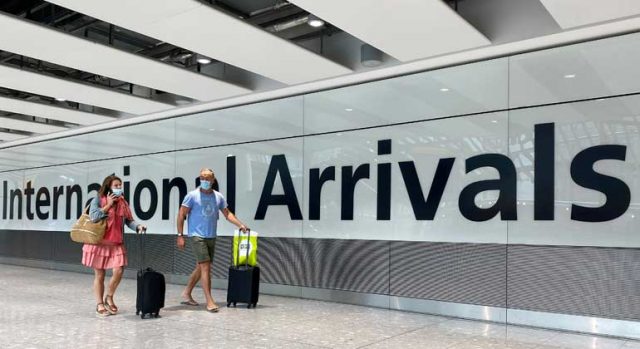
Philippines eases travel curbs

REUTERS

By Kyle Aristophere T. Atienza, Reporter 

The Philippines has relaxed international travel restrictions and suspended its COVID-19 country risk classifications, allowing the entry of fully vaccinated tourists from most countries starting next month. 

The government would scrap the green-yellow-red list system starting Feb 1, Cabinet Secretary Karlo Alexei B. Nograles told a televised news briefing on Friday. The system classifies countries and territories based on their virus risk levels. 

The presidential palace said fully-vaccinated people must present a negative RT-PCR test within 48 hours before departure from the country of origin starting Feb. 1. They would no longer have to undergo quarantine upon arrival. 

But they must self-monitor for coronavirus symptoms for seven days and report to the local government of destination if needed. 

Mr. Nograles said unvaccinated and partially vaccinated travelers whose vaccination status cannot be validated must present a negative RT-PCR test. 

They must also undergo quarantine at a government-approved facility until the release of their negative RT-PCR test taken on the fifth day. They must be home quarantined until the 14th day. 

The palace official said children below 12 years old who cannot be vaccinated should follow the quarantine protocol applied to the guardians traveling with them. 

Mr. Nograles also said the Philippines would now allow the entry of fully vaccinated nationals of non-visa countries starting Feb. 10. 

The government last month suspended a plan to welcome back foreign tourists amid a fresh surge in infections spurred by the highly mutated Omicron variant. 

Health Undersecretary Maria Rosario S. Vergeire told the same briefing it “does not make sense anymore” to restrict international travel when the country has high transmission rates. 

She said safeguards are in place to contain the virus, adding that infections among returning migrant Filipinos remained low. 

The Philippines posted 18,638 coronavirus infections on Friday, bringing the total to 3.51 million. 

The death toll hit 53,801 after 68 more patients died, while recoveries rose by 13,106 to 3.23 million, the Department of Health (DoH) said in a bulletin.  

It said 34.6% of 62,671 samples on Jan. 26 tested positive for COVID-19, way above the 5% threshold set by the World Health Organization (WHO). 

Of 231,658 active cases, 7,055 did not show symptoms, 219,811 were mild, 2,971 were moderate, 1,509 were severe and 312 were critical. 

Mr. Nograles said fully-vaccinated foreign travelers must have a passport valid for at least six months at the time of arrival and a return or outbound ticket to their country of origin or next country of destination. 

He said minors don’t have to be fully vaccinated or provide proof of immunization before boarding. 

Tourism accounted for about 13% of the Philippine economy in 2018, government data showed. In 2020, when the pandemic started hitting the country, its contribution fell to 5.4%. 

JICA donates cold chain equipment

The Japan International Cooperation Agency (JICA) on Friday said it would provide ¥885 million (P392.32 million) worth of cold chain equipment and logistics to the Philippines to help deploy vaccines and medicines amid a coronavirus pandemic. 

In a statement, JICA said the equipment will complement pandemic-related official development assistance from the agency, including a ¥50-billion emergency support and ¥50-billion post-disaster standby loans. 

The agency earlier provided laboratory equipment for coronavirus testing and treatment to the Research Institute for Tropical Medicine and San Lazaro Hospital. 

In a related development, four of five vaccinated Filipinos were willing to get a COVID-19 booster shot, according to a poll by the Social Weather Stations (SWS). 

In a report, SWS said 80% of the respondents were willing to get a booster shot while 7% were unwilling. It added that the remaining 13% were uncertain. 

The willingness to get a top-up shot was highest in Balance Luzon at 82%, followed by Metro Manila at 81%, the Visayas at 79% and Mindanao at 78%. 

“On the other hand, those unwilling to get a booster dose hardly vary by area, ranging from 6-7%,” SWS said.  

The Philippines had fully vaccinated 58.43 million people as of Jan. 27, while nearly 60.2 million have received their first dose. More than seven million booster shots have been given out. — Luz Wendy T. Noble and Kyle Aristophere T. Atienza