Home Blog Page 682

DoF does not see corruption scandals affecting PHL ratings

THE PHILIPPINES is unlikely to face a credit rating downgrade as a result of its various corruption scandals, with macroeconomic fundamentals still intact, according to the Department of Finance (DoF).

“Personally, I find it remote that we actually have to go through a downgrade because the macroeconomic fundamentals, which are one of the major criteria for S&P, are still there. They’re intact despite this problem,” Finance Assistant Secretary Neil Adrian S. Cabiles said on the sidelines of a BusinessWorld event on Tuesday.

Executive Secretary and former Finance Secretary Ralph G. Recto has said that the multibillion-peso flood control scandal prevented the Philippines from winning a credit rating upgrade from S&P Global Ratings. 

In November 2024, S&P affirmed its “BBB+” long-term credit rating for the Philippines, which is a notch below the “A” level grade targeted by the government.

Mr. Cabiles also noted that the corruption issue is just one factor credit raters consider.

“What is important is that we deliver the message to the credit ratings agencies that we are actually doing something about it (to address concerns about) the quality of our institutions,” he said.

The various credit ratings agencies differ in how they weigh the factors, Mr. Cabiles said, with some assigning more importance to quality of institutions, while others may pay closer attention to macroeconomic factors.

Currently, Fitch Ratings rates Philippines at BBB with a stable outlook, Moody’s Ratings grades the Philippines BAA2, Japan Credit Rating Agency assesses the Philippines A-. Aubrey Rose A. Inosante

Environmentalists ask House to go slow on WTE measure

ANGELES CITY INFO OFFICE

ENVIRONMENTALISTS said the House of Representatives needs to reconsider the priority status of a Waste-to-Energy (WTE) bill, citing the need for further study to ensure sufficient protections for public health and the environment.

At the House Committee on Ecology on Wednesday, they called for rigorous examination of the bill amid disputes over the broader impact of incinerating solid waste.

Filed on Aug. 27 and currently with the House Committee on Energy, House Bill No. 4054, or the proposed Waste-to-Energy Act, seeks to promote the use of WTE technologies, positioning them as a potential solution to the solid waste problem.

WTE technologies convert solid waste into usable energy, such as electricity or heat, typically through  thermal processes. In most models, plastic and other non-biodegradable waste form the bulk of the feedstock.

The proposed legislation, which is among the 44 priority bills of the 20th Congress, provides a framework to encourage the private sector and local government units to invest in WTE facilities, which are seen as a stable, local source of electricity.

Lea Guerrero, country director of Greenpeace Philippines, urged the House Committee on Ecology to act as a “neutral party” on the WTE bill, cautioning against treating it as a priority.

“I want to make a humble request to the Committee on Ecology to be a neutral party to the WTE bill, and not treat the WTE bill as a priority, but really look at examining and being a platform to really study the pros and cons of the technology,” she said.

Ms. Guerrero also cited the lack of upstream measures, such as regulations or bans on plastic products in WTE roadmaps. “When we’re talking about WTE, we are talking about plastic waste. We are not going to burn biodegradable waste. But in the roadmap presented by the (Department of Environment and Natural Resources), there is no presence of upstream measures like regulations or bans for plastic products.”

She said having local governments commit to supplying plastic waste to incinerators could also create perverse incentives that weaken waste reduction programs.

Ms. Guerrero further raised concerns about weak air quality standards and the lack of regulation for hazardous chemicals found in some plastics.

“Are we ready for incinerating plastic waste… When our air quality standards are not up to (World Health Organization) standards?” she said.

Marvelous L. Misolas, executive director of the Environmental Studies Institute of Miriam College, called for more evidence WTE is not harmful.

“We need feasibility studies, rigorous studies here in the Philippines. We don’t have studies on the harmful effects of chemicals from WTE. We are not Sweden. We are not Norway. We don’t yet have the capacity to do this,” she said.

Zero-waste advocates likewise pushed for full implementation of Republic Act (RA) No. 9003 or the Ecological Solid Waste Management Act, instead of pursuing WTE projects.

Mother Earth Foundation chairperson Sonia Mendoza said that community-based waste reduction methods already offer low-emission solutions.

“With zero waste, segregation at source, segregated collection, composting, and recycling, there are almost no emissions. Instead of endorsing just the WTE bill, we need to endorse the implementation of RA 9003 and a true circular economy,” she said. — Vonn Andrei E. Villamiel

Communications industry skills mentorship program scaling up with regional partnerships

THE COMMUNICATIONS industry is increasingly challenged by skills gaps that are increasingly more apparent in the transition from school to workplace, COMCO Mundo said.

“There are many challenges in the communications industry. But one thing that we are focused on is bridging the gap between academia and the workplace,” according to Ferdinand L. Bondoy, COMCO Mundo League of Enterprises’ Interregional president.

“I think we need to help in terms of the readiness of the workforce, not only on the skills but also on the behavioral mindset and, of course, adapting to the culture,” he added.

As such, COMCO Mundo has rolled out an industry linkage program known as the Camp ComCo Mentorship.

“When we have apprentices or interns, or even fresh graduates who would like to join the workforce, we continue the education, so we’re giving them real-life situations, practical applications in the communications industry,” he said.

“We’ve been doing that since we started in 2016, and we are in 23 cycles now,” he added.

He said there are plans to replicate the scheme around the region through the newly launched Southeast Asia Communications Agencies Network Alliance (SEA CAN Alliance).

“That’s something that they also want to adapt in their respective markets. So they also want that kind of mentorship, very integrated, so that the culture is inculcated as they start, and then they really grow in the field and the profession,” he said.

“I think we’re planning for something bigger for Camp ComCo. It won’t be just Philippine-wide anymore; we are thinking of scaling that up across Southeast Asia,” he added.

On Wednesday, COMCO Mundo launched the SEA CAN Alliance, which brought together agencies from Indonesia, Malaysia, the Philippines, Singapore, Thailand, and Vietnam.

“With SEA CAN Alliance, we are building more than just a network; we are creating an ecosystem that connects local expertise with regional synergy, reinforcing excellence in the communications industry,” Mr. Bondoy, who is also the lead convenor of the alliance, said.

“Our goal is to empower independent agencies to grow together, share strengths, and deliver world-class communication campaigns rooted in authentic Southeast Asian perspectives,” he added.

The alliance is also seen to enable brands to scale their campaigns regionally while being culturally fluent and impactful. — Justine Irish D. Tabile

Bukidnon tops provinces in agri-fishery, forestry output

Mangima Canyon at the Sitio Angeles View Deck in Maluko, Manolo Fortich, Bukidnon — EN.WIKIPEDIA.ORG

BUKIDNON retained its position as the country’s top contributor to agriculture, forestry and fishing (AFF) output in 2024, according to the Philippine Statistics Authority (PSA).

The PSA said Bukidnon remained the largest contributor to the national AFF gross value-added (GVA) with a 7.3% share, topping the 81 other provinces and 33 highly urbanized cities (HUCs).

The province accounted for P129.03 billion in AFF GVA in 2024, against P128.44 billion in 2023, according to the PSA.

The rest of the top 10 were Nueva Ecija (4.6%), Pangasinan (3.9%), Pampanga (3.7%), Isabela (3.3%), Batangas (2.9%), Davao del Norte (2.9%), Negros Occidental (2.8%), Tarlac (2.5%) and Quezon (2.4%).

“Collectively, these provinces accounted for 36.3 % of the national GVA of AFF,” the PSA said.

The GVA of AFF in 2024 declined 1.5% to P1.78 trillion, according to the PSA.

The fastest growth in AFF output was recorded in Eastern Samar (28.5%), Cebu City (15.8%) and Dinagat Island (13.1%). Meanwhile, the steepest declines in output were reported in Iloilo (-15.9%), Occidental Mindoro (-14.1%) and Negros Oriental (-12.8)%.

The top provinces in terms of AFF as a share of GDP were Maguindanao (51%), Sulu (51%), Bukidnon (48%), Basilan (38%), Tawi-Tawi (35%) and Sultan Kudarat (35%). — Vonn Andrei E. Villamiel

Stocks end higher as markets eye BSP, Fed cuts

BW FILE PHOTO

STOCKS rebounded on Wednesday as investors bought cheap shares and amid bets on further monetary policy easing by both the Bangko Sentral ng Pilipinas (BSP) and the US Federal Reserve at their meetings next month.

The bellwether Philippine Stock Exchange index (PSEi) rose by 0.47% or 28.53 points to close at 6,004.70, while the broader all shares index decreased by 0.78% or 28.17 points to 3,546.65.

“The local market bounced back as investors hunted for bargains. Rate cut hopes for the BSP and the Fed in their December meeting were seen as the main reason for the positive sentiment today,” Philstocks Financial, Inc. Research Manager Japhet Louis O. Tantiangco said in a Viber message.

“Our main index treaded within a range before ending up higher as the case for a December US Fed cut got stronger after registering softer US retail sales data and consumer confidence sinking to a seven-month low,” AP Securities, Inc. said in a market note.

Last week, BSP Governor Eli M. Remolona, Jr. said they could deliver a fifth straight 25-basis-point (bp) cut at the Monetary Board’s Dec. 11 meeting to help provide economic stimulus following the weak growth seen last quarter as a corruption scandal involving government infrastructure projects has weakened consumer and investor confidence.

The central bank has lowered borrowing costs by a total of 175 bps since it began its easing cycle in August 2024, with the policy rate now at an over three-year low of 4.75%.

Meanwhile, Asian stocks rose on Wednesday, chasing gains on Wall Street as weaker-than-expected economic data spurred expectations that the US Federal Reserve will cut interest rates at its policy meeting next month, Reuters reported.

The prints firmed up expectations that the Fed will ease policy soon and prompted speculation that some emerging market Asian central banks could follow.

Fed funds futures are pricing an implied 80.7% probability of a 25-bp cut at the US central bank’s next meeting on Dec. 10, compared to even odds a week ago, according to the CME Group’s FedWatch tool.

Back home, most sectoral indices closed higher on Wednesday. Property rose by 1.31% or 28.64 points to 2,210.76; financials increased by 1.24% or 24.79 points to 2,023.55; services went up by 0.84% or 20.18 points to 2,409.96; mining and oil climbed by 0.09% or 12.73 points to 13,353.68; and industrials edged up by 0.07% or 6.31 points to 8,622.02. Meanwhile, holding firms declined by 1.31% or 62.29 points to 4,678.15.

Advancers and decliners were split at 89 apiece, while 66 names were unchanged.

Value turnover went up to P12.25 billion on Wednesday with 1.19 billion shares traded from the P9.51 billion with 1.17 billion issues exchanged on Tuesday.

Net foreign buying was at P2.38 billion on Wednesday, a turnaround from the P2.98 billion in net selling on Tuesday. — Alexandria Grace C. Magno with Reuters

Extreme heat driving regional disaster risk — UN

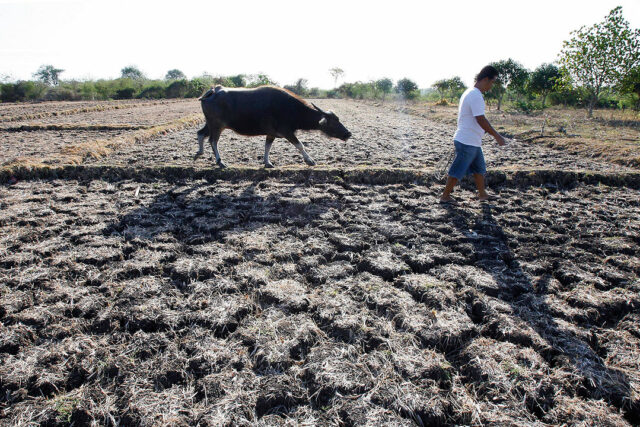
A farmer guides his carabao on dry and cracked farmland in San Juan town, Batangas, April 18, 2010. — REUTERS

EXTREME HEAT is emerging as a major climate risk across the Asia-Pacific region, disrupting schools, agriculture, and urban communities, the United Nations (UN) said in a report.

The Asia-Pacific Disaster Report 2025, published by the UN Economic and Social Commission for Asia and the Pacific (ESCAP), warned that rising temperatures are increasing the frequency and severity of climate-related hazards across the region.

“Disaster risks are expanding and intensifying as temperatures rise, with serious consequences not only for human health but also for socioeconomic-environmental systems. (This) can range from extensive floods to intense storms, to prolonged drought,” the report said.

Urban centers such as Metro Manila are particularly vulnerable. According to the study, densely built cities are projected to become significantly hotter, with the urban heat island effect adding 2°C to 7°C to already rising temperatures.

Vulnerable communities, including children, older persons and outdoor low-wage earners in densely populated areas, face the greatest risks.

In the Philippines, March and April 2025 were the hottest on record, with extreme temperatures disrupting fisheries and agriculture in 26 areas, according to ESCAP.

The report also found heat stress to be increasingly undermining educational equity and learning outcomes, particularly for children in under-resourced communities.

Many schools across South, Southeast and East Asia lack adequate passive or active cooling, leaving classrooms unsafe and ineffective during heatwaves. In the Philippines, class suspensions affected over 3.6 million students when heat indices exceeded 50°C in 2024.

According to the ESCAP report, the ability of students to concentrate and process information declines during extreme heat.

“Evidence from cognitive and physiological studies reveals that elevated brain and core temperatures reduce working memory, decision-making speed and executive control, with these effects manifesting more acutely under the hot and humid conditions that prevail across Asia,” the report said.

Apart from the direct effects of extreme temperatures, ESCAP said sea level rise due to global warming is also increasing the number of severe storms and compounding the region’s vulnerability to climate hazards.

Citing data from the World Meteorological Organization, the report said between September and November 2024, the Philippines experienced an unusually active cyclone season, more than double the seasonal norm, causing approximately $430 million in damage.

Across the Asia-Pacific region, ESCAP projected that annual disaster losses could rise from $418 billion to $498 billion by 2100 without stronger adaptation measures.

ESCAP is urging governments to integrate heat into disaster planning, expand early warning systems, and protect vulnerable communities.

“Governments should create detailed maps combining vulnerability and heat hotspot data to identify at-risk populations and areas, and the projected duration of heat wave events to enable proactive and informed decision-making,” it said.

The UN agency said it is planning three new regional initiatives: scaling up climate-resilient and inclusive social protection schemes; establishing cross-border green cooling corridors; and using innovative space-based solutions to strengthen heat preparedness and early warning systems. — Vonn Andrei E. Villamiel

A welcome relief: BIR suspends audit and field audit operations

We have seen a significant rise in the Bureau of Internal Revenue’s (BIR) revenue collection targets over the years, as the government’s budget requirements continue to grow. While these targets are primarily achieved through voluntary tax compliance, a sizeable chunk of this can also be attributed to payment of deficiency taxes arising from enforcement actions or assessments.   

The tax assessment process commences from the taxpayer’s receipt of a Letter of Authority (LoA), which authorizes revenue officers to examine the books of account and other records of a taxpayer. This is likely familiar to most taxpayers— whether large or small. While taxpayers typically receive one LoA in a year, there are some cases where multiple LoAs for different taxable years arrive within the same calendar year, forcing businesses to juggle year-end compliance alongside ongoing audits.

Tax assessments have recently been in the spotlight, amidst several issues raised by legislators on the use of government funds. Due to taxpayer complaints about excessive and irregular LoAs, a proposed resolution was filed in the Senate urging the chamber “to investigate the allegations of misuse of LoAs by the BIR as a money-making scheme.” These practices have also raised concerns among taxpayers about the frequency of LoAs and inconsistencies in tax audit handling, which allegedly include varying interpretations of the tax rules by different revenue officers.

In response to the concerns raised and amid the looming Senate probe, the BIR’s newly appointed Commissioner of Internal Revenue (CIR) issued Revenue Memorandum Circular (RMC) No. 107-2025 on Nov. 24, suspending all audit and other field operations effective immediately.

The suspension applies to all BIR operating offices and covers the issuance of LoAs, Mission Orders (MOs), examination and verification of taxpayer records, and related transactions. It also includes revalidation, extension, replacement, or supplementary LoAs and MOs—except in cases falling under specified exceptions.

Except for certain circumstances, the (1) issuance of written orders to audit or investigate taxpayers’ internal revenue liabilities, and (2) issuance of Assessment Notices, Warrants, and Seizure Notices are likewise suspended. The RMC lists six exceptions to the suspension, such as investigation of cases prescribing within six months from the date of the RMC; transfers of real properties or shares of stocks; issuance of LoAs or MOs necessary for active criminal probes; and other matters/concerns where deadlines have been imposed or under the order of the CIR, among others. Thus, while the RMC offers reprieve to most, it is not a total ceasefire from the BIR – taxpayers would do well to revisit whether their ongoing cases fall under these exceptions to avoid any untoward surprises.

While the RMC provides that the exceptions include cases prescribing within the coming six-month period, it is not too clear on which prescriptive period the six-month period would be based on. Most LoAs cover all internal revenue taxes, and considering that different tax types have varying prescriptive periods, some tax types may be prescribing within the period of exception (such as withholding taxes), while other tax types may be beyond the period. In my experience, BIR officers generally compute the three-year prescriptive period for tax assessment from the actual or prescribed date of filing the income tax return. It would be helpful for the BIR to confirm whether the same approach also applies for the said exception.

Notably, the RMC did not explicitly mention the suspension of the issuance of the Final Decision on Disputed Assessment (FDDA). While the FDDA similarly demands the payment of the deficiency taxes, it is a decision based on the taxpayers’ response to the Final Assessment Notice (FAN), the latter of which is the result of the BIR’s conduct of its audit and investigation. In preparing the FDDA, the BIR evaluates the taxpayer’s protest instead of conducting fieldwork/audit. It may thus be inferred that the BIR will continue issuing FDDAs in cases where the statutory period for filing a protest letter or submission of the additional documents has lapsed.

It is also worth pointing out that aside from the suspension of the audit and field audit operations, the RMC also provided specific directives under Section 5. In the past, the BIR has also suspended the field audit and other field operations with no mention of the purpose for the suspension and the next steps to be taken during the suspension of audit.

This time, the BIR explained that the suspension was imposed in order to address systematic issues, protect taxpayer rights, and develop a transparent, standardized, and modernized audit framework. Thus, to achieve this, the CIR ordered the creation of a Technical Working Group or Review Committee on LoA and MO Integrity and Audit Reforms, which is tasked with evaluating the existing tax audit frameworks and recommend a revised protocol for LoA issuance, among others.

With the year drawing to a close and taxpayers preparing for their year-end compliance, the suspension of audit and field audit operations offers welcome relief, by providing assurance that no new LoAs will be issued until the lifting has been ordered by the CIR. Maybe adding to their holiday wish list, a taxpayer would also earnestly hope that the suspension does not represent the end of the BIR’s action in addressing taxpayer concerns but the start of a complete reform of the tax audit process.

As a further step, beyond clarifying the exceptions and the scope of suspension, I hope that the BIR will revisit the current rules and policies on the tax audit process, particularly those governing assessment notices. This would help address taxpayer concerns regarding disparities in the interpretation of the tax audit rules. By doing so, taxpayers would be better informed about the process and avoid potential due process violations, while improving transparency and accountability. 

Ultimately, while tax audits serve as one of the BIR’s sources of revenue, the goal remains to encourage compliance with tax laws and regulations. Perhaps, a revamped LoA issuance protocol —and, ideally, a comprehensive reform of the tax audit process—could help the government achieve its annual revenue targets mostly through voluntary tax compliance.

The views or opinions expressed in this article are solely those of the author and do not necessarily represent those of Isla Lipana & Co. The content is for general information purposes only, and should not be used as a substitute for specific advice.


Maryanne Patricia P. Uno is a manager at the Tax Services department of Isla Lipana & Co. the Philippine member firm of the PwC network.

+63 (2) 8845-2728

maryanne.patricia.uno@pwc.com

Lung cancer found among non‑smokers; experts urge regular screening 

ROBINA WEERMEIJER-UNSPLASH

Health experts and advocates debunked the notion that lung cancer is only a smoker’s disease, warning that stigma delays diagnosis amid cases seen among non‑smokers 

“The stigma prevents Filipinos from going and having regular checkups,” Emerito L. Rojas, president of the Lung Health Alliance of the Philippines, said during a lung cancer awareness month media briefing last Friday. 

“We have to do more because of this stigma.” 

Mr. Rojas, who is also a cancer survivor, said there is a need for a public awareness campaign to urge Filipinos to get regularly screened for lung cancer, both smokers and non-smokers. 

Nearly 23,000 Filipinos die annually due to lung cancer, making it the second most fatal type of cancer after breast cancer, according to a 2022 Global Cancer Observatory report. 

Of these fatalities, Mr. Rojas said that around 20% are non-smokers, indicating a need for lung cancer screening beyond smokers. 

For non-smoking-related lung cancer cases, ongoing studies have found the disease to be more prevalent among women, said Dr. Soon Sing Yang, consultant cardiothoracic surgeon at the Heart Center in Malaysia. 

“(It is caused by) more of the environmental factors (such as) pollution, and they’re more exposed to cooking fuels,” Mr. Soon said in the briefing. 

The chance of getting lung cancer among women also increases if there is a family history of cancer, he added. 

This makes cancer screening critically important, as lung cancer symptoms often emerge only in its later stages. 

When detected early, such as at Stage 1, the cure rate can reach up to 80 percent, Mr. Soon said. 

According to the United States Centers for Disease Control and Prevention (CDC), annual cancer screening is recommended for people who have at least a 20 pack‑year smoking history, which means smoking one pack of cigarettes per day for 20 years, or two packs per day for 10 years. 

It is also recommended for people who are currently smoking or who have quit within the past 15 years, and for those aged between 50 and 80 years old. 

The CDC said the only recommended lung cancer screening test is the low-dose computed tomography, where a patient lies on a table and an x-ray machine shows detailed images of the lungs. 

United Senior Citizens Party-list Representative Milagros Aquino-Magsaysay also urged dismantling the stigma surrounding the disease. She called on the government to expand screening and strengthen referral systems to cater especially to the most vulnerable. 

“We need reliable imaging, pathology, and molecular testing across regions, with capacity-building and standardized protocols to ensure patients receive the right treatment at the right time,” Ms. Magsaysay said. 

In terms of helping patients access treatment, the Philippine Health Insurance Corporation (PhilHealth) is urged to include lung cancer in its Z benefits package, much like how it does with breast cancer with ₱1.4 million coverage, said Dr. Antonio B. Ramos, president of the De La Salle Medical and Health Sciences Institute. 

Despite the disease being one of the top causes of mortality, it is not yet covered in the current list of PhilHealth’s Z benefits package, a benefit that covers larger hospital bills for patients with catastrophic diseases. — Edg Adrian A. Eva 

US peace plan for Ukraine drew from Russian document — sources

REUTERS

THE US-BACKED 28-point peace plan to end the war in Ukraine, which became public last week, drew from a Russian-authored paper submitted to the Trump administration in October, according to three sources familiar with the matter.

The Russians shared the paper, which outlined Moscow’s conditions for ending the war, with senior US officials in mid-October, following a meeting between US President Donald J. Trump and Ukrainian President Volodymyr Zelensky in Washington, the sources said.

The paper, a non-official communication known in diplomatic parlance as a “non-paper,” contained language that the Russian government had previously put forward at the negotiating table, including concessions that Ukraine had rejected such as ceding a significant chunk of its territory in the east.

This is the first confirmation that the document — whose existence was initially reported by Reuters in October — was a key input in the 28-point peace plan.

The US State Department and the Russian and Ukrainian embassies in Washington did not respond to a request for comment.

The White House did not comment directly on the non-paper but cited Mr. Trump’s comments that he was optimistic about the 28-point plan’s progress.

“In the hopes of finalizing this Peace Plan, I have directed my Special Envoy Steve Witkoff to meet with President Putin in Moscow and, at the same time, Secretary of the Army Dan Driscoll will be meeting with the Ukrainians,” Mr. Trump wrote.

It is unclear why and how the Trump administration had come to rely on the Russian document to help shape its own peace plan. Some senior US officials who reviewed it, including Secretary of State Marco Rubio, believed the demands made by Moscow would likely be rejected outright by the Ukrainians, the sources said.

SKEPTICISM OVER RUSSIAN INFLUENCE
After the paper’s submission, Mr. Rubio held a call with Russian Foreign Minister Sergei Lavrov during which the paper was discussed, the sources said.

Speaking to reporters in Geneva this week, Mr. Rubio acknowledged receiving “numerous written non-papers and things of this nature,” without elaborating.

Since the peace plan was first reported by Axios last week, skepticism has mounted among US officials and lawmakers, many of whom see the plan as a list of Russian positions and not a serious proposal.

The United States has put pressure on Ukraine, nonetheless, warning it could curb its military assistance if Ukraine did not sign.

The plan was composed at least in part during a meeting between Mr. Trump’s son-in-law Jared Kushner, Mr. Witkoff and Kirill Dmitriev, the head of one of Russia’s sovereign wealth funds, in Miami last month. Few inside the State Department and White House were briefed on that encounter, two sources familiar with the matter told Reuters.

On Tuesday, Bloomberg reported that Mr. Witkoff had offered advice to high-ranking Kremlin aide Yuri Ushakov regarding how Mr. Putin should speak to Mr. Trump. According to call transcripts obtained by the news agency, Mr. Ushakov and Mr. Witkoff alluded to a possible “20-point plan” as early as Oct. 14. The scope of that plan apparently widened during subsequent conversations with Mr. Dmitriev, it added.

PLAN REVISED AFTER GLOBAL BACKLASH
The US proposal, which caught officials in Washington and Europe off-guard, triggered a flurry of diplomacy across three continents. The original plan has changed dramatically since then: Nine of the original 28 points have been cut following talks between senior US and Ukrainian officials, according to ABC News.

A bipartisan group of US senators said on Saturday that Mr. Rubio had told them the 28-point plan was not a US plan but instead a Russian wish list, although the White House and State Department vigorously denied that Mr. Rubio had characterized it as such.

In the discussions that followed, a senior US delegation that included Mr. Rubio agreed to excise or modify some of the most pro-Russian parts of the plan during meetings in Geneva with European and Ukrainian officials.

Mr. Driscoll is currently meeting with a Russian delegation in Abu Dhabi. A Ukrainian delegation is also in the United Arab Emirates for talks with the US team, according to a US official.

On Tuesday, Ukrainian officials said they supported the modified peace deal framework that had emerged from the latest talks but stressed that the most sensitive issues – territorial concessions are especially contentious – needed to be fixed at a potential meeting between Mr. Zelensky and Mr. Trump. — Reuters

Taiwan plans extra $40 billion in defense spending to counter China

A NAVY miniature is seen in front of displayed Chinese and Taiwanese flags in this illustration taken April 11, 2023. — REUTERS

TAIPEI — Taiwan will introduce a $40-billion supplementary defense budget to underscore its determination to defend itself in the face of a rising threat from China, President Lai Ching-te said on Wednesday.

China, which views democratically governed Taiwan as its own territory, has ramped up military and political pressure over the past five years to assert its claims, which Taipei strongly rejects.

As Taiwan faces calls from Washington to spend more on its own defense, mirroring US pressure on Europe, Mr. Lai said in August he hoped for a boost in defense spending to 5% of gross domestic product (GDP) by 2030.

Unveiling the T$1.25-trillion ($39.89-billion) package, Mr. Lai said history had proven that trying to compromise in the face of aggression brought nothing but “enslavement.”

“There is no room for compromise on national security,” he said at a press conference in the presidential office.

“National sovereignty and the core values of freedom and democracy are the very foundation of our nation.”

DETERMINATION TO DEFEND ITSELF
Mr. Lai, who first announced the new spending plan in an op-ed comment in the Washington Post on Tuesday, said Taiwan was showing its determination to defend itself.

“It is a struggle between defending democratic Taiwan and refusing to submit to becoming ‘China’s Taiwan,’” he added, rather than merely an ideological struggle or a dispute over “unification versus independence.”

Mr. Lai had previously flagged extra defense spending but had not given details.

The de facto US ambassador in Taipei, Raymond Greene, wrote on Facebook that the United States supports Taiwan’s “rapid acquisition of critical asymmetric capabilities.”

“Today’s announcement is a major step towards maintaining peace and stability across the Taiwan Strait by strengthening deterrence,” he added.

Taiwan has been modernizing its armed forces to push an “asymmetric” approach to warfare to make its forces, which are much smaller than China’s, agile and able to pack a greater and more targeted punch. 

For 2026, the government plans that such spending will reach T$949.5 billion ($30.3 billion), to stand at 3.32% of GDP, crossing a 3% threshold for the first time since 2009, government figures showed.

Speaking earlier in Beijing, a spokesperson for China’s Taiwan Affairs Office said Taiwan was allowing “external forces” to dictate its decisions.

“They squander funds that could be used to improve people’s livelihoods and develop the economy on purchasing weapons and currying favor with external powers,” the spokesperson, Peng Qingen, told reporters.

“This will only plunge Taiwan into disaster.”

The United States is bound by law to provide Taiwan with the means to defend itself, despite a lack of formal diplomatic ties.

US RELATIONS
But since US President Donald J. Trump took office in January, it approved only one new arms sale to Taiwan, a $330-million package for fighter jets and other aircraft parts announced this month.

“The international community is safer today because of the Trump administration’s pursuit of peace through strength,” Mr. Lai wrote in the Washington Post.

Mr. Lai said Taiwan’s ties with the United States were “rock-solid,” when asked at the news conference whether he was worried about Mr. Trump’s visit to China next year, given the improved Washington-Beijing trade relations.

“Recently, before his trip to Asia, President Trump specifically emphasized that ‘Taiwan is Taiwan’ and President Trump (said he) personally respects Taiwan. These two brief statements say it all,” Mr. Lai said, referring to comments Mr. Trump made while visiting the region last month.

Mr. Lai says only Taiwan’s people can decide their future. Beijing has rejected his repeated offers of talks, saying he is a “separatist.” ($1=31.3400 Taiwan dollars). Reuters

US slashes 36% off Medicare spending on 15 high-priced medicines

FREEPIK

THE US MEDICARE health plan said on Tuesday that newly negotiated prices for 15 of its costliest drugs will save 36% on those medications compared with recent annual spending, or about $8.5 billion in net covered prescription costs.

The prices go into effect in 2027, including a monthly price of $274 for Novo Nordisk’s popular GLP-1 drug semaglutide, sold as Wegovy for weight loss and Ozempic for diabetes.

Medicare’s recent net price for Ozempic was $428 a month, according to an analysis published in the Journal of Managed Care and Specialty Pharmacy. Medicare put the drug’s list price, before confidential rebates and discounts, at $959 a month.

Based on such non-discounted list prices, Medicare said savings on the 15 drugs ranged from 38% to 85%.

“They were gonna go to the table and try and push on those prices, and that’s what they did,” said William Padula, professor of pharmaceutical and health economics at the University of Southern California.

AstraZeneca’s leukemia drug Calquence, Boehringer’s lung treatment Ofev and Pfizer’s breast cancer drug Ibrance took the biggest hits from this round of Medicare negotiations, each slashed by over $4,000 from estimated net prices.

The annual price negotiations were established under President Joseph R. Biden’s signature Inflation Reduction Act (IRA) of 2022. Previously, Medicare was barred by law from negotiating with drugmakers.

SAVINGS OUTPACE PREVIOUS YEAR’S
The projected 2027 savings of 36% is better than the 22% savings of net spending — according to an estimate from Goldman Sachs — that Medicare achieved with last year’s first round of price negotiations for 10 different drugs.

“They are getting more efficient with their methodology,” but this latest batch of newer products likely had “more wiggle room” on price, Mr. Padula said.

Additional drugs up for negotiation this year included GSK’s asthma and COPD inhaler Trelegy Ellipta, which will have a price of $175 versus its list price of $654. AbbVie’s irritable bowel syndrome medicine Linzess has a new price of $136, down from $539.

Analysts said they will also be comparing the new prices to prices negotiated by other high-income countries, a concept President Donald J. Trump has fought for, which is sometimes referred to as most-favored-nation pricing, or MFN.

The pharmaceutical industry has fought the efforts. “Whether it is the IRA or MFN, government price setting for medicines is the wrong policy for America,” said Alex Schriver, spokesperson for industry body PhRMA.

Medicare covers more than 67 million people aged 65 and over and those with disabilities.

“These prices are going to come down below the existing net prices. There will be some real savings,” said Sean Sullivan, professor of pharmacy at the University of Washington.

“All of the other players can see them. What is going to stop them from asking manufacturers for that same price?” He said.

PRICES STILL HIGHER THAN IN OTHER WEALTHY NATIONS
The Medicare agency unveiled last year maximum new prices for the first 10 high-cost medicines negotiated under the IRA to take effect in 2026.

For those drugs, including medicines such as the Pfizer and Bristol Myers Squibb blood thinner Eliquis and Amgen’s arthritis drug Enbrel, the new prices were still on average more than double, and in some cases five times, what drugmakers had agreed to in four other high-income countries.

Under the IRA, Medicare is required to consider a number of factors for pricing, including manufacturer data and availability of alternative treatments. The law does not include a review of international prices in the process.

Many other countries have long had universal prescription drug coverage that relies on centralized price negotiations with manufacturers.

The Trump administration has since outlined what it considers most-favored-nation pricing terms: the lowest price in any country that is part of the Organization for Economic Co-operation and Development with a gross domestic product (GDP) per capita of at least 60% of US GDP per capita.

Under a separate pilot program, Medicare has proposed a smaller “country basket,” which includes six G-7 countries — the UK, France, Germany, Italy, Canada and Japan — plus Denmark and Switzerland. The benchmark used to calculate the MFN price would be the second-lowest price within that basket of countries, adjusted by GDP per capita.

Medicare’s next round of drug price talks is expected to include 15 additional prescriptions and hospital-administered medicines and begin in February. — Reuters

South Korea ruling party introduces bill to create fund to finance $350-B US investment

A South Korea won note is seen in this illustration photo, May 31, 2017. — REUTERS

SEOUL — South Korea’s ruling Democratic Party introduced a bill on Wednesday to establish a special fund to finance $350 billion of investment in the US committed under a deal with Washington to cut US tariffs on its exports, the Industry Ministry said.

The bill, which was written in consultation with the government, fulfills the condition for the US to lower tariffs on South Korean autos and automobile parts retroactively to Nov. 1, the ministry said in a statement.

The two countries this month unveiled details of the agreement reached by their presidents, capping more than three months of intense negotiations on how to structure the massive investment in a way that would not sharply weaken and destabilize the South Korean won currency.

Under a special act to be legislated, South Korea will establish a fund financed by income from the country’s foreign assets and government-backed bonds issued in offshore markets, according to the bill.

South Korea has pledged $250 billion to be invested in strategic US industries and $150 billion in projects to modernize the American shipbuilding industry.

South Korea’s Industry Ministry has sent a letter to US Commerce Secretary Howard Lutnick informing him about the introduction of the bill on Wednesday and requested the implementation of the tariff cuts on autos and automobile parts, the statement said. — Reuters

ADVERTISEMENT
ADVERTISEMENT