Home Blog Page 6764

Human-centered approach to work

KATEMANGOSTAR-FREEPIK

(Part 3)

In an article on the internet by Alistair Cox, CEO of Hays (the world’s leading recruitment specialist) in the US, entitled “The Great Resignation: Why are so many thinking about quitting?,” it is reported that according to Microsoft’s 2021 Work Trend, 41% of people are likely to consider leaving their jobs within 2021. Although the Philippines is not the US, it is worthwhile for Filipino employers to ponder the reasons for this phenomenon. They may get some insights into how their own workers have been affected by the extraordinary circumstances surrounding them during these last two years of the COVID-19 pandemic. The uncertainties, the fears, the frustrations of actually being laid off could have led to what we can call “The Great Awakening” about how insensitive a market economy could be to the multi-dimensional nature of human aspirations. Human beings work not only to earn a living. As we noted in the previous parts of this article, at the highest level of aspirations, some human beings who practice the Christian faith find in their work the means of sanctifying themselves and going to heaven.

Before going into the reasons why there is this unprecedented movement of talent, Mr. Cox noted that certain demographics of society appear to be more open to the idea of quitting than others. This insight may be useful to understand whatever parallel movement we may observe in the Philippine labor scene sooner or later. Sandra Sucher, Harvard Business School professor, found out through research that low-wage workers are particularly motivated to change jobs with even marginally better offers. Many retail and service workers are departing in favor of entry-level positions elsewhere — in warehouses or offices, for instance — that actually pay less, but offer more benefits, upward mobility, and compassion. With employers across the board looking for new hires, many found it’s easy to find another job and make a transition into more human fulfilling jobs.

The so-called Generation Z (workers in their twenties), according to Microsoft research, could be considering leaving their jobs because they reported difficulties feeling engaged and excited about work, getting a word in during meetings, and bringing new ideas to the table. These young workers may most likely join the so-called gig economy of freelancers who value flexibility in their schedule and diversity of work. Research from people analytics firm, Visier, found that the cohort of employees between 30 to 40 years old saw large increases in resignations between August 2019 and August 2020, indicating that those who are more settled in their careers are more likely to consider switching jobs. As of December 2020, resignations among managers were 12% higher than the previous year.

During the pandemic, workers have been given time and space to reflect on both their personal and professional lives. Even if most workers were not considering looking for a new job or occupation before the pandemic hit, chances are that they are now. According to a recent LinkedIn poll of over 25,000 people, 74% said that the pandemic has made them reconsider their job or career choices.  The reasons are various: feeling of not being supported on a number of levels by their employers; being forced to confront one’s own mortality in a way they never had before — something that many have never had the luxury of doing before; the realization that life is too short to do a job they don’t love, for a company they don’t think cares about them. Some just don’t want to go back to the office. This awakening, coupled with the fact that many have already relocated or are planning to so in order to be closer to family or to achieve the lifestyle they always dreamt of (like those here who started working from their second homes in Nasugbu or Matabunkay, Batangas). According to Microsoft research, some 46% of people say that they are more likely to move because they can work remotely now.

The more leisurely work schedule that those who work remotely discovered during the pandemic made them realize how burned out they had been before the pandemic. The Microsoft survey came out with the following findings:

• 37% of the global workforce say their companies are asking too much of them at a time like this.

• One in five think their employer doesn’t care about their work-life balance.

• 54% feel overworked and 39% feel exhausted.

• The Average Microsoft Teams user is sending 42% more chats after office hours, with 50% of people responding to Teams chats within five minutes.

Microsoft argues that these frightening stats “prove the intensify of the workday, and that what is expected of workers during this time has increased significantly. It is no wonder that many people are reconsidering their job options. Technology might have facilitated the transition to the work from home mode. But it also blurred the lines between work and private life and the level of burnout and exhaustion is unsustainable.”

The new circumstances in which they have to work during the pandemic have made people re-examine their need for personal development. They have postponed for too long their acquiring higher or new skills. High performing workers are the most concerned about their career development in their current job, with 75% of people saying the pandemic has made them question their skillsets. Many feel that to reach the next level and achieve their goals, they have no choice but to change jobs.

Working at home during the pandemic has had a counterproductive impact on the attitude of some employees to the current work they are doing. Without the welcome distractions and colleague camaraderie that come with working in an office, they have realized that they don’t actually enjoy the work they have been performing in their present job. As a result, there has been a huge rise in people deciding to go it alone and set up their own solo ventures. According to the National Bureau of Economic Statistics, the pace of new business applications since mid-2020 has been the highest on record, and across the course of the pandemic there has been a rise in side hustles (work done at home as a sideline). This is echoed by Microsoft’s research which found that 46% of people are planning to make a major career pivot or transition.

How can employers turn this threat of mass resignation into an opportunity? Alistair Cox gave the answer in a sequel to the article on the “Great Resignation.” He suggests two strategic moves which are ultimately based on understanding what a human-centered approach to work requires:

1. Firstly, the opportunity to redefine our employee value proposition to stop our best people from leaving in the first place, and retain them for the long-term.

2. And, secondly, the opportunity to attract those currently working for other employers who fully intend to be part of the “Great Resignation” and are about to be, or already are on the market for a new job.

(To be continued.)


Bernardo M. Villegas has a Ph.D. in Economics from Harvard, is professor emeritus at the University of Asia and the Pacific, and a visiting professor at the IESE Business School in Barcelona, Spain. He was a member of the 1986 Constitutional Commission.


bernardo.villegas@uap.asia

We need worthy leaders that put nation first and have an all of society approach

FREEPIK

The Stratbase Albert Del Rosario Institute would like to thank our many expert speakers and participants — practitioners in public and private management, international partners, the academe and studentry, civil society, and media — for joining us in this year’s five-day Pilipinas Conference. The past week was filled with enriching discussions and insights on the economy, trade and investment, the environment, defense and security, and good governance.

More than ever, given the election season, we need to pay attention to these issues and respond with the utmost urgency. Our next leaders should give high priority to addressing the mounting socio-economic and health issues brought by the COVID-19 pandemic, as well as continuing political issues such as corruption and the renewed tensions in the West Philippine Sea. As I closed the conference, I reiterated what I believe our country’s leaders and key stakeholders must do, moving forward.

First, we believe that the Philippines needs to shift to a more investment-driven growth and to establish a favorable environment for businesses. The private sector plays a key role in fighting poverty by creating new jobs, livelihood opportunities, and other stakeholder-driven initiatives. It has also proven itself as a reliable and capable partner of government in building back from this economic and health crisis.

The private sector, among other things, can provide the right investments, expertise, and innovativeness to uplift the lives of millions of Filipinos from the socio-economic challenges wrought by the pandemic. With the heightened cooperation of other stakeholders, efforts from the private sector would even be more robust.

Second, we can accelerate this shift to an investment-led economy by instituting reforms and policy changes that are conducive to business. We hope that we are able to contribute to national discussions, effectively shape Philippine foreign policy, and promote cooperation for economic recovery from the impacts of the COVID-19 pandemic.

With a stable government and sound economic policies in place, an enabling business environment can be established. This, in turn, will pave the way for commerce and trade to prosper and investments to come in.

Third, we believe that with stakeholders’ initiatives in making sustainability and environmental concerns mainstream, the government and the Filipino people can be more aware of the immediate and long-term consequences of environment and climate risks. We also hope that Filipinos will see the need to integrate sustainability as well as green and circular measures to policies, frameworks, and operations.

Fourth, with the current regional security architecture, strategic partnerships and alliances are crucial. Pursuing multilateral and inclusive cooperation are also vital in efficiently and effectively addressing the emergence of various security threats. These efforts will facilitate the promotion of the international rules-based order. At the same time, this will advance the vision of a Free and Open Indo-Pacific to bring about a peaceful, prosperous, and stable region.

Finally, we Filipinos must hold our leaders accountable at all times. Reclaiming democracy is no simple task, and, as we have seen in previous years, could often be frustrating and disheartening. Still, it is one worth engaging in. We stand against corruption and advocate for transparent and responsive governance.

In the coming elections and beyond, demanding accountable, transparent, and responsive governance is not simply the view of the Stratbase ADR Institute. This political stand is borne out of and actually triggered by national surveys that the think tank runs across the country and across demographics. The results affirm that as our society continues to struggle with economic consequences of this pandemic, eradicating graft and corruption in government has become a key issue that should be addressed by national leaders decisively and consistently. Lip service just won’t do.

All in all, the agenda that has been forged by the Pilipinas Conference 2021 caters to a whole gamut of political, economic, social, environmental, and security concerns that have been overlooked, downplayed, and even botched by the current administration for the past five and a half years. What we need is a president who is competent, has integrity, and is not corrupt.

We have to learn from our harrowing experience under the Duterte administration. We should seize the opportunity to revitalize our nation from the deep scars of the pandemic and governance crisis. Specifically, we can refer to the prevalence of the crisis of information integrity in this election period, which is caused by pandemic disinformation. Since 2016, we have been talking about how fake news paralyzes people’s critical ability to choose leaders. In response to this information crisis, we need to collectively expose and denounce trolls and disinformation machinery.

The elections are drawing near. We must ensure that societal change would be a collective, multi-stakeholder effort. Only with such convergence toward a shared common goal can we address the multi-faceted pandemic challenges and achieve a resilient and inclusive recovery post-pandemic.

We should all do our part and work together to improve our country and ensure a better future for the generations to come. Let us choose the right, worthy leaders — not those who would champion their self-interest, or foreign interests, but the interests of our nation and our long-suffering people.


Victor Andres “Dindo” C. Manhit is the president of the Stratbase ADR Institute.

The shift to PEZA visas

XB100-FREEPIK

By virtue of Republic Act No. 7916, the Philippine Economic Zone Authority (PEZA) was created to establish various economic zones and attract legitimate foreign investments into the country. The PEZA administers certain incentives to local enterprises that operate within these economic zones and helps facilitate their respective business operations. In line with these policies, the PEZA exercises the authority to issue work visas to their foreign personnel, particularly those who hold executive positions (i.e., Presidents, Vice-Presidents, Treasurers, General Managers, or their equivalents), or whose employment is supervisory, technical, or advisory in nature.

On Nov. 11, the PEZA and the Bureau of Immigration (BI) entered into a Memorandum of Agreement (MoA) to provide efficient and harmonized rules on the issuance of work visas to qualified foreign nationals and their dependents. Previously, these foreign nationals were qualified to secure 47(a)(2)(PEZA) visas under the authority of the Department of Justice (DoJ). Under the new rules, however, these foreign nationals shall now secure PEZA Visas (PV) from the PEZA and BI.

Among the notable changes introduced in the MoA is the longer validity of the PV. The PV is valid for a maximum period of two years, and is coterminous with the period stated in the foreign national’s employment contract. The application shall also come with a notarized certification which confirms that the company’s total number of foreign personnel does not exceed 5% of its total workforce.

Marriage and birth certificates of the PV applicant’s dependents are now required to be authenticated/apostilled, if issued abroad. Notably, English-translated certificates were previously accepted by PEZA even if they were unauthenticated.

Further, the PEZA and BI now require the visa holder to train Filipino understudies. While the MoA and its corresponding Implementing Rules and Regulations (IRR) did not discuss the specific guidelines for this requirement, the PEZA and BI have announced that they will issue another Memorandum Circular to clarify and address the same.

As regards the procedure, the PEZA shall issue an Order within five working days from receipt of the PV application, and shall endorse the same to the BI for further evaluation. Once the BI is satisfied that the foreign national possesses all of the qualifications for the issuance of a PV, it shall thereafter issue an Order which approves the PV application.

The PV holder continues to be exempt from securing an Alien Certificate of Registration Identification Card (ACR I-Card), but will instead be issued with a PV Card that must be updated yearly.

Under the new IRR, the company, through a visa downgrading application, shall also notify the PEZA of the PV holder’s termination or cessation of employment within five working days therefrom. The failure to do so shall be a valid ground for denial of the Company’s future PV applications. Once the visa downgrading application is approved, the foreign national shall be given a 9(a)/temporary visitor visa and will be allowed to stay in the Philippines as a tourist for a period of 59 days, commencing on the expiration date of his PV, or from the cessation of his employment with his previous employer. The foreign national with a downgraded PV shall nonetheless be required to leave the country within the period prescribed in the visa downgrading order.

In a joint briefing on Nov. 22, the PEZA and BI clarified that PV holders whose employment was terminated or whose visas have expired while they were abroad shall be required to undergo the visa downgrading process upon returning to the Philippines. Their PVs would have to be downgraded to 9(a)/temporary visitor visas before they may apply for another visa category.

All valid and existing 47(a)(2)(PEZA) visas at this time shall remain valid. However, if the PEZA-registered enterprise intends to renew their foreign personnel’s 47(a)(2)(PEZA) visas, they must accordingly convert them to PVs before they expire. Otherwise, the 47(a)(2)(PEZA) visas of these foreign nationals shall be downgraded to 9(a)/temporary visitor visas and will come with Orders to Leave (OTL).

An expired 47(a)(2)(PEZA) visa shall be downgraded to a 9(a)/temporary visitor visa, without a corresponding OTL, if the 47(a)(2)(PEZA) visa holder will continue to be employed by the same PEZA-registered entity. Once the visa is downgraded, the company should cause the conversion of the foreign national’s 9(a)/temporary visitor visa to a PV so that his employment in the Philippines will continue to be authorized.

Unlike 47(a)(2)(PEZA) visa applications, it appears that PV applications will no longer go through the evaluation and endorsement of the DoJ. This seems to be contrary to the mandate of Section 47(a)(2) of the Philippine Immigration Act which authorizes the President, through the Secretary of Justice, to admit foreign personnel of PEZA-registered entities as special non-immigrants in the Philippines.

While the representatives of PEZA and BI may conduct periodic inspections to ensure proper compliance with the MoA and its IRR, the effective implementation of these guidelines is crucial in regulating the employment of foreign nationals who are working for PEZA-registered enterprises.

This article is only for general informational and educational purposes and is not offered as and does not constitute legal advice or opinion.


Napoleon L. Gonzales III is a senior associate of the Immigration Department of the Angara Abello Concepcion Regala & Cruz Law Offices (ACCRALAW).

nlgonzales@accralaw.com

(632) 8830-8000

Only winning over skeptics can avoid shocks like Omicron

WIRESTOCK-FREEPIK

HOW DO WE ensure that the world has access to the COVID-19 vaccines needed to prevent more variants like the latest Omicron strain from emerging?

One disturbingly common response to calls from the World Health Organization (WHO) and others to increase the availability of doses in emerging economies is to suggest supply isn’t really the problem, but demand. South Africa, where Omicron was first identified, provides one data point in favor of this hypothesis. Despite the fact that barely 24% of the population has been fully vaccinated, the Department of Health last week asked Johnson & Johnson and Pfizer, Inc. to suspend delivery of vaccines because its existing stockpile was more than enough at current lackluster rates of uptake.

To be clear, outside of the rich world demand is clearly not the main constraining factor on inoculations. All but 14 of the 51 nations with supply agreements sufficient to cover their entire populations are high-income countries, according to data collected by Unicef.

Vaccine manufacturing capacity, which a database kept by Duke University puts at 11.435 billion doses this year, is simply insufficient to double-dose everyone on the planet. The rich nations where most shots have been developed have managed to hog the lion’s share of both first, second, and third boosters so far.

Next year, though, that’s likely to change. Unicef’s figures suggest that we’ll have capacity to produce about 23.53 billion doses, more than enough to put a needle in every person on the planet three times over. At that point, hesitancy in the unvaccinated world may become a real problem — and everything we’re doing now is likely to make it worse.

Tackling the reluctance of people to take action against epidemic disease isn’t a new problem. Indeed, from the heyday of smallpox eradication after World War II to the current campaign to snuff out the last vestiges of polio and guinea worm, it’s at the heart of what groups like the WHO do year after year.

The lessons of that experience for lower-income nations are fairly straightforward. People need outside public-health experts to show a genuine interest in the problems they face, from a lack of drinking water, sanitation, and clean cooking facilities to more neglected and endemic diseases such as HIV, tuberculosis, malaria, and diarrhea. Ideally, vaccines should form part of a package of measures to improve health, rather than be a one-time campaign parachuted into remote communities. If the motivations of those driving the push and the direct impacts on those receiving doses are unclear, that can lead to suspicion and conspiracy theories, especially among vulnerable populations.

Looked at that way, it’s clear why our current strategy is setting itself up for failure. By not ensuring sufficient doses for the world and hoarding those we do have, rich nations are sending a strong signal that vaccinations don’t really matter.

Sub-Saharan Africa in particular has reason to take outside advice with a pinch of salt. For reasons that are still unclear but probably relate to the youth of the population (around one in 20 Africans are over the age of 60, compared to about a quarter of Europeans and North Americans), mortality and severe sickness from COVID-19 has been far lower than other parts of the world. The comparatively affluent and old South Africa is a notable exception.

Unlike polio, which frequently causes prominent leg and spine deformities, the effects of COVID aren’t particularly visible, making vaccination a harder sell to skeptics. In asking Africans to take doses once they become available, we’re appealing to them to pull together for the sake of our own elder populations, while showing little evidence of solidarity in the other direction.

There are some advantages in this fight. Africa is already more urbanized than much of Asia, meaning there’s a smaller rural population disconnected from routine health information. Its public health systems, while starved of funding, are well set up to tackle COVID because communicable diseases have always been the main threat to local populations. That contrasts with richer countries, which direct resources more toward conditions of aging, such as cancer and heart disease. The long, bitter struggle to roll out polio vaccines, HIV antiretrovirals, and tuberculosis antibiotics also means we have a head start in knowing what problems to address.

We have to heed those lessons and work fast. While the small size of Africa’s over-60 population might be protecting it from major outbreaks, the legacy of HIV and the prevalence of undernourishment mean there is an unusually large population with the weakened immune systems that are so conducive to cooking up new and concerning variants of COVID.

Richer countries may feel safe behind their walls of boosters and travel restrictions. Until the whole world is protected, though, those defenses will be under constant assault.

BLOOMBERG OPINION

Messi claims record-extending seventh Ballon d’Or

LEO MESSI FB PAGE

ARGENTINA’S Lionel Messi won the Ballon d’Or award for the best player in the world for a record-stretching seventh time on Monday, beating Robert Lewandowski and Jorginho to lift soccer’s most prestigious trophy yet again.

The forward added to his 2009, 2010, 2011, 2012, 2015 and 2019 trophies after winning the Copa America for the first time with his country last July.

“It’s incredible to be here again. Two years ago, I thought it was the last time. Winning the Copa America was key,” Messi said at Paris’s Theatre du Chatelet.

“It is a special year for me with this Copa America title. It meant a lot to win at the Maracana stadium and I was so happy to celebrate with the people from Argentina.

“I don’t know if it’s the best year of my life, I’ve had a long career, but it was a special one with the title with Argentina after the tough times and the criticism.”

Messi, who joined Paris Saint-Germain on a free transfer from Barcelona during the close season after finishing as La Liga’s top scorer with the Spanish club, collected 613 points, with Bayern Munich’s Lewandowski, named best striker on Monday, getting 580.

Jorginho, who won the Champions League with Chelsea and the European championship with Italy, ended up third on 460, ahead of France’s Karim Benzema and Ngolo Kante in fourth and fifth places respectively.

Chelsea, named club of the year, also had keeper Edouard Mendy finishing second in the Yashin trophy behind Italy’s Gianluigi Donnarumma.

The women’s Ballon d’Or went to Alexia Putellas after the Spain midfielder guided Barcelona to Champions League glory.

“The key moment was the Champions League final against Olympique Lyonnais,” she said.

Putellas is the third winner of the Ballon d’Or Feminin after Ada Hegerberg in 2018 and Megan Rapinoe in 2019. There was no ceremony last year due to the coronavirus pandemic.

On a good night for Barcelona, the 19-year-old Pedri was awarded the Kopa trophy for the best Under-21 player.

“The best way to celebrate turning 19 is receiving this award. I’d like to thank everyone at Barcelona for helping me here,” he said. — Reuters

Nikola Jokić’s return helps Denver Nuggets end skid

DENVER NUGGETS FB PAGE

REIGNING league MVP Nikola Jokić returned from a four-game injury absence to account for 24 points, a game-high 15 rebounds and a team-high seven assists as the Denver Nuggets defeated the host Miami Heat (120-111) on Monday night.

Denver shot 58.1% from the floor, including 18-for-35 on 3-pointers (51.4%).

Jokić, who had been out with a sprained right wrist, made 9 of 14 shots from the floor and 5 of 6 on free throws as Denver snapped a season-worst six-game losing streak.

Aaron Gordon added 20 points for the Nuggets (10-10), who improved to 3-6 on the road. Bones Hyland came in off the bench and scored 19 points on 5-for-8 3-point shooting.

This was the first game played between these teams since the host Nuggets beat Miami on Nov. 8. Jokić and Miami’s Markieff Morris were involved in a skirmish in that game. Morris (neck injury) has yet to play as a result of that altercation, and Jokić was booed throughout Monday’s game.

PELICANS 123, CLIPPERS 104
Jonas Valančiūnas scored a career-high 39 points and grabbed 15 rebounds to lead visiting New Orleans to a win over Los Angeles.

Valančiūnas made all seven of his 3-point attempts in the first half before finishing 7-for-8 from long distance. Brandon Ingram added 27 points and Herbert Jones scored 16 for the Pelicans, who have won three of four for the first time this season.

Paul George scored 27 points, but he committed seven of Los Angeles’ 15 turnovers. Reggie Jackson added 19 points and Serge Ibaka scored a season-high 13 off the bench for the Clippers, who were coming off a 105-90 loss to the visiting Golden State Warriors on Sunday afternoon and have dropped five of seven overall.

BULLS 133, HORNETS 119
Nikola Vučević notched a double-double of 30 points and 14 rebounds and DeMar DeRozan had 28 points to lift host Chicago to a victory over Charlotte.

Shooting 59.6% for the night — including a 46.2% effort from long range — the Bulls led by as many as 23 points while sending the Hornets to their second straight defeat to open a four-game road trip.

Zach LaVine (25 points), Lonzo Ball (16 points, eight assists) and Alex Caruso (14 points) also helped the Bulls register a season high in points. Terry Rozier scored 31 points and LaMelo Ball had 18 points and 13 assists for the Hornets.

JAZZ 129, TRAIL BLAZERS 107
Donovan Mitchell scored 30 points and Rudy Gobert amassed 21 points and 16 rebounds to lead Utah to a victory over Portland in Salt Lake City.

Jordan Clarkson added 22 points, six rebounds and three assists off the bench as the Jazz won for the sixth time in eight outings.

Jusuf Nurkic tallied 24 points and 10 boards, Anfernee Simons scored 24 off the bench and CJ McCollum added 19 points for the Trail Blazers, who lost their third game in a row.

TIMBERWOLVES 100, PACERS 98
Karl-Anthony Towns scored 32 points as Minnesota notched its seventh win in the past eight games, beating Indiana in Minneapolis.

Minnesota’s D’Angelo Russell made clutch plays while racking up 21 points, 11 assists and eight rebounds. Anthony Edwards added 21 points, nine rebounds and five assists.

The Pacers fell short despite getting 16 points, a career-high 25 rebounds and 10 assists from Domantas Sabonis.

CAVALIERS 114, MAVERICKS 96
Jarrett Allen scored a career-high 28 points and grabbed 14 rebounds to lead a balanced attack as Cleveland won at Dallas.

Lauri Markkanen had a season-high 24 points and eight rebounds while Darius Garland accounted for 18 points and nine assists for Cleveland, which won its second straight following a five-game losing streak.

Luka Dončić made a season-high seven 3-pointers and had 25 points, 10 rebounds and 10 assists to lead the Mavericks, who had won their previous six matchups with the Cavaliers.

ROCKETS 102, THUNDER 89
Christian Wood scored 24 points and collected a career-high 21 rebounds to lead Houston past visiting Oklahoma City.

Garrison Mathews made five 3-pointers while scoring 19 points for the Rockets, who have won three straight contests following a 15-game losing streak. Kevin Porter, Jr. recorded his first career triple-double with 11 points, 11 assists, 10 rebounds and three steals.

Shai Gilgeous-Alexander scored 22 points for the Thunder, who have lost six straight games and eight of their past nine.

76ERS 101, MAGIC 96
Seth Curry scored 24 points, Tobias Harris added 17 and host Philadelphia held off Orlando.

Joel Embiid had 16 points and 13 rebounds in his second game back after a three-week absence with coronavirus disease 2019 (COVID-19). Andre Drummond pulled down 12 rebounds. Tyrese Maxey also had nine points, nine assists and eight rebounds.

Franz Wagner led the Magic with 27 points while Jalen Suggs added 17 before leaving late with an apparent thumb injury. Mo Bamba had 11 points, 17 rebounds and six blocked shots for the Magic, who lost their seventh straight game.

SPURS 116, WIZARDS 99
Derrick White had a season-high 24 points and Dejounte Murray added 22 points and 10 rebounds as San Antonio pulled away from visiting Washington.

Jakob Poeltl added 14 points and 11 rebounds as the Spurs ended their second straight win, the first time this season they have produced a winning streak.

Bradley Beal led the Wizards with 18 points and eight assists. Kentavious Caldwell-Pope hit for 17 points, and Spencer Dinwiddie scored 16. — Field Level Media

Olympics official slams critics of Peng Shuai call as ‘silly’

LONG-TIME International Olympic Committee (IOC) member Dick Pound has dismissed claims the organization vouched for the safety of Chinese tennis star Peng Shuai to avoid angering Beijing and credited it with getting in touch with her when others couldn’t.

“Frankly, I think that’s a little silly and it’s not supported by the evidence,” Pound told Bloomberg TV on Tuesday.

“All kinds of people were trying to get in touch with her to make sure that she was alive and healthy and not in captivity,” he added. “The only organization in the world that’s been able to establish that is the IOC. I thought it was a very good start and everyone should be reassured she’s fine.”

Peng disappeared from the public eye earlier this month after posting a 1,500-character essay on her verified Weibo account that alleged a decade-long sexual affair with retired senior Chinese official Zhang Gaoli. That essay was immediately removed from the internet and attempts by the media and the Women’s Tennis Association (WTA) to contact her were unsuccessful.

After tennis greats including Serena Williams and Novak Djokovic joined the growing chorus of international figures demanding to know Peng’s whereabouts, Chinese state media posted to Twitter a series of videos and pictures of Peng at home, out with friends and at a tennis event.

Those clips prompted more questions about Peng’s well-being because no one outside China had been able to contact her. The tennis player, who once won the French Open and Wimbledon as part of a doubles team, then held a 30-minute call with the IOC, assuring its President Thomas Bach she was safe.

Still, the IOC — which has hundreds of millions dollars at stake in the Beijing Winter Games starting in February — didn’t address key concerns about Peng, including why others can’t get in touch with her and why she hasn’t posted to her verified Weibo account.

Human Rights Watch was critical of the IOC’s call with Peng. “The IOC appears to prize its relationship with a major human rights violator over the rights and safety of Olympic athletes,” said Yaqiu Wang, senior China researcher at the organization.

Pound said on Tuesday that Bach would likely have lunch with Peng in January when he arrived in Beijing before the games, a meeting that was suggested during the earlier video call.

“This was the beginning of what is probably an ongoing dialog about the revelations that she published and that were taken down,” Pound said. — Bloomberg

Tiger Woods hopes to return to golf, won’t be full-time

TIGER Woods spoke in-depth about his future in golf for the first time since a single-car accident in February resulted in injuries to his right leg and foot.

Woods said on Monday during an interview with Golf Digest that he is accepting the “unfortunate reality” that he will no longer be a full-time player on the Professional Golfers’ Association (PGA) Tour.

“I think something that is realistic is playing the Tour one day — never full-time ever again — but pick and choose, just like Mr. (Ben) Hogan did,” Woods said.

“Pick and choose a few events a year and you play around that. “You practice around that, and you gear yourself up for that. I think that’s how I’m going to have to play it from now on. It’s an unfortunate reality, but it’s my reality. And I understand it, and I accept it.”

Woods has not played since the Feb. 23 crash in Southern California, which he said left him wondering if he’d need the leg amputated.

“There was a point in time when — I wouldn’t say it was 50/50, but it was damn near there if I was going to walk out of that hospital with one leg,” Woods said.

The 14-time major champion fought through several injuries during his heyday and needed time to recover from four back surgeries he underwent between 2014 and 2017.

His most recent major title was the 2019 Masters, which marked his first in 11 years. Woods recently posted a video of himself hitting a ball on a driving range with the caption, “Making progress.” — Reuters

Djokovic likely to skip Australian Open over vaccine mandate, says father

NOVAK DJOKOVIC — CARINE06

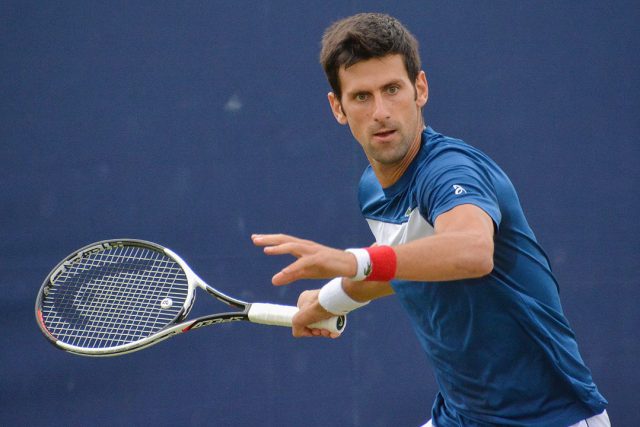
NOVAK Djokovic is unlikely to play at the Australian Open if rules on coronavirus disease 2019 (COVID-19) vaccinations are not relaxed, said the world number one’s father, Srđan Đoković.

Organizers of the year’s first Grand Slam have said that all players will have to be vaccinated to take part. Djokovic has so far declined to disclose whether he is vaccinated and his father told Serbia’s TV Prva that governing body Tennis Australia’s stance on players being vaccinated was tantamount to “blackmail.”

“As far as vaccines and non-vaccines are concerned, it is the personal right of each of us whether we will be vaccinated or not. No one has the right to enter into our intimacy,” news website B92 quoted Srdjan as saying. “Under these blackmails and conditions, (Djokovic) probably won’t (play). I wouldn’t do that. And he’s my son, so you decide for yourself.”

Djokovic has won nine Grand Slam titles at Melbourne Park, including this year’s tournament, and shares the record of 20 men’s Grand Slam titles with Roger Federer and Rafa Nadal. Nadal has confirmed he will play at Melbourne Park in January but Federer will miss the tournament as he recovers from another knee surgery.

The Australian Open begins on Jan. 17. — Reuters

FIFA to trial semi-automated offside technology at Arab Cup

WORLD soccer’s governing body International Federation of Association Football (FIFA) will test its semi-automated offside technology at the Arab Cup 2021 which begins in Qatar on Tuesday, with Chief Refereeing Officer Pierluigi Collina saying the competition represented its most important trial so far.

The technology is based on limb tracking and provides the Video Assistant Referee (VAR) with information before the on-field official takes a final call.

“We’ll have a camera setup installed under the roof of each stadium,” FIFA’s Football Technology and Innovation Director Johannes Holzmueller said in a statement on Monday.

“The limb-tracking data extracted from the video will be sent to the operations rooms and the calculated offside line and detected kick-point is provided to the replay operator in almost real time.

“The replay operator then has the opportunity to show it immediately to the VAR. At the FIFA Arab Cup, the assistant VAR at a dedicated offside station can immediately validate and confirm the information.”

FIFA’s Chief of Global Football Development Arsene Wenger said in April that he hoped the organization would be ready to implement the technology at next year’s World Cup in Qatar.

In March, former Netherlands forward Marco van Basten called on football’s lawmakers to consider scrapping the offside rule, saying that the sport would be better off without it.

The game has seen several contentious offside calls since the introduction of the VAR, with growing concern about the time taken and the precision with which offsides are judged.

“Technology is very important and useful in both the pre-match preparation and the decision making process during matches,” Collina said.

“In an offside incident, the decision is made after having analyzed not only the players’ position, but also their involvement in the move.

“Technology — today or tomorrow — can draw a line but the assessment of an interference with play or with an opponent remains in the referee’s hands.” — Reuters

Kemba Walker drops out of the NY rotation

There was once a time when Kemba Walker took the National Basketball Association by storm. He was drafted ninth overall in 2011 after being named the NCAA Tournament’s Most Outstanding Player in leading the Huskies to the championship. He then headlined the Bobcats/Hornets at the Spectrum Center (née Time Warner Cable Arena) prior to being a starter for the Celtics the last two years. For all his supposed limitations as a six-foot guard in a tall man’s game, he managed to snag four straight All-Star selections — as clear a reflection as any of his value in the league.

Unfortunately, the injury bug limited Walker’s appearances in green and white, and his inability to take to the court with consistency prompted former Celtics head coach and new president of hoops operations Brad Stevens to deal him to the Thunder. He then secured a buyout to sign with his hometown Knicks, hoping to jumpstart his career and reclaim his place as a member of the NBA elite. And for a while there, it seemed as if he was well on his way to meeting his objective. Until, that is, he hit a wall. Not only did he not sustain his hot start; he suffered from a lingering swoon that had bench tactician Tom Thibodeau limiting his minutes and sitting him in the crunch.

Now, Walker has been told that he will not have any spot at all in the rotation. It’s a huge blow for the 31-year-old Bronx native invariably described as an outstanding teammate. No doubt, his consummate professionalism and dedication to his craft will keep his head above water and prepped for the time when his number will be called anew. He understands that his demotion wasn’t just a product of whim or fancy. Advanced statistics had him pegged as the Knicks’ sieve on defense; his on and off numbers were simply so disparate that even Thibodeau, long noted for favoring veterans, could not ignore the truth.

It’s a hard fall for Walker, but one that he sees as yet another challenge to meet. League annals are replete with examples of former marquee names compelled to ride the pine in the face of diminishing returns. Not coincidentally, he need only look across town to find an erstwhile star likewise relegated to the bench; while he may not have had the highs experienced by the Nets’ Blake Griffin, he shares in the lows and finds strength therefrom. It won’t break him in any case, but knowing that he’s not alone, and that readiness reaps rewards, should keep him focused. In the final analysis, he’s only as bad as he thinks, and as good as he believes.


Anthony L. Cuaycong has been writing Courtside since BusinessWorld introduced a Sports section in 1994. He is a consultant on strategic planning, operations and Human Resources management, corporate communications, and business development.

Singapore’s long-awaited opening flops

REUTERS

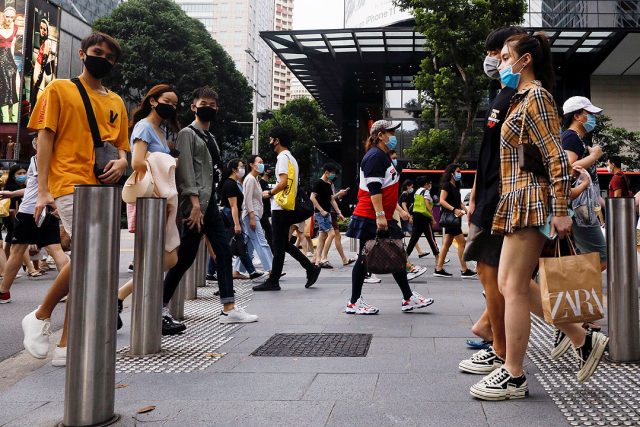
EVEN before the new Omicron variant forced the delay of several vaccinated travel lanes, Singapore’s grand reopening was off to a slow start.

Despite the social media hype and initial bookings rush, the number of people actually traveling using the city-state’s quarantine-free travel lanes is surprisingly few, according to Bloomberg calculations based on Civil Aviation Authority of Singapore data.

Some 20,510 travelers received approval to enter Singapore since the first travel lanes kicked off in early September through Nov. 26, just 12.5% of the around 164,500 people theoretically allowed in under the nation’s daily quotas. Including Singapore citizens, permanent residents and children aged 12 and below who don’t need to apply for re-entry approval, that figure rises to 37,001, still only 22.5% of the total possible.

While Omicron will start to be reflected in carriers’ schedules in coming days, Singapore’s recovery already ranked the slowest among major countries in the Asia-Pacific region, OAG data show.

A spokesperson from the Ministry of Transport didn’t immediately respond to a request for comment.

While no-one expected the floodgates to open right away and the daily quotas put a natural cap on visitors, the numbers coming in on the vaccinated travel lanes average out to less than 500 people a day, a far cry from the more than 181,600 travelers who used to stream through Changi Airport 365 days a year pre-COVID. 

“The numbers aren’t all that fantastic,” said Mohshin Aziz, director of the Pangolin Aviation Recovery Fund, which invests in aviation-related businesses. “The first to travel will be those who need to see family or who are going borderline insane with the travel curbs. But after that, reality will sink in very quickly” considering the high cost of air tickets and Covid tests. Omicron “creates an additional layer of anxiety,” he said.

It’s not just the expense of travel during a pandemic — rapid result COVID tests at some airports in Europe run to almost 300 euro ($315) a pop — but the uncertainty of travel that’s putting people off. Even before Omicron blasted onto the front pages, Covid cases were rising at an alarming rate in Europe, sparking fresh lockdowns in parts of the continent. One of the earliest places that Singapore announced a vaccinated travel lane with was Germany, where new infections have been hitting records.

In Europe, Singapore also has vaccinated travel lanes with the UK, Italy, the Netherlands, Spain, Denmark and France. Freezing weather — Arctic blasts have left parts of the U.K. without power — and a winter ski season under threat from potential lockdowns for a second year has made the prospect of flying 12 hours across the globe only to be hit with frigid temperatures and lifestyle curbs less appealing.

The risk of travel in a pandemic was only reinforced by the emergence of the new variant, which triggered a cascade of various travel curbs — even though its severity is yet to be determined. By Monday, several countries had started to raise their drawbridges, with Israel and Japan banning foreigners and others limiting entry to travelers from parts of southern Africa, where the new strain was first identified.

The number of airline seats offered on flights from Singapore, which doesn’t have a domestic market, was about 22% of pre-Covid levels for the week of Nov. 22, the OAG data show. Singapore Airlines Ltd. said earlier this month it expects to be at just 43% of pre-Covid capacity by the end of December.

And while capacity on flights to Australia picked up in the weeks after two-way quarantine-free travel was allowed, it’s still well under half of what it was pre-pandemic.

SLOW CLIMB
Some of the same factors that are keeping people in Singapore from rushing toward the departure gates are holding back would-be visitors to the city-state, too.

The cost of vaccinated travel lane flights, the price of Covid tests and the restrictions on daily life after arrival are putting many people off coming to the island nation, Hannah Pearson, the Kuala Lumpur-based director of tourism consultancy Pear Anderson, said. Most visitors to Singapore on vaccinated travel lane flights must take a Covid test upon arrival at the airport for around S$160 ($117).

“What happens if you’re a family of six? You can’t eat out. What are you going to do? You’re still not getting this full travel experience,” she said, referencing the fact that local rules in Singapore currently restrict dining to groups of five.

Singapore, where you can drive the length of the island in under two hours, also typically isn’t a place where travelers spend much time, she said. Many tourists use the nation as a transit destination en route to Europe or Australia, often never leaving the airport.

“If you’re going to all that trouble to go to Singapore, to go anywhere really, you want to stay more than a few days,” Anderson said. “The long-haul market would probably use Singapore as a hub” however the more countries you visit, “the more border restrictions you’re going to bump into,” she said.

Even travel within Asia using Singapore’s vaccinated travel lanes, which now extend to Malaysia and will soon encompass Sri Lanka, Thailand and Cambodia, isn’t cheap.

Mr. Mohshin, who was on one of the first vaccinated travel lane flights to Kuala Lumpur on Monday, said the cost of a round-trip ticket to Malaysia’s capital, plus forking out for the numerous Covid tests at either end, can rival a fare to a Europe.

“If you’re traveling with kids, it’s too costly. It’s too taxing,” he said. “What’s the justification of getting swabbed four times and spending money on that?”

There’s also the risk that unless Singapore acts swiftly to protect its own borders, Omicron enters and spreads substantially in the densely populated city-state, causing other countries to turn their backs on the nation, further thwarting efforts to open up.

“To me that’s what we want to avoid,” Associate Professor Alex Cook, vice-dean of research at the National University of Singapore’s Saw Swee Hock School of Public Health, said. “I’m not convinced that we need to stop it from getting into the country, but we want to avoid other people blocking the border, turning from Singapore.” — Bloomberg