


Comelec taking down posters ‘abuse of power’
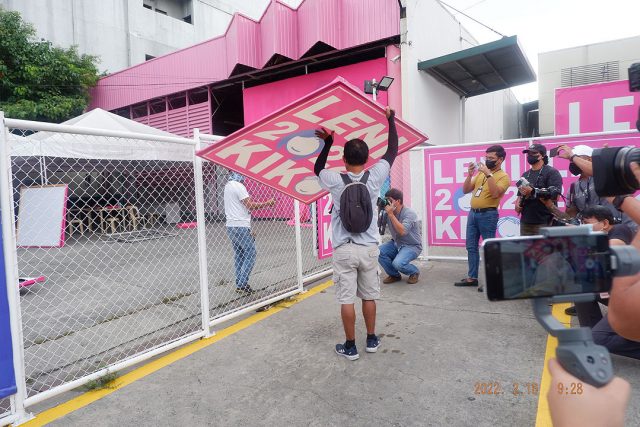
THE GOVERNMENT is abusing its power for seizing oversized election campaign materials on private property, according to an election lawyer.
Citizens can put up whatever size of posters inside their property because freedom of speech is protected by the 1987 Constitution, election lawyer Romulo B. Macalintal told an online news briefing on Thursday. “That it is very arbitrary and a clear case of abuse of power and discretion and violation of one’s constitutional right to property.”
The Commission on Elections (Comelec) has issued an order for law enforcers to take down oversized campaign materials even inside private property, which the lawyer said is equivalent to warrantless seizure.
Candidates at this year’s elections could sue the election body at the Supreme Court for abuse of power, Mr. Macalintal said.
“We are currently studying the possibility of filing the appropriate case so that the rules on this issue are clarified further,” Ibarra M. Gutierrez III, spokesman of Vice-President and presidential candidate Maria Leonor “Leni” G. Robredo, said at the same briefing.
“The right to action currently belongs with the people directly affected,” he said. “It’s their private property, they are private persons and they are not connected to the campaign.”
Authorities earlier took down campaign posters of Ms. Robredo and her running mate Senator Francis “Kiko” N. Pangilinan inside private property.
Civic groups and former Comelec officials have criticized the Comelec order, which provides that election posters even on private property must not be bigger than six square feet.
Candidates are also barred from shaking hands, hugging, kissing, going arm-in-arm and having selfies taken with political supporters as part of health protocols amid a coronavirus pandemic.
Videos and photos of authorities taking down campaign materials posted by the opposition tandem’s supporters on private property have become viral.
Earlier this week, a team led by Comelec dismantled tarpaulins displayed at a volunteers’ center in Quezon City. The area, which used to be a bus station, is a private property owned by a supporter.
A viral video also showed police helping remove posters and tarpaulins at the headquarters of volunteers for the Robredo-Pangilinan tandem’s campaign in Santiago, Isabela in northern Philippines.
Former congressman Neri J. Colmenares, who is running for senator, said the rule could be weaponized against opposition candidates.
“I agree that the Comelec rules are too stringent,” he told CNN Philippines. “While we know that of course that this is for the pandemic, they have overreached. It’s too much, it’s absurd.”
The Supreme Court had reminded Comelec in the past not to overstep its authority, lawyers from the University of the Philippines said in a statement, citing jurisprudence from 2015.
“Political speech is a preferred right,” they said. “Political speech during an election stands on a higher level.
The lawyers also said citizens can politely block Comelec authorities from private property. “Destroying private signages and other political expressions inside private property cannot be done arbitrarily, and certainly without notice and hearing.”
Senator and presidential bet Panfilo M. Lacson, Sr. said Comelec should review campaign rules because some of these are impractical.
“When they make resolutions and regulations, they should be implementable and enforceable,” he told reporters in mixed English and Filipino. He said seeking permission for every campaign activity is impractical.
Senate President Vicente C. Sotto III, Mr. Lacson’s vice-presidential running mate, said the rules had not been well thought of. He jokingly said he would search for a vacant lot and place a 50 by 50 feet tarpaulin of Senator Emmanuel “Manny” D. Pacquiao there and see if he will be disqualified for this.
“That may be a constitutional issue,” Mr. Lacson said. “This is my property and I can do whatever I want as long as I’m not harming other people.”
Meanwhile, Senator Emmanuel Joel J. Villanueva, who is running for reelection, asked Comelec to be flexible and review its rules. He noted that even if an inter-agency task force no longer requires the use of face shields, the election body still does.
Human rights lawyer and senatorial candidates Jose Manuel “Chel” I. Diokno said law enforcers have no power to dismantle posters and tarpaulins — whatever their size — on private property.
They are also barred by law from entering homes, offices or any private property without a search warrant or permission from the owner.
Acting Comelec Chairperson Socorro B. Inting told reporters on Thursday they would review face-to-face campaign rules. — Kyle Aristophere T. Atienza and A.N.O. Tan
Infections fewer than 3,000 for fourth straight day
THE PHILIPPINES posted 2,196 coronavirus infections on Thursday — the fourth straight day the tally fell below 3,000 — bringing the total to 3.65 million.
The death toll reached 55,330 after 107 more patients died, while recoveries rose by 4,409 to 3.52 million, the Department of Health (DoH) said in a bulletin.
It said 9.7% of 29,392 samples on Feb. 15 tested positive for the coronavirus, still above the 5% threshold set by the World Health Organization (WHO).
Of 66,588 active cases, 1,090 did not show symptoms, 60,848 were mild, 2,913 were moderate, 1,428 were severe and 309 were critical.
A drop in COVID-19 testing rates worldwide was likely contributing to a decline in reported cases in the, even as deaths were rising, WHO technical lead on COVID-19 Maria Van Kerkhove said on Wednesday.
“The bigger concern right now, I think, is the still increasing number of deaths,” she told an online discussion streamed live on YouTube.
Ms. Van Kerkhove noted that in the past week alone, almost 75,000 people died, which was probably underestimated.
Countries claiming that their transmission rates had dropped in the past weeks probably have also experienced a drop in coronavirus testing, said Mike Ryan, WHO emergency chief.
DoH said 95% of new cases occurred on Feb. 4 to 17. The top regions with cases in the past two weeks were Metro Manila with 358, Calabarzon with 307 and Western Visayas with 214 infections. It added that 65% of new deaths occurred in February and 18% in January.
Seventy-nine recoveries were relisted as deaths, while three laboratories failed to submit data on Feb. 15.
The OCTA Research Group said coronavirus infections in Metro Manila had increased, noting that the 632 new cases on Wednesday were above previous projections.
“With mostly fresh cases, this feels like a Valentine spike,” OCTA fellow Fredegusto P. David tweeted. “The figure shows that it is above the Jan. 24 projections.”
The government, which is scrambling to vaccinate more people as it reopens the national economy, has started easing COVID-19 lockdowns as infections continue to fall.
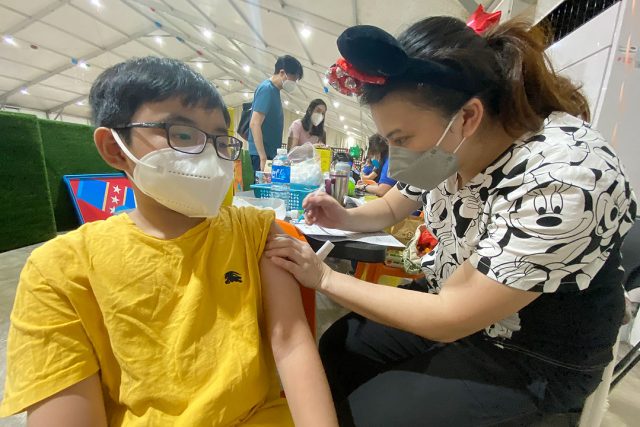
The Philippines has vaccinated 263,932 children as of Feb. 16, Health Undersecretary Myrna C. Cabotaje told a televised news briefing on Thursday. Of the total, only eight experienced nonserious adverse events, she said.
She added that the government was set to receive about five million doses of COVID-19 vaccines for children this month.
The government had fully vaccinated 61.9 million people as of Feb. 16., Ms. Cabotaje said. About 9.3 million booster shots have been injected.
At the same briefing, Information and Communications Technology acting Secretary Emmanuel Rey R. Caintic said the country’s vaccination certificates have new security features and now include data on booster shots.
“The most important update is the inclusion of booster shots,” he said in Filipino. “You may now see your third jab in the vaccine certificate.”
He said more than 70% of vaccination data in the country have been encoded into the government’s database.
Mr. Caintic said the agency expects 90% of all vaccination data from local government units to be sent to the National Government database in three to four months. — Kyle Aristophere T. Atienza
Senator defends SIM registration bill as key to thwarting scams

ONE OF the co-authors of a bill that will make subscriber identification module (SIM) card registration mandatory, which is now up for the President’s approval, said the proposed law is key to addressing scams and fraud using mobile phones.
“The authorities will finally and promptly solve the criminals behind this kind of modus operandi when SIM card registration becomes law,” Senator Sherwin T. Gatchalian said in a statement on Thursday.
Technology and science experts have flagged certain provisions of the measure as a threat to privacy.
Mr. Gatchalian, on the other hand, said having a record of SIM card owners and penalties against those who give fake identities will deter phone-aided illegal activities.
“While our laws provide for equal access to communication, this kind of liberty may be curtailed if the use of such technology is abused and used to commit nefarious acts,” said the senator who is seeking reelection in the May polls.
Under the proposed legislation transmitted to the President’s office, all SIM card subscribers, including those with active services, will be required to register with their respective telecommunications company within a year from the effectivity of the measure.
Those who fail to do so will have their SIM cards automatically deactivated.
Fictitious identities will be penalized with at least six years of imprisonment or a fine of up to P200,000, or both.
The bill is also intended to curtail social media abuse by requiring users to register their identity and phone number. — Alyssa Nicole O. Tan
P605-M EU grant approved for 4 peace projects in Bangsamoro region

ANOTHER European Union (EU) grant worth €10.39 million or about P605 million has been approved for four peace-related projects in the Bangsamoro region in southern Philippines.
The projects will support the normalization process in the Muslim-majority region, the Office of the Presidential Adviser on Peace, Reconciliation and Unity (OPAPRU) said in a statement released late Wednesday.
The normalization process involves the decommissioning of former armed fighters of the Moro National Liberation Front (MILF), which signed a peace agreement with the government in 2014, and transforming their communities into peaceful and productive zones.
The projects are:
- Programme on Assistance for Camp Transformation through Inclusion, Violent Prevention, and Economic Empowerment (PROACTIVE) by the United Nations Development Programme;
- Dialogue and Engagement in Communities to Foster Peaceful Camps Transformation in the BARMM of the Center for Humanitarian Dialogue;
- Access to Legal Identity and Social Services for Decommissioned Combatants (ALIAS-DC) by Initiatives for Dialogue and Empowerment through Alternative Legal Services (IDEALS); and
- Building Community Resilience and Delivery of Essential Services for Post-Conflict Recovery in Lanao del Sur/Marawi City by the United Nations Children’s Emergency Fund (UNICEF).
“I know that everybody is really contributing so that final peace and sustainable peace will take place and happen to Mindanao,” said Bangsamoro Education Minister Mohagher Iqbal, who also chairs the MILF Peace Implementing Panel.
Three other projects were approved earlier with a total grant of €8.58 million or about P500 million.
Christoph Wagner, EU’s Head of Cooperation in the Philippines, said a €20- million financing agreement was also recently signed for the Bangsamoro Agri-Enterprise program.
“Let’s stay forward-looking… This is important because this will work on value chains in the BARMM (Bangsamoro Autonomous Region in Muslim Mindanao) that will support farmers’ goods, food production, cash flow, and in particular for Halal and [other] products,” Mr. Wagner is quoted as saying in the OPAPRU statement.
“I really hope that these can start-up soon because this socioeconomic support is crucial for the peace dividends,” he said. — MSJ
BI warns public vs scammers claiming ties to immigration officials
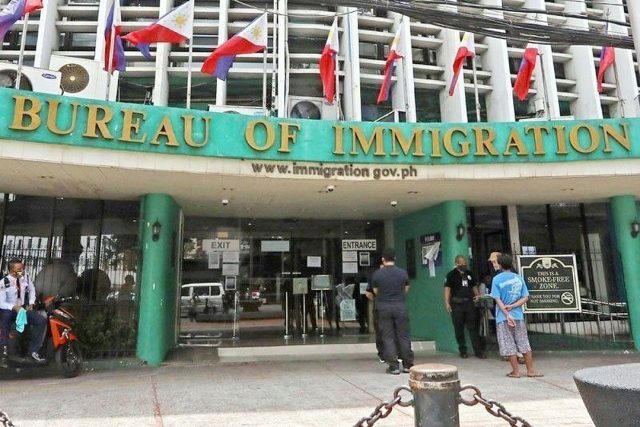
THE BUREAU of Immigration (BI) has issued a warning to the public against individuals posing as friends or relatives of its officials and offering assistance for a fee.
In a statement on Wednesday, Immigration chief Jamie H. Morente said the bureau had received reports of individuals offering unauthorized and illegal services by claiming to have connections to the agency’s officers and employees.
“In our recent case, the scammer was able to get P200,000 from their victims, whose visa they alleged to ‘fix’,” Mr. Morente said.
The victim was made to believe the offer was made by a relative of an immigration official, he added.
Mr. Morente called on the public to immediately report suspicious offers.
BI earlier issued a warning against scammers using social media platforms for immigration-related services.
In July last year, the bureau also received reports of foreigners being offered services at a high cost by a local company to obtain documentary requirements for them.
Mr. Morente said the company was using the name of government agencies to justify its high fees.
“We do not condone illegal activities, and we are also considering seeking legal action against these scammers who besmirch the names of our officials and employees for their gain,” Mr. Morente added. — John Victor D. Ordoñez
Domagoso vows tight watch on fertilizers in La Union visit; Comelec rejects case vs senatorial candidate Tulfo
MANILA MAYOR and presidential aspirant Francisco “Isko” M. Domagoso vowed to make sure the cost of fertilizer will be properly monitored if he wins in May.
“I will see to it, and I will make sure, with all the powers given to a president of a country, that the price of fertilizers will be properly monitored,” he told reporters in a mix of English and Filipino on Thursday as he campaigned in La Union province.
“That’s why you will notice that there are many farmers who are unable to plant their crops. Their unhusked rice is bought at a cheap price, but their fertilizer is expensive. So, it seems the price of the fertilizers has really affected them,” Mr. Domagoso said.
As global fertilizer prices have been on the rise, the average retail price of urea in the Philippines has increased to about P2,500 per 50 kilograms in Feb. 7-11 from P2,400 in Dec. 27-31, 2021, according to data from the Fertilizer and Pesticide Authority (FPA).
Mr. Domagoso also said that importation of agricultural products should be minimized to protect local farmers.
“Importation should be the buffer, not the main (supply source),” the Manila mayor said at a live-streamed press conference.
TULFO
Meanwhile, the Commission on Elections (Comelec) has junked a case seeking to cancel the Certificate of Candidacy (CoC) of senatorial bet Rafael “Raffy” T. Tulfo.
In a 10-page resolution promulgated in Dec. 2021 and released on Thursday, the previous Comelec Second Division said Mr. Tulfo did not mislead the public when he declared in his CoC that he is married to Jocelyn P. Tulfo.
The petition was filed by Julieta L. Pearson, who claims to be Mr. Tulfo’s legal wife.
“Respondent’s civil status is not a material matter for the simple reason that it does not pertain to his qualification for elective office, this would still not be
enough to warrant the cancellation of his CoC,” states the ruling penned by Former Second Division Presiding Commissioner Socorro B. Inting.
Mr. Tulfo topped a Pulse Asia Research survey conducted last month on voter preferences for senators, garnering the support of 66.1% of respondents. — Jaspearl Emerald G. Tan and John Victor D. Ordonez
Closed fishing season in Visayas lifted
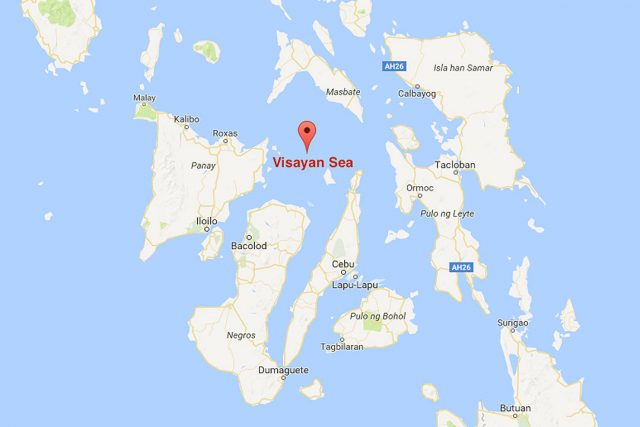
THE ANNUAL three-month closed fishing season in the Visayan Sea has been officially lifted on Feb. 15, according to the Bureau of Fisheries and Aquatic Resources (BFAR).
The closed season, implemented from Nov. 15 to Feb. 15, prohibits the catching of sardine, herring (Clupeidae) and mackerel (Scombridae) within the conservation area.
“The policy is effectively enforced, by virtue of Fisheries Administrative Order No. 167-3, towards ensuring the protection and conservation of the said species in the Visayan Sea,” the BFAR said in a bulletin.
During the closed season, BFAR said it established field stations and floating assets; conducted land-based and seaborne patrol operations; provided information, education and communication activities; and implemented portside boarding, inspection, monitoring and surveillance operations.
The Visayan Sea, one of the country’s main fishing grounds, is surrounded by Cebu on the southeast, Negros on the south, Panay on the west, and Masbate on the north. — Luisa Maria Jacinta C. Jocson
Quid pro quo
The partisans of certain candidates in the old media and their troll cohorts have been serving a regime that has so debased Philippine sovereignty that Filipino fisherfolk have been denied access by a foreign power to their traditional fishing grounds in the country’s Exclusive Economic Zone (EEZ).
The same regime has also allowed the unrestricted entry of hundreds of thousands of Chinese workers into the Philippines despite the COVID-19 pandemic, while droves of Filipinos leave the country daily in search of living wages in jobs abroad.
Emboldened by the same regime’s indifference to their brazen incursions into Philippine territorial waters, China’s military sea craft patrol with impunity the West Philippine Sea (WPS) that it has militarized with guided missiles and other advanced weaponry and aircraft to which the whole archipelago is within striking distance.
But it seems that Chinese bullying has been too much even for President Duterte. He earlier declared the Philippines’ “separation” from the United States, but not only is the regime buying millions of dollars’ worth of advanced weaponry from the US, despite Mr. Duterte’s oft-repeated threat to end them, the Armed Forces of the Philippines (AFP) still holds joint military exercises with American troops. And Mr. Duterte’s and his military minions’ rhetoric about the “modernization” of the country’s armed forces has not changed the country’s decades-long dependence on the US for its external defense.
China, however, is also supplying the AFP with its own weaponry, presumably in exchange for further concessions. They have yet to prove it, but many Filipinos suspect that such a quid pro quo — China’s supporting Mr. Duterte’s candidacy in 2016 in exchange for excusing its intrusions — could help explain Mr. Duterte’s otherwise puzzling policy of belittling, except in rare instances, the United Nations Arbitral Tribunal’s 2016 ruling and his doing practically nothing in the defense of Philippine rights in the WPS.
But as if they were in the service of the most nationalist regime in recent history rather than what is arguably the least nationalist of them all, the trolls and faux journalists are playing the sovereignty card against the lone opposition candidate for the Presidency.
Implicit in their allegation and warning that the US is supporting Vice-President Maria Leonor “Leni” Robredo for that post is the assumption that it would compromise the country’s independence — or what little remains of it, no thanks to the foreign policy of their patron.
Foreign intervention in elections or any other area of Philippine internal affairs is a legitimate enough issue, but not simply in terms of this or that country’s supporting this or that candidate. More crucially, the implications of such support should be understood in terms of what its costs to this country and its people will be.
In addition, although the United States has a long history of meddling in Philippine politics, the most recent context in the foreign intervention issue is that it is not the only country that has an interest in what kind of government will be in power by June this year.
Both China and the US have such an interest, and so do other countries with which the Philippines has trade and other relations, albeit perhaps to a lesser extent. Only the naive would harbor the illusion that no foreign power would support anyone in the May elections and beyond.
But what is important is what that support would consist of. Sending a team of observers to help assure free and honest elections would not qualify as a form of partisanship in favor of one candidate. After all, everyone except the cheats has an interest in the integrity of Philippine elections. What is most unacceptable is contributing to the campaign war chest of the candidate involved, or paying for the political advertising and public relations campaigns that would give the candidate an advantage over his or her rivals.
Such forms of intervention are illegal, although there is no doubt that it has happened in this country — and in others including the US, where, incidentally, there are allegations that Russia influenced the outcome of its own 2016 Presidential elections.
The second question is what the costs of that support would be, in terms of what the candidate has promised his or her benefactor by way of policies favorable to it, preferential treatment if any, or whatever else. By prioritizing another country’s interests above those of the Philippines’ and thus limiting government’s capacity for independent action, the President elected with a quid pro quo debt to pay would be diminishing the country’s sovereignty.
But the trolls and their collaborators in the old media are only partly correct in raising the foreign intervention issue. In addition to calling attention to that near-certainty, both questions— what forms of support they are getting from a foreign power if any, and what the costs to this country of that support will be— need to be asked not only of one, but of all the candidates for the Presidency. That post is the most powerful in government and therefore the most pivotal in the making and implementation of the policies that will have an inevitable impact on the lives of the Filipino millions.
Granted that for a number of reasons, US intervention is especially problematic. There is the cultural and ideological basis of its many years of influence in Philippine affairs. It is the country most trusted by Filipinos of whatever gender and social and economic status. The “special relations” between the two countries is supposedly due to their “shared values” of democracy and human rights. The US is also the Philippines’ third largest trading partner and its foremost military trainer and supplier via the Visiting Forces Agreement (VFA), the Enhanced Defense Cooperation Agreement (EDCA), and the Mutual Defense Treaty (MDT).
But no one should ignore the possibility that its Chinese rival for global hegemony is as likely to be supporting its own candidate. That support would be based on how he or she could defend and advance what it has already gained.
Although a newcomer in the imperialist game, over the last six years China has succeeded in advancing its own interests through a Philippine polity so pliable it has allowed by default the transformation of its own resource-rich seas into potential sources of energy for China’s power-hungry industries, and made its cities available as dumping grounds for the ne’er-do-wells of its teeming populace that could very well be its intelligence assets. It will not and cannot surrender those gains. They are crucial to its continuing effort to replace the United States as the world’s most dominant economic and political power.
As ethically challenged as they may be, and despite their limited understanding of the journalistic imperatives of justice and fairness, the heralds of disinformation in old and new media could still redeem themselves by alerting the electorate to the distinct possibility that if the US is supporting one candidate for President, China is most likely supporting its own.
That support, like that of the United States’, would be as premised on nothing nobler than self-interest. China has been exporting its authoritarian model of governance to Africa, Asia and Latin America as the ideal road to development and has supported authoritarian regimes across the planet as long as those regimes serve its economic, political and strategic goals.
One such regime readily comes to mind. But there are others that are equally in China’s widening orbit. Keeping the Philippines in it would seem to be in that country’s best interest.
Luis V. Teodoro is on Facebook and Twitter (@luisteodoro).
www.luisteodoro.com
Economic freedom and economic growth


With its usual excellent graphics, this broadsheet reported last Wednesday that the Philippines sustained another decline in its economic freedom performance, as rated by the conservative Washington-based Heritage Foundation. Since 2017, we have dropped in all years except in 2020 with some consolation that our rank was unchanged at 70th.
Our score of 61.1 relegated us to 80th among 177 countries, quite close to the threshold of 59.9 for the “mostly unfree” group of North Korea, Venezuela, Cuba, Sudan, and Zimbabwe. We agree with Foundation for Economic Freedom President Calixto V. Chikiamco that the next ranking in 2023 should see the Philippines bouncing back following the passage of key reform measures including the Retail Trade Liberalization Act. Our unequivocal participation in the Regional Comprehensive Economic Partnership should also advance our economic freedom.
I consider this latest report as an assessment of COVID-19’s impact on various aspects of economic freedom because the data coverage is clearly the period of the viral upsurge, that is, the second half of 2020 through the first half of 2021.
The 2022 Report was correct in its observation that public authorities around the world have imposed various restrictions on both personal mobility and business activities in response to the consuming COVID-19 infection and mortality. As a result, many economies retreated in 2020 with tentative recoveries in 2021.
Of utmost relevance here is the nexus between economic freedom and several economic and social goals. For instance, the consequent curtailment of economic freedom in the name of pandemic management has hollowed out economic growth for many jurisdictions. Jobs were lost and incomes reduced, amplifying the vulnerability of the poor and other marginalized sectors. What actually pulls down the whole of society is the cost of public intervention to cushion the impact of the pandemic. With nearly zero growth in revenues, governments were forced to go into excessive deficit spending funded by both domestic and foreign borrowings.
Future generations are supposed to pay back these obligations, and it should not be an issue as long as these borrowed funds actually financed the fight against the virus. Economic recovery is possible with controlled viral spread. With the advance of business activities, economic growth will pay for those debts through the general appropriations. In this connection, the Heritage Foundation noted that the US’ erosion of economic freedom has actually resulted in an impossibly excessive fiscal deficit and debt burdens. In many countries, these twin problems may give rise to lower productivity growth and economic weakness.
With collateral damage in the policy areas of transparency, efficiency, openness, and government effectiveness, the pandemic should not perpetuate extended government emergency powers and assistance, but rather promote economic freedom as the norm of health and economic response. An environment of economic freedom fortifies various political and economic institutions. This is how we produce robust and resilient and inclusive economic growth. Rationalizing the tax regime, enhancing the regulatory framework, strengthening the contestability of markets, and fighting corrupt practices improve economic freedom and sets the stage for durable economic growth.
The 2022 report also argued that standard of living in terms of per capita income has been observed to be higher in free or mostly free economies. Residents of these economies enjoy, on average, incomes three times higher than the other economies and nearly seven times higher than those of repressed economies. It should not surprise us that the series of policy and structural reforms the Philippines has undertaken since 1993 has produced a critical mass of growth drivers, resulting in 21 years of uninterrupted growth until the pandemic outbreak in 2020. Our economic managers were inspired to work for the country’s per capital GDP to grow to upper middle-income levels. But our inept management of the pandemic frustrated the campaign and prolonged our economic recovery.
Four components of economic freedom were used to assess all the 177 countries, including the Philippines.
First, rule of law in the Philippines was considered weak in all three sub-components. While property rights are admittedly recognized in the Philippines, enforcement was deemed “weak and fragmented.” Judicial effectiveness also scored lower on account of the courts’ inefficiency, bias and corruption, while court personnel suffered from low pay, intimidation, and impossible procedures. Killings of court officers including judges and fiscals worked against this component. Government integrity was suspect because of widespread corruption and cronyism.
Second, government size was assessed in terms of the tax burden, no change; government spending to GDP at 23% and the budget deficit to GDP at 2.9%, down; and fiscal health, down with public debt at 47.1% of GDP.
Third, while the regulatory efficiency score actually turned out better in all three components, the Heritage Foundation still considered, with reason, that our infrastructure is weak, power cost exorbitant, connectivity “shabby,” and regulations unpredictable. Our labor department should explain why this latest scoring found that “minimum wage standards and payments of social security contributions, bonuses, and overtime as stipulated by law are often ignored.” Subsidies to agriculture were nearly a third of gross farm receipt.
And fourth, open markets in the Philippines in terms of trade, investment, and financial freedom were quite steady during the pandemic. While trade freedom somewhat inched down, the Heritage Foundation noted that the country has 11 preferential trade agreements in force. Trade weighted average tariff rate was 5.6% and 285 nontariff measures are in effect. Both investment and financial components were unaffected by pandemic-related government restrictions.
Thus, going through the long report suggests that nearly all countries took a real beating from the scourge of the pandemic. For the Philippines, it is surprising that our regulatory efficiency somewhat held during the pandemic. Drilling down into the methodology of the indices, those three decades of policy and structural reforms must have invested us with some staying power.
True, various research outfits and international financial institutions are now projecting growth rates for 2022 at lower than the government target of 7-9%, but this is due mostly to uncertainty which continues to pull down market sentiment. Nomura, for instance, explains that “low vaccination rates and the risk of a reacceleration in new COVID cases could hinder further reopening, which alongside limited fiscal support, could weigh on growth.”
It’s good that our economic managers have remained the real adults in this Government. Otherwise, economic recovery would have been more elusive as our other authorities bungled the pandemic management and prioritized peripheral concerns. Having to struggle through severe economic scarring, growing positively in 2021 was a feat in itself. If anything, it should convince us that promoting economic freedom reflects our commitment to good governance — it is as critical as championing those hard and soft infrastructure.
What actually brought down the Philippines’ overall score in economic freedom was the substantial deterioration in the rule of law: property rights declining 10 full points; judicial effectiveness, down by nine points; and government integrity, down by six points. The other setback was in government size, particularly fiscal health which retreated by more than 13 points, something that was inevitable given the challenges posed by the pandemic on public resources. Corruption must be the link here, as pointed out by the Heritage Foundation: “There is little accountability for powerful politicians, big companies or wealthy families.”
To be sure, we should exercise our freedom to make the May 2022 national election truly a game-changing exercise. We can begin by supporting the candidate who has a concrete platform of government that stands behind the rule of law, sustainable government size, no-nonsense regulatory efficiency, and open, contestable markets — altogether free from cronyism. Sloganeering will neither buy our freedom, nor secure it.
Diwa C. Guinigundo is the former deputy governor for the Monetary and Economics Sector, the Bangko Sentral ng Pilipinas (BSP). He served the BSP for 41 years. In 2001-2003, he was alternate executive director at the International Monetary Fund in Washington, DC. He is the senior pastor of the Fullness of Christ International Ministries in Mandaluyong.
Showtime

Once upon a time, the great legendary showman P.T. Barnum remarked, “there’s a sucker born every minute.” His colorful life was made into a Broadway musical in the 1980s with award-winning stage actor Michael Crawford and a recent movie with the versatile Hugh Jackman.
Both portrayed the facets of his marketing genius with a glib tongue and a quick wit. Barnum was a genius as a circus king who could sell anything to everybody. The variety shows in the big tent featured a Swedish nightingale soprano, elephants that could dance the polka, prancing horses, midgets who did tricks. The Siamese twins and odd-looking characters (freaks) attracted a variety of audiences.
Talking a mile a minute, He convinced people to buy snake oil potions and exotic concoctions that they did not need. Such was Barnum’s style. He made tons of money, entertained the audience and laughed all the way to the bank. If there were doubts, he dispelled them instantly. His manner was showy, yet he was suave. He was a pioneer in false advertising who peddled fantasies. He attracted thousands of people who needed an escape from humdrum grim reality.
The musical Barnum! was a big hit because it was so grandly colorful, entertaining and magical.
After the illusion and hype — the bubble burst. And evaporates into nothing. That happens with the drumroll and the cymbals.
The reality in our lives is that there are con artists who are so deviously talented and charismatic that they can conjure glamorous illusions of beauty, youth, perfection, or financial schemes (pyramids). These manipulative experts can seduce and mesmerize the innocent and the gullible into believing their “magic.”
Sir Francis Bacon once wrote, “Hope is a good breakfast but it is a bad supper.”
What is incredible is the fact that many people are vulnerable. They easily fall for flaky promises, get-rich-quick schemes, and fairy tales of romance. They do not see beyond the glossy surface.
The current political circus is a variation of P.T. Barnum’s show. We see and hear incantations of the showman in young aspirants and dinosaur politicians who want the power, pork barrel money, and the perks.
The multi-media and social media advertisements and praise releases are self-serving promotions. Will these characters really serve the public? Or just enrich themselves and grab power as they immerse themselves in corrupt practices? Thus, we pray for miracles.
A form of false hope is that one that is offered by some medical practitioners who market an experimental therapy that is not FDA-approved in the USA. But they can convince desperate rich patients that this expensive therapy will cure them. They conduct clinical studies under the protective wings of the big shots who run the hospital or center.
The package is endorsed but there are no guarantees. They are not covered by medical insurance. There are no official receipts given for the exorbitant fees charged. No taxes are paid. Professional ethics are compromised.
It is a big risk for the patients but they grasp at straws to try to prolong their lives. There have been families of terminally ill patients who had to take big loans to pay cash up front.
Car dealers are the salesmen who offer the “best price” and discounts for cars. Caveat emptor.
One sales rep of a popular car tried to sell a sleek model that has been used for more than several trial drives. He discreetly turned off the mileage counter/gauge. Luckily, the prospective buyer noticed that the numbers were not moving as she drove around the block twice. The sales rep did not disclose this important item. No wonder the price was relatively low. The buyer had been a regular client of the dealer for the past 15 years and had bought several cars for the family. That was not fair at all. Dishonesty and the sin of omission. She asked and he mumbled some excuse. Then she cancelled the order and moved to another recommended dealer. She bought a brand-new car without the discount.
After-sales service is also an issue. Some dealers charge so high just to diagnose a small problem. They change parts that are still functioning — to meet a certain quota per month. They also break things intentionally to force the owner to pay for new air conditioning filters, brake pads, and other items. It comes down to a matter of trust.
Gift certificates and staycations of prestigious hotels and airline tickets won at raffles have so many restrictions. Winning is fun but that disappears when one reads the fine print. No free luggage allocation. The airline can accommodate the winner only at midnight. The airline is on strike and the ticket expires in one month. The free room is only for weekdays — no weekends, no holidays. Sometimes, the GC or the free ticket is a “false prize.”
On the personal side, the ardent beau who becomes the perfectly packaged fiancé promises a happily-ever-after life to his beloved bride-to-be. Undying love and devotion, heaven on earth.
However, nobody is perfect. The bride stops trying. Years later, the fangs and claws appear. Gaslighting and misogynist remarks diminish the couple. When times are hard and the pressure builds, dysfunctional traits become more evident. The bubble bursts not long after the honeymoon glow fades. It takes a miracle to keep the show running…
Maria Victoria Rufino is an artist, writer and businesswoman. She is president and executive producer of Maverick Productions.
Science didn’t change: Mask mandates still don’t work

The thing with COVID-19 is that it essentially made news media inutile. So much so that satire now comes across as the more believable. Thus, this classic Babylon Bee headline: “Indisputable, Irrefutable, Unquestionable, Unchanging Science Changing Again” (Feb. 11).
The satirical article continues: “Yes, the unmistakable SCIENCE on masks, vaccine effectiveness, treatments, lockdowns, and comorbidities was actually mistaken, but don’t forget that this pandemic has been prolonged only because people doubted the SCIENCE.”
FACT CHECK: LOCKDOWNS STILL DON’T WORK
Lockdowns are now practically being proven on a daily basis as the wrong call of the century. Of course, the new Johns Hopkins Institute for Applied Economics paper (“A Literature Review and Meta-Analysis of the Effects of Lockdowns on Covid-19 Mortality,” January 2022) demonstrated that lockdown policies are absolutely deranged but this is something experts have been saying from the beginning.
Stanford University’s Scott Atlas asserted from April 2020, with a month’s data behind him, supported by studies from Stanford and New York University Medical Center, that the overwhelming majority of people do not have any significant risk of dying from COVID, that population immunity is prevented by isolation policies, and that lockdowns actually prolong the problem.
That in turn is supported by Thomas Meunier’s “Full lockdown policies in Western Europe countries have no evident impacts on the COVID-19 epidemic” (May 2020), that insistent lockdown policies tried by some countries were of no effect compared to the more basic social distancing policies. Which in turn is backed by Hua Qian and others’ recent study (“Indoor transmission of SARS-CoV-2,” April 2020), which showed that 80% of coronavirus infections happen inside the home.
FACT CHECK: MASK MANDATES DON’T WORK
The same could clearly be said about public mask mandates — They just don’t work:
“Masks have been the most visible part of America’s pandemic response, but one of the least consequential. The fact that 500,000 people worldwide died during the Omicron surge means it’s time to change tactics, and focus on what went wrong that led to so many hospitalizations and deaths.
“There’s no avoiding it: The benefits of universal masking have been difficult to quantify. One controlled study in Bangladesh showed a small but statistically significant benefit — among people who consistently used masks, 7.6% got symptomatic infections compared to 8.6% in the control group.” (“Mask Mandates Didn’t Make Much of a Difference Anyway” by Faye Flam, Bloomberg, Feb. 11, 2022)
Again, this isn’t new: rational, sane, commonsensical people pointed this out at the pandemic’s start — “The only two sizeable studies evaluating masks in the context of COVID-19 failed to demonstrate statistically significant reductions in confirmed viral transmission either for surgical masks (one study) or for cloth masks (the other).” Thus, “the first study, conducted from April to June 2020 in Denmark … failed to find a benefit.”
The other study, “a much larger study in Bangladesh” from November 2020 and January 2021, found practically the same thing and also raised “questions about long-term feasibility.”
But wait, there’s more: “masks could accelerate disease spread in a much more striking manner … masks are repeatedly reused and infrequently washed, leading to the possibility that they are inadvertently serving as homemade disease cultures.” (“How Effective Are Cloth Face Masks?,” Cato Institute, 2021/2022)
To reiterate, people have been saying this from the beginning: “We know that wearing a mask outside health care facilities offers little, if any, protection from infection. Public health authorities define a significant exposure to COVID-19 as face-to-face contact within six feet with a patient with symptomatic COVID-19 that is sustained for at least a few minutes (and some say more than 10 minutes or even 30 minutes). The chance of catching COVID-19 from a passing interaction in a public space is therefore minimal. In many cases, the desire for widespread masking is a reflexive reaction to anxiety over the pandemic.” (“Universal Masking in Hospitals in the COVID-19 Era,” New England Journal of Medicine, May 2020)
Unfortunately, this incredibly grievous and vain insistence by policymakers, medical “experts,” and many in media to force mask wearing on the public were also made to apply — for two senseless years — to the healthy young, the one demographic that study after study has shown as the least affected by COVID. It is no coincidence that linguistic experts are now noting rising cases in speech impediments amongst children, as the latter need to see their parents’ faces in order to learn how to talk.
Quite predictably, mask fanatics refer to a recent US Center for Disease Control study alleging mask benefits. This is the same CDC that announced in February 2020 that it does not “recommend the use of facemasks to help prevent novel coronavirus.” In any event, Steve Kirsch, Executive Director for the Vaccine Safety Research Foundation, dismisses the CDC findings as “deeply flawed. It is published in the CDC’s favorite medical journal: the MMWR Report, a medical journal with an impact factor of 17.5.” Bottomline, mask benefits are “zero and indistinguishable from doing nothing.”
WHEN SATIRE IS MORE REAL
Which leads us back to the Babylon Bee: “This new variant of unvarying SCIENCE may be seen as vindication for the thousands of medical experts who were summarily shamed, berated, mistreated, discredited, demoted, or even fired for ever doubting the indubitable SCIENCE or ever suggesting the SCIENCE may change, which it has done and continues to do.”
Add Joe Rogan to that list. Alex Berenson. Jordan Peterson. Add this column as well. And all the others that kept sanity during this pandemic.
The problem really, as the Babylon Bee points out, is that liberal progressives are “Deeply Afraid Things Could Go Back to Normal” (Sept. 29, 2021). Which makes one wonder if the Babylon Bee is still really engaged in satire or actual news.
Either way, people in government, the medical profession, and media need to be held accountable for the tragedy they wrought on countless innocent people. And remember: these are the same people pushing for forced vaccination. n
(For further information visit
• https://news.stanford.edu/2020/11/16/statement-regarding-scott-atlas/
• https://news.stanford.edu/2020/11/16/statement-regarding-scott-atlas/ — Editor)
Jemy Gatdula is a senior fellow of the Philippine Council for Foreign Relations and a Philippine Judicial Academy law lecturer for constitutional philosophy and jurisprudence
https://www.facebook.com/jigatdula/
Twitter@jemygatdula