Home Blog Page 6719

City Football Group bids for Atletico Mineiro

RIO DE JANEIRO — City Football Group (CFG), the Abu Dhabi company with investments in Manchester City and 10 other football clubs, has made a bid to buy Brazilian league champions Atletico Mineiro, Brazil website Globoesporte.com said on Monday.

The group offered around one billion reais ($195.64 million), the report said, but the bid was rejected as being too low.

City refuted the report and said no bid has been made for the Belo Horizonte club and no bid will be made in the future.

Atletico would not comment, saying it was “speculation.”

Atletico is heavily indebted to a group of local businessmen who loaned money to the club over the last few years and turned it into one of Brazil’s most successful.

The team won the Brazilian league and cup double last season and is building a brand-new stadium. Globo said the debt last year hit 1.3 billion reais.

If the deal was done Atletico would be the latest Brazilian club to fall into private hands since legislation was passed last year allowing outside investors to own Brazilian teams.

Until then, clubs had been owned by their members.

In recent months, Cruzeiro have been bought by a consortium led by Ronaldo, Botafogo were purchased by a group led by a part-owner of Crystal Palace, and a US investment firm took control of Vasco da Gama.

CFG is one of the most powerful names in football and the majority owner of Manchester City, New York City FC, and Melbourne City.

It also has invested money in Yokohama F. Marinos in Japan, Montevideo City Torque in Uruguay, Girona in Spain, Sichuan Jiuniu in China, Mumbai City in India, Lommel SK in Belgium and Troyes in France. — Reuters

Joel Embiid pours in 43 as 76ers top skidding Bulls

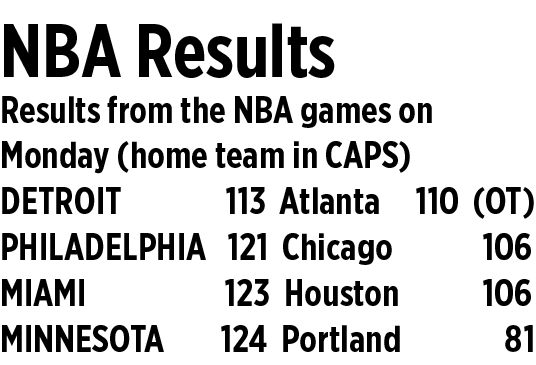
JOEL Embiid compiled 43 points, 14 rebounds and three blocked shots to lift the host Philadelphia 76ers past Chicago 121-106 on Monday, sending the Bulls to their fifth loss in a row.

Embiid finished with at least 40 points and 10 rebounds for the 10th time this season.

James Harden added 16 points, 14 assists and eight rebounds for the 76ers, who won for the sixth time in seven games. Tyrese Maxey scored 17 points, Georges Niang added 14 and Matisse Thybulle had 12.

Harden, who made 1 of 5 attempts from 3-point range, tied Reggie Miller for third all-time in career 3-pointers with 2,560. The Golden State Warriors’ Stephen Curry tops the list with 3,101 entering his Monday night game, and Ray Allen is second with 2,973.

Zach LaVine led the Bulls with 24 points while DeMar DeRozan added 23 points, 11 rebounds and eight assists. Coby White contributed 19 points, Tristan Thompson had 13 points and nine rebounds, and Ayo Dosunmu scored 11 points.

Embiid received a long pass from Danny Green and scored for a 51-45 lead with 4:23 remaining in the second quarter.

The Bulls closed within 55-51 when LaVine threw down a dunk with 2:13 left.

Green went to the locker room with 53.5 seconds to go with a left middle finger laceration.

The Sixers, who announced that Green wouldn’t return, led 59-53 at half time thanks in large part to Embiid’s 19 points in 18 minutes.

DeRozan paced the Bulls with 15 points before the break.

Philadelphia went ahead 71-61 when Embiid scored in the low post with 8:15 left in the third. After an empty possession by the Bulls, Embiid grabbed an offensive rebound and converted for a 12-point advantage.

Thybulle received a pass from Harden and dunked and Embiid added a dunk for a 77-61 lead.

Dosunmu drove to the basket and scored to get the Sixers within 78-66 with 4:48 remaining.

Embiid scored four points in the final minute and a half, and the Sixers pulled out to an 88-77 lead at the end of the third.

Chicago went on a quick 6-2 spurt to open the fourth and the deficit was 90-83.

Niang dropped in a 3-pointer with 9:18 left to extend Philadelphia’s lead back to 10.

The Sixers led 103-90 when Embiid posted up and threw down a one-handed dunk with 6:01 to go.

The Bulls cut the deficit to 112-102 with 2:36 left but got no closer. — Reuters

The best of Tatum

The famed Kevin Durant-Kyrie Irving pairing that (along with now-departed James Harden) figured to lead the Nets through the 2021-22 season greeted the opening tip for just the fourth time the other day. That said, there was every reason for the visitors to approach their set-to against the Celtics with confidence. Never mind that they had hitherto lost 12 of their last 16 matches, including 11 straight to bridge January and February.

Which was all well and good, and certainly logical to expect. After all, Durant and Irving are All-Stars who have the body of work proving that they make each other, and those around them, better. There was just one problem, however: They were about to face the Celtics, a heady 22 and 11 at the TD Garden, and, more importantly, in the midst of a run that had them on top in 15 of their last 18 contests. In other words, they were in the territory of enemies who surged while they swooned.

As things turned out, the Nets did perform better — make that much better — than they were able to in recent memory. They shot higher than 50% off six more field goal attempts, including 44% from three-point territory, and 90% from the charity stripe. They even had eight more rebounds, adding to the factors that a cursory glance at the stat sheet would indicate a favorable outcome. Unfortunately, the Celtics took 18 more free throws, all but negating their other perceived advantages.

Most crucially, the Celtics had Jayson Tatum emerging as the best player on the floor. Considering that he shared it with Durant and Irving, it was no mean feat. When the battlesmoke cleared, the green and white went away with the victory in large measure because he could not be stopped. He wound up with 54 points (off 30 shots), but, even though his output accounted for over four-tenths of the 126 markers on the board, it was his exemplary decision making that underscored his otherworldly effort.

Clearly, Tatum was buoyed to show his best given the quality of the competition. As he noted in his post-mortem, “Those matchups — when you’re playing one of the better teams in the league, two of the best guys — as a competitor, those are the kinds of moments that as a kid you looked forward to,” Tatum said. “When those opportunities come, you try to make the most of it.” He did, and the Celtics prevailed as a result.


Anthony L. Cuaycong has been writing Courtside since BusinessWorld introduced a Sports section in 1994. He is a consultant on strategic planning, operations and Human Resources management, corporate communications, and business development.

Fair winds for fair use

WIKIMEDIA COMMONS

Fair use is a privilege to use copyrighted material in a reasonable manner without the consent of the copyright owner or copying a theme or idea rather than their expression. Fair use is considered as breathing space for creators, so that they can build on and improve upon existing works.

This privilege is supposed to benefit both the creator and society as a whole. The concept of fair use seems to be straightforward but, in application, finding the balance between the original creator’s rights and fair use by the subsequent user has proven to be difficult. The tides in the past year, however, have shifted towards an equitable interpretation of fair use.

1. AN EQUITABLE FOUR-FACTOR TEST 

In 2021, the Supreme Court of the United States (“SCOTUS”) issued a binding precedent for “fair use” for the first time in over 25 years.

In Google LLC v. Oracle America, Inc. (“Google Decision”), Oracle accused Google of stealing copyrighted pieces of its source code for use in Google’s Android smartphones. Google, on the other hand, argued that the Java source code is too functional to be protected by copyright law and that it is subject to copyright’s fair use doctrine.

On April 15, 2021, SCOTUS resolved the 10-year dispute when it ruled that Google’s use of the Java source code was within the bounds of fair use. The Google Decision assumed that the Java software language was copyrightable, and it applied the four-factor test in determining Google’s fair use.

The four-factor test considers the following:

1. The purpose and character of the use

2. The nature of the work

3. The amount of substantiality of the portion used in relation to the work as a whole

4. The effect of the use on the market or potential market for the original work1

The Google Decision is seen to be a move that can spur innovation and creativity, by giving breathing space to creators who wish to build on existing works.

In the Philippine context, it is worthy to note that the same four-factor test is listed in Section 185 of the Intellectual Property Code. Section 185 also specifies the allowed “purpose and character of use,” namely: (1) criticism and comment; (2) news reporting; (3) teaching; and (4) scholarship, research, and similar purposes.

In ABS-CBN Corporation v. Gozon, et al., G.R. No. 195956, the Supreme Court of the Philippines also affirmed the use of the four-factor test.   

While the Google Decision is not binding precedent in the Philippines, it indicates a shift towards an equitable interpretation of the four-factor test for fair use.

Since fair use cases are few and far between, the influence of the Google Decision for future fair use cases may be significant. It is important to remember, however, that the Google Decision was centered on computer software.

It is too early to tell if the Google Decision will influence a broader interpretation of fair use law generally, or if it will remain an isolated case.

2. FAIR USE AND THE MONETIZATION OF YOUTUBE

Outside computer software, YouTube has also stepped towards the direction of an equitable interpretation of fair use. YouTube is more known as a source of entertainment and personal viewing, but it has also increased its role as an important tool for businesses.

The increase in users magnified the potential for the monetization of YouTube channels through subscriptions and marketing partnerships.

YouTube is the home of millions of pieces of content, and fair use issues continue to be a challenge to its content creators. The anime YouTube channel called Totally Not Mark (“TNM”) recently influenced a change in YouTube’s copyright and fair use rules for content creators.

TNM’s channel includes criticism and/or analysis of anime samples from several companies, including Toei Animation. Toei Animation filed around 150 copyright strikes against TNM, which led to the takedown of hundreds of TNM’s videos.

For TNM and other small to medium content creators, takedowns of videos may prove to be a severe blow to the profitability and marketability of their YouTube channels.

With the increase of users who rely on YouTube monetization, YouTube must be extremely careful in its copyright takedown measures.

In 2022, however, YouTube ruled in favor of TNM and all 150 copyright strikes against the channel were removed. The whole issue also influenced a change in YouTube’s copyright and fair use rules, which now allow for flexibility among international copyright laws.

A video may be taken down in one country but left up in another. The new rule then heavily depends on specific national copyright laws, and videos are most likely to be allowed in countries like the Philippines and the United States which apply the four-factor test.

In the context of the Philippines, Filipino content creators may then be able to rely on fair use in having their videos accessible in the Philippines. Conversely, videos are most likely to be taken down in countries like Japan, which has stricter copyright rules. 

The Google Decision and the new YouTube rule on fair use show that in both the level of the courts and in platforms that host content, fair use is sailing towards an equitable interpretation. This is a win for content creators.

1 United States Copyright Act of 1976, Section 107. 

This article is for general informational and educational purposes only and not offered as, and does not constitute, legal advice or legal opinion.


Shiela Marie L. Rabaya is an underbar associate in the Intellectual Property Department of the Angara Abello Concepcion Regala & Cruz Law Offices (ACCRALAW). She may be reached through slrabaya@accralaw.com

8830-8000

A new grand strategy for a new dangerous world

PHOTO of a destroyed Russian T-90 tank. — REDDIT

A quote attributed to Russian revolutionary Vladimir Lenin goes: “There are decades where nothing happens; and there are weeks where decades happen.” And indeed, on the week of Feb. 24, as Russia launched a full-scale invasion of Ukraine, we saw decades unfolding before our eyes.

The world was aghast at the sight of hundreds of Russian tanks, supported by thousands of airborne and mechanized troops, going into Ukraine. The invasion started with a combination of air and ground assault, aiming to take control of a critical airport not far from the Ukraine-Russian border.   

This event ended months of wild speculation and heated debates regarding the purpose of Moscow’s build-up of its forces proving Washington’s repeated warnings of an imminent Russian military operation was to be the largest conflict in Europe since the end of the Second World War.

This development raises the risk of spillover and escalation given reports of Ukrainian military units seeking safe haven into territories of east European North Atlantic Treaty Organization (NATO) member states. This creates a possible scenario in which a hot pursuit of fleeing Ukrainian units by Russian forces into NATO member states’ territories can draw the alliance directly into conflict with Russia.

The presence of Russian forces near NATO’s borders pushed the alliance to boost its political and military support to Ukraine as it defended itself against a full-scale invasion. NATO member states poured thousands of anti-tank weapons, hundreds of air-defense missiles and thousands of small arms and ammunition stocks to the Ukrainian army. Prior to the invasion, Ukraine also acquired critical weapon systems including Javelin missiles and anti-aircraft missiles from NATO member-states.

In another unprecedented development, the European Union funded Ukraine’s weapons acquisition as the world’s largest economic bloc announced new sanctions in response to Russia’s invasion of Ukraine.

Unnerved by the continuing resistance of Ukrainian forces boosted by NATO and EU military assistance, Russian President Vladimir Putin accused leading NATO powers of making aggressive statements and imposing illegal financial sanctions against Russia because of its invasion of Ukraine. As the United Nations General Assembly (UNGA) held an emergency session to discuss Moscow’s invasion of Kyiv on Feb. 28, Russian nuclear deterrent forces went on high level alert. 

THE NEED FOR A GRAND STRATEGY
The developments triggered by Russia’s invasion of Ukraine, given their apparent magnitude, are generating shock waves across Europe and beyond.

This requires the Philippine government to formulate a new grand strategy that will mitigate the adverse effects of the strategic shock waves emanating across Europe and spilling over to the Indo-Pacific region.

Any serious and enlightened president must be guided by a grand strategy to prevent the country from being subjected to the malevolent actions of other states, and to minimize the possibility of being a victim of accidents, tragedies, and misfortunes.

It magnifies a president’s foresight and determination to effectively combine willingness and opportunities to achieve wide, and predetermined objectives through crafty decisions that minimize political and economic costs.

The National Security Strategy or NSS contains a country’s grand strategy for the coordinated use of all the instruments of national power — from diplomacy to military capability — to pursue the objectives that defend and advance the national interests. It consists of a set of ideas for using a nation’s resources to achieve its interests over the long run.    

THE PHILIPPINES’ FIRST GRAND STRATEGY
A new president must begin with a grand strategy. The term grand signifies the large-scale nature of the strategic undertaking in terms of time (long-term, ideally measured in decades), stakes (the interests concerned are the large, important, and most enduring and vital ones), and comprehensiveness (the strategy provides a blueprint or guiding logic for nation’s policies across many areas).   

A president chooses or designs his or her grand strategy based on a deep-seated belief on how the country should deal with the international challenges or opportunities it faces at a given point in history. National leaders should view grand strategy as a means to maintain and/or strengthen their hold on executive power.   

In 2018, President Rodrigo Roa Duterte signed the first NSS since the Philippines became an independent republic in 1946. The NSS paints a realist picture of the country’s external environment. Though unconfronted by any direct threat of foreign aggression since the end of the Second World War, it warns that the current regional security environment has become increasingly uncertain and dangerous for the country.

The 2018 NSS did not mention any specific country that threatens the Philippines. Instead, it raised three important issues concerning the Philippines’s external security environment such as the perils of traditional geopolitical threats, the need for the Philippines to develop a credible defense capability and strengthen its comprehensive strategic alliances or cooperation with its friends and security partners.

A comprehensive study I authored as part of the Stratbase ADR Institute’s thrust of forging a strategic agenda for the upcoming new government, entitled “A National Security Strategy (NSS) for the 17th Philippine President: The Case for A Limited Balancing Strategy,” highlights the importance of converting the current administration’s defense and security stance into a “well-thought, comprehensive, and formal national security strategy” that can guide the Philippines in the next six years and beyond.

We are two months away from elections. Our next president must draft a new Philippine grand strategy that will take into account the strategic shock waves generated by the escalating conflict in Europe, triggered by Russia’s invasion of Ukraine, as well as the possibility that these conflicts might actually spread into the Indo-Pacific region.


Dr. Renato Cruz De Castro is a trustee and convenor of the National Security and East Asian Affairs Program, Stratbase ADR Institute.

A strategic plan for the IT-BPM industry

PHILSTAR FILE PHOTO

(Part 1)

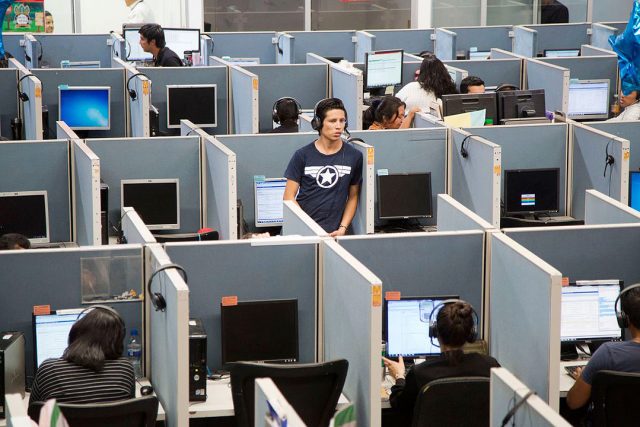
After the OFW (overseas Filipino workers) sector, the IT-BPM (Information Technology-Business Process Management) industry is the second largest service-oriented engine of growth of the Philippine economy.

Not only does it have a direct contribution to Philippine GDP through the average annual earnings of $23 billion–$25 billion of the approximately 1.4 million workers in the sector, there are the many multiplier effects on real estate, education, food establishments, public utilities, and leisure and recreation centers, among others.

Because of the unique demographic dividend that the Philippines is still enjoying amid a rapidly aging First World (including some emerging markets whose fertility declines have come prematurely), one can assume that this sector will continue to be a major source of GDP growth and employment for the Philippine economy for many years to come.

The young, growing and English-speaking population of the Philippines gives it, together with India, a competitive advantage in providing the human resources for the global IT-BPM sourcing market. Total revenues of the Philippines’ IT-IBM sector in 2021 during the height of the pandemic still reached a hefty $29 billion, employing 1.4 million.

In this series of articles, we shall present a preliminary version of the strategic plan that the IT & Business Process Association of the Philippine (IBPAP) is in the process of formulating for their sector in the coming decade or so after the pandemic.

We shall first present a summary of the document entitled “Accelerate PH (Future Ready) Roadmap 2022” that was prepared by the association in collaboration with Frost & Sullivan in 2015.

The purpose of this quick review of this data-filled study is to serve as part of the SWOT analysis that is essential to any strategic planning process. We shall draw from this Roadmap the key strengths of the Philippine IT-BPM sector and the opportunities that it faces in the coming decade or so.

The pandemic of 2020 to 2022 has hardly slowed down the growth of the global IT-IBM sourcing sector that in 2015 was projected to grow to $249.4 billion by 2022, with IT Services accounting for $147.3 billion and BPM for $102.1 billion.

The overall IT services global market was expected to remain larger than the BPM market as companies seek to outsource their IT services in their quest towards becoming leaner and more productive.

The global IT Services sourcing market was expected to grow from the 2015 to 2022 period at a compounded annual growth rate (CAGR) of 5.8%.

As a sign of the resilience of the Philippine IT-BPM sector, despite the slowdown occasioned by the pandemic in 2020, the sector started to grow at more than 5% annually in 2021 and is expected to grow even at a higher rate in 2022.

It is interesting to note that the post-pandemic world will be dominated by the Indo-Pacific region which is expected to lead in economic recovery, especially the three large economies of China, India and the ASEAN Economic Community, to which the Philippines belongs.

This will reinforce the trend that already existed before the pandemic as regards the demand for IT-BPM services. The Asia-Pacific region was already contributing 73% of the overall global headcount in this sector, with the two largest IT-BPM destinations — India and the Philippines — located in this region.

This dominance of the Asia-Pacific region will even be reinforced by the trade agreement called the Regional Comprehensive Economic Partnership (RCEP) that came into force on Jan. 1 after having been approved by Brunei, Cambodia, Laos, Thailand, Vietnam, Australia, China, Japan, New Zealand, and South Korea.

Although President Duterte already gave his approval to RCEP, the concurrence of the Senate is still being awaited. Some delay is expected because of strong objections, especially coming from the agricultural sector due to fears that the trade agreement will seriously hurt the small farmers.

Despite some delay, however, the RCEP will significantly benefit the IT-BPM industry. According to the Asian Development Bank (ADB), digital services trade in the Asia-Pacific region has grown faster in the last 15 years compared to other parts of the world. Among the 15 countries that will eventually be part of RCEP, the Philippines has the greatest competitive advantages in digital services trade.

Prior to the pandemic, there was already a very discernable increased attractiveness of what are referred to as Tier II and Tier III locations, cities which are outside the metropolitan areas like Manila or Cebu.

As the Frost and Sullivan report indicated, Tier I cities were becoming too overcrowded and too expensive to operate with multiple suppliers sourcing for the same talent pool.

The untapped talent pools in emerging locations, decentralizing strategies by governments to develop other areas, and infrastructure improvements (like the Build, Build, Build program of the Duterte Administration) in newer locations were becoming increasingly attractive to IT-IBM providers.

One can predict that after 2022, there will be more locators of IT-BPM providers in such emerging Tier II and Tier III regions as Calabarzon (Cavite, Laguna, Batangas, Rizal, and Quezon), Central Luzon (especially the so-called Pampanga Triangle of Angeles City, San Fernando, and Clark-Subic), Western Visayas (the Iloilo-Bacolod tandem, two cities that will be connected by a bridge passing through Guimaras), and Davao and Cagayan de Oro in Mindanao.

There are actually already Tier III cities like Puerto Princesa in Palawan, Dumaguete in Negros Oriental, and Antique and Capiz in Panay, and Naga in Camarines Sur.

The study also enumerated the competitive advantages of some of the leading destinations of IT-BPM outsourcing services. The Philippines is together with India as the leaders in global competitiveness; with China and Mexico considered as global alternatives; and Chile, Brazil, and Poland as developing global destinations.

In Southeast Asia, other weaker alternatives are Thailand, Indonesia, and Malaysia. Our major competitor is India, which is neck-and-neck with us in attracting contact centers, IT outsourcing, and non-voice BPM.

The strengths of the Philippines in the IT-BPM sector are as follows: 1) The number one service provider in the global voice BPM market, followed by India (in fact, Indian IT-BPM enterprises are locating some of their operations in the Philippines); 2) Traditionally serving the contact center market, particularly the United States. The country, however, is beginning to focus on growing IT and non-voice BPM services as part of its national strategy rather than remain just as a contact center destination. As Artificial Intelligence (AI) and robotics are increasingly applied to this industry, customer services will be increasingly automated or robotized. There is need to shift to more knowledge-and skilled-based services; 3) The Philippines has a large pool of English-speaking IT and accounting graduates; and 4) Filipinos are in demand because of their high service standards, highly developed soft skills inherent to Filipino culture and familiarity with and affinity to Western culture (especially North American culture).

Probing deeper into country attractiveness, the study utilized a broad range of global benchmarking parameters covering multiple areas such as business costs, regulations, infrastructure, and education to assess the overall attractiveness of each country as an IT-BPM destination.

In summary, India and the Philippines as global IT-BPM leaders excel, or at the very least score reasonably well, in areas pertaining to business costs and education. Both countries, however, show ample room for improvements in areas relating to infrastructure capabilities.

From a cost of doing business perspective, parameters commonly benchmarked in the selection of an IT-BPM location include labor and building costs, infrastructure and connectivity, as well as inflation and tax related expenditures. 

(To be continued.)


Bernardo M. Villegas has a Ph.D. in Economics from Harvard, is professor emeritus at the University of Asia and the Pacific, and a visiting professor at the IESE Business School in Barcelona, Spain. He was a member of the 1986 Constitutional Commission.

bernardo.villegas@uap.asia

Southeast Asia shows the high cost of fast growth

REUTERS

WITH China’s technology giants facing a plethora of struggles, Southeast Asia was supposed to be the hip new market that offered a well of fast-growth companies. That’s coming at a heavy cost.

Earnings reports from e-commerce and gaming provider Sea Ltd. as well as food and deliveries giant Grab Holdings Ltd. are a stark reminder that years of break-neck speeds have been largely driven by subsidies and marketing. That wasn’t a problem when deep-pocketed venture capitalists like SoftBank Group Corp. and Temasek Holdings Pte. were pumping money in during their startup phases.

But now they need to walk on their own. And they’re stumbling.

Sea last year posted a 127% increase in sales driven by its Shopee online retail platform. Grab posted a less-impressive 44% rise as it continues to battle pandemic lockdowns. Crucially, though, losses widened for both Singapore-based companies.

Although sales in Sea’s e-commerce division more than doubled in 2021, its cost of revenue for that sector also doubled, as did corporate-level marketing expenditure. The result is a widening of its net loss to more than $2 billion. Grab, which listed on the Nasdaq via a SPAC (special purpose acquisition company) merger in December, saw its loss expand 30% to $3.6 billion.

Grab’s numbers are dramatic. While the company cut base incentives — the amount paid to merchants and drivers in commissions and fees — it drastically increased the total doled out to suppliers as well as to consumers (in the form of discounts and promotions). This is normal for a startup that’s adding users hand over first and doubling revenue each year. It’s irrational behavior when all that effort allows you to boost monthly traction users by a mere 3% in a year.

Sea’s story is similar, and it has continued on in the same vein because it raised more than $7 billion in debt and equity in 2021, taking total fundraising above $11 billion over the past two years. So while its 2017 stock market debut in New York means Sea is no longer a private company, its current strategy could best be described as a publicly listed startup. It can keep burning investor cash to chase unprofitable growth because there remains trillions of dollars of cheap money sloshing around the world thanks to a decade of quantitative easing.

That’s not going to last. The impact of Russia’s invasion of Ukraine makes the size and timing of US-led rate rises uncertain, but their arrival is guaranteed. That could be a real problem if funding dries up, Southeast Asian economies slow, and revenue growth dips before they even have a chance to turn a profit. Some policy makers in the region are already shifting their focus toward battling inflation as it becomes a risk to their pandemic recoveries.

Investors have already punished both companies for their profligacy — both are trading at around half of where they were at the start of the year — but that share slide might continue unless management quickly shows an ability to tighten the purse strings and display some fiscal discipline. In other words, they need to show that they can grow up.

BLOOMBERG OPINION

US spies see grim outlook with Russia as top foe

REUTERS
U.S. and Russian flags are seen printed on paper in this illustration taken Jan. 27, 2022. — REUTERS

CHINA is developing one of the greatest nuclear weapons forces in history while Russia will exploit every opportunity to undermine the US and its allies, according to the annual threat assessment by the Office of the Director of National Intelligence.

In a stark, declassified 31-page document, the report released late Monday by the House Intelligence Committee says Iran will continue to threaten American interests as it seeks to erode US influence in the Middle East. At the same time, North Korea is committed to expanding its nuclear arsenal and ballistic missile development, according to the assessment.

“In the coming year, the United States and its allies will face an increasingly complex and interconnected global security environment marked by the growing specter of great power competition and conflict, while collective, transnational threats to all nations and actors compete for our attention and finite resources,” according to the document.

The nation’s top intelligence chiefs will present — and expand upon — the assessment when they testify before the House committee on Tuesday. Speakers will include Avril Haines, director of national intelligence; Central Intelligence Agency chief William Burns; General Paul Nakasone, head of the National Security Agency; and Federal Bureau of Investigation Director Christopher Wray.

The annual assessment represents a consensus among the nation’s 17 intelligence agencies of major threats confronting the US, and is used by lawmakers and policy makers as a baseline to make critical decisions, advance legislation and craft budgets.

The assessment is dated, however, as it was written before Russia invaded Ukraine last month and was based on information available as of Jan. 21. Lawmakers are certain to press the intelligence chiefs for the most current assessments and implications of Russia’s invasion during Tuesday’s hearing.

Still, the assessment warns that Russia is determined to “dominate Ukraine and other countries” in the near term, while not wanting a direct conflict with American forces.

“We assess that Moscow will continue to employ an array of tools to advance its own interests or undermine the interests of the United States and its allies,” according to the assessment. “We expect Moscow to insert itself into crises when Russia’s interests are at stake, the anticipated costs of action are low, or it sees an opportunity to capitalize on a power vacuum.”

The intelligence agencies assess that the Wagner Group and other private security companies managed by Russians close to the Kremlin “extend Moscow’s military reach at low cost in areas ranging from Syria to the Central African Republic and Mali, allowing Russia to disavow its involvement and distance itself from battlefield casualties.”

The Chinese Communist Party, on the other hand, “will work to press Taiwan on unification, undercut US influence, drive wedges between Washington and its partners, and foster some norms that favor its authoritarian system,” according to the document.

‘NUCLEAR FORCE EXPANSION’
China “will continue the largest ever nuclear force expansion and arsenal diversification in its history,” as Beijing isn’t “interested in agreements that restrict its plans and will not agree to negotiations that lock in U.S. or Russian advantages,” according to U.S. intelligence.

China’s efforts to control Taiwan — a self-governing island which Beijing claims as its territory — will probably ensure more disruptions to the global supply chains for semiconductor chips.

“China will remain the top threat to US technological competitiveness as Beijing targets key sectors and proprietary commercial and military technology from US and allied companies and institutions,” according to the document. And China “almost certainly is capable of launching cyberattacks that would disrupt critical infrastructure services within the US, including against oil and gas pipelines and rail systems.”

The statement disclosed that when it was launched by China last year, a hypersonic weapon designed to evade US defenses “flew completely around the world and impacted inside China.” The US originally labeled all details of the test highly classified. 

Other issues highlighted in the report include:

While Iran is not currently undertaking key nuclear weapons-development activities that would be necessary to produce a nuclear device, if Tehran doesn’t receive sanctions relief, officials probably will consider further enriching uranium up to 90%. Negotiations to revive a 2015 nuclear accord with Iran are believed to be in their final stages at talks in Vienna.

North Korea remains strongly committed to expanding its nuclear weapons arsenal and continuing ballistic missile research and development. “North Korea’s continued development of ICBMs, IRBMs, and SLBMs demonstrates its intention to bolster its nuclear delivery capability,” according to the assessment.

The North Korean regime “is continuing to prioritize efforts to build an increasingly capable missile force designed to evade US and regional missile defenses.”

North Korea’s leader Kim Jong Un “probably will continue to order missile tests,” including of short-range ballistic missiles, cruise missiles, submarine-launched ballistic missiles, and hypersonic glide vehicles “to validate technical objectives, reinforce deterrence, and normalize Pyongyang’s missile testing”

North Korea’s “cyber program poses a sophisticated and agile espionage, cybercrime, and attack threat” and “is well positioned to conduct surprise cyberattacks given its stealth and history of bold action.”

North Korea also “probably possesses the expertise to cause temporary, limited disruptions of some critical infrastructure networks and disrupt business networks in the United States.”

The terrorist groups Islamic State and al-Qaeda “will take advantage of weak governance” in Afghanistan “to continue to plot terrorist attacks against US persons and interests, including to varying degrees in the United States, and exacerbate instability in regions such as Africa and the Middle East” the assessment states. — Bloomberg

Working from home is a breeze — for men

CHARLESDELUVIO-UNSPLASH

IT’S GREAT to be able to work from home, but even better if you’re a man.

That’s according to a New Zealand study, which found that while most people liked working from home during the pandemic, women still did the lion’s share of the housework and childcare.

“Our study makes it clear that although flexible working has many benefits, it also highlights the difference between what men and women are expected to do around the home,” said Vittoria Shortt, chief executive at ASB Bank, which commissioned the survey. “With women still taking on responsibility for the bulk of domestic chores, the risk is that they are being disadvantaged both at work and in the home.”

New Zealand was already adopting more flexible working arrangements before the pandemic, including discussions about shorter working weeks, but the strict nationwide lockdown in 2020 accelerated the trend toward working from home. As the country’s surging Omicron outbreak takes hold, more employers are encouraging staff to stay away from workplaces, while school closures and disruptions require parents to be on hand for their children.

The study, conducted by the New Zealand Institute of Economic Research, shows more than 60% of those surveyed thought working from home was positive. However, when it came to juggling that with household responsibilities, women were significantly more likely to report doing all or most of the housework and childcare.

Only 22% of respondents felt the home-schooling load was shared fairly.

Women were also less likely than men to report having the ideal equipment and space to work from home, ASB said.

The study’s authors encouraged employers to challenge a culture in which workers are always on call and “any hint of meaningful interests outside of work or dedication to family is seen as a lack of commitment.”

This significantly impacts women, who are expected to balance domestic labor on top of paid work, increasing risks of burnout, they said.

The study was released to coincide with International Women’s Day. — Bloomberg

China says Hong Kong’s priority is to cut COVID infections, deaths

REUTERS

HONG KONG — Hong Kong needs to stick to its “dynamic zero” coronavirus strategy, focused on reducing infections, severe illnesses and death, a senior Chinese health official said, as the city braced for details of an expected mass testing plan this month.

Liang Wannian from China’s National Health Commission, who is in Hong Kong to coordinate efforts to battle a growing outbreak, said the mass testing needed to be done at the right time with all details carefully arranged, the official Xinhua news agency said.

“Reducing infection, severe cases and deaths is Hong Kong’s most urgent and top priority at the current stage,” it quoted him as saying. “After we achieve the first target, we will then move on to the second and third goals.”

Dynamic zero does not mean zero infections with coronavirus disease 2019 (COVID-19) transmissions so strong, Mr. Liang said. However, the city should do its best to reduce infections and take measures to cut off further transmissions.

Mr. Liang’s comments come as infections in the Asian financial hub have surged to record highs with a total of around 500,000 cases and more than 2,200 deaths — most of which have been in the past two weeks.

Authorities have given contradictory and confusing messages about a compulsory mass testing scheme and whether it would coincide with a city-wide lockdown.

Food prices in the city have shot up and supermarket shelves have been emptied every day for a week as anxious residents’ stock up, worried about a potential lockdown.

Hong Kong is expected to report tens of thousands of new coronavirus infections on Tuesday after the launch of a self-reporting website on Monday night where people can register if they are infected with the coronavirus.

After registering on the government’s website, authorities will try and admit people to isolation facilities if their homes are too crowded, officials said. — Reuters

Construction spotted at N.Korea nuclear test site for first time since 2018 -report

REUTERS

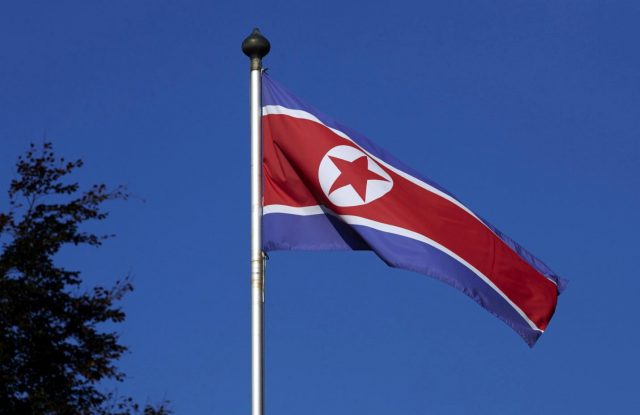
 – Commercial satellite imagery shows construction at North Korea’s nuclear testing site for the first time since it was closed in 2018, U.S.-based analysts said on Tuesday, amid fears the country could resume testing major weapons.

Images captured by satellite on Friday showed very early signs of activity at the new site, including construction of a new building, repair of another building, and what is possibly some lumber and sawdust, specialists at the California-based James Martin Center for Nonproliferation Studies (CNS) said in a report.

“The construction and repair work indicate that North Korea has made some decision about the status of the test site,” the report said.

Punggye-ri has been shuttered since North Korea declared a self-imposed moratorium on nuclear weapons tests in 2018. Leader Kim Jong Un, however, has said he no longer feels bound by that moratorium as denuclearization talks are stalled.

At the time, North Korea said it was closing the site‘s tunnels with explosions, blocking its entrances, and removing all observation facilities, research buildings and security posts. It invited a handful of foreign media to observe the demolition, but refused to allow international inspectors.

After North Korea’s ninth missile launch of the year on Sunday, South Korea’s National Security Council said it was even more closely monitoring North Korea’s nuclear and missile-related facilities including its main nuclear reactor facility at Yongbyon and the Punggye-ri nuclear weapons test site, without elaborating. Read full story

The CNS analysts said the changes at Punggye-ri occurred only in the past few days, and it is still difficult to conclude what precisely is being built or why.

“One possibility is that North Korea plans to bring the test site back to a state of readiness to resume nuclear explosive testing,” the report said.

The CNS analysts cautioned that the test site is many months, if not years, from being ready for new nuclear explosions.

“How long it would take North Korea to resume explosive testing at the site depends on the extent of the damage to the tunnels themselves, something we do not know with confidence,” they wrote in the report. “It is also possible that North Korea will resume nuclear testing at another location.”

Punggye-ri is North Korea’s only known nuclear test site. It conducted six nuclear weapons tests in tunnels at the site from 2006 to 2017.

Talks aimed at persuading North Korea to surrender its arsenal of nuclear weapons and long-range ballistic missiles have been stalled since 2019. Read full story

The United States says it is open to talks without preconditions, but North Korea says Washington and its allies must first stop their “hostile policies.” – Reuters

EXPLAINER | How sanctions against Russia are battering the global aviation industry

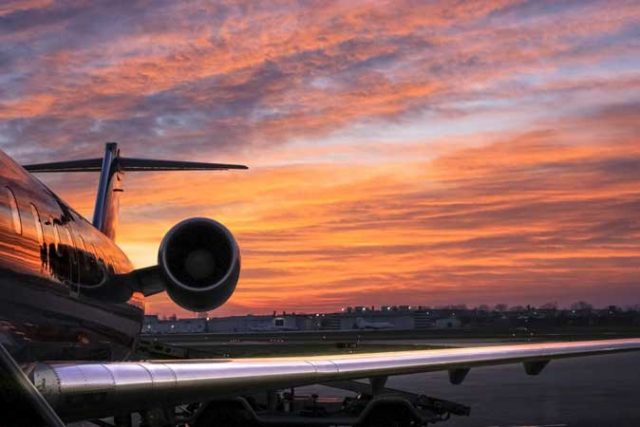
Russia‘s size and close integration into the global aviation industry since the end of the Cold War means sanctions related to its invasion of Ukraine are having outsized consequences relative to earlier freezes on Iran and North Korea.

Manufacturers, lessors, insurers and maintenance providers to Russian carriers like Aeroflot AFLT.MM, S7 Airlines and AirBridgeCargo are among those outside Russia that are hit directly by sanctions.

Foreign airlines, meanwhile, are reeling from higher oil prices and longer routes needed to bypass airspace over Russia that are expected to drive up ticket prices and air freight rates.


AIRCRAFT LEASING, INSURANCE IMPACT

Russian airlines have been highly reliant on the global aircraft leasing industry to modernize their fleets with the latest Airbus AIR.PA and Boeing BA.N planes.

Russian carriers have 980 passenger jets in service, of which 777 are leased, according to analytics firm Cirium.

Of these, 515 jets with an estimated market value of about $10 billion are rented from foreign firms such as AerCap AER.N and Air Lease AL.NRead full story

The European Union has given leasing companies until March 28 to wind up current rental contracts in Russia.

But getting the planes back could be challenging due to airspace bans, potential SWIFT payment transfer issues and industry concerns the Russian government could nationalize the fleet to maintain domestic capacity.

Russia‘s state aviation authority recommended that airlines with foreign-leased planes stop flying them abroad. Read full story

Even if the planes are returned quickly, the huge number needing to be placed elsewhere could depress rental prices globally, analysts say.

Russian airlines have also been cut off from the insurance and reinsurance markets in the European Union and Britain.

An insurance industry source said it was unclear if lessors unable to repossess planes would be covered for losses under their own policies, which typically contain clauses cancelling coverage in the event of sanctions.

Legal action may be needed to settle the issue, said the source, who was not authorized to speak publicly.


SALES, MAINTENANCE, REPAIR AND PARTS BANS

Russian airlines have 62 planes on order with Airbus and Boeing, according to aviation consulting firm IBA, and those deliveries will be barred.

Manufacturers and maintenance firms are also banned from providing parts and services for the existing fleet. Read full story

Germany’s Lufthansa Technik LHAG.DE said it had stopped serving Russian customers, involving hundreds of planes.

Tass news agency reported the Russian transport ministry had drawn up a draft bill to help airlines until September 2022 that would allow maintenance by third-party firms and suspend all inspections of carriers. Read full story

Some aviation executives are concerned that the sanctions prevent planemakers from sharing service bulletins and airworthiness directives that are key for safety.

Viktor Berta, vice president of aviation finance advisory at ACC Aviation, said there was also a high risk that Russian airlines would need to strip parts from their existing fleet once spares run out.


RISING OIL PRICES, LONGER FLIGHT TIMES

Oil prices have surged to the highest level since 2008 as the United States said it was willing to ban Russian oil imports. Read full story

Oil hedging, fuel surcharges and fare increases are among the measures airlines are taking to offset some of the pain at a time when demand remains low due to the pandemic. Read full story

High oil prices are in some cases compounded by circuitous flight paths needed to avoid Russian airspace after reciprocal bans that can add up to 3.5 hours of flying. Read full story

The biggest impact is on flights between Europe and north Asian destinations like Japan, South Korea and China but other affected routes include those between southeast Asia and Europe and the United States and India.

Longer flight times also lead to higher staff costs, less cargo carrying ability and higher maintenance costs on contracts that are charged on a flight hour basis, said Brendan Sobie, an independent aviation analyst based in Singapore.

“Another concern is the impact on international passenger demand in some markets, resulting in a setback in the overall recovery of international air travel,” he added. – Reuters