Home Blog Page 6678

DoH locates 1 of 8 returning workers from South Africa

PHILIPPINE STAR/EDD GUMBAN

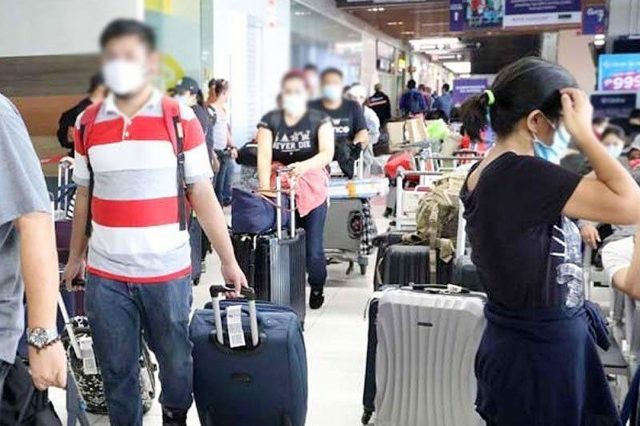
HEALTH authorities on Wednesday said they have found one of the eight travelers who arrived in the Philippines from South Africa, where the Omicron coronavirus variant was first detected.

The returning migrant Filipino worker had tested negative for the coronavirus and was under home quarantine, Health Undersecretary Maria Rosario S. Vergeire told reporters in a Viber message.

The seven returning migrant Filipino workers had not been found, she added.

Of the seven missing travelers, three did not provide contact details, one gave an incorrect contact number and two remained unresponsive, Ms. Vergeire said.

“We are continuously getting in touch with our local government units and other partners to be able to contact these individuals.”

The Department of Health (DoH) earlier said that 253 travelers from South Africa arrived in the country from Nov. 15 to 29.

Ms. Vergeire has appealed to the travelers to contact the local DoH offices so they can get tested and prevent a potential transmission of the heavily mutated Omicron variant.

The Philippines has suspended inbound flights from South Africa, Botswana, Namibia, Zimbabwe, Lesotho, Eswatini and Mozambique, Austria, Czech Republic, Hungary, The Netherlands, Switzerland, Belgium and Italy until mid-December to prevent an outbreak of the Omicron variant. — Kyle Aristophere T. Atienza

Transport groups seek halt to excise tax on fuel despite price cuts

PHILSTAR

By Russell Louis C. Ku

TRANSPORT WORKERS urged Congress to suspend or lower the excise tax on fuel products, saying the recent decline in global oil prices was nothing compared with the overall rise this year.

Oil prices increased 10 times from Aug. 30 to Oct. 22, said Mody Floranda, president of the Pinagkaisang Samahan ng mga Tsuper at Operators Nationwide (PISTON). He noted that local diesel prices rose by as much as P18.50 a liter, while gasoline prices increased by as much as P22.50.

Declining global oil prices might be temporary, he said by telephone on Dec. 2, adding that he expects the petroleum prices to increase again in the next three months due to increased demand amid easing lockdowns.

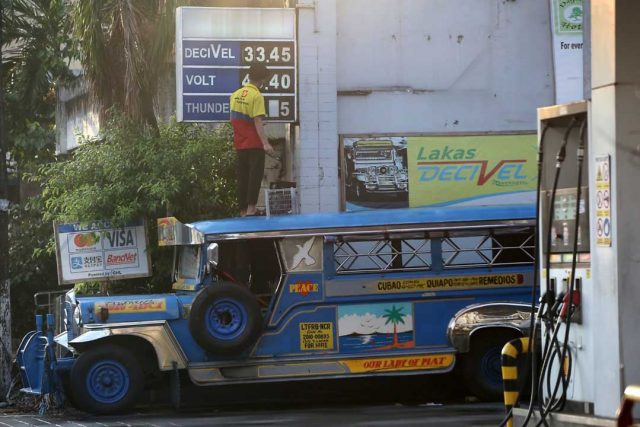
On Tuesday, oil companies lowered the price of gasoline by P2.40 a liter, while diesel and kerosene prices fell by P2.65 and P2.70, respectively.

Mar S. Valbuena, president of the Samahang Manibela Mananakay at Nagkaisang Terminal ng Transportasyon, said the suspension of the excise tax would help drivers whose livelihood had been affected by the coronavirus pandemic.

“We don’t earn much because there are few passengers,” he said by telephone in Filipino on Dec. 3. “There are also costs we have to worry about such as maintenance and parts for our vehicles.” He added that public utility vehicle drivers earn as little as P150 a day.

House Bill 10488 seeks to temporarily scrap the excise taxes on diesel, kerosene and liquefied petroleum gas (LPG) for six months.

The excise tax on low-octane gasoline will be lowered to P4.35 a liter, while the tax on premium gasoline will stay.

Fuel tax will revert to rates under the Tax Reform for Acceleration and Inclusion (TRAIN) Law once global crude oil prices hit $65 a barrel.

The law raised the excise tax on fuel in three tranches from 2018 to 2020. The tax rates are P10 a liter for gasoline, P6 a liter for diesel, P5 a liter for kerosene and P3 a liter for LPG.

The Department of Finance has opposed the House bill, saying it would result in P37.5 billion in foregone revenue and only help the rich.

But Mr. Floranda and Mr. Valbuena said scrapping the excise tax would benefit both the rich and poor.

Mr. Valbuena said lawmakers should come up with a compromise. “The suspension will be temporary, so for the meantime the government should find other ways to recover the lost revenue during the six-month period.”

The industry is also amenable to cutting the suspension period to four or five months, he added. He said Congress could limit the suspension of excise tax to public utility vehicle operators.

Mr. Floranda said changes to the Oil Industry Deregulation law would also help stabilize fuel prices.

Pampanga Rep. Juan Miguel M. Arroyo, who heads the House energy committee, has filed House Bill 10505, which will require oil companies to maintain a minimum inventory of 30 days. They must also disclose their costs from importing fuel.

As of Nov. 30, year-to-date pump prices for gasoline and diesel have increased by P18.10 a liter and P15.70 a liter respectively, according to data from the Department of Energy.

Senate ratifies bill providing accessible education for learners with disabilities 

NCDA.GOV.PH

THE SENATE ratified late Tuesday the reconciled version of a bill mandating all schools, whether private or public, to ensure accessible education for learners with disabilities.  

The proposed law also provides that no learner should be denied admission on the basis of their disability.  

“This landmark legislation would deliver quality, accessible and inclusive education for learners with disabilities in our country, especially for those who were left behind by our basic education system,” Senator Sherwin T. Gatchalian, who chairs the Senate committee on basic education, arts and culture, said during the plenary session.  

The bicameral conference committee report tackled the disagreeing provisions of Senate Bill 1907 and House Bill 8080, mandating the Department of Education in cooperation with local government units to establish and maintain at least one Inclusive Learning Resource Center (ILRC) in every city and municipality.  

The ILRCs composed of multidisciplinary experts will serve as a one-stop-shop for the delivery of free support services to learners with disabilities and the implementation of inclusive education programs.   

Services would include linguistic solutions for deaf learners, physical and occupational therapy, counseling and rehabilitation, medical and transport services, and speech-language pathology.  

Under the proposed measure, minimum services and conditions will be set in the admissions systems and policies of all schools, including provisions on assistive devices, facilities and infrastructure, accommodation, among others.  

The Senate approved the bill on final reading in May, while the House passed it in Dec. last year.  

Once ratified by the lower house, the bill will be sent to President Rodrigo R. Duterte for his signature.  

ALTERNATIVE LEARNING BUREAU
Meanwhile, the Department of Education has set up an office that will focus on the existing alternative learning program intended for out-of-school youth, adults, learners with disabilities, and other special cases, in line with the Alternative Learning System (ALS) Act that was signed into law in December last year. 

“This will strengthen our initiatives, programs, and policies for the out-of-school children in special cases, youth, and adults as we ensure their educational continuity,” Education Secretary Leonor M. Briones said in a statement on Tuesday. 

Department of Education Order No. 47-2021 establishes the Bureau of Alternative Education, which will be in charge of coordinating with other government agencies, local government units, and the private sector to ensure sustainable implementation of learning projects outside the formal education system.  

The bureau is also tasked to establish minimum quality standards in the development of the ALS curriculum and learning materials, program planning, implementation, management, monitoring, and evaluation. — Alyssa Nicole O. Tan and Marifi S. Jara 

Labor group presses for lifting of ‘no vaccine, no work’ policy 

DOT

LABOR group Kilusang Mayo Uno (KMU) is pressing for government action on its call to lift the “no vaccination, no work” policy, citing the right of workers to make the personal choice of whether to get jabbed or not against the coronavirus.   

The militant group condemned the Department of Labor and Employment (DoLE) for its lack of initiative to stop the vaccine requirement, which are contained in resolutions 148-B and 149 issued by the task force managing the pandemic response.   

“It’s frustrating that DoLE cannot stand up for the rights of workers,” KMU Chairman and Makabayan senatorial candidate Elmer Labog said in a statement in Filipino released on Tuesday.   

Mr. Labog said they had heard nothing from the department except that it did not have a choice but to abide by the resolutions, which mandate vaccination for on-site workers.    

“They turned their backs on their own Labor Advisory 3, Series of 2021 that disallows ‘no vaccine, no work’ in workplaces,” he said.  

The labor leader said that vaccination “cannot and should not be forced unto individuals.”   

He also noted opposition to the requirement for unvaccinated workers to get tested regularly at their own expense.  

Many workers in the capital region earn only about P500 a day, while testing for coronavirus costs at most P4,000, he said, adding that many have lost their jobs.    

The Philippine Statistics Authority data showed that the unemployment rate of the country in October was at 7.4%, the lowest jobless rate reported since July’s 6.9%. In absolute terms, there were 3.5 million unemployed Filipinos in October.  

Underemployment, meanwhile, stood at 16.1% in October, higher than the 14.2% posted in September. 

Labor Secretary Silvestre H, Bello III has yet to reply to a request for comment. — Alyssa Nicole O. Tan 

Red tide warning raised in Milagros, Masbate  

THE BUREAU of Fisheries and Aquatic Resources (BFAR) issued a new warning in Milagros, Masbate after the area tested positive for paralytic shellfish poison, or commonly known as red tide.    

BFAR said in its 34th shellfish bulletin dated Dec. 6 that red tide warnings also remain in Bataan, specifically Mariveles, Limay, Orion, Pilar, Balanga, Hermosa, Orani, Abucay, and Samal.  

In the Visayas, positive areas are Dauis and Tagbilaran City, Bohol; Carigara Bay, Leyte; and Guiuan and Matarinao Bay, Eastern Samar. 

In Mindanao, warning was still up in Dumanquillas Bay, Zamboanga del Sur; Baroy, Lanao del Norte; and Litalit Bay, Surigao del Norte.    

According to BFAR, all types of shellfish and Acetes sp. or alamang coming from areas with ongoing red tide warnings are not suited for human consumption. Other marine species from the same waters can still be eaten with proper handling.   

Red tide happens as a result of high concentrations of algae in the water. Human consumption of contaminated shellfish may result in paralytic shellfish poisoning, which affects the nervous system.   

Usual symptoms of paralytic shellfish poisoning include headache, dizziness, and nausea. Severe cases may cause in muscular paralysis and respiratory problems. — Revin Mikhael D. Ochave  

No COVID patients in 2 major hospitals in Makati

OSPITAL NG MAKATI FACEBOOK OFFICIAL PAGE

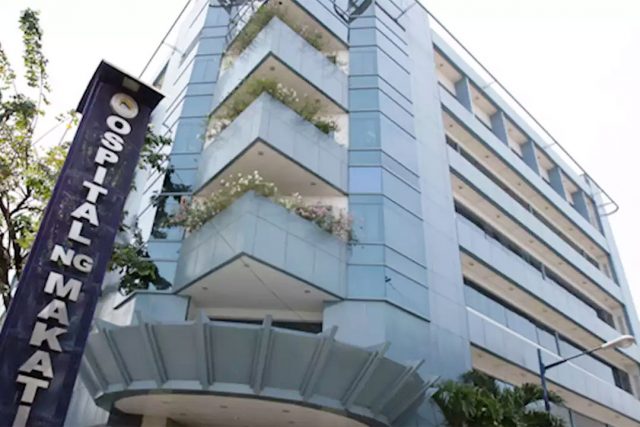
TWO major hospitals located in Makati, with a combined bed capacity of 950, have no coronavirus disease 2019 (COVID-19) patients admitted as of Wednesday, according to the mayor. 

The city-run Ospital ng Makati (OsMak), which has 350 beds, has not recorded any new COVID-19 case since Nov. 24, Makati Mayor Abigail S. Binay said in a statement.  

“Earlier this month, we had 54 patients with COVID-like symptoms at OsMak. Fortunately, they all tested negative after undergoing RT-PCR tests. Therefore, we have zero COVID cases at OsMak,” she said.  

Privately-owned Makati Medical Center (MMC), through its medical director Saturnino P. Javier, also confirmed earlier that the 600-bed healthcare institution had no coronavirus admissions “for the first time in 20 months since March 2020.” 

Makati, a major business district in the capital region, is currently under low-risk classification with 31 active cases, based on data from the Makati Health Department.  

Ms. Binay said local health authorities attributed the low number of active cases to the city’s high vaccination rate, availability of rapid antigen tests and RT-PCR tests, surveillance and early isolation or quarantine of suspected COVID-19 patients, and strict implementation of minimum public health standards.  

Makati has vaccinated 439,185 individuals or more than 70% percent of its population of 624,560.   

The mayor said the city’s vaccination drive, in partnership with the private sector, is continuing.   

Ms. Binay also stressed the need to continue observing minimum health protocols such as wearing of face mask and physical distancing, especially with the “looming threat” of the Omicron variant.  

“Even if we are now under the low-risk classification, we should remain vigilant. It may only be a matter of time before the Omicron variant makes its way to our country,” she said. 

PEF welcomes another eagle

PEF

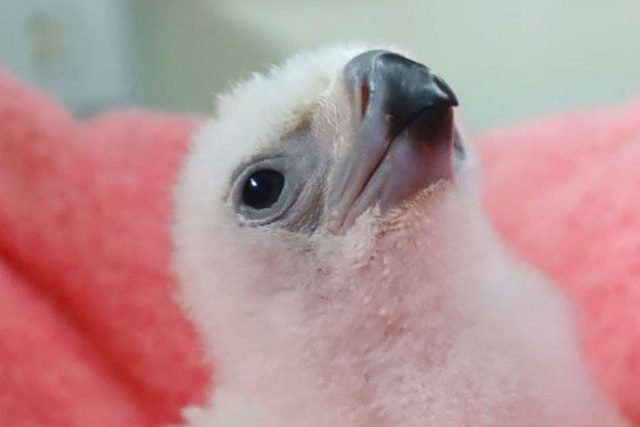
THE PHILIPPINE Eagle Foundation (PEF) based in Davao City announced earlier this week the hatching of the 29th nestling bred in captivity. “Chick no. 29 hatched on Dec. 4 at 1:16 p.m., 25 hours and 13 minutes since it first poked its beak and cracked the egg. Seems like a long time, but actually it is the fastest pip-to-hatch record in our breeding program,” the foundation said. The new eagle’s parents are Ariela and MVP Matatag, who are both rescued.

Cash is dying, but we aren’t ready to bury it

JP VALERY-UNSPLASH

THE DEMISE of cash is near. As consumers, though, we should hope that the end doesn’t arrive too soon.

It isn’t the pandemic that’s putting this popular means of payment out of existence. All that COVID-19 has done is to accelerate a trend that was already with us. When Steve Jobs unveiled the first iPhone in 2007, he began killing the need for banknotes. Autonomous cars, self-ordering refrigerators, and our digital avatars in the metaverse will put the final nails in King Cash’s coffin.

COVID-19 shifted $5 trillion in global retail sales from offline to online. To the extent that a big chunk of this value was transacted in cash (47% in the euro area), the idea that central-bank-issued currency was a must for purchasing daily essentials took a knock. After an initial bump in precautionary cash hoarding, curbs on mobility and the fear of catching germs from handling paper money forced a change in habits.

Where governments gave out vouchers to perk up spending — like in Hong Kong — millions of consumers and thousands of merchants became new users of online payment systems just to utilize the handouts. Many will likely continue using these new ways to settle bills.

But just how crucial were these changes in the overall scheme of things? The different trajectory of banknotes in China and India provides a natural experiment to gauge the relative importance of temporary shocks and steady technological change.

Cash use plummeted in India after Prime Minister Narendra Modi cancelled 86% of the existing legal tender overnight as part of a botched economic experiment. That was five years ago. Nowadays, digital payments are booming, but cash is once again 14% of the broad money circulating in the economy — the same as before demonetization. In China, where physical currency was made irrelevant by the growing ubiquity of Alipay and WeChat Pay, the central bank’s IOUs to the public account for only 4% of money.

Technological progress lacks the drama of a behavioral shock, but it’s no less stunning. As JPMorgan Chase & Co.’s Jeremy Balkin and Neha Wattas remind us, the fastest way to move money from New York to London as recently as 2010 was to catch a flight from JFK to Heathrow and deliver it in person. Their report, provocatively titled “Payments Are Eating the World,” notes several shifts taking place in unison. In China, super-app platforms transformed money; elsewhere, the rise of a creator and gig economy is doing it. Globally, 50 million people are blogging, making short videos or telling people what to buy on the internet — and getting paid online as well.

Digital wallets are mushrooming everywhere, but what gets stored on them is changing because of another technological revolution: blockchain. Fintech firm Circle has teamed with Visa, Inc. to enable business customers to spend USD Coin — a currency on the Ethereum blockchain that pegs its value to the dollar — with 70 million merchants. An equally important phenomenon is “buy now, pay later,” which is embedding finance (and cashless payments) even into low-value transactions: like buying lipstick in three installments.

Wait until each of our 15 internet-of-things devices does its own shopping, using central bank-issued programmable digital cash to pay only when they get the right stuff. While all this is happening in the real world, an entirely new parallel stream of consumption in the alternate reality of the metaverse could be as substantial as $390 billion by 2025.

Innovation in payments is an even bigger phenomenon in emerging markets than in developed economies. Last month, smartphone-based apps running on a shared public utility cleared the equivalent of $100 billion in domestic Indian payments, rising from less than $15 million five years earlier. And this is just the beginning. Alphabet, Inc.’s Google, which alone handled $38 billion of these instantaneous transfers, has now developed an Android-based sub-$100 phone. The idea is to bring mobile internet to the bottom of India’s consumption pyramid.

Cash is still coveted, especially in a highly informal economy like India’s. But its importance as a means of payment is declining. In 2003, about 35% of cash in the euro area was used in domestic transactions; that number fell to an estimated 20% in 2019. Anywhere between 30% to half of banknotes have ended up overseas, while the rest are being hoarded in the euro zone: To some investors, a safe sovereign liability that pays zero is better than negative-yielding government bonds.

As cash vanishes into vaults — without a central bank digital currency, or CBDC, replacing it — the public’s trust in the convertibility of deposits into official money may become “more of a theoretical construct than a daily experience,” according to a recent research paper by the European Central Bank’s Ulrich Bindseil and others. That can destabilize entire financial systems.

If all the money in circulation is private, controlled by e-commerce and social media platforms, authorities won’t be able to protect consumers from being exploited. Which is why even in countries where technology has turned it into an anachronistic appendage, cash can’t be allowed to die. Not before CBDCs are ready.

BLOOMBERG OPINION

Far from over

TIM MOSSHOLDER-UNSPLASH

On Dec. 7, the Makati City government announced that both government-run Ospital ng Makati and the privately operated Makati Medical Center have recorded “zero” COVID-19 patients, after almost 22 months of pandemic emergency. Also, as of the end of that day, the Makati government recorded only 31 active COVID cases in the entire city.

At this point, it seems the worst is over for Makati. But, is it? With the Omicron variant of the virus now spreading in different countries, perhaps it is only a matter of time before it also spreads here. By then, we may have to deal with another surge and, possibly, lockdowns. We can only wonder if the downtrend will continue on.

At 31 active cases as of Dec. 7, Makati has gone a long way, thanks to the continuing effort to vaccinate people against COVID-19. In 2021, Makati had two peaks: 1,544 active cases as of April 22; and, 3,298 cases as of Sept. 9. The count was down to less than 1% of that — 31 cases — in three months’ time. The entire country went on a wild roller coaster ride.

Makati City started the year with fewer than 200 active cases. The count was at 195 on Feb. 2. At this point, at 31 cases, it may be safe to say that the city will end the year in a better state. And what a year it had been. Despite struggling at the start, the city’s vaccination program is now at the “booster” phase, with walk-ins allowed in various vaccination sites around the city.

The concern, however, is that confidence is on the rise, and people seem to be letting their guard down, becoming complacent. The economy needs a boost, without doubt. This is the primary reason for loosening restrictions. But the pandemic is far from over. The medical emergency remains, especially with Omicron out there — or perhaps already here.

And with the Christmas season upon us, one can only hope that people can exercise enough self-restraint to be more concerned with public health than public celebration. There is reason to be happy and jubilant at what we have achieved thus far, at least in the National Capital Region. But, the rest of the country is still struggling.

It is our fervent wish that people will continue to be more concerned with ensuring public health by continuing to adhere to necessary protocols, as they temper their desire to celebrate. Children below 12 years old remain unvaccinated and may prove to be the most vulnerable to severe COVID for now. At the same time, they are the “stars” of the Christmas season, putting them at risk for “irresponsible exposure.”

Some medical battles may have been won, but the COVID war is still far from over. “Liberation” from COVID-19 may take longer than anticipated. But as we move on, we should always recall those who have served in the healthcare battle and given their lives so that others may survive. They are now among our heroes, and they should be remembered.

On Dec. 8, 1941 — 80 years ago yesterday — Japan attacked the Philippines, which was then the only US “colony” in the Asia-Pacific region. This was just 10 hours after Japanese imperial forces launched a successful attack on the US Navy installation at Pearl Harbor in Hawaii, crippling the US Pacific Fleet. That infamous day signaled the start of World War II in the Pacific.

In four months, by April 1942, the last stand in Bataan and Corregidor crumbled. US and Philippine forces surrendered to the Japanese. The Philippine battle was lost, and Japanese Occupation began. The Philippine “second republic” was born in October 1943, after the Japanese military government declared the Philippines an “independent republic.” The first republic was founded by the Katipuneros on June 12, 1898.

“Liberation” did not come until almost four years after the Japanese invasion, by a combination of Philippine and US forces that first landed in Leyte in October 1944. This was four months after D-Day on June 6, 1944 in the European theater of the war, and two months after the death of Commonwealth President Manuel L. Quezon on Aug. 1, 1944 in Lake Saranac, New York. Japan formally surrendered in September 1945, and the Philippine “third republic” was born on July 4, 1946 when the Philippines was made independent of the United States.

War-time Philippines, under Japanese Occupation for almost four years (1941-1945), witnessed destruction, death, and economic stagnation. The Philippine death count from World War II is estimated at over 500,000, or more than 3% of the population at the time. War-time Philippines also struggled with public education, healthcare, food supply, and inflation, among others.

But we survived and eventually overcame, with help from our friends. Today, Japan is among our greatest allies. And while many may have forgotten the significance of Dec. 8, 1941 in Philippine history, some still remember the horrors of the war, the struggles in those dark days, and eventually liberation.

It is in this light that one hopes that Dec. 8, 2021 — 80 years after the start of World War II in the Philippines — would eventually be remembered as the start of the turnaround period for the COVID-19 war in the Philippines. The COVID-19 death toll pales in comparison — about 50,000 against 500,000 — to the number of Filipinos lost during the Second World War. But the pandemic’s impact on the economy, and on people’s lives, is just as significant.

Just as the pre-war generation survived the Japanese Occupation, and then thrived after, we, too shall survive and overcome COVID-19. And we shall again thrive. But, for now, we must remain vigilant. The enemy is still here. We should continue to look out for each other, especially the young, by safeguarding public health.

We have had our successes. But jubilation can come later, when COVID-19 liberation is finally achieved. For now, restraint and perseverance remain the main orders of the day.


Marvin Tort is a former managing editor of BusinessWorld, and a former chairman of the Philippine Press Council

matort@yahoo.com

Gamesmanship

SHINNOSUKE ANDO-UNSPLASH

“Business, politics, money get in the way of right or wrong.”

— Steve Simon, WTA President

The 35-year-old female Chinese doubles tennis star Peng Shuai disappeared from public view for 18 days after accusing, in a social media post, a retired top official of the Chinese Communist Party of sexual assault. Peng is regarded one of China’s athletes in the mold of the retired Li Na and has reportedly a social media fan base that runs into the millions. Peng earned her highest ranking in 2011 and was popular among both fans and fellow players.

It is no surprise then top some of the world’s tennis icons, like Serena Williams, Naomi Osaka, and Andy Murray, have expressed concern over her welfare and safety and have publicly demanded that Chinese authorities provide information on her whereabouts. In response, a state-owned media outlet produced an e-mail, purportedly from Peng, that she’s home, safe, and doing well. No doubt Peng is eating well, and still enjoys the usual conveniences — except that she cannot talk to media and has no access to gadgets to communicate with the outside world.

That kind of treatment of a person who has, in effect, “crossed the line” against high ranking and powerful officials of the Politburo, is called “soft” (not house) arrest.

The supposed e-mail of Peng was met by, as expected, widespread cynicism and doubt. A video broadcast on state television showed Peng in sports and social functions greeting fans, with no audio and indication of the dates of the functions. The overall reaction of Chinese critics was the events showing Peng and supposed interviews were all orchestrated.

The worldwide condemnation served to merely strengthen Beijing’s resolve to stonewall and denounce the West for politicizing sport.

China’s defense of its position was, of course, expected, not only because of Chinese sensitivity to interference by foreign powers in its internal affairs, but also because of a sporting event. Even more urgent for the Chinese is to protect the Winter Olympics in February 2022, events for which will be scattered among several rural areas of Beijing. Hosting a huge global event like the summer or winter Olympics is part of China’s soft diplomacy and enhances its image as a world power in all aspects of human activity, like sports which attracts all cultures and societies.

China’s handling of the Peng issue got a big boost from the International Olympic Committee (IOC) which owns the Games and stands to either benefit financially from successful Winter Games or suffer from the consequences of a possible boycott of the Games by major western powers like the United States and its allies who are most sensitive to human rights issues.

The Guardian, the prestigious 200-year-old British broadsheet, featured its interview of Dick Pound, an IOC official, writing that “a senior Olympic official has defended the organization’s efforts to confirm the safety of Peng Shuai, dismissing criticism as ‘silly’ and saying no one else had been able to get in touch with the tennis star who went missing after publishing allegations of sexual assault.” The Guardian added that Pound, who has held a variety of posts with the IOC over 45 years and is the chairman of the Olympic Broadcasting Services, rejected criticism of the IOC for giving minimal information after its president, Thomas Bach, spoke with Peng via video link last week. Some had accused the IOC of seeking not to anger Beijing and prioritizing the commercial relationship over the safety of athletes.

The Women’s Tennis Association (WTA), founded by American tennis great and feminist movement leader, Billie Jean King in 1973, takes a totally different position from the IOC and reduces the issue to deciding what is the ethical and moral thing to do.

In an interview with CNN’s Christian Amanpour, Steve Simon, chairman and CEO of the WTA, said that the IOC’s call on Peng was “very much orchestrated,” implying an organized attempt at damage control. In the interview, Simon insists that the whole matter is about “right and wrong.”

Simon declared, “It’s a complicated pathway that we’ve embarked upon but we are resolute in our position on this and we are willing to deal with the challenges that will come as a result.”

One of those challenges is the potential loss of billions of dollars in revenue to be generated in tennis tournaments in China. Tennis had, mainly because of international superstars like the retired Li Na and emerging stars of Asian descent like Osaka, Laylah Fernandez of the Philippine and South American provenance, and Emma Raducanu, born of Chinese and Romanian parents, who are crowding out American and European teen-agers. The sport is so popular in China that many Communist party officials like former Vice-Premier Zhang Giao and his wife took up the sport with Peng as the couple’s coach. Reports indicate that the alleged sexual assault took place in Zhang’s house after a lunch with both Zhang and his wife that followed a tennis tutorial. How this assault took place with Zhang’s wife on the premises, is one of the mysteries that a serious investigation should unravel, together with the fact that Peng remains to be in fine physical condition and is, in fact, athletic compared with a 70+-year-old retired Communist party official.

In response to Amanpour’s question about Simon’s views on the Chinese government’s reaction, Simon remarked, “Well, I would say that at this point, it is unfortunate. It’s not going to affect the overall sport of tennis. This is a situation where we’re dealing with right and wrong and there’s too many times in the world in which we’re faced with challenges such as this where we allow politics and government and money and financials to get into the way of what the right decision is and end up with compromised decisions… When you get to sexual assault, it cannot be compromised in any way, shape, or form and in this situation, you have to separate the business side from the point of what’s right and wrong and we’re going to side with what’s right and wrong.”

Amanpour, with typical acuity, says, “But this is a classic dilemma, right? Some believe, obviously that you can get more out by quiet diplomacy. Obviously, the IOC believes that and they have the Winter Olympics in question, and you, on the other hand, believe in laying down this very clear ethical marker for the MeToo allegation and her safety.”

Simon says that anything less than addressing the allegation of sexual assault is unacceptable.

It must be noted that in another interview with CNN, Simon adds business into the comment, “We allow business (not government), politics and money…. and end up with compromised decisions.”

What a mouthful unleashed by Simon and how particularly relevant and timely is the reminder. Too often in our quest for an elusive national dream and aspiration, we are all but too willing to cut corners, look the other way, break the law to achieve that collective dream. To aid this process, people with usually political and commercial agenda will deliberately jumble up the issue and confuse many others who are largely uninformed by glossy but convoluted presentations that go unchallenged by interviewers who have their own agenda. The excuse for not challenging or keeping quiet is to “achieve a neutral point of view.”

Another possible reason for not challenging what really amount to lies is the interviewer doesn’t have the depth to see through the lack of logic and inconsistency of the presenter’s presentation with ordinary human experience.

The end product of all these is, as Simon says, a compromised decision. Sportsmanship has given way to gamesmanship.


Philip Ella Juico’s areas of interest include the protection and promotion of democracy, free markets, sustainable development, social responsibility and sports as a tool for social development. He obtained his doctorate in business at De La Salle University. Dr. Juico served as secretary of Agrarian Reform during the Corazon C. Aquino administration.


The expat’s guide to local politics

PEGGY ANKE-UNSPLASH

PART of the frustration of businessmen, especially expatriates, with local politics lies in a lack of understanding on the complexity of the process. It is good to be guided by the nature of politics and politicians in these parts.

There are more than two political parties. Including party-lists with various advocacies (including the need for jeepneys as part of mass transport), there are more than 50 parties. This number does not include other parties like weddings and cookouts in the beach.

Ideologies seldom drive action. There is no conservative party that promotes less government intervention in the free market or a left-of-center ideology advocating same-sex marriage, free graduate programs for the poor, and higher minimum wages.

So, it is not ideas that drive few personalities, but personalities driven by few ideas.

The preferred method of influencing change is not persuasion or the strength of arguments. Debates for the clash of ideas and articulation of programs are avoided. Instead, one-on-one interviews with pre-screened questions and individual posturing are preferred.

It is media pressure or the more direct “incentivized” approach that gather legislative signatures, silence critics, or start a seemingly spontaneous show of support or opposition. When signatories of a motion are said to have withdrawn, the first question that is asked is — from which bank?

We have think tanks promoting a particular ideological view. But these are more of research organizations looking at climate change, the growth of e-commerce, and the survival of MSMEs. There are also economic forecasting groups, polling organizations, and sociological analysts speculating on how 2050 will look like. (Home ownership will rise to 72.5%.)

It is expediency and self-interest that shape political action, including party affiliation and substitutions. So, it is the winning party (or its leader) that gets to be the biggest with turncoats and new converts.

There are some players in the political scene that are not really politicians. Some are big business, big media, digital marketers (also known as “troll farms”), or all three. Because political parties are porous and interchangeable into factions and splits, it follows that groupings are sometimes based on identification with these non-political players.

This list of key players changes periodically. Even after substitutions, changes keep the election scene lively. Polls can determine support and funding. Foes and friends switch sides to seek the greatest advantage. Some just cruise through a campaign with some token interest, saving up the donations, if they come. Political alliances are temporary and driven by expediency rather than a common ideology, it is good to watch which players are moving together, not necessarily belonging to a particular party, or a faction of it.

The working press tends to malleable. Thus, stories that destabilize the economy and make suits nervous provide a natural attraction for this breed. The left-leaning orientation makes media practitioners naturally sympathetic to unions, breakaway factions, spinners of conspiracy theories, beleaguered mayors and anyone that can provide a sound bite that rattles the plates.

The only refuge for businessmen is to find key players whose narrow interests coincide with theirs. While this perpetuates personality politics, it mobilizes cause-oriented groups, including those who advocate private enterprise and the wisdom of markets, to plunge into politics through fund-raisers and direct donations, not necessarily limited to food and Christmas décor.

This is better than staying in the sidelines wringing one’s hands and trying to make sense of the chaos.

Sure, the economy seems to be coming out of its pandemic coma. As it struggles to sit up, we want to guide it gently out of the hospital and into the sunshine… without the prospect of being mugged again.

As for those old-fashioned values of national purpose, integrity, and the mantel of public service, maybe at least one or two candidates can be mentioned in the conversation. Just as quickly, the dialogue shifts to wielding political power and the ability to make compromises to promote economic recovery and attract investments with a promise of an even playing field.

When the dust settles, a new administration is sworn in. Expats have the option to just shrug and leave it all behind or more likely stay and figure it all out… after a short vacation at the beach.


Tony Samson is chairman and CEO of TOUCH xda

ar.samson@yahoo.com

Biden warns Putin of sanctions on Russia if it invades Ukraine

RUSSIAN President Vladimir Putin. — REUTERS
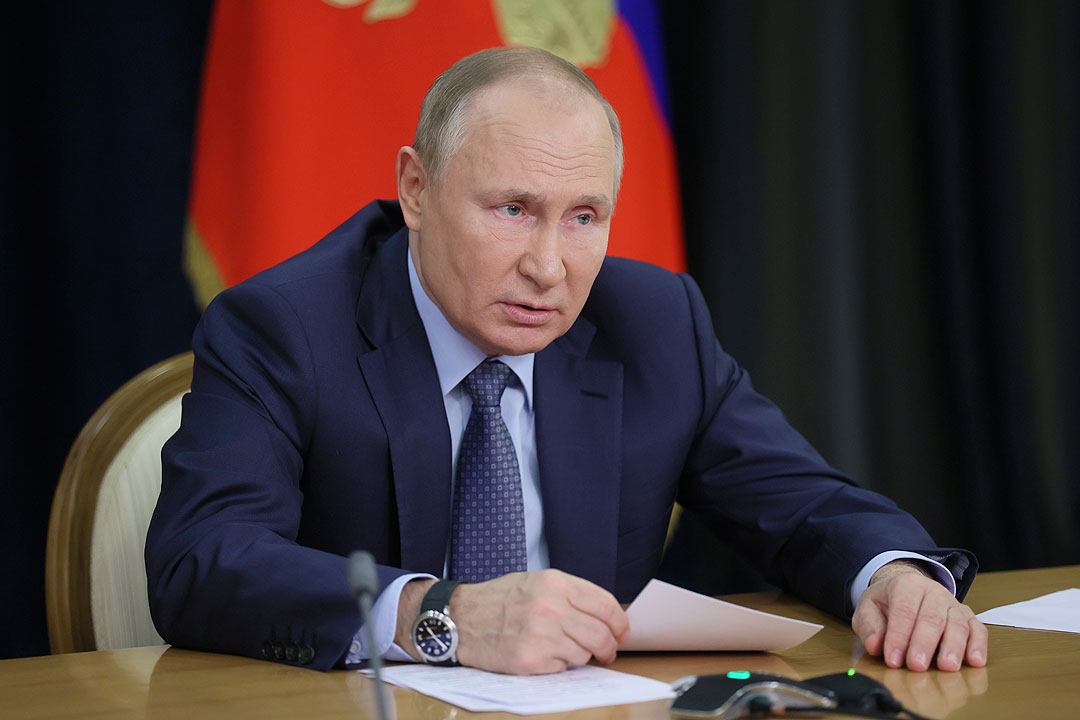
RUSSIAN President Vladimir Putin chairs a meeting on economic issues via a video link in Sochi, Russia, Dec. 7. — REUTERS

WASHINGTON/MOSCOW — President Joseph R. Biden warned Russian President Vladimir Putin on Tuesday that the West would impose “strong economic and other measures” on Russia if it invades Ukraine, while Putin demanded guarantees that NATO would not expand farther eastward.

The two leaders held two hours of virtual talks on Ukraine and other disputes in a video call about US-Russian relations, which have sunk to their lowest point since the end of the Cold War more than three decades ago, as Russia masses tens of thousands of troops on Ukraine’s border.

Mr. Putin responded to the warning with a demand for reliable, legally binding guarantees against NATO expansion eastward and complained about NATO attempts to “develop” Ukrainian territory,” the Kremlin said. The White House said Mr. Biden did not make any guarantees to limit NATO expansion with regard to Ukraine.

“I will tell you clearly and directly he made no such commitments or concessions. He stands by the proposition that countries should be able to freely choose who they associate with,” Mr. Biden’s national security adviser Jake Sullivan told reporters.

No breakthroughs were reported but both sides agreed to continue communications, a development that could lower global tensions.

The Kremlin has denied harboring any intention to attack Ukraine and has said a troop buildup on its southern border is defensive, but neighboring nations are sounding alarms.

Mr. Biden warned Mr. Putin he could face stiff economic sanctions, the disruption of the Nord Stream 2 gas pipeline to Europe, and that the United States and European allies would provide additional defensive capabilities to Ukraine.

The president “made clear that the US and our Allies would respond with strong economic and other measures in the event of military escalation,” the White House said in a statement.

“Things we did not do in 2014 we are prepared to do now,” Sullivan told reporters after the call, referring to the reaction to Russia’s annexation of Crimea from Ukraine.

In case of an attack, the United States would be looking to respond positively if Baltic allies ask for additional US “capabilities” or “deployments,” he said.

The United States could also target Russia’s biggest banks and Moscow’s ability to convert roubles into dollars and other currencies, one official said.

In 2014, Washington focused mainly on defensive, non-lethal aid following Russia’s annexation of Crimea out of fear it would escalate the crisis.

Mr. Biden was “direct and straightforward” with Mr. Putin, Sullivan said. “There was a lot of give-and-take, there was no finger-wagging, but the president was crystal clear where the United States stands on all of these issues,” Mr. Sullivan said.

The Kremlin said Mr. Putin told Mr. Biden it was wrong to put all the responsibility on Russia’s shoulders for current tensions.

Moscow has voiced rising irritation over Western military aid to Ukraine, a fellow former Soviet republic that has tilted toward the West since a popular revolt toppled a pro-Russian president in 2014, and what Russia calls creeping NATO expansion.

RUSSIA WANTS GUARANTEES
Mr. Putin complained about NATO attempts to “develop” Ukrainian territory, the Kremlin said.

“Therefore, Russia is seriously interested in obtaining reliable, legally fixed guarantees that rule out NATO expansion eastward and the deployment of offensive strike weapons systems in states adjacent to Russia,” the Kremlin said.

Mr. Putin also called for guarantees that offensive strike systems would not be deployed in countries close to Russia, according to the Kremlin.

Russian TV footage showed Mr. Biden and Mr. Putin greeting each other in a friendly manner at the start of the virtual summit.

Both sides say they hope the two leaders can hold an in-person summit to discuss ties between the two nations, which have long-standing differences over Syria, US economic sanctions and alleged Russian cyberattacks on US companies.

A Ukraine official said after the talks that Kyiv was grateful to Mr. Biden for his “unwavering support.” A US congressional defense bill released after the talks included $300 million for Ukraine’s military.

For the Kremlin, the growing NATO embrace of neighboring Ukraine — and what it sees as the nightmare possibility of alliance missiles in Ukraine targeted against Russia — is a “red line” it will not allow to be crossed.

Moscow has questioned Ukrainian intentions and said it wants guarantees that Kyiv will not use force to try to retake territory lost in 2014 to Russia-backed separatists, a scenario Ukraine has ruled out. — Reuters