Home Blog Page 6676

BSP fully awards short-term bills
BW FILE PHOTO

THE BANGKO SENTRAL ng Pilipinas (BSP) fully awarded the short-term securities it auctioned off on Friday as global oil prices continued to decline. 

The central bank raised P100 billion as planned from its offer of 29-day bills that attracted P126.25 billion in tenders. Demand was lower than the P130.51 billion seen last week. 

Accepted rates for the one-month debt ranged from 1.65%-1.8%, wider than the 1.76% to 1.805% margin last week. The average rate for the one-month securities was at 1.7699%, lower than 1.7798% last week. 

The central bank uses its short-term securities and term deposit facility to mop up excess liquidity in the financial system and guide market rates. 

The BSP bills’ yield slightly eased as global prices declined to one-and-a-half month lows after the United States and other countries released their petroleum reserves, Michael L. Ricafort, chief economist at Rizal Commercial Banking Corp., said in a Viber message. 

Oil prices declined on Friday amid concerns of a global surplus after the US, China, India, and Japan released oil reserves, Reuters reported. Brent crude futures fell 2.1% to $80.53 per barrel, while US West Texas Intermediate crude declined 2.6% to $76.35 a barrel. 

The securities’ average yield also declined after the country recorded a narrower budget deficit last month, Mr. Ricafort added. 

Preliminary data from the Bureau of the Treasury showed the country’s fiscal gap stood at P64.3 billion in October, or 4.77% higher than a year ago. This was 64.46% lower than the P180.9-billion deficit in September and was the lowest since the P44.4-billion gap in April. 

The budget deficit reached P1.2 trillion in the first ten months, 27.94% higher than the shortfall in the same period last year. — Jenina P. Ibañez 
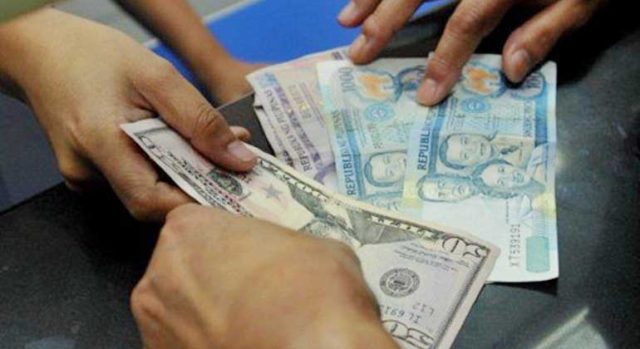
Peso drops further on new coronavirus variant

BW FILE PHOTO

THE PESO weakened against the dollar on Friday after a new coronavirus variant led to risk aversion among investors. 

The local unit closed at P50.43 versus the dollar, down by four centavos from its P50.39 finish on Thursday, data from the Bankers Association of the Philippines showed. 

The peso opened Friday’s session at P50.40 per dollar. Its worst showing for was at P50.57, while its intraday best was at P50.32 against the greenback. 

Dollars traded rose to $1.15 billion on Friday from $1.1206 billion a day earlier. 

Michael L. Ricafort, chief economist at Rizal Commercial Banking Corp., said the peso ended slightly weaker against the dollar after a new coronavirus disease 2019 (COVID-19) variant detected in South Africa triggered profit-taking and risk aversion in global financial markets. 

South Africa’s health minister had announced the detection of the new variant, which scientists said had a high number of mutations. 

“Peso (was) also weaker after the net foreign portfolio investments outflow in October 2021 was the biggest in three months,” he said in a Viber message. 

More short-term foreign investments exited than entered the Philippines in October amid lingering inflation concerns among investors. 

Foreign portfolio investments — commonly referred to as “hot money” due to the ease by which these flows enter or leave an economy — posted a net outflow of $221.11 million in October, based on data released by the Bangko Sentral ng Pilipinas (BSP) on Thursday. 

The October figure is 55% lower than the net outflow of $493.46 million a year earlier and more than nine times higher than the net $24.16 million that left the country in September. It was also the biggest outflow since the $339.7 million posted in July. 

In the first ten months, hot money yielded a net outflow of $679.64 million, which was 83% lower than the net $3.9 billion that exited the country in the same period in 2020. 

UnionBank of the Philippines, Inc. Chief Economist Ruben Carlo O. Asuncion said investors preferred safe-haven currencies. 

“The new COVID-19 variant has rattled the markets and the market in a knee-jerk reaction is in a sell-off,”he said in a Viber message. “With this, particularly for forex, the movement is away from Asian currencies to more safe-havens like the USD.” — JPI 

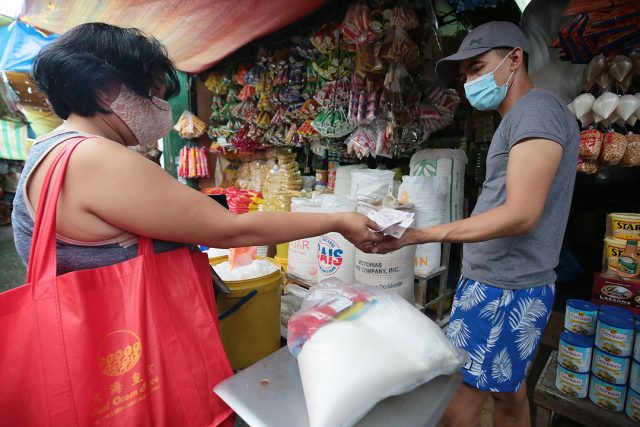
SRP of most Noche Buena products drop

PHILIPPINE STAR/ MICHAEL VARCAS

THE suggested retail prices (SRP) of most Noche Buena products decreased or remained unchanged this year, according to the Department of Trade and Industry (DTI).  

“The DTI thanks the manufacturers for heeding the call not to increase prices demonstrating their sense of solidarity with our consumers this Christmas despite the COVID-19 pandemic,” Trade Secretary Ramon M. Lopez said in a news release on Friday.  

The DTI’s list of SRPs of Noche Buena products include ham, cheese, keso de bola, sandwich spread, mayonnaise, pasta like spaghetti noodles, elbow and salad macaroni, spaghetti and tomato sauce, and all-purpose cream.  

The highest SRP from the following products dropped: 165 grams of cheese to P81.30 this year from P89 last year; a 470 milliliter jar of sandwich spread to P157 from P205.80; 470 ml jar of mayonnaise to P169 from P196.35; pasta-spaghetti noodles to P72 (500 g) and P80 (900 g) from P73 and P87.65, respectively; a 220 ml jar of sandwich spread to P100.75 from P99.80; elbow and salad macaroni to P32.5 (200 g) and P89.25 (1 kilogram) from P36.65 and P98.65 respectively; 1 kg of spaghetti sauce to P76.25 from P84.20; and 1 kg of tomato sauce to P63.50 from P78.25.  

Meanwhile, the maximum SRP of other Noche Buena products remain unchanged, with 500 g of keso de bola priced at up to P410 and 400 g of pasta-spaghetti noodles at P52.50  

The only items with increased maximum SRP are ham, which is priced at up to P204 (500 g) and P1,120 (1 kg) from P189 and P1,025 last year, respectively; 220 ml jar of sandwich spread at P100.75 from P99.80; and 400 g of elbow and salad macaroni at P59 from P58.05.  

The full list will be uploaded on the DTI website on Saturday at https://www.dti.gov.ph/konsyumer/e-presyo/. — B.A.D. Añago 

FPI bats for use of palm oil in biodiesel mix amid rising prices

THE Federation of Philippine Industries, Inc. is batting for the use of palm oil in the country’s fuel mix to help bring down prices. 

FPI Chairman Jesus L. Arranza said using palm oil instead of coconut oil in the biodiesel mix will help bring down fuel costs as the former is around $300-$500 cheaper per ton than the latter.  

“Diesel is the one being used in public transport and in the delivery of goods, so it affects the masses. The use of the cheaper palm oil therefore will serve as a permanent solution instead of the government having to periodically adjust excise taxes just to cushion the impact of higher crude prices. This is a solution where no sector will be hurt, even the government,” Mr. Arranza said in a statement. 

He said coconut oil, which is used in the country’s biofuel mix, can be used for higher-value products, which will benefit farmers. 

FPI recently met with Energy department officials to discuss this, the statement said. 

“According to our Renewable Energy Management Bureau, it is still a proposal and we will meet again,” Energy Assistant Secretary Gerardo D. Erguiza, Jr. said in a text message when asked about the meeting. — MCL 

CLSU, JICA partner on cacao, banana farm management research

THE Central Luzon State University (CLSU) and the Tamagawa University in Japan will conduct a five-year research project on sustainable farm management of banana and cacao. 

The research will be implemented under the Development of Novel Disease Management Systems for Banana and Cacao project of the Japan International Cooperation Agency’s (JICA) Science and Technology Research Partnership for Sustainable Development.  

In a news release on Friday, JICA Philippines Senior Representative Ohshima Ayumu said the research “will not only support the livelihood of Filipino farmers…(but) will also study environment-friendly and sustainable ways of producing banana and cacao, seen as growth drivers in (the) local agriculture sector.”  

The sites for the research are Cagayan Valley, Bicol, Western Visayas, Northern Mindanao, and Davao.  

Filipino researchers and government officials will also have study visits to other Japanese universities capacity building under the project.  

Aside from the Tamagawa University, other Japanese institutions in support of the project are Mie University, Tokyo University of Agriculture and Technology, Nihon University, Tokyo University of Agriculture, Forest Research and Management Organization, Unifrutti Japan Corporation, and Bayer Crop Science KK.  

The JICA said the project will introduce an integrated technology system to help “address major crop diseases in banana and cacao through disease examination, forecasting outbreak, and environment-friendly cultivation methods.” — B.A.D. Añago 

Gokongwei-led URC to acquire Malaysian snack firm Munchy’s

Universal Robina Corporation (URC) on Friday said it is acquiring Malaysian biscuits company Munchy Food Industries for around 1.925 billion ringgit or around P22.9 billion, as it further expands in Southeast Asia.  

In a disclosure to the stock exchange, the Gokongwei-led snacks and beverage firm said it agreed to buy a 100% stake in Munchy and its subsidiary from private equity firm CVC Capital Partners. 

URC said the board of directors of both companies have already approved the deal, which is expected to be completed by December 2021. 

Munchy’s is described as the top biscuit brand in Malaysia. Among its products include Munchy’s Cream Crackers, Choc-O cookies and Lexus Cream Sandwich, which are available in over 50 countries.  

“URC is delighted to announce the acquisition of Munchy’s which will add immediate value to our international product portfolio, and scale up our Malaysian market position to leadership in the biscuits category,” URC President and Chief Executive Officer (CEO) Irwin C. Lee said in a separate press statement. 

Mr. Lee said the deal will allow URC to further grow its homegrown brands and Munchy’s in Malaysia and Southeast Asia. 

Munchy’s CEO Rodney Wong said the firm is “excited” to be part of URC.    

“This move will allow Munchy’s to have access to Research & Development expertise in multiple categories, enhance market knowledge, route to market, and manufacturing capabilities in countries outside of Malaysia,” Mr. Wong said.    

Trading of URC shares were suspended on Friday, and will be lifted on Monday at 10 a.m. — Keren Concepcion G. Valmonte  

Aboitiz InfraCapital eyes P20B capex in 2022

Aboitiz InfraCapital, Inc. is setting aside P20 billion for its capital expenditure (capex) budget next year, as it plans to expand its industrial estates and digital infrastructure business.  

“For next year, our capex would be around P20 billion. The bulk of our capex would be for economic estates and our digital [infrastructure] business,” Cosette V. Canilao, President and Chief Executive Officer (CEO) of Aboitiz InfraCapital, said in a media briefing on Friday.    

Next year’s budget will be 53% higher than the P13 billion capex earmarked by the company this year.  

The company in April said it agreed to create a telecommunications infrastructure joint venture, Unity Digital Infrastructure, Inc., with global private markets firm Partners Group.  

Unity Digital has completed cell sites in Luzon and Visayas and is aiming to have over 1,000 sites by next year. It will be working with over 150 accredited vendors and contractors to build these common towers.  

“We are probably [going to need] over P5 billion, so anywhere between P5 [billion] to P6 billion,” Unity Digital CEO Robin R. Sarmiento said during the briefing.   

Aboitiz InfraCapital is also looking to deploy over 350 small cell sites before the year ends.  

“We are expecting to deploy in Subic, in addition to Cebu and Davao,” said Rafael M. Aboitiz, general manager of the company’s small cell sites business.   

The company said the small cell sites business will be useful in addressing the capacity and congestion issues of mobile network operators. 

Meanwhile, Aboitiz InfraCapital said it plans to further grow its business by “proactively participating in project opportunities in the industrial development, water, digital infrastructure, and transport sectors” in the future.  

“At the beginning of the year, we set out to revamp our brand as part of our top priorities. We want to establish InfraCap as a full-fledged Strategic Business Unit within the Aboitiz Group… We at Aboitiz InfraCapital aim to create purpose-driven infrastructure,” Ms. Canilao said. 

Aboitiz InfraCapital is optimistic on the economy’s recovery from the pandemic.  

It rebranded its integrated economic centers to “economic estates,” namely LIMA Estate, Mactan Economic Zone 2 Estate, and West Cebu Estate.    

“The change comes as expansion plans for LIMA and West Cebu Estate are underway which are expected to yield up to 89,000 jobs combined. The business unit estimates that LIMA’s industrial expansion alone will bring in P10.3 billion worth of inventory,” Aboitiz InfraCapital said. 

LIMA Tower One, the first of a six-tower building project, will add 34,000 square meters of gross floor area to the LIMA Estate by mid-2024. Rafael P. Fernandez de Mesa, head of Aboitiz Economic Estates, said the firm is still finalizing the budget for the project. 

Apo Agua Infrastructura, Inc. is slated to begin operations by next year. It is expected to provide at least 300 million liters of treated water each day to the Davao City Water District.    

Aboitiz InfraCapital is also working on the small water network of its LIMA Water Corp. The network will improve operational efficiency and savings of deep well operation, auto adjustment of transfer pumps, and non-revenue water management. 

Shares of parent Aboitiz Equity Ventures, Inc. went up by 0.97% or 50 centavos to close at P52 per share on Friday.  — Keren Concepcion G. Valmonte with report from Arjay L. Balinbin 

Megawide says arrest warrants out vs GMCAC officials

BW FILE PHOTO

Megawide Construction Corp. said the Lapu-Lapu City Regional Trial Court has issued arrest warrants against the officials of GMR Megawide Cebu Airport Corp. (GMCAC) over alleged violations of the Anti-Dummy Law in connection with the Mactan-Cebu International airport (MCIA) contract.   

“This is the latest development in a long line of attempts to bring down Megawide’s reputation and credibility that, will be recalled, began with its bid for the rehabilitation of (Ninoy Aquino International Airport),” Megawide said in an e-mailed statement on Friday.   

GMCAC is a joint venture between Megawide and India’s infrastructure giant GMR Group that won in 2014 the government contract to develop and operate the MCIA.  

The Department of Justice in October indicted 15 executives of GMCAC based on a complaint filed by the National Bureau of Investigation. The list included eight foreign nationals who were accused of  being involved in the operations of GMCAC “in conspiracy” with Filipino executives, including Megawide Chief Executive Officer and Chairman Edgar B. Saavedra.   

“This is a procedural step to acquire jurisdiction over the persons of the said directors, and is being addressed with the posting of bail,” Megawide said.   

At the stock exchange, shares of Megawide slumped by 3.39% to close at P5.42 apiece on Friday.    

The listed construction firm told the stock exchange that the arrest warrants came despite their “timely filing” of a motion seeking to defend themselves before the court.    

Megawide officials also asked for the deferment of the arrest warrant, should there be one, and the dismissal of the case for the lack of probable cause and due process.   

“GMCAC transformed the MCIA into the Philippines’ only internationally-acclaimed and award-winning airport, and have done so through a firm adherence with all applicable laws, rules, and regulations, particularly as both are widely-held publicly-listed companies,” Megawide said in the statement.   

“We will diligently respond to this case in the proper fora and abide by the judicial process,” it added.  — Keren Concepcion G. Valmonte  

Global firms pay up to deal with Hong Kong’s quarantine

Companies including JPMorgan Chase & Co. are stepping up to compensate employees ensnared by Hong Kong’s strict quarantine regime as businesses in the city struggle to retain and recruit staff almost two years into the pandemic.  

As most of the rest of the world is opening up, including rival financial hubs such as Singapore, London and New York, Hong Kong is steadfast in its zero-COVID approach, which includes mandating a hotel quarantine of as many as three weeks for residents returning to the city and visitors. A recent survey found almost half of major international banks and asset managers are contemplating moving employees or functions out of the city. 

A stay at Hong Kong’s designated quarantine hotel can cost between HK$500 ($64) to HK$3,630 per night for a non-suite room. 

JPMorgan  

The U.S. bank offered to reimburse Hong Kong employees up to $5,000 to compensate for their quarantine stay, in a plan that will be in effect until November next year. All Hong Kong-based employees who are executive directors and below may claim the amount for a single quarantine stay for personal trips to visit immediate family members, which includes spouses, domestic partners, children, parents and grandparents. JPMorgan has 4,000 employees in city. 

Morgan Stanley  

The New York-based investment bank offered employees as much as HK$40,000 ($5,100) to cover quarantine costs. The one-time reimbursement will be available to all Hong Kong permanent employees when they return from a personal trip to visit immediate family members and in effect until November next year.  

Black Sheep Restaurants 

The Hong-Kong based restaurant group will be spending at least $650,000 to allow more than 250 staff to fly home and see their families, according to Christopher Mark, a co-founder of the group. The company will pay for flights, hotels and Covid tests for employees and a daily dinner from one of its 32 restaurants. In return, staff taking advantage of the offer are asked to commit to working in the group for at least one year when they return.  — Bloomberg  

Shares decline further as new COVID-19 variant emerges

Philippine Stock Exchange index

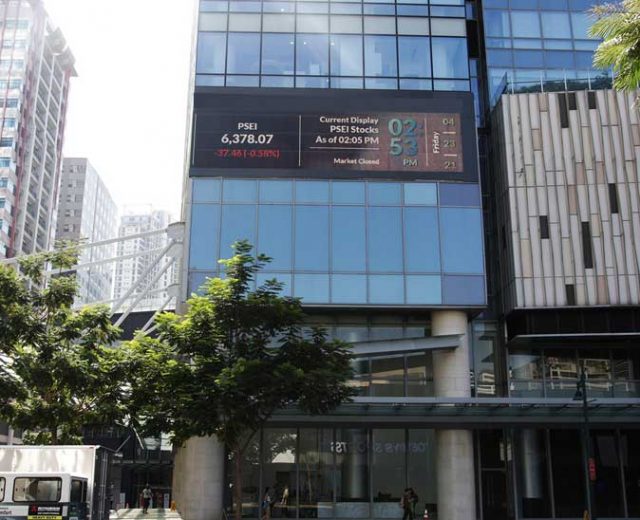
STOCKS decline further on Friday as news of a new coronavirus disease 2019 (COVID-19) variant spooked investors. 

The benchmark Philippine Stock Exchange index (PSEi) dropped 90.83 points or 1.23% to close at 7,278.44 on Friday, while the broader all shares index lost 41.88 points or 1.07% to end at 3,871.39. 

“The local bourse joined its regional peers in the red territory this Friday as COVID-19 worries resurface. This comes amid growing concerns over a new variant,” Philstocks Financial, Inc. Senior Research and Engagement Supervisor Japhet Louis O. Tantiangco said in a Viber message. 

South African scientists have detected a new COVID-19 variant in small numbers and are working to understand its potential implications, Reuters reported. 

The variant — called B.1.1.529 — has a “very unusual constellation” of mutations, which are concerning because they could help it evade the body’s immune response and make it more transmissible, scientists told reporters at a news conference. 

South Africa has confirmed around 100 specimens as B.1.1.529, but the variant has also been found in Botswana and Hong Kong, with the Hong Kong case a traveler from South Africa. As many as 90% of new cases in Gauteng could be B.1.1.529, scientists believe. 

All sectoral indices closed in the red on Friday led by property, which dropped 63.37 points or 1.87% to 3,324.31. Services retreated by 33.3 points or 1.65% to 1,976.48; financials went down 22.3 points or 1.38% to 1,586.50; mining and oil decreased 102 points or 1.06% to 9,485.32; industrials slipped 83.48 points or 0.78% to 10,621.42; and holding firms slid 44.86 points or 0.63% to 7,040.27. 

Value turnover rose to P9.97 billion on Friday with 1.04 billion issues switching hands from the P8 billion with 1.31 billion shares traded the previous trading day. 

Decliners beat advancers, 134 against 66, while 43 remained unchanged. 

Net foreign selling increased to P545.03 million on Friday from the P542.81 million seen on Thursday.  

“On Monday, focus will be given to the MSCI rebalancing, while the whole week investors will be watching the new variant and whether it spreads across Asia. There could also be some window dressing…,” Regina Capital Development Corp. Head of Sales Luis A. Limlingan said in a Viber message. — MCL with Reuters 

Hong Kong and China move closer to partial border reopening

HONG KONG — Hong Kong and Chinese authorities said a meeting on Thursday moved them closer to partially reopening the border between them, as the two governments dig their heels in as among the last in the world pursuing a zero-COVID-19 strategy.  

The global financial hub has followed Beijing’s lead to implement some of the strictest travel restrictions in the world, hoping that would convince China, its main source of economic growth, to allow some cross-border movement.  

Delegations from the two governments met in the tech hub of Shenzhen on Thursday.  

“Good progress was made in the meeting on exploring the resumption of quarantine-free travel between the mainland and Hong Kong in a gradual and orderly manner,” the former British colony’s government said in a statement.  

China’s Hong Kong and Macao Affairs Office said in a separate statement the epidemic situation in Hong Kong was “stable and controllable.”  

Cross-border travel is expected to resume next month, subject to a limited quota, South China Morning Post reported, citing two unnamed sources from the mainland.  

Near term, Hong Kong has to launch its own version of China’s “Health Code” mobile tracing app and prepare boundary control points for the opening, the semiautonomous city’s government said.  

Despite barely any local cases this year and an environment virtually free of COVID-19, Hong Kong has imposed mandatory hotel quarantine of up to 21 days for arrivals from most countries at the travelers’ cost.  

International business lobby groups have warned Hong Kong could lose talent and investment, as well as competitive ground to rival finance hubs such as Singapore, unless it relaxes its travel restrictions.  

The president of the American Chamber of Commerce in Hong Kong resigned, saying she could not appeal to authorities to ease COVID-19 restrictions at the same time as having to undergo quarantine herself.  

JPMorgan Chase & Co Chief Executive Jamie Dimon said the city’s COVID-19 policy was making it tougher to retain staff. — Reuters 

As digital adoption rises, so do customer expectations — Bain & Company

In digital commerce, an “obsession” for the customer remains paramount, according to consultancy firm Bain & Company. 

“The old rules of customer loyalty, customer obsession still prevail. … How you are thinking about how you touch the lives of consumers still pervade,” said Patricia Buenaventura Nichol, a partner at Bain & Company, in a fireside chat on consumer needs at the BusinessWorld Virtual Economic Forum Thursday. 

“I think the digital arena has just exacerbated and provided another channel for doing that… Consumers are demanding the same things [user experience, convenience, pricing] they do in the physical environment.”  

A 2021 study by Bain & Company found that 8 of 10 internet users in Southeast Asia are digital consumers. In the Philippines, the percentage of digital consumers grew from 54% prior to the coronavirus disease 2019 (COVID-19) to around 68% this year.   

More than 70% of the study’s Filipino respondents said e-commerce purchases made their lives easier, with half (or 40-50%) expecting to continue using digital services.  

The Philippines is catching up in terms of infrastructure, added Ms. Nichol. “With the incoming digital banking licenses, enablers and infrastructures are becoming more established,” she said. “You see this dynamic between merchants and consumers and enablers that allow consumers to realize these sorts of behaviors.”   

DIGITAL OPTIMISM 

Digital merchants are also optimistic about the digital economy, Bain & Company found. In the Philippines, 39% of merchants believe that they would not have survived the pandemic had it not been for digital platforms. Moving forward, 93% will either continue to use or increase their use of digital payments.  

It hasn’t been an easy journey for merchants over the past two years, given that they had to navigate the use of new tools such as digital payments and analytics, said Florian Hoppe, Bain & Company’s partner and head of digital practice in Asia Pacific.   

“But we’ve been surprised by their positive perceptions,” he said. “Three-fourths of merchants look at the digital economy positively… engaging with consumers and building personal, friendly communication channels have been a lifeline for these merchants.”  

The big breakthrough in Southeast Asia is mobile-first shopping platforms, Mr. Hoppe added.  

“Putting things onto your device as you transact online and making [the experience] as seamless as possible. That’s really opened up new areas of the economy,” he said.  

The region’s internet economy is expected to reach up to $1 trillion gross market value (GMV) by 2030 given the continuing growth of transport, food, online media, and e-commerce. — Patricia B. Mirasol