
Job quality improves year on year in January
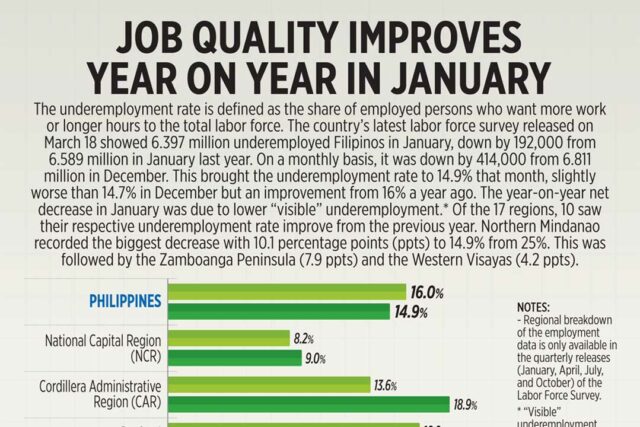
The Philippines’ unemployment rate fell to a two-year low in January as the size of the workforce shrank due to stricter mobility curbs in the capital region, the government said. Read the full story.

The Philippines’ unemployment rate fell to a two-year low in January as the size of the workforce shrank due to stricter mobility curbs in the capital region, the government said. Read the full story.
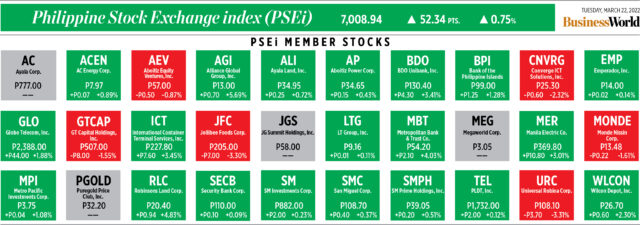
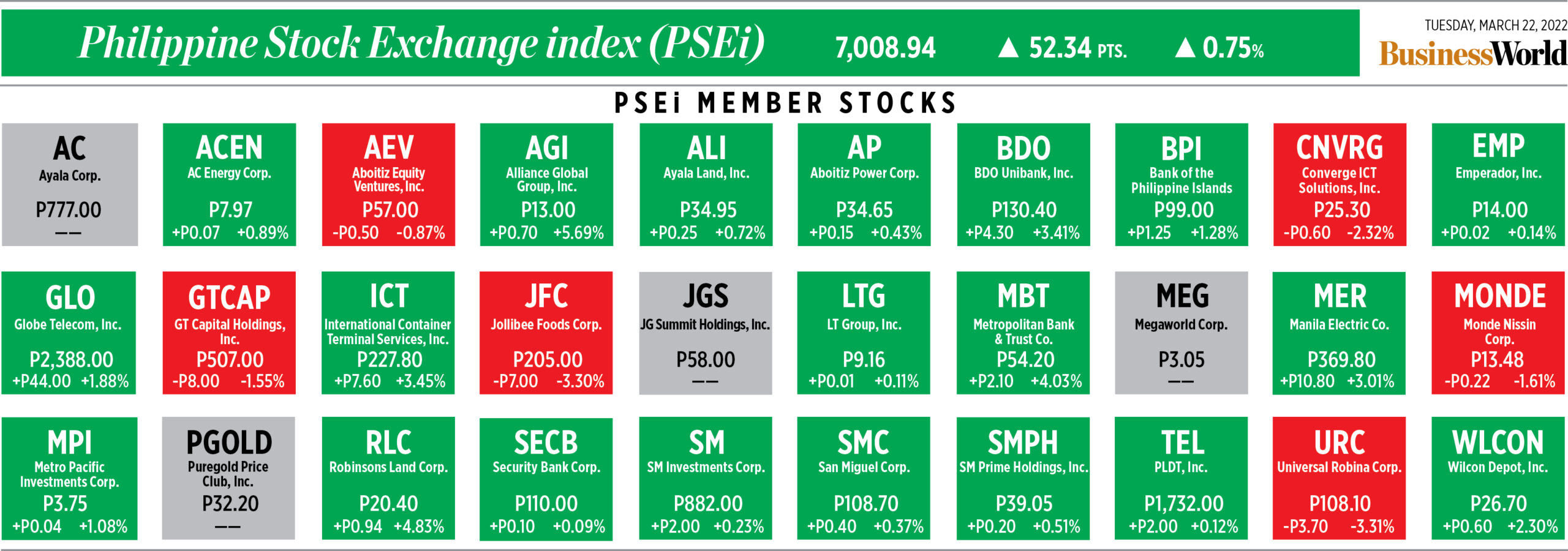
Here’s a quick glance at how PSEi stocks fared on Tuesday, March 22, 2022.


THE PESO dropped against the dollar for the third straight day on Tuesday on hawkish comments from the US Federal Reserve chief and as oil prices continued to surge.
The local unit closed at P52.44 per dollar, weakening by nine centavos from its P52.35 finish on Tuesday, based on data from the Bankers Association of the Philippines.
The peso opened weaker on Tuesday’s session at P52.44 against the dollar. Its best showing was at P52.385, while its intraday low was at P52.47 versus the greenback.
Dollars exchanged rose to $953.1 million on Tuesday from $599.8 million on Monday.
A trader said in an e-mail that the peso fell against the dollar amid hawkish comments from US Fed Chair Jerome H. Powell.
The US central bank must move “expeditiously” to bring too-high inflation to heel, Mr. Powell said on Monday, adding that it could use bigger-than-usual interest rate hikes if needed to do so, Reuters reported.
Fed policy makers last week raised interest rates for the first time in three years and signaled ongoing rate hikes ahead. Most of them see the short-term policy rate — pinned for two years near zero — at 1.9% by the end of this year, a pace that could be achieved with quarter-percentage-point increases at each of their next six policy meetings.
Meanwhile, Rizal Commercial Banking Corp. Chief Economist Michael L. Ricafort said in a text message that the peso weakened due to rising oil prices.
Oil futures extended gains on Tuesday morning on news that some European Union members were considering imposing sanctions on Russian oil and as attacks on Saudi oil facilities sent jitters through the market, Reuters reported.
Brent crude rose by 2.9% to $118.93 per barrel. US crude ticked up by 2.2% to $114.76 a barrel.
Mr. Ricafort expects the peso to move between P52.35 and 52.50 on Wednesday while a trader gave a forecast range of P52.35 to P52.60.
A second trader sees the local unit moving within the P52.25 to P52.50 range, but warned that continued trade at the P52 mark could signal a decline to the P53-per-dollar level. — T.J. Tomas with Reuters

SHARES went up on Tuesday on last-minute bargain hunting and the government’s approval of the Public Service Act, which will allow full ownership in sectors like telecommunications to further liberalize the Philippine economy.
The benchmark Philippine Stock Exchange index (PSEi) climbed by 52.34 points or 0.75% to close at 7,008.94 on Tuesday, while the broader all shares rose by 18.16 points or 0.49% to 3,715.79.
“The local bourse jumped on last-minute bargain hunting. The signing of the law amending the Public Service Act also helped the market’s recovery for today,” Philstocks Financial Research Associate Claire T. Alviar said in a Viber message.
President Rodrigo R. Duterte on Monday signed Republic Act No. 11647, which amends the 85-year-old Public Service Act, excludes telecommunications, domestic shipping, railways and subways, airlines, expressways and tollways, and airports from the definition of a public utility. This means they will no longer be subject to the 40% foreign ownership cap for public utilities under the Constitution.
“During the earlier part of trading, the market was trading in the red amid Russia-Ukraine tensions and worries over the rising oil prices which soared once again following reports that the European Union is considering banning Russian oil. Aside from that, there was also negative spillover from the performance of the US markets overnight,” Ms. Alviar added.
Oil prices rose more than 7% on Monday, with global benchmark Brent soaring, as European Union nations disagreed on whether to join the United States in a Russian oil embargo after an attack on Saudi oil facilities, Reuters reported.
Brent futures was at $115.62 per barrel rising $7.69 or 7.12%, while US West Texas Intermediate crude futures closed at $112.12 per barrel up $7.42 or 7.09%.
“Philippine shares were bought up at close with investors speculating after Federal Reserve Chair Jerome Powell said the central bank is open to higher rate hikes to combat rising inflation,” Regina Capital Development Corp. Head of Sales Luis A. Limlingan said in a Viber message.
The US central bank must move “expeditiously” to bring too-high inflation to heel, Mr. Powell said on Monday, adding that it could use bigger-than-usual interest rate hikes if needed to do so, Reuters reported.
Majority of the sectoral indices ended in the green except for industrials, which dropped by 54.32 points or 0.58% to 9,277.27, and mining and oil, which fell by 48.38 points or 0.39% to 12,270.32.
Meanwhile, financials climbed by 33.86 points or 2.08% to 1,658.19; services went up by 24.55 points or 1.32% to 1,880.47; property increased by 22.08 points or 0.66% to 3,359.81; and holding firms gained 7 points or 0.10% to 6,651.62.
Value turnover decreased to P6.67 billion with 1.11 billion shares changing hands on Tuesday from P7.60 billion or 974.77 million issues seen the previous trading day.
Decliners outnumbered advancers, 81 versus 77, while 60 names closed unchanged.
Net foreign selling dropped to P838.47 million from P860.2 million on Monday. — L.M.J.C. Jocson with Reuters
THE Department of Finance (DoF) said the contracts for 12 major public-private partnership (PPP) projects have been reviewed to evaluate the risk of contingent liabilities which may arise later, possibly forcing the government or the projects’ users to pay more than initially agreed.
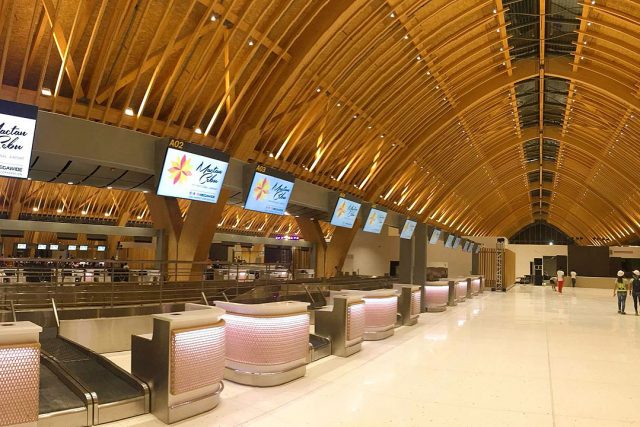
The DoF said in a statement on Tuesday that it reviewed the contracts for the Mactan-Cebu Airport Project, the Cavite-Laguna Expressway, the Clark International Airport Expansion Project and the Metro Rail Transit Line 3, as well as the concessions to supply water to the capital region held by Maynilad Water Services, Inc. and Manila Water Co.
Also reviewed were the contracts of the LRT1 Cavite Extension and Operations and Maintenance Project, MRT Line 7, the Muntinlupa-Cavite Expressway, the NLEX-SLEX Connector Road, the Bulacan Bulk Water Supply Project and the Southwest Integrated Transport System Phases 1 and 2.
The DoF said its privatization and special concerns office conducted the review. The office has recommended the creation of a specialized risk management office.
“Such extensive review of PPP projects, which we hope to be institutionalized for the ultimate benefit of our people, would ensure that the government is free from undue risks or contingent financial liabilities,” Finance Secretary Carlos G. Dominguez III said.
These risks, he said, “have to be shouldered by the public in the form of more taxes or higher fees charged by the concessionaires for the use of their facilities until such time that these are turned over to the state.”
The office is also evaluating 40 PPP proposals submitted to the National Economic and Development Authority (NEDA) which have not yet been acted on, and its input was considered in amending the implementing rules of the Build-Operate-Transfer (BOT) law. This law authorizes the private sector to finance, build, operate, and maintain infrastructure projects.
The NEDA and the PPP Center earlier this month detailed the proposed changes to the implementing rules and regulations of Republic Act No. 6957, or the BOT law.
Under the draft rules, projects to be considered will need a complete feasibility study, along with economic and financial models based on recent data.
Finance Undersecretary Grace Karen Singson said that the government should make the assessment of risk, government guarantees, and contingent liabilities a permanent feature, such as a specialized risk management office at the project proposal level.
Risk management has thus far only been performed on an ad hoc basis by technical working groups without resources, she said.
“Currently, the provisioning for contingent liabilities is based on estimated termination payments, a low probability event, and does not account for actual claims that are frequently demanded by concessionaires during the implementation of their PPP projects,” the DoF said.
The proposed risk management office will evaluate contingent liabilities and risks the government may be exposed to, recommend risk mitigation measures, and help the Development Budget Coordination Committee implement a risk management program.
The proposed office would also evaluate proposals that need sovereign guarantees, the DoF said. — Jenina P. Ibañez

BUSINESS CHAMBERS said they expect the liberalization of the Public Service Act (PSA) to enhance competition and attract more investment, particularly in the industries opened up to expanded foreign ownership.
The German-Philippine Chamber of Commerce and Industry (GPCCI) said in a statement on Tuesday that the PSA amendments, signed into law on Monday, will help “attract global players” to help modernize industries like telecommunications, shipping, air carriers, railways, and subways.
It added that increased competition will ultimately result in improved operations and competitive pricing for such services.
“The passage of the amendments of the PSA harmonizes with the recently passed amendments to the Retail Trade Liberalization Act (RTLA) and Foreign Investment Act (FIA). With these laws enacted, we are confident that the country can attract many investors in various sectors and will benefit Filipinos by improving basic services and creating more jobs,” GPCCI President Stefan Schmitz said.
On Monday, President Rodrigo R. Duterte signed Republic Act No. 11659, which amended the 85-year-old PSA.
The amendments removed public services such as telecommunications, domestic shipping, railways and subways, airlines, expressways and tollways, and airports from the public utility category. As a result, these services can now be fully owned by foreigners and are no longer covered by the 40% foreign ownership limit for public utilities set by the 1987 Constitution.
The amended PSA is the third law in the economic liberalization program, following the amended FIA and RTLA. These measures are touted as aiding the economic recovery.
Lars Wittig, European Chamber of Commerce of the Philippines president, said the amended law will help the chamber’s efforts to attract European investors to the Philippines.
“We believe this is the most important bill for foreign investments… and we do believe that it will drive the massive influx of foreign capital into the sectors of aviation, shipping, and telecommunications. There will be more competition (and) greater investments,” Mr. Wittig said in a television interview on Tuesday.
“We know that now the ball is in our court to guide these investors to (the Philippines). We are on the frontline here to make foreign investors aware and to bring them here because they are already coming to Association of Southeast Asian Nations (ASEAN). We need to gravitate them here to the Philippines also,” he added.
Alfredo E. Pascual, Management Association of the Philippines president, said in a statement that the entry of foreign investors will benefit consumers, generate more jobs, boost the economy, and accelerate the economic recovery.
“Along with the recently amended RTLA and the FIA, the amended PSA provides a legal framework to encourage the inflow of more foreign investments into the country,” Mr. Pascual said.
“A more open Philippine economy will enable us to catch up with our more progressive neighbors in ASEAN,” he added.
Trade Secretary Ramon M. Lopez said in a Viber message to reporters that the amended PSA will “surely attract more investments and more jobs for Filipinos.”
“This is another landmark reform under the Duterte administration as it finally opens up, after 85 years, critical sectors such as telecommunications and transportation, shipping, railways, to more foreign players, allowing greater competition, more technology-based innovations, better quality services and lower costs that will be enjoyed by all consumers and users,” Mr. Lopez said.
“Initial investment leads will be over $60 billion, composed of telecommunications, transportation, logistics, and railway (sectors). This is still understated as other leads have not indicated investment amount. (These) can be over $100 billion (in) over two years,” he added.
In a statement, Socioeconomic Planning Secretary Karl Kendrick T. Chua said the amended PSA will help improve services in transportation and telecommunications.
“The completion of the economic liberalization bills will revitalize our economy and encourage more investment and innovation as we continue to recover from the COVID-19 pandemic. The measures will also strengthen our domestic economy against external shocks, such as the Russia-Ukraine crisis,” Mr. Chua said.
According to the National Economic and Development Authority (NEDA), there are safeguard provisions to address national security concerns arising from the entry of foreign investors.
“First, the power of the President to suspend or prohibit any investments in a public service in the interest of national security upon the review, evaluation, and recommendation of the relevant government agency. Second, the provision on restrictions on investments by foreign state-owned enterprises (SOE) prevents a foreign SOE from owning capital stock in a public utility or critical infrastructure,” NEDA said.
“Third, the provision on information security ensures entities engaged in the telecommunications business meet relevant ISO standards. Fourth, the reciprocity clause prevents foreign nationals from owning more than 50% of capital in critical infrastructure unless the country of such foreign nationals accords reciprocity to Philippine nationals. Lastly, the performance audit provision mandates the conduct of an independent evaluation to monitor a firm’s cost and quality of services to the public,” it added. — Revin Mikhael D. Ochave
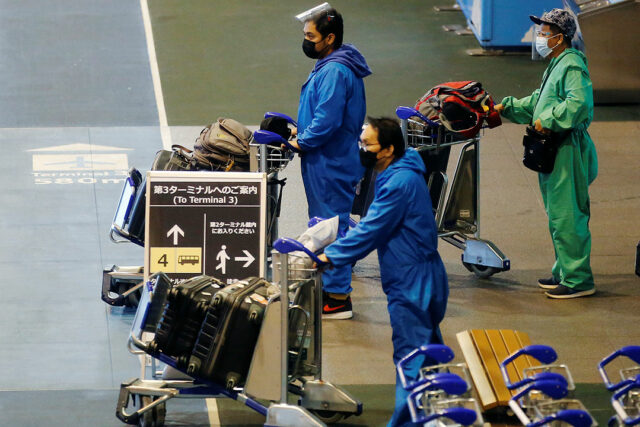
THE Department of Tourism (DoT) said it has pitched the Philippines to the Japanese travel market as a safe destination, following the sustained decline of coronavirus cases here.
In a statement on Tuesday, the DoT said a Philippine delegation led by Secretary Bernadette Romulo-Puyat was recently in Japan to confer with Japanese government and industry counterparts.
Japan was the fourth-largest source of visitors to the Philippines before the pandemic, the DoT said. In 2019, the Philippines tallied 682,788 visitors from Japan.
As of March 20, some 2,125 Japanese visitors have entered the country following the reopening of borders on Feb. 10.
During the visit, Ms. Romulo-Puyat met with Japanese travel agents, tour operators, tourism organizations, English studies operators, economic federations, and media in Tokyo, Nagoya, and Osaka.
“Some of the notable participants included STWorld; Japan Association of Travel Agents; JTB Corp.; Japan Travel and Tourism Association; Hankyu Travel International Co., Ltd.; Kansai Economic Federation; and the Japan Philippine Tourism Council,” the DoT said.
Ms. Puyat also met with Japan’s Ministry of Land, Infrastructure, Transport, and Tourism to discuss resuming two-way travel which had been disrupted by the pandemic.
Japan is currently admitting only limited categories of foreign visitors, like students and business travelers.
Ms. Puyat said the Philippines is offering vaccine booster services at major destinations, which would allow Japanese visitors to return to Japan without undergoing quarantine.
“Like other tourism ministries, the Philippines’ DoT (is exhausting) all possible efforts to revive the industry, primarily to restore jobs and rebuild revenue streams. Now, we are glad to see the fruits of our labor after nearly two years of preparations to push for the recovery of the sector,” Ms. Puyat said.
Ms. Puyat said the Philippines became the first country in Southeast Asia to implement a no-quarantine, no-testing regime to arrivals, simplifying entry procedures.
“We are aware that the pandemic is still here and health should always be the priority. We strive to balance public safety and economic recovery by crafting policies that safeguard our citizens’ well-being (while reviving) the tourism sector,” Ms. Puyat said.
More foreign visitors are set to enter the Philippines on April 1 after the Inter-Agency Task Force for the Management of Emerging Infectious Diseases removed the arrival quota for unvaccinated passengers at all ports of entry. — Revin Mikhael D. Ochave
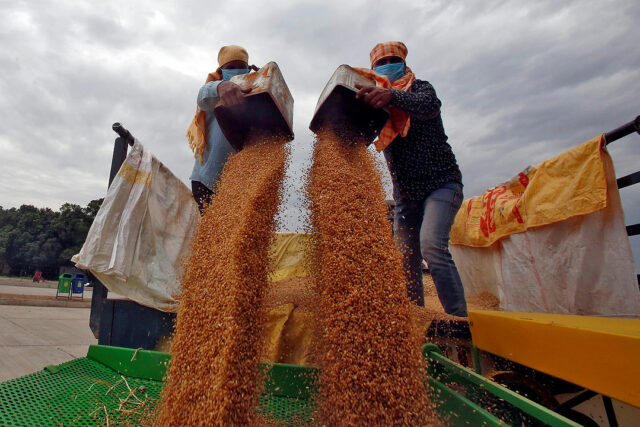
THE Philippines is supporting the admission of India into the Regional Comprehensive Economic Partnership (RCEP) trade bloc, which New Delhi withdrew from in 2019, with the Department of Trade and Industry saying that the bloc could benefit from having another large market as a member.
Trade Assistant Secretary Allan B. Gepty said in a webinar on Monday that encouraging India to re-enter RCEP will boost the economies belonging to the trade bloc.
“With the size of India, contributing around 1.3 billion people, then that would really make RCEP unquestionably as the world’s largest trading bloc. And in terms of comparative advantage noting that all economic activities have now gravitated towards India, that will really strengthen not just the economic integration here in the region, but the capability of the economic bloc to influence and shape rules of international trade,” Mr. Gepty said.
“RCEP parties would also benefit from the inclusion of India in terms of enhanced market access, increased participation in regional supply chains, and even accelerated economic growth in the region,” he added.
India backed out of RCEP negotiations in November 2019, amid concerns it will need to open its market to cheap Chinese imports following the gradual removal of tariffs and the effect on its farmers and workers.
RCEP is a trade agreement that started to come into force in 11 countries on Jan. 1. The trade bloc members are Australia, China, Japan, South Korea, New Zealand and the 10 members of the Association of Southeast Asian Nations.
According to Mr. Gepty, the re-entry of India will help balance the interests of major economies in RCEP.
“Given the size of the Indian economy, I would say that its participation in RCEP will also contribute in the balancing of interests and also power within the free trade area,” he said, referring to the other outsized economy within the bloc, China.
“I don’t think that we can embrace inward policies at this time. We have to embrace globalization. We can only enhance the rules and take advantage of the opportunities that it brings,” he added.
The Philippines has yet to join RCEP as the Senate was unable to give its concurrence before adjourning on Feb. 3 for the election break. President Rodrigo R. Duterte signed the RCEP deal on Sept. 2. — Revin Mikhael D. Ochave
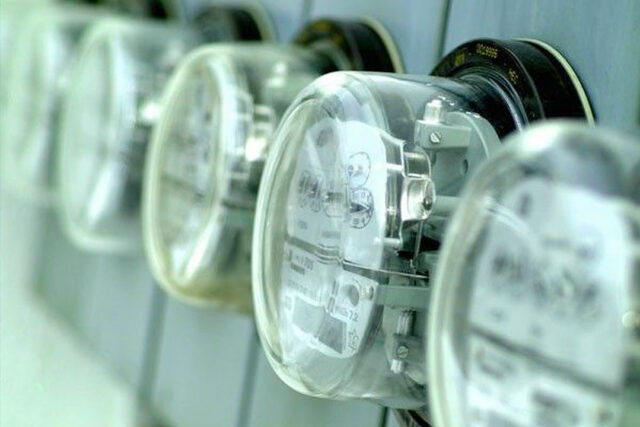
THE Department of Energy (DoE) said on Tuesday that it issued an advisory to government agencies to conserve energy due to the tight oil market and ahead of the May elections.
The advisory calls for the mandatory implementation of energy efficiency and conservation (EE&C) programs.
“We issued this advisory to highlight the role of (EE&C) in ensuring the sufficiency of petroleum products supply amid the Russia-Ukraine crisis,” Energy Secretary Alfonso G. Cusi said.
The DoE also called on agencies to comply with the guidelines of the Government Energy Management Program (GEMP). GEMP sets a 10% reduction target for government agencies’ power and fuel consumption.
The DoE said more efficient energy use will help ensure the smooth running of the May 9 elections.
In January, the DoE raised the possibility of possible rotating outages on the Luzon grid in the two weeks after the elections.
“According to projections of the DoE-Energy Utilization Management Bureau, the successful implementation of these measures (will help) reduce electricity demand on the Luzon grid by up to 24 megawatts,” it said in a statement.
Meanwhile, an alliance of energy efficiency companies said the government must also accelerate deployment of energy efficiency projects from the private sector.
“It is good that the National Government through DoE believe that energy efficiency and conservation should help mitigate the impacts of rising fuel prices, which affect all end-use sectors directly consuming fuel products, and partially grid and self-use generation of electricity,” Philippine Energy Efficiency Alliance (PE2) President Alexander D. Ablaza said in a Viber message.
He added that “what the country needs right now is to accelerate timelines for energy efficiency deployment.”
“(The government should) kick-start energy service company (ESCO) performance contracting and third-party project investments by reclassifying all EE projects, whether simple, complex or innovative/strategic, as Tier III domestic market activities under the (Strategic Investment Priority Plan) framework,” he said.
In February, the Board of Investments classified strategic energy efficiency (EE) projects as “critical to the structural transformation of the economy,” eligible for the longest income tax holidays on offer. PE2 is calling for the inclusion of non-strategic projects in this category.
PE2 also proposes that authorities “accelerate and aggressively grow GEMP by enabling ESCO performance contracting and third-party project investments in EE projects hosted by government-owned facilities, by removing policy barriers under the Government Procurement and Reform Act, the Build-Operate-Transfer law, and the National Economic and Development Authority’s joint venture guidelines.” — Marielle C. Lucenio

THE Philippine Economic Zone Authority (PEZA) is asking the Commission on Elections (Comelec) to certify as a permitted activity the transport of industrial chemicals during the election period.
PEZA Director General Charito B. Plaza said in a statement on Tuesday PEZA has been pushing for the issuance of the Certificate of Authority to Transport (CA-TT) by the Comelec to avoid the disruption and shutdown of the operations of manufacturing companies in economic zones.
The certification will permit the transport of regulated chemicals and raw materials covered by the election ban.
“Currently, there are nine PEZA-registered enterprises awaiting the approval of their permit applications, two of which have already shut down since the last week of February. Another two companies (had) used up their chemical supplies on the first week of March,” PEZA said.
According to Ms. Plaza, PEZA is awaiting the release of the CA-TT permits for the affected locators within its ecozones.
“These concerns have been (conveyed) to Comelec and now, we are waiting for their release of the CA-TT permit,” Ms. Plaza said.
PEZA said manufacturing companies use chemicals such as sulfur powder, nitric acid, hydrogen peroxide, and potassium permanganate. These chemicals are regulated by the Philippine National Police-Firearms and Explosives Office (PNP-FEO).
“While the use, importation, transport, or manufacture of these chemicals are covered by PNP-FEO permits, the Comelec issues a resolution every election period requiring duplicate permits through the Committee on Ban on Firearms and Security Concerns (CBFSC),” PEZA said.
On March 16, Ms. Plaza met with Comelec Chairman Saidamen B. Pangarungan, asking for assistance in securing the exemption of PEZA-registered enterprises from the election ban.
She added that PEZA also asked the Comelec for the disbursement of public funds for public works and infrastructure projects in government ecozones which had been procured by public bidding during the election period.
“Based on PNP-FEO records, manufacturers using regulated chemicals only form a small fraction of permit applicants during the election period compared to the gun or ammunition applications,” Ms. Plaza said.
“We are also working with the Department of Trade and Industry and the Anti-Red Tape Authority to support our appeal to Comelec to hasten the release of CA-TT permit,” she added. — Revin Mikhael D. Ochave

THE Philippine Rice Research Institute (PhilRice) said it is set to distribute 1.8 million bags of certified seed to more than 740,000 farmers in 42 provinces for wet-season planting.
The distribution will be conducted between March 16 and Sept. 15. Planting is estimated to take place on at least 830,000 hectares.
Beneficiaries are eligible for one 20-kilogram sack of seed for every half hectare tilled.
The participating provinces include Ifugao, Kalinga, Ilocos Sur, La Union, Nueva Vizcaya, Quirino, Aurora, Bataan, Bulacan, Pampanga, Zambales, Cavite, Laguna, Quezon, Albay, Masbate, Sorsogon, Aklan, Antique, Capiz, Negros Occidental, Bohol, Negros Oriental, Biliran, Western Samar, Southern Leyte, Zamboanga del Sur, and Zamboanga Sibugay.
“This is our sixth season of implementation. Through a series of surveys, we found that there were gradual increases in the yield of our target provinces. While this cannot be credited solely to the program, we recognize that the certified seed greatly contributed,” PhilRice Program Management Office Director Flordeliza H. Bordey said in a statement.
Between 2019 and 2022, PhilRice distributed around 8.62 million bags of seed to more than 1 million farmers across five cropping seasons.
The distribution is supported by the Rice Competitiveness Enhancement Fund (RCEF) Seed Program. RCEF is a component of Republic Act No. 11203 or the Rice Tariffication Law, which sets aside P10 billion from rice import tariff collections every year to upgrade the competitiveness of rice farmers.
Farmers must be enrolled in the Registry System for Basic Sectors in Agriculture to be eligible for seed distribution. — Luisa Maria Jacinta C. Jocson

THE Development Academy of the Philippines (DAP) has been excluded from the list of government-owned or -controlled corporations (GOCCs) subject to the rules of Republic Act (RA) 10149.
The Governance Commission for GOCCs said RA 10149, or the GOCC Governance Act of 2011, excludes state universities and colleges from its jurisdiction.
The DAP, as a higher education institution, should be considered a state university or college and is not covered under the law, the commission said in Memorandum Order 2022-04 published on Tuesday.
The commission oversees all GOCCs, government financial institutions, and government corporate entities. It has no jurisdiction over the central bank, cooperatives, local water districts, economic zone authorities and research institutions.
The DAP is included in the Commission on Higher Education’s list of schools authorized to offer undergraduate and graduate courses.
The academy offers courses and training sessions, and runs a graduate school in public and development management.
The exclusion of the academy can be reevaluated if there are any changes to the circumstances of the institution, the Governance Commission for GOCCs said. — Jenina P. Ibañez
