Home Blog Page 6531

Tackling the pandemic of inequality in the Asia-Pacific region
MARTIN SANCHEZ-UNSPLASH

AFTER TWO YEARS of human devastation, the world is learning to live with COVID-19 while trying to balance the protection of public health and livelihoods.

For countries in Asia and the Pacific, this is challenging not only because national coffers are heavily strained by record public spending to mitigate pandemic suffering, but also due to deeper structural economic issues.

COVID-19 has exposed a pandemic of inequality in a region which has the world’s most dynamic economies but also half of the global poor. A region where nearly half of the total income goes to just 10% of people while the poorest 10% get just 0.2%.

This failure to grow together meant that the pandemic worsened the circumstances of those left behind. Estimates suggest that more than 820 million informal workers and over 70 million children in low-income households have been denied access to adequate income and education since the outbreak. Even more worryingly, this will leave long-term scars on economic productivity and learning, harming the future earning potential of those already marginalized.

Amid continuing uncertainty over when the pandemic will finally be behind us, the one certainty for the region’s policymakers is that the benefits of recovery and progress must reach everyone.

The prospects of the regional economy are riddled with downside risks related to the pandemic and emerging challenges in the external policy environment, according to the 2022 Economic and Social Survey for Asia and the Pacific, released on April 12 by ESCAP. The cumulative output loss for the region’s developing economies between 2020 and 2022 is estimated to be nearly $2 trillion. Prolonged pandemic disruptions will further exacerbate the uneven recovery.

POLICIES FOR A FAIRER FUTURE
COVID-19 has created a generational opportunity to build a more equitable and sustainable world. As emphasized by the United Nations Secretary-General, this transformation process must be anchored in a New Social Contract with equal opportunities for all.

Countries can pursue a three-pronged policy agenda for laying the foundations of an inclusive stakeholder economy in Asia and the Pacific.

The immediate priority is avoiding fiscal cuts so that the development gains of past decades are not irreversibly lost. Amid fiscal consolidations, developing Asia-Pacific countries must maintain public spending on healthcare, education, and social protection to keep inequalities from deepening and becoming entrenched.

Instead of cuts, “smart” fiscal policies can improve the overall efficiency and impact of public spending and the scope of revenue collection. Public expenditures should be tilted towards primary healthcare, universalizing basic education, and making tertiary education more inclusive while increasing and eventually extending social protection coverage for informal workers. Concurrently, new sources of revenue should be explored, for instance, by bringing the digital economy under the tax net. Digital technologies can improve the delivery of healthcare and social protection services.

Given the fiscal constraints, as the second policy pillar, central banking can move beyond its traditional roles and share the onus of promoting economic inclusiveness, not least because high and persistent levels of inequality can reduce monetary policy effectiveness. Only half of central banks in the region have financial access, financial literacy, or consumer protection among their objectives and strategies. This is a missed opportunity.

Conservative reserve allocation strategies deter central banks from deploying part of the region’s $9.1 trillion official reserves towards social-oriented financial instruments. Amendments in central bank laws and investment strategies can make this possible. An appropriately designed central bank digital currency, supported by an enabling digital infrastructure and financial literacy, can enhance financial inclusion among other benefits. Central banks should also promote the use of social impact and sustainability-linked bonds for social purposes.

The third policy pillar addresses the root cause of inequality. Economic structure determines inequality dynamics and the path to “growing with equity.” Thus, policymakers must focus on pre-distributive rather than redistributive policies. Developing countries can learn from the experiences of advanced economies in the region to proactively guide, shape, and manage the structural transformation process for inclusive development.

The digital-robotic-AI revolution is increasingly influencing economic transformation with great uncertainties for inclusiveness. To prepare for this, public support is needed to develop labor-intensive technologies, inclusive access to quality education, reskilling, strengthening labor negotiation capacities, and social protection floors, among others.

Although COVID-19 is a major setback to the 2030 Agenda for Sustainable Development, it is also a chance to accelerate investments in people and the planet, and to speed up regional progress towards achieving the Sustainable Development Goals.

This is an opportunity that we cannot waste.


Armida Salsiah Alisjahbana is the under-secretary-general of the United Nations and executive secretary of the Economic and Social Commission for Asia and the Pacific (ESCAP).

Medical mystery: Some people may be immune to coronavirus

XAVI CABRERA-UNSPLASH

ONE of the more astonishing things that scientists learned from deliberately exposing volunteers to COVID-19 was that nearly half of them never got infected — even when the virus was introduced directly into their noses. More surprising still, these were people who hadn’t been previously infected or vaccinated. This so-called challenge trial was originally conceived as a way to speed up vaccine testing, but ended up as a window into the dynamics of the virus.

Two years into the pandemic, about half of Americans still haven’t had a documented infection according to some estimates. Without more in-depth study, it’s hard to know how many tested positive on antigen tests at home, had had asymptomatic infections, or perhaps had mild ones that they brushed off as a cold without getting tested. But the challenge trial and studies of household contacts show some people are hard to infect. In one study, only 38% of unvaccinated people living with an infected person caught the virus. That number was 25% for the vaccinated.

Which raises the question of who is vulnerable to this latest wave, driven by the Omicron subvariant BA.2, which is starting to cause cases to rise in the northeastern United States. Experts quoted in last week’s New York Times estimated 45% of Americans had COVID-19 during the Omicron wave, and therefore assumed the other 55% would be vulnerable to BA.2.

But it’s probably not that simple. People who should be vulnerable are not getting infected and those who should be immune to Omicron are getting re-infected. And the data from the challenge study and household contacts reveal there’s something more than just being careful and vaccinated that’s separating those who are getting infected and re-infected from those who remain COVID-free.

One explanation that’s been floated has to do with common colds. Colds are caused by a whole zoo of viruses, including four coronaviruses — 229E, NL63, OC43, HKU1. A recent study published in Nature showed that people who’ve remained COVID-free tended to have more immune cells known as T-cells generated by past brushes with these cold-causing coronaviruses. But other studies have shown the opposite — that having had a recent coronavirus cold can make people more vulnerable to SARS-CoV-2.

Either result is plausible. Immunity stimulated by a similar virus might help block SARS-CoV-2, or might interfere with the immune response by ramping up production of antibodies that don’t quite work against this new threat. “I think there have been very good studies arguing every which way,” says immunologist Danny Altmann of Imperial College London. “I wouldn’t kind of bet my house on the answer.”

To complicate matters, genes influence how our immune systems respond to any given virus — in particular, a group of extremely variable genes called the HLA. They hold the code for proteins that allow cells to signal to the immune system that they are infected and need to be killed. In infected cells, HLA proteins can stick to parts of the virus, and display them on the outside of a cell, like a target.

The HLA system is like a mission control for the way the immune system is programmed, says Altmann. It’s the most varied part of the human genome. Each of us makes different HLA proteins that will display different parts of the virus as targets — and that will prompt the production of immune cells, called T-cells, that attack different parts of the same virus.

Earlier studies suggested people with certain types of HLA genes are less likely to get symptomatic COVID. Another study identified genetic patterns that leave some vaccinated people prone to severe infection with Omicron. Overall, people more prone to one pathogen can be more resistant to others.

There’s a reason evolution favors diversity for pathogen protection in a way it doesn’t for predator protection. Most animals will face the same predators over and over, so they’re more likely to pass on their genes if all their offspring have an optimal defense — whether it’s speed or shells, spines or toxins. But pathogens are an ever-shifting threat, so animals that succeed in passing on the most genes are those that produce immunologically diverse offspring, thus upping the odds that at least some of them will survive whatever plagues come along.

There are also external variables that influence the immune system. For example, animals under certain kinds of stress are more prone to infectious disease.

It would be wonderful if half of humanity had natural resistance to all past and future variants of SARS-CoV-2 and scientists could study them to figure out how to mimic it. But it may turn out that different people are vulnerable to different variants — that old variants collapse because they run out of susceptible people to infect, but new variants rise because they’ve stumbled on ways to infect those impervious to the last iteration.

This might even explain the mystery of why COVID waves rise and fall when they do. A few scientists suggested as early as the autumn of 2020 that human heterogeneity can explain why pandemic surges start to ebb when only a fraction of people have become infected. It’s certainly worth figuring out. The only way to effectively fight the virus is to better understand it, and us.

BLOOMBERG OPINION

Oxfam says 263 million more face extreme poverty

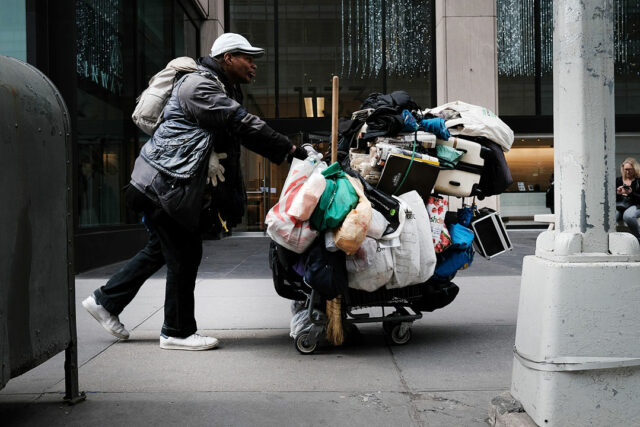
A HOMELESS MAN walks through Manhattan in New York City in this March 31 photo. — SPENCER PLATT/GETTY IMAGES VIA BLOOMBERG

THE IMPACTS of coronavirus disease 2019 (COVID-19), rising global inequality and soaring food prices caused by the war in Ukraine are set to send more than a quarter-billion more people into poverty this year, according to charity group Oxfam International.

The combined hit may result in a total of 860 million people living below the $1.90 a day line by the end of 2022, or 263 million more than the projection before the pandemic, the group said in a report on Tuesday. That’s equivalent to the entire population of the UK, France, Germany and Spain combined.

Oxfam released the report ahead of the International Monetary Fund (IMF) and World Bank Spring Meetings taking place next week in Washington, where global economic challenges and the shock of Russia’s invasion are set to feature as two of the main focuses.

The poorest people will be hit hardest, with food costs accounting for 40% of consumer spending in sub-Saharan Africa, compared with 17% in advanced economies, Oxfam said, citing an IMF report.

Oxfam warned that the return of inflation is a recipe for financial turmoil in lower-income countries that need dollars for their energy, medicine and food imports, and whose debt is largely in the US currency.

To address the situation, Oxfam proposed a number of ideas. They include an annual wealth tax on millionaires starting at 2%, and 5% on billionaires, which the organization estimates would generate $2.52 trillion a year. That would be enough to lift 2.3 billion people out of poverty, make enough vaccines for the world, and deliver universal health care and social protection for everyone living in low- and lower middle-income countries.

“We reject any notion that governments do not have the money or means to lift all people out of poverty and hunger and ensure their health and welfare,” said Oxfam International Executive Director Gabriela Bucher. “We only see the absence of economic imagination and political will to actually do so.”

In the US, President Joseph R. Biden last month proposed a 20% minimum tax on households worth more than $100 million. While it could generate hundreds of billions of dollars in new revenue and has strong support among many Democrats, it’s unlikely to be passed anytime soon in Congress, where the party has razor-thin margins, because many moderate lawmakers are skittish about such a big tax overhaul.

Oxfam also is urging the Group of 20 biggest nations to cancel all debt payments this year and next for all low- and lower-middle-income countries that require it. The group estimated that debt servicing for all of the world’s poorest countries will amount to $43 billion this year — equivalent to almost half their food-import bills and public spending on health care combined. — Bloomberg

Ukraine rights group tells top UN body that rape is being used as weapon of war

REUTERS/MIKE SEGAR/FILE PHOTO

UNITED NATIONS — The United Nations is increasingly hearing accounts of rape and sexual violence in Ukraine, a senior U.N. official told the Security Council on Monday, as a Ukrainian human rights group accused Russian troops of using rape as a weapon of war.

Kateryna Cherepakha, president of La Strada-Ukraine, said her organization’s emergency hotlines had received calls accusing Russian soldiers of nine cases of rape, involving 12 women and girls.

“This is just the tip of the iceberg,” she told the council via video. “We know and see — and we want you to hear our voices — that violence and rape is used now as a weapon of war by Russian invaders in Ukraine.”

Russia has repeatedly denied attacking civilians since its invasion of Ukraine began on Feb. 24.

The United Nations said last week that U.N. human rights monitors were seeking to verify allegations of sexual violence by Russian forces, including gang rape and rapes in front of children, and claims Ukrainian forces and civil defense militias had also committed sexual violence.

Ukraine’s U.N. mission did not immediately respond to a request for comment on allegations against Ukraine forces.

“Russia, as we have stated more than once, does not wage war against the civilian population,” Russia’s deputy U.N. Ambassador Dmitry Polyanskiy told the Security Council on Monday, accusing Ukraine and allies of “a clear intention to present Russian soldiers as sadists and rapists.”

UN Women Executive Director, Sima Bahous, said that all allegations must by independently investigated to ensure justice and accountability.

“We are increasingly hearing of rape and sexual violence,” she told the council. “The combination of mass displacement with the large pressure results of conscripts and mercenaries and the brutality displayed against Ukrainian civilians has raised all red flags.”

All sides in the Ukraine war have systems of conscription, where young men are required by law to do military service. Ukraine and Russia have accused each other of using mercenaries.

Russia says it is carrying out a “special military operation” to support independence declarations by separatists in two provinces in eastern Ukraine.

Ukraine’s U.N. Ambassador Sergiy Kyslytsya told the Security Council that the Prosecutor General’s Office of Ukraine was “launching a special mechanism of documentation of cases of sexual violence by Russian soldiers against Ukrainian women.” — Reuters

Taiwan issues first war survival handbook amid China threat

REUTERS

TAIPEI — Taiwan’s military released a handbook on civil defense for the first time on Tuesday, giving citizens survival guidance in a war scenario as Russia’s invasion of Ukraine focuses attention on how the island should respond to China’s pressure.

China has never renounced the use of force to bring Taiwan under its control, and has stepped up military activities nearby in the past two years, to press it into accepting its sovereignty claims.

Taiwan’s handbook details how to find bomb shelters via smartphone apps, water and food supplies, as well as tips for preparing emergency first aid kits.

Planning for the handbook pre-dates Russia’s attack on its neighbor, which has prompted debate on its implications for Taiwan and ways to boost preparedness, such as reforms to the training of reservists.

“(We) are providing information on how citizens should react in a military crisis and possible disasters to come,” Liu Tai-yi, an official of the ministry’s All-out Defense Mobilization unit, told an online news conference.

That would enable safety preparedness and help people to survive, he added.

He said the handbook, which draws from similar guides issued by Sweden and Japan, would be further updated with localized information such as the sites of shelters, hospitals and shops for daily needs.

The handbook uses comic strips and pictures with tips to survive a military attack, such as how to distinguish air raid sirens and ways to shelter from missiles.

Taiwan has not reported any sign of an imminent invasion planned by China, but has raised its alert level since the beginning of the war in Ukraine, which Moscow calls a “special military operation.”

President Tsai Ing-wen has vowed repeatedly to defend the island and is overseeing a broad modernization program to make its forces more mobile and harder to attack.

Besides the plans unveiled last year to reform training for reserve forces, the government is looking to extend compulsory military service beyond four months. — Reuters

Taiwan premier calls for speedy passage of chip protection laws

Taiwan‘s premier has called for the swift passage of revisions to laws mandating tougher punishments to prevent China from stealing its chip technology, saying the threat from the “red supply chain” needed an effective deterrence.

In February, Taiwan‘s Cabinet proposed toughening the rules, amid rising concern in Taipei that Beijing, which claims the democratically ruled island as its own territory, is stepping up its economic espionage.Read full story

Home to industry giant TSMC 2330.TW and accounting for 92% of the world’s most advanced semiconductor manufacturing capacity, Taiwan possesses what China needs – chip expertise in spades.

Chips made by Taiwan are used in everything from fighter jets to mobile phones, and the government has long worried about Chinese efforts to copy that success, including through economic espionage, poaching talent and other methods. Read full story

Taiwanese Premier Su Tseng-chang told a Cabinet meeting that the “red supply chain” – a reference to the colors of China’s ruling Communist Party – was using various methods to “infiltrate” Taiwan, take its talent and steal its technology, his office said in a statement late on Monday.

Law enforcement agencies need to work together to crack down and investigate, he added.

Su said he had asked the justice ministry to work with parliament to ensure the revisions to the law proposed in February were passed “at the earliest date”.

Other departments, including the economy ministry and China-policy making Mainland Affairs Council, need to raise penalties for Chinese firms masquerading as Taiwanese ones to poach talent “in order to have a deterrence effect”, he added.

Taiwan‘s cabinet is proposing new offenses for “economic espionage” under the national security law, setting out punishment of up to 12 years in prison for those who leak core technologies to China or “foreign enemy forces”.

China has stepped up its military and diplomatic pressure to try and force Taiwan to accept its sovereignty claims.

Taiwan‘s government says only the island’s 23 million people can decide their future, and they will defend themselves if attacked. – Reuters

As Malaysia tests AI court sentencing, some lawyers fear for justice

STOCK PHOTO | Image by VBlock from Pixabay

Few cases ruffle Hamid Ismail after nearly two decades as a lawyer, but he was taken aback when a man he defended was sentenced with the help of an artificial intelligence tool in the Malaysian state of Sabah.

Ismail knew courts in Sabah and neighboring Sarawak were testing the AI tool for sentencing recommendations as part of a nationwide pilot, but was uneasy that the technology was being used before lawyers, judges and the public fully understood it.

There was no proper consultation on the technology’s use, and it is not contemplated in the country’s penal code, he said.

“Our Criminal Procedure Code does not provide for use of AI in the courts … I think it’s unconstitutional,” said Ismail, adding that the AI-recommended sentence for his client for a minor drug possession charge was too harsh.

The courts of Sabah and Sarawak piloted software developed by Sarawak Information Systems, a state government firm, which said at the time that it had held consultations during the process, and taken steps to address some of the concerns raised.

World over, the use of AI in the criminal justice system is growing quickly, from the popular DoNotPay chatbot lawyer mobile app to robot judges in Estonia adjudicating small claims, to robot mediators in Canada and AI judges in Chinese courts.

Authorities say AI-based systems make sentencing more consistent and can clear case backlogs quickly and cheaply, helping all parties in legal proceedings to avoid lengthy, expensive and stressful litigation.

More than a third of government respondents in a global survey last year by research firm Gartner indicated that they planned to increase investments in AI-powered systems including chatbots, facial recognition and data mining across sectors.

This month, Malaysian federal authorities aim to conclude their nationwide trial of the AI sentencing tools, which they have said “can improve the quality of judgment”, though it is not entirely clear how they will be used in courts.

A spokesperson for Malaysia‘s Chief Justice said the use of AI in courts was “still in the trial stage”, declining further comment.


BIAS, MITIGATING FACTORS

Critics warn AI risks entrenching and amplifying bias against minorities and marginalised groups, saying the technology lacks a judge’s ability to weigh up individual circumstances, or adapt to changing social mores.

“In sentencing, judges don’t just look at the facts of the case – they also consider mitigating factors, and use their discretion. But AI cannot use discretion,” Ismail told the Thomson Reuters Foundation.

Considering aggravating and mitigating factors “requires a human mind”, said Charles Hector Fernandez, a Malaysian human rights lawyer.

“Sentences also vary with changing times and changing public opinion. We need more judges and prosecutors to handle increasing caseloads; AI cannot replace human judges,” he added.

Seeking to address concerns that its AI software might lead to bias in sentencing, Sarawak Information Systems said it had removed the “race” variable from the algorithm.

But while “such mitigating measures are valuable, they do not make the system perfect”, said a 2020 report on the tool from the Khazanah Research Institute (KRI), a policy think-tank.

It also noted that the company had only used a dataset of five years from 2014-19 to train the algorithm, “which seems somewhat limited in comparison with the extensive databases used in global efforts”.

Sarawak Information Systems could not be reached for comment on whether it had since expanded its database.

An analysis by KRI of cases in Sabah and Sarawak showed that judges followed the AI sentencing recommendation in a third of the cases, all of which involved rape or drug possession under the terms of the two states’ pilot.

Some of the judges reduced the suggested sentences in light of mitigating factors. Others were toughened on the basis that they would not serve as a “strong enough deterrent”.


‘OPAQUE ALGORITHM’

Technology does have the potential to improve efficiency in the criminal justice system, said Simon Chesterman, a professor of law at the National University of Singapore.

But its legitimacy depends not only on the accuracy of the decisions made, but also the manner in which they are made, he added.

“Many decisions might properly be handed over to the machines. (But) a judge should not outsource discretion to an opaque algorithm,” said Chesterman, a senior director at AI Singapore, a government program.

Malayasia’s Bar Council, which represents lawyers, has also voiced concern about the AI pilot.

When courts in Kuala Lumpur, the capital, started using it in mid-2021 for sentencing in 20 types of crimes, the council said it was “not given guidelines at all, and we had no opportunity to get feedback from criminal law practitioners”.

In Sabah, Ismail appealed his client’s sentence recommendation by the AI tool, which the judge followed.

But he said many lawyers would not mount a challenge – potentially condemning their clients to overly harsh sentences.

“The AI acts like a senior judge,” Ismail said.

“Young magistrates may think it’s the best decision, and accept it without question.” – Reuters

U.S. monitoring rise in rights abuses in India, Blinken says

US Secretary of State Antony Blinken. Official White House — CAMERON SMITH VIA FLICKR

U.S. Secretary of State Antony Blinken said the United States was monitoring what he described as a rise in human rights abuses in India by some officials, in a rare direct rebuke by Washington of the Asian nation’s rights record.

“We regularly engage with our Indian partners on these shared values (of human rights) and to that end, we are monitoring some recent concerning developments in India including a rise in human rights abuses by some government, police and prison officials,” Blinken said on Monday in a joint press briefing with U.S. Defense Secretary Lloyd Austin, Indian Foreign Minister Subrahmanyam Jaishankar and India‘s Defense Minister Rajnath Singh.

Mr. Blinken did not elaborate. Mr. Singh and Mr. Jaishankar, who spoke after Mr. Blinken at the briefing, did not comment on the human rights issue.

Mr. Blinken‘s remarks came days after U.S. Representative Ilhan Omar questioned the alleged reluctance of the U.S. government to criticize Indian Prime Minister Narendra Modi’s government on human rights.

“What does Modi need to do to India’s Muslim population before we will stop considering them a partner in peace?” Ms. Omar, who belongs to President Joe Biden’s Democratic Party, said last week.

Mr. Modi’s critics say his Hindu nationalist ruling party has fostered religious polarization since coming to power in 2014. Read full story

Since Mr. Modi came to power, right-wing Hindu groups have launched attacks on minorities claiming they are trying to prevent religious conversions. Several Indian states have passed or are considering anti-conversion laws that challenge the constitutionally protected right to freedom of belief. Read full story

In 2019, the government passed a citizenship law that critics said undermined India‘s secular constitution by excluding Muslim migrants from neighbouring countries. The law was meant to grant Indian nationality to Buddhists, Christians, Hindus, Jains, Parsis and Sikhs who fled Afghanistan, Bangladesh and Pakistan before 2015.

In the same year, soon after his 2019 re-election win, Mr. Modi’s government revoked the special status of Kashmir in a bid to fully integrate the Muslim-majority region with the rest of the country. To keep a lid on protests, the administration detained many Kashmir political leaders and sent many more paramilitary police and soldiers to the Himalayan region also claimed by Pakistan.

Mr. Modi’s Bharatiya Janata Party (BJP) recently banned wearing the hijab in classrooms in Karnataka state. Hardline Hindu groups later demanded such restrictions in more Indian states. – Reuters

Biden to Modi: Buying more Russian oil is not in India’s interest

REUTERS

President Joe Biden told Indian Prime Minister Narendra Modi that buying more oil from Russia was not in India’s interest and could hamper the U.S. response to the war in Ukraine, U.S. officials said.

Starting an hour-long video call U.S. officials described as “warm” and “candid,” Biden and Modi both publicly expressed growing alarm at the destruction inside Ukraine, especially in Bucha, where many civilians have been killed.

Mr. Biden stopped short of making a “concrete ask” of Modi on Monday, an official said, noting India has concerns about deepening ties between Russia and China.

But he told Mr. Modi India’s position in the world would not be enhanced by relying on Russian energy sources, U.S. officials said.

“The president conveyed very clearly that it is not in their interest to increase that,” said White House spokesperson Jen Psaki.

India’s External Affairs Minister Subrahmanyam Jaishankar, at a news conference later on Monday, pushed back against a question on India’s energy purchases from Russia, saying the focus should be on Europe, not India. “Probably our total purchases for the month would be less than what Europe does in an afternoon.”

Broad talks between the world’s two largest democracies took place as the United States seeks more help from India in condemning, and applying economic pressure on, Russia for an invasion Moscow calls a “special military operation.”

“Recently, the news of the killings of innocent civilians in the city of Bucha was very worrying,” Mr. Modi said during a brief portion of the meeting open to reporters. “We immediately condemned it and have asked for an independent probe.”

Mr. Modi also said he had suggested in recent conversations with Russia that President Vladimir Putin and Ukrainian President Volodymyr Zelenskiy hold direct talks.

The South Asian nation has tried to balance its ties with Russia and the West but unlike other members of the Quad countries – the United States, Japan and Australia – it has not imposed sanctions on Russia.

Mr. Biden recently said that only India among the Quad group of countries was “somewhat shaky” in acting against Russia.

Lured by steep discounts following Western sanctions on Russian entities, India has bought at least 13 million barrels of Russian crude oil since the invasion in late February. That compared with some 16 million barrels for the whole of last year, data compiled by Reuters shows.

Ms. Psaki did not disclose whether India had made any commitments on energy imports but said Washington stands ready to help the country diversify its sources of energy.

Noting Mr. Modi‘s statements about the war on Monday, Psaki said, “part of our objective now is to build on that and to encourage them to do more. And that’s why it’s important to have leader to leader conversations.”

A U.S. official added that “we haven’t asked India to do anything in particular.” The official said “India is gonna make its own judgments” following “a very candid conversation.”

Talks in Washington on Monday took place between U.S. Secretary of State Antony Blinken, U.S. Secretary of Defense Lloyd Austin and their Indian counterparts Jaishankar and Indian Defense Minister Rajnath Singh.

Mr. Blinken said India’s ties with Russia developed over decades at a time when the United States was not able to be a partner to India, but that times had since changed.

“Today we are able and willing to be a partner of choice with India across virtually every realm,” Mr. Blinken said at a joint presser following the talks.

India’s modernization needs on defense were a key topic the two sides have discussed at length, the ministers said.

U.S. Defense Secretary Lloyd Austin said the two countries had signed a bilateral agreement to support sharing information and cooperation in space.

Mr. Biden told Mr. Modi he looked forward to seeing him in Japan for a Quad meeting “on about the 24th of May” and the two leaders also discussed a range of other issues, officials said. – Reuters

Learn about the controversial South China Sea arbitration through this MCLE course by Atty. Fretti Ganchoon

Conflicts pertaining to territories are among the global constants even in the modern times. In this part of the world, a long-standing dispute over the South China Sea can be summed up as one about legal strategies, combined political clout, and military might.

In July 2016, the Philippines somehow scored a victory against China when it got a favorable ruling from the Arbitral Tribunal in the South China Sea Arbitration (The Republic of the Philippines v. The People’s Republic of China). However, China has rejected that decision and dismissed it as null and void.

There are clear indications that this issue will still last a long time, as China continues to build military facilities in the Spratlys and cases of reported intimidation of Filipino fishermen by Chinese military vessels continue to abound.

According to Atty. Fretti G. Ganchoon, Senior State Counsel at the Department of Justice (DoJ), there are existing legislations that must be updated or revised as “we have an obligation under the international law to make necessary modifications in our laws to make sure they are aligned with the United Nations Convention on the Law of the Sea (UNCLOS).”

Atty. Ganchoon discusses the controversial territorial issue and the significant implications in the course ‘The South China Sea Arbitration: Settlement of Disputes under UNCLOS vis-à-vis General International Law’ under the subject International Law and International Conventions at the Access MCLE Lecture Series 6 set in March 2022.

As among the most sought-after experts about this subject, Atty. Ganchoon graduated from the Maritime Law Institute in Malta, which prides itself on its renowned LLM program on the law of the seas. There, she was exposed to the other significant areas of International Maritime Law, including Maritime Security Law, Shipping Law, and Marine Environmental Law.

A graduate of the Ateneo School of Law, Atty. Ganchoon is a Law Professor at the Far Eastern University (FEU) Institute of Law where she teaches Special Issues in International Law, focused on the Law of the Sea. At the MCLE, she teaches Law of the Sea focusing on the South China Sea.

Learn from the brightest, including Atty. Fretti Ganchoon, on ACCESS. Check other MCLE courses here.


Spotlight is BusinessWorld’s sponsored section that allows advertisers to amplify their brand and connect with BusinessWorld’s audience by enabling them to publish their stories directly on the BusinessWorld Web site. For more information, send an email to online@bworldonline.com.

Join us on Viber to get more updates from BusinessWorld: https://bit.ly/3hv6bLA.

Voyager raises $210 million to become 2nd Philippine ‘unicorn’

MANILA – Philippine technology startup Voyager Innovations said on Tuesday it has raised $210 million in its latest funding round, making the company the country’s second “unicorn” with a valuation of more than $1 billion.

Voyager, which serves 47 million people through its consumer platforms that include e-wallet and digital payments, said the fresh capital will fund its digital banking venture and other services like cryptocurrency and micro-investments.

SIG Venture Capital, the Asian venture capital arm of SIG, Singapore-based global investor EDBI, and investment holding company First Pacific Company Ltd, participated in the funding round as new investors, Voyager said.

Voyager’s existing shareholders like PLDT, private equity firm KKR & Co Inc, China’s Tencent Holdings Ltd and International Finance Corp (IFC) also joined the capital injection.

The latest funding increased the valuation of Voyager to $1.4 billion, it said. In June, Voyager raised $167 million for its expansion programme, bringing in a unit of the World Bank Group’s IFC as a new investor.

Voyager’s rival, Mynt, is the only other Philippine unicorn, or startups that have reached at least $1 billion in valuation. Mynt is partly owned by Globe Telecom, Bow Wave and Ant Financial, the financial technology arm of Alibaba.

The Philippines is among the fastest-growing fintech markets in Southeast Asia, with adoption of digital services surging during the pandemic. Its internet economy grew 93% to $17 billion in 2021, and is expected to expand to $40 billion by 2025, according to a report by Google, Temasek, and Bain & Co. — Reuters

War’s impact on PHL ‘minimal’ — BSP

Ukrainian expatriates and Filipinos held a small protest against Russia’s invasion of Ukraine outside a mall in Makati City, Feb. 28. — PHILIPPINE STAR/ MICHAEL VARCAS

THE CENTRAL BANK on Monday said Philippine banks have “minimal” exposure to Russia and Ukraine, as the war continues for a seventh week.

Bangko Sentral ng Pilipinas (BSP) Governor Benjamin E. Diokno said cross-border deposit liabilities of Philippine banks to Russia and Ukraine amounted to less than 1% of the banking industry’s total deposit liabilities as of end-September last year.

“The cross-border financial exposure of Philippine banks to Russia and Ukraine is minimal. As of end-September 2021, Philippine banks have cross-border deposit liabilities to Russia and Ukraine amounting to only $672,200 and $969,200, respectively,” he said in a Viber message to reporters on Sunday evening. 

Local lenders have no cross-border financial assets with Ukraine and Russia, the BSP chief added.

Mr. Diokno said two Philippine banks have P254.12 million in investments, through their trust departments, in two Russian banks — VTB Bank Public Joint Stock Co. and the Russian Agricultural Bank — as of December 2021.

“This represents less than 1% of (the two Philippine banks’) total assets under management,” he said.   

Mr. Diokno also said inflows from both Russia and Ukraine account for less than 1% of the total cash remittances last year.

“Nevertheless, BSP is aware that the crisis could indirectly affect the flow of remittances of overseas Filipinos from the two warring countries,” Mr. Diokno said.

Central bank data showed that cash remittances from Russia and Ukraine in 2021 amounted to $2.261 million and $121,000, respectively. Both are relatively small compared with the $3.745 billion worth of inflows that come from Europe and the $31.417-billion total from all over the world in the same year.

The BSP chief also noted the country’s direct trade links with Russia and Ukraine are “negligible.” Exports to Russia only amounted to $120 million or 0.2% of the Philippines’ total exports in 2021, while exports to Ukraine reached $5 million.

“In brief, trade financing transactions of banks with Russian counterparts are inconsequential,” Mr. Diokno said.

He reiterated that the country will continue to see limited economic fallout from Russia’s invasion of Ukraine.

“The economic fallout from the Russia-Ukraine on the Philippine economy is limited for three reasons: first, the country’s geographic distance from the conflict area; second, the country’s limited economic and business links with both Russia and Ukraine; and third, its strong macroeconomic fundamentals,” Mr. Diokno said.

Reuters reported on Saturday that S&P lowered Russia’s foreign currency ratings to “selective default” on increased risks that Moscow will not be able and willing to honor its commitments to foreign debtholders.

Russia is facing more sanctions from Western economies over its invasion of Ukraine.

The BSP earlier acknowledged the war’s impact will spill over to the Philippine economy, mainly through rising inflation.

In its March 24 meeting, the BSP raised its inflation forecast for 2022 to 4.3%, which is already above the 2-4% target.

In March, headline inflation quickened to 4% from 3% in February, already reflecting the impact of the Russia-Ukraine war on global oil prices and commodity prices. 

There have been global concerns over possible energy supply disruptions due to the crisis. Russia is one of the world’s major oil exporters, while Ukraine is a major global wheat exporter. — L.W.T.Noble with Reuters