Home Blog Page 6478

Biden seeks to keep China in focus by welcoming ASEAN leaders

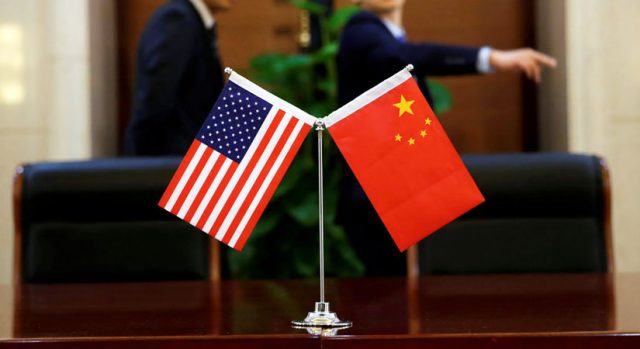
WASHINGTON — President Joseph R. Biden will host Southeast Asian leaders in Washington this week, seeking to show his administration remains focused on the Indo-Pacific and the long-term challenge of China despite the Ukraine crisis.

A two-day summit with the 10-nation Association of Southeast Asian Nations (ASEAN) begins with a White House dinner on Thursday before talks at the State Department on Friday.

It will be the first-time leaders of ASEAN, created in some of the darkest days of the Cold War, gather as a group at the White House. President Barack Obama was the last US leader to host them, at Sunnylands in California in 2016.

Up to eight ASEAN leaders are expected. Myanmar’s leader has been excluded over a coup last year and the Philippines is in transition after an election.

The White House said discussions were under way with ASEAN about having an empty chair represent Myanmar at the summit to reflect dissatisfaction over the coup.

The ASEAN leaders, accompanied by US Secretary of Commerce Gina Raimondo and US Trade Representative Katherine Tai, will meet US business leaders on Thursday, the White House told reporters in a call. 

The summit takes place ahead of Mr. Biden’s May 20-24 visit to South Korea and Japan, which includes a plan to meet fellow leaders of the Quad countries — Australia, India and Japan — who share US concerns about China’s ambitions to expand its influence in the region and globally.

Mr. Biden’s Indo-Pacific coordinator Kurt Campbell spoke at a think tank on Wednesday of a deep sense in the administration of the need not to be distracted from the Indo-Pacific, and said it would seek to increase US investment and engagement in ASEAN countries.

He said China, Myanmar, Taiwan and Ukraine would be among the issues discussed.

“We believe it’s critical for other countries to both publicly and privately underscore that what has taken place in Ukraine must never happen in Asia,” he said, referring to China’s threats to retake Taiwan by force if necessary.

Mr. Campbell acknowledged critiques that US engagement with ASEAN had waned in many important areas.

“We have to send a signal that the United States will be a steady partner, and that our strategic interests push us and point us into playing a larger role over time,” he said.

Mr. Campbell said on Monday there would be “substantial” discussions with ASEAN on technology, education, infrastructure, and that Washington would soon announce plans to better battle illegal fishing in the Pacific.

Kate Rebholz, acting US ambassador to ASEAN said the summit would bring “an ambitious and forward-looking US-ASEAN vision statement” and new initiatives, including partnerships in public health, climate and economic growth.

Even if the summit is largely symbolic and no dramatic advances are to be expected, analysts and diplomats said the fact it was taking place aimed to show that China remains a leading US long-term foreign policy challenge, regardless of Russia’s actions in Ukraine.

They said it would likely elevate the current US-ASEAN “strategic partnership” by adding a word to make it a “comprehensive” strategic partnership, bringing it into line with the description of ASEAN’s ties with Australia and China.

“The meeting is the message … that the US is in fact capable of walking and chewing gum at the same time, and it’s not distracted,” Bilahari Kausikan, a former permanent secretary of Singapore’s foreign ministry, told the Stimson Center think tank on Monday.

US ‘FALLS FLAT’ ON ECONOMICS
ASEAN countries also share concerns about China and are broadly keen to boost ties with Washington, but they have been frustrated by a US delay in detailing plans for economic engagement since former President Donald Trump quit a regional trade pact in 2017.

At a virtual summit with ASEAN last October, Mr. Biden said Washington would start talks about developing a regional economic framework, but diplomats say this is likely to feature only peripherally this week.

Japan’s Washington ambassador said Biden’s Indo-Pacific Economic Framework (IPEF) is likely to be formally launched in Japan, but its details were still under discussion.

Analysts and diplomats say only two of the 10 ASEAN countries — Singapore and the Philippines — are expected to be among the initial group of states to sign up for the negotiations under IPEF, which does not currently offer the expanded market access Asian nations crave, given Mr. Biden’s concern for American jobs.

There has also been some frustration that ASEAN leaders will get little personal time with Mr. Biden, with no bilateral meetings announced, though the White House said Mr. Biden will have “private time” with each leader.

An adviser to Cambodian Prime Minister Hun Sen, in office since 1985 but making his first White House visit, told Reuters Mr. Biden should spend more time with leaders if serious about elevating ties. — Reuters

Biden eyes new ways to bar China from scooping up US data

REUTERS

WASHINGTON — The Biden administration has drafted an executive order that would give the Department of Justice vast powers to stop foreign adversaries like China accessing Americans’ personal data, according to a person familiar with the matter and excerpts seen by Reuters. 

The proposal, which is being reviewed by government agencies, would also direct the Department of Health and Human Services (HHS) to prevent federal funding from supporting the transfer of US health data to foreign adversaries, according to the excerpts. 

The draft order reflects an effort by the administration to respond more aggressively to national security threats allegedly posed by Chinese companies that acquire reams of U.S. personal data, after failed bids by the Trump administration to bar Americans from using popular social media platforms TikTok and Wechat. 

Former President Donald J. Trump tried to ban the apps in 2020 alleging data collected by them could be given to Beijing and used to track users and censor content. China and the apps have denied any improper use of US data. 

But the courts halted implementation of the bans and US President Joseph R. Biden, Jr., eventually revoked them. 

Spokespeople for the White House, the Department of Justice and the Commerce Department declined to comment. HHS did not respond to requests for comment. 

The document is an initial draft that does not include input from government agencies and may change, according to another person familiar with the matter. 

“What’s clear is the Biden administration is grappling with how to address this new risk frontier in the US-China relationship, which is the Chinese government’s access to Americans’ sensitive data,” said Samm Sacks, a senior fellow at Yale Law School’s Paul Tsai China Center, who examines information and communications policies. 

If implemented, the draft order would grant US Attorney General Merrick Garland the authority to review and potentially bar commercial transactions involving the sale of or access to data if they pose an undue risk to national security, one of the people said. 

The proposal would also instruct HHS to get started on writing a rule “to ensure that federal assistance, such as grants and awards, is not supporting the transfer of US persons’ health, health-related or biological data…to entities owned by, controlled by, or subject to the jurisdiction or direction of foreign adversaries,” according to an excerpt. 

US intelligence has warned about the risks posed by Chinese companies collecting Americans’ personal data by investing in US firms that handle sensitive healthcare information. China’s BGI purchased US genomic sequencing firm Complete Genomics in 2013 and in 2015, Chinese WuXi Pharma Tech acquired U.S. firm NextCODE Health, the National Counterintelligence and Security Center noted in a 2021 fact sheet

The draft order comes as administration officials have grown frustrated with the Commerce Department over delays in rolling out rules and investigating threats under similar powers granted to that department by Mr. Trump in 2019, according to three people familiar with the process. 

Those powers allow the Commerce Department to ban or restrict transactions between US firms and internet, telecom and tech companies from “foreign adversary” nations, including Russia and China. 

But so far, the department has failed to publish long-awaited rules fleshing out a safe harbor process for companies or announce the results of investigations into firms including Russia’s Kaspersky and China’s Alibaba, as previously reported by Reuters. 

The Commerce Department was also explicitly directed by a June executive order to use the new tools to protect Americans’ sensitive data from foreign adversaries via transactions involving apps, but has not made public any progress related to the measure. 

The new draft order gives the Department of Justice the express authority to “monitor compliance with and enforce any prohibitions, licenses, or mitigation agreements” issued under the prior executive orders, “thereby supporting the authority given to the Secretary of Commerce.” 

It also tasks the Secretary of Commerce with establishing which classes of transactions are outright prohibited and which are exempt, another excerpt shows. — Alexandra Alper and Karen Freifeld/Reuters

Vietnam leader interested in Biden economic framework, but needs to study details

Prime Minister Pham Minh Chinh of Vietnam (right) meets with US Secretary of Defense Lloyd J. Austin III in Hanoi, Vietnam, July 29, 2021. Image via Chad J. McNeeley/US Department of Defense.

WASHINGTON — Vietnamese Prime Minister Pham Minh Chinh said on Wednesday that Hanoi was interested in helping the United States realize the aims of its proposed economic framework for the Indo-Pacific, but needed time to study the details. 

Mr. Chinh, in Washington for a two-day summit between President Joseph R. Biden, Jr., and Southeast Asian leaders starting on Thursday, said he had had discussions on Mr. Biden’s Indo-Pacific Economic Framework (IPEF) with US officials earlier on Wednesday. 

“We would like to work with the US to realize the four pillars of that initiative,” he told a question-and-answer session after delivering a speech at Washington’s Center for Strategic and International Studies. 

He said the pillars were supply-chain stability, digital economy, the fight against climate change and a fourth related to labor, tax, and combating corruption. 

“These are very important to the US, to Vietnam and other countries alike,” he said, speaking through a translator. 

However, Mr. Chinh said the “concrete elements” of the initiative had yet to be clarified. 

“We are ready to engage in discussion with the US to clarify what these four pillars will entail and when that is clarified, we would have something to discuss,” he added. “We need more time to study this initiative and see what it entails.” 

Asian countries have been frustrated by a US delay in detailing plans for economic engagement with the region since former President Donald Trump quit a regional trade pact in 2017, leaving the field open to US rival China. 

At a virtual summit with ASEAN last October, Mr. Biden said Washington would start talks about developing what has become known as IPEF, which aims to set regional standards for cooperation, but diplomats say this is likely to feature only peripherally this week. 

Japan’s Washington ambassador said this week IPEF is likely to be formally launched when Mr. Biden visits Japan later this month, but its details were still under discussion. 

Analysts and diplomats say only two of the 10 ASEAN countries — Singapore and the Philippines — were expected to be among the initial group of states to sign up for negotiations under IPEF, which does not currently offer the expanded market access Asian nations crave given Mr. Biden’s concern for American jobs. 

Mr. Chinh hailed the blossoming of Hanoi’s relations with the United States in recent decades and the explosion of bilateral trade to almost $112 billion annually, although he said the two sides should further advance cooperation to deal with the legacy of their hostility in the Vietnam War. — Reuters

Google unveils new 10-shade skin tone scale to test AI for bias

Monk Skin Tone Scale. -- Image via skintone.google

OAKLAND, Calif. — Alphabet Inc.’s Google on Wednesday unveiled a palette of 10 skin tones that it described as a step forward in making gadgets and apps that better serve people of color.

The company said its new Monk Skin Tone Scale replaces a flawed standard of six colors known as the Fitzpatrick Skin Type, which had become popular in the tech industry to assess whether smartwatch heart-rate sensors, artificial intelligence (AI) systems including facial recognition and other offerings show color bias.

Tech researchers acknowledged that Fitzpatrick underrepresented people with darker skin. Reuters exclusively reported last year that Google was developing an alternative.

The company partnered with Harvard University sociologist Ellis Monk, who studies colorism and had felt dehumanized by cameras that failed to detect his face and reflect his skin tone.

Mr. Monk said Fitzpatrick is great for classifying differences among lighter skin. But most people are darker, so he wanted a scale that “does a better job for the majority of the world,” he said.

Mr. Monk through Photoshop and other digital art tools curated 10 tones — a manageable number for people who help train and assess AI systems. He and Google surveyed around 3,000 people across the United States and found that a significant number said a 10-point scale matched their skin as well as a 40-shade palette did.

Tulsee Doshi, head of product for Google’s responsible AI team, called the Monk scale “a good balance between being representative and being tractable.”

Google is already applying it. Beauty-related Google Images searches such as “bridal makeup looks” now allow filtering results based on Monk. Image searches such as “cute babies” now show photos with varying skin tones.

The Monk scale also is being deployed to ensure a range of people are satisfied with filter options in Google Photos and that the company’s face-matching software is not biased.

Still, Ms. Doshi said problems could seep into products if companies do not have enough data on each of the tones, or if the people or tools used to classify others’ skin are biased by lighting differences or personal perceptions. — Reuters

How Wall Street banks made a killing on SPAC craze

REUTERS

NEW YORK — Investment banks have raked in billions of dollars by feeding the frenzy for blank-check companies, and they have done so largely without risking any of their own money on hundreds of deals that have left many investors with punishing losses. 

A look at one of these deals shows how. 

In late 2020, Acies Acquisition Corp. tapped into investor demand for blank-check companies — formally known as special purpose acquisition companies, or SPACs — with an initial public offering that raised $215 million. Among the investment banks Acies signed up to underwrite the IPO were JPMorgan Chase & Co., Morgan Stanley, and Oppenheimer & Co. 

When the offering closed, Acies, essentially a shell company, followed the SPAC template. With the cash it had raised, it had two years to find and merge with a private company seeking a stock market listing, or return the money to investors. Acies’ management team announced it was on the hunt for a business in the “experiential entertainment industry.” 

The team didn’t have to look for very long. Hours after the IPO closed, bankers advising Playstudios Inc. contacted Acies managers to tell them the Las Vegas-based maker of mobile casino games was for sale, regulatory filings show. Those bankers were also with JPMorgan. In early 2021, the two companies announced plans for a merger that valued Playstudios at $1.1 billion. 

In the run-up to the merger and the listing of the combined company’s shares, Playstudios touted a rosy future. It forecast that surging ad sales, a new role-playing game and cross-marketing offerings to game players would bring a 20% rise in revenue in 2021 and a 33% jump this year. 

Since then, the company has scrapped the new game, and revenue fell far short of predictions. Retail investors suffered the consequences. The stock is down more than 50% since shareholders approved the merger last June. 

“Playstudios is one that looks like crap right now,” Dan Ushman, a 37-year-old Chicago-area entrepreneur, said earlier this year. He put about $26,000 into Acies after it announced its deal with Playstudios and soon saw his investment drop more than 35%. 

Investment banks involved in the deal fared much better, having risked none of their own money, based on a Reuters review of regulatory filings. 

JPMorgan, in particular, pocketed hefty fees for its dual role as an underwriter for the Acies IPO and as an adviser to Playstudios — perfectly legal, despite the apparent conflict of interest, if the bank discloses its role, as JPMorgan did. 

The bank has not disclosed its fees, but financial data provider Refinitiv estimates that JPMorgan earned $4.7 million in underwriting fees and $14.2 million as a sell-side adviser. It also received $1.6 million for helping Acies raise additional capital through a maneuver known as private investment in public equity, or PIPE, according to financial research firm Morningstar Inc and a Reuters analysis. PIPEs, which tap big institutional investors, are often necessary to close a SPAC merger. 

Morgan Stanley earned about $5.9 million and Oppenheimer about $1.2 million in underwriting fees, according to Refinitiv estimates. Each bank also got about $1.6 million in PIPE-related fees, according to Morningstar and a Reuters analysis. LionTree Advisors, another Playstudios adviser, earned $6.2 million on the deal, according to Refinitiv estimates, plus $1.6 million in PIPE fees, according to Morningstar and a Reuters analysis. 

JP Morgan, Morgan Stanley and LionTree declined to comment. An Oppenheimer spokesman said the bank had a minor role in the Acies IPO. 

Playstudios noted that the JPMorgan teams it and Acies worked with came from separate divisions of the bank. The company said it has “a robust framework for evaluating, approving, executing and optimizing its game initiatives,” and that it is continually “revisiting the conditions and decision to either advance or suspend an initiative.” 

A CURIOUS PATTERN 

The disparate outcomes of the Acies-Playstudios deal — big bucks for the investment banks that sold it and big losses for retail investors who bought into it — are typical of many SPAC deals. 

For this article, Reuters analyzed hundreds of SPACs spanning roughly two years, reviewed banks’ internal documents and regulatory filings, and interviewed more than two dozen bankers, investors, SPAC managers, lawyers and corporate executives. The examination found that investment banks turbocharged to their benefit what turned out to be a speculative bubble in companies that have often failed to live up to their pre-listing hype. 

The SPAC market has sagged since the collapse of some high-profile blank-check listings amid overall grim market conditions. And in March, the US Securities and Exchange Commission (SEC) proposed new rules that would increase disclosure requirements and potential legal liability for SPACs and their banks. Facing these market and regulatory challenges, some banks have been pulling back from the business. 

Whatever happens to the SPAC market, the Reuters examination reveals in detail for the first time how, over the past couple of years, Wall Street banks have enriched themselves by aggressively promoting the deals in the absence of the legal guardrails and financial risks associated with traditional IPOs. 

Credit Suisse summed it up last year in a confidential client presentation reviewed by Reuters: SPACs “bend the rules” of the IPO market. The Swiss bank has had a role in 136 blank-check deals since the beginning of 2020 through the end of March, according to a Reuters analysis of SPAC Research data. 

A Credit Suisse spokesperson said the language in the presentation pertains to SPAC “market conventions” that give companies and investors more flexibility than in traditional IPOs. The bank is committed to “recommending strategies that conform to all applicable rules,” the spokesperson said. 

In a traditional IPO, underwriters can be held responsible under securities law for any misleading forecasts, projections or other statements made to investors. To protect themselves against liability, banks perform rigorous due diligence on companies whose IPOs they underwrite, and those companies generally do not issue public forecasts about their performance. Banks also buy big chunks of an issuing company’s new shares, risking losses if they can’t resell the stock for more than they paid. 

With a SPAC, a bank’s role as underwriter ends once the blank-check company completes its IPO, but the bank receives a portion of its fee only after the SPAC makes an acquisition. By the time the SPAC announces a merger, SPAC underwriters aren’t responsible for forecasts and other claims about the performance of the company to be acquired and publicly listed. And because blank-check IPOs are typically priced at a nominal $10, banks don’t run the risk of having to sell new shares that fall in value. 

For investment banks, blank-check deals create “moral hazard” — an incentive to take on risk because of little exposure to it — according to Usha Rodrigues, a law professor at the University of Georgia who studies SPACs. That’s because they “don’t have the same liability with a SPAC that they have with a traditional IPO, but banks do get to collect fees if they can get a deal done,” she said. The “companies that merged with SPACs … don’t have the same level of vetting,” which most retail investors do not realize. 

Shares of companies that obtained a stock market listing in a SPAC merger from 2019 through the beginning of March were down roughly 36% on average from when their deals closed, according to data provided by Jay Ritter, a professor of finance at the University of Florida. That’s even worse than the 14% decline in shares of companies that went public through traditional IPOs during the same period, according to Nasdaq Inc. All told, according to Vanda Research, retail investors lost $4.8 billion, or 23%, of the aggregate $21.3 billion they plowed into SPACs from the beginning of 2020 to the first week of April 2022. 

Yet the deals that brought those shares to market have yielded a bonanza for investment banks. Industry tracker Coalition Greenwich estimates that banks booked about $8 billion in SPAC-related fees in 2020 and 2021. That represents roughly 6.5% of total U.S. investment banking fees that major banks collected in that period, according to Coalition Greenwich. 

“The bank has an incentive to push the deal to get closed, at any price, because they want their 3.5% of the SPAC IPO proceeds,” said Mike Stegemoller, a professor of banking and finance at Baylor University, referring to the fees underwriters receive only after a SPAC merger closes. “I think the conflict is with retail investors who are buying common shares of stock … Do you really think banks care about these retail investors? I think there are good incentives not to.” 

Many banks amped up their take by working for both sides of deals, as JPMorgan did with Acies and Playstudios. Reuters identified roughly 50 such cases from early 2020 to November 2021. 

SOURED SENTIMENT 

As the SPAC bubble has deflated, debate over responsibility for investor losses has focused on the executives of blank-check companies. These founding investors — referred to as sponsors — risk losing all of their investment if they can’t find a company to take public through a merger within the two-year window. 

However, founders acquire their shares at deep discounts to the typical $10 offering price, thanks to preferential treatment and fees that can dilute retail investors’ holdings. Likewise, the hedge funds and other institutional investors that account for a lot of the money behind SPACs often obtain their shares in an IPO or subsequent PIPE under favorable terms that put them at an advantage relative to retail investors. 

The SEC put SPACs on notice last year with several enforcement actions against specific companies and their sponsors for allegedly misleading investors about their prospects. Then, in late March, the regulator announced its proposed rules, which would, among other things, establish that investment banks that underwrite SPACs could be held legally liable for false or misleading forecasts or statements about blank-check deals. The SEC will vote on the rules after the public-comment period ends later this spring. 

The SEC declined to comment. In a March 30 statement on the proposed rules, SEC Chair Gary Gensler said “gatekeepers” such as underwriters “should have to stand behind and be responsible for basic aspects of their work” and “provide an essential function to police fraud and ensure the accuracy of disclosure to investors.” 

In its proposed rules, the SEC said that the fees underwriting banks receive when a SPAC closes a deal could indicate participation in the merger, and that banks also have a “strong financial interest” in making sure a SPAC inks a deal. For these reasons, the regulator said, it is proposing increasing banks’ liability. 

To date, investors have not sought to hold major Wall Street banks responsible for false or misleading information alleged in any of the 47 SPAC-related class action shareholder lawsuits filed since 2021, according to a Reuters analysis of a public database maintained by Stanford Law School and attorney Kevin LaCroix, who follows the cases. None of those cases have yet succeeded in court. 

One aspect of SPACs that has already drawn regulatory scrutiny is undisclosed dealings between blank-check companies and their targets before a merger is announced. That’s because investors could be misled if a SPAC privately shakes hands with an acquisition target while publicly stating it is still seeking the best possible merger partner. 

Communications between a SPAC and its acquisition target are part of an SEC investigation of former U.S. President Donald Trump’s $1.25 billion deal, announced last October, to list his new social media venture on the stock market. 

In a December filing, Digital World Acquisition Corp, the SPAC that is merging with the former president’s Trump Media & Technology Group, disclosed that the SEC had asked for documents relating to communications between Digital World and Trump Media and meetings of Digital World’s board, among other things. The SEC stated in its request that its investigation did not mean the agency had concluded that anyone violated the law, Digital World said. 

Trump Media has since launched the Truth Social platform to lackluster effect. 

Trump Media and Digital World Acquisition Corp did not respond to requests for comment. The SEC declined to comment. 

In the Acies-Playstudios deal, pre-existing relationships raise the question of whether the two companies already had a merger in mind, potentially precluding better deals for investors. 

Acies told investors when it launched its IPO that it had not identified a company to merge with and that it would pursue the best opportunity it could find. However, Andrew Pascal, chief executive officer of Playstudios, co-founded Acies with Jim Murren, who was chief executive officer of MGM Resorts Inc when that casino operator invested in Playstudios, as was disclosed in a securities filing. 

Playstudios said it “considered all viable SPAC proposals and eventually made the decision it believed was the best of the available options for the company.” Responding to Reuters inquiries on behalf of Murren and Pascal, Playstudios noted that MGM Resorts, not Murren personally, invested in the company, and that Pascal recused himself from “all Acies deliberations concerning Playstudios” once talks began and “forfeited his economic interest in Acies to avoid even the appearance of having conflicting interests.” 

BACKWATER TO BONANZA 

For decades, SPACs were a backwater of Wall Street, connecting speculators with companies that had no other means of going public. That changed in late 2019 and early 2020, when shares of Richard Branson’s spaceflight provider Virgin Galactic Holdings Inc and sports betting operator DraftKings Inc surged more than 600% after going public through SPAC mergers. Investors stuck at home during the COVID-19 pandemic and flush with cash from government stimulus payments helped drive those gains, and they clamored for more. 

Wall Street banks were happy to oblige and began aggressively promoting the business. In client presentations and other documents reviewed by Reuters, they repeatedly acknowledged the tainted reputation of SPACs and boasted of their ability to bring quality companies to market through blank-check deals. 

In a 2020 presentation, Morgan Stanley said there was a “historical perception of lower quality companies picking (the) SPAC route, although views have improved somewhat.” For its part, Morgan Stanley said it associated “only with the highest quality partners.” 

Some of its past partners include Acies, the SPAC that brought Playstudios to market. Shares of the 51 companies that Morgan Stanley has helped take public through SPACs either as an adviser or by raising money to close the deal since the beginning of 2020 were down 28% on average through late March, according to a Reuters analysis. 

Morgan Stanley declined to comment on the presentation and the performance of shares in companies that went public through its SPACs. 

Citigroup, in a 2019 presentation, said that while SPACs historically had been considered a “four-letter” word, synonymous with poor outcomes, that perception was changing as investors’ appetite for new alternatives grew. 

Companies that Citi helped bring to market through SPACs since 2020, either as an adviser or by raising money to close the deal, were down 38% on average at the beginning of May, according to a Reuters analysis of SPAC Research data. 

Among its many deals, Citi was an underwriter for the IPO of a SPAC called Spartan Acquisition Corp II and an adviser to the company Spartan subsequently acquired, Sunlight Financial Holdings Inc, a financier of solar energy systems. The bank helped Spartan determine its valuation of Sunlight at $1.3 billion, based on Sunlight’s own profit estimates, securities filings show. 

Sunlight later slashed its profit estimates. The shares, after peaking at about $14.33 in early 2021, are now trading at less than $5. 

Citi and Sunlight declined to comment. 

Credit Suisse, in a fourth-quarter 2020 presentation to corporate clients, pointed out that the latitude companies enjoy when issuing business forecasts in SPAC deals can “help improve investor perception of the company.” That would be particularly helpful, it said, for companies that “may have struggled to go public via a traditional IPO.” 

In the same presentation, Credit Suisse highlighted the “creative marketing tactics” it used in the Virgin Galactic deal. These included flying investors and analysts to tour Virgin Galactic’s factory and Spaceport America complex, which the bank said added “a ‘wow’ factor that a regular-way IPO process could not have provided.” 

When Virgin Galactic went public, it wasn’t generating any revenue. Its shares soared in the months after the listing, peaking at $62.80. They subsequently tumbled amid delays in some product testing and are now trading below $10. 

In a 2021 presentation, Credit Suisse asserted that the surge in blank-check deals was being driven by “high quality sponsors” that “seek to partner with blue-chip assets.” Quality aside, share prices of the 56 companies Credit Suisse helped bring to market through SPACs in the past two years were down on average about 32% at the end of March, according to a Reuters analysis of data from SPAC Research. 

A Credit Suisse spokesperson said the bank is “very selective when it comes to choosing SPAC clients,” and that it treats SPAC mergers “much the same way as regular IPOs” in terms of the bank’s internal approval process. When working for a company that could merge with a SPAC, the bank evaluates alternatives and helps identify the “most suitable course of action,” regardless of whether Credit Suisse underwrote the blank-check firm’s IPO, the spokesperson said. 

Virgin Galactic declined to comment. 

Another company Credit Suisse helped bring to market is Paysafe Ltd. The online payments platform was valued at $9 billion in a March 2021 merger with a SPAC. Credit Suisse had underwritten the SPAC’s IPO and acted as an adviser to Paysafe on the subsequent merger. 

The $9 billion valuation was based in part on Paysafe’s forecast that its digital wallets business would see double-digit growth from 2020 to 2023. Securities filings show that banks were involved in discussions on establishing the valuation. 

After Paysafe went public, it had to write down its digital wallets business and make technological improvements to it. The shares are down more than 80% from their January 2021 peak. 

Paysafe decided to go public through a SPAC because it was the “best route to take to public markets,” and hired Credit Suisse because it had worked with the bank on prior deals, according to a company spokesperson. Paysafe has put in place a turnaround plan for its digital wallets business that is “well underway” to “deliver on a new growth trajectory,” the spokesperson said. 

A representative for Foley Trasimene Acquisition Corp II, the SPAC that acquired Paysafe, declined to comment. 

WAITING IN THE WINGS 

The deal that took car retailer CarLotz Inc public underscores the aggressive tactics banks adopted in their pursuit of SPACs. 

The Richmond, Virginia-based company, which sells used cars on consignment online and through retail outlets, began looking for a buyer through a conventional sale in late 2019 but failed to find one at the $1 billion price it wanted, a source familiar with the matter said. 

Several months later, Deutsche Bank pitched itself as a sell-side adviser to CarLotz, pledging to find a SPAC buyer, according to a person familiar with the situation. The bank sought SPAC buyers that would value CarLotz at a minimum of $750 million, based on the $730 million paid for rival Shift Technologies Inc in a recent SPAC merger, and possibly as much as $2 billion, a source familiar with the matter said. 

And Deutsche Bank already had a bidder waiting in the wings, a SPAC called Acamar Partners Acquisition Corp. Deutsche Bank had advised Acamar as an underwriter on its launch more than a year earlier, and the blank-check company was running out of time to secure a merger. Less than a month after CarLotz hired Deutsche Bank, the bank suggested to Acamar that it make an offer for CarLotz, according to regulatory filings. 

Acamar made a winning offer of $827 million, less than CarLotz had hoped for, but beating out two other bidders, the filings show. 

In anticipation of its stock market listing, CarLotz started wooing investors with glowing forecasts. It projected it would have almost $1 billion in sales in 2022, nearly nine times its estimated 2020 revenue. It could meet demand, it said, from a diverse supplier base of used cars from corporate fleets. 

About seven months later, a supplier representing more than 60% of CarLotz’s cars sold in the prior quarter paused its relationship with the company. Sales dried up. Revenue for 2021 came to only $259 million. 

CarLotz shares are down more than 90% since they were listed, giving the company a market value of less than $100 million. 

Deutsche Bank did far better. It received fees of approximately $6.7 million as an underwriter and $14.1 million as an adviser, according to Refinitiv estimates. 

CarLotz and Acamar did not respond to requests for comment. 

In an interview, Eric Hackel, head of equity origination solutions at Deutsche Bank, declined to comment on the CarLotz deal specifically. In general, he said, the bank’s due diligence for a traditional IPO is “a little bit more thorough” than for a SPAC, but it does “a tremendous amount of diligence on companies we underwrite.” 

On deals for which the bank is advising the private company and has also underwritten the SPAC acquiring it, “there’s usually another bank advising,” Mr. Hackel said. Ultimately, he said, “it’s up to the company” if they hire the same bank that underwrote the SPAC to advise them on a deal. 

He noted that retail investors enjoy some of the protections institutional investors have — such as the right to redeem shares for $10 before a deal closes. However, once a deal is done, Hackel said, retail investors “have to make their own decisions. They have to do their own diligence.” 

Kyle Brown, a 30-year-old accountant in Groton, Connecticut, invested in CarLotz. “We lost the totality of our investment with the exception of $35,” he said. “It was about $11,000, $12,000.” Mr. Brown had hoped his investment would help pay for a new house, but he ended up having to find other ways to fund a down payment. — Jessica DiNapoli/Reuters

Marcos to focus on economic team after claiming poll victory

photo by Kriz-John Rosales, The Philippine Star

Philippine presumptive president Ferdinand “Bongbong” Marcos Jr. said he is looking to build up cabinet that will steer the economy by boosting jobs, managing food and fuel prices and pushing more infrastructure projects.

“The economic managers will be critical for the next several years because of the pandemic and the economic crisis. So that’s something that we are looking at very carefully,” Marcos Jr. said in his first appearance before the media after winning the election.

“I am also guided by the critical areas that we talked about during the campaign. So that’s what we are prioritizing. Of course, it’s the economy, prices, it’s the price of energy, lack of jobs, education, infrastructure,” he added.

The former senator said he wants to keep his election campaign team as his advisers and look at appointing specialists for each government department. However, in a first step he said running mate Sara Duterte, who won the vice presidency by an even bigger margin, has agreed to helm the Education Department.

Marcos Jr. is poised to inherit an economy forecast to grow at one of the fastest rates in Southeast Asia this year, after the pandemic reduced household incomes as tourists stayed away and remittances from foreign labor dried up. Inflation is also surging at one of the fastest paces in Asia as food and fuel prices soar in the wake of Russia’s invasion of Ukraine.

The only son of the late dictator Ferdinand Marcos has cemented his family’s return to power more than three decades after his father was ousted from power. However, Marcos Jr. initially made his claim of victory through his spokesman Vic Rodriguez, signaling a little caution even as his supporters have held celebratory parties over the past two days.

“To the world, he says: judge me not by my ancestors, but by my actions,” Rodriguez was quoting Marcos Jr. during a televised briefing earlier on Wednesday.

His lead in the presidential vote has become “unassailable,” Rodriguez said, adding that Marcos Jr. intends to be a leader for all citizens. The presumptive president will now work across the Philippines to address critical issues, his spokesman added.

The new president is expected to expected to be sworn in on June 30.

Marcos Jr.’s rival Leni Robredo didn’t concede, though she addressed her followers and prepared them for a prospect of a defeat in the early hours on Tuesday. She was hoping for a come-from-behind victory as she attracted some of the biggest pre-election rallies in decades and depended on volunteers to speak of her accomplishments.

Earlier in the day, Marcos Jr.’s team tweeted photos of him visiting his father’s tomb after he won the election and placing a wreath of flowers. The elder Marcos died in exile in 1989 but President Rodrigo Duterte defied a public outcry in 2016 to get the remains buried in the national heroes cemetery in Manila with full military honors.

The photos made the rounds in Marcos-related social media accounts. Marcos Jr.’s victory was helped by the prevalence of these handles on Facebook and Twitter that painted a favorable picture of his father’s dictatorship, calling it a “golden age.”

Marcos Jr. appealed for unity in his first media appearance while acknowledging that over 31 million people voted for him and there was some opposition to his win.

“I will continue for a government, an administration that gives voice to everyone who wants to help. We may not agree. We may not do exactly what they say. It is not important who the messenger is. The importance is going to be the message,” he said. — Bloomberg

Zoom urged by rights groups to rule out ‘creepy’ AI emotion tech

LOS ANGELES — Human rights groups have urged video-conferencing company Zoom to scrap research on integrating emotion recognition tools into its products, saying the technology can infringe users’ privacy and perpetuate discrimination. 

Technology publication Protocol reported last month that California-based Zoom was looking into building such tools, which could use artificial intelligence (AI) to scan facial movements and speech to draw conclusions about people’s mood. 

In a joint letter sent to Zoom Chief Executive Eric Yuan on Wednesday, more than 25 rights groups including Access Now, the American Civil Liberties Union (ACLU) and the Muslim Justice League said the technology was inaccurate and could threaten basic rights. 

“If Zoom advances with these plans, this feature will discriminate against people of certain ethnicities and people with disabilities, hardcoding stereotypes into millions of devices,” said Caitlin Seeley George, director of campaign and operations at Fight for the Future, a digital rights group. 

“Beyond mining users for profit and allowing businesses to capitalize on them, this technology could take on far more sinister and punitive uses,” Ms. George said. 

Zoom did not immediately respond to a request for comment. 

Zoom Video Communications Inc emerged as a major video conferencing platform around the world during coronavirus disease 2019 (COVID-19) lockdowns as education and work shifted online, reporting more than 200 million daily users at the height of the pandemic in 2020. 

The company has already built tools that purport to analyze the sentiment of meetings based on text transcripts of video calls, and according to Protocol it also plans to explore more advanced emotion reading tools across its products. 

In a blog post describing the sentiment analysis technology, Zoom said its tools can measure the “emotional tone of the conversations” in order to help salespeople improve their pitches. 

But the rights groups’ letter said rolling out emotional recognition analysis for video calls would trample users’ rights. 

“This move to mine users for emotional data points based on the false idea that AI can track and analyze human emotions is a violation of privacy and human rights,” said the letter, a copy of which was sent to the Thomson Reuters Foundation. 

“Zoom needs to halt plans to advance this feature,” it added. 

From classrooms to job interviews and in public places, emotional recognition tools are increasingly common, despite questions about their accuracy and human rights implications. 

Critics of the technology often draw parallels to facial recognition technologies, which have been shown to have high error rates on non-white faces, and have led to wrongful arrests. 

Esha Bhandari, deputy director of the ACLU Speech, Privacy, and Technology Project, called emotion AI “a junk science.” 

“There is no good reason for Zoom to mine its users’ facial expressions, vocal tones, and eye movements to develop this creepy technology,” she said in emailed comments. — Avi Asher-Schapiro/Thomson Reuters Foundation

Philippine GDP jumps 8.3% in Q1, beats market estimates

The Philippine economy grew by 8.3% year on year in the first quarter, beating market estimates, buoyed by base effects and reopening of the economy, the Philippine Statistics Authority reported this morning.

Preliminary gross domestic product (GDP) data in the first quarter was a turnaround from 3.8% decline in the same period last year and faster than the revised 7.8% in the fourth quarter of 2021.

It also beat the median estimate of 6.7% in a BusinessWorld poll. It was also within the government’s 7-9% target.

The GDP growth in the quarter ended March was the highest in three quarters or since the 12.1% in the second quarter last year.

On a seasonally adjusted quarter-on-quarter basis, the country’s GDP went up by 1.9%. — A. M. P. Yraola

Agricultural output shrinks in Q1

A vendor arranges eggs at the Paco public market in Manila. — PHILIPPINE STAR/ RUSSELL PALMA

By Luisa Maria Jacinta C. Jocson, Reporter

THE COUNTRY’S overall agricultural output shrank by an annual 0.3% by value in the first quarter, due to a decline in fisheries, livestock and crop production, government data showed.

In a report released on Wednesday, the Philippine Statistics Authority (PSA) said the value of agricultural production at constant 2018 prices dipped by 0.3%, a slight improvement from the 3.4% contraction seen in the first quarter of 2021.

“Poultry registered expansion during the period while crops, livestock, and fisheries posted declines in the value of production,” the PSA said.

Performance of Philippine agriculture

Quarter on quarter, farm output worsened from the 0.5% growth seen in the last three months of 2021.

At current prices, the value of agricultural production went up by 2.1% to P498.61 billion in the January to March period.

The PSA is scheduled to release first-quarter gross domestic product (GDP) data on Thursday morning. Agriculture usually contributes around a tenth to GDP.

Agriculture Secretary William D. Dar said first-quarter agricultural production was affected by the spike in oil and fertilizer prices that began in late February after Russia’s invasion of Ukraine.

“We will study the extent to which recent developments in the global food supply chain, which is severely rocked by the Ukraine-Russia war, have had impact on our local agriculture sector in the first quarter… Crops were affected by skyrocketing fuel and fertilizer prices,” Mr. Dar said in a virtual webinar.

Crop production, which made up 58% of the total farm output, slipped by 1.6% in the first quarter as palay (unmilled rice) and corn production dropped by 1.9% and 0.2%, respectively.

Double-digit expansion was seen in the production of abaca (14.1%) and potato (11.7%). On the other hand, tobacco and sugarcane output slumped by 24.1% and 10.1%, respectively.

Federation of Free Farmers National Manager Raul Q. Montemayor said that the drop in palay production may be due to the initial effects of higher fertilizer prices and other production costs.

“Farmers had to cut down on input usage which led to lower yield,” he said.

Roehlano M. Briones, a senior research fellow at the Philippine Institute for Development Studies, said poor weather also affected palay and corn output. He also noted that there was “not enough growth” in other crops.

At current prices, the value of crop production went down by 0.9% to P268.13 billion from the previous year’s record.

Meanwhile, livestock production, which accounted for 14.1% of the total, dropped by 1% in the January to March period amid the prolonged outbreak of African Swine Fever (ASF).

There were still declines in production for hog (-1.2), goat (-7.5%), and cattle (-1.6%).

“The hog [industry] is still suffering from ASF and unwillingness of some growers to rebuild their inventory,” Mr. Briones said in a Viber message.

However, Mr. Dar pointed to the slower contraction in hog output as a good indication that the repopulation program is working.

As of March 2022, ASF was still active in five regions, nine provinces, seven municipalities, and 12 barangays. The industry has lost three million hogs to the disease or to precautionary culls between 2019 and 2021, the PSA said.

On the other hand, dairy and carabao production rose by 22.2% and 6.5%, respectively.

“All things considered, the livestock subsector is rebounding from its negative growth last year,” Mr. Dar said.

At current prices, the livestock production value amounted to P89.89 billion, or 9.7% higher than the previous year’s record.

Fisheries output, which has a 12.9% share of total agricultural production, contracted by 5.8% in the first quarter.

“Aside from having an average of 20 typhoons a year, storms are now stronger compared to back then and flooding is vaster and more intense,” Rene Cerilla, Legal and Policy Advocacy Officer of Pambansang Kilusan ng Samahan ng Magsasaka, said in Filipino via Viber message.

Double-digit declines were seen in mudcrab or alimango (-24.8%), skipjack or gulyasan (-20.2%), fimbriated sardines or tunsoy (-13.5%), milkfish or bangus (-12.7%), tiger prawn or sugpo (-11.3%) and slipmouth or sapsap (-10.0%).

On the other hand, higher production was seen for threadfin bream or bisugo (34.1%), squid or pusit (12.7%), and bigeye tuna (10.9%).

The value of fisheries production at current prices dropped by 2.2% to P65.42 billion.

BRIGHT SPOT
Poultry production was the lone bright spot as it registered a 12.3% increase in the first quarter, thanks to higher production for chicken (13%), chicken eggs (12.4%), and duck eggs (11.8%). Duck production, however, slumped by 21.5%.

Poultry accounted for 15% of total production in the three-month period.

“Only poultry registered positive growth, brought about mainly by increased volume of production of chicken, which in turn could have been induced by high prices and low supply of pork,” Mr. Montemayor said in a Viber message.

Samahang Industriya ng Agrikultura (SINAG) Executive Director Jayson H. Cainglet said that the expansion in poultry is “artificial,” given the high cost of production and little government support.

At current prices, the value of poultry production went up 8.8% to P75.17 billion.

Moving forward, analysts said the Department of Agriculture (DA) must reevaluate its import policies if it wants to really improve local production.

“I think the government must undo its import policy because this has discouraged many farmers from investing and intensifying their production out of fear that prices will fall down when they are harvesting,” Mr. Montemayor said.

Despite the higher budget for the DA, Mr. Montemayor noted that the agriculture sector has been on a decline since 2019.

Mr. Cainglet said that local production would continue to slide if the DA would continue its policy of unhampered agricultural imports across commodities, reduction of agricultural tariffs and lukewarm response to unabated smuggling.

“We are hoping that the next administration will reverse all these anti-local agriculture policies and programs,” he added.

Mr. Briones said that the next administration must focus on programs ensuring crop diversification and biosecurity for the animal industry.

FDI inflows surge in February

EURO, Hong Kong dollar, US dollar, Japanese yen, pound and Chinese 100 yuan banknotes are seen in this picture illustration, Jan. 21, 2016. — REUTERS

By Keisha B. Ta-asan

NET INFLOWS of foreign direct investments (FDI) jumped by 46.3% year on year in February, as the further reopening of the economy lifted investor confidence.

Data released by the Bangko Sentral ng Pilipinas (BSP) on Wednesday showed that FDI net inflows climbed by 46.3% to $893 million in February from $611 million in the same month in 2021.

Net foreign direct investmentThis was the highest monthly FDI inflow recorded since the $10.5 billion in December last year.

In February, FDI net inflows rose by 9.03% from $819 million in January.

“The sustained improvement in FDI flows reflect improving sentiment towards the Philippines as coronavirus disease 2019 (COVID-19) cases slip and the economy reopens,” ING Bank N.V. Manila Senior Economist Nicholas Antonio T. Mapa said in an e-mail. 

“However, just as in January, the bulk of FDI was in debt instruments while equity and reinvestment of earnings was actually negative,” he added.

The government placed Metro Manila and some provinces under Alert Level 2 in February amid the decline in COVID-19 infections.

The BSP said the higher FDI reflected the “continued infusion of funds by non-resident direct investors to their local subsidiaries.”

February data showed a 40.8% increase in foreign firms’ investments in debt instruments of local affiliates to $722 million from $513 million a year ago.

Foreigners’ net investments in equity capital also surged by 320% to $97 million from $23 million in February 2021. Equity capital placements jumped by 26.5% to $116 million, while withdrawals declined by 72.4% to $19 million.

The equity placements were mainly from Japan, the United States, and Kuwait. These were invested mostly in manufacturing, financial and insurance, and real estate industries.   

Reinvestment of earnings stood at $74 million in February, slightly lower than $75 million in the same month in 2021.

For the first two months of the year, total FDI net inflows rose by 8% to $1.7 billion, mainly due to the 29.3% jump in foreign investments in debt instruments to $1.4 billion. Reinvestment of earnings was flat at $152 million in the January to February period.

However, net investments in equity capital slumped by 46.7% to $204 million in the two-month period, as placements declined by 49.4% to $234 million. Equity withdrawals also dropped by 62% to $30 million.

“This suggests that although there have been improvements with regard to outlook, most investors are still on the fence on whether to put in more substantial investments into the country,” Mr. Mapa added.

Rizal Commercial Banking Corp. Chief Economist Michael L. Ricafort said in a note that FDIs could continue to go up in the coming months as global economic prospects improve “as some developed countries that are the major sources of FDIs move towards population protection/herd immunity.”

He also noted the lower corporate income tax rates and recent laws that opened up more sectors to foreign ownership would help attract more FDIs into the Philippines.

However, a potential spike in COVID-19 infections here and abroad, as well as a protracted Russia-Ukraine war may hurt FDI inflows, Mr. Ricafort added.

Investors will also be closely watching the incoming administration’s plans as the economy is still recovering from the pandemic.

“In the coming months, we will need to see more clarity on the incoming president’s plans for the economy and Cabinet lineup,” Mr. Mapa said.   

Former Senator Ferdinand “Bongbong” R. Marcos, Jr. secured a landslide victory in Monday’s presidential election, garnering over 30 million votes according to an unofficial tally by the poll body.

“Improved foreign relations with major sources of foreign investments for the new Philippine president after the May 2022 elections would also help further boost more FDIs into the country,” Mr. Ricafort said.

The central bank projects FDI net inflows will reach $11 billion this year.

Manufacturing grows at its fastest pace in 7 months

REUTERS

By Ana Olivia A. Tirona, Researcher

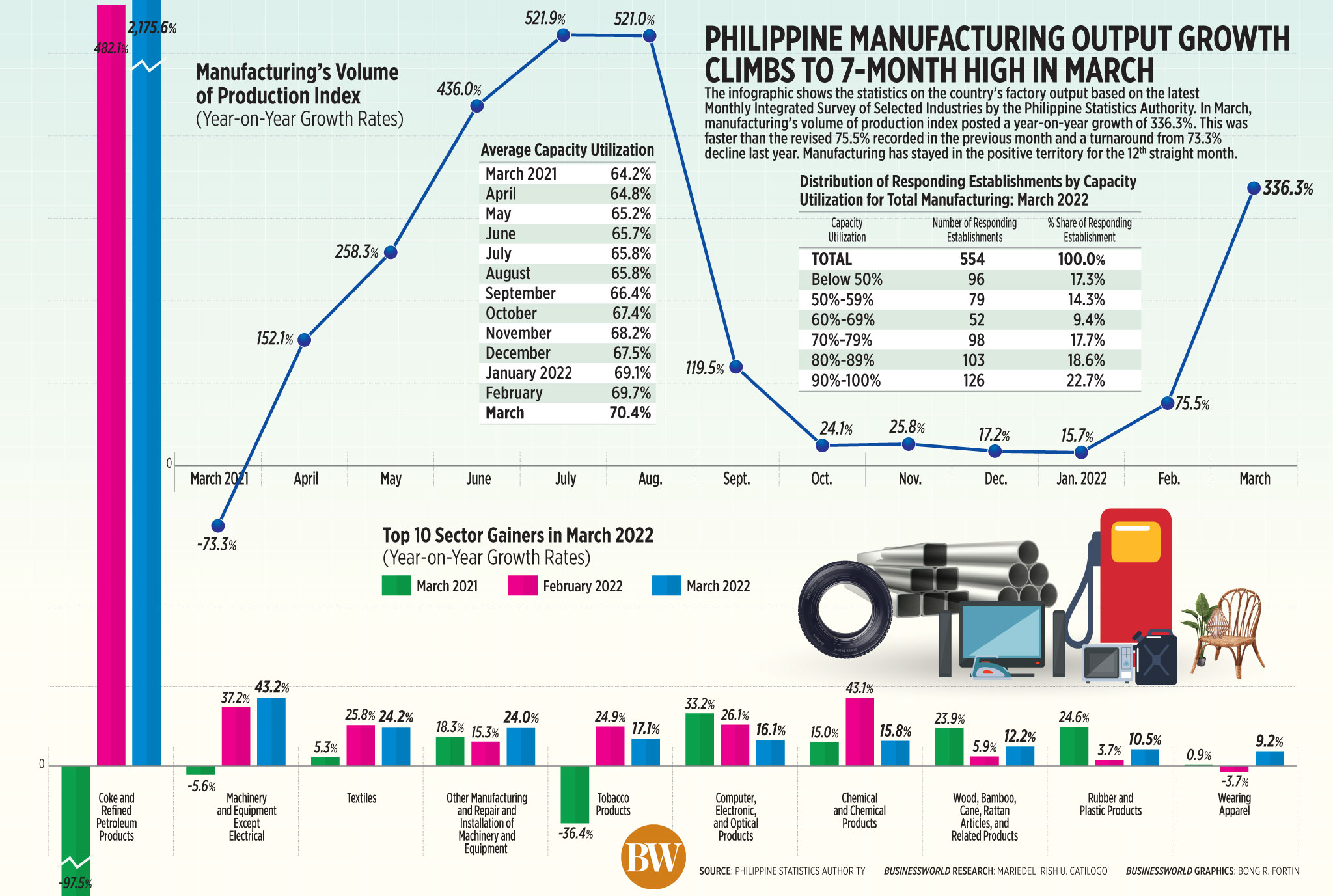
FACTORY OUTPUT in March grew at its fastest pace in seven months as manufacturers propped up inventories after restrictions eased.

Preliminary data from the Philippine Statistics Authority’s Monthly Integrated Survey of Selected Industries showed manufacturing, as measured by the volume of production index (VoPI), surged more than four times or 336.3% year on year in March.

This was faster than February’s revised 75.5% growth and a turnaround from the 73.3% contraction recorded in March 2021.

Philippine manufacturing output growth climbs to 7-month high in march

March marked the 12th straight month that the manufacturing output was in positive territory. March’s print was also the highest year-on-year growth in seven months or since the 521% surge in August last year.

Manufacturing growth averaged 80.9% in the first quarter.

Philippine Chamber of Commerce and Industry President George T. Barcelon said in a Viber message the factory output growth in March was mostly driven by the need to build up inventory.

Security Bank Corp. Chief Economist Robert Dan J. Roces said the manufacturing’s rise was further fueled by the looser lockdown in March.

“We can attribute this surge to robust output and new orders growth, as validated by the PMI (purchasing managers’ index) reading as well,” Mr. Roces said in a separate Viber message.

“Easing mobility had a profound effect on output, which both improved the consumption footprint and ability to move raw materials for production purposes,” he said.

The government placed Metro Manila and most parts of the country under the most lenient alert level in March, allowing businesses to become fully operational.

S&P Global Philippines Manufacturing PMI jumped to a three-year high of 53.2 in March, signaling improvement in operating conditions.

Fifteen of 22 industry divisions posted VoPI growth in March, led by manufacture of coke and refined petroleum products, which grew almost 23 times (2,175.6%) annually — faster than the revised 482.1% growth in February.

Other industry segments that showed growth included machinery and equipment except electrical (43.2% in March from 37.2% in February); textiles (24.2% from 25.8%); other manufacturing and repair and installation of machinery and equipment (24% from 15.3%); and tobacco products (17.1% from 24.9%).

Meanwhile, declines were recorded for the manufacture of electrical equipment (-36.5% in March from -27.4% in February); printing and reproduction of recorded media (-10.9% from -10.7%); leather and related products, including footwear (-5.9% from 31.4%); other non-metallic mineral products (-5.4% from 22.6%); transport equipment (-4.6% from 6.2%); basic pharmaceutical products and pharmaceutical preparations (-0.6% from 7.2%); and food products (-0.1% from 20.3%).

The capacity utilization — the extent to which industry resources are used in producing goods — averaged 70.4% in March, faster than the revised 69.7% the previous month.

Of the 22 sectors, 21 reached an average capacity utilization rate of at least 50%.   

Mr. Barcelon said he expects factory output numbers to “still be okay” until the first half of 2022 as inventory remains sufficient.

“There will be more supply chain disruption in the third quarter and manufacturing will go down a bit,” Mr. Barcelon said.

Mr. Roces said manufacturing output likely further improved in April, but risks from high inflation remain.

“[I]inflation, supply chain difficulties emanating from China, and commodity price jumps due to the Russia-Ukraine conflict may dampen and remain downside risks in the months ahead,” Mr. Roces said.

Inflation soared to an over three-year high of 4.9% year on year in April — breaching the central bank’s target and beating market expectations — as food and energy prices continued to rise amid the ongoing war between Russia and Ukraine.

Marcos likely to focus on infrastructure but funding remains unclear

PHILIPPINE STAR/KRIZ JOHN ROSALES

By Kyle Aristophere T. Atienza, Reporter

THE INCOMING ADMINISTRATION of Ferdinand R. Marcos, Jr. is expected to focus on infrastructure development to drive the Philippine economy’s recovery from the pandemic, but questions remain on how these projects will be funded.

Mr. Marcos, the only son and namesake of the late dictator, is poised to become the country’s 17th president after a landslide win in Monday’s election.

“(Mr. Marcos) did, however, pledge to continue with President Duterte’s economic policies, particularly the ‘Build, Build, Build’ infrastructure program that was the flagship project of the Duterte administration and helped boost the Philippines’ economic growth prior to the pandemic,” MUFG Bank analyst Sophia Ng said in a note.

In a commentary, Fitch Solutions said Mr. Marcos’s victory bodes well for policy continuity in the country, as his economic and foreign policy stances are similar to those implemented by Mr. Duterte.

“Marcos is likely to continue to focus on infrastructure development on the economic front, while striving to maintain a delicate balancing act between the US and China in terms of foreign policy,” Fitch Solutions said.

Infrastructure spending hit P895.1 billion in 2021, growing by a nearly a third from a year earlier.

Under the P5-trillion 2022 budget, about a fifth is allocated for capital outlays which includes infrastructure projects.

Terry L. Ridon, convenor of infrastructure think tank InfraWatchPH, said Mr. Marcos has not identified potential funding sources for his infrastructure plan. He said it is also not clear if Mr. Marcos would continue the Duterte administration’s shift from public-private partnership (PPP) to official development assistance (ODA) funding for major infrastructure projects.

“This is a policy which he must decide on in the coming days, and we hope he will decide considering mainly our debt position at the moment and the least cost to the public or end users of PPPs,” Mr. Ridon said in a Messenger chat.

“He should really put more meat on his pronouncement regarding the continuity of the ‘Build, Build, Build’ program because he has never provided specific details during the entire campaign,” he said.

Mr. Ridon urged the incoming Marcos administration to consider a shift to PPP projects to avoid incurring more debt.

As of end-March, the National Government’s (NG) total outstanding debt stood at a record P12.68 trillion.

BALANCING ACT
“(Mr.) Marcos faces a tricky balancing act between supporting the economic recovery and containing the Philippines’ burgeoning fiscal deficit,” Oxford Economics Lead Economist Sian Fenner and Assistant Economist Makoto Tsuchiya said in a note.

The Philippines’ budget deficit has sharply widened during the pandemic, as revenue collections remained lackluster.

The government has set a 2022 budget deficit ceiling of P1.65 trillion, equivalent to 7.7% of gross domestic product (GDP).

The country’s outstanding debt stood at P11.73 trillion as of end-2021. This pushed the debt-to-GDP ratio to a 16-year high of 60.5%, slightly beyond the 60% threshold considered as manageable by multilateral lenders for developing economies.

“It’s also possible that Macros Jr. announces a more expansionary fiscal agenda than we currently forecast… While the additional fiscal spending would support the recovery, it would undoubtedly catch the attention of the major rating agencies,” Oxford Economics said.

“We believe Marcos Jr. will need to balance the risks of a deteriorating external financing position against providing ongoing support for the recovery.”

Zyza Nadine Suzara, an economist and public finance expert, said Mr. Marcos will likely continue major infrastructure projects and implement “populist” measures such as subsidies for rice that may not be fiscally sustainable for the government.

“That way, we can actually expect a higher deficit, which means a higher level of debt to finance those kinds of programs,” she said in a phone interview.

She said the Marcoses need to settle their unpaid estate tax, which has ballooned to more than P200 billion due to interests and other penalties, to show their willingness to fix the country’s public finances.

UNCERTAINTY
Pantheon Macroeconomics, a think tank based in the United Kingdom, said that while uncertainty over the election is all but over, “ambiguity over Mr. Marcos’s economic policy positions is still there” as his campaign was devoid of specific proposals.

The public will only get an idea of the policies under a Marcos presidency by next month at the earliest, when the next administration will start to take shape, it said.

“We maintain, though, that this will be too late to salvage this year’s economic growth prospects, assuming we’re proven right about the temporary — but harsh — brakes likely applied in the current quarter to government spending and investment,” it added.

The late dictator’s son, who had a wide lead in pre-election surveys, declined major presidential debates, which experts said were necessary to determine the stances of candidates on key economic issues.

“Marcos has made it a point to not give any detail regarding his platform during the campaign, which is likely to drive economic uncertainty since he’s now leading the race,” said Leonardo A. Lanzona, who teaches economics at the Ateneo de Manila University.

Mr. Lanzona cited Mr. Marcos’s promise to lower rice prices by P20 to P30, which was done without consulting various sectors and considering economic aspects that might swell National Government debt.

“This is not the way elections are supposed to be conducted. It should offer the voters information about the public goods that the administration is supposed to produce and how much this will cost,” he said.

Agustin L. Arcenas, an economist at Ateneo, said some investors may reconsider plans to invest due to lack of clarity regarding an economic recovery plan.

“Investors have choices when it comes to where they will place their money, and they are likely to choose the country that has a positive business outlook,” he said in an e-mail. “In Southeast Asia, the Philippines must compete against countries like Vietnam and Thailand for investment.” — with Luz Wendy T. Noble

ADVERTISEMENT
ADVERTISEMENT