Home Blog Page 6412

Leadership in times of crisis

Photo from FREEPIK

The true test of leadership, as they say, is adversity.

When everything goes according to plan, or when profits come and grow and employees feel content in the company, playing the role of a leader may seem to run smoothly. However, when a significant crisis happened and plans went sideways for the organization, leaders are tested and need to review the roles they play.

Business leaders surely have experienced being put to the test during the COVID-19 pandemic, which plagued the world with health and economic crises. The new normal disrupted the business-as-usual as the workforce transitioned to a remote setup for safety reasons and urged organizations to reassess their plans and brace for the pandemic’s  potential impact.

The COVID-19 crisis, like other major adversities, pushed leaders to step up for their people and businesses.

A crisis of a similar extent like the pandemic affects the personal lives of employees aside from their work. According to management consulting firm McKinsey & Company, one’s own survival and other basic needs come first in people’s minds in a landscape-scale crisis. Hence, leaders must show their caring side toward their people.

This is what leaders in the “front-stage” role present, as called by Sameh Abadir, a professor of leadership and negotiation at IMD, in an article published in MIT Sloan Management Review — inspiring and assuring their teams as well as showing empathy and public commitment.

“A crisis is when it is most important for leaders to uphold a vital aspect of their role: making a positive difference in people’s lives,” McKinsey said in an article published on its website. “Doing this requires leaders to acknowledge the personal and professional challenges that employees and their loved ones experience during a crisis.”

McKinsey reminded leaders to understand that their people would have different experiences during a crisis. One of the instances brought about by the COVID-19 pandemic was school closures, which shifted students’ learning to be done at home. This required additional effort from working parents.

“Since each crisis will affect people in particular ways, leaders should pay careful attention to how people are struggling and take corresponding measures to support them,” the firm added.

But while leaders should inspire and deliver a message of hope to their people in facing the crisis, they should also be realistic and transparently communicate about the situation at hand.

In performing the “back-stage role,” as  also referred to by Mr. Abadir of IMD, leaders take “a blunt and realistic approach”  to the threats. “Behind the scenes, leaders gather information and expertise, share facts, and dive deeply into processes — whether financial, technological, or human — to adapt and follow through on their plans,” he explained.

McKinsey also remarked that leaders’ crisis communications usually hit the wrong note. Some leaders sound overconfident or upbeat, particularly early in a crisis. This may make stakeholders suspect what leaders really grasp about the situation and how well they deal with it. The firm also noted that the inclination to defer announcements for a long period of time to wait for more facts and decisions to be made may not also be reassuring.

“Thoughtful, frequent communication shows that leaders are following the situation and adjusting their responses as they learn more. This helps them reassure stakeholders that they are confronting the crisis,” McKinsey wrote.

Communications from leaders must not also stop even after the crisis, the firm added. “Offering an optimistic, realistic outlook can have a powerful effect on employees and other stakeholders, inspiring them to support the company’s recovery.”

Continuing role beyond the current crisis

Even though many business leaders might now know how to navigate the COVID-19 crisis and perhaps are already envisioning the post-pandemic world, some adversities could still impact their companies in the future. Deloitte’s 2021 Global Resilience Report found that 62% of the surveyed chief executive officers (CxOs) believed that occasional or regular disruptions of such magnitude could happen going forward.

However, only 30% of the surveyed expressed full confidence in the capacity of their organizations to quickly adapt and respond to possible threats. And only 34% of them feel ready to lead their organization through uncertainties that might come to pass. Nonetheless, these figures showed improvements among CxOs from its previous survey. Before 2020, only 21% deemed their organizations could swiftly respond to disruptive events, and 24% felt ready to lead amid such disruption.

According to Deloitte, the survey validated that “organizations that plan and invest in anticipation of disruptions… are better positioned to respond, recover, and thrive.” The report, which looked at how companies dealt with the turbulent events of 2020, also identified five attributes of a resilient organization. Such traits include being prepared, adaptable, collaborative, trustworthy, and responsible, which business leaders can foster to build a greater resiliency within their organizations.

“I think the pandemic has seriously affected the confidence of Filipino business leaders to respond and adapt to future threats,” Deloitte Philippines Risk Advisory Partner Jet Pampolina said in a statement. “But conversely, and perhaps unknowingly, this crisis has also equipped leaders with the mental toughness and agility needed to face the next big threat.” — Chelsey Keith P. Ignacio

Vivant Corp. set to hold annual stockholders’ meeting on June 16


Spotlight is BusinessWorld’s sponsored section that allows advertisers to amplify their brand and connect with BusinessWorld’s audience by enabling them to publish their stories directly on the BusinessWorld Web site. For more information, send an email to online@bworldonline.com.

Join us on Viber to get more updates from BusinessWorld: https://bit.ly/3hv6bLA.

PHL economy now seen to grow by 8% this year

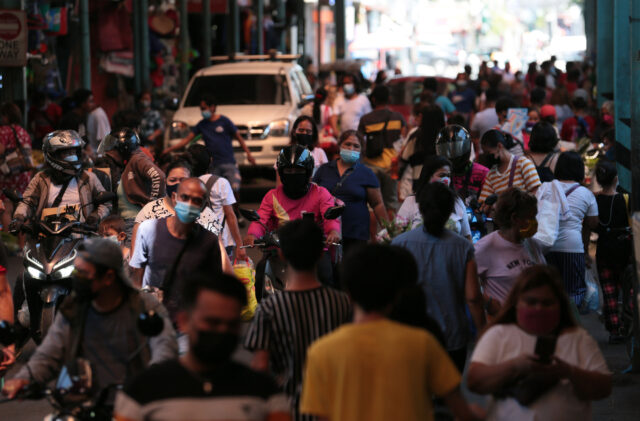
People flock to the Markina public market on the first day of implementation of Alert Level 1, March 1. — Philippine Star/ Michael Varcas

THE Philippine economy is expected to grow by 8% this year on the back of upbeat first-quarter economic expansion, Standard Chartered Bank economists said.

In a report, Standard Chartered Chief Economist for Southeast Asia and India Edward Lee and economist Jonathan Koh said the bank had raised its Philippine gross domestic product (GDP) growth forecast to 8% in 2022 from 7.5% previously.

The projection is well within the 7-9% target of economic managers.

“By industry, 11 of 16 industries expanded quarter on quarter and we estimate that 72% of the economy is above pre-COVID levels. The first-quarter GDP print validates the narrative that the Philippines’ economic recovery has gained traction,” they said.

Philippine GDP expanded by a faster-than-expected 8.3% in the first quarter, a turnaround from the 3.8% contraction a year earlier. It was also faster than the 7.8% growth in the fourth quarter of 2021.

Standard Chartered hiked its Philippine inflation forecast to 4.5% this year from 3.6% “on higher-than-expected inflation year to date, driven by higher oil, electricity and food prices.”

“With China sticking to its dynamic zero-COVID policy and the Russia-Ukraine war, supply-side disruptions may persist through the year, keeping commodity prices elevated,” the Standard Chartered economists said.

“In addition, the robust economic recovery and improving labor market conditions may lead to broadening inflationary pressures in the months ahead.”

Headline inflation surged to a three-year high of 4.9% in April, surpassing the 2-4% target set by the Bangko Sentral ng Pilipinas (BSP).

The economists said they now expect the BSP to raise interest rates by 150 basis points (bps) this year, starting with the May 19 meeting.

“We now expect monetary policy normalization by BSP to begin earlier and move at a faster pace. We now project six consecutive policy rate hikes of 25 bps each, starting in May and ending in December, to bring the policy rate to 3.5% by end-2022.”

They said hikes worth 50 bps in the next meetings might also be possible if inflation reaches the 6% level.

“However, our base case assumes that BSP will opt for a measured and gradual pace of rate hikes to support a sustainable economic growth recovery amid still elevated uncertainty,” they said.

BSP Governor Benjamin E. Diokno earlier said they might consider a rate hike in June. He has also said they are ready to respond preemptively if inflation risks become more prevalent.

Eight of 17 analysts in a BusinessWorld poll expect the central bank to start increasing interest rates at its Thursday meeting given stronger growth in the first quarter. They said this is enough reason for the BSP to start focusing its response on surging inflation. — Luz Wendy T. Noble

Bill protecting financial consumers signed

The Philippines now has a law that strengthens consumer protection against cybercrimes. Artur Widak/NurPhoto via Reuters

PRESIDENT Rodrigo R. Duterte has signed a bill that boosts consumer protection against cyber-crime, as the Philippines accelerates the shift to a cash-lite economy.

Republic Act (RA) No. 11765 or the Financial Products and Services Consumer Protection Act (FCPA) strengthens the rights of Filipino consumers to equitable and fair treatment, disclosure and transparency of financial products and services, protection of consumer assets against fraud and misuse, data privacy and protection, and the timely handling and redress of complaints.

“These mechanisms reinforce their confidence in the financial market and foster the stability of the Philippine financial system,” according to the law.

The law authorizes the Bangko Sentral ng Pilipinas (BSP), Securities and Exchange Commission and Insurance Commission (IC) to enforce the law’s provisions on all financial service providers under their jurisdiction.

Financial regulators can craft their own standards and rules for specific financial products or services within their jurisdiction, guided by internationally accepted standards and practices.

Financial regulators can now conduct surveillance and examination of financial service providers, as well as require the submission of reports.

Under the law, financial regulators can restrict the collection of excessive or unreasonable fees by service providers. They can also disqualify directors, officers and employees, as well as suspend a company’s oper-ation, if they violate the law.

They can also fine and suspend companies that violate the law.

Regulators can also issue cease-and-desist orders against financial service providers that commit fraud, violate the law or “cause grave or irreparable injury or prejudice to financial consumers.”

Financial regulators are now given adjudicatory powers to order the reimbursement of lost funds not exceeding P10 million, allowing regulators to “resolve the challenges faced by financial consumers in a timely manner.”

They are tasked to determine the reasonableness of interest charges or fees that a financial service provider may demand, collect, or receive for a service.

Regulators must also provide efficient and effective mechanisms to address and handle complaints, requests and inquiries from financial consumers.

“The law arms regulators with sufficient authority in effectively preventing fraud and addressing consumer issues, especially as more turn to digital services,” Senator Mary Grace Natividad S. Poe-Llamanzares, who chairs the Senate Committee on Banks and one of the measure’s proponents, said in a statement.

She said the law allows regulators to suspend the operations of erring financial service providers and require reimbursement of lost money.

“We authored this measure and saw its passage through as its sponsor to ensure a heightened level of protection for all consumers,” she said. “Transactions, big or small, deserve quality and prompt attention.”

A copy of the law was published a day after Mr. Duterte’s office released an executive order mandating all government agencies to use digital methods in disbursing and collecting payments.

In 2020 and 2021, the Bangko Sentral ng Pilipinas (BSP) received more than 42,000 complaints through its Consumer Assistance Mechanism. The total amount involved in the 2021 complaints amounted to P540 million, bring-ing total from 2019 to P2 billion.

The BSP cited identity theft, phishing and social engineering schemes including card-not-present fraud as the top three cybercrimes in 2020. — Kyle Aristophere T. Atienza

DoF eyes opportunities to support clean energy transition

Wind turbines are seen in Pililla, Rizal, April 25, 2021. — Philippine Star/Michael Varcas

THE Department of Finance (DoF) is eyeing opportunities that will support the country’s shift to clean and renewable energy sources.

In a statement, Finance Secretary Carlos G. Dominguez III expressed interest in the future initiatives of the Association of Southeast Asian Nations Plus Three (ASEAN+3) to help hasten the country’s shift away from coal.

The ASEAN+3 monetary authorities endorsed China’s initiative on transition finance, beginning with evaluating the region’s needs, concerns and recommendations.

“Overall, the Philippines is committed to engaging with the working committees to realize our shared goal of building a regional financial system that encourages transparency, harmonization of regulatory regimes and broader-based capital markets,” Mr. Dominguez told the 25th ASEAN+3 Finance Ministers and Central Bank Governors Meeting (AFMGM+3) on May 12.

He said the Philippines is interested in the ASEAN+3 Future Initiatives, particularly in transition finance and digitalization.

“The Philippines is currently pursuing a rapid shift to renewable energy sources. We look forward to exploring opportunities to support our transition from heavy reliance on coal to alternative sustainable energy sources,” he said.

Transition finance refers to gradually transferring funding from fossil fuels to renewable energy sources.

“On digitalization, we support intensifying our information exchange on innovative technologies and expanding the digital economy,” Mr. Dominguez added.

President Rodrigo R. Duterte has issued Executive Order No. 170, directing all government agencies to use digital methods for releasing and accepting payments, which would make formal financial services more accessible to more Filipinos.

The ASEAN+3 Finance Cooperation is composed of ASEAN members Brunei Darussalam, Cambodia, Indonesia, Laos, Malaysia, Myanmar, the Philippines, Singapore, Thailand, and Vietnam; and their partners Japan, Korea, and China. — Tobias Jared Tomas

Sia’s listed companies post strong profit rise

EDGAR J. SIA II — PHILIPPINE STAR/ERNIE PEÑAREDONDO

THREE listed companies led by Edgar J. Sia II reported strong profit growth in the first quarter, including his property leasing business DoubleDragon Corp., which reported a 5.7% increase in net income attributable to parent firm equity holders to P469.26 million.

“We are pleased to have surpassed our 2022 goal of 1.2 million square meters GFA (gross floor area) of completed recurring income portfolio. The whole cycle coming from zero leasable space, when DoubleDragon listed in the Philippine Stock Exchange last April 2014, to over 120 hectares of fully constructed recurring income portfolio today was not a walk in the park,” DoubleDragon Chairman Edgar Sia II said in a disclosure on Tuesday.

Mr. Sia added that the company expects its prime assets to mature and generate recurring revenues at different times, but that it should reach optimal recurring revenue generation before 2025.

Consolidated earnings before interest, taxes, depreciation and amortization (EBITDA) were also up by 8.7% to P1.05 billion and consolidated revenues increased by 13% to P1.71 billion.

In a separate disclosure, DoubleDragon’s real estate investment trust (REIT), DDMP REIT, Inc., reported that its net income surged by 39.8% to P558.9 million in the first quarter.

Total revenues were up by 13.8% to P639.4 million while rental income increased by 15.9% to P589.3 million.

DDMP REIT approved a cash dividend amounting to P496.8 million or P0.027868 per share with the payment date on June 30.

“We are glad that DDMP REIT has remained resilient and has stably passed through what people say is a once in a lifetime major global crisis brought by the COVID-19 (coronavirus disease 2019) pandemic,” Mr. Sia said.

“We believe that the most important feature of DDMP REIT is that 100% of its leasable space sits on prime commercial titled land that DDMP REIT perpetually owns, as over a long period of time, the land value is expected to surpass the value of the building structures, and in the specific case of DDMP REIT, both the titled land and the buildings are owned by the DDMP REIT shareholders forever because the land is titled, and is not a leasehold,” he added.

Meanwhile, MerryMart Consumer Corp. disclosed on Tuesday that its after-tax net income in the first quarter jumped 29.3% to P12.23 million.

Attributable income during the period rose 15.5% to P10.93 million.

“In addition to MerryMart’s continuous growth, we are refining our range of product offerings, building efficiency in our supply chain and adding more house brand products into the mix. As we go forward, our team has the mind-set to continue initiating further improvements and enhancements in many areas of the MerryMart Group for better overall operational efficiency,” Chief Financial Officer Hannah Yulo-Luccini said.

Revenues likewise increased by 30.8% to P1.19 billion and earnings before interest, taxes, depreciation, and amortization (EBITDA) went up by 16.9% to P45.96 million.

For 2022, the company said it expects to exceed the P5-billion revenue mark due to the consolidation of its latest acquisitions.

“The next very important goal will be to reach P12-billion revenue mark as soon as possible, then from that point onwards, we expect a far higher velocity of revenue growth velocity towards the P120-billion revenue goal that we have set for 2030,” Ms. Yulo-Luccini added.

The MerryMart group’s organic branch expansion and recent acquisitions total to 105 branches nationwide. Its various formats are MerryMart Store, MerryMart Market, MerryMart Grocery, MerryMart Delivery and MerryMart Wholesale.

The company, which is also chaired by Mr. Sia, recently formed a new subsidiary, MM Consumer Technologies Corp., with MBOX Smart Lockers as the first in its consumer technology portfolio.

At the stock exchange, DoubleDragon shares slid by 0.39% or three centavos to close at P7.57 on Tuesday. DDMP REIT shares rose by 1.99% or P0.03 to close at P1.54 each.

Meanwhile, MerryMart shares closed higher by 2.65% or P0.04 to P1.55 on Tuesday. — Luisa Maria Jacinta C. Jocson

GT Capital net income rises, surpasses pre-pandemic level

TY-LED GT Capital Holdings, Inc. reported on Tuesday a 7.1% increase in first-quarter net income for parent firm equity holders to P4.36 billion after a double-digit jump in revenues, driven by the growth of its banking and automo-bile units.

Core net income for the first quarter of the year was placed at P4 billion, up 18%, while after-tax profit reached P5.48 billion, or an increase of 9% year on year.

“Our financial results show the growth momentum from last year carried over into the first three months of 2022. At these levels, we have already surpassed our first quarter 2019 pre-COVID core income by 18%. This is a very encouraging indicator,” GT Capital President Carmelo Maria Luza Bautista said.

“Despite the headwinds of inflation, higher interest rates, market disruptions caused by the pandemic, and the more recent geopolitical events, we are confident that our recovery momentum is sustainable,” she added.

Metropolitan Bank & Trust Co.’s (Metrobank) net income in the first three months of the year hit P8 billion, or 2.7% higher year on year.

“We are encouraged by the sustained pickup in economic activities as Metrobank stands ready to support our clients in their funding plans and investment needs,” said Metrobank President Fabian S. Dee.

“The strategies that we have put in place should enable the bank to achieve sustainable growth, along with the expanding domestic economy,” he added.

During the quarter, gross loans rose 5% to P1.3 trillion year on year, led by a 10% expansion in corporate lending and an 8% increase in credit card receivables.

Meanwhile, Toyota Motor Philippines Corp. (TMP) recorded a 4.1% increase in net income to P2.07 billion from P1.99 billion, while its consolidated net income grew 5% to P2.1 billion.

The profit rise came after consolidated revenues increased by 24% to P42.1 billion from P33.9 billion in the previous year, as retail vehicle sales increased by 12% in the January-March period.

TMP continued to expand its model lineup in the first quarter by launching three new model variants — the Rav4 HEV and Raize in February, and the Avanza in March.

“The first quarter of 2022 saw a sustained rise in vehicle sales for both the industry and Toyota. Without the drop in deliveries in January due to the Omicron variant surge, the recovery would have been much further along. Toyota recorded exceptional results for February and March, with sales peaking at over 15,000 units in March, the highest monthly sales since the pandemic started in 2020,” TMP Chairman Vince S. Socco said.

Mr. Socco added that TMP was able to further stimulate demand through sustained new model offerings in the mass market segments, which contributed to a spike in market interest.

“As well, the industry is feeling the return of corporate demand on the heels of the resumption in business activity. Renewal of company fleets is reflected in the rise of planned capital expenditures. With the peaceful conclusion of the elections, the continued reopening of the economy and the expected continuation of government infrastructure programs, 2022 is expected to return to pre-COVID sales levels,” he added.

GT Capital’s property subsidiary Federal Land, Inc. reported that net income attributable to equity holders of the parent dropped by 4.9% to P311.2 million from P327.3 million.

Total revenues increased by 14% to P2.8 billion, with real estate sales amounting to P1.8 billion, up 10%.

Federal Land forged a partnership with Japanese real estate developer Nomura Real Estate Development Co., Ltd. to form a new company, Federal Land NRE Global, Inc.

Nomura will be investing $324 million, representing 34% of the total capital investment of FNG at P48 billion.

Meanwhile, Metro Pacific Investments Corp. reported a consolidated core net income of P3.1 billion for the first quarter, up 23% from a year earlier.

However, reported net income attributable to the parent company ended lower by 19% to P5.68 billion from P7.03 billion in 2021, as a result of the sale of Global Business Power Corp. and Don Muang Tollways.

“Metro Pacific benefited from continued economic recovery and intensified election-related activities in the country. Toll road traffic is now close to pre-pandemic levels, and power consumption has considerably increased as more industries ramp up operating capacity,” GT Capital said.

Following a series of debt refinancing and re-rating activities implemented in 2021, the company said it is now “enjoying the benefits of a significant reduction in its average interest rates, evidenced by the 11% decline in net in-terest costs for the first quarter.”

Lastly, the company’s insurance subsidiary, AXA Philippines, reported that its consolidated net income increased by 32% to P427 million from P324 million in the previous year, due to lower claims for natural calamity losses.

Meanwhile, consolidated life and general insurance gross premiums went down by 34.3% to P8.21 billion due to limited bancassurance distribution during the Omicron variant surge in January and the volatility in the capital markets amid geopolitical uncertainties.

At the stock exchange on Tuesday, GT Capital shares were up by 4.28% or P21 to close at P512 each. — Luisa Maria Jacinta C. Jocson

SEC clears North Star IPO

THE Securities and Exchange Commission (SEC) announced that it approved the initial public offering (IPO) of North Star Meat Merchants, Inc. worth up to P4.5 billion.

In an advisory on Tuesday, the commission said it resolved to render effective the registration statement of North Star covering 1.8 billion common shares, subject to the company’s compliance with certain re-maining requirements.

The meat retailing company will offer to the public up to 360 million common shares priced at up to P10 per share.

The offer will also include 32 million shares to be offered by selling shareholder Golden MJTF Holdings, Inc., plus an overallotment option of 58 million common shares, also priced at up to P10 each.

“Net proceeds from the offering of the primary shares is expected to amount to about P3.462 billion, which the company will use for capital expenditures to expand its cold chain infrastructure, to increase work-ing capital, and to expand product lines,” the SEC said.

Assuming the overallotment option is fully exercised, Golden MJTF Holdings can net up to P864.45 million. North Star Meat Merchants will not receive the proceeds from the sale of the selling shareholder’s shares.

The offer will run from May 30 to June 3, with listing on the PSE scheduled on June 10, according to the latest timetable submitted to the SEC.

The shares will be listed and traded on the main board of the Philippine Stock Exchange (PSE).

The company tapped BDO Capital and Investment Corp. as sole issue manager, which will be joined by China Bank Capital Corp. as joint lead underwriters and joint bookrunners. PNB Capital Investment Corp. and SB Capital Corp. will also serve as co-lead underwriters.

North Star is a meat retailer and supplier that operates 360 meat concessions nationwide, with a cold storage capacity of 8.09 million kilograms and a capacity to deliver up to 120,000 kilograms of meat dai-ly. — Luisa Maria Jacinta C. Jocson

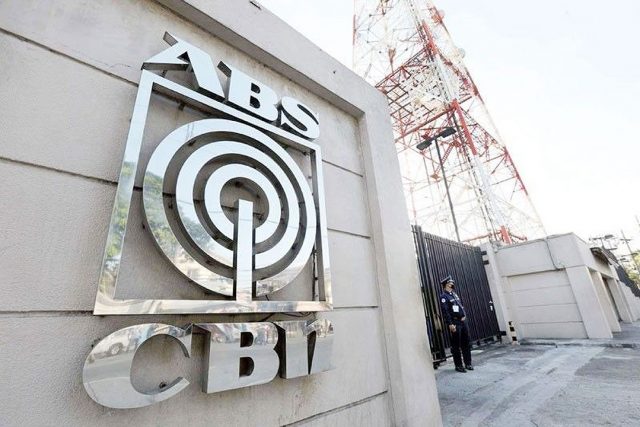
ABS-CBN trims losses on closed businesses, content production

PHILSTAR

ABS-CBN Corp. announced on Tuesday that it cut its net loss for 2021 to P5.67 billion from a loss of P13.53 billion previously, mainly due to lower expenses resulting from the cessation of some of its businesses and content production.

The media company saw its total revenues decline 16.8% in 2021 to P17.8 billion from P21.42 billion in the previous year, its full-year financial report showed.

Broken down, its advertising revenues fell by 25% to P5.29 billion in 2021 from P7.06 billion in 2020, while consumer sales went down 12.7% to P12.53 billion from P14.36 billion in the previous year.

The decline in advertising revenues is “attributable to the absence of the company in the free-to-air advertising space following the cease-and-desist order issued by the National Telecommunications Commission (NTC) on the company’s broadcast operations on May 5, 2020 and the eventual adoption of a resolution denying the franchise application of the company by the House Committee on Legislative Franchises on July 10, 2020,” ABS-CBN said.

“The cease-and-desist order similarly affected consumer sales as this prohibited the company from engaging in Sky Cable’s DTH (direct-to-home) services and distribution of TV Plus Boxes,” it added.

At the same time, the company said that the impact of the coronavirus pandemic resulted in the company “being unable to generate revenues from concerts and events as well as box office receipts.”

The health crisis also resulted in the “cessation of various ancillary operations such as Heroes Burger, Kidzania Manila, and Studio XP.”

ABS-CBN’s costs and expenses decreased 32.8% to P23.26 billion in 2021 from P33.55 billion previously.

Broken down, production costs fell by 30.6% to P7.15 billion from P10.31 billion in 2020, while the cost of sales and services fell 15.8% to P7.93 billion from P9.42 billion in the previous year.

The company’s general and administrative expenses dropped 46.1% to P8.17 billion from P13.82 billion in 2020.

“In compliance with the directive by the Office of the President of the Philippines imposing stringent social distancing measures on March 15, 2020, the company ceased production of content the same day. This production stoppage was further extended after the cease-and-desist order was issued by the NTC to the company,” ABS-CBN said.

“Instead, the company decided to align the number of programs based on partnerships closed by the company with various free-to-air operators. This alignment resulted in a reduction of production costs… Due to the cumulative im-pact of the COVID-19 (coronavirus disease 2019) outbreak and the cease-desist order issued by the NTC, the company was forced to cease its food & beverage, live experiences, TV plus and DTH business operations,” it added.

“This, in turn, resulted in a reduction in the cost of sales and services… Following the events of the franchise denial and the impact of COVID-19, the Company enforced stringent cost cutting measures to further manage the company’s financial performance.”

ABS-CBN shares closed 3.30% lower at P9.76 apiece on Tuesday. — Arjay L. Balinbin

Philippine Infradev’s net loss widens as expenses jump

PHILIPPINE Infradev Holdings, Inc. announced on Tuesday that its attributable net loss for the first quarter of the year widened to P11.24 million from a loss of P8.30 million in the same period a year ago, mainly due to a significant increase in expenses.

The company’s total revenues surged to P9.96 million in the first quarter from P1.37 million in the same period in 2021.

“The significant increase… in total revenue was mainly due to the higher number of units sold,” the company said in its first-quarter report.

Meanwhile, its total expenses jumped to P21.21 million from P9.66 million in the same period last year.

“Total cost and expenses increased by P11.54 million from P9.66 million mainly because of the higher cost of sales,” the company noted.

Philippine Infradev’s cash decreased by P195.99 million “mainly because of the payment to the contractors and consultants related to the subway project and transit-oriented development.”

“Other major payments were related to the land development and construction costs for the fourth subdivision of the company named Casas Carlina.”

At the same time, the company said that its receivable increased by P47.61 million mainly because of the advances made to contractors.

“Real estate held for sale and development increased by P66.91 million mainly because payments made for the land development and construction costs related to the fourth subdivision of the company.”

Its retained earnings decreased by P11.24 million because of the net loss incurred.

The company incorporated in 2019 the Makati City Subway, Inc. (MCSI) that will be used as a special corporate vehicle for its subway project in Makati.

“On March 7, 2022, the group received the certificate of registration of MCSI as new operator of Local Government Unit Public-Private Partnership from the Board of Investments effective Jan. 17, 2022,” it said.

“This includes the approval of tax incentives which shall be limited to four years income tax holiday, followed by five years enhanced deductions and duty exemption on importation of capital equipment, subject to compliance with certain conditions,” it added.

The company also noted that the clearing of its Binangonan property is still the focus of its operations with the goal of completely freeing from third party claims 500 hectares of the 2,200-hectare property.

“Due to a number of factors, including the recognition of Supreme Court’s recognition of the superior rights of the bonafide occupants as well as potential challenges in clearing and re-titling of this large area of land, manage-ment has estimated that only 1,513 hectares are expected to be recovered/cleared and re-titled in the name of the parent company as of March 31, 2022 and Dec. 31, 2021,” it said.

Philippine Infradev shares closed 3.33% higher at P0.93 apiece on Tuesday. — Arjay L. Balinbin

PetroEnergy sees Q1 gains

PETROENERGY Resources Corp. reported a 66.5% increase in first-quarter net income for parent firm equity holders to P176.96 million and a 48.2% rise in after-tax income to P252.47 million.

In a regulatory filing on Tuesday, the Yuchengco-led energy company said the improvement in its financial showing during the quarter was largely due to higher crude oil prices, power sales and lower interest expenses.

It said crude oil prices in the first three months of the year reached an average of $107.95 per barrel from $60.97 per barrel previously, while higher electricity sales came from its Tarlac solar plant and Nabas wind farm. The listed company added that the reduction in interest expenses resulted from installment payments of loan principals.

PetroEnergy is engaged in petroleum production through the Etame consortium in Gabon, West Africa and in renewable energy generation in the Philippines through its subsidiary PetroGreen Energy Corp., which owns and de-velops power plants using geothermal, wind, and solar energy.

Also on Tuesday, PetroEnergy said it saw a 3% increase in its 2021 consolidated net income to P655 million, while net income attributable to parent company also improved by 2% to P325 million.

The company said its financial performance last year was mainly fueled by a recovery in global crude oil prices to an average price of $69.90 per barrel from $49.72 per barrel previously. It also attributed last year’s results to its solar plant in Tarlac, which saw higher electricity sales due to improved prices at the spot market.

“These profit drivers, however, were offset by impairment recorded on the company’s West Linapacan and Octon petroleum service contracts amounting to P304 million resulting to a lower than realized net income for the year,” it said.

On Monday, shares in the company were unchanged at P5 apiece.