Home Blog Page 6358

Marawi compensation bill ensures full recovery of war-torn city — rehab chief

DHSUD

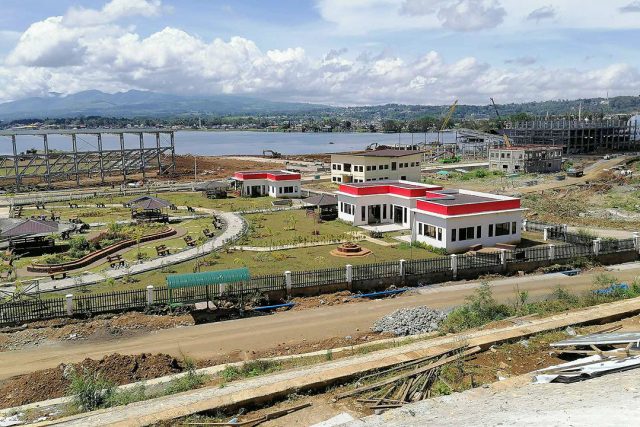
SENATE’S final approval of a proposed law that will give Marawi City residents monetary compensation for properties destroyed during the 2017 siege complements the government’s reconstruction program, the head of the rehabilitation team said on Tuesday. 

“The Task Force Bangon Marawi welcomes the Senate’s approval of the Marawi Compensation Bill as a huge boost to the morale of our Maranaw brothers and sisters who were affected by the infamous 2017 siege,” Secretary Eduardo D. Del Rosario said in a statement. 

“They have long been clamoring for this legislation, and, hopefully it will soon be enacted into law,” he said.

Senate bill 2420, or the Marawi Siege Victims Compensation Act, consolidates two bills as well as the House of Representatives’ approved version. A copy of the bill certified by both chambers of Congress will be transmitted to the President for review, and approval or veto.

At the commemoration of the 4th anniversary of Marawi’s liberation in October last year, President Rodrigo R. Duterte assured residents of his administration’s commitment to “bring back the city’s glory.”

Mr. Duterte also noted that “rebuilding the lives of the displaced” is what is most important. 

“This will ensure the totality of the government-led rehabilitation of Marawi City with the reconstruction of public infrastructures, which is now in the final stages. The compensation bill’s final approval will allow private individuals not only rebuild their properties but also rebuild their lives,” Mr. Del Rosario said.

Under the bill, claims may be made for residential, cultural, commercial and other properties such as home appliances, jewelries and equipment that were affected during the five-month heavy firefight between government forces and extremist groups who laid siege on the city.

Legitimate property owners or their legal heirs are eligible for the tax-free compensation. 

Funding for the compensation will be sourced from the current year’s allocation for the Marawi recovery program while future payments will be included in the annual national budget.

Implementation will be led by a nine-member board, whose chairman and members will be appointed by the President.

Mr. Del Rosario said in late January that more than 800 displaced families have been granted permits to start reconstruction of their homes. — MSJ

NIA sets P545-M earth fill dam project in Guimaras 

DA.GOV.PH

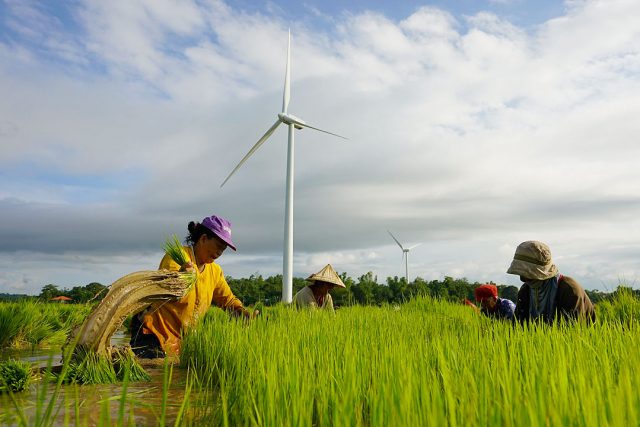
A P545-million earth fill dam will be constructed in the island province of Guimaras with over 1,300 farmers seen to benefit from the project, the National Irrigation Administration (NIA) announced.

The Small Reservoir Irrigation Project (SRIP) includes the construction of a 29.87-meter high zoned earth fill dam and a 375-meter spillway.

The dam, located in the town of San Lorenzo, will source water from Cabano River and serve a farming area of 861 hectares.

NIA is partnering with Silver Dragon Construction and Lumber and Glass Supply, Inc. and Lorenzo Construction and Development Corp. for the project. — Luisa Maria Jacinta C. Jocson

Duterte’s evangelist friend endorses Marcos-Duterte daughter tandem  

A FILIPINO televangelist who has been indicted in the United States for sex trafficking and other charges endorsed on Tuesday the presidential candidacy of the late dictator’s son Ferdinand “Bongbong” R. Marcos, Jr. and his running mate, Sara Duterte-Carpio.

Apollo C. Quiboloy, President Rodrigo R. Duterte’s spiritual adviser who founded a Philippine-based church called Kingdom of Jesus Christ, made the announcement during a send-off ceremony at the compound of his church in Davao City, where Ms. Duterte is currently mayor. 

The self-proclaimed “appointed son of God” also endorsed senatorial candidates former presidential spokesman Herminio “Harry” L. Roque, Jr. and Jose Pimentel “Jinggoy” Estrada, who is still facing plunder and graft charges involving pork barrel funds. The former senator was released on bail in 2017 after spending three years in jail. 

“Quiboloy’s endorsement is expected given that he is a kingmaker in Mindanao and a known supporter of the Dutertes and traditional politicians,” said Maria Ela L. Atienza, a political science professor at the University of the Philippines. 

Ms. Atienza, however, said the church’s “reach is only in Mindanao and certain groups of overseas Filipino workers.”

“He and his church are now challenged by court cases and other controversies,” she said. “His endorsement will likely turn off more discerning Filipino voters. 

Mr. Quiboloy last year was indicted along with two US-based church administrators by a federal grand jury for allegedly coercing women as young as 12 to have sex with the religious leader.

Mr. Duterte’s spokesman, Karlo Alexei B. Nograles, said last year the Philippines would cooperate if the US requests the religious leader’s extradition.    

ROBREDO
Meanwhile, former Cabinet officials, retired ambassadors, and former military chiefs who served under the administration of the late Benigno S.C. Aquino III released a joint statement on Tuesday backing the presidential run of Vice President Maria Leonor “Leni” G. Robredo. 

They said the country needs a leadership that “ensures the safety and well-being of all its citizens while respecting human rights and the rule of law and where law enforcers thus evoke trust and a sense of security.”

They added that the country needs a kind of governance that is committed to protecting the country’s sovereignty and “one that earns the response of the community of nations.”

Progressive coalition Makabayan recently backed Ms. Robredo’s candidacy — the first time it endorsed a presidential candidate from the Liberal Party, which was formerly chaired by Mr. Aquino.

Ms. Robredo, who still chairs the liberal group, is running as an independent candidate.

Mr. Marcos, who is leading pre-election surveys, earlier said he still wants Mr. Duterte’s endorsement even after the latter called him a “weak” leader. 

Presidential candidates Manila Mayor Francisco “Isko” M. Domagoso and Sen. Panfilo “Ping” Lacson have also sought the presidential endorsement. — Kyle Aristophere T. Atienza

A strategic plan for Philippine education

BW FILE PHOTO

(Part 1)

The last two articles of the series “A strategic plan for the Philippine economy” dwelt on the agricultural sector because of the highest priority that should be given to it by the future Administrations if we are to ever reach advanced economy status in the next 20 to 30 years. The agricultural sector has always been the Achilles heel of the Philippine economy. That is why it is not possible to have a successful strategic plan for the entire economy if the challenges enumerated in these two articles are not met. In fact, the very first question that should be asked of every Presidentiable in the May 2022 elections will have to do with their plans of improving agricultural productivity and consequently the incomes of farmers. As we have written many times in the past, there are enough examples among our East Asian neighbors we can learn from, like Thailand, Malaysia, Vietnam, Taiwan and South Korea, to find solutions to what I can consider our Number One economic problem. We do not have to reinvent the wheel.

Next in importance to our attaining long-term sustainable and inclusive development is improving the quality of Philippine education. I was disappointed to notice that all the Presidentiables running in the May 2022 elections give only passing reference to addressing this very pressing problem, which, if not addressed in the next six years, will seriously inhibit us from fully benefiting from our number one asset, which is our demographic dividend, i.e., our young, growing, and English-speaking population. It is this rare human resource that gives rise to the two strongest engines of growth of the Philippine economy, the Overseas Filipino Workers and the BPO-IT sector, which together account for some 15 % our GDP. In fact, these two human resource-based sectors proved to be the most resilient during the harrowing two years of the COVID-19 pandemic. Both suffered very minimal declines during even the worst recessionary year of 2020 and bounced back almost instantly in 2021.

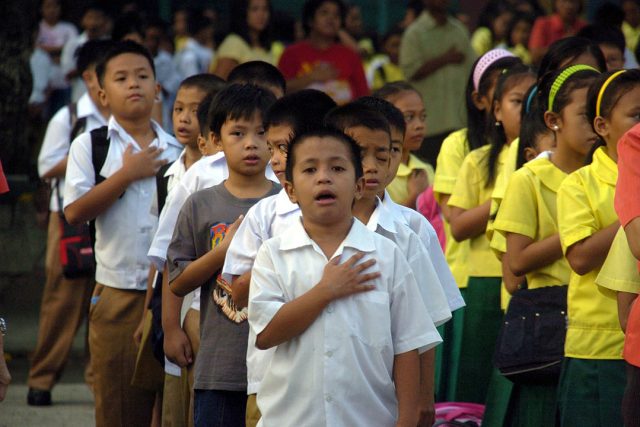
While it was during the second decade of the present century when we started to get rid of our reputation as the “sick man of Asia,” it was also during this period when the rot in the Philippine educational system was exposed. In 2019, in an international test called Trends in International Mathematics and Science Study (TIMSS) by the Netherlands-based International Association for the Evaluation of Educational Achievement (IEA), Filipinos fared worst among 58 countries in an assessment for mathematics and science for Grade 4 students. The Philippines scored 297 in math and 249 in science, registering a deterioration since 2003 when the relevant scores were 358 in math and 332 in science. TIMSS is held every four years to measure student achievement in these two fields. In the field of reading comprehension, Filipino students did not fare any better. In 2018, Filipinos also ranked last among 79 countries in reading comprehension and second lowest in both math and scientific literacy in the Program for International Student Assessment (PISA), which is a worldwide study by the Organization for Economic Cooperation and Development (OECD) in member and non-member nations intended to evaluate educational systems by measuring 15-year-old school pupils’ scholastic performance in mathematics, science, and reading.

Before we attempt to formulate a long-term strategic plan for Philippine education, it would be useful to summarize some of the major points about the state of Philippine education raised in an interview with radio host Jarius Bondoc given by Dr. Chito Salazar, President of the Philippine Business for Education Foundation (PBEd). According to Dr. Salazar, the poor results shown by Filipino students were already recorded as early as 2003 by TIMSS. The poor quality of Philippine education has been the result of long-term policy and institutional failures and inadequacies. That is why it is not fair to put all the blame on the present leadership of the Department of Education. There is a need for some drastic reforms equivalent to the game changing K to 12 curriculum that was introduced with great political will during the Administration of former President Noynoy Aquino, despite very strong opposition from some sectors. For very long, we lived under the illusion that compared to the highly motivated youth of such tiger economies like Singapore, Hong Kong, Taiwan and South Korea, our basic education students are so brilliant that they can prepare for university studies within a 10-year period compared to the 12 years that their counterparts in Asia and other countries have to spend to prepare for higher education.

Decades of neglect of Philippine education by the Government is evidenced by the fact that in East Asia the average expenditures by the State is 6% of GDP while we have been spending only 3% of GDP. We have to let the next Administration aspire to reach the 6% level in the same way that the outgoing Administration was successful to upping the percentage of expenditures on infrastructures from less than 3% to close to 6% in their implementation of the Build, Build, Build program. In the same way that there has been significant reliance on the Public-Private Partnership (PPP) approach in the construction of major infrastructure like airports, skyways, ports, etc.

Dr. Salazar also suggested in the interview that the Government look for creative ways of involving the private sector to bear part of the burden of improving the quality of education. For example, it was not necessary for the State to spend huge amounts in putting up more classrooms when they could just have taken advantage of the excess capacity of private schools by subsidizing the fees of pupils in the latter schools. The same can be said about saving on the salaries of public-school teachers if there is this public-private partnership in basic education.

Dr. Salazar also said that other sectors of society should be involved in improving the quality of education. The most obvious one is in food and nutrition. A major reason why our Grade 4 students in many public schools obtain very poor results in the international tests cited above is that their brains might have been damaged because of undernutrition or malnutrition when they were growing from zero to five years of age, the most critical period for brain development. There must be effective programs implemented by both the State the civil society to address this most serious problem of child undernutrition. There are enough outstanding models of the so-called First 1,000 Days in which LGUs subsidize the feeding of a child for three years from the time that he or she is conceived in the womb of the mother. The most successful programs have been implemented in the provinces of Cebu, Quezon, and Bataan, among others. According to Dr. Salazar, there are others stakeholders in every barangay that can contribute to feeding programs to assure the wellbeing of our youth. It is hoped that a significant part of the added revenues that LGUs will receive starting 2022 under the so-called Mandanas-Garcia ruling will be channeled to these feeding programs.

In fact, speaking of LGUs, another very important reform suggested by Dr. Salazar is the devolution of some tasks being implemented by the Department of Education to the LGUs. There is over-centralization of such essential tasks as curriculum development and the recruitment and training of teachers. Provinces should compete in producing quality students. The Department of Education should spend its time and resources in helping those LGUs that have weak local leadership in the field of education.

Finally, it is recommended that the Assessment Office should not be under the Department of Education but should be under the Office of the President.

This preliminary introduction to vital issues in the Philippine education sector, as perceived by the Philippine Business for Education management, should now prepare for a more thorough going process of formulating a long-term strategic education plan that can span the next three Administrations till 2040.

(To be continued.)


Bernardo M. Villegas has a Ph.D. in Economics from Harvard, is professor emeritus at the University of Asia and the Pacific, and a visiting professor at the IESE Business School in Barcelona, Spain. He was a member of the 1986 Constitutional Commission.

bernardo.villegas@uap.asia

Rare diseases patients should not be left behind

DCSTUDIO-FREEPIK

The continuing global pandemic posed several challenges and showed the gaps all throughout the health ecosystem. Undeniably, addressing the country’s COVID-19 situation has been the priority and concern of the government for two years now, and still counting. Patients who have other health conditions, such as those who were diagnosed with rare diseases, are sadly kept on the sideline.

According to the Department of Health, as of Dec. 31, 2021, there are 887 cases registered with rare diseases. For sure, there are more undetected and most of them likely belong in the lower socio-economic group who really require external support either from the government or other stakeholders. Adhering to the principle of universal healthcare, every Filipino should have equal access to health services and “no one should be left behind.” Access to quality, safe, and effective healthcare and treatment should be for all, regardless of age, sex, status, and/or condition.

The Rare Disease Act of the Philippines or Republic Act No. 10747, signed into law on March 2016, is a comprehensive policy that addresses the needs of persons with rare diseases. The law primarily envisioned that those patients afflicted with the diseases are diagnosed early and have access to available interventions so that their rate of survival is increased, and they potentially can live a normal way of life.

Like all law-mandated programs, adequate funding is crucial for implementation. For the first time, stakeholders have successfully advocated for its long-delayed funding in the 2022 General Appropriations Act (GAA). The allocation, worth P104.9 million, was lodged in the University of the Philippines-National Institutes of Health (UP-NIH) which is specifically intended for the implementation of the Rare Disease Act.

On Jan. 27, the Stratbase ADR Institute, in partnership with UHCWatch and the Philippine Society for Orphan Disorders, held a virtual roundtable discussion entitled “No One Should be Left Behind Amid the Continuing Pandemic — Facilitating the Implementation of the Rare Disease Law for 2022.” The roundtable gathered relevant stakeholders from the academe, government agencies, civil society/patient organizations, and private sector to discuss ongoing programs and needed support for the effective utilization of the allocated budget. Avenues of collaboration on how different stakeholders can collaborate were tackled in line with the implementation of the Rare Diseases Act.

Prof. Dindo Manhit, President of Stratbase ADR Institute, said in his welcome remarks that due to the low prevalence and the widely dispersed distribution of patients with rare diseases, there is an evident disproportion in the availability of treatments and resources. Various stakeholders can proactively collaborate in the decision-making process so that through this whole-of-society approach the country’s health systems could achieve better health outcomes, he added.

According to Dr. Carmencita Padilla, Chancellor of the University of the Philippines-Manila, “we [Philippines] are very fortunate because we are the model for the rest of developing world, wherein we were able to take care of patients with rare metabolic disorders. However, no single agency can make this happen.”

Dr. Eva Maria C. Cutiongco-dela Paz, Executive Director of the UP-NIH, mentioned that there was an on-going project for the development of the Integrated Rare Disease Management Plan (IRDMP) for the period of 2022-2026. Part of this five-year plan is the development of the guidelines for medical societies in preparation of the rare diseases list.

Daisy Cembrano, Director for Healthcare Policy of the Pharmaceutical and Healthcare Association of the Philippines, emphasized that the importance of ensuring sustainable patient access to diagnosis, treatment, and care is foremost. She explained that over the past two years, most resources were reallocated to the pandemic response and it is worth looking at some innovative financing models implemented by other countries for the treatment of rare diseases.

Dr. Lizette Kristine Lopez, Chair of the Subcommittee on Drugs of the Health Technology Assessment Council, in her reaction to the presenters mentioned the importance of inclusiveness and her preferential regard for the underserved and unserved. According to her, “rare disease patients need to be included because despite the rarity of their conditions, they are definitely underserved and some of them are probably unserved considering the financial impact and also the lack of specialists.”

The start of the year provided a brighter tomorrow for patients with rare diseases. The current challenge is how to facilitate the development of the IRDMP for the optimal utilization of the allocated funding for this year. This plan will also serve as the basis for funding the succeeding years and will determine the additional types of rare diseases to be covered.

To be true to the mandate of the Universal Health Care Act and the Rare Disease Act, all rare disease patients must receive the assistance and treatments they need to enable them to be productive citizens of society.


Alvin Manalansan is the Health and Nutrition fellow of Stratbase ADR Institute and is an UHCWatch convenor.

‘Sapiens’? Humans aren’t wise. Just too smart for our own good.

RAWPIXEL.COM-FREEPIK

WHAT a piece of work is man, I often wonder with the Bard. How noble in reason, how infinite in faculty, how like an angel, like a god. So join me for a moment in celebrating us — homo sapiens, “wise man,” humanity. For we are an incredible species.

What other beings could — as we just did — position a telescope between the earth and the sun? Like a new god wafting between Gaia and Helios, it has an eye so powerful that it can peer backwards in time to see light emitted during the Big Bang. With it, humans are one step closer to literally observing creation.

Extend that sense of awe for just another moment. In a Large Hadron Collider underneath the Franco-Swiss border, other angels of science are smashing unimaginably tiny particles into one another. They’re closing in on the Higgs boson — also called the “God particle.” It’s some sort of vibration which gives mass to other elementary particles, like quarks and electrons — thereby making possible, well, everything.

And now our exaltation screeches to a halt. No, it’s not just, as Hamlet realized, that this amazing piece of work — humankind — amounts to a quintessence of dust. It’s so much worse. It’s that we do have reason, faculty, even hints of divinity — and yet no wisdom to speak of. A better name for us would be homo stultum, foolish man.

Just glance at this week’s news again. Even as some people devote their ingenuity to fathoming the universe, others are deploying theirs to oppress their compatriots and threaten other nations with war, death, and suffering. I’m thinking of Russian President Vladimir Putin, of course, as he menaces Ukraine. But I could name others, now and in the past.

There’s no question people like Putin are intelligent. He’s a KGB-trained master at manipulating other people and messing with their minds in order to gain and keep power. But he’s using this might not to make his country and its people thrive. He’s wielding it to keep them down, and to turn neighboring countries into failed states, lest their prosperity and freedom should ever inspire Russians to demand the same. It’s wit without humanity — and becomes the accomplice of evil.

That’s just the way it always has been and will be, you say. And I agree. Almost a century ago, Albert Einstein and Niels Bohr were also debating the unimaginably vast (general relativity) and the unfathomably small (quantum mechanics), and also glimpsing divinity as today’s scientists now do at CERN or NASA. Simultaneously, the likes of Adolf Hitler, Benito Mussolini, and Joseph Stalin had their thugs roaming the streets like hounds of hell.

Another couple of centuries back, Isaac Newton was disseminating his insights into the workings of our world just as the good Puritans of Salem were hanging 14 women and five men for witchcraft. I hear the echoes today. Heroes like Ugur Sahin and Ozlem Tureci, the founders of BioNTech SE, are giving us mRNA vaccines to fight the pandemic. Simultaneously, the followers of QAnon are spreading drivel about Bill Gates wanting to inject us all with microchips.

Perhaps that’s what ultimately defines our species — neither wisdom nor folly, but the ability, as F. Scott Fitzgerald put it, to hold two opposing ideas in mind at the same time and still retain the ability to function. How else could Thomas Jefferson have written that all men are created equal — and endowed with the rights to life, liberty, and the pursuit of happiness — even as one of his slaves, Robert Hemings, was tending to his every need.

We are a species that contrives the most sophisticated logistics and supply chains conceivable — and then uses them to literally sell bottled farts. We develop antibiotics that kill the bacteria that harm us — and then overdo it so much that we breed even stronger microbes that will one day be our nemesis.

We figure out that E=mc2, then spend the rest of eternity trying to find ways not to blow ourselves up with that knowledge. We capture the energy of photosynthesis that was buried millions of years ago in the fossils under our feet — and forget that we’re thereby polluting our home. One day, we may become the only creatures simultaneously foolish enough to destroy our own planet and genius enough to colonize another.

The late B.K.S. Iyengar, a yogi, once said that intelligence, like money, is a good servant but a bad master. Even science has explored why and how smart people can be so foolish. In a nutshell, it comes down to a cocktail of egocentrism, narcissism, and arrogance that overpowers everything else — or what the ancient Greeks called hubris. 

So, should I sing a paean to humanity, or a dirge? I never know. But let me tell you where I sometimes go to reflect on all this. In central Berlin, near our office, there’s a park. On one edge of it stands a monument to Johann Wolfgang von Goethe, one of the most enlightened minds in the history of Germany and the world. Directly across the street, 2,711 slabs of concrete stretch over an area that also covers the remains of Hitler’s bunker. This is the Memorial to the Murdered Jews of Europe.

There are plenty of places to sit — benches on the park side, the concrete blocks on the other. So, I sit and look at them, the poet and the slabs, the light and the dark, the apex and the nadir. But they just gaze at each other in silence, unable to answer that question: What a piece of work is man.

BLOOMBERG OPINION

Lower barriers to entry in the retail industry

DCSTUDIO-FREEPIK

Based on the latest Foreign Direct Investment (FDI) regulatory restrictiveness index of the Organization for Economic Cooperation and Development (OECD), the Philippines obtained a score of 0.374 on a scale of 0 (open) to 1 (closed). In terms of ranking, the Philippines has the third most restrictive FDI rules out of 83 countries included in the OECD’s study.

This perhaps comes as no surprise given that the Philippines has a largely protectionist policy on national economy. In fact, this economic nationalism is built into the Philippine Constitution, which enshrines the Filipino First Policy and nationalizes key sectors in our society. However, it appears that the attitude has shifted in favor of FDIs.

On Dec. 10, 2021, President Rodrigo Duterte signed into law Republic Act No. 11595 otherwise known as “An Act amending Republic Act No. 8762 or the ‘Retail Trade Liberalization Act of 2000,’ by lowering the required paid-up capital for foreign retail enterprises, and for other purposes.” Under the Retail Trade Liberalization Act of 2000, retail trade refers to any act, occupation or calling of habitually selling direct to the general public merchandise, commodities or goods for consumption which does not cover the following:

1. Sales by a manufacturer, processor, laborer, or worker, to the general public the products manufactured, processed, or products by him if his capital does not exceed P100,000 (approximately $1,900);

2. Sales by a farmer or agriculturist selling the products of his farm;

3. Sales in restaurant operations by a hotel owner or innkeeper irrespective of the amount capital: Provided, that the restaurant is incidental to the hotel business; and,

4. Sales which are limited only to products manufactured, processed or assembled by a manufacturer through a single outlet, irrespective of capitalization.

Despite its nomenclature, the Retail Trade Liberalization Act of 2000, as amended, did not completely liberalize retail trade and retained a clear demarcation line between Filipino and foreign retailers in the Philippines, in terms of economic rights and investment privileges. However, it did ease the requirements for foreign retailers to invest in or engage in retail trade in the Philippines. Notably, its predecessor was Republic Act No. 1180 which effectively nationalized retail trade and prohibited aliens and corporations not wholly owned by citizens of the Philippines from engaging in retail trade. Republic Act No. 11595 further lowered the barriers to entry in the retail industry by, a.) removing the investment categories or classifications under the Retail Trade Liberalization Act of 2000; and, b.) lowering the minimum capitalization requirements for all foreign retailers to P25 million (approximately $488,000) from a minimum paid-up capital of (i) $2.5 million (approximately P128 million); or (ii) $250,000 (approximately P13 million) per store if the enterprise specializes in high-end or luxury products. The new minimum paid-up capital requirement will nevertheless be subject to review by the Department of Trade and Industry (DTI), Securities and Exchange Commission (SEC), and the National Economic and Development Authority (NEDA) every three years from the effectivity of Republic Act No. 11595.

In addition, Republic Act No. 11595 lowered the minimum investment requirement per store from $830,000 (approximately P43 million) per store to at least P10 million (approximately $200,000). Under Republic Act No. 11595, minimum investment per store is defined as the value of the gross assets, tangible or intangible, including but not limited to buildings, leaseholds, furniture, equipment, inventory, and common use investments and facilities such as administrative offices, warehouses, preparation or storage facilities. The investment for common use and facilities, as reflected in the financial statements following the accounting standards adopted by the SEC or the DTI, whichever is applicable, shall be prorated among the number of stores being served.

Other significant changes brought about by Republic Act No. 11595 are, a.) the removal of the requirement for foreign retailers to obtain a Certificate of Prequalification from the Board of Investments and to show proof of compliance with the prequalification requirements; and, b.) the deletion of the requirement for retail enterprises with foreign ownership of more than 80% to offer a minimum of 30% of their equity to the public through any stock exchange in the Philippines within eight years from their start of operations.

However, Republic Act No. 11595 retained the reciprocity requirement such that the foreign retailer’s country of origin should not prohibit the entry of Filipino retailers to be allowed to register in the Philippines.

Finally, Republic Act No. 11595 reduced the penalties provided in the Retail Trade Liberalization Act for violation of its provisions from imprisonment of six to eight years to four to six years, and a fine from P1 million (approximately $20,000) to P20 million (approximately $390,000) to P1 million (approximately $20,000) to P5 million (approximately $98,000).

With the passage of Republic Act No. 11595, market entry barriers in the retail industry, particularly for foreign retailers, have eased. We will likely see more players in the domestic market, whose investments will in turn hopefully boost the economy’s recovery from the effects of the pandemic.

This article is for general informational and educational purposes only and not offered as and does not constitute legal advice or legal opinion.


Monique B. Ang is an associate of the Corporate & Special Projects Department of the Angara Abello Concepcion Regala & Cruz Law Offices (ACCRALAW).

mbang@accralaw.com

(632) 8830 8000

Thailand set for rush of tourists with quarantine-free visas

REUTERS

THAILAND expects to welcome hundreds of thousands of holidaymakers a month with the kickoff of a quarantine-free visa program that’s set to serve as a model for tourism-reliant countries balancing safe border reopening with economic revival.

Starting Tuesday, visitors of any nationality can apply for quarantine-free entry into Thailand, provided they are fully vaccinated. The government expects between 200,000 and 300,000 travelers to take advantage of the so-called Test & Go program in February alone, with the numbers expected to swell in the following months.

The wider reopening — a previous quarantine-free program was restricted to visitors from only about 60 countries — is part of Prime Minister Prayuth Chan-Ocha’s push to adopt a “living with the COVID strategy” to rescue the pandemic-battered economy. About a fifth of gross domestic product before the virus came from tourism-related activities.

Thailand moved up 18 places in Bloomberg’s latest Covid resiliency ranking with its ramp-up in vaccinations and taming of the Omicron-fueled outbreak.

“It’s a fine balance between tourism recovery and public health,” said Marisa Sukosol Nunbhakdi, president of the Thai Hotels Association. “We have to create confidence among the Thai society as there’s still a large group of people hesitant about foreign travelers. If other nations are still hesitant, they can come and look at the Thai Test & Go model.”

Mr. Prayuth’s government expects 5 million foreign visitors this year, with the majority of arrivals expected from Europe and the US, and the numbers may reach 9 million if Chinese and Indian tourists return, according to spokesman Thanakorn Wangboonkongchana.

The outlook will remain hazy for the next few month, especially in terms of attracting travelers from China, the biggest group of visitors to Thailand before COVID, according to Tim Leelahaphan, a Bangkok-based economist at Standard Chartered Plc. Still, the reopening should help Thailand swing back to a current-account surplus of about 1.5% of GDP this year, although the level will be below the average before the pandemic, he said in a report.

Thailand has experimented with several plans over the past two years to revive the travel sector, which attracted 40 million foreign tourists and generated more than $60 billion in 2019. About 350,000 visitors took advantage of the first phase of the Test & Go program before it was suspended in late December to prevent the spread of Omicron variant.

“Thailand is among the world’s top tourist destinations because of all the beautiful attractions and the value for money,” said Burin Adulwattana, chief economist at Bangkok Bank Pcl. “But the government should try to instill confidence among travelers that the policies won’t change again.” — Bloomberg


All you need to get a quarantine-free visa:

• A COVID-19 vaccination/recovery certificate issued at least 14 days before travel if you are 18 years or older

• Those aged between 12-17 should have had at least one dose of vaccine

• A negative RT-PCR test result taken within 72 hours of travel

• A COVID insurance cover worth at least $50,000

Proof of payment for two separate nights of accommodation and RT-PCR tests

• Download and install government tracking application MorChana

Myanmar activists vow to defy junta with strike on coup anniversary

FLOWERS hang during a nationwide flower campaign against the military coup in Yangon, Myanmar, April 2, 2021. — REUTERS

MYANMAR’s military rulers have threatened to jail anti-coup protesters who take part in a “silent strike” on Tuesday, a year since the generals seized power, as the United States, Britain and Canada imposed new sanctions.

The Southeast Asian country has been in chaos since Nobel laureate Aung San Suu Kyi and other figures from her National League for Democracy (NLD) party were rounded up in raids, accused by the junta of rigging a 2020 election the NLD won.

The overthrow of Ms. Suu Kyi’s government triggered huge street protests last year and the security forces killed hundreds in crackdowns that ensued leading to the formation of “people’s defense forces” to take on the well-equipped army.

In recent days, activists have urged people to stay indoors and businesses to close on Tuesday.

“We might be arrested and spend our life in jail if we’re lucky. We might be tortured and killed if we’re unlucky,” said youth activist Nan Lin, who hoped the strike would send a message to the junta.

A spokesman for the ruling military did not respond to telephone calls seeking comment.

State media reported military ruler Min Aung Hlaing had on Monday extended a state of emergency for six months to facilitate promised elections.

“It was necessary to set the right track for the genuine, disciplined multi-party democracy,” Min Aung Hlaing said in a report in the Global New Light of Myanmar, where he talked about the threat from “internal and external saboteurs” and “terrorist attacks and destruction”.

The state-run newspaper said the military government would strive to hold new elections once the situation was “peaceful and stable”, without giving a date.

In the northern city of Myitkyina, a photograph of a sign put up by the military warned residents not to join the silent protest or face jail terms of up to 20 years, though images of the city posted on social media on Tuesday showed largely deserted streets.

In the main city of Yangon, photographs on a social media page put up by strike organizers showed a small protest where people threw red paint on the ground.

The impact of the calls for a nationwide strike was not immediately clear. At least four people were arrested in the central town of Pathein for inciting silent protests on social media, the Ayarwaddy Times reported.

INTERNATIONAL PRESSURE
U.N. Secretary-General Antonio Guterres, in comments ahead of the coup anniversary, urged the junta to allow greater humanitarian access.

The junta has accused the United Nations of bias and interference and is refusing to bow to international pressure, despite a corporate retreat from Myanmar and sanctions, the latest on Monday, when the United States, Britain and Canada blacklisted more individuals linked to the junta.

For ordinary Myanmar people, life since the coup has become a grind with the economy withering, regular power cuts and internet curbs and, for some, a constant fear of being detained.

Security forces cracking down on dissent have killed at least 1,500 people and arrested 11,838 since the coup, according to the Assistance Association of Political Prisoners, an activist group cited by the United Nations. The junta disputes the death toll.

Ms. Suu Kyi, 76, is on trial in more than a dozen cases that carry a combined maximum sentence of more than 150 years in prison, charges that critics say are designed to ensure she can never return to politics.

In a joint statement, the foreign ministers of countries including Australia, Britain, South Korea, the United States, Canada as well as the European Union urged the international community to cease the flow of “arms, materiel, dual-use equipment, and technical assistance” to the Myanmar military.

An internationally backed diplomatic effort led by the Association of Southeast Asian Nations (ASEAN) has faltered, with the junta’s failure to honor its commitment to end hostilities and support dialogue frustrating members, including Singapore.

“Conditions in Myanmar for the people continue to deteriorate,” its foreign ministry said in a statement marking the anniversary, which demanded Suu Kyi and all political prisoners be freed. — Reuters

Attenborough, WHO among nominees for Nobel Peace Prize

WIKIPEDIA

OSLO British nature broadcaster David Attenborough, the World Health Organization and Belarusian dissident Sviatlana Tsikhanouskaya are among the nominees for this year’s Nobel Peace Prize after being backed by Norwegian lawmakers who have a track record of picking the winner.

Thousands of people, from members of parliaments worldwide to former winners, are eligible to propose candidates.

Norwegian lawmakers have nominated an eventual Peace laureate every year since 2014, with the exception of 2019, including one of the two laureates last year, Maria Ressa.

The Norwegian Nobel Committee, which decides who wins the award, does not comment on nominations, keeping secret for 50 years the names of nominators and unsuccessful nominees.

However, some nominators like Norwegian lawmakers choose to reveal their picks.

Mr. Attenborough, 95, is best known for his landmark television series illustrating the natural world, including Life on Earth and The Blue Planet.

He was nominated jointly with the Intergovernmental Science-Policy Platform on Biodiversity and Ecosystem Services (IPBES), which assesses the state of biodiversity worldwide for policy-makers.

They were nominated for “their efforts to inform about, and protect, Earth’s natural diversity, a prerequisite for sustainable and peaceful societies,” said nominator Une Bastholm, the leader of the Norwegian Green Party.

Environmentalists have won the Nobel Peace Prize in the past, including Kenyan activist Wangari Maathai, the Intergovernmental Panel on Climate Change and former US Vice-President Al Gore.

Still, “there is no scientific consensus on climate change as an important driver of violent combat,” said Henrik Urdal, director of the Peace Research Institute Oslo, cautioning against a “too simplistic connection between the two”.

The coronavirus pandemic has been front and centre of people’s concerns over the past two years and this year the international body tasked with fighting it, the WHO, has again been nominated.

“I think the WHO is likely to be discussed in the Committee for this year’s prize,” said Mr. Urdal.

Exiled Belarusian opposition leader Sviatlana Tsikhanouskaya was nominated for the second year running for her “brave, tireless and peaceful work” for democracy and freedom in her home country, said parliamentarian Haarek Elvenes.

Other nominees revealed by Norwegian lawmakers are jailed Russian dissident Alexei Navalny, the International Criminal Court in the Hague, WikiLeaks and Chelsea Manning, NATO, aid organization CARE, Iranian human rights activist Masih Alinejad and the Arctic Council, an intergovernmental forum for cooperation for Arctic nations.

Nominations, which closed on Monday, do not imply an endorsement from the Nobel committee.

The 2021 laureate will be announced in October. — Reuters

Manila added to Rock ‘n’ Roll running series with June races

ROCK ‘n’ Roll Running Series Washington, DC starting line — ROCK ‘N’ ROLL RUNNING SERIES

THE City of Manila has been added to the Rock ‘n’ Roll Running Series calendar with an inaugural event set for June 19.

Manila becomes the first city in Southeast Asia to host the world’s largest running series with sports shoe and apparel maker ASICS as the title sponsor.

The ASICS Rock ‘n’ Roll Series Manila will stage marathon, half marathon, 10K and 5K events on the birthday of national hero Jose Rizal. The events will also kick off the celebration of the city’s 450th foundation day on June 24.

“This new event will feature the historic city and music, making the City of Manila the perfect venue for the newest Rock ‘n’ Roll Running Series event. We look forward to the race creating a participant experience focused on running, music and community,” said Jeff Edwards, Managing Director for Asia at The IRONMAN Group.

“We are very happy and excited to host the Rock ‘n’ Roll Running Series in the streets of Manila. We are proud to be the first City in the Philippines and in Southeast Asia to stage the event,” added Manila Mayor Francisco Moreno Domagoso.

The ASICS Rock ‘n’ Roll Series Manila route will take participants past Rizal Park, the National Museum, Manila City Hall and the Walled City of Intramuros.

Bands and DJs will be positioned along the route and the finish line to facilitate post-event celebrations. — John Bryan Ulanday

Beijing Games organizers hope to have 30% capacity

BEIJING — Organizers of the Beijing 2022 Winter Olympics are hoping for stadium capacities of at least 30% despite China’s enforcement of tight regulations to contain the spread of the coronavirus disease 2019 (COVID-19), the International Olympic Committee (IOC) said on Tuesday.

Tickets for the winter sports extravaganza starting on Feb. 4 have not been sold to the local population but instead organizers are distributing them to “targeted” groups of people. They said in September there would be no international spectators at the Games while those receiving tickets will be required to undertake strict COVID-19 prevention measures before, during and after attending Olympic events.

“In terms of capacity we are not there yet, because it has to be fine-tuned at a venue-by-venue basis, but I’d say if we have one person out of three (available spots) or out of two, that would already be a good result,” the IOC’s Olympic Games Executive Director Christophe Dubi said.

“It could also depend on whether it is outdoors or indoors. But the great thing is that we are going to have spectators.”

The Tokyo 2020 Summer Olympics, held last year following a 12-month postponement after the pandemic outbreak, had no fans in any venues, severely affecting the atmosphere during the competitions.

Dubi said while international fans could not travel to China, some foreign citizens living in Beijing would still get the chance to support their home athletes.

“This is not only for Chinese spectators but for Chinese residents, and we were very insistent on that,” Dubi told the Games website. “So they are also reaching out to the expat community and making sure, through the embassies and other ways and means, to identify those who live in Beijing and could attend the Games.”

China, which has largely managed to curb local COVID-19 infections, is scrambling to prevent the spread of scattered outbreaks of the highly infectious Omicron variant with the busy Lunar New Year travel period under way.

The Olympics, to be held in the Chinese capital and neighboring Hebei province, will take place in a “closed loop” that will keep athletes and other Games personnel separated from the general public.

Participants are arriving on special charter planes and are tested daily during their stay. Some 24 new COVID-19 cases were detected among Games-related personnel on Jan. 31, organizers said on Tuesday, bringing the total for the past five days to 143 cases. — Reuters