Home Blog Page 6341

Marcos, US envoy discuss free, open Indo-Pacific

WENDY R. SHERMAN TWITTER ACCOUNT

PRESIDENT-ELECT Ferdinand R. Marcos, Jr. on Thursday talked about preserving a free and open Indo-Pacific during a meeting with the United States’ No. 2 diplomat, Washington said in a statement on Thursday.

He and US Deputy Secretary of State Wendy Sherman, who is visiting the Philippines and several Asian countries this month, also talked about boosting economic ties, human rights and regional security, it added.

The US State Department said Mr. Marcos and Ms. Sherman “highlighted the importance of the US-Philippine alliance to security and prosperity in the Indo-Pacific region and the world, and the importance of fostering respect for human rights and rule of law in the Philippines.”

“We discussed strengthening our longstanding alliance, expanding people-to-people ties, deepening our economic relationship, advancing human rights and preserving a free and open Indo-Pacific,” she tweeted separately.

The Philippines is the oldest security ally of the US in Southeast Asia and one of the five treaty allies of the US in the Pacific region. They have a Mutual Defense Treaty signed in 1951, under which both are constrained to support each other in case of an external attack.

Philippine President Rodrigo R. Duterte has derided the United States during much of his six-year term putting one of America’s oldest alliances in Asia on the back foot. He led a pivot toward China, with which he sought closer trade and investment ties.

The tough-talking leader had threatened to cancel a two-decade military pact with the US on the deployment of troops for war games. The visiting forces agreement makes it easier for US troops and ships to operate in the Philippines, including conducting large combat exercises that have alarmed China.

Mr. Marcos and Ms. Sherman had “agreed on the importance of partnering together to strengthen our economies, including the importance of public-private partnerships, clean energy and our digital economy,” Ned Price, State department spokesman, said in the statement.

“They discussed opportunities for our two nations to deepen our alliance and friendship and seize new opportunities to deliver for our people in the years to come,” he added.

Philippine Ambassador to the US Jose Manuel G. Romualdez, incoming Executive Secretary Victor D. Rodriguez and Foreign Affairs Undersecretary Ma. Theresa P. Lazaro also attended the meeting.

Ms. Sherman is also set to visit South Korea, Laos and Vietnam.

“The deputy secretary’s travel to the region reflects the United States’ continued commitment to the Indo-Pacific,” the US State Department said in a statement earlier.

Ms. Sherman’s Asia trip followed the US-Association of Southeast Asian Nations Special Summit in May, US President Joseph R. Biden, Jr.’s visit to South Korea and Japan, the Quad Leaders’ Summit in Tokyo, and the launch of the Indo-Pacific Economic Framework.

Leaders of Japan, Australia, the US and India — members of the so-called Quad alliance — last month said they oppose all attempts to “change the status quo by force, particularly in the Indo-Pacific.”

The statement came amid international pressure on Russia to stop its invasion of Ukraine, and a growing concern about whether China could try to seize self-ruled Taiwan.

Mr. Marcos earlier said the Philippines under his administration would join a US-backed economic framework for the Indo-Pacific that Washington crafted to counter China’s growing influence in the region.

Experts have said it remains to be seen whether Mr. Marcos would pursue closer ties with China since the US has elevated efforts to take its alliance with the Philippines to the next level. 

Mr. Biden last month spoke with Mr. Marcos on the phone to congratulate him on his landslide election. He also looked forward to “working with the president-elect to continue strengthening the US-Philippine alliance,” the White House said earlier. 

The US leader also wanted to expand bilateral cooperation on issues including the fight against the coronavirus, addressing the climate crisis, promoting broad-based economic growth and respect for human rights, it added.

Also on Thursday, Clarita R. Carlos, who will become Mr. Marcos’ national security adviser, said the incoming government would confront the Maoist insurgency by solving social injustice.

The government would not gain anything from labeling some people as communists, she told GMA News.

“Perhaps let’s not use labels,” she said. “We gain nothing if we keep on labeling people.

Ms. Carlos, a retired University of the Philippines professor, said the Marcos government would try to solve the decades-old insurgency by providing more social opportunities. “National security is human security. It should also be about the threats to your life as an individual.” — Norman P. Aquino and Kyle Aristophere T. Atienza
Philippine agents investigating Mindanao blasts

NBI FACEBOOK PAGE

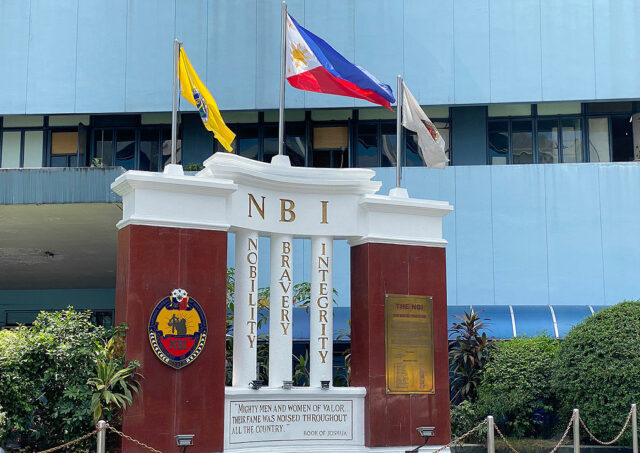
THE NATIONAL Bureau of Investigation (NBI) has started investigating the recent bus bombings in southern Philippines, as it tries to prevent the terror acts from spilling into Manila, the capital, it said in a statement on Wednesday evening.

“The bureau’s probe on the series of bombings is directed at ensuring national security as well as preventing possible major attacks not only in Mindanao but also in the entire country,” it said. “Extortion and terrorism are the motives of the bombing based on information gathered.”

NBI Officer-in-Charge Eric B. Distor, the bureau’s counter-terrorism division and a forensics team have traveled to Mindanao for the probe.

There have been six bombing incidents on bus lines in the region in the past two years, with four happening this year, NBI said.

The first of the bus bombings this year took place on Jan. 11 in the town of Aleosan, North Cotabato, killing a five-year-old boy and wounding three others. On April 24, a bus exploded in Parang, Maguindanao, injuring at least three passengers.

The most recent bombings happened on May 26 in Koronadal City, South Cotabato, hurting two civilians. The NBI also cited a separate roadside bombing on the same day in Tacurong, Sultan Kudarat.

The series of bombings started on Jan. 7 last year, when a local bus operator in Koronadal City received a bomb threat call and an extortion demand from an anonymous caller.

Local police found an improvised explosive device inside one of the buses. CCTV footage showed two male passengers leaving the device inside the bus.

Another attack took place on June 3 last year when a bus was burned in the town of M’lang, North Cotabato, killing three and wounding six other people.

Last week, a suspect in the bombing incidents was killed in a clash with police and military troops in M’lang, according to the Armed Forces of the Philippines.

The suspect was identified as a member of the Dawlah Islamiyah terrorist group in Maguindanao province. — John Victor D. Ordoñez

Justice chief seeks smooth turnover to incoming gov’t

PHILSTAR

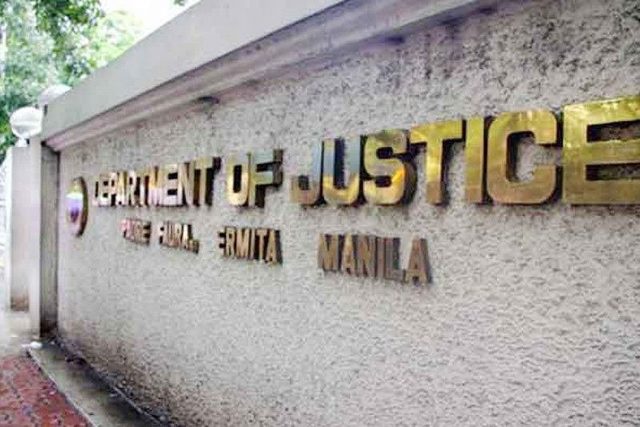
OUTGOING Justice Secretary Menardo I. Guevarra on Thursday met with his successor to ensure a seamless turnover of responsibilities at agency.

“This meeting is important to ensure a smooth transition of leadership and uninterrupted operations at the Department of Justice (DoJ),” he told reporters in a Viber message on Thursday.

He said he might meet with incoming Justice Secretary Jesus Crispin C. Remulla again for consultations.

Mr. Remulla earlier vowed to fast-track criminal cases by developing a digital database to keep track of the jail sentences of all prisoners.

He also vowed to abide by the Constitution when he assumes office amid worries from various human rights groups over his history of accusing individuals of being communists.

During the campaign period, he linked supporters of Vice President Maria Leonor G. Robredo to the Maoist movement.

Political experts have said activists might have a hard time defending themselves if Mr. Remulla became the Justice secretary.

“While he is a lawyer by training, he spent most of his time as a politician,” Maria Ela L. Atienza, who teaches political science at the University of the Philippines, said in Viber message. “It is important to monitor his performance as the Justice secretary.”

As Justice chief, the former congressman will become a member of the newest anti-terror law’s Anti-Terrorism Council. He will also head a committee that investigates the killings of activists and dissenters.

The DoJ has faced increasing pressure from domestic and international groups to prosecute more rogue cops.

The Philippine Human Rights Commission said the Duterte government had encouraged a culture of impunity by hindering independent inquiries and by failing to prosecute erring cops involved in the government’s deadly drug war. — John Victor D. Ordoñez

Bongbong won’t get arrested if he visits US 

PHILIPPINE STAR/KRIZ JOHN ROSALES

By Kyle Aristophere Atienza

Philippine President-elect Ferdinand “Bongbong” R. Marcos, Jr. may visit the US without being arrested, according to a high-ranking American diplomat..

US Deputy Secretary of State Wendy Sherman, who met with Mr. Marcos earlier in the day, said his election as Philippine president allows him to go to the US without being arrested for a $353-million contempt order against his family in connection with a human rights lawsuit.

“When you are head of state, you have immunity in all circumstances and are welcomed to the United States in your official role,” she told reporters in Manila.  

The diplomatic immunity, which is given to heads of states, would only cover Mr. Marcos, not his entire family.

The US Court of Appeals has ordered Mr. Marcos and her mother Imelda to pay $353.6 million for violating a US court order not to dissipate their assets, which have been earmarked as compensation for the victims of his father’s martial rule.

DAR nominee Estrella to focus on increasing farmer incomes

BONGBONG MARCOS MEDIA BUREAU

CONRADO M. ESTRELLA III, President-elect Ferdinand R. Marcos, Jr.’s nominee for the Department of Agrarian Reform (DAR), said on Thursday that his policy will focus on boosting the purchasing power of farmers.

Ang ating hinahangad, syempre, unang una, na ang ating mga magsasaka, ang ating agrarian reform beneficiaries ay maging parte ng ating consumer group na mayroong malakas o strong purchasing power” (Our goal, first of all, is to turn our farmers and agrarian reform beneficiaries into consumers with strong purchasing power), he told state-run People’s Television Network (PTV).

Sapagka’t kung lumaki ang ating consumer group with strong purchasing power, e susunod sunod na ’yan kahit na anong negosyo ang ipatayo mo dyan, kikita tayo” (If we grow the consumer base and ensure they have strong purchasing power, many businesses will benefit and we will prosper), he added. “’Pag ganun pati presyo ng pagkain either mapababa natin ng kaunti o kung hindi man, mayroon pera sa bulsa ang ating mamamayan upang ipambili ng pagkain nila” (We will either bring down food prices a bit or ensure ordinary people have money to buy food with).

Mr. Conrado’s nomination to DAR was announced late Wednesday. He will assume the same post held by his grandfather, Conrado Estrella, Sr., who served under the late President Ferdinand E. Marcos, Sr.

One avenue for increasing farmer incomes is to encourage them to “embark on livestock,” Mr. Estrella said. “That’s one of the things we are looking at.”

He said that the DAR will seek to accelerate the distribution of titles to farmers, a number of whom have only received Certificates of Land Ownership Award under the Comprehensive Agrarian Reform Program.

“We will try to issue more land titles so that farmers would be able to fully utilize their land,” he said, noting that titles may be monetized by being offered as collateral for bank loans.

Mr. Estrella, an outgoing deputy Speaker, is a member of the ABONO party-list that represented agriculture sector in the 18th Congress. — Kyle Aristophere T. Atienza

Country seen paying price of dependence on food imports

PHILSTAR FILE PHOTO

By Luisa Maria Jacinta C. Jocson, Reporter

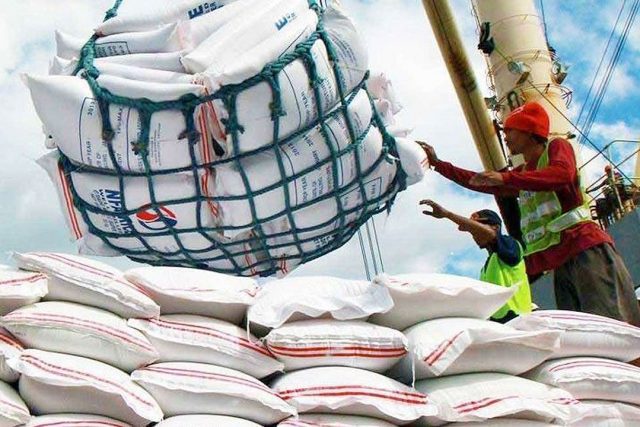
THE government’s economic managers pursued an inappropriate import-heavy model for achieving food sufficiency, which is now being disrupted by the fallout from the Russia-Ukraine crisis, a poultry industry executive said.

“Our economic managers and the Department of Agriculture (DA) believe that the template for us is Singapore, which is 90% dependent on food imports and yet is food-secure,” United Broiler Raisers Association (UBRA) President Elias Jose M. Inciong said in a phone interview.

The economic managers assumed that “we can depend on imports for food security. That’s why the agri-fisheries sector has been neglected since we got into the World Trade Organization. In short, the template is to depend on imports. Now, we are vulnerable and at risk. We are being made to pay for that policy in the coming months and years,” he added.

The Philippine Statistics Authority reported this week that the price of food and non-alcoholic beverages rose by 4.9% year on year in May, fueled by a 15.2% increase in vegetables and tubers and a 6.2% jump in fish and seafood.

Mr. Inciong said that the incoming administration can forestall a supply crisis by supporting domestic production.

“Our advantage is since we still have the resources to produce, if the incoming administration will focus on production and support income-generating projects, we can minimize our risk of a really major food crisis,” he said.

“Producers are being made to compete with subsidized products; since imports have become more expensive, everyone is at risk now. Best way to solve this is for the government to support production in more creative ways,” he added.

The food crisis triggered by the war between Ukraine and Russia has led governments to restrict the export of food commodities to secure their domestic supply. Ukraine is a major producer of grain and edible oils, while Russia is also a major grain and fertilizer producer, apart from being a leading energy exporter. The war has turned the Black Sea into a conflict zone, restricting both countries’ exports through that body of water.

According to Moody’s Analytics, protectionism is surfacing throughout the Asia-Pacific in response to the food crisis.

“Protectionist policies tend to be short-lived and isolated. But in 2022, we are seeing an unusual convergence of protectionist policies on multiple food staples. This comes against the backdrop of disrupted supply chains and geopolitical uncertainties related to Russia’s invasion of Ukraine, which pose a longer-term threat to global food security,” it said in a report.

Moody’s Analytics said that the food crisis will continue over the next two to three years if substitutes cannot be found.

“For example, the variants of wheat grown in Ukraine are winter wheats, which are harvested in late June to July. Today, much of the country is in turmoil, there is limited capacity to move what little harvestable crops are left, and many silos to store the harvest have been destroyed,” it said.

The report projected a significant food shortage in 2023, with underdeveloped economies most exposed.

“And if the invasion drags on till September or November, there will not be enough time for planting wheat in Ukraine for the following year. Making matters worse, Russia is the largest exporter of fertilizer, which are necessary for reliable harvests,” it said.

“The longer Russia’s invasion of Ukraine continues, the higher food prices will go and the greater the risk of food shortages. Geopolitical forces are coming to bear on global food security. Whether it is palm oil from Indonesia, wheat and sugar from India, or chicken from Malaysia, major food producers are tightening export policies to tame inflation and shore up domestic supplies,” it added.

ADB approves $4.3-billion loans for South Commuter rail project

JICA

THE Asian Development Bank (ADB) has approved up to $4.3 billion in loans to finance the construction of the South Commuter Railway Project.

The railway runs for nearly 55 kilometers (km), and will connect Metro Manila with Calamba, Laguna. The project is part of the North-South Commuter Railway (NSCR) network, and is the ADB’s largest infrastructure financing project to date.

After its construction, the South Commuter Railway is expected to offer fast public transport, ease road congestion, and contribute to the reduction of greenhouse gas emissions. It will also halve the travel time between Manila and Calamba from the 2.5 hours it would usually take by road.

“The South Commuter Railway Project will provide affordable, safe, reliable, and fast public transport for commuters,” Ahmed M. Saeed, ADB Vice-President for East Asia, Southeast Asia, and the Pacific, said. 

“This project represents ADB’s biggest infrastructure investment and reflects our commitment to helping the Philippines attain its goals of reducing poverty, improving the lives of Filipinos, and achieving green, resilient, and high economic growth,” he added.

The project will involve the construction of 18 stations, with provisions for accessibility to the elderly, women, children, and people with disabilities.

The line will connect to the future Metro Manila Subway system.

“The South Commuter Railway Project will be financed under a multitranche financing facility, with the first tranche of $1.75 billion to be made available starting this year,” the ADB said.

The second and third tranche releases are expected in 2024 and 2026, respectively. The ADB will finance civil works for the railway viaduct, stations, bridges, tunnels, and depot buildings. The Japan International Cooperation Agency is also co-financing the loan, funding railway vehicles and railway systems.

The NSCR, which also includes the ongoing construction of the Malolos-Clark line, is expected to generate more than 35,500 jobs during construction, while providing another 3,200 permanent jobs during its operation.

The ADB’s study on the South Commuter Railway Project found that cities and municipalities that have stations along the line will have access to more than 300,000 jobs on average, an average increase of 15.3% in the cities to the south of the capital, with the corresponding growth seen at 8.5% in Metro Manila.

“It will create a substantial growth multiplier effect in the economy through supplier contracts and new opportunities opened with better connectivity in the region,” the ADB said. — Tobias Jared Tomas

FDI flows may be hindered by risk aversion

THE foreign direct investment (FDI) market will be beset by risk aversion in light of the war between Ukraine and Russia, the United Nations Conference on Trade and Development (UNCTAD) said.

UNCTAD said in its World Investment Report, carrying the title “International Tax Reforms and Sustainable Investment,” that developing countries need help from the international community as FDI flows dry up.

In 2021, the report said global FDI flows improved 64% to $1.58 trillion, driven by a surge in merger and acquisition (M&A) activity and an increase in international projects.

“UNCTAD foresees that the growth momentum of 2021 cannot be sustained and that global FDI flows in 2022 will likely move on a downward trajectory, at best remaining flat. However, even if flows should remain relatively stable in value terms, new project activity is likely to suffer more from investor uncertainty,” the report said. 

“The need for investment in productive capacity, in the Sustainable Development Goals (SDGs) and in climate change mitigation and adaptation is enormous. Current investment trends in these areas are not unanimously positive. It is important that we act now. Even though countries face very alarming immediate problems stemming from the cost-of-living crisis, it is important we are able to invest in the long term,” UNCTAD Secretary-General Rebeca Grynspan said.  

UNCTAD said that the business and investment climate has changed due to the war, which caused food and fuel prices to rise and dried up financing.

“Signs of weakness are already emerging this year. Preliminary data for the first quarter shows greenfield project announcements down 21% globally, cross-border M&A activity down 13% and international project finance deals down 4%,” UNCTAD said.  

“Asia, which receives 40% of global FDI, saw flows rise in 2021 for the third straight year to an all-time high of $619 billion. FDI in China grew 21% and in Southeast Asia by 44% but South Asia went the other way, falling 26% as flows to India shrank to $45 billion,” it added.

UNCTAD said international SDG investment rose 70% in 2021 to $371 billion. 

“But most of the recovery growth came in renewable energy and energy efficiency, where project values reached more than three times the pre-pandemic level. While the 2021 recovery in value terms is positive, investment activity in most SDG-related sectors in developing economies, as measured by project numbers, remained below pre-pandemic levels,” the report said.

UNCTAD said that the proposed minimum tax of 15% on the foreign profits of the largest multinational enterprises planned for 2023 or 2024 will have major implications for international investment and investment policy.

In October, more than 130 countries decided to implement a corporate tax rate of at least 15% to ensure that big companies pay a fairer share of tax.

“While the tax reforms are going to increase revenue collection for developing countries, from an investment attraction perspective they entail both opportunities and challenges,” Ms. Grynspan said.

“Developing countries face constraints in their responses to the reforms, because of a lack of technical capacity to deal with the complexity of the tax changes, and because of investment treaty commitments that could hinder effective fiscal policy action. The international community has the obligation to help,” she added. — Revin Mikhael D. Ochave 

PHL, Israel establish joint economic commission 

REUTERS

THE Philippines and Israel said they formed a Joint Economic Commission (JEC) that will explore pathways to improving trade.

In a statement on Thursday, the Department of Trade and Industry (DTI) said Trade Secretary Ramon M. Lopez signed a memorandum of understanding (MoU) with Israel Economy and Industry Minister Orna Barbivai in Jerusalem on June 7 that created the JEC.

“The MoU seeks the establishment of a bilateral consultative mechanism that will develop and strengthen trade, enhance investments, and advance economic ties between the Philippines and Israel,” the DTI said.

“In establishing a JEC, the two countries agree to exchange information on economic issues, identify and implement cooperative projects, organize consultations, missions, and official visits and enhance cooperation and linkages with their respective private sector,” it added.

The DTI said the MoU will seek to explore industries where the two countries can collaborate with a view towards diversifying trade and investments.

He added that priority sectors for promotion include agribusiness/agriculture production, energy efficiency technologies and renewable energy, infrastructure and public-private partnership (PPP) projects in infrastructure, real estate development, logistics, artificial intelligence, information technology and business process management (IT-BPM) including shared services, electronics manufacturing, and digital infrastructure.

Mr. Lopez told reporters via Viber that the initial investments from the investment promotion and protection agreement (IPPA) between the Philippines and Israel could bring around $150 million in investment in 2022.

“Early harvest could be around $150 million this year,” Mr. Lopez said.

Also signed on June 7, the IPPA provides the framework for a closer investment relationship between Israel and Philippines. It also specifies investment protection elements such as national treatment, most favored nation treatment, free transfers, rules-based expropriation and compensation, and investor-state dispute settlement.

The DTI also recently signed an MoU seeking to strengthen cooperation with the Israel Innovation Authority.

Mr. Lopez also disclosed that the DTI has received letters of intent from Israeli investors engaged in agribusiness, software development, and IT-BPM, while receiving inquiries on food and beverage production, satellite imaging, and water desalination and treatment. — Revin Mikhael D. Ochave

PHL startups being matched with Israeli counterparts

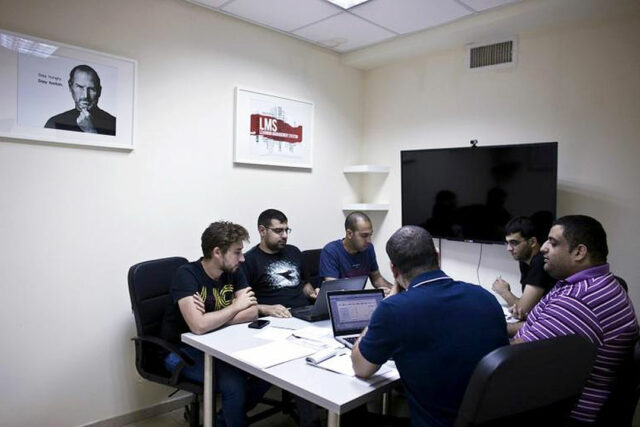
ISRAEL has organized a networking event to match Philippine startups with potential Israeli partners, in a bid to develop solutions suitable for addressing problems particular to the Philippines, the Israeli embassy said.

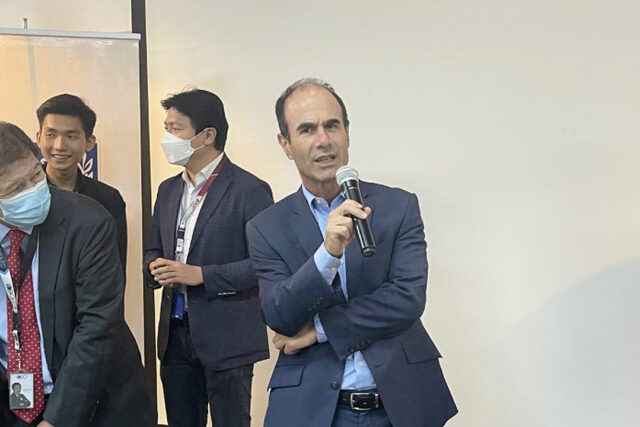
During the networking event at QBO Innovation Hub late Tuesday, Israeli Ambassador Ilan Fluss said he hopes the partnerships will help the Philippines develop its own solutions via innovation.

“Many companies will develop something and then sell the technology here, but if you develop the technology from the beginning, Israel and the Philippines together, you (can) address local challenges,” he said.

“The solution will probably be much better and more relevant for the challenges here. This is something we would like to see,” he added.

Israel has over 6,000 active startups, built up through a support network involving the government, private sector, academic institutions, local governments, incubators, and venture capital firms.

Ideaspace Foundation, Inc. President Rene S. Meily expressed hope for further meetings among startups, investors, and government officials to  learn from each other.

“If we can build those ties together, I think both economies will gain and grow,” he said. “Our hope is that what we start today… will flourish like a strong, solid tree that will outlast what we start here.”

Mr. Fluss also announced the signing of three agreements between the Israeli government and the Philippines’ Trade department.

“One of which is an agreement to cooperate in technological innovation, research and development with the Israeli Innovation Authority, our government agency in charge of fostering industrial research and development,” he said, adding that the other two were signed on Tuesday.

“With this, we are opening more bridges to partner with you and build a stronger startup industry,” he added.

The event was the first physical engagement between the Israel Embassy and Philippine startups. Around 50 Filipino founders of startup companies and investors participated in the networking night. — Alyssa Nicole O. Tan

PHL makes pitch for continued international aid to low, middle-income countries

DOF.GOV.PH

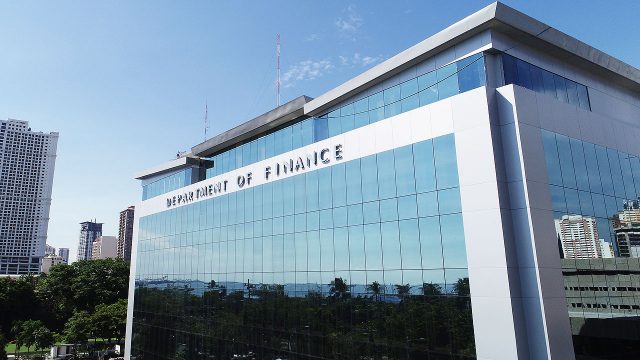
THE Department of Finance (DoF) said the international community must continue to aid low- and middle-income countries, noting the need for further support coming out of the pandemic.

In a statement on Thursday, Finance Undersecretary Antonnette C. Tionko said the department sees the need to mitigate financial stability risks in such countries to help them achieve sustainable growth after the pandemic, and while they deal with other economic shocks.  

“Rebuilding a stronger global economy amidst present and future external shocks will be arduous,” Ms. Tionko was quoted as saying at a UN forum held in April. “It is imperative to strengthen international cooperation and endeavor to build a healthier and more sustainable world for future generations.”

“The pandemic highlighted the importance of international cooperation in ensuring that we leave no one behind. The Philippines is grateful for the technical and financial assistance from our development partners in providing budgetary support and vaccine mobilization for our COVID-19 response.”

The Philippines took on debt to fund its pandemic response, borrowing P1.31 trillion and receiving grants worth P2.7 billion, including coronavirus disease 2019 (COVID-19) vaccines. The DoF has said it would take 40 years to pay off these pandemic-related loans and grants. In total, the country received P4.05 trillion in budgetary support.

The Asian Development Bank was the country’s biggest benefactor, providing P303.37 billion in loans. Other sources of financing were the Asian Infrastructure Investment Bank (P66.01 billion), the Japan International Cooperation Agency (P47.56 billion), and the Agence Française de Développement (P28.96 billion), among others.

Finance Assistant Secretary Neil Adrian S. Cabiles, at a forum on Sustainable and Just Transition, also encouraged developed countries to lead in climate change adaption and mitigation, knowledge and technology transfer, technical assistance, and other means to help efforts in averting the negative effects of climate change.

“As a shared responsibility, we call on countries, multilateral development banks and bilateral partners, and all stakeholders, to forge strong alliances and partnerships to innovate ways to reduce carbon emissions and integrate sustainable practices in all forms,” he added.

Mr. Cabiles said that the government would continue to pursue tax reforms and improve tax administration, continue with its infrastructure development program, with an emphasis on sustainable designs to revitalize the economy.

“Lastly, we will strengthen fiscal risk mitigation mechanisms to continue protecting economic and development gains,” Mr. Cabiles said.

“With the continued support of our developing partners and the international community as a whole, the Philippines will continue to ensure judicious financial management and sound fiscal policies that will provide an enabling environment for the attainment of an inclusive and sustainable recovery despite the difficulties we face from black swan events,” he added. — Tobias Jared Tomas

BoI compiling database on cold chain facilities

PHILSTAR FILE PHOTO

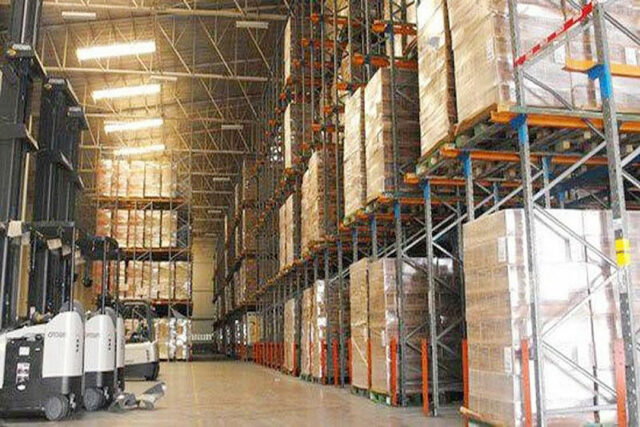
THE Board of Investments (BoI) said it is surveying the cold chain industry as it compiles an integrated supply chain database.  

The BoI said the project is designed to make policy and investment decisions more “evidence-based,” and will aid in selecting suitable locations for facilities and determining how industry participants can best be assisted.

The project “will map out existing cold chain service providers and estimate and forecast supply and demand for cold chain services,” the BoI said in a statement on Thursday.

“Once completed, the project will provide a data-driven, location-specific and timely reference for policy formulation and investment promotion.”

The Philippine Cold Chain Industry Roadmap estimated demand for an additional 50,000 pallet positions in cold storage facilities each year.

In February, the BoI signed a memorandum of understanding with the Environment department’s Environmental Management Bureau and InsightSCS Corp. for the development of a cold chain integrated supply chain solution. — Revin Mikhael D. Ochave