Home Blog Page 6180

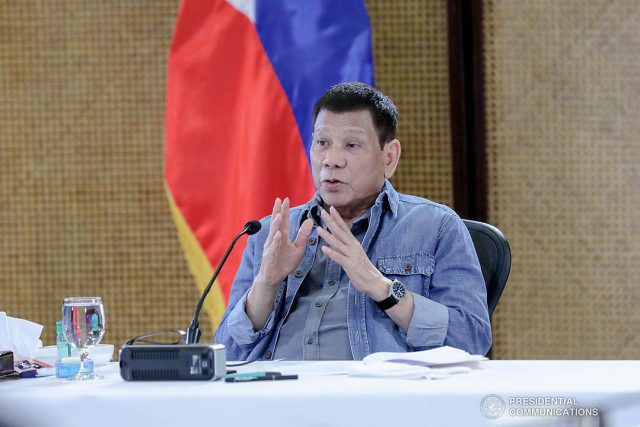
Duterte signs order regulating signs, billboards

JUDGEFLORO

PRESIDENT Rodrigo R. Duterte has signed an order regulating advertising signs and billboards to reduce traffic distractions and hazards, environmental damage and urban blight.

“There is a need to update and supplement the rules on nonmobile advertising signs and billboards under the Building Code and its implementing rules and regulations,” he said in Executive Order 165, citing the need to harmonize national and local rules and facilitate self-regulation by the ad industry.

Unregulated ad signs and billboards often cause harm due to their inappropriate location, glare, size, structural configuration and uncontrolled height limit, Mr. Duterte said.

Under the order signed on March 21, owners and operators of existing signs and billboards must comply with side and height limits within two years. Local governments are barred from imposing stricter requirements.

Newly built billboard structures must have at least five meters of setback from the front property line, measured perpendicularly up to the support structure.

Existing static billboards or LED billboards with a setback of fewer than five meters must comply with the guidelines for display size and height and relevant clearances prescribed by the Philippine Electrical Code.

Signs, billboards and structures must not exceed 250 square meters, while LED and other electronic signs must be at 55 to 250 square meters. These must conform to structural design and wind load exposure under the National Structural Code.

The height of freestanding billboard structures is limited to 36 meters as long as these don’t block any public utility and fire exits.

Meanwhile, the height of roof-mounted billboard structures must not exceed 26 meters in urban areas and 36 meters in rural areas.

New rooftop billboards must occupy more than a quarter of the street front of the building on which they are attached, with the base area of the support skeleton frame structure not more than 10 square meters on any horizontal section. These must be built using fireproof material.

Wall-mounted billboards must be placed against blank walls and must not exceed the area of the wall. New billboard structures at the same side of the road must be at least 100 meters apart.

The Department of Public Works and Highways will ensure the rules are enforced. It will also streamline and set up an online platform for billboard permits. A manual application system must also be maintained. 

The offices of the city or municipal building official will enforce the executive order.

Local governments, with the help of the Department of Interior and Local Government, must ensure signs and billboards don’t obstruct natural landscapes. They must also disallow billboards that offend aesthetic and cultural values and traditions.

They must also pass ordinances for restricted areas where ads and billboards may distract or obstruct the public view and cause a traffic hazard. Billboard-free zones must include historical sites, tourist destinations and parks, institutional establishments and critical facilities such as power plants.

Meanwhile, the Department of Finance will prepare guidelines for setting local fees and charges related to the application for locational clearances required for permit applications, provide training for local governments and help government offices comply with the law.

The Public Works department and other government agencies will provide the funds to enforce the order. Funding for subsequent years will be included in the yearly national budget. — Alyssa Nicole O. Tan
Comelec to resolve PDP-Laban dispute before month ends

PCOO.GOV.PH

THE COMMISSION on Elections (Comelec) expects to resolve the intra-party dispute of the ruling PDP-Laban party this month, according to a commissioner.

Election Commissioner George M. Garcia would also inhibit himself from the case because he used to be a lawyer of the party, he told the ABS-CBN News Channel on Wednesday.

“I will not be participating in the deliberations on the petition simply because I used to be a lawyer of the PDP-Laban when both camps were united,” he said. “If they ask for guidance, I can give insights or historical background but definitely not influencing the outcome of this case.”

The election body earlier allowed candidates from both factions to use the party name on their printed ballots pending a decision on the dispute.

The faction headed by Energy Secretary Alfonso G. Cusi on Monday endorsed the presidential run of former Senator Ferdinand “Bongbong” R. Marcos, Jr. President Rodrigo R. Duterte supports the group.

Senator Aquilino “Koko” L. Pimentel III, who heads the rival faction that includes Senator and boxing champion Emmanuel “Manny” D. Pacquiao, on Tuesday cited the irony of the endorsement, noting that the party was set up in the 1980s to fight the dictatorship of Marcos, Jr.’s father, the late Ferdinand E. Marcos.

Mr. Garcia also urged the public to file complaints on vote-buying incidents so they could study the evidence presented and require the defendants to respond to the allegations. The election commissioner reiterated that they would form a task force against vote-buying this week.

“We want a formal investigation because definitely, we cannot file cases based on news reports,” he said. “Cases with concrete evidence are the ones that can stand in court.”

Mr. Garcia also said Comelec is doing something about the reported data breach involving Smartmatic SGO Group, the software contractor for this year’s automated elections. He declined to elaborate so as not to prejudice an investigation by the National Bureau of Investigation.

Meanwhile, Comelec allowed a plea by Vice-President Maria Leonor “Leni” G. Robredo to allow her to continue her pandemic response initiatives during the campaign period.

“In an executive session today, the en banc granted the petition for exception of the Office of the Vice President of certain projects and programs during the 45-day period of the campaign,” Mr. Garcia said.

Under the law, candidates must get a permit from the election body for social welfare projects during the campaign period.

Ms. Robredo’s office provides free antigen testing, online consultation for coronavirus patients and vaccination. — J.V.D. Ordoñez

DFA stops walk-in apostille services amid applicant rush

OFFICIALGAZETTE.GOV.PH

THE DEPARTMENT of Foreign Affairs (DFA) on Wednesday suspended walk-in application for apostille services at its Parañaque office due to the influx of applicants.

Walk-in service would resume on March 24, it said in an advisory, noting that the applicant quota at Aseana is 300 a day. The agency said it was investigating the incident.

Hundreds of applicants started forming long lines outside the DFA Office of Consular Affairs at the Aseana Business Park on Tuesday night to have their documents processed for overseas job applications, Foreign Affairs Secretary Teodoro L. Locsin, Jr. tweeted on Wednesday.

But the agency reminded the applicants that there was no need for them to line up late at night, noting that applicants are only admitted to the building starting at 7 a.m. It also advised applicants to consider having their documents processed at other DFA offices.

Mr. Locsin ruled out sabotage after 800 apostille applicants suddenly appeared at the department’s consular affairs office in Aseana Business Park, Parañaque City. “Suddenly in the night, 800 applicants for apostille appeared in Aseana,” he said.

“DFA mobilized to care and feed them,” he said. “I ordered the deployment of diplomatic staff to man the desks completely in 14-hour shifts.” — Alyssa Nicole O. Tan

Lacson plans central financing facility for MSMEs; Ka Leody opposes 100% foreign ownership in public utilities

SENATOR Panfilo M. Lacson, Sr. on Wednesday said if he wins the presidential race in May, he will set up a centralized facility where micro, small and medium enterprises (MSMEs) can have easier access to government financing.   

The center, he said, will replace the different government agencies currently offering varying assistance packages to small businesses.  

Why not pool all these into one fund to help MSMEs, whether they are hit by the pandemic, the conflict in Ukraine, climate change, or other calamities? The bottom line is they will know where to seek assistance,he said in Filipino during an interview with One PH.  

MSMEs account for 99.5% of the 957,620 business enterprises operating in the country, based on 2020 data from the Philippine Statistics Authority. It also constitutes 63% of the country’s workforce.  

The presidential bet also maintained his position to end contractualization in the country, but noted that competing interests should be given consideration.   

I think we can find a middle ground.”  

Meanwhile, the senator said it is not necessary to increase taxes to pay for the countrys P12-trillion outstanding debt.   

The solution I will propose on this is the balanced budget. Balanced budget, meaning, let’s cut off the fat, let’s get rid of the non-essentials,he said.  

Ka Leody
Meanwhile, presidential candidate Leodegario “Ka Leody” Quitain de Guzman, a labor leader, said on Wednesday that the recent amendments to the Public Service Act will lead to a “wholesale bargaining” of basic needs and services of the Filipino people.  

The recently signed Public Service Act signed by the outgoing resident of the Malacañang is ‘The Philippines for foreigners’ which will lead to problems for the next administration and its citizens,” Mr. de Guzman said in Filipino in a Viber message. 

Among the Partido Lakas ng Masa standard-bearers platforms is to strengthen and develop local industries, and move away from import-dependent and export-oriented policies of past administrations.  

President Rodrigo R. Duterte on Monday signed a law that amended the 85-year-old Public Service Act, opening up such sectors as telecommunications and domestic shipping to full foreign ownership. Alyssa Nicole O. Tan and John Victor D. Ordonez

Anti-communist task force’s Badoy faces complaints for red-tagging, spreading ‘fake news’

PHILIPPINE STAR/ MICHAEL VARCAS

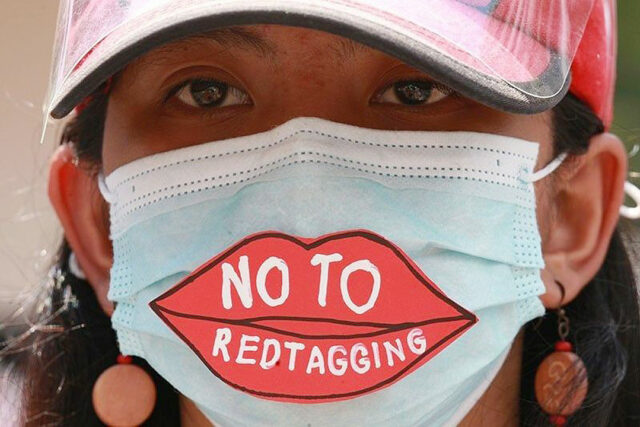
SEVERAL complaints were filed before the Ombudsman on Wednesday against the spokesperson of the governments anti-communist task force for allegedly using her position to spread fake news and tagging groups and personalities as reds or terrorists without basis.   

Undersecretary Lorraine Marie T. Badoy, who serves as spokesperson of the National Task Force to End Local Communist Armed Conflict (NTF-ELCAC), is facing complaints from 26 activists.   

A gossipmonger and fake news spreader must not be allowed to serve as spokesperson of any agency, or even be allowed any post in government service,Ofelia Tabacon, a teacher leader who is one of the complainants, said in a statement.   

Ms. Tabacon, a former head of the Alliance of Concerned Teachers (ACT) in Northern Mindanao, along with ACT-National Capital Region President Vladimer Quetua and their organization as a whole were among those previously accused of being communists by Ms. Badoy.   

The complaints also stem from Ms. Badoys recent Facebook posts claiming that presidential bet Vice President Maria Leonor LeniG. Robredo and party-list groups under the Makabayan bloc are linked to the Communist Party of the Philippines (CPP).  

We are collectively shocked at such behavior, which we believe are unbecoming of Undersecretary Badoys office,the activists said in their complaint.  

The posts are clearly designed to paint Vice President Robredo as an alleged supporter of terrorism and activities of the CPP, and this attempt at associating her and her presidential campaign to the communist movement without due basis in fact is not the behavior worthy of the post that Undersecretary Badoy occupies as a government official.”  

Ms. Quetua pointed out that public school teachers and other government rank-and-file employees are prohibited from electioneering, then all the more reason that those occupying higher posts and having greater access to public funds and resources like Ms. Badoy must not be allowed to campaign for or against any candidate.”  

The complaints cite violations of provisions of the 1987 Constitution, the Anti-Graft and Corruptions Act or Republic Act 3019, and the Code of Conduct and Ethical Standards for Public Officials and Employees or R.A. 6713.  

Meanwhile, ACT Teachers Rep. France L. Castro said red-taggers, or those who label individuals as communists or terrorists, should be held accountable for their actions, especially during an election period.  

Red-tagging is an act having perilous consequences, and such a dastardly tactic must not be resorted to, especially using public authority and the taxpayersmoney and resources,Ms. Castro said in a separate statement.  

We hope that the Ombudsman sees this.”  

BAGUIO MAYOR
Meanwhile, Baguio City Mayor Benjamin B. Magalong slammed Ms. Badoy for alleging that he has given directives that give coverto the Kabataan Party-list as a front of the communist movement.  

Kabataan was among those that won in the 2019 elections and currently holds a seat in the House of Representatives.   

In a statement on Wednesday, Mr. Magalong said he is ready to face Badoy et al in public and debate with them. I am on the side of truth and I did not do anything wrong to undermine the ELCAC program.”  

The ELCAC program was borne out of the Duterte administrations whole-of-nationapproach to end the 50-year communist movement in the country with local government units (LGUs) at the forefront of localized peace talks alongside the delivery of economic projects and social services.   

LGUs should be their strong partners,said Mr. Magalong, a former police officer.   

We should support each other and cooperate with one another. Bullying and manipulating facts damage that relationship,he said.   

They (Ms. Badoy and company) twist the facts and shout over social media. This tactic erodes the unprecedented gains of ELCAC,Mr. Magalong said.   

Ms. Badoy has yet to reply to a request for comment. Jaspearl Emerald G. Tan

QC partners with IFC to strengthen pandemic response programs

PHILIPPINE STAR/ MICHAEL VARCAS
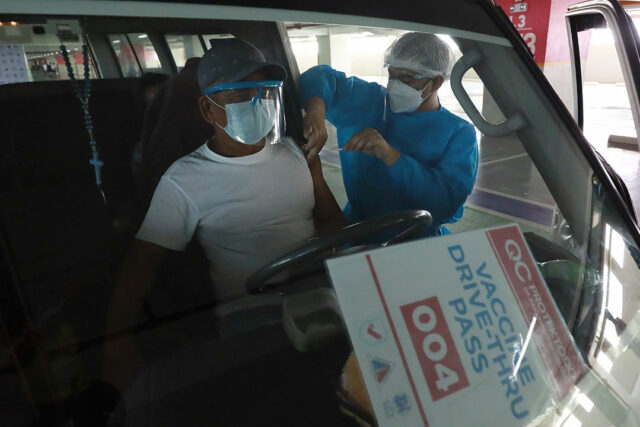
A QUEZON CITY resident gets a vaccine shot against coronavirus through a drive-thru service organized by the Quezon City government in partnership with SM Fairview shopping mall in this May 2021 photo. — PHILIPPINE STAR/ MICHAEL VARCAS

THE QUEZON City government has partnered with the World Banks International Finance Corp. (IFC) to strengthen pandemic response capacity by building up on existing programs laid out for the coronavirus outbreak.    

In a statement released on Wednesday, the IFC said it will provide advisory services to the local government to help future-proof the city’s vaccination strategy and facilities, improve vaccination rates, and logistics, among other areas.  

We expect that this partnership with IFC will help cover all bases and further solidify our programs and projects to combat COVID-19, especially our vaccination and testing initiatives,Quezon City Mayor Maria Josefina JoyG. Belmonte said.  

While Quezon City is already considered as very low riskfor COVID-19 (coronavirus disease 2019), we should not rest on our laurels and there must be no room for complacency. We must not let our guard down until we achieve total victory over this virus,she added.  

According to Quezon City’s QC Protektado website, 2.4 million individuals have been vaccinated as of March 22, with a total of 5.5 million doses administered. The local government operates about 140 vaccination centers.    

Quezon City has the biggest population among highly-urbanized cities in the country with 2.96 million as of the 2020 census.   

We are delighted to partner with Quezon City as it seeks to improve its pandemic response efforts,IFC Country Manager for the Philippines Jean-March Arbogast said.   

Supporting subnational governments and cities, which are often at the forefront of climate change and pandemic response efforts, is crucial. We look forward to a long term and fruitful partnership with Quezon City and to supporting more cities in the Philippines, he said.  

The International SOS Foundation, a health and risk management company, is supporting IFC in its partnership with Quezon City.  

IFC is also working with the local government on carbon mitigation projects, focusing on sustainable transport and green corridors.  

The IFC has invested more than $5.5 billion to 160 projects in the Philippines in areas of climate change, sustainability and inclusivity. Tobias Jared Tomas

Agri sector party-list calls on gov’t to fund storage facilities for Nueva Ecija onions

DA.GOV.PH

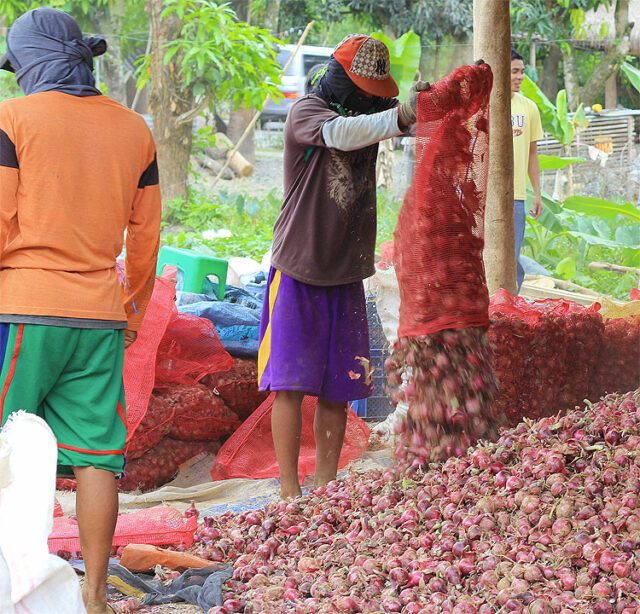
A PARTY-LIST group representing the agricultural sector called on the government to provide more storage facilities in Nueva Ecija, one of the biggest onion producers in the country, to help farmers manage their harvest and stabilize local supply.   

The DA (Department of Agriculture) said there are no funds to set up more cold storage facilities. What they do is they link the farmer directly to the trader,Magsasaka Rep. Argel T. Cabatbat said in Filipino in a statement on Wednesday.    

In that case, the trader has an opportunity to pinch the price. And the farmers have no choice but to follow (and sell their goods) at a bargain price.”  

The Magsasaka party-list also urged the DA to regulate importation, prevent smuggling of agricultural products, and strengthen agencies to prevent wastage of local products such as onions.   

Theres the strengthening of the campaign against smuggling of agricultural products,Mr. Cabatbat said. If the government slows down on its importation of onions and other products from other countries then it will benefit our Filipino farmers.”   

Mr. Cabatbat also urged consumers to patronize local farm products to prevent oversupply.   

If consumers choose local crops, then there wont be an oversupply and the efforts of the farmers wont go to waste,he said.  

Onions are grown in 22 provinces in the country and Nueva Ecija is known as the onion capital of the Philippines.   

The DA announced earlier this month that it has allocated an additional P94.6 million this year under its High-Value Crops Development Program to boost onion production.  

According to the DA, the production of onions fell by 11,000 metric tons last year from its 2020 level.   

Agriculture Secretary William D. Dar recently met with onion farmers in Nueva Ecija and Mindoro who complained that the farm gate price of their produce has been decreasing due to the influx of imported onions sold at a cheaper price.  

Mr. Dar promised that the department would boost monitoring of imports and establish more cold storage facilities. Jaspearl Emerald G. Tan

Minsk to Manila: What’s Russian Military aggression got to do with Philippine diplomatic relations?

KHARKIV Regional State Administration after rocket attacks by Russian occupying military, March 1. — DEPOSITPHOTOS-NATLAP

ON THURSDAY, Feb. 24, the world watched as Russian military forces entered Ukrainian territory, in what Anton Gerashchenko, an adviser to Ukraine’s interior minister, described as an “invasion.” Diplomats at the United Nations pleaded for peace, but their words were not enough to impede developments on the ground. As the confrontation escalates, governments must contend with the conflict’s possible implications on their citizens.

For example, the Philippine Department of Foreign Affairs published a statement about the need to repatriate the 181 Filipinos that are currently in Ukraine. In addition, the country’s economic managers will have to contend with the increasing price of oil, which Reuters reported as rising above $105 per barrel following the Russian attack. Further impacts may be expected as the United States and the European Union implement sanctions against the Russian Federation.

With all that is occurring, however, there is one underdiscussed impact of the invasion that needs to be emphasized, which is that it redirects European and American focus towards eastern Europe, and away from the Indo-Pacific region. Consequently, efforts at engaging with Chinese actions from the Indian Ocean to the Pacific have become a secondary priority.

Both the EU and the USA have publicized strategies for the Indo-Pacific. The EU Strategy for Cooperation in the Indo-Pacific was published in April of 2021, and included a clause supporting “free and open maritime trade routes in full compliance with international law.” The Biden administration released its own publication on Feb. 12, less than two weeks before the invasion of Ukraine. The American document elaborated on the government’s “pivot” towards Asia, with the goal of maintaining “US strategic primacy in the Indo-Pacific region” and countering the “cycle of escalating Chinese coercion.”

Both the American and European strategies have implications for the Philippines, since they support the Southeast Asian country’s territorial integrity. Their strategies seek to bolster partnerships with the Philippines, to support it in its territorial disputes with China. However, with the Russian invasion of Ukraine, the US and EU Indo-Pacific strategies have taken a backseat to the much more immediate threat of military conflict.

However, it would be a grave error to detach Moscow’s aggression from Beijing’s ambition. It is virtually inevitable that Russia and China will become more intertwined. As various countries impose progressively harsher sanctions on Russia and lose faith in diplomatic channels, the Kremlin will lean more on its main Asian ally. Closer to (our) home, China could view the invasion of Ukraine, and an ineffectual Western response, as an indication to more aggressively pursue its goal of finally annexing Taiwan. Taiwan recently reported the incursion of Chinese military aircraft into its air defense space, which lends credence to such anxieties.

Beijing itself has been cautious about engaging with the Ukrainian crisis, but has gradually been leaning closer to Moscow. Initially, it issued a statement that all nations should respect sovereignty — though these words were laughable to neighboring countries with first-hand experience of Beijing’s disregard for international law. More recently, it blamed the West for the crisis in Ukraine, in line with Putin’s insistence that he is defending Russia against NATO expansionism. So, really, how far away from the Spratlys is Kyiv?

These connections mean that the Philippines and its regional allies cannot afford to stay quiet on the Ukrainian crisis. Nor should our concerns be dismissed as second-tier. An emboldened Moscow has repercussions for Asia, as Xi Jinping’s cautious backing of Putin has implications for Europe. If we voice our concerns, we do not distort or downplay the Kremlin-incited conflict, but rather point out that it’s part of a larger phenomenon of authoritarian powers expanding their spheres of influence regionally, and undermining liberal democracy globally.

Indeed, isn’t this feeling of “distance” between countries one reason we are in this global security crisis now? Rising tensions in certain parts of the world were dismissed as being too far away, or happening to unimportant regions. Attending to such tensions earlier could have prevented what looks to be a devastating war in Ukraine, with waves of instability crossing continents. Peace is supposed to remind us that we are all connected; it turns out that war is far more effective.


Manuel R. Enverga III is director and assistant professor at the European Studies Program of the Ateneo de Manila University, where he also serves as Jean Monnet coordinator.

Jamina Vesta Jugo is a doctoral candidate at the University of Goettingen, and part-time lecturer at the European Studies Program of the Ateneo de Manila University.

Doping and the whistleblowers

VECTORJUICE-FREEPIK

The crusade against the use of Performance Enhancing Drugs (PEDs) in sport has always been a challenge faced by “clean” athletes, sports administrators, and leaders. One reason for the continuing use of PEDs is ignorance or lack of education on the use of substances that are sometimes packaged as vitamins or energy drinks which turn out to contain banned substances. Another, and probably the more prevalent one, is an expensive, well-planned, and tailor-made doping program that includes masking methods to elude detection by authorities like the World Anti-Doping Agency (WADA) and National Anti-Doping Organizations or NADOs. Such guarantees embolden athletes and athletes’ managers to take calculated risks.

There have been many athletes, professional and amateur, who have figured in doping controversies not because they were confirmed to have taken banned substances but merely had the signs of doping. One such example was a female Dutch track and field sprinter who was the subject of loose talk in Athletics circles because of acne or pimples.

In an interview with Francesca Menato several years ago, Dafne Schippers complained, “I hate it when people ask me those questions (about the relationship between acne and doping). I work so hard as a really good athlete, do my diet, follow the sleep patterns, and live my life for the sport. When someone asks you things like that, it’s really hard. What can you say?”

Schippers, continues, “It’s hard with my skin. It’s me and who I am. Acne is something that runs in the family, our mother had acne until she was 30 or 40. Some people say, “Oh, that’s a typical sign of doping.”

Schippers is primarily a sprinter after having competed in the grueling eight-event heptathlon. I saw her compete in the 200-meter run in the 2015 world championships in Beijing where she won the gold medal, and at the 2017 edition in London. She ran the 200 meters in 21.63 seconds, the fastest time in history. Menato says that when journalists interviewed her after the race, they were more interested in what she was taking rather than her training.

Schippers’ acne raised concerns, according to Menato, that she was doping with performance enhancing drugs. In a moment of pique, her coach told the British paper, The Guardian: “If you walk down the street in Holland, I can point out 10 girls her age (29) with that skin. I understand that it’s one of the things you have when you are doping but sometimes you just have bad skin. It’s unfair. It’s in her family.”

Schippers reveals her frustration and says in the Menato interview, “As a woman it’s not so funny to suffer from acne. It’s hard to have that and hard to have people say things about that on a personal level. People are questioning your sporting integrity and your personal side in one go.”

Fifteen-year-old Russian figure skater Kamila Valieva has a totally different problem. With what appeared to be unblemished skin that is however expected of a 15-year-old and fully made up for international television, Valieva was allowed to participate at the 2022 Beijing Winter Olympics in February despite being found positive in a doping test taken on Dec. 25, 2021, that surfaced in the middle of the Games. The Games opening ceremonies had Vladimir Putin of Russia as its guest. Putin was a guest although technically Russia was not competing as the whole Russian Federation has been suspended from Olympic competitions, due to state-sponsored, -instigated, -orchestrated, -manipulated doping of athletes in many sports especially Athletics.

The team Putin was watching was the Russian Olympic Committee squad which won the gold in the team figure skating competition with the help of the “loaded” Valieva. It was not the Russian nation’s team. In fact, the Russian team was not even allowed to use the Russian flag.

The stories of Schippers and Valieva show different facets of the doping problem in sports. In the case of the Dutch sprinter, it is clear that she and the Netherlands Federation have nothing to do with doping and the Federation is presumably waging an active war against it. A totally different perspective is offered by Valieva. The teen claims that her father, a doctor, created his own concoction of an “energy” drink. Whether such a concoction was cleared with the figure skating Federation is unclear. What is strange, however, is that there seem to be loose controls regarding the use of substances by athletes of a country that has become notorious for doping. One would expect that since that is their reputation, they would be more circumspect or careful.

Given these perspectives, one can speculate that doping in some sports is prevalent for certain reasons.

One of these is the people in the International Federation that are responsible for anti-doping measures and actions are themselves doping enablers and instigators. They do not believe in a level playing field but want to have an extra advantage over the competition. Too much money and pride are at stake. One just recalls the controversy that surrounded the sport of cycling several years ago that seemed to indicate that some top-level officials were involved in some anomalous practices, including cover-up schemes.

It has also been reported that those who want to keep sport clean are not given enough support and protection when they decide to report and provide concrete evidence of doping and signify their willingness to testify. It becomes easier and safer to just “mind one’s own business or look the other way.” It does not pay to be honest and enforce the rules and uphold values. Russian whistleblowers found themselves in deep trouble and had to seek asylum in other countries when they cooperated with independent investigators in revealing the Russian government’s involvement and participation in doping.

Clearly, a lot of support needs to be given to the World Anti-Doping Agency to augment the fine work it has done over the years. The culture of whistleblowing, anchored on honesty, has to be developed further and strengthened through leaders and staff with integrity and courage.


Philip Ella Juico’s areas of interest include the protection and promotion of democracy, free markets, sustainable development, social responsibility and sports as a tool for social development. He obtained his doctorate in business at De La Salle University. Dr. Juico served as secretary of Agrarian Reform during the Corazon C. Aquino administration.

Going through the closet

FREEPIK

REMEMBER office attire? Well, people are leaving the house again for work and meetings.

It has been more than two years since the lockdowns of various intensities made working from home almost mandatory. Sure, there were brave souls who traveled, through the pandemic, to get vaccination shots abroad in the early days when the vaccination program here was still struggling.

For most of the pandemic period, only “upper” wear for virtual meetings was necessary. Videos only covered the torso against a virtual background of a beach or the corporate logo. And even sleepwear was possible if one shut down the video or just attended a webinar on mute. (Raise your virtual hand for questions.)

Mobility is more pronounced with the new (or old) normal. Going to the office is increasingly expected by clients. What attire is appropriate for in-person meetings when the whole person is now visible?

What happened to the “going out” wardrobe in your closet? This is also a good time to weed out and reduce the clutter.

Occasional wear can be set aside. Travel clothes — overcoats, leather jackets, mufflers, and gloves? Cold weather countries in Europe are not in anyone’s itinerary now. Don’t go East, young man, unless you’re bring ammunition. Still, passports and visas are now being updated.

Long pants? Waiting to be tried again with some effort in closing the waist button. Forget getting back into shape for now. The pandemic bloat from inactivity and, yes, even now with open gyms, inertia is still holding us back.

Slim-fit shirts? Forget those. They were not designed to hold back the flab. Even when closed with herculean effort, the spaces between buttons will show abdominal skin. Try clothes that allow you to breathe normally when you sit down with a face mask on.

While shoes are not affected too much by weight gain or loss, there is still a need to buff them and check for cobwebs inside.

Suits have very limited use even now — one of them must be set aside for wearing while in a horizontal position and staring up at a glass window with closed eyes. This attire doesn’t have to be a perfect fit as the arrangers will cut the back portion anyway. One or two can be used for other more joyous occasions like captain’s night in a cruise — if that is still an option. Office attire has been trending towards “smart casual” anyway.

Dressing up is a cultural ritual denoting usefulness. Edmund Morris, the biographer of Theodore Roosevelt, allotted time for writing at home. When he went down to his library to tap on his computer, he put on a suit to put himself in work mode. It’s a discipline that clearly defines writing as real work.

When we call a person “sloppy,” it’s because he no longer cares how he looks as he wears the same clothes in the mall that he wears watching Netflix and scratching his bare ankles in the bedroom.

Majestic personalities always dress up formally even when visiting poor folks. There is a hierarchical aspect in proper attire. This sartorial attitude of those at the top of the social pyramid captivates even poorer relations with the feeling that they’re worth dressing up for.

Killing time for coffee and people-watching requires proper attire too: something neatly pressed, freshly washed, and able to give the wearer the look of a purpose-driven life. Working on an iPad completes the illusion. Self-respect as well as the high regard of others demands the look of being well-fed and dressed for no occasion. Nobody casually asks you the insulting question — what keeps you busy nowadays?

In this political season, attire is color-coded. No need to have logos and printed declarations for the preferred candidate. Face masks and shirts are sometimes color coordinated.

So, when going through the closet, take note of the pink shirts. Sure, some of them bought ages ago in foreign trips may be too tight to wear without assuming the profile of Winne the Pooh.

Our politics have always been colored. The finger signs may have gone a bit out of fashion, but political shades have persevered. We don’t keep our politics as closet thoughts, we bring them out in public, especially in political rallies caught by drone photos.

If the pink shirt is too tight… so is the race to the finish line.


Tony Samson is chairman and CEO of TOUCH xda

ar.samson@yahoo.com

IMF to cut growth forecast as recession looms for some nations

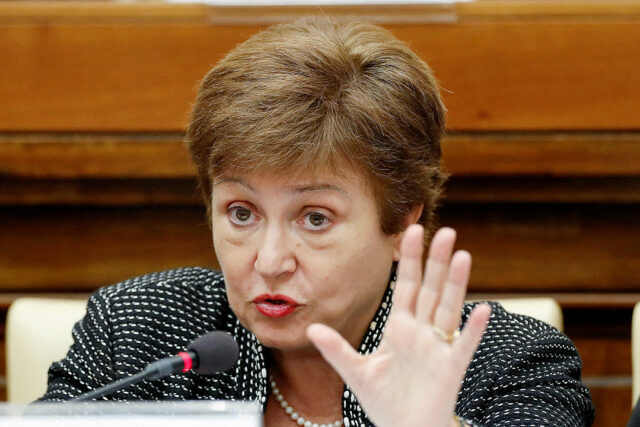
IMF Managing Director Kristalina Georgieva speaks during a conference hosted by the Vatican on economic solidarity, at the Vatican, February 5, 2020. — REUTERS

THE INTERNATIONAL Monetary Fund (IMF) is poised to cut its global growth forecast for 2022 as a result of the war in Ukraine, and sees recession risks in a growing number of countries, Managing Director Kristalina Georgieva said.

The world economy is still set to expand in 2022, though by less than the 4.4% previously anticipated, Ms. Georgieva said in an interview with Foreign Policy magazine broadcast Tuesday. The IMF is set to update its projections in April when the fund holds its annual spring meetings. 

“Some economies that have been fast to recover from COVID are in a stronger position” to cope with the reverberations from Russia’s invasion of Ukraine, Ms. Georgieva said. The US in particular has “fairly strong fundamentals,” she said. “But those that were not yet coming out of the COVID crisis, that were falling further behind, they’re going to be hit even harder,” with the “possible risk of recessions.”

Tighter financial conditions, as the Federal Reserve and other developed-world central banks raise interest rates, will be a “big shock” for many countries, according to Ms. Georgieva. About 60% of low-income countries are in “debt distress’ or close to it, double the number that the IMF was worried about back in 2015, she said.

Ms. Georgieva’s top deputy, Gita Gopinath, said in the same event that the IMF sees “increasing fragmentation” in global payments systems as one consequence of the war.

The US dollar isn’t about to suffer an “imminent demise” as the dominant currency in the global financial system, but “we could see pockets where we might see shifts happening,” Ms. Gopinath said. “We are likely to see some countries reconsidering how much they hold of certain currencies in their reserves,” while it’s clear that the way energy is traded has changed “forever.”

Depending on how long the war lasts, there could be larger effects, Ms. Gopinath said, though she described the potential impact of a Russian debt default as limited and “not a systemic risk to the global economy.”   

The fund is also monitoring how the war affects use of cryptocurrencies, and expects an acceleration in the development of central-bank digital currencies, Ms. Gopinath said. Both she and Ms. Georgieva said more work is needed to strengthen regulations in this area.

Ms. Georgieva said the IMF has “three-quarters of our $1 trillion of lending capacity available” to help countries cope with the risks. She also said that the fund will do its “part” for Ukraine when the war ends and reconstruction begins. The country’s economy may shrink by a third compared with before the war, she said.

The IMF chief said she has family members in Kharkiv, a city in eastern Ukraine that’s been a target of Russian forces. Ms. Georgieva said that she had been in touch with her family and that they are safe for now, though their building has lost its water supply and they are hearing bombing every day. — Bloomberg

US threat to sanction China over Russia support is spooking other nations in Asia

PHOTO FROM JOE BIDEN FACEBOOK PAGE

US PRESIDENT Joseph R.  Biden’s warning of unspecified consequences if China supports Russia has smaller Asian nations worried they’ll be subject to similar penalties for maintaining neutrality over Vladimir Putin’s war.

Southeast Asia will host two meetings later this year — the Group of 20 summit and the Asia-Pacific Economic Cooperation forum, or APEC — that would normally bring Mr. Biden, Mr. Putin and Chinese leader Xi Jinping under one roof. And the two countries set to host them — Indonesia and Thailand — are starting to worry about getting caught in the middle, even though the summits are months away and it isn’t even clear if Putin would turn up.

Indonesian Foreign Minister Retno Marsudi has privately expressed concern about the US threats of secondary sanctions against China because leaders in Jakarta see Beijing’s stance on the war as neutral, according to a person familiar with the situation, who asked not to be identified.

While Indonesia is planning to welcome Russia to the G-20 summit, the person said, leaders in Southeast Asia’s biggest economy are concerned the US will increase pressure to abandon the country’s non-aligned policy. Indonesia wants to keep the agenda limited to economic policies, global health and climate change, the person added.

Thailand is also concerned that it will be forced to pick sides if the US and its allies boycott the APEC summit over Russia’s involvement, according to the Nation newspaper. The report citing the Royal Thai Armed Forces Security Centre — an intelligence unit of the country’s military — noted Russia had blacklisted eight APEC members and warned of more sanctions on member economies if the war drags on.

The uncertainty underscores the risk that the war in Ukraine will accelerate fissures in the global economy centered on national security risks over supply chains, advanced technology and the personal data of millions of citizens. Although the US has yet to specify what business activity with Russia would trigger secondary sanctions, the frequent use of such measures against China in the past few years poses a significant risk for exporting nations reliant on the US and European markets.

“Even before the invasion of Ukraine, the multilateral world order was already under considerable strain from the strategic tensions between the big powers,” Singapore Deputy Prime Minister Heng Swee Keat said during a conference on Tuesday. “The current crisis will further accentuate these rifts, and pose a grave threat to the international rule of law.”

Russia was expelled from the Group of Eight in 2014 following Mr. Putin’s annexation of Crimea, which came after the toppling of Ukraine’s Kremlin-backed leadership. Still, it would be much harder to boot out Russia from the G-20 or APEC, which have many more members including China, one of Mr. Putin’s main diplomatic supporters.

Preparations for the APEC summit in November are still in the early stages, according to Tanee Sangrat, a spokesperson for Thailand’s Foreign Ministry. “We have not been pressured to keep any topic out of the discussion at the summit this year,” he said when asked about the report. A Defense Ministry spokesman declined to comment.

Teuku Faizasyah, a spokesman at Indonesia’s Foreign Ministry, said he wasn’t in a position to confirm the discussions involving Ms. Marsudi while adding that Indonesia hasn’t experienced any such pressure yet. But, he added, “we are indeed concerned with the prospect of the conflict to divert the G-20’s focus and cooperation away from economy and development.”

CONFRONTATION
During a call last week with Ms. Marsudi, Chinese Foreign Minister Wang Yi denounced the use of unilateral sanctions and called on Indonesia to use its G-20 presidency to remove “disruptions.” He also said the region should prevent “confrontation between blocs” and avoid allowing “small and medium-sized countries to be used as tools for confrontation between major powers,” according to a Chinese statement.

Ms. Marsudi simply called the conversation with Wang a “good phone call,” without elaborating. Indonesia hasn’t directly criticized Moscow even though President Joko Widodo tweeted out “Stop the war” immediately after the invasion, and his government supported a draft United Nations resolution demanding Russia withdraw forces. While Russia accounts for only a small amount of Indonesia trade, state-owned energy company PT Pertamina has a joint venture with Rosneft to build a $13.5 billion refinery.

Other countries in the region are in a similar predicament. While Russia made up less than 1% of global trade with Southeast Asia in 2020 and even less in foreign investment, nations may be reluctant to cuts ties with its largest source of arms: Russia accounted for more than a quarter of the region’s weapons in the two decades to 2020.

“A few parties might be circumspect in their criticism of Russia or unable to sever economic ties with Moscow, especially India and Vietnam, who remain overwhelmingly reliant on Russian arms,” said Greg Poling, director of the South-east Asia Programme and Asia Maritime Transparency Initiative at the Centre for Strategic and International Studies in Washington. “The administration understands that some partners are in a difficult position on this issue and is unlikely to hammer them for it.”

India is the most notable example, relying on Russia for most of its weapons. While Mr. Biden called India’s response to Mr. Putin “shaky,” officials in New Delhi are confident they won’t face sanctions because the US still views it as important partner in countering China.

While the threat of US sanctions has prompted Southeast Asian nations like Indonesia and the Philippines to avoid purchasing some Russian military hardware, all the major powers must still tread carefully in dealing with the region, said Ian Storey, senior fellow at ISEAS-Yusof Ishak Institute.

“Southeast Asian countries are not without agency, and their stances they adopt towards the conflict will be based on their national interests and foreign policy outlooks,” he said. “Overt pressure from Washington, Beijing or Moscow to pick sides will likely backfire.” — Bloomberg