Home Blog Page 6154

Russia’s Gazprom tells European buyers gas supply halt beyond its control

 – Russia’s Gazprom has told customers in Europe it cannot guarantee gas supplies because of “extraordinary” circumstances, according to a letter seen by Reuters, upping the ante in an economic tit-for-tat with the West over Moscow’s invasion of Ukraine.

The Russian state gas monopoly said in a letter dated July 14 that it was retroactively declaring force majeure on supplies from June 14. The news comes as Nord Stream 1, the key pipeline delivering Russian gas to Germany and beyond, is undergoing 10 days of annual maintenance scheduled to conclude on Thursday. Read full story

The letter added to fears in Europe that Moscow may not restart the pipeline at the end of the maintenance period in retaliation for sanctions imposed on Russia over the war in Ukraine, heightening an energy crisis that risks tipping the region into recession.

Known as an “act of God” clause, force majeure is standard in business contracts and defines extreme circumstances that release a party from their legal obligations. The declaration does not necessarily mean that Gazprom will stop deliveries, rather that it should not be held responsible if it fails to meet contract terms.

Gazprom did not respond to a request for comment.

Russian gas supplies have been declining via major routes for some months, including via Ukraine and Belarus as well as through the Nord Stream 1 pipeline under the Baltic Sea.

A trading source, asking not to be identified because of the sensitivity of the issue, said the force majeure concerned supplies through Nord Stream 1.

“This sounds like a first hint that the gas supplies via NS1 will possibly not resume after the 10-day maintenance has ended,” said Hans van Cleef, senior energy economist at ABN Amro.

“Depending on what ‘extraordinary’ circumstances have in mind in order to declare the force majeure, and whether these issues are technical or more political, it could mean the next step in escalation between Russia and Europe/Germany,” he added.

Uniper, Germany’s biggest importer of Russian gas, was among the customers that said it had received a letter, and that it had formally rejected the claim as unjustified. Read full story

RWE, Germany’s largest power producer and another importer of Russian gas, also said it has received a force majeure notice.

“Please understand that we cannot comment on its details or our legal opinion,” the company said.


TURBINE DELAY

Gazprom cut Nord Stream 1 capacity to 40% on June 14, the date that Gazprom said in the letter to buyers would be the start of the force majeure.

Gazprom blamed sanctions for that reduction, citing the delay in the return of a gas turbine from maintenance in Canada by equipment supplier Siemens Energy ENR1n.DE.

Canada sent the turbine for the pipeline to Germany by plane on July 17 after repair work had been completed, Kommersant newspaper reported on Monday, citing people familiar with the situation.

It will take another five to seven days for the turbine to reach Russia, the report said, provided there are no problems with logistics and customs. Germany’s economy ministry said on Monday it could not provide details of the turbine’s whereabouts.

But a spokesperson for the ministry said it was a replacement part that was meant to be used only from September, meaning its absence could not be the real reason for the fall-off in gas flows prior to the maintenance.

Austrian oil and gas group OMV, however, said on Monday it expected gas deliveries from Russia through the Nord Stream 1 pipeline to resume as planned after the outage. Read full story

Gazprom‘s motivations are uncertain, but the declaration will not have a material impact on the current landscape,” said Zongqiang Luo, gas analyst at consultancy Rystad Energy.

The European Union, which has imposed sanctions on Moscow, aims to stop using Russian fossil fuels by 2027 but wants supplies to continue for now as it develops alternative sources.

“Russia continues to use natural gas as a political and economic weapon,” said White House spokesperson Karine Jean-Pierre, adding that the Biden administration continues to work to reduce Europe’s dependence on Russian fossil fuels. “Russia’s energy coercion has put pressure on energy markets, raised prices for consumers and threatened global energy security.”

For Moscow and for Gazprom, the energy flows are a vital revenue stream as Western sanctions over Russia’s invasion of Ukraine, which the Kremlin terms a “special military operation,” have strained Russian finances.

According to the Russian Finance Ministry, the federal budget received 6.4 trillion roubles ($114.29 billion) from oil and gas sales in the first half of the year. This compares with a planned 9.5 trillion roubles for the whole of 2022.

The grace period for payments on two of Gazprom‘s international bonds expires on July 19, and if foreign creditors are not paid by then the company will be technically in default. – Reuters

US Senate Democrats urge Biden to declare climate emergency

 – Two US Senate Democrats urged President Joe Biden on Monday to declare a climate emergency and use the Defense Production Act to ramp up production of a wide range of renewable energy products and systems including solar panels.

Senators Sheldon Whitehouse and Jeff Merkley, speaking days after an effort to advance climate legislation failed in the Senate, also called on Mr. Biden to use the White House “bully pulpit” to draw attention to climate-related crises in the United States. Read full story

“It is time for the Biden administration to pivot to a very aggressive climate strategy,” Mr. Merkley said.

Mr. Biden said last week that he would take unspecified steps to reduce climate emissions after Democratic Senator Joe Manchin withdrew support for climate legislation that Democrats had hoped to pass before Congress leaves Washington for its August recess. In the evenly divided Senate, Mr. Manchin’s support was critical for passage of the legislation, which lacked any Republican backing.

Mr. Manchin and Senate Democratic Leader Chuck Schumer had been in talks about $300 billion in tax credits for industries including solar and wind power, carbon capture from power plants, and nuclear power, which generates virtually emissions-free electricity.

Mr. Whitehouse said he spoke to the White House about the need to move forward with aggressive executive action, but shared no details. “I’ve talked to the White House about going on offense and being aggressive and doing all the things that it is within the executive powers to do that have not so far been done,” he said.

Mr. Whitehouse said the conversation tracked his public call for initiatives ranging from tighter carbon regulations for vehicles and power plants to carbon border tariffs and potential federal litigation against the fossil fuel industry.

It was not clear, however, how far the White House could go, after the Supreme Court last month effectively restricted the Environmental Protection Agency from issuing emissions rules involving matters of major “economic and political significance.” – Reuters

Mall of Asia (MOA) Complex: A sterling landmark of disaster resilience

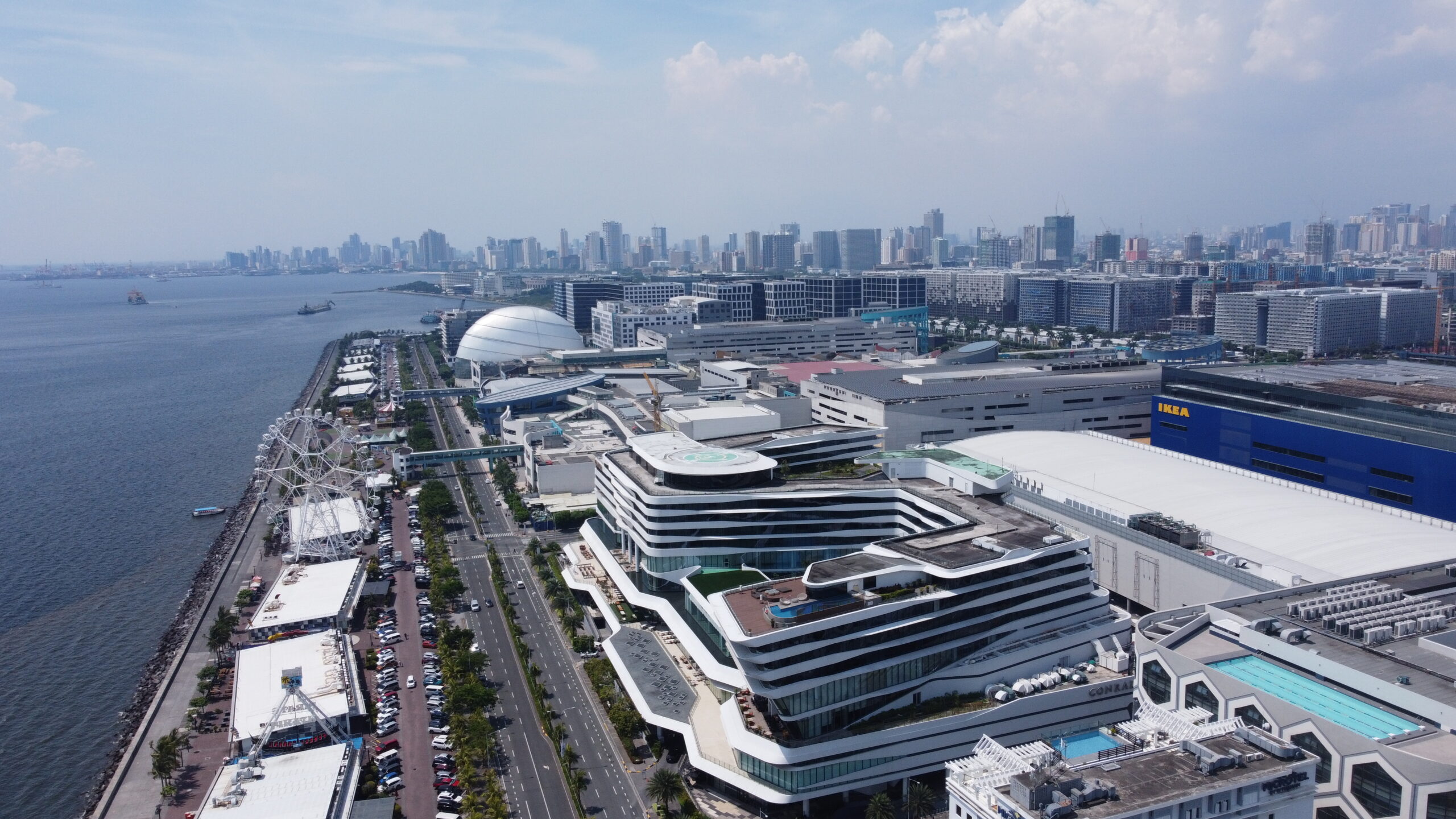
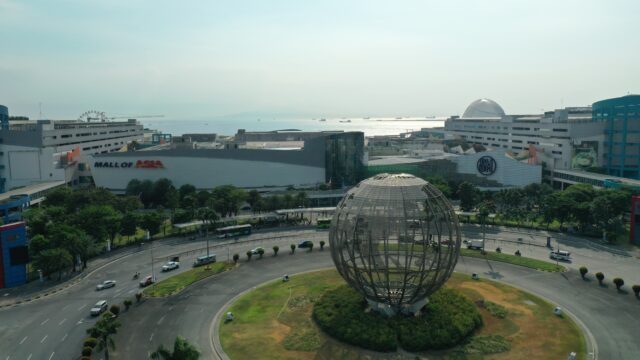
We all know that the SM Mall of Asia (MOA) is a popular destination for unforgettable gastronomic and recreational experiences, but did you know that the 67-hectare Mall of Asia Complex where MOA stands is engineered to withstand disasters caused by natural hazards?

The foundation of the Mall of Asia Complex was built to be safe and secure because SM Prime Holdings, Inc., one of Southeast Asia’s largest integrated property developers incorporates disaster resiliency measures in every project, with the MOA Complex as one of its biggest investments.

SM Prime collaborated with a team of local and international experts to ensure the feasibility of both water and land before the MOA complex was built and once finalized, Belgium’s renowned coastal development construction company, Jan de Nul, developed it from the ground up.

The reputable Jan de Nul made sure the terrain was stable and the complex’s roads were made resistant to earthquakes and erosion, in accordance with the National Structural Code of the Philippines and approved by both the Philippine Reclamation Authority and the National Government.

Three important disaster resiliency features were used in protecting the Complex and the coastal community of Pasay from tides and waves: One, a three-kilometer seawall built to stand against liquefaction; two, a meter-high inverted wave return to serve as defense against high waves; and three, a drainage channel to prevent floods during storm surges. This was put to test when Typhoon Pedring hit in 2011, and the Mall of Asia Complex was spared from destructive waves and flooding that submerged many other surrounding establishments.

As an added feature, both the Complex’s main road and all its structures are elevated 4 meters above the parameters set by the National Building Code. Pilings strengthened its foundation and greatly improved its soil bearing capacity.

Family fun, leisure and entertainment are the objectives behind the awe-inspiring grandeur of SM Mall of Asia, but this vision is founded on a commitment to safety and a secure foundation throughout the Complex. This is a firm philosophy of SM Prime Chairman of the Executive Committee Mr. Hans T. Sy, a champion for disaster resilience, who continuously invests in DRR and in allocating 10% of the company’s expenditure for DRR in all of SM’s infrastructures throughout the country.

“Today, disasters have become more frequent and severe. The government and the private sector must work together to find solutions for greater resiliency.  SM prime as a responsible property developer places Disaster Risk Reduction as one of its core strategies. It simply makes good business sense,” emphasizes Mr Hans Sy. He believes that not only is DRR an effective way to grow the business but it protects the communities where SM is located amid the increasing risks of climate change.

Today, the MOA Complex is a bustling realization of Mr. Henry Sy Sr.’s grand vision for it to become both a premiere integrated leisure destination with a complimentary business and lifestyle district – one of the country’s truly revolutionary mixed-use developments, and a thriving example of disaster risk reduction at work.

The next time you visit the MOA Complex – whether it is to visit the world’s largest IKEA, or to view the sunset from the top of the MOA Eye, or to simply shop and dine with your loved ones – it will be good to know that SM Prime has ensured your safety and security from the time the development was conceptualized and opened in 2006.. to today and tomorrow.


Spotlight is BusinessWorld’s sponsored section that allows advertisers to amplify their brand and connect with BusinessWorld’s audience by enabling them to publish their stories directly on the BusinessWorld Web site. For more information, send an email to online@bworldonline.com.

Join us on Viber to get more updates from BusinessWorld: https://bit.ly/3hv6bLA.

Study: Is the ‘Great Resignation’ affecting SMEs, too?

As the world economy recovers from the pandemic, businesses now face another challenge — the ‘Great Resignation,’ a phrase coined in 2021 to describe the trend of millions of employees worldwide leaving their jobs.

In the Philippines, for instance, resignation was the top reason for unemployment in 2021. In its Mission: Rebooting Economic Activities through Community Engagement (RACE) program survey, the Department of Labor and Employment (DoLE) said that 85,045 of the over 2.39 million unemployed workers resigned from their work last year.

Meanwhile, in Metro Manila, the country’s capital, the labor turnover rate, which refers to the difference between hiring (accession) and the rate of job termination or resignation (separation), has implied negative growth in employment in the first half of 2021.

The Labor Turnover Survey released by the Philippine Statistics Authority (PSA) reported a labor turnover rate of -3.1% in the first quarter of last year. It continued to weaken during the second quarter at -1.2%. These numbers translate to reductions of 31 workers in the first quarter while 12 workers in the second quarter for every 1,000 persons employed in establishments.

How is this trend affecting SMEs?

According to a study released by SAP SE, the Great Resignation is real and impacting small and medium-sized enterprises (SMEs) in the Asia Pacific and Japan (APJ) region today.

The study, “Transformational Talent: The impact of the Great Resignation on Digital Transformation in APJ’s SMEs,” surveyed 1,363 SME owners and decision-makers across eight countries in the region, including Australia, India, Indonesia, Japan, Korea, New Zealand, Singapore, Thailand.

Nine in 10 (91%) SME respondents in APJ say workforce volatility, including the Great Resignation, has directly impacted their digital transformation plans. These plans are critical since 69% of SME respondents say that digital transformation is significant to their organization’s survival over the next year.

Meanwhile, four in 10 (40%) respondents agreed that more employees are resigning now than just 12 months ago, while almost two-thirds (64%) of SME respondents said they are not finding it easy to cope with the impact of the Great Resignation.

The talent crunch is impacting organizations’ ability to transform their businesses digitally. According to the study, the lack of skilled talents also ranks as the top challenge to achieving successful transformation for SMEs across APJ. It topped traditional obstacles, such as cyber security, lack of budget, and lack of understanding of available digital solutions.

“This study shows how the ‘Great Resignation’ can be an existential challenge to organizations. At SAP, we believe that having the right people is important to ensuring digital transformation success. As part of retention efforts, SMEs must invest in talent as much as they invest in innovation to thrive amid these uncertain times,” said Rudy Abrahams, vice-president, head of SAP SuccessFactors, South East Asia and interim managing director SAP Philippines.

How are SMEs mitigating the effects of the Great Resignation?

To alleviate the Great Resignation’s effects and boost their organizations’ ability to deliver digital transformation, SMEs across APJ are investing in their workforce.

Survey respondents said they are improving their financial incentives (43%) and introducing flexible working arrangements (43%) to ensure talent retention over the next 12 months. Meanwhile, four in ten (40%) SME respondents said they would provide upskilling opportunities to retain key talents.

SMEs in the region also focus on training, with more than two-thirds (68%) of the respondents noting that upskilling to support digital transformation is urgent, leading to 72% of SMEs who will focus on digital training throughout this year.

Despite these challenges, SMEs in the region remain optimistic. Having managed significant challenges over the past two years, they are looking beyond a focus on resilience. Almost half (49%) of the respondents say that their organization is highly or fully resilient in weathering the pandemic’s impact. On the other hand, 4% believe they are not resilient.

The confidence in their ability has also resulted in optimism about their growth prospects. A total of 81% of the respondents said they are moderately, very, or extremely confident in their growth over the next 12 months.

“The small and medium-sized enterprise (SME) sector accounts for over 97% of all businesses and employs over 50% of the workforce in the region according to Asia Pacific Economic Cooperation. By harnessing their growth potentials and optimism and combining it with innovations that help foster talents and a strong partner ecosystem, we can help ensure their success in the years to come,” said Mr. Abrahams.

Investree Philippines bolsters financial inclusion efforts for SMEs with new campaign

Investree, the Philippines’ pioneer crowdfunding intermediary and funding platform, celebrates its second anniversary with the launch of the 2gether Towards the Future campaign to uplift the nation’s SME sector.

A venture of F(DEV) Digital Innovations and Ventures, Inc. and Investree Singapore Pte Ltd, Investree Philippines is geared towards building a financially inclusive future for Pinoy SMEs. Toward this end, it aims to focus on enhancing the entrepreneurial journey of SMEs by forging stronger government and industry partnerships locally.

“This year’s anniversary theme is focused on building the future. That future is a financially inclusive Philippines, where financial tools are more accessible to SMEs in order to sustain and expand their businesses. We strive to preserve the company’s agile growth to keep us equipped in pursuing this vision of the future. We are excited even more with the milestones we’ve achieved thus far, and we use these to empower us to forge ahead to reach our goals in uplifting the country, most especially SMEs,” shared Investree Philippines Country Manager Alexander Capulong.

Since its 2020 launch, Investree Philippines has been providing innovative, transparent, and viable financing solutions to local businesses through collaborative opportunities with investors. Making concrete efforts in bridging the financial gap and spurring growth among small and medium enterprises (SMEs) in the country, the company has served more than 100 SMEs and funded over 400 notes as of June 2022.

After securing its SEC-granted permanent license earlier this year, Investree Philippines is now looking to expand its partnership with the Department of Trade and Industry (DTI) in pursuit of their shared mission of providing SMEs with better access to finance, technology and innovation.

In the coming months, Investree Philippines and DTI will work hand-in-hand in organizing educational campaigns through social media content, webinars and events featuring relevant industry or entrepreneurial topics. Through this stronger partnership with DTI, Investree aims to expand its reach to more underserved and under-financed SMEs in the nation.

Partnership opportunities with e-commerce platforms, payment aggregators, third-party logistics providers and other tech-based platforms will advance the vision and mission of the crowdfunding platform at the same time pursue the mandate of DTI.

In further amplification of its digital financial literacy efforts, Investree Philippines proudly joins hands with Asian Institute of Management (AIM), a well-known international management school and research institution in the country.

Through this partnership, both the platform and institution shall fulfill their goal in connecting their respective stakeholders with potential SMEs, investors and partners through collaboration among their networks. Informative programs and mutually-beneficial opportunities await to be executed, aside from generating employment under Investree Philippines’ growing team.

Investree Philippines connects businesses with institutional investors who want to help these enterprises while also securing a return on their investment. To sustain its objective to on-board more institutional investors that share the same mission of supporting SMEs and providing new avenues for development as we enter the post-pandemic era, Investree Philippines reinvents its Investor Dashboard with new features that promote convenience and better transparency.

The dashboard now allows investors to assess investment risks more seamlessly. Investors can now also see information on the approved note and the SME that they are funding. Investors can also monitor their bids and manage their portfolio on the platform.

Investree Philippines also enhanced some of its website’s features to better serve all of its stakeholders. Besides a more dynamic look and friendlier navigation, the website now hosts pages containing partnership opportunities for interested institutional investors and anchors. The new Stories page features success stories of clients and other helpful and relevant information. Furthermore, the website allows registering via mobile devices for the convenience of interested SMEs. 

From the premise of building a world where #EveryoneCanGrow, Investree Philippines has launched the Expertales, Experteam and Expertpreneur video campaign series to further boost its efforts to promote financial inclusion.

Accessible on Investree Philippines’ website and social media channels, the series tackles topics relevant to Filipino SMEs, including out-of-the-box tips from key opinion leaders (KOLs). It will also discuss Investree Philippines’s mission to create a financially inclusive space for businesses of all sizes. The final episodes of the series that rolled out this month feature the business journey of their SME partners, to inspire more entrepreneurs to forge their own path towards growth.

Economy to sustain recovery — BSP

COMMUTERS get off a jeepney along Aurora Boulevard, Quezon City, July 1. — PHILIPPINE STAR/ MIGUEL DE GUZMAN

THE PHILIPPINE ECONOMY will likely sustain its recovery momentum this year, but risks remain from elevated inflation and a possible reimposition of coronavirus disease 2019 (COVID-19) restrictions to curb a fresh surge, the central bank governor said.

Bangko Sentral ng Pilipinas (BSP) Governor Felipe M. Medalla on Monday said the economy will continue to expand amid these “challenging times.”

“On the home front, we expect the Philippine economy to sustain its recovery. We note that quarterly private consumption expenditures have surpassed the pre-pandemic levels already and continue to grow as the economy further opens up,” he said during a lecture series organized by the BSP Research Academy and the University of the Philippines School of Economics (UPSE).

In the first quarter, gross domestic product (GDP) expanded by a better-than-expected 8.3%, surpassing pre-pandemic output level as household spending rose with the easing of mobility curbs.

At current prices, household spending reached P3.86 trillion in the first quarter, higher than P3.40 trillion in the January-March period last year. This was also bigger than P3.34 trillion in the same period in 2019 before the pandemic.

At constant 2018 prices, household spending picked up by 10.1% in the first three months of the year, a turnaround from 4.8% decline in the first quarter last year.

Mr. Medalla noted the “employment picture has improved significantly from pre-pandemic levels,” providing support for future economic growth.

Philippine Statistics Authority (PSA) data showed the size of the labor force in May was approximately 49.011 million, up by 618,000 from 48.393 million in April. This brought the labor force participation rate (LFPR) to 64% of the country’s working-age population in May improving from 63.4% the previous month.

The employment rate was recorded at 94% in May, equivalent to 46.084 million employed people versus April’s 94.3%, which is equivalent to 45.631 million.

Economic managers expect GDP to grow by 6.5-7.5% this year, faster than last year’s 5.7% growth.

RISKS
The BSP chief said the domestic economy faces risks from elevated inflation, as well as a possible reimposition of restrictions to curb a surge in COVID-19 infections.

“The greater risks emanate from the policy spillovers as monetary authorities respond to inflationary pressures with hikes in policy interest rates,” Mr. Medalla said.

In a surprise move, the Monetary Board last week raised its key policy rate by 75 basis points (bps), bringing the benchmark rate to 3.25%. Rates on the overnight deposit and lending facilities were also hiked by 75 bps to 2.75% and 3.75%, respectively.   

The BSP expects inflation to remain elevated in the next few months. Inflation rose by 6.1% year on year in June, the fastest in nearly four years and exceeded the central bank’s 2-4% target band for a third straight month. The average inflation rate in the first six months is 4.4%, still below the BSP’s full-year forecast of 5%. 

“Another pocket of risk is the possible imposition of local COVID-19 restrictions amid an uptick in infections. The confluence of events poses a challenge to risk pricing and market valuations of financial assets,” Mr. Medalla said.

The Philippines is currently facing a spike in new COVID-19 cases, driven by more infectious variants, increased mobility of citizens, and waning immunity.

The Philippines posted 14,640 new COVID-19 infections from July 11 to 17, with a daily average of 2,091 cases, the Health department said on Monday. The latest daily average is 44% higher than the 1,467 average cases per day from a week earlier.

Metro Manila and most parts of the country remain under the most lenient Alert Level 1.

“The BSP remains vigilant to the possible spikes in financial instability and stands ready to employ all the available tools to maintain the orderly conduct of transactions in our financial system and in the broader economy,” Mr. Medalla said.

The Monetary Board’s next policy meeting is on Aug. 18. — K.B.Ta-asan 

Elevated inflation may push central bank to further hike rates

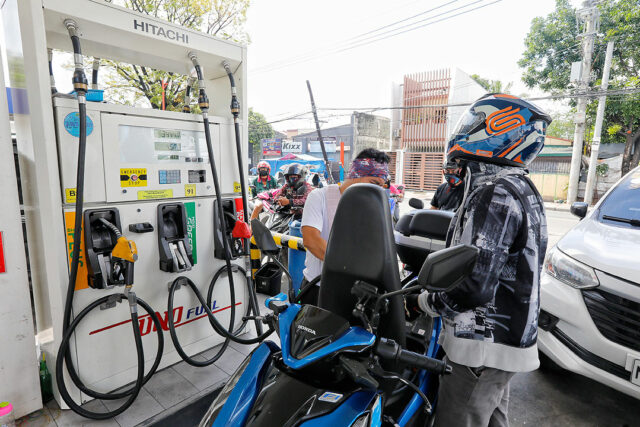
Fuel retailers will roll back the pump prices of petroleum products on Tuesday. — PHILIPPINE STAR/ WALTER BOLLOZOS

RISING INFLATION may prompt the Bangko Sentral ng Pilipinas (BSP) to consider more rate hikes this year, according to Fitch Solutions Country Risk & Research.

At the same time, the central bank should make sure its efforts to tame inflation won’t hurt the Philippines’ post-pandemic recovery, Moody’s Analytics said.

“The central bank is likely to continue tightening to rein in inflation, which will likely stay well above the BSP’s target range throughout the rest of 2022,” Fitch Solutions said in a July 15 report.

The think tank raised its average inflation forecast for the Philippines to 5.6% in 2022 from 5.1% previously. This is above the BSP’s 5% average inflation forecast this year.

Inflation rose by 6.1% year on year in June, the fastest in nearly four years and exceeded the central bank’s 2-4% target band for a third straight month. The inflation rate averaged 4.4% in the first six months.

With inflation to remain elevated, Fitch Solutions said it now expects the BSP to raise rates by another 100 basis points, which will take the benchmark rate to 4.25% by end-2022.

The Bangko Sentral ng Pilipinas (BSP) unexpectedly tightened its monetary policy by 75 basis points (bps) on July 14, bringing the benchmark rate to 3.25%. Rates on the overnight deposit and lending facilities were also hiked by 75 bps to 2.75% and 3.75%, respectively.

“In addition to inflation, an aggressive tightening cycle in the US will put further pressure on the BSP to hike aggressively, in order to preserve financial and currency stability,” Fitch Solutions said, adding that rate hikes would help offset the depreciatory impact of “hot money” outflows.

The US Federal Reserve is widely expected to raise interest rates by 75-100 bps at its July 26-27 meeting, after inflation soared to 9.1% in June.

Meanwhile, Moody’s Analytics Associate Economist Sonia Zhu said they expect another two rounds of rate hikes this year, bringing the key policy rate to above 4%.

“However, hiking interest rates aggressively can be a double-edged sword. On one hand, higher interest rates can take some steam off rebounding domestic demand and cool inflation. On the other side, higher rates risk a hard landing if policy makers overcompensate as households and businesses pull back spending and investments,” Ms. Zhu said in a July 17 note.

“The BSP will need to strike a fine balance, as it will not want to stifle the post-pandemic growth as it seeks to keep inflation under control,” she added.

For Fitch Solutions, the Philippine economy’s “resilience” will give the BSP space to accelerate policy tightening.

The think tank forecasts gross domestic product (GDP) growth for the Philippines at 6.1% this year, below the government’s 6.5-7.5% target.

Moody’s Analytics, on the other hand, is hopeful the Philippine economy will grow by “the low 7% range” this year.

The Philippine Statistics Authority is scheduled to release July inflation data on Aug. 5, and second-quarter GDP data on Aug. 9. — Keisha B. Ta-asan

BSP-approved foreign loans jump 26% in second quarter

US dollar banknotes are seen in this photo illustration taken Feb. 12, 2018. — REUTERS

THE PHILIPPINE central bank approved $3.54 billion in external borrowings by the government in the second quarter in order to fund its ongoing pandemic response and major infrastructure projects.   

In a statement, the Bangko Sentral ng Pilipinas (BSP) said approved public sector borrowings in the April to June period were 26% higher than the $2.80-billion loans in the same period of 2021.

Quarter on quarter, the approved foreign loans dropped by 26% from the $4.8-billion greenlit in the first quarter of 2022.   

The BSP said the government borrowings included a Japanese yen-denominated bond issuance amounting to $513.41 million as well as three project loans worth a total of $2.16 billion. It also included three program loans equivalent to $869.72 million.

“These borrowings will fund the National Government’s general financing requirements ($513.41 million), COVID-19 (coronavirus disease 2019) pandemic response and recovery (i.e., vaccine procurement and continuing requirements in light of the pandemic), among others ($869.72 million), bridge projects ($405.99 million), and a railway project ($1.75 billion),” the central bank said.

Under the 1987 Constitution, the Monetary Board is mandated to give its prior approval for any foreign loan agreement entered into by the National Government.   

“The BSP promotes the judicious use of the resources and ensures that external debt requirements are at manageable levels, to support external debt sustainability,” it said.   

As of end-March, the Philippines’ external debt hit a record $109.8 billion, up by 3.1% from the $106.4-billion level as of end-December 2021.

“The rise in the debt level during the first quarter of 2022 was due to net availments of $3.5 billion, mainly by the National Government and private nonbanks,” the BSP said in June.

Public sector external debt rose by $3.4 billion to $67.4 billion as of end-March, from $63.9 billion as of end-December 2021. Around $58.8 billion or 87% were National Government borrowings while the rest were loans of government-owned and -controlled corporations, government financial institutions and the BSP.

On the other hand, private sector debt slipped to $42.4 billion as of end-March, from $42.5 billion as of end-2021.

The Philippines’ debt stock remained largely denominated in US dollar (55.4%).

The government incurred $2.3 billion in loans from official creditors to support its COVID-19 pandemic response programs and infrastructure projects. It also raised $2.3 billion from the issuance of global bonds.

The government borrows from local and foreign sources to plug its budget gap. — Keisha B. Ta-asan

Three years ‘enough’ for telcos to cover all areas 

BW FILE PHOTO

By Arjay L. Balinbin, Senior Reporter

A THREE-YEAR period is enough for fixed and mobile internet service providers to cover all unserved and underserved areas in the Philippines, according to DITO Telecommunity Corp., agreeing with the proposed measure that seeks to improve internet service and access across the country.

“Three years is enough. For us in DITO, covering the underserved is already part of our government commitments,” DITO Chief Administrative Officer Adel A. Tamano told BusinessWorld in a phone message on Monday, when asked to comment on Senator Mary Grace S. Poe-Llamanzares’ Senate Bill No. 329, or the Better Internet Act.

Ms. Poe’s bill wants the National Telecommunications Commission to require all public telecommunications entities, or telecommunications companies that require a Congressional franchise, and internet service providers, which operate without a franchise, to extend and expand the service coverage of fixed and mobile internet service in all unserved and underserved areas “within three years from the effectivity of the measure.”

“The two other major telcos have had two decades to do just that and with more funding available,” Mr. Tamano said.

Globe Telecom, Inc. and the PLDT group were also asked to comment.

Under the bill, service providers are encouraged to provide a higher internet speed to their customers. There is no minimum internet speed requirement for free internet service.

Eastern Communications, a broadband provider jointly owned by PLDT, Inc. and Globe Telecom, said it agrees with the intention of the bill to provide underserved and unserved areas around the Philippines, “which has always been part of our company’s plans.”

“We are fervently working on our regional expansion, providing connectivity to areas across Visayas and Mindanao, recently reaching areas such as Butuan, Naga, Bacolod, Sorsogon, and Legazpi, among other areas,” Eastern Communications Co-Coordinator Aileen D. Regio said in an e-mailed reply to questions on July 15.

“We also believe in the thrust that reliable internet connection is crucial for the advancement of Filipino businesses and everyday life,” she added.

Sought for comment, Alliance Towers Corp. President and Chief Operating Officer Alvin D. Tolentino said the three-year period “is very challenging coming from where we are now.”

“Unserved and underserved areas need to be defined. We have a lot of areas where it is sparsely populated. Are they going to be covered, too?” he said in a phone message on July 14.

Ms. Poe’s bill seeks to require the Department of Information and Communications Technology to identify unserved and underserved areas in the Philippines.

The bill directs service providers to adhere to minimum standards for connection, reception, pricing, and billing practices to uphold and protect consumer rights.

“The internet has become a necessity as indispensable as electricity and water. We rely on it for health, education, business, governance and more,” Ms. Poe said.

In a related development, fiber internet provider Converge ICT Solutions, Inc. announced on Monday that it won the Ookla Speedtest Award for “Top-Rated Fixed Network in the Philippines for the first half of 2022, reflecting the results from consumer-initiated ratings during the six-month period.”

The Top-Rated Awards is part of the semi-annual Speedtest Awards presented by Ookla, the network testing company behind Speedtest.

“Last June, the company upgraded the speed of its base FiberX internet plan for free, from 50 megabits per second (Mbps) to 100Mbps, making it faster than the country’s median average,” Converge said in an e-mailed statement.

Hastings Holdings, Inc., a unit of PLDT Beneficial Trust Fund subsidiary MediaQuest Holdings, Inc., has a majority stake in BusinessWorld through the Philippine Star Group, which it controls.

Not your usual father and son story

VETERAN actor Aga Muhlach returns to television for the first time since 2010, for TV5’s new series Suntok Sa Buwan. The showMr. Muhlach’s first ever drama series — revolves around a father and son relationship.

Suntok sa Buwan (“a punch to the moon”) is a Filipino idiomatic expression referring to a scenario that seems impossible or a task that is too difficult to accomplish.

Set in Baguio city, the series follows a retired boxer and now taxi driver named Jimmy Boy (played by Mr. Muhlach), who has Stage 3 cancer. This diagnosis deeply affects his son, Dos (Elijah Canlas), who dreams of becoming a professional boxer like his father. The two will face conflicts and life-challenging experiences that would lead one of them to make sacrifices and strengthen their bond as father and son.

It is a dream come true for the 52-year-old actor to have accepted the role in his first drama series.

Mr. Muhlach said that it has always been his goal to shoot a show in Baguio and he was glad to play a boxer since he has engaged in the sport since the early 2000s.

Ang sinabi ko talaga, ang unang serye na gusto kong gawin [gusto ko] sa Baguio, [at] mahirap ang role ko. Ito na ang nangyari and boxer pa ang role ko (I told myself that the first series I wanted to do would be set in Baguio, and would be a difficult role. This is what happened and I even play the role of a boxer). [Boxing] is one of my passions also,” Mr. Muhlach said during an online press conference on July 14.

Meanwhile, Mr. Canlas said he has developed a love-hate relationship with his character.

“Dos is very headfirst. He does not think of his actions, kung ano ‘yung gut feel niya, what he thinks is right in the moment, gagawin niya (Whatever his gut feel is, whatever he thinks is right in the moment, he will pursue),” Mr. Canlas said.

SHOT LIKE A MOVIE
Directed by Geo Lomuntad, the show is produced by Antoinette Jadaone and Dan Villegas and co-produced by Project 8 Projects and Cignal Entertainment. Joining the cast are Maris Racal, Matet de Leon, and Rez Cortez.

In a behind the scenes video, director Mr. Lomuntad said that the team aims to show  the normal life and people of Baguio outside of its popularity as a tourist destination.

“We want to show the rural areas of Baguio, like the stacked houses, the crowded part of Baguio, and the normal people,” Mr. Lomuntad said.

The show is referred to as a “movieserye” because of the way they chose to shoot scenes and other technicalities.

“They are really treating this show like a movie. I’ve done TV before, usually we shoot more than 30 sequences a day. But here we really put time in every sequences especially the boxing scenes,” Mr. Canlas said.

“We wanted to shoot it like a film or online TV series where it’s not your regular teleserye look,” Mr. Lomuntad said.

The show’s co-producer — herself a director — Ms. Jadaone said: “Usually, we use zoom lenses for teleserye, but in Suntok sa Buwan, we shoot our scenes with prime lenses.”

“We are glad to finally share this newest movieserye with our Kapatid viewers and we would like to thank the creators, cast, and staff behind this series that will soon be available on TV5. Suntok Sa Buwan teaches an interesting take on values in terms of family and love so we really hope that our viewers will support this new movie series we have in store for them,” Cignal TV and TV5 President and CEO Robert P. Galang said in a statement.

Suntok Sa Buwan airs weekdays on TV5 at 7:15 p.m. — Michelle Anne P. Soliman

Philippine weightlifting produces 15-year-old champion in Colonia

FIFTEEN-year-old Angeline Colonia captures two golds and a silver. — ASIAN WEIGHTLIFTING FEDERATION

THERE will be no shortage of potential heirs or heiresses to Tokyo Olympics gold medalist Hidilyn F. Diaz as the supremo of Philippine weightlifting.

The country’s champion-manufacturing weightlifting machine continue to churn like clockwork and on Sunday night, it produced another magnificent lifter in 15-year-old Angeline Colonia in the Asian Youth and Junior Championships in Tashkent, Uzbekistan.

Ms. Colonia, who also hails from Zamboanga just like Ms. Diaz, captured two gold medals and one silver in a smashing performance that also set new world and Asian records in the women’s 40-kilogram (kg) class.

She struck gold in the snatch where she lifted 62kg, settled for silver in the clean and jerk with a 72kg before making it a double-gold haul with a total lift of 134kg.

Making it more significant was her effort in snatch eclipsed the Asian and world mark of 61kg.

Meanwhile, Prince Keil de los Santos snared two bronzes in clean and jerk (49kg) and overall (186kg).

Ms. Colonia joined the ranks as one of the many potential successors to Ms. Diaz’s throne as queen of the sport in the country.

The other promising big names that could be the future of the country are the 18-year-old Asian and Southeast Asian champion in Vanessa Sarno and the promising sisters Rose Jean and Rosegie Ramos, who incidentally are also seeing action in Tashkent.

“Expect more. Sent 13 kids including Vanessa, Rose Jean and Rosegie. This is for the country and the future of weightlifting,” Samahang Weightlifting ng Pilipinas President Monico Puentevella on Monday told The STAR. — Joey Villar

Jennifer Lopez and Ben Affleck wed in Las Vegas, reports say

JENNIFER LOPEZ and Ben Affleck. — REUTERS/YARA NARDI

SINGER Jennifer Lopez and actor Ben Affleck have married in Las Vegas, media reported on Sunday, after the celebrity couple rekindled a romance almost 20 years after they first got together.

The couple announced their matrimony in a newsletter from Ms. Lopez revealing that they flew to the desert city in Nevada to gain a marriage license and wed at a chapel late Saturday, according to People Magazine. “Love is beautiful. Love is kind. And it turns out love is patient. Twenty years patient. Exactly what we wanted,” Lopez said in the newsletter, the outlet reported.

The newsletter was signed “Mrs. Jennifer Lynn Affleck,” The Los Angeles Times reported, denoting a name change for the award-winning entertainer.

A representative for Mr. Affleck could not immediately be reached for comment. Phones rang unanswered at Ms. Lopez’s talent agency Creative Artists Agency.

A marriage license was obtained in their name from Clark County dated Saturday, July 16, according to document details posted online by the county clerk’s office.

Ms. Lopez posted a photo on social media depicting her in a bed while sporting a silver wedding ring.

Mr. Affleck and Ms. Lopez, a glamorous duo widely known as “Bennifer,” got back together last year after almost 20 years. They got engaged in April of this year.

In 2002 Mr. Affleck gave Ms. Lopez a large 6.1-carat pink diamond engagement ring, but they abruptly called off their wedding in 2003 and split up a few months later. — Reuters