Home Blog Page 6135

US tech giants face tough new rules as EU countries, lawmakers clinch deal

Image via Huzaifa Abedeen/CC BY-SA 4.0/Wikimedia Commons

BRUSSELS —  Alphabet’s Google, Amazon, Apple, Meta, and Microsoft may have to change their core business practices in Europe as EU countries and EU lawmakers on Thursday clinched a deal on landmark rules to curb their powers.

France, which currently holds the rotating EU presidency, said in a tweet that there was a provisional agreement after eight hours of talks.

EU industry chief Thierry Breton said in a tweet that the deal would ensure fair and open digital markets.

“What we want is simple: fair markets also in digital. Large gatekeeper platforms have prevented businesses and consumers from the benefit of competitive digital markets,” EU antitrust chief Margrethe Vestager, who proposed the rules just over a year ago, said in a statement.

“This means that the time of long antitrust cases, during which the authorities were lagging behind the big tech companies, is over,” said EU lawmaker Andreas Schwab, who had steered the debate in the European Parliament.

The Digital Markets Act (DMA) sets out rules for online gatekeepers — companies that control data and platform access.

It will cover gatekeepers in online intermediation services, social networks, search engines, operating systems, online advertising services, cloud computing, video-sharing services, web browsers and virtual assistants.

Under the DMA, the tech giants will have to make their messaging services interoperable and provide business users access to their data. Business users would be able to promote competing products and services on a platform and reach deals with customers off the platforms.

The rules prohibit the companies from favoring their own services over rivals’ or preventing users from removing pre-installed software or apps.

The DMA will apply to companies with a market capitalization of 75 billion euros, 7.5 billion euros in annual turnover and at least 45 million monthly users.

Companies face hefty fines up to 10% of their annual global turnover for breaching the rules and as much as 20% for repeat offenses.

Apple, which has lobbied intensively against the DMA, reiterated its worries.

“We remain concerned that some provisions of the DMA will create unnecessary privacy and security vulnerabilities for our users while others will prohibit us from charging for intellectual property in which we invest a great deal,” it said in a statement.

Google, which also cranked up its lobbying in the last year, echoed the same sentiments.

“While we support many of the DMA’s ambitions around consumer choice and interoperability, we’re worried that some of these rules could reduce innovation and the choice available to Europeans. We’ll now take some time to study the final text, talk with the regulator and work out what we need to do to comply,” it said in a statement. — Foo Yun Chee/Reuters

N. Korea tests massive new ICBM for ‘long’ confrontation with US

KCNA VIA REUTERS

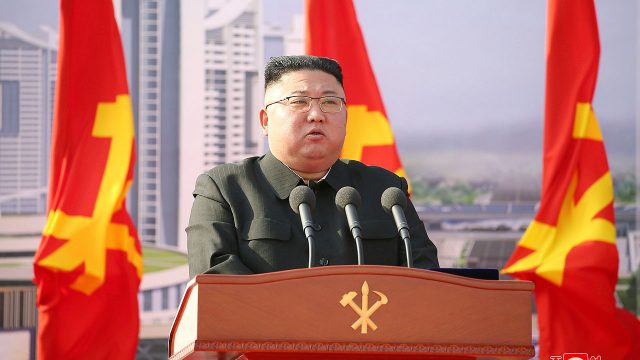
SEOUL — North Korea’s latest launch was a huge, new intercontinental ballistic missile (ICBM), state media reported on Friday, in a test leader Kim Jong Un said was designed to demonstrate the might of its nuclear force and deter any US military moves.

It was the first full ICBM test by nuclear-armed North Korea since 2017, and flight data indicated the missile flew higher and longer than any of North Korea’s previous tests, before crashing into the sea west of Japan.

Dubbed the Hwasong-17, the ICBM is the largest liquid-fueled missile ever launched by any country from a road-mobile launcher, analysts said.

Mr. Kim ordered the test because of the “daily-escalating military tension in and around the Korean peninsula” and the “inevitability of the long-standing confrontation with the US imperialists accompanied by the danger of a nuclear war,” state news agency KCNA reported.

“The strategic forces of the DPRK are fully ready to thoroughly curb and contain any dangerous military attempts of the US imperialists,” Mr. Kim said while personally overseeing the launch, according to KCNA. DPRK are the initials of North Korea’s official name.

North Korea’s return to major weapons tests capable of potentially striking the United States poses a direct challenge to US President Joseph R. Biden, Jr., as he responds to Russia’s invasion of Ukraine. And it raises the prospect of a new crisis following the election of a new, conservative South Korean administration that has pledged a more muscular military strategy to counter Pyongyang.

South Korea’s President-elect Yoon Suk-yeol, who will speak to Chinese President Xi Jinping later on Friday, said North Korea had nothing to gain from provocation. China is North Korea’s sole major ally and neighbor.

The launch drew condemnation from leaders in the United States, Japan, and South Korea.

Mr. Kim said the test would help convince the world of the modern features of the country’s strategic forces.

“Any forces should be made to be well aware of the fact that they will have to pay a very dear price before daring to attempt to infringe upon the security of our country,” he said, according to KCNA.

There was no immediate comment from the White House or State Department on Mr. Kim’s remarks.

NEW SANCTIONS

Responding to North Korea’s banned ICBM launch through the United Nations Security Council (UNSC) will be far more difficult now than after the last test in 2017.

World powers on the council are currently at odds over the Ukraine war, making the kind of sanctions that were imposed on North Korea by the UNSC after the 2017 test a far more complicated process.

The UN Security Council will meet publicly at 3 p.m. (1900 GMT) on Friday to discuss the launch. On Thursday, UN Secretary-General Antonio Guterres urged Pyongyang “to desist from taking any further counter-productive actions.”

On Thursday, the US State Department announced sanctions on two Russian companies, a Russian and a North Korean individual, and North Korea’s Second Academy of Natural Science Foreign Affairs Bureau for transferring sensitive items to North Korea’s missile program.

It named the Russian entities as the Ardis Group of Companies LLC (Ardis Group) and PFK Profpodshipnik LLC, and the Russian individual as Igor Aleksandrovich Michurin. It named the North Korean as Ri Sung Chol.

“These measures are part of our ongoing efforts to impede the DPRK’s ability to advance its missile program and they highlight the negative role Russia plays on the world stage as a proliferator to programs of concern,” State Department spokesman Ned Price said in a statement.

NEW MISSILE

Photos released by state media showed a massive missile, painted black with a white nose cone, rising on a column of flame from a launch vehicle.

The Hwasong-17 flew for 1,090 km (681 miles) to a maximum altitude of 6,248.5 km (3,905 miles) and precisely hit a target in the sea, KCNA reported. Those numbers are similar to data reported by Japan and South Korea.

KCNA called the successful test a “striking demonstration of great military muscle,” while Mr. Kim said it was a “miraculous” and “priceless” victory by the Korean people.

North Korea first unveiled the previously unseen ICBM at an unprecedented pre-dawn military parade in October 2020, with analysts noting it appeared “considerably larger” than North Korea’s last new ICBM, the Hwasong-15, which was test fired in November 2017.

It was displayed a second time at a defense exhibition in Pyongyang in October 2021.

Officials in Seoul and Washington have previously said launches on Feb. 27 and March 5 involved parts of the Hwasong-17 ICBM system, likely in preparation for eventually conducting a full test like the one on Thursday. — Josh Smith/Reuters

UN General Assembly again overwhelmingly isolates Russia over Ukraine

REUTERS

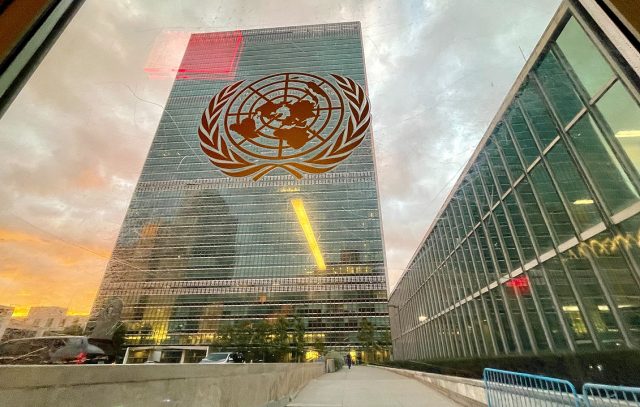
UNITED NATIONS — Almost three-quarters of the UN General Assembly demanded aid access and civilian protection in Ukraine on Thursday, and criticized Russia for creating a “dire” humanitarian situation after Moscow invaded its neighbor one month ago.

It is the second time the 193-member General Assembly has overwhelmingly isolated Russia over what Moscow calls a “special military operation” that it says aims to destroy Ukraine’s military infrastructure.

UN Secretary-General Antonio Guterres has blasted Russia’s “absurd war.” Thousands of people have been killed in Ukraine, millions made refugees, and cities pulverized in the past month.

The resolution adopted on Thursday, which was drafted by Ukraine and allies, received 140 votes in favor and five votes against — Russia, Syria, North Korean, Eritrea and Belarus — while 38 countries, including China, abstained.

General Assembly resolutions are nonbinding, but they carry political weight. There was a round of applause in the hall after the adoption on Thursday.

Russia’s UN Ambassador Vassily Nebenzia described the resolution adopted on Thursday as a “pseudo humanitarian draft” that took a “one-sided view of the situation.” He again accused Western countries of a campaign of “unprecedented pressure” to win votes, a claim that the United States has rejected.

Ukraine and its allies had been looking to match or improve on support received for a March 2 General Assembly resolution that deplored Russia’s “aggression” and demanded it withdraw its troops. That received 141 yes votes, the same five no votes, while 35 states — including China — abstained.

‘ASTOUNDING SUCCESS’ 

US Ambassador to the United Nations Linda Thomas-Greenfield described the vote on Thursday as an “astounding success,” telling reporters: “There’s really no difference between 141 and 140.”

The resolution adopted on Thursday demands the protection of civilians, medical personnel, aid workers, journalists, hospitals and other civilian infrastructure. It also demands an end to the siege of cities, in particular Mariupol.

Ukraine and Western allies have accused Moscow of attacking civilians indiscriminately. Moscow denies attacking civilians.

The resolution echoes the March 2 General Assembly text by again demanding that Moscow stop fighting and withdraw its troops from Ukraine.

South Africa had proposed a rival draft resolution that focused on the humanitarian situation and did not mention Russia. Russia appealed for countries to support that text.

The General Assembly decided not to act on the South African draft after Ukraine called a vote under a rule covering draft resolutions on the same issue.

The General Assembly vote came one day after a Russian-drafted resolution calling for aid access and civilian protection in Ukraine — and not mentioning Moscow’s role — failed at the UN Security Council, with only Russia and China voting yes and the remaining 13 members abstaining.

The Russian Security Council draft was very similar to the text put forward in the General Assembly by South Africa. — Michelle Nichols/Reuters 

Singapore extends quarantine-free entry as Asia shifts to ‘living’ with COVID

REUTERS

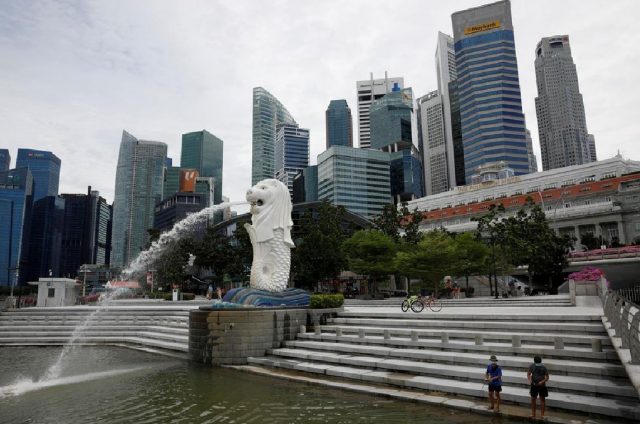
SINGAPORE — Singapore said on Thursday it will lift quarantine requirements for all vaccinated travelers from next month, joining a string of countries in Asia moving more firmly toward a “living with the virus” approach.

Prime Minister Lee Hsien Loong said the financial hub will also drop requirements to wear masks outdoors and allow larger groups to gather.

“Our fight against COVID-19 [coronavirus disease 2019] has reached a major turning point,” Mr. Lee said in a televised speech that was also streamed on Facebook. “We will be making a decisive move towards living with COVID-19.”

Singapore was one of the first countries to shift from a containment strategy to new COVID normal for its 5.5 million population, but had to slow some of its easing plans due to subsequent outbreaks.

Now, as infection surges caused by the Omicron variant begin to subside in most countries in the region and vaccination rates improve, Singapore and other nations are removing a host of social distancing measures designed to stop the spread of the virus.

Singapore began lifting quarantine restrictions for vaccinated travelers from certain countries in September, with 32 countries on the list before Thursday’s extension to vaccinated visitors from any nation.

Japan lifted this week restrictions imposed on Tokyo and 17 other prefectures that had limited hours of eateries and other businesses. South Korea, where COVID infections this week topped 10 million but appear to be stabilizing, pushed back a curfew on eateries to 11 p.m., stopped enforcing vaccine passes and dropped quarantine for vaccinated travelers arriving from overseas.

Indonesia dropped quarantine requirements for all arrivals from overseas this week, and its Southeast Asian neighbors of Thailand, the Philippines, Vietnam, Cambodia and Malaysia took similar measures, as they seek to rebuild tourism sectors.

Indonesia is also lifting a ban on travel for a Muslim holiday in early May that traditionally sees millions of people head to villages and towns to celebrate Eid al-Fitr at the end of the holy month of Ramadan.

Australia will lift its entry ban for international cruise ships next month, effectively ending all major COVID-related travel bans after two years.

New Zealand this week ended mandatory vaccine passes to visit restaurants, coffee shops and other public spaces. It will also lift vaccine mandates for a number of sectors from April 4 and open the borders for those on visa-waiver programs from May.

Hong Kong, which has registered the most deaths per million people globally in recent weeks, plans to relax some measures next month, lifting a ban on flights from nine countries, reducing quarantine and reopening schools after a backlash from business and residents.

TRAVEL HOPES

Singapore travel and movement related stocks surged on Thursday, with a gain of nearly 5% for airport ground-handling firm SATS and 4% for Singapore Airlines. Shares in public transport and taxi operator Comfortdelgro Corp. rose 4.2%, their sharpest one-day gain in 16 months. The Straits Times index was up 0.8%.

Mr. Lee said Singapore officials would continue to remove restrictions at a measured pace.

“After this major step, we will wait a while to let the situation stabilize,” he said. “If all goes well, we will ease up further.”

As well as allowing up to 10 people to gather, Singapore will remove a 10:30 p.m. curfew on dining and alcohol sales, and allow more employees to return to their workplace.

Still, mask wearing mandates remain in place in several places including South Korea and Taiwan, while facial covering is almost ubiquitous in Japan.

China remains a major holdout, sticking to a “dynamic clearance” policy to stamp out flare-ups as quickly as possible. It reported around 2,000 new confirmed cases for Wednesday. The latest outbreak is tiny by global standards but the country conducts rigorous testing, seals off hotspots and isolates infected people in quarantine facilities to prevent a surge that could strain its healthcare system. — Aradhana Aravindan and Chen Lin/Reuters

Expanding and evolving living concepts

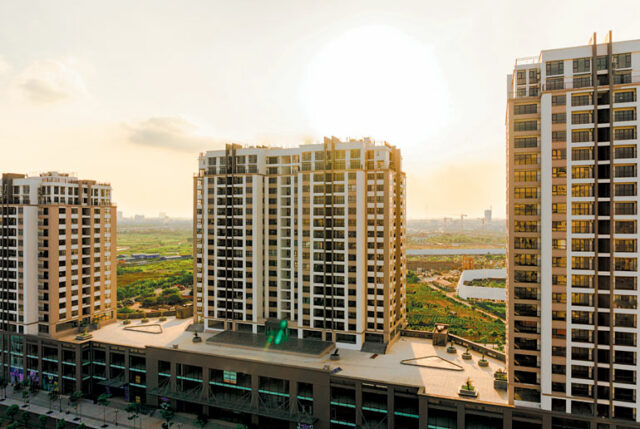
Properties have often been classified from low-rise to high-rise and from economic to luxury. Another way of classifying is whether they are horizontal or vertical developments, which have also defined the way of living of residents.

Horizontal is often associated with individual spaces like houses and apartments sprawled outside metropolitan areas, while vertical often refers to condominiums and shared spaces that usually fill urban spots.

Such descriptions have been reflected in the recent “Hotspots Unwrapped” reports of online real estate marketplace Lamudi. Back in 2020, the figures — based on the website’s pageviews — show that demand for houses was higher than that of condominiums and even apartments.

With houses earning the most number of pageviews and leads in provincial cities, Lamudi hinted that “the market has gained greater appreciation for living spaces that offer bigger rooms, which will accommodate work-from-home and distance learning arrangements, or outdoor areas that provide safe recreational opportunities.”

In the metro, meanwhile, houses and condos remain the most popular choices. “In Quezon City, units in horizontal developments represent 29.25% of the leads. In Makati, condos dominate with 34.90% of the leads,” Lamudi’s report further detailed.

A more recent edition of its “Hotspots Unwrapped,” which listed the cities around the country to watch this year, observed a sustained trend in demand for horizontal developments.

“Residential properties such as houses flexed a large share of leads out of all property types, a trend common to most of the aforementioned cities. This is consistent with 2020 trends, which saw an increase in demand for horizontal developments,” the report stressed.

Among the cities, San Juan City was recognized for its “blend of both horizontal and vertical residential developments as well as its varied retail offerings,” which Lamudi noted “have made the city an attractive residential destination for families.”

Lamudi also observed that in Pasay City, new vertical developments such as condominiums and office towers are continuing to crop up. “The city continues to be an attractive investment destination especially for employees of firms and government offices in the area as well as those who frequently fly for work,” the report read.

Recently, however, the concepts of horizontal and vertical development have apparently evolved as the perks and advantages of both types have been bundled into new offerings.

Take horizontal multifamily, for example. A popular trend in the United States, horizontal multifamily can be described as a type of property that brings to residents the privacy of single-family homes (often a horizontal development attribute), while still reaping the benefits of multifamily amenities and on-site property management (something likely picked up from vertical developments like condos).

“Horizontal multifamily lets renters have the best of both worlds: an apartment where maintenance is taken care of as well as privacy and potentially a backyard,” real estate writer Deidre Woollard wrote in The Motley Fool-owned Millionacres website.

There has also been an emerging preference for “horizontal condominiums.” This type of condominium, according to Architect John Ian Lee Fulgar in an online article, brings the lifestyles that mark high-rise condominiums into typical Filipino houses similar to regular house-and-lots, rowhouses, or even townhouses. In terms of location, this type is often found near beaches or vacation spots. Kasa Luntian in Tagaytay City and Vista de Loro in Batangas are cited as examples of horizontal condominiums.

The concept of “vertical village” has also been on arising, as shown in the launch of a Camella Manors project in Davao. As BusinessWorld reported last year, Camella Manors Operations Head Marlon B. Escalicas said the development is positioned as “vertical villages” as “as these combine the conveniences of condominium living within a community in a prime location with commercial establishments, public transport access, and medical facilities, among others.”

From ‘pancakes’ to ‘pyramids’

No matter how horizontal and vertical developments have evolved, both are seen to be taking the shape of cities in the future.

A World Bank (WB) report published last year, based on satellite data analysis for almost 10,000 cities, analyzed the link between a city’s economic growth and the floor space available to residents and businesses.

“It finds that a city is most likely to be its best version when its shape is driven by economic fundamentals and a conducive policy environment — namely, a robust job market, flexible building regulations, dependable public transit and access to essential services, public spaces, and cultural amenities,” WB said in a statement.

The report noted three margins along which cities are projected to grow, depending on the aforementioned fundamentals. These three are horizontal spread, where cities extend beyond their previously built-up area; vertical layering, where cities raise the skyline of the existing built-up area; and infill development, where cities close gaps between existing structures.

Low-income cities tend to spread horizontally, looking like what the report termed as “pancakes,” as newcomers crowd into low-built quarters or settle on the outskirts where land is cheaper. Cities with higher incomes and productivity, meanwhile, are found to be taking the shape of “pyramids,” as they experience horizontal spread, infill development, and vertical layering altogether.

“A rising demand for floor space in economically productive cities… combined with a related rise in housing investment and consumption, leads developers to fill vacant or underused land at and within the city edge with new structures,” the report explained. “These pockets of close-in land become dense with office and residential space… Structures are built taller on average, and at the urban core, they are built much taller, forming sharply peaked skylines.” — Adrian Paul B. Conoza


Dell Technologies provides enterprise cybersecurity and recovery solutions

Leveling up data protection is integral to organizations in achieving business growth. In this new normal, digitalization means business continuity. Need to support hybrid workforces? Go digital. Need to secure critical data and ensure accessibility, anytime, at the same time? Go to the cloud. As digitalization becomes more widespread and necessary than ever, cyber threats become just as, or even more, widespread and sophisticated.

Dell Technologies and Integrated Computer Systems, Inc. (ICS), a leading IT solutions provider in the country and a Dell Technologies Titanium Partner, offer cybersecurity and recovery solutions and services to organizations. The Managed Detection and Response, PowerProtect DD Series and APEX Backup Services deliver superior cyberthreat detection power at the onset.

Managed Detection and Response

IT teams can find support in strengthening their organization’s security through Dell Technologies Managed Detection and Response (MDR), a fully managed, end-to-end, 24×7 service that observes, detects, investigates, and responds to threats across the IT environment. The Managed Detection and Response merges Dell’s security expertise and the Secureworks Taegis XDR security analytics software.

Dell Technologies and ICS’ security analysts assist organizations in the initial setup, monitoring, detection, remediation, and response. They work with the IT team to get an understanding of the environment, as well as give advice on security posture improvements and help deploy the XDR software agent to endpoints.

MDR leverages on the attacker data collected by Secureworks from over 1,400 incident response engagements in the previous year for threat detection and investigation. In the event of a security incident, Dell Technologies assures to help organizations get back and running.

Ultimate protection storage appliance

For cost-effective yet superior data protection, Dell Technologies brings the next generation of its EMC Data Domain appliances — the Dell EMC PowerProtect DD Series.

The DD Series helps organizations in data security, management, and recovery at scale. Powering the DD series is the DD Operating System (DDOS). This gives it the agility, security, and reliability to deliver high-speed, scalable, and industry-leading multi-cloud protection storage for backup, archive, and disaster recovery.

With the DD Series, organizations can enjoy fast, secure, and efficient data protection. This solution can now scale up to 1.5PB capacity in a single rack and provide up to 3PB capacity for long-term retention with the Dell EMC Cloud Tier. It can also integrate seamlessly with existing infrastructures, enabling ease-of-use with leading backup and archiving applications, and deliver superior performance with PowerProtect Data Manager and Data Protection Suite.

DD series supports an extensive cloud ecosystem, including AWS, Azure, VMware Cloud, Google Cloud, Alibaba Cloud, and Dell EMC ECS.

SaaS-based APEX Backup Service

Dell Technologies also has a 100% Software-as-a-Service (SaaS) data protection solution in APEX Backup Services. Built on AWS, it offers high-performance and secure backup, long-term retention, and automated compliance.

For SaaS apps, the APEX Backup Services delivers unified data protection, management, and information governance, including automated compliance and legal hold. Through a single dashboard, it provides complete visibility across Microsoft 365, Google Workspace, and Salesforce.

The APEX Backup Services for Endpoint ensures the protection of one’s devices, whether in the office or on the road. Through a centralized cloud portal, IT admins can remotely supervise the cloud backup and restore operations. Self-service restores are also possible via a web interface and from mobile apps, including iOS and Android. Desktop/laptop support covers Windows, Linux, and CentOS.

Meanwhile, the APEX Backup Services for Hybrid Workloads offers advanced functionality, including long-term retention, reporting, and insight into cloud storage utilization.

With Dell Technologies security solutions, organizations can rest assured that their critical assets are protected 24/7. As a trusted Dell Technologies partner, ICS can help you get a headstart in adopting these solutions and services to reinforce your company’s data security. Interested parties can contact ICS at info@ics.com.ph or visit ics.com.ph to inquire.


Spotlight is BusinessWorld’s sponsored section that allows advertisers to amplify their brand and connect with BusinessWorld’s audience by enabling them to publish their stories directly on the BusinessWorld Web site. For more information, send an email to online@bworldonline.com.

Join us on Viber to get more updates from BusinessWorld: https://bit.ly/3hv6bLA.

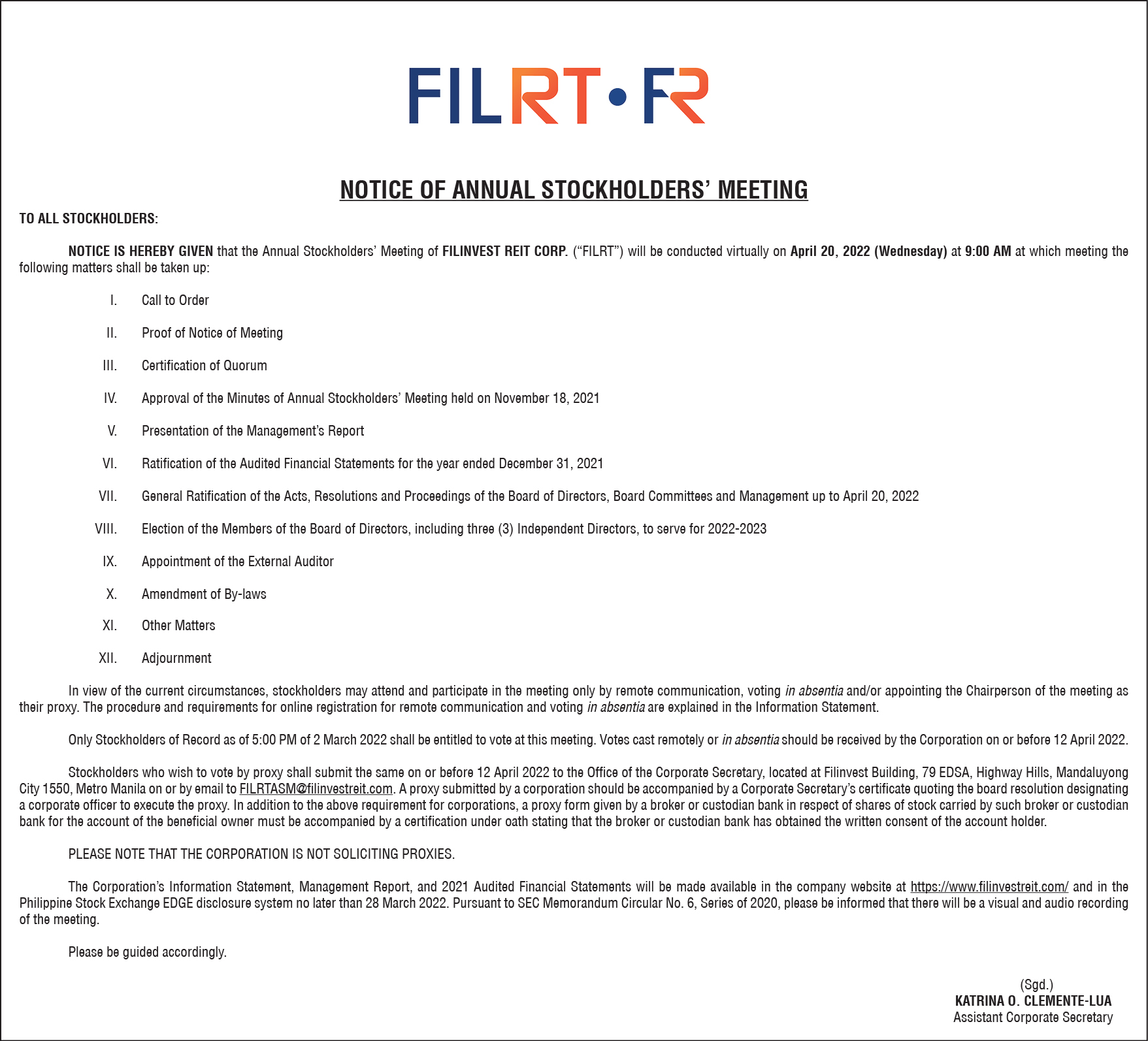
Filinvest REIT Corp. to conduct annual stockholders’ meeting on April 20

Click to enlarge.
Click to enlarge.

Spotlight is BusinessWorld’s sponsored section that allows advertisers to amplify their brand and connect with BusinessWorld’s audience by enabling them to publish their stories directly on the BusinessWorld Web site. For more information, send an email to online@bworldonline.com.

Join us on Viber to get more updates from BusinessWorld: https://bit.ly/3hv6bLA.

Central bank extends key rate pause

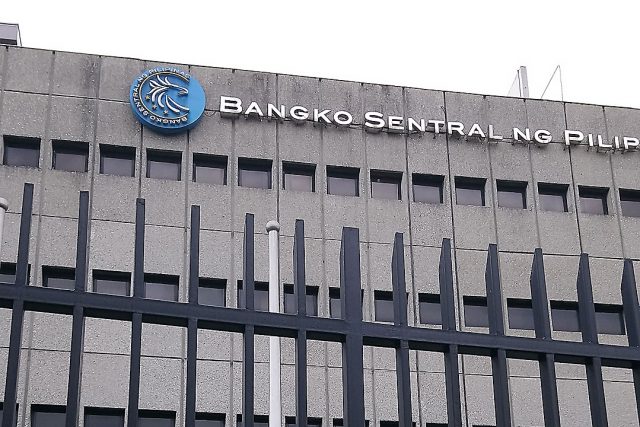
BW FILE PHOTO

By Luz Wendy T. Noble, Reporter

THE Philippine central bank kept its key interest rate steady for an 11th straight meeting on Thursday, even as it warned that its inflation target might be breached this year amid surging global oil prices due to Russia’s continued invasion of Ukraine. 

The Bangko Sentral ng Pilipinas (BSP) left the benchmark rate at a record low of 2%, as predicted by 15 of 17 economists in a BusinessWorld poll last week. Deposit and lending rates were also kept at 1.5% and 2.5%. Its last rate move was a 25-basis-point (bp) cut in November 2020. 

“The Monetary Board sees scope to maintain the BSP’s policy settings in order to safeguard the momentum of economic recovery amid increased uncertainty,” central bank Governor Benjamin E. Diokno told an online news briefing, even as it plans to normalize extraordinary liquidity measures started during a coronavirus pandemic. 

“Given the potential broadening of price pressures over the near term, the BSP stands ready to respond to the buildup in inflation pressures that can dis-anchor inflation expectations,” he added. 

The Philippines and other Asian economies including Indonesia and Japan have abstained from the global rate hike cycle led by the Federal Reserve as it awaits signs of significant price increases. 

Mr. Diokno said domestic economic activity has gained stronger traction with easing coronavirus lockdowns. But heightened geopolitical tensions and a resurgence in COVID-19 infections in some countries have clouded the outlook for global economic growth. 

“Supply-chain disruptions could also contribute to inflationary pressures, and thus warrant closer monitoring to enable timely intervention in order to arrest potential second-round effects,” he said. 

Manila, the capital and nearby cities and provinces have been placed under the most relaxed lockdown since March 1, allowing businesses to boost their operations. 

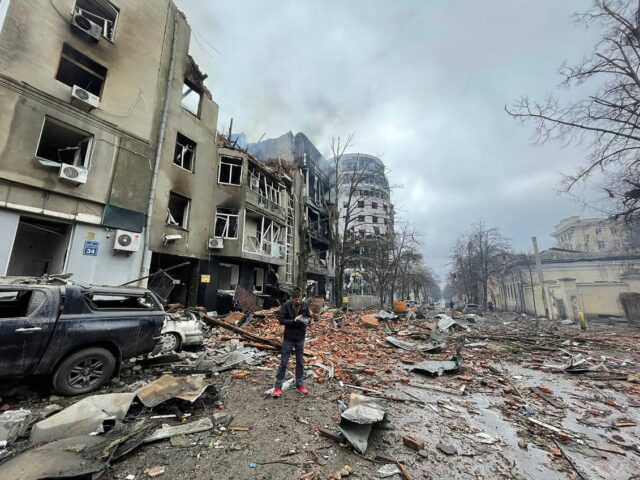
Global oil prices have been spiraling in the past weeks amid Russia’s continued invasion of Ukraine. Russia, the world’s second-biggest crude exporter, and Ukraine are major exporters of wheat. 

Back home, the steep increase in oil prices has fueled calls for higher minimum fares and wages. The government has given out P2.5 billion in fuel subsidies to the transport and agriculture sectors, and was preparing another P2.5 billion in dole-outs. 

The World Health Organization this month warned about the Deltacron coronavirus variant that had started to spread in Europe. China, Hong Kong and Korea are still experiencing an Omicron wave that peaked in the Philippines earlier this year. 


INFLATION VIEW 

Mr. Diokno earlier said they were keen to remain patient and would assess a rate increase in the second half, when recovery will have become sustainable. 

BSP Deputy Governor Francisco G. Dakila, Jr. said they expect inflation to average 4.3% this year, above the 2-4% target and faster than the previous 3.7% estimate. Inflation in February was 3%. The central bank also raised its inflation forecast for next year to 3.6% from 3.3%. 

He said their Dubai crude price projection was $102.23 per barrel, higher than $83.33 at the previous meeting after factoring the worsening war. The price is expected at $88.21 per barrel next year from $75.69. 

The Philippines has limited trade with Russia and Ukraine but is a net oil importer. Prices of gasoline, diesel and kerosene have increased by P14.90, P19.20 and P16.35 a liter this year. 

“Higher domestic oil prices are expected to dampen domestic growth prospects,” Mr. Diokno said. “A sustained increase in domestic oil prices may result in the dis-anchoring of inflation expectations, which could lead to second-round effects and further dampen domestic demand.” 

Meanwhile, the governor said the central bank was considering a cut in the reserve requirement ratio for banks. “We might do so in the second half of the year.” 

The BSP might raise the key rate by 75 bps by the end of the year, said Emilio S. Neri, Jr., lead economist at Bank of the Philippine Islands. The possibility of an unscheduled BSP rate hike had also increased amid the weaker peso and volatile oil prices, he added. 

“A more significant risk to the country’s economic prospects is the depreciation of the peso, which will increase the cost of oil that the country imports from abroad on top of the increase brought by the conflict in Ukraine,” he said in a note. 

The Fed’s upcoming rate increases would be crucial in managing local inflation expectations and interest rate differentials, Michael L. Ricafort, chief economist at Rizal Commercial Banking Corp., said in a separate note. 

The Monetary Board will hold its next policy review on May 19. 

Philippine external position to support credit rating — S&P

A STRONG external position would anchor the Philippines’ “BBB+” investment grade credit rating amid the threat of rising prices and slower growth due to Russia’s continued invasion of Ukraine, S&P Global Ratings said on Thursday. 

However, the debt watcher warned that this could widen the country’s budget deficit. 

“As a net external creditor, the Philippines’ external settings remain supportive of the ratings,” S&P said in a note. “On a net basis, lower real gross domestic product (GDP) growth and a modest current account deficit may increase the government’s fiscal deficit.” 

S&P in May 2021 affirmed the country’s “BBB+” investment grade rating, with a stable outlook, meaning it was likely to stay in the next 12 to 18 months. The government had targeted to get a rating upgrade to A- before the world was hit by a coronavirus pandemic. 

Earlier this month, S&P lowered its growth forecast for the Philippines this year to 6.5% from 7%, citing the impact of the war in Ukraine on global oil prices. This is below the government’s 7-9% goal. 

S&P said oil subsidies given to affected sectors such as the transport and agriculture sectors have been “modest and unlikely to dent its fiscal performance.” 

S&P warned that monetary policy tightening by the US Federal Reserve could affect sovereign borrowers in Southeast Asia. 

“With US interest rates on the rise, dollar-funding costs will be a key watchpoint for borrowers such as Indonesia and the Philippines, which actively issue in dollars,” it said.  

“However, the immediate effect of rising interest costs will likely remain manageable. Both governments over the past two years have made more use of domestic debt markets to fund higher fiscal deficits,” it added. 

The credit rating company said members of the Association of Southeast Asian Nations might experience higher interest burden amid a sustained increase in both foreign and local currency rates. The Philippines, Indonesia and Malaysia are among countries that have increased debt levels during the pandemic. 

Outstanding Philippine government debt has risen by a fifth to P11.73 trillion, pushing the debt-to-GDP ratio to a 16-year high of 60.5%. This is higher than the 60% threshold considered manageable by multilateral lenders for developing economies. — Luz Wendy T. Noble

UNCTAD cuts growth estimates for region, world

THE United Nations Conference on Trade and Development (UNCTAD) on Thursday lowered its growth estimates for Southeast Asia and the world due to shocks from Russia’s invasion of Ukraine and changes in macroeconomic policies that put developing countries at risk. 

In report, the UN body changed the projection for Southeast Asia to 3.4% from 4.7% and to 2.6% for global growth from 3.6%. 

“Global growth prospects for 2022 will be affected by downside risks to both supply and demand, compounded by the war in Ukraine,” it said. “On the supply side, persistent disruptions will continue to hamper economic activity.” 

It also said macroeconomic tightening would weaken demand, while rising prices would erode real incomes and dampen investor confidence. “These pressures will only deepen the geographical, financial and socioeconomic fractures that marked the recovery in 2021.” 

It said global growth this year would be slower, more uneven and more fragile than it expected in September. “Our estimates incorporate the two main new features of the world economic situation: The war in Ukraine and tightening macroeconomic policy in developed economies.” 

The economic impact of the war had led it to significantly lower growth estimates as incomes are affected by spiraling food and fuel prices, UNCTAD said. 

It added that global trade has been curtailed by sanctions, while issues on confidence and financial instability have resurfaced. 

“As a result of the conflict, oil and gas prices have surged from already elevated levels, wheat prices have reached levels not seen since the late 2000s, and a wide range of other items including fertilizers, metals and manufacturing inputs are facing severe supply shortages,” the UN body said. 

UNCTAD said some countries might take advantage of higher prices and demand for their commodity exports, while developing countries would face harder economic challenges.  

“Hardly any country will be immune from the deterioration of global growth prospects, although a few may benefit from higher prices and demand for their commodity exports,” it said. 

“On the other hand, developing economies that were in a precarious situation due to debt obligations, supply shocks and term-of-trade and exchange rate swings will see their economic performance deteriorate even further,” it added. 

The Russia-Ukraine war had caused disruptions to global trade and is likely to have longer-term effects on its structure. 

“In the short term, price effects and scarcity are spilling over onto economies more dependent on Ukrainian and Russian exports, especially of commodities, ranging from oil to minerals and food,” it added. 

Sought for comment, Foundation for Economic Freedom President Calixto V. Chikiamco said via Viber message that UNCTAD might be conservative on its projection. 

“The UNCTAD projection may be on the conservative side, perhaps due to the uncertainty how the Ukraine war will end and many are oil importing nations. Also, another possible headwind is if China, which is a major trading partner of Southeast Asia, goes into lockdown due to the rising COVID-19 cases,” Mr. Chikiamco said. — Revin Mikhael D. Ochave 

UnionBank, Globe team up vs scammers

Screenshot of a message commonly sent by SMS scammers.

UNIONBANK of the Philippines, Inc. and Globe Telecom, Inc. have agreed to share personal information as they try to boost measures against scammers who prey on financial clients. 

The disclosure of personal information, which include names, addresses and contact details, by a telecommunication entity such as Globe to a bank like UnionBank to aid fraud investigation is allowed by law, Globe Chief Privacy Officer Irish S. Almeida told an online news briefing on Thursday. 

The National Privacy Commission told the Philippine central bank last year information sharing by financial institutions for fraud investigations does not violate the Data Privacy Act. 

Ms. Almeida noted that before the Globe-UnionBank partnership, a subscriber must first ask a law enforcement agency or court to get information about a suspected scammer account, which could take months. 

“That takes quite a while, and sometimes the subscribers just give up, and they don’t pursue it anymore,” she said. “With this, we’re going to be helping our subscribers really protect themselves from criminals.” 

Under the deal, Globe and UnionBank will share details including the mobile number, name, address and location-based telecommunication activities of suspected scammers. 

Ms. Almeida said Globe has blocked about a billion spam messages and deactivated more than 5,000 mobile numbers that were found to have been involved in fraud schemes. 

She cited increased spam messages promising work to Filipinos who have lost their jobs amid a coronavirus pandemic. 

The partnership would allow UnionBank to work with Globe in identifying fraudulent customers who hide behind prepaid mobile numbers. “We could warn our customers about these potential scammers,” UnionBank Chief Information Security Officer Jose Paulo G. Rufo told the forum. 

The deal would also boost the lender’s ability to check usage patterns and locate scammers through their mobile activities. The information could be analyzed and forwarded to the police and National Bureau of Investigation so they could go after syndicates, he added. 

UnionBank is seeking to partner with more telecommunication providers and other merchants, Data Privacy Officer Maria Francesca R. Montes said. The bank has a similar arrangement with the Credit Card Association of the Philippines, she said. 

Discussions on the use of artificial intelligence to detect fraud are in the early stages, she said, adding that the government should step up its drive against financial cybercrimes. 

Ms. Montes said the country needs special cybercrime courts “because we cannot fully enforce or implement this without proper collaboration and support from the judiciary.” 

Mr. Rufo said UnionBank in December filed charges against people involved in a fraud incident. The lender was among financial institutions that received unauthorized fund transfers from accounts of some BDO Unibank, Inc. clients. 

The Bankers Association of the Philippines earlier said unauthorized withdrawals had reached more than P1 billion amid rising cyber-fraud incidents during the pandemic. 

The Bangko Sentral ng Pilipinas this week told banks to boost efforts to prevent phishing attacks that have led to losses for their clients amid the rise in digital transactions.  

UnionBank’s net income rose by 9% from a year earlier to P12.6 billion last year as revenues improved and loan loss provisions fell. 

UnionBank shares gained P4 or 4.57% to P91.50 apiece at the close of trading at the Philippine Stock Exchange, while Globe rose by P152 or 6.31% to close at P2,560 each. — Luz Wendy T. Noble 

Monde Nissin profit dips as commodity prices rise

FOOD and beverage company Monde Nissin Corp. on Thursday reported P8.2 billion in core net income attributable to shareholders for 2021, down 5.4% amid inflation pressures.

In the fourth quarter of last year, the decline in its attributable income was at 6% to P1.07 billion.

“While we had a strong start to the year, the central challenge for us is how we deal with the global wall of commodity inflation. There is only so much that can be done through supply chain efficiencies, after which there is a mathematical inevitability that we will need to pass on cost increases to our consumers,” Monde Nissin Chief Executive Henry Soesanto said in a virtual briefing.

But he said “all the work” initiated last year has set the company for growth in 2022.

“We will continue to innovate for upcoming product launches, improve distribution in key channels, and market to drive more consumption moments for our products,” Mr. Soesanto added.

In its unaudited financial report for 2021, the company reported consolidated revenue growth of 2% to P69.3 billion, and fourth-quarter growth of 1.4% to P17.8 billion, due to its strong sales performance.

“Our sales increase was driven by pricing action,” Chief Finance Officer Jesse C. Teo said as he cited other drivers such as a favorable foreign exchange rate, and “balanced categories” for the year’s performance.

Core earnings before interest, taxes, depreciation and amortization (EBITDA) fell by 15.2% to P13.2 billion, amid the “continuing high-inflation environment and brand-building activities through advertising and promotion.”

“2021 was a transformative year for Monde Nissin,” Mr. Soesanto said, referring to the publicly listed company’s distinction as the largest initial public offering (IPO) in the country so far.

Monde Nissin raised P48.6 billion from its market listing last year.

“The strong support by a wide range of domestic and international investors provided us with funding to continue our growth and strategic initiatives, which we made significant progress on during the year. Additionally, we were able to grow our revenue despite a challenging operating and economic environment that included inflationary cost pressures and supply chain disruptions,” Mr. Soesanto said.

Monde Nissin has two core businesses: the Asia-Pacific branded food and beverage business (APAC BFB), and the meat alternative business.

The branded business is divided into product groups, namely: instant noodles, biscuits, and other products such as beverages, baked goods and culinary aid. Some of the brands under this business are Lucky Me!, SkyFlakes, Fita, and Mama Sita’s.

The meat alternative business includes the Quorn and Cauldron brands.

Last year, APAC BFB recorded a 2.1% increase in net sales to P54 billion as the international business grew 21.5% to P3.7 billion despite “continued shipping challenges.” The domestic business grew by 1% to P50.4 billion on sustained vol-umes for noodles and a recovery in the biscuits segment in the fourth quarter with a 3.2% growth.

Core EBITDA declined by 11.7% to P11.7 billion due to the normalization of advertising and promotion support to sustain the growth experienced during the pandemic.

Meanwhile, revenues of the meat alternative business decreased by 3.9% amid its stable market share in the UK.

“Price increases taken in the US and UK in late 2020 and early 2021, respectively, resulted in full-year gross profit increasing by 8.1% to P6 billion,” Monde Nissin said.

Core EBITDA declined by 35.6% to P1.5 billion in the full year due to investments in research and development, as well as advertising and promotions.

“Increased global warming and acute commodity inflation show our aspiration to create sustainable food security solutions is more important than ever. Our conviction in Quorn’s production of protein and our determination to play a role in development of the overall category continues. Meanwhile, our new production facility in Southern Luzon, which will also produce our lower oil content noodles, will help us address continued strong demand in our APAC BFB,” Mr. Soesanto said.

He said that Quorn “remains to be the strongest meat alternative brand in the UK with the highest market share, brand awareness, and repeat purchase,” with seven of the top 11 rate of sale performers being Quorn’s new product launches.

“While further price increases from us seem probable, we are mitigating these by having hedged a significant proportion of our input costs. Additionally, due to the current geopolitical situation in Ukraine, we have taken steps in mitigating potential supply chain disruptions by reviewing our key raw materials and ensuring we maintain higher buffer levels. We will continue to review and take necessary measures as the situation evolves,” he added.

At the stock exchange on Thursday, Monde Nissin shares climbed by P0.08 or 0.6% to close at P13.50 per share. — Luisa Maria Jacinta C. Jocson