Home Blog Page 6116

DOE studies impact of fuel price hikes as gov’t plans to extend subsidies

PHILSTAR

The Department of Energy (DoE) is studying the impact of fuel price hikes on the agriculture and transport sectors, as the government plans to implement a new round of fuel subsidies.

“We are currently coordinating with the Department of Agriculture, the Department of Transportation, and the Land Transportation Franchising and Regulatory Board to calculate the impacts of fuel price increases on agriculture and transport sectors,” Rino E. Abad, director of the DoE’s Oil Industry Management Bureau, told a televised news briefing.

“These sectors will be given subsidies,” Mr. Abad said. “The DoTr has already finished its computation. We expect that the computations will be requested by the President.”

President Ferdinand R. Marcos, Jr., who rejected calls for the suspension of excise tax on fuel, has committed to expanding the fuel subsidy for the transport sector, including tricycle drivers.

ROLLBACK
At the same briefing, Mr. Abad said fuel cost adjustments would heavily depend on COVID-19 curbs and interest rate hikes across the world, which could further temper economic activity and lower demand.

He said the rollback trend in the pump prices of petroleum products could continue if the Federal Reserve, which is due to meet on July 26-27, raises rates aggressively.

On the other hand, price hikes in petroleum products can be expected if the US does not hike interest rates, Mr. Abad said, citing supply side pressures triggered by the Russia-Ukraine war.

If the Fed and other central banks raise interest rates, it will be an enabling environment for continuous price rollbacks, he said.

He noted that the price rollback implemented this week was caused by the lockdowns in China and interest rate hikes in the US and other countries.

Lockdowns and higher borrowing rates could force consumers to spend less, and consequently lower demand and market prices.

China vows to finish Philippine railway projects

WANG WENBIN CHINESE FOREIGN MINISTRY SPOKESPERSON FACEBOOK PAGE

CHINA will finish infrastructure projects with the Philippines including three railways, and launch more that will set new benchmarks for cooperation, according to its Foreign Ministry spokesman.

These projects would “help upgrade Philippine infrastructure in both traditional and emerging sectors,” Wang Wenbin told a news briefing in Beijing on July 18, according to a transcript posted on the ministry’s website.

He also said China would “coordinate seamlessly” with the Philippine government after President Ferdinand R. Marcos, Jr. ordered the Department of Transportation to renegotiate the loans for three railway projects that got delayed.

These are the Calamba-Bicol, Subic-Clark and Mindanao railway projects.

Mr. Wang said the construction of more projects, including the three major railways, are well under way.

A transport official last week said China’s funding commitment for the three railways was “deemed canceled” because it had failed to respond to the Philippine government’s loan application since 2019.

Critics have said China’s failure to act on the Philippines’ loan applications showed its lack of commitment despite former President Rodrigo R. Duterte’s friendly stance toward China.

Mr. Marcos is now eyeing both foreign and private sector support for railway projects, according to Transportation Undersecretary Cesar B. Chavez.

Mr. Marcos ordered the Transportation department to go back to the negotiating table to secure loan agreements for the three railway projects, the presidential palace said in a statement at the weekend.

“Infrastructure cooperation is a highlight in the practical cooperation between China and the Philippines in the past six years,” Mr. Wang said. “China welcomes President Marcos’ instruction to the responsible department on discussing with China on the projects.”

The P142-billion Calamba to Bicol project is a 380-kilometer railway from Banlic in Calamba, Laguna, to Daraga, Albay, while the P50-billion Subic-Clark railway is a 71-kilometer railway divided into two sections — a 64-kilometer main line connecting the Subic Bay Freeport Zone and Clark Freeport Zone and a seven-kilometer link to the Subic Bay Port’s new container terminal.

The first phase of the P82-billion Mindanao railway project stretches from the Tagum Station and depot in Davao del Norte to Digos City in Davao del Sur. It will have stations in Carmen, Panabo, Santa Cruz, and three in Davao City, including a sub-depot.

“China always sees the Philippines as a priority in its neighborhood diplomacy,” Mr. Wang said. He reiterated four key areas of cooperation with the Philippines — large-scale agriculture, infrastructure, energy and people-to-people exchange.

These will carry forward the friendship of both nations and bring benefits to their people, he said.

“The Philippines is a friend and a neighbor of China. With the new Philippine government coming into office, China-Philippine relations are at a new starting point,” he added.

Earlier this month, Mr. Marcos said the Philippines and China should explore avenues of cooperation and not just discuss territorial disputes.

Mr. Marcos has tagged China as the Philippines’ “strongest partner” in pandemic recovery efforts, saying their relationship is very important and advantageous to both countries.

Meanwhile, National Security Adviser Clarita A. Carlos said China’s attempt to invalidate a 2016 arbitral ruling by a United Nations-backed tribunal that voided its claim to more than 80% of the South China Sea is “not anything new.”

“They have said that before but I think we have made our position clear there, and the president of the republic has made our position clear,” she said in a statement.

Mr. Wang has said “China neither accepts nor recognizes it and will never accept any claim or action based on the award.” “By doing so, we are upholding international rule of law,” he added, calling the ruling “illegal, null and void.”

In 2016, the Permanent Court of Arbitration based in the Hague upheld the Philippines’ rights to its exclusive economic zone within the waterway. It rejected China’s claim to most of the sea based on a 1940 nine-dash line map that Philippine Foreign Affairs Secretary Enrique A. Manalo said “had no basis in law and is without legal effect.”

Mr. Manalo has said the findings of the arbitration court “are no longer within the reach of denial and rebuttal, and are conclusive as they are indisputable.” — Alyssa Nicole O. Tan

OCTA cites rising infections in Luzon

PHILIPPINE STAR/ WALTER BOLLOZOS

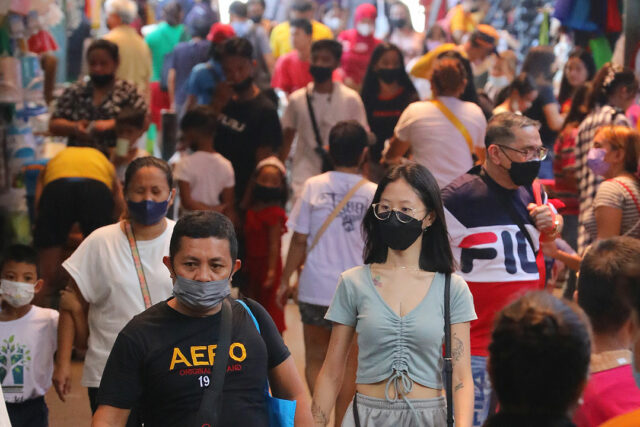
CORONAVIRUS infections in some parts of the Philippines including the main island of Luzon have increased, though still not at an alarming level, according to the OCTA Research Group.

The infection rates in Calabarzon, Central Luzon, Western Visayas, Pangasinan and La Union have had increased, Fredegusto P. David, a fellow from the OCTA Research Group, told a news briefing on Tuesday.

Infections in the provinces of Cagayan, Isabela, Iloilo, Pampanga, Bulacan, Bataan, Nueva Ecija and Tarlac have also spiked, he said.

“We have monitored rising cases in most of Calabarzon except Quezon, but this is not alarming,” Mr. David said in Filipino. “We just want the public to be aware that cases in these areas have increased and we need to be safe.”

He said health authorities are looking at the country’s healthcare use rate to ensure it doesn’t get bogged down by rising infections.

The Philippines posted 14,640 coronavirus infections in the past week, with a daily average of 2,091 cases, the Department of Health (DoH) said on Monday.

The daily average from July 11 to 17 rose by 44% from a week earlier, according to a DoH bulletin. Of the new patients, 35 were severe and critical, it added.

One death was confirmed in the past week, but there were no deaths from July 4 to 17, the agency said.

It added that 481 of 2,630 intensive care unit (ICU) beds had been used as of July 18, while 5,189 of 21,809 non-ICU beds were occupied. There were 589 severe and critical admissions.

The coronavirus infection rate in the Philippines has increased in recent weeks, sparking discussions on whether it is safe to enforce face-to-face classes by November.

Mr. David expects about 2,000 daily coronavirus infections in the next few days, though it seemed to have peaked in Metro Manila.

He traced rising infections to more contagious Omicron subvariants and people’s failure to observe minimum health standards.

More than 70 million Filipinos have been fully vaccinated against the coronavirus, with more than 15 million having received a booster shot.

Meanwhile, President Ferdinand R. Marcos, Jr. has decided to keep the country’s five-tier COVID-19 alert system, as he awaits a new classification scheme by next month, according to the presidential palace.

“To avoid confusion, we will retain the alert level system for now,” Mr. Marcos told DoH officer-in-charge Maria Rosario S. Vergeire at a recent meeting, based on a press release sent by Malacañang.

“We are studying very closely, and we’ll come to a decision very soon as to decoupling the restrictions from the alert levels,” the president said. 

Mr. Marcos met with Ms. Vergeire and other Health officials on Monday to discuss the government’s pandemic plan. 

Ms. Vergeire said DoH might release new classifications by the second week of August, when more restrictions will have been eased.

Mr. Marcos, who has vowed to ditch lockdowns, wants the new restrictions to be compatible with the milder variants of the coronavirus, the palace said.

It noted that among the factors being considered for easing of restrictions is the country’s low booster uptake

Mr. Marcos at the weekend said his government would start a campaign to encourage more Filipinos to get booster shots against the coronavirus.

The program is part of the preparations for face-to-face classes and full economic reopening, he said in his latest video blog.

The Health, the Interior and Local Government, and Education departments would lead the campaign to increase the country’s booster uptake, he said.

Mr. Marcos, 64, recently finished his seven-day isolation on Friday after he tested positive for the coronavirus.

Most areas in the Philippines including the capital region are under the lowest virus alert, allowing businesses to operate at full capacity. — Norman P. Aquino and Kyle Aristophere T. Atienza

Marcos administration tackles education, social service concerns

PHILIPPINE STAR/KRIZ JOHN ROSALES

PRESIDENT Ferdinand R. Marcos, Jr.’s third Cabinet meeting focused on the plans of the education and social welfare agencies, his office said on Tuesday.

The Department of Education, which is headed by Vice President Sara Z. Duterte-Carpio discussed its priority programs and projects for basic education, Press Secretary Rose Beatrix “Trixie” Cruz-Angeles said in a statement.

Policymakers are now discussing reforms in the education sector, as the Philippines has been rocked by reports that learners have been falling below the expected minimum levels of proficiency.

The education crisis has been aggravated by the physical closure of schools in the past two years due to the coronavirus pandemic, with the Philippines having the longest ban on in-person classes.

The Marcos administration is now backing calls for the review of the country’s ten-year-old education curriculum, also known as the K-12 program, which extended the basic education period to include two additional years in the secondary level with the goal of giving learners opportunities to acquire the necessary skills demanded by the labor market.

Almost a decade after the implementation of the K-12 program, which was designed to comply with global standards, Filipino learners hardly excel as shown in major assessment tests.

A recent Pulse Asia survey commissioned by a senator showed 44% of adults are not satisfied with the K-12 program.

Ms. Duterte-Carpio has said the program’s review is already in progress.

At the same meeting, the Department of Social Welfare and Development “presented its own programs and projects,” Ms. Cruz-Angeles said.

“Of note is Sec. Erwin Tulfo’s declaration that in the Pantawid Pamilyang Pilipino Program (4Ps), at least 1.3 million beneficiaries out of 4.4 are no longer considered ‘poor’,” she said.

“This frees up P15 billion for other qualified persons to replace them and now be included in the said program.”

The 4Ps program is a conditional cash transfer scheme intended for the country’s poorest families. — Kyle Aristophere T. Atienza

Senate inquiry sought on flood control master plan 

PHILIPPINE STAR/ MIGUEL DE GUZMAN

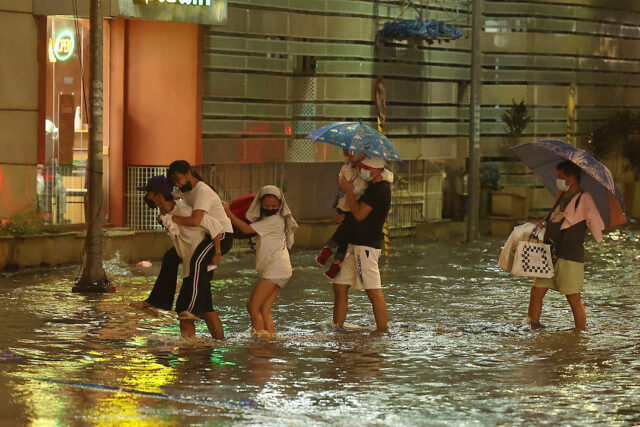
A RESOLUTION seeking a probe into the government’s flood control master plan and pending projects has been filed at the Senate following recent flooding in the capital city and other parts of the country due to incessant rains or thunderstorms.

Senator Ramon B. Revilla, Jr., who filed Senate Resolution 52 on July 18, said “it is important for us to be prompt and make sure the town is ready before disasters strike.”

“The commuting public have been laden with this decades-old issue. It is high time we look into this before it is too late,” he said in a statement on Tuesday.

The Department of Public Works and Highways (DPWH) is the lead implementing agency for the Flood Management Master Plan for Metro Manila and Surrounding Areas Project, in close coordination with local government units.

DPWH has reported the completion of 13,224 flood control structures nationwide in the last six years, while the Metro Manila Development Authority (MMDA) has said that pumping stations in the National Capital Region are prepared and are at 100% capacity for the rainy season.

However, Mr. Revilla said that despite the master plan and billions allocated for the program, flooding and its adverse effects continue to endanger many communities nationwide.

The senator said that issues with flooding have only become worse over the years, citing climate change which has intensified natural calamities.

“The country has repeatedly witnessed catastrophic flooding of communities,” Mr. Revilla said. “We cannot simply forget the unthinkable number of lives lost, complete devastation of areas directly affected, and the severe effects on living conditions and livelihood which led to a long-term negative impact on the health of many Filipinos and on the country’s economy.”

The Philippines, situated within the typhoon belt, is struck by an average of 20 typhoons per year.

It is losing an average of 1.7% of its overall economic output each year due to typhoons, according to estimates by the Asian Development Bank, which noted the country’s need to strengthen its resilience against natural disasters. — Alyssa Nicole O. Tan

Cebu’s Daanbantayan gets road, port improvements from provincial gov’t

DAANBANTAYAN LGU FACEBOOK PAGE

INFRASTRUCTURE projects worth more than P70 million have recently been completed in Daanbantayan, a beach and diving destination in northern Cebu, the provincial government said.

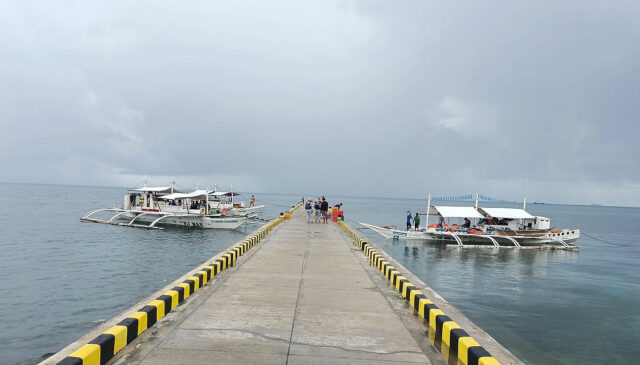
Cebu Governor Gwendolyn F. Garcia inaugurated on Monday the expanded causeway in Tapilon, which is used by boats that ferry passengers and dry and fresh goods from Daanbantayan to nearby islands and islets.

With the P7.6-million pier expansion project, motorized boat operators no longer have to transfer people and products to smaller flat-bottom vessels to reach the shore during low tide, said resident and boat crew member Alex Baslan in a press release from the provincial government.

Also completed is a P54.8-million upgraded road section from the town center to the Tominjao and Maya localities.

In Tominjao, a reinforced concrete box culvert for a bridge was also reconstructed at a cost of P8.6 million.

Daanbantayan is classified as a first class municipality with a population of about 93,502 as of 2020. Its white sand beaches and dive sites, particularly in the islands of Malapascua and Carnaza, are popular tourist destinations.

Cebu was recently cited as one of the best island destinations in the Philippines, along with Palawan and Boracay, by the the New York-based travel magazine Travel + Leisure. — MSJ

House bill criminalizing occupational safety and health violations filed

PHILIPPINE STAR/ MICHAEL VARCAS

A BILL criminalizing occupational safety and health (OSH) violations was filed at the House of Representatives on Tuesday, which will amend the existing OSH law with stricter penalties and imprisonment for non-compliant employers.

“Even with the enactment of the OSH Law, employers continue to neglect workers’ health and safety which often lead to injuries and death,” Gabriela Party-list Rep. Arlene D. Brosas said in a statement on Tuesday.

“That is why we need to introduce stiffer penalties and imprisonment in the law.”

“The consecutive workplace deaths during the past one and a half months are alarming. The government should decisively act now to put an end to workplace deaths,” Institute for Occupational Health and Safety Development (IOHSAD) Executive Director Nadia de Leon said in a separate statement.

According to the Integrated Survey on Labor and Employment in 2019, there were 310 fatal cases of occupational accidents that year.

“The recent recognition of OSH as a fundamental principle and right at work by the International Labor Organization highlighted government responsibility in ensuring safe and healthy working environments at all times,” Ms. De Leon said.

The IOHSAD joined the Gabriela Party-list as it filed House Bill 2126.

Under the proposed amendment, violators may face imprisonment for up to 12 years and a maximum fine of P3 million if the incident results in the death of a worker.

If the violation causes injury, the violator may be fined a maximum of P500,000 and imprisoned for up to six years.

A P75,000 compensation must also be given to every injured employee.

Employers, their contractors and subcontractors also stand to lose their business permits for repeated violations of the OSH Law.

“Our bill enumerated the gross violations of OSH Law which can be penalized by fines or imprisonment or both, including failure to heed the Labor department’s compliance order, failure to hold OSH trainings, failure to designate safety officers, and failure to secure a fire safety certificate,” Ms. Brosas said.

The proposed measure also prevents waivers or affidavits of desistance from derailing the pursuit of legal actions against erring employers, citing the usual tactic of guilty employers to force grieving families to sign waivers in case of workplace deaths.

Under the bill, top officials of a corporation will be held liable for the violation.

“One death is too many. How many workers must die for the government to realize this? A single workplace death is unacceptable. Workers do not work to die. Businessmen should keep in mind that pursuing higher profits should never mean violations of workers’ rights and workers’ deaths,” said Ms. De Leon. — Alyssa Nicole O. Tan

Rights group says anti-communist task force’s amnesty offer is a ‘facade’

HUMAN rights group Karapatan on Tuesday said the offer of the government’s anti-communist task force to grant amnesty to former communist rebels is a “facade” that would be used to continue state violence and repression.

The group made the statement after the task force, with new leadership under the administration of President Ferdinand R. Marcos, Jr., said last week that it would consider the measure to “prevent the resurgence of the communist terror group.”

“The anti-communist task force is now dangling the idea of granting amnesty through so-called ‘localized peace talks’ — but any talk of ‘peace’ from the task force rings hollow when it continues to deny its hand in red-tagging and inciting human rights violations,” Karapatan Secretary General Cristina E. Palabay said in a statement.

In its first executive meeting last Friday, National Security Adviser Clarita R. Carlos, the vice chairperson of the anti-communist task force, said they have yet to finalize the amnesty proposal.

During the meeting, Presidential Peace Adviser Carlito G. Galvez, Jr. did not recommend the resumption of peace talks between the government and the National Democratic Front of the Philippines-Communist Party of the Philippines-New People’s Army (NDFP-CPP-NPA), adding previous peace talks “ended up in nothing.”

Former President Rodrigo R. Duterte, who revived peace talks with communist groups when he started his administration in 2016, eventually terminated the negotiations in late 2017, citing ceasefire violations by the NPA.

In December 2018, Mr. Duterte signed an executive order that calls for localized peace talks involving local governments and the multi-agency national task force.

“Any talk of peace should be anchored on granting general, unconditional, and omnibus amnesty to all political prisoners, the resumption of formal peace talks, and upholding all previously signed agreements,” said Ms. Palabay. — John Victor D. Ordoñez

OWWA to launch program for OFW children

THE OVERSEAS Workers Welfare Administration (OWWA) on Tuesday said it is launching a program that will give support to children of overseas Filipino workers (OFWs).

In a statement, OWWA said its board of trustees chaired by Labor Secretary Bienvenido E. Laguesma and Migrant Workers Secretary Susan V. Ople approved a budget of P15 million to cover operational and administrative expenses of the program.

The OFW Children’s Circle (OCC), to be implemented by the agency’s regional offices across the country, will include psycho-social assistance and promoting digital literacy among children of OFWs.

“OCC programs and activities aim to help children cope with the negative effects and social costs of migration, not to mention the effects of the COVID-19 pandemic and other global emergencies,” it said.

OWWA is one of the six labor agencies that will be absorbed by the newly established Department of Migrant Workers (DMW), which is targeted to be fully operational by next year.

Philippine Statistics Authority data show that there were 1.77 million land and sea-based OFWs as of 2020, lower than the 2.18 million reported in 2019 due to the global coronavirus pandemic.

Last week, the Department of Labor and Employment (DoLE) and the DMW signed a joint circular to ensure a smooth and speedy transition of DoLE agencies dealing with OFWs to the new government agency.

The circular would ensure the continuation of attached agencies’ projects, Mr. Laguesma said.

In December last year, former President Rodrigo R. Duterte signed the law establishing the DMW with the goal of streamlining procedures that will address OFW concerns. — John Victor D. Ordoñez

Philippine-Australian security partnership in the West Philippine Sea

ROAD AHEAD-UNSPLASH

On June 5, Australian Defense Minister Richard Marles revealed the details of an incident involving a Royal Australian Air Force (RAAF) reconnaissance aircraft and a Chinese People’s Liberation Army Air Force’s (PLAAF) fighter plane in the South China Sea. According to Minister Marles, the Chinese J-16 fighter aircraft flew very close to the side of the RAAF P-8, which was conducting maritime surveillance activities in the region on the basis of international law.

ABC News reported that hours after the Chinese air force fighter plane carried out the dangerous interception of an RAAF P-8A Poseidon reconnaissance plane, a second was sent over the disputed waters in the South China Sea. Australian media also revealed a little-known fact: that both RAAF planes flew from Clark Air Base in the Philippines.

The May 26 incident shows that Australia and the Philippines share a mutual interest in the continued regional security and stability in the face of China’s looming aggression. It also indicates that both sides have always shared real-world military operations, which began with their responses to the 1999 East Timor Crisis, the devastation wrought by Super Typhoon Haiyan on the central Philippines in 2013, and, more recently, the 2017 siege of Marawi City.

A LONG HISTORY OF SECURITY PARTNERSHIP
The Philippine-Australia security partnership is founded on the need to address two common security concerns — counter-terrorism efforts against transnational terrorist movements in Southeast Asia, and maritime security in the West Philippine Sea.

During the five-month battle for Marawi City between the Armed Forces of the Philippines (AFP) and Islamic militants, the RAAF deployed two AP-3C Orion aircraft that provided surveillance and reconnaissance support to the AFP combat operations. In the immediate aftermath of this battle, Australia deployed ADF personnel to the Philippines to advise and assist the AFP in its counter-terrorism campaign against the Islamic militants — something that the ADF had been doing in Iraq. It also pursued further collaboration and capacity-building in the Sulu Sea. This is to limit the movement of money, technology, and fighters to extremist groups in the Southern Philippines.

During the Aquino administration, both countries increased their maritime cooperation in the face of China’s maritime expansion. The late President Benigno Aquino III offered Australia a strategic partnership similar to what the country had forged with the US and Japan. On Nov. 18, 2015, Aquino and then-Australian Prime Minister Malcolm Turnbull signed the Joint Declaration on Australia-Philippine Comprehensive Partnership, which formalized what has been a close and comprehensive working bilateral security partnership between the two American allies.

In December 2015, the Philippine Navy and the Royal Australian Navy signed the Terms of Reference for Navy-to-Navy Strategy Talks and in 2016, Australia turned over five Balikpapan-class land craft heavy (LCH) to the Philippines. The acquisition of the five Australian-made LCHs bolstered the Philippine Navy’s strategic sealift capability, humanitarian assistance, and disaster relief operations.

In mid-August 2021, Manila and Canberra signed the 2021 Philippine-Australia Mutual Logistic Support Arrangement, which is considered the most significant and recent security arrangement between the two security partners. The agreement allows Philippine and Australian naval ships and air force aircraft to refuel and have access to each other’s military bases.

AUSTRALIA’S VIGOROUS SUPPORT OF THE ARBITRAL AWARDS
Australia augments its security cooperation with the Philippines through its vigorous support of the Permanent Court of Arbitration’s decision in favor of the Philippines. In 2013, the Philippines filed a claim against China’s expansive claims to the waters and seabed of the South China Sea based on its nine-dash-line in the arbitral tribunal on the United Nations Convention on the Law of the Sea (UNCLOS).

On July 12, 2016, the Permanent Court of Arbitration ruled that China’s claim is completely untenable. Australia called on both the Philippines and China to abide by the ruling, which Canberra considered final and binding on both parties.

In commemoration of the 6th anniversary of the Philippines’ victory in the arbitral ruling, the Stratbase Institute hosted the international conference “Redefining Maritime Cooperation in the Indo-Pacific in an Age of Uncertainty” on July 12.

Professor Victor Andres “Dindo” Manhit, Stratbase president, welcomed the diplomatic community, government officials, scholars, and regional and global security exports. He said, “Changes in the international political economy, geopolitical shifts, rising inequality, and political instabilities continue to complicate global risks. As the international community attempts to fully recover from the impact of the COVID-19 pandemic, the increasing interconnectedness of states and the simultaneous existence of various traditional and non-traditional challenges have engineered a more multifaceted and unpredictable geopolitical backdrop, especially in the Indo-Pacific.”

Amid the exchange of views and evidence-based arguments, John Blaxland, Professor of International Security and Intelligence Studies of the Australian National University, stated that there is “an overwhelming amount of overlap of interest between Australia and the Philippines, including our interests and our enemies. We can’t just sit on the fence. We have interests to defend. Our interests are being challenged. Our deterrents need to be bolstered.”

In the culmination of the international forum, Mr. Manhit reiterated the universality of the UNCLOS and that through alliance and cooperation with the international community, we can feel the overarching relevance of the 2016 ruling and the rule of law.

Australia has always been a key ally, a like-minded state, in the Philippines’ quest for defense and maritime stability. We cherish our friendship and shared values with Canberra.


Renato Cruz De Castro is trustee and program convenor of the Stratbase Institute.

Calling all plantitos and plantitas: The details of KSK

WWW.SM-FOUNDATION.ORG

(Part 2)

There is a providential feature of the Kabalikat Sa Kabuhayan (KSK) program of the SM Foundation, done in partnership with Harbest Agribusiness Corp., that fits perfectly into the proposal of Secretary of Finance Benjamin Diokno for LGU heads to use part of the additional funding they will receive under the Mandanas-Garcia ruling to improve food supply at their respective levels.

The late Henry Sy, Sr. (and later his daughter, Tessie Sy Coson) had the very practical foresight to, from the very beginning, involve the Local Government Units (LGUs) in the implementation of the KSK. With the LGUs providing the leadership in the respective locations where the projects are located, other major stakeholders in improving agricultural productivity — NGOs, state universities and colleges (SUCs), cooperatives and other farmers’ associations — have been mobilized. The SM Food Group (SM Supermarket, SAVEMORE, SM Hypermart, and the SM Mall Management) provides guidance, encouragement and marketing support to the participants.

To inspire as many LGUs and other support groups to follow the lead of the SM Foundation, Inc. (SMFI) in collaboration with Harbest, let me describe in detail what this program is all about.

This skills training program is made up of 12 weekly training modules. The training day is fixed by Harbest in consultation with the LGUs and the participants. The training usually lasts for the whole day, i.e., 8 a.m. to 4 p.m. The famous German dualvoc (dual training) concept is employed. This means combining theoretical instruction with hands-on field practice. There are technical briefings with power point presentations meant to explain the agricultural technology being taught. Each session will have specific topics and procedures. The briefing is then followed by an actual field practice in which everyone is expected to participate actively.

The topics include project orientation, land preparation, seedling propagation, transplanting, fertilization, irrigation, plant pests and diseases-identification and control, crop management, harvesting and marketing. The training usually culminates with a harvest festival and graduation.

It is obvious from this detailed description of the curriculum that KSK programs closely resemble the master gardening programs described earlier as offered by some academic institutions in the US. At some point during the Marcos Jr. presidential term, the initiative spreading this movement should shift to the SUCs in tandem with the respective LGUs. It is only logical to expect that the SUCs in the Ilocos region — the bailiwick of the President — should be the most active in implementing these training programs. Beyond training actual small farmers to improve their capability of producing high-value crops, these programs should produce many master gardeners who will be the trainors themselves of farmers and would-be farmers. I would like to see numerous children of middle-class households being attracted to the occupation of master gardener.

To literally whet the appetite of our government leaders in the incoming Administration, let me enumerate in detail the types of food crops that can be significantly increased in a short period of time if the KSK program is spread widely all over the country. Under the KSK, open field planting of more than 10 crops of different varieties will be done. These are ampalaya, patola, upo, talong, kamatis, sitao, okra, kalabasa, lettuce, petchay, mustasa, kangkong, labanos, sili, melon, pakwan and honeydew melon (bitter melon, Luffa acutangula or silk gourd, bottle gourd, eggplant, tomato, string beans, okra, pumpkin, lettuce, Chinese cabbage, mustard, swamp cabbage, white raddish, chili, melon, watermelon, and honeydew melon) for the lowland. For projects in upland areas (like Tagaytay, Mountain Provinces and Bukidnon), broccoli, cauliflower, cabbage, and bell pepper can be included. The final list of crops under the KSK was usually decided among Harbest, SMFI, and the beneficiary.

The participants were strictly limited to 100 small vegetable farmers and 10 agriculturists (who would be trained to become future trainors or master gardeners) from the participating LGUs. A few established and big commercial growers may participate with prior approval. The trainees are selected by the partner LGUs, the Department of Agriculture (DA), the Department of Social Welfare and Development (DSWD) and other entities designated by SMFI as project partners. The final list of participants is decided by DA, DSWD and Harbest for submission to SMFI and final decision.

To instill from the beginning the value of discipline and perseverance, all participants should be committed to attending all the training sessions. Two absences shall be cause for the dropping of the participant from the list.

To serve as a model for other partnerships that may be crafted by similarly motivated private foundations, or NGOs who may want to replicate the KSK program of the SM Foundation, Inc., it would be useful to describe here the roles played by the different partners in the original KSK.

SM Foundation, Inc. is the propriety owner of the SMFI KSK farmers training program that is being implemented by Harbest  with the participation of the DA, DSWD, LGUs, farmers and other entities. SMFI prepares the schedule of launching and graduation of each KSK training batch. It also provides the funds per project to cover the training fee for the Harbest training module, farm inputs from Harbest and expenses for the launching and graduation ceremonies. Disbursements are under the control of SMFI, which also shall have the sole prerogative on the determination of the project sites. The final location of the venue is decided upon evaluation of prospective partners provided by Harbest.

On its part, Harbest makes the final selection of the venue based on the project sites recommended by SMFI. It will then inform and orient all prospective beneficiaries on the KSK program to be implemented in each site. Harbest will then review the list of participants provided by the participating LGUs, DSWD and other beneficiaries.

It will be Harbest who will assign the trainors for each program. Harbest trainors are experienced in practical farming technologies and have handled several season-long programs using the dual-tech method. The trainor in charge of each project will implement the weekly training sessions with briefings and hands-on field practice of the participants. He shall make sure that the attendance of the participants is documented properly. He shall organize the participants into groups, with a group leader each. Each group is given very specific assignments for every session. The trainor also assures that the standing crops are properly maintained and that all the necessary procedures are followed in the course of the training program to optimize the results of the program.

All direct inputs, such as seeds, fertilizers, pest and disease controls, mulching film, seedling tray, medium, bamboo trellis, trellis nets and other direct supplies for each project shall be supplied by Harbest.

The beneficiary or host LGU shall provide the 5,000 square meters of land to be used free of charge in the KSK project. This should be flat or slightly rolling, with sufficient water supply for irrigation, cleared and ready for cultivation and planting, accessible, not flood prone and with proper drainage canals, secured from stray animals and vandals. A project manager shall be appointed by the host LGU who will coordinate the listing of participants, preparation of the project venue, coordinate the attendance of the participants, and coordinate with other participating LGUs and beneficiaries, if any. He/she shall be responsible for the accounting of the inputs and produce harvested from the field. He/she shall also coordinate with the Harbest trainors on each training session. The LGU should provide two full-time farm laborers who will do the daily watering and maintenance of the standing crops.

A training hall or tent should be made available on the training site for the briefings with power point presentations. A sound system should be provided. Electricity should be available. Chairs for the participants should be provided for free on site, and made available also for the culminating festival activities. Needless to say, restrooms should be available within the project site. Living quarters near the training site should be provided for the trainors in case there will be need for overnight stays during the training sessions. This is especially required if the sites are in remote places.

The two most relevant government departments, as mentioned above, are the DA and the DSWD. The DA, through its regional and provincial officers, shall provide guidance on the selection of beneficiaries and determine the viability of the sites that are prospects for the training program. It shall also provide logistics support for the participants according to the approved support program. In turn, the DSWD will select Pantawid Pampamilya prospective participants near the training site for the KSK training program. The DSWD will also assign trainors for the values formation component of the training program. These trainors shall conduct weekly sessions on social empowerment like capacity building, values formation, community organizing, basic business accounting and financial literacy. The DSWD training modules will be incorporated into the weekly training program in coordination with Harbest.

Although this KSK program was a pioneering project of the SM Foundation, Inc., thanks to the foresight and entrepreneurial genius of the late Henry Sy, Sr., Harbest Agribusiness Corp. is willing to partner with other private groups or LGUs to implement parallel programs. The priority will be in the training of master gardeners or trainors so that the multiplier effect can be significantly increased. For those interested in implementing a similar program, they may contact the CEO of Harbest Agribusiness Corp., Arsenio Barcelona at arseniobarcelona@gmail.com.

(To be continued.)


Bernardo M. Villegas has a Ph.D. in Economics from Harvard, is professor emeritus at the University of Asia and the Pacific, and a visiting professor at the IESE Business School in Barcelona, Spain. He was a member of the 1986 Constitutional Commission.

bernardo.villegas@uap.asia

Want to become a digital nomad? Try before you buy

SENIVPETRO-FREEPIK

CHARLES MCCORMICK is the CEO of City Bikes, Inc., a couple of bike shops in Washington, one in Adams Morgan and one in Tenleytown, both of which do a healthy trade in e-bikes. He is also a digital nomad who has spent most of his time since 2009 on the road. “You are sitting in front of your computer to get your administration done,” he says, “so why not do it somewhere nice.”

McCormick’s desire to be “somewhere nice” has driven him to ride his motorbike across Europe, South America, Africa, and Central Asia (“it’s a progressive tour that is ongoing”), and involved him in some hair-raising moments, including being expelled from Mali during the 2011 coup. He’s now decided to swap his motorcycle for a camper van re-engineered to accommodate e-bikes.

Our grizzled veteran notes three phases in the nomad movement. The housing crash in 2007-8 forced some people to abandon their houses for the itinerant life. The idea of “going untethered” caught fire with younger people in 2015-17. Then the pandemic took the nomad life mainstream, demonstrating that regular people can work from anywhere (paradoxically, McCormick went back to Washington during the pandemic because the e-bike business was growing so fast). One force has been constant, however: the relentless improvement in enabling technology. When he first started on his odyssey, he wasted a lot of time looking for a signal; today, thanks to satellite internet services such as SpaceX’s Starlink and internet phone systems such as Google Fi, life on the road is a lot easier.

Working-from-home is so well established that it has its own acronym (WFH) and, presumably, its own syndrome. But what happens if you can’t abide the idea of even two days a week in the office?

Nobody knows how many digital nomads there are — the oft-repeated claim of 35 million owes more to evangelism than sober accounting — but a new breed of people is undoubtedly emerging and exploiting modern technology in ways that defy our most basic assumptions about the relationship between work and physical place.

The most conservative members of the new nomadic tribe are digital executives who want to combine high-level jobs with soaking up the sun. Many of them own their own businesses and so can decide where they want to be. Others have “gone plural” — they sit on several boards or offer advice to multiple companies and so can work over Zoom.

The most popular option for digital executives is to buy a permanent place in the sun and live there for several months a year. Ever-sensitive to movements in the luxury property market, Savills Plc. has recently constructed an executive nomad index based on climate, connectivity, both physical and virtual, and general quality of life. The top five destinations are Lisbon, Miami, Dubai, the Algarve (also in Portugal), and Barbados.

Another method is the “workation” of “bleisure” break. Some executives have taken to extending business trips to include some leisure; some return to work virtually while staying on in their holiday resorts; still others work full-time on vacation while their families frolic. Elite resorts are responding to this blurring of boundaries between work and leisure by providing on-call IT support, improving their conference facilities, installing Zoom rooms, and throwing in massages.

Digital nomads proper contain lots of different tribes, from road warriors like McCormack to migratory birds who like to spend half the year in warmer places. “Crypto Bros” want to build communities outside the jurisdiction of the state; hippies want to do much the same thing but with lots of tofu and yoga thrown in; trust fund nomads pretend to work while spending daddy’s money; Californians want to cash in on that state’s exorbitant house prices or escape from its onerous taxes; and some middle-class refugees from rich countries can only afford to live the same comfortable lifestyle as their parents if they move to emerging markets.

Zach Boyette is an acute observer of the nomad scene partly because he is a nomad himself and partly because he recruits the employees of his company, Galactic Fed, from the nomadic community, which he regards as a deep and expanding pool of talent. He argues that the average digital nomad is in their early thirties — the mean age is perhaps 33 — rather than backpackers in their early twenties. It takes a certain level of discipline and experience to preserve the lifestyle, and most people who think that they can go on the road after college and make a living in a cloud of marijuana smoke and beer belches are soon disappointed.

He also points to an emerging paradox: the growth of permanent digital nomad communities in Asia and Eastern and Southern Europe. The most prominent of these are Bali, Indonesia; Chiang Mai, Thailand; Danang, Vietnam; Cape Town, South Africa; Lisbon, Portugal; Barcelona, Spain; and, the scene of a recent digital nomad “unconference,” Nomad Fest, Bansko, Bulgaria. Some digital nomads migrate between these various communities. Others fall in love with one place and create permanent nests.

More than two dozen countries have introduced nomad-friendly visa and work-schemes since 2019, most notably Croatia, Estonia, the Czech Republic, and Portugal in Europe; Bermuda, Barbados, and Mexico near the US; and the UAE and Thailand in the rest of the world. Zoom’s background function lets you disguise where you’re living. Companies are cropping up to take the lifestyle mainstream: Remote Year puts professionals together into groups to live, work, and travel together, organizing everything from co-working spaces to white-water rafting expeditions; Outpost rents out temporary living-working spaces in Indonesia and Sri Lanka. There are nomad-specific insurance schemes, how-to web sites galore, and co-workspace arrangements that will unlock office doors from Madrid to Kuala Lumpur. Airbnb is shifting its focus from short-stay accommodation to long-term rentals, with an emphasis on beach cottages, forest cabins, and other “work-cation” fantasy resorts.

Still, serious problems persist. The world is still built around nation-states, particularly for tax and welfare. Too many nomads think they can get away with “forgetting” to file their taxes while relying on local hospitals if they break their leg. Visa rules in one of the most popular destinations, Indonesia, are still unclear. Particularly at the level of local officials and police, people, even countries that claim to be nomad-friendly can harbor significant hostility to westerners. Working while traveling can mean that you don’t do either properly: When nomads arrive in a new place, all too many are more interested in catching a Wi-Fi signal than contemplating the scenery. As for the beach, it’s impossible to imagine a worse place to work: Sand gets everywhere, the sun prevents you from being able to see your screen and, if you’re unlucky, the sea destroys your laptop.

Digital nomads can flame out, fall sick or get into trouble. Those who start out working for big companies can find themselves downgraded to part-time contractors and then freelancers, making it ever harder to earn enough money to live on. Ukraine was a popular destination for nomads before Vladimir Putin invaded. Now another popular destination, Sri Lanka, is going through agonies of its own. McCormick emphasizes that the lifestyle is “not for everyone.” Boyette argues that it is likely to combine phases of life — a spell in your thirties then perhaps another spell when you’re approaching retirement — rather than a permanent state of affairs.

The current popularity of the nomadic lifestyle raises problems of its own. What is the difference between a digital nomad and a digital expat? Digital nomads can bring rising prices and cultural imperialism in their wake. Bali’s Seminyak district feels more and more like California, with its Starbucks and Mexican restaurants, than an authentic part of Indonesia, sparking local resentment that sometimes flames into theft or violence.

Can companies really operate if their workers are completely detached from their headquarters? Boyette points out that Galactic Fed devotes an enormous amount of effort to “on-boarding” its employees and keeping them engaged. But for most companies managing employees on the other side of the world might prove a challenge too far. And if they can indeed cope with the challenge, why not dispense with all those expensive westerners and simply outsource jobs to educated Thais and Indonesians who will do the same work for a tenth of the pay? Knowledge workers have gained a lot of freedom thanks to the remote working revolution. That deserves to be celebrated. But going one step further and untethering ourselves completely from the mothership might prove to be too good to be true.

BLOOMBERG OPINION