Home Blog Page 6039

Hot Butler

The Eastern Conference finals was supposed to end in Game Six. With the Heat having been shellacked in the previous two matches, just about all quarters figured them to bow to the Celtics on the road. It wasn’t simply that the hosts had a superior roster; more importantly, they found their competitiveness on both ends of the floor compromised by the injury to top dog Jimmy Butler. Inflammation in the right knee compelled him to sit out the second half of Game Three, and although he missed no time from then on, he was clearly far from his finest.

That said, the Heat had no intention of succumbing to conventional wisdom. In fact, they were downright confident of extending the series to a deciding Game Seven. And, yes, in order to do so, they knew they needed Butler to not just be at his level best, but to exceed himself. Never mind that his ailing joint clearly bothered him; not for nothing did he shoot an atrocious seven of 32 in losing outings prior to the do-or-die affair the other day. He didn’t speak when, in the run-up to tip-off, he was enjoined by teammates to put up a half century in points. Then again, he didn’t need to. He was simply bent on letting his playing do the talking for him.

And, wow, did it ever. When the Game Six battlesmoke cleared, the Heat pocketed an unlikely victory on the strength of one of the best playoff performances of all time. Butler delivered, and in spades. For some reason, he had spring in his step — as if he had no ailment at all, and he displayed it from the get-go. To argue that his gutsy performance spurred the rest of the black and red on would be an understatement. Banged-up Kyle Lowry proved steady at the point, while sophomore Max Strus, who had hitherto missed 19 straight three-point attempts, came alive.

As Butler put the finishing touches on his 47-9-8 masterpiece, he remained focused. The Heat had successfully staved off elimination, but there was to be no celebrating — at least not yet. There remains today’s match to take care of, and if there’s any consolation, they’ll be aiming for their second National Basketball Association finals appearance in three years in familiar territory. Even as a beyond-capacity crowd is expected to be at the American Airlines Arena to cheer them on, though, they know their fate will be determined by their acknowledged leader.

Butler moves on feel, so the role he will play today depends on how much leeway the Celtics will give him. No matter the extent of the coverage he will face, however, one thing is clear: He will be leaving nothing in the tank, with the Heat all the better due to his presence.


Anthony L. Cuaycong has been writing Courtside since BusinessWorld introduced a Sports section in 1994. He is a consultant on strategic planning, operations and Human Resources management, corporate communications, and business development.

Read ‘Architects of Networked Disinformation’

RAWPIXEL.COM-FREEPIK

“Disinformation, and lots of it over social media, was the predicted winner of the 2022 Philippines Presidential Elections.” The quotation comes from a news item published by the Asia Center on May 5. The above opinion, says Asian Center, is based on two online polls and the statements of speakers in an event to commemorate World Press Freedom Day. (See https://asiacentre.org/disinformation-winner-of-2022-philippines-presidential-election/.)

The quotation above is the fitting representation of the dominant narrative in liberal and progressive quarters to explain the electoral victory of Ferdinand Marcos, Jr.

Yet, in its being ubiquitous, disinformation is a surface level problem. We must examine the underlying causes of disinformation and its pervasiveness. Otherwise, our interventions to combat disinformation will remain deficient. Here, not much deeper conversation has happened.

In this regard, I most welcome the public report authored by Jonathan Corpus Ong and Jason Vincent Cabañes titled “Architects of Networked Disinformation: Behind the Scenes of Troll Accounts and Fake News Production in the Philippines.” (See https://doi.org/10.7275/2cq4-5396.)

“Architects” is not just about a narration of fake news and trolls. It is also a timely review of the principles and methods of strategic communication or propaganda. But it goes beyond the basics, and it shows how concepts (like the complementariness of what may seem a tradeoff — message discipline and unregulated volatile virality) can be used to serve disinformation. The report reminds me of what the three witches in Macbeth said: “Fair is foul, and foul is fair.”

“Architects” was published in 2018. But it was only in the aftermath of the elections that it is being discussed extensively. I wish I had read this report much earlier. It would have informed the strategy and tactics not only for Leni Robredo’s electoral campaign but also for the political and reform struggle during the Rodrigo Duterte administration. For the future, this should be a guide to the struggle of the progressive forces.

Consider the passage below from the report. It shows how we, the opposition, missed the forest for the trees.

“However, we argue that Philippine media and civil society’s response, by selectively blacklisting pages or people while excluding or even hero-worshipping others that share similarly anonymous and hyperpartisan content, is incomplete and misleading. We echo the caution that US scholars Claire Wardle and Hossein Derakhshan express toward emerging fact-checking mechanisms, when they say that such methods ‘can quickly backfire when people question the authority of those who create the labels… An organization labeling something as “fake” should provide full transparency around how it makes its “blacklists.” While such proposals may mean well, they may end up further polarizing political camps if criteria for labeling are mystified, sanctimoniously adjudicated, and/or fail to be inclusive of perspectives from diverse stakeholders. This report further argues that efforts at fact-checking and blacklisting while well-meaning do not address the underlying causes of disinformation by failing to address the professionalized and institutionalized work structures and financial incentives that normalize and reward ‘paid troll’ work.”

The co-authors make the convincing point that the phenomenon of trolling cannot be ascribed simply to the Marcos-Duterte machination. The authors’ central message is that disinformation networks are the symptom of a systemic and institutional problem.

Here are some key findings:

• “Previous reports have spotlighted only Duterte’s Partido Demokratiko Pilipino Lakas ng Bayan (PDP-Laban) as hiring fake account operators, thus overlooking the systemic manipulation on Facebook and Twitter by various players across the political spectrum.” In one section, the co-authors showed an example of the execution of digital black ops: a figure portraying Duterte as being China’s loyal lapdog. But the co-authors say: “Studies reveal that an unfortunate cumulative effect of such content is an increasing disenchantment with democratic processes such as elections.”

• “Many of our respondents entered digital underground work after being disillusioned in the creative industries from witnessing first-hand systematic corruption and/or experiencing exploitative work arrangements.”

• “Many workers justify their fake accounts… as a mere extension of the longstanding ad and PR practice of using spin. Ordinary citizens have long tolerated deception work from ‘legitimate sources’— corporate brands, celebrities, journalists and oligarchic media.”

The report is consistent with the old insight into propaganda. In Edward Bernays’ Propaganda (1928), he matter-of-factly said that “approval of the public is essential to any large undertaking.” Propaganda, as well as the movement it reinforces, produces the intended result when it “impresses itself on the public mind.” In the chapter on “Propaganda and Political Leadership,” Bernays wrote: “It is understood that the methods of propaganda can be effective only with the voter who makes up his own mind on the basis of his group prejudices and desires.”

In their review of the academic literature, Ong and Cabañes provide this:

“Political marketing is an attempt to connect ‘distant high politics to the everyday,’ as Maggie Scammell puts it. Behind this practice is the belief that ordinary citizens have the agency and ability to interpret or even reject persuasive marketing messages handed down from above by political elites. For Scammell, the ‘personalization of politics’ today represents a shift toward a branding model, which emphasizes a reciprocal relationship between brands and publics that takes seriously their interests, needs, and emotional responses. Ordinary people are viewed here as having what John Corner and Dick Pels call ‘emotional literacies’ and what Liesbet van Zoonen calls ‘affective intelligences.’”

I also share the discerning response of Venus, a political science undergraduate student, to the question why voters succumb to disinformation: What is transmitted to them, she said, “is aligned with their beliefs.” (I asked the question in an online Political Science 101 class of Iye Coronel Ferrer, in which Iye invited me to speak.)

The insights above suggest that our interventions or initiatives to combat trolls and disinformation are insufficient or, worse, are aggravating the problem. The common view is that the main problem is fake news and disinformation. The counter-strategy has proven deficient: fact-checking, exposing and dismantling the trolls, calling out the peddlers of wrong information, labeling the median voter as bobotante, etc. This is because a much deeper problem — a systemic problem — allows or enables networked disinformation.

Along this line, Ong and Cabañes, citing other scholars, elaborate why disinformation in the Philippines thrives.

“Duterte’s critics are right to point out the increased vitriol in online political discussions among Filipinos. What this moral panic often ignores, however, is the very real discontent that Duterte’s supporters are expressing. Their angry tone is a resounding rejection of the ‘politics of decency’ that they associate with the oligarchic elite political establishment, which they feel has not brought about any palpable change in their everyday lives. It is also the product of a negotiation between ‘the politics of anxiety and the politics of hope,’ as it instantiates their desire for ‘a game-changer who would finally recognize and act on their concerns.’ It is in this light that one might better understand the toxic incivility of political discussion in the Philippines today, which is clearly a marked departure for Filipino social media where interactions have previously conformed with middle-class norms of respectability and cultural norms of circumspection and reciprocity.”

And here is an explicit criticism of the condescending thinking that afflicts our ranks:

“While liberal elite circles simplistically label Duterte supporters as brainwashed or uneducated lower-class mobs (an assumption misleadingly reproduced in global media coverage of ‘exotic’ Philippine politics), several scholars such as Nicole Curato and Cleve Arguelles provide a more nuanced but equally critical view of Duterte’s populist appeal. Rather than perceiving Duterte supporters as ‘fanatics,’ Arguelles argues that populist publics view Duterte’s ‘political performance’ as ‘giv[ing] voice to the miserable, bring[ing] authenticity to politics, and reflect[ing] persistent political will.’”

The Pinoy trolls have been caricatured as dull robots. But while exaggeration or grotesqueness is a feature of a caricature, the picture that comes out of the Pinoy troll is not truly representative of the trolls. Ong and Cabañes found out that the metrics for Pinoy trolls include emphasizing “individualization and flexibility,” being “entrepreneurial in establishing their value to the campaign and recognition in their field, demanding high personal commitment and resourcefulness….”

To quote another part of the report: The “chief architects… are actually wary of emerging techniques in global disinformation campaigns such as using automated software like bots. They would much rather rely on the labor of savvy creative writers with knowledge of popular vernaculars who can mobilize populist public sentiment. As one chief architect remarked about bots, ‘Bots are like the white walkers in Game of Thrones. They’re stupid and obvious and easily killed. They can’t inspire engagement.’”

“Architects” is excellent in describing and analyzing the roots of disinformation. It does not stop there. The report also includes a set of recommendations covering ad/PR industry self-regulation, financial regulation, social-media platform regulation, and media reportage. It also cautions readers that we must avoid a one-size-fits-all solution to a complex systemic problem.

My sense is that the recommendations need further teasing out. The report has provided thorough diagnostics and has identified the major obstacles. But since the problem is systemic and institutional, even cultural and historical, the recommendations are complex and nuanced and will go beyond the normative. It is also necessary to have a roadmap and a sequencing of the reforms.

To explain a bit, external incentives or disincentives (through legislation or executive order) may not be as effective as desired so long as the main stakeholders do not internalize the rules. Take the case of Duterte’s Executive Order (EO) on access to public information (or freedom of information). Since then, no transformation has happened. Arguably, only the agencies that already have the culture of transparency even before the EO was signed are complying.

The co-authors likewise recommend self-regulation. But to their lament, the stakeholders are reluctant to do so.

To appreciate the report — it is of course subject to debate and contestation — we need to have some “empathy and an enlarged imagination, rather than knee-jerk judgment.” Nonetheless, showing empathy does not mean absolving all those involved or complicit in unethical, wrongful acts of lying and defamation.

Don’t take my word for it. Read JC Ong and JV Cabañes.


Filomeno S. Sta. Ana III coordinates the Action for Economic Reforms.

www.aer.ph

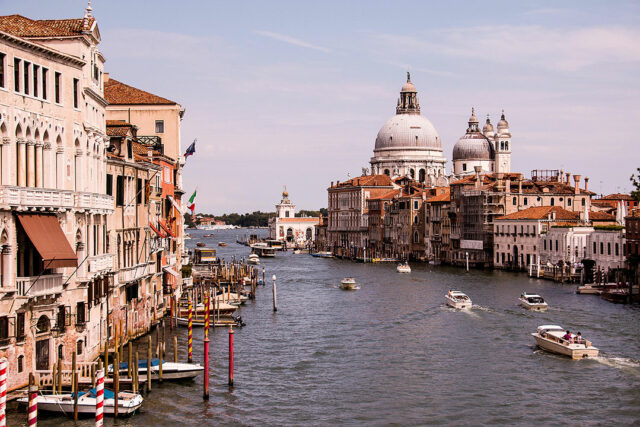
Venice has a 400-year-old COVID monetary lesson

WIRESTOCK-FREEPIK

We don’t talk much about helicopter money anymore. After a debate that raged through the early days of the pandemic, it’s all but fallen off the map as a topic. That’s hardly surprising, given how radically economic conditions have changed. Rather than worrying about how to shore up a collapsing economy, the issue of the hour is how to tame the fastest inflation in decades. But perhaps we shouldn’t consign the globe’s dalliance with helicopter money to the annals of history just yet. Not without considering Venice first.

In the 17th century, the Venetian republic was still a major trade and maritime power, having become the world’s first true international financial center 300 years earlier. How the city responded to an outbreak of bubonic plague in 1630 holds eerie parallels with the COVID-19 pandemic, and potentially some cautionary lessons for monetary policy makers, the next time they are called on to embrace an unconventional approach that had long been regarded as taboo.

Helicopter money in its purest form, as conceived by economist Milton Friedman, entails central banks printing money and then distributing it directly to citizens. Economies from the US to Hong Kong and Singapore have disbursed funds to their populations during the pandemic, as lockdowns stalled economic activity and strained the finances of households and businesses. While these have sometimes been reported as examples of “helicopter money,” none of them met the strict definition of that approach, which remains controversial because it draws central banks into the realm of fiscal policy, makes them more susceptible to political pressure and erodes their tradition of independence. The Venetian experience suggests that circumspection was merited.

Faced with the devastation of the plague, the city used what academics Charles Goodhart, Donato Masciandaro, and Stefano Ugolini refer to as “hard helicopter money,” resorting to fiscal monetization through its Giro bank. The state lender’s balance sheet rose to 2.67 million ducats by June 1630 from less than 1 million ducats in the previous decade, as the government paid its creditors by merely crediting their current accounts, they write in Pandemic Recession And Helicopter Money: Venice, 1629-1631.

The consequences were severe. Monetary expansion caused a depreciation in the value of bank money, leading authorities to suspend convertibility of deposits into coins. It caused the failure of another public bank, Rialto, which stopped operating after deposits drained away when it was crowded out by Giro bank’s growth. And it led to an unprecedented rise in prices. Ultimately, the government was forced to backtrack on its hard helicopter money strategy: It undertook a bailout of Giro bank, reducing its balance sheet and then the money supply. This allowed for a reappreciation of bank money and drove up the Venetian republic’s public debt.

The political backdrop is instructive. Wealth was extremely polarized in Venice at the time, the authors write. Though ruled by an oligarchy, public institutions reflected the expectations of the population when calamities occurred. People were watchful of government activity and ready to cause major disturbances if they became convinced authorities weren’t doing all they could and should to ensure the availability of food. The government had much to fear, and undertook its massive fiscal and monetary expansion to avoid the threat of riots.

At the same time, the city was employing stringent containment measures. While these saved lives, they paralyzed the economy (sound familiar?). Shops were closed, and auctions and weekly markets prohibited. The majority of Venetians became unable to work during pandemics, leaving them dependent on public handouts or illicit activity.  An “incomparable greater number of people has died purely as a result of unemployment than of typhus or any other contagious disease,” the study cites one textile merchant as saying in pleading for the quarantine to be lifted. That’s an unmistakable echo of the debate over lockdown tradeoffs that has caused frustration and protests from Michigan to Shanghai during the COVID pandemic.

There are differences, beyond the obvious implied by a gap of almost 400 years. Venice lost 30% of its population in three years to the plague, so the impact was far more destructive than COVID. Still, the city’s monetary missteps compounded the damage. The episode was a turning point for Venice, setting it on a path of long-term decline that culminated in the republic’s demise at the hands of Napoleon in 1797.

“The history of the Venetian reaction to the 1629-1631 famine and pandemic echoes many aspects of the COVID-19 crisis,” the authors conclude. “For one thing, it proves that nowadays’ extraordinary fiscal expansion to cope with a pandemic were far from unprecedented. Moreover, it suggests that nowadays’ central bankers’ refusal to embark into some ‘hard helicopter money’ experiment may have been a good idea after all.”

It’s tempting to ask how much worse inflation might be now if policy makers had gone all-in and adopted “hard” helicopter money in the wake of COVID. Goodhart, a former Bank of England policy maker who’s now with the London School of Economics, doubts that it would have made a big difference, given that what mattered was the rise in broad money, however achieved. What it would have done, he said by e-mail, is put the condition and status of central banks in a far worse state, making it harder to restrain the inflation that they are now trying to reduce.

Beyond this, the world’s near-brush with Friedman’s concept is a reminder of how failing to expect the unexpected can slip you up. Interest in helicopter money was fed by more than a decade of subpar growth and interest rates that remained stuck at the zero lower bound, even in the face of vast quantitative easing. When one unconventional monetary tool didn’t work, the appeal of an even more radical solution grew. Yet having seemed not long ago as though we were stuck in an interminable rut, the world was about to change in unpredictable ways. How many foresaw Russia’s invasion of Ukraine and pandemic-related supply bottlenecks, which both helped to upend our inflation assumptions? There’s a lesson to remember: Stuff happens.

BLOOMBERG OPINION

ADB’s Economic Outlook

PRESSFOTO-FREEPIK

The pandemic was a stress test for many businesses, regardless of size. While the contagion drove weaker enterprises into insolvency, those which survived became stronger than ever. The pandemic pushed companies to re-imagine, re-invent, re-calibrate, re-set, and re-start their businesses towards greater efficiency. As the worst seems to be behind us, businesses are finally moving out of survival mode and looking to expand again.

But the business environment is fraught with uncertainty. The war in Ukraine continues to choke petroleum and wheat supplies causing price hikes across the globe. China’s continued lockdown has dampened economic prospects, especially in Asia. Add to this the looming financial crisis among debt-distressed countries like Sri Lanka. In the Philippines, the specter of a new government threatens to change the rules of the game. All these beg the question — What are the prospects for Southeast Asia and the Philippines in the next two years?

BusinessWorld’s recently concluded economic forum provided answers. The bi-annual event features local trailblazers and global thought leaders who provide rhyme and reason to the environment we operate in. The latest installment, entitled Revolutions 2022, was no different. Its keynote speaker, Asian Development Bank’s Chief Economist Albert Park, gave us a thorough appraisal of where we are in the recovery curve and what we can expect in the next two years, barring extraordinary events.

As we are very much aware, the Philippines economy rebounded in 2021 with 5.7% growth following a severe contraction of 9.6% in 2020. We were the second fastest growing economy last year due to low base effect and the recovery of consumer demand, fueled by government spending. Singapore was the fastest growing economy in 2021, clocking-in a 7.6% expansion. The entire ASEAN expanded by an average rate of only 2.9% last year, substantially slower than East Asia which grew by 7.6% and South Asia which grew by 8.3%.

Omicron had a minimal effect on ASEAN economies. The Purchasing Managers Index (PMI) of southeast Asian economies shows that trade and commerce remained generally open and continued to expand despite the wave of infection. Outside the region, China was the most affected, what with its draconian lockdown that is in force until today.

The prognosis for the Philippines is 6% growth in 2022 and 6.3% in 2023. This corresponds to the recently adjusted growth rate of the National Economic and Development Authority (NEDA). ASEAN will grow by 4.9% in 2022 and 5.2% in 2023 with Vietnam leading the charge. Vietnam’s economy is driven by exports and investments and it is poised to expand by 6.5% and 6.7% this year and next.

Inflation in developing Asia will remain manageable at 3.7% and 3.1% in the next two years which is the lowest in the world. Fortunately, most Asian economies are self-sufficient in rice and are not severely affected by the wheat shortage as Europe and the Americas are. Moreover, developing Asia did not flood their economies with money supply as Europe and North America did.

The Philippines, being a net importer of rice, food supplies and petroleum, will see inflation rise to 4.6% this year. It is seen to taper off to between 2% and 4% in 2023.

As for interest rates, the monetary stance of most ASEAN central banks will be accommodative. It will remain relatively flat as government tries to spur investments.

However, the ADB expressed concern over the budget deficits and elevated debt levels across developing Asia. In the Philippines, the budget deficit was at $33 billion or 8.6% of GDP, which raises red flags. As we move forward, it will be a balancing act for the Marcos government as it controls spending to narrow the deficit while not choking economic expansion.

There is no way out of it, the Philippines and most of developing Asia must increase their tax collection bases, stressed Park. As of last year, the revenue to GDP ratio of the Philippines was 15.5% of GDP, dropping from its peak of 16.9% in 2019. The ADB recommends increasing collection efficiency by clamping down on tax evaders, delinquents, and smugglers. It also recommends a simplified manner of assessment and collection through digitization. The possibility of increasing VAT is not ruled out — neither is the suspension of fiscal incentives granted to certain sectors. Other taxes that can be imposed include environmental taxes, health taxes, progressive income and property taxes. There is a potential to increase tax collection by 3% to 4% of GDP more than current levels.

Not to be overlooked is the need to accelerate non-tax revenues including fresh investments, exports, tourism earnings, and the like.

Business opportunities must be created by the government and this can be achieved by fostering greater economic integration with the rest of the world. For the Philippines, it cannot afford to be left out of the Regional Comprehensive Economic Partnership (RCEP).

ADB encourages the Philippines to invest more in education. Studies show that for every one year of school closure, the lifetime earnings of affected students are reduced by 8-9%. In the Philippines, that number is doubled, what with our two-year closure because of the COVID-19 pandemic. Female students of impoverished families were most affected. The effect on future GDP is a reduction of 13% per year when the current batch of students enter the workforce.

Investments in the digitization of government offices will bode well for public efficiencies and to curb corruption. Meanwhile, investment in renewable energies is a must as we have made commitments to the United Nations Framework Convention on Climate Change to reduce our carbon emissions by 75% by 2030.

Although the worst of the pandemic may be behind us (hopefully), its scars are still very much evident. The next two years will be crucial as we lay the foundations for sustained recovery and growth.


Andrew J. Masigan is an economist

andrew_rs6@yahoo.com

Facebook@AndrewJ. Masigan

Twitter @aj_masigan

Russia advances in east Ukraine

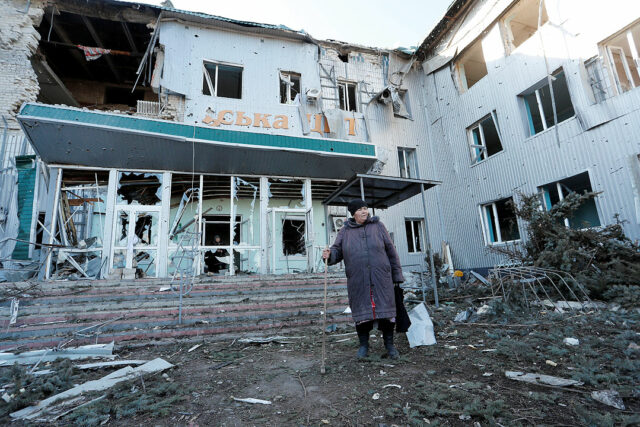
A WOMAN stands outside a local hospital, which was destroyed during Ukraine-Russia conflict in the separatist-controlled town of Volnovakha in the Donetsk region, Ukraine, March 12, 2022. — REUTERS

KYIV — Russian forces intensified their assault on the Ukrainian city of Sievierodonetsk on Sunday after claiming to have captured the nearby rail hub of Lyman, as Kyiv issued new calls for longer-range weapons from the West.

Slow, solid Russian gains in recent days in eastern Ukraine’s Donbas, comprising the Luhansk and Donetsk regions, point to a subtle momentum shift in the war, now in its fourth month.

Invading forces appear close to seizing all of the Luhansk region, one of the more modest war goals the Kremlin set after abandoning its assault on the capital, Kyiv, in the face of Ukrainian resistance.

Russia’s defense ministry said its troops and allied separatist forces were in full control of Lyman, the site of a railway junction west of the Siverskyi Donets River in the Donetsk.

However, Ukraine’s deputy defense minister, Hanna Malyar, said the battle for Lyman continued, the ZN.ua website reported.

Sievierodonetsk, some 60 km northeast of Lyman on the eastern side of the river and the largest Donbas city still held by Ukraine, was under heavy assault from the Russians.

“The situation has extremely escalated,” said Serhiy Gaidai, the governor of Luhansk.

The shelling was so intense it was not possible to assess the latest casualties and damage, though two people were killed on Saturday and 13 more buildings in the city were destroyed, he said.

Mr. Gaidai said on Friday may have to retreat from the city to avoid capture but it was not clear whether they had begun to pull out.

Russian artillery was also pounding the Lysychansk-Bakhmut road, which Russia must take to close a pincer movement and encircle Ukrainian forces, and police said there was “significant destruction” in Lysychansk.

Ukrainian presidential adviser and peace negotiator Mykhailo Podolyak repeated a call for US-made long-range multiple-rocket launchers. US officials have told Reuters such systems are actively being considered, with a decision possible in coming days.

“It is hard to fight when you are attacked from 70 km away and have nothing to fight back with … we need effective weapons,” Mr. Podolyak posted on Twitter.

President Volodymyr Zelensky voiced hopes in a late-night video address that Ukraine’s allies would provide needed weapons, adding that he expected “good news” this week.

Ukrainian forces in the Donbas said in a brief Facebook post they had been on the defensive all day, fending off seven Russian attacks and destroying a tank.

Reuters could not independently verify the claims.

‘CATASTROPHIC CONSEQUENCES’
Mr. Zelensky said the military situation in the Donbas was very complicated, adding that defenses were holding up in a number of places, including Sievierodonetsk and Lysychansk.

“It’s indescribably difficult there. And I am grateful to all those who withstood this onslaught,” he said.

The British defense ministry said in its daily intelligence report that if Russia succeeded in taking over those areas, the Kremlin would likely view it as a “substantive political achievement,” which it could use to justify its invasion to the Russian people.

In a sign of frustration over Western differences on the war, Ukrainian Deputy Prime Minister Olga Stefanishyna said the North Atlantic Treaty Organization had shown itself incapable of mounting a united response.

“We have to talk clearly about the catastrophic consequences for the future of all Europe if Ukraine is defeated,” she said on Facebook.

Mr. Zelensky said in a television interview he believed Russia would agree to talks if Ukraine could recapture all the territory it has lost since the invasion began on Feb. 24.

Still, Mr. Zelensky ruled out the idea of using force to win back all the land Ukraine has lost to Russia since 2014, which includes the southern peninsula of Crimea, which Moscow annexed that year.

“I do not believe that we can restore all of our territory by military means. If we decide to go that way, we will lose hundreds of thousands of people,” he said.

Pushing diplomatic efforts for a solution to a conflict that has ramifications beyond Ukraine’s borders, French President Emmanuel Macron and German Chancellor Olaf Scholz spoke to Russian President Vladimir Putin in a call on Saturday.

They urged him to lift a Russian blockade of Odesa port to allow Ukrainian grain exports, France said. The Kremlin said Mr. Putin told them Moscow was willing to discuss ways to make it possible for Ukraine to resume shipments of grain from Black Sea ports.

Ukraine is a major grain exporter, and the blockage of its exports threatens to result in food shortages in a number countries, including in Africa. — Reuters

UN rights chief says she urged China to review counter-terrorism policies

PIXABAY

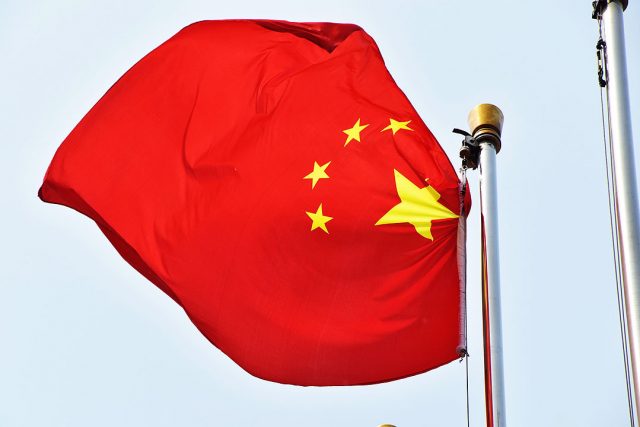
BEIJING — United Nations (UN) human rights chief Michelle Bachelet, whose rare visit to China was criticized by rights groups and Western countries, said she urged Beijing to review its counter-terrorism policies to ensure they comply with international human rights standards.

Ms. Bachelet reiterated, however, that her six-day trip, which ended on Saturday and included a visit to the western region of Xinjiang, was not an investigation into China’s human rights policies but an opportunity to engage with the government.

Ms. Bachelet started her China trip, the first by a UN Human Rights High Commissioner in 17 years, on Monday in the southern city of Guangzhou before heading to Xinjiang.

Her office said last year it believed Uyghurs in Xinjiang had been unlawfully detained, mistreated and forced to work.

“I have raised questions and concerns about the application of counter-terrorism and deradicalization measures under broad application, particularly the impact on the rights of Uyghurs and other predominantly Muslim minorities,” she said during an online press briefing on Saturday.

China denies all accusations of abuse in Xinjiang.

Ms. Bachelet’s access was limited as China arranged for her to travel in a “closed loop” — isolating people within a virtual bubble to prevent the spread of COVID-19 — with no foreign press.

US Secretary of State Antony Blinken said Washington “remains concerned” about Ms. Bachelet’s trip to China.

“We are concerned the conditions Beijing authorities imposed on the visit did not enable a complete and independent assessment of the human rights environment in the PRC, including in Xinjiang, where genocide and crimes against humanity are ongoing,” Mr. Blinken said in a statement late on Saturday.

The US was “further troubled” by reports Xinjiang residents were pressured not to complain about conditions in the area. “The High Commissioner should have been allowed confidential meetings with family members of Uyghur and other ethnic minority diaspora communities in Xinjiang who are not in detention facilities but are forbidden from traveling out of the region,” he said.

Rights groups and Western countries worry that China will use her trip as an endorsement of its rights record. US State Department spokesman Ned Price had said on Tuesday it was “a mistake to agree to a visit under the circumstances.”

China initially denied the existence of any detention camps in Xinjiang but in 2018 said it had set up “vocational training centers” necessary to curb what it said was terrorism, separatism and religious radicalism in the region.

Ms. Bachelet said she raised with the Chinese government the lack of independent judicial oversight on the operation of the centers and allegations of the use of force, ill-treatment and severe restrictions on religious practice.

During the media briefing, Ms. Bachelet also described as “deeply worrying” the detention in Hong Kong of activists, lawyers and journalists. — Reuters

N. Korea discusses revising COVID curbs, outbreak ‘improving’

REUTERS

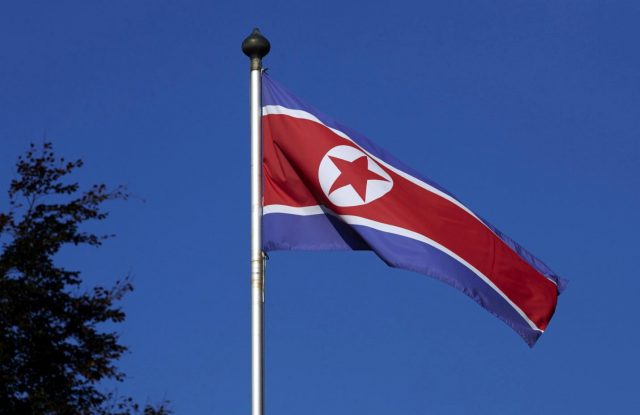
SEOUL — Top North Korean officials discussed revising anti-epidemic restrictions on Sunday as they assessed the situation over the country’s first acknowledged coronavirus disease 2019 (COVID-19) outbreak was “improving,” state media reported.

A politburo meeting guided by leader Kim Jong Un “made a positive evaluation of the pandemic situation being controlled and improved across the country and discussed the issues of continuously stabilizing and improving the overall anti-epidemic situation,” said KCNA news agency.

North Korea reported no new deaths among fever patients for a second day, and said 89,500 more people showed fever symptoms on Sunday. That is down from nearly 400,000 about 11 days ago.

The isolated country has been fighting an unprecedented COVID wave since declaring a state of emergency and imposing a nationwide lockdown this month, fuelling concerns about lack of vaccines, medical supplies and food.

Efforts were being taken across North Korea, including collecting rain water, examining virus-resistant medicines and setting up quarantine places, KCNA said. — Reuters

First steps in reforming global health emergency rules adopted at WHO meeting

GENEVA – Countries around the world on Saturday adopted an initial U.S.-led reform of the rules around disease outbreaks, known as the International Health Regulations (IHR), the United States said.

The amendments, adopted at the World Health Organization (WHO) assembly, were agreed at a meeting seen as a once-in-a-generation chance for the U.N. health agency to strengthen its role after some 15 million deaths during the COVID-19 pandemic.

The breakthrough – amendments to Article 59 of the IHR that will speed up the implementation of reforms – came after early opposition from Africa and others was overcome this week. Read full storyRead full story

The changes sought by Washington, and backed by others such as Japan and the European Union, mark a first step in a broader reform of the IHR, which set out countries’ legal obligations around disease outbreaks, expected to take up to two years.

Sheba Crocker, U.S. ambassador to the United Nations in Geneva, hailed as “a significant achievement” the initial amendments and an agreement on establishing a working group to consider targeted, substantive amendments.

“An updated, modernized IHR will help all countries and will ensure we have the information, resources, capacity, and transparency needed to address future global health crises,” she said in a statement. — Reuters

Diokno does not favor tax hikes to tackle debt

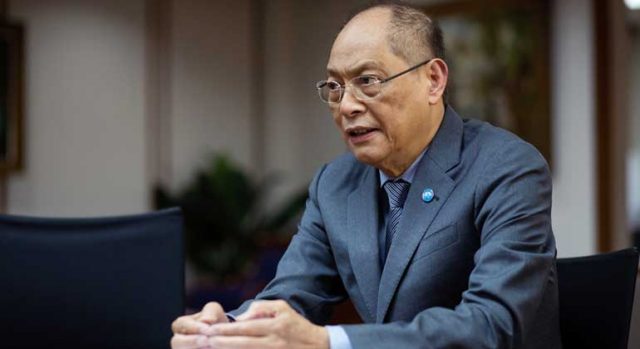
Benjamin E. Diokno, Bangko Sentral ng Pilipinas Governor — BLOOMBERG

Philippine central bank governor Benjamin E. Diokno, who takes on a new role as finance secretary next month, said on Friday he does not favor raising taxes even as the incoming government is set to inherit a huge pile of debt.

Mr. Diokno, who is President-elect Ferdinand “Bongbong” R. Marcos, Jr.’s choice to lead the finance ministry, would rather see an improvement in tax administration and collection, including reducing corruption through digitalization, he said.

“To me, grow the economy, focus on tax administration first, improve the collection,” Mr. Diokno told ANC news channel.

Mr. Diokno’s comments should help ease concerns among labor groups, which have opposed proposals by the outgoing government to impose more excise taxes on oil, defer scheduled tax cuts, and remove some value-added tax exemptions.

Mr. Marcos on Thursday said he preferred to reduce the tax burden for those suffering from the economic impact of the pandemic.

Mr. Diokno, who before being appointed central bank governor in 2019 served as budget minister, said he was “satisfied with the current tax structure.”

The tax system has already undergone reform in the past six years after incumbent President Rodrigo R. Duterte’s government lowered corporate and personal income taxes while raising levies on tobacco and alcohol products.

The new Marcos administration is inheriting P11.7 trillion ($224 billion) in government debt, equivalent to 60.5% of gross domestic product as of the end of 2021, the highest ratio in 16 years, fueled by borrowing to address the coronavirus disease 2019 (COVID-19) pandemic.

The debt level was almost double the P6.4 trillion of liabilities when Mr. Duterte took office in June 2016, government data showed.

“I am not worried about the level of the debt,” said Mr. Diokno, who sees it as “easily manageable” as long as the economy is able to return to a pre-pandemic annual growth rate of 6% to 7%. ($1 = P52.26) — Reuters

‘Protect the truth’: A Marcos return in Philippines triggers fear for history

UNIVER

Books about the late Philippine dictator Ferdinand E. Marcos and his brutal era of martial law are flying off the shelves, spurred by “panic buying” after his son and namesake won a May 9 presidential election. 

Ferdinand “Bongbong” R. Marcos, Jr.’s presidency, set to begin on June 30, has many people worried about losing access to books and other accounts of his father’s rule, given his family’s decades-long effort to rehabilitate its name through what critics describe as a campaign of historical revisionism. 

“They are panic buying,” Alexine Parreno said of her customers, many of them parents buying books about martial law aimed at children. 

“They are really worried and scared that the books will be pulled out and that everything will be revised.” 

One shopper was Faith Alcazaren, a mother of two, who picked up extra bundles of books to send to friends overseas. 

“I felt like the smallest thing I can do and have control over is to protect the truth,” she said. 

Thousands of opponents of the senior Marcos were jailed, killed or disappeared during martial law, from 1972 to 1981, when the family name became synonymous with cronyism and extravagance as billions of dollars of state wealth disappeared. 

The younger Marcos has called for a revision of textbooks that cover his father’s rule, saying they are teaching children lies. 

His choice of education minister, vice president-elect Sara Z. Duterte-Carpio, daughter of outgoing strongman leader Rodrigo R. Duterte, has raised fears the Marcos family will finally succeed at entrenching its sanitized version of history. 

“We already thought that textbooks and the teaching of history in basic education was woefully inadequate in terms of explaining to our youth and children what the martial law period meant,” said Ramon Guillermo, a professor at the University of the Philippines. 

“If the Marcoses come back to power and Dutertes are supporting them, we could even have a more difficult situation in teaching what really happened,” said Mr. Guillermo. 

YEARS OF INVESTIGATION 

Mr. Guillermo, with a group of fellow scholars, launched a manifesto last week pledging to combat attempts to falsify history to suit the Marcos narrative, and to oppose all censorship and book-banning. 

The manifesto, signed by 1,700 people, came after a government task force labeled as communist a children’s book publishing firm selling five titles on martial law and dictatorship it called “#NeverAgain Book Bundle.” 

“Never Again!” was the battlecry of millions of protesters who joined the historic “people power” revolution that toppled the 20-year dictatorship in 1986, when the senior Marcos and his notoriously extravagant wife, Imelda, fled with their children into exile in Hawaii. 

“History cannot be bought, but books about history can be purchased,” one book buyer said on Instagram. 

“We will continue to fight historical revisionism.” 

Mr. Marcos and Ms. Duterte-Carpio did not respond to requests for comment. In a 2020 media forum, Mr. Marcos dismissed accusations his family was attempting to rewrite history. 

“Who is doing revisionism? They put it in the books, the children’s textbooks that the Marcoses stole this, we did this … what they have been saying about what we stole, what we did, not all of them are true.” 

Years of investigation and legal proceedings followed the rule of the senior Marcos. The Presidential Commission on Good Government set up in 1986 has retrieved about $5 billion of the Marcos fortune, its chairman, John A. Agbayani said. Another $2.4 billion is still caught up in litigation, he said. 

‘TSUNAMI OF DISINFORMATION’ 

The younger Marcos fought the election with the slogan “Together, we shall rise again,” invoking nostalgia for his father’s rule, which his family and supporters have portrayed as a golden age. 

His campaign rode what academics called a “tsunami of disinformation” with social media flooded with narratives playing down rights abuses and corruption under his father. 

On the day it became clear that Marcos had won, a book published in 1976 that details corruption and abuses during the Marcos regime sold 300 copies, its publisher said. 

More than a week later, 500 copies of the book, The Conjugal Dictatorship of Ferdinand and Imelda Marcos, were sold within an hour of being posted online. 

“I wanted to make sure that inside our home, I can keep a version of the martial law era that has not been tampered with by their hands,” said college student Jose Anonat, who got the book. 

In an indication of the sort of history re-writing that Marcos supporters want, Juan Ponce Enrile, the late dictator’s defense minister, said in a conversation with the younger Marcos that appeared on YouTube in 2018, that not one person was arrested for political and religious views, or for criticizing the elder Marcos. 

The clip has been viewed more than 1.5 million times. 

There were also attempts to remove the terms “dictator” and “kleptocrat” describing the elder Marcos on Wikipedia, said Carlos Nazareno, of the Wiki Society of the Philippines, part of a movement against disinformation. 

Carmelo Crisanto, who heads an agency memorializing martial law victims, is digitizing documents relating to 11,103 survivors who were awarded reparations from seized Marcos family wealth. He hopes the database will be online by September, in time for the 50th anniversary of the declaration of martial law. 

“These archives will be alive,” said Mr. Crisanto. “They will never be suppressed.” — Reuters

Demand for Filipino seafarers still high, but quality of training is dipping

UNSPLASH

The Philippines risks losing out on seafaring jobs if the quality of training in local maritime schools continues to dip, according to experts.

“Is there still a demand for Filipino seafarers? The answer is a big yes,” said Jøran Nøstvik, a captain and global owner’s representative of Noatun Maritime, a crew assessment and development services company.

The demand, however, has been difficult to fill: Noatun Maritime recruited 400 local applicants at one point, but only two passed its screening. 

At a May 26 joint maritime committee meeting by the German-Philippine Chamber of Commerce and Industry (GPCCI), Mr. Nøstvik recommended developing senior crew officers; developing ratings for crew roles such as fitters, bosuns, and pumpmen; tapping senior crew officers to serve as part-time school instructors; and creating more government-owned maritime schools. 

“If we invest and spend more time and money on this, the return on investment will be three months after the [trained crew] has onboarded,” he said.

Shipping companies that have compensated for substandard training by implementing their own bridging programs bear “a responsibility for the sad state of affairs,” said Tore Henriksen, chair of GPCCI’s joint maritime committee.

“The schools never had to deliver — because we have accepted that it’s substandard,” he said. 

In Europe, incompetent applicants aren’t accepted in the first place, said Mr. Nøstvik.

According to the European Maritime Safety Agency Outlook for 2020, the Philippines leads non-European Union countries in the number of officers working on EU-flagged vessels, with a total of 30,615.

Ship management companies want quality labor and not cheap labor, according to a 2022 survey reported by Splash, a maritime news site. 

The Philippines, known to be the seafaring capital of the world, had a total of 217,223 seafarers deployed overseas in 2020 — a drop of 54% from the 2019 figure.   

In October 2018, the Maritime Industry Authority (MARINA) submitted proof of its compliance with the recommendations for Philippine maritime education given by the European Maritime Safety Agency (EMSA). 

In the same year, both the agency and the Commission on Higher Education (CHED) monitored the country’s 75 approved maritime schools, and noted deficiencies in facilities and training equipment; examination and assessment system; quality standard shipment shortcomings; and quality of shipboard training.  

MARINA is open to publishing the passing rates of these schools, pending the approval of the CHED, said Marina administrator and vice admiral Robert A. Empedrad, at the same hybrid May 26 meeting. 

The marine authority inaugurated on May 26 a training and research development arm in Panaad Park, Bacolod City.  

“There is much to be done in terms of raising our standards… we will make sure that we continue to be the number one producing country as far as professional seafarers are concerned,” Mr. Empedrad said. — Patricia B. Mirasol

A first look: How financial intermediaries can integrate crypto

By Team Ripple

SAN FRANCISCO — Most crypto owners would prefer to interact with digital assets through their banks and other traditional financial institutions. In the United States, as many as 65 million customers — most of whom do not own any digital assets today — are potential owners, and would use digital assets through their existing financial institution if available.

“Navigating Crypto: How Banks and Other Financial Intermediaries Can Integrate Crypto Assets,” a new report from Oliver Wyman commissioned by Ripple, examines how banks and other intermediaries are increasingly exploring offering digital assets to their customers and outlines the necessary requirements to do so. This involves accommodating a range of technical, commercial, organizational and regulatory factors to enable customers to interact with crypto, which must be done strategically in order for banks and FI’s to position themselves for success in the short and long terms.

Nikolai Dienerowitz, Oliver Wyman Partner in London, said: “Financial institutions that develop capabilities to serve this market have an opportunity to differentiate themselves in the near term — and develop capabilities in the longer term that may position them well to broaden out their digital asset services. For example, a bank investing in technology to manage the nearly-instant settlement with digital assets today may be better placed in the future if they want to serve customers with CBDCs.”

A Deep Dive into the Current Crypto Landscape

Broken out into five distinct sections, the paper explores the evolution of the market and highlights its rapid growth over the last few years, extrapolating along its current growth trajectory. (If extrapolated, there could be as many as 1 billion global crypto asset owners by 2024.)

While the authors acknowledge the future of crypto is still uncertain and hinges on three primary factors — regulatory oversight, new use cases and end-user demand — they say the potential to serve these customers and become the primary gateway between fiat and digital assets is real for banks and financial intermediaries. Those that do so have the opportunity to position themselves for success in a potential future in which digital assets are more prevalent.

What Do I Need to Offer Crypto Services?

For banks seeking to capitalize on this opportunity, the paper outlines seven core technical requirements (e.g. liquidity solution, settlement network, etc.) and suggests a five-step checklist for how to begin this process, including goal setting, identifying key requirements, determining a development strategy, accounting for risk and regulation, and establishing a delivery strategy.

Since many organizations lack the expertise and capabilities to build and manage these requirements in-house, the report highlights the benefits of a partnership strategy to help maximize speed to market and fully realize the customer opportunity. In support of that strategy, it also provides a high-level overview of the types of crypto partners available and how each fulfills specific strategic requirements. Arriving later this year, Ripple Liquidity Hub is one such solution that is purpose-built to solve many of the challenges financial intermediaries face that are outlined in the report.

“With a decade of experience in crypto, Ripple has a deep understanding of what it takes to build crypto-first products, with a track record of leveraging blockchain to serve financial institutions,” comments Brad Chase, Ripple’s Senior Director of Engineering. “In launching Liquidity Hub, we are packaging Ripple’s expertise and capabilities behind simple APIs, so these customers can easily offer crypto to their end-users without having to rebuild the entire tech stack.”

Eric Czervionke, Oliver Wyman Partner in New York, adds “Large banks with commensurate tech budgets typically have advantages in realizing economies of scale in investing in new technology capabilities. That may be less true in crypto where most banks will rely on partners to offer new services to their clients — so smaller banks may compete on relatively more equal footing.”

What’s Next For the Market and Financial Institutions

Ultimately, the paper predicts that those banks and financial providers that move quickly and decisively to meet demand can become vital members of the crypto market. Those that adopt a “wait and see” approach run the risk of being crowded out by competitors, including crypto-native firms that will continue to build better products, attain bank-level security and convenience features, and gain greater brand recognition and trust.

Download Oliver Wyman’s Navigating Crypto report here to read more about the future of crypto and how financial organizations can get ahead.

About Ripple

Ripple is a crypto solutions company that transforms how the world moves, manages and tokenizes value. Ripple’s business solutions are faster, more transparent, and more cost effective — solving inefficiencies that have long defined the status quo. And together with partners and the larger developer community, we identify use cases where crypto technology will inspire new business models and create opportunity for more people. With every solution, we’re realizing a more sustainable global economy and planet — increasing access to inclusive and scalable financial systems while leveraging carbon neutral blockchain technology and a green digital asset, XRP. This is how we deliver on our mission to build crypto solutions for a world without economic borders.


Spotlight is BusinessWorld’s sponsored section that allows advertisers to amplify their brand and connect with BusinessWorld’s audience by enabling them to publish their stories directly on the BusinessWorld Web site. For more information, send an email to online@bworldonline.com.

Join us on Viber to get more updates from BusinessWorld: https://bit.ly/3hv6bLA.