Home Blog Page 600

SMIC signals wider renewable energy push

PHILIPPINE GEOTHERMAL PRODUCTION COMPANY, INC.

SM INVESTMENTS CORP. (SMIC) is expanding its renewable energy portfolio through new geothermal projects and potential ventures in wind energy, its top official said on Tuesday.

In a media release, SMIC President and Chief Executive Officer Frederic C. DyBuncio said the company’s energy arm Philippine Geothermal Production Company, Inc. (PGPC) is focused on expanding initiatives in geothermal energy.

“We are focused on geothermal energy production, which is baseload and runs 24/7. Production has been doing well, and with a new rig in place, we are building capacity to develop more sites,” Mr. DyBuncio said.

At present, PGPC operates the geothermal steam fields in Tiwi, Albay, and MakBan in Laguna and Batangas. It is also advancing five new concession areas, including Mt. Malinao in Albay, where three wells have already been drilled.

In other businesses, Carmen Copper Corp., a unit of Atlas Consolidated Mining and Development Corp., recently commissioned a 4.99-megawatt floating solar facility in Toledo City, Cebu.

SMIC also hinted at its prospect of exploring wind energy opportunities.

“At SM, we see renewable energy as both a responsibility and an opportunity to support the country’s energy transition while building more resilient and sustainable businesses and communities,” Mr. DyBuncio said. — Sheldeen Joy Talavera

Truth under siege: The national security threat we can’t ignore

STOCK PHOTO | Image by Rawpixel.com from Freepik

Technology is neutral. It is neither good nor bad — it simply amplifies intent. It is a double-edged sword: it can make life better and more efficient, but it also creates serious risks that harm individuals, societies, nations — even the global order.

The internet, social media, and artificial intelligence have transformed our lives and brought conveniences unimaginable a generation ago. We benefit daily — personally, socially, and professionally — from technology’s reach. Finding information now takes seconds. A simple search can return millions of results. Experts weigh in on every topic.

But that same access to information can backfire when it opens the floodgates to misinformation and disinformation.

At the personal level, this is already dangerous. Internet users can fall for hoaxes, scams, or deceptive offers. Rumors can mislead. Fraud can spread.

But the deeper threat strikes at democracy and national security. False narratives move faster than facts. They erode trust, deepen divisions, and distort public discourse. What once seemed like isolated rumors now have the power to sway elections, destabilize societies, and weaken democratic foundations.

In the Philippines — and in democracies worldwide — defending the truth is a shared responsibility of governments, institutions, and citizens.

GLOBAL THREATS
The United Nations Global Risk Report 2024 found that 35.4% of respondents ranked misinformation and disinformation among the top global threats. The same report warned that societies remain largely unprepared to face these risks, which can worsen geopolitical tensions, fuel unrest, and disrupt crisis response.

The World Economic Forum’s Global Risks Report 2024-2025 echoed this, identifying disinformation as the most urgent short-term global risk through 2027. More troublingly, it is expected to remain a top long-term threat — alongside cyber warfare and AI-related risks — over the next decade.

Both reports point to a future in which information itself becomes the battlefield. Truth remains the goal — but it grows harder to find amid noise, manipulation, and deceit.

The rapid evolution of technology makes this worse. It allows disinformation to spread faster, look more convincing, and become harder to detect.

This is especially dangerous because the true aim isn’t just to mislead — it’s to shape behavior.

Originally designed to encourage positive habits, persuasive technologies are now being deployed to influence user decisions, often without awareness or consent. According to the Australian Strategic Policy Institute’s 2024 report, “Persuasive Technologies in China: Implications for the Future of National Security,” malicious actors exploit psychological insights and real-time data to manipulate users at scale.

This makes us deeply vulnerable — especially in matters of national security. Disinformation and propaganda enable foreign interference, mass surveillance, and economic coercion by hostile states and authoritarian regimes. For example, even as China continues to harass our military and fishermen within our Exclusive Economic Zone in the West Philippine Sea, it simultaneously spreads state-sponsored narratives abroad. It uses coordinated online networks to undermine our democratic institutions and attack the rule of law.

PROTECTING THE PUBLIC
What can be done to protect the public from digital exploitation?

The question is urgent — particularly in the Philippines, where millions get their news not from legitimate media but from social media. Many Filipinos still struggle to distinguish between real and fake content, even as awareness of the threat grows. According to the Reuters Digital Report 2025, seven in 10 Filipinos are seriously concerned about the spread of misinformation and disinformation — the highest level recorded since 2020. As a result, the use of fact-checking sites in the Philippines has risen to 34%, far above the global average of 25%.

To counter this growing menace, a bill called The Anti-Fake News and Disinformation Act has been filed in the House of Representatives. It aims to stop the deliberate spread of falsehoods on digital platforms while respecting free speech. The bill criminalizes the creation, funding, and dissemination of disinformation — including the use of troll farms and bot networks.

The measure also places obligations on digital platforms, requiring them to designate liaison officers with the Department of Information and Communications Technology, while mandating congressional oversight and embedding legal safeguards against abuse.

Securing our information infrastructure — and integrating cybersecurity and persuasive technologies into national defense — is essential. Technology moves fast, and any delay today makes us more vulnerable tomorrow.

Indeed, whether through international cooperation, stronger governance, or empowered citizens, the fight against disinformation is no longer just about correcting lies — it’s about defending democracy itself. We face adversaries that are organized, well-funded, and relentless. Awareness is no longer enough; what we need is resolve.

The Anti-Fake News and Disinformation Act is a critical first step — but it must be backed by strong institutions, smart investments, and a digitally literate public. We must confront this threat now, or risk becoming cyber-manipulated society. Truth is under siege — and defending it is not a choice. It’s our duty.


Victor Andres “Dindo” C. Manhit is the president of the Stratbase ADR Institute.

Into the rabbit hole of Philippine theater

By Brontë H. Lacsamana, Reporter

Theater Review
Alice in Wonderland
By Janet Yates Vogt and Mark Friedman
Directed by Joy Virata and Cara Barredo
Presented by Repertory Philippines

THE colorful characters of Lewis Carroll’s cherished books, Alice’s Adventures in Wonderland and Through the Looking Glass, have come to life through the latest offering by Repertory Philippines (REP).

On opening day (Aug. 23), the schoolchildren brought to the venue by various sponsors excitedly lined the halls of the REP Eastwood Theater in Quezon City. It was a rare chance for these kids to go on an adventure with the ever-curious Alice, thanks to the magic of theater.

The musical, boasting whimsical costumes, bright lights, and interactive music and dance numbers, closes the 88th season for REP.

As an offering of the Repertory Theater for Young Audiences (RTYA), the imaginative production reintroduces the characters encountered by Alice as she stumbles her way through Wonderland: the eccentric Mad Hatter, the frantic White Rabbit, the bumbling Tweedle Dee and Tweedle Dum, the clever Caterpillar, the melancholic Mock Turtle, the mysterious Cheshire Cat, and, of course, the domineering Queen of Hearts.

Adapted for the stage with music and lyrics by Janet Yates Vogt and Mark Friedman and directed by RTYA creative director Joy Virata and Cara Barredo, the show is zany and over-the-top. It is best enjoyed with kids, like the students in the crowd on opening day, who would enthusiastically respond to questions the characters would pose to the audience.

For adults, it’s a heartwarming chance to see how children can still respond to experiences like this one, even in a digital age where kids transfixed on their phones has become a common sight. RTYA is a solid counter to that, allowing them to enter the worlds of characters like Alice in a way that actively engages with the material.

Justine Narciso played Alice that day (she alternates with Reese De La Vega Iso and Cheska Quimno). Her bright energy matched the amazing production, palpable to the audience whether it was her facial expressions or her boundless movements navigating the stage. Her voice, just as bright, had exactly the right tone needed to pull children into the story.

Pinky Marquez as the Queen of Hearts was another stand-out, her stage presence and charisma demanding attention (she alternates with Cara Barredo and Mayen Bustamante-Cadd). It also helped a lot that anticipation built throughout the show for the Queen’s appearance — when she finally did show up towards the end, the audience was ready for her powerhouse performance.

The rest of the cast was just as colorful and full of life, befitting a children’s show. The musical’s Mad Hatter is played alternately by Hans Eckstein and Gerhard Krysstopher, while The White Rabbit is portrayed by Steven Hotchkiss and Gabo Tiongson.

Joining them are Vino Mabalot and Jay Pangilinan as the Mock Turtle, Stephen Viñas and Sebastian Katigbak as the Cheshire Cat, Yhuan Gatbunton and Lance Soliman as the Caterpillar, and many others.

The music and choreography keep everything tight despite the utter cacophony that Alice encounters in Wonderland. It comes across as an organized chaos, with several moving parts as members of the ensemble dance around onstage and transport the various set pieces with ease, be it giant doors or tables with tea or rose bushes.

Wonderland itself is a feast for the eyes, presenting a plethora of colors, shapes, and sizes. Matching them are the costumes, as loud and gaudy as they should be — the Cheshire Cat’s appearance the most memorable in how it stands in sly contrast to the rest, supported by the slick dance moves and groovy tunes that come with the role.

RTYA’s Alice in Wonderland is a strong finish for REP, showcasing the heart and talent that goes into each show, especially now that it is approaching its 89th season next year (just a breath away from the big 90). After its move to Eastwood from its decades-long residency in Greenbelt, the theater company was unsure whether the audience would come along or if a new one would successfully crop up in its place.

The warm reception of children, families, and educators as Alice in Wonderland opened proved that there’s definitely something there. For many of the kids, it may even be their first experience seeing something so wondrous onstage, and we can only hope they continue going down the rabbit hole of Philippine theater.

Alice in Wonderland runs until Dec. 14 at the REP Eastwood Theater, Eastwood Citywalk, Quezon City. Tickets are available via TicketWorld and Ticket2Me.

Peso weakens on Fed concerns

BW FILE PHOTO

THE PESO dropped against the dollar on Tuesday as US President Donald J. Trump’s move to fire a Federal Reserve official sparked renewed concerns over the central bank’s independence.

The local unit closed at P57.07 per dollar, weakening by 12 centavos from its P56.95 finish on Friday, Bankers Association of the Philippines data showed.

The peso opened the session stronger at P56.70 against the dollar. Its intraday best was at P56.65, while its worst showing was at P57.10 against the greenback.

Dollars exchanged went down to $1.44 billion on Tuesday from $1.7 billion on Friday.

Philippine financial markets were closed on Monday due to a holiday.

The peso weakened “amid concerns over the independence of the US central bank after Trump fired Fed Governor Lisa Cook,” Rizal Commercial Banking Corp. Chief Economist Michael L. Ricafort said in a Viber message.

The dollar steadied later in the session after a volatile start on Tuesday as Mr. Trump’s unprecedented move to fire Ms. Cook renewed concerns over the central bank’s independence, Reuters reported.

The dollar index, which measures the US currency against six others, was flat at 98.42, recovering from a fall of as much as 0.4% after Mr. Trump made the announcement in a letter to Ms. Cook that he posted on social media.

The move marks a sharp escalation of Mr. Trump’s battle against the Fed. The president has repeatedly berated Fed Chair Jerome H. Powell for not lowering interest rates, though has stopped threatening to fire him ahead of the end of his term in a little under nine months.

In the letter, Mr. Trump said he was firing Ms. Cook over alleged improprieties in obtaining mortgage loans. In response, Ms. Cook said Mr. Trump has no authority to fire her from the central bank, and she will not resign.

Money markets are currently pricing in a near 82% probability of a rate cut at the Fed’s September meeting.

Meanwhile, a trader said the peso tracked the decline of most currencies against the dollar on Tuesday.

“Furthermore, importer demands also could have strengthened last minute, further compounding the peso’s depreciation,” the trader added.

For Wednesday, Mr. Ricafort sees the peso moving between P56.95 and P57.20 per dollar. — A.M.C. Sy with Reuters

AirAsia adds Manila-Istanbul to network

NEWSROOM.AIRASIA.COM

BUDGET AIRLINE AirAsia will add Istanbul to its international destinations from Manila beginning November.

“The launch of this new route to Istanbul underscores our commitment to making world-class destinations more accessible for Filipinos,” AirAsia Philippines President and Chief Executive Officer Suresh Bangah said in a media release on Tuesday.

The airline will begin operating flights between the Philippines and Turkey four times a week starting Nov. 14. The service will be offered via the Manila-Kuala Lumpur-Istanbul route, it said.

AirAsia plans to acquire 150 additional aircraft, up to 20 of which are expected to be delivered to its Philippine unit over the next five years.

For 2025, AirAsia Philippines aims to carry more than seven million passengers by yearend, after serving more than three million in the first half.

The airline said its strongest domestic routes are to Cagayan, Cebu, and Caticlan, while its international routes with the highest volumes are to Japan, Korea, and Taipei.

In May, AirAsia said it had logged about 3.5 million advance bookings, noting that spikes in bookings usually occur in the latter half of the year or during the holidays.

AirAsia Philippines had earlier sought to increase its operational fleet to 19 aircraft in response to rising demand and the need for greater capacity. — Ashley Erika O. Jose

PHL startups outperform big firms in AI adoption

REUTERS INSTITUTE FOR THE STUDY OF JOURNALISM AND OXFORD UNIVERSITY

PHILIPPINE startups are adopting artificial intelligence (AI) technologies faster than bigger enterprises, but overall adoption remains at a basic level, according to a report by Amazon Web Services (AWS) and advisory firm Strand Partners.

The study found that 64% of Philippine businesses using AI reported an average revenue increase of 18%, while 66% expect to achieve average cost savings of 22%.

“Businesses in the Philippines are keen to innovate with AI, and the high level of adoption underscores a tremendous potential for the Philippine economy,” AWS Philippines Country Manager Precious Lim said in a statement. “However, the research shows how serious barriers remain, especially for larger enterprises, to deepen their use of AI.”

Startups were found to be more enthusiastic and innovative in their adoption of AI. About 45% of startups said they were using AI in some form, with 40% building entirely new AI-driven products.

By comparison, 41% of large enterprises reported using AI, but only 7% have reached the most advanced stage of adoption. One in three startups have reached this transformative level, where AI is integrated into core product development, business models and decision-making.

Strand Partners Director Nick Bonstow warned that this “two-tier” AI economy could have lasting effects on the country’s economic development.

The report showed that 78% of Philippine businesses are still focused on basic AI use cases such as improving efficiency and streamlining processes. Only 11% had reached an intermediate level of adoption, while 8% advanced to transformative use.

Lack of skilled talent remains the biggest barrier to scaling AI. AWS and Strand Partners said AI literacy is needed for 61% of jobs in the next three years, yet only 26% of businesses believe their workforce is adequately prepared.

Funding is another hurdle, with 48% of businesses citing access to capital as critical for growth. Startups in particular said access to venture capital is essential to building a stronger AI ecosystem.

The survey also found concerns about regulation. About 42% of businesses worry that AI rules could slow down innovation and adoption, while 40% fear rising compliance costs.

Philippine companies estimate that $19 of every $100 spent on technology already goes to compliance, and 72% expect this share to rise in the next three years.

Overcoming these barriers requires greater investment in digital skills, streamlined pro-growth regulation and stronger government adoption of AI in public services such as healthcare, education, and procurement, according to the study.

“To maintain the Philippines’ competitive edge in the global AI stage, it is essential that the government and private sector take the right steps in addressing the challenges businesses face,” Ms. Lim said.

The report surveyed 1,000 Philippine business leaders and 1,000 “nationally representative members” of the public. — Beatriz Marie D. Cruz

Why can’t Britain and the US build? China has an answer

STOCK PHOTO | Image by Pressfoto from Freepik

By Matthew Brooker

IT’S LONG BEEN obvious that something has gone askew with Britain’s ability to build. The planning paperwork for a modest-sized apartment block in London can run to more than 1,000 pages whereas a few decades ago it might have been a handful. The documentation for the Lower Thames Crossing, a road and tunnel project under consideration since the early 2000s, exceeds 350,000 pages. The planned HS2 high-speed railway has become smaller and smaller, yet its cost continues to spiral to multiples of the original price tag. And so on.

The reality struck home for me when I walked around the vast and moribund HS2 terminus site at Euston in London a couple of years ago. It was remarkable — and dispiriting — that we would rip up such a large tract of central London, disrupting businesses and condemning residents to live beside an eyesore, only to leave it lying fallow into the indefinite future (some skeptics doubt the line will ever reach Euston).

Britain just can’t seem to break out of its rut of subpar economic growth, and address challenges such as inadequate housing and energy supply, without overcoming this syndrome of bureaucracy and inertia. What to do?

Things were very different in China. I first visited Shanghai in 1993, when cars moved at a snail’s pace through narrow streets that were clogged from curb to curb with bicycles. Returning a decade later, the city was barely recognizable. I took a taxi from Hongqiao Airport along an elevated highway that cut a swathe through the center of the city to the Huangpu river, where on the eastern bank a cluster of modern skyscrapers had materialized that resembled the Manhattan skyline. The pace of development was hard to take in. During the five years I lived in Shanghai, it didn’t slow down. And this was only a sliver of what was being replicated throughout the country.

China was playing catch-up in those days, but we are now far beyond that point. The knowledge and expertise accumulated from the largest building boom in history has driven the nation to engineering feats unsurpassed elsewhere. Social media abounds with effusive accounts of China’s infrastructure achievements. Take the Huajiang Canyon Bridge in Guizhou, a mountainous province that’s one of the country’s poorest. The suspension bridge scheduled to open in September spans a chasm and will be the world’s highest, measuring 625 meters from the deck to the gorge below. China’s high-speed rail network, developed since 2008, is bigger than the rest of the world’s combined. The country has constructed power plants equivalent to the UK’s total supply every year for the past quarter century. Its expressway network, built in the past 30 years, is twice the length of the US interstate system.

A similar evolution has unfolded in manufacturing and technology. Western economies originally began outsourcing production to China for its cheap labor (as well as a huge domestic market). But the country didn’t remain a low-cost assembler. Manufacturing at scale year after year in highly competitive conditions builds practical know-how and seeds the capacity for innovation. China is now out-competing and out-innovating Western carmakers in electric vehicles, barely two decades after its companies were putting together models for these foreign rivals and had few designs of their own. The country has established a similarly dominant position in renewable energy infrastructure.

How to reckon with the rise of China may be the issue of the age for all democratic countries; the world’s future will turn, in large part, on its evolving strategic competition with the US. Britain won’t merit much more than a footnote in that larger drama, even if it was once the world’s greatest industrial innovator and leading power. But it shares some of the pathologies that threaten the US’s ability to sustain its global economic and geopolitical supremacy — above all, a system that has elevated rules and processes over outcomes, as Dan Wang, a research fellow at Stanford University’s Hoover History Lab, argues in Breakneck: China’s Quest to Engineer the Future, that’s just been published.

In Wang’s view, the defining distinction between the two superpowers is that China is run by engineers while the US is run by lawyers — and each could benefit from becoming a bit more like the other. If that’s a valid take on America, it’s just as true of Britain. Five of the past 10 US presidents attended law school while only two — Herbert Hoover and Jimmy Carter — worked as engineers, according to the book. An engineer has never been prime minister of the UK. Margaret Thatcher came closest, having worked as a research chemist before entering politics. She was also a barrister, like a preponderance of British leaders stretching back two centuries (including the incumbent, Keir Starmer).

The parallels don’t end there. The book contrasts the success of China’s high-speed rail network with attempts to build a link from San Francisco to Los Angeles. California’s project is a mirror image of HS2: delayed, truncated, massively over budget. As in Britain, the consequences of a process-obsessed culture can be seen in inadequate housing, missing mass transit systems, and dilapidated infrastructure. Engineers are problem-solvers who get things done; lawyers are better at blocking things (often for good reason, but still). This appears to be a peculiarly anglophone problem. Bureaucracy has eroded the can-do spirit that made the US and Britain, in different periods, construction pioneers.

Wang, who was born in Toronto to Chinese parents and worked as a technology analyst in Beijing and Shanghai, isn’t the first to point out that China’s government includes a lot of engineers or that the US is a litigious place. His framing serves a useful purpose, though, illuminating a pivotal difference. Many, this writer included, recoil instinctively at the suggestion that liberal democracies should copy China — because the flip side of its undeniable physical achievements is a Communist Party system that restricts and disregards individual rights and freedoms to a degree that few in the West would find acceptable. Is there a way to take lessons from what works well in China without importing the less palatable aspects of its model?

Breakneck can be seen as an attempt to thread this needle. It’s no panegyric, with chapters on the brutalities of the one-child policy and the shock of the zero-COVID lockdown in Shanghai, which disabused residents of China’s richest and most cosmopolitan city of any illusion that they were above the remorseless collective logic of the state machine. The engineering state moves fast and breaks things — and people. Point it in the right direction, and you may get spectacular results. Pick the wrong objective, and you may get disaster and atrocities.

The great and enduring advantage of the democratic system is its open-endedness and ability to adapt. We are again at an inflection point that demands a change of direction. China, for all its economic challenges and difficulties, isn’t standing still. Failure to heed the warning signs may mean the US and its allies ceding the technological race and global influence. Will we rise to the challenge?

BLOOMBERG OPINION

Arts & Culture (08/27/25)


Filipino novel The Firewalkers available for pre-order

EXPLODING GALAXIES has announced the upcoming release of its third title: a new edition of The Firewalkers by Erwin E. Castillo, a novel that was first published in 1992. This edition carries a new preface by the author, and an introduction by Erwin Romulo. The book will launch officially on Sept. 15. Pre-orders are now being accepted via the publishing house’s website www.explodinggalaxies.com. After the September launch, the book will be found in bookstores and also on Shopee and Lazada. The Firewalkers is set in 1913, in the mountain town of Lakambaga, and is a portrait of its people as they deal with the law and circus of American colonial rule, harboring old secrets, unsolved murders, and magic. Its companion piece, “The Watch of La Diane,” is included in the edition as a postlude. It is set and written in the 1970s, and sends off two lovers across America and into their private, vertiginous incantation of love. Erwin Castillo is the author of the novels The Firewalkers and Cape Engaño, and a fictive memory of boyhood called The Cycling Chronicles. He has won the Philippines Free Press, Asia-Philippines Leader, Philippines Graphic, Tagayan, and Palanca prizes. He also won the Awit Award for popular music composition.


5 ongoing exhibits at West Gallery

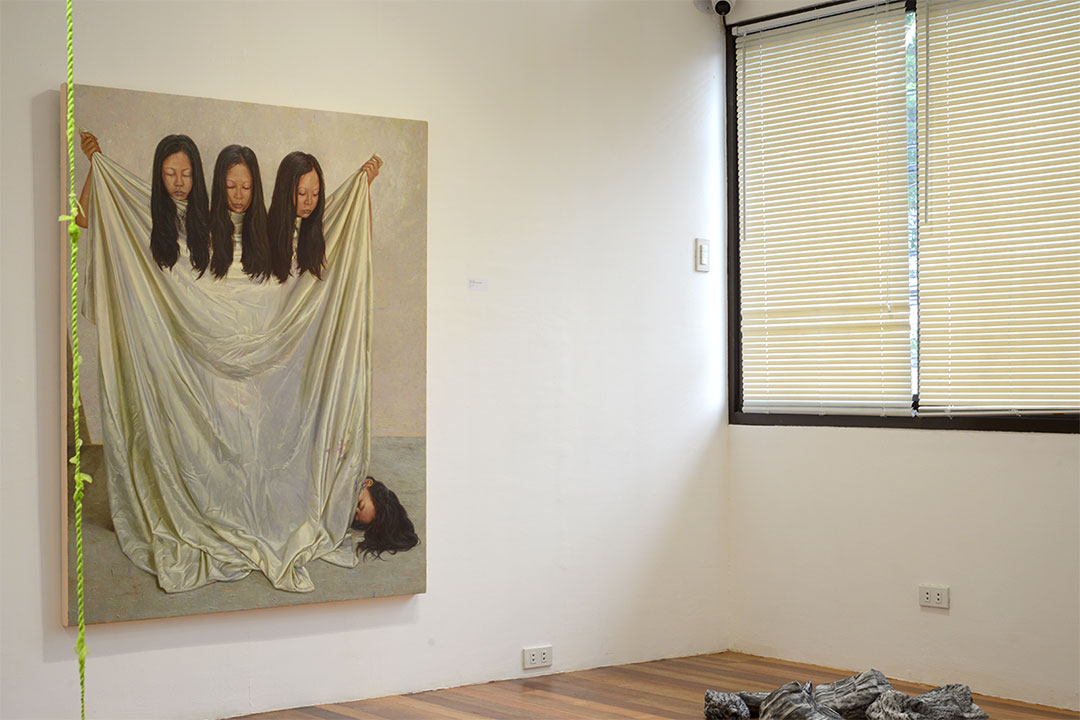
THERE are five exhibits that are currently on view at the various exhibition spaces of the West Gallery in Quezon City. They run until Sept. 13. They are: Derivatives by Alfredo and Isabel Aquilizan, featuring large-scale installations produced with communities and other collaborators; Calm Shots by Lourd de Veyra and Kaloy Olavides, which can be described as a “history of art”; Between Absence and Imprint by Erik Sausa, in which the artist uses found and salvaged objects to reflect on environmental degredation, human consumption, and the aftermath of destruction; Life is for the Living by Ryan Rubio, featuring sculptures crafted from stone and stainless steel; and a group show, Unyielding, curated by Leslie de Chavez and featuring works by Jayme Lucas, Carol Anne McChrystal, Celline Mercado, Alynnah Macla-Tadeo, and Allyza Diane Tresvalles which explore concepts anchored in both personal and social terrains.


2025 Magsaysay Awardee announcement on Aug. 31

THE Ramon Magsaysay Award Foundation (RMAF) will announce the 2025 Ramon Magsaysay Awardees on Aug. 31, noon, through an online global broadcast. It also marks the 118th birth anniversary of President Ramon Magsaysay, the seventh President of the Philippines and the namesake of the Award. The global announcement will be livestreamed via the Ramon Magsaysay Award Foundation’s official website and social media platforms. The 67th Ramon Magsaysay Awards Festival Season will conclude on Nov. 7 with the formal Presentation Ceremonies to be held in the Metropolitan Theater in Manila. The Ramon Magsaysay Award, first conferred in 1958, has been widely regarded as Asia’s premier prize and highest honor. It recognizes individuals and organizations whose concrete, transformative work uplift lives and strengthen the human spirit across Asia. Over the past 67 years, the Ramon Magsaysay Award has been given to 356 individuals and organizations from 24 countries and territories in Asia. Past recipients include the Dalai Lama of Tibet, Japanese filmmaker Miyazaki Hayao, Bangladeshi microfinance pioneer Muhammad Yunus, and Filipino pediatric pioneer Fe Del Mundo.


Dark Skies book launch to donate proceeds

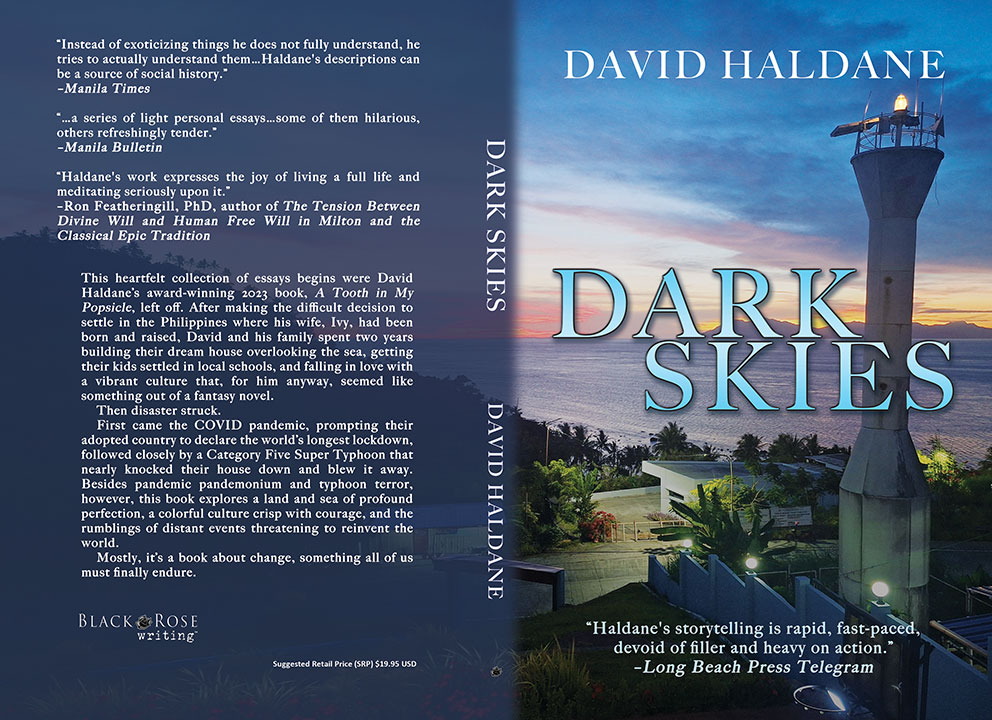
DAVID HALDANE’S latest book, Dark Skies: Tales of Turbulence in Paradise, will be launched in the event Libro Kontra Gutom. The book is a collection of essays that follows Mr. Haldane’s journey since moving to the Philippines with his Filipino wife and two children in 2018, from typhoons to the pandemic. The book launch takes place on Aug. 27, 4 p.m., at Kawa Pilipinas House, 1025 C. Ayala St. in Malate, Manila. All proceeds from the event and a portion of book sales will benefit the Kawa Pilipinas Foundation. Tickets to the book signing, priced at P500, are available online via Ticket2me.net/DavidHaldane.


Silverlens Manila welcomes Yasue Maetake

THE TWO ongoing Manila exhibitions this month at Silverlens Manila include Mare Fecunditatis by New York-based Japanese sculptor Yasue Maetake. It marks her first solo exhibition in the Philippines, Named after a lunar basaltic plain in the eastern half of the moon, the exhibit consists of six sculptures. Silverlens is also hosting a group exhibition titled A Knowing, which brings together Chinese-American artist Emily Cheng, Filipino artist Geraldine Javier, and Balinese artist Citra Sasmita. It will be the first time the three will exhibit works in the same space, situating them as “totem poles for growing, tending, and guarding.” Both exhibits run until Sept. 27 at Silverlens Manila in Chino Roces Ave. Ext., Makati.


Galerie Stephanie presents National Artists exhibit

THE ongoing exhibition, In The Shadow of Great Light, at Galerie Stephanie is showcasing works by National Artists. These include Abdulmari Imao, Ang Kiukok, Arturo Luz, Benedicto “Bencab” Cabrera, Carlos “Botong” Francisco, Cesar Legaspi, Federico Alcuaz, Jerry Elizalde Navarro, Larry Alcala, Vicente Manansala, and Victorio Edades. It runs until Aug. 31 at the mid-level of Shangri-La Plaza mall’s East Atrium in Mandaluyong City. It is open to the public with free admission.


CCP lights up façade throughout August

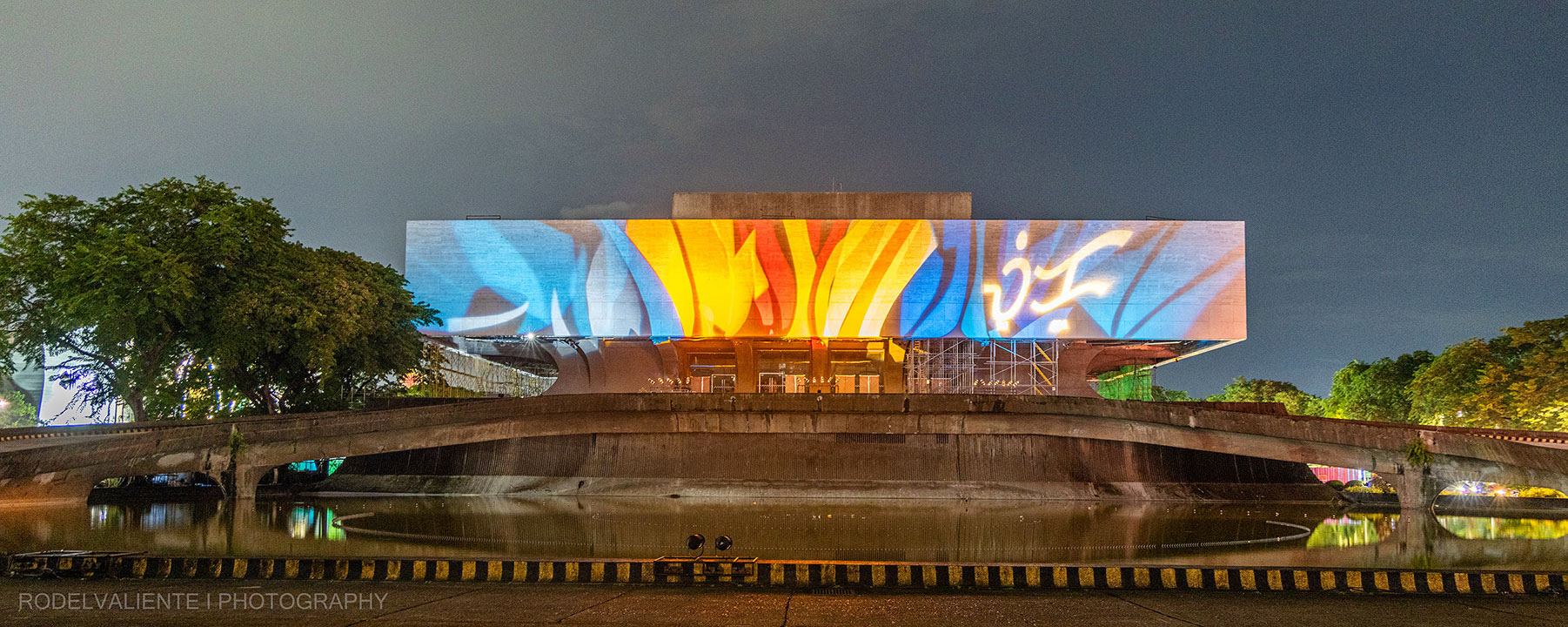
THE Cultural Center of the Philippines (CCP) is illuminating its façade in vibrant colors this August to commemorate three major events: Buwan ng Wikang Filipino (National Language Month), ASEAN Month, and National Heroes Day. The visual spectacle aims to transform the CCP’s façade into a canvas of light, showcasing “the rich tapestry of Filipino culture, the unity of the ASEAN region, and the heroic spirit of the nation.” The CCP Main Building light show runs until Aug. 31, from 6:30 to 10 p.m. daily, except Mondays.


Oliver Marquez mounts 6th solo exhibit

AT THE ArtistSpace in Makati, visual artist Oliver Marquez’s 6th solo exhibition is on view. Titled Divine Bounty: Harvest of Sacred Vision, it presents Filipino harvest traditions in the form of luminous paintings, with the goal to depict the “transcendent beauty” of his subject matter. The exhibit runs until Sept. 2.


DLSZ Chorale wins in Tokyo choir tilt

THE De La Salle Santiago Zobel School (DLSZ) clinched two Gold Prizes and a 3rd place award at the 7th Tokyo International Choir Competition held in Japan recently. Composed of students from Grades 5 to 12, the choir won in the Children’s Choir Under-18 Category and in the Folklore Category. They competed under the direction of conductor Michael Kenneth Natividad Fabian.


AFM hosts exhibit on light, identity

ALLIANCE Française de Manille (AFM) is mounting the Liwanag et Lumière exhibition, in partnership with The Monarch. It is an art exhibit that aims to weave together themes of light, identity, and connection. It runs until Sept. 12. AFM is located on Nicanor Garcia, Bel-Air II, Makati City.


Cecile Licad returns for concert

ACCLAIMED PIANIST Cecile Licad will once again perform in Manila with the Philippine Philharmonic Orchestra (PPO) under the baton of Grzegorz Nowak. On Sept. 24 at the Metropolitan Theater, Ms. Licad will perform the very concertos that brought her international acclaim — Chopin’s Piano Concerto No. 2 and Saint-Saëns’ Piano Concerto No. 2 — both from her award-winning recordings with the London Philharmonic Orchestra under André Previn. Presented by Rustan’s, this landmark concert, titled The Pianist’s Pianist, will donate its proceeds to the PPO’s initiatives.

Cybersecurity, innovation to future-proof PHL financial system

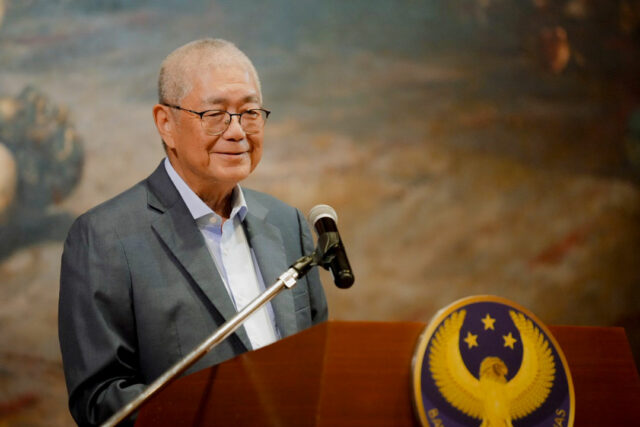
BANGKO SENTRAL ng Pilipinas Governor Eli M. Remolona, Jr. — BANGKO SENTRAL NG PILIPINAS

IMPROVING cyber resilience and fostering innovation to boost inclusion can help future-proof the Philippine financial system, the Bangko Sentral ng Pilipinas (BSP) chief said on Tuesday.

“The best experts would say, the system grows stronger as more people participate in it. Then amazing things happen. Social good escalates. To us, future-proofing finance looks like this,” BSP Governor Eli M. Remolona, Jr. said in a speech at the Manila Tech Summit 2025.

Inclusivity efforts make the financial system stronger, Mr. Remolona said as he cited the central bank’s own efforts to encourage the adoption of digital payments like QR Ph.

With more Filipinos using digital finance channels, boosting cybersecurity is a must to hep instill trust in these services, the BSP chief said. “Without trust, the system can’t grow.”

“Third, innovation keeps the system relevant. We continue to champion smart technologies like open finance…,” he added.

“At the BSP, we like to keep things simple. We like smart innovations that solve real problems. We like simple solutions that people can easily use. We like secure systems that can withstand shocks and attacks. This is how we connect inclusion, security, and innovation.”

Mr. Remolona said financial technology (fintech) companies play an important role in future-proofing the system. “You are the builders, the connectors, the innovators.”

In his own speech at the event, Fintech Alliance.PH Chairman and Rizal Commercial Banking Corp. Executive Vice-President and Chief Innovation and Inclusion Officer Angelito “Lito” M. Villanueva said digitalization presents both opportunities and risks amid the changing global environment.

“That is why we are here — to turn risks into resilience, to turn uncertainties into opportunities, to forge a future anchored in trust, innovation, and shared prosperity,” Mr. Villanueva said.

Fintech Alliance.PH is focused on ensuring responsible innovation, he said.

First, technology should be used to solve problems and protect consumers, Mr. Villanueva said.

“With more than 130 corporate members, collectively driving 95% of digital financial transactions, we uphold a zero-tolerance policy against the misuse of digital payment platforms for illegal businesses, especially online gambling. Consumer protection and industry integrity are nonnegotiable,” he said.

Technology should also be used for growth, to encourage innovation, scale businesses by unlocking new markets, and ensure equal digital access for Filipinos, Mr. Villanueva said.

“When technology works for good, for growth, for all, and for trust, it doesn’t just innovate — it transforms economies and societies. This is our moment. We are called to change through innovation, to evolve with technology, to lead the charge for a digital revolution. It’s time to forge a new global order. Not someday, but today. Here, together.” — K.K. Chan

SMGP raises Meralco stake

MERALCO.COM.PH

SAN MIGUEL Global Power Holdings Corp. (SMGP) is acquiring additional shares in Manila Electric Co. (Meralco) from the Land Bank of the Philippines (LANDBANK) worth a total of P93.12 million.

In a disclosure to the Philippine Dealing & Exchange Corp., SMGP said it purchased 1.03 million common shares of Meralco from LANDBANK.

The shares were bought at P90 apiece, data from the Philippine Stock Exchange, Inc. showed.

The latest transaction increases SMGP’s 3.8% stake in Meralco, valued at P3.9 billion.

In July, the power generation company said it acquired 43.23 million common shares of Meralco at P90 each. The deal marked the conclusion of a long-running legal dispute between SMGP and LANDBANK.

In 2008, SMGP — then known as Global 500 Investment — entered into a share purchase agreement with LANDBANK involving Meralco shares.

The state-run lender later rescinded the deal, prompting SMGP to sue for damages, arguing that the cancellation was unjustified.

In November 2022, the Court of Appeals sided with SMGP, ruling that the bank’s decision to withdraw from the agreement had no factual basis.

Meralco Chairman and Chief Executive Officer Manuel V. Pangilinan earlier said the power distributor’s move would depend on SMGP’s strategy regarding its shares.

Meralco, the country’s largest private distribution company, serves more than eight million customers in Metro Manila and nearby areas.

SMGP, the power arm of conglomerate San Miguel Corp. (SMC), maintains a diversified energy portfolio across conventional and renewable sources.

For the second quarter, the company’s attributable net income rose by 39% to P8.16 billion from P5.87 billion a year earlier.

Revenues fell by 30.8% to P54.82 billion from P79.22 billion in the same period last year.

SMC, through SMGP, was the second-largest power producer as of July with a market share of 20.11% in the national grid, according to the Energy Regulatory Commission (ERC).

Meralco’s controlling stakeholder, Beacon Electric Asset Holdings, Inc., is partly owned by PLDT Inc. Hastings Holdings, Inc., a unit of PLDT Beneficial Trust Fund subsidiary MediaQuest Holdings, Inc., has an interest in BusinessWorld through the Philippine Star Group, which it controls. — Sheldeen Joy Talavera

Small entrepreneurs urged to shun loan sharks

IMAGE GENERATED USING AMD’S AMUSE V3.1 WITH STABLEDIFFUSION 3.0.

By Edg Adrian A. Eva, Reporter

FILIPINO small entrepreneurs should not be afraid to borrow from banks for their business capital needs because they offer more reasonable interest rates and safer payment terms compared with unregulated lenders, according to UnionDigital Bank’s chief executive officer.

Many micro, small and medium enterprises (MSME) continue to rely on informal lenders, known locally as “five-six,” because of misconceptions that bank loans are difficult to access, said Danila “Bong” J. Mojica, president and CEO at the country’s first digital lender.

“Where do they go? To five-six lenders who are unregulated,” he told BusinessWorld in Filipino on the sidelines of the launch of its financial products on Saturday. “The interest rates are no joke — 20% a month. I even know one that charges 180% per annum. But many entrepreneurs still borrow because they have no choice.”

He said UnionDigital, the digital banking arm of Union Bank of the Philippines, Inc., aims to offer alternatives by providing loans of as much as P50,000, which can be paid in terms ranging from one to 12 months.

These loans carry a one-time processing fee of no more than 10%, which is deducted from the loan amount upon disbursement, according to the digital bank’s website.

A July report by the Boston Consulting Group found that 55% of 3,000 surveyed MSMEs in the Philippines had never applied for a loan, citing fear of debt and perceived high interest rates.

As a result, most small enterprises continue to rely on personal savings to fund their operations, even though formal MSME loans typically carry interest rates of only 1% to 5%, it said.

Mr. Mojica said UnionDigital follows a strict approval process to ensure that loans are extended only to borrowers with the capacity to pay. This safeguards both the bank and the entrepreneurs, he added.

Addressing concerns about collection practices, he stressed that they don’t resort to harassment or threats.

“We anticipate that there are people who won’t pay, so we put provisions in place,” he said. “But in our current system, nonperforming loans have been drastically reduced because of the discipline we’re putting in.”

UnionDigital’s “Kaya Mo” (You Can) campaign is part of a broader effort to bridge financial services to unbanked Filipinos, particularly small entrepreneurs.

At the launch event, Lincoln “Cong TV” Velasquez — a popular content creator, business owner and UnionDigital’s brand ambassador — urged MSMEs to practice financial discipline when borrowing.

“It’s okay to be afraid,” he said. “But always calculate the risk in the things you get into. Before you borrow money, make sure you know how you’re going to pay it back.”

Tracing the widening arc from work permits to world wanderers: Key updates in Philippine immigration law

FREEPIK/THIS RESOURCE WAS GENERATED WITH AI.

As work is no longer tethered to place, the law is compelled to keep pace. Philippine immigration law is now evolving to reflect the realities of a borderless and digitized world, recognizing the diverse ways by which individuals move, work, and establish connections across borders. Recent measures highlight this shift, including the institutionalization of the Digital Nomad Visa (DNV), the Department of Labor and Employment’s (DoLE) supplemental rules on Alien Employment Permits (AEP), and the recalibrated rules on the entry of Indian nationals.

DIGITAL NOMAD VISA
The Philippines has joined a growing number of jurisdictions offering visas for remote professionals through Executive Order No. 86. This measure authorizes the Department of Foreign Affairs (DFA) to issue DNVs to non-immigrant foreign nationals who wish to enter and/or stay temporarily in the country for the purpose of performing remote work, by means of digital technologies, for clients or employers situated abroad. The DNV is valid for a period of one year, extendible upon renewal.

To qualify, applicants must satisfy and continuously comply with the following conditions during the validity of their DNVs:

a. Must be at least 18 years of age;

b. Must show proof of remote work using digital technology;

c. Must show proof of sufficient income generated outside the Philippines;

d. Must show proof of no criminal record;

e. Must have health insurance valid for the period of the DNV;

f. Must be a national of a country that offers DNVs to Filipinos and where the Philippines has a Foreign Service Post (FSP); otherwise, the application may be filed in the nearest country where a Philippine FSP is available;

g. Must not pose threat to the internal or external security of the Philippines; and,

h. Must not be employed in the Philippines.

As of this writing, the DFA, in coordination with the relevant government agencies, has yet to issue the implementing rules and regulations (IRR) governing the DNV, including procedures for its issuance, renewal, and revocation. Until the IRR is released, qualified foreign nationals will have to wait before they can apply for this new visa category.

SUPPLEMENTAL AEP GUIDELINES
The DoLE has also issued Department Order No. 248-A, series of 2025, or the “Supplemental Guidelines Clarifying and Amending the Provisions of DoLE Department Order No. 248,” which sets forth revisions and clarifications to the filing of AEP applications.

Among the notable changes introduced is that employers are now only required to publish job vacancy advertisements in a newspaper of general circulation, which remain valid for 45 days. Publication through PhilJobNet and the Public Employment Service Office (PESO) or Job Placement Office (JPO) is no longer mandatory, though still encouraged.

The Supplemental AEP Guidelines also expressly enumerates the industries covered by the requirement to submit an Understudy Training Program (UTP) or Skills Development Program (SDP), namely: a) establishments registered under the Foreign Investment Act that enjoy fiscal incentives; b) those engaged in the operation of public utilities or critical infrastructure under the Public Service Act; and, c) those identified as strategic investments, such as enterprises in key sectors outlined in the Strategic Investment Priority Plan or an equivalent national development framework.

Meanwhile, it also specifies the categories of foreign nationals who are exempt from the UTP/SDP requirement. These include: a) foreign nationals excluded or exempted from the AEP; b) equity holders, shareholders, or foreign nationals who are owners or investors with equity participation duly reflected and reported with the Securities and Exchange Commission; and, c) foreign nationals holding positions that the Technical Working Group may later determine to qualify for exemption, in accordance with established guidelines and criteria.

Foreign applicants may now also submit an Affidavit of Undertaking pending the submission of the UTP/SDP, or while awaiting the completion of the newspaper publication, when filing for the renewal of an AEP or for additional positions, provided that the pending requirements are satisfied within 60 days from filing. Compliance with these requirements is a precondition for the release of the AEP Card, and failure to comply may constitute grounds for its revocation.

Building on these parameters, the Supplemental AEP Guidelines continue to require employers with approved UTPs/SDPs to submit progress reports. The timelines for submission have also been clarified as semi-annually for AEPs valid for one year, and annually for those valid for two or three years.

The Supplemental AEP Guidelines takes effect on Aug. 28.

ENTRY OF INDIAN NATIONALS
The Philippines has also eased the rules on entry of Indian nationals, signaling closer cooperation between the two countries. The DFA issued Foreign Service Circular (FSC) Nos. 2025-019 and 2025-020, which respectively provide for 14-day and 30-day visa-free entry for Indian nationals. These measures reflect the government’s policy to encourage stronger tourism engagement with India.

Under FSC No. 2025-019, Indian nationals may enter the Philippines visa-free for a maximum period of 14 days, provided they present a passport valid for at least six months beyond the intended stay, confirmed hotel accommodations or bookings, proof of financial capacity, and a return or onward ticket. Transit passengers holding visas to a destination beyond the Philippines must still obtain a Philippine transit visa.

Meanwhile, FSC No. 2025-020 permits Indian nationals holding a valid visa or permanent residence from the United States, Japan, Australia, Canada, the Schengen countries, Singapore, or the United Kingdom (AJACSSUK) to enter and stay in the Philippines visa-free for up to 30 days, subject to the presentation of the applicable visa or residence document, along with the same supporting documents as above.

Both types of visa-free entry privileges are strictly for tourism purposes and are non-extendible and non-convertible to other Philippine visa categories. Applicants must also have no derogatory records with the Bureau of Immigration. For stays beyond the allowed period, or for visits not exclusively for tourism purposes, Indian nationals must apply for a regular 9(a) Temporary Visitor Visa from a Philippine Embassy or Consulate abroad.

Taken together, these measures show the Philippines’ commitment to modernizing its immigration framework. With the introduction of digital nomad visas, the refinement of rules on foreign work authorization, and the expanded entry options for Indian nationals, the Philippines is building a more responsive and forward-looking approach to immigration. As a whole, these reforms ensure that Philippine immigration law remains attuned to the realities of an interconnected world.

The views and opinions expressed in this article are those of the author. This article is for general informational and educational purposes only and not offered as and does not constitute legal advice or legal opinion.


Jewel M. Culala is an associate of the Immigration department of the Angara Abello Concepcion Regala & Cruz Law Offices (ACCRALAW).

jmculala@accralaw.com

(632) 8830-8000