DIVING operators and allied businesses in Samal have asked the city government to reassess various local fees imposed on visitors to attract more tourists in this specialized tourism sector.
Alfred P. Medina, an official of the Philippine Commission on Sports Scuba Diving (PCSSD), said Samal Island’s diving community has already asked the Department of Tourism (DoT) for assistance in their campaign for more “reasonable” diving costs.
“In our last meeting with DoT, we were already given assurance that the LGU (local government unit) of Samal will sit down with us. The cost is hurting the diving community,” Mr. Medina said during the PEP Talks media briefing at SM Lanang Premier last week.
“I suppose it’s a work in progress because I think the LGU is very interested to know the sentiments of the diving community especially after the lockdown, all of us are affected with this (coronavirus pandemic) and when it comes to fees and access to the dive sites, there has to be a better way to manage it,” he added.
In January this year, Tourism Secretary Bernadette Romulo-Puyat said she wants to enhance the promotion of Davao Region’s dive sites as the travel industry strengthens outdoor destinations for its recovery program.
The DoT has identified the Island Garden City of Samal as the top destination in the region with 14 dive sites and established dive operators. Several new sites have also been identified in the provinces of Davao Oriental, Davao De Oro, and Davao del Sur.
“Samal is the most accessible and we have very good dive sites. I’ve been diving a lot also in Davao Oriental in Tarragona, Cateel, Boston, and there are so many good dive sites there,” Mr. Medina said.
He underscored that closer cooperation among local governments, tourism officials, the PCSSD, and scuba divers is needed in all these areas to create a “diver-friendly” atmosphere.
This means, he said, that there is an organized access to the dive sites, security, and fair and reasonable diving fees.
“All of these have to be a concerted effort between the private sector and the LGU,” he said.
There are more than 500 certified divers in Davao Region, he noted.
Samal is holding a dive festival on May 28 to 29 as part of the month-long Summer Saya sa Isla Festival.
“I had a meeting with all the diving establishments in Davao Region last week together with the DoT and we came up with activities that will be highlighted in the festival, scuba diving and free diving. We are inviting all the certified divers to join in the festival,” he said. — Maya M. Padillo
A MAGNITUDE 6.1 earthquake struck off southern Luzon early Sunday morning, with intensities of up to three felt in cities within the capital region Metro Manila, the state seismology agency reported.
The tremor, with epicenter off the coastal town of Calatagan, was recorded at 5:50 a.m. with a depth of 122 kilometers, according to the Philippine Institute of Volcanology and Seismology (Phivolcs).
Aftershocks and damage were expected, but the agency issued a “no tsumani threat” advisory following the earthquake.
There was no immediate report of major damage from the Calatagan municipal disaster response office.
A magnitude 6.1 earthquake is described as “very strong,” based on Phivolcs’ 10-level intensity scale. It can move heavy furniture while old or poorly built houses and other man-made structures could be “slightly damaged.”
Calatagan in Batangas, a popular beach destination, felt an intensity 4 tremor.
Puerto Galera in the nearby island province of Oriental Mindoro also reported intensity 4.
Intensity 3 was reported in Quezon City, Pasay City, and Pasig City in Metro Manila; Tagaytay City; and several towns in Cavite, Bulacan, and Pampanga as well as Olongapo City in Zambales.
Intensity 2 was felt in several parts of Metro Manila, Bataan, Nueva Ecija, Rizal, and Occidental Mindoro.
THE COMMISSION on Elections (Comelec) and security forces are in their final preparations for the May 24 special elections in 14 villages across three towns in Lanao del Sur province, an election commissioner said on Sunday.
A failure of election was declared on May 11, two days after the national and local polls, in the 14 barangays in Binidayan, Butig, and Tubaran due to violent and irregular incidents.
“Comelec is definitely ready, the Armed Forces of the Philippines, Philippine National Police, and the Philippine Coast Guard are coordinating with us,” Election Commissioner George Erwin M. Garcia said in an interview over DZBB.
He added that police officers will watch over the 14 voting precincts in the province to ensure security.
Last Wednesday, Comelec proclaimed the winning senators for this year’s elections but postponed the proclamation of some party-list winners initially set last Thursday.
With 172 out of 173 certificates of canvass completed, Lanao del Sur is the only area left to count as part of the official tally for this year’s senatorial and partylist race.
The election body found that votes from the barangays in Lanao del Sur could still affect the outcome of the party-list race.
Mr. Garcia noted that about 9,000 voters will participate in the special polls in the town of Tubaran, which had 11,557 registered voters.
Butig and Binidayan will only account for 6,291 votes.
Before the May 9 elections, the towns of Tubaran, Malabang, Maguing, and Marawi City in Lanao del Sur were placed under Comelec control.
TRAINING BALLOTS Meanwhile, Mr. Garcia told Teleradyo on Sunday that Comelec is also looking into the disposal of training ballots at a site in Cavite City.
“We are just finding out why our provider also brought those ballots from Tondo Manila to Cavite,” Mr. Garcia said.
The training ballots used in preparation for this year’s elections should have been kept by electoral board members, he added.
This year’s elections saw the highest voter turnout in Philippine history at 83% of the more than 67.418 million registered voters, according to Comelec. — John Victor D. Ordoñez
VETERAN actress Susan Roces, who passed away Friday, is recognized for her contributions in the Philippine film industry in a resolution filed in the Senate expressing condolences.
“The passing away of a legendary movie star whose invaluable contribution to Philippine cinema is beyond compare and whose sincerity, warmth, guidance, and kindness had truly touched the hearts of her fellow workers in the film industry sector, particularly the young actors and actresses who have just begun their movie careers, will be mourned by the Filipino people and the nation,” Senate President Vicente C. Sotto III said in the still unnumbered resolution.
Ms. Roces, or Jesusa Purificacion Levy Sonora-Poe in real life, died at the age of 80.
“She passed away peacefully on a Friday evening, May 20, 2022, surrounded by love and warmth,” her daughter Senator Grace Poe-Llamanzares said in a tweet.
After making her screen debut in 1952 at 11 years old, she starred in more than 130 movies throughout a long career in both film and television.
She was regarded as the “Queen of Philippine Movies” and won several awards.
The wake is set from May 22 to 24 at the Heritage Park in Taguig City. — Alyssa Nicole O. Tan
AN ELECTRON MICROSCOPIC image shows mature, oval-shaped monkeypox virus particles as well as crescents and spherical particles of immature virions, obtained from a clinical human skin sample associated with the 2003 prairie dog outbreak in this undated image obtained by Reuters on May 18, 2022. — CYNTHIA S. GOLDSMITH, RUSSELL REGNERY/CDC/HANDOUT VIA REUTERS
LONDON — The World Health Organization (WHO) said it expects to identify more cases of monkeypox as it expands surveillance in countries where the disease is not typically found.
As of Saturday, 92 confirmed cases and 28 suspected cases of monkeypox have been reported from 12 member states that are not endemic for the virus, the U.N. agency said, adding it will provide further guidance and recommendations in coming days for countries on how to mitigate the spread of monkeypox.
“Available information suggests that human-to-human transmission is occurring among people in close physical contact with cases who are symptomatic,” the agency added.
Monkeypox is an infectious disease that is usually mild, and is endemic in parts of west and central Africa. It is spread by close contact, so it can be relatively easily contained through such measures as self-isolation and hygiene.
“What seems to be happening now is that it has got into the population as a sexual form, as a genital form, and is being spread as are sexually transmitted infections, which has amplified its transmission around the world,” WHO official David Heymann, an infectious disease specialist, told Reuters.
Mr. Heymann said an international committee of experts met via video conference to look at what needed to be studied about the outbreak and communicated to the public, including whether there is any asymptomatic spread, who are at most risk, and the various routes of transmission.
He said the meeting was convened “because of the urgency of the situation”. The committee is not the group that would suggest declaring a public health emergency of international concern, WHO’s highest form of alert, which applies to the coronavirus disease 2019 (COVID-19) pandemic.
He said close contact was the key transmission route, as lesions typical of the disease are very infectious. For example, parents caring for sick children are at risk, as are health workers, which is why some countries have started inoculating teams treating monkeypox patients using vaccines for smallpox, a related virus.
Many of the current cases have been identified at sexual health clinics.
Early genomic sequencing of a handful of the cases in Europe has suggested a similarity with the strain that spread in a limited fashion in Britain, Israel and Singapore in 2018.
Mr. Heymann said it was “biologically plausible” the virus had been circulating outside of the countries where it is endemic, but had not led to major outbreaks as a result of COVID-19 lockdowns, social distancing and travel restrictions.
He stressed that the monkeypox outbreak did not resemble the early days of the COVID-19 pandemic because it does not transmit as easily. Those who suspect they may have been exposed or who show symptoms including bumpy rash and fever, should avoid close contact with others, he said.
“There are vaccines available, but the most important message is, you can protect yourself,” he added. — Reuters
NEW DELHI — India on Saturday announced a series of changes to the tax structure levied on crucial commodities in a bid to insulate consumers from rising prices amid high inflation.
Finance Minister Nirmala Sitharaman announced a cut in excise duty on petrol by 8 rupees ($0.1028) per liter, and 6 rupees per liter on diesel.
The new tax regime on petrol and diesel could result in a loss of about 1 trillion Indian rupees to the government in annual revenue due to the lower collection, she said in a series of tweets.
The government also removed the import duty on anthracite, PCI coal and coking coal in a bid to reduce raw material costs for local market demand.
The latest measures will be effective from May 22, the government said in a notification after the announcement by Ms. Sitharaman, who also urged state governments to follow suit with similar reductions on fuel prices keeping in line with federal plans.
A liter of petrol currently costs 105.41 rupees, while diesel is at 96.67 rupees in New Delhi.
The government will also provide a fresh subsidy of 200 rupees per cooking gas cylinder to over 90 million beneficiaries under a welfare scheme introduced for women below the poverty line.
The subsidy will have an annual revenue implication of nearly 61 billion Indian rupees, Ms. Sitharaman said.
“Prime Minister Narendra Modi has specifically asked all arms of the government to work with sensitivity and give relief to the common man,” she said.
The government was also working to reduce taxes on raw materials for plastic products to lower the cost of final products.
Experts said the latest moves will likely increase fiscal concerns and raise doubts about government meeting its deficit target of 6.4% of gross domestic product (GDP) for 2022-23.
But inflation has become a major headache for Mr. Modi’s government ahead of elections to several Indian state assemblies this year.
A sharp jump in inflation meant input costs escalated for businesses. The rise prompted the central bank to hike interest rates at an unscheduled policy meeting this month.
“Today’s decisions, especially the one relating to a significant drop in petrol and diesel prices, will positively impact various sectors, provide relief to our citizens,” Mr. Modi wrote on Twitter. “It is always people first for us!” — Reuters
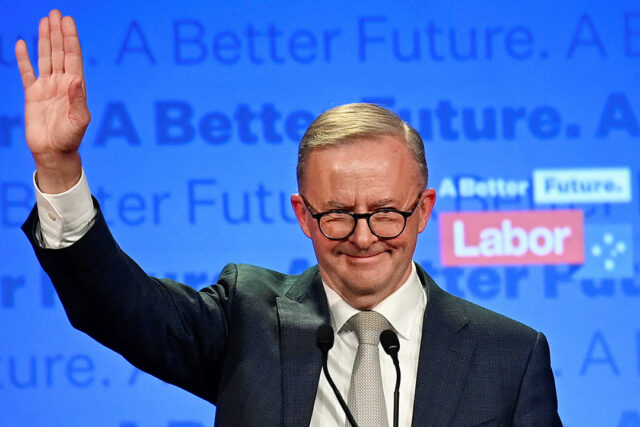
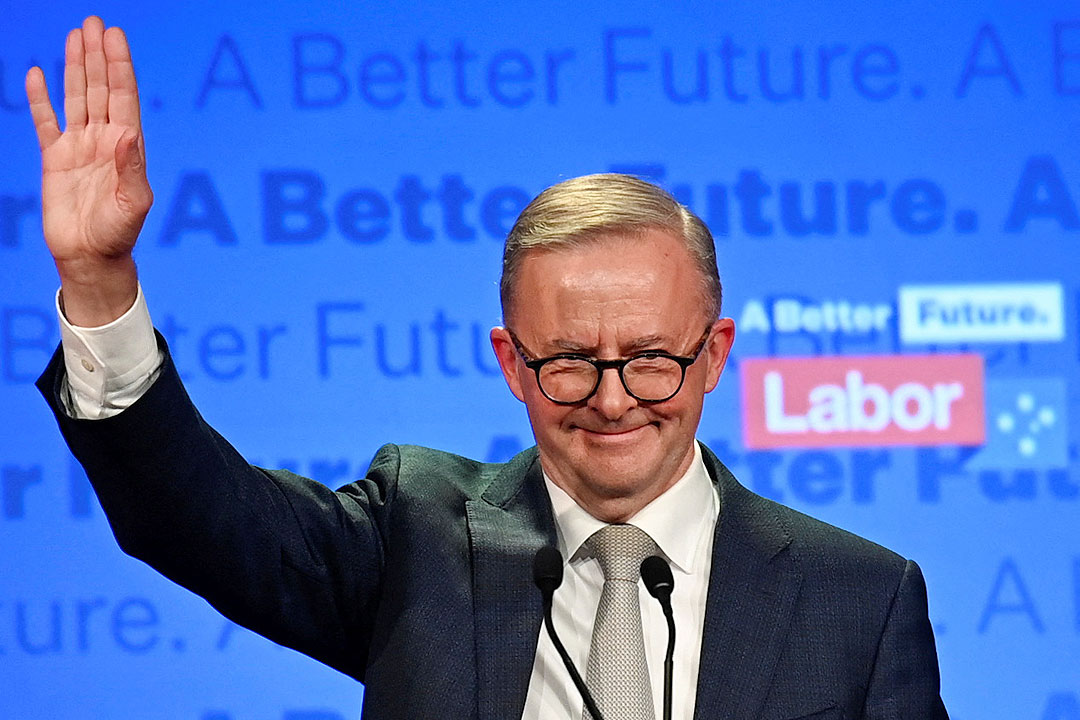
Anthony Albanese, leader of Australia’s Labor Party, addresses supporters after incumbent Prime Minister and Liberal Party leader Scott Morrison conceded defeat in the country’s general election, in Sydney, Australia May 21, 2022. — REUTERS
SYDNEY — Anthony Albanese, who becomes Australia’s prime minister (PM) on Monday, is a pragmatic leader from a working-class background who has pledged to end divisions in the country.
“I do want to change the country. I want to change the way that politics operates in this country,” the Labor Party leader said on Sunday morning as he set about preparing to replace nine years of conservative government after Saturday’s election win.
“I want to have a cooperative relationship. I want to bring people together, including the states and territories, and local government as well… just as I’ll bring unions and employers and other organizations together in an employment summit in coming months.”
Labor’s election campaign heavily spotlighted Albanese’s working-class credentials — a boy raised in public housing by a single mother on a disability pension — and his image as a pragmatic unifier.
His rise from humble beginnings was something the man he defeated in the election, Prime Minister Scott Morrison, pointed to when the leaders were asked to nominate something they admired about their opponent during a televised debate.
“The thing about Anthony I’ve always admired is he has never forgot where he has come from,” Mr. Morrison said in the debate, complimenting the determination and drive of Albanese.
COLLABORATIVE Mr. Albanese, 59, entered parliament in 1996 — just as Labor entered the first of two decade-long patches in opposition. The party’s time back in power, from 2007 to 2013, was marred by leadership squabbles in which he openly criticized both sides.
Those years forged his reputation as a collaborator willing to work outside ideological lines, as leader of the House, where he managed government business in parliament.
After losses in the 2010 election, Labor was saddled with the country’s first minority government in 70 years, requiring it to win support from conservatives or independents to pass laws.
But by one measure cited by political commentators — the number of laws passed compared to the number of days in office — it turned out to be Australia’s most productive parliament.
“There was an attempt to create chaos, but what Anthony did (as leader of the House) was to ensure that the work of government proceeded,” said Craig Emerson, who was trade minister in that government.
At 12, Mr. Albanese helped organize a rent strike that kept his mother’s public housing property from being sold to developers.
Those who know Albanese say he is genuinely motivated by the mix of pragmatism and concern for social justice he gained during his childhood struggles, such as when a teenage Mr. Albanese complained to a councilman about his mother’s broken stove.
“It gave me a determination, each and every day, to help the people like I was, growing up, to have a better life,” Mr. Albanese told the National Press Club in January, recalling how he at times depended on neighbors for food when his mother was unable to provide for him.
Albanese was the first in his family to attend university, where he studied economics and became involved in student politics.
At 22, he was elected president of Young Labor, the party’s youth wing, and worked as a research officer under the economic reformist government of Bob Hawke, Labor’s longest-serving prime minister.
“Anthony has … a capacity to look beyond the party political alignment,” said Robert Tickner, a former Labor member who took the teenage Albanese’s call about his mother’s stove.
The incoming prime minister “believes in this idea that there are people of good will in the community,” Mr. Tickner said in a phone interview. “He’s not someone who’s a sectarian.” — Reuters
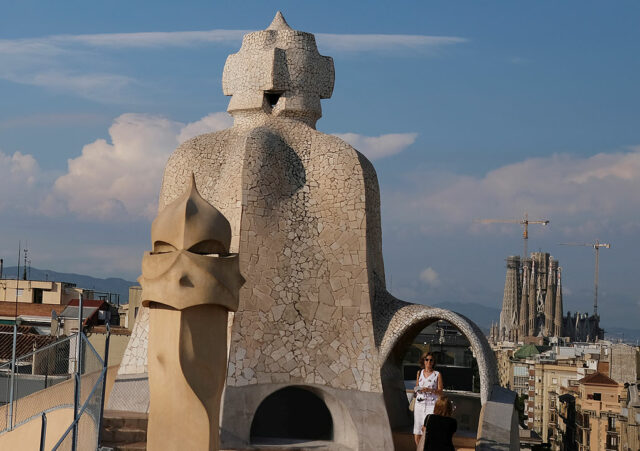
TOURISTS visit La Pedrera building with a view of the Sagrada Familia basilica in the background in Barcelona, Spain, July 24, 2020. — REUTERS
MADRID — People waved fans, glugged water and splashed themselves at fountains in Spain on Saturday as the country sweltered under unseasonably high temperatures pushing close to 40 Celsius (104 Fahrenheit) in some places.
“The early morning of May 21 was extraordinarily warm for the time of year in much of the center and south of the peninsula,” national weather agency AEMET wrote on Twitter.
It issued warnings of high temperatures in 10 Spanish regions for Saturday, where temperatures were forecast to reach the high 30s.
On Friday, May temperature records were broken in the city of Jaen, Andalusia, which logged 40C.
AEMET said average temperatures in Jaen were 16C higher than normal for this time of year. Elsewhere in Spain, temperatures were at least 7C higher than usual.
In Madrid, street sweeper Rocio Vazquez, 58, was out working in the direct sun, wearing a face mask.
“This year it seems to have gone directly to summer, but we have to keep going,” she said. “It’s scorching but it’s our job and has to be done.”
AEMET spokesperson, Ruben del Campo, said earlier this week that, if officially confirmed, it could be the first ever heatwave recorded in May.
“This episode is very unusual for mid-May and could be one of the most intense episodes in the last 20 years,” he said.
In Cordoba, Andalusia, a group of women who had come from Madrid for a hen party were feeling the heat, one dressed as a pink flamingo.
“It is really hot, we’re (battling it) with a lot of water,” said bride-to-be was Bea Ovejero, 31. — Reuters
In mid-2021, upon the suggestion of one of its senior fellows, Action for Economic Reforms (AER) decided to refresh the organization’s brand identity.
The exercise coincided with AER’s 25th anniversary, but there were several other reasons behind the decision to rebrand.
AER was long overdue for a visual refresh. While pushing for reforms for the past 25 years, AER felt that it neglected its brand. Its visual identity was outdated and did not communicate the essence of AER or align with the purpose of galvanizing support for our advocacies.
AER’s programs itself were also growing beyond the confines of the existing brand. Since its founding, the organization has branched out into many different areas of work: macroeconomic policy, health policy, freedom of information, industrial policy, human development, and most recently, data-driven development. As we had not refreshed our brand in 25 years, our vision, mission, and values statements lacked key concepts which are now our programs’ key pillars. One of these pillars is inclusion, an anchor of our new data-driven development projects at the local government level.
After months of reflection and brainstorming, with the help of designers and marketing experts, we came up with a new visual identity along with refocused mission, vision, and value statements.
Our new vision is now much simpler, emphasizing our goal of sustainable, equitable, and inclusive development.
And our mission is now: “To advocate economic and governance policies and practices that promote Philippine development through independent, rigorous, and timely research, analysis, and engagement.”
But what I found most interesting was our review of the core values that guide AER. There are three core values that I resonated with the most: action orientation, agility, and empathy. AER is an organization led by its values, and so I see these words as concepts the organization knows intimately and consistently puts into practice.
One of our biggest goals during the rebranding exercise was to emphasize the “action” in Action for Economic Reforms, highlighting AER’s role as a coalition-builder and mobilizer in civil society.
In AER executive director Men Sta. Ana’s 1996 piece “Charting new paths,” which explains AER’s mission as an independent policy advocacy group, he wrote that AER was formed to respond to an urgent need for nuanced analysis on reforms’ specific features, context, enabling conditions, timing, phasing, and sequencing. The tendency, he said, is to gloss over technical work because of the perception that technocracy connotes elitism. He wrote that the organization’s goal is to educate the public on tradeoffs, opportunity costs, and other consequences, providing nuanced positions rather than polarized perspectives.
But through the years, AER has done more than research, education, and analysis. In its pursuit of influencing policy and practice, it has mobilized coalitions (such as the Sin Tax Coalition, which successfully contributed to the legislation of several sin tax reforms), networked, and engaged in dialogue. It is now delving into local problem solving through its Data-Driven Development projects, venturing into promoting the use of data and evidence for local governance, policymaking, and citizen participation, with 14 local government unit partners from Luzon, Visayas, and Mindanao.
Another core value we identified is agility, or the ability to move and adapt quickly to political and economic constraints. AER interacts with different politicians, civil society actors, technocrats, and the private sector, and adopts different strategies depending on the political climate. AER understands the importance of compromise and pragmatism in reform, which allows it to continuously engage with different policy actors and secure progressive reforms.
Lastly, empathy is a value that needs to be highlighted in policy reform and in the big picture of national politics, now more than ever. In this polarized political climate, two weeks after the landslide victory of Ferdinand Marcos, Jr., emotions are high, and empathy is dwindling for those who have been deeply disheartened by the results of the elections. The results confirmed that despite all efforts, there is a huge gap in understanding the majority of Filipino voters. The gap is so huge that, as Manolo Quezon wrote, “the minority does not quite believe the majority exists; because if it does, it would be too alien and loathsome to inspire either empathy or a continuing desire to serve.” If we want to continue the fight against disinformation and authoritarianism and bridge the huge cultural divide, we will need to rekindle empathy and deepen understanding.
Dr. Gideon Lasco recently wrote that the challenge now is not to “educate” others but to make them feel part of whatever it is that you’re fighting for. While education remains important, the elections just further demonstrated that we live in a post-truth world where facts do not reign supreme. This poses a challenge for a think tank like AER. While we prioritize rigor and being data-driven, times are changing, and communication strategies should adapt accordingly. Getting our message across, getting people to buy into our vision for sustainable, equitable, and inclusive development, and securing reforms will require a lot more creativity, empathy, and telling compelling stories.
Pia Rodrigo is Action for Economic Reforms’ strategic communication officer.
Last Monday, I escorted my wife Amina to the Peace Partners’ Recognition Day 2022 held by the Office of the Presidential Adviser on Peace, Reconciliation and Unity (OPAPRU) at the Philippine International Convention Center (PICC). She was one of the awardees. I was happy to attend the event, not just because Amina was being recognized for her unwavering support for peace but also because of my deep admiration for Secretary Carlito “Charlie” Galvez, OPAPRU chief. Through Amina, I have known Sec. Charlie as a man dedicated to the peace process and to a final and peaceful resolution of the armed conflict in Mindanao. I personally got to know him through the partnership between the government and the private sector to protect our people and the economy from the pandemic.
The public-private partnership started when Finance Secretary Carlos Dominguez requested Jaime Augusto Zobel de Ayala to help organize private sector support for the COVID-19 Inter-Agency Task Force (IATF) in its war against COVID-19. Sec. Charlie was the National Task Force Chief Implementer. Apart from regular consultations between the government, the private sector on how to deal with COVID’s economic impact, we rallied the private sector around the testing, tracing, and treatment efforts led by Sec. Charlie.
We private sector representatives were deeply impressed by Sec. Charlie’s strategic understanding of the problem. Instead of merely expanding RT-PCR testing capacity and increasing the PPE inventory, he convinced us to look at a broad front: to Test, Trace, and Treat. Hence the name T3, which he coined at our very first meeting.
Thus, when Sec. Charlie promised “a better Christmas” last May, we were hopeful (https://bit.ly/BetterChristmas051622).
Working with him has made me appreciate Amina’s optimism over the peace process under Sec. Charlie’s leadership and concern about preserving the gains made by OPAPRU under a new administration. She and her fellow awardees hope that Sec. Charlie can continue to serve as Peace Adviser. I can see how the qualities that he exhibited during our work on the pandemic made his stewardship of the peace processes successful.
Let me list the five qualities that impressed us in the private sector, as defined by Bill Luz when he toasted Sec. Charlie at a thanksgiving dinner on May 5, tendered for all in the partnership to neutralize COVID.
First, he was data-driven. Sec. Charlie absorbed all the details of our presentations and used them to help evolve the strategy for our very fluid situation. From those presentations, he adapted the concept of our “Walls of Protection” and deployed the communications plan for people to get vaccinated and build their layers of protection.
Second, he was a perfect fit for the challenge. The Philippines may have gotten off to a slow start in vaccine procurement, but Secretary Charlie proved to be an expert negotiator with the vaccine manufacturers. After negotiating for peace with rebels holding rifles on the table opposite him, he said negotiating with vaccine manufacturers was a relative walk in the park. Whereas in the first quarter of 2021, we feared that we would not have enough vaccines for our people, he eventually helped secure more than enough supplies for the population — including children, second boosters for adults, and boosters for adolescents.
Third, his engineer’s mind could easily process the challenges we were facing. The entire COVID response, and especially the National Vaccination Program, had so many moving parts. Sec. Charlie’s strategic mind shifted from the big picture to the tactical, and back, as conditions shifted and changed. He taught us his “Center of Gravity” approach, and later led us to his “Focus and Expand” strategy, telling us to build “Depth of Defense” along the way. Eventually, our pandemic response’s reach broadened across the country, while preserving gains that had been made.
Fourth, he was extremely hardworking. Secretary Charlie was constantly on the move during this entire COVID period, traveling around the country, going to the airport countless times to accept vaccine shipments, inaugurating vaccination sites, and giving his weekly briefings to the President. He has placed himself at risk of catching COVID so many times that he’s been swabbed for an RT-PCR test around 300 times. And as if the Vaccine Czar job wasn’t enough, he continued with his work as the Peace Adviser, traveling to Mindanao often as the needs warranted.
Finally, he was humble and a pleasure to work with. He promoted teamwork and empowered people to speak and share ideas. We had many discussions on policy and protocol and he was always ready to listen. His calm and cool demeanor and his way of explaining things and giving credit to people were always appreciated. We’re all truly proud to say that we had the chance to serve under a four-star general like Secretary Galvez.
Those five qualities are needed if the mandate of the government for peace, reconciliation, and unity are to be successfully implemented. At the OPAPRU event, Sec. Charlie noted that development is not possible without peace, and peace is unattainable without development. Today, more than ever, we need a leader at the helm of OPAPRU who can strengthen the foundation for peace and development.
The country’s road to a just peace is strewn with barriers, which requires strong, yet compassionate leadership. The creation of a meaningful autonomy in Muslim Mindanao is both a social justice, and peace and development issue, following the Constitutional promise of “closing the gap between law and justice.” Presently, the administration of the Bangsamoro Autonomous Region of Muslim Mindanao has been overburdened by COVID-19 at a time when the Bangsamoro Transition Authority was just starting to work on a new governance mechanism — that of a parliamentary system. Meanwhile, the threats from violent extremism and the inadequate rehabilitation of the victims of the Marawi Siege were major burdens hobbling the projects of the BARMM leaders.
Another major block on the road to peace is the threat of insurgency from the CPP-NPA-NDF, with the peace process suffering ups and downs in the negotiations amidst allegations of insincerity. Unlike the Moro liberation fronts that had fought for independence, and accepted autonomy in Muslim Mindanao, the Left has always moved for a total change in our national political system and are present in impoverished communities from North to South. As threats go, this has more teeth as the insurgents have held private sector operations hostage in their conflict zones.
The job of the Office of the Presidential Adviser on Peace, Reconciliation and Unity is critical, as the country attempts to rise from the economic devastation of the pandemic. Agriculture has to grow, factories must be operational. Tourism must open our sites to the world. But, as Sec. Charlie had noted, development cannot succeed without peace. As many have noted, it is hoped the country’s journey to peace and development can continue under Sec. Charlie’s stewardship.
Romeo L. Bernardo was finance undersecretary from 1990-96. He is a trustee/director of the Foundation for Economic Freedom, Management Association of the Philippines, and FINEX Foundation.
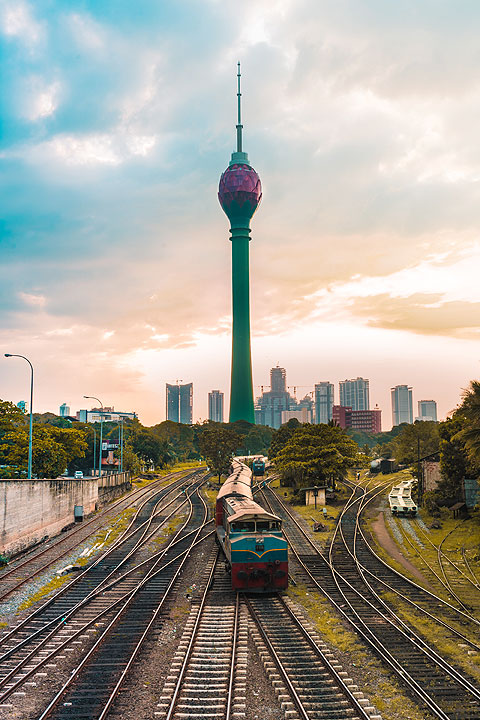
COLOMBO, SRI LANKA— THAROUSHAN KANDARAJAH-UNSPLASH
COLOMBO, SRI LANKA
Financial crises have a domino effect. A seemingly small event in one country can have far-reaching consequences around the world. We’ve seen it in the 1997’s Asian Financial Crisis and again in the global financial crisis of 2009.
Sri Lanka is experiencing its worst financial crisis since gaining independence in 1948. For years, Sri Lanka spent more than it earned and covered the gaps with debts. When President Gotabaya Rajapaska was elected in 2019, he ordered deep tax cuts as a populist move instead of adopting policies to narrow the country’s gaping deficits. With that, it was only a matter of months before the country depleted its cash reserves. With more than $50 billion in foreign debts and a shortage of cash, the country struggles today to pay for essential imports like food, medicines, and fuel for its power plants. Sri Lanka’s 22 million people are starving and this has triggered civil unrest.
Consequently, credit rating agencies downgraded Sri Lanka’s debts to default levels. Access to new money is few and far between. The country must pay $7 billion worth of debt this year but only has $1.6 billion in its treasury. It can no longer borrow its way out of its woes. Last month, it had no choice but to default on its loans. Sri Lanka is now looking at the IMF for a bailout.
Sri Lanka has fallen. Will other economies follow?
Yes, according to the IMF.
Last February, the international lender flagged 70 economies as being in danger of going Sri Lanka’s way, what with ballooning debts, shrinking cash reserves, and large trade and budgetary deficits. The list includes the Philippines. Others in danger are Egypt, Tunisia, Lebanon, Argentina, El Salvador, Peru, Ghana, Kenya, South Africa, Ethiopia, and formerly mighty Turkey. Within the next 12 months, economies in debt distress will be unable to meet their obligations and will default, the IMF foretells. This will usher in the largest debt crisis of this generation.
How did we get here? It was a confluence of events. It started with easy access to loans primarily from China. Xi Jinping’s belt and road initiative lured countries to acquire massive amounts of debt to fund infrastructure. These debts, however, carried steep repossession clauses in case of default. Worse, debts from China include clauses that allow them to interfere in the foreign and domestic policies of the borrowing country. China led many counties into a debt trap.
Trade sanctions are more prevalent than we realize. There are 20,000 trade sanctions currently in force and these have dragged on global trade. Low- and middle-income economies are the most affected by these sanctions. For those unaware, trade sanctions are enforced by larger economies as a way to control the politics of smaller ones.
All these were exacerbated by the pandemic. Countries like the Philippines had no choice but to acquire piles of new debt to weather the crisis. This, coupled with a standstill in economic activity and drop in revenues, eroded the financial standing of many nations.
Vladimir Putin’s war was the final nail in the coffin. The war choked the global supply of wheat and fuel causing steep price hikes across the globe. Supply chains were disrupted and financial markets went into disarray.
THE PHILIPPINE ECONOMY UNDER MARCOS Marcos will be inheriting a weaker economy than President Duterte did in 2016. Debts are at a maximum tolerable level of 63.5% of gross domestic product as of March 2022. The budget deficit is now wider than ever at $33 billion or 8.6% of GDP as the end of 2021. Exports are tepid while imports are voracious — the merchandise trade deficit was at $43.13 billion last year. Our manufacturing and agricultural sectors have eroded to such a point that we are now import-dependent on practically all our needs including rice and flour. As if this weren’t enough, unemployment stands at 6.4% while 23.7% of the population lives in poverty.
Our saving grace is healthy Gross International Reserves (GIR) which stand at $108.5 billion as of last March, which is sufficient for 9.6 months of imports. We have the toil of our OFWs to thank for this.
What must Marcos do to prevent the Philippines from going the way of Sri Lanka? I recommend eight policies and/or action points.
First. Shun populist policies that erode national incomes and those that make the country less conducive to doing business.
Second. Prudent financial management. Prioritize spending and forgo budget insertions that are frivolous, excessive, or dispensable. Clamp down on budget leaks attributed to graft and corruption. If borrowing is necessary, source domestically whenever possible.
Third. Increase government revenue to GDP ratio from 15.5% to at least 17%. This necessitates increasing tax collection efficiency. To do this, Marcos must come down hard on smugglers, tax delinquents, and tax evaders. But Marcos will not have the moral high ground to do this unless he first settles his own tax obligations. So, squaring-off his own tax debt is the first order of the day. Not to do so will erode his credibility and embolden the rest of society to ignore their tax obligations.
Fourth. Narrow the trade gap. There is no getting away from it — we must wean ourselves away from import dependence and pivot from being a consumer-led economy to one that is production lead. To do this we must foster a manufacturing resurgence. We need not re-invent the wheel. In 2013, the Department of Trade and Industry launched a manufacturing resurgence program that involved the crafting of some 80 industry roadmaps. The program was so successful that in 2014 and 2017, the growth of industry outpaced the growth of services for the first time in our post-war history. The manufacturing resurgence program simply needs an update and a renewed commitment.
Fifth. We cannot do it alone. We need foreign direct investments (FDIs) to pull off a manufacturing resurgence. But FDIs will not come unless there is confidence in Marcos’ leadership. Thus, Marcos must prove that his motives for national development are pure. This will be evident by leading by example. He must prove that cronyism and entitlement will not be hallmarks of his administration. He must prove that the rule of law will be applied to all, especially those in the axis power including the houses of Duterte and Marcos.
Sixth. We must work double-time to develop the industries where the Philippines has a competitive advantage. This includes IT-KPO’s (Information Technology-Knowledge Process Outsourcing, the development of which was neglected by the Duterte administration), maritime industries, mining, electric vehicles and parts, aerospace, food manufacturing and agro-processing, construction, creative industries, e-commerce, and data centers, among others.
Seven. Revive agriculture. There are a multitude of factors that impede agricultural development, not the least of which are the limiting effects of CARP (Comprehensive Agrarian Reform Program) on economies of scale, the lack of infrastructure and technology, and expensive farm inputs. The Marcos administration must find ways to circumvent these obstacles. One way is by the establishment of Agri Hubs. I explained this concept at length in this corner on April 25.
Eight. Accrue foreign exchange earnings wherever we can get it. One of the low hanging fruits is tourism. As a tourism product, the Philippines is a triple-A threat. The impediment to the influx of foreign visitors is connectivity (or lack of direct flights) and ease in domestic connections.
There is so much more to be done. Suffice to say that it all boils down to fiscal prudence and the aggressive pursuit of national revenues. The financial tsunami is coming. Let’s hope Marcos prepares for it.
A student of Economics asked, “How do you think the election (results) will affect the middle class? They say when the economy declines the middle-class shrinks. Although I’m already assuming the economy will decline.” She had read and reacted to my July 11, 2021 column piece in BusinessWorld, “The Middle Class burden” (https://bit.ly/MiddleClassBurden071021) where I wrote of the decline of the economy due to the COVID-19 pandemic restraints and seclusions, burdening the middle class more than the rich or the poor.
Yes, a downturn in the economy affects the middle class the most among the social classes. And the shrinking of the middle class compounds the decline of the economy further. But before that, the middle class primarily spurs economic growth: A strong middle class provides a stable consumer base that drives productive investment and is a key factor in encouraging other national and societal conditions that lead to growth. The Philippine economy expanded by 5.6% in 2021 as loosened pandemic-related restrictions buoyed business activity at year-end (https://asia.nikkei.com, Jan. 27, 2022). The Filipino middle class is about 44% of the population in this consumption-driven economy that looks to the services sector manned mainly by the middle class. About 13% of middle-income households had a member working as an overseas Filipino worker (OFW) contributing $31.4 billion in cash remittances last year, providing strong backing to the Philippines’ economic recovery from the pandemic (Ibid.). The middle class pays taxes on at least 30% of its income.
The Philippine Statistics Office shows that as of 2020, there are 46 million Filipinos (about 12 million households) who are “Middle Class,” with a range of monthly family incomes from P23,381 (Lower Middle Class) to P46,761 (Middle-Middle Class) to P81,832 (Upper Middle Class) peaking at P140,284 which is the maximum before the next “Upper Income but not Rich” income class. The Middle Class would be 43.5% of the total population of 105.76 million per the PSO. The Low Income but not Poor would be 38.4% of population, and the 17.7 million Poor (earning below the P11,690 poverty level) would be 16.7% of population.
Note that among those considered middle-class households, 63%, or 7.6 million households, belong to the lower middle-income group. About a quarter are middle-middle class and a tenth in the upper-middle income class. How perilously easy it is for the middle class to tumble down like lightly stacked domino chips to the dismal “poor” level! And that is why the middle class is the most worried, as they are most affected by a decline in the economy.
The 2018 Family and Income Expenditure Survey conducted by the Philippine Statistics Authority (PSA) showed that in 2015, half of the middle-income persons aged 24 years and above attained education beyond secondary education. About 25% of middle-income persons work in wholesale (buy and sell) and retail trade (sari-sari and small stores), while nearly a fifth work in small transport (tricycle, jeepney, or bus). About 16% of this income group work in government, mostly as clerks or public-school teachers, and only 11% of them derive incomes from agriculture, and most of them belonged to the lower-middle-income group. About 13% of middle-income households had a member working as an overseas Filipino worker (OFW) with most of them belonging to the upper-middle-income group.
Three in five urban households are middle-class, but only 3% are high-income. The majority of them reside in Metro Manila followed by the Calabarzon region and Central Luzon, while a little more than half are spread across other regions. The middle class is comfortable, and happy with themselves for what status and stability they have achieved for themselves through plain hard work and perseverance.
Sociologists have pointed out that this feeling of achievement and the accompanying fear of losing social and economic status characterizes the middle class. The rich, by their entrenched most superior position of vast resources, are confident and secure; the poor, by their pitiful lack of resources and opportunities are mostly resigned to their status and can only dream of miracles. But the middle class can stay in place only by working hard; rise by working harder; or sink by not working enough. Worse, the middle class can sink by other “macro” forces like a downturn in the economy, with inflation, increase in cost of living, taxes etc. Or, be intimidated by a more than two-year-long COVID pandemic that refuses to go away yet.
The natural defense mechanism for the middle class that has developed in the regime of capitalist economies is the iconic “Middle-Class Morality” — a working cliché passed down from English linguistic tradition believed to be initiated by the Irish playwright George Bernard Shaw in his 1938 play, Pygmalion. Shaw portrays through parody, the elitist middle class as having some of the highest levels of morals and work ethics as the discipline to guard their status. “The term ‘middle-class values’ is used by various writers and politicians to include such qualities as hard work, self-discipline, thrift, honesty, aspiration, and ambition” (Daily Express, May 10, 2013).
Perhaps G.B. Shaw went overboard to caricature the social-economic middle class in his Victorian-Edwardian time, those plebeians who wanted to act, talk, and even dress like the rich, but snorted at the lack of finesse of the poor like the Cockney Eliza, and the lack of moral values of her bum-father, Alfred Doolittle. With the stereotyping by Shaw, many have disparaged and mocked this so-called middle-class morality as a holier-than-thou demeanor that hides base instincts for economic survival and collective power. But the collective mobilization and angry protests of the middle class in Pakistan ousted the eight-year dictator Zulfikar Ali Bhutto and had him executed in 1979 for transgressions of human rights and corruption. “Bhutto fell due to middle-class morality,” Political Science professor K. Husain said (https://nayadaur.tv, Dec. 19, 2018).
It was Filipino middle-class morality that roused the groundswell for the EDSA People Power Revolution and ousted the dictator Ferdinand E. Marcos, Sr. in 1986. “Tama na, sobra na!” (Enough is enough!) Filipinos were shocked and angered to the extreme by the cold-blooded assassination in public of oppositionist senator Benigno Aquino, Jr. on Aug. 21, 1983. Strangely alarming is the obvious parallel fate of Marcos Sr. and Bhutto at the judgment and action of middle-class morality.
But after a passionate climax, there is the languid stupor of relaxation. The Filipino collective consciousness thereafter might have been complacent and forgiving of the seeming relaxed standards of morality in government, as there might have been even in personal life. Or, new standards were evolving, not for the better. Why were some 12 coup d’états attempted against President Corazon Aquino, an icon of Philippine democracy at EDSA I? What did middle-class morality actively do to chasten the few military men who wanted to rule the country their way? No collective mobilization? But as should be, the justice system punished the putschists — until they were pardoned by the next president, Fidel Ramos.
It would be un-Christian to say that the pardoning was perhaps the figurative turning point in the degrading of EDSA I, but the coups certainly urged the lowering of the strict standards of middle-class morality for integrity and democracy — after all, the middle class led the EDSA People Power Revolution.
And now, 36 years after EDSA I, the son and namesake of the ousted dictator Ferdinand Marcos, Sr. is presumptive president of democratic Philippines, voted in by some 31 million Filipinos on May 9, 2022.
What was your question again, dear student? “How do you think the election will affect the middle class?”
It will depend on Middle-Class Morality.
Amelia H. C. Ylagan is a doctor of Business Administration from the University of the Philippines.






 AER’s programs itself were also growing beyond the con