Home Blog Page 5908

Japan passes economic security bill to guard sensitive technology

TOKYO — Japan’s parliament on Wednesday passed an economic security bill aimed at guarding technology and reinforcing critical supply chains, while also imposing tighter oversight of Japanese firms working in sensitive sectors or in critical infrastructure.

Measures in the legislation, which is primarily aimed at China, will be implemented over two years once it is enacted, according to the bill. It comes after United States imposed restriction on technology imports, such as semiconductors, amid growing tension Beijing.

The new law also arrives as the Russia’s invasion of Ukraine — Moscow calls its actions “a special operation” — adds pressure on Japan to do more to protect supply chains and infrastructure from hacking and cyberattacks, and ensure that technology critical to national security is not stolen.

It will give Japan’s government the power to order companies to notify it of software updates and vet some equipment procurement in 14 industries, including energy, water supply, information technology, finance and transportation.

The legislation also provides subsidies for companies to help them strengthen supply chains against disruption such as shortages of components shipped from overseas. It further establishes a system for government officials to make on-site inspections at firms.

The new security mechanism it sets out promises government money for research and development into key technologies deemed important for economic security.

It also establishes a system of secret patents kept in Japan to ensure technological breakthroughs are not used by other countries to development nuclear weapons or other military equipment. — Reuters

Reissued T-bonds fetch higher rates

BW FILE PHOTO

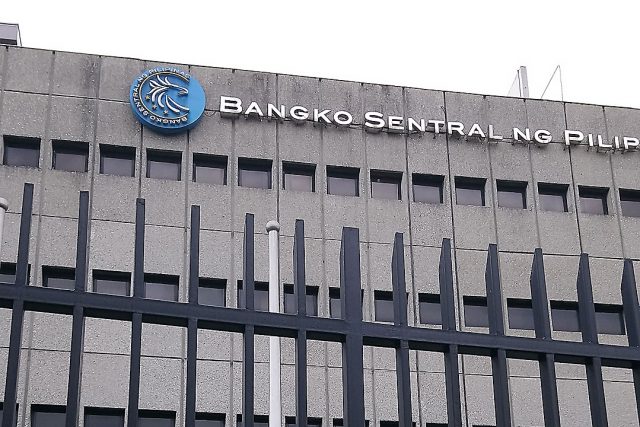
THE GOVERNMENT partially awarded the reissued Treasury bonds (T-bonds) it offered on Wednesday as markets again reacted to a hawkish US Federal Reserve and an expected tightening by the Bangko Sentral ng Pilipinas (BSP) at the next Monetary Board meeting.

The Bureau of the Treasury (BTr) raised just P25.10 billion via the reissued 10-year T-bonds it auctioned off, less than the programmed P35 billion, even as the offering attracted P55.29 billion in bids.

The debt papers, which have a remaining life of four years and 11 months, were awarded at an average rate of 5.772%, up by 258.7 basis points (bps) from the 3.185% quoted when the series was last auctioned off on June 22, 2021.

The average yield fetched for the debt papers was also higher than the 5.5844% quoted for the five-year tenor — the closest benchmark to the remaining life of the reissued debt papers, at the secondary market prior to the auction, based on the PHP Bloomberg Valuation Service Reference Rates published on the Philippine Dealing System’s website.

Had the Treasury made a full award of its offer, the reissued bonds would have fetched an average rate of 5.832%.

National Treasurer Rosalia V. de Leon said in a Viber message to reporters that the higher rates were due to expectations of “surging inflation,” which breached the government’s target band.

Headline inflation for April was at a three-year high of 4.9%, quicker than the 4% seen in March. It was the quickest pace since the 5.2% print in December 2018, and higher than the 4.6% median estimate in a BusinessWorld poll.

The headline figure also breached the central bank’s 2-4% target for the year and was near the upper bound of its 4.2-5% forecast for April.

The last time inflation went above the target was in September 2021 when it rose by 4.2%.

“It (rates) also tracks US Treasury upward movement as [the] Fed maintains [a] hawkish stance to battle with high inflation,” Ms. De Leon added.

The first trader in a Viber message likewise said that “dealers and investors continue to seek for a higher risk premium due to anticipated interest rate liftoff by both the US Fed and the BSP in the months to come,” mainly to rein in inflation.

Fed officials are now committed to a series of further half percentage rate hikes in its June and July meetings, in order to combat runaway inflation, which US President Joseph R. Biden described as his “top priority,” Reuters reported.

Last week, the Fed also hiked rates by half a percentage point. Further rate hikes throughout the year will still be determined.

Locally, BSP Governor Benjamin E. Diokno said last month policy makers would consider a rate hike in their June 23 review, more hawkish compared with his earlier statements that the central bank would only start normalizing its pandemic-driven easy policy by the second half of the year. Benchmark rates have been at record lows since 2020.

The second trader also said that market demand was muted due to a hawkish Fed and rising inflation, which may cause the central bank to hike rates sooner rather than later.

This could cause the central bank to tighten monetary policy sooner than expected.

The second trader also noted that the tenor up for auction was not “liquid,” which may have contributed to its weaker demand.

The BTr wants to raise P200 billion from the domestic market in May, or P60 billion via Treasury bills and P140 billion through T-bonds.

The government borrows from local and external sources to plug a budget deficit capped at 7.7% of gross domestic product this year. — Tobias Jared Tomas with Reuters

Dining In/Out (05/12/22)

FINA Restaurant

2 restaurants open at Cebu resort casino

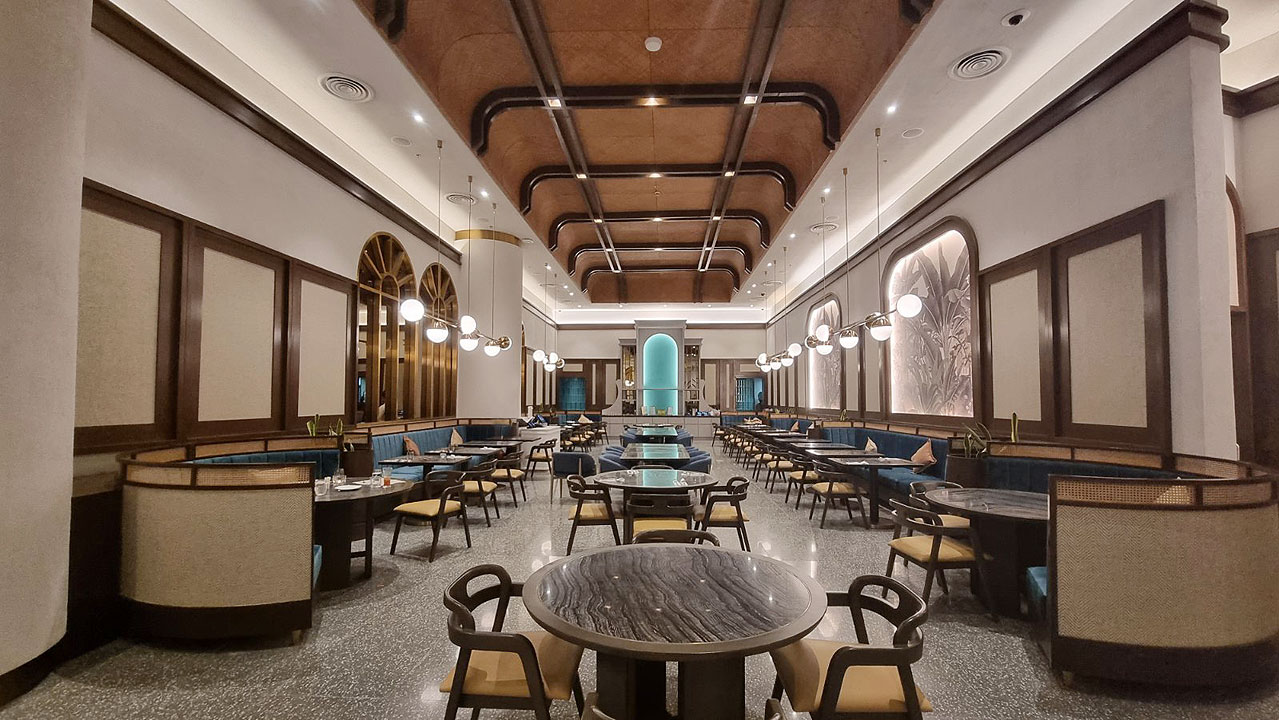
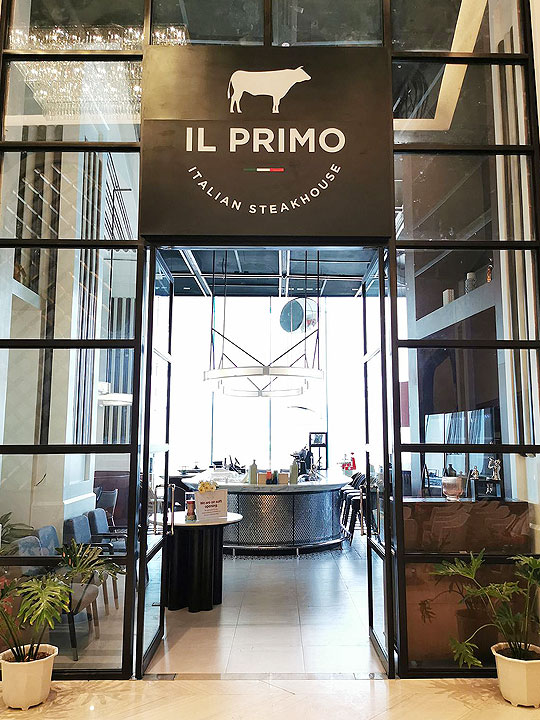
THE NUSTAR Resort and Casino in Cebu has opened two new restaurants. These are Fina Restaurant which specializes in Filipino cuisine, and the Italian steakhouse Il Primo. With a name derived from the word “Filipiniana,” Fina features some of the best Filipino specialties from Cebu and other regions of the country. The menu is a collection of well-known dishes including Cebu’s famous Bellychon, Angus beef tapa and chorizo de Cebu; Filipino seafood favorites such as Fresh Kinilaw na Tanigue and Crispy Sweet and Spicy Dilis; and crowd favorites like Lechon Kawali, Filipino-style fried chicken, Crispy Pata, and Kare-Kare. The food selection is complemented by specialty drinks, crafted cocktails and classic Filipino desserts. Fina will be under the lead of chef Martin Rebolledo. Fina, located at The Strip in Nustar Resort and Casino, can seat 90. Located at The Strip in Nustar, Il Primo is the first restaurant to open in the integrated resort and will also be the first restaurant welcoming the patrons of the property. Il Primo, described as “the first and only Italian Steakhouse in Cebu,” boasts a mix of cosmopolitan and contemporary interiors coupled with signature dishes and beverages from Eastern Europe, all orchestrated under executive chef Luca Angioletti. Il Primo is the first Italian restaurant in Cebu to utilize the Josper grill in which the restaurant’s signature dish, the dry-aged Omaha steak is prepared. Il Primo also offers freshly made al dente pastas, wood fire oven-baked pizzas, and freshly sliced cold cuts from mortadella to prosciuttos and artisan cheeses. It will also have unique signature beverages inspired by the Italian culture. The restaurant can seat 90. For more information visit the two restaurants’ Facebook pages at https://www.facebook.com/FinaNUSTAR and https://www.facebook.com/IlPrimoNUSTAR. Or call 0969-292-3800 (Fina) and 0969-292-3801 (Il Primo).

RWM celebrates the coconut this month

RESORTS World Manila (RWM), is serving up Coco Nation dishes for the whole month of May. RWM’s signature restaurant, Casa Buenas, has prepared a trio of Filipino dishes that have been taken up a notch with the creative use of coconut. These are: Coconut Chicken Adobo and Coconut Pork Sinigang for P450++, and Halo Halo by Casa Buenas for P250++. Casa Buenas is open daily from 11 a.m. to 11 p.m. It is located at the GF of the Newport Grand Wing, Resorts World Manila. For reservations, call 0917-878-8312 or 7908-8988, or e-mail casa.buenas@rwmanila.com.

Kenny Rogers Roasters opens at Eton Centris

KENNY Rogers Roasters has opened its newest store — its 107th in the country — at the 12-hectare Eton Centris in Quezon City. The restaurant is known for its rotisserie chicken.

Tinapayan Festival offers to-go snacks

AS MANY people have started heading back to the office, the long lines for commuters, early call-times, and the hustle and bustle of city living take more hours than the day seems to have. Rushing to the office with no time to spare, Tinapayan Festival saves the day with its various to-go bread options that are filling, flavorful, and baked fresh for the daily consumer. Tinapayan Festival, a local bakeshop in Manila offering soft and sweet baked products for over 40 years, has considered what was important to Filipinos when it comes to bread products — flavorful yet filling portions. With over 200 products, Tinapayan Festival’s lists its bestselling to-go snacks that are a perfect fit for those commuting: Bacon Cheese Bread, Bacon Spring Onion, Cheese Pimiento Bread, Ham & Cheese Pimiento, Cheesy Dog, Ham & Cheese Roll, Ham Corn Bread, Ham Quickmelt, Ham Split, Hotdog Roll, and Mayo-Dog Roll. Select any of these snacks and bread products, pop them in the toaster oven, for filling snacks and breakfast meals on-the-go. Tinapayan Festival is at 1650 Dapitan St. corner Don Quijote, Sampaloc, Manila or call 8732-2188 or 0961-715-2714 to place advanced orders.

Jollibee makes delivery affordable

SINCE the fear of high inclusive delivery fees and minimum order requirements make it harder for those on a tight budget to have food delivered, Jollibee Delivery now offers customers a #MasAffordelivery experience. Jollibee Delivery items are now the same price as dine-in, with a fixed delivery fee of P49, taking away the fear of having a high percentage of the total bill dedicated to just delivery fees. There is also no minimum order requirement for web and app orders.

Grab to hold a foodie Grad Caravan

GRAB Philippines will bring together Filipinos and their love for good food through the Grab Caravan, an on-ground celebration that invites local foodies to grab a bite from their city’s best local food selections. The first-ever Grab Caravan in Rizal will be on May 14. Rizalenos at the Caravan and at home will also get special deals and exclusive promos on GrabFood during the day of the Caravan. A program also awaits attendees, with a live musical performance from RJ Jimenez as well as games and activities with prizes up for grabs.

Lucky Me! Pancit Canton gets new look

IN 2020, people who were bored while being stuck home started to create and share different takes on Lucky Me! Pancit Canton’s design. What began with just one user’s idea then snowballed, with more consumers adapting the brand’s elements into other food categories and even other random items. Lucky Me! has picked up on the challenge and made a redesign of its own for the Lucky Me! Pancit Canton pack. While the look is new, the company assures that the taste remains the same. The new look noodles are available in groceries and sari-sari stores, and online on Shopee and Lazada.

Gatorade offers sugar-free variant

GATORADE has just released the new Gatorade No Sugar, offering refreshment in a bottle without the added sugar and calories and replenishment with electrolytes. Gatorade No Sugar is sweetened with stevia. It comes in Citrus Quench and Blue Bolt flavors, and is already available in stores nationwide.

Lady Bulldogs meet winless UE; Fighting Maroons face spirited AdU

NU Lady Bulldogs — THE UAAP

By John Bryan Ulanday

PACE-SETTERS National University (NU) and University of the Philippines (UP) aim to protect the lead while reigning champion Ateneo shoots for a maiden victory against different counterparts in the UAAP Season 84 women’s volleyball tournament at the Mall of Asia Arena.

The Lady Bulldogs (3-0) are determined to extend unbeaten run against winless University of the East (UE) (0-3) in the opener at 10 a.m. before the Fighting Maroons’ bid for a same goal to maintain share of lead against the spirited Adamson (1-2) squad that shocked Ateneo the other day.

In between those games is Ateneo’s mission for a breakthrough triumph against Far Eastern University (FEU) (1-2) at 12 p.m. to avoid a deeper fall in the standings after being blanked in the first three matches.

Vengeful squads La Salle (2-1) and Santo Tomas (2-1) cap off the hectic four-game bill at 4 p.m. for a quick rebound after bowing to leaders NU and UP, respectively.

Of all teams though, unblemished National University is looking the most formidable so far after flaunting statement victories against Adamson, Ateneo and La Salle.

But coach Karl Dimaculangan is not lowering his guard even against the Lady Warriors who have yet to make it to the winner’s circle.

The dark horse UP, which also stunned contender UST for an impressive 3-0 start, likewise brace for a tough campaign from here on starting against Adamson.

“Every team is working towards winning as many games as they can to qualify for the playoffs so our intention up to now is to try and win all the games if possible. We don’t want to leave things to chance,” said UP mentor Godfrey Okumu.

Chatbots in US justice system raise privacy concerns

LOS ANGELES/WASHINGTON — When the US state of New Jersey lifted a coronavirus disease 2019 (COVID-19) ban on foreclosures last year, court officials hatched a plan to handle the incoming influx of cases: train a chatbot to respond to queries.

The program — nicknamed JIA — is one of a number of bots being rolled out by US justice systems, with advocates saying they improve access to services while critics warn automation opens the door for errors, bias, and privacy violations.

“The benefit of the chatbot is you teach it once and it knows the answer,” said Jack McCarthy, chief information officer of the New Jersey court system.

“With a help desk or staff, you tell one person and now you’ve got to train every other staff member.”

The trend towards such chatbots could accelerate in the near future — the US Department of Justice (DoJ) last month closed a public call asking for examples of “successful implementation” of the technology in criminal justice settings.

“It raises a flag that the DoJ is going to move towards funding more automation,” said Ben Winters, a lawyer with the rights group the Electronic Privacy Information Center (EPIC), which submitted a cautionary comment to the DoJ.

It urged the government to study the “very limited utility of chatbots, the potential dangers of over-reliance, and collateral consequences of widespread adoption.”

The National Institute of Justice (NIJ), the DoJ’s research arm, said it is simply gathering data in an effort to respond to developments in the criminal justice space and create “informative content” on emerging tech issues.

A 2021 NIJ report identified four kinds of criminal justice chatbots: those used by police, court systems, jails and prisons, and victim services.

So far, most function as glorified menus that do not use artificial intelligence (AI).

But the report predicts that much more advanced chatbots, including those that measure emotions and mimic empathy, are likely to be introduced into the criminal justice system.

JIA, for its part, was trained using machine learning from court documents and can handle 20,000 variants of questions and answers, from queries over wiping criminal records to child custody rules.

Its developers are trying to build more tailored services, allowing people to ask for personal information such as their court date.

But it is not involved in making any decisions or arbitration — “a thick line” that the courts system does not intend to cross, said Sivakumar Appavoo, a program manager working on AI and robotic automation.

HIGH STAKES
Snorri Ogata, the chief information officer of Los Angeles courts, said his staff tried to build a JIA-style chatbot, trained using years of data from live agents handling questions about jury selection.

But the system struggled to give accurate answers and was often confused by queries, he said. So the court settled on a series of simpler menus that do not allow open-ended questions.

“In justice and in courts, the stakes are higher, and we were stressed about directing people incorrectly,” he said.

Last year, the Identity Theft Resource Center — a nonprofit that helps victims of identity theft — tried to train a chatbot to respond to victims outside working hours, when staff was not available.

But the system — supported by DoJ funding — was unable to provide consistently accurate information, or respond with appropriate nuance, said Mona Terry, the chief victims officer.

In particular, it could not adapt to new identity theft schemes that cropped up during the COVID-19 pandemic, which produced new jargon and inquiries the system had not been trained for.

“There’s so much subtlety and emotion that goes into it — I’m not sure a chatbot could take that over,” Ms. Terry said.

Emily Bender, a professor at the University of Washington who studies ethical issues in automated language models, said carefully built interfaces to help citizens interact with government documents can be empowering.

But trying to build chatbots that mimic human interaction in a criminal justice context carries significant risks, she said.

“We have to keep in mind that anyone interacting with the justice system is in a vulnerable position,” Ms. Bender told the Thomson Reuters Foundation.

Chatbots should not be relied upon to give time-sensitive advice to those at risk, she said, while systems also need to have strong privacy protections and offer people a way to opt out so they can avoid unwanted data collection. 

The DoJ did not immediately respond to a comment request.

The 2021 government chatbot report noted “numerous benefits to implementing chatbots,” including efficiency and increasing access to services, while also laying out risks stemming from biased data-sets, incorrect responses, and privacy implications.

EPIC, the digital rights group, urged the government to nudge the emerging market to produce bots that are transparent over their algorithms and respect user privacy.

It has called on the DoJ to step up regulation in the space, from requiring bot licenses to holding regular audits and impact assessments to hold creators accountable.

Albert Fox Cahn, the founder of the Surveillance Technology Oversight Project, said it is unclear why the DoJ should be encouraging automation at all.

“We don’t want AI serving as gatekeepers for access to the justice system,” he said.

But more and more advanced tools are already being deployed elsewhere.

Andrew Wilkins, the co-founder of British startup Futr, said the firm has already built bots for police to handle crime reports, from domestic abuse to COVID-19 rules violations.

“There was a hesitancy about ‘what if it gets (the answer) wrong,’” he said, but those concerns were overcome by making sure humans were closely overseeing the bots’ interactions and looped in to answer escalating inquiries.

The company is rolling out analysis to try to detect the emotional tone of its chatbots’ conversations, and developing services that work not only on police websites, but also on WhatsApp and Facebook, he said.

“It’s a way to democratize access to services,” he said.

But for Fox Cahn, such tools are too risky to be relied on.

“For me, it’s pretty simple: just don’t build the damn thing,” he said. — Reuters

SM Investments net income up 27%

SM Investments Corp. reported on Wednesday that its consolidated net income grew 27% to P12 billion in the first quarter to show continuing momentum in recovery and consumer confidence.

“Our financial performance in the first quarter showed continued recovery momentum with accelerating revenue and net income growth. As a group we are delivering pre-pandemic performance, with strong recovery continuing in our businesses that were hardest hit by the pandemic. While there are still headwinds from geopolitical risks, we continue to see consumer confidence gaining momentum,” SM Investments President and Chief Executive Officer Frederic C. DyBuncio said in a statement.

Meanwhile, consolidated revenues increased by 16% to P112.1 billion from P96.9 billion in the same period last year.

Of its businesses, its banking segment accounted for 49% of the total consolidated net income, followed by property at 29%, retail at 16%, and portfolio investments at 6%.

Under the banking segment, BDO Unibank, Inc. posted a 13% increase in net income to P11.7 billion in the first quarter, driven by its core businesses.

BDO’s loan portfolio rose by 7% to P2.4 trillion on strong demand from corporate borrowers, the recovery in the middle market and the resilience of the consumer segment.

Deposits also went up to P2.8 trillion, driven by an 11% increase in current account/savings account (CASA) deposits, comprising 86% of total deposits. This resulted in a net interest income of P33.9 billion, 6% higher than in the same period last year.

“Asset quality continued to improve with NPL (nonperforming loan) ratio down to 2.72% from 2.81% last year. BDO maintained its conservative credit and provisioning policy with provisions at P3.7 billion in the first quarter of 2022 compared to P2.9 billion in the same period last year, resulting in higher NPL coverage at 120.8%,” SM Investments said.

Meanwhile, China Banking Corp.’s net profit climbed 37% to P4.9 billion. Net interest income rose 15% to P10.8 billion on the back of higher earning assets and lower interest expense.

“Provisions for credit losses were reduced by 65% to P780 million, reflecting an improved macro-economic outlook. The resulting nonperforming loan coverage was higher at 119%,” it added.

SM Investment’s property segment, led by SM Prime Holdings, Inc., reported a consolidated net income of P7.4 billion, up 15% from P6.5 billion in the same period last year.

The company said that the growth was brought about by a 15% increase in consolidated revenues to P23.9 billion from P20.8 billion.

The Philippine mall business reported P8.2 billion in revenues in the first three months, 40% higher than in the previous year.

“The easing of community quarantine levels allowed more shops to operate, boosting rental income by 34% to P7.6 billion,” it said.

SM Prime’s residential business, led by SM Development Corp., reported P12 billion in revenues in the first quarter. Its sales take-up was P31.1 billion, largely from vertical residential developments in Mandaluyong, Parañaque and Makati.

On the retail side, SM Retail reported that net income grew 61% to P2.6 billion as its revenues rose by 6% to P74.5 billion.

“Notably, overall retail revenues are 94% of pre-pandemic revenues, indicating pent-up demand especially for non-food items since the fourth quarter of last year with the easing of alert levels. Specialty stores in particular performed well with revenues up 11% and net income higher by 52%,” the holding firm said.

Portfolio investments, led by Atlas Consolidated Mining and Development Corp., posted a 191% increase in net income to P1.22 billion, boosted by higher production and higher metal prices.

“Our portfolio investments provide us good growth opportunities as we continue to look for further investments in high growth areas in the Philippines,” Mr. DyBuncio added.

Recently, shareholders of SM Investments approved the acquisition of Philippine Geothermal Production Co. (PGPC).

“This is in line with SM’s strong commitment to sustainability and in promoting renewable energy in the country,” the company said.

At the stock exchange, SM Investments shares were down 2.37% or P20 to close at P825 on Wednesday. — Luisa Maria Jacinta C. Jocson

Apple to pull the plug on iPod after 20 years

BRETT JORDAN/UNSPLASH

APPLE, Inc. is discontinuing the iPod more than 20 years after the device became the face of portable music and kickstarted its meteoric evolution into the world’s biggest company.

The iPod Touch, the only version of the portable music player still being sold, will be available till supplies run out, Apple said in a post on Tuesday.

Since its launch in 2001, the iPod took on a storm of competing music players before being eclipsed by smartphones, online music streaming and within the Apple pantheon, by the rise of the iPhone.

The iPod has undergone several iterations since its inception featuring a scroll wheel, the capacity to store a 1,000 songs and a 10-hour battery-life. The version that has been carried till date — the iPod Touch — was launched in 2007, the same year as the iPhone.

Apple stopped reporting iPod sales in 2015. — Reuters

Branch cost, credit risks seen to slow down Islamic banking growth

THE GROWTH of Islamic banking in the country is likely to remain sluggish despite regulatory push for the sector’s growth, mainly due to cost and credit risk issues, S&P Global Ratings said.

The ratings agency sees Islamic banking prospects in the country to be an outlier amid the “growing belief” for the market in Southeast Asia.

“In the Philippines, the market share of Islamic banks will remain insignificant despite a regulatory push. About 5%-6% of the Philippine population is Muslim, who live in highly underbanked regions, and thus form an untapped segment,” S&P said in a note on Wednesday.

Last week, the Bangko Sentral ng Pilipinas (BSP), together with other government agencies, signed a memorandum of agreement for the creation of the Shari’ah Supervisory Board (SSB) in the Bangsamoro Autonomous Region in Muslim Mindanao. The SSB is expected to help develop the regulatory environment for Islamic banking and services.

Al Amanah Islamic Bank is the only Islamic lender currently operating in the country. It is under the Development Bank of the Philippines.

“The bank’s growth and earnings should improve in 2022 as it is likely to benefit from the ongoing recovery in the Philippines. However, the bank’s market share will remain very small (less than 0.1%),” S&P said.

Meanwhile, S&P noted how there seems to be “little interest” from major commercial banks to go into offering Islamic banking services.

“We expect this is due to the high cost of setting up branches in the region and higher credit risk due to the low-income profile of borrowers,” S&P said.

Since the Islamic banking framework was established in 2019, the BSP said there had been no formal applications yet for the creation of Islamic banks or Islamic banking units. However, it said a few local and international players had expressed interest in the sector.

S&P noted how the central bank is looking into lowering the minimum capital requirements for Islamic banks compared with conventional banks.

“While this could encourage both local and foreign participation in the sector, it could also result in Islamic banking sector being less resilient and having narrower capital buffers compared to conventional banks,” S&P said.

The $290-billion Islamic banking market is likely to expand at a compound annual growth rate of about 8% over the next three years, S&P said. — Luz Wendy T. Noble

TDF yields mixed on lower oil prices, rate hike bets

BW FILE PHOTO

YIELDS on the term deposits of the Bangko Sentral ng Pilipinas (BSP) ended mixed on Wednesday as oil prices settled lower and with the market anticipating an earlier rate hike from monetary authorities.

Bids for the term deposit facility (TDF) of the central bank amounted to P312.547 billion, going beyond the P240-billion offer as well as the P296.062 billion in tenders seen a week earlier.

Broken down, tenders for the seven-day deposits amounted to P150.945 billion, going beyond the P100 billion auctioned off by the BSP and also higher than the P139.258 billion in tenders a week earlier.

Accepted rates were from 1.92% to 1.9827%, slimmer than the 1.89% to 2.0222% last week. This caused the average rate of the one-week term deposits to inch up by 0.02 basis point to 1.9599% from 1.9597% previously.

Meanwhile, the 14-day papers fetched tenders amounting to P161.602 billion, higher than the P140-billion offer as well as the P156.804 billion in bids the previous Wednesday.

Banks sought for yields ranging from 1.9% to 2.25%, narrower than the 1.925% to 2.37% margin seen on May 4. With this, the average rate of the two-week papers declined by 0.65 basis point to 2.0287% from 2.0352% in the prior auction.

“The results of the TDF auction point to a normalization in liquidity conditions amid ample supply in the financial system. Going forward, the BSP’s monetary operations will remain guided by its assessment of the latest liquidity conditions and market developments,” BSP Deputy Governor Francisco G. Dakila, Jr. said in a statement.

The BSP has not auctioned 28-day term deposits for more than a year to give way to its weekly auctions of securities with the same tenor.

Both the TDF and 28-day bills are used by the central bank to gather excess liquidity in the financial system and to better guide market rates.

Term deposit yields were mixed after global oil prices inched down, Rizal Commercial Banking Corp. Chief Economist Michael L. Ricafort said in a Viber message.

Reuters reported that fuel prices dropped to two-week lows at below $100 per barrel on Tuesday due to demand worries over the impact of the lockdowns in China and the growing recession risks in the US.

The US West Texas Intermediate crude declined by $3.33 or 3.2% to $99.76 a barrel on Tuesday, while the Brent crude fell $3.48 or 3.28% to $102.46 per barrel.

Mr. Ricafort said the market also factored in more hawkish signals from the BSP.

BSP Governor Benjamin E. Diokno said late April that monetary authorities might consider increasing interest rates in their June 23 meeting after assessing economic growth and labor data. He said they would want to ensure first that recovery has become entrenched before tightening policy rates.

The first-quarter gross domestic product data will be released this Thursday by the Philippine Statistics Authority.

A BusinessWorld poll of 17 analysts yielded a median estimate of 6.7% economic growth for the first quarter, which will mark the fourth straight quarter of GDP expansion. If realized, this would be slower than the 7.8% growth in the fourth quarter of 2021 but a turnaround from the 3.8% decline in the same three months last year. — Luz Wendy T. Noble with Reuters

Explainer: Does the crypto crash pose a threat to the world’s financial system?

WASHINGTON — On Tuesday, bitcoin fell briefly below $30,000 for the first time in 10 months, while cryptocurrencies overall have lost nearly $800 billion in market value in the past month, according to data site CoinMarketCap, as investors fret about tightening monetary policy.

Compared with the Fed’s last tightening cycle which began in 2016 crypto is a much bigger market, raising concerns about its interconnectivity with the rest of the financial system.

HOW BIG IS THE CRYPTOCURRENCY MARKET?
In November, the most popular cryptocurrency, bitcoin, hit an all-time high of more than $68,000, pushing the value of the crypto market to $3 trillion, according to CoinGecko. That figure was $1.51 trillion on Tuesday.

Bitcoin accounts for nearly $600 billion of that value, followed by ethereum, with a $285-billion market cap.

Although cryptocurrencies have enjoyed explosive growth, the market is still relatively small.

The US equity markets, for example, are worth $49 trillion while the Securities Industry and Financial Markets Association has pegged the outstanding value of US fixed income markets at $52.9 trillion as of the end of 2021.

WHO OWNS AND TRADES CRYPTOCURRENCIES?
Cryptocurrency started out as a retail phenomenon, but institutional interest from exchanges, companies, banks, hedge funds and mutual funds is growing fast.

While data on the proportion of retail versus institutional investors in the crypto market are hard to come by, Coinbase, the world’s largest cryptocurrency exchange, said institutional and retail investors each accounted for about 50% of the assets on its platform in the fourth quarter.

Its institutional clients traded $1.14 trillion in crypto in 2021, up from just $120 billion in 2020, Coinbase said.

Most of the bitcoin and ethereum in circulation is held by a select few. An October report from the National Bureau of Economic Research (NBER) found that 10,000 bitcoin investors, both individuals and entities, control about one-third of the bitcoin market, and 1,000 investors own approximately 3 million bitcoin tokens.

Approximately 14% of Americans were invested in digital assets as of 2021, according to University of Chicago research.

COULD A CRYPTO CRASH HURT THE FINANCIAL SYSTEM?
While the overall crypto market is relatively small, the US Federal Reserve, Treasury Department and the international Financial Stability Board have flagged stablecoins — digital tokens pegged to the value of traditional assets — as a potential threat to financial stability.

Stablecoins are mostly used to facilitate trading in other digital assets. They are backed by assets that can lose value or become illiquid in times of market stress, while the rules and disclosures surrounding those assets and investors’ redemption rights are murky.

That could make stablecoins susceptible to a loss of investor confidence, particularly in times of market stress, regulators have said.

That happened on Monday, when TerraUSD, a major stablecoin, broke its 1:1 peg to the dollar and fell as low as $0.67, according to CoinGecko. That move partly contributed to bitcoin’s fall.

Although TerraUSD maintains its tie to the dollar through an algorithm, investor runs on stablecoins that maintain reserves in assets like cash or commercial paper could spill over into the traditional financial system, causing stress in those underlying asset classes, say regulators.

With more companies’ fortunes tied to the performance of crypto assets and traditional financial institutions dabbling more in the asset class, other risks are emerging, say regulators. In March, for example, the Acting Comptroller of the Currency warned that banks could be tripped up by crypto derivatives and unhedged crypto exposures, given they are working with little historical price data.

Still, regulators overall are divided on the size of the threat a crypto crash poses to the financial system and broader economy. — Reuters

Robinsons Land posts 12% income growth

REAL estate company Robinsons Land Corp. (RLC) reported that its operating income grew 12% to P2.29 billion in the first quarter, propelled by growth in its mall and office businesses.

“RLC’s investment portfolio continued to rebound strongly with a double-digit topline growth for the first three months of the year,” the company said, as revenues jumped 19% to P4.92 billion.

“As more regions, including Metro Manila, transitioned to the lowest COVID-19 alert level, the company is poised for sustained recovery on the back of increased mobility, improved consumer sentiment and expanded operational capacities,” it added.

The company’s property development portfolio declined by 88% to P1.77 billion in terms of realized revenues as against the earlier year, which included the recognition of revenues from China.

In 2021, RLC booked P10.45 billion in revenues from its Chengdu Ban Bian Jie project in China after the completion of handover activities for its first phase.

“The company is expecting to match this with revenues from Phase 2, which will be recognized in the succeeding quarter,” the property developer said.

Robinsons Malls’ revenues were up 19% to P2.67 billion on improved consumer spending and retail sales.

Footfall across 53 Robinsons Malls climbed to 75% of pre-pandemic levels from 65% in the previous quarter, RLC said.

Meanwhile, Robinsons offices registered a 12% growth in revenues to P1.77 billion in the first quarter, due to “quality assets in strategic locations with a wide geographic dispersion and strong clientele base.”

“The encouraging signs of recovery across our businesses solidify our optimism in RLC’s future growth prospects. Our strong fundamentals and solid balance sheet will boost recovery momentum, driving us closer to pre-pandemic performance. We will push to capitalize on opportunities to accelerate growth and deliver long-term sustainable value,” RLC President and Chief Executive Frederick D. Go said in a statement.

At the stock exchange on Wednesday, RLC shares climbed by 10 centavos or 0.53% to close at P18.80 apiece. — Luisa Maria Jacinta C. Jocson

Star Wars model, Elvis suit among movie items headed for auction

Thor’s stunt hammer from Thor (2011). — PROPSTOREAUCTION.COM

LOS ANGELES — From a Star Wars X-Wing spacecraft model to a Thor hammer, a treasure trove of entertainment memorabilia from much-loved movies is going up for auction in Hollywood next month.

More than 1,800 items are being offered at the June 21-24 auction, which film and TV memorabilia company Propstore estimates will raise more than $9 million.

“There’s a huge amount of scope there. There’s over 600 different film and television titles that are represented,” Propstore Chief Operations Officer Brandon Alinger told Reuters.

“Beyond the core props and costumes… (we have) collectible toys, comic books, comic artwork, film production materials, meaning things like concept artwork, storyboards, crew jackets, a huge amount of collectibles.” Leading the lots is the “Red Leader” X-Wing model from Star Wars: A New Hope, which has a price estimate of $500,000 – $1 million.

“We believe this is the only genuine, intact, original X-Wing from the very first Star Wars that’s ever been offered at public auction so it’s pretty special,” Alinger said.

Other items for sale include an animatronic Gizmo from Gremlins 2: The New Batch with a price tag of $80,000 – $120,000, Thor’s hammer from the original Thor movie, with an estimate of $100,000 – $150,000, and a six-foot model of a jet used in the original Top Gun, which could fetch $30,000 – $50,000.

There are also lots from Will Smith films, including shorts he wore to portray Muhammad Ali in biopic Ali, with an estimate of $1,500 – $2,500, and an insert hand prop worn by Johnny Depp in Edward Scissorhands, seen fetching $30,000 – $50,000.

“At the moment, we are hearing a lot of people talk about Will Smith, we are hearing a lot of people talk about Johnny Depp,” Alinger said, in reference to Smith’s slap of comedian Chris Rock at the Oscars and the defamation case Depp filed against his ex-wife Amber Heard.

“I do think that will bring about special attention, in part just because it causes people to revisit their work and revisit their titles.”

Other auction items include Elvis Presley’s suit from It Happened at the World Fair ($20,000 – $30,000), Samuel L. Jackson’s wallet from Pulp Fiction ($30,000 – $50,000) and Uma Thurman’s sword from Kill Bill Vol.1 ($20,000 – $30,000). — Reuters