Home Blog Page 5862

Michael Jackson and the moonwalk: copyright and dance
WHILE the Intellectual Property Office of the Philippines (IPOPHL) declined to comment on the cease-and-desist letter sent by Ballet Philippines to the Cultural Center of the Philippines in relation to Itim Asu — a dance choreographed by National Artist Alice G. Reyes — since “it may result in conflict of interest in the event that the case is filed before the IPOPHL for adjudication,” still, in this June 14 e-mail to BusinessWorld, IPOPHL’s Bureau of Copyright and Related Rights did explain the finer points of copyright.

Q: Who owns a piece of creative work and what are some of the misconceptions about intellectual property?

A: The creator or the author is generally considered the owner of the copyright.

Note, however, that ownership of the copyright is different from ownership of the object of copyright (the actual work itself).

This follows from the legal principle that copyright is distinct from the object of copyright. This means that a person may own an object that is subject of copyright but is not the owner of the copyright thereof. Example: one may own a copy of a book but this does not mean that the owner of the copy of the book also owns the copyright of the book.

Generally, it is the author or creator of a work who owns both the actual work and the copyright over it from the moment of creation.

However, there are certain cases wherein both may be owned by another. For example, when a work is created by an employee during and in the course of employment, it is the employer who owns both the work and the copyright, if the work was the result of the employee’s regularly assigned duties, unless there is an express or implied agreement to the contrary.

There may also be instances where the copyright is owned by the author/creator while the actual work is owned by another. For example, the copyright over the contents of a letter is owned by the writer while the actual letter itself is owned by the person to whom it is addressed.

Q: How does the Philippines compare to other countries when it comes to artists’ rights over their work?

A: The Philippines is at par — if not better — than most jurisdictions when it comes to the legal framework for artists’ protection over their work. Artists’ copyrights are laid down in the Intellectual Property Code (IP Code). It grants both exclusive rights and moral rights to creators of works. It even grants protections to holders of related rights, i.e., performers, sound record producers and broadcasters. The rights granted by the IP Code are in accordance with international treaties and conventions, most of which the Philippines is a contracting party to.

Q: What are the unique considerations for dance/choreography that set it apart from other works of art that can be copyrighted?

A: The choreography is what is protected.

Traditionally, dance is protected when it is written (“fixed”) in the form of ballet notation.

Nowadays, it is common for the copyright of a choreographic work to be registered by means of capturing it in an audiovisual work or fixed by recording it.

In this case, the audiovisual work is not the main work but only the means of capturing the choreography in a tangible medium for purposes of depositing it since copyright registration requires the deposit of copies of the copyrighted work for archival purposes. i.e., at least in the Philippines, there is no explicit requirement (silent) for a choreography to be fixed; but it needs to be fixed in case the choreographer wants it to be registered.

The silence may have been caused by the dropping of the requirement of fixing choreography in the Stockholm Amendment of the Berne Convention.

Additionally, for dance, like music, choreography can be reduced to writing as in the Benesh Movement Notation or Labanotation wherein a choreographer can document his or her creative work in a fixed and tangible medium through the method of recording bodily movements.

This is described as a system for analyzing and recording human movement. The inventor of Labanotation was Rudolf von Laban. He was known to be the central figure in European modern dance and developed his notation ideas on movement in the 1920s.

Q: Could Michael Jackson have copyrighted the moonwalk?

A: No. The moonwalk is only a dance move, not a choreography. Being merely an individual move, it is not copyrightable.

While the moonwalk is closely associated and popularized by Michael Jackson, it is considered as a social dance step or simple routine because according to the US Patent Office, the elements of a copyrightable dance work includes “rhythmic movements of one or more dancers’ bodies in a defined sequence and a defined spatial environment, such as a stage; a series of dance movements or patterns organized into an integrated, coherent, and expressive compositional whole; a story, theme, or abstract composition conveyed through movement; a presentation before an audience; a performance by skilled individuals; and musical or textual accompaniment.”

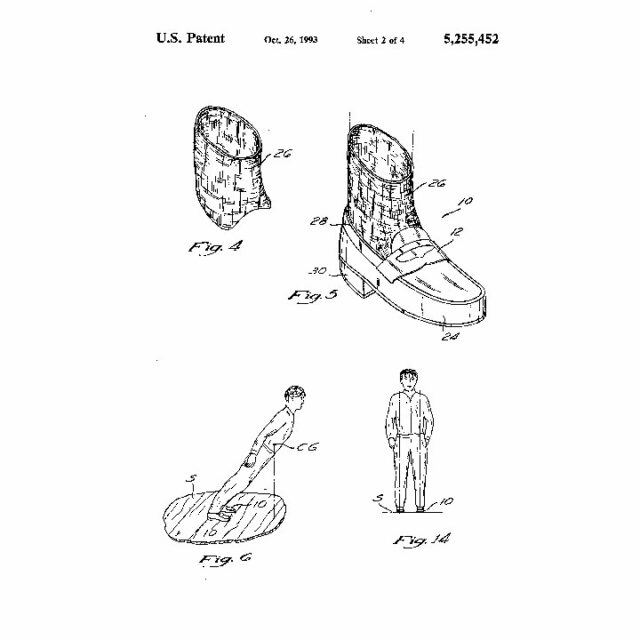
However, MJ does hold a patent for the shoes that allowed him to perform his famous “anti-gravity lean” move as seen in the music video of “Smooth Criminal.” See here: https://patents.google.com/patent/US5255452A/enSam L. Marcelo

Balai ni Fruitas slashes IPO share price to P0.70

BALAI ni Fruitas, Inc. announced on Tuesday a 6.7% cut in the price of its initial public offering (IPO) shares to P0.70 apiece from P0.75 previously, resulting in a reduction in the size of its market launch.

In the latest advisory posted by the Philippine Stock Exchange (PSE), the food and beverage company, a unit of listed holding firm Fruitas Holdings, Inc., did not disclose the reason for the reduction.

Balai ni Fruitas will offer up to 412.5 million common shares, consisting of 325 million primary shares to be offered and issued by the company; 50 million secondary shares to be offered by Fruitas Holdings, the selling shareholder; and up to 37.5 million option shares to be offered by the selling shareholder.

The final offer price brings down the IPO size to P288.75 million from P309.38 million had it retained the previous price.

In its preliminary prospectus posted last month, Balai ni Fruitas placed its IPO share price at P0.75. It said the offer price had been determined after taking into consideration the prospects, the market prices for shares of companies engaged in similar businesses, and prevailing market conditions.

The company will list on the Small, Medium and Emerging (SME) Board of the PSE under the trading symbol BALAI. It has secured the nod of both the PSE and the Securities and Exchange Commission (SEC) for the IPO.

“We are on track to have the most number of SME Board listings in a year with the IPO of Balai ni Fruitas. The company’s debut will also expand the mix of SME firms listed as Balai is the first food and beverage business to list on this Board,” PSE President and Chief Executive Ramon S. Monzon said in an earlier statement.

Proceeds from the IPO will be used for store network expansion, commissary setup, and potential acquisition opportunities.

According to the latest timetable, the shares will be sold from June 17 to 23 with a temporary listing date of June 29.

The company tapped First Metro Investment Corp. as issue manager, bookrunner, and underwriter for the offer.

Balai ni Fruitas is a food and beverage company that offers coconut-based beverages and desserts through brands such as Buko ni Fruitas, Fruitas House of Desserts, and Balai Pandesal. It is a wholly owned subsidiary of Fruitas Holdings.

Fruitas Holdings serves as the holding company of food and beverage kiosk operators. It has more than 25 active brands in its portfolio.

In 2021, Fruitas Holdings entered the baked goods industry through the acquisition of Balai Pandesal assets in June by its unit Balai ni Fruitas. The asset acquisition included initial inventories, technical know-how, equipment and vehicle, trademark, and franchise agreements for five stores.

Balai ni Fruitas was able to grow the Balai Pandesal store network to 31 community stores by the end of December last year. The network covers 25 company-owned and six franchised stores, all of which were accomplished within six months after the acquisition. — Luisa Maria Jacinta C. Jocson

Eight new National Artists named

FAITH ANNE YANGYANG / NCCA PUBLIC AFFAIRS AND INFORMATION OFFICE

MALACAÑANG Palace on June 10 recognized eight new National Artists for 2022.

The artists are: Agnes Locsin for Dance; Nora Villamayor (a.k.a Nora Aunor); Ricardo “Ricky” Lee and Marilou Diaz-Abaya for Film and Broadcast Arts; Gemino Abad for Literature; Fides Cuyugan-Asensio for Music; and posthumously, Antonio “Tony” Mabesa for Theater and Salvacion Lim Higgins for Fashion Design.

No awards were conferred this year in the fields of Visual Arts, and Architecture and Allied Arts.

The date of the awarding ceremonies is yet to be announced.

Fashion designer Salvacion Lim Higgins founded Slim’s Fashion & Arts School in 1960. Dancer and choreographer Agnes Locsin is known for her neo-ethnic dance choreography. Opera singer, actress, and librettist Fides Cuyugan-Asensio was the former Chairman of Voice and Music Theater Department at the UP College of Music. Nora Aunor is an acclaimed actress in films such as Himala, Tatlong Taon Walang Dios, Bona and Bulaklak sa City Jail, among many others. Marilou Diaz-Abaya directed such acclaimed films such as Brutal, Ang Bagong Buwan and the biographical film Jose Rizal. Screenwriter, author, and mentor Ricardo “Ricky” Lee wrote Filipino films such as Himala, The Flor Contemplacion Story, and Sa Kuko ng Agila. Director, actor, and mentor Tony Mabesa was the founder of the theater groups Dulaang UP and the UP Playwright’s Theater. Poet Gemino Abad, who has served in the University of the Philippines in various capacities through the years, co-founded the Philippine Literary Arts Council, edited landmark anthologies of Filipino poetry, and published his own works including poetry, critical essays, and critical theory.

The National Artist Award is jointly administered by the National Commission for Culture and the Arts (NCCA) and the Cultural Center of the Philippines (CCP) by virtue of Proclamation No. 1390.

In 1972, the Order of National Artist was established under Proclamation No. 1001. It is the highest national recognition conferred upon Filipinos who have made distinct contributions to the development of the Philippine arts and culture.

The National artists receive a National Artist gold-plated medallion minted by the Bangko Sentral ng Pilipinas and a citation.

The conferment to living National Artists also comes with privileges including a minimum cash award of P200,000 (net of taxes); a minimum lifetime personal monthly stipend of P50,000; medical and hospitalization benefits not exceeding P750,000 annually; coverage with a life insurance policy by the Government Service Insurance System and or/ private insurance companies; and a state funeral. Meanwhile, posthumous awardees are given a one-time minimum cash award of P150,000 (net of taxes), payable to the legal heir/s. — MAPS

Unbeaten NorthPort aims solo leadership vs winless Magnolia

BATANG Pier to a roaring 2-0 start. — PBA IMAGES

EVERYONE at the NorthPort camp is excited about this Philippine Basketball Association (PBA) Philippine Cup campaign.

Coach Pido Jarencio and star Robert Bolick both cited the great rapport and team chemistry that has so far led the Batang Pier to a roaring 2-0 start in the Season 47 opening meet and a share of top spot with San Miguel Beer.

The Batang Pier seek to keep this fine connection and dream start going on Wednesday as they eye solo leadership against struggling Magnolia (0-2) in the 3 p.m. curtain-raiser at the MOA Arena.

It’s been shaky for the Hotshots in the young All-Filipino hoopfest. They yielded a 78-72 loss to defending champion TnT on opening day then fell to Converge, 89-82, in a game where they went scoreless in the last two minutes of regulation and the entire overtime period.

Part of Magnolia’s woes came from health issues as Paul Lee was sidelined by leg injury against Converge and Mark Barroca sat out that match’s second half due to calf strain. The duo may be doubtful still for the NorthPort duel.

Meanwhile, reigning Governors’ Cup holder Barangay Ginebra guns for Win No. 2 against Rain or Shine (1-1) at 6 p.m.

The Gin Kings came out victorious against Blackwater, 85-82, in a maiden appearance where they relied on their end game experience to complete a fightback from 10 points down.

Coach Tim Cone said his troops have a lot of catching up to do fitness-wise following their championship run.

“It’s really an issue when it comes to shape. You can’t do a lot of things you do to win basketballs, you can’t sustain your energy and sustain your defense when you’re tired,” said Mr. Cone, who achieved a milestone on Sunday when he coached his 1,700th game.

“That happened to us, especially in the third quarter. We kinda hit a wall and we’re very, very tired. So we’ve got to figure out a way in the next week or two to get back in tip-top shape ‘coz we’re not yet anywhere near,” he added.

Meanwhile, NLEX assistant coach Jojo Lastimosa left the Road Warriors’ think tank to join TnT as team manager. “We gave him our blessing since it’s a personal advancement for him,” said NLEX coach and general manager Yeng Guiao.

Mr. Lastimosa replaced Gabby Cui, who served for three-and-a-half years, and his likely first order of business is to get Fil-Am Mikey Williams to agree to sign after a dragging renegotiation of contract. — Olmin Leyba

Khan Academy eyeing to increase usage of learning platform in PHL

MADRID, Spain — Online learning service Khan Academy is in talks with a philanthropist in the United States to advance efforts in the Philippines, its founder said.

“I’ve just met a philanthropist in New York. She’s a Filipino by birth, and she’s very interested in accelerating Filipino efforts,” Khan Academy Founder Sal Khan told reporters at the recent South Summit 2022, a global business summit in Madrid co-organized by the IE University.

“She was saying that the Philippines is taught systemically in English, especially at the high school level, and that it’s very close to the American system fundamentally,” he added.

Khan Academy, which was started in 2005, provides free online learning materials for all ages, including practice exercises and instructional videos. It covers, among others, mathematics, science, computing, history, art history, and economics.

According to Mr. Khan, resources are being localized and translated into more than 36 languages,

Supported by individual contributions, the organization advocates for “free, world-class education for anyone, anywhere.”

Khan Academy is not yet widely used in the Philippines, according to Mr. Khan.

North America accounts for 50% of the academy’s 20-30 million monthly users. It has a significant number of users in Brazil and India, Mr. Khan said.

To accelerate its efforts in the Philippines, Khan Academy will likely need $2 million a year, he noted.

“The $2 million is our baseline. With $2 million a year, we could then get a team in the Philippines starting to localize content. We could start hiring some people to start working with the government, start getting into schools, and start doing teacher training.”

He also welcomed the entry of Starlink Internet Services Philippines, Inc., a subsidiary of Elon Musk’s Space Exploration Technologies Corp., into the local scene, which is expected to address the connectivity gaps in the unserved and underserved areas of the country.

“I think everyone now, especially with the pandemic, they get that this is important — that just to be connected to the world is important,” he said.

“If you can just provide these kids with devices and reasonable internet access, you are essentially giving them a lifeline, you are giving them at least a safety-net education that might be better in certain cases than what they have access to.”

Mr. Khan also said that the pandemic has caused a substantial increase in the typical number of users on the platform.

“In normal times, we had about 25 to 30 million learning minutes per day. That went up to 85 million learning minutes per day within the first week of the pandemic. So, a lot of people were living on these types of resources.”

“I think it’s been good that we’ve had Zoom and Khan Academy and all of these resources, but I think because it happened so fast, it was, I mean it was much worse if we didn’t have all these online resources, but we did not have the time to think it through and so a lot of people had probably not optimal experiences being on a video conference all day or whatever they are using to learn,” he added.

He pointed out that there is a need to prepare for the next emergency.

“Let’s make sure that there is a safety net, and you know it’s not just during a pandemic that we need a safety net. We need a safety net when we have refugees. Let’s look at what’s happening in Ukraine right now and see how those kids are learning.” — Arjay L. Balinbin

Strange Loop, Lehman Trilogy earn Tony honors as Broadway celebrates return

PHOTO FROM TONYAWARDS.COM/WINNERS/

A Strange Loop, the story of a Black gay man and his mental struggles as a playwright, won the Tony award on Sunday for best new musical as Broadway honored its first season since the long pandemic shutdown.

The Lehman Trilogy, about the rise and fall of investment firm Lehman Brothers, took the best new play honor at a live ceremony held at Radio City Music Hall in New York.

Strange Loop triumphed over MJ, a crowd-pleasing musical about Michael Jackson. Star Myles Frost won best actor in a musical for playing the King of Pop.

Being on stage to accept the Tony felt like a “miracle,” said Ben Power, the writer of Lehman Trilogy, after COVID-19 halted preview shows of the play for 577 days.

“In New York, even after everything, even after today, anything is possible,” Power said, adding that the play had been written as “a hymn to the city of New York.”

Strange Loop writer Michael R. Jackson based the musical on his own internal doubts as well as external obstacles as he tried to pen a Broadway show.

“I just wanted to create a little bit of a life raft for myself as a Black gay man,” he said.

Best actor winner Frost addressed his mother in the audience as he accepted his award for MJ.

“Mom, I made it,” he said, and thanked her for bringing him up to be a “strong Black man.”

For best revival of a musical, voters honored Company, the final project backed by composer and theater legend Stephen Sondheim, who died in November.

The new Company reverses the gender roles of the original, which centered on a single man considering his life choices as he turned 35. Producer Chris Harper thanked Sondheim “for letting us re-imagine the classic musical.”

Hamilton creator Lin-Manuel Miranda introduced a tribute to Sondheim, saluting his “immortal” songs and lyrics and his mentorship of younger artists, including Miranda himself.

The three-hour telecast of the awards event featured a slew of performances from nominated shows, to help entice audiences back to theaters.

Hugh Jackman sang “76 Trombones” from The Music Man while Mare Winningham performed Bob Dylan’s “Like a Rolling Stone,” featured in the musical Girl from the North Country.

Michael Jackson’s children, Prince and Paris, introduced a rendition of “Smooth Criminal” by the MJ cast.

Patti LuPone won her third Tony award, for a supporting role in Company. She thanked “all of the COVID safety people” for making Broadway’s return possible. In the audience were 150 COVID-19 safety managers who had kept shows running.

Simon Russell Beale, the star of Lehman Trilogy, won the Tony for lead actor in a play. Joaquina Kalukango took best actress in a musical for playing a 19th-century tavern owner in race relations story Paradise Square.

“I give thanks to all of the nameless ancestors who have suffered. This show gives power to them,” Kalukango said.

Sunday’s Tonys were the 75th edition and the ceremony honored some of Broadway’s biggest hits over the decades. Host Ariana DeBose opened it with a medley honoring shows from Cabaret to Wicked, The Wiz and Hamilton.

She and others at the ceremony welcomed the industry’s efforts to diversify the stories and casts on stage.

“I’m so proud that the theater is becoming more reflective of the community that adores it,” said DeBose, the Oscar-winning Afro-Latina star of West Side Story.

Best play revival went to Take Me Out, the story of a gay baseball player.

Deirde O’Connell, who won the Tony for lead actress in a play for Dana H, urged aspiring writers to “make the weird art.” — Reuters


Key Tony awards winners for first season after pandemic

LOS ANGELES —  The Tony Awards for Broadway theater were handed out in New York on Sunday, celebrating the first season since a long pandemic shutdown.

Here is a list of winners in key categories.

• Best Play — The Lehman Trilogy

• Best Musical — A Strange Loop

• Best Revival of a Musical — Company

• Best Revival of a Play — Take Me Out

• Best Actor, Play — Simon Russell Beale, The Lehman Trilogy

• Best Actress, Play — Deirdre O’Connell, Dana H.

• Best Actor, Musical — Myles Frost, MJ

• Best Actress, Musical — Joaquina Kalukango, Paradise Square

• Best Original Score — Six, Toby Marlow and Lucy Moss

• Best Book of a Musical — A Strange Loop, Michael R. Jackson — Reuters

NU Lady Bulldogs closely waiting as stepladder playoffs start

AUTOMATIC finalist National University (NU) is leaving no stone unturned while waiting on top, monitoring closely as teams started to rumble in the stepladder playoffs of the University Athletic Association of the Philippines (UAAP) women’s volleyball tournament at the Mall of Asia Arena in Pasay City.

Already seeded in the championship set-to by sweeping the two-round eliminations, the Lady Bulldogs are maximizing their advantage to recover and at the same time, resharpen their claws against whoever survives the tough stepladder semifinals.

NU, as early as last Thursday, claimed its spot on top of the ladder and will not play until this Saturday in the best-of-three finals against a still undetermined opponent.

Three teams are in contention for that right to challenge NU, starting with No. 3 Santo Tomas and fourth-seeded Ateneo that were to play last night in a knockout game to climb the ladder.

Up next for the winner is No. 2 La Salle, which sports an inside track to a finals bid of its own with a twice-to-beat advantage.

For NU, the work never stops while on standby.

“At this point, we’re expecting more intensity and pressure of course. Kaya lagi ko lang nire-remind sa team na kahit tapos na ang eliminations at nasa finals na kami, hindi pa rin tapos ang trabaho namin,” said Mr. Dimaculangan, a member of the Santo Tomas team that also swept a season in 2009.

The ongoing UAAP stepladder is the first since 2015 when the Alyssa Valdez-led Ateneo swept its way to the championship. Contrastingly, the Blue Eagles this time were the last team to make it by salvaging the fourth spot with a win against Adamson in a knockout match. — John Bryan Ulanday

EEI sees construction industry as growth driver in 2022

EEI Corp. sees itself to be in a “prime position” to grow this year as it projects the construction industry to be among the economy’s main growth drivers due to the government’s “strong push” for infrastructure development.

In a regulatory filing on Tuesday, the listed construction company also said it plans to take advantage of the suppressed demand caused by the delayed projects during the pandemic.

“The reopening of the Philippine Economy is in a full swing as mobility across the country continues to increase, already exceeding pre-pandemic levels while still under the lowest alert level 1 pandemic restriction,” EEI said.

The firm said its outlook is reflected in its first-quarter performance.

EEI earlier reported that its net income jumped by 53.2% to P209.14 million in the first quarter. Net income attributable to equity holders jumped by 55.1% to P210.63 million.

The profit growth was recorded despite consolidated revenues dropping by 13.4% to P3.16 billion, primarily due to delays in infrastructure projects.

“Likewise, in the Kingdom of Saudi Arabia, the Saudi Vision 2030 of the Crown Prince Mohammed Bin Salman is aggressively launching new developments and opening the business to international investors,” the firm said.

EEI said its investments and joint ventures are expected to provide positive and steady streams of income for the group.

Al Rushaid Construction Co., Ltd., EEI’s joint venture in Saudi Arabia, “continues to perform well in its industrial projects, gaining the trust of more foreign clients and winning more contracts,” it added.

The firm said it is also well-positioned to win more contracts as it continues to bid for industrial and building projects, as well as mega infrastructure projects through the government’s “Build, Build, Build” program.

EEI said it is planning to expand its portfolio to include more renewable energy sources.

“In addition, EEI’s investments in PetroSolar and PetroWind Energy will continue to deliver positive earnings as renewable energy sources continue to become more profitable,” the company added.

PetroSolar Corp. is the owner of a 50-megawatt (MW) solar farm in Tarlac City, while PetroWind Energy, Inc. owns a 36-MW wind farm in Nabas and Malay, Aklan.

In December, EEI held a preferred share offering and raised P6 billion from the issuance. Proceeds from the offering will be used to finance its current and future mega-infrastructure projects, manage its liabilities, fund capital expenditures, and invest in new businesses and emerging technologies.

EEI said it is continuing to explore other business opportunities, both within and outside of the construction sector.

“With this outlook, EEI looks forward to a productive year ahead, while remaining cautious of the still ongoing pandemic,” it added.

At the stock exchange on Tuesday, EEI shares ended lower by 2.06% or seven centavos to close at P3.33. — Luisa Maria Jacinta C. Jocson

Rise in dengue cases due to seasonal rain, climate change

Public Health Image Library/US Centers Disease for Control and Prevention

A SPIKE in dengue cases this year can be attributed to typhoon rainfall and climate change, creating the perfect breeding ground for Aedes aegypti, the mosquito responsible for transmitting dengue in the Philippines.  

“[Dengue-carrying mosquitoes] prefer high humidity and temperature. That’s why climate change may have a role in the increase in dengue cases worldwide,” said Dr. Belle M. Ranile, a pediatric infectious disease specialist from Cebu City, at a June 10 webinar hosted by the University of the Philippines (UP).  

The Department of Health (DoH) recorded 34,938 dengue cases from January to May this year — 23% higher than the 28,336 cases logged in the same period in 2021.  

Central Visayas had the highest number of dengue cases in the Philippines, with 4,544 cases, followed by Central Luzon with 4,312 and the Zamboanga Peninsula with 3,215.  

“Majority of cases are also in the pediatric age group,” added Dr. Ranile, pointing out that in her hometown of Cebu, 446 out of the 936 dengue patients recorded in the aforementioned period were aged 1 to 10 years old.  

DoH has been monitoring disease trends to curb the surge in dengue cases, according to Health Undersecretary Maria Rosario S. Vergeire.  

“We’re ready to respond to any healthcare aid any Juan or Juana may need,” she said in a press conference at the start of June, which is National Dengue Awareness Month.  

She offered four prevention tips:  

  • Search for and destroy mosquito-breeding sites (clogged drains, water containers, flower pots and vases, gutters, pails, and unwanted tires, cans, and bottles);  
  • Secure self-protection measures like mosquito repellent, long pants and long-sleeved shirts;   
  • Seek early consultation; and  
  • Support fogging/spraying in hotspot areas.  

Dr. Sergio Zelig Javier, head of environmental health and sanitation at the Cebu City health department, explained that the DoH’s dengue control program includes destroying mosquito-breeding sites, like areas holding water that are hard to drain.  

“During the pandemic period, there have been limitations in implementing this. Fortunately, community quarantine played a role in the decrease of cases,” he said at the UP webinar.  

In addition to the rainy season, climate change, and increased mobility, experts also cited Filipinos’ delayed health-seeking behavior as a cause for the increasing number of dengue cases.  

“For these reasons, the dengue virus is ‘hyperendemic’ in the Philippines, making it the Southeast Asian country with the highest risk of dengue,” said Evalyn A. Roxas, clinical associate professor of infectious diseases at the UP Philippine General Hospital.  

Since there is no available vaccine and cure yet for dengue, she reminded everyone to seek early consultation for symptoms like fever, severe headache, swollen glands, pain behind the eyes, intense joint and muscle pain, rashes, nausea, and vomiting. Brontë H. Lacsamana

What stoneware tells us about Philippine heritage

PHOTO BY MICHELLE ANNE P. SOLIMAN

OBJECTS used in daily lives carry the history of a civilization. The earliest pottery technology dates back 4,200 years, and ceramics were widely exported globally in the 7th century. In 1947, an archeological survey led by Dr. Henry Otley Beyer uncovered ceramics in several provinces including Batangas, Mindoro, Marinduque, Palawan, Quezon, Bicol, Samar, and Leyte. These were commonly used to store food and liquids for cooking. Pottery was also associated with burial practices, while porcelain and stoneware served as symbols of social rank and political authority.

In continuing the work of preserving stoneware and documenting its uses, the National Museum of the Philippines (NMP) opened the Elizabeth Y. Gokongwei Ethnographic Stoneware Resource Center on the fifth floor of the National Museum of Anthropology’s East Wing.

The opening of the resource center was done in partnership with the National Museum and the Gokongwei Brothers Foundation (GBF) — a foundation established by brothers John, Johnson, Henry, and James Gokongwei in 1992 which provides scholarships in Science, Technology, Engineering, and Mathematics (STEM) education to students and educators.

Since the project’s announcement in 2021, the GBF has provided support to repair and upgrade the resource center with equipment and supplies for interior furnishing, transporting the ceramic collection from regional museums and satellite offices, as well as the ongoing inventory and assessment of the pieces in the collection.

“This project of establishing the Elizabeth Y. Gokongwei Ethnographic Ceramics Resource Center adds to the quality of custodianship that we have of our precious natural patrimony. [It] adds to the quality of service we could provide to the public, especially to researchers who will flesh out our appreciation of our heritage,” Museum Director-General Jeremy R. Barns said in his speech during the launch on June 11.

“When it comes to ethnographic stoneware, we know that this is something that links us with the rest of the region [across Asia]. We are yet to really flesh out the story of how our ethnographic stoneware really represents the Pan-Asian heritage with the Philippines as a core part of it,” Mr. Barns added.

In line with the GBF’s advocacy of nation-building through education, the Foundation also hopes to inculcate a stronger sense of identity among learners about Filipino culture and heritage.

“As a staunch advocate of holistic education, the Foundation takes to heart its duty to protect our heritage, enrich our culture, and pass this on to the next generation. There, we are grateful to the NMP for bringing to the GBF and making it possible for us to contribute to the valuable field of cultural preservation,” GBF General Manager Lisa Y. Gokongwei-Cheng said.

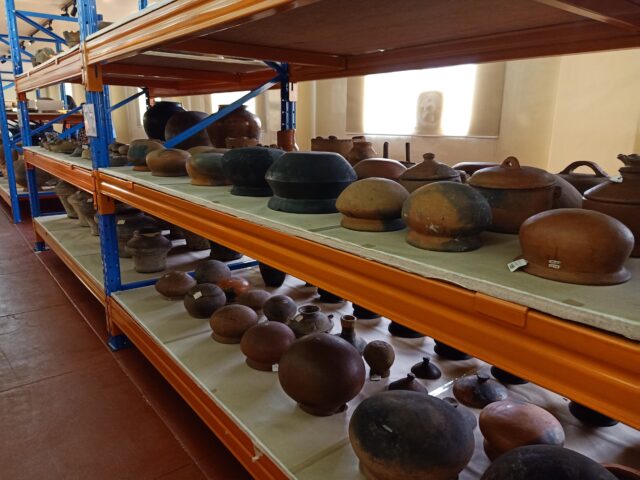
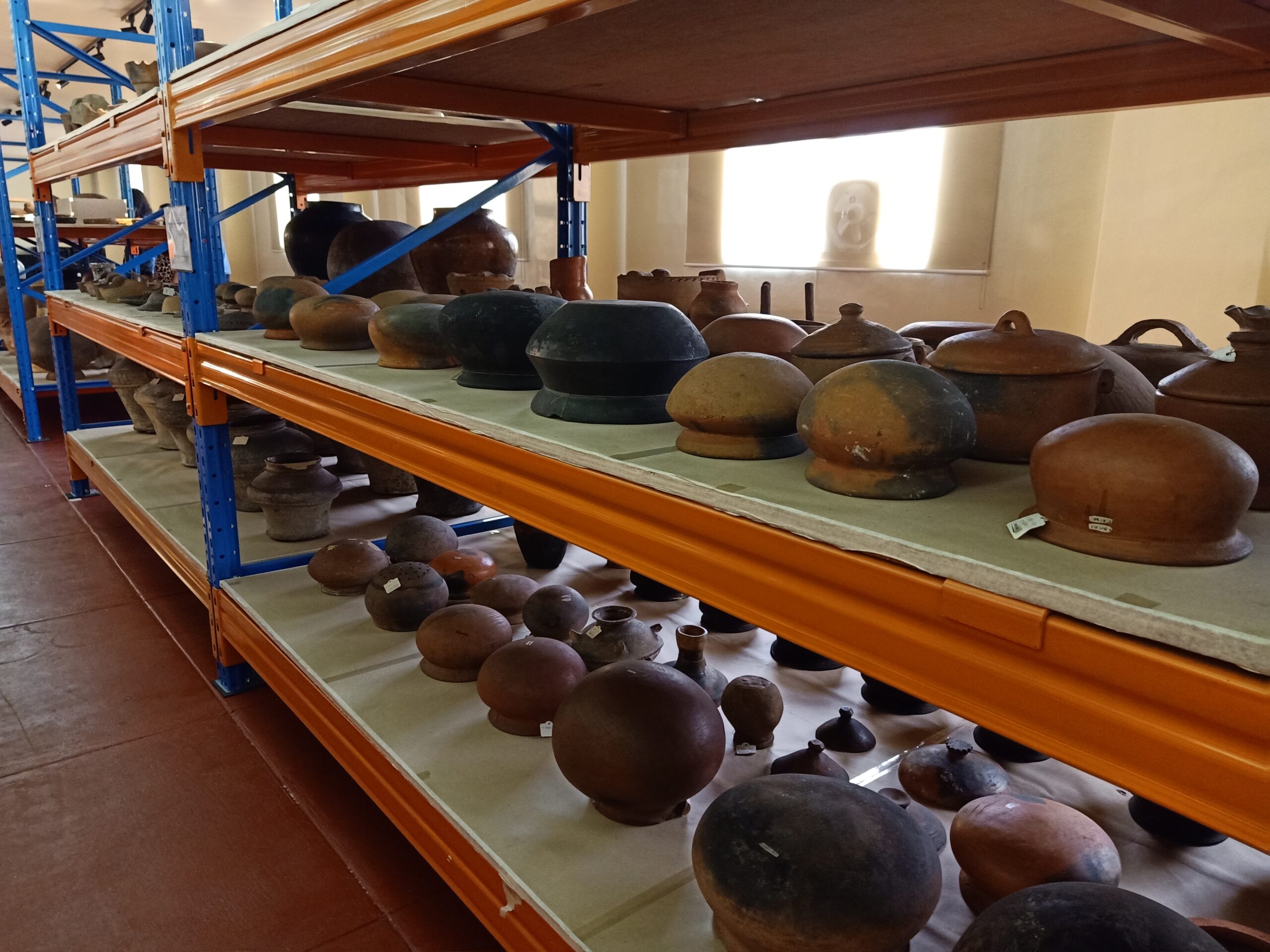
Named after the late Gokongwei matriarch, the Elizabeth Y. Gokongwei Ethnographic Stoneware Resource Center — formerly a repository of the NMP’s ethnographic division — is a research facility accessible to those who are studying early Filipinos. The visiting public can view the collection through the center’s glass windows.

THE RESEARCH AND COLLECTION
The Elizabeth Y. Gokongwei Ethnographic Stoneware Resource Center has over 1,000 pieces of stoneware and earthenware from the National Ethnographic Collection that served as commodities, utility items, household decorations, heirloom pieces, and containers for ritual ceremonies.

“A significant portion of these objects were collected by renowned anthropologist Dr. Robert B. Fox and archeologist Dr. William Longacre from their research areas in Palawan and Kalinga. It also includes 73 Ilocano stoneware pieces which are part of NMP’s long-term lease from the Ilocos Sur Historical and Cultural Foundation collection (ISHCF),” NMP Deputy Director Jorell M. Legaspi said in a speech at the launch.

The ethnographic ceramics collection in the National Museum was initiated by Dr. Fox during his term as the chief of the Anthropology Division (now Ethnology Division) in the 1960s. The collection includes jars, plates, and bowls from the 15th to the 20th century.

The items were acquired through the years from different ethnolinguistic groups such as the Bontok, Ifugao, Ibaloy, Ilokano, Gad’dang, and Pangasinense communities in northern Luzon; the Tagalog, Pala’wan, and Tagbanua communities in central and southern Luzon; and Maguindanao, Maranao, and Tausug communities in southwestern Mindanao.

Due to their production dates, the items in the collection are presumed to be Important Cultural Properties, in accordance to Republic Act No. 10066 or National Cultural Heritage Act of 2009.

FUTURE PROJECTS WITH GBF
To maximize the reach and impact of the EYG Resource Center, there are special tours, the provision of digital reference materials for teachers, and a 360° VR exhibit (https://www.nationalmuseum.gov.ph/…/stoneware360.html).

Alongside the opening of the resource center is the upcoming release of an accompanying book titled From Kiln to Kin: The Philippine Ceramic Heritage. It will include the full catalog of collections in the resource center, the ceramic history of the Philippines, and its significance alongside ethnolinguistic traditions and culture. Physical and digital copies of the book will be available.

“Far more than being vessels, these objects tell the story of their connection to their maker and the culture they constitute. By highlighting material culture, we hope to offer a new avenue for exploring our past to fully understand the diversity of our heritage,” Mr. Legaspi said.

Researchers, educators, and students who wish to access the catalog of collections and examine objects from the EYG Resource Center may send a letter of request at inquiry@nationalmuseum.gov.ph or nationalmuseumph@yahoo.com.   Michelle Anne P. Soliman

JRU Lady Bombers defeat the Letran Lady Knights in four sets

THE José Rizal University (JRU) Lady Bombers are in constant pursuit of its holy grail — a first ever NCAA women’s volleyball championship.

And what better way to start the quest than to launch it on a high note?

Showing grit and determination, JRU overcame a flat start by coming through with a strong finish in turning back Letran, 13-25, 25-22, 25-17, 25-17, on Tuesday to set in motion its ambitious bid for a breakthrough title in National Collegiate Athletic Association (NCAA) Season 97 at the Paco Arena.

Given up for dead after a lifeless opening set effort, the combo of skipper Dolly Grace Verzosa, Sydney Mae Niegos, Renesa Melgar Riza Rose and setter Jerelyn Laurente resuscitated the Lady Bombers with their strong effort that was highlighted by their determined attacking play, rock-solid net defense and superb court coverage.

The win also proved that the Kalentong-based spikers were not a team of Ms. Versoza — a second-best outside spiker in Season 93 four years ago — alone as it also produce solid performances from multiple players.

Mses. Niegos and Melgar were two of them as they fired 11 and 10 points, respectively.

Ms. Rose also blossomed by chipping in eight hits.

Ms. Laurente, for her part, did her damage with 23 excellent sets while contributing two points.

It helped that the Lady Knights imploded in the final three sets and finished with a disastrous 42 errors.

While winning its first championship sounded a little ludicrous, the Lady Bombers, whose closest brush to a title was a first Final Four finish in 2018 that produced a Most Valuable Player awardee of alumna Shola Alvarez, are not losing hope and taking it a game at a time.

“We are happy with the win and we hope to be competitive for the rest of the season,” said JRU athletic director and NCAA Management Committee representative Paul Supan. — Joey Villar

Leisure & Resorts World aims to boost online products

LEISURE & Resorts World Corp. (LRWC) said it would push its online products to the market for the remainder of the year as part of its retail expansion plans.

“We will remain steadfast in pushing our online products which are seen to be the ‘blue ocean.’ We will be aggressive in the pursuit of player registrations, deposits, and gaming transactions,” the company said in a disclosure.

It described a blue ocean as a new market with little completion or barriers standing in the way of innovators.

“As the online products can also be played in our branches, we shall continue upgrading our network connectivity and hardware,” the firm added.

LRWC said that it would also push for more variety and availability of its games.

“With these efforts, we see steep revenue growth in our newly launched and yet to be launched online products. These are our new engines of growth and our vehicle to address changing consumer trends driven by the pandemic,” the company said.

“Thus with these innovations, we expect this year to be a recovery year alongside projected increase in household incomes and foot traffic and decrease in COVID-19 (coronavirus disease 2019) cases and quarantines,” it added.

For its casino business, LRWC will be working on improving its products, marketing and promotion, club enhancements, and safety protocols.

In its unaudited financial statement, LRWC reported that its first quarter net loss after tax grew to P223.07 million from a loss of P110.04 million in 2021.

Revenues likewise declined to P929.01 million from P942.35 million.

On Tuesday, LRWC shares gained by 4.51% or six centavos to close at P1.39 at the stock exchange. — Luisa Maria Jacinta C. Jocson