Home Blog Page 5843

Archaeologists discover passageways in 3,000-year-old Peruvian temple

PHOTO FROM OFICINA DE COMUNICACIÓN E IMAGEN INSTITUCIONAL/GOB.PE

LIMA — A team of archaeologists has discovered a network of passageways under a more than 3,000-year-old temple in the Peruvian Andes.

Chavin de Huantar temple, located in the north-central Andes, was once a religious and administrative center for people across the region.

The passageways were found earlier in May and have features believed to have been built earlier than the temple’s labyrinthine galleries, according to John Rick, an archaeologist at Stanford University who was involved in the excavation.

Located 3,200 meters above sea level, at least 35 underground passageways have been found over the years of excavations, which all connect with each other and were built between 1,200 and 200 years B.C. in the foothills of the Andes.

“It’s a passageway, but it’s very different. It’s a different form of construction. It has features from earlier periods that we’ve never seen in passageways,” Mr. Rick said.

Chavin de Huantar, declared a World Heritage Site in 1985, was the inspiration and name of the operation carried out when the Peruvian armed forces built a network of tunnels to rescue 72 people taken hostage by the Tupac Amaru Revolutionary Movement (MRTA) rebel group at the Japanese ambassador’s residence in Lima in 1997. — Reuters

Ateneo pulls off straight sets win over Santo Tomas

FAITH Nisperos (17) leads Ateneo Blue Eagles with 18 points. — THE UAAP

By John Bryan Ulanday

REIGNING champion Ateneo exacted sweet vengeance on rival Santo Tomas, pulling off a 25-20, 25-20, 25-20 statement victory to stay in playoff contention of the heating up University Athletic Association of the Philippines (UAAP) Season 84 women’s volleyball tournament at the Mall of Asia Arena.

Faith Nisperos soared high with 18 points on 15 attacks plus seven excellent receptions as the Blue Eagles moved to 5-5 at No. 5 behind fourth-running and second-game winner Adamson (6-4) with still four games to spare in the elims.

Vanie Gandler (12) and Joan Narit (11) backstopped Nisperos in offense with Jaja Maraguinot setting the table with 16 excellents for Ateneo, which also snapped the Golden Tigresses’ four-game streak in the process.

“We prepared for this and then nag-manifest sa kilos ng mga bata,” said coach Oliver Almadro as Ateneo avenged its 19-25, 21-25, 31-29, 31-33 loss against Santo Tomas in the first round.

Aside from getting back on Santo Tomas that finished runner-up in Season 81 before the pandemic, Ateneo also bounced back from a 25-18, 20-25, 19-25, 18-25 defeat against No. 1 and unbeaten National University (NU) over the weekend to bolster its Final Four drive.

Later, Adamson strengthened its place inside the Final Four picture after smothering Far Eastern University (FEU) with an easy 25-17, 25-17, 25-16 victory to improve to 6-4.

Trisha Genesis (14), May Ann Nique (12), Rizza Cruz (11) and Kate Santiago (11) led a scattered attack for the Lady Falcons, who created a separation ahead of chasing Ateneo approaching the tailend of the elims.

Eya Laure (14) was the lone bright spot for Santo Tomas, which still stayed at No. 2 with a 7-3 card while Chen Tagaod scored similar points in FEU’s ninth loss in 10 outings.

Central bank keeps cap on credit card charges

BW FILE PHOTO

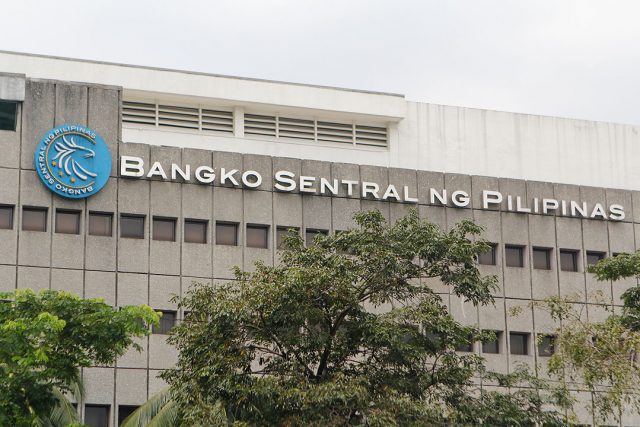
THE central bank retained the ceilings for charges on credit card transactions to help consumers as the coronavirus disease 2019 (COVID-19) pandemic continues.

The Monetary Board kept the maximum interest rate on unpaid outstanding credit card balance at 2% per month or 24% per year, the Bangko Sentral ng Pilipinas (BSP) said in a statement on Tuesday.

The cap for the monthly add-on rate that credit card issuers can charge on installment loans was kept at 1%, while the maximum processing fee for credit card cash advances will remain at P200 per transaction.

“The decision of the Monetary Board will continue to help ease the financial burden of consumers through affordable credit card pricing amid the ongoing COVID-19 pandemic,” BSP Governor Benjamin E. Diokno said.

“It will also allow the BSP to assess the impact of the improvement in macroeconomic fundamentals and easing of mobility restrictions on the performance of the credit card industry,” Mr. Diokno added.

The ceilings on credit card transactions will remain in effect unless modified by the BSP.

“The BSP, however, will closely monitor evolving domestic and external developments that will impact the state of credit card financing, sustainability of credit card operations and viability of banks/credit card issuers,” the central bank said.

The BSP said recent data showed demand for credit cards weakened in the second half of 2021 as clients shifted to alternative digital products.

Still, issued and outstanding credit cards went up by 0.3% to 10.3 million, while monthly card billings rose by 33.9% year on year to P100.6 billion as of end-December 2021.

Credit card receivables grew by 4.9% year on year as of December 2021 amid easing of mobility restrictions and continued business activities.

Lenders were also able to keep the asset quality of their credit card portfolios healthy. The credit card industry’s non-performing loan (NPL) ratio was at 6.8% as of December 2021, lower than the 8.9% registered a year prior, with the NPL coverage ratio at 109.5%.

“Moving forward, the credit card industry intends to further reduce operating costs through digital transformation and process improvements as well as maintain prudent lending standards,” the central bank said. — K.B. Ta-asan

Monkeypox: Prevention, symptoms, and treatment

UNSPLASH

NEARLY 20 countries where monkeypox is not endemic have reported recent outbreaks of the viral disease, with more than 230 confirmed or suspected infections mostly in Europe. 

While no associated deaths have been reported to date, the World Health Organization (WHO) said that the situation is evolving and more cases are expected to be identified as surveillance expands in non-endemic countries. No cases have been reported in the country to date, according to the Department of Health (DoH). 

Monkeypox is a rare disease that is caused by infection with the monkeypox virus. The name “monkeypox” originated from the initial discovery of the virus in a Danish laboratory in 1958 and the first human case was reported in 1970.  

It is transmitted from one person to another by close contact with lesions, body fluids, respiratory droplets, and contaminated materials such as bedding.  

Symptoms are milder but very similar to those seen in the past in smallpox patients, according to the US Centers for Disease Control and Prevention (CDC). 

Monkeypox begins with fever, headache, muscle aches, backache, swollen lymph nodes, chills, and exhaustion. Within one to three days (sometimes longer) after the patient develops a fever, a rash appears, often beginning on the face then spreading to other parts of the body.  

Before ultimately falling off, lesions progress through the following stages: macules, papules, vesicles, pustules, and scabs. The illness typically lasts for two to four weeks.  

In Africa, monkeypox has been shown to cause death in 1 in 10 persons who contract the disease. 

While the virus is self-limiting, it may still be severe in some children, pregnant women, or persons with immune suppression. 

According to the WHO, reported monkeypox cases thus far have no established travel links to an endemic area. Current available evidence suggests that those who are most at risk are those who have had close physical contact with someone with monkeypox, while they are symptomatic. 

Avoiding contact with symptomatic individuals, practicing good hand hygiene by washing hands with soap and water or using an alcohol-based hand sanitizer, and using personal protective equipment (PPE) when caring for patients can help prevent monkeypox infection. It is also important to avoid contact with sick or dead animals that could harbor the virus. 

An attenuated live virus vaccine has been approved by the US Food and Drug Administration (FDA) for the prevention of monkeypox. The CDC is currently evaluating the vaccine for the protection of people at risk of occupational exposure to smallpox and monkeypox in a pre-event setting. 

To control a monkeypox outbreak in the United States, the CDC recommends the use of smallpox vaccine, antivirals, and vaccinia immune globulin (VIG).  

Because monkeypox virus is closely related to the virus that causes smallpox, smallpox vaccine can also protect people from getting monkeypox. The CDC said that past data from Africa suggests that smallpox vaccine is at least 85% effective in preventing monkeypox. Experts also believe that vaccination after a monkeypox exposure may help prevent the disease or make it less severe. 

However, the WHO does not believe the monkeypox outbreak outside of Africa requires mass vaccinations as measures like good hygiene and safe sexual behavior will help control its spread. At the moment, some countries are offering vaccination only to certain people who are at high risk of potential exposure to smallpox and/or monkeypox. 

In the Philippines, independent experts will evaluate the safety and efficacy of existing vaccines, or those undergoing research and development, to make sure that when the need for them arises, the vaccines will be safe for use. 

The Pharmaceutical and Healthcare Association of the Philippines (PHAP) and its members are monitoring global and local developments, and are closely coordinating with partners on measures to be taken. PHAP Members are also coordinating with the DoH to prepare for this health threat to ensure that vaccines and diagnostics will be available in the country if and when they become necessary. 


Teodoro B. Padilla is the executive director of Pharmaceutical and Healthcare Association of the Philippines (PHAP), which represents the biopharmaceutical medicines and vaccines industry in the country. Its members are at the forefront of research and development efforts for COVID-19 and other diseases that affect Filipinos.


Vistamalls profit up 36% to P1.25 billion

VISTAMALLS, Inc. and its subsidiaries announced a 35.7% growth in its first-quarter attributable net income to P1.25 billion from P921 million in a period free from any seasonal effect on its finances.

The profit growth comes after the listed property leasing company recorded a 30.2% increase in revenues to P2.63 billion from P2.02 billion. Operating profit reached P1.86 billion, up 37.8% from P1.35 billion.

“For the three months ended, there were no seasonal aspects that had a material effect on the financial condition or results of operations of the company. Neither were there any trends, events or uncertainties that have had or that are reasonably expected to have a material impact on the net sales or revenues or income from continuing operations,” Vistamalls said in a disclosure on Tuesday.

“The company is not aware of events that will cause a material change in the relationship between the costs and revenues,” it added.

Vistamalls is the holding company of the Villars’ Vistamalls group, which is engaged in leasing retail malls and business process outsourcing commercial centers.

The group has a wholly owned subsidiary, Masterpiece Asia Properties, Inc. and a 99.85%-owned subsidiary, Manuela Corp.

It is 88.34% owned by Vista Land & Lifescapes, Inc. and the rest by the public. Vista Land is a publicly listed investment holding company, which is 65.17% owned by Fine Properties, Inc. and 34.83% owned by the public.

At the stock exchange on Tuesday, Vistamalls shares dropped by 0.29% or one centavo to close at P3.39 apiece. — Luisa Maria Jacinta C. Jocson

Archaeologists uncover trove of ancient Egyptian mummies

PHOTO FROM EGYMONUMENTS.GOV.EG

CAIRO — Archaeologists working near Cairo have uncovered hundreds of ancient Egyptian coffins and bronze statues of deities.

The discovery at a cemetery in Saqqara contained statues of the gods Anubis, Amun, Min, Osiris, Isis, Nefertum, Bastet, and Hathor along with a headless statue of the architect Imhotep, who built the Saqqara pyramid, Egypt’s Ministry of Tourism and Antiquities said on Monday.

The 250 coffins, 150 bronze statues and other objects dated to the Late Period, about 500 BC, the ministry said.

They were accompanied by a musical instrument known as a sistrum and a collection of bronze vessels used in rituals for the worship of the goddess Isis.

The painted wooden coffins were found intact in burial shafts and contained mummies, amulets, and wooden boxes. Wooden statues of Nephthys and Isis from an earlier period were also found, both with gilded faces.

One coffin contained a well-preserved papyrus written in hieroglyphs, perhaps verses of the Book of the Dead, and was sent to the laboratory of the Egyptian Museum in Cairo for study, said Mostafa Waziri, Secretary General of the Supreme Council of Antiquities.

A collection of cosmetics was found, including kohl containers, as well as bracelets and earrings.

The coffins will be transferred for display at the Grand Egyptian Museum under construction near the Great Pyramids of Giza and due to open later this year.

Saqqara, to the south of the Giza pyramids, has provided a steady stream of archaeological discoveries in recent years. The mission has been excavating in the area since 2018. —  Reuters

Akari joins the PVL as its 10th volleyball team

THE Premier Volleyball League (PVL) welcomed Akari Lightning & Technology Corp. as its 10th team.

“We are glad to welcome Akari to our PVL family,” said PVL president Ricky Palou. “It was three years ago when they first joined the PVL, supporting Adamson during the 2019 Collegiate Conference.

“They have been in volleyball for so long and it’s good to see them go into the professional ranks,” he added.

Akari will be managed by Mozzy Ravena and is still in the process of acquiring coaches and players.

It joined the country’s only professional volleyball league composed of reigning Open Conference champion Creamline, Petro Gazz, Cignal, Choco Mucho, Army, F2 Logistics, PLDT, Chery Tiggo and Bali Pure.

“We are excited to join the PVL. For Akari, it feels like we are graduating college since we are entering the pros,” said Akari sports director Russell Balbacal. “For years, we have been supporting grassroots and collegiate teams. We feel like this is the right time to go a level higher.” — Joey Villar

Philippines 72nd most complicit in 2022 financial secrecy list

The Philippines dropped 12 spots to 72nd out of 141 jurisdictions in the Tax Justice Network’s 2022 edition of the biennial Financial Secrecy Index (FSI). The FSI ranks jurisdictions most complicit in helping individuals to hide their finances from the rule of law. The index looks for the world’s largest suppliers of financial secrecy and sheds light on the laws that governments can change to reduce their contribution to financial secrecy. The Philippines got the second lowest FSI value* among its peers in East and Southeast Asia region, only ahead of Brunei. It had a secrecy score** of 67.1, and accounted for 0.02% of the global market*** for offshore financial services.

Philippines 72<sup>nd</sup> most complicit in 2022 financial secrecy list

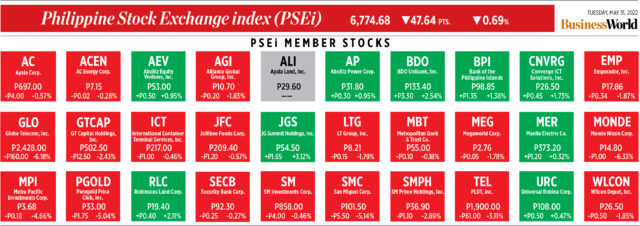
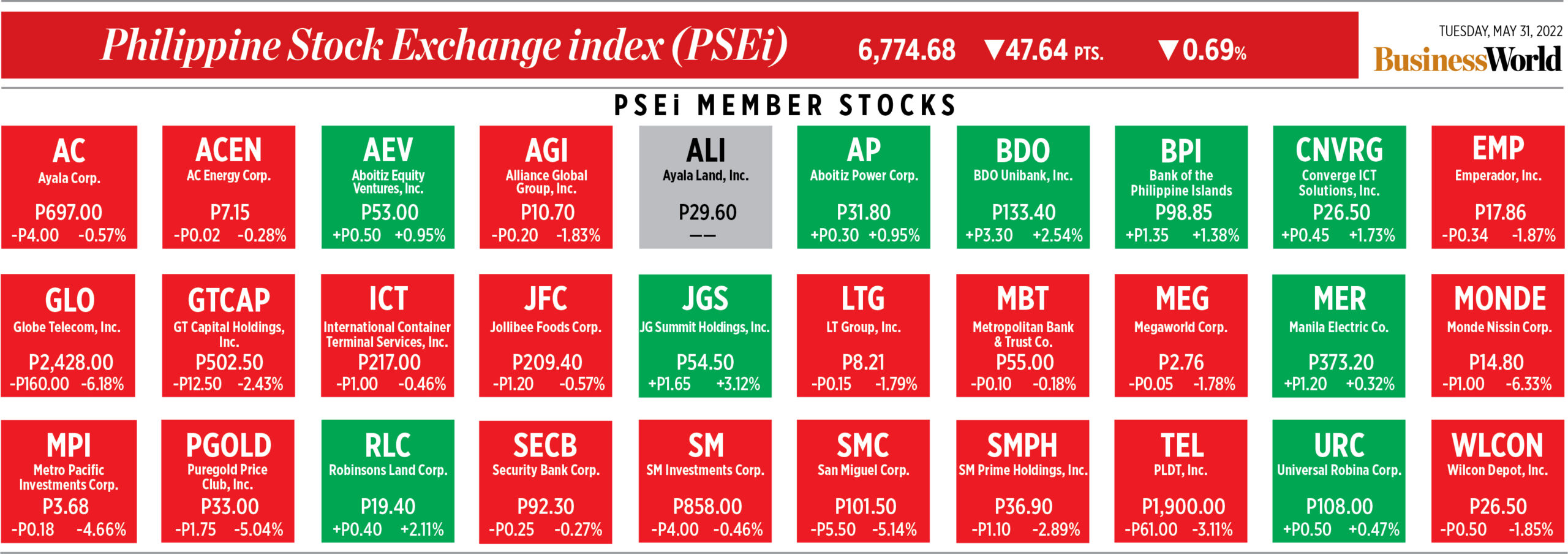
How PSEi member stocks performed — May 31, 2022

Here’s a quick glance at how PSEi stocks fared on Tuesday, May 31, 2022.


Peso weakens on hawkish comments from Fed official

BW FILE PHOTO

THE PESO weakened against the dollar on Tuesday after a US Federal Reserve official said the central bank may hike rates by 50 basis points (bps) several times to curb rising inflation.

The local unit closed at P52.37 versus the greenback on Tuesday, declining by six centavos from its P52.31 finish on Monday, Bankers Association of the Philippines data showed.

The peso opened Tuesday’s session at P52.40 against the dollar. Its weakest showing was at P52.43, while its intraday best was at P52.37 versus the greenback.

Dollars exchanged decreased to $925.62 million on Tuesday from $1.19 billion on Monday, the data showed.

“The peso weakened after Fed official Waller hinted of more 50-bp rate hikes to bring US inflation within the central bank’s 2% target,” a trader said in an e-mail.

Fed Governor Christopher Waller said the US central bank should be ready to raise interest rates by a half percentage point at every policy meeting until inflation is brought down, Reuters reported.

“I am advocating 50 (basis point hikes) on the table every meeting until we see substantial reductions in inflation. Until we get that, I don’t see the point of stopping,” Mr. Waller said following a speech to the Institute for Monetary and Financial Stability in Frankfurt, Germany.

Meanwhile, Rizal Commercial Banking Corp. Chief Economist Michael L. Ricafort attributed the peso’s decline to rising global oil prices as European leaders agreed to a partial ban on Russian oil.

Oil prices extended gains on Tuesday after the EU agreed to slash oil imports from Russia, fueling worries of a tighter market already strained for supply amid rising demand ahead of peak US and European summer driving season, Reuters reported.

Brent crude for July, which expires on Tuesday, rose $2.19, or 1.8%, to $123.86 a barrel at 0650 GMT, after earlier rising to $124.10 — its highest since March 9. The more active August contract rose $2.25 to $119.85.

For Wednesday, the trader expects the local unit to move between P52.30 and P52.50 versus the dollar, while Mr. Ricafort gave a forecast range of P52.25 to P52.45. — Keisha B. Ta-asan with Reuters

PSEi drops as EU agrees on Russian oil embargo

BW FILE PHOTO

SHARES dropped on Tuesday as global oil prices surged after the European Union (EU) said it aims to cut oil imports from Russia by 90% by this year’s end.

The benchmark Philippine Stock Exchange index (PSEi) dropped by 47.64 points or 0.69% to close at 6,774.68 on Tuesday, while the broader all shares index went down by 26.16 points or 0.72% to 3,606.91.

“The local market pulled back this Tuesday as investors took profits from its preceding four-day rally. The rise in oil prices caused by the EU decision to cut 90% of its Russian crude imports by the end of the year contributed to the decline,” Philstocks Financial, Inc. Senior Research Analyst Japhet Louis O. Tantiangco said in a Viber message.

“Oil prices rose to two-month highs as traders waited to see if the EU would reach an agreement on banning Russian oil ahead of a meeting on a sixth package of sanctions against Moscow for its invasion of Ukraine,” Regina Capital Development Corp. Head of Sales Luis A. Limlingan added in a Viber message.

European Union leaders handed Hungary concessions to agree an oil embargo on Russia over its invasion of Ukraine, sealing a deal in the wee hours on Tuesday that aims to cut 90% of Russia’s crude imports into the bloc by the end of the year, Reuters reported.

The embargo — once legally imposed in the coming days — will hit seaborne shipments of Russian oil and encompass most imports from Russia once Poland and Germany stop buying it by the end of 2022, which diplomats and officials from both countries said was now government policy.

Oil prices extended gains on Tuesday after the EU agreed to slash oil imports from Russia, fueling worries of a tighter market already strained for supply amid rising demand ahead of peak US and European summer driving season.

US West Texas Intermediate crude was trading at $119.12 a barrel up $4.05 or 3.5% from Friday’s close. There was no settlement on Monday due to a US public holiday. Both benchmarks have posted daily gains since Wednesday.

First Metro Investment Corp. Head of Research Cristina S. Ulang said in a Viber message that the market corrected slightly following the full implementation of the MSCI rebalancing.

The majority of the sectoral indices ended in the red, except for financials, which gained by 20.29 points or 1.23% to 1,658.62, and mining and oil, which rose by 22.23 points or 0.18% to 11,920.22.

Meanwhile, services declined by 35.66 points or 1.87% to 1,870.55; property gave up by 43.90 points or 1.41% to end at 3,049.62; industrials fell by 100.87 points or 1.06% to 9,351.59; and holding firms contracted by 15.83 points or 0.25% to 6,291.16.

Decliners bested advancers, 113 versus 76, while 48 names ended unchanged.

Value turnover surged to P35.71 billion with 2.17 billion shares changing hands from the P7 billion with 890.17 million issues seen the previous trading day.

Foreigners turned sellers on Tuesday with P232.01 million in net selling versus the P69.01 million in net purchases seen on Monday. — L.M.J.C. Jocson with Reuters

PEZA scouting public land for potential economic zone sites

THE Philippine Economic Zone Authority (PEZA) said it is evaluating the government’s land holdings with the help of the Department of Environment and Natural Resources (DENR) to seek out sites with the potential to be converted into economic zones (ecozones).

“We (are) signing a memorandum of understanding (MoU) with the DENR for the utilization of timber land, agricultural land, mining land, and nature tourism sites which we are going to convert to agro-industrial, agro forestry, mineral processing, and eco-tourism special ecozones,” PEZA Director-General Charito B. Plaza said during the signing ceremony on Tuesday.

Under the MoU, the DENR will provide an inventory of public lands and islands under its jurisdiction to PEZA to narrow down those sites with potential as sustainable mineral and agro-forestry processing economic zones, oil depots, refinery ecozones, ecotourism sites, and agro-industrial special economic zones. 

PEZA is authorized to push ecozone development to the countryside by Administrative Order No. 18 issued by Malacañang in June 2019.

DENR Assistant Secretary Michelle Angelica D. Go said that the pilot areas for the site search will be in the Caraga region.

“We are already in the advanced stage of identifying the potential ecozone areas in Caraga — there are seven (areas). We are hoping to forge a MoA before June 30,” Ms. Go said.

According to Ms. Plaza, “Soon, we will see new and different types of ecozones nationwide as we partner with the DENR in attaining total development and the Philippines as an investment destination,” Ms. Plaza said.

“We will put a stop on our being import-dependent, and grow an economy that is self-reliant, self–sustaining, and resource-generating,” she added. — Revin Mikhael D. Ochave